HOME

Flight Shed

Flight Shed, 

Brooklands Museum, Brooklands Road, Weybridge, Surrey, KT13 0QN, United Kingdom

The Flight Shed at Brooklands Museum is a historic aviation building located within the Brooklands Museum complex in Weybridge, Surrey, England. Originally constructed during World War I, the Flight Shed was a key part of the Aircraft Factory at Brooklands, where iconic aircraft such as the Vickers Vimy, Vickers Wellington, and Hawker Hurricane were assembled, tested, and maintained. Today, the Flight Shed has been preserved and restored as a museum exhibit, housing a collection of historic aircraft and showcasing the rich aviation heritage of Brooklands. Its authentic atmosphere, original architecture, and impressive exhibits make it a must-visit destination for aviation enthusiasts and history buffs
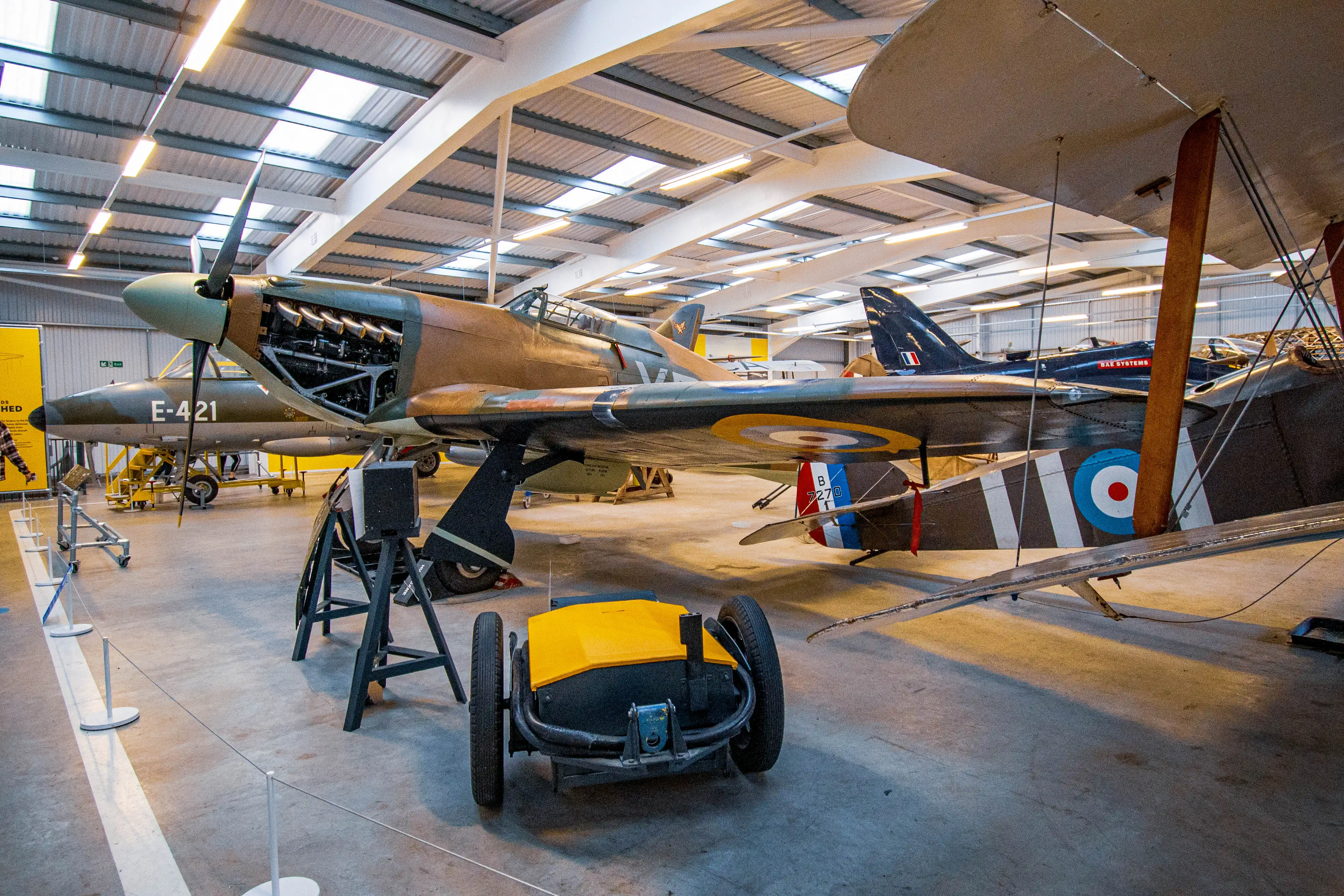
Interior view of a museum displaying several vintage aircraft, including a Hawker Hurricane and a biplane, with a yellow ground handling tug in the foreground.
Vintage Aircraft Exhibition
photo by
©www.mgaylard.co.uk.
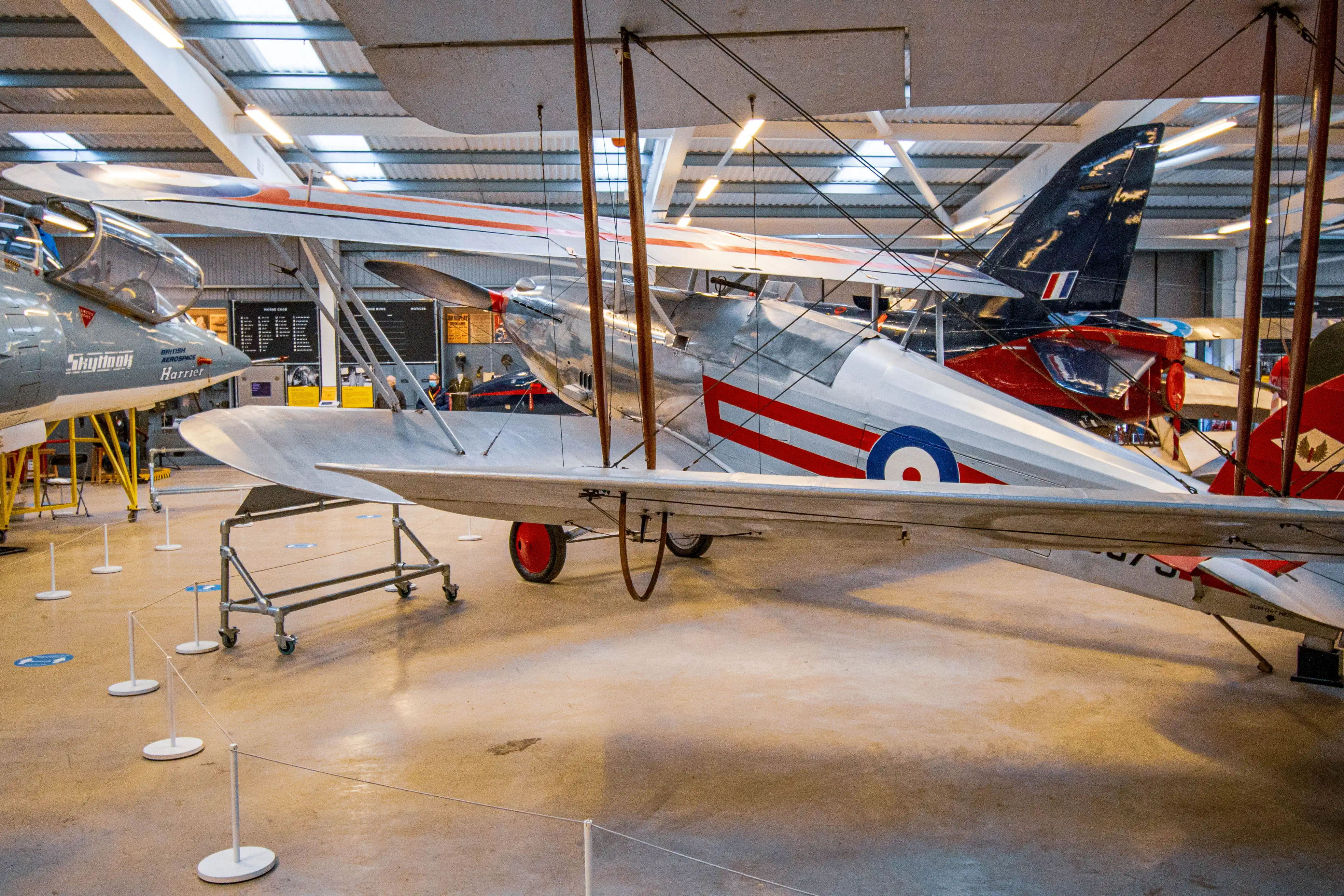
A vintage biplane with silver fuselage and red and blue markings is parked indoors. A modern grey jet fighter is to the left, and the tail of a red and blue aircraft is visible to the right.
Museum Display of a Vintage Biplane and Other Aircraft
photo by
©www.mgaylard.co.uk.
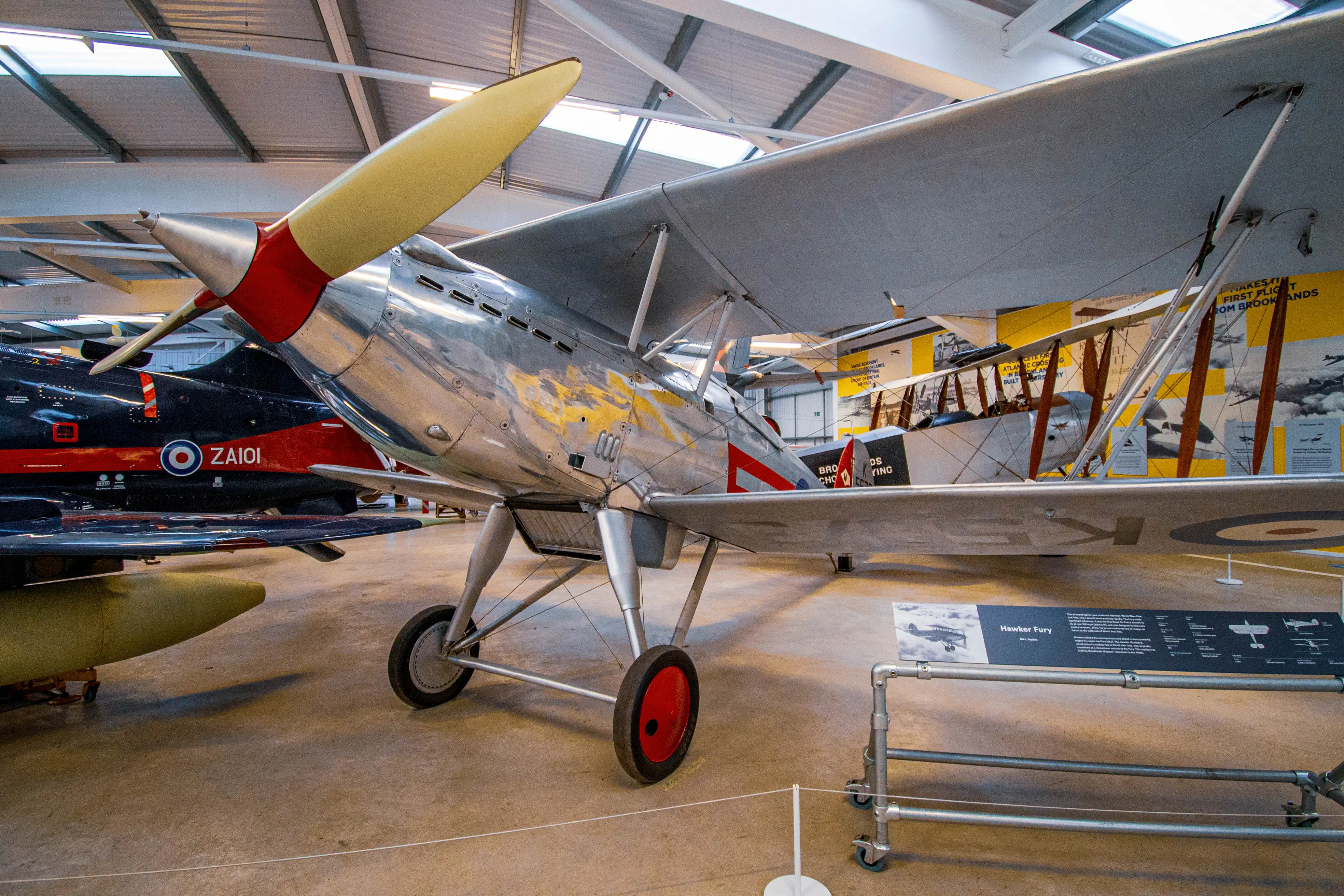
A vintage silver biplane with a yellow-tipped propeller and red detailing sits on a museum floor, with a modern dark blue jet aircraft in the background.
Hawker Fury Biplane in Aviation Museum
photo by
©www.mgaylard.co.uk.

Hawker Fury I

The Hawker Fury was a highly significant single-seat biplane fighter produced by Hawker Aircraft and designed by Sydney Camm. First flown on 25 March 1929, it represented a major step forward in British fighter development at the end of the inter-war period, combining refined aerodynamic styling with the performance of the Rolls-Royce Kestrel liquid-cooled V12 engine.

Entering RAF service in 1931, the Fury gained distinction as the Royal Air Force’s first fighter capable of exceeding 200 mph. Although its frontline service was relatively brief, with withdrawal from first-line RAF duties during the late 1930s, the type continued to serve in training and with overseas operators into the 1940s. Its reputation rested not only on its speed and agility, but also on the elegance and balance of its design.

Technically, the Fury combined a fabric-covered steel-tube fuselage with two-bay biplane wings, an open cockpit, and a fixed undercarriage that often featured distinctive wheel spats on early aircraft. Its clean lines, swept upper wing, polished metal cowling, and characteristic Hawker tailplane profile made it one of the most recognisable and visually refined fighter aircraft of its generation.

Powered by the Rolls-Royce Kestrel II or Kestrel IIS, the aircraft typically delivered around 525 horsepower, depending on production batch and engine fit. Performance varied by version, with top speeds in the region of 207 to 223 mph, a range of approximately 275 miles, and a service ceiling of about 29,000 feet. Armament consisted of two synchronised .303 Vickers machine guns, reflecting the standard fighter configuration of the period.

The Fury also provided an important foundation for later Hawker design work. Its construction methods, aerodynamic cleanliness, and handling qualities helped shape the company’s fighter design philosophy, contributing directly to the lineage that would culminate in the Hawker Hurricane. In this respect, the Fury occupies an important place in the transition from classic biplane fighters to the faster monoplane fighters of the Second World War era.

Operationally, the Fury served with several RAF units, including No. 1 Squadron, No. 25 Squadron, and No. 43 Squadron, the “Fighting Cocks.” It was used as an interceptor, fighter patrol aircraft, formation trainer, and aerobatic display aircraft. Beyond Britain, the type was exported widely, serving with air arms including those of South Africa, Persia, Norway, and Yugoslavia, further demonstrating its international appeal and technical credibility.

References

Text generated by Microsoft CoPilot and Mistral AI

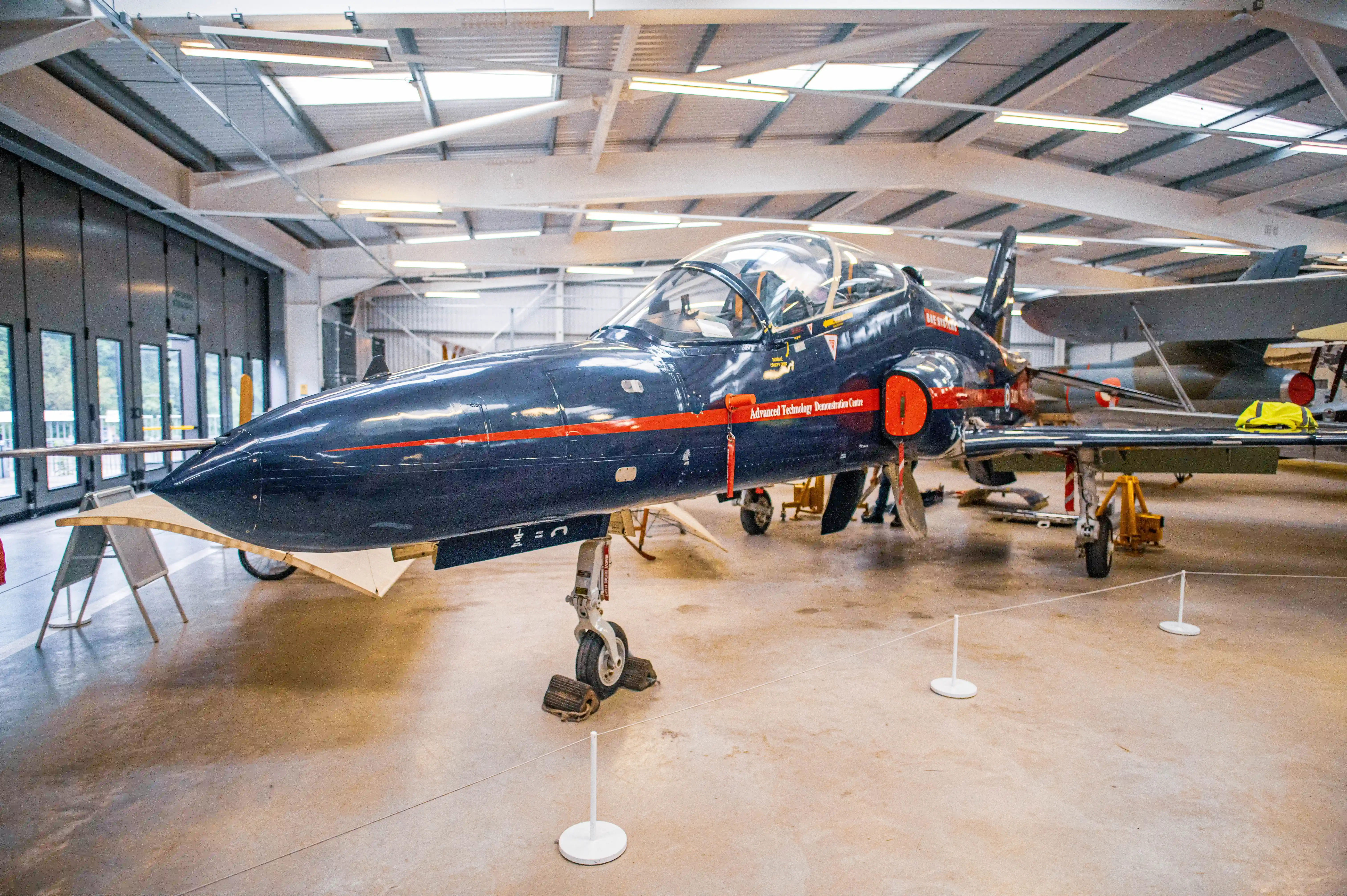
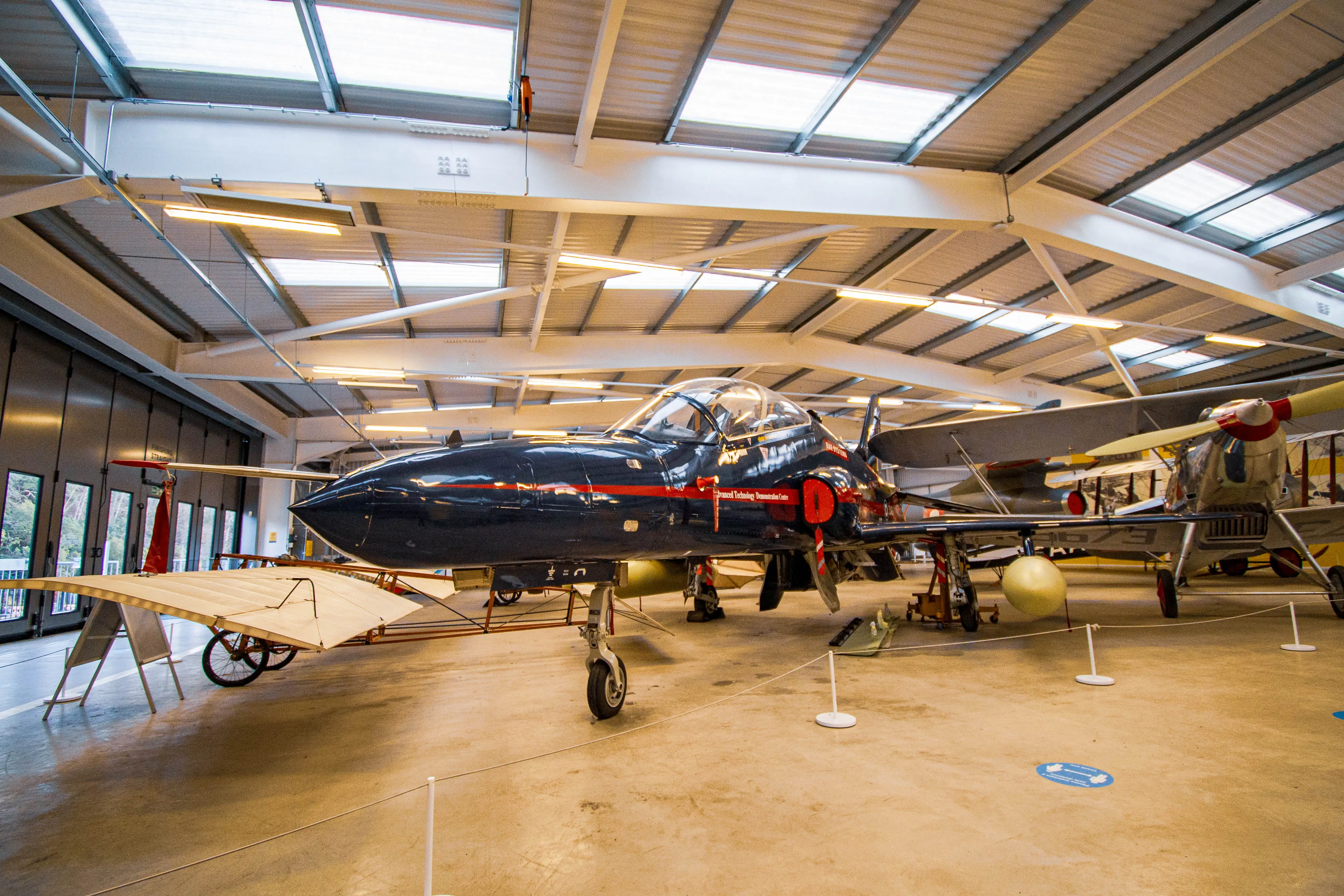
A dark blue jet aircraft with orange trim and the text Advanced Technology Demonstration Centre is parked inside a hangar.
Advanced Technology Demonstration Centre Jet Aircraft
photo by
©www.mgaylard.co.uk.
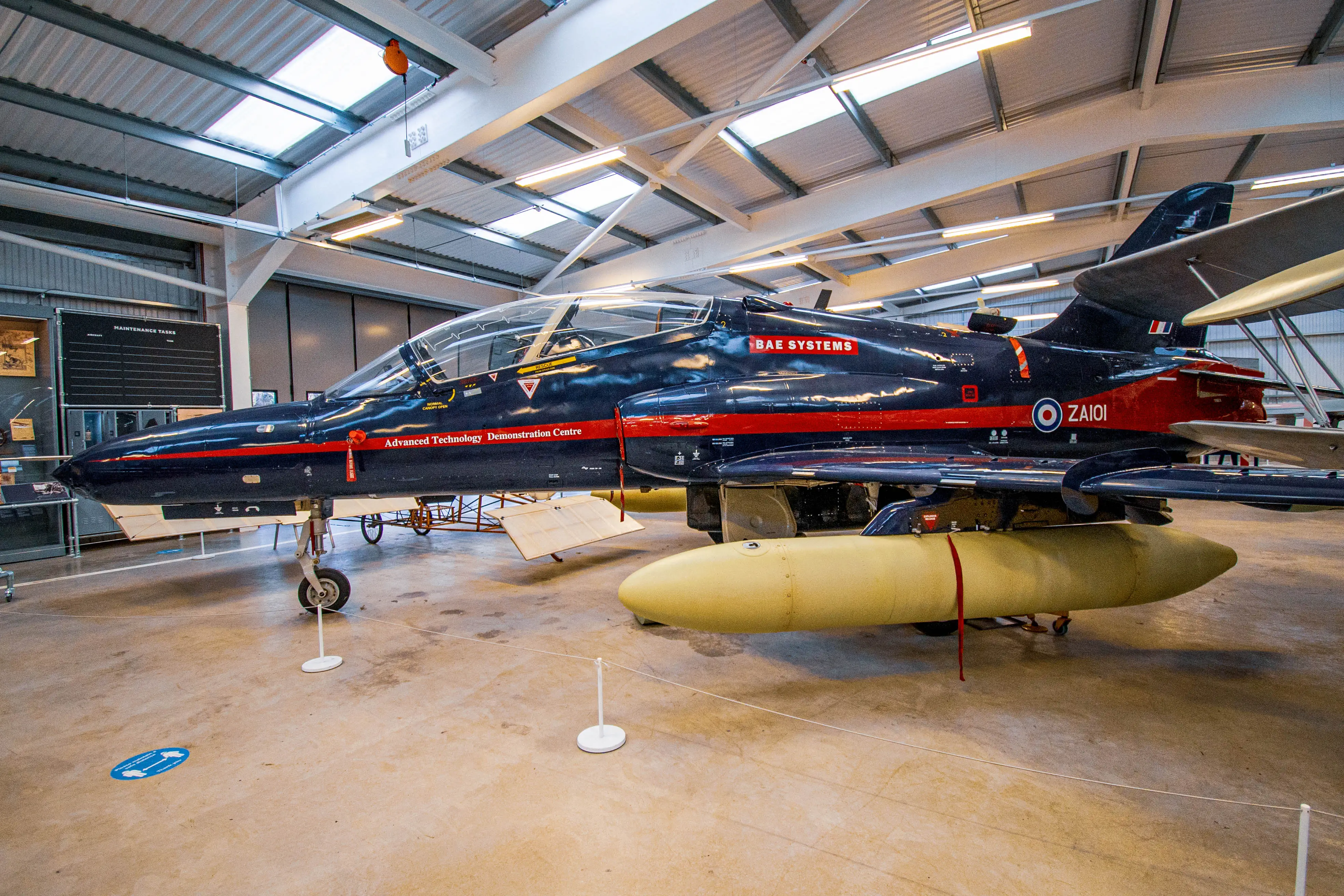
Side view of a dark blue and red BAE Systems Hawk jet aircraft with yellow auxiliary fuel tanks visible under the wings, parked inside a well-lit hangar. The aircraft is labelled ZAI01 and
BAE Systems Hawk Advanced Technology Demonstration Centre Jet ZAI01
photo by
©www.mgaylard.co.uk.

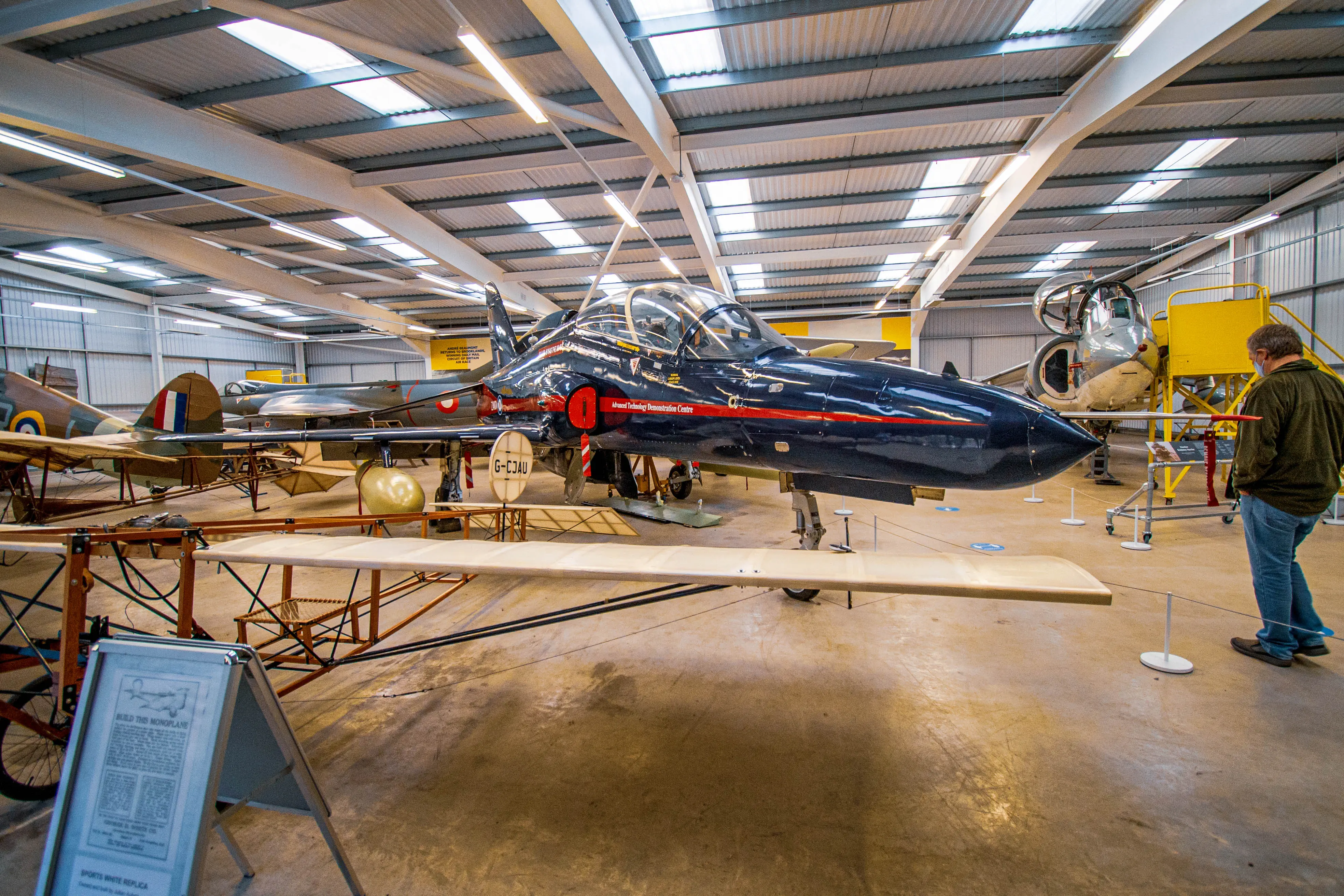
The BAe Hawk Mk50

The Hawk Mk50 was an export light-attack and advanced trainer variant of the BAe Hawk, developed from the original Hawk T.1 family. Produced through the transition from Hawker Siddeley to British Aerospace, it was supplied primarily to Finland and Norway, where it served as a weapons-capable jet trainer equipped with upgraded avionics and external hardpoints.

As part of the wider Hawk lineage, the Mk50 represented the post-Hawker Siddeley evolution of British jet-trainer design. It continued a development path that linked earlier Hawker combat aircraft with a modern training platform capable of preparing pilots for high-performance frontline fighters.

Historical Context

Introduced during the late Cold War period, the Hawk Mk50 emerged from a highly successful family of advanced jet trainers designed to combine instructional efficiency with credible operational capability. Its principal operators, Finland and Norway, used the type within NATO-aligned and European defence environments where pilots required modern jet training, weapons familiarisation, and a reliable transition platform before progressing to frontline aircraft.

The aircraft’s significance lay in its ability to provide a cost-effective bridge between pure training aircraft and combat-capable fast jets. By combining the handling qualities of a dedicated trainer with the ability to carry weapons, external tanks, and mission equipment, the Mk50 gave air forces a flexible platform for advanced instruction, weapons training, and limited light-attack duties.

Design and Technical Characteristics

Structurally, the Hawk Mk50 followed the proven Hawk configuration: a single-engine, low-wing, all-metal monoplane with tandem seating for a student and instructor. Its pointed nose, large bubble canopy, high-mounted tailplane, and distinctive wing planform gave the aircraft a clean and recognisable profile, while its export-standard underwing pylons expanded its operational usefulness beyond basic training.

Power was provided by a Rolls-Royce Turbomeca Adour turbofan, giving the aircraft the performance required for advanced jet instruction. Typical figures included a top speed of approximately 1,028 kilometres per hour, a range of around 2,500 kilometres when fitted with external tanks, and a service ceiling of about 48,000 feet. These characteristics made the Mk50 suitable for high-energy manoeuvring, formation work, navigation training, and weapons delivery practice.

The Mk50’s light-attack capability was enabled through underwing hardpoints and compatible weapons equipment. Depending on operator fit, it could carry a gun pod, practice bombs, rockets, and light air-to-air missiles such as the AIM-9 Sidewinder on Norwegian aircraft. This gave the type a practical role in weapons training while preserving the economy and reliability expected of an advanced trainer.

Variants and Operators

The Hawk Mk50 designation covered export machines derived from the wider Hawk family, with national variants tailored to operator requirements. Finland operated the Hawk Mk51 and later Mk51A, using the aircraft for advanced jet training, weapons instruction, and light-attack practice. These aircraft incorporated avionics and equipment suited to Finnish Air Force training needs.

Norway operated the Hawk Mk52, a variant associated with advanced training and Sidewinder missile instruction. In both Finnish and Norwegian service, the Hawk provided a robust and adaptable aircraft for preparing pilots to move onto frontline fighters such as the F-18 and F-16, while also maintaining a secondary capability for weapons training and limited close-support work.

Recognition Features

Visually, the Hawk Mk50 retained the compact, purposeful appearance that made the Hawk family instantly recognisable. Key recognition features include the pointed nose, broad bubble canopy, tandem cockpit arrangement, high-set tailplane, and characteristic Adour engine exhaust. On the Mk50 export versions, the presence of underwing pylons is especially important, as these identify the aircraft’s weapons-capable training role.

Today, the Hawk Mk50 is best understood as part of the global BAe Hawk family and as a continuation of the broader Hawker and British Aerospace design tradition. Retired examples and related airframes appear in aviation heritage collections, including Finnish and Norwegian museum displays, where they represent the Cold War generation of European jet training aircraft.

References

Text generated by Microsoft CoPilot

andMistral AI

A dark blue jet aircraft with red accents is parked in a museum hangar. In the background, a biplane with a propeller is visible. The aircraft are displayed under a roof with skylights and fluorescent lighting.
Aviation Museum Hangar Display
photo by
©www.mgaylard.co.uk.
A museum hangar displays a collection of vintage aircraft, with a prominent dark blue jet in the foreground. A man stands to the right, viewing the aircraft.
Aviation Heritage Display
photo by
©www.mgaylard.co.uk.
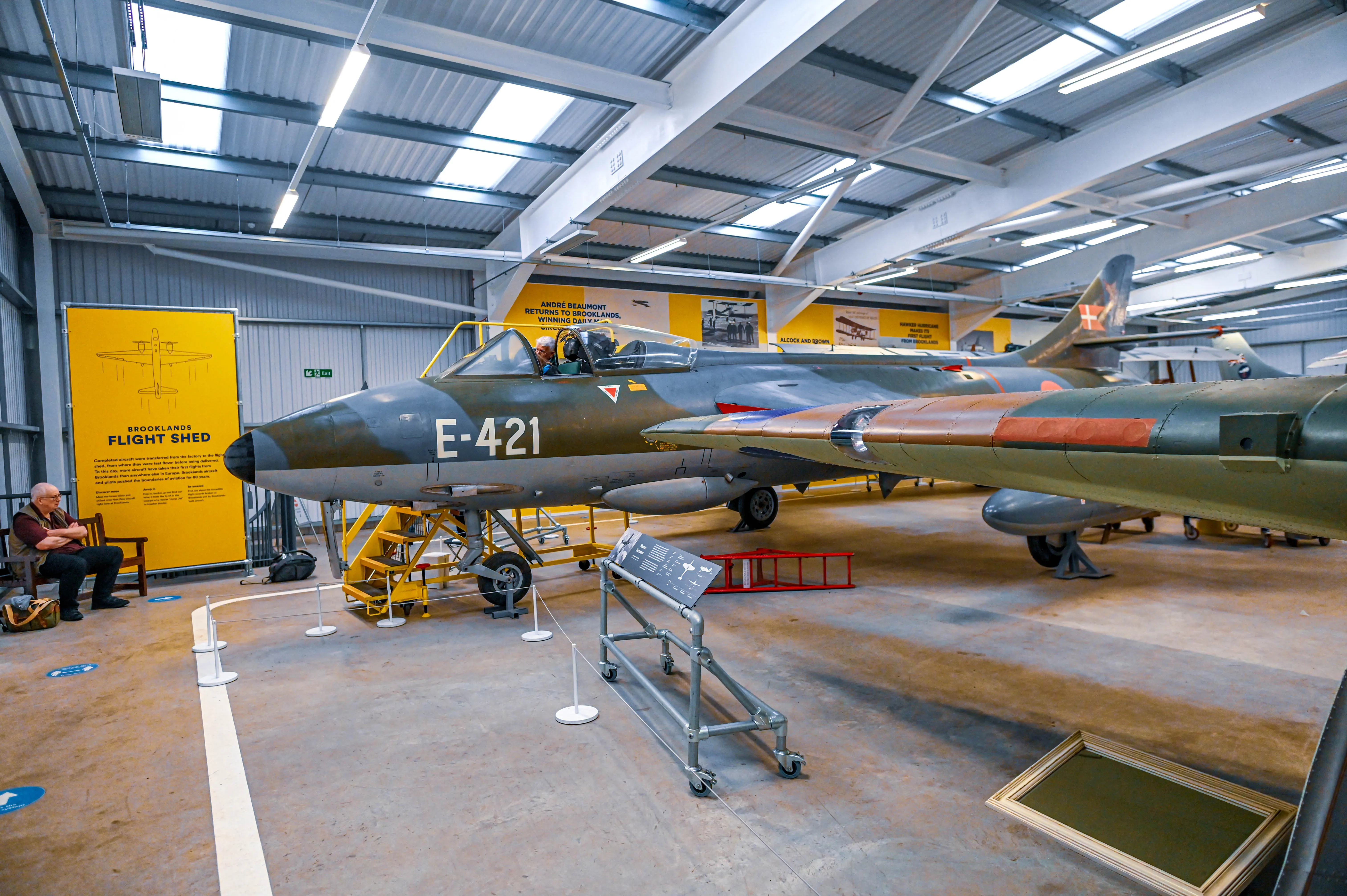
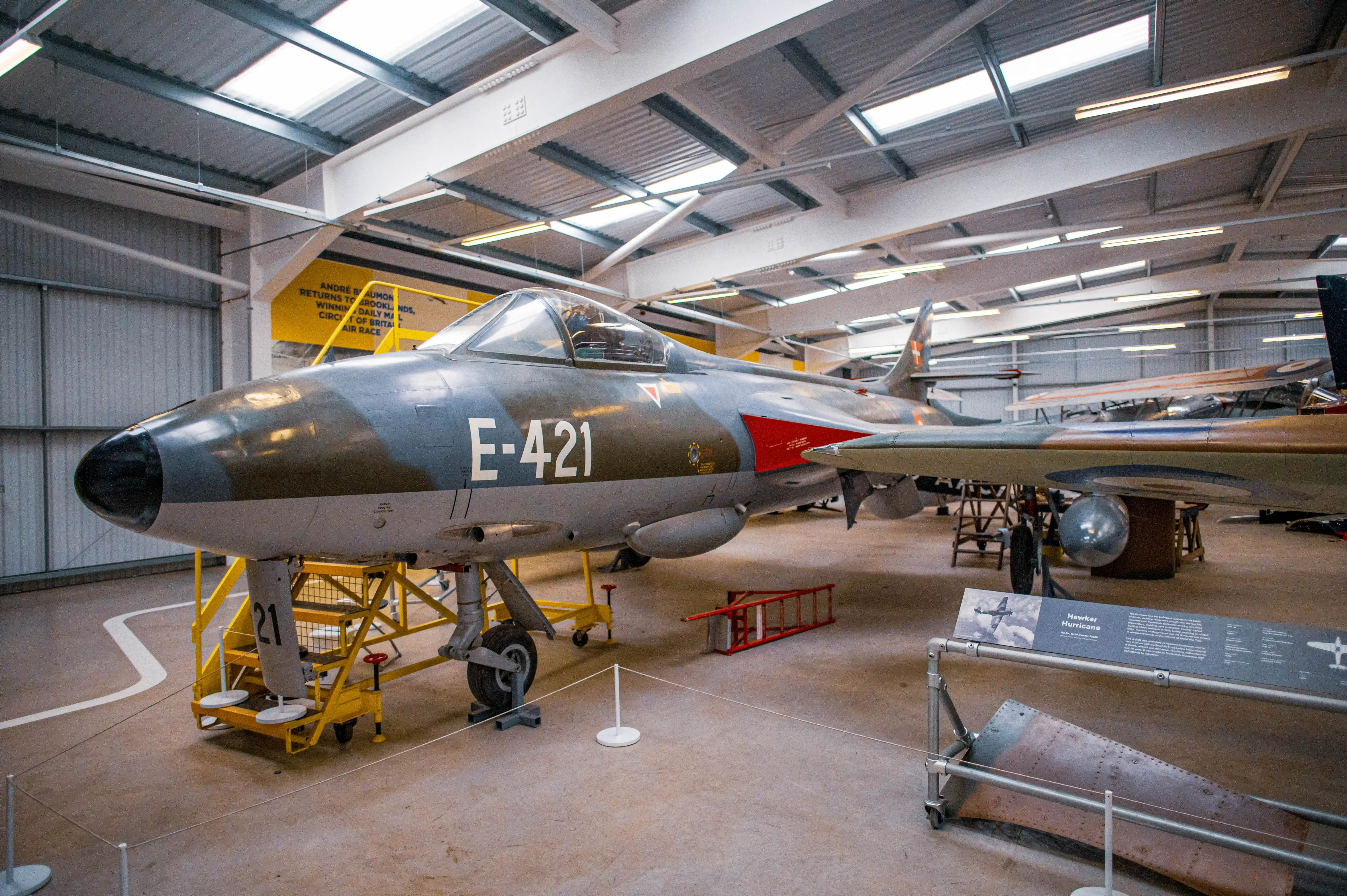
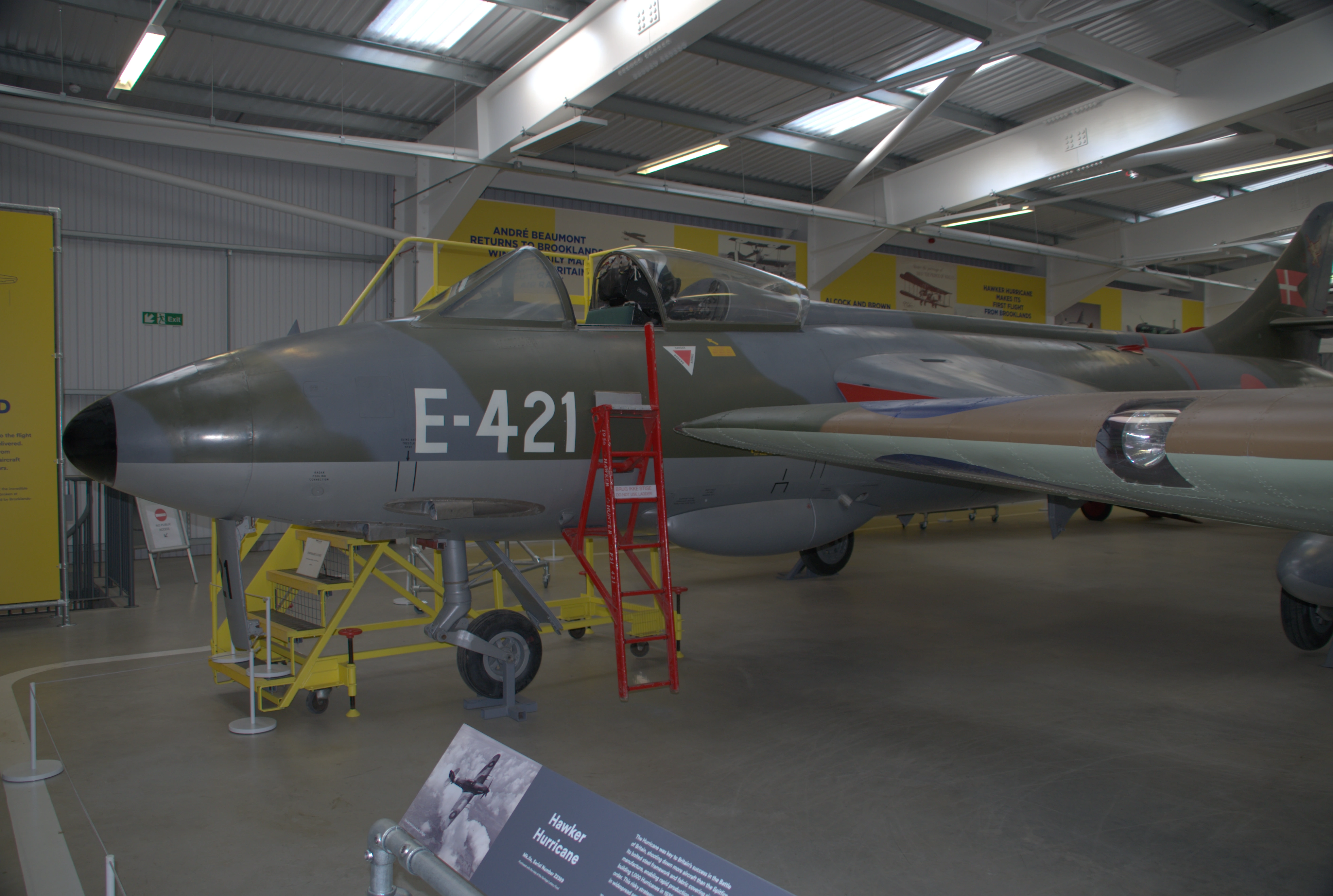
A close-up view of a vintage grey and green camouflage painted Hawker Hunter fighter jet aircraft, identified as E-421, parked inside a museum hangar. The aircraft's cockpit, wings, and landing gear are visible, along with a yellow access platform. Other exhibits and aircraft parts are in the background under a large, corrugated metal roof with skylights.
title
photo by
©www.mgaylard.co.uk.
A close-up view of a vintage grey and green camouflage painted Hawker Hunter fighter jet aircraft, identified as E-421, parked inside a museum hangar. The aircraft's cockpit, wings, and landing gear are visible, along with a yellow access platform. Other exhibits and aircraft parts are in the background under a large, corrugated metal roof with skylights.
Hawker Hunter E-421 in Museum Hangar
photo by
©www.mgaylard.co.uk.

Hawker Hunter Mk 51

Overview

The Hawker Hunter Mk 51 was Denmark’s first modern swept-wing jet fighter, delivered in the mid-1950s as part of the Royal Danish Air Force’s transition into the NATO jet age. As an export derivative of the Hunter F.4/F.6 family, it provided a major leap in capability over the piston-engined aircraft it replaced and became the core of Danish air-defence operations until the introduction of the F-104 Starfighter.

Operational Service

Thirty Mk 51s were operated primarily by Eskadrille 724 and 726, fulfilling interception, air-defence, and secondary ground-attack roles. The type also served as Denmark’s principal platform for converting pilots to swept-wing jet operations. Throughout the early Cold War, the Hunter Mk 51 contributed to NATO quick-reaction alert duties and remained in frontline service into the early 1970s.

Design & Characteristics

Powered by a Rolls-Royce Avon turbojet, the Mk 51 retained the Hunter’s distinctive aerodynamic form: swept wings, bubble canopy, pointed nose, and four 30 mm ADEN cannon. Danish-specific avionics and national markings distinguished this export variant, while underwing pylons allowed carriage of rockets, bombs, or drop tanks.

Significance

The Hunter Mk 51 marked Denmark’s entry into modern jet fighter operations and helped establish the Hunter’s reputation as one of the most successful Western fighters of the Cold War era. Its service represents a key chapter in both Danish aviation history and the broader Hawker jet lineage.

References

Text generated by Microsoft CoPilot

and Mistral AI

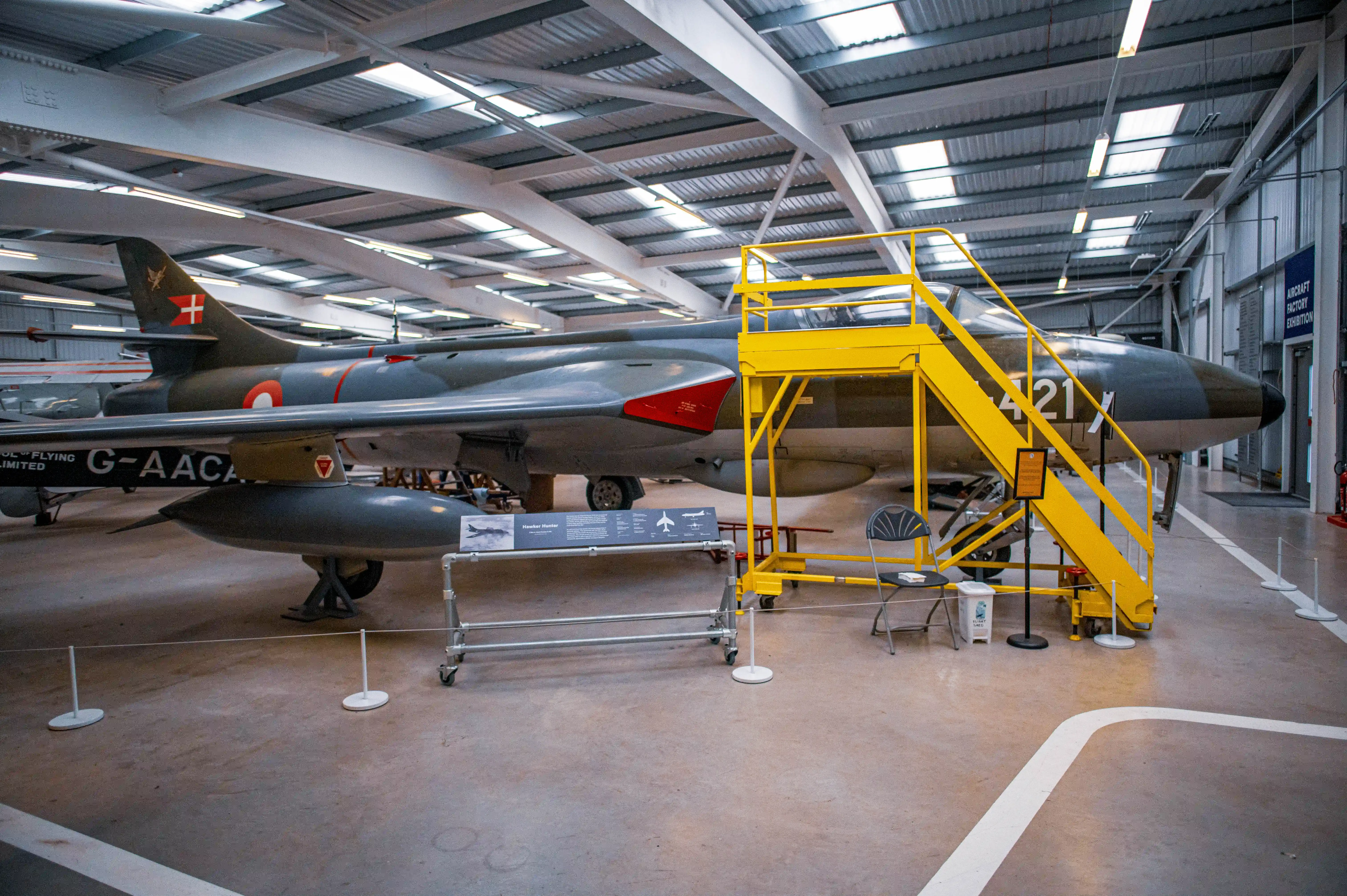
Side view of a dark green Hawker Hunter fighter jet with red accents, parked inside a museum. A bright yellow set of stairs leads up to the cockpit.
Hawker Hunter Fighter Jet in Museum Hangar
photo by
©www.mgaylard.co.uk.
A museum hangar displays a collection of vintage aircraft, with a prominent dark blue jet in the foreground. A man stands to the right, viewing the aircraft.
Aviation Heritage Displa
photo by
©www.mgaylard.co.uk.

Hawker Hunter E-421

A Cold War Warrior with a Global Legacy

The Hawker Hunter E-421 is a Hunter F.51, a single-seat transonic jet fighter built for the Royal Danish Air Force (RDAF) in 1956. As part of the broader Hawker Hunter family—one of Britain’s most successful early Cold War jet fighters—the F.51 combined interceptor performance with ground-attack capability and became a widely exported and highly regarded aircraft across NATO and beyond.

Operational History in Denmark

Delivered to Aalborg Air Base on 22 June 1956, E-421 entered service with Eskadrille 724, one of the RDAF’s frontline fighter squadrons. Powered by the Rolls-Royce Avon turbojet, the aircraft offered strong climb performance, reliable handling, and the versatility required for both air-defence interception and strike missions. E-421 remained in Danish service for nearly two decades, contributing to national air-defence readiness during the formative years of the Cold War.

Return to the United Kingdom

In 1976, after its retirement from Danish service, E-421 was sold back to Hawker Siddeley Aviation (HSA). It received the test registration G-9-443 and was evaluated for potential resale to overseas operators. When no buyer emerged, the aircraft was transferred to British Aerospace (BAe) and used by the BAe Apprentice School at Kingston, where it served as a hands-on training airframe for engineering apprentices—continuing its role in aviation education even after its flying career had ended.

Preservation at Brooklands Museum

E-421 eventually joined the collection at Brooklands Museum in Weybridge, Surrey, where it is now displayed in the Flight Shed. Restored in its original Royal Danish Air Force markings, the aircraft stands as a tangible link to Denmark’s early jet era and to the global legacy of the Hawker Hunter. Museum volunteers provide detailed interpretation of its history, ensuring that E-421’s operational story, technical significance, and Cold War heritage remain accessible to visitors.

References

Text generated by Microsoft CoPilot

Text generated by Mistral AI

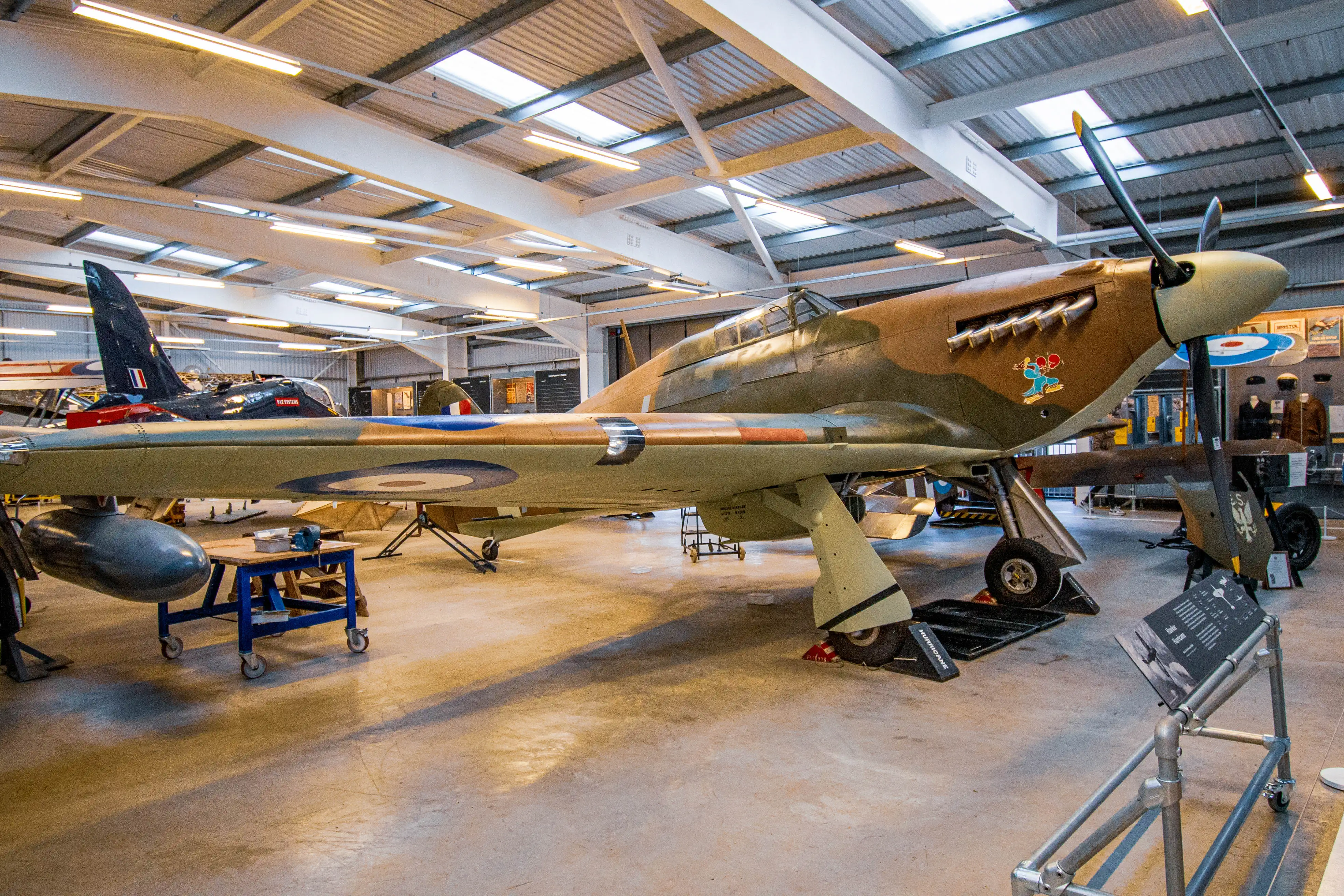
A vintage military aircraft with a camouflage-painted fuselage and RAF roundel markings displayed inside a modern hangar. The aircraft features a propeller, machine gun ports, and military insignia on its body. The hangar is well-lit with industrial lighting, and other aircraft and equipment are visible in the background
Wings of Valor: A Vintage Military Aircraft in a Museum Hangar
photo by
©www.mgaylard.co.uk.

Hawker Hurricane Mk IIA

Identity

The Hawker Hurricane Mk IIA (Series 1) was the first major evolution of the Hurricane family, introducing the Rolls-Royce Merlin XX two-speed supercharged engine and a lengthened fuselage to accommodate its increased power. Retaining the eight .303 Browning machine guns of the Mk I, the Mk IIA delivered markedly improved speed, climb performance, and operational range. It served as the foundational variant from which all subsequent Mk II Hurricanes were developed.

Historical Context

Designed by Sydney Camm and built by Hawker Aircraft, the Mk IIA entered service in early 1941, becoming a frontline RAF fighter during the critical middle phase of the Second World War. It provided the Hurricane with a renewed operational life after the Battle of Britain, enabling deployment across multiple theatres including North Africa, the Middle East, and the Far East. The Mk IIA’s significance lay in its transformation of the Hurricane from a defensive interceptor into a more versatile, multi-role platform. Its strengthened airframe and improved engine performance formed the basis for cannon-armed, fighter-bomber, and ground-attack derivatives that expanded the Hurricane’s tactical utility across the global conflict.

Operational Use

The Mk IIA served with several RAF squadrons, including No. 1, No. 43, No. 79, No. 213, and No. 257 Squadrons. It operated across diverse theatres—from UK home defence to the Desert Air Force, the Middle East, and early deployments in the Far East. Its roles included interception, escort duties, limited ground-attack, and pilot conversion to later Mk II variants such as the IIB, IIC, and IID. The Mk IIA’s adaptability ensured the Hurricane remained an effective combat aircraft well beyond its initial design expectations.

References

Text generated by Microsoft CoPilot and Mistral AI

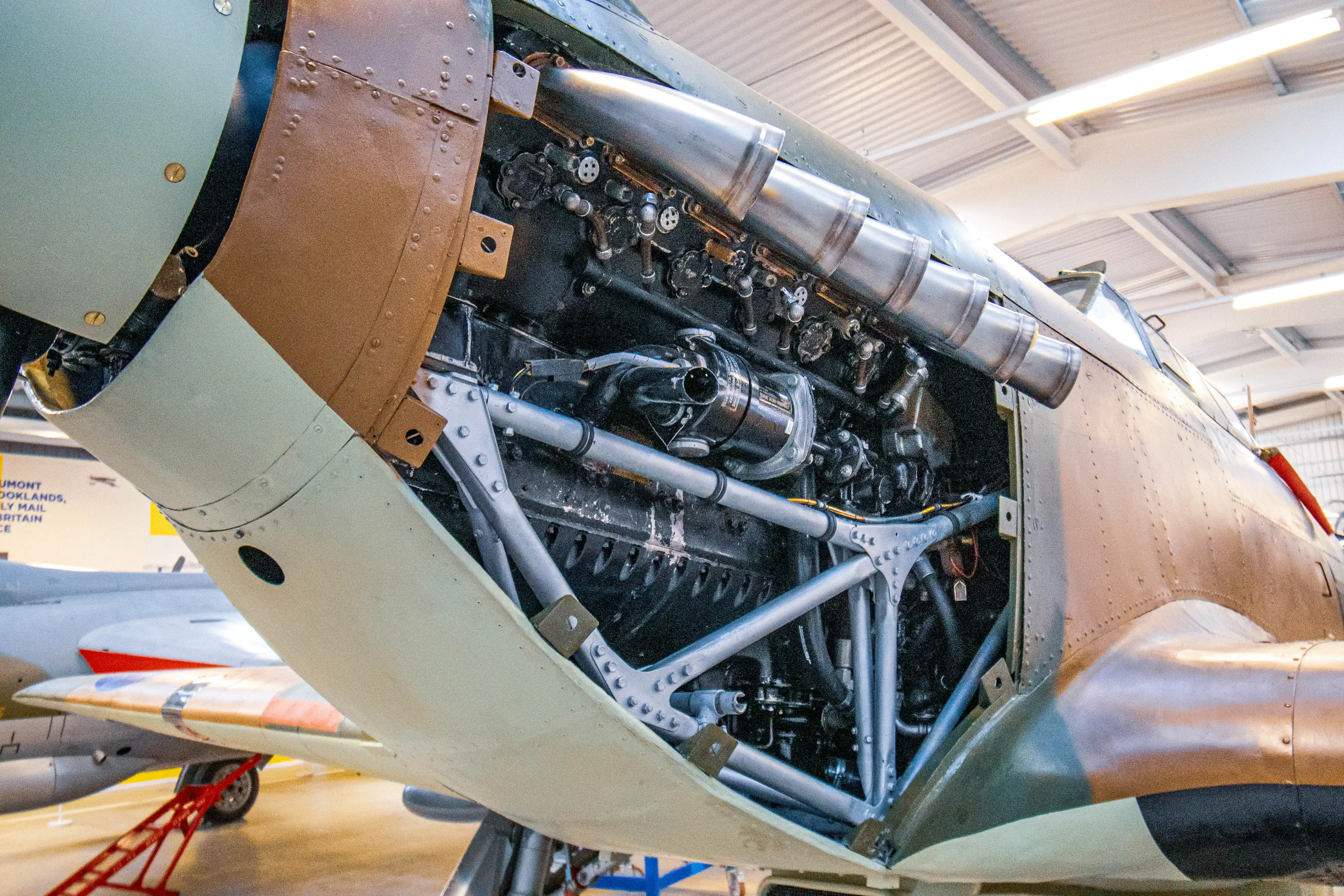
A detailed shot of the engine of a Hawker Hurricane aircraft, with panels removed to reveal the internal workings.
Hawker Hurricane Engine Bay
photo by
©www.mgaylard.co.uk.
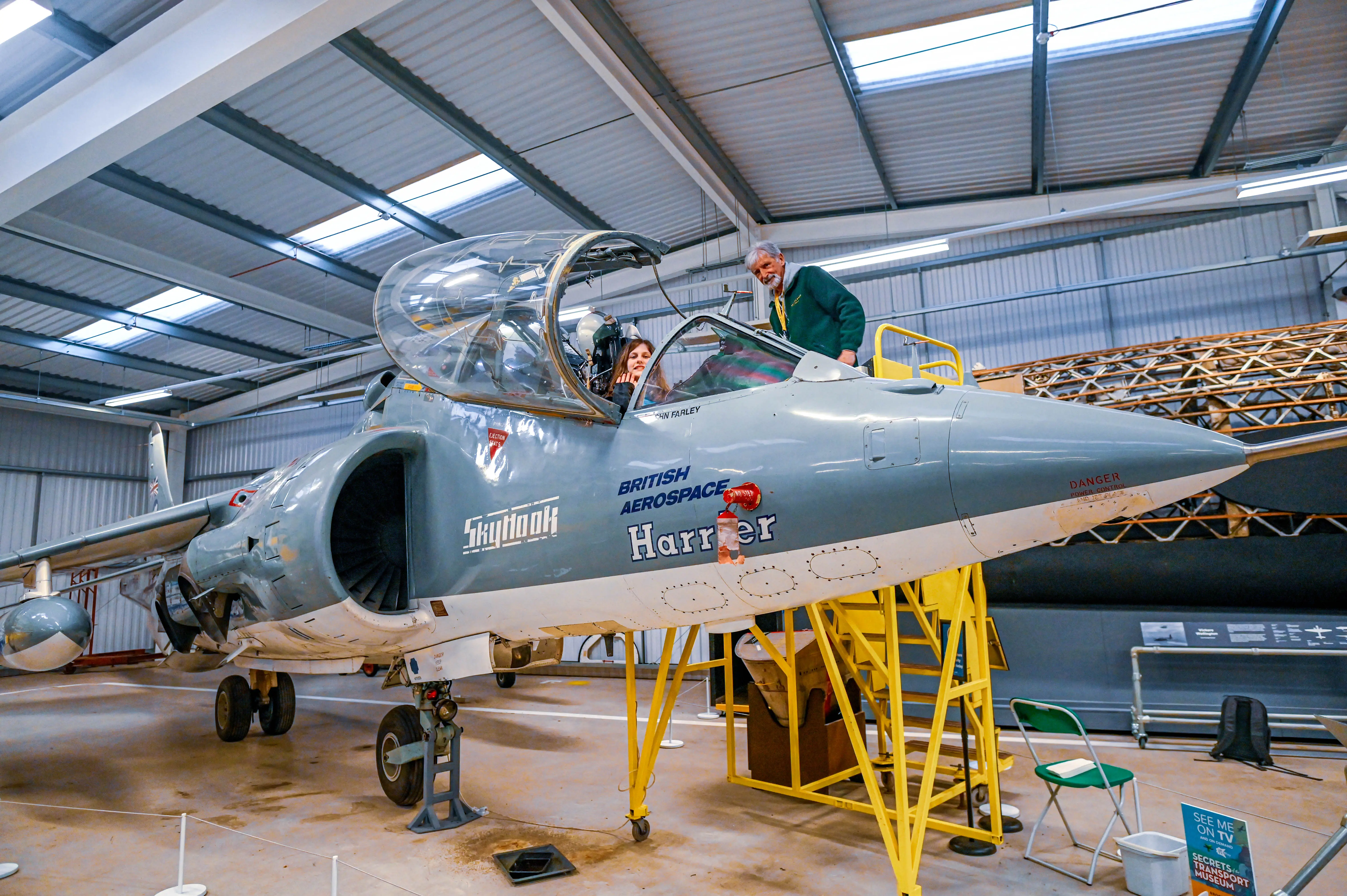
A grey British Aerospace Harrier jet with the word
titleBritish Aerospace Harrier Jet with Visitors
photo by
©www.mgaylard.co.uk.

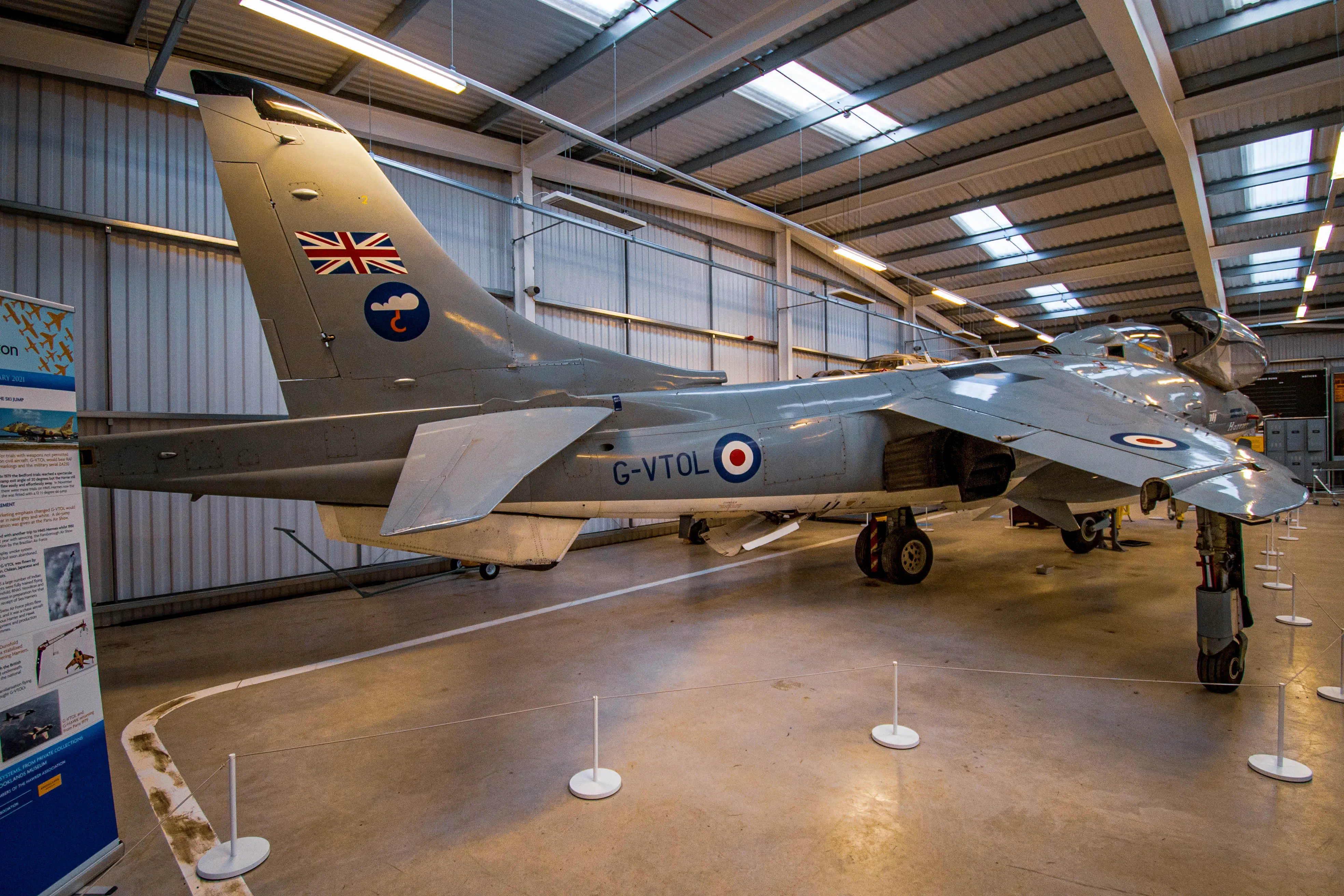
Harrier T.Mk.52

Operational History and Legacy

The Harrier T.Mk.52 occupied a unique position within the early Harrier programme. Although it was never operated in frontline military service, the aircraft played a crucial developmental role as a company demonstrator and training platform, proving the viability of the Harrier’s revolutionary V/STOL concept. Its success directly influenced the creation of the fully operational two-seat Harrier variants that followed.
The T.Mk.52’s trials and demonstrations helped shape a family of two-seat Harriers that became essential for pilot conversion, advanced training, and naval operations:
  • Harrier T.2 — The first lengthened two-seat RAF trainer, powered by the Pegasus Mk 101 and fitted with a taller fin for improved stability.
  • Harrier T.4 — The RAF’s GR.3-equivalent trainer, equipped with the Pegasus Mk 103, a laser seeker, and radar warning receiver.
  • Harrier T.4N — A navalised trainer for the Royal Navy, incorporating Sea Harrier FRS.1-based avionics.
  • Harrier T.60 — An export development of the T.4N for the Indian Navy, featuring additional naval-specific avionics and systems.
Through these derivatives, the T.Mk.52 became the conceptual and technological stepping stone for all subsequent two-seat Harrier trainers. Its demonstrations helped validate the Harrier’s unprecedented ability to take off vertically, hover, and operate from improvised or shipborne locations—capabilities that reshaped modern military aviation and ultimately influenced later V/STOL aircraft such as the AV-8B Harrier II and F-35B Lightning II.

Current Status — G-VTOL at Brooklands Museum

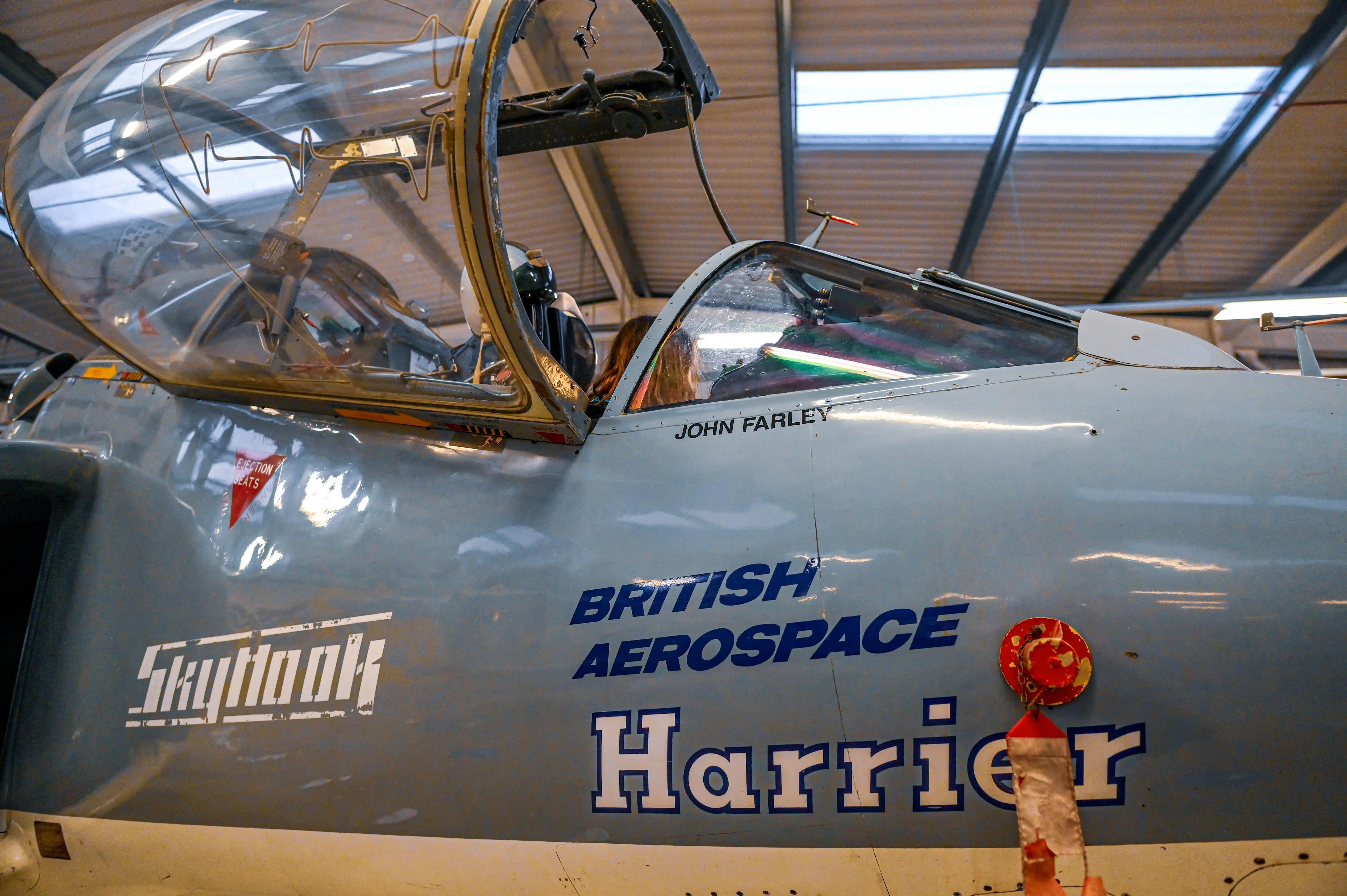
The Harrier T.Mk.52, registered G-VTOL, is preserved today at Brooklands Museum in Weybridge, Surrey. Displayed in the Flight Shed, it retains its striking BAe demonstrator livery, reflecting its role as a showcase aircraft for V/STOL technology. Often referred to as “Skyhook”, the T.Mk.52 stands as a testament to the pioneering engineering that defined the Harrier programme.
At Brooklands, the aircraft serves as an educational centrepiece, illustrating the evolution of V/STOL flight and the Harrier’s enduring impact on aviation history. Museum volunteers provide detailed interpretation of its development, trials, and legacy, ensuring that G-VTOL continues to inspire visitors and preserve the story of one of Britain’s most innovative aircraft families.

References

Wikipedia: List of Harrier Variants
YouTube: The Hawker Harrier T.Mk.52 and Dave, Paul and Andy
Flickr: Hawker Harrier T.Mk.52, G-VTOL, Brooklands Museum
Wikipedia: Harrier Jump Jet
Aviation Classics: Issue 11 – Harrier

Text generated by Microsoft CoPilot and Mistral AI

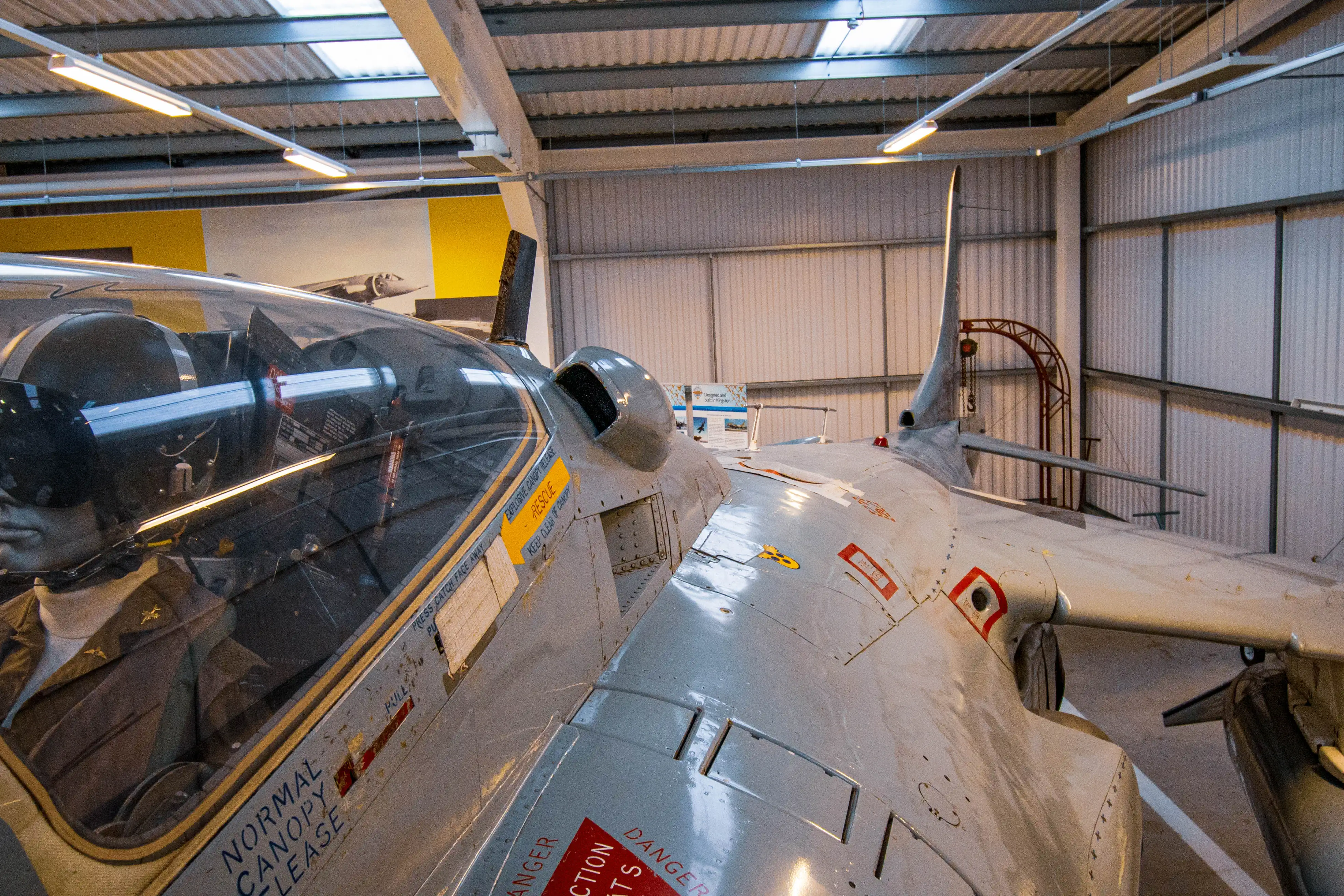
Close-up view of the cockpit of a light blue British Aerospace Harrier jet. The canopy is open, revealing part of the pilot's seat and controls. The words 'Skyhook' and 'BRITISH AEROSPACE Harrier' are visible on the side of the aircraft, along with the name 'JOHN FARLEY' and a red 'EJECTION SEATS' warning triangle.
British Aerospace Harrier Jet Cockpit Detail
photo by
©www.mgaylard.co.uk.
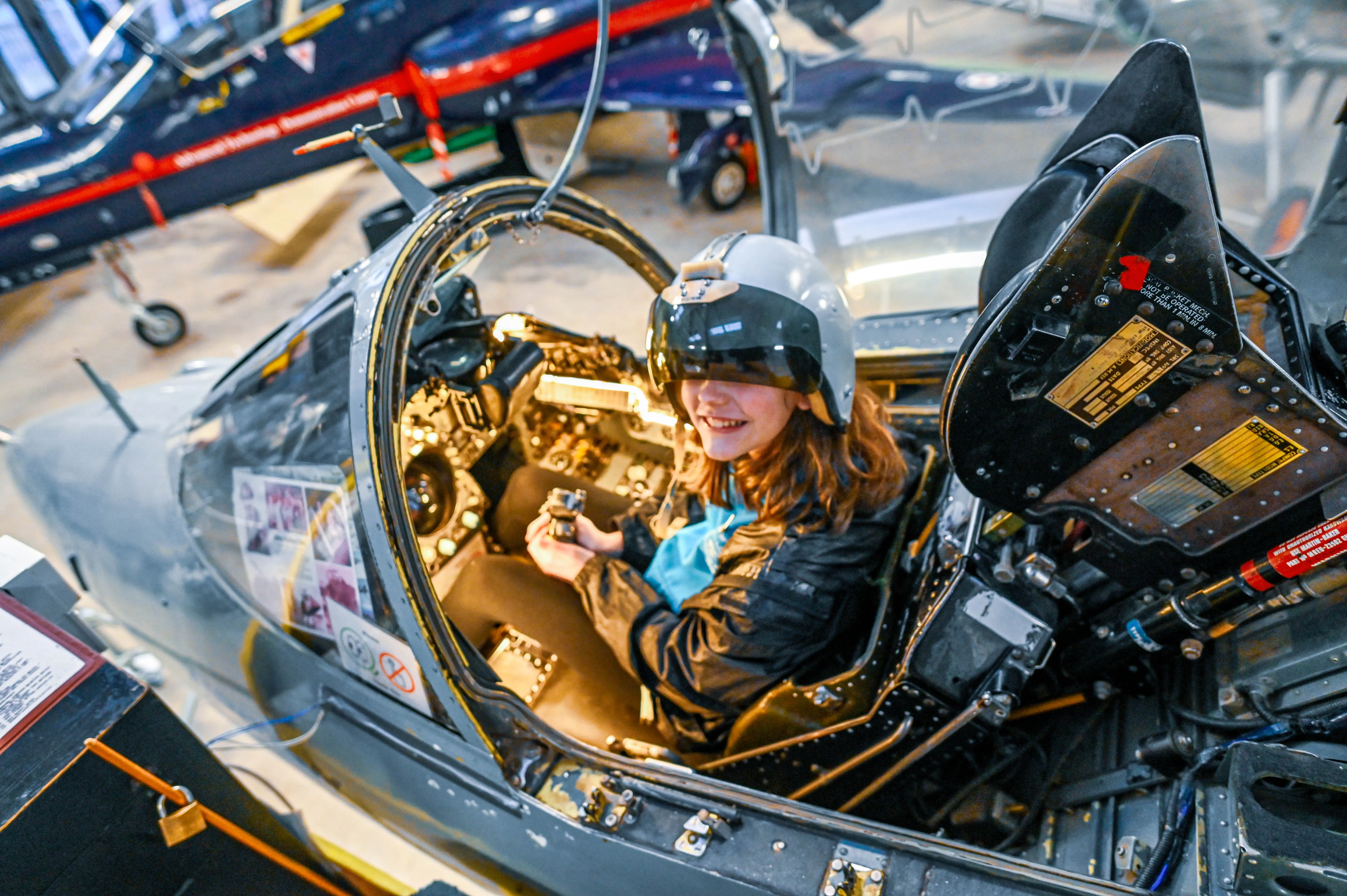
A young girl with a wide smile sits in the cockpit of a jet fighter, wearing a pilot's helmet and dark flight jacket. She holds the aircraft's controls in her hands.
A Girl's First Flight in a Jet Fighter Cockpit
photo by
©www.mgaylard.co.uk.
A rear three-quarter view of the Hawker Siddeley Harrier aircraft with the registration G-VTOL visible on its fuselage. The aircraft is displayed indoors, likely in a museum, with its distinctive grey livery and British roundels. The Union Jack and a cloud insignia are present on the tail fin.
Flight Shed Hawker Harrier T.Mk.52
photo by
©www.mgaylard.co.uk.
Close-up view of the cockpit of a Harrier jet on display, showing the pilot's seat, canopy, and warning labels on the grey exterior of the aircraft.
title
photo by
©www.mgaylard.co.uk.
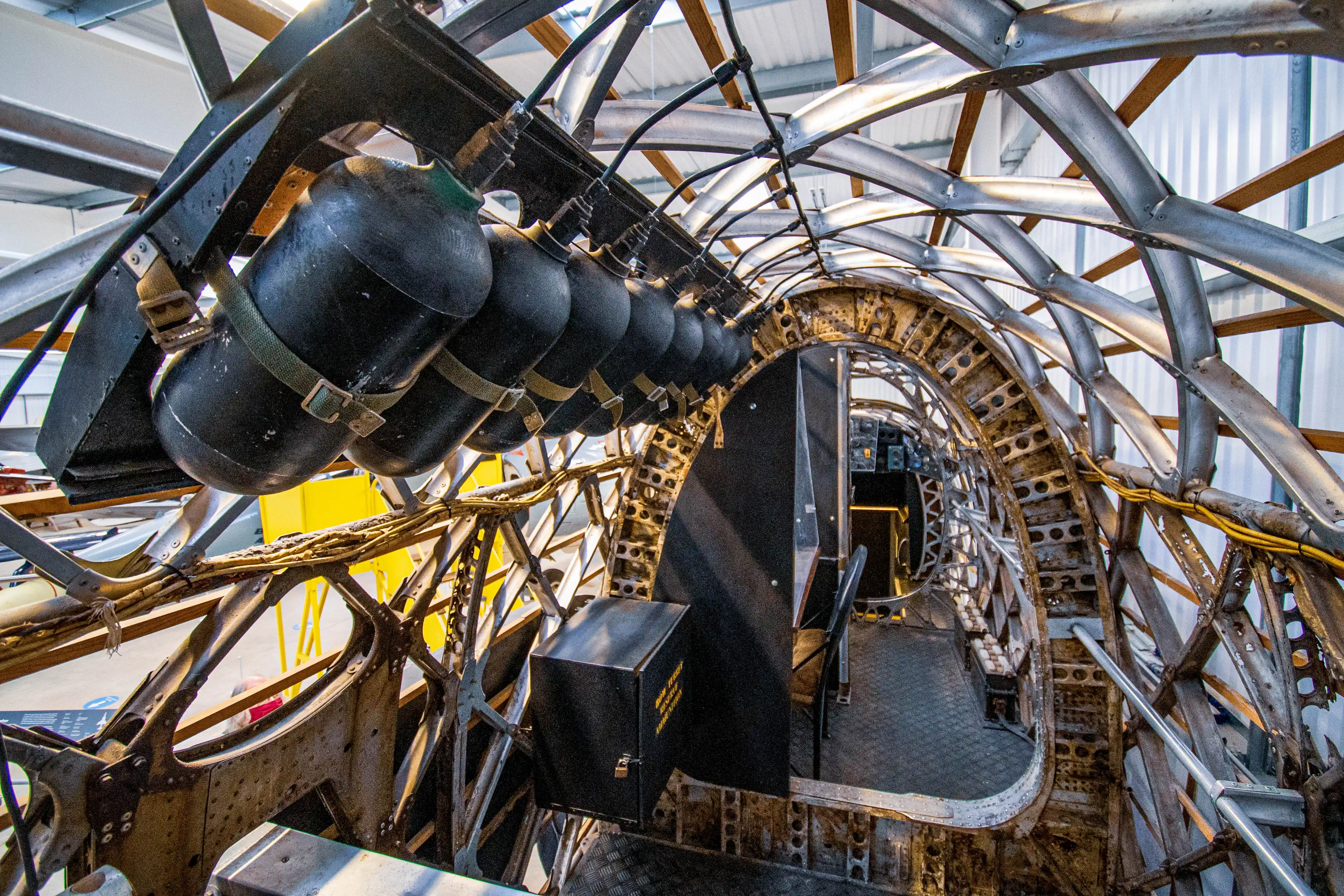
Inside the bare metal fuselage of a vintage aircraft, showing the exposed internal ribbing and framework, with a bank of black oxygen cylinders hanging overhead to the left.
Vintage Aircraft Fuselage Interior with Oxygen Tanks - Vickers Wellington
photo by
©www.mgaylard.co.uk.
A detailed view of the undercarriage and internal mechanics of an aircraft, showcasing a complex framework of metal beams, pipes, and structural supports. The image highlights the engineering precision and industrial design of the aircraft's underbelly, with visible hydraulic systems, wiring, and landing gear components. The scene is captured from below
Engineering Marvel: The Interior of an Aircraft
photo by
©www.mgaylard.co.uk.
meta itemprop="encodingFormat" content="image/jpeg">
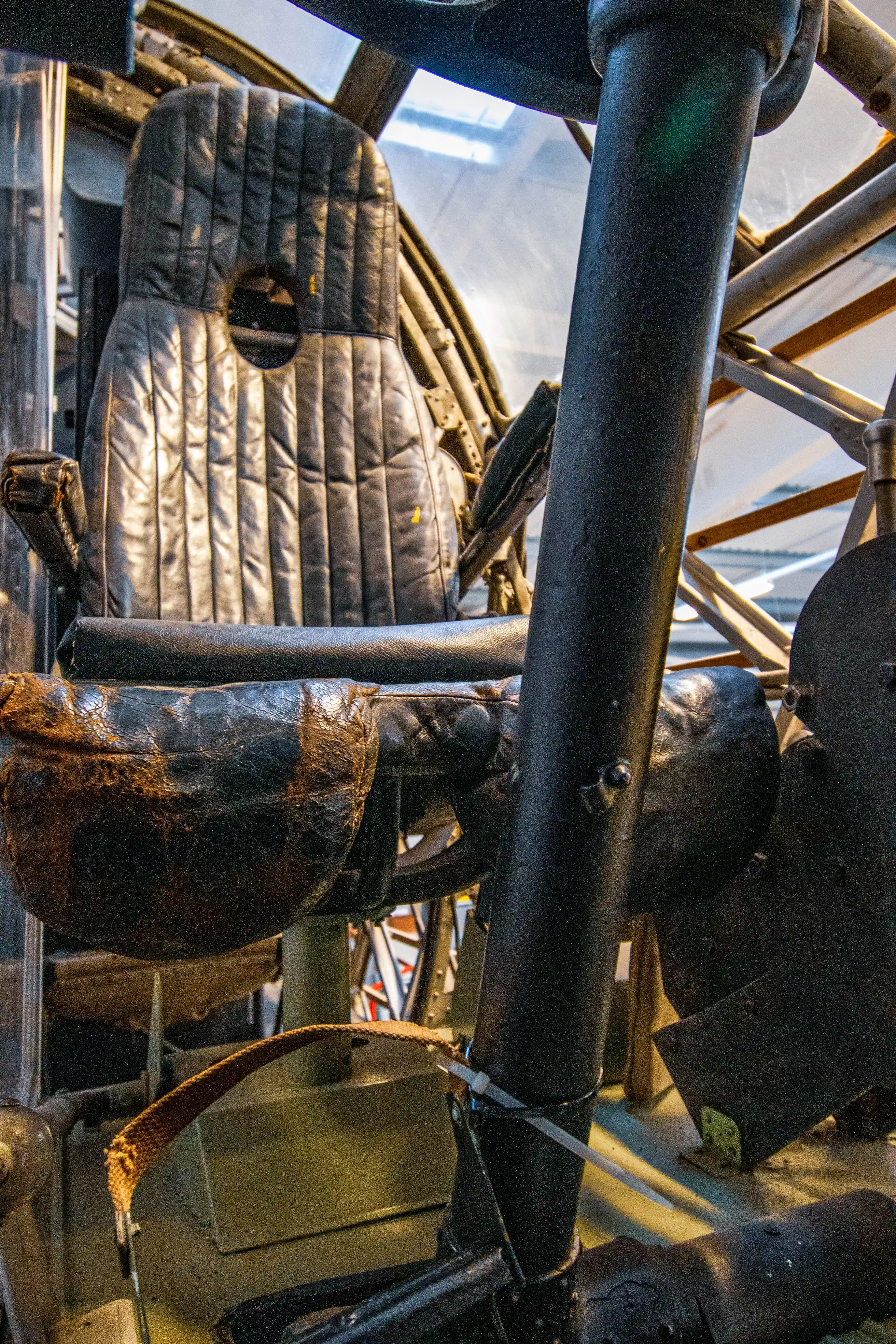
Interior view of an old aircraft cockpit showing a black leather pilot's seat with quilted padding and a circular headrest opening. A dark metal support column is prominent in the foreground, with visible structural elements of the aircraft in the background.
Vintage Aircraft Cockpit Interior
photo by
©www.mgaylard.co.uk.
meta itemprop="encodingFormat" content="image/jpeg">
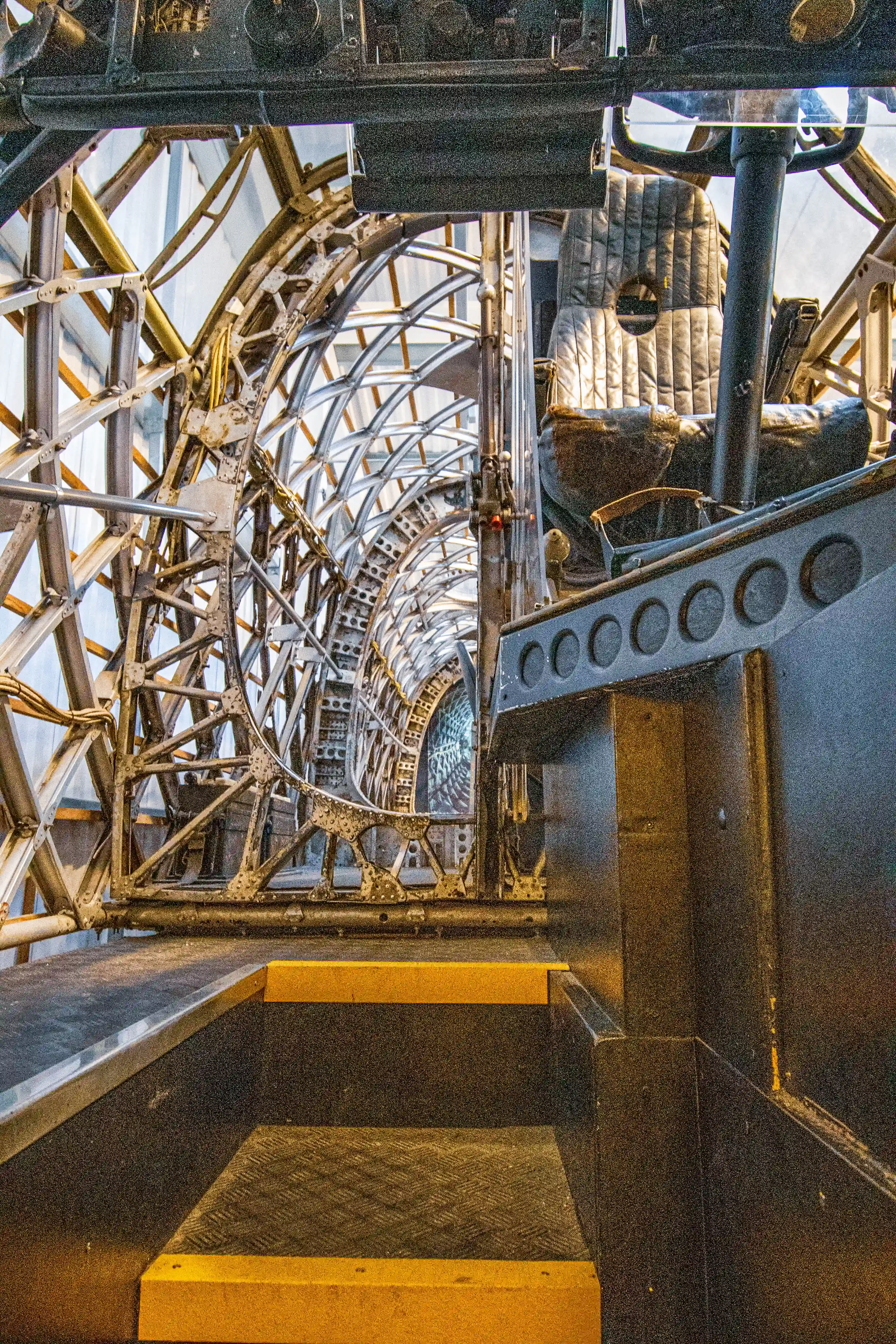
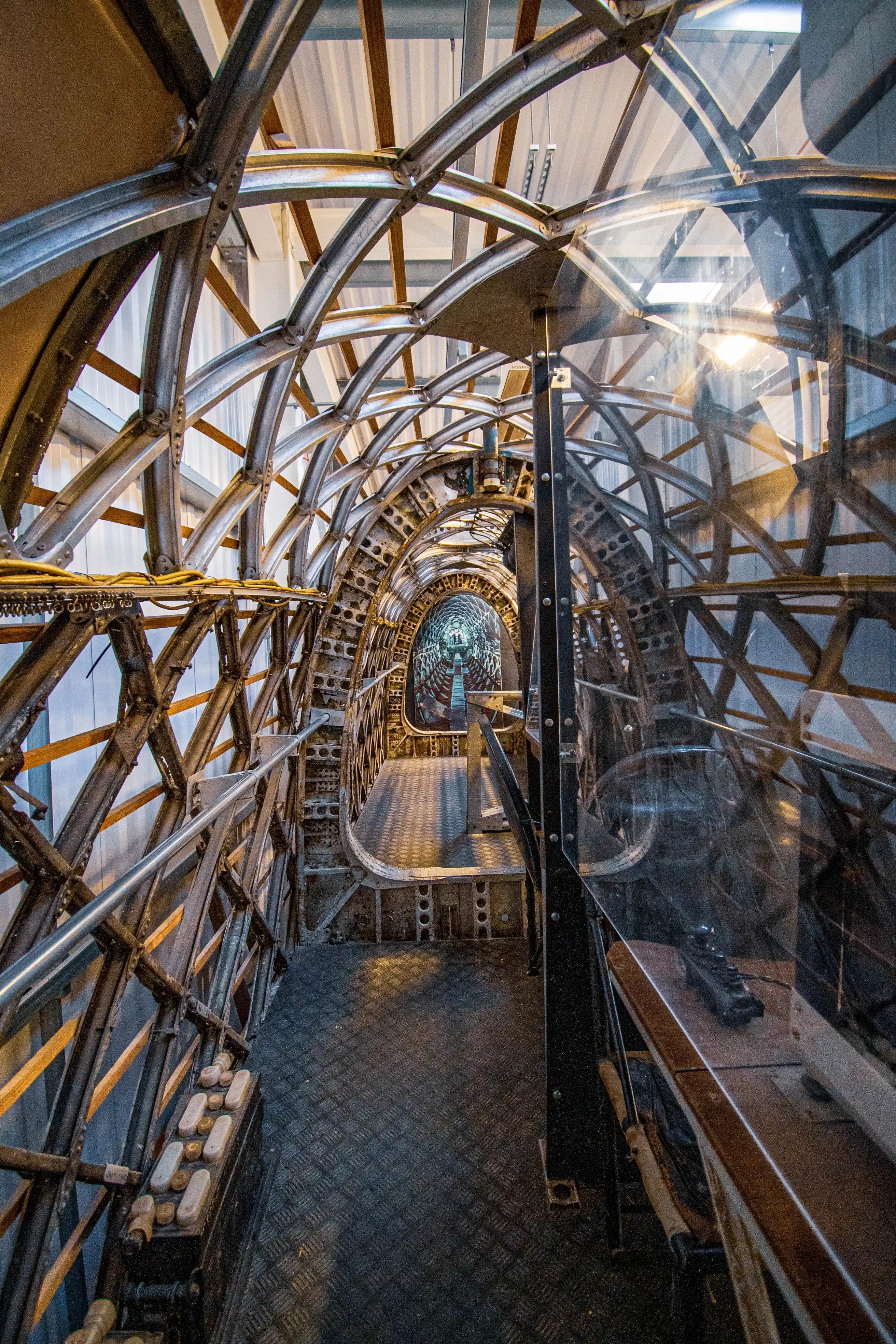
Interior of an aircraft showing the detailed metal framework, ribbed ceiling, and diamond-plate flooring, with a perspective looking down a corridor-like section.
Aircraft Interior Structure
photo by
©www.mgaylard.co.uk.
meta itemprop="encodingFormat" content="image/jpeg">
Open the full set flickr button this page

Key Facts

The Flight Shed at Brooklands

Built: 1915 (World War I)

Original Use: Aircraft assembly, testing, and maintenance

Notable Aircraft: Vickers Vimy, Vickers Wellington, Hawker Hurricane, and more

Type: Historic aviation shed and museum exhibit

Notable Features: Original wooden and steel construction, restored to historic appearance, historic aircraft collection

Website:

The Flight Shed at Brooklands was constructed in 1915 as part of the Aircraft Factory at Brooklands, which was established to meet the growing demands of World War I for aircraft production. The shed was originally used for the assembly, testing, and maintenance of aircraft built at Brooklands, including bombers, fighters, and reconnaissance planes for the Royal Flying Corps (RFC) and Royal Naval Air Service (RNAS). Its strategic location near the Brooklands race track and excellent transport links made it an ideal site for rapid aircraft production and deployment.

During World War I, the Flight Shed played a vital role in the war effort, contributing to the production of thousands of aircraft that were critical to the Allied cause. The shed was also a center for innovation, where new aircraft designs and technologies were developed and tested. After the war, the Flight Shed continued to be a hub for aviation advancements, including the development of commercial and experimental aircraft during the interwar years.

In World War II, the Flight Shed ramped up production once again, becoming a key site for the manufacture of iconic aircraft such as the Vickers Wellington bomber and the Hawker Hurricane fighter. These aircraft played crucial roles in the defense of Britain and the Allied victory in the war. The Flight Shed’s contribution to the war effort was vital to the success of the Royal Air Force (RAF) and other Allied air forces.

After World War II, the Flight Shed continued to be used for aircraft production and maintenance, though its role diminished as the British aviation industry consolidated in the post-war years. By the 1980s and 1990s, the shed had fallen into disuse, but with the establishment of Brooklands Museum in 1991, it was restored to its original appearance and incorporated into the museum’s exhibits. Today, the Flight Shed stands as a testament to the golden age of British aviation and a symbol of the innovation and ingenuity that defined the history of Brooklands.

Notice

Text generated by Mistral AI , www.xprivo.com , Microsoft CoPilot , and AI Image Describer
To the top
Powered by w3.css. The images are all stored on link to www.gaylard.co.uk Photostream on Flickr   This website is hosted by link to 123Reg Web Hosting