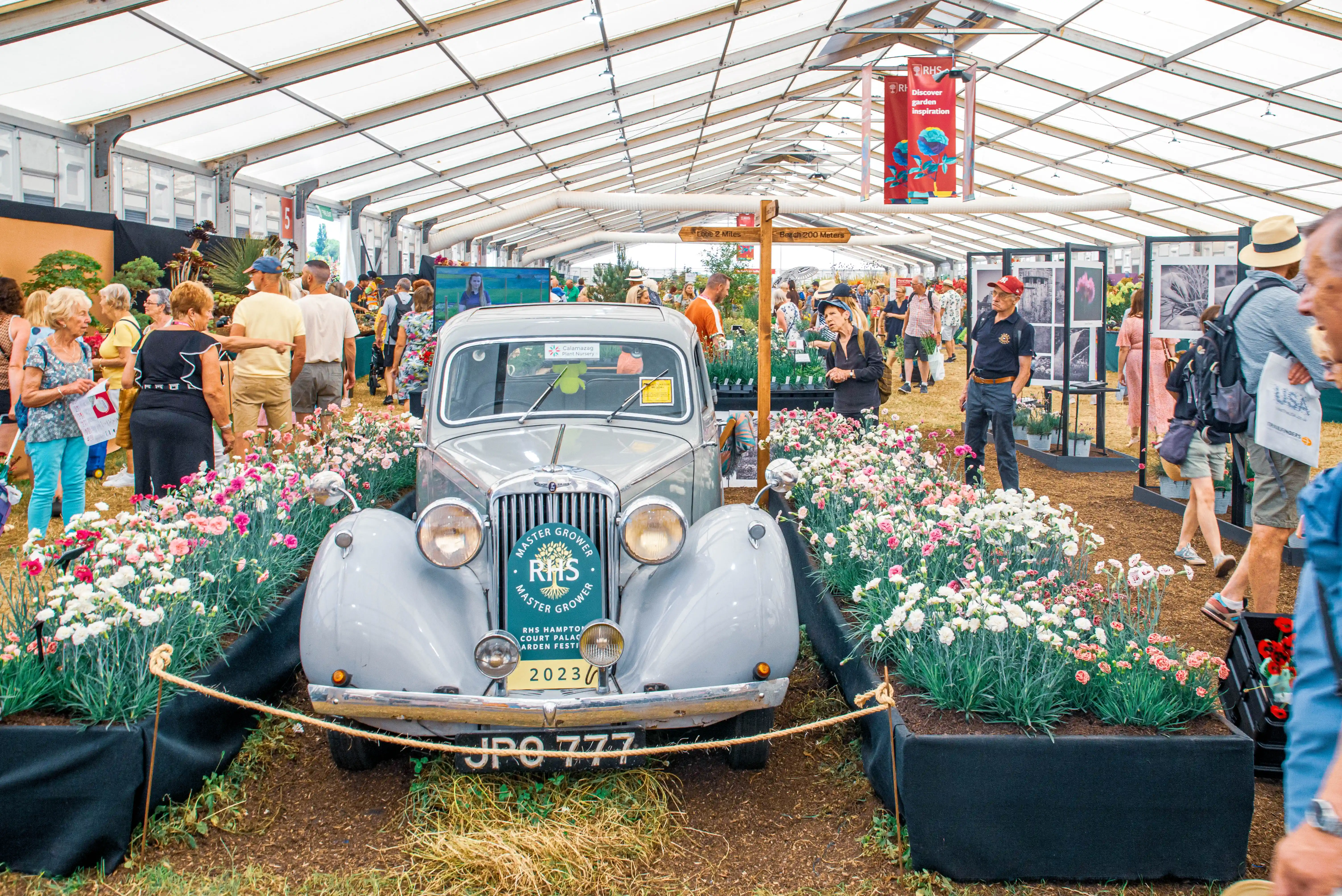
Hampton Court Palace, Molesey Road,
East Molesey,
Surrey,
KT8 9AU,
United Kingdom
Key Facts
Founded: ·
Typical dates: Tuesday to Sunday in early July (most recently 1–6 July 2025", "the festival is now biennial, returning to Hampton Court in 2027)
Status: The world's largest flower show
Scale: 31 acres of showground in Home Park, attracting around 120,000 visitors per festival
Organiser: The Royal Horticultural Society, in partnership with Historic Royal Palaces
First held: July 1990, created by Historic Royal Palaces and Network SouthEast", "the first RHS show was 1993
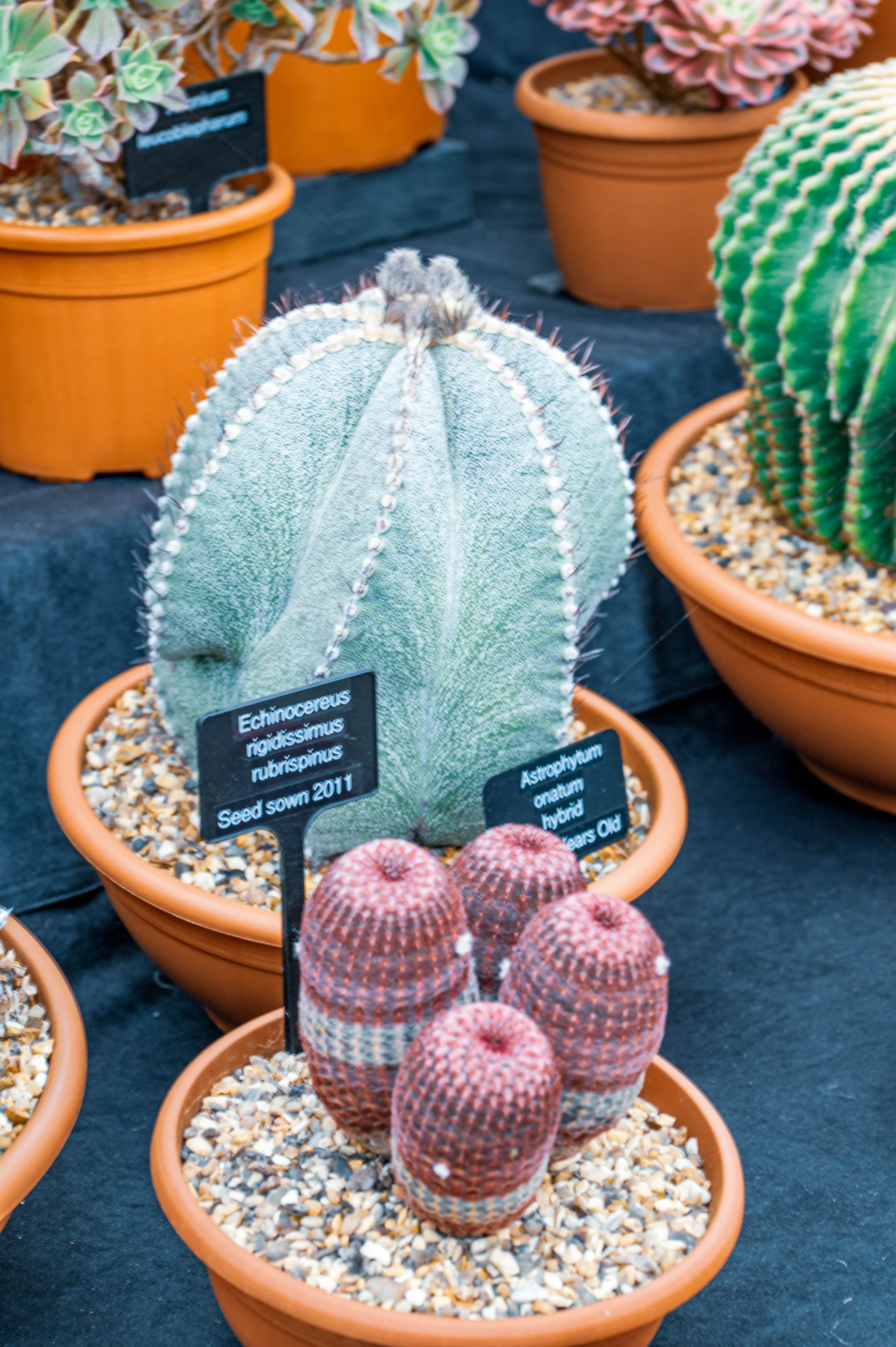
Format: Show gardens, floral marquees, the Festival of Roses, trade stands, musicians and street food
Schedule: Now biennial — the 2026 show moves to Badminton Estate in Gloucestershire, with the festival returning to Hampton Court Palace in 2027
Historical Significance
The original Hampton Court Palace Flower Show was the brainchild of management consultant Adrian Boyd, who saw an opportunity to connect two organisations facing times of uncertainty: the newly created Historic Royal Palaces, looking for revenue after the dismemberment of the Department of the Environment, and Network SouthEast, seeking to make its rail services more profitable. The first show in July 1990 drew an estimated 300,000 visitors, with special trains laid on from Waterloo and porters wearing carnations in their hats — 70 per cent of visitors used rail. When Network SouthEast withdrew in 1992, the RHS won the competitive tender, and its first Hampton Court show in 1993, sponsored by the Daily Mail, was such a success that 1994's was declared the best outdoor public event of the year. The show rebranded as the Hampton Court Garden Festival in 2019, a name the RHS said better reflected the visitor experience", "the 2020 festival was cancelled due to the COVID-19 pandemic.
Key Features and Attractions
Show Gardens: The cutting edge of garden design, with dozens of display and show gardens competing for RHS medals, including Best in Show and the People's Choice awards.
The Festival of Roses: A signature floral feature, fitting for a show that introduced its British Rose Festival back in 1991 with the Royal National Rose Society.
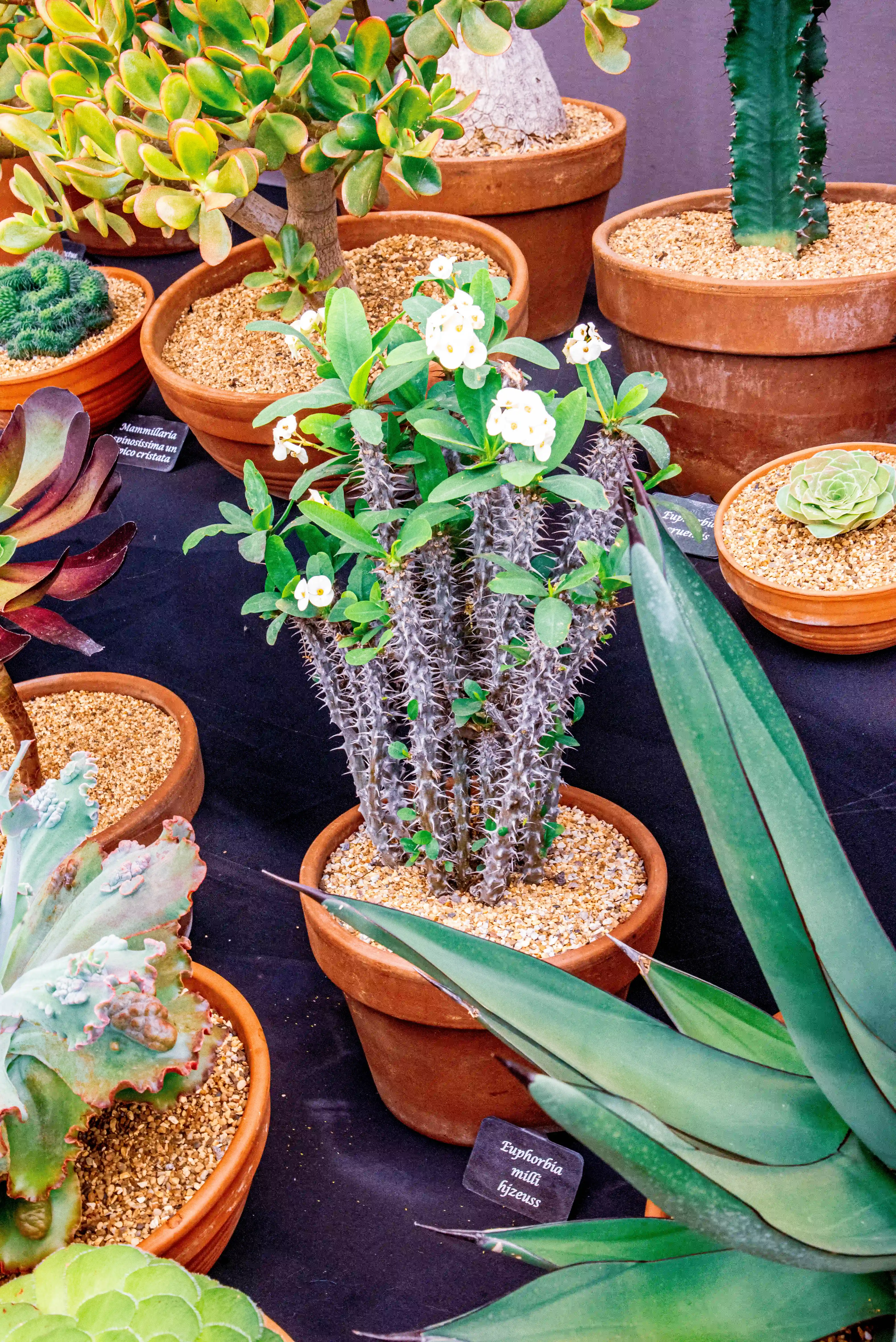
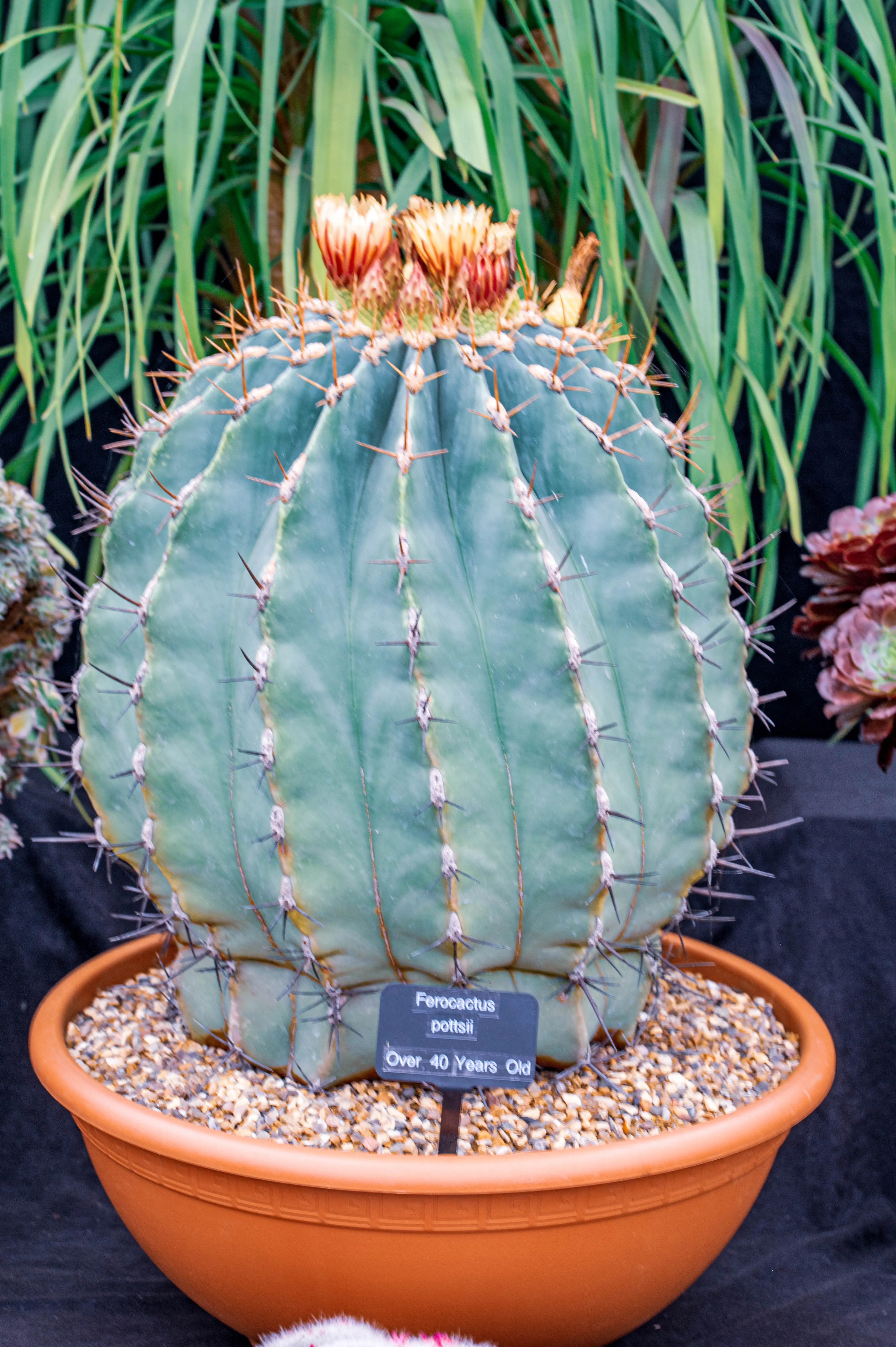
The Floral Marquee and plant sales: More flowers are sold per square mile at RHS Hampton than anywhere else in the UK, with nursery displays and rare plants from specialist growers.
The festival atmosphere: A laid-back feel compared to Chelsea, with musicians, street food and family-friendly spaces — on average 3,300 glasses of Pimm's, 17,000+ cups of Fairtrade tea and coffee, 11,000+ sandwiches and 2,800+ slices of cake are consumed during festival week.
Legacy gardens: Show gardens have been rebuilt for good causes — in 1998 a Hampton Court garden was rebuilt at the Royal Hospital for Neuro-disability, and award-winning gardens such as Davies White's 2017 Cauldwell children's wild garden have gone on to permanent homes.
How To Get There
How To Get There
Getting There From London Victoria
Allium (The Onion Genus)
Taxonomy: A large genus of monocotyledonous bulbous flowering plants in the family Amaryllidaceae (the amaryllis family), subfamily Allioideae, and the sole genus of its tribe, the Allieae
Etymology:Allium is the classical Latin word for garlic", "the type species is Allium sativum — "cultivated garlic"
Native range:temperate regions of the Northern Hemisphere, with a few outliers in Chile, Brazil and tropical Africa
Key Facts
Genus size: 1,112 accepted species — the largest genus in the Amaryllidaceae and among the largest plant genera in the world (estimates range from 260 to 979 species in older treatments)
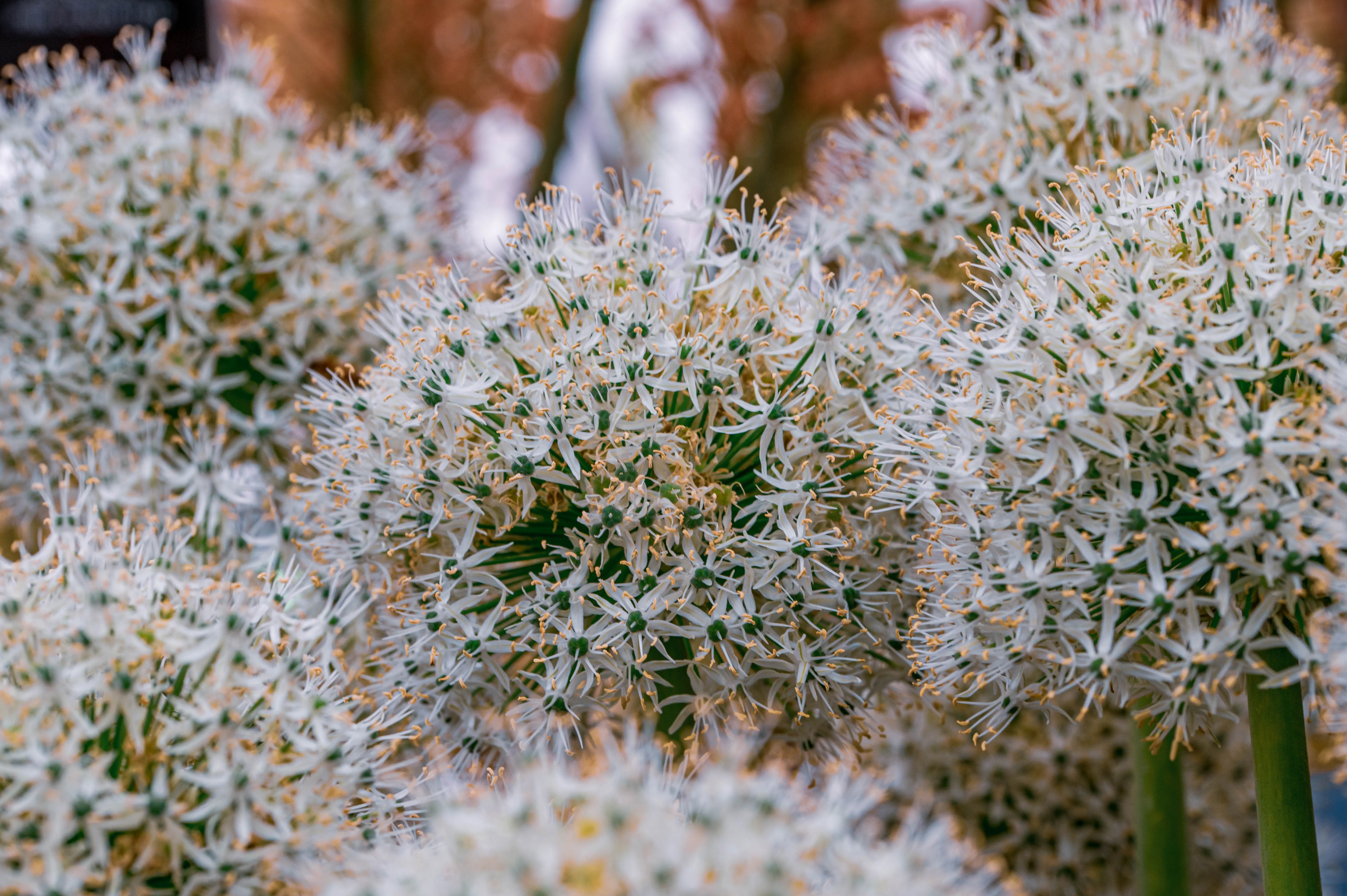
Form: Herbaceous geophytes — perennial bulbs enclosed in membranous tunics, with leafless flowering stalks (scapes) bearing an umbel of flowers
Height: Species range from 5 to 150 centimetres tall", "bulbs from 2–3 mm to 8–10 cm across
Signature chemistry: Cysteine-derived organosulfur compounds give the distinctive onion/garlic flavour and scent — remarkably, in sulfur-depleted soil all species completely lose their usual odour
Described: First by Carl Linnaeus in 1753, in his Species Plantarum
Historical Significance
Various Allium species have been cultivated from the earliest times — among the very first plants domesticated by humankind. About a dozen species are economically important as crops or garden vegetables: the onion, garlic, scallions, shallots, leeks and chives that underpin the cuisines of nearly every culture on earth. Egyptian records, Chinese medicine and classical Roman cooking all testify to the genus's ancient importance. Botanically, the genus has had a wandering history: older classifications placed Allium in the lily family (Liliaceae), until molecular phylogenetic studies showed that broad circumscription to be unnatural, and it now sits in the Amaryllidaceae as the sole genus of the tribe Allieae.
Echeveria (Mexican Hens and Chicks)
Taxonomy: A large genus of evergreen flowering plants in the family Crassulaceae (the stonecrop family), subfamily Sempervivoideae, Acre clade — the second-largest genus in that clade after Sedum
Etymology: Named by A. P. de Candolle in 1828 in honour of Atanasio Echeverría y Godoy, the 18th-century Mexican botanical artist who illustrated the flora of New Spain in Flora Mexicana
Native range:semi-desert areas of Mexico, Central America and northwestern South America
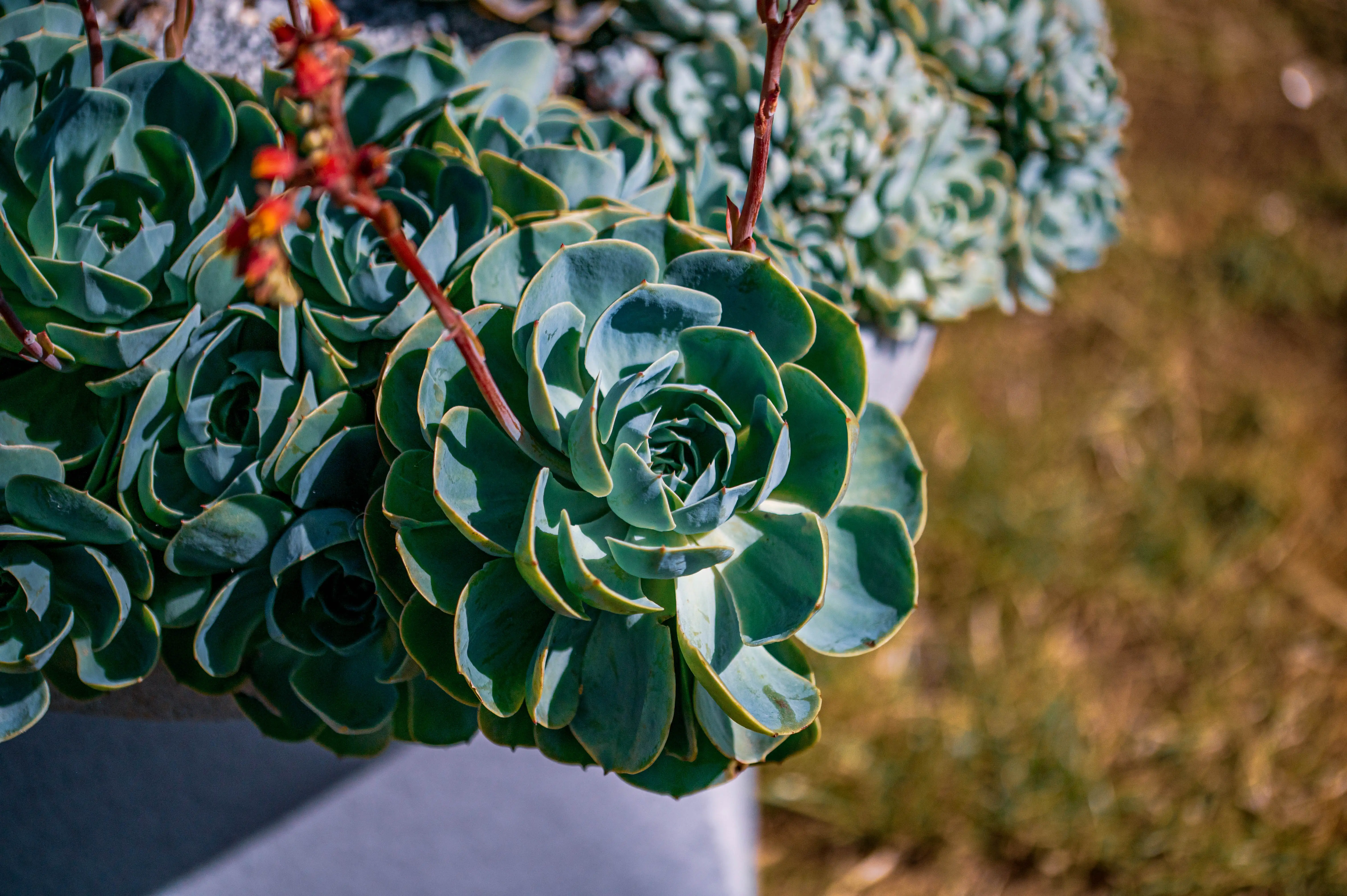
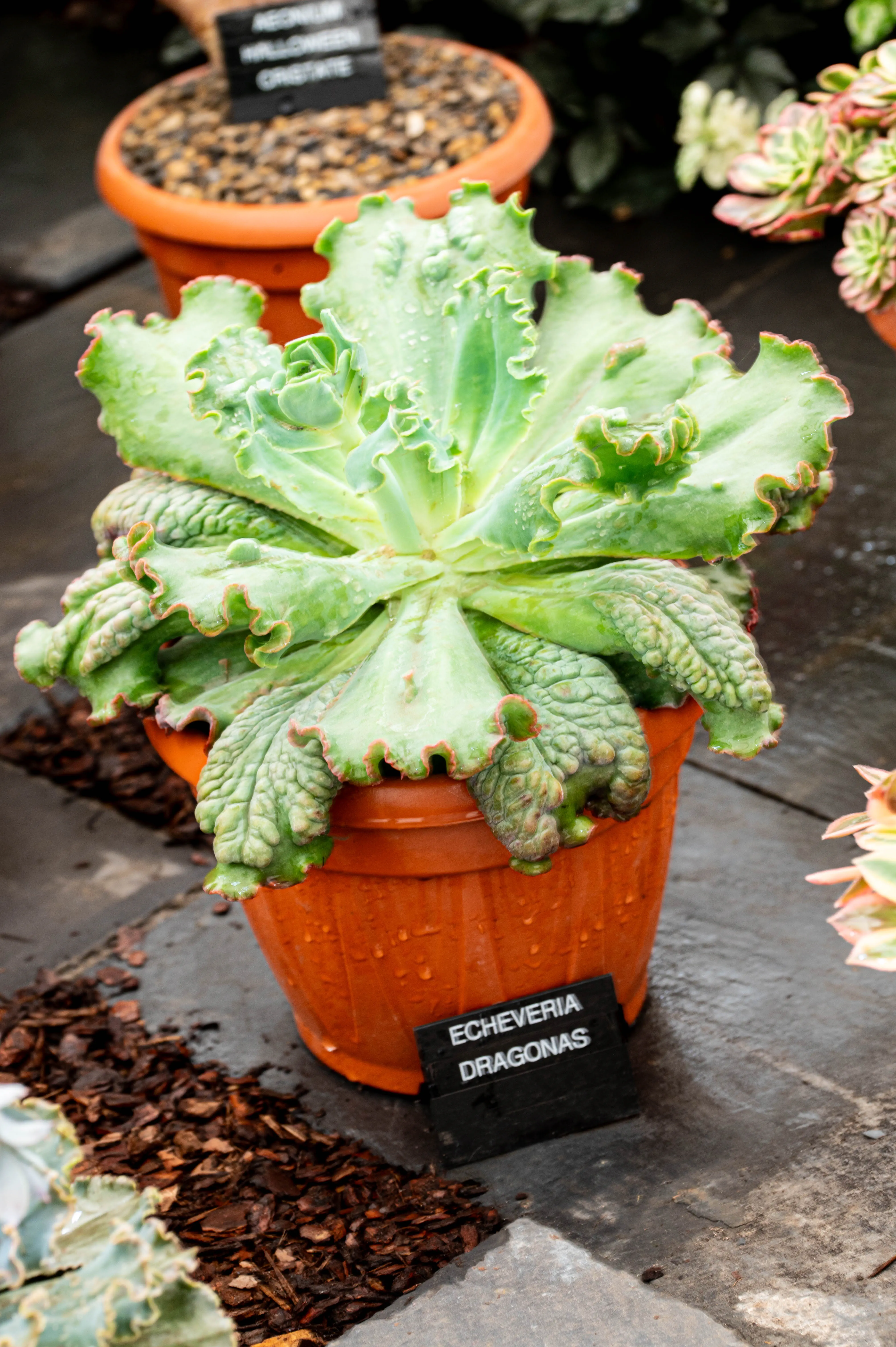
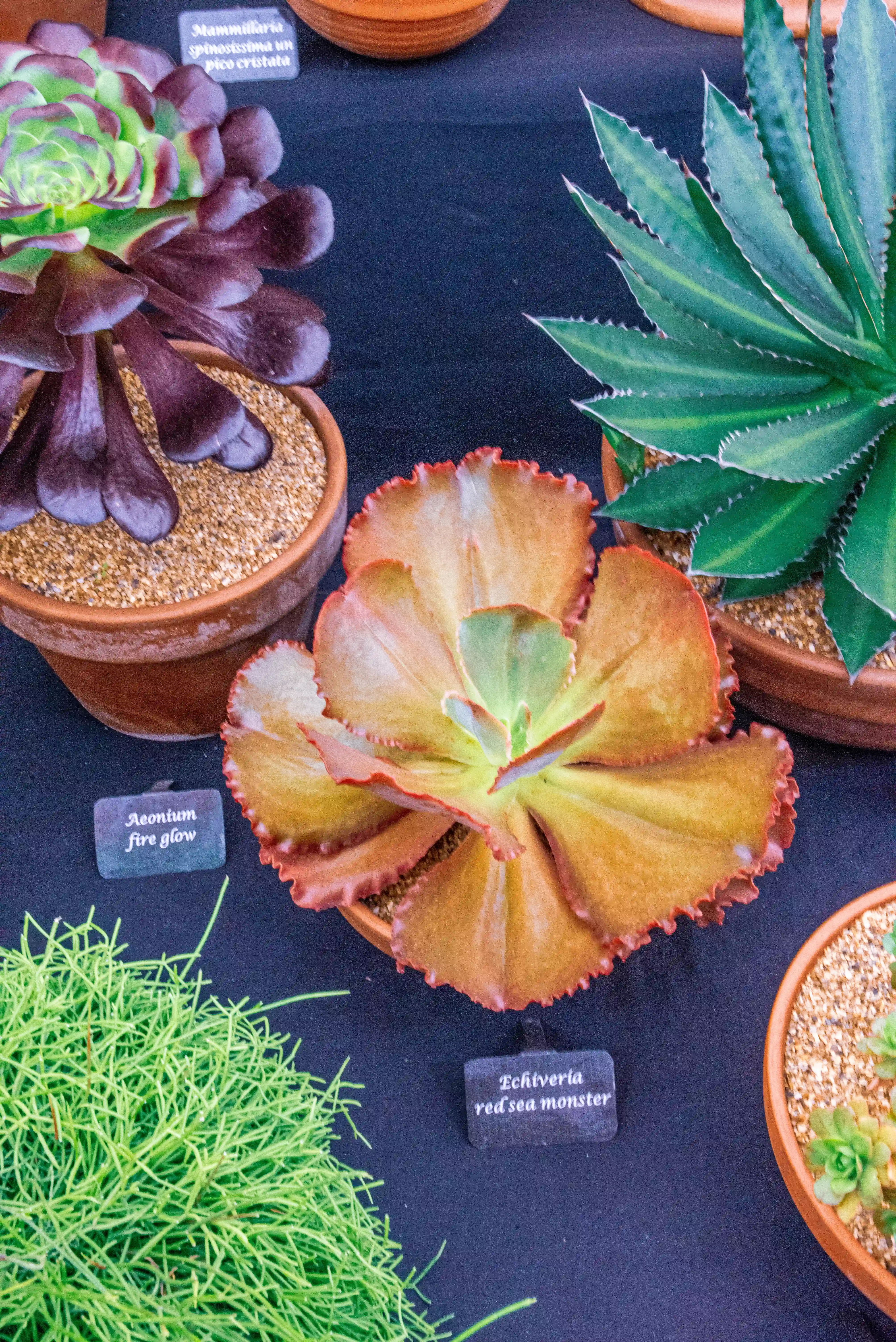
Echeverias are among the world's most popular succulents, grown as houseplants, container specimens, rock garden plants in mild climates, and as living decorations from wedding favours to green roofs. They are the classic "gateway" succulent for beginners, and their infinite variety sustains a global collector community and specialist nurseries.
Key Facts
Genus size: About 150 species (some 206 accepted species according to Plants of the World Online), plus hundreds of cultivars
Family: Crassulaceae — alongside Sedum, Aeonium, Crassula, Kalanchoe and Sempervivum
Form: Compact evergreen rosettes of fleshy, often brightly coloured leaves on short (or eventually branching) stems
Flowering: Polycarpic — plants may flower and set seed many times over their lifetimes, unlike the once-flowering aeoniums
Common names: Mexican hens and chicks, Mexican roses, wax plants, snowballs
Historical Significance
Prodromus Systematis Naturalis Regni Vegetabilis, and named to honour Atanasio Echeverría y Godoy, the gifted Mexican botanical artist of the Royal Botanical Expedition to New Spain whose exquisite paintings of plants were included in the Flora Mexicana. Over the following two centuries the genus grew to become the most horticulturally important of all rosette succulents, with genera such as Oliveranthus and Urbinia formerly split off from it, and with Mexican botanists continuing to describe new species into the 21st century. Modern molecular phylogenetics has placed Echeveria firmly within the Acre clade of the stonecrops, though its boundaries with Sedum and Pachyphytum remain a live research question.
Key Species and Attractions
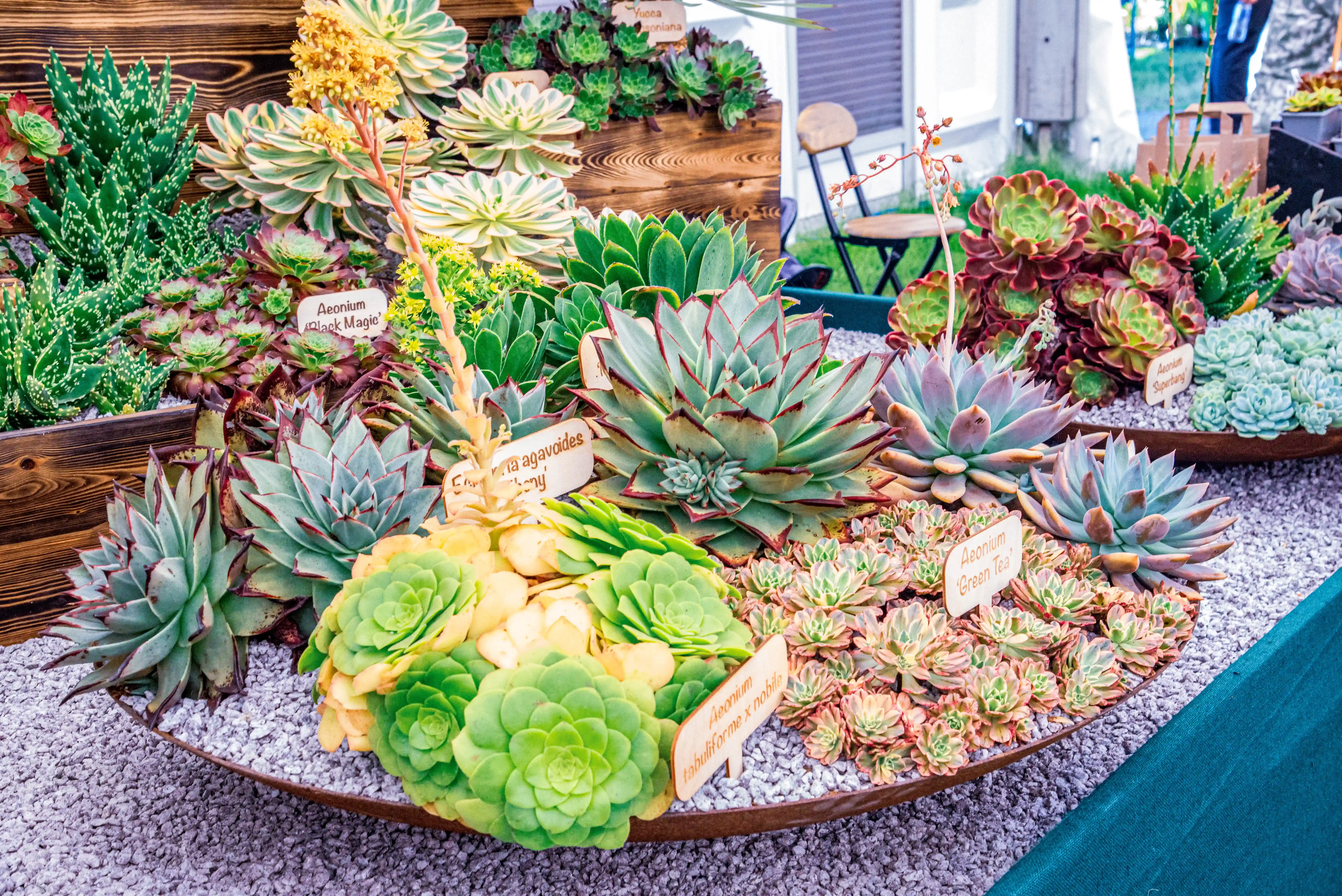
Echeveria elegans: The Mexican snow ball or white Mexican rose, with pale blue-green rosettes and pink winter flowers — an RHS Award of Garden Merit plant and one of the most widely grown of all succulents.
Echeveria lilacina: The ghost echeveria, with silvery-grey spoon-shaped rosettes from Nuevo León; slow-growing and drought-tolerant.
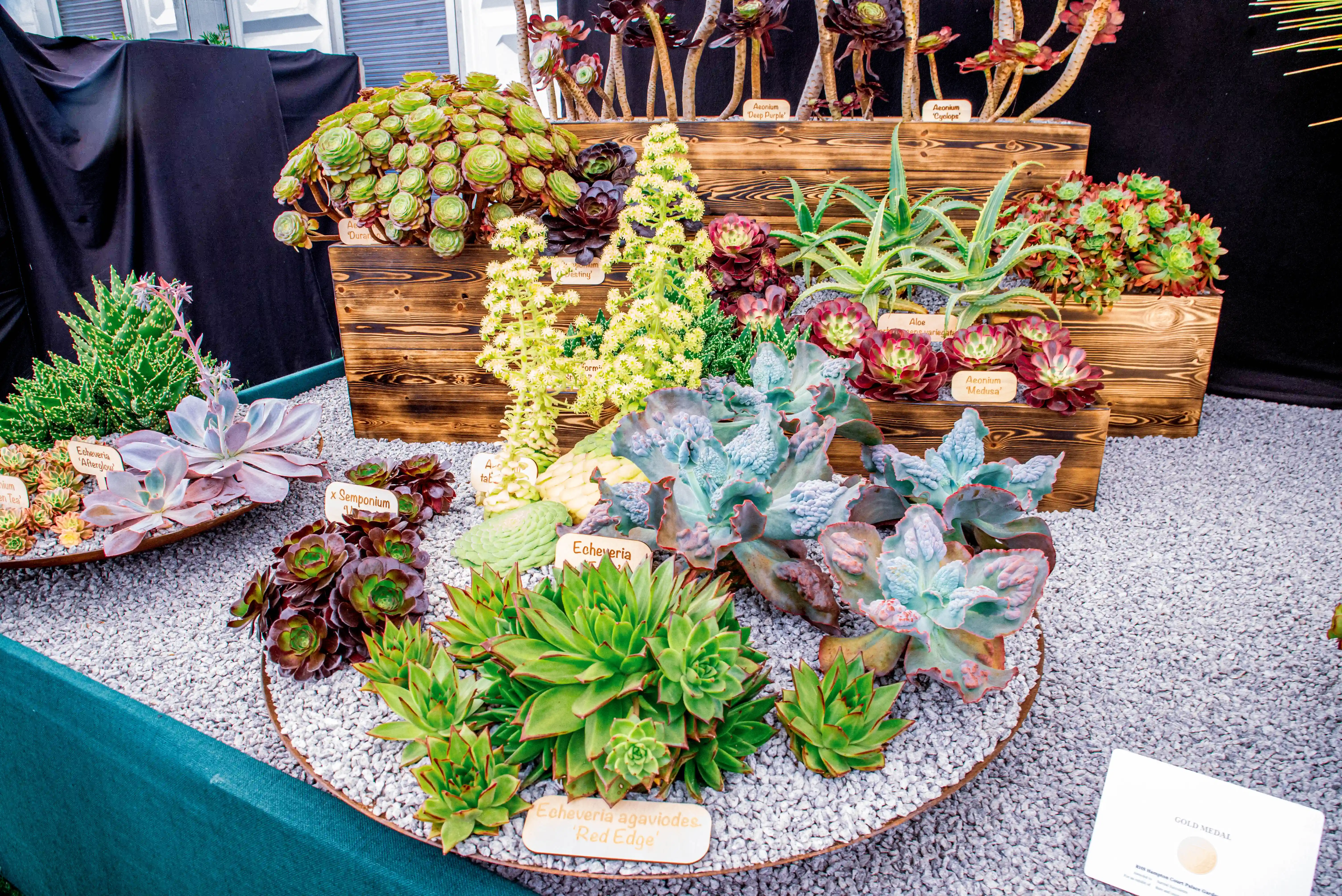
Echeveria subrigida and E. agavoides: Bold, thick-leaved species with dramatic colouring; E. agavoides cultivars such as 'Lipstick' and 'Ebony' are collector favourites.
Echeveria pulidonis and E. runyonii 'Topsy Turvy': Distinctive species prized for leaf form — the former's precise geometric rosettes, the latter's curiously rolled, silvery leaves.
Hybrids and cultivars: Countless garden selections — E. 'Perle von Nurnberg', 'Black Prince', 'Rainbow' and many others — bred for intensity of colour and form.