HOME

Aircraft Factory

Aircraft Factory at Brooklands

Brooklands Museum, Brooklands Road, Weybridge, Surrey, KT13 0QN, United Kingdom

The Aircraft Factory at Brooklands is a historic aviation manufacturing and testing site located in Weybridge, Surrey, England, on the grounds of the former Brooklands race track. Established during World War I, the factory became one of the most important centers for aircraft production and innovation in British history. It was here that iconic aircraft such as the Vickers Vimy, Vickers Wellington, and Hawker Hurricane were designed, built, and tested. The factory’s heritage, engineering achievements, and role in shaping modern aviation are preserved and celebrated at Brooklands Museum, offering visitors a unique glimpse into the golden age of British aircraft manufacturing.
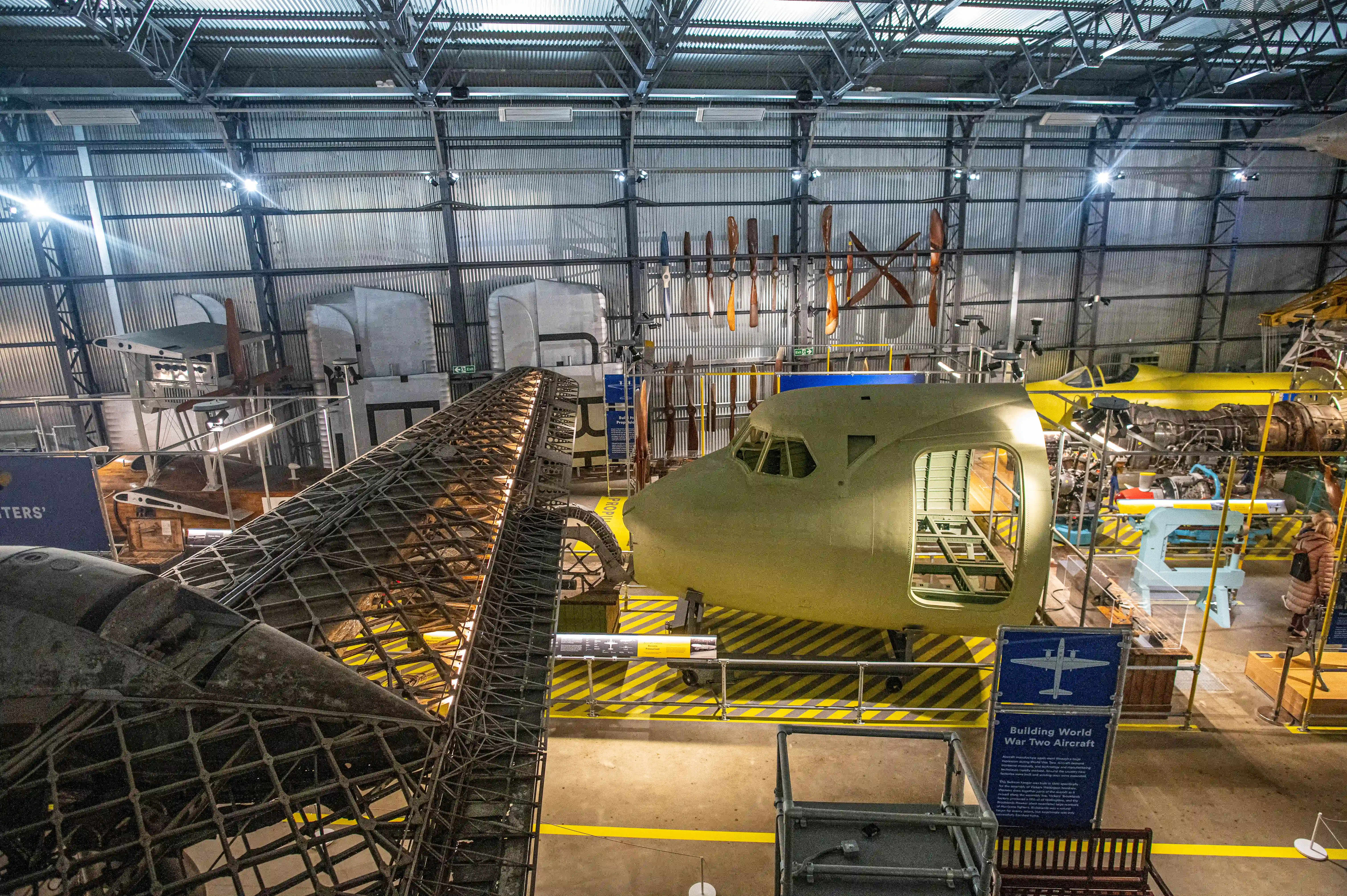
A wide shot of the interior of an aircraft museum hangar, with a prominent light-yellow aircraft fuselage in the foreground, unfinished wing structures, and various vintage aircraft engines and propellers displayed around the space.
Aviation Heritage Display in Museum Hangar
photo by
©www.mgaylard.co.uk.
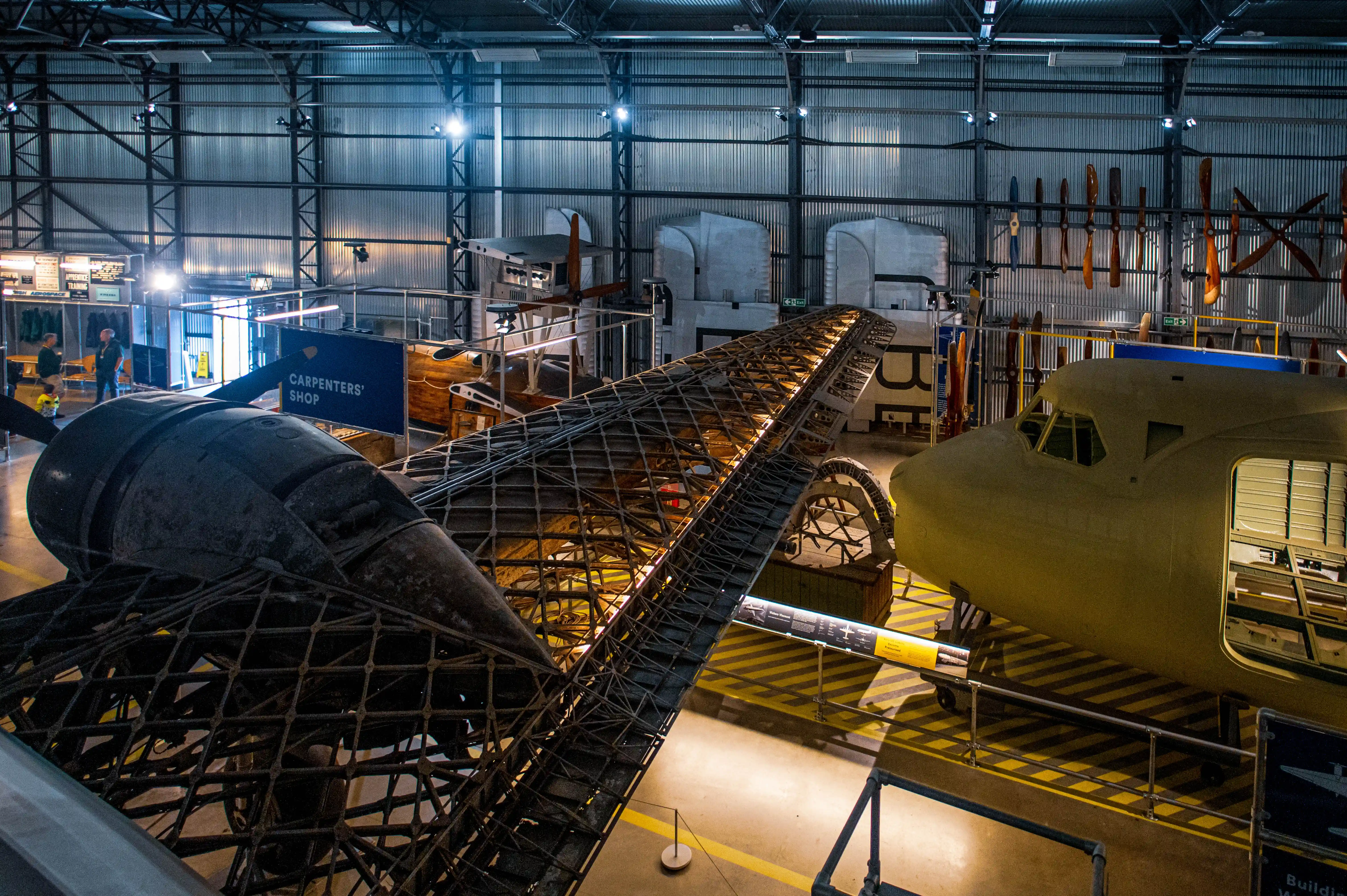
An indoor exhibition space with the exposed metal frame of an aircraft wing angled across the shot. A yellow aircraft fuselage sits to the right, and several vintage propellers are mounted on the corrugated metal wall behind.
title
photo by
©www.mgaylard.co.uk.
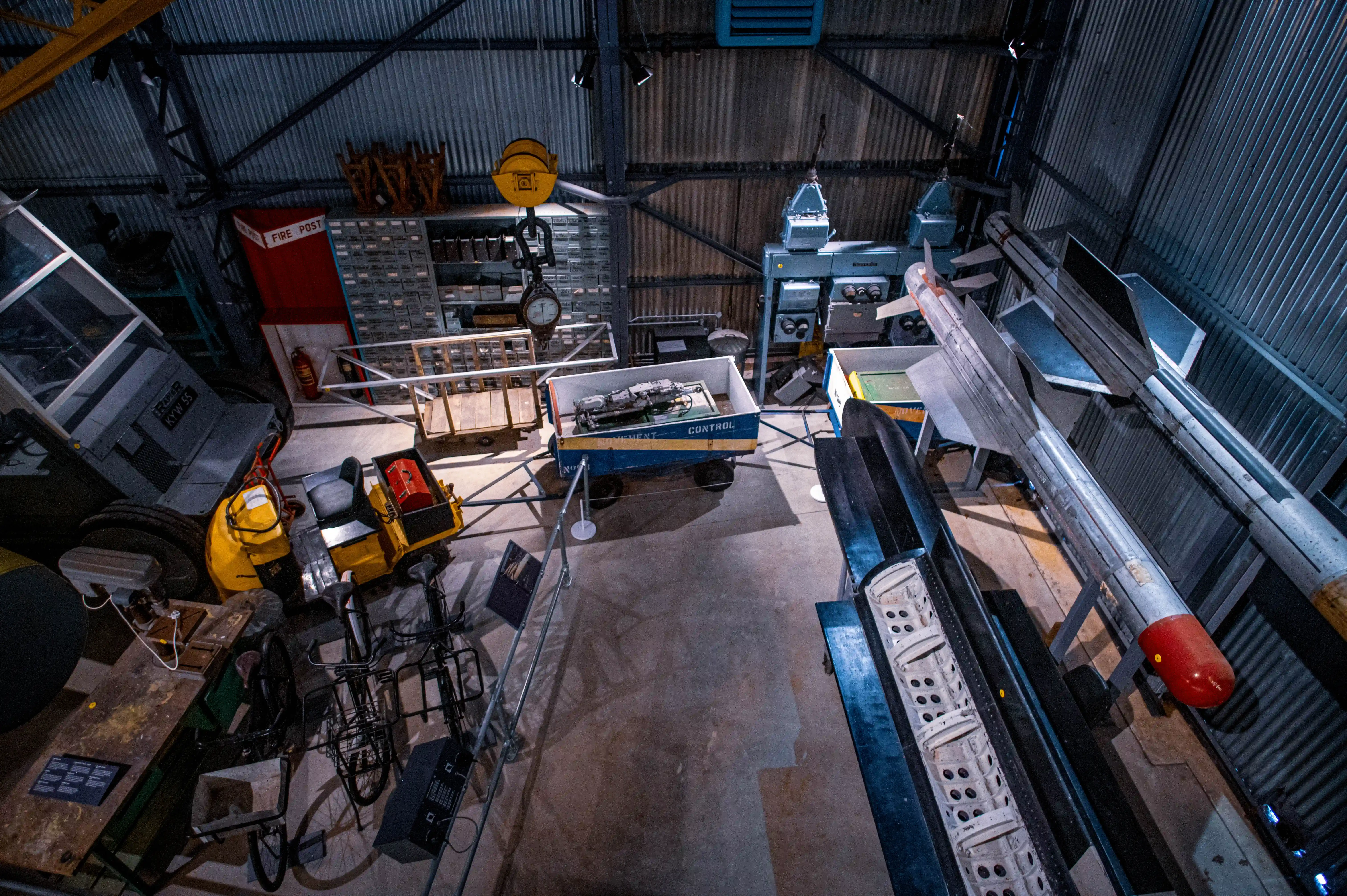
An overhead shot of a museum exhibit featuring a silver missile with a red tip, alongside other military equipment and support vehicles, all displayed within a large industrial building.
Aircraft Factory Floor
photo by
©www.mgaylard.co.uk.
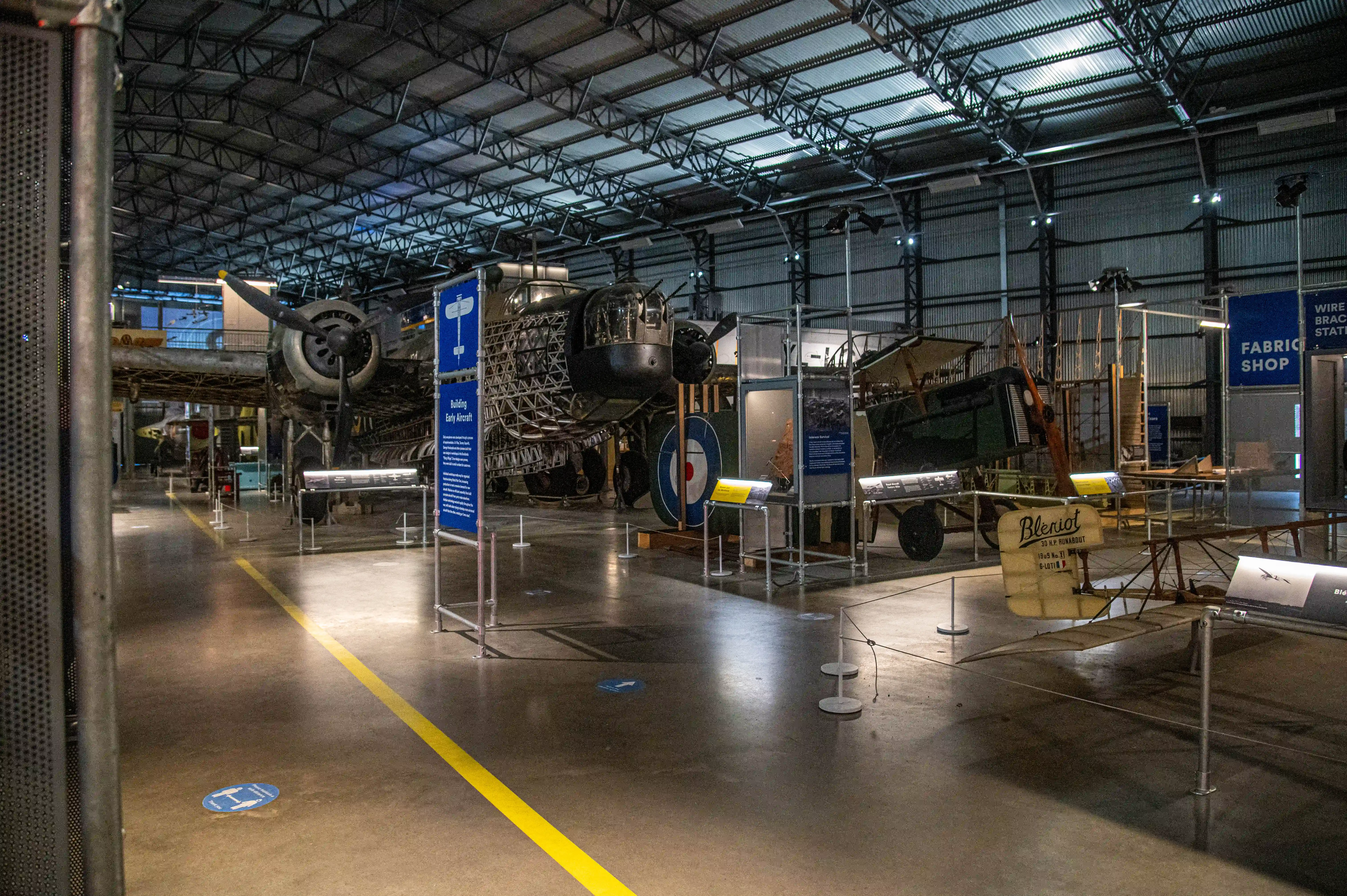
Interior view of an aviation museum with a large bomber aircraft and a Blériot biplane on display, with informational exhibits and industrial architecture.
Aviation History Exhibition
photo by
©www.mgaylard.co.uk.
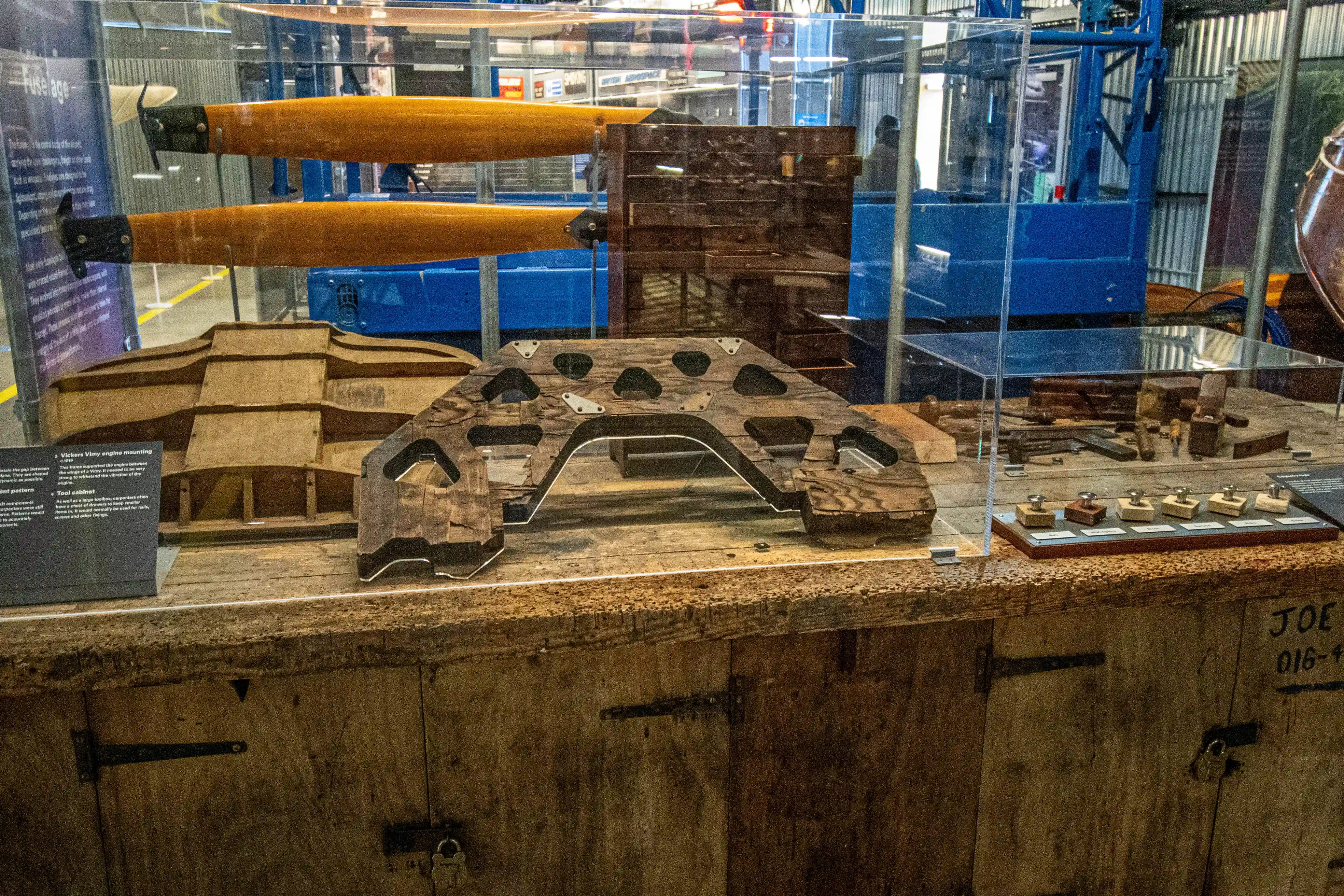
Museum display case containing wooden aircraft propeller blades, tooling forms and manufacturing jigs.
Historic wooden aircraft components and manufacturing jigs
photo by
©www.mgaylard.co.uk.
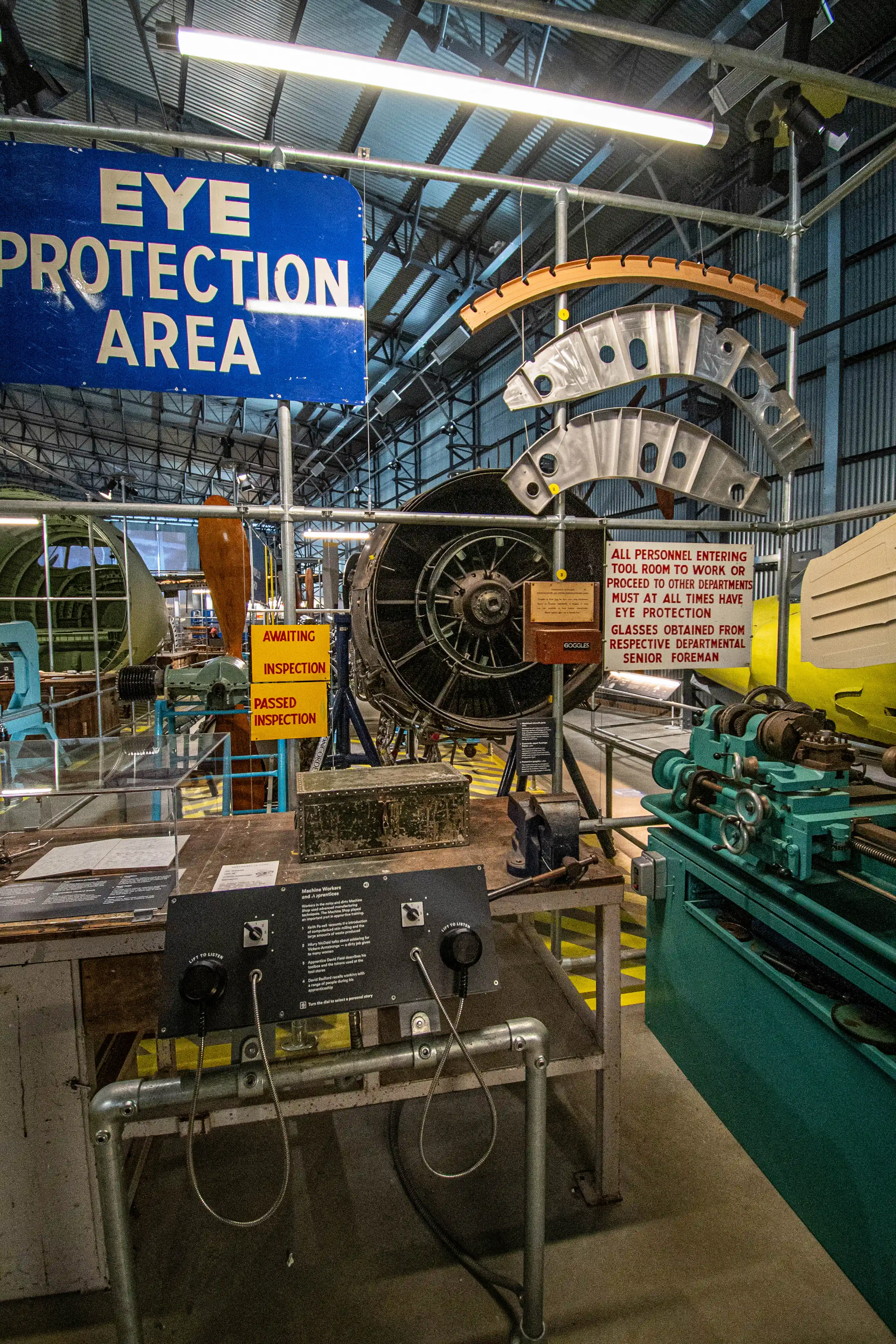
A detailed view of historical aircraft engines, A well-lit indoor exhibit depicting an aircraft workshop, with a large jet engine, a teal-coloured lathe, workbenches, and safety signs including EYE PROTECTION AREA and ALL PERSONNEL ENTERING TOOL ROOM TO WORK OR PROCEED TO OTHER DEPARTMENTS MUST AT ALL TIMES HAVE EYE PROTECTION.
Inside an Aviation Workshop Exhibit
photo by
©www.mgaylard.co.uk.
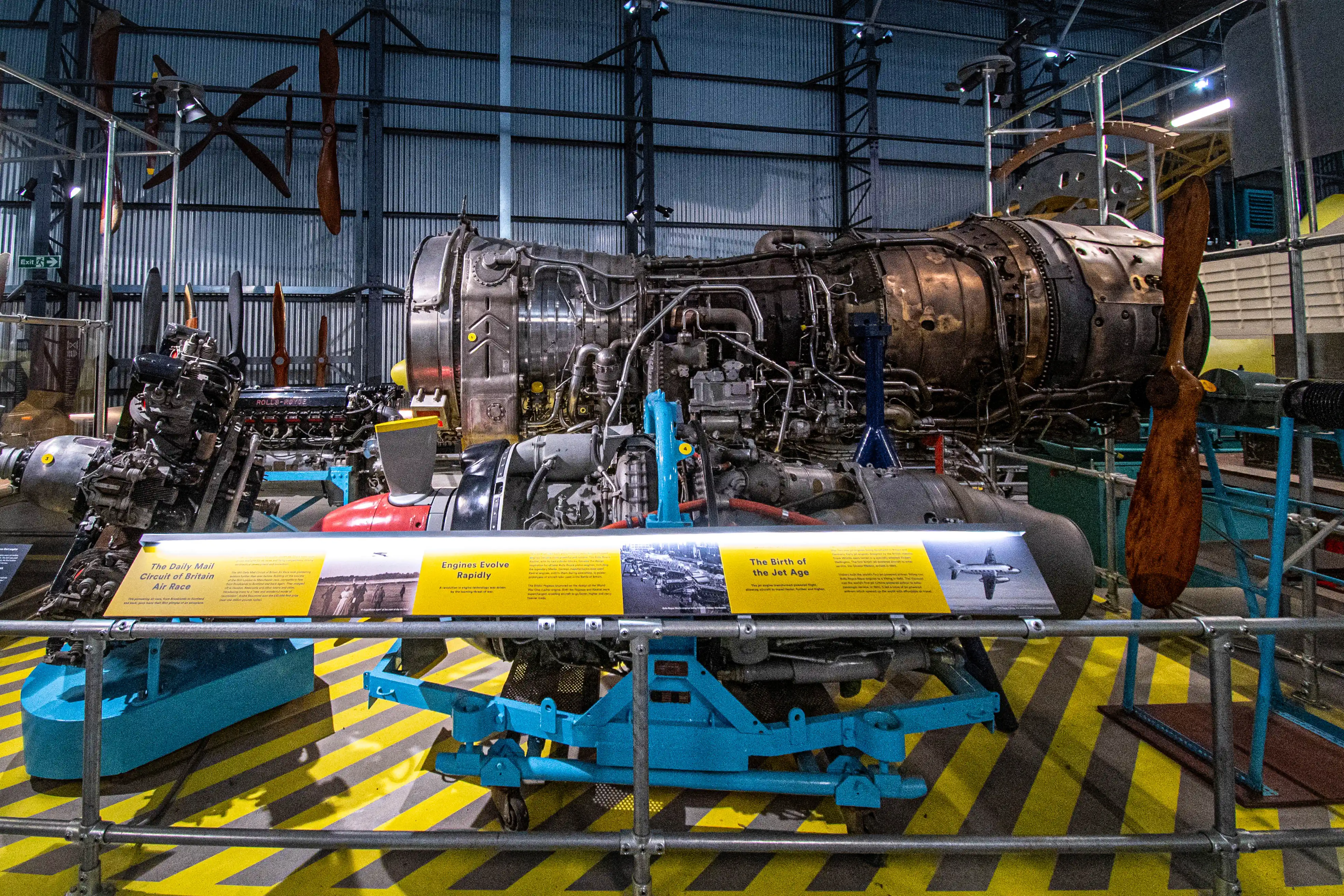
A detailed view of historical aircraft engines, including a large jet engine, displayed in a museum. Informational placards explain the evolution of engines and the beginnings of the Jet Age.
Aviation Engine Evolution Display
photo by
©www.mgaylard.co.uk.
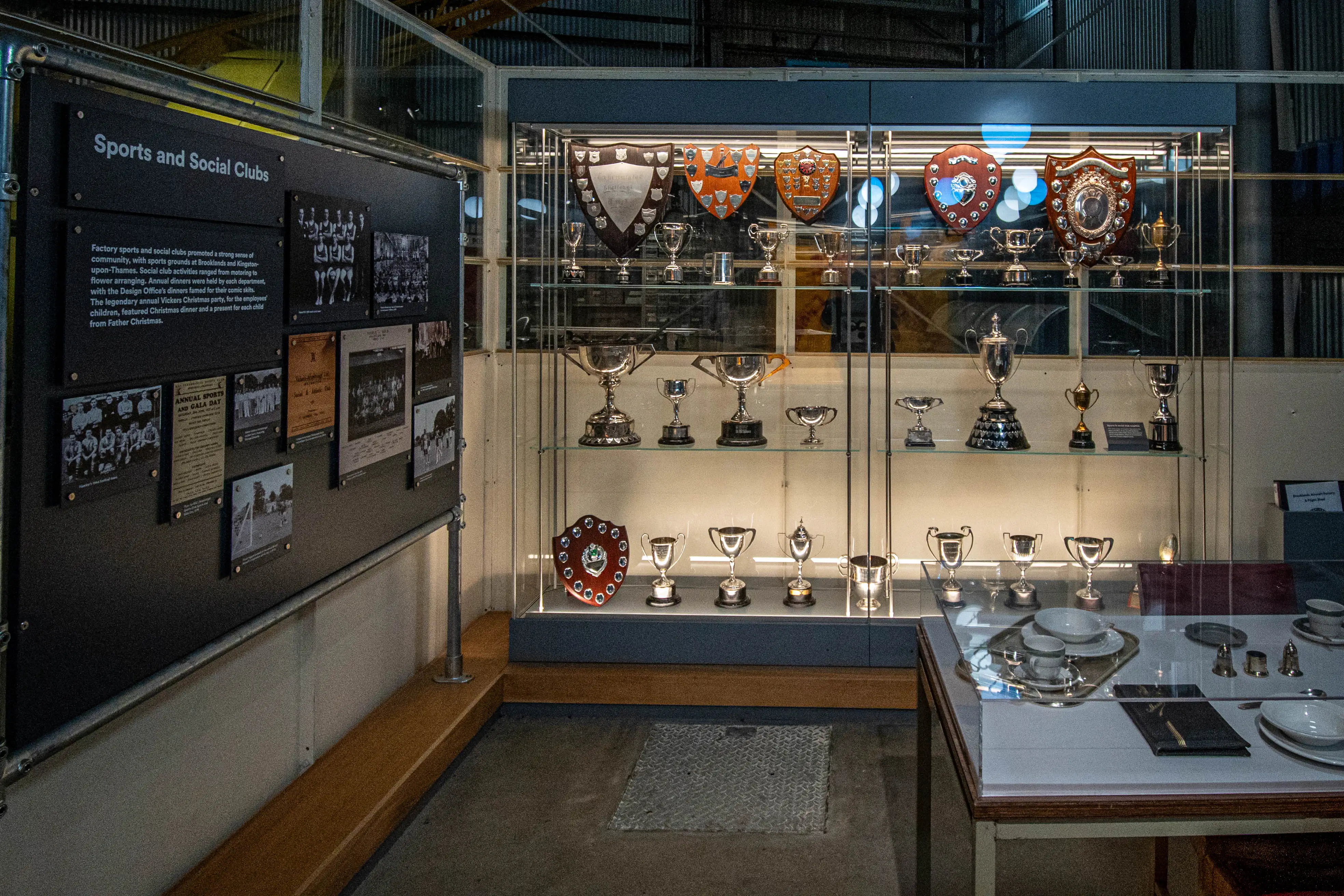
A display case filled with numerous trophies and shields, alongside framed photographs and documents related to factory sports and social clubs, is shown in a museum setting. A descriptive panel details the role of these clubs in promoting community and social activities.
Factory Sports and Social Clubs Exhibition
photo by
©www.mgaylard.co.uk.
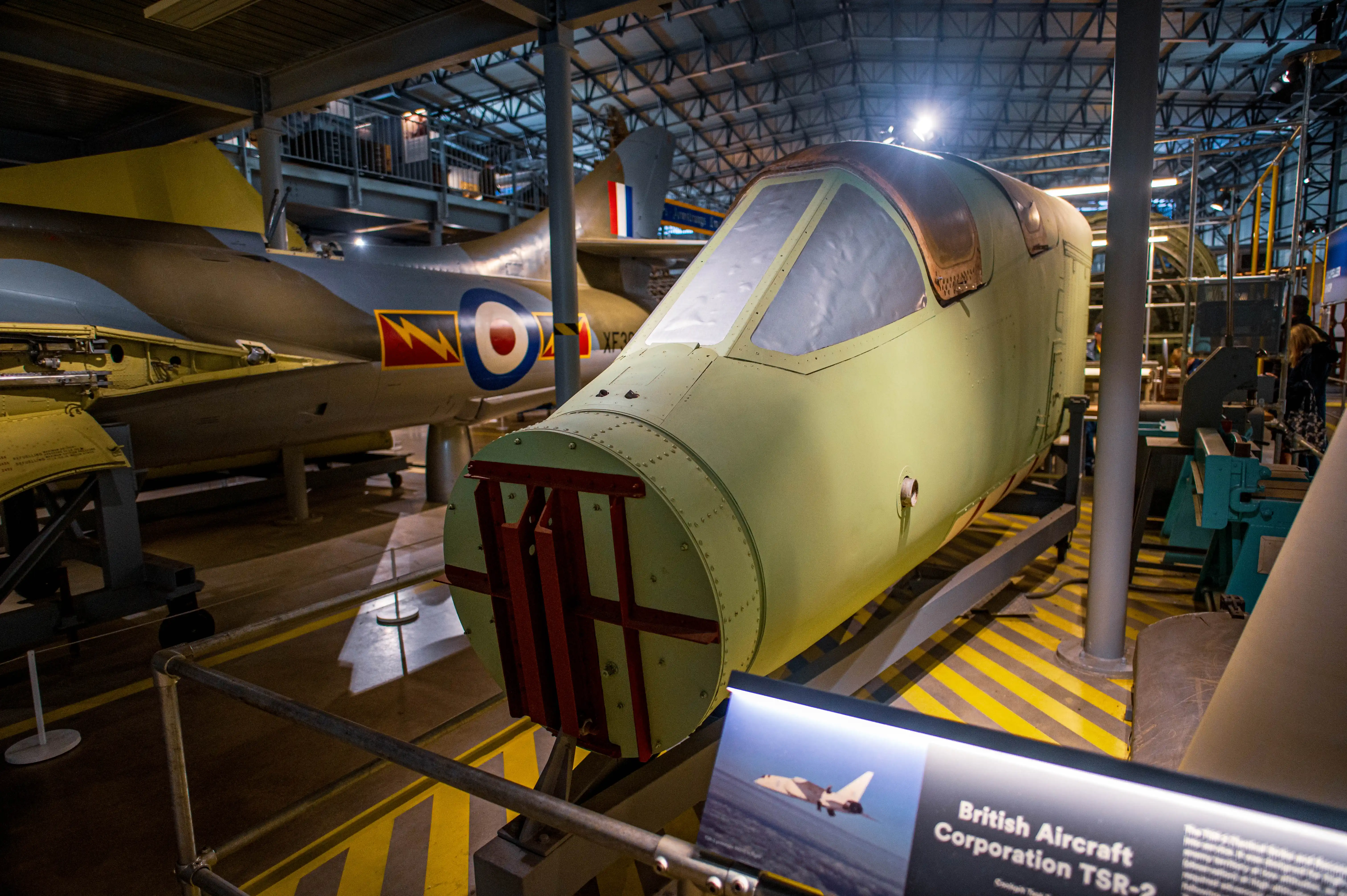
The front section of a pale green military jet aircraft cockpit with a large canopy, displayed indoors. Another aircraft with Royal Air Force roundels is visible in the background.
British Aircraft Corporation TSR-2 Cockpit Display
photo by
©www.mgaylard.co.uk.
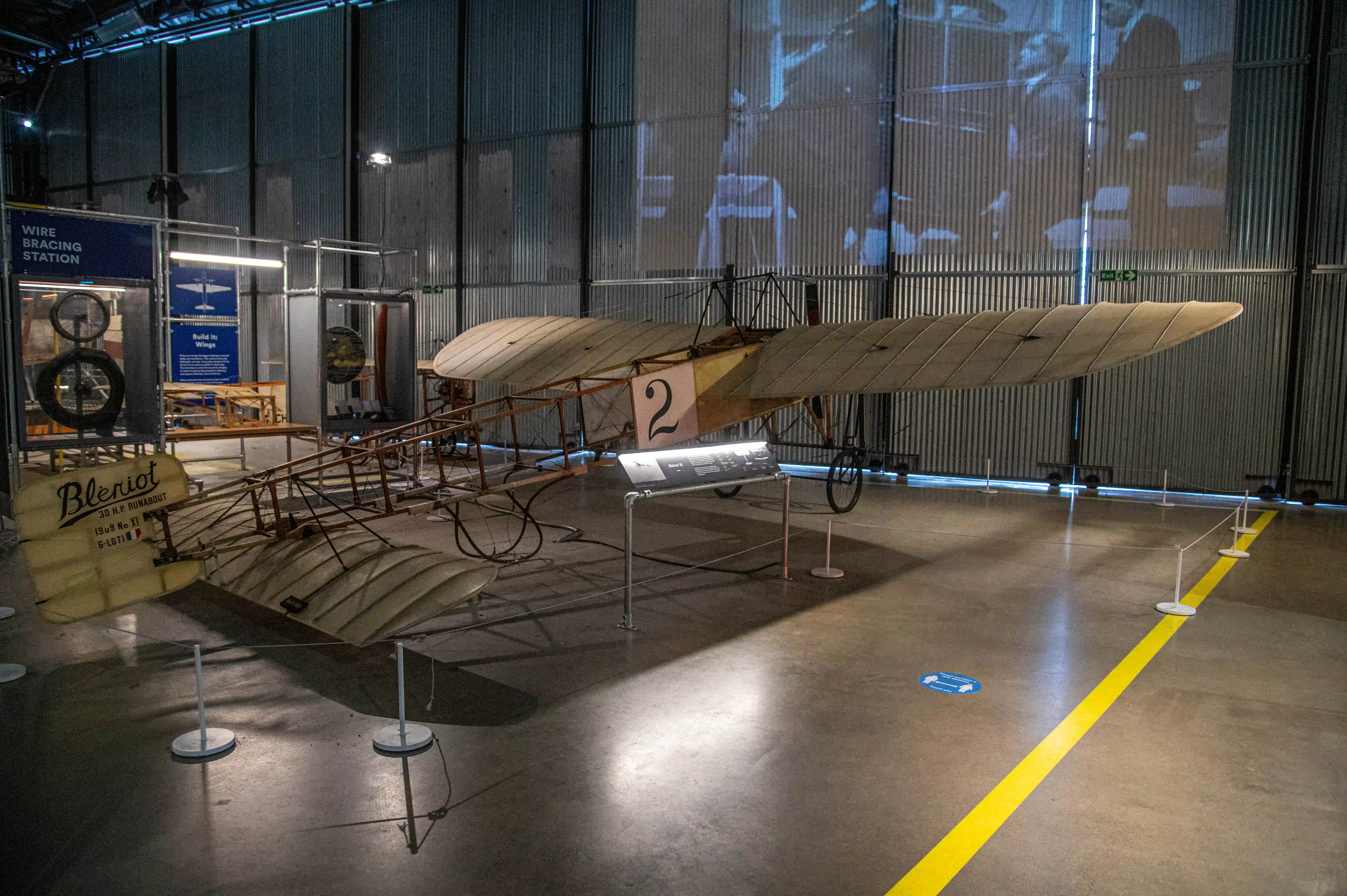
Alt-text: A vintage Blériot XI aeroplane with fabric-covered wings and an open frame sits on display in a museum, with interpretive panels nearby and historical footage projected on the wall behind.
Early Aviation: Blériot XI Aircraft Display
photo by
©www.mgaylard.co.uk.
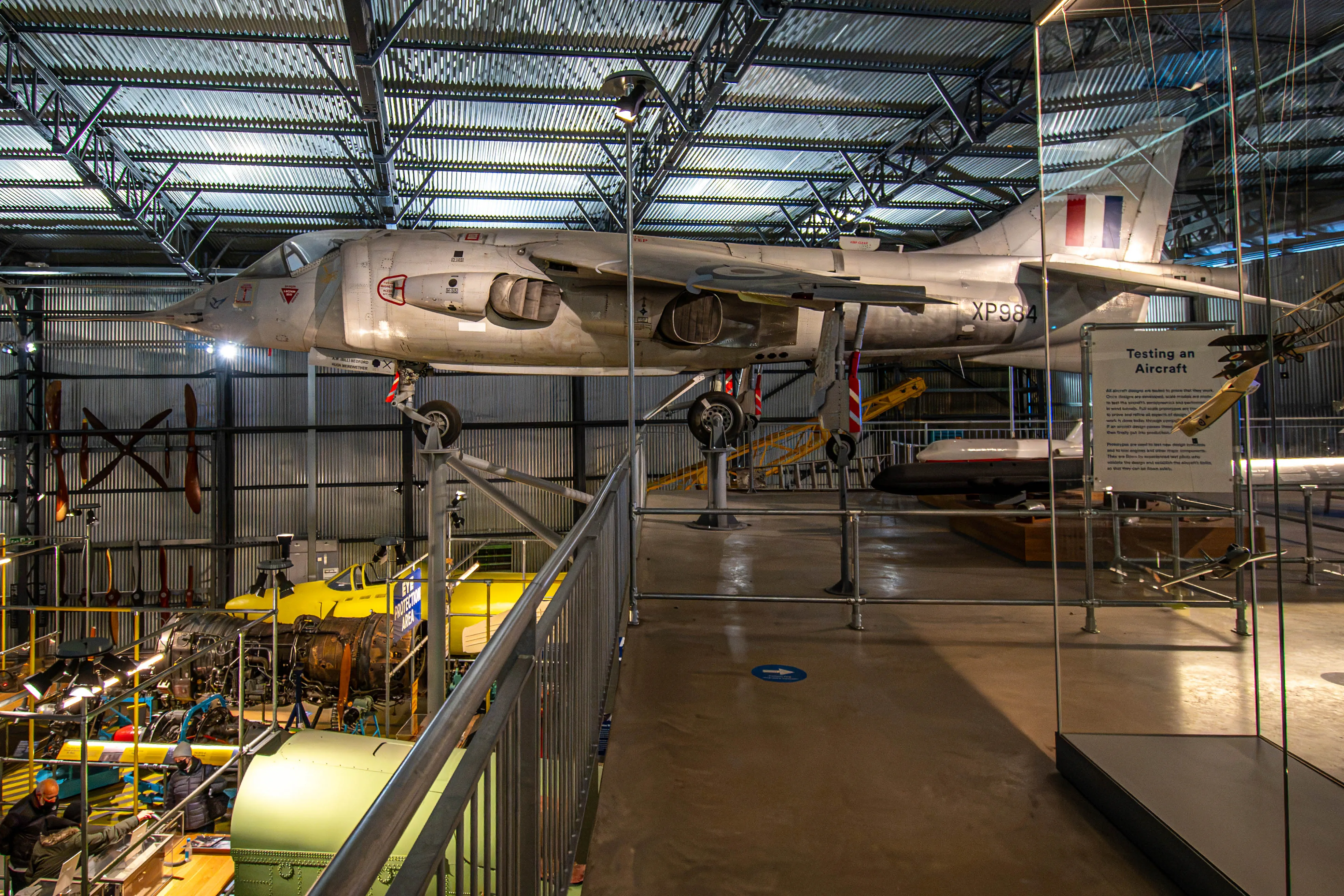
Harrier prototype XP984 suspended in a museum hall above other aviation exhibits.
Hawker Siddeley P1127 XP984
photo by
©www.mgaylard.co.uk.
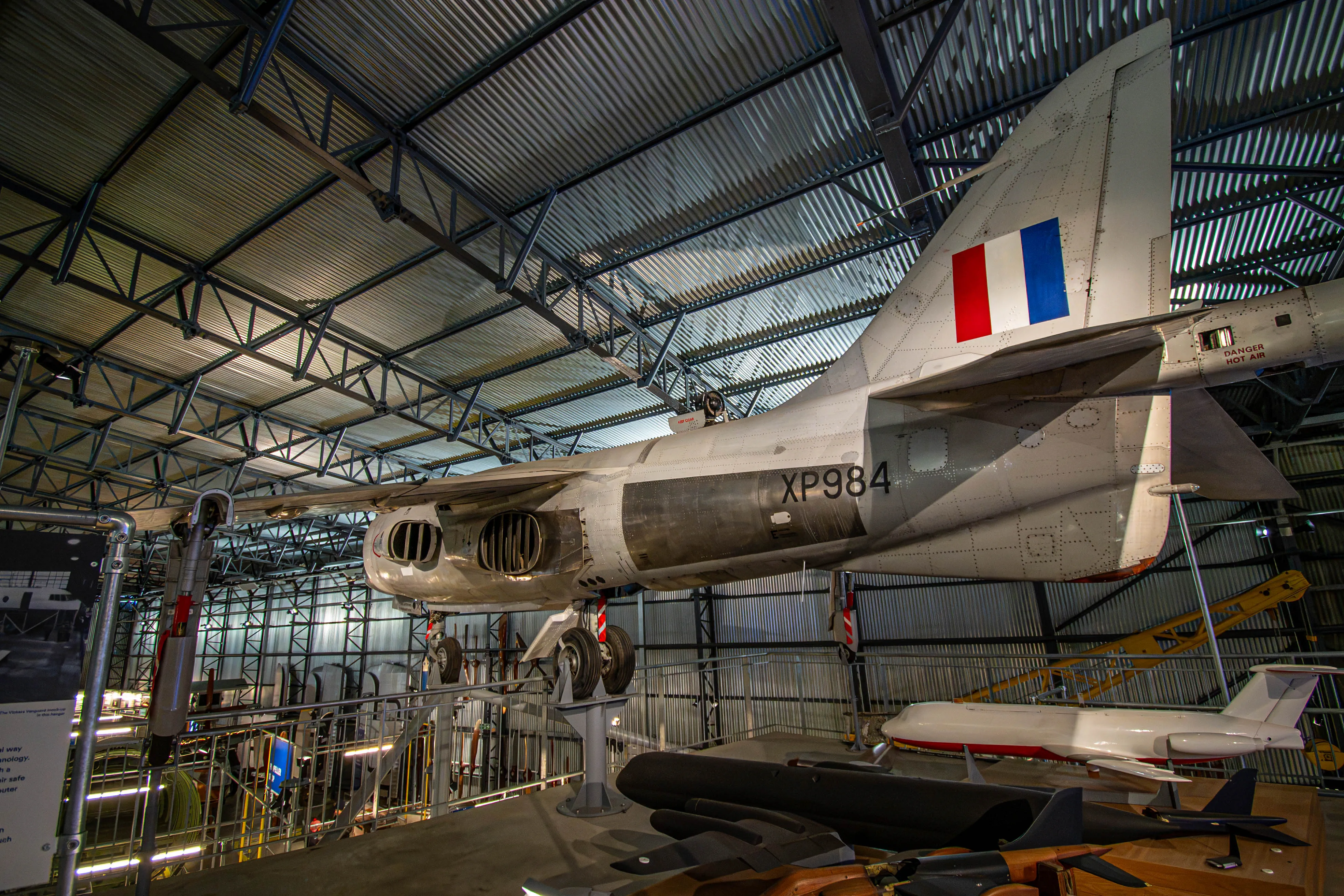
A detailed side view of an Hawker Siddeley P1127 jet aircraft, with registration XP984, displayed in a museum. The aircraft's tail fin displays the red, white, and blue Royal Air Force roundel. It is suspended in a hangar with other exhibits visible below.
Hawker Siddeley P1127 XP984 in Museum
photo by
©www.mgaylard.co.uk.
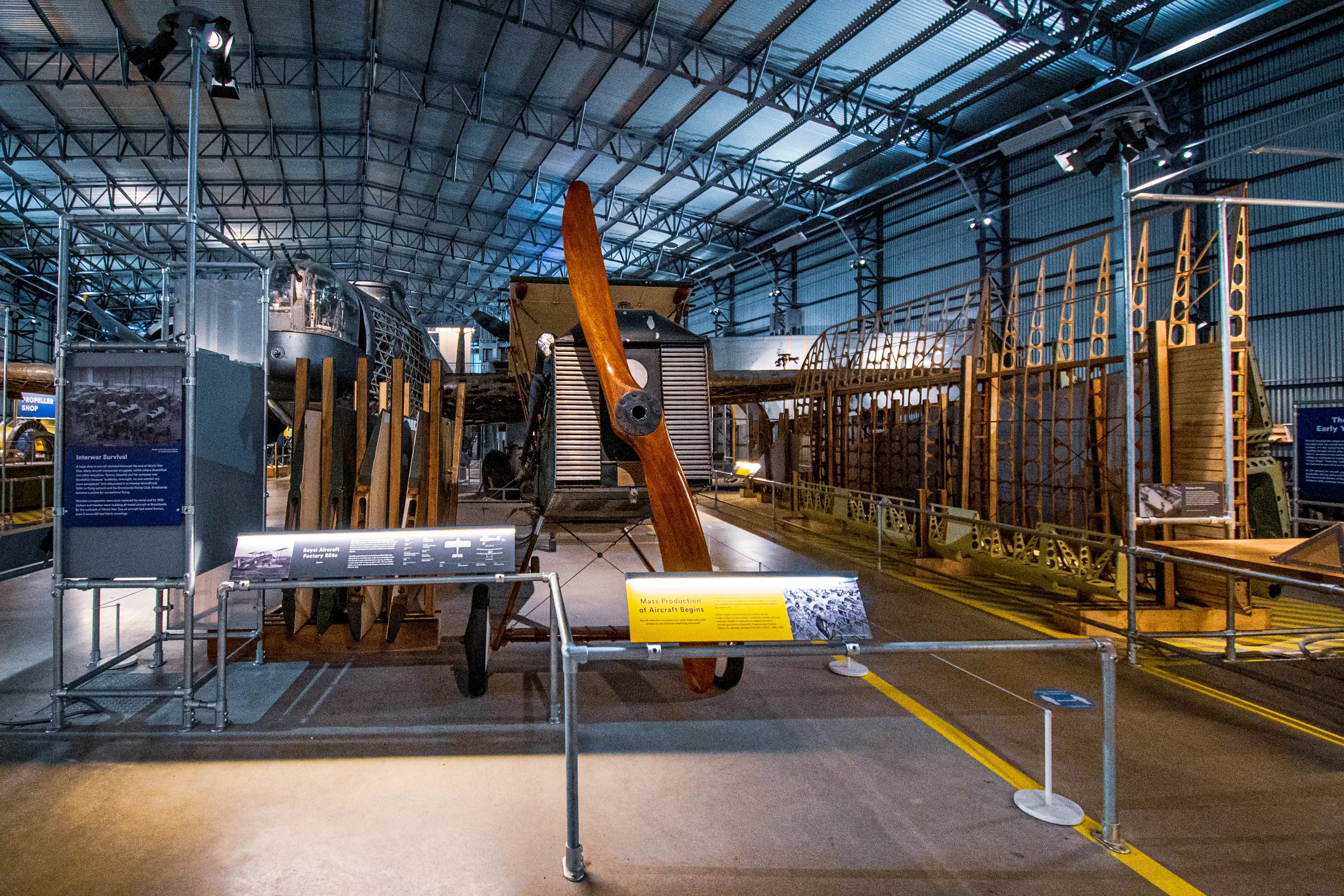
Interior of a museum hangar displaying the skeletal framework of aircraft and a large wooden propeller, with interpretive signs detailing early aviation history.
Early Aircraft Manufacturing Exhibition
photo by
©www.mgaylard.co.uk.
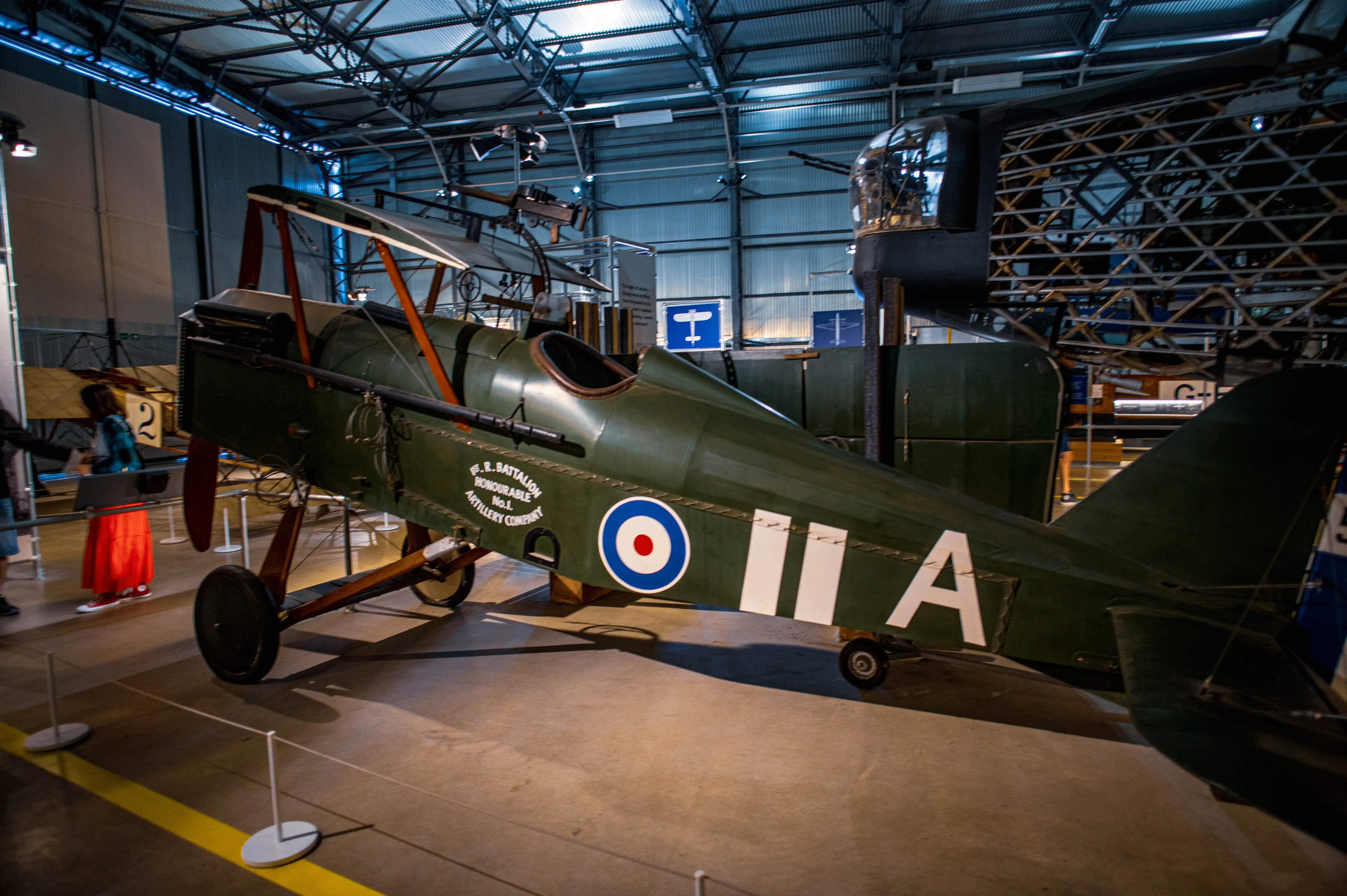
A dark green World War I era biplane is on display in a museum hangar. The aircraft has a single cockpit, wooden propeller, and is marked with a circular RAF roundel. Other exhibits are visible in the background.
Historic Artillery Biplane in Museum
photo by
©www.mgaylard.co.uk.
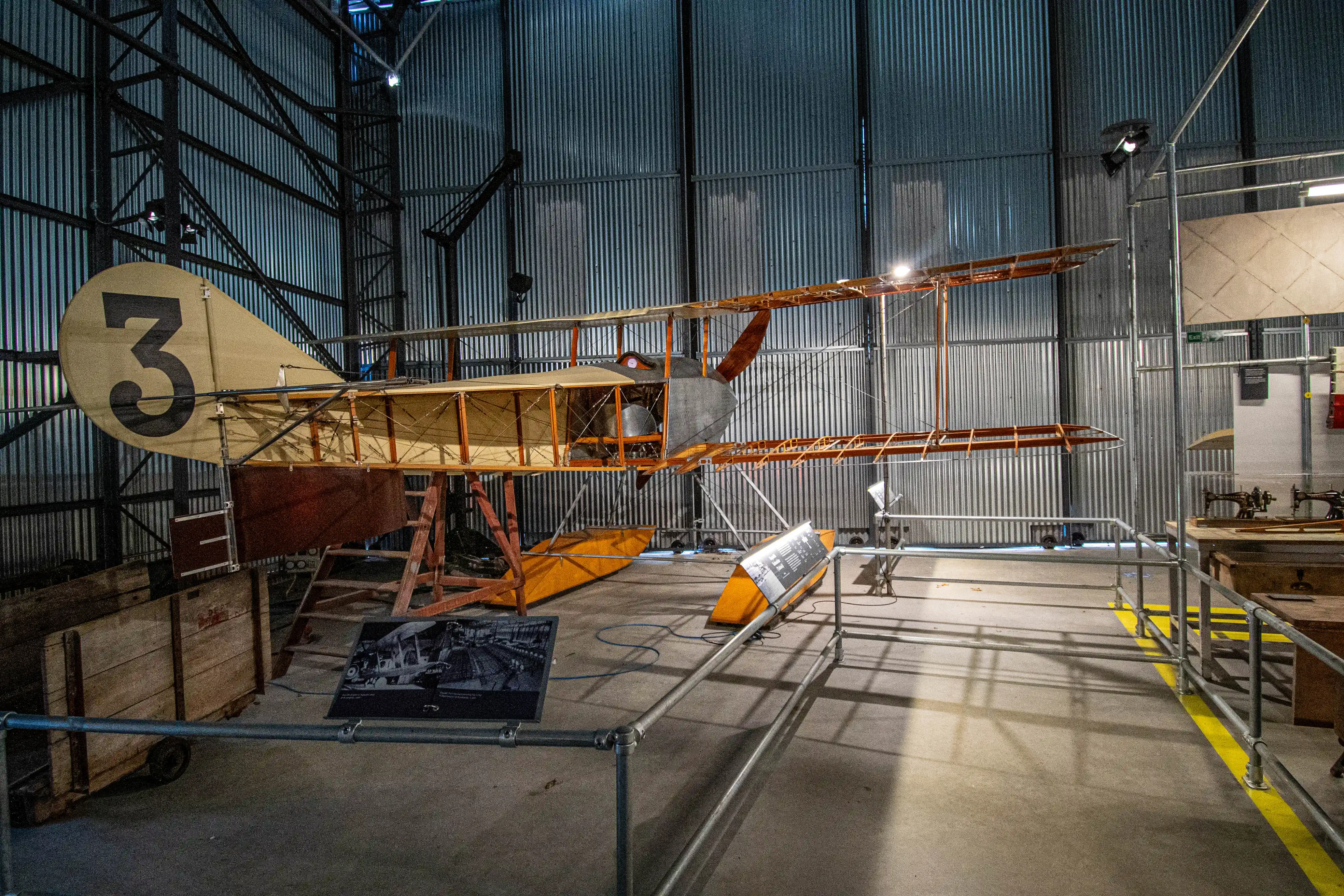
A vintage biplane, identified by a large black number '3' on its tail, is showcased within the corrugated metal walls of an aviation museum. The aircraft, supported by wooden scaffolding, features a fabric-covered fuselage and wings, with visible internal wiring and bracing. Informative display panels are positioned near the exhibit, along with a wooden crate and a section of yellow safety flooring.
Exhibition of a Vintage Biplane
photo by
©www.mgaylard.co.uk.
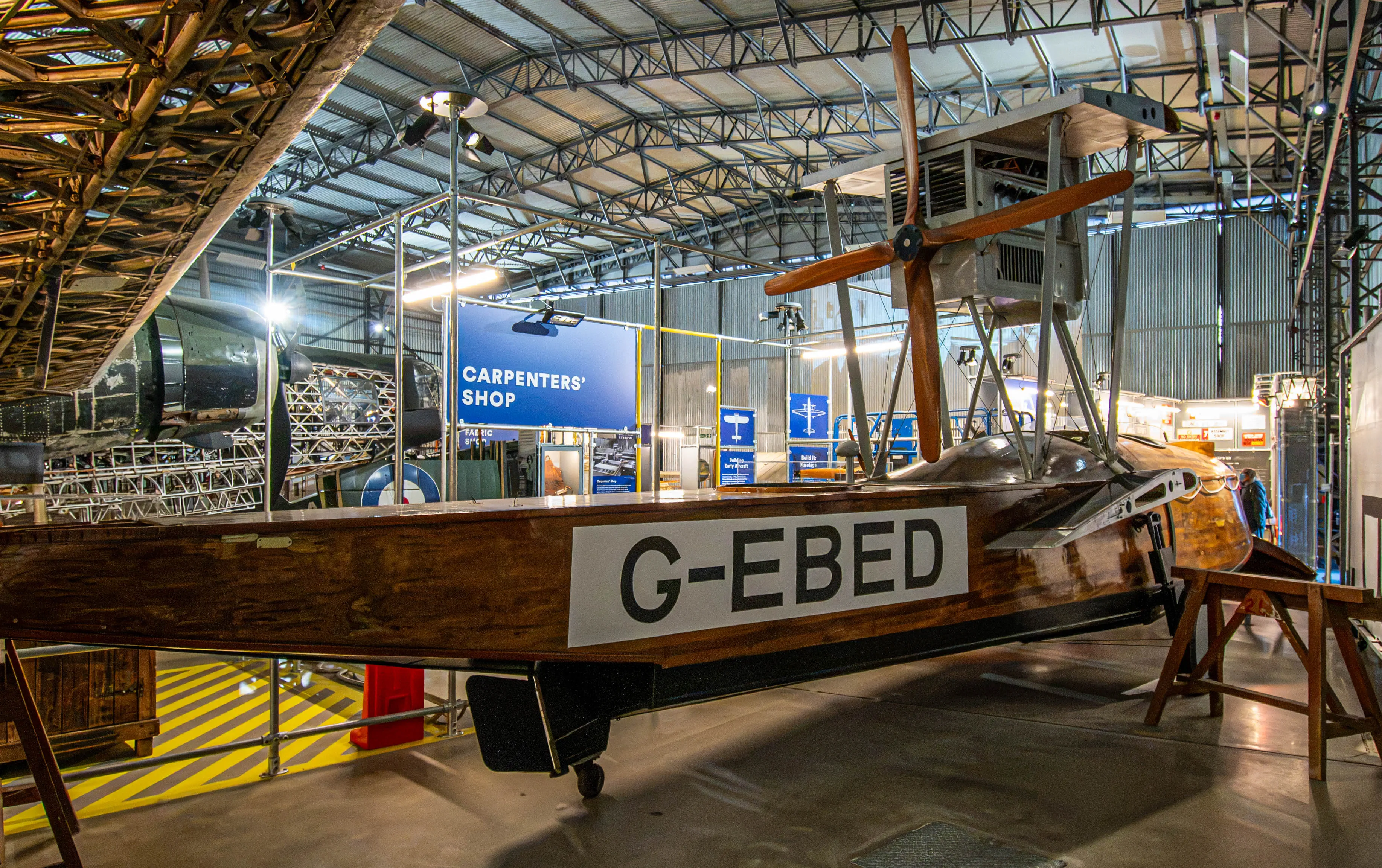
 A vintage biplane, identified by the registration G-EBED, is exhibited indoors within a museum setting. The aircraft, primarily constructed from wood and fabric, features a prominent propeller. In the background, a sign reads CARPENTERS' SHOP, suggesting an area dedicated to the restoration or construction of aircraft. Other exhibits and structural elements of the hangar are also visible.
Vickers Type 60 Viking IV
photo by
©www.mgaylard.co.uk.
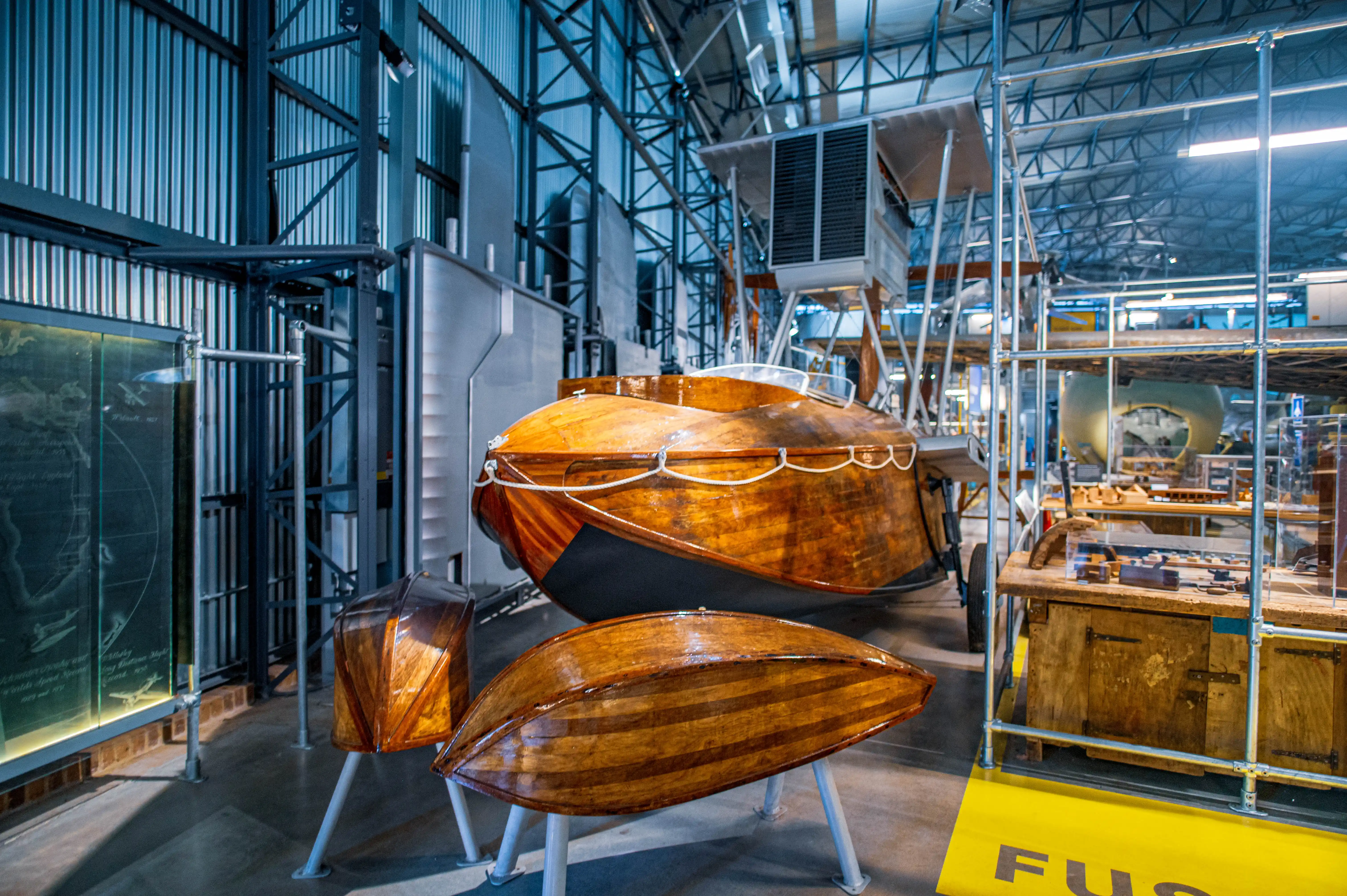
Polished wooden aircraft fuselage suspended in a museum with smaller varnished wooden components displayed beneath it.
Vickers Type 60 Viking
photo by
©www.mgaylard.co.uk.
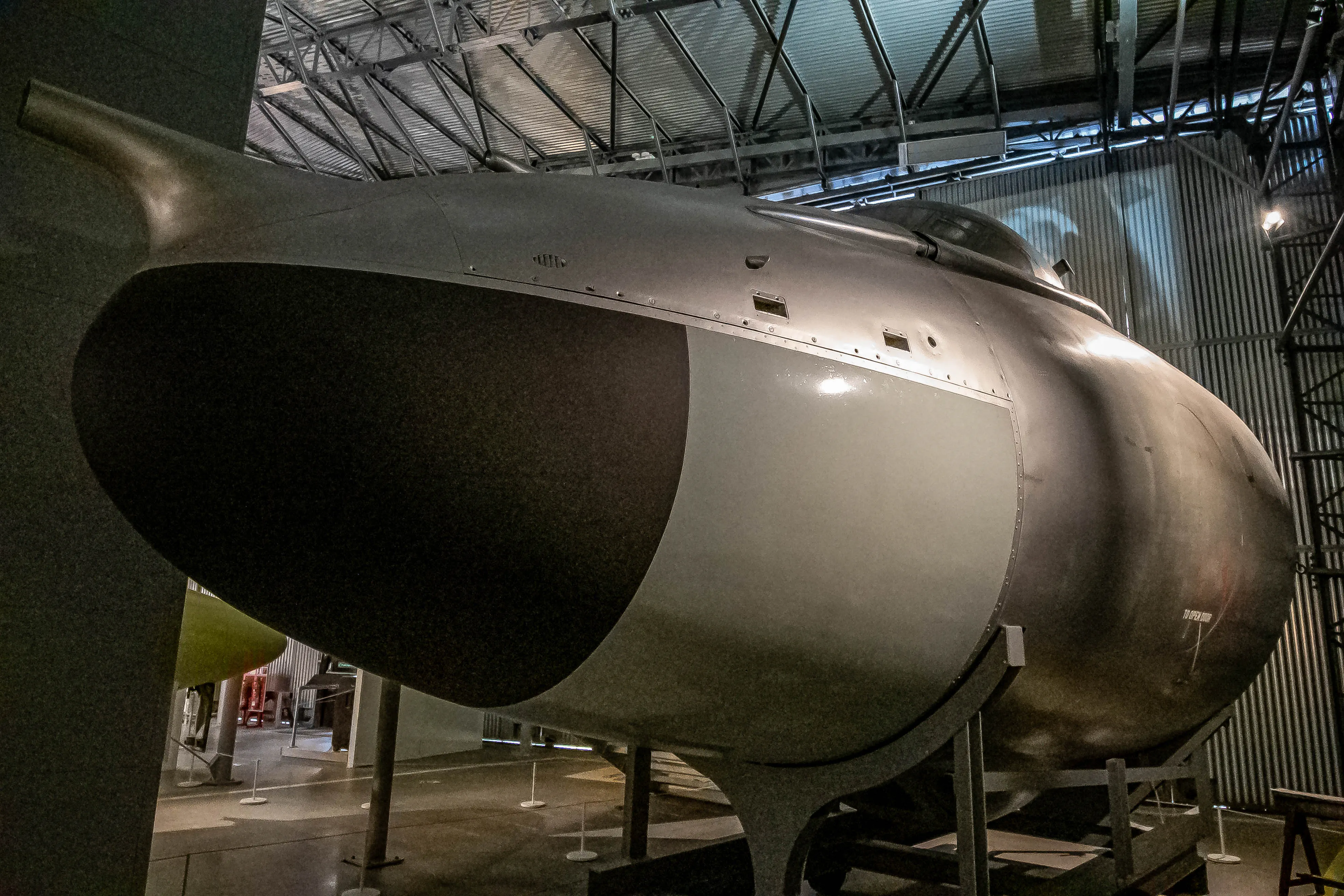
An aerial view of the front section of a silver aeroplane with a dark grey cockpit window area, displayed indoors. A person stands to the right of the aircraft, looking at it.
Vintage Aeroplane Cockpit Exhibition
photo by
©www.mgaylard.co.uk.
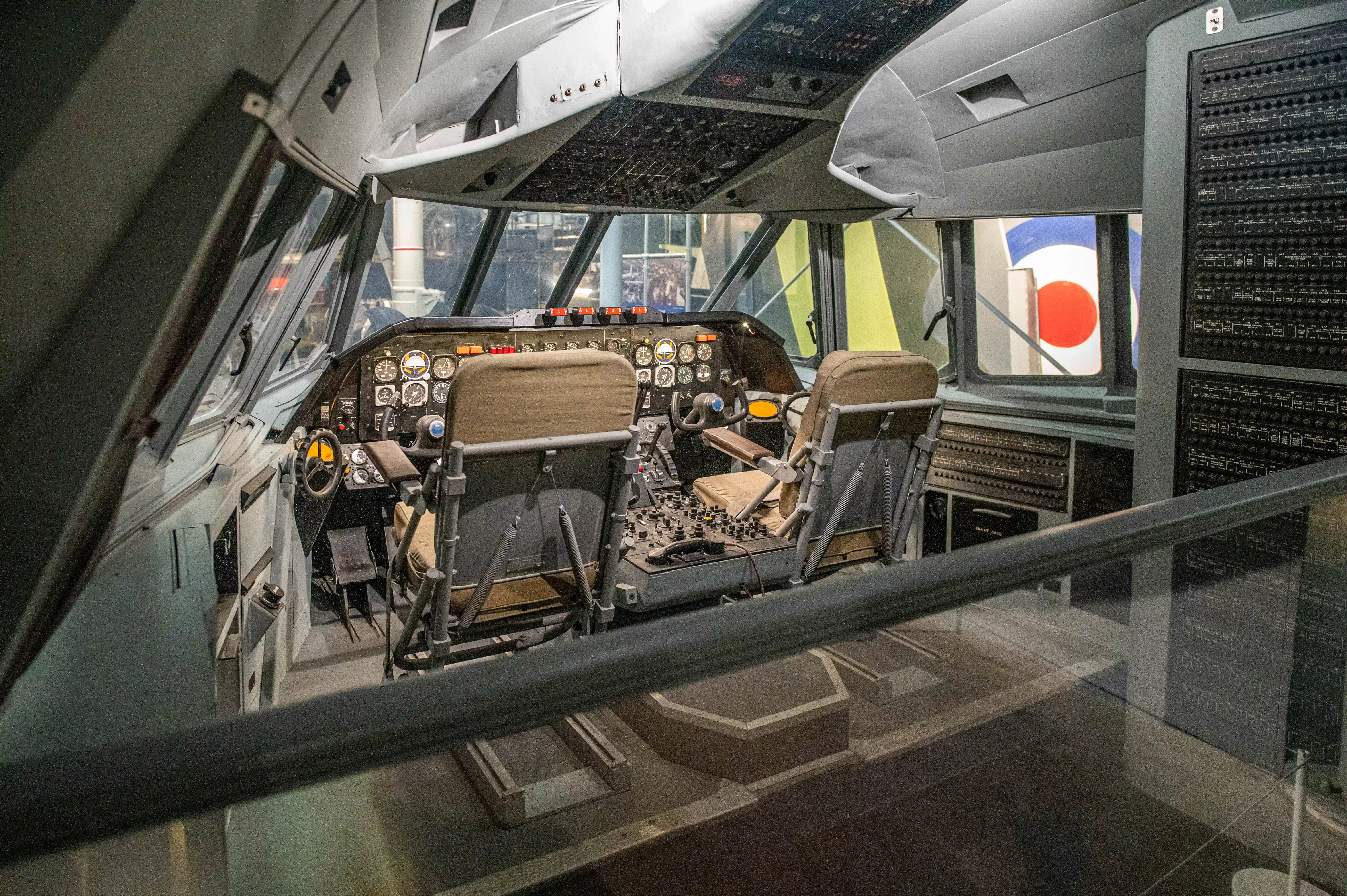
Interior view of an old aeroplane cockpit, featuring two pilot seats, steering yokes, an array of analogue gauges and switches, and a window displaying a red and blue circular aircraft marking.
Vickers Viscount Cockpit Simulator
photo by
©www.mgaylard.co.uk.
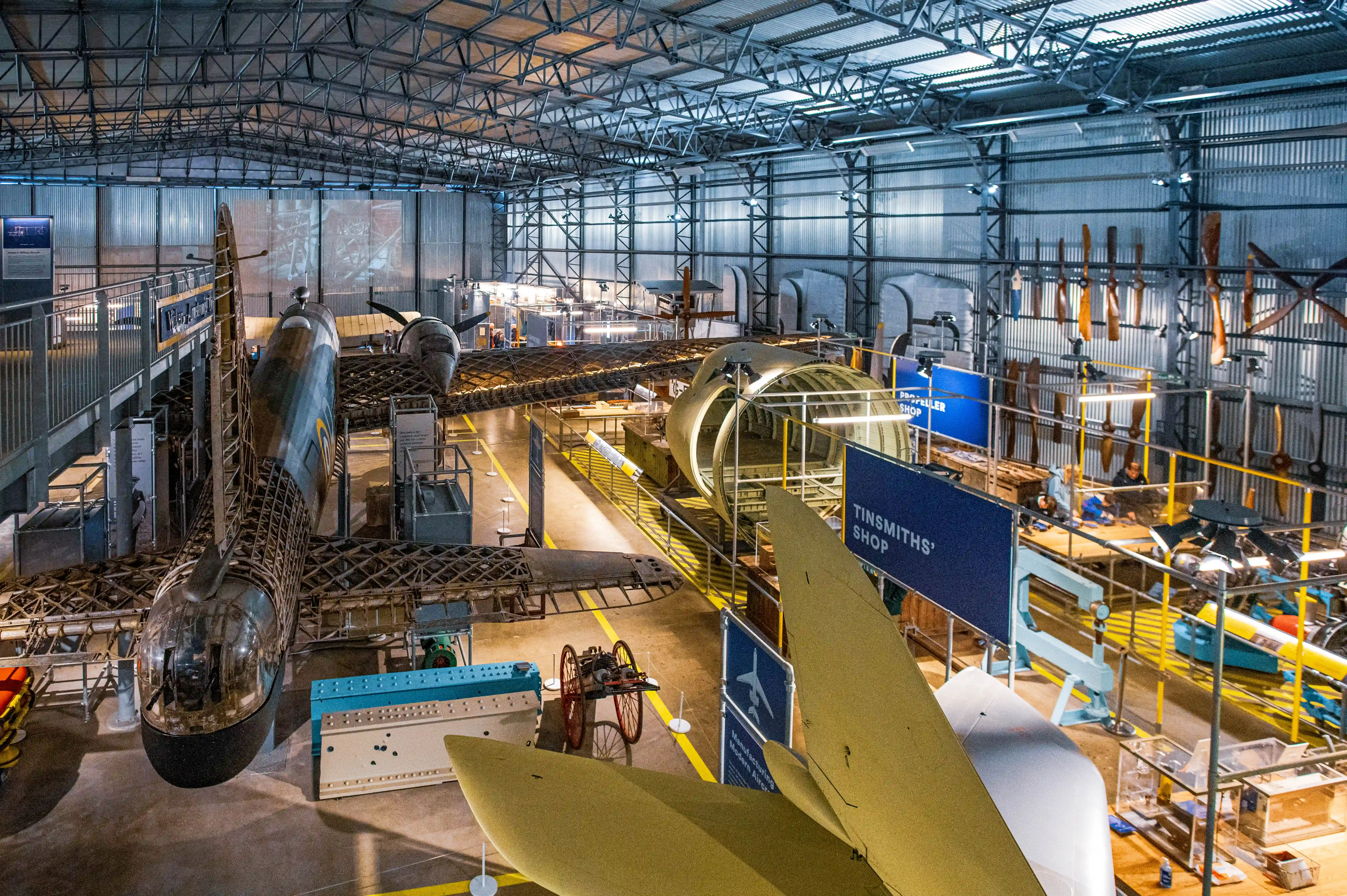
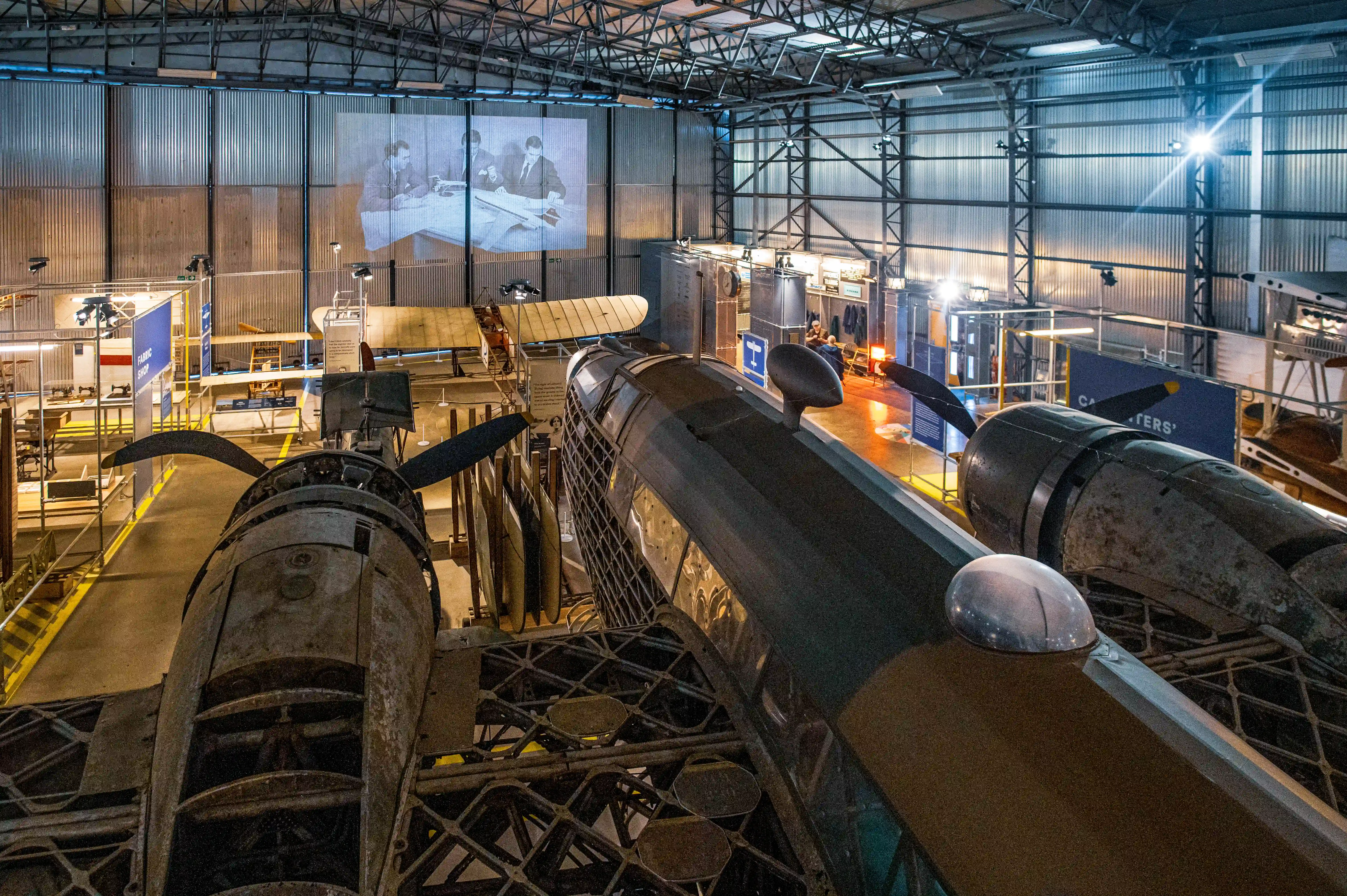
 Interior of an aviation museum showing a partially assembled aircraft suspended overhead, with displays of aircraft parts, tools, and historical aviation exhibits.
Vickers Wellington Mk1A
photo by
©www.mgaylard.co.uk.
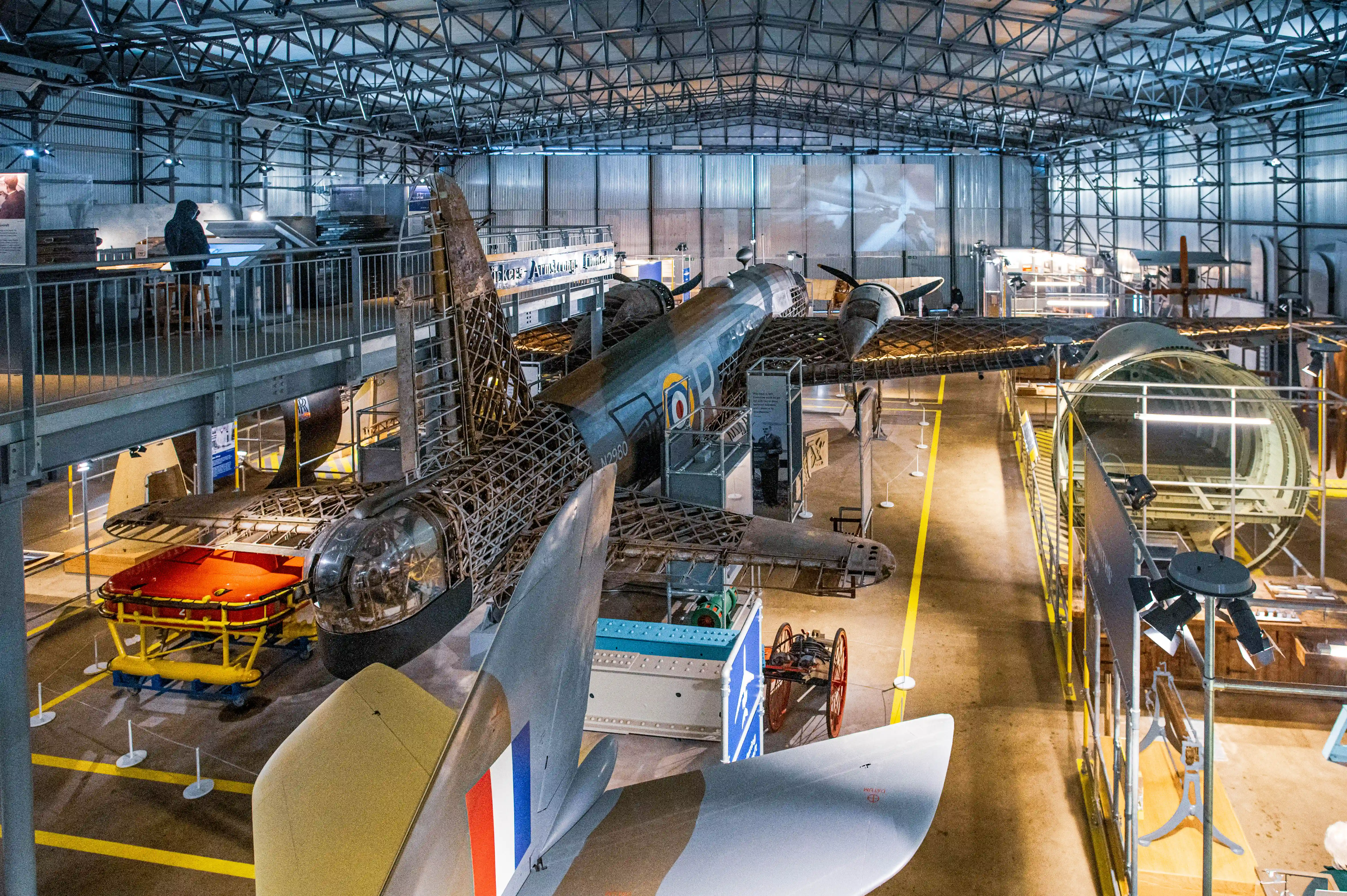
Interior view of an aviation museum with several aircraft, including a partially exposed bomber, on display.
Vickers Wellington Mk1A
photo by
©www.mgaylard.co.uk.
Interior view of an aviation museum with multiple vintage aircraft, including a biplane and parts of a bomber in the foreground, displayed within a large industrial hangar.
Vintage Aircraft Exhibition in Aviation Museum Hangar
photo by
©www.mgaylard.co.uk.
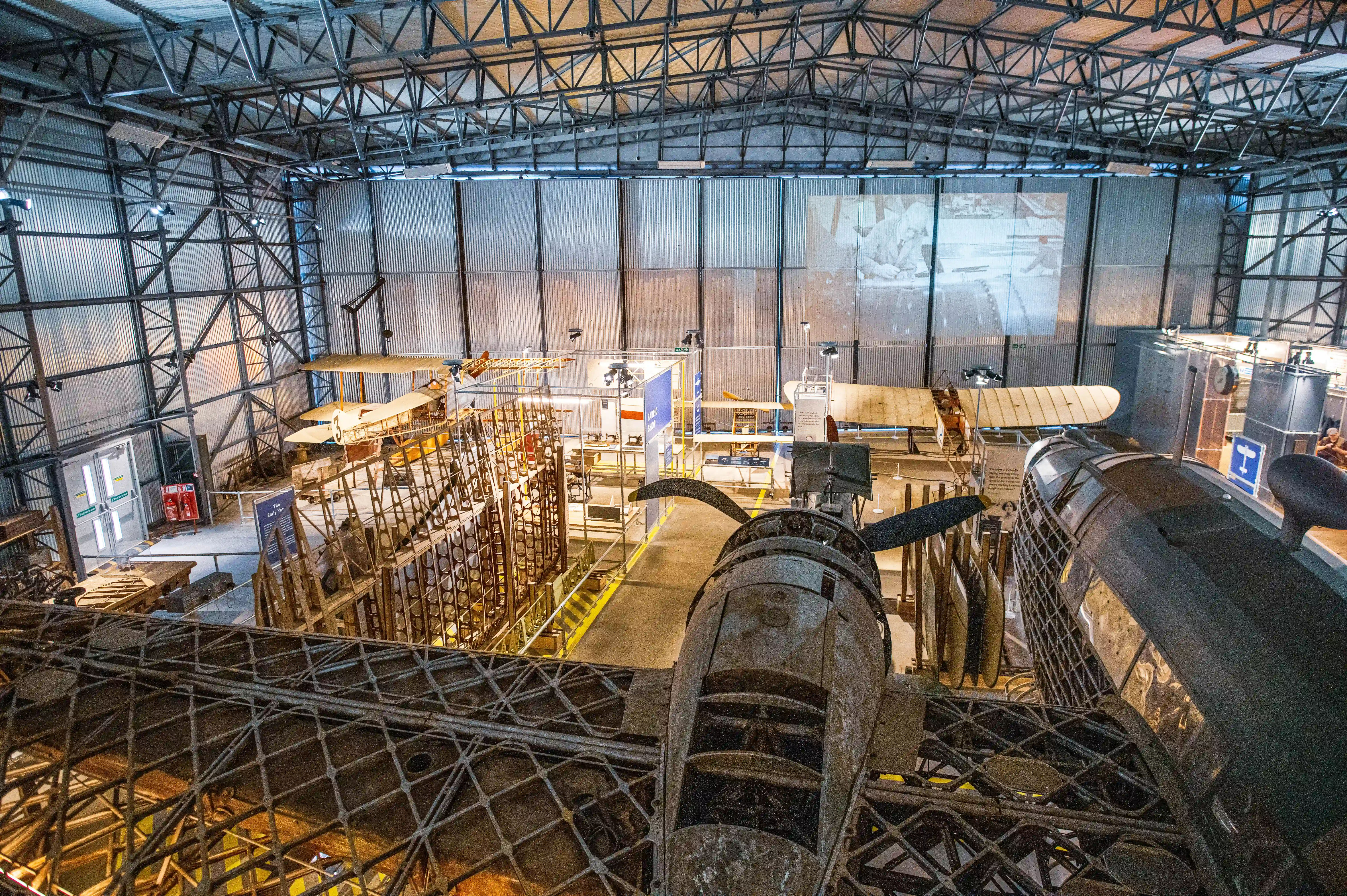
Overhead view of a museum hangar showcasing a vintage bomber aircraft. A projected image of a historical meeting is visible on the back wall, with displays and other aircraft parts arranged around the central exhibit.
Aviation Museum Interior: Vintage Bomber and Historical Projection
photo by
©www.mgaylard.co.uk.
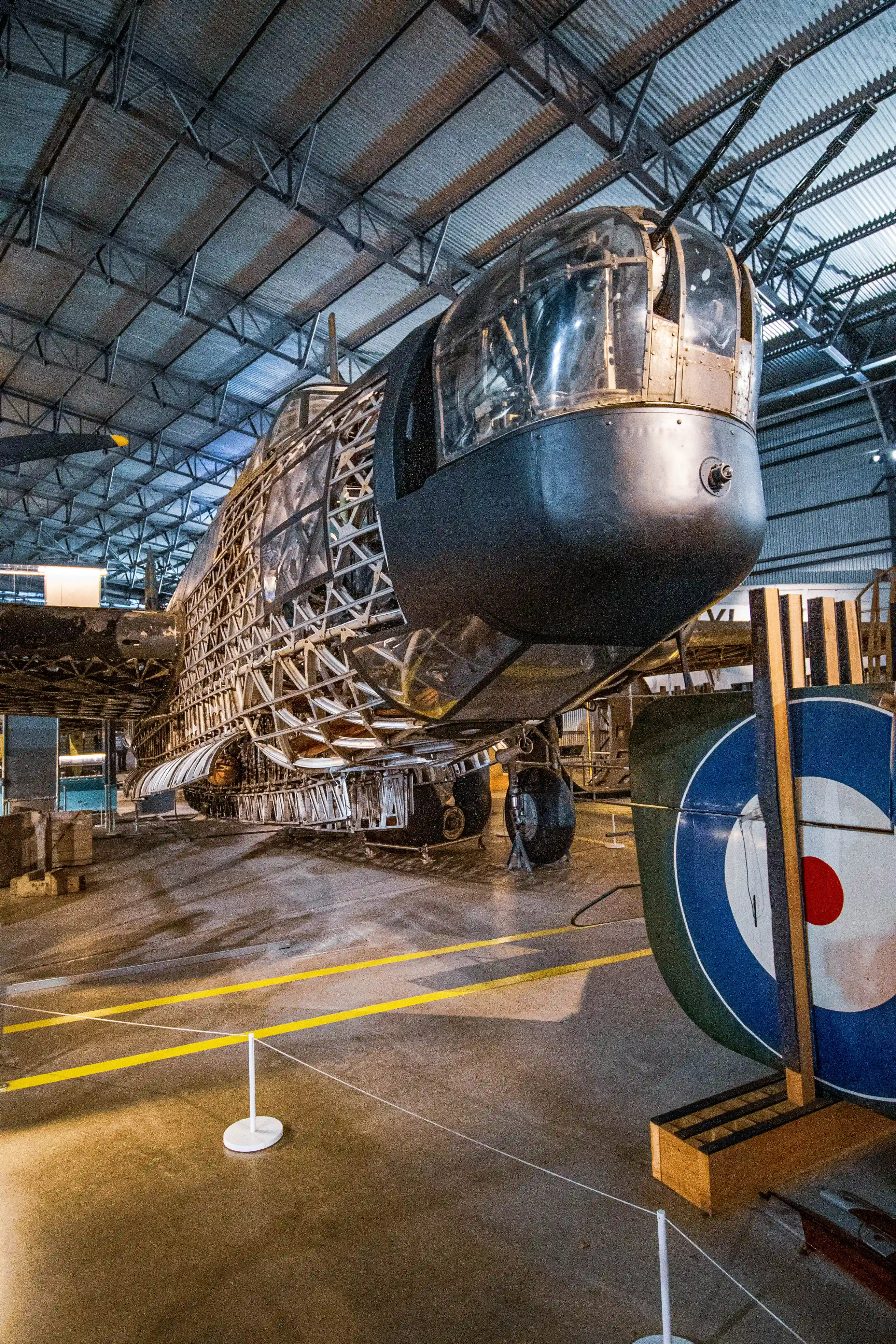
Partially restored Vickers Wellington bomber aircraft's interior structure, nose turret, and landing gear, with a Royal Air Force roundel display in the foreground, inside a museum hangar.
Interior view of a partially restored Vickers Wellington bomber in a hangar.
photo by
©www.mgaylard.co.uk.
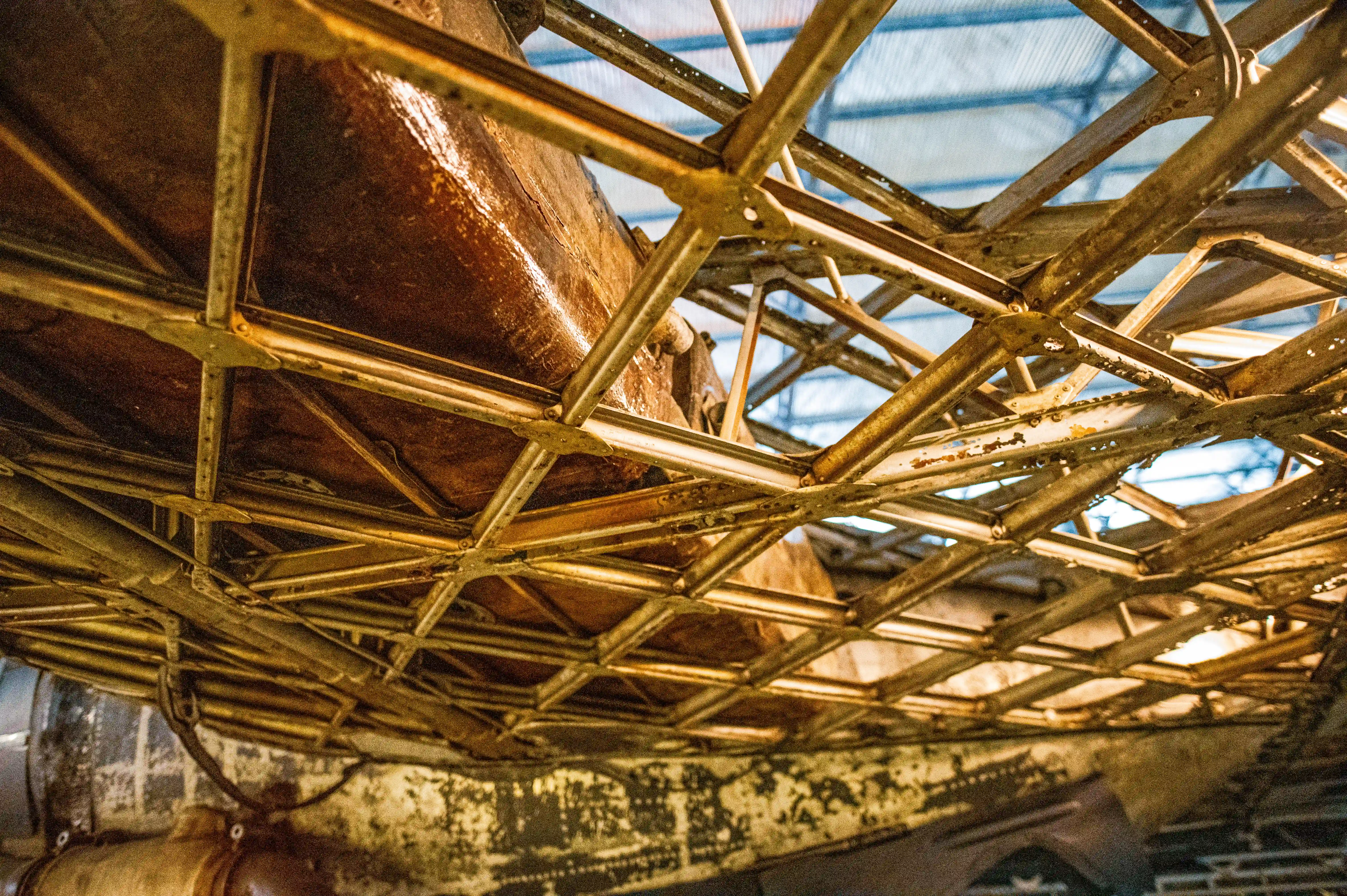
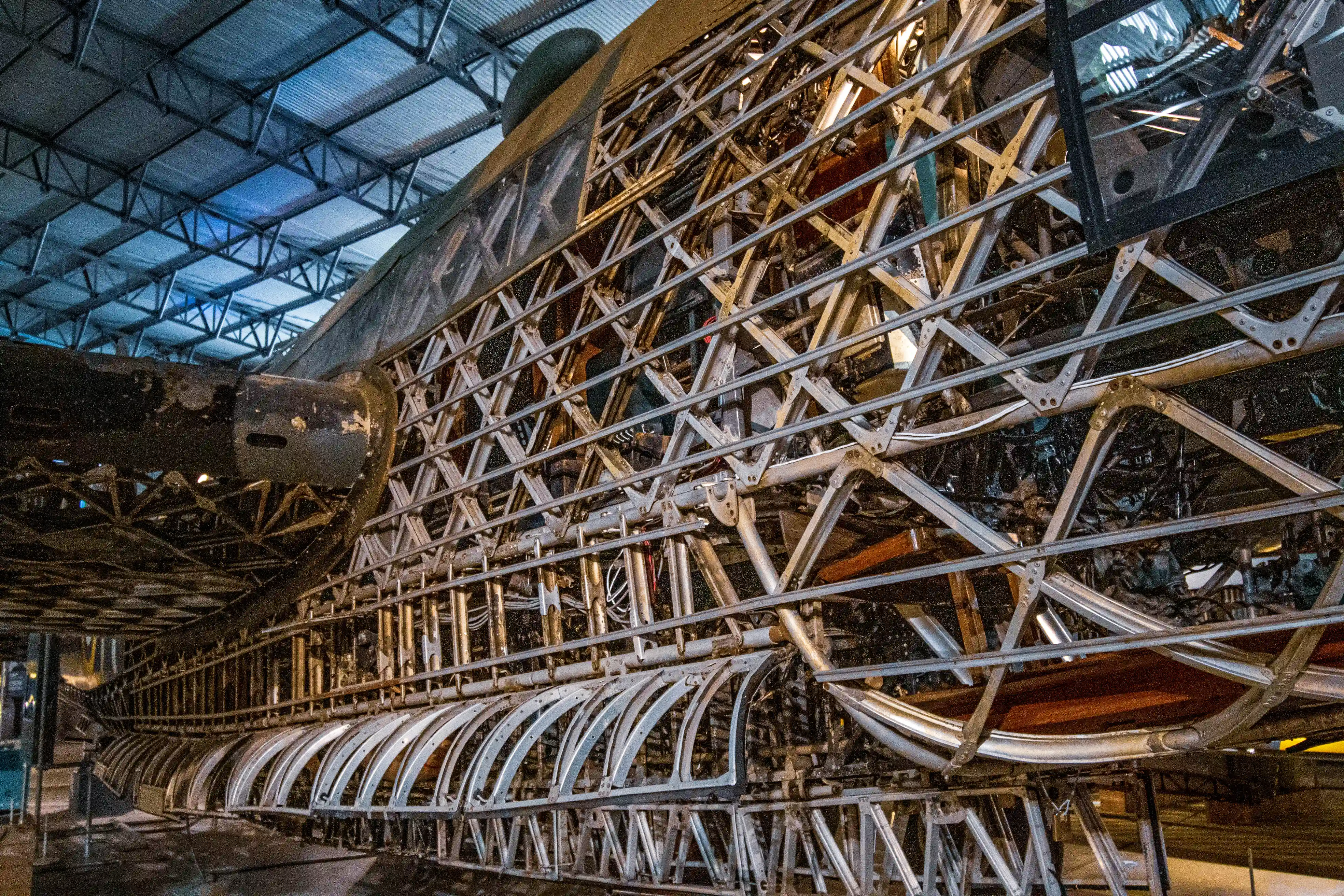
A detailed shot of the internal metallic structure of an aircraft, showing a grid of interconnected golden struts and beams, with brown material and signs of age visible underneath.
Aircraft Internal Framework Detail
photo by
©www.mgaylard.co.uk.
Close-up view of the metallic lattice structure and internal components of an aircraft fuselage, viewed from the side.
Aircraft Fuselage Framework
photo by
©www.mgaylard.co.uk.
Open the full set flickr button this page

locale

Established: 1915 (World War I)

Original Use: Aircraft production, testing, and innovation

Notable Aircraft: Vickers Vimy, Vickers Wellington, Hawker Hurricane, Hawker Hart, and more

Type: Historic aircraft factory and museum exhibit

Notable Features: Original factory buildings, restored workshops, historic aircraft, interactive exhibits

Website:

Historical Significance

The Aircraft Factory at Brooklands was established in 1915 as part of the British response to World War I. The site was chosen for its proximity to London, excellent transport links, and the existing infrastructure of the Brooklands race track, which had opened in 1907 as the world’s first purpose-built motor racing circuit. The factory was initially operated by Vickers Limited, a major British engineering conglomerate, and it quickly became one of the most important centers for aircraft production in the UK.

During World War I, the Aircraft Factory at Brooklands produced a range of aircraft for the Royal Flying Corps (RFC) and Royal Naval Air Service (RNAS), including bombers, fighters, and reconnaissance planes. The experience and expertise gained during the war laid the foundation for Brooklands’ continued role in aviation during the interwar and World War II periods.

In the interwar years, the Aircraft Factory at Brooklands became a hub for aviation innovation and testing. The site was used for the development of new aircraft designs, including the Vickers Vimy, which made the first non-stop transatlantic flight in 1919, piloted by Alcock and Brown. The factory also played a key role in the development of commercial aviation, with aircraft such as the Vickers Viking being designed and built at Brooklands.

During World War II, the factory ramped up production to meet the demands of the war effort. It produced thousands of aircraft, including the Vickers Wellington bomber, the Hawker Hurricane fighter, and the Hawker Hart biplane. The Wellington was particularly significant, as it was one of the most important bombers in the early years of the war and was designed and built entirely at Brooklands. The factory’s contribution to the war effort was vital to the success of the Allied forces.

After World War II, the Aircraft Factory at Brooklands continued to play a role in aviation, though its focus shifted to commercial and experimental aircraft. The factory remained a center for innovation, with new designs and technologies being developed and tested at the site. However, by the 1950s and 1960s, the decline of the British aviation industry led to the closure of the factory. The site was later preserved as part of Brooklands Museum, ensuring that its legacy and achievements would not be forgotten.

Today, the Aircraft Factory at Brooklands is a vibrant and dynamic heritage exhibit that celebrates the history of British aviation. Its original factory buildings, restored workshops, and historic aircraft provide visitors with a unique and immersive experience of the golden age of aircraft manufacturing and innovation.

Notice

Text generated by Mistral AIwww.xprivo.comMicrosoft CoPilot , and AI Image Describer
To the top
Powered by w3.css. The images are all stored on link to www.gaylard.co.uk Photostream on Flickr   This website is hosted by link to 123Reg Web Hosting