HOME

Aircraft Park

Aircraft Park

Brooklands Museum, Brooklands Road,  Weybridge,  Surrey,  KT13 0QN,  United Kingdom

The Aircraft Park at Brooklands Museum is a dynamic outdoor exhibit located within the Brooklands Museum complex in Weybridge, Surrey, England. This scenic and immersive area showcases a collection of historic aircraft, allowing visitors to explore the rich aviation heritage of Brooklands in a natural and engaging environment. The Aircraft Park features iconic military and civilian aircraft, as well as interactive exhibits and educational displays, making it a must-visit destination for aviation enthusiasts, history buffs, and families alike.
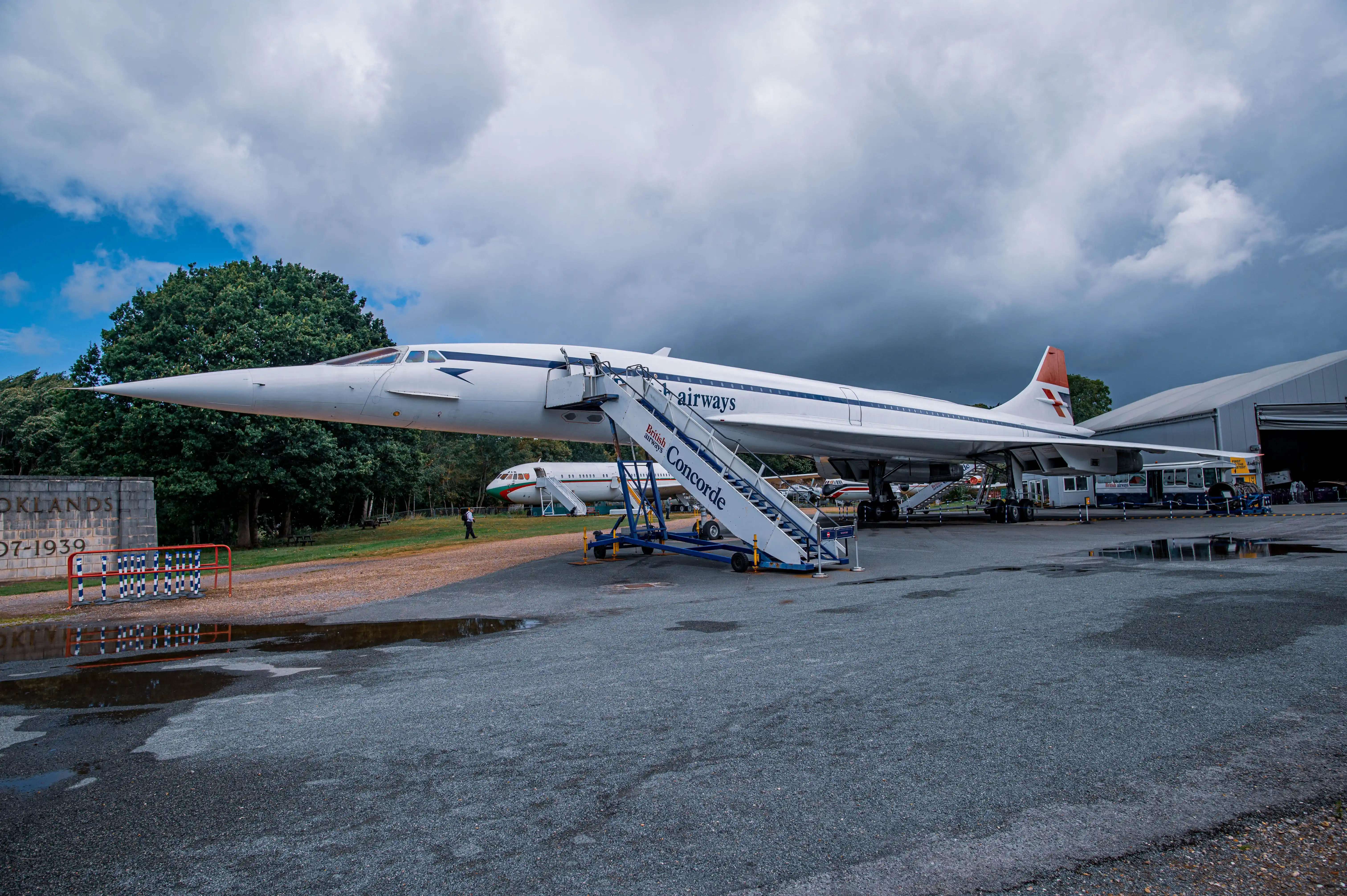
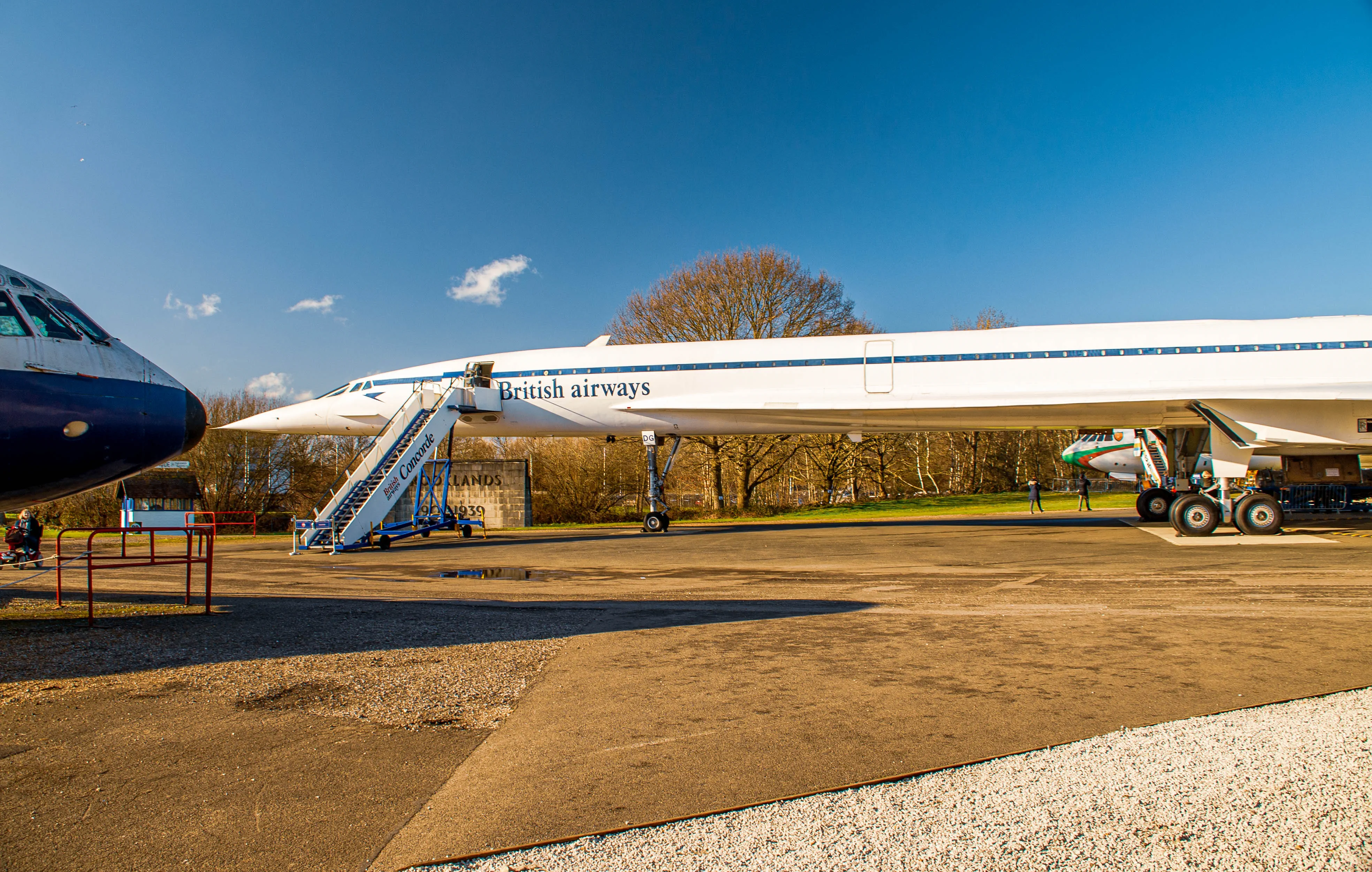
A British Airways Concorde aircraft is parked on display, with a mobile boarding staircase positioned beside it. The aircraft features the iconic white livery with blue stripes. The Brooklands Museum sign is visible in the foreground.
Brooklands Museum Concorde Display
photo by
©www.mgaylard.co.uk.
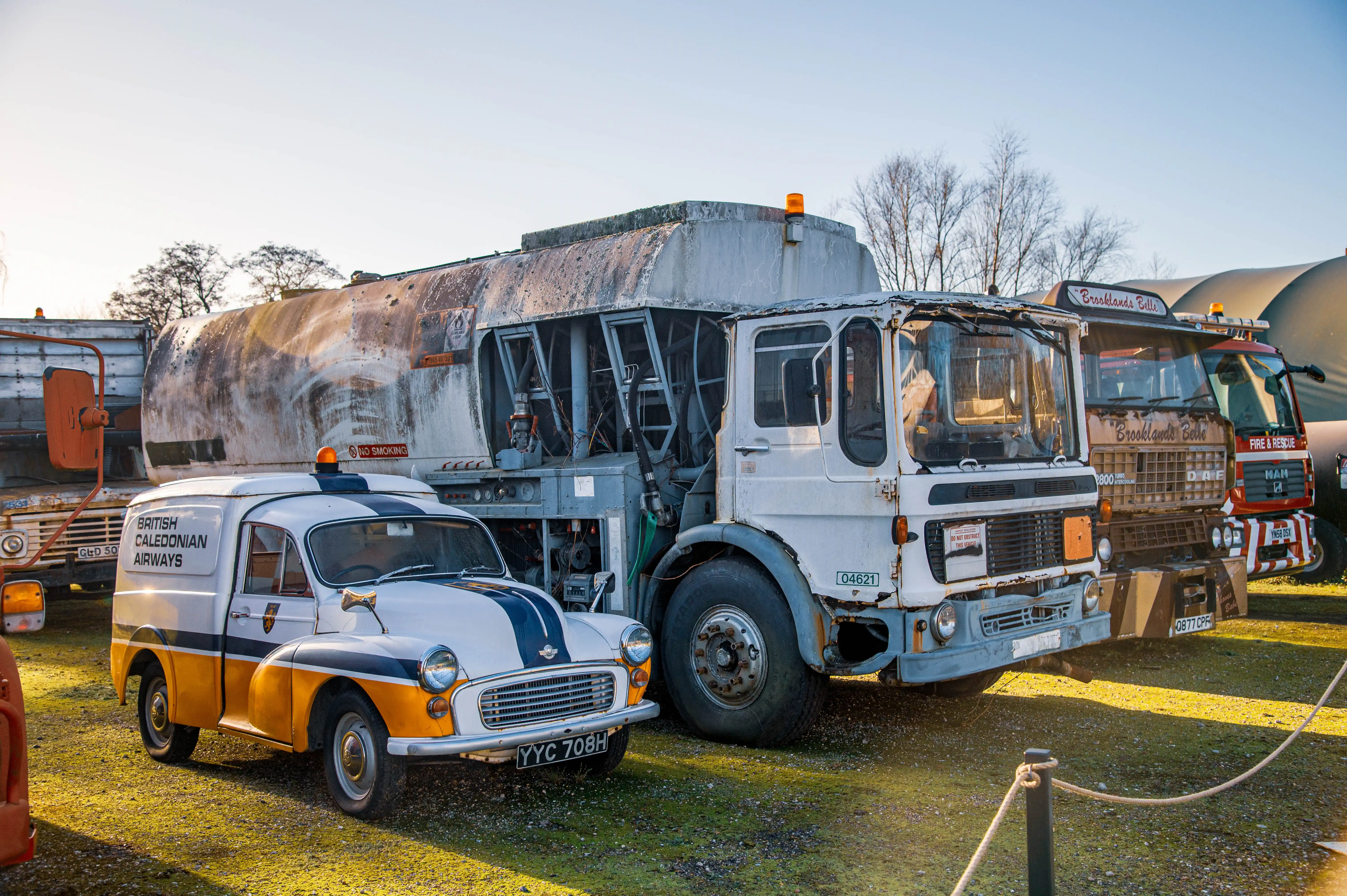
A vintage white and yellow van with BRITISH CALEDONIAN AIRWAYS lettering is parked in front of a large, weathered tanker truck. Behind them, two other trucks, one labelled Brooklands Bells and another with FIRE & RESCUE are visible.
Classic Aircraft Service Vehicles and Trucks
photo by
©www.mgaylard.co.uk.
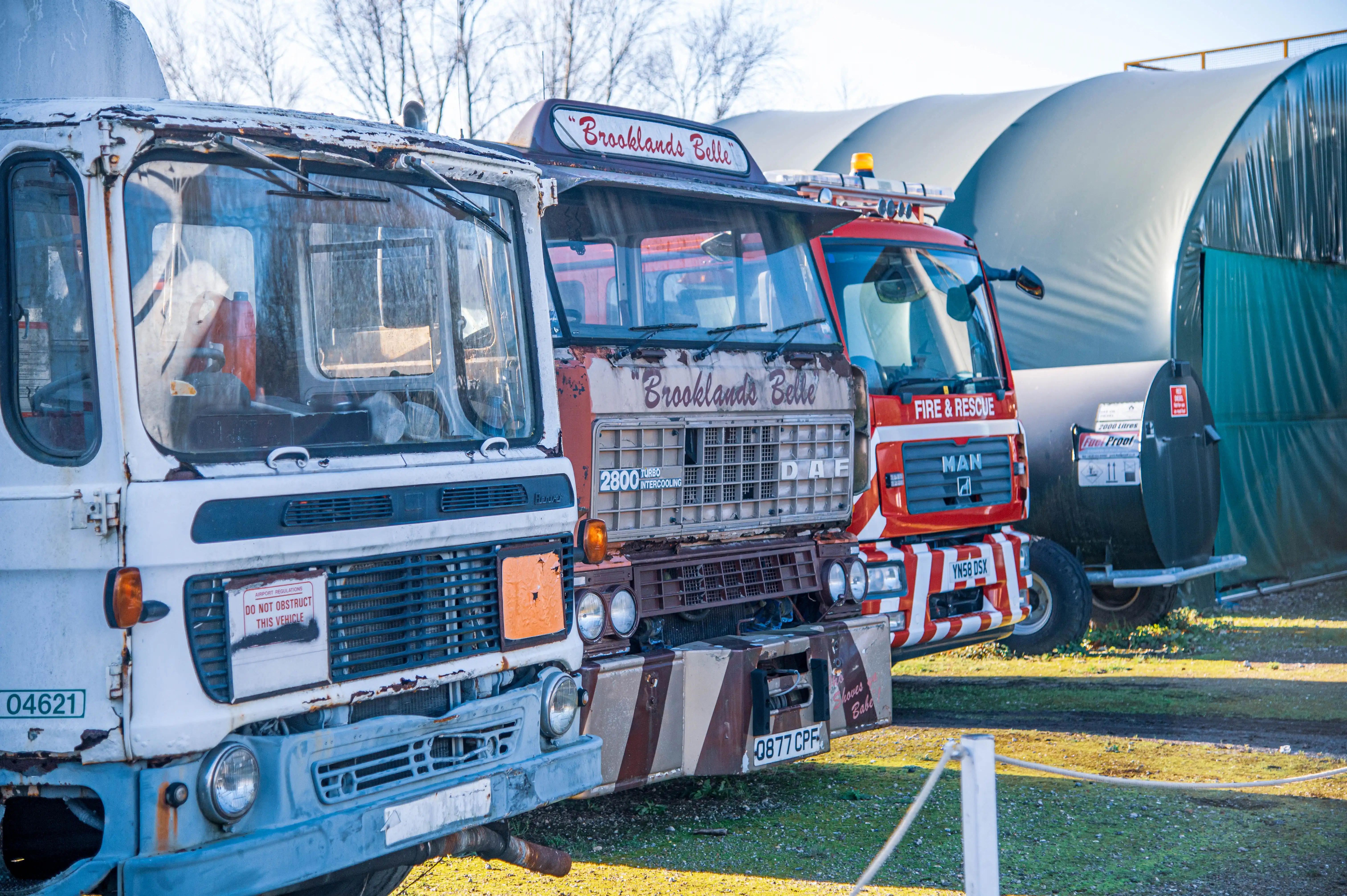
Three trucks lined up, the closest being white, followed by a brown and white truck named Brooklands Belle, and a red and white MAN fire engine, with a large green tent-like structure in the background.
Airfield Service Vehicles
photo by
©www.mgaylard.co.uk.
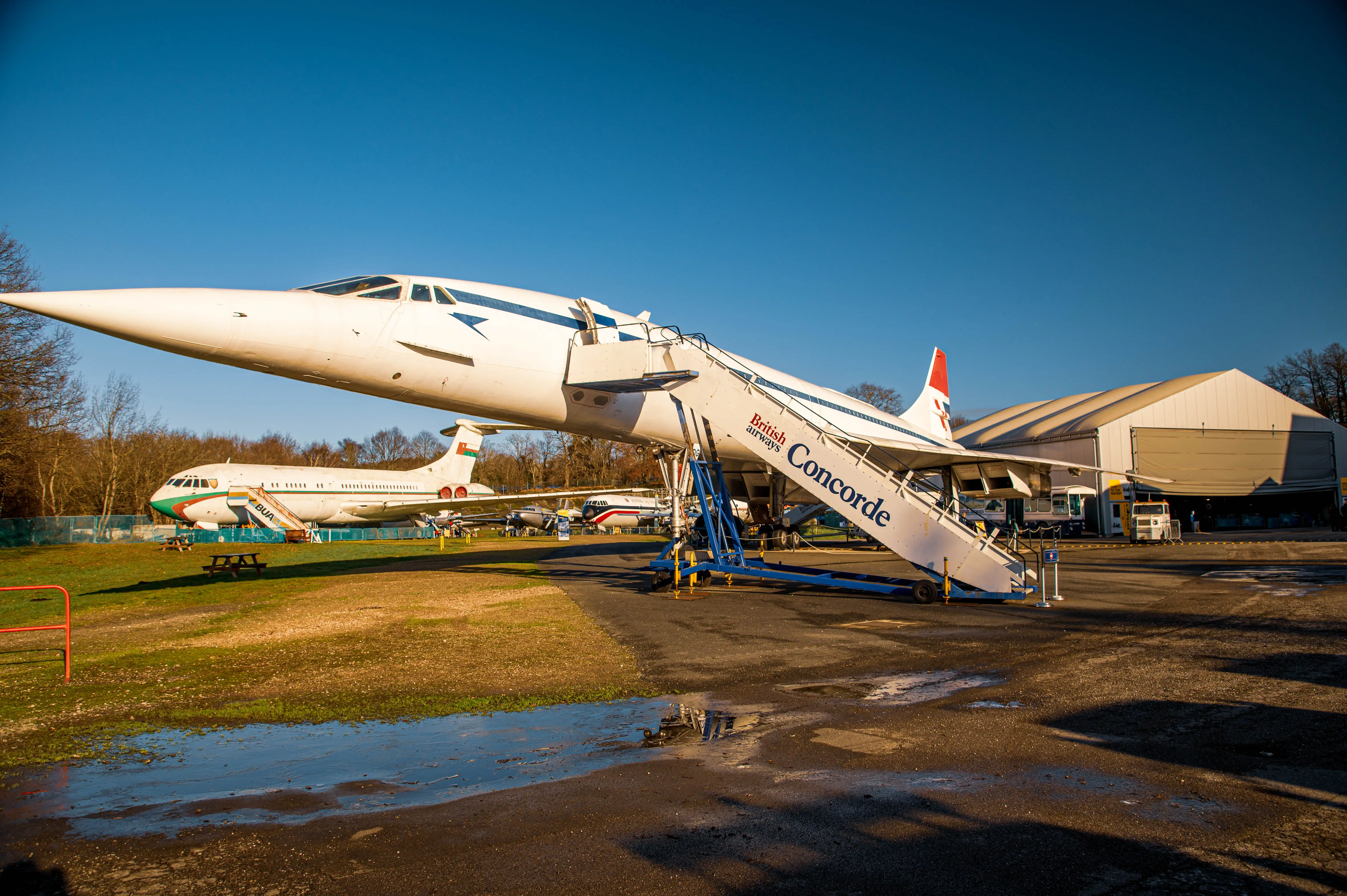
A British Airways Concorde airplane with its iconic delta wing and pointed nose is positioned on the ground, with a mobile stairway attached. In the background, another white aircraft with green and red livery is visible, along with a large white hangar and trees under a bright blue sky.
Concorde and Other Aircraft at Museum
photo by
©www.mgaylard.co.uk.

BAC/Aérospatiale Concorde G-BBDG: The Development Aircraft That Paved the Way

G-BBDG, affectionately known as "Delta Golf", was the second British-built development Concorde, designed for evaluation testing, certification, and finalizing the Concorde’s design before it entered commercial service. Registered on August 7, 1973, G-BBDG first flew on February 13, 1974, and was painted in British Airways livery throughout its testing period. Unlike the production Concordes, G-BBDG had some design differences, such as a thinner fuselage skin, which were refined before the final production models were built.

G-BBDG played a crucial role in the development and certification of the Concorde program. It was used extensively for:

  • Finalizing the Concorde’s aerodynamic design, including testing the aircraft’s handling, performance, and stability at supersonic speeds.
  • Certification flights to ensure the aircraft met safety and performance standards for commercial operation.
  • Evaluating systems and components, such as avionics, hydraulics, and landing gear, to refine the final production models.

References

Wikipedia: BAC Concorde G-BBDG  Wikipedia: List of Concorde Aircraft
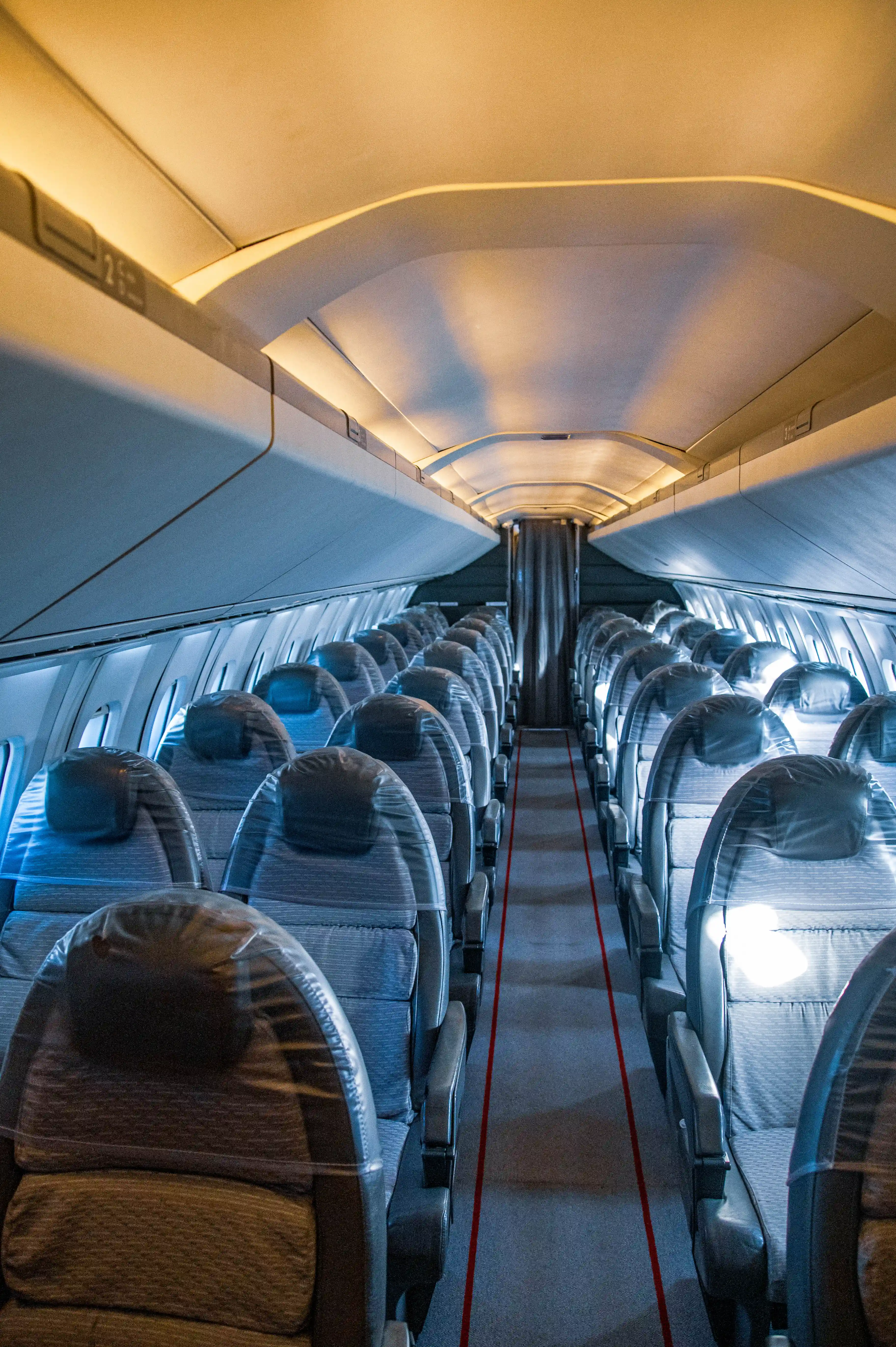
Interior of an aeroplane cabin showing rows of empty seats covered in clear plastic, with an aisle in the centre.
Social Distancing on an Airplane
photo by
©www.mgaylard.co.uk.
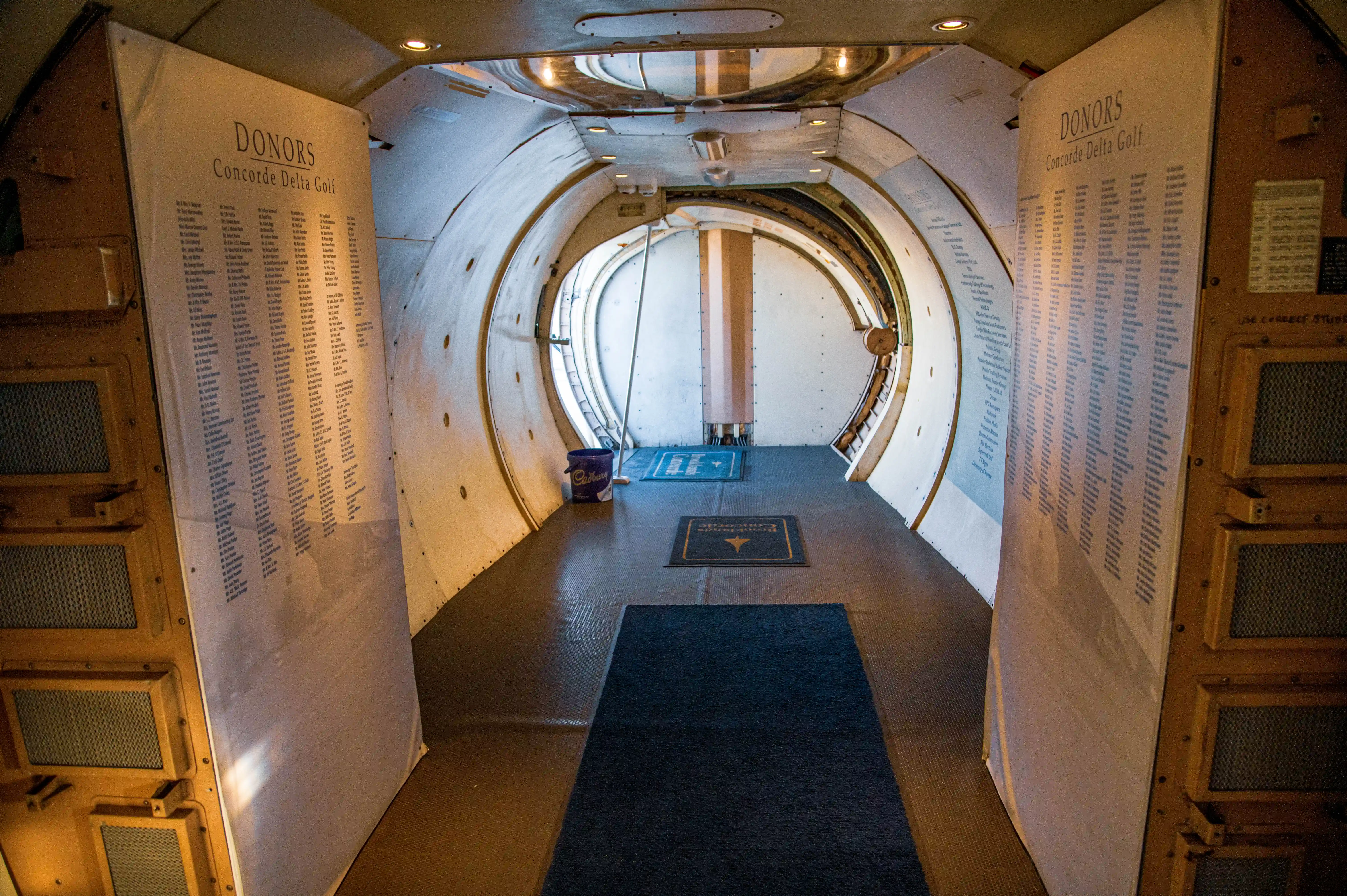
A view down the curved interior corridor of a Concorde aircraft, featuring prominent lists of donors to the Concorde Delta Golf project displayed on large panels. Two welcome mats are placed on the floor.
Inside a Concorde: A Tribute to Donors
photo by
©www.mgaylard.co.uk.
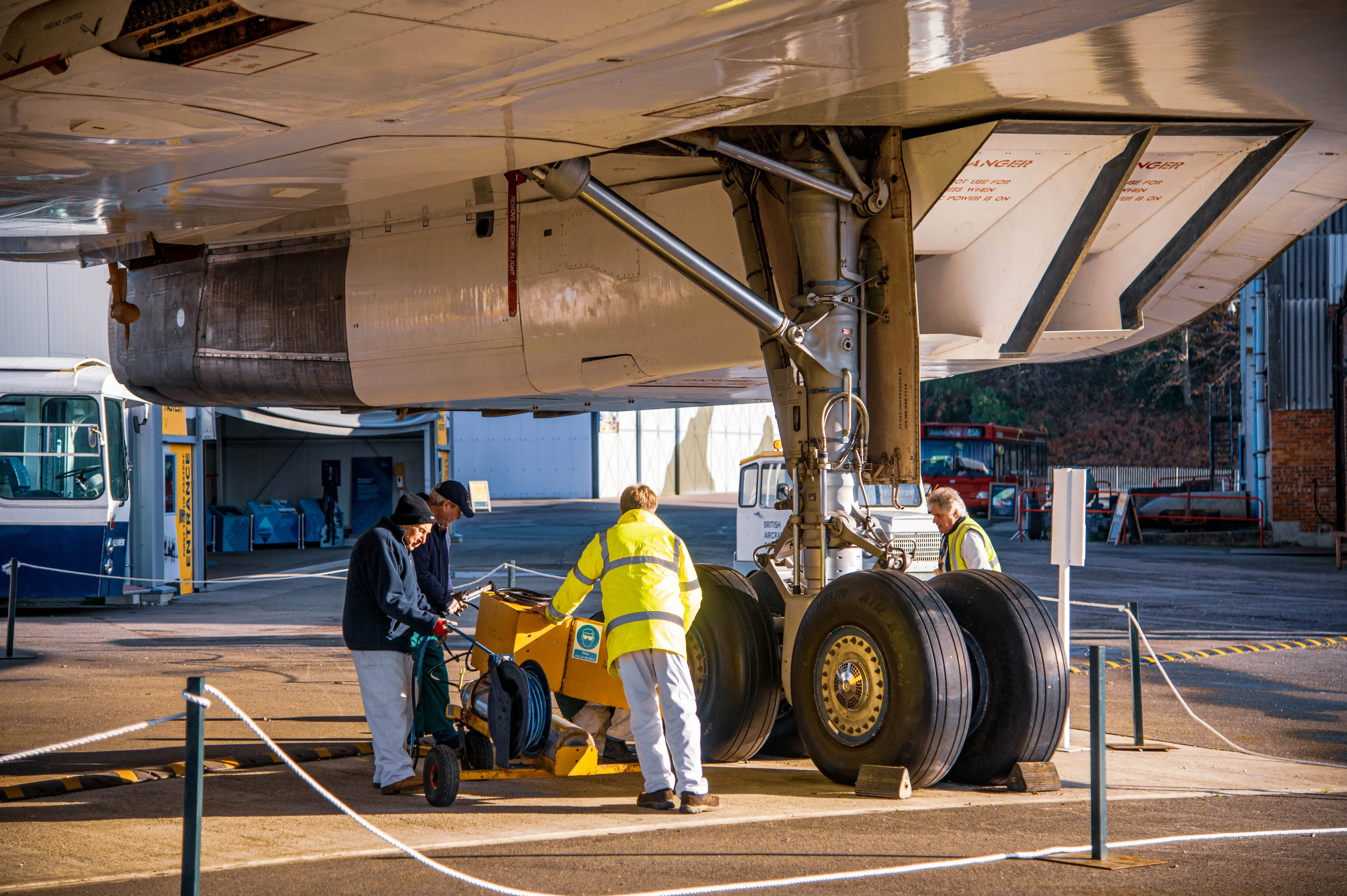
A team of aviation technicians performing maintenance on the landing gear of a large aircraft. The technicians are dressed in high-visibility vests and safety gear, using specialized equipment to inspect or repair the landing gear. The aircraft is stationed in a hangar or maintenance area, with other vehicles and equipment visible in the background.
BAC Aerospatiale Concorde G-BBDG
photo by
©www.mgaylard.co.uk.
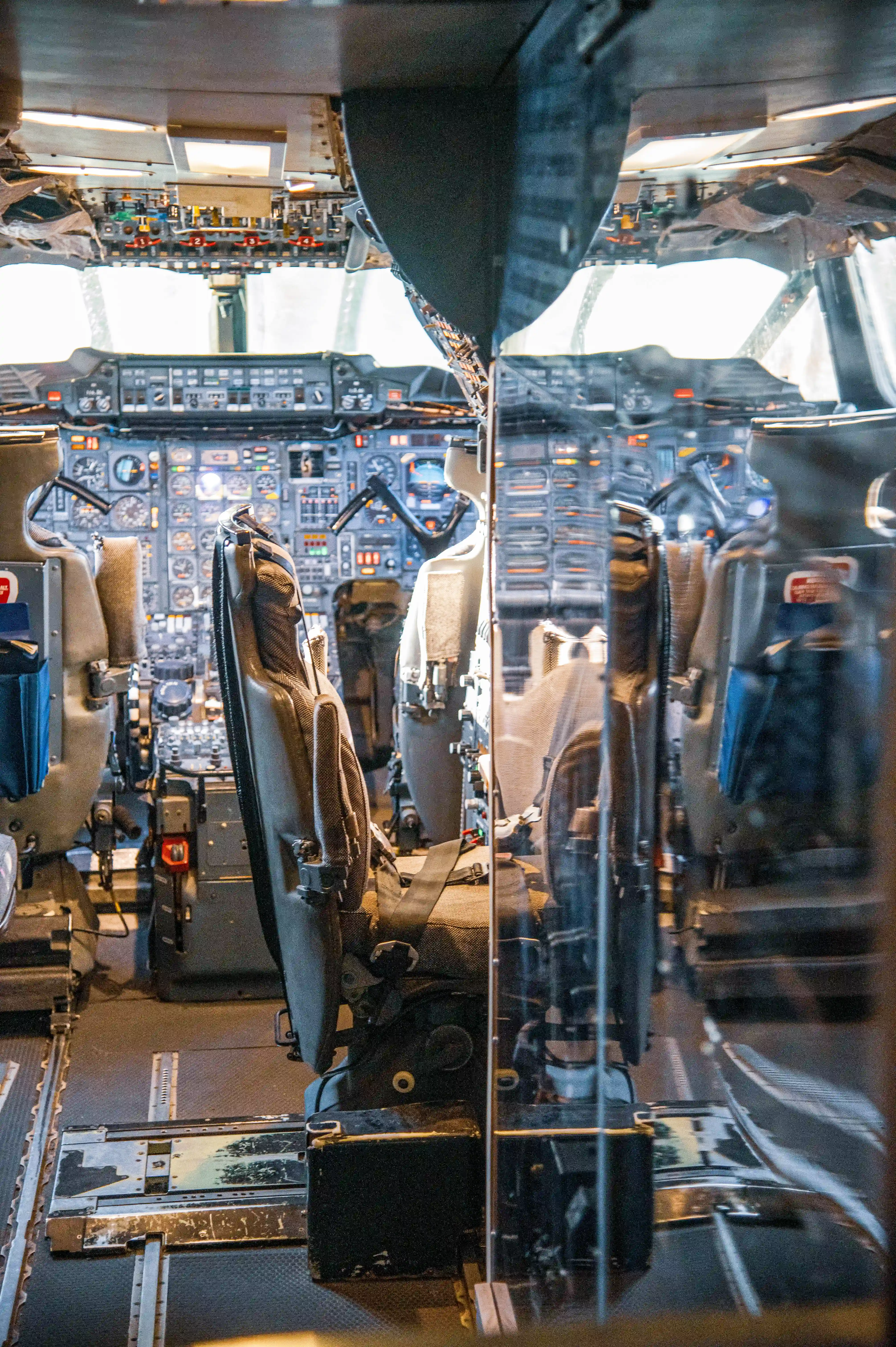
Interior view of a Concorde supersonic jet cockpit, showing pilot and co-pilot seats, numerous gauges, switches, and controls on the dashboard.
Concorde Cockpit
photo by
©www.mgaylard.co.uk.
A British Airways Concorde aircraft, painted white with blue accents, sits on an airfield with a set of boarding stairs extended to its door. The nose of another aircraft is visible to the left.
British Airways Concorde Aircraft
photo by
©www.mgaylard.co.uk.

G-BBDG

G-BBDG is one of the most important development aircraft in the Concorde program. Its contributions to testing, certification, and spare parts were invaluable in ensuring the success of the Concorde fleet. Today, as a museum exhibit at Brooklands, G-BBDG serves as a testament to the innovation, engineering excellence, and supersonic ambition of the Concorde era. The "Concorde Experience" allows visitors to step inside the aircraft and relive the golden age of supersonic travel, making G-BBDG a beloved and iconic piece of aviation history.

G-BBDG never entered commercial service with British Airways. Instead, it was used as a major source of spare parts for the BA Concorde fleet, helping to keep the airline’s seven production Concordes operational. After its final flight on December 24, 1981, G-BBDG was stored at Filton Airfield in a semi-airworthy state, meaning it could have been returned to flight within two weeks if needed. However, this never became necessary, and the aircraft was eventually purchased by British Airways in 1984 as part of a support buy-out.

References


Text generated by Microsoft CoPilot  Mistral AI

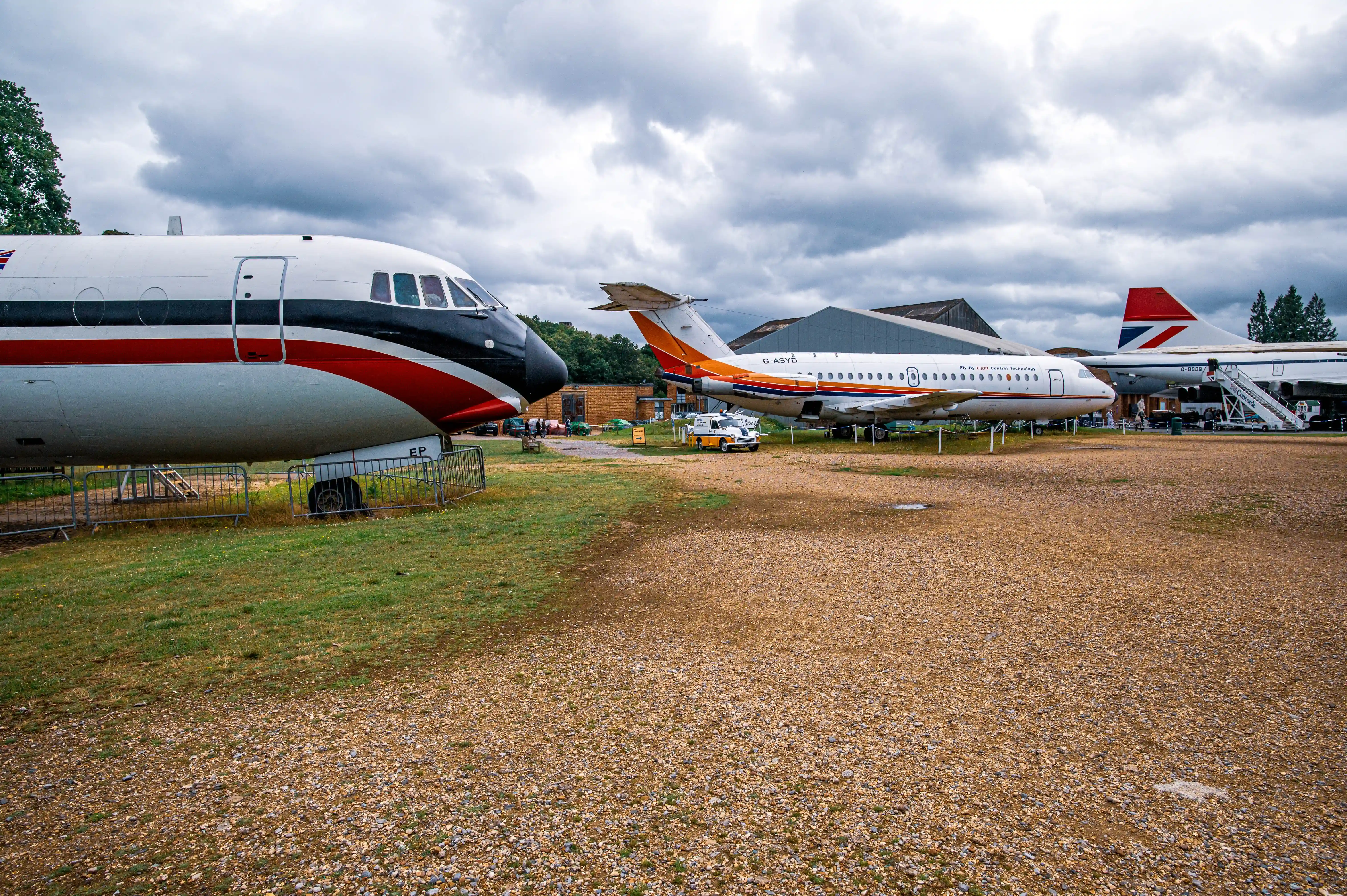
A wide shot of several vintage aeroplanes parked on a gravel and grass area. The closest aeroplane is white with red and black stripes along its side. To its right is a smaller white aeroplane with orange and yellow stripes. In the background is a larger aeroplane with a British Airways tail fin. The sky is cloudy and grey.
BAC One-Eleven
photo by
©www.mgaylard.co.uk.
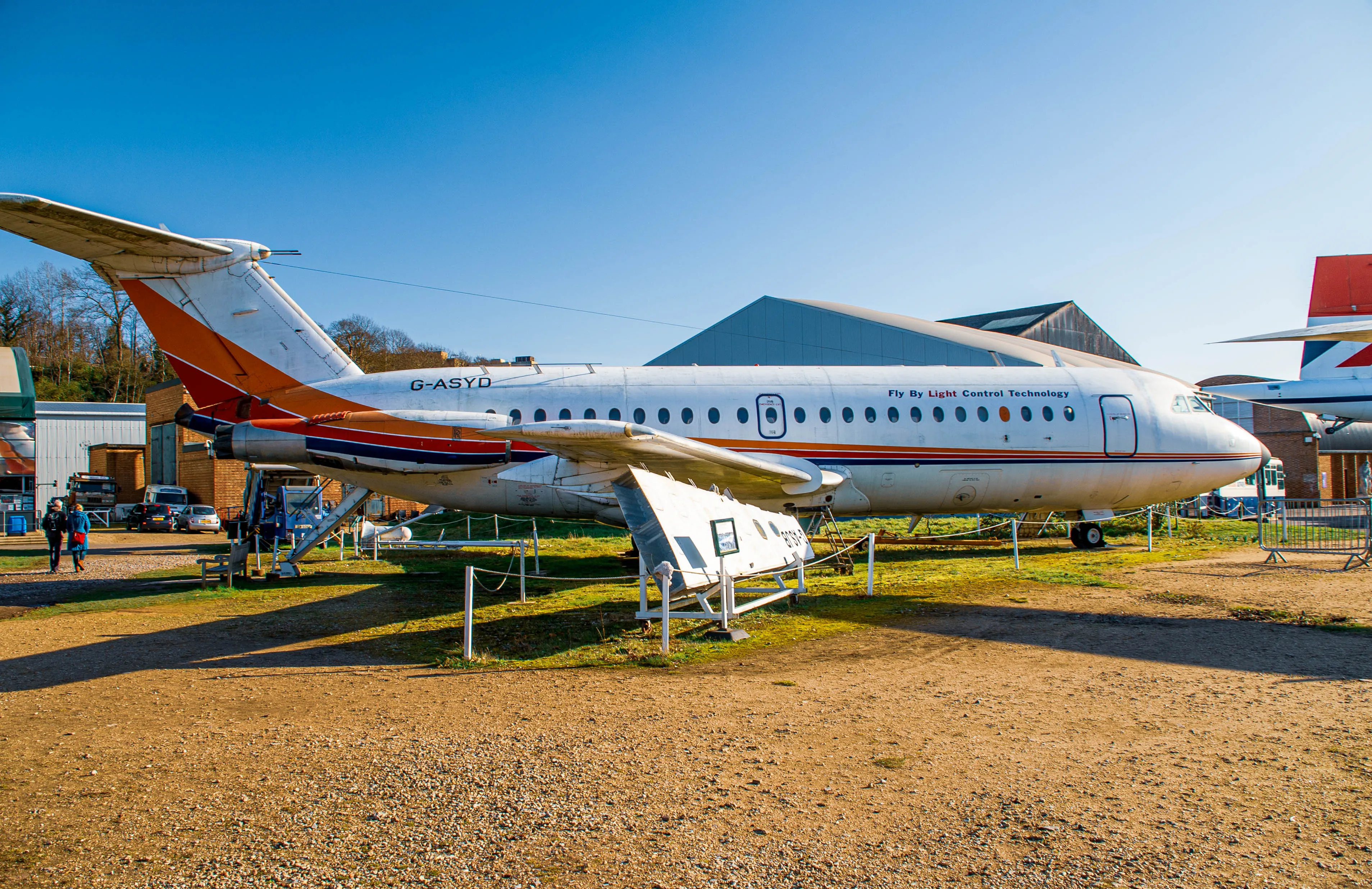
A vintage aircraft with the registration 'G-ASYD' displayed outdoors on a gravel surface. The aircraft has a white fuselage with red and blue stripes, a T-tail design, and jet engines. The phrase 'Fly By Light Control Technology' is visible on the side. In the background, a modern hangar and other aircraft are visible, along with a clear blue sky and trees.
Innovation in the Skies: The Vintage Aircraft G-ASYD
photo by
©www.mgaylard.co.uk.

BAC 1-11 G-ASYD

G-ASYD is currently on display at the Brooklands Museum in Weybridge, Surrey, where it serves as a testament to the BAC 1-11’s legacy and the golden age of British aviation. The museum features the aircraft in its original livery, allowing visitors to explore its interior and learn about its history.

The BAC 1-11 (BAC-111 or BAC One-Eleven) was a short-to-medium-haul twin-jet airliner developed and manufactured by the British Aircraft Corporation (BAC). It was originally conceived by Hunting Aircraft as a 30-seat jet before being reworked into an 80-seat airliner following BAC’s formation in 1960. The BAC 1-11 became one of the most successful British jetliners of its era, known for its reliability, versatility, and advanced design. G-ASYD was a BAC 1-11 Series 475AM, one of the early production models of the 1-11. It was built in 1965 as a Model 400 and later modified to the 500, 475, and 670 prototypes during its operational life. This aircraft was used for testing and development, and it played a key role in the evolution of the BAC 1-11 series.

Operational History of G-ASYD

G-ASYD was initially delivered to British United Airways (BUA) and was used for route-proving flights and testing before entering commercial service. Over the years, it was modified and upgraded to test new systems and configurations, including different engine variants and aerodynamic improvements. This versatility made G-ASYD a valuable asset in the development of the BAC 1-11 program.

The aircraft was photographed at the Farnborough International Airshow in September 1974, showcasing its role as a testbed for the BAC 1-11 series. After its active service life, G-ASYD was preserved and eventually placed on display at the Brooklands Museum in Surrey, UK, where it remains a popular exhibit for aviation enthusiasts.

References

Wikipedia: BAC One-Eleven 500 G-AVMO
AirHistory.net: G-ASYD Photo
JetPhotos: G-ASYD
Airport Spotting: Classic British Jetliner – The BAC One-Eleven
WAHS Online: Britain’s Twin Jet – The BAC 1-11

Text generated by Mistral AI

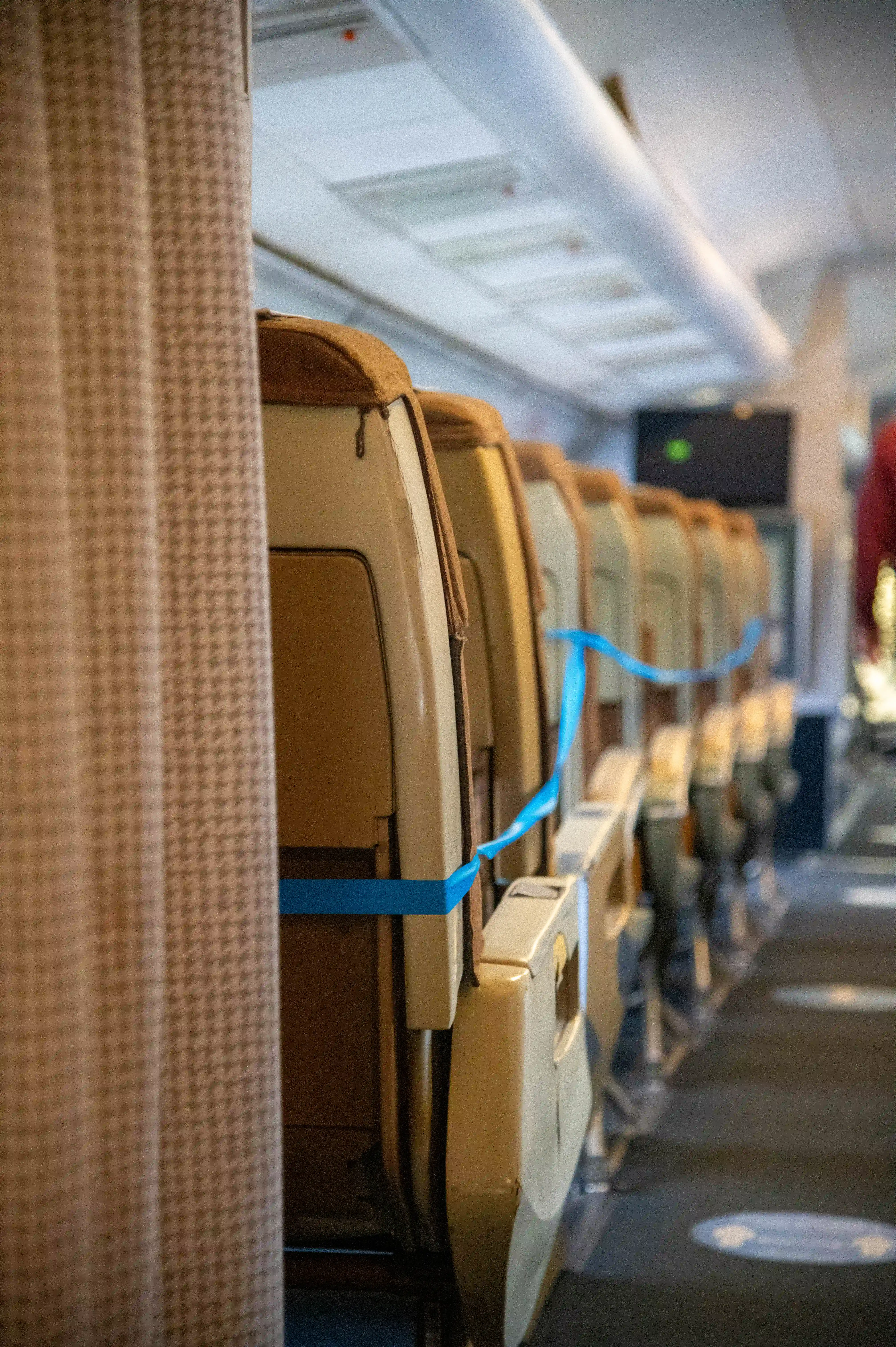
 Interior view of an airplane cabin with several empty seats sectioned off by blue tape. A patterned curtain is visible on the left, and social distancing markers are on the floor of the aisle
Empty Aircraft Cabin
photo by
©www.mgaylard.co.uk.
meta itemprop="encodingFormat" content="image/jpeg">
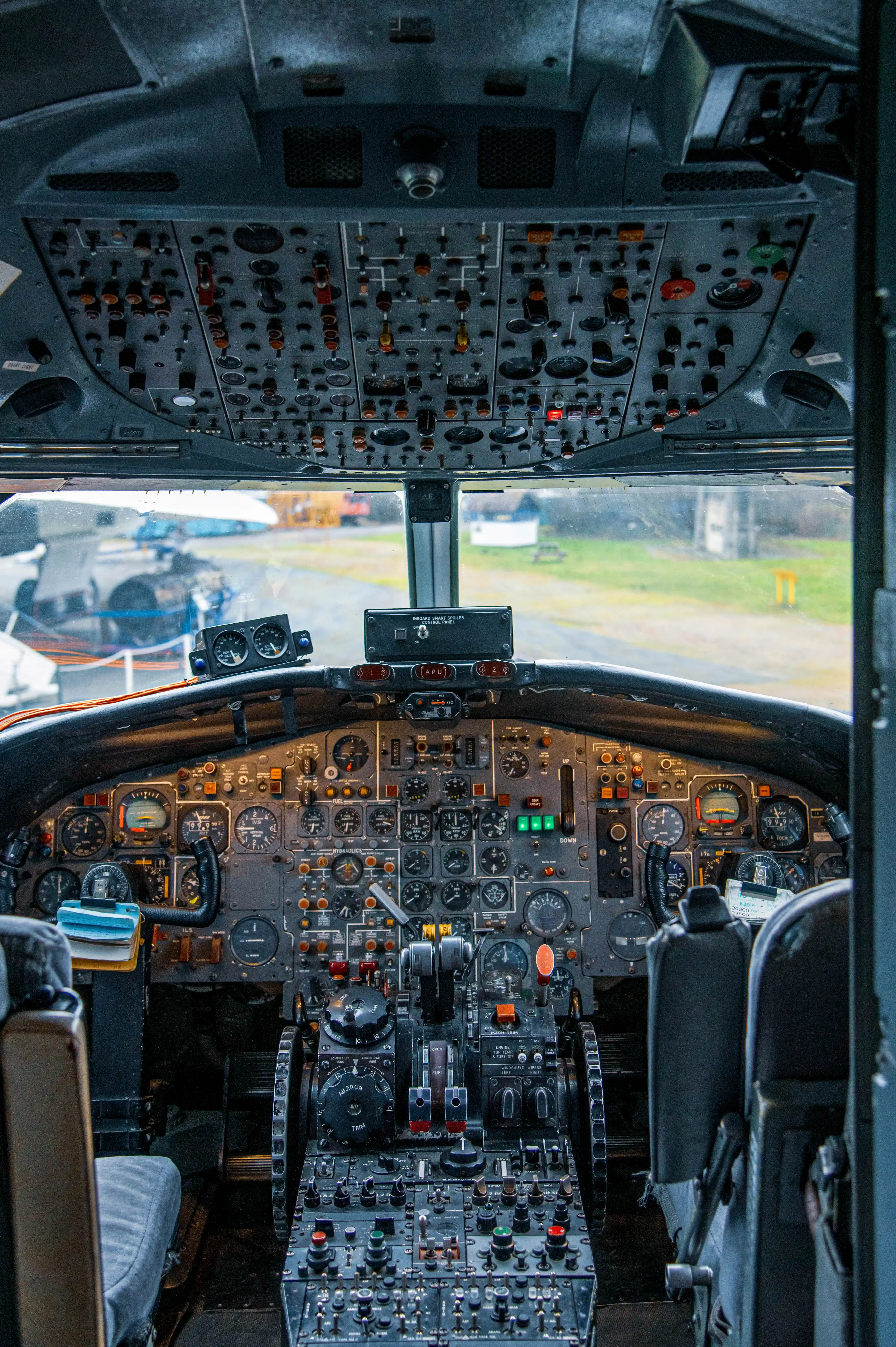
A full view of an aeroplane's cockpit, filled with numerous analogue dials, buttons, and switches. The view looks through the windscreen to an outdoor airfield.
Analogue Cockpit of a Vintage Aeroplane
photo by
©www.mgaylard.co.uk.
meta itemprop="encodingFormat" content="image/jpeg">
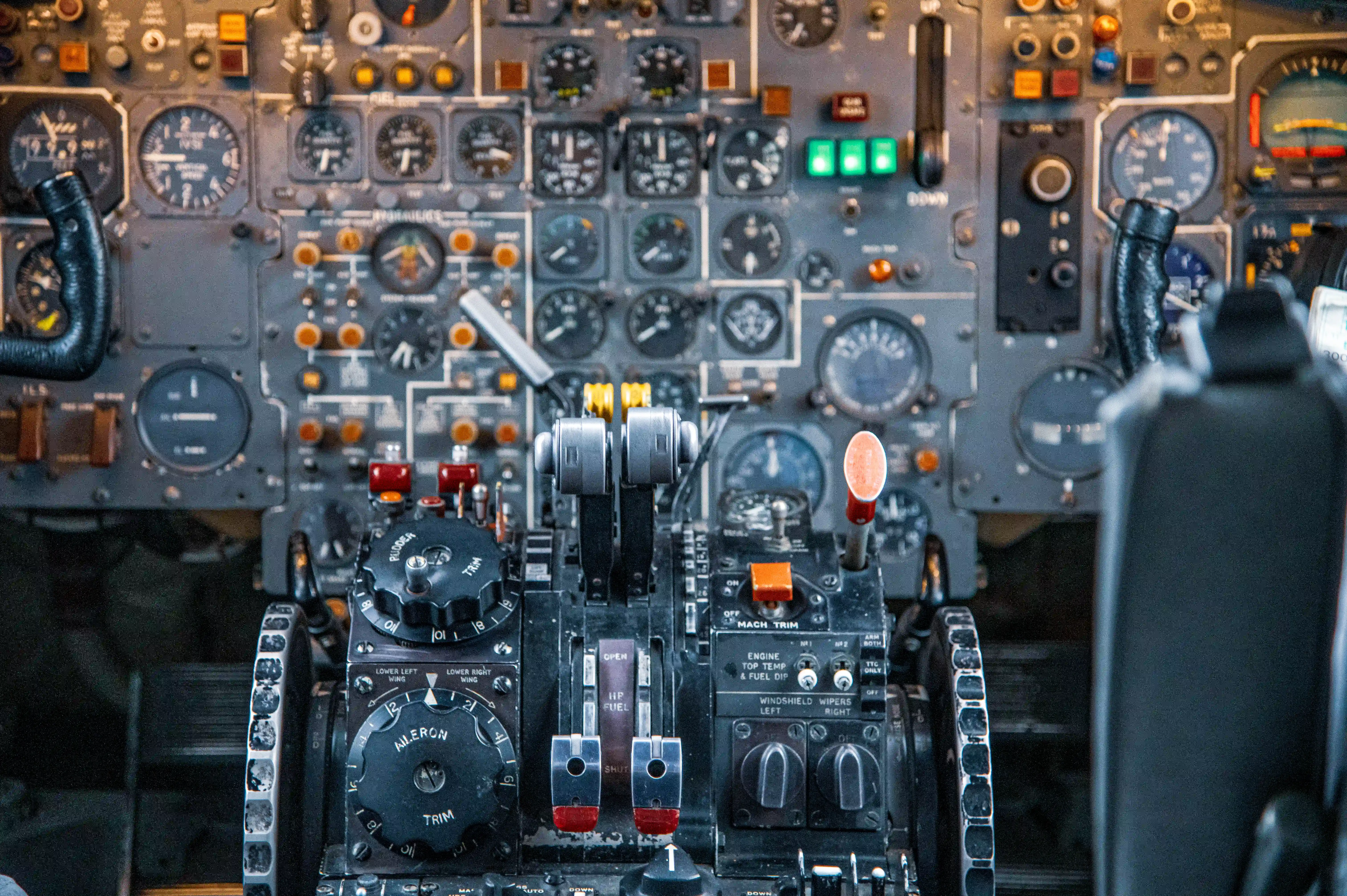
Close-up of an aircraft's cockpit dashboard filled with numerous analogue gauges, dials, switches, and levers, with a focus on the central console containing throttles and trim controls.
BAC One-Eleven Cockpit Control Panel
photo by
©www.mgaylard.co.uk.
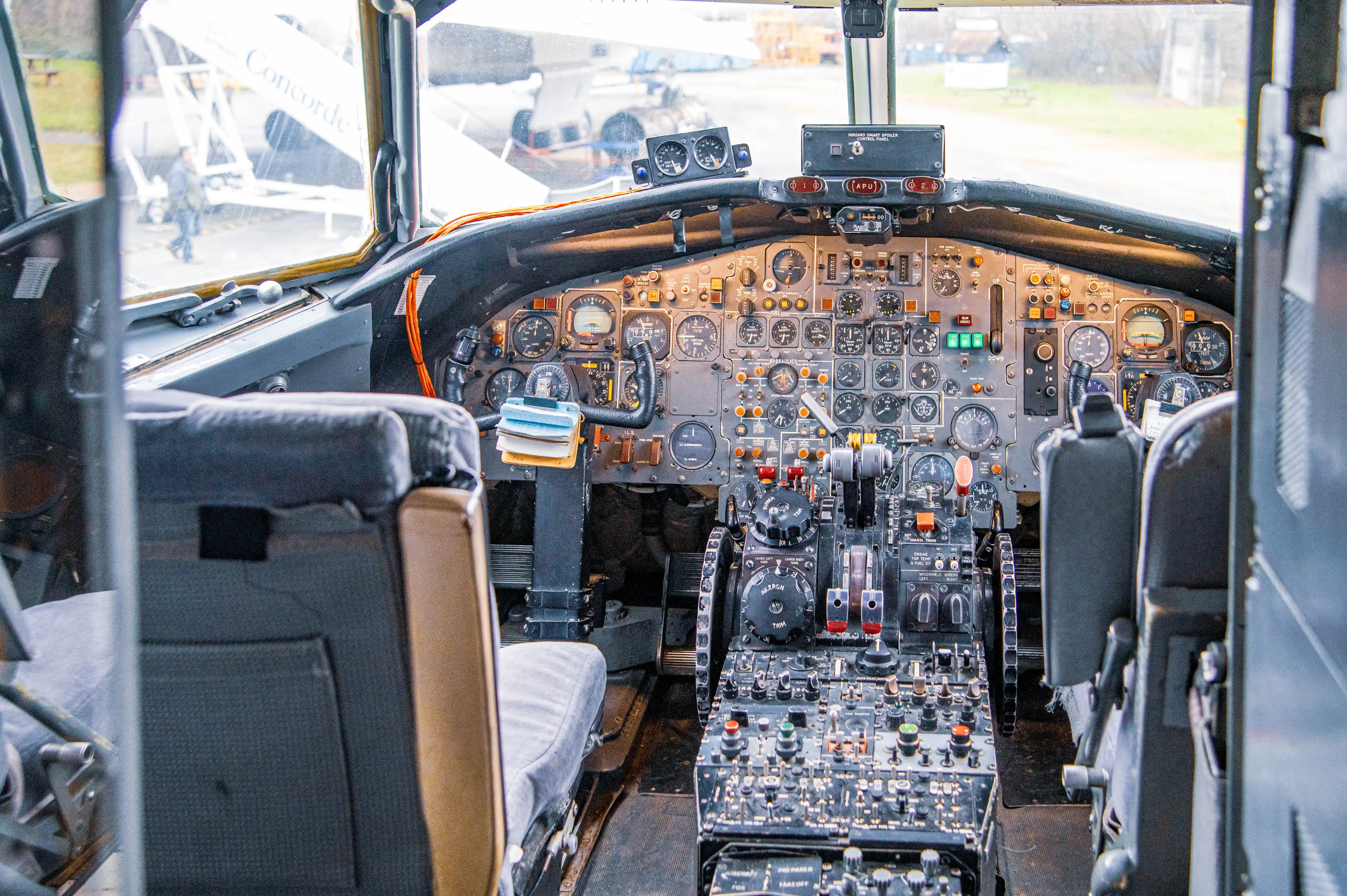
Interior view of the cockpit of a Concorde supersonic aircraft, showing a detailed array of analogue gauges, dials, switches, and levers on the instrument panel. Two pilot seats are visible in the foreground. Through the front windows, another Concorde aircraft is partially visible.
Concorde Cockpit Instrumentation and Controls
photo by
©www.mgaylard.co.uk.
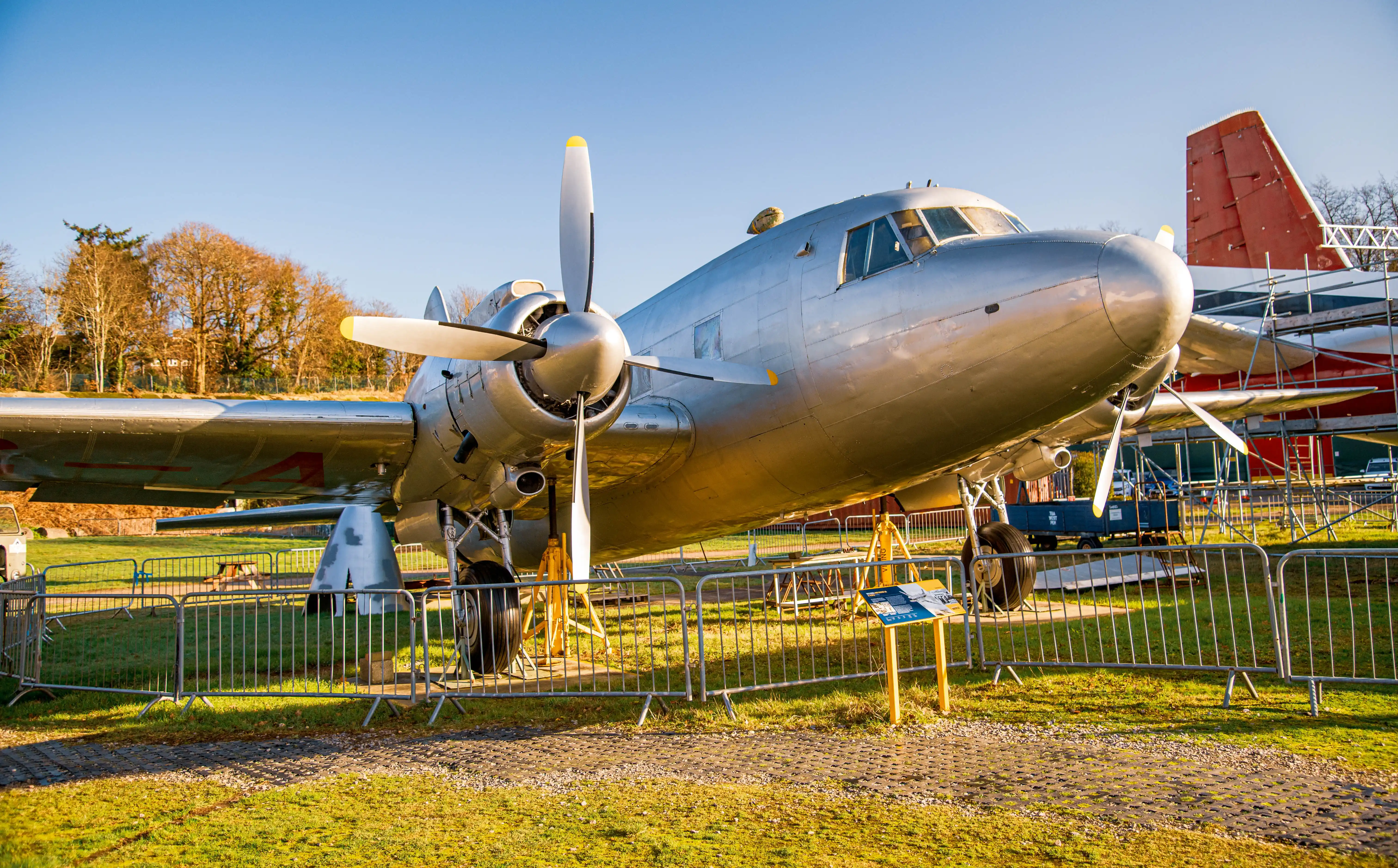
A vintage silver propeller plane with its engine cowling and propellers visible, parked on grass behind a metal fence. Another red-tailed aircraft is behind it, partially covered by scaffolding.
Vintage Propeller Aircraft Exhibit
photo by
©www.mgaylard.co.uk.
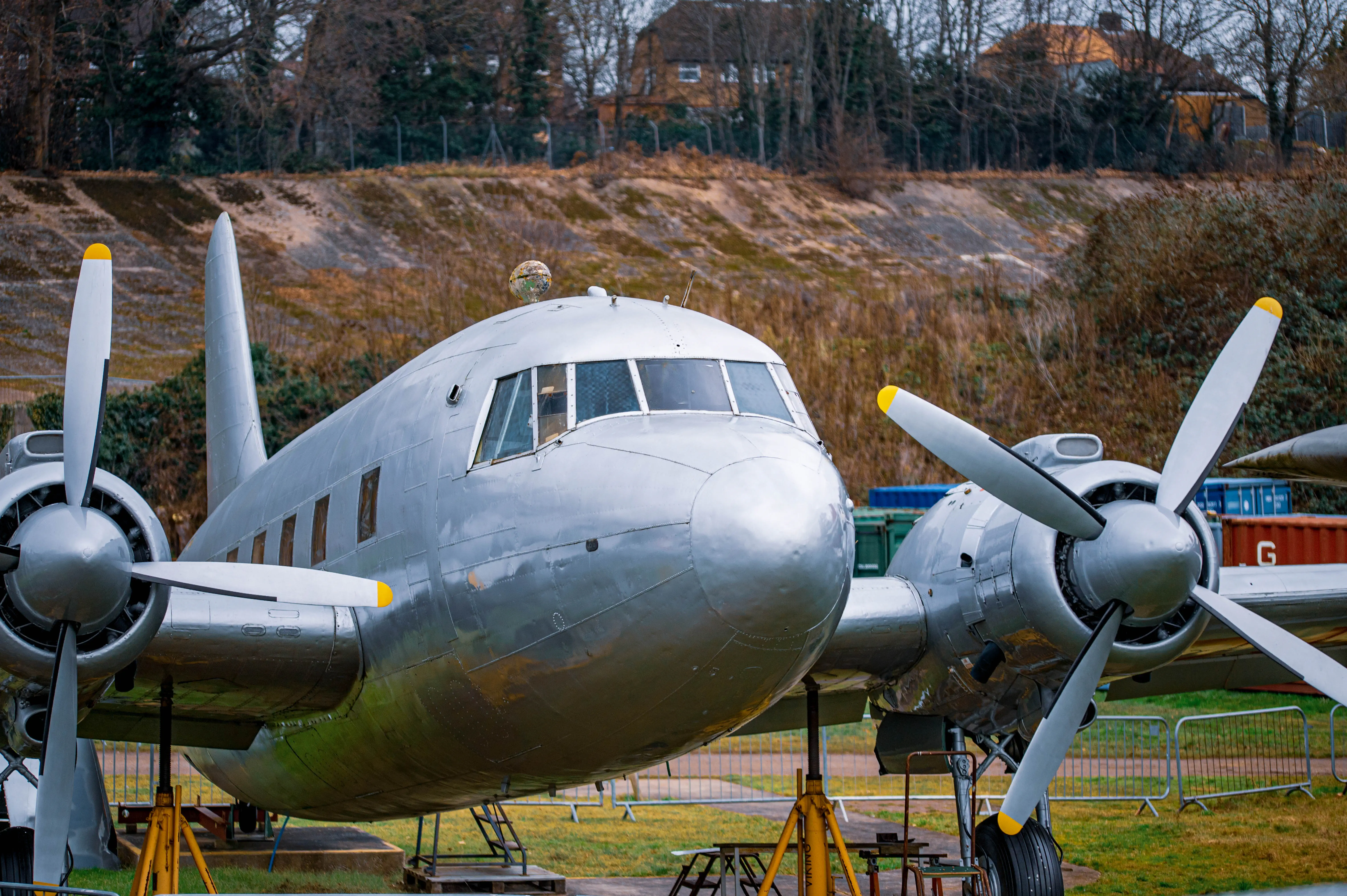
A vintage silver propeller aircraft with two engines and yellow-tipped propellers is parked on a lawn, with buildings and trees in the background.
Classic Silver Propeller Aircraft
photo by
©www.mgaylard.co.uk.

Vickers 498 Viking 1A

The Vickers 498 Viking 1A was an early post-WWII British short-haul airliner, derived from the Wellington bomber’s structure. It provided essential civil transport capacity in the late 1940s and early 1950s, bridging the gap between wartime aircraft and modern commercial airliners. The Viking was Britain’s first post-war airliner, playing a crucial role in the revival of civil aviation and the transition from military to commercial aircraft design.

Historical context

  • Manufacturer: Vickers-Armstrongs
  • First flight (Viking family): 22 June 1945
  • Viking 1A introduction: late 1940s
  • Role: Short-haul civil airliner
  • Derived from: Vickers Wellington bomber structure
  • Production era: 1945–1948 (early variants)

The Viking 1A was powered by two Bristol Hercules 630 radial engines, each producing 1,690 horsepower (1,261 kW). This provided the aircraft with a maximum speed of 250 mph (402 km/h) and a range of 1,500 miles (2,414 km), making it well-suited for short-to-medium-haul routes across Europe and the British Commonwealth.

The Vickers Viking 1A entered service with British European Airways (BEA) in 1946, marking the beginning of Britain’s post-war civil aviation boom. The aircraft was primarily used on routes across Europe, connecting London with cities like Paris, Amsterdam, and Brussels. Its reliability, comfort, and performance made it a popular choice for passengers and airlines alike.

The Viking 1A also played a role in the development of the Vickers Valetta, a military transport variant of the Viking. The Valetta was used by the Royal Air Force (RAF) and featured more powerful Bristol Hercules 230 engines, a reinforced cabin floor, and a strengthened undercarriage to handle a variety of roles, including troop transport, air ambulance, and freighter.

References

Wikipedia: Vickers VC.1 Viking
AeroCorner: Vickers VC.1 Viking
Simple Flying: Postwar Airliner – The Story of the Vickers VC.1 Viking
HandWiki: Vickers VC.1 Viking

Text generated by Mistral AI

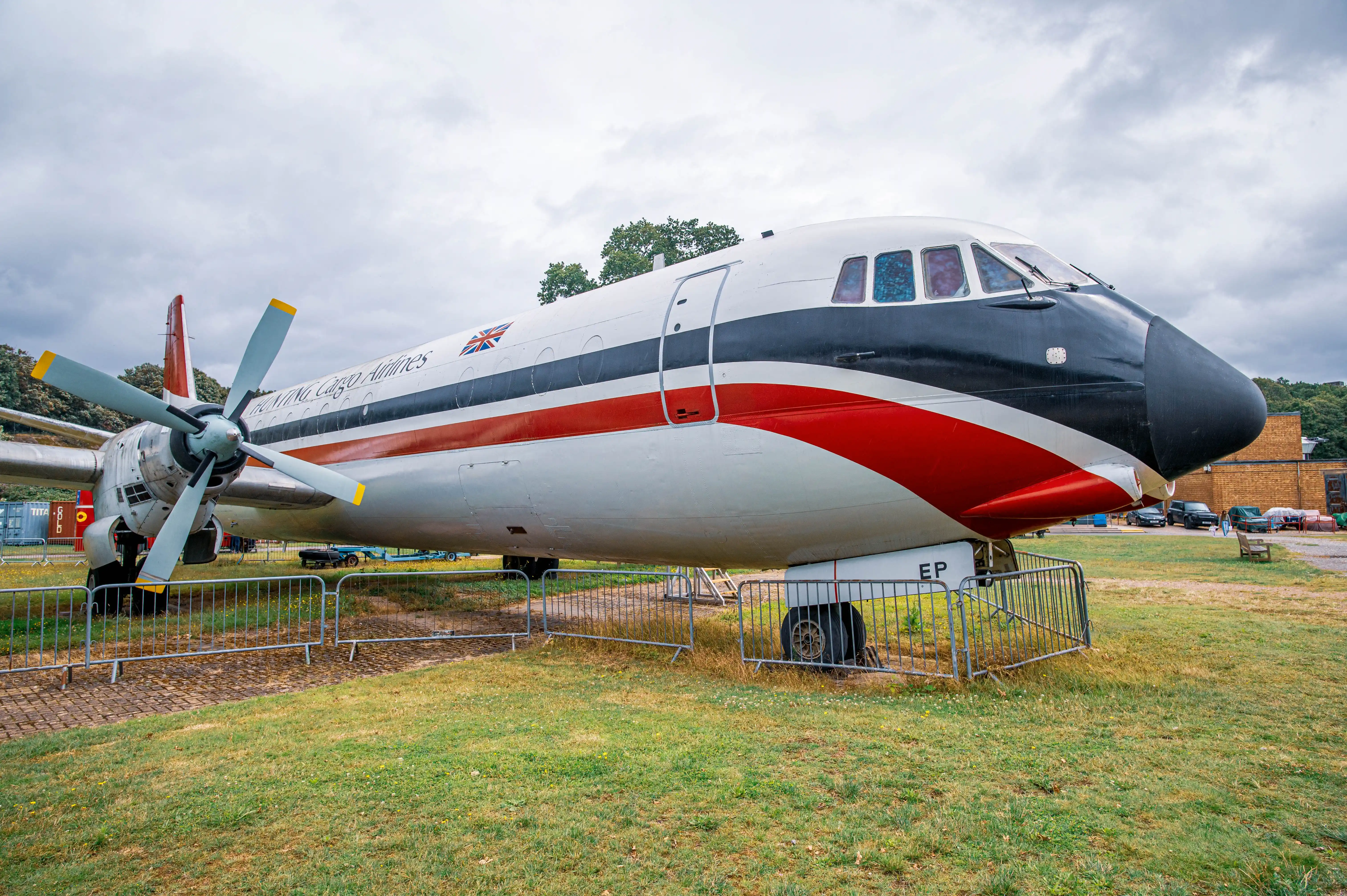
A vintage propellor aircraft with the text Hunting Cargo Airlines and a Union Jack flag on its side, displayed outdoors on a cloudy day.
Vickers Vanguard
photo by
©www.mgaylard.co.uk.
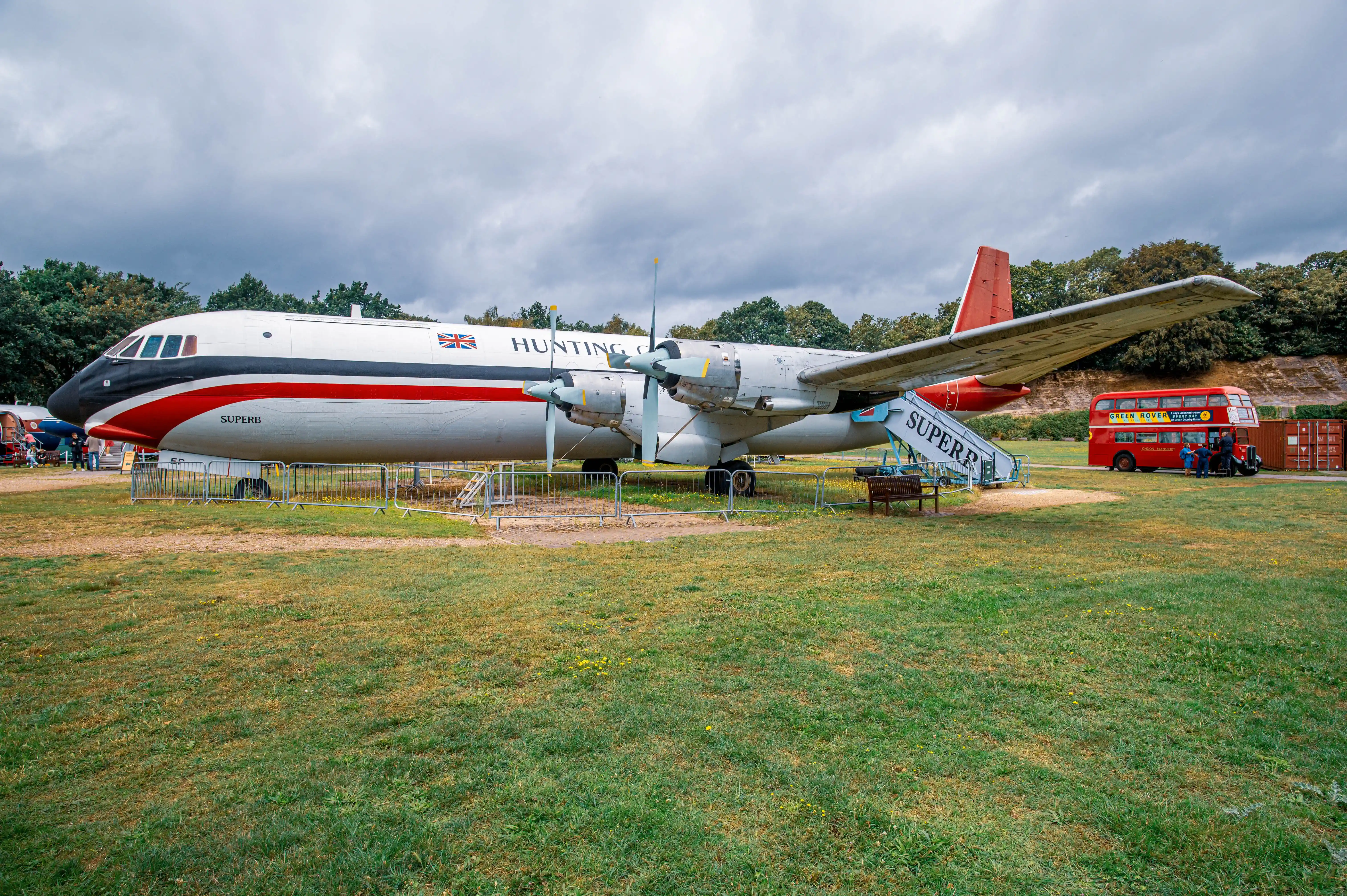
 A large white and red airliner with HUNTING and SUPERB written on its fuselage, parked next to a red double-decker bus in a grassy field under a cloudy sky.
Vickers Vanguard
photo by
©www.mgaylard.co.uk.
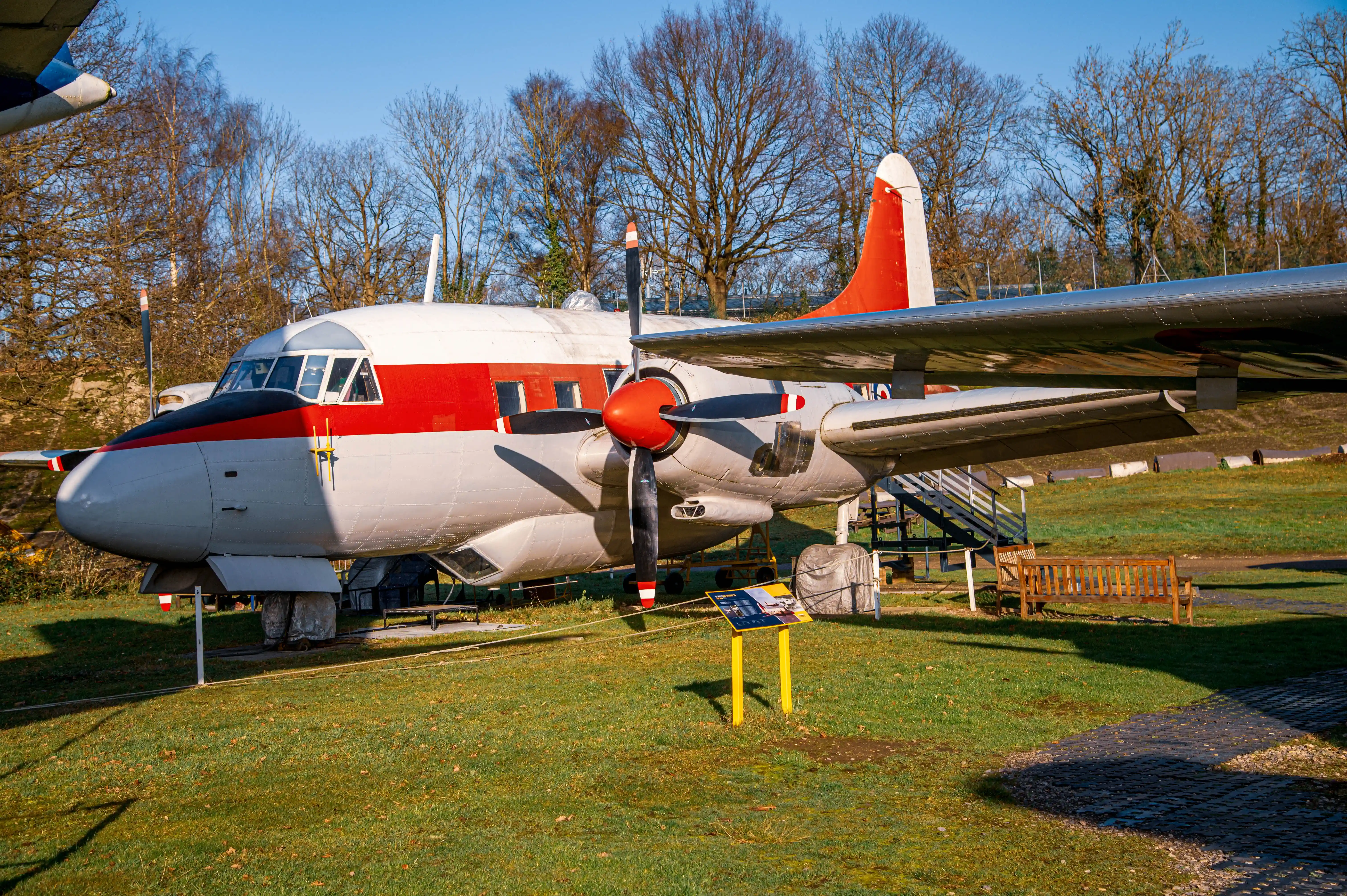
Side view of a vintage turboprop airplane with red and white markings parked on a lawn with trees in the background.
Vickers Varsity
photo by
©www.mgaylard.co.uk.

The Vickers Varsity was a post-war RAF multi-engine training aircraft, introduced in 1951. It trained pilots, navigators, and radio operators for the emerging jet age, and was affectionately known as the “Flying Pig” due to its bulky fuselage. It is the final evolution of the Wellington ? Viking ? Valetta structural family.

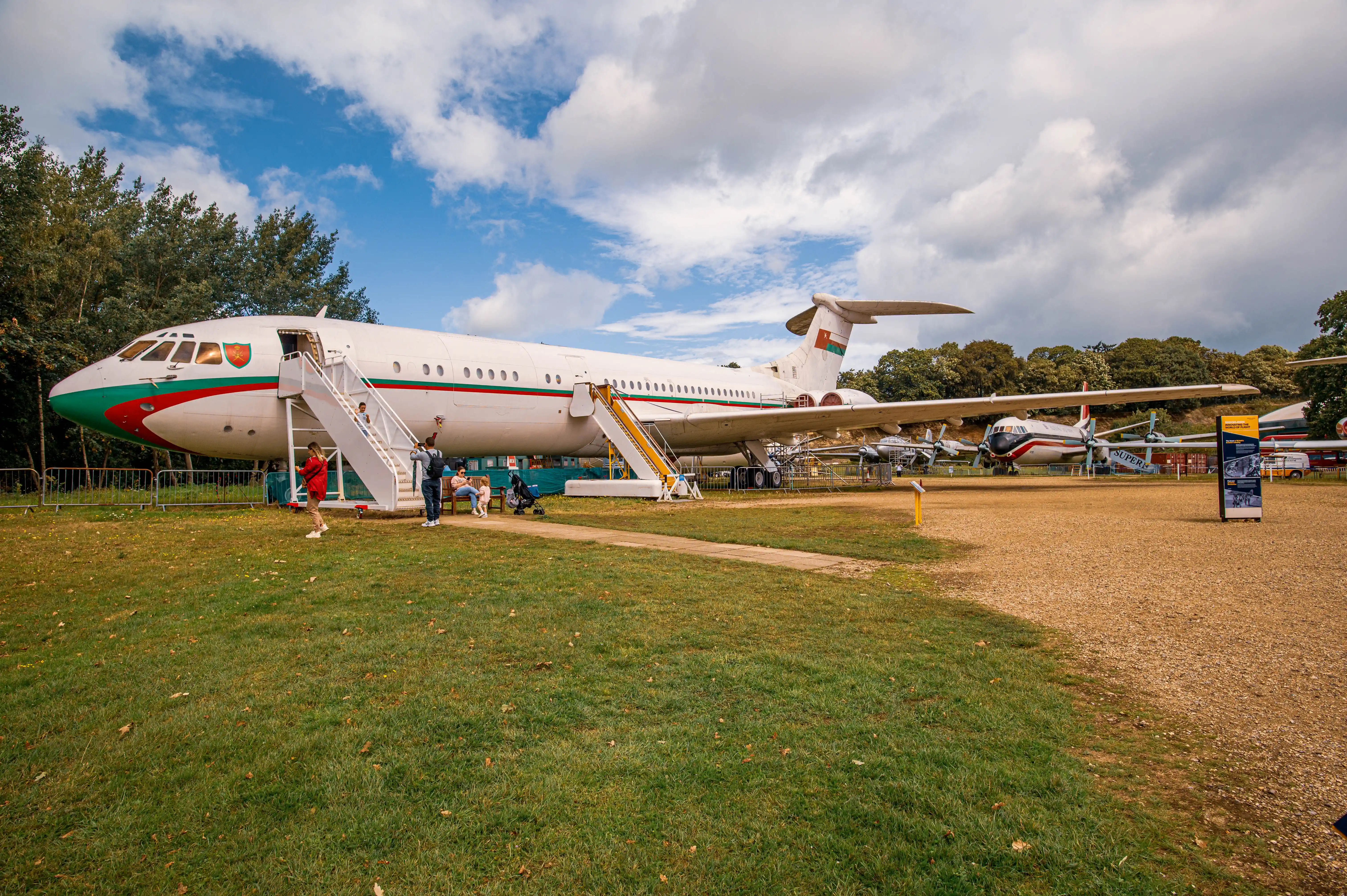
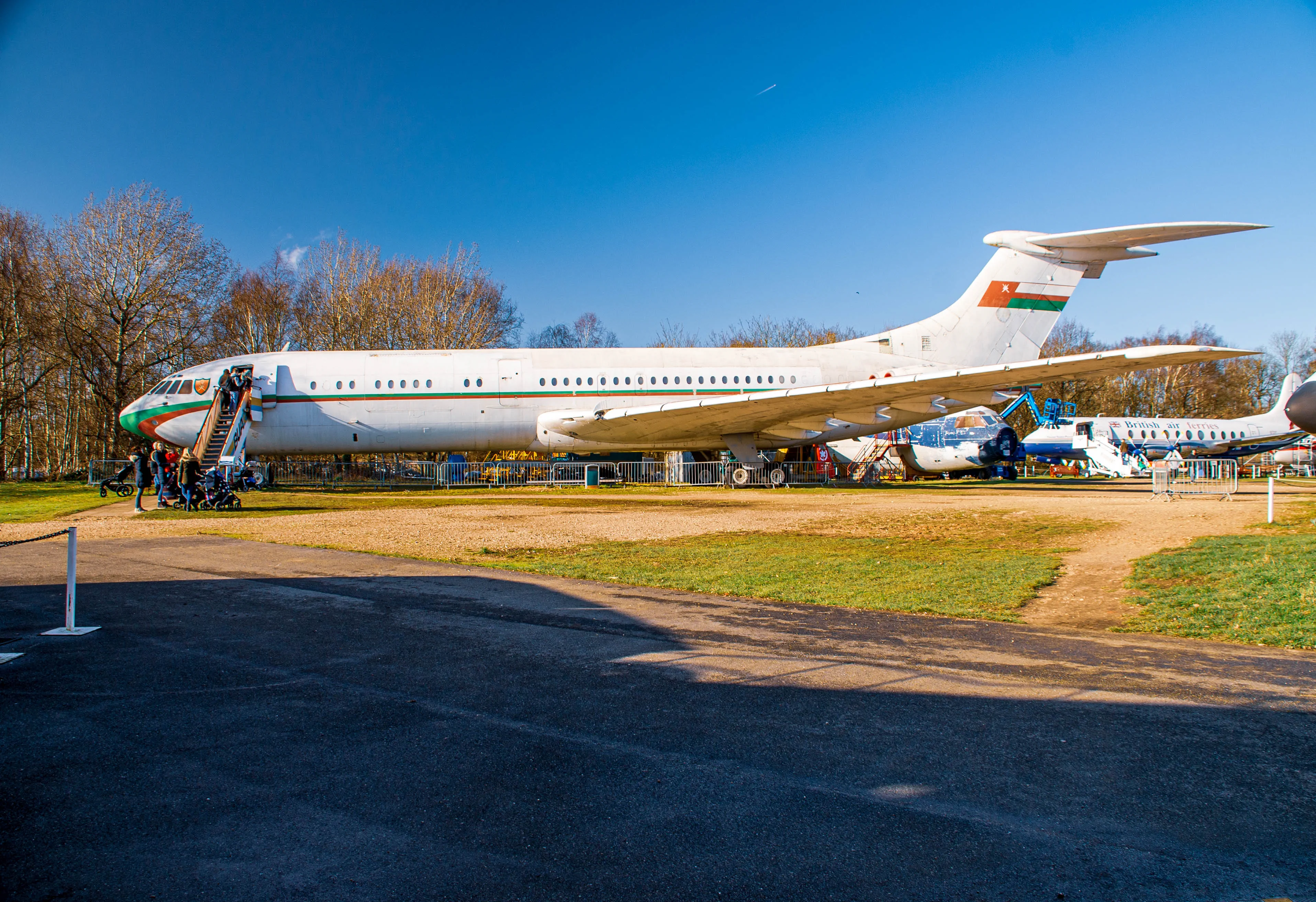
A white passenger jet aircraft with green and red livery is on display outdoors, with visitors standing near its open entrance stairs.
Vickers VC10 1103 Sultan of Oman
photo by
©www.mgaylard.co.uk.

Vickers VC10 G-ARVM

Vickers VC10 G-ARVM is one of the most historically significant surviving VC10s. Built in 1964, operated by BOAC and later British Airways, and preserved at Brooklands Museum, it represents the pinnacle of British long-range jetliner design. It is widely known by its radio callsign suffix VM, spoken as “Victor Mike”, though “Delta Mike” is also used informally in enthusiast circles.

The Vickers VC10 was a mid-sized, narrow-body, long-range jet airliner designed and built by Vickers-Armstrongs (Aircraft) Ltd in the United Kingdom. It first flew on June 29, 1962, at Brooklands, Surrey, and was one of the most distinctive and advanced airliners of its era. The VC10 is renowned for its unique rear-engined quad-jet layout, a design shared only with the Soviet Ilyushin Il-62 and the Lockheed JetStar business jet. This configuration provided excellent performance on short runways and in hot-and-high conditions, making it ideal for operations in Africa and the Middle East.

The VC10 was developed in response to a requirement from the British Overseas Airways Corporation (BOAC), which needed a long-range airliner capable of operating from short and challenging runways in Africa and Asia. The Boeing 707 and Douglas DC-8, which were dominant at the time, struggled in these conditions, creating an opportunity for Vickers to design a specialized aircraft.

  • Rear-Engined Quad-Jet Layout: The VC10’s four Rolls-Royce Conway turbofan engines were mounted at the rear of the fuselage, which reduced cabin noise and improved aerodynamics. This design also allowed the engines to be farther from the runway surface, reducing the risk of foreign object damage (FOD) and enabling operations from rough or unpaved runways.
  • Advanced Wing Design: The VC10 featured a wide wing with full-span leading-edge slats and wide-chord Fowler flaps, which enhanced lift and performance during takeoff and climb. This made the VC10 particularly effective in hot-and-high conditions.
  • Autoland System: The VC10 was one of the first airliners to feature an advanced autoland system, allowing for fully automatic landings in zero-visibility conditions. This technology was a significant leap forward in aviation safety.
  • Pressurized Fuselage: The VC10’s fuselage was designed for high-altitude operations, with a circular cross-section that maximized structural strength and passenger comfort.

References

Wikipedia: Vickers VC10
AeroCorner: Vickers VC10
Flightradar24: History of the VC10
RAF Museum: Vickers VC10
Key.Aero: The Complete Story of the Vickers VC10
Simple Flying: Vintage Quadjet – What Made the Vickers VC10 So Special?
British Airliners: Vickers Super VC10

Text generated by Mistral AI

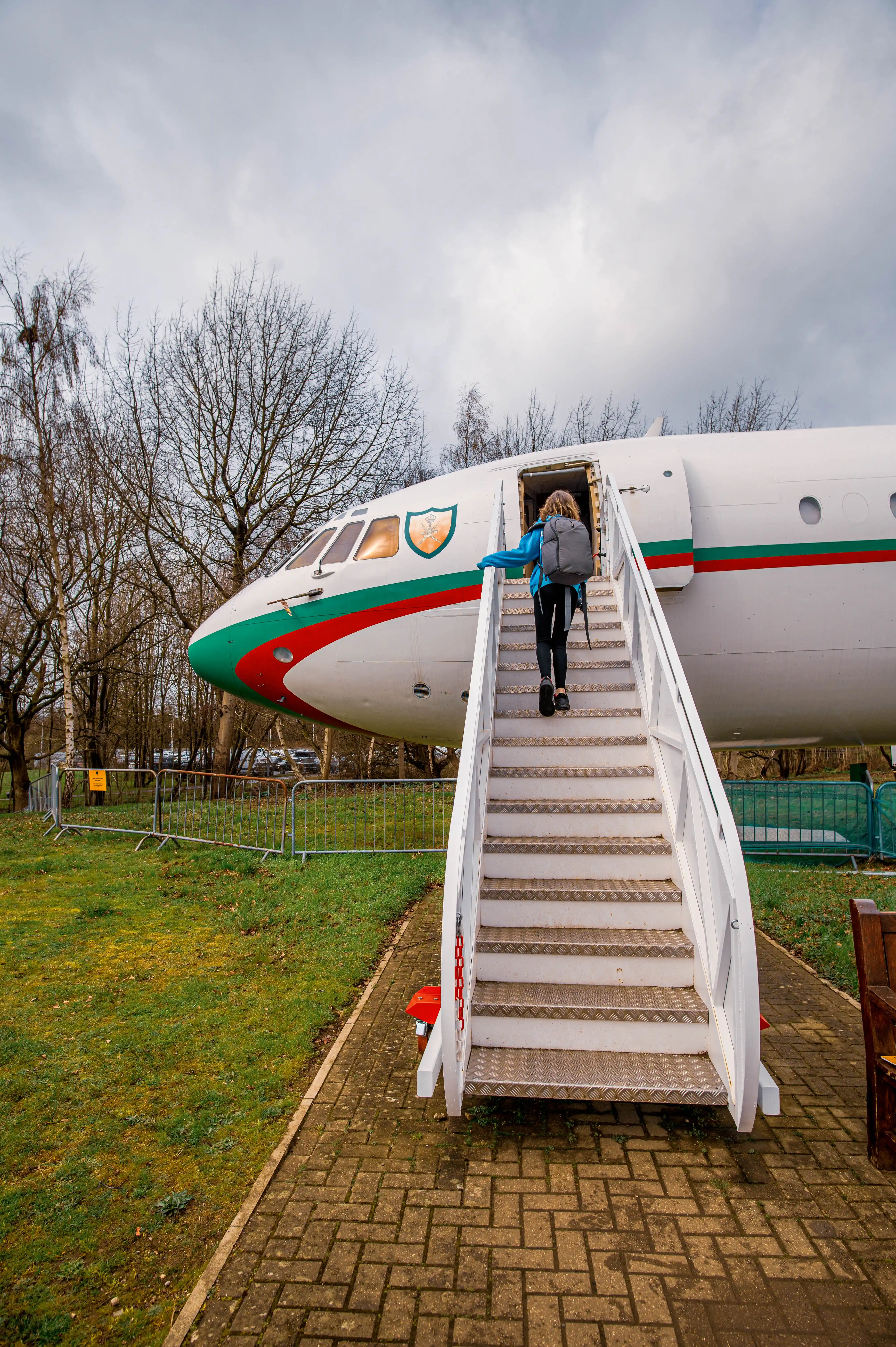
A vintage airplane with a set of stairs leading up to its open door, set against a backdrop of trees and a cloudy sky.
Vickers VC10 1103 Sultan of Oman
photo by
©www.mgaylard.co.uk.
meta itemprop="encodingFormat" content="image/jpeg">
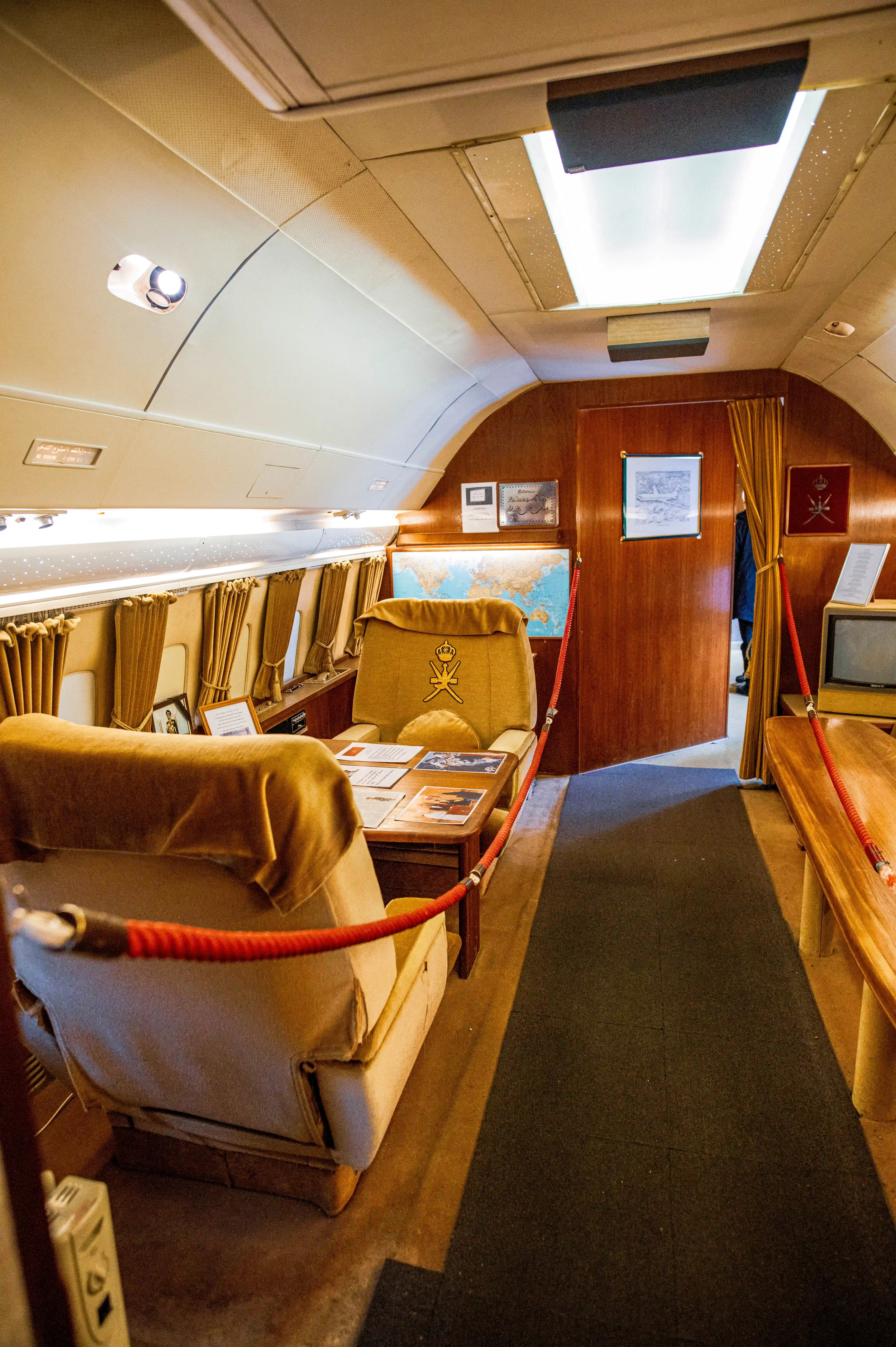
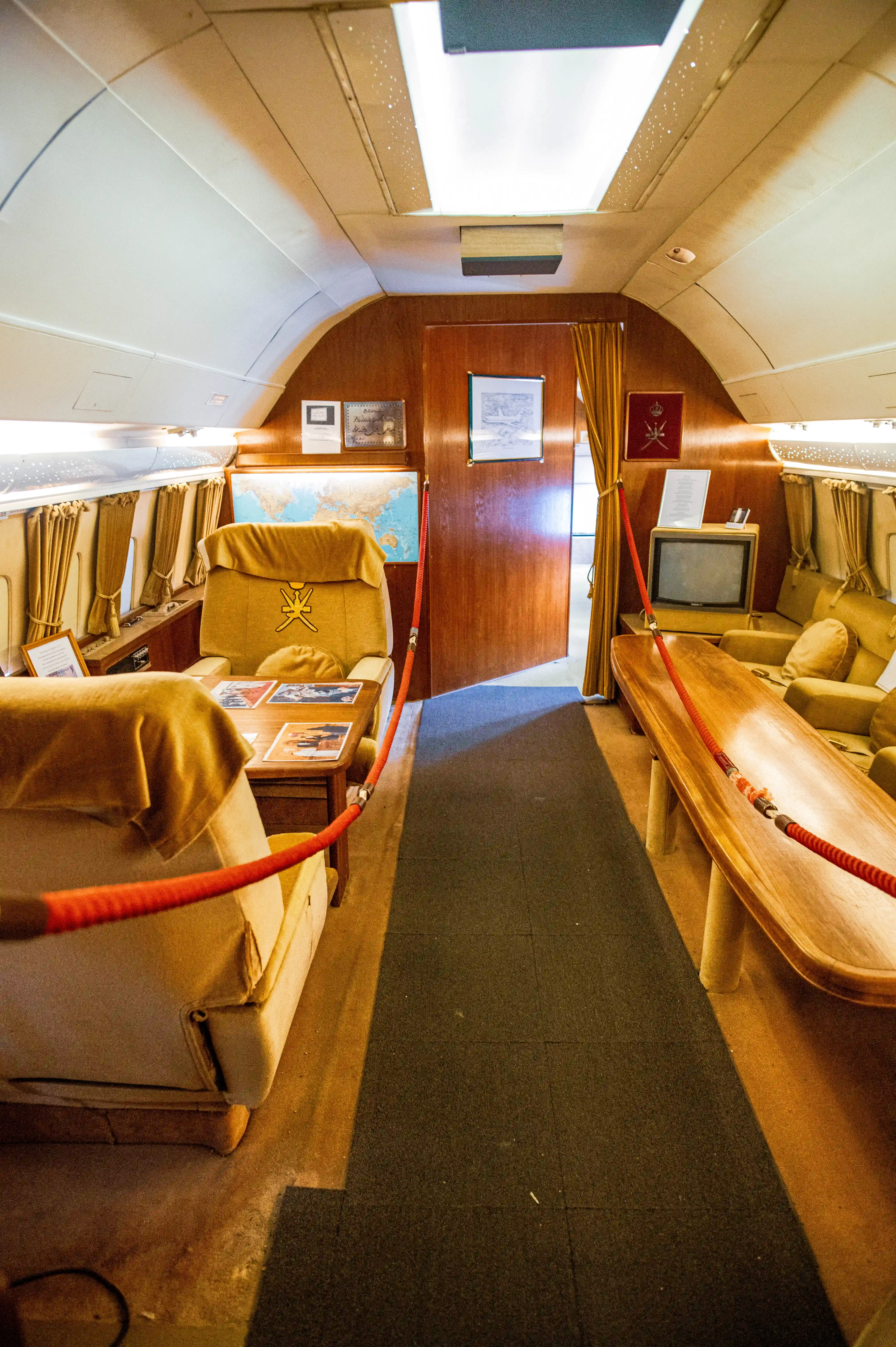
The interior of a private jet cabin, showing two large, comfortable chairs covered in tan fabric. One chair prominently displays a golden crest. The walls are panelled in dark wood, and a world map hangs on the wall.
Opulent Interior of a Royal Aircraft Cabin - Sultan of Oman
photo by
©www.mgaylard.co.uk.
meta itemprop="encodingFormat" content="image/jpeg">
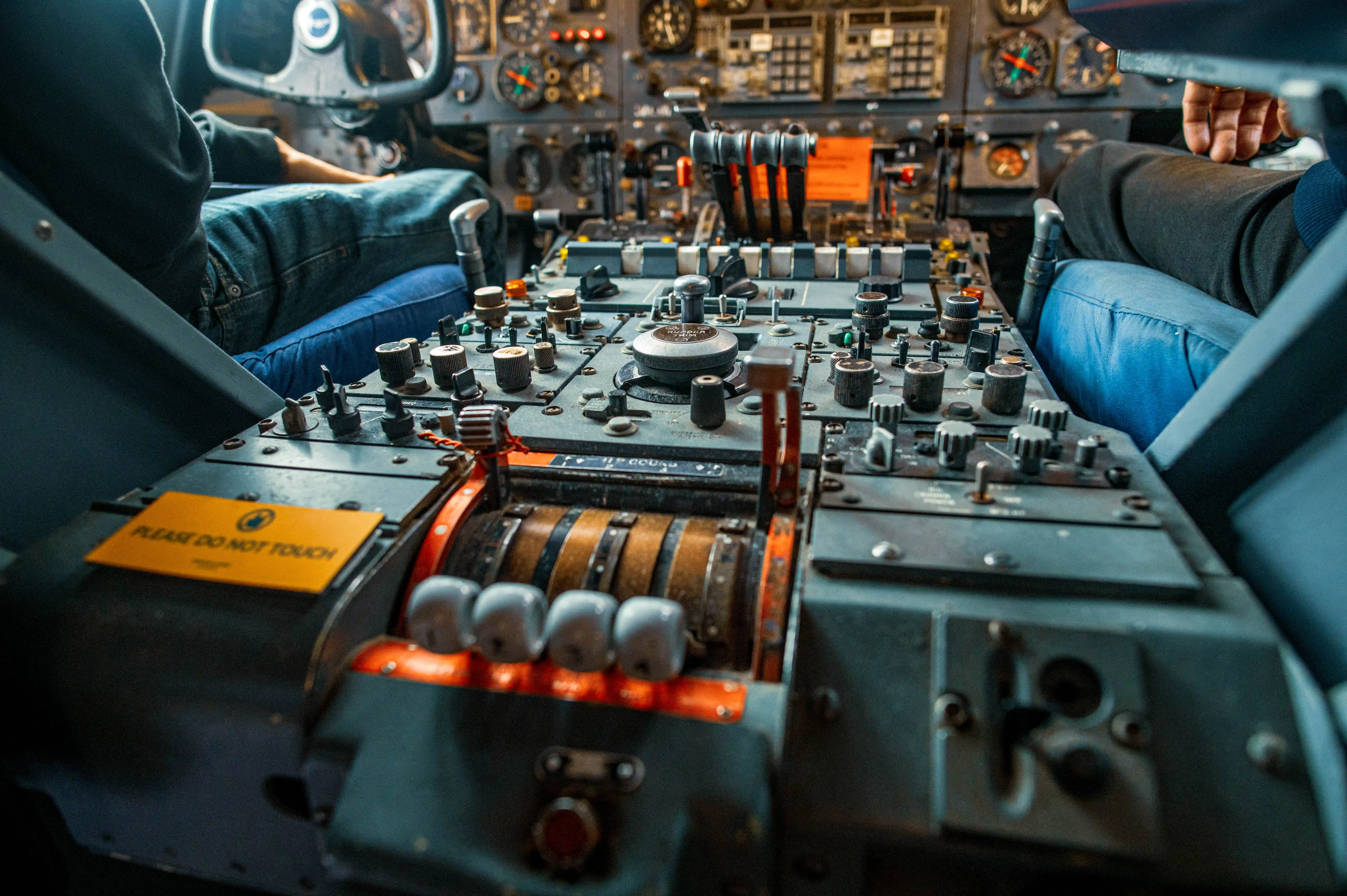
Close-up view of an aircraft cockpit's central control panel with many switches, knobs, and levers, including a throttle quadrant and an orange PLEASE DO NOT TOUCH sign. The legs of two pilots are visible on either side, one wearing blue jeans.
Vintage Aircraft Cockpit Centre Console
photo by
©www.mgaylard.co.uk.
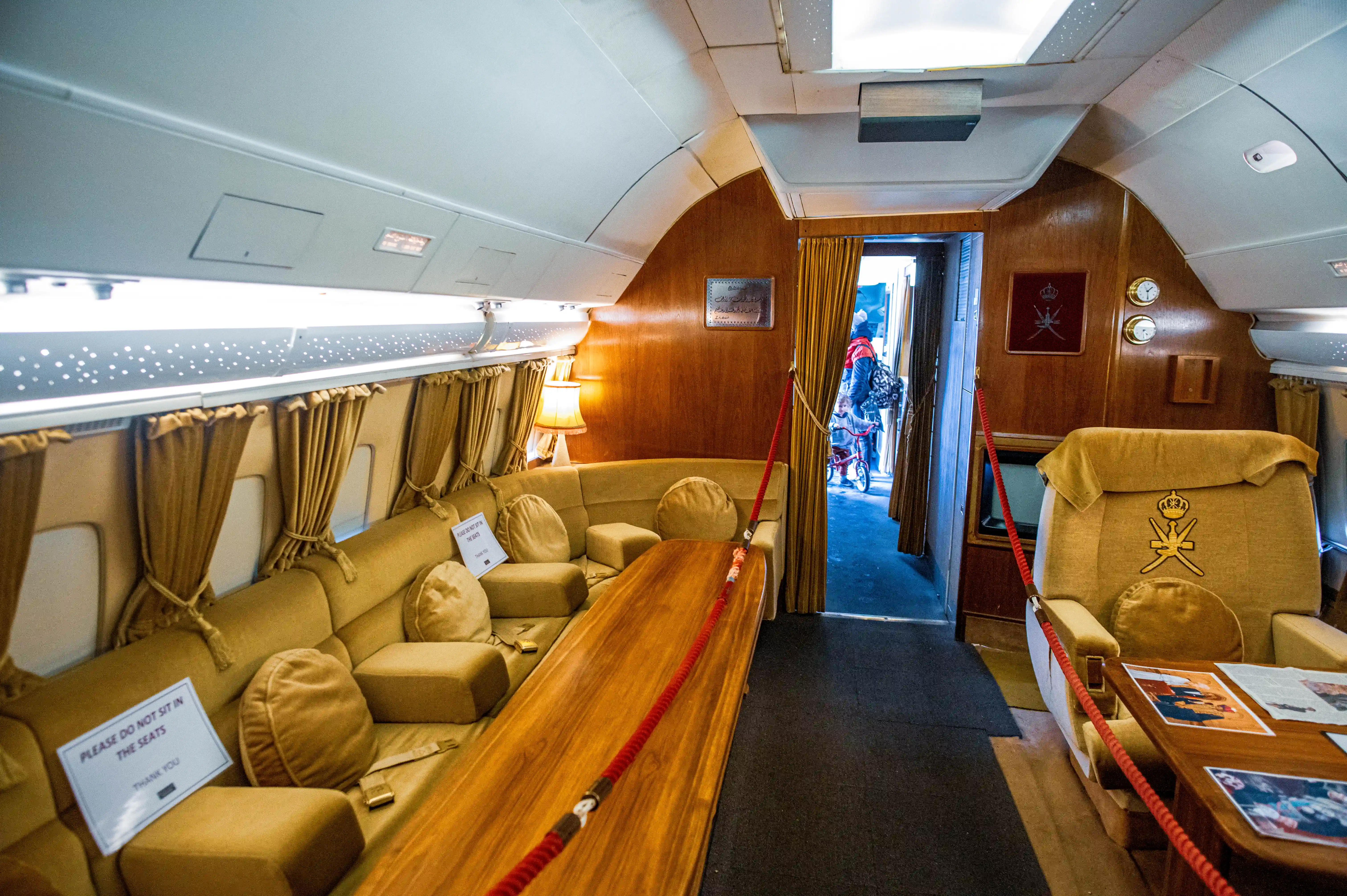
The interior of a vintage aircraft cabin decorated in gold and brown tones, with a long curved sofa on the left and a single armchair on the right. A wooden table sits in the centre, with red ropes preventing access.
Opulent Aircraft Cabin Interior
photo by
©www.mgaylard.co.uk.
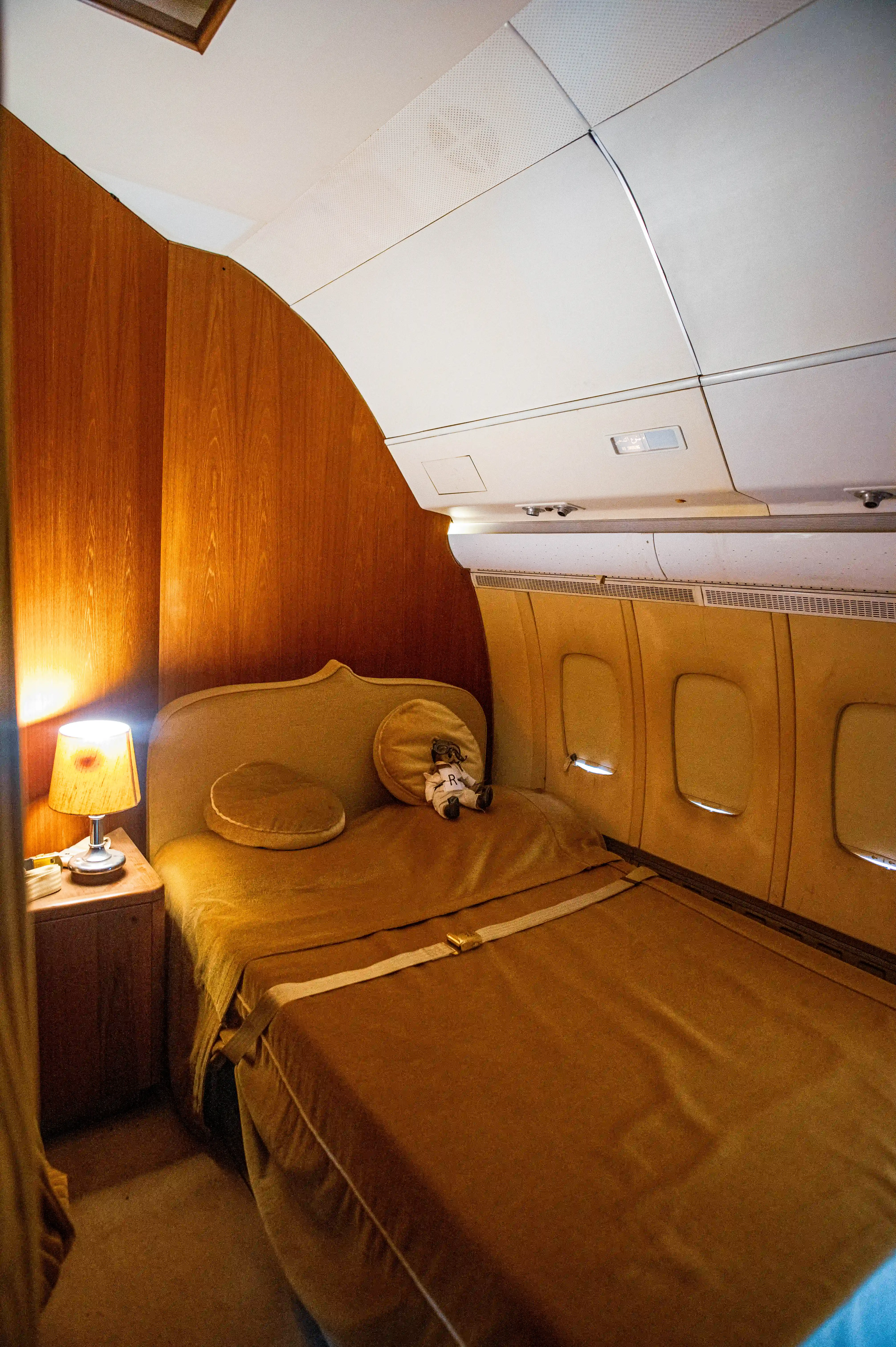
Interior view of a bedroom in a private jet, featuring wood panelling, a bed with golden-brown bedding and a seatbelt, a bedside table with a lamp, and small aircraft windows.
title1
photo by
©www.mgaylard.co.uk.
meta itemprop="encodingFormat" content="image/jpeg">
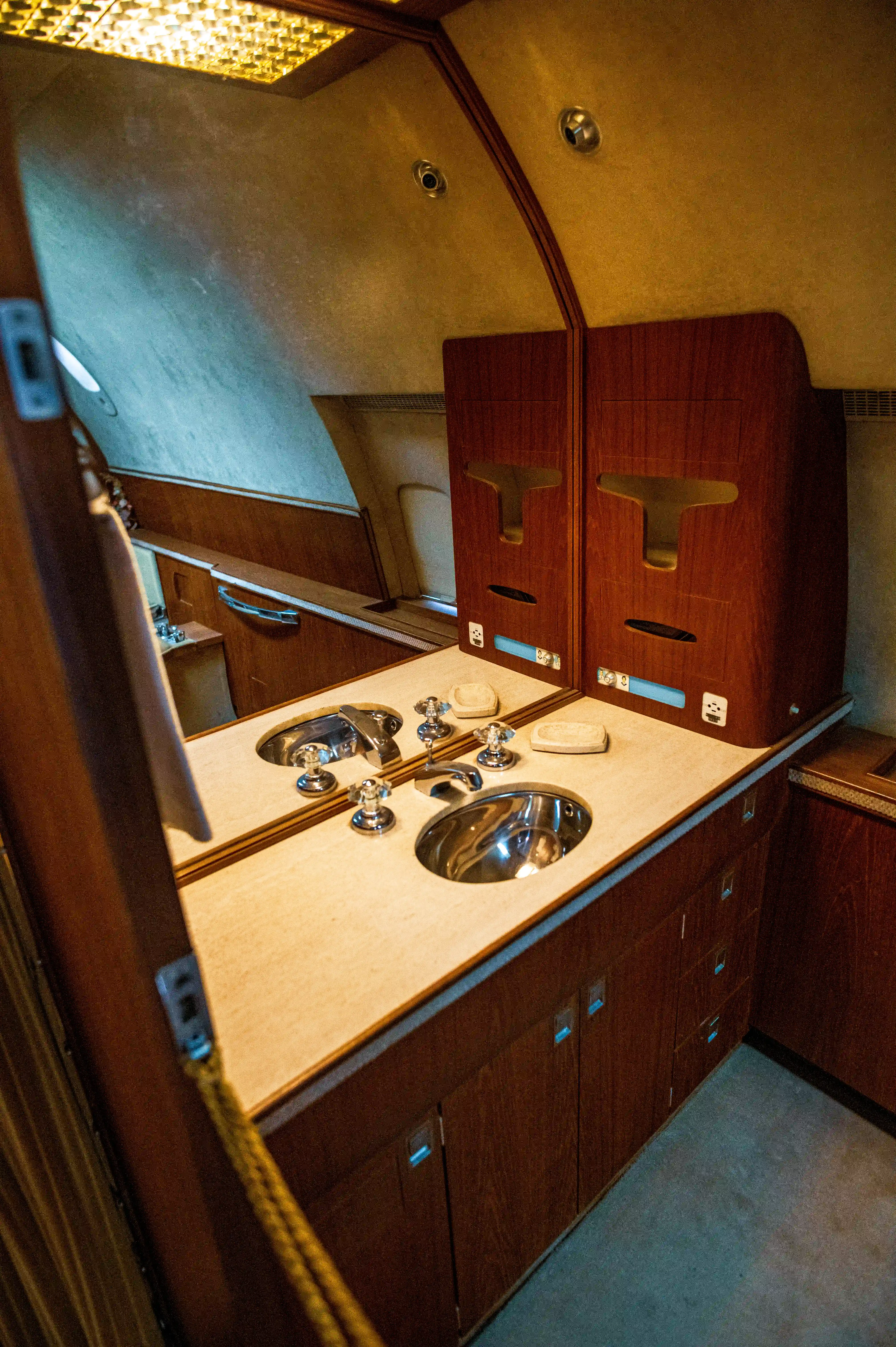
A view of a private jet washroom, showing a long vanity counter with two sinks, a large mirror reflecting the sinks and chrome taps, and dark wood cabinets below. The ceiling is textured and lit from above.
Private Jet Washroom Interior
photo by
©www.mgaylard.co.uk.
meta itemprop="encodingFormat" content="image/jpeg">
The interior of a private jet cabin, showing two large, comfortable chairs covered in tan fabric. One chair prominently displays a golden crest. The walls are panelled in dark wood, and a world map hangs on the wall.
Opulent Interior of a Royal Aircraft Cabin
photo by
©www.mgaylard.co.uk.
meta itemprop="encodingFormat" content="image/jpeg">
A large white vintage passenger jet aircraft with green and orange trim on the nose and a flag on its tail is parked on a grassy area. People are standing on the stairs leading into the aircraft. Another smaller aircraft with
A Gathering of Vintage Aircraft
photo by
©www.mgaylard.co.uk.
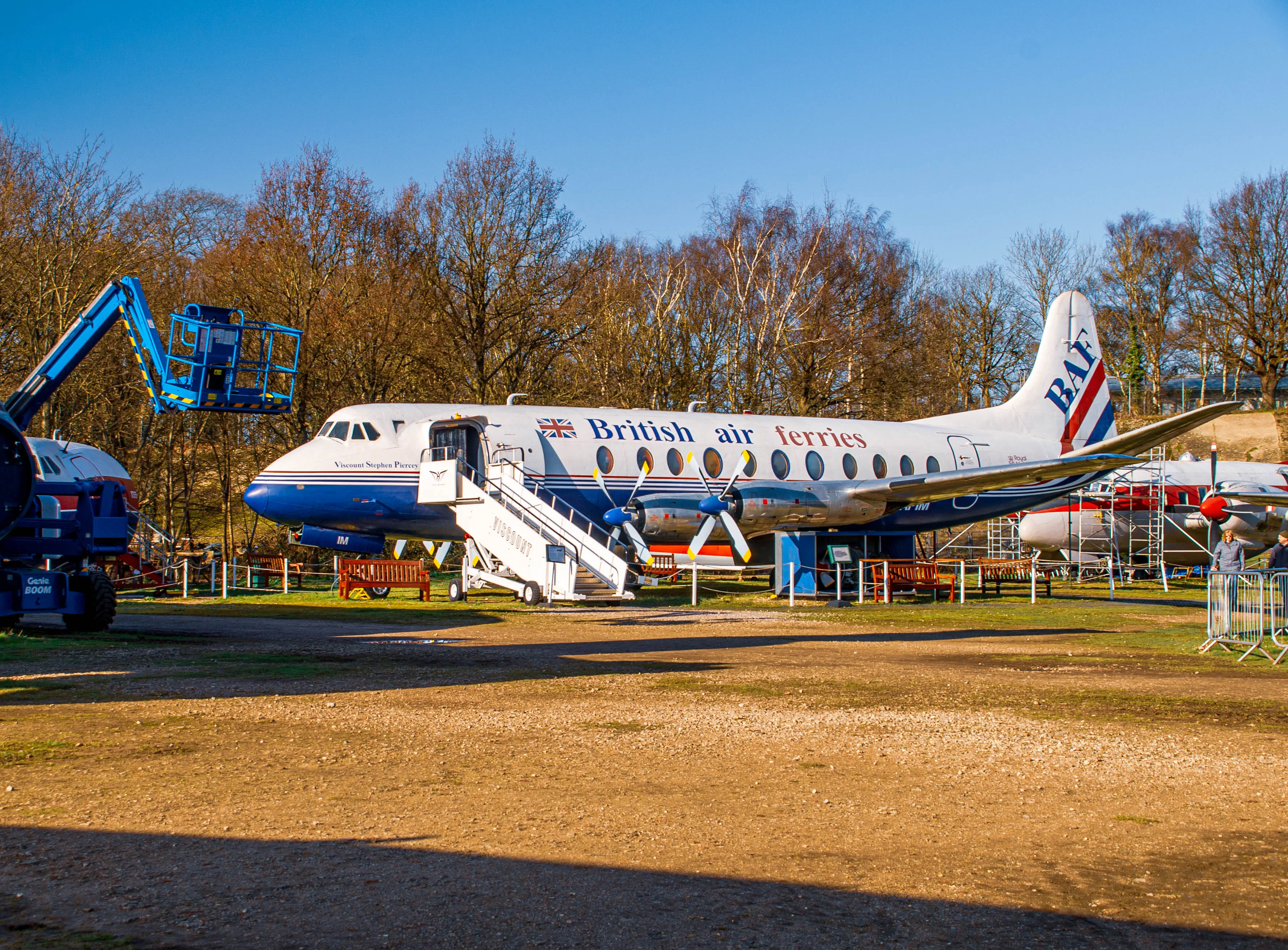
A white and blue twin-engine propeller aircraft with 'British air ferries' written on its side is parked outdoors. A blue scissor lift is to the left of the plane, and a set of stairs is deployed to the open cabin door. Two red benches are situated in front of the aircraft. In the background, bare trees and another aircraft under scaffolding are visible.
British Air Ferries 'Vincent Stephen Piercy' Aircraft
photo by
©www.mgaylard.co.uk.
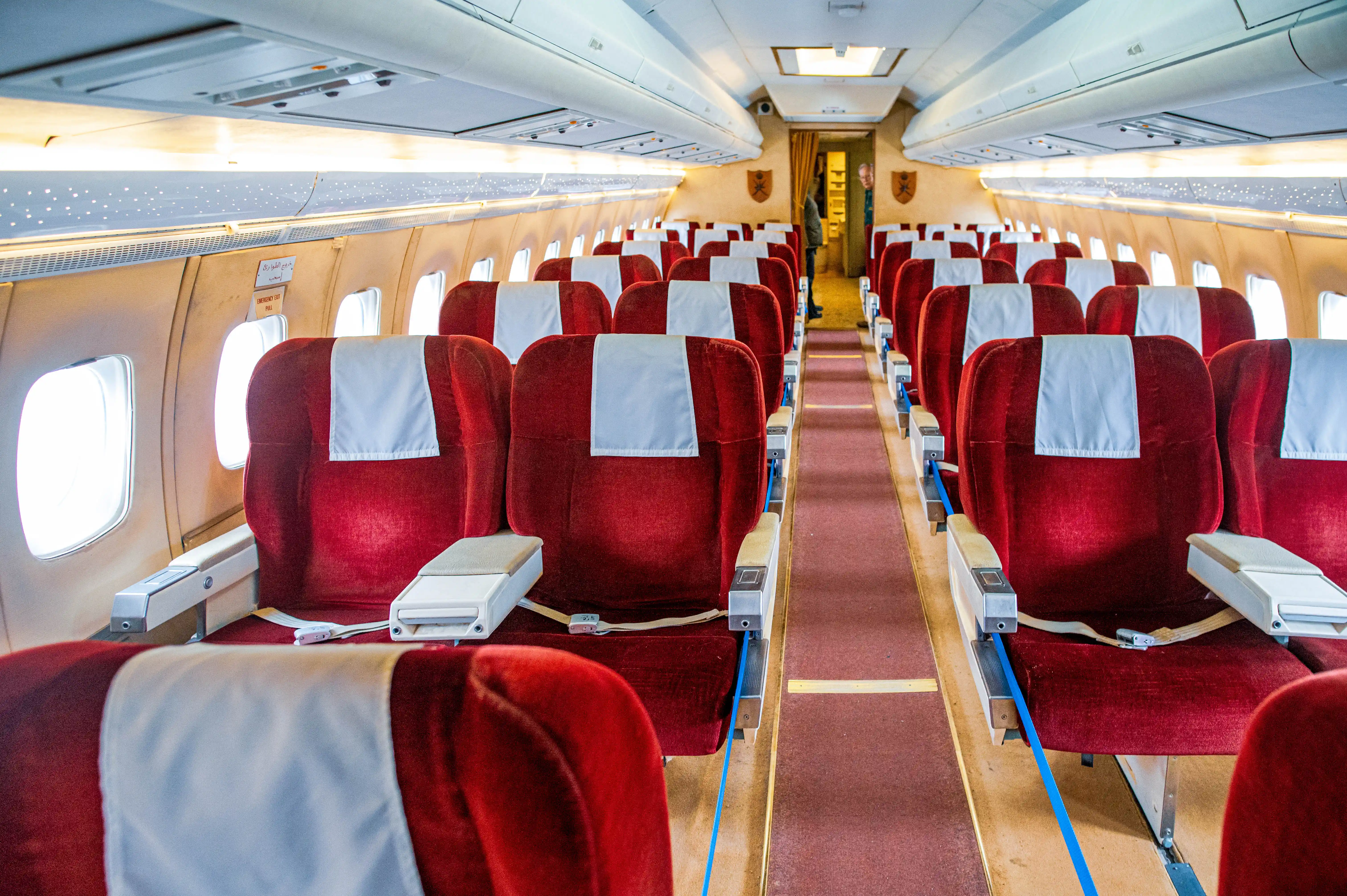
 Interior view of an empty airplane cabin with rows of red velvet passenger seats and white headrests, looking down the aisle.
Retro Airplane Cabin
photo by
©www.mgaylard.co.uk.
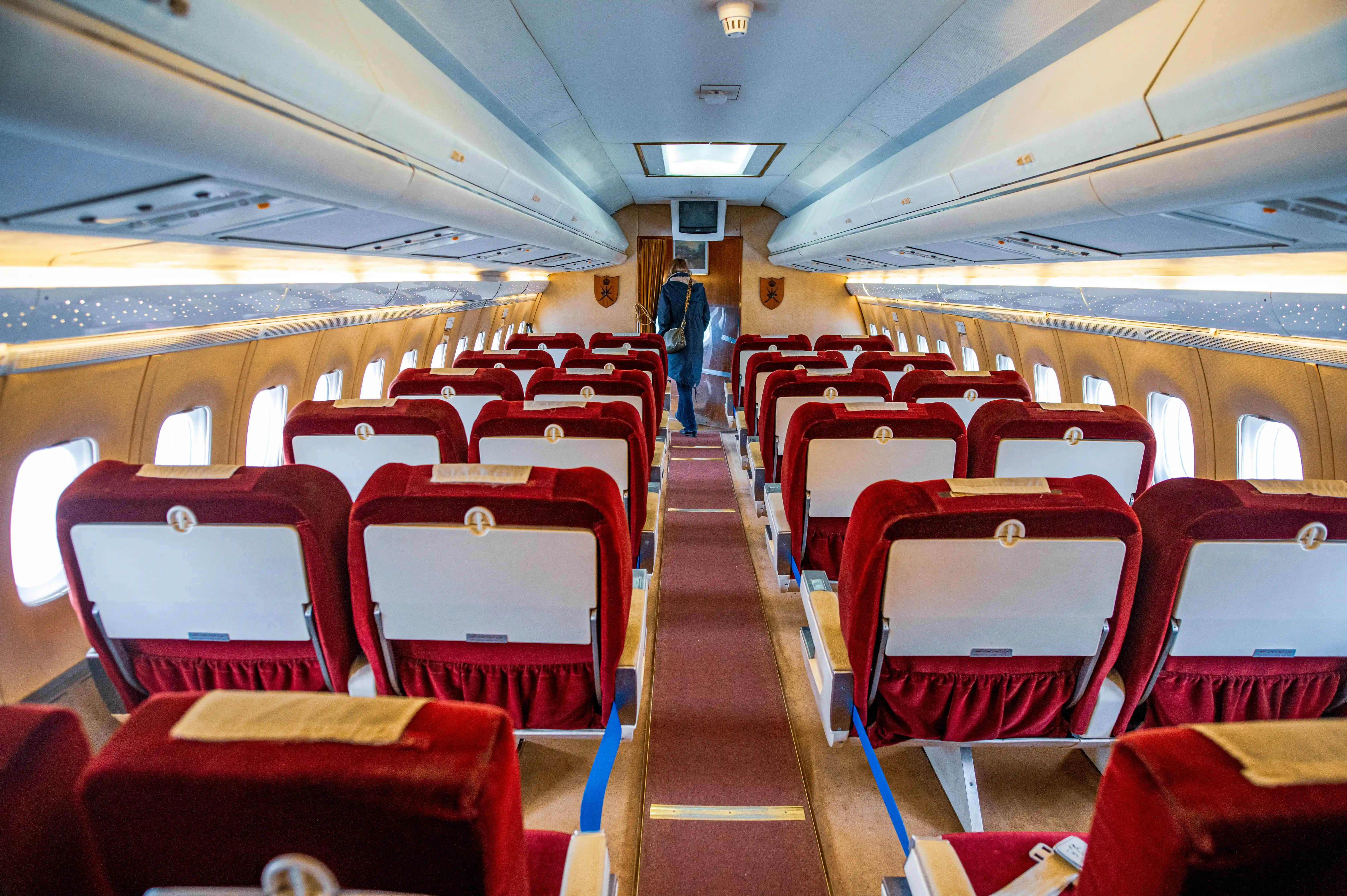
Interior view of an aeroplane cabin with numerous rows of deep red velvet seats, each with a white tray table. A person in a dark coat walks down the carpeted aisle towards the front of the plane, where a small screen and decorative elements are visible.
Vintage Aircraft Cabin with Red Velvet Seats
photo by
©www.mgaylard.co.uk.
Open the full set flickr button this page

Aircraft Park

Established: Part of Brooklands Museum (opened in 1991)

Type: Outdoor aircraft exhibit

Focus: Historic military and civilian aircraft

Collection Size: Over 20 historic aircraft

Notable Features: Scenic outdoor setting, iconic aircraft, interactive exhibits, educational displays

Website:

Historical Significance

The Aircraft Park at Brooklands Museum is part of the larger Brooklands Museum complex, which is located on the site of the former Brooklands race track and aircraft factory. The Aircraft Park was established as an outdoor exhibit to showcase the museum’s collection of historic aircraft in a natural and immersive setting. This allows visitors to explore the rich aviation heritage of Brooklands while enjoying the scenic beauty of the surrounding landscape.

The Aircraft Park is a testament to the importance of Brooklands in the history of British aviation. The site was originally used for aircraft production and testing during World War I and World War II, and it played a key role in the development of iconic aircraft such as the Vickers Vimy, Vickers Wellington, and Hawker Hurricane. The Aircraft Park preserves this legacy by displaying a collection of historic aircraft that represent the golden age of aviation at Brooklands.

The Aircraft Park also serves as a reminder of the innovation and ingenuity that defined the history of Brooklands. The aircraft on display span decades of aviation history, from the early days of flight to the Cold War era, and they highlight the evolution of aircraft design, technology, and engineering. The park’s scenic setting and interactive exhibits make it a popular destination for visitors of all ages.

Notice

Text generated by Mistral AI , www.xprivo.com , Microsoft CoPilot , and AI Image Describer
To the top
Powered by w3.css. The images are all stored on link to www.gaylard.co.uk Photostream on Flickr   This website is hosted by link to 123Reg Web Hosting