HOME

Hampton Court Palace Exterior

Hampton Court Palace

Hampton Court Palace, Molesey Road,  East Molesey,  Surrey,   KT8 9AU,   United Kingdom

Hampton Court Palace is one of the most iconic and historic royal palaces in England, located in East Molesey, Surrey, on the banks of the River Thames in southwest London. Originally built for Cardinal Thomas Wolsey in the early 16th century, the palace was later seized by King Henry VIII, who transformed it into one of his principal residences and a center of Tudor power and ceremony. The palace is renowned for its stunning blend of Tudor and Baroque architecture, its magnificent State Apartments, the famous Hampton Court Maze, the historic Great Hall, and the beautifully restored gardens along the Thames. Today, Hampton Court Palace is open to the public and managed by Historic Royal Palaces, attracting millions of visitors each year who come to explore its rich history, breathtaking architecture, and cultural significance as one of Britain’s most treasured heritage sites.
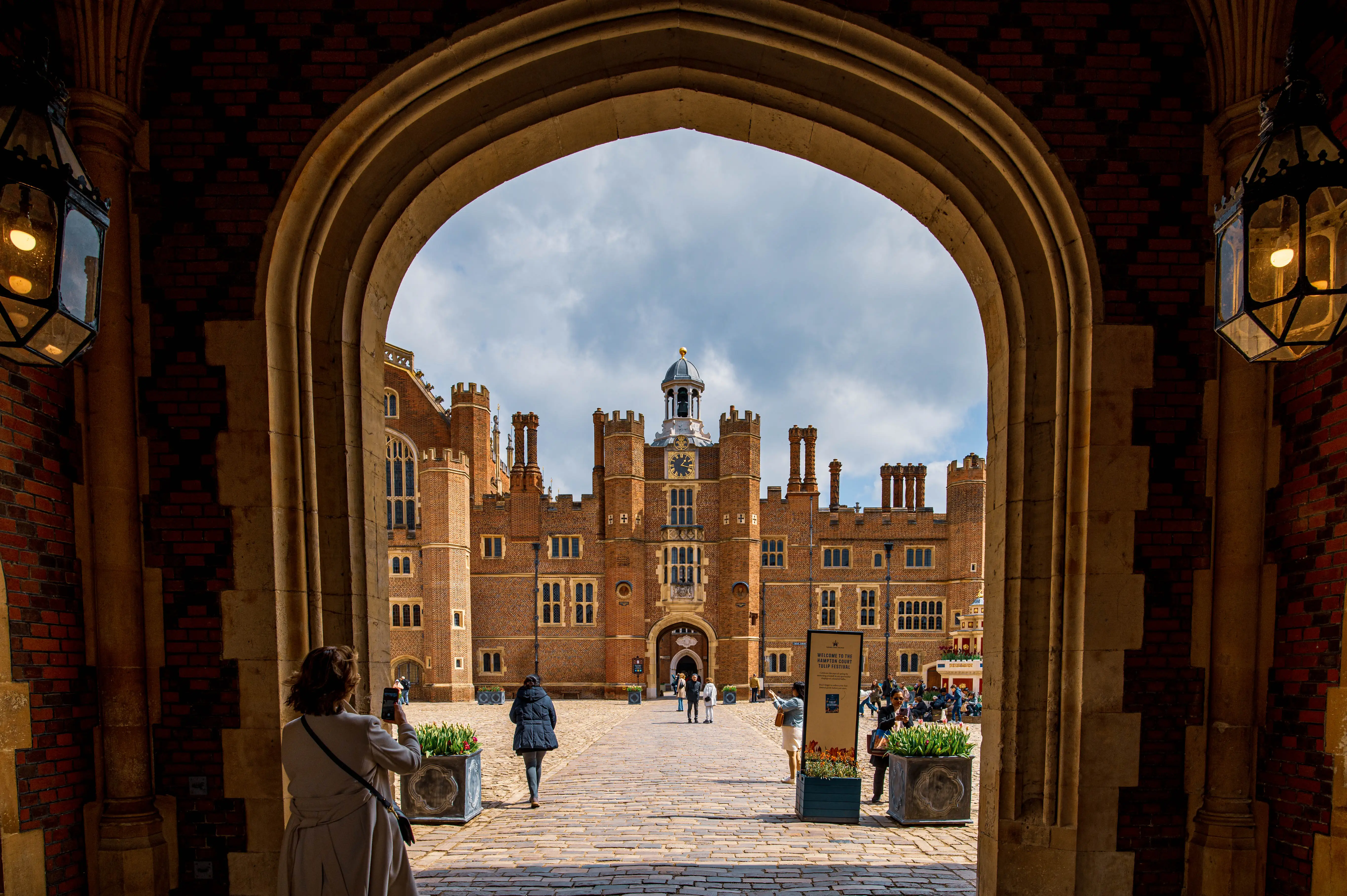
View of Hampton Court Palace's clock tower and facade through a large stone archway, with a woman on the left taking a photo and other visitors in the courtyard.
Hampton Court Palace Courtyard
photo by
©www.mgaylard.co.uk.
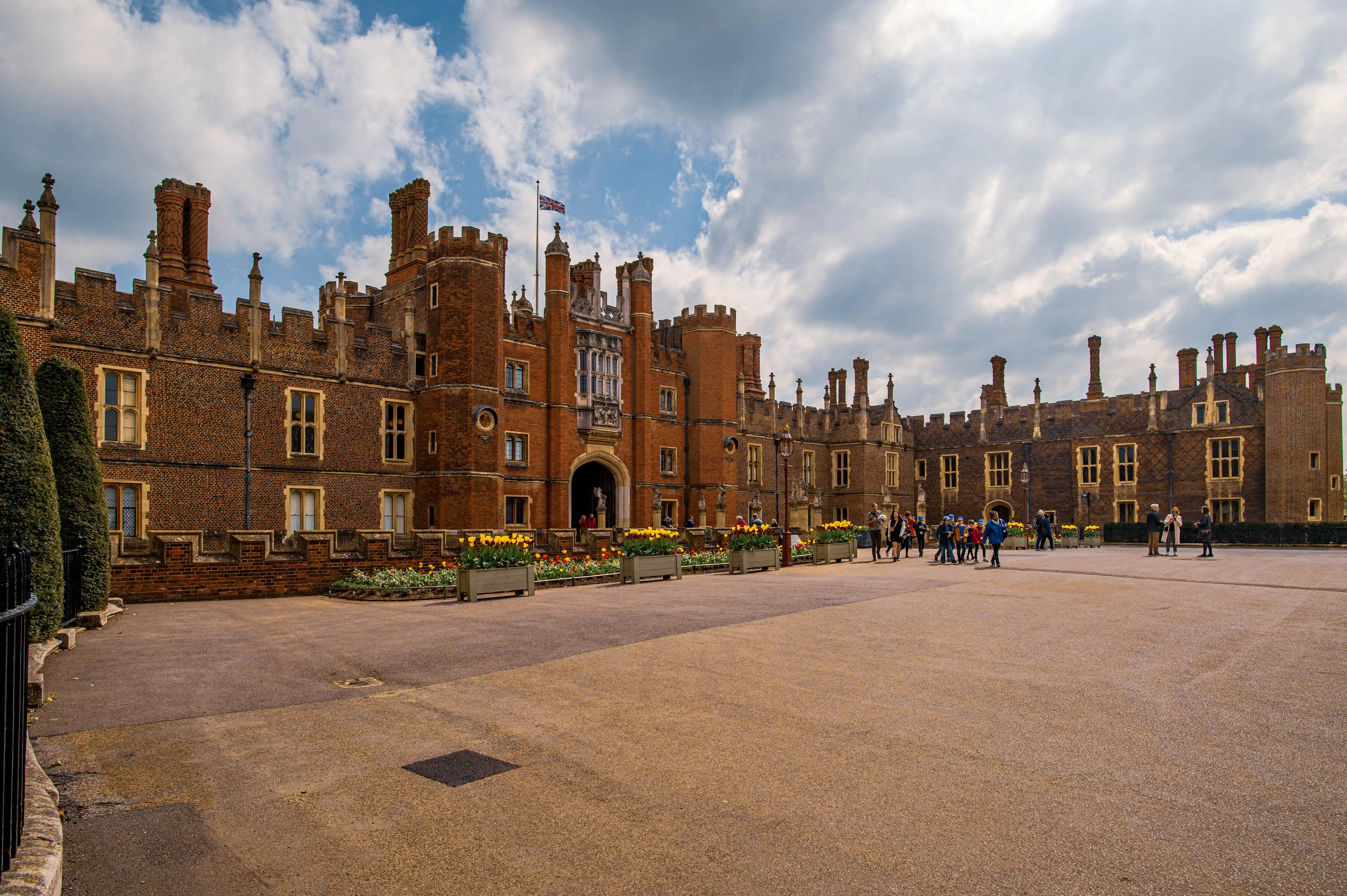
View of Hampton Court Palace with its grand brick facade, crenellated battlements, and numerous chimneys. Yellow flowers are planted in long rectangular boxes in front of the building, and a group of people are walking in the central courtyard.
Hampton Court Palace Courtyard with Spring Tulips
photo by
©www.mgaylard.co.uk.
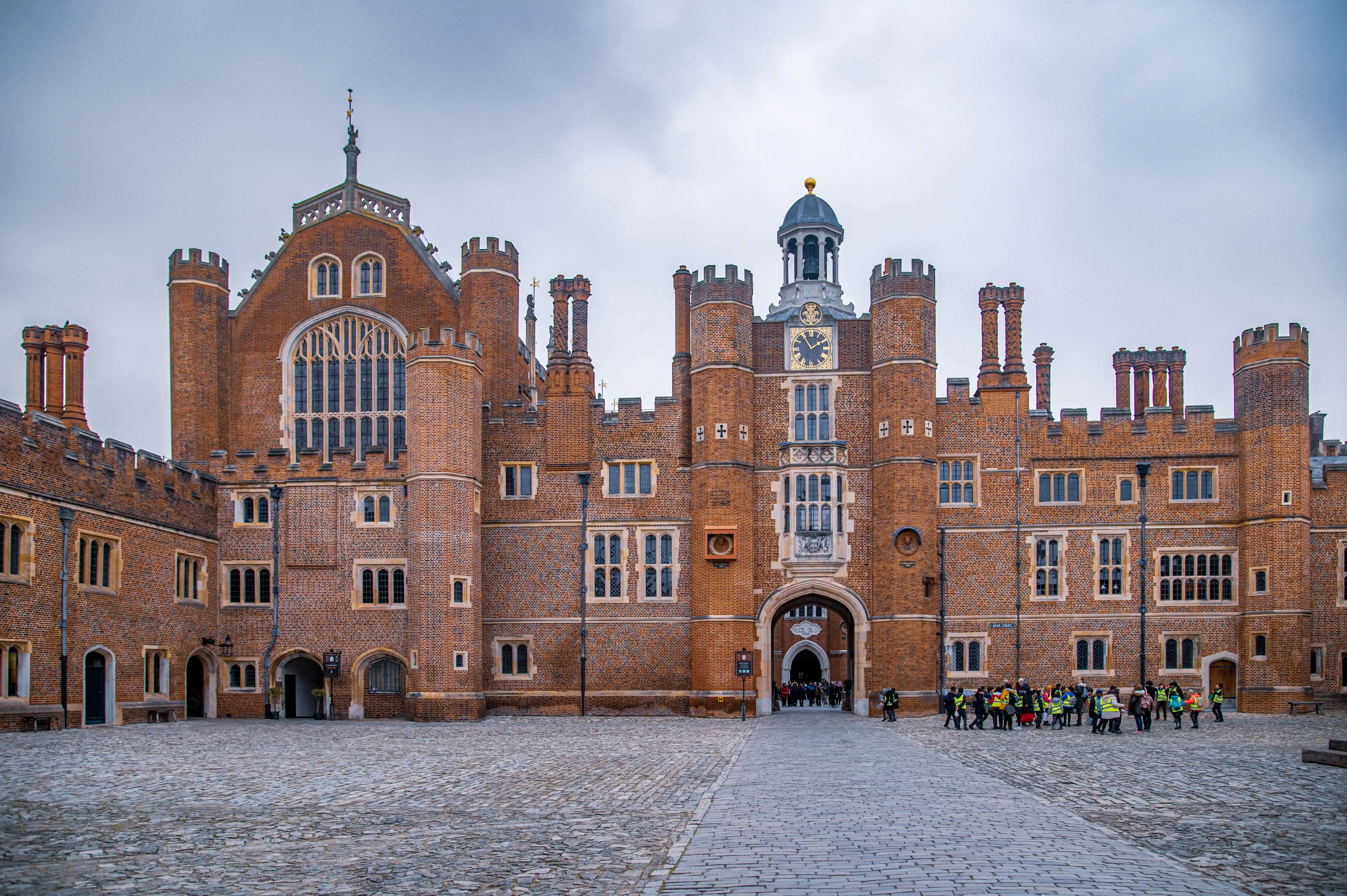
A wide shot of the courtyard of Hampton Court Palace, showing its distinctive red brick Tudor architecture, including towers, arched gateways, and many windows. A group of people are visible in the distance on the right side of the courtyard.
Hampton Court Palace Courtyard, London
photo by
©www.mgaylard.co.uk.
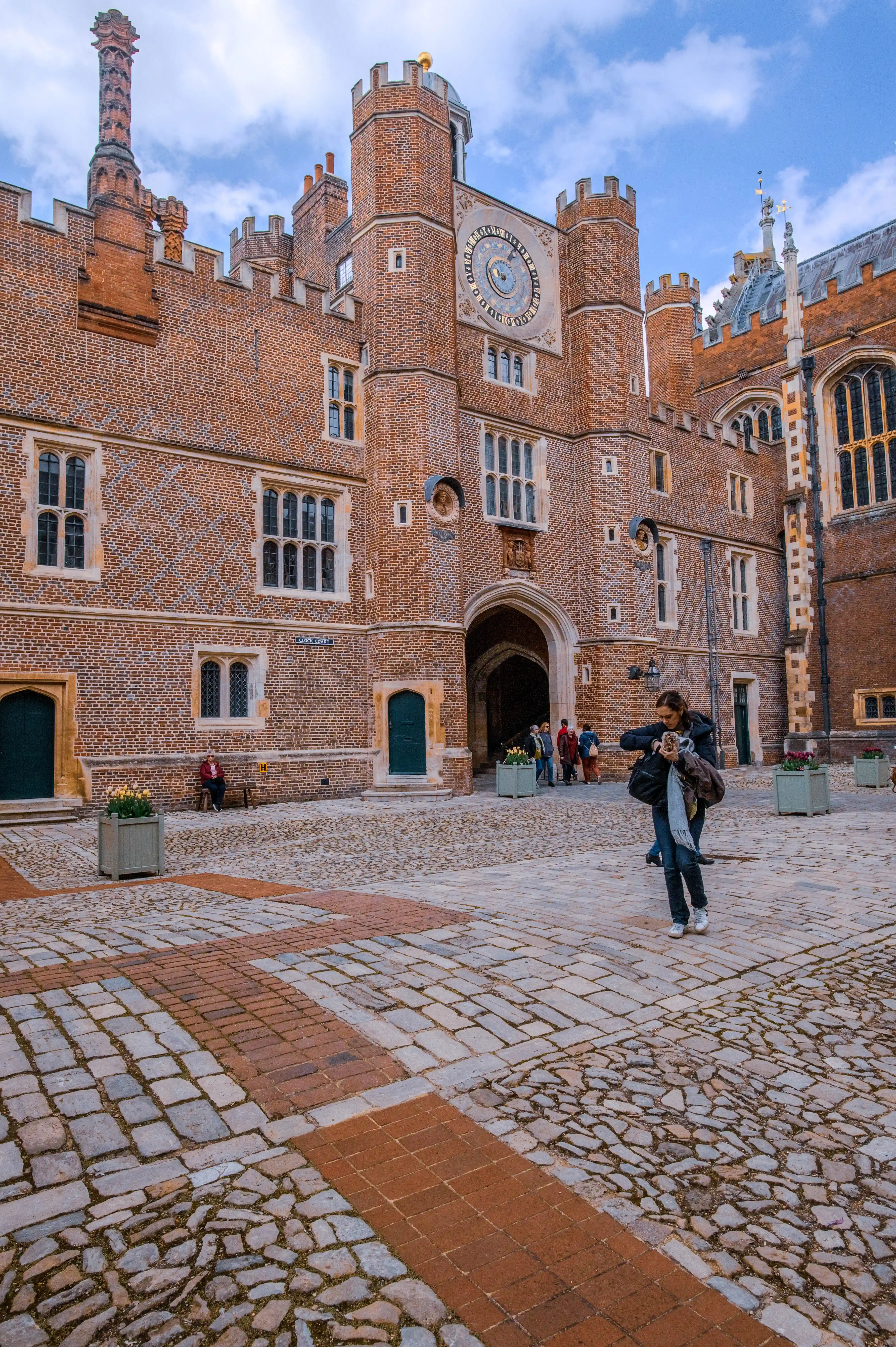
A cobbled courtyard at Hampton Court Palace, with the Great Clock Tower featuring a large clock face in the background. Several people are visible in the courtyard, with one person taking a photograph.
Hampton Court Palace Courtyard
photo by
©www.mgaylard.co.uk.
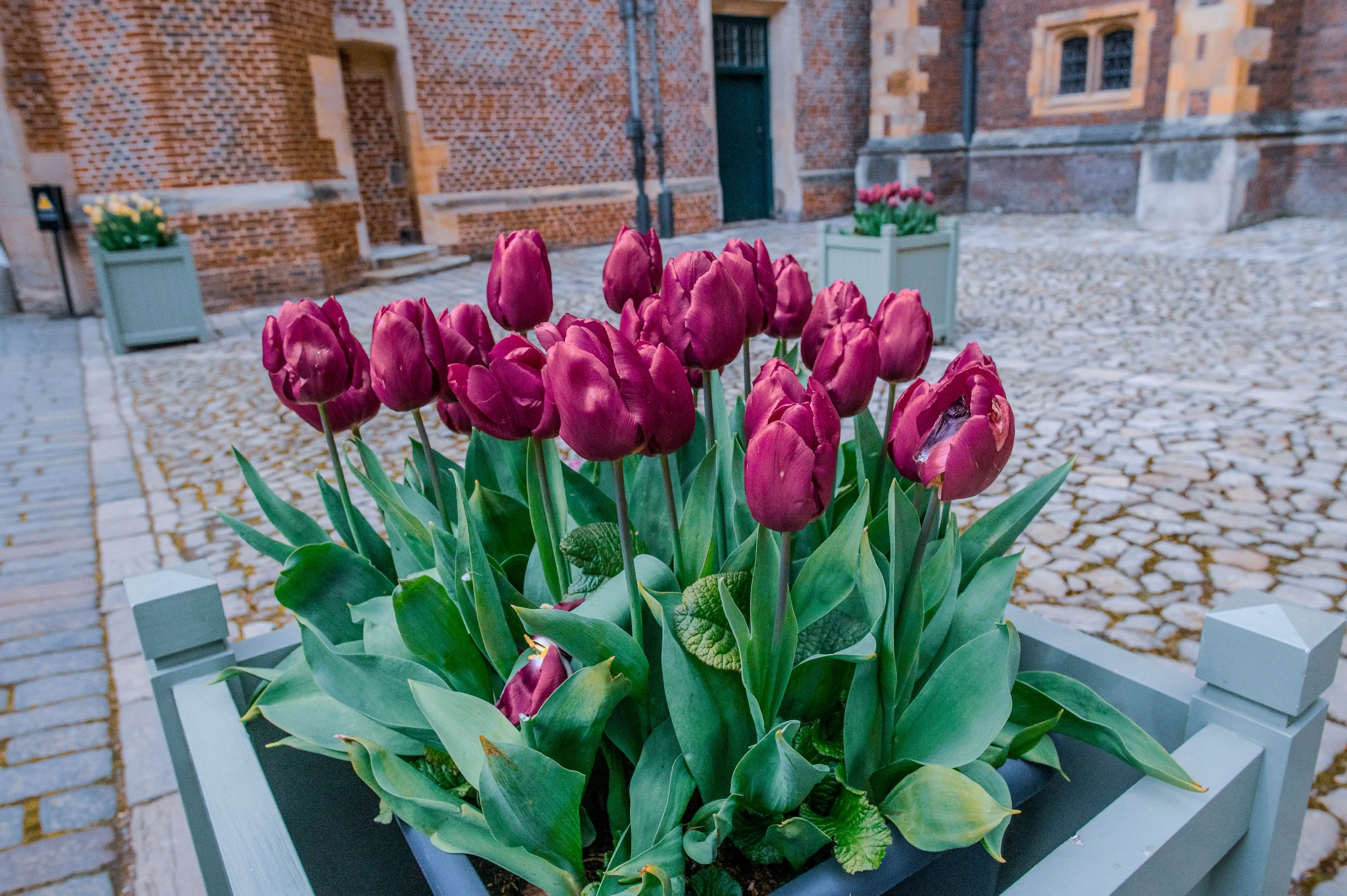
A planter of vibrant purple tulips in full bloom, with lush green leaves, stands in a cobbled courtyard beside a historic brick building.
Purple Tulips in a Courtyard
photo by
©www.mgaylard.co.uk.
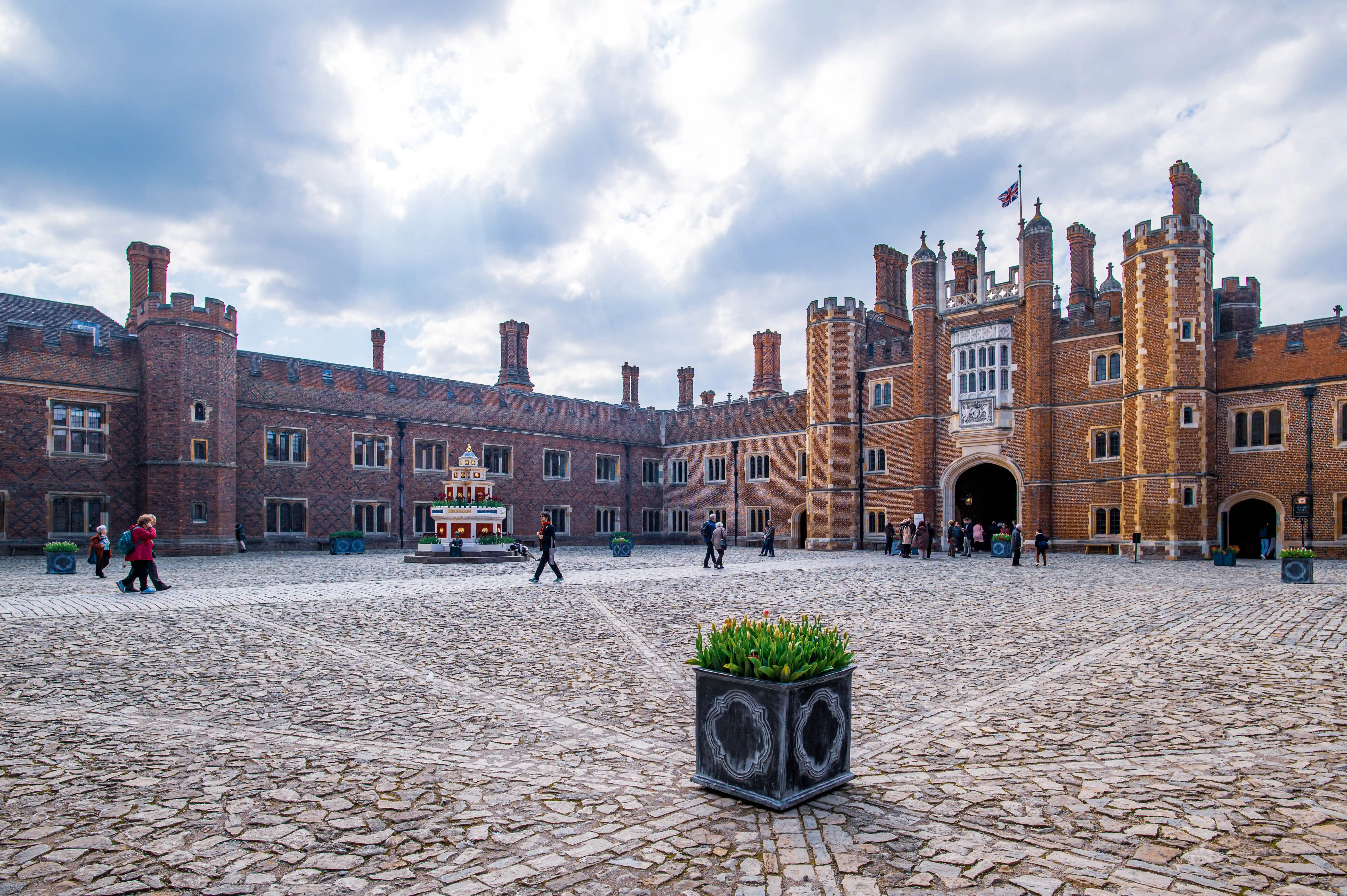
Wide shot of the cobbled courtyard at Hampton Court Palace. A grand red-brick Tudor building with many chimneys forms the backdrop. A large arched entrance is visible, with people gathered around. The Union Jack flag flies overhead. In the foreground, a stone planter holds a bunch of tulips.
Hampton Court Palace Courtyard
photo by
©www.mgaylard.co.uk.
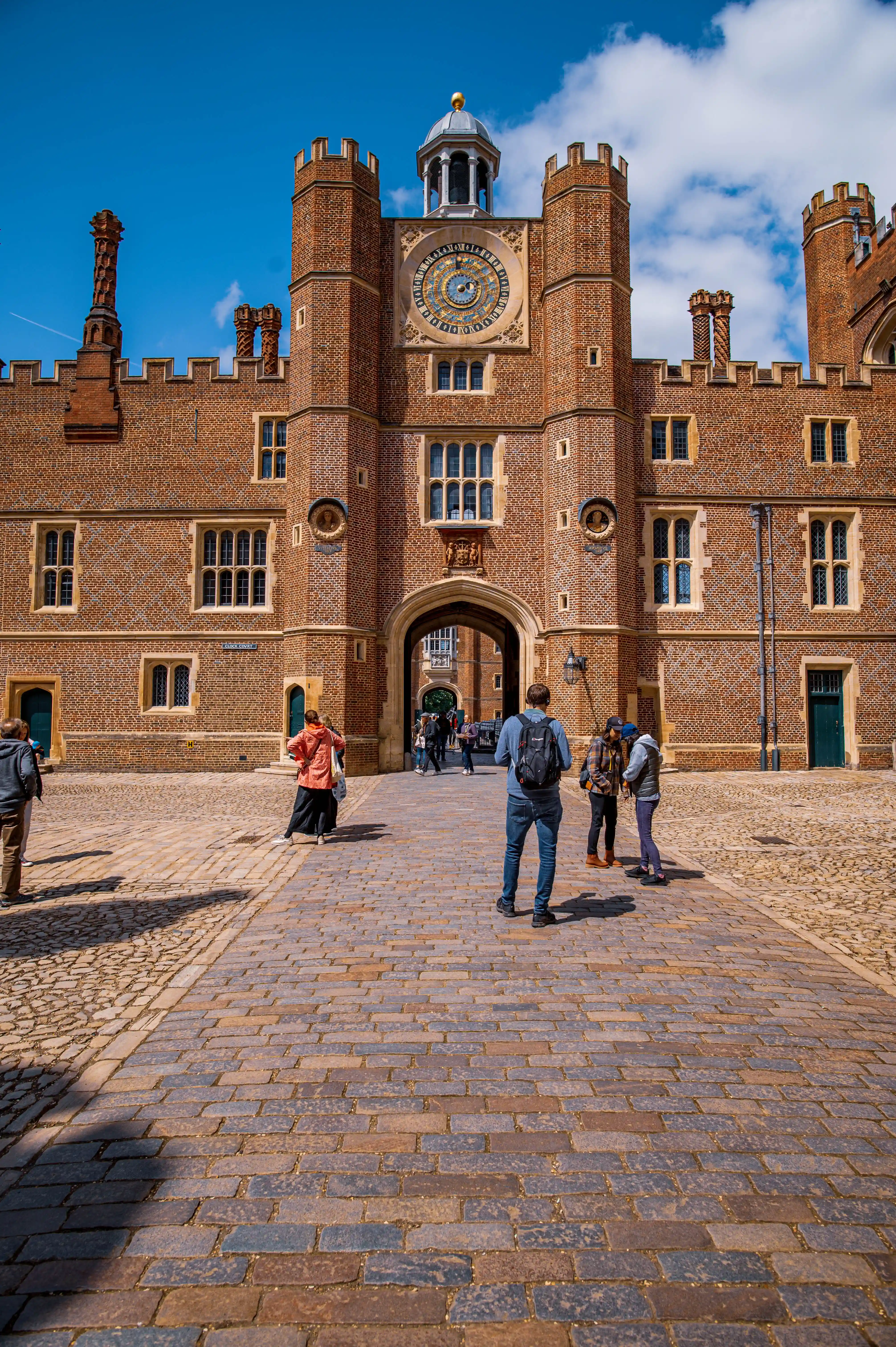
The Clock Tower of Hampton Court Palace stands tall against a blue sky with scattered clouds. The brick facade of the historic building is adorned with ornate windows and battlements. A large clock face is prominently displayed on the tower. In the foreground, a cobblestone courtyard is populated by a few tourists.
Hampton Court Palace Clock Tower and Courtyard
photo by
©www.mgaylard.co.uk.
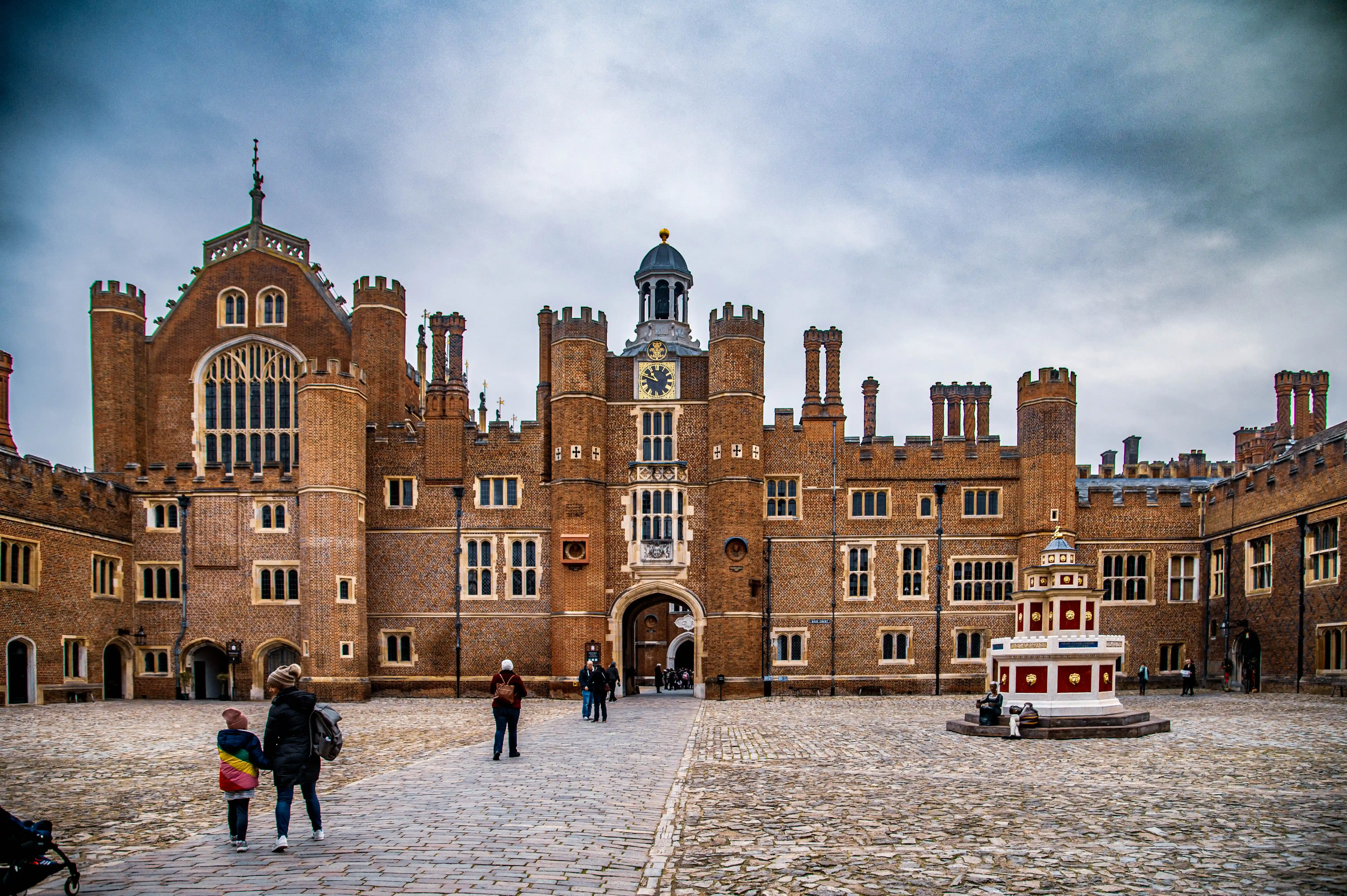
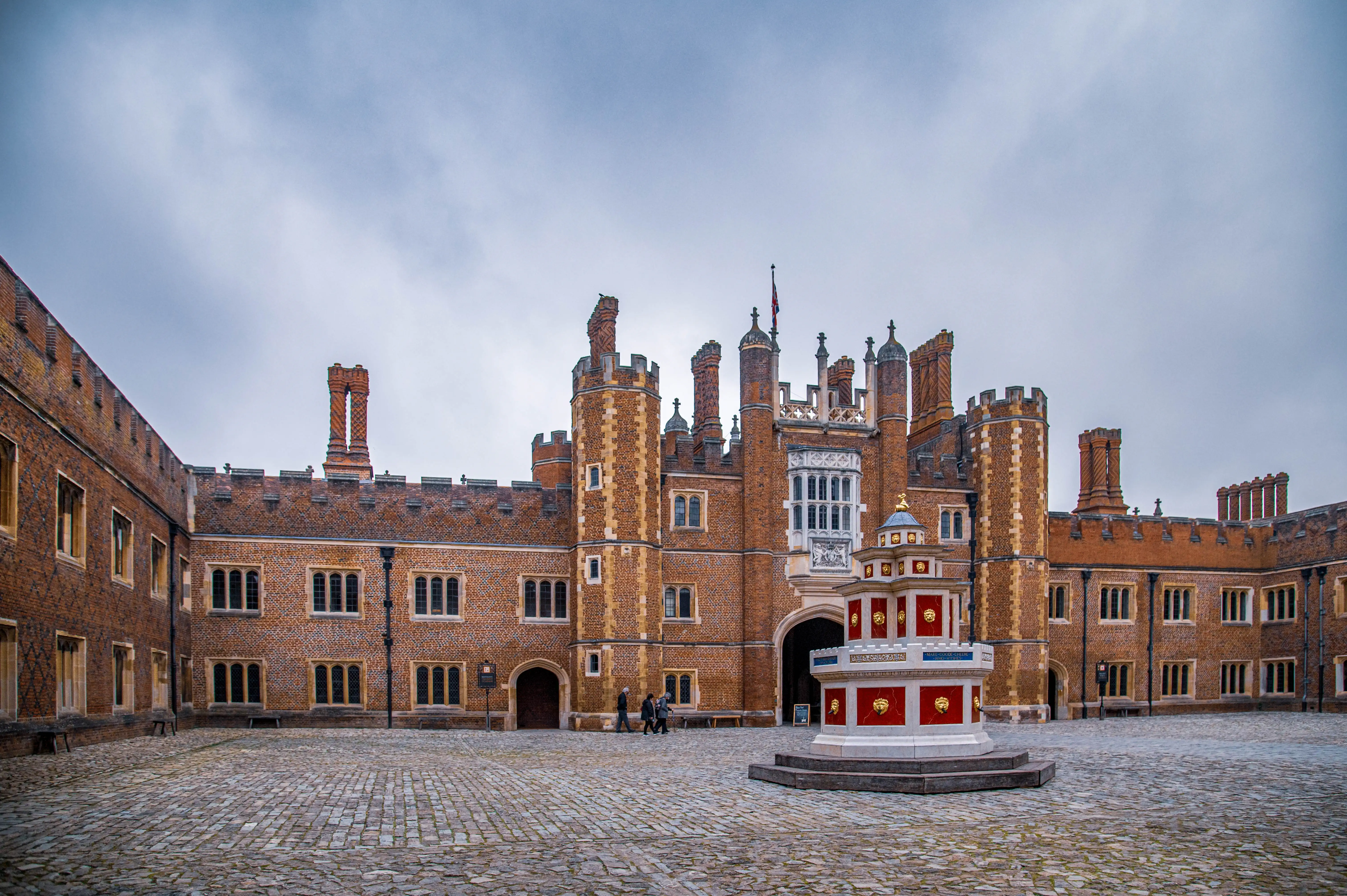
Exterior view of Hampton Court Palace's courtyard, showcasing its brick facade, central clock tower, and a decorative fountain. Two people are walking in the courtyard.
Hampton Court Palace Courtyard, London
photo by
©www.mgaylard.co.uk.
A wide shot of the inner courtyard of Hampton Court Palace, showcasing its red brick Tudor architecture with tall chimneys and ornate windows. In the centre of the cobblestone courtyard is a red and white decorative fountain.
Hampton Court Palace Courtyard
photo by
©www.mgaylard.co.uk.
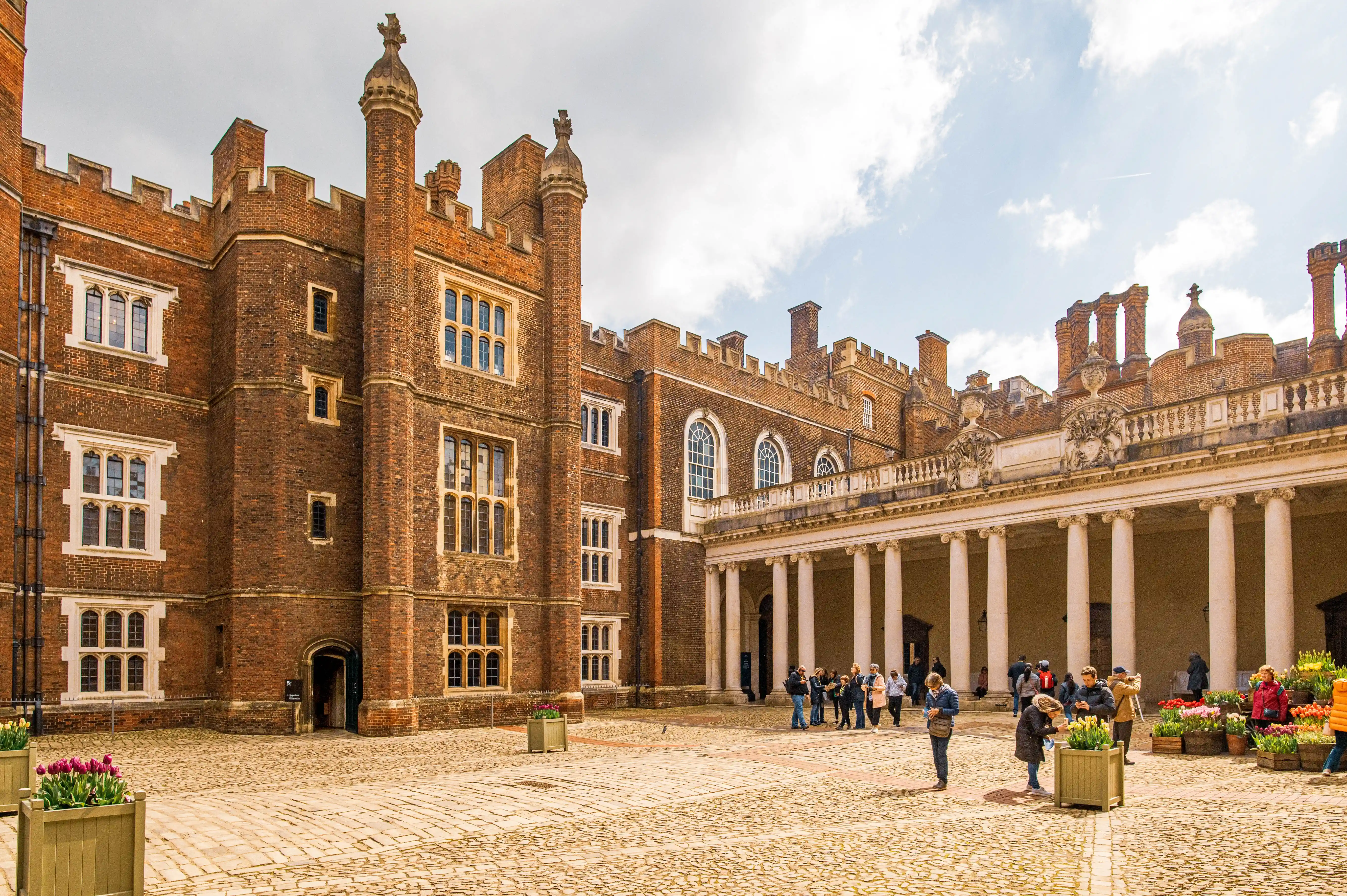
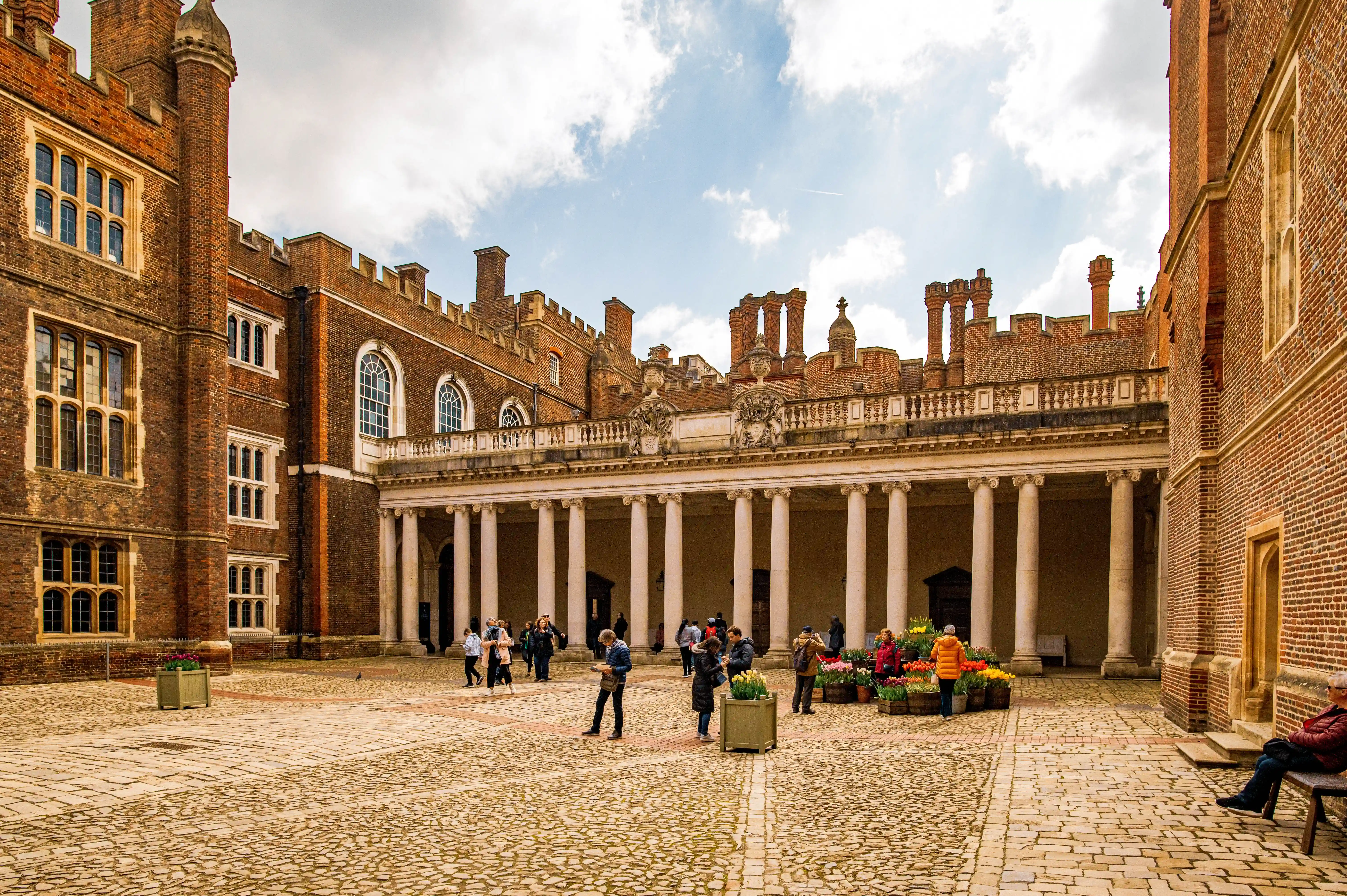
A wide shot of a courtyard at Hampton Court Palace, with people walking around, a stone-paved floor, and a building with a colonnade.
Hampton Court Palace Courtyard
photo by
©www.mgaylard.co.uk.
A wide shot of a courtyard at Hampton Court Palace, with people walking around, a stone-paved floor, and a building with a colonnade.
Hampton Court Palace Courtyard
photo by
©www.mgaylard.co.uk.
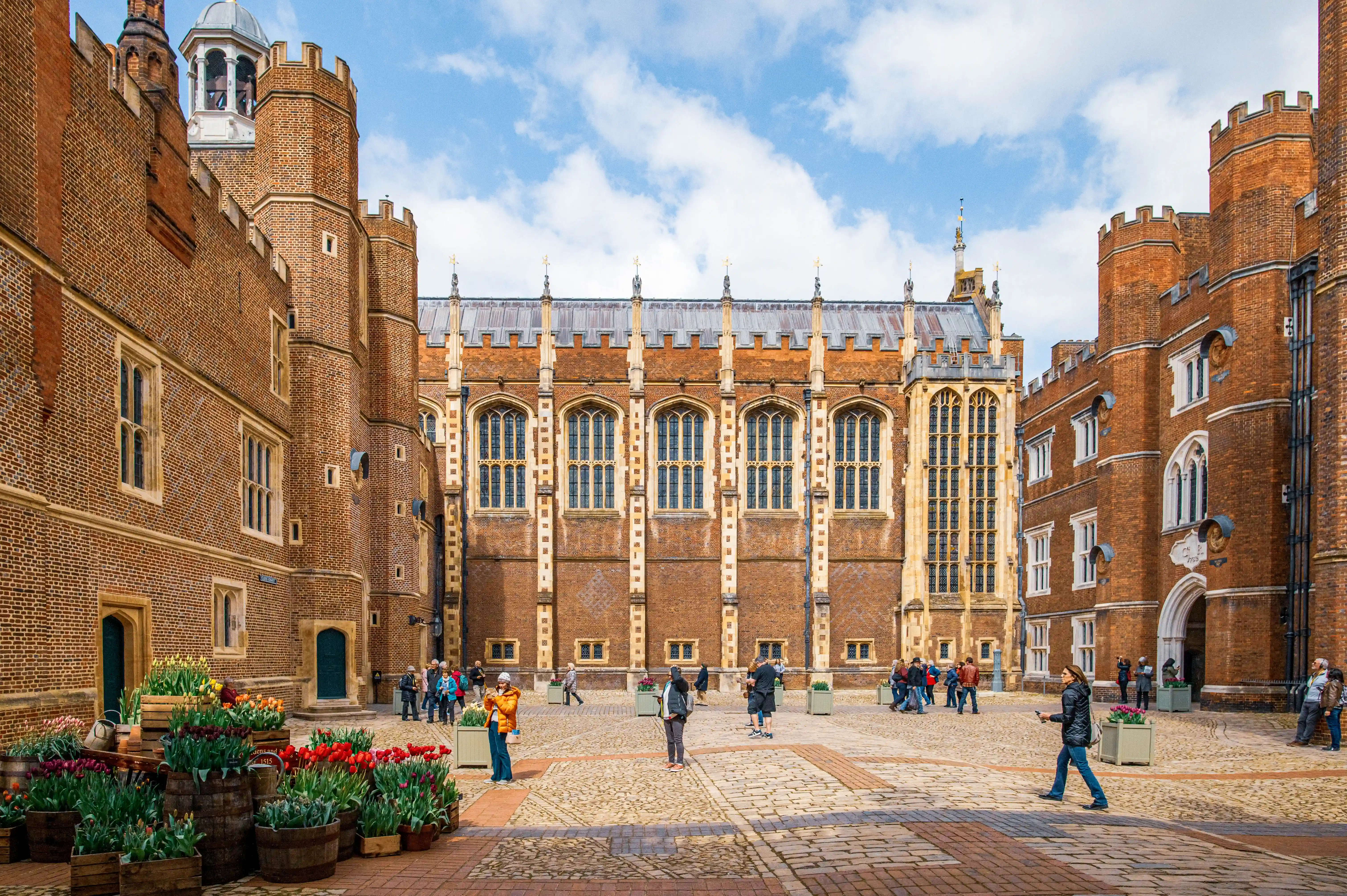
A wide-angle view of a courtyard at Hampton Court Palace. The courtyard is paved with brick and features large displays of red and pink tulips in wooden barrels and planters. Two impressive brick buildings with tall, arched windows and Tudor-style turrets flank the courtyard. In the background, a grand hall with a long row of windows and a castellated roof is visible. Several people are scattered throughout the courtyard, some admiring the flowers and others walking. The sky above is blue with scattered white clouds.
Hampton Court Palace Courtyard in Bloom
photo by
©www.mgaylard.co.uk.
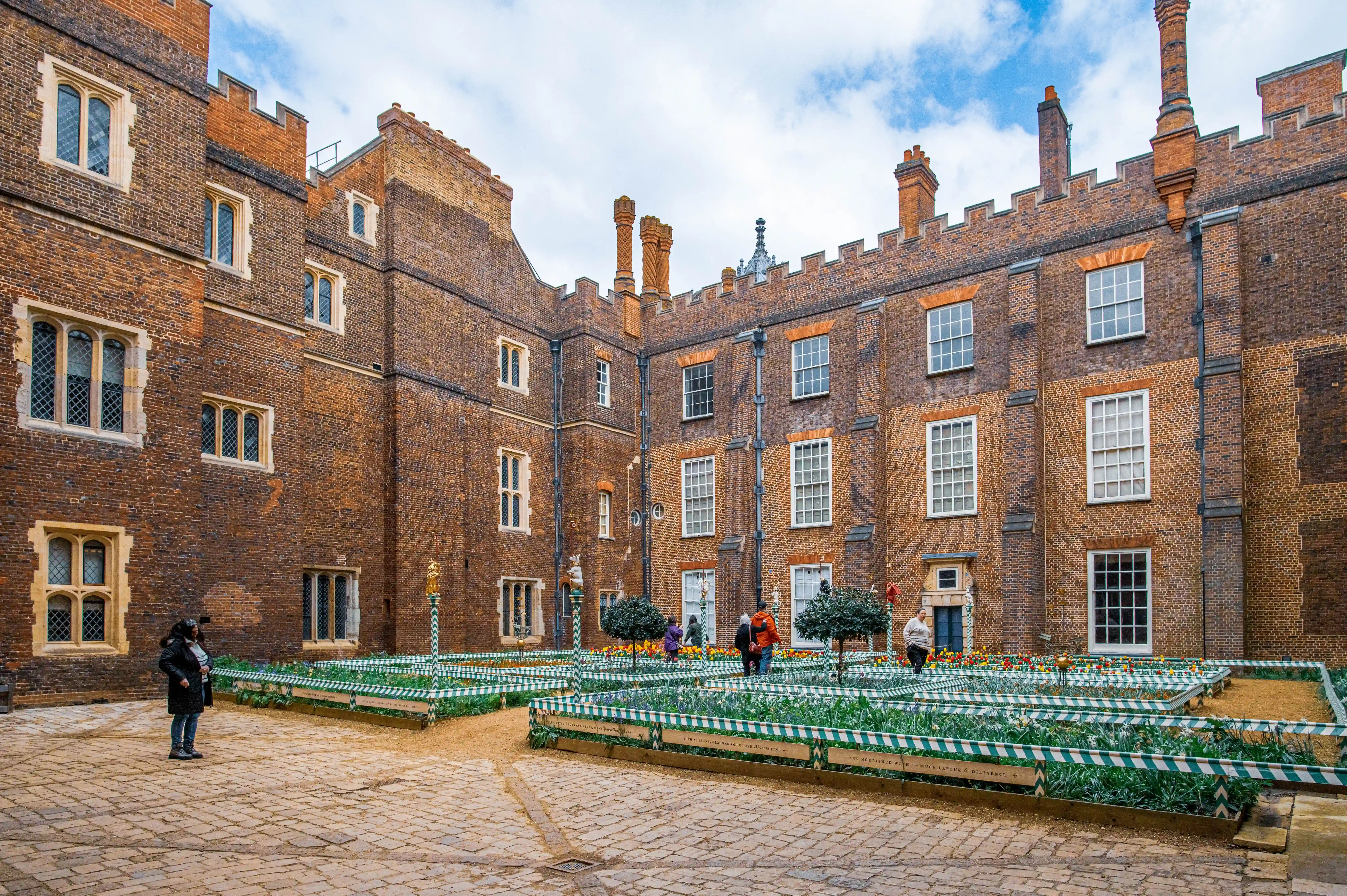
A wide shot of a historic brick courtyard at Hampton Court Palace, UK. In the centre is a formal garden with patterned flowerbeds and small trees. Cobblestones pave the ground and a few people are walking around.
Courtyard Garden at Hampton Court Palace
photo by
©www.mgaylard.co.uk.
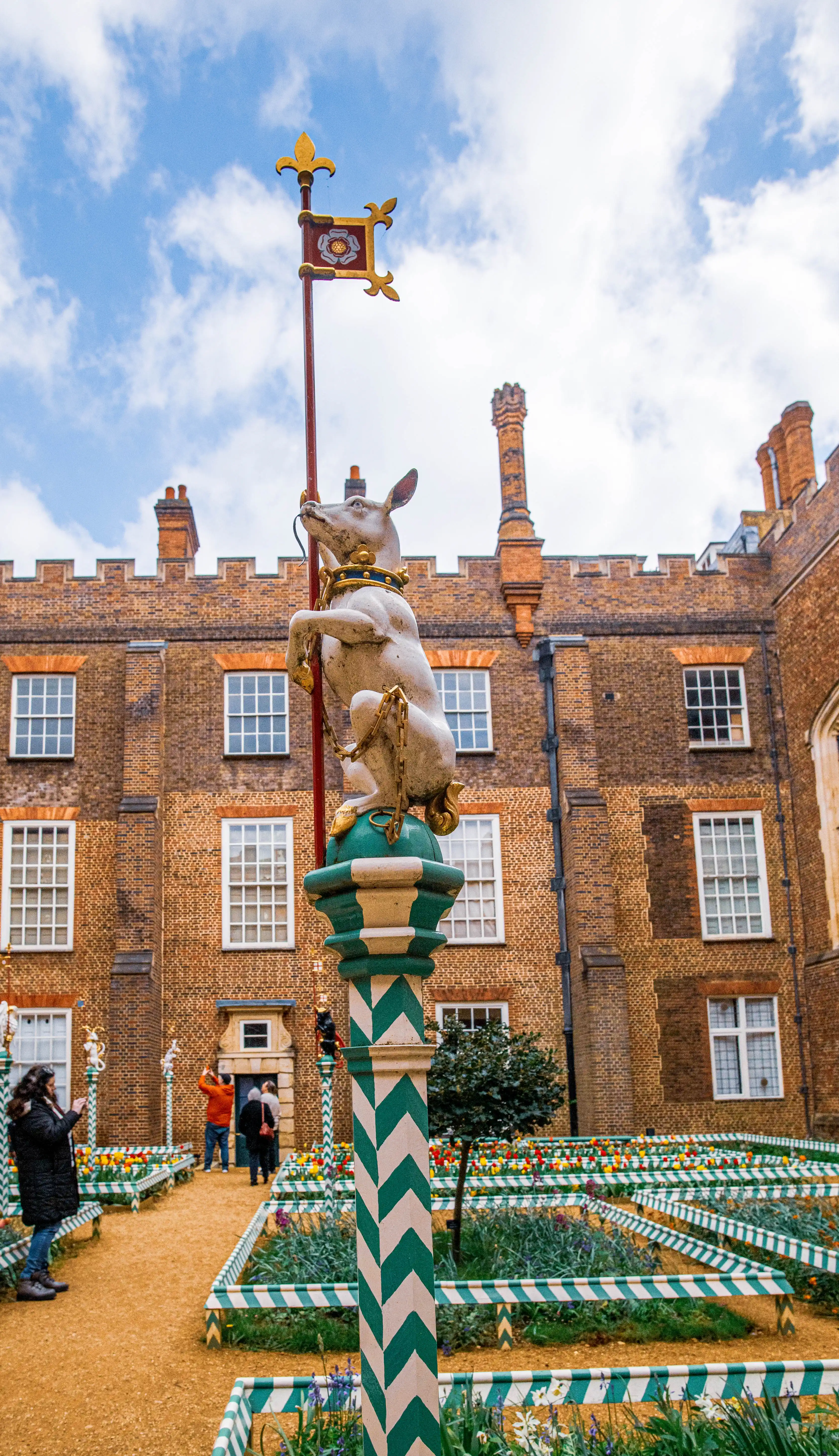
A white deer statue is positioned centrally in front of a red brick building. The statue is chained and stands on a green and white striped pedestal. A flagpole with a Tudor rose emblem is behind the statue. Visitors are visible in the background, looking at gardens and the building.
Hampton Court Palace Courtyard with Deer Statue
photo by
©www.mgaylard.co.uk.
meta itemprop="encodingFormat" content="image/jpeg">
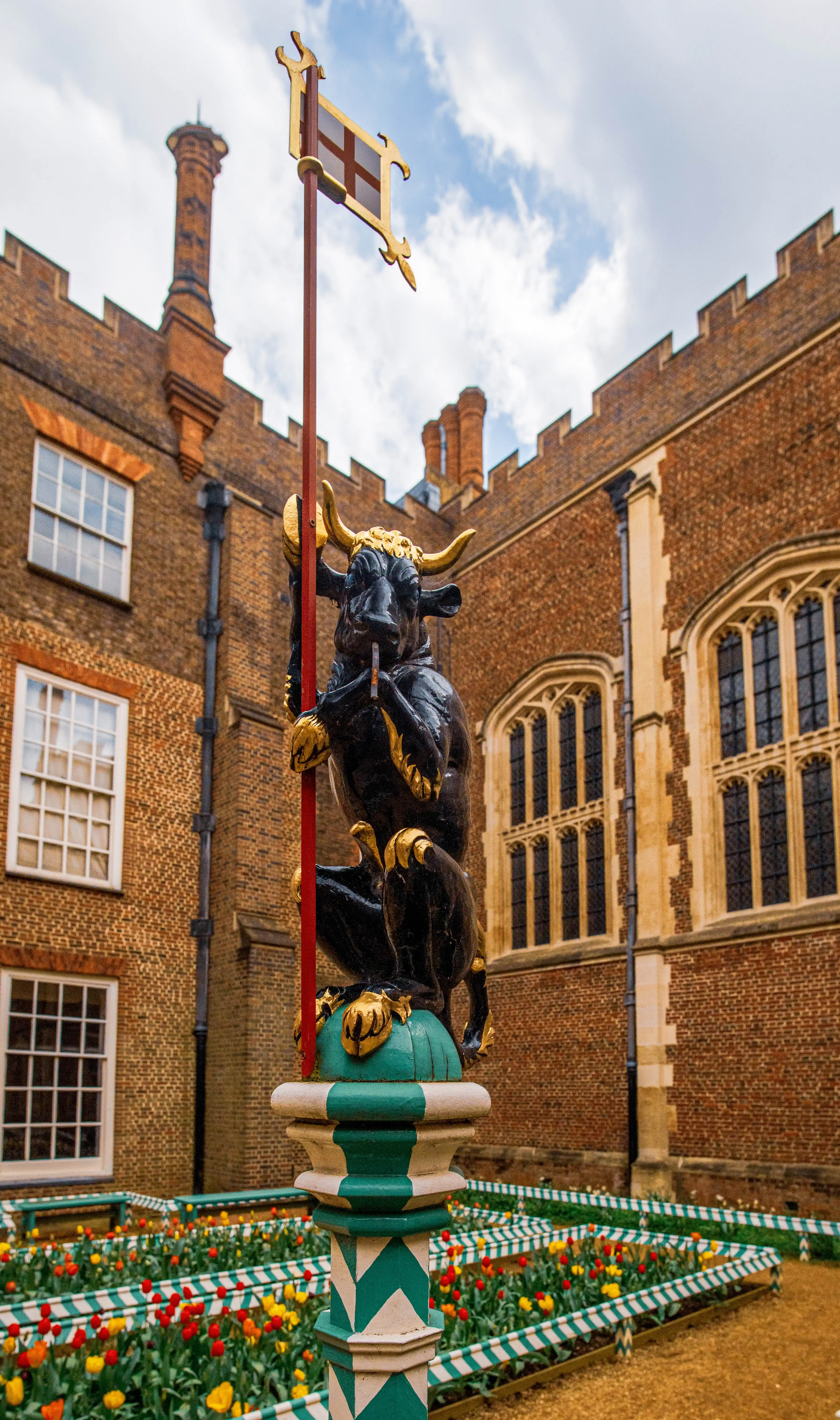
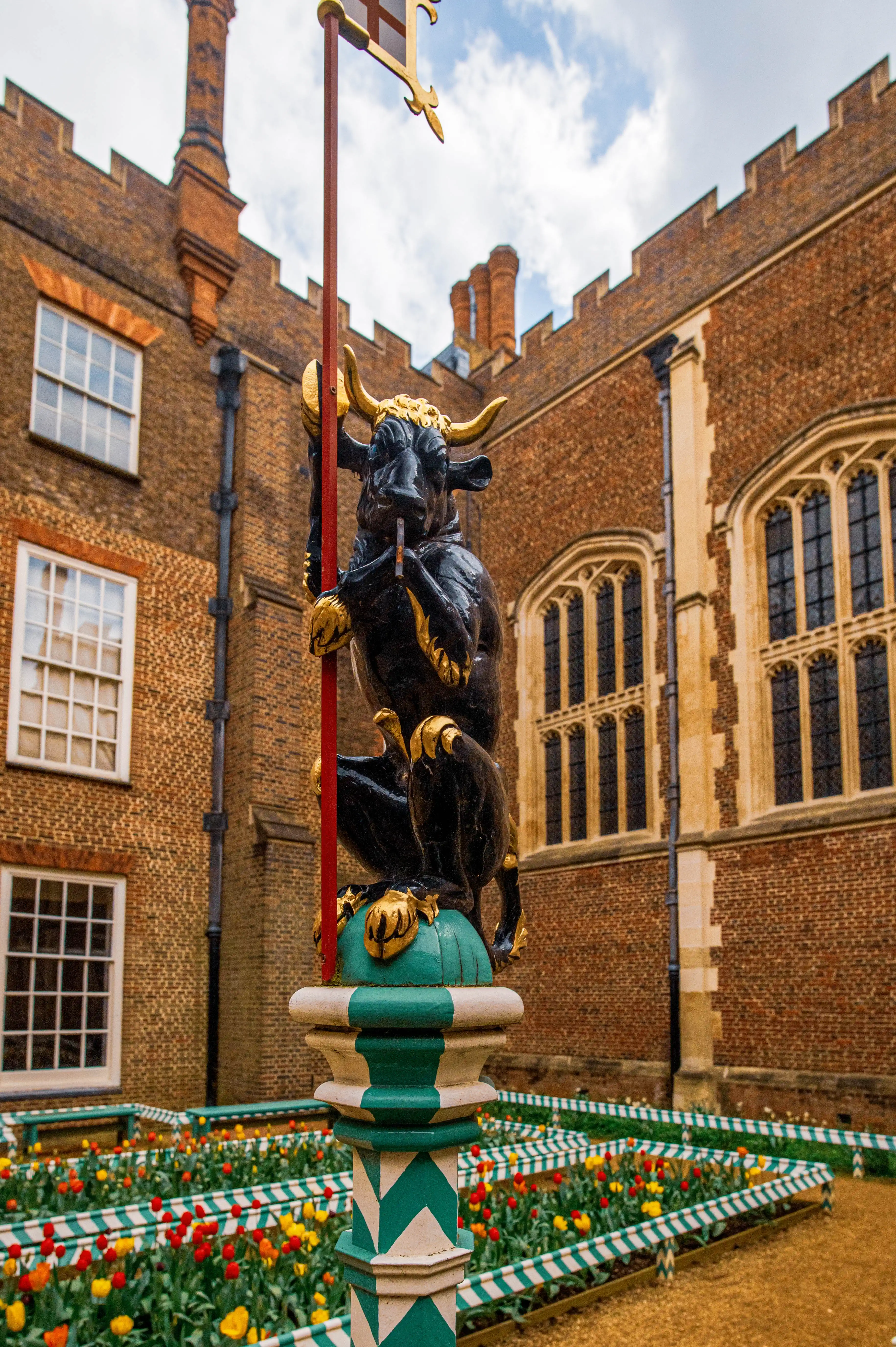
A black bull sculpture with golden horns and hooves, mounted on a decorative post, overlooks a garden filled with blooming tulips. The sculpture is in the foreground, with a red brick building and windows in the background.
The Bull of Hampton Court
photo by
©www.mgaylard.co.uk.
meta itemprop="encodingFormat" content="image/jpeg">
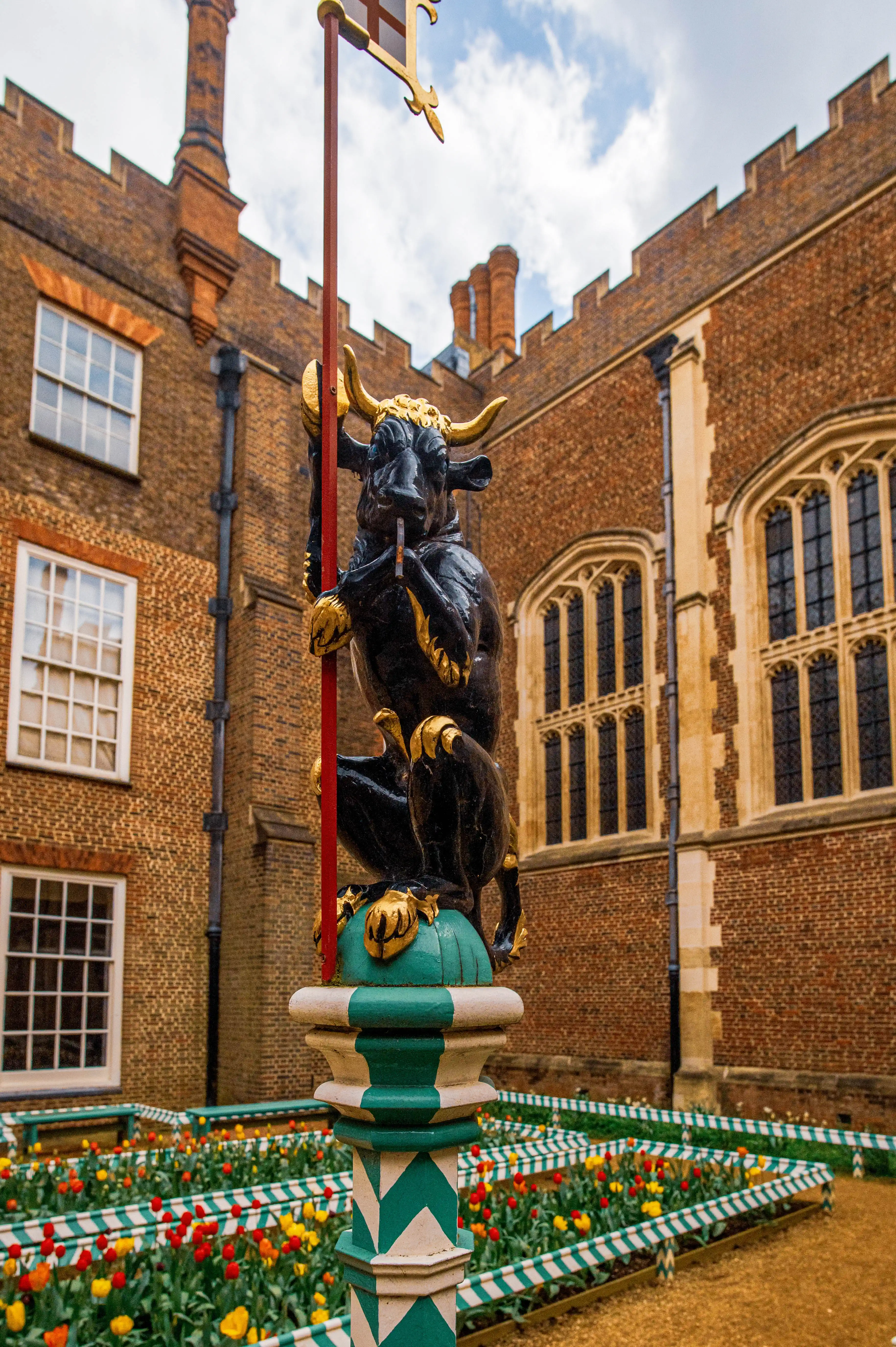
A black bull sculpture with golden horns and hooves, mounted on a decorative post, overlooks a garden filled with blooming tulips. The sculpture is in the foreground, with a red brick building and windows in the background.
The Bull of Hampton Court
photo by
©www.mgaylard.co.uk.
meta itemprop="encodingFormat" content="image/jpeg">
A black bull sculpture with golden horns and hooves, mounted on a decorative post, overlooks a garden filled with blooming tulips. The sculpture is in the foreground, with a red brick building and windows in the background.
The Bull of Hampton Court
photo by
©www.mgaylard.co.uk.
meta itemprop="encodingFormat" content="image/jpeg">
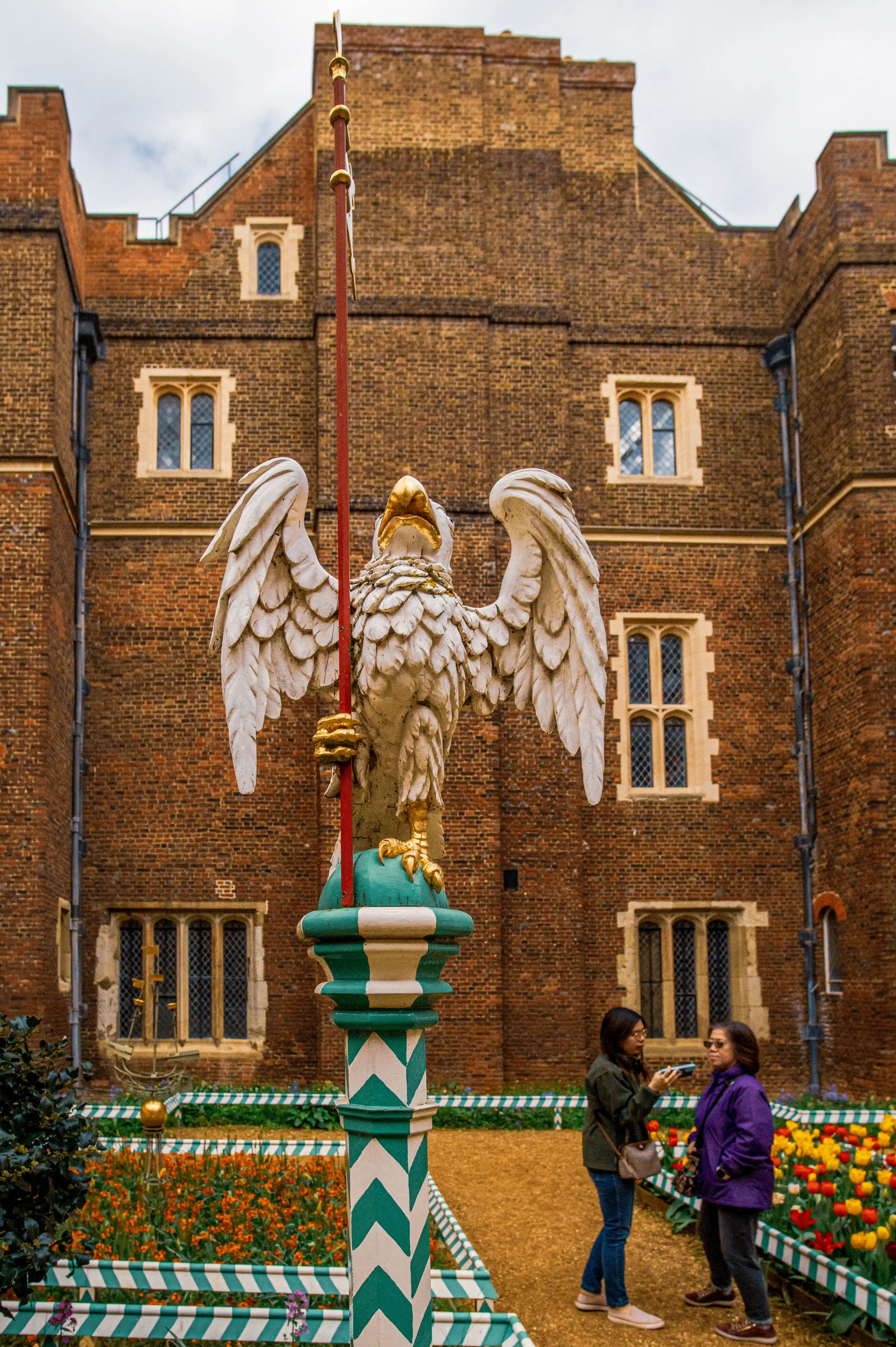
A stone statue of a white eagle with outstretched wings and a gold beak stands on a decorative pillar in front of a red brick building. Two women are standing to the right of the statue, looking at something in their hands. Flowerbeds with orange and yellow flowers are visible in the foreground and middle ground.
Chapel Court Garden
photo by
©www.mgaylard.co.uk.
meta itemprop="encodingFormat" content="image/jpeg">
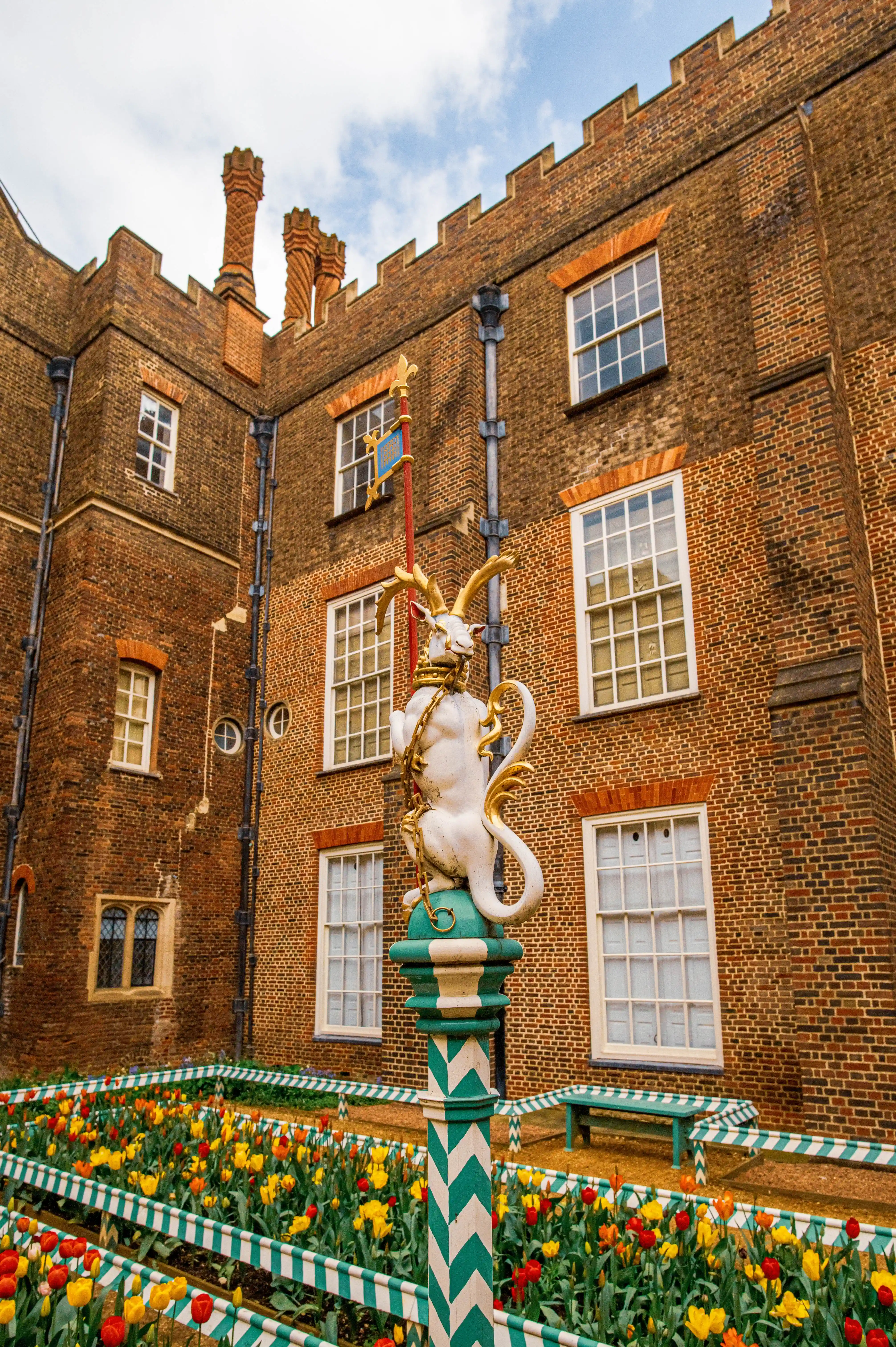
A white statue of a mythical creature with golden antlers and wings, chained and standing on a green and white patterned pillar, is in front of a brick building at Hampton Court Palace. In the foreground, a bed of red and yellow tulips is separated by a green and white striped fence.
Hampton Court Palace Courtyard with Mythical Sculpture and Tulip Garden
photo by
©www.mgaylard.co.uk.
meta itemprop="encodingFormat" content="image/jpeg">
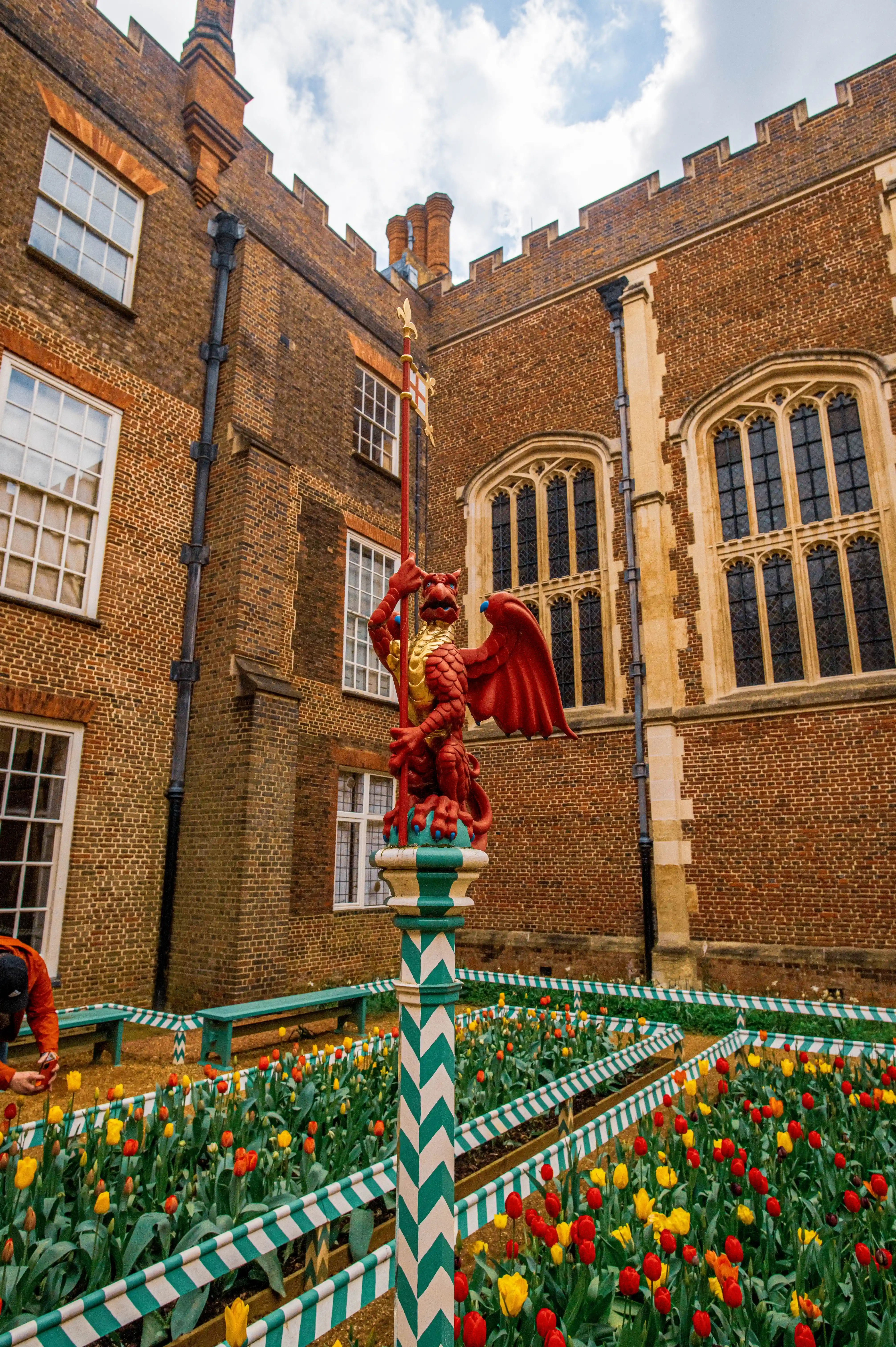
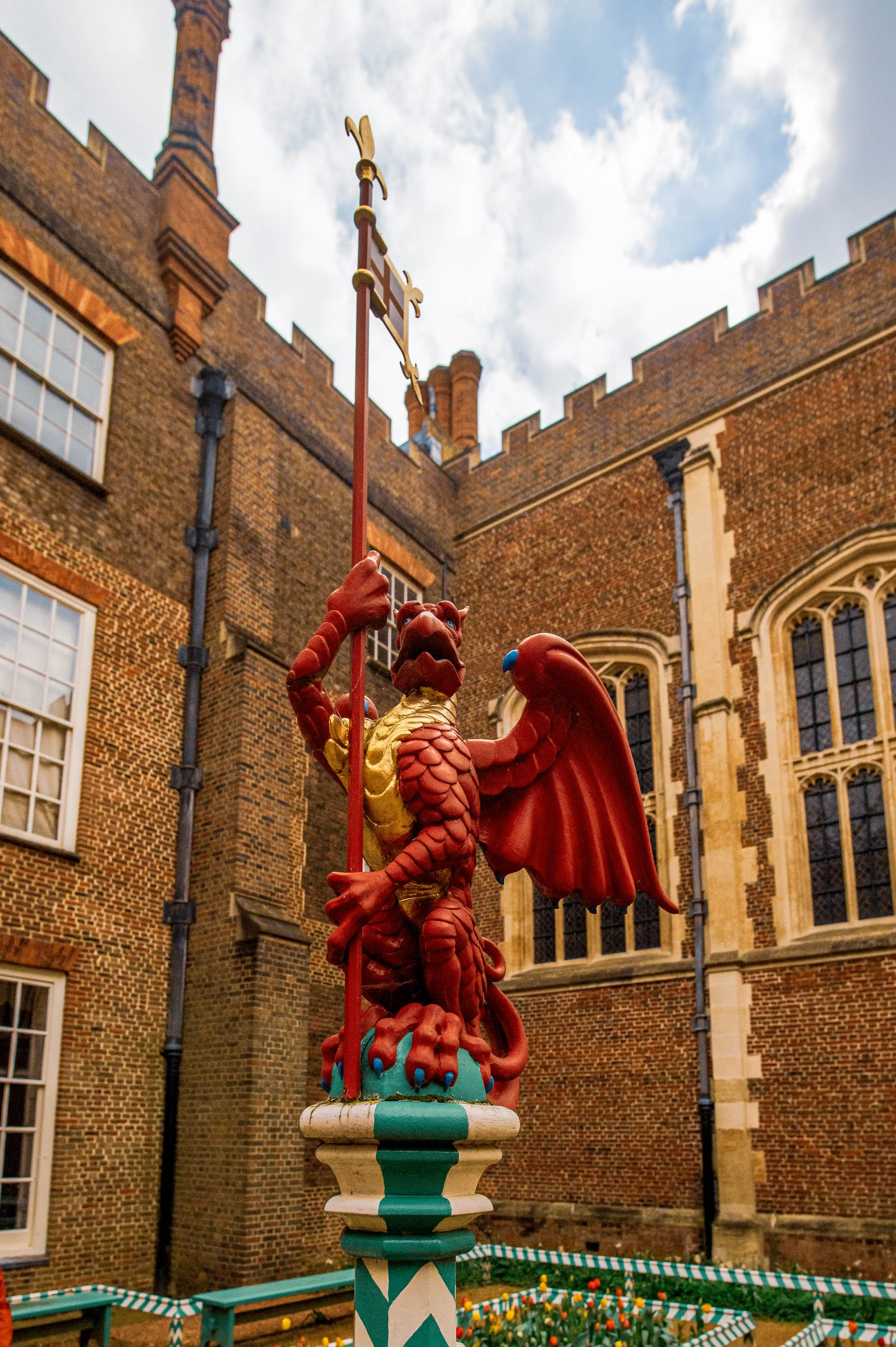
A red griffin statue stands in a courtyard filled with red and yellow tulips. The statue is on a patterned pillar and is surrounded by a flowerbed with green and white striped borders. Behind the garden are brick buildings with large windows.
Historic Courtyard with Tulip Garden and Griffin Statue
photo by
©www.mgaylard.co.uk.
meta itemprop="encodingFormat" content="image/jpeg">
A red griffin statue stands in a courtyard filled with red and yellow tulips. The statue is on a patterned pillar and is surrounded by a flowerbed with green and white striped borders. Behind the garden are brick buildings with large windows.
Historic Courtyard with Tulip Garden and Griffin Statue
photo by
©www.mgaylard.co.uk.
meta itemprop="encodingFormat" content="image/jpeg">
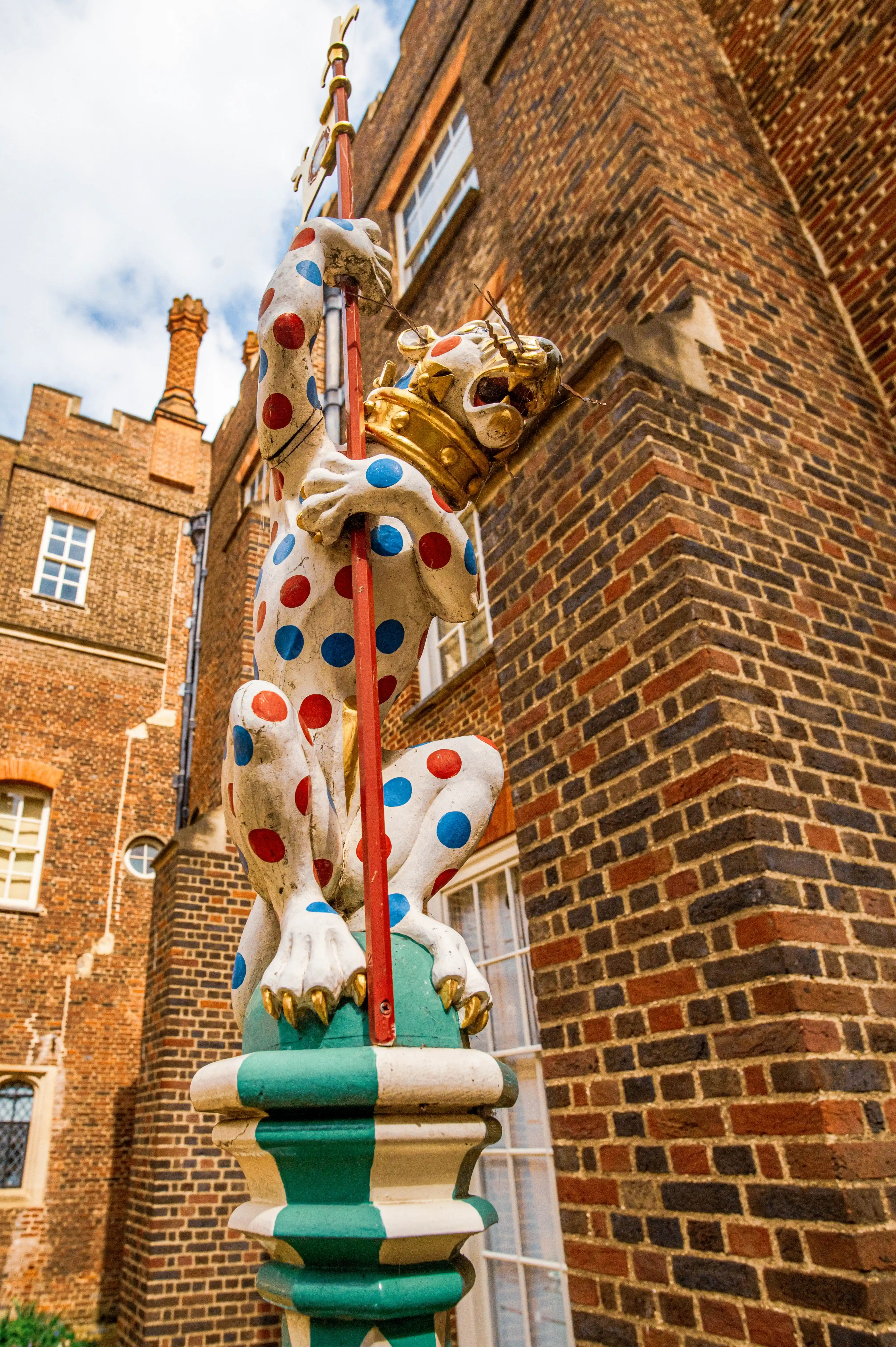
A low-angle shot of a fanciful statue of a crowned griffin covered in red and blue polka dots, holding a pole, with a brick building in the background.
Polka-Dot Griffin Statue at Historic Brick Building
photo by
©www.mgaylard.co.uk.
meta itemprop="encodingFormat" content="image/jpeg">
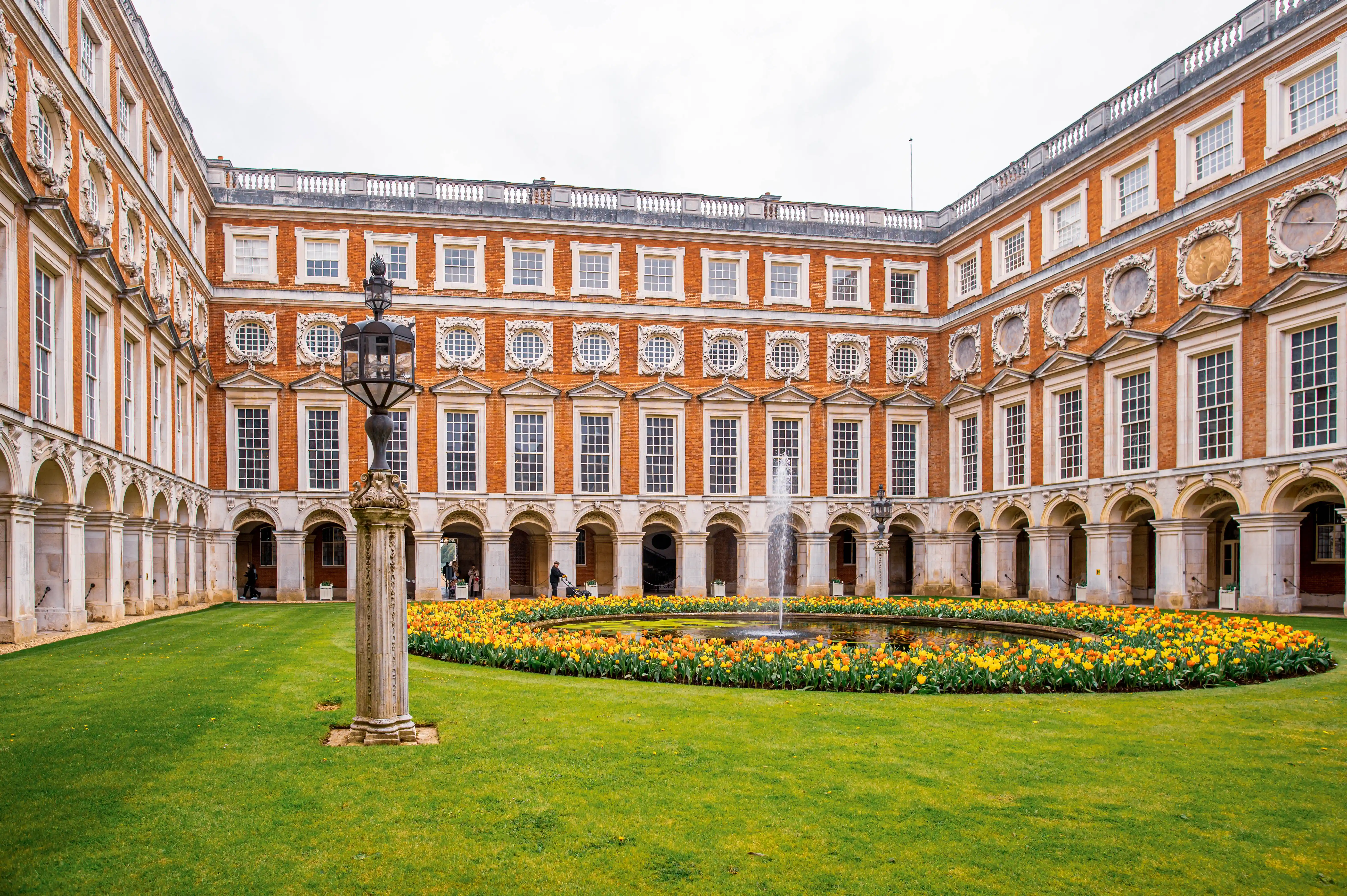
Historic courtyard with central fountain, flower bed, red-brick building and classical architectural details.
Historic Courtyard — Classical Estate Architecture
photo by
©www.mgaylard.co.uk.
Courtyard of Hampton Court Palace with a fountain and colourful tulip beds.
Hampton Court Palace Courtyard
photo by
©www.mgaylard.co.uk.
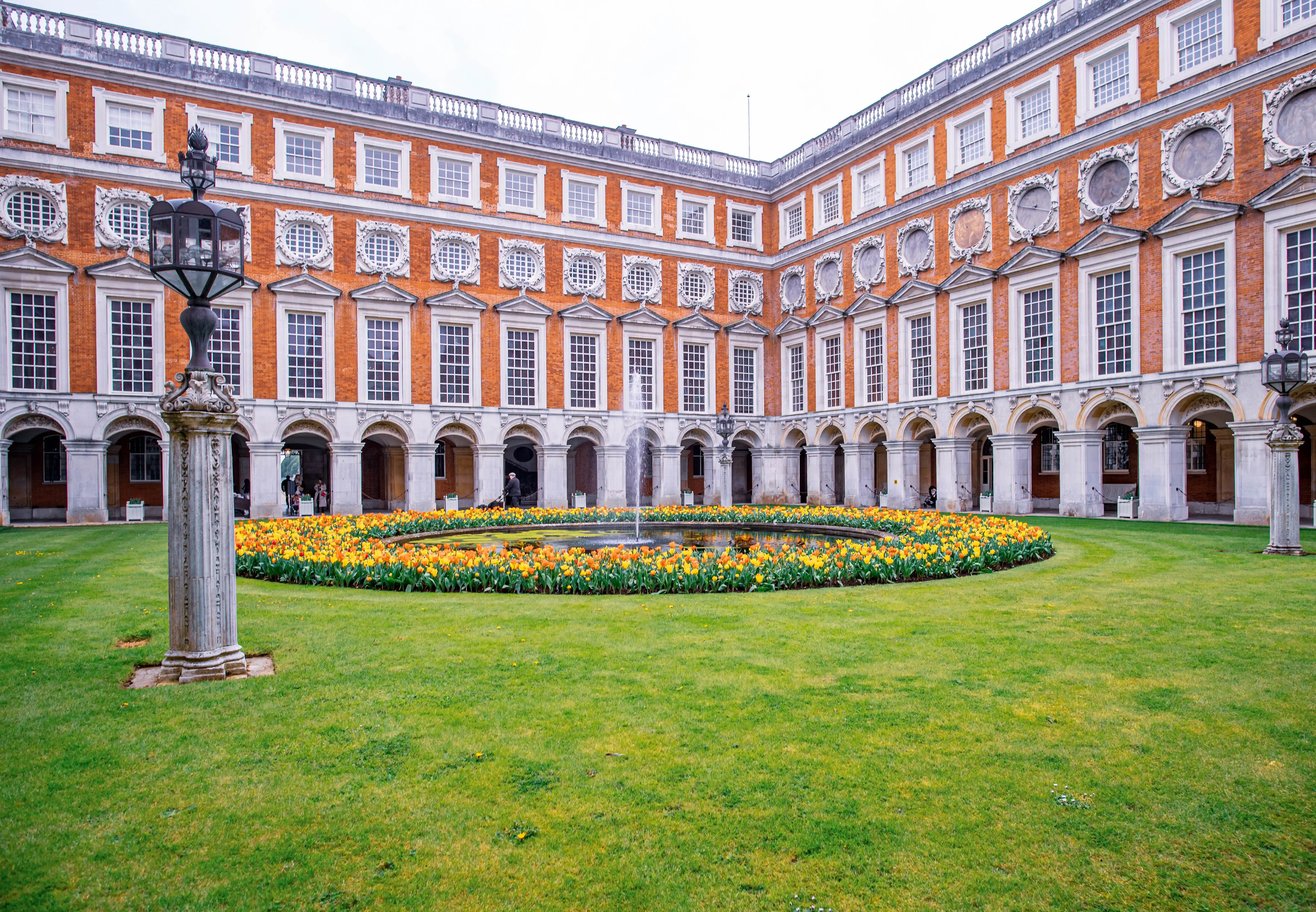
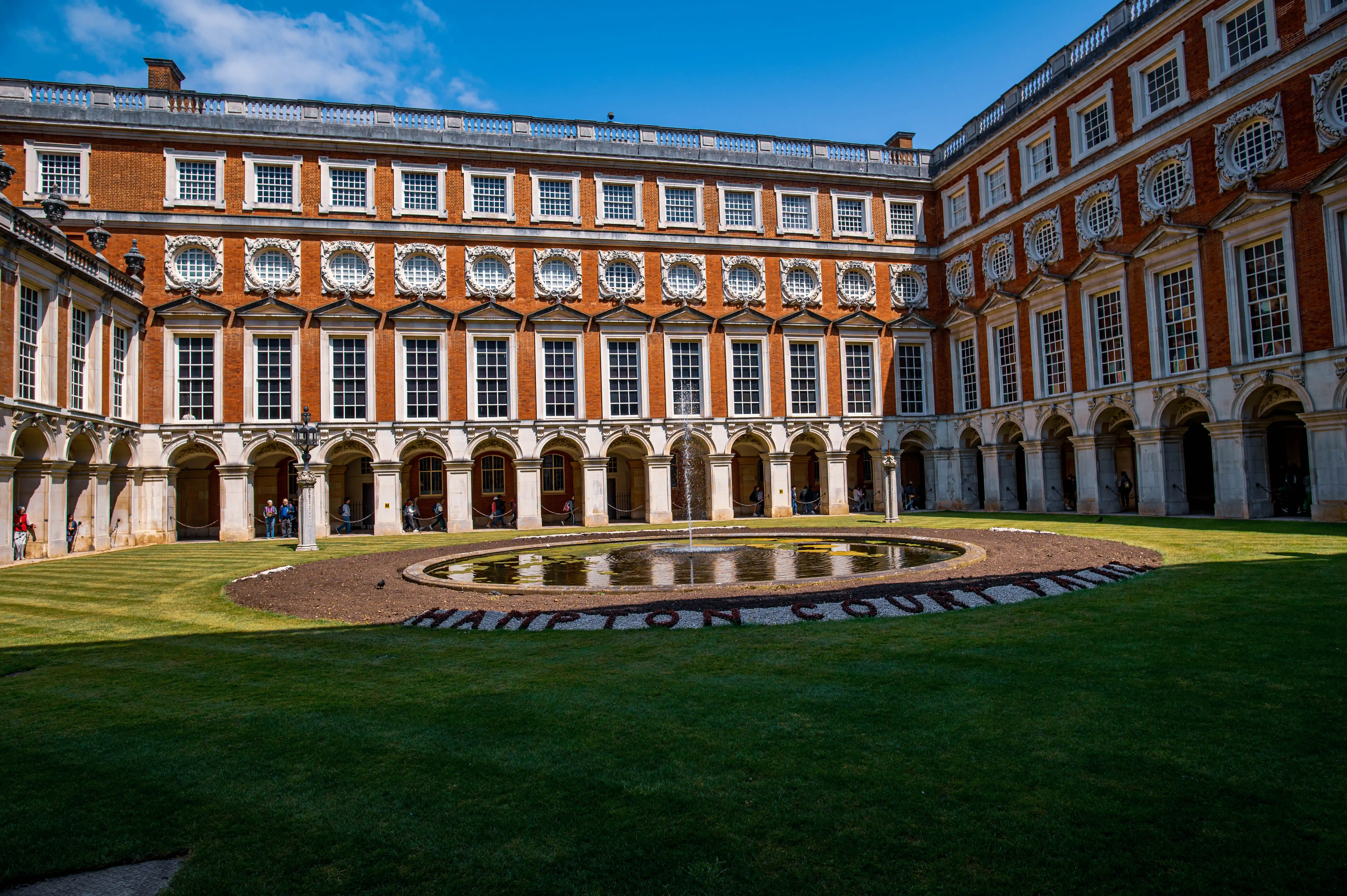
A sunlit courtyard of a historic palace with red brick buildings, white-trimmed windows, arched colonnades, a central circular fountain, and manicured green lawns.
Hampton Court Palace Courtyard
photo by
©www.mgaylard.co.uk.
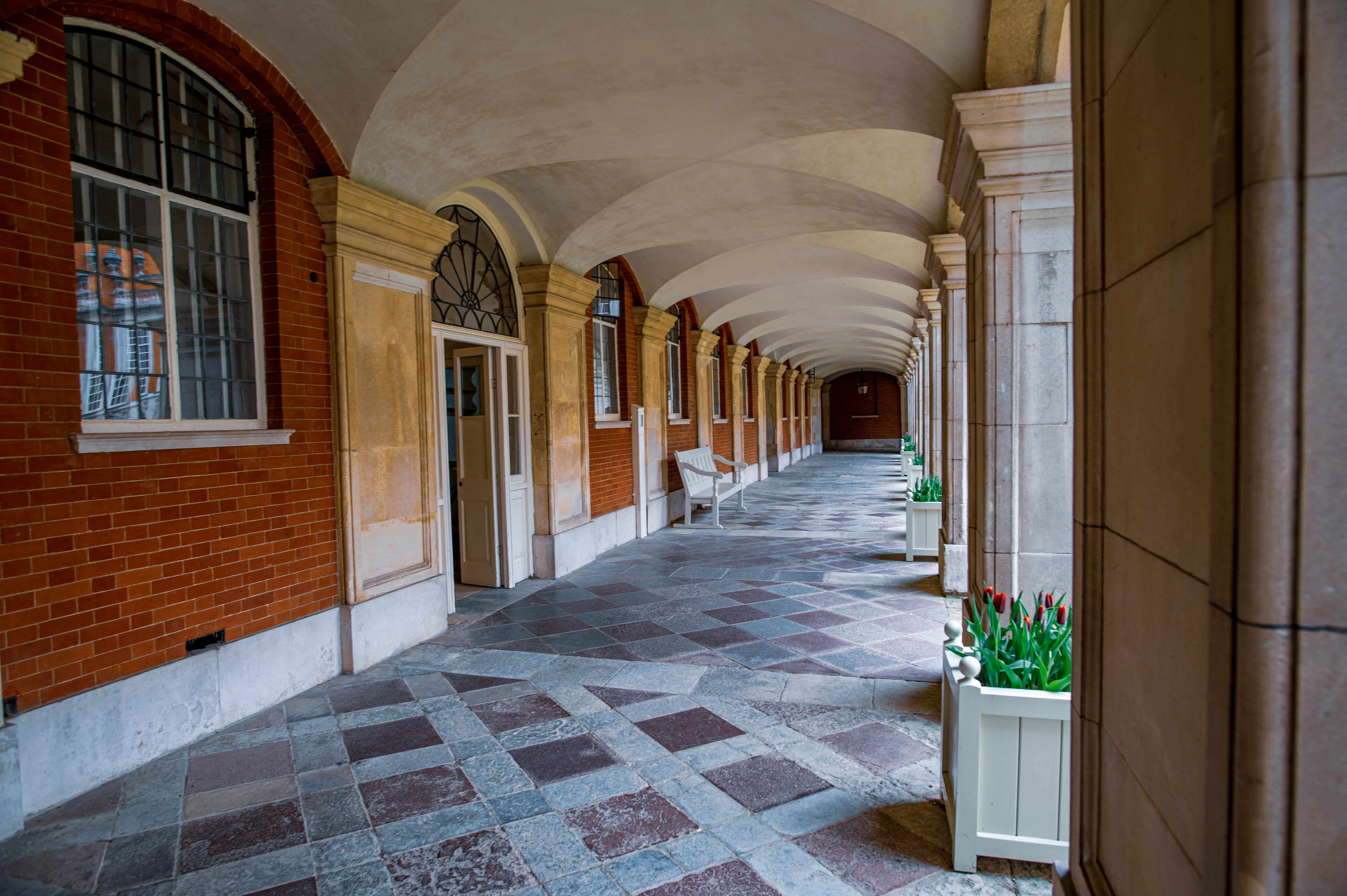
A symmetrical view down a stone-floored cloister walkway, with arched stone columns on the right and red brick walls with windows on the left. White planters filled with red tulips add a touch of colour.
Fountain Court Colonnade
photo by
©www.mgaylard.co.uk.
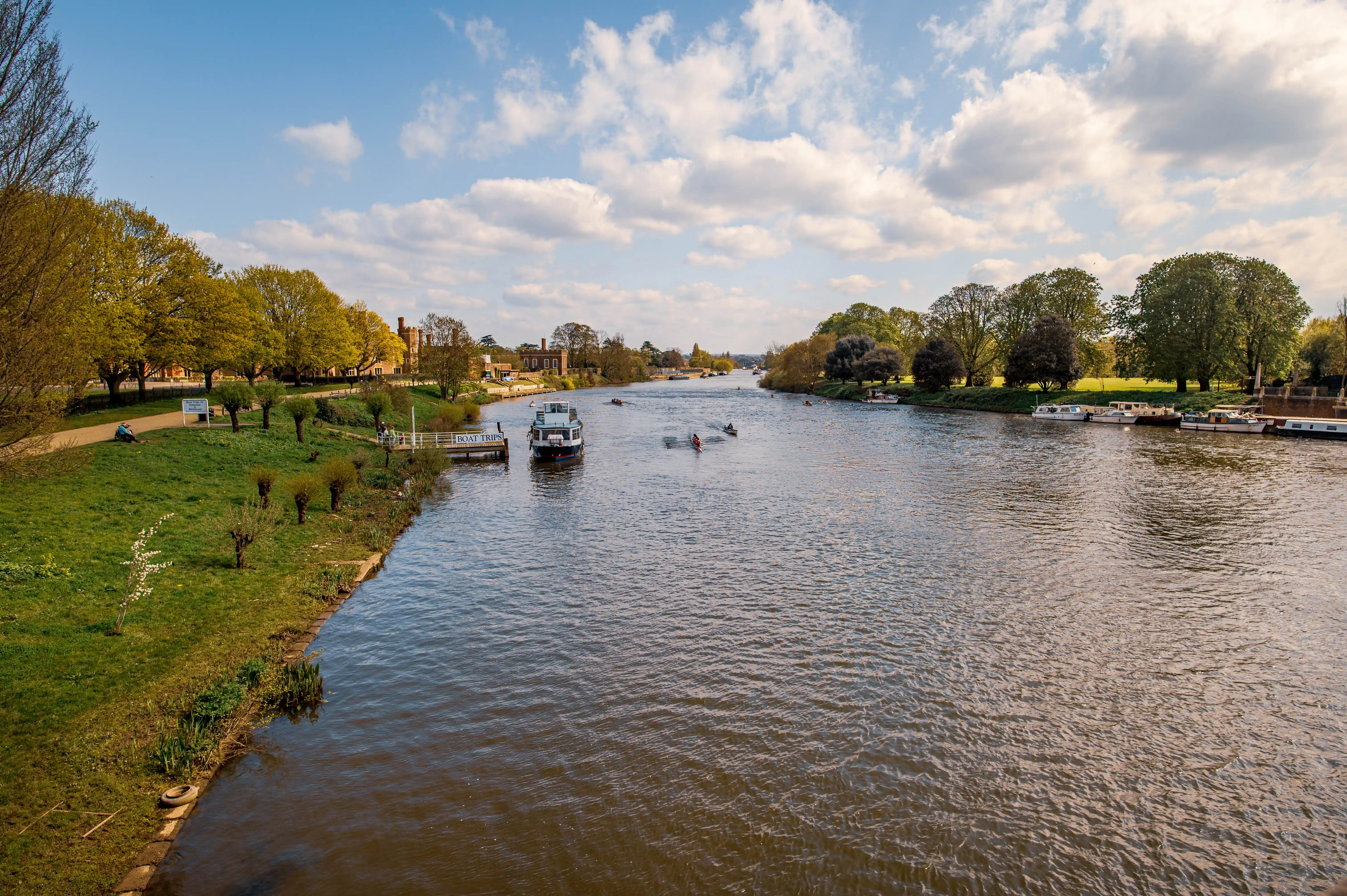
A wide river flows through a green landscape with trees and buildings on the banks. A boat is docked on the left, and kayakers are paddling on the water. Houseboats are moored on the right bank.
River Scene with Pleasure Boat and Kayakers
photo by
©www.mgaylard.co.uk.
Open the full set flickr button this page
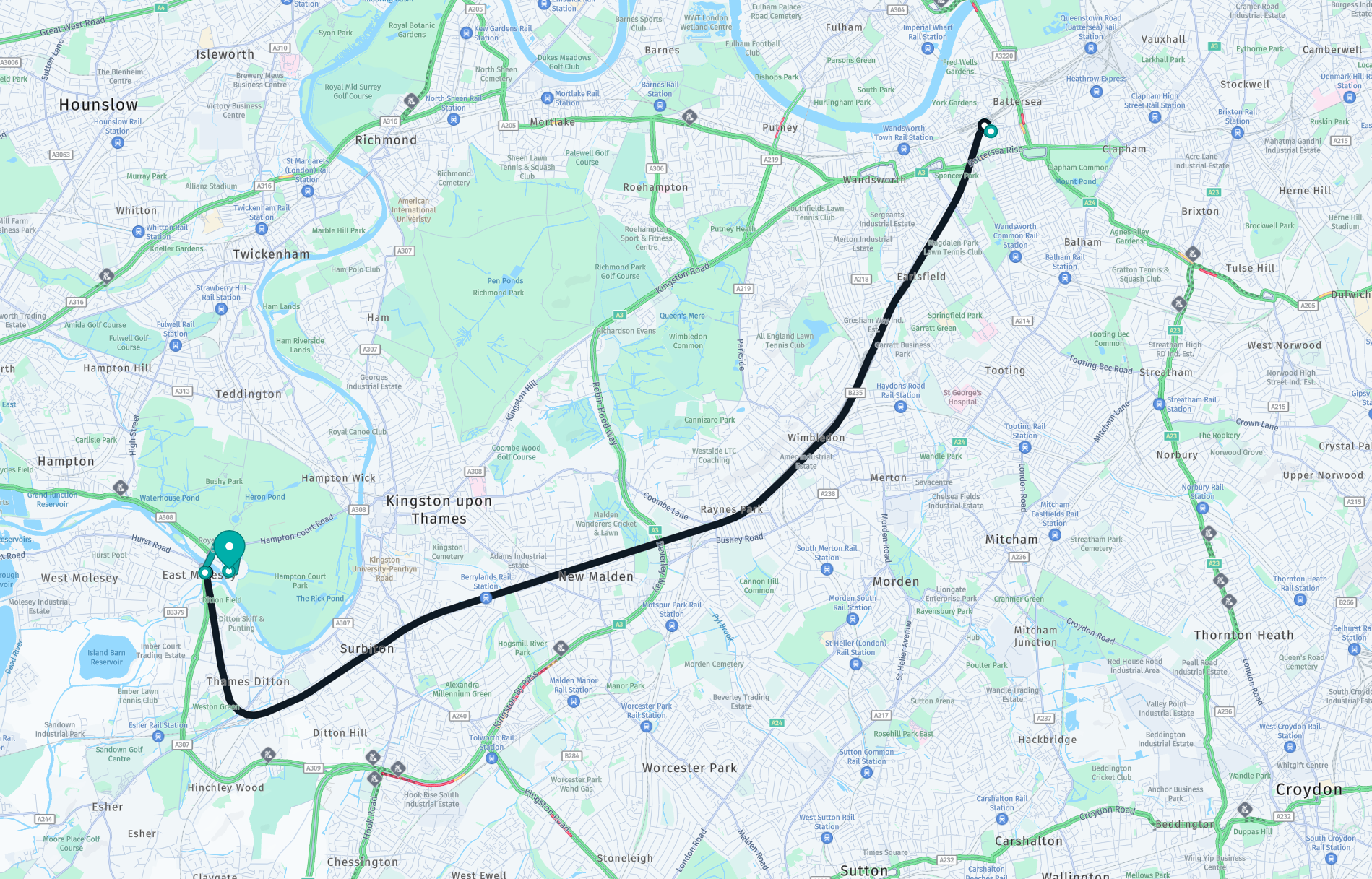
map for location

Getting There From London (Clapham Junction)

map for location

Hampton Court Palace

Key Facts

Location: East Molesey, Surrey, England (Greater London)

Built: 1515 (begun for Cardinal Thomas Wolsey)

Original Owner: Cardinal Thomas Wolsey (Archbishop of York)

Most Famous Resident: King Henry VIII (1528–1547)

Architectural Styles: Tudor (Gothic), English Baroque (Wren-era)

Managed By: Historic Royal Palaces (independent charity)

Notable Features: Great Hall, Chapel Royal, State Apartments, Hampton Court Maze, Tudor Kitchens, Great Vine, Fountain Court

Nickname: "The Palace of All Palaces"

Website:

Historical Significance

Hampton Court Palace was begun in 1515 by Cardinal Thomas Wolsey, the most powerful man in England after the king and a favorite of Henry VIII. Wolsey built the palace as a grand statement of his wealth and influence, featuring magnificent state rooms, ornate gardens, and lavish entertainment spaces that rivaled the king’s own palaces. However, Wolsey’s fall from grace came in 1528, when his failure to secure the annulment of Henry VIII’s marriage to Catherine of Aragon led the king to seize the palace for himself.

Under Henry VIII, Hampton Court became one of the most important royal residences in England. The king undertook massive building works, creating the magnificent Great Hall with its hammerbeam roof, the Chapel Royal, and the vast Tudor kitchens capable of feeding a court of over 600 people twice a day. The palace was the scene of many pivotal Tudor events, including the birth of Henry’s long-awaited son, the future Edward VI, in the Queen’s Apartments, and the fall and arrest of Catherine Howard, the king’s fifth wife, whose ghost is said to haunt the Haunted Gallery.

The palace continued to play a significant role under the Stuart monarchs. It was at Hampton Court that James I held his famous Hampton Court Conference in 1604, which led to the commissioning of the King James Bible. During the English Civil War, the palace escaped destruction, and after the Restoration of the monarchy in 1660, it became a favored residence of Charles II, who built new State Apartments for himself and his queen.

The palace’s most dramatic transformation came under William III and Mary II, who commissioned Sir Christopher Wren in 1689 to rebuild the Tudor palace in the English Baroque style, to rival the Palace of Versailles in France. Wren’s design replaced much of the Tudor state apartments with the elegant Fountain Court and the magnificent King’s and Queen’s State Apartments, which remain among the finest examples of Baroque architecture in Britain. The result is the palace’s unique architectural blend—a Tudor palace joined seamlessly to a Baroque one.

Under the Georgian monarchs, Hampton Court ceased to be a royal residence, and in 1838, Queen Victoria opened the palace to the public, beginning its modern role as a heritage site. In 1986, a major fire damaged the King’s Apartments and the Wolsey Closet, leading to an extensive restoration program that was completed in the 1990s. Today, the palace is managed by Historic Royal Palaces, an independent charity, and continues to welcome millions of visitors each year, standing as a living record of over 500 years of British royal history.

Notice

Text generated by Mistral AI , www.xprivo.com , Microsoft CoPilot , and AI Image Describer
To the top
Powered by w3.css. The images are all stored on link to www.gaylard.co.uk Photostream on Flickr   This website is hosted by link to 123Reg Web Hosting