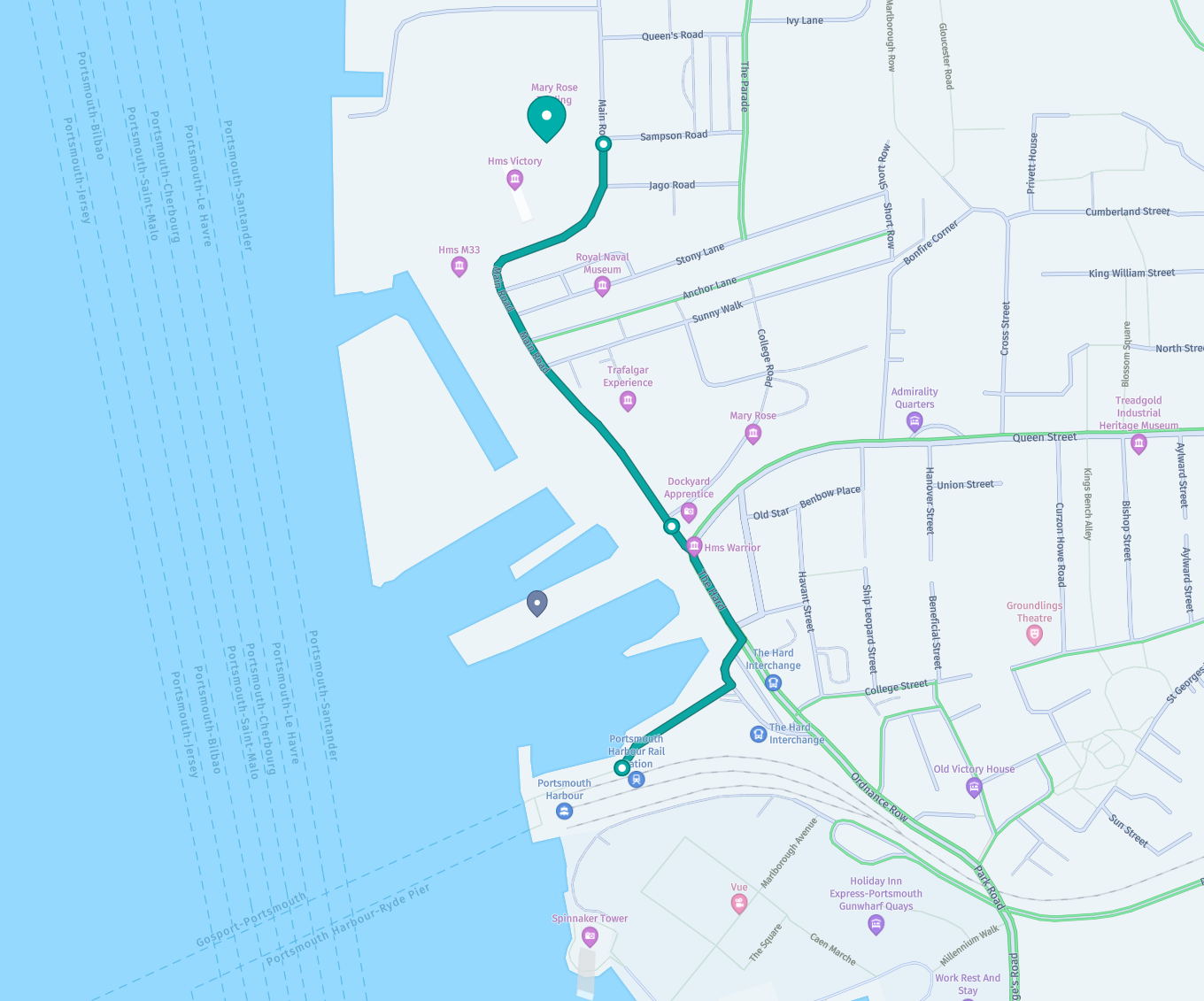
Portsmouth Historic Dockyard

Portsmouth Historic Dockyard

Victory GateHM Naval BasePortsmouth,   PO1 3LJ,   United Kingdom

Portsmouth Historic Dockyard is a world-class maritime heritage destination located in Portsmouth, Hampshire. Home to some of the most famous ships in British naval history, including HMS Victory, HMS Warrior 1860, and the Mary Rose Museum, the dockyard offers visitors a unique opportunity to explore over 800 years of naval history. The site also features interactive exhibits, the Royal Navy Museum, and the modern Action Stations experience, making it a must-visit destination for history enthusiasts and families alike.

Key Features and Attractions

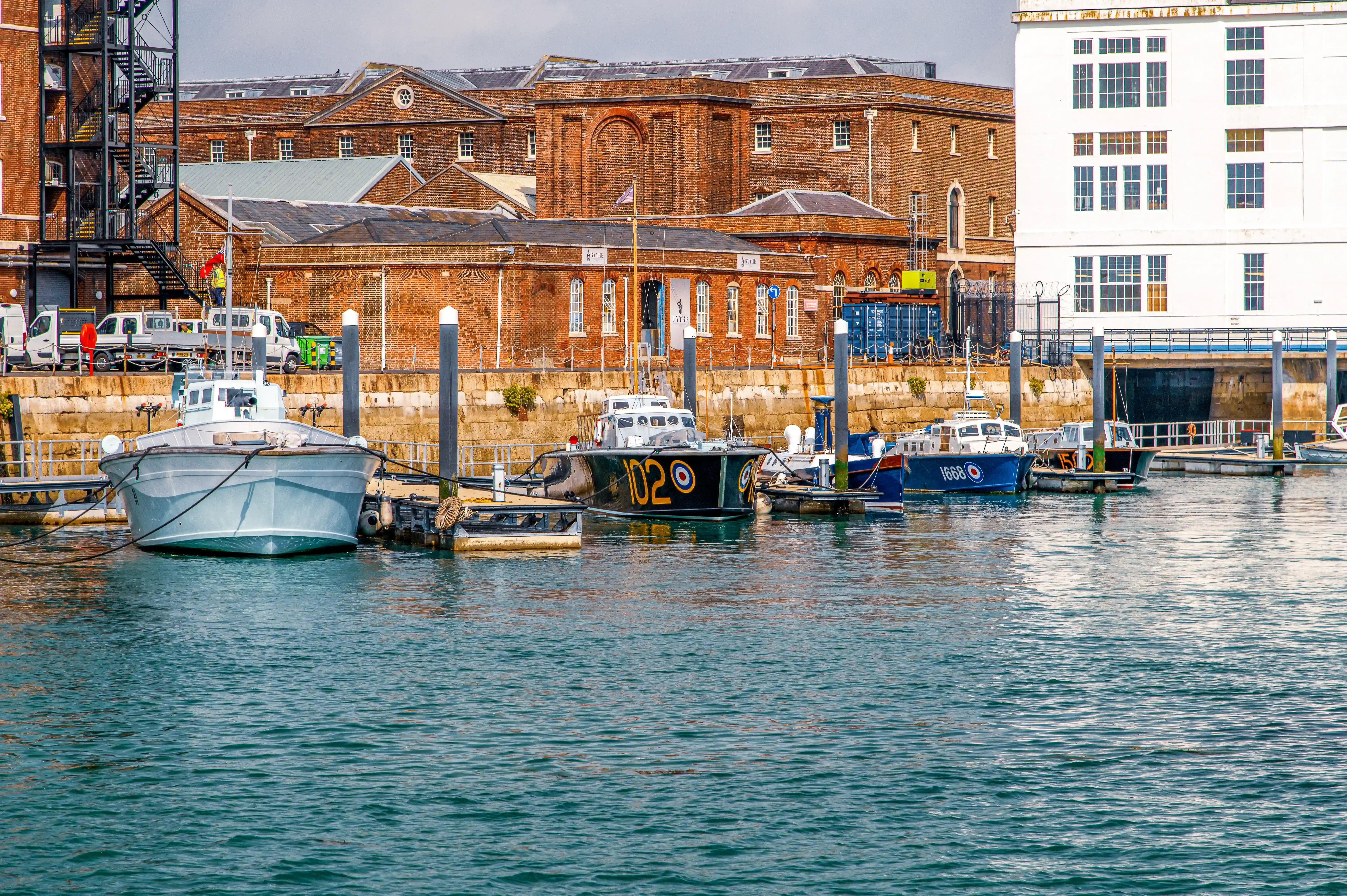
The image depicts a harbor scene with several boats docked at a pier. The boats are moored to wooden and metal posts, and the water is calm. In the background, there are brick buildings with large windows, and a bridge spans across the water. The boats have various markings and numbers on them, and the overall atmosphere suggests a quiet, possibly historic, maritime setting.
HSL 102 — RAF High-Speed Launch (Air Sea Rescue Launch) ‐ photo by ,
©www.mgaylard.co.uk.

Boathouse 4

Boathouse 4 at Portsmouth Historic Dockyard is one of the most important small-craft heritage centres in the UK — a living workshop, exhibition space, and home to several National Historic Fleet–listed vessels. It combines active boatbuilding, conservation, interpretation, and public access in a single 1930s modernist structure.
The image depicts an indoor shipbuilding or restoration workshop with several boats in various stages of construction or repair. The workshop is spacious with high ceilings and large windows, allowing natural light to illuminate the area. There are scaffolding structures and numerous wooden planks scattered around, indicating active work. The boats are positioned on supports, and there are tools and materials visible, suggesting ongoing projects. The overall setting appears to be a museum or a specialized facility dedicated to preserving maritime history.
Inside Boathouse #4 ‐ photo by ,
©www.mgaylard.co.uk.
The image depicts an indoor shipyard or museum with multiple boats under construction or restoration. The boats are positioned on wooden supports and scaffolding, indicating ongoing work. In the background, there is a modern building with large windows labeled 'Restaurant & Bar', suggesting that the location is part of a larger complex that includes dining facilities. The setting appears to be well-lit and spacious, with industrial elements such as yellow structural supports and cranes.
Inside Boathouse #4 ‐ photo by ,
©www.mgaylard.co.uk.
he image shows two vintage signs mounted on a yellow metal structure. The upper sign reads 'SUCCESS TO H.M.S. RHYL' with an illustration of a horse and a crest. The lower sign reads 'SUCCESS TO H.M.S. NUBIAN' with an illustration of men, flags, and a ship.
SUCCESS TO H.M.S. NUBIAN ‐ photo by ,
©www.mgaylard.co.uk.
The image depicts an indoor space, likely a museum or exhibition hall, featuring a large, suspended boat as the central exhibit. The boat is hung from the ceiling, showcasing its hull and sails. The structure of the building is visible, with a high, glass-paneled roof allowing natural light to illuminate the exhibit. There are people on a balcony or walkway around the exhibit, observing the boat. The overall atmosphere suggests a historical or maritime-themed display.
suspended boat ‐ photo by ,
©www.mgaylard.co.uk.
The image depicts a boatyard or shipyard where traditional wooden boats are being built or repaired. There are two boats visible, one of which is named 'Wilson Pickett' and is adorned with intricate designs. The scene includes various tools, materials, and wooden components scattered around, indicating active construction or restoration work. A group of people is gathered inside a glass structure, possibly observing or learning about the boat-building process. The environment suggests a blend of traditional craftsmanship and modern educational or tourist activities.
Wilson Pickett ‐ photo by ,
©www.mgaylard.co.uk.
The image depicts a bustling boatyard or shipyard where multiple boats are under construction or repair. The scene is filled with various stages of boat building, including wooden frames and partially completed hulls. There are several workers engaged in different tasks, and the area is equipped with scaffolding, tools, and materials necessary for boat construction. The setting appears to be indoors, with large structural supports and overhead cranes visible. The environment suggests a traditional or historical boatyard, possibly part of a museum or educational exhibit.
boats are under construction or repair ‐ photo by ,
©www.mgaylard.co.uk.
The image depicts a historical boat displayed in a museum setting. The boat is mounted on a support structure, showcasing its hull and design. The boat has a black exterior with wooden accents and a prominent emblem on the bow. The museum environment features large windows, allowing natural light to illuminate the exhibit. Various other maritime artifacts and displays are visible in the background.
Elegant Steam Launch ‐ photo by ,
©www.mgaylard.co.uk.
The image shows a boat displayed indoors, likely in a museum or exhibition setting. The boat is supported by wooden blocks and is positioned on a wooden floor. The setting features large windows that allow natural light to illuminate the boat. The boat has a classic design with a dark blue hull and a light-colored upper section. The interior and details of the boat are visible, including windows and various fittings.
A Classic Cruiser ‐ photo by ,
©www.mgaylard.co.uk.
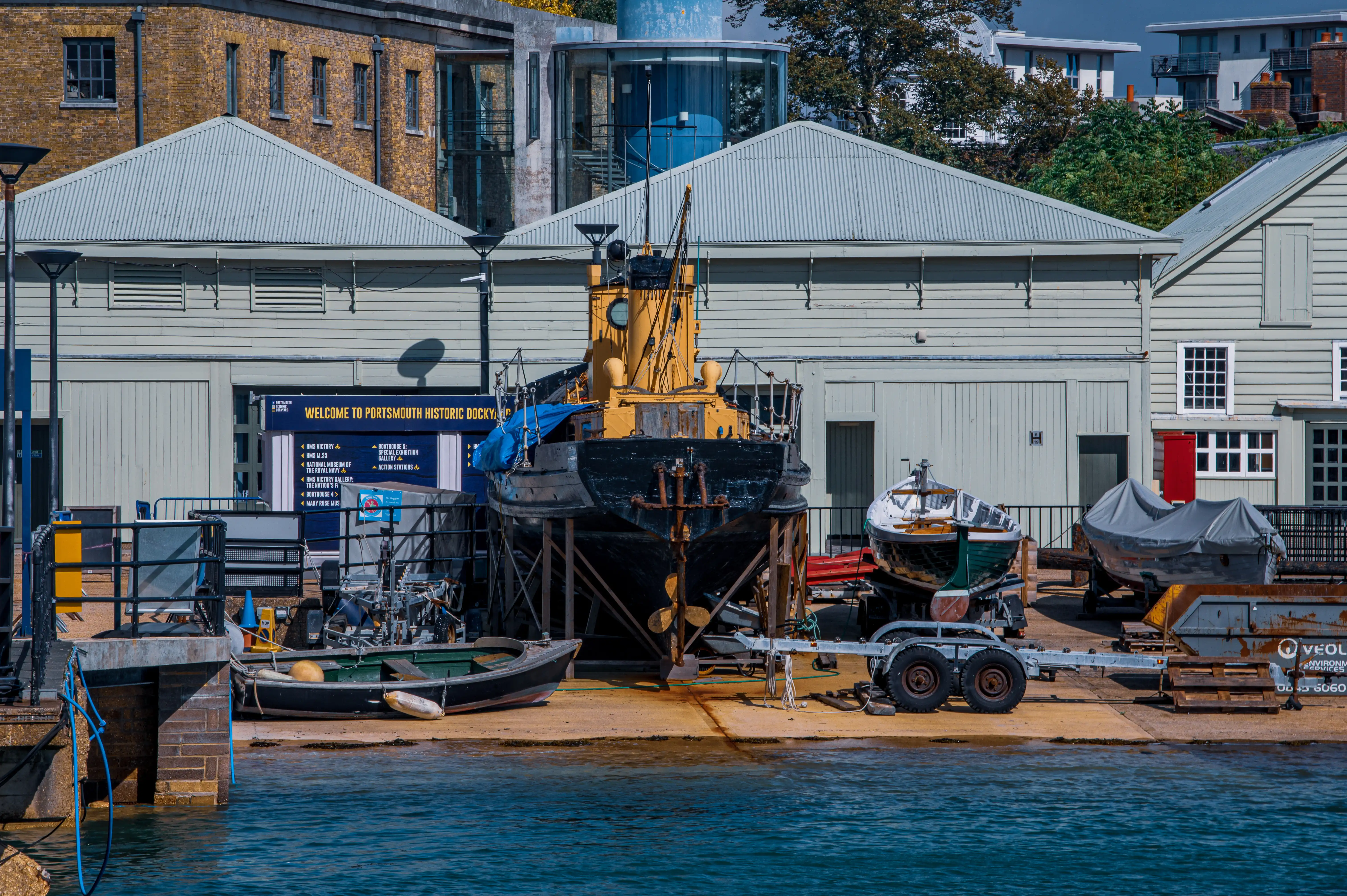
The image depicts Portsmouth Historic Dockyard, featuring various boats and a large ship under restoration or display. The dockyard buildings and other historic structures are visible in the background, along with a sign welcoming visitors to the site. The area appears to be a maritime museum or a historic site dedicated to preserving naval history.
VIC 56 — a Clyde-built steam “puffer” ‐ photo by ,
©www.mgaylard.co.uk.
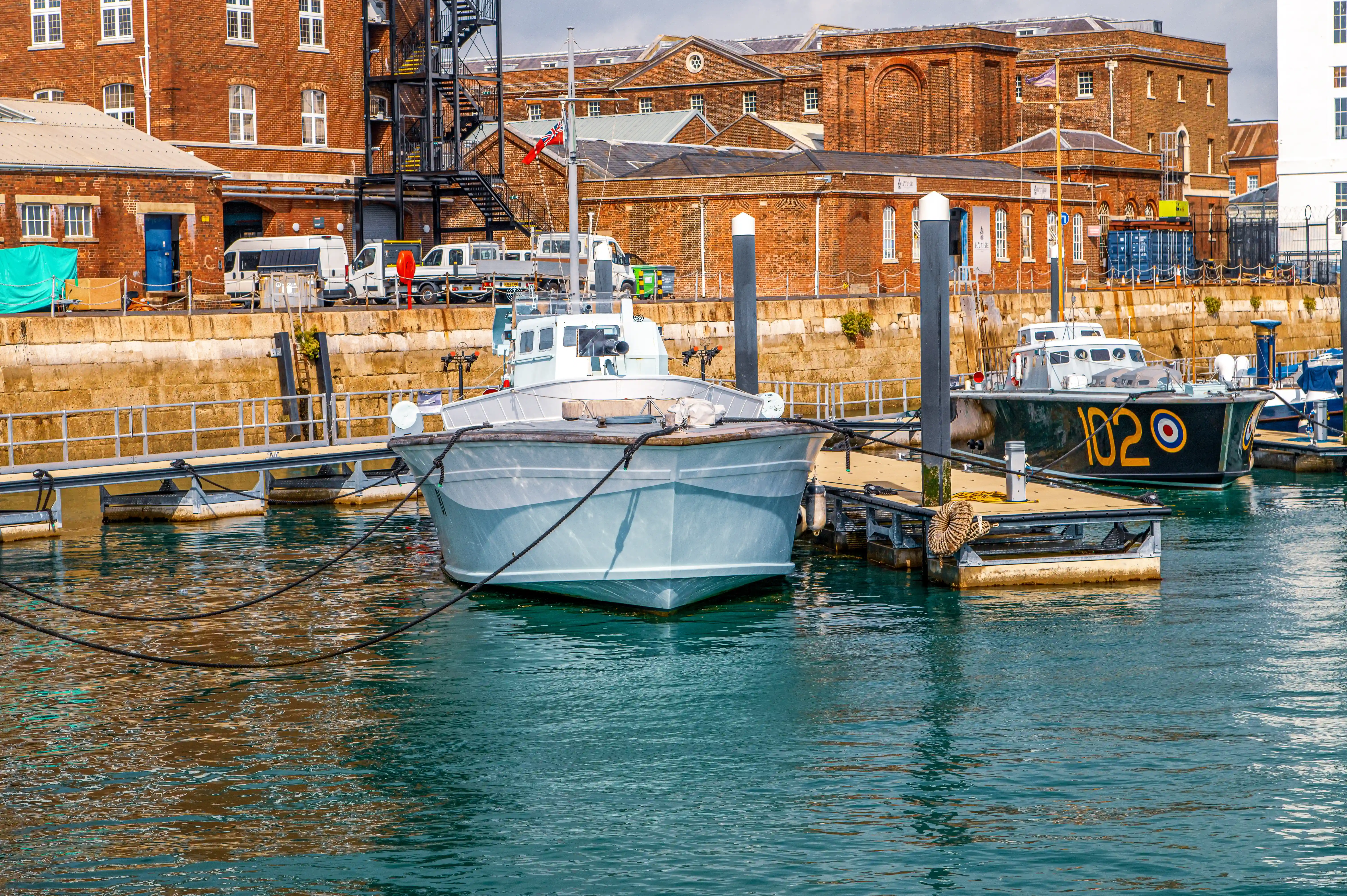
The image depicts a harbor scene with several boats docked at a pier. The boats are moored to concrete piers with ropes. In the background, there are historic brick buildings with large windows and some vehicles parked along the quay. The water in the harbor is calm, reflecting the boats and buildings. The overall atmosphere suggests a quiet, possibly commercial or industrial port area.
Boathouse 4 Jetty ‐ photo by ,
©www.mgaylard.co.uk.
The image depicts a harbor scene with several boats docked at a pier. In the background, there are historic brick buildings with large windows and some modern elements like a fire escape on the left side. The water is calm, and the overall atmosphere suggests a quiet, possibly industrial or maritime area.
Boathouse 4 Jetty ‐ photo by ,
©www.mgaylard.co.uk.
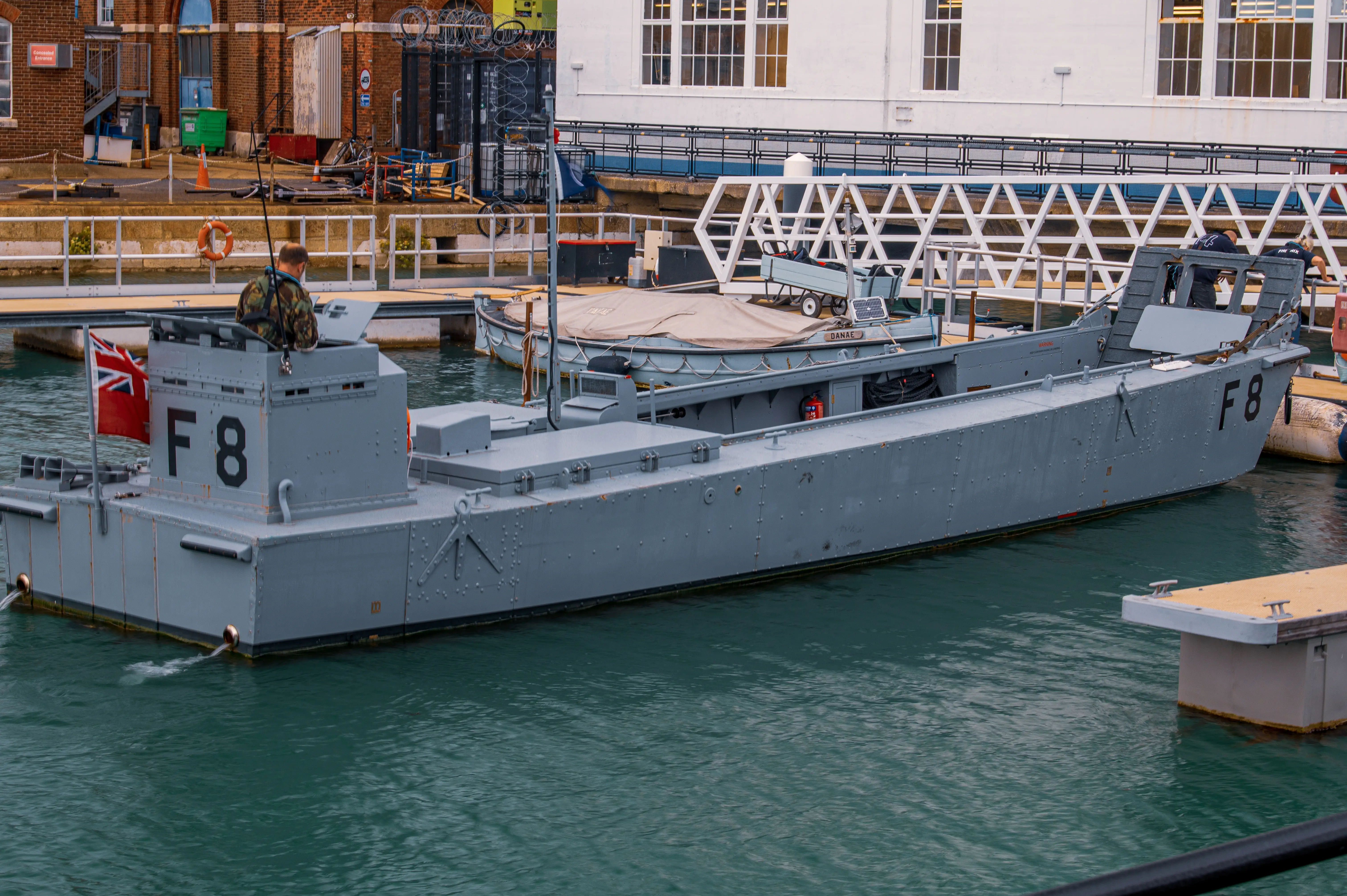
The image depicts a grey, military-style landing craft docked at a waterfront facility. The craft is marked with the identification 'F8' and features a person in camouflage clothing on board. The surrounding area includes other boats, a dock, and a building with large windows in the background.
Landing Craft Foxtrot 8 — a D-Day–era landing craft ‐ photo by ,
©www.mgaylard.co.uk.

Boathouse 4

Boathouse 4 is a 1938–40 Royal Navy boatbuilding facility, restored and reopened as a free public attraction. It houses:

  • A working boatbuilding floor with gantry cranes still in use
  • The world’s premier collection of 20th-century military powerboats
  • A heritage pontoon offering trips on restored craft
  • The Forgotten Craft exhibition on small naval vessels
Boathouse 4 contains several significant small craft, including vessels on the National Historic Fleet:
  • HSL 102 — RAF High-Speed Launch, one of the fastest British wartime rescue craft
  • Landing Craft Foxtrot 8 — a D-Day–era landing craft
  • VIC 56 — a Clyde-built steam “puffer”
Text generated by Microsoft CoPilot
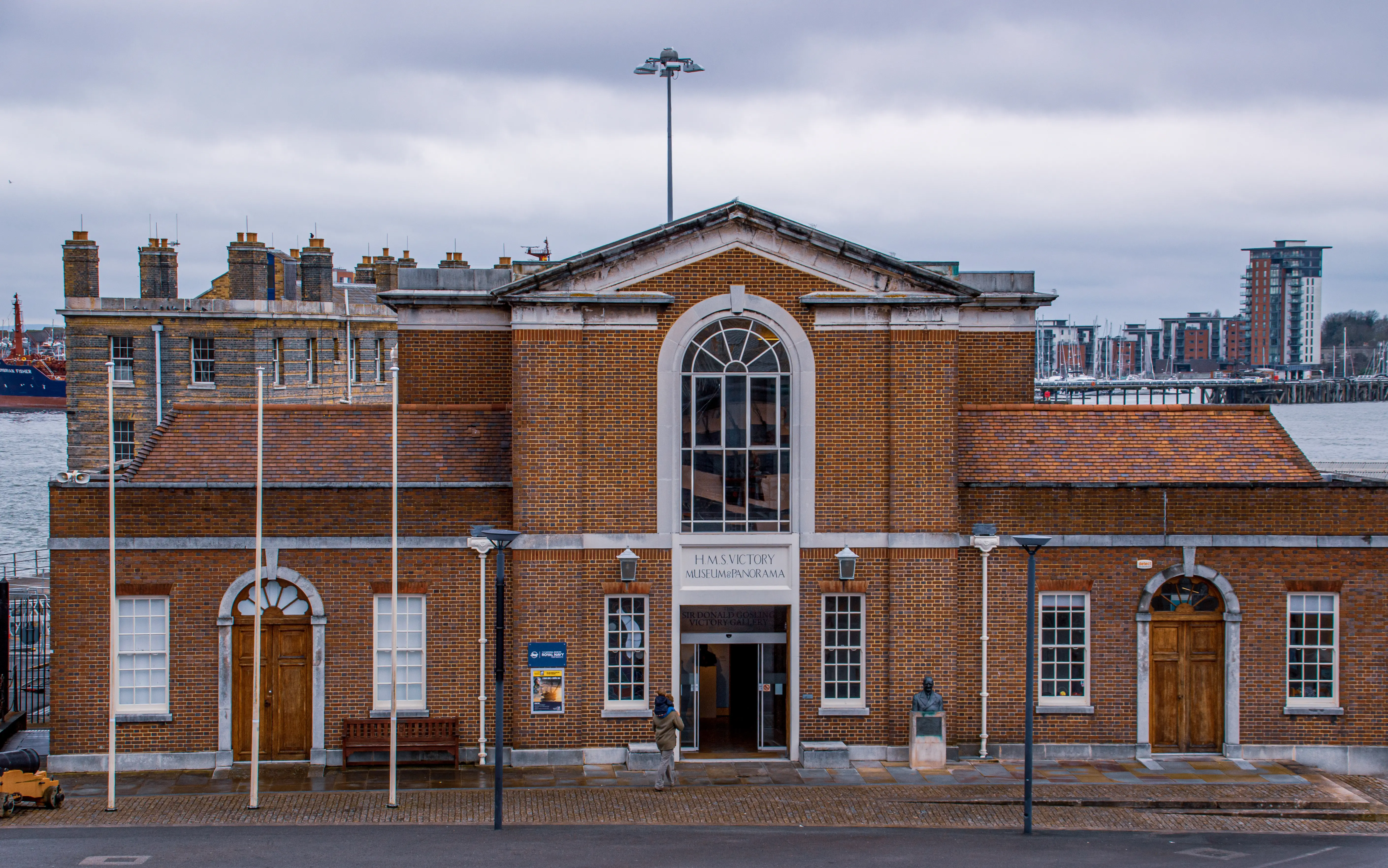
The image depicts a historic brick building located by the waterfront, identified as the HMS Victory Museum & Panorama. The structure features a prominent arched window and several wooden doors. A statue stands near the entrance, and the surrounding area includes modern buildings and a harbor with ships. The sky is overcast, suggesting a cloudy day.
HMS Victory Museum & Panorama ‐ photo by ,
©www.mgaylard.co.uk.
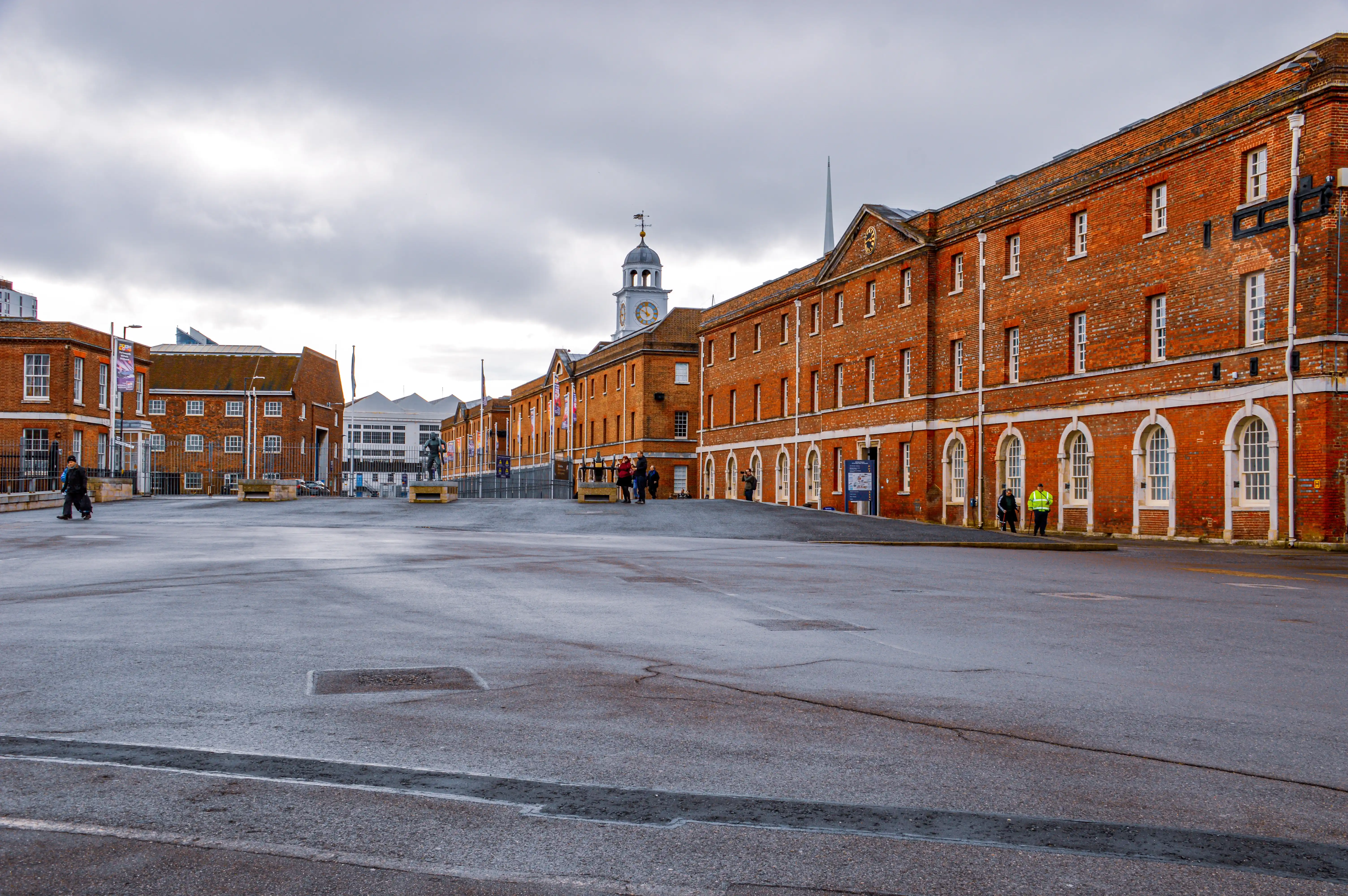
The image depicts a large, historic brick building with a clock tower, likely a former industrial or commercial structure now repurposed for modern use. The area is spacious and relatively empty, with a few people walking around. The sky is overcast, suggesting it might be a cold or rainy day. The architecture features large windows and arched doorways, giving it a classic and sturdy appearance. The overall scene is quiet and serene, with a sense of historical significance.
Main Road ‐ photo by ,
©www.mgaylard.co.uk.
The image depicts an old, rusted freight train car situated in an industrial area. The train car shows significant signs of wear and tear, with peeling paint and rusted metal. It is surrounded by a fenced-off area with metal barriers and various industrial equipment in the background. The scene suggests a location that may be under construction or renovation. The overall atmosphere is one of decay and industrial activity.
Railway Wagon at No 1 Dock ‐ photo by ,
©www.mgaylard.co.uk.
The image depicts an old, rusty railway wagon with the letters 'SIR' prominently displayed on its side, situated behind a metal fence and barbed wire. The wagon is marked with the number '76145' and has a capacity of '10 tons'. The background features a brick building with large windows and industrial elements, suggesting an industrial or historical setting.
Railway Wagon at No 1 Dock ‐ photo by ,
©www.mgaylard.co.uk.

National Museum of the Royal Navy

The image shows a large, historical naval gun mounted on a swivel base, displayed indoors near a large window. The gun is positioned to point outside, and there is an informational placard next to it. The background outside the window features brick buildings and a person walking on a paved area.
QF 4-inch Mk VI ‐ photo by ,
©www.mgaylard.co.uk.
The image depicts an indoor display of a naval gun mounted on a rotating platform. The gun is positioned in front of a large arched window, which offers a view of a brick building and railway tracks outside. The display includes informational signage, and the setting appears to be part of a museum or exhibition space dedicated to naval history.
Bofors 40mm Mk I ‐ photo by ,
©www.mgaylard.co.uk.
The image depicts an old naval gun mounted on a rotating platform, displayed indoors near a large window with a view of a brick building and a street outside. The gun is accompanied by an informational placard, and there is a sign for 'The Babcock' visible in the background.
View of location ‐ photo by ,
©www.mgaylard.co.uk.
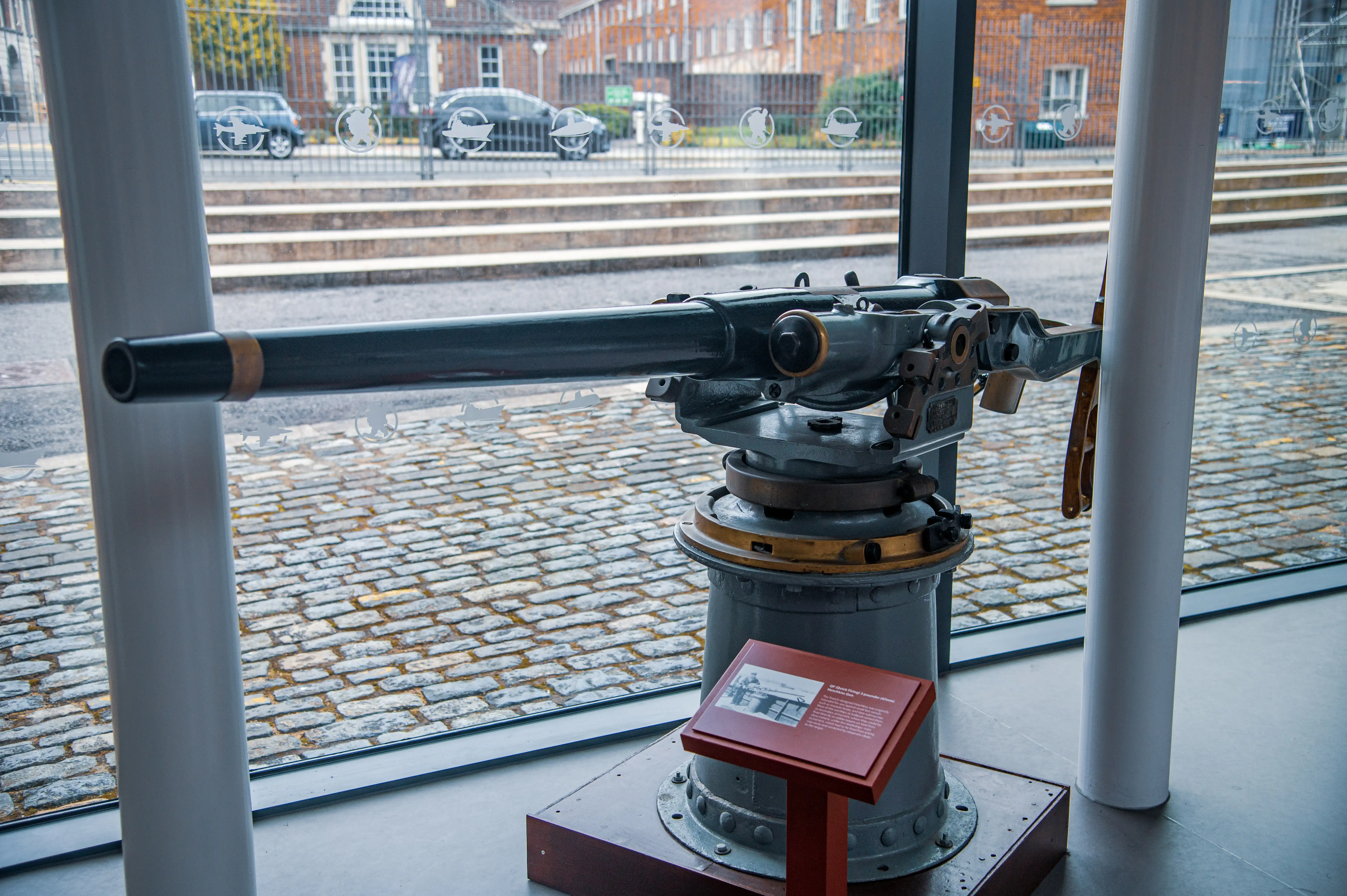
The image shows a historical machine gun mounted on a tripod, displayed indoors near a window with a view of a cobblestone street and buildings outside. The machine gun is accompanied by an informational plaque, suggesting it is part of a museum exhibit.
QF Hotchkiss Gun 3-Pounder ‐ photo by ,
©www.mgaylard.co.uk.

HMS Victory Museum (Ships Figureheads)

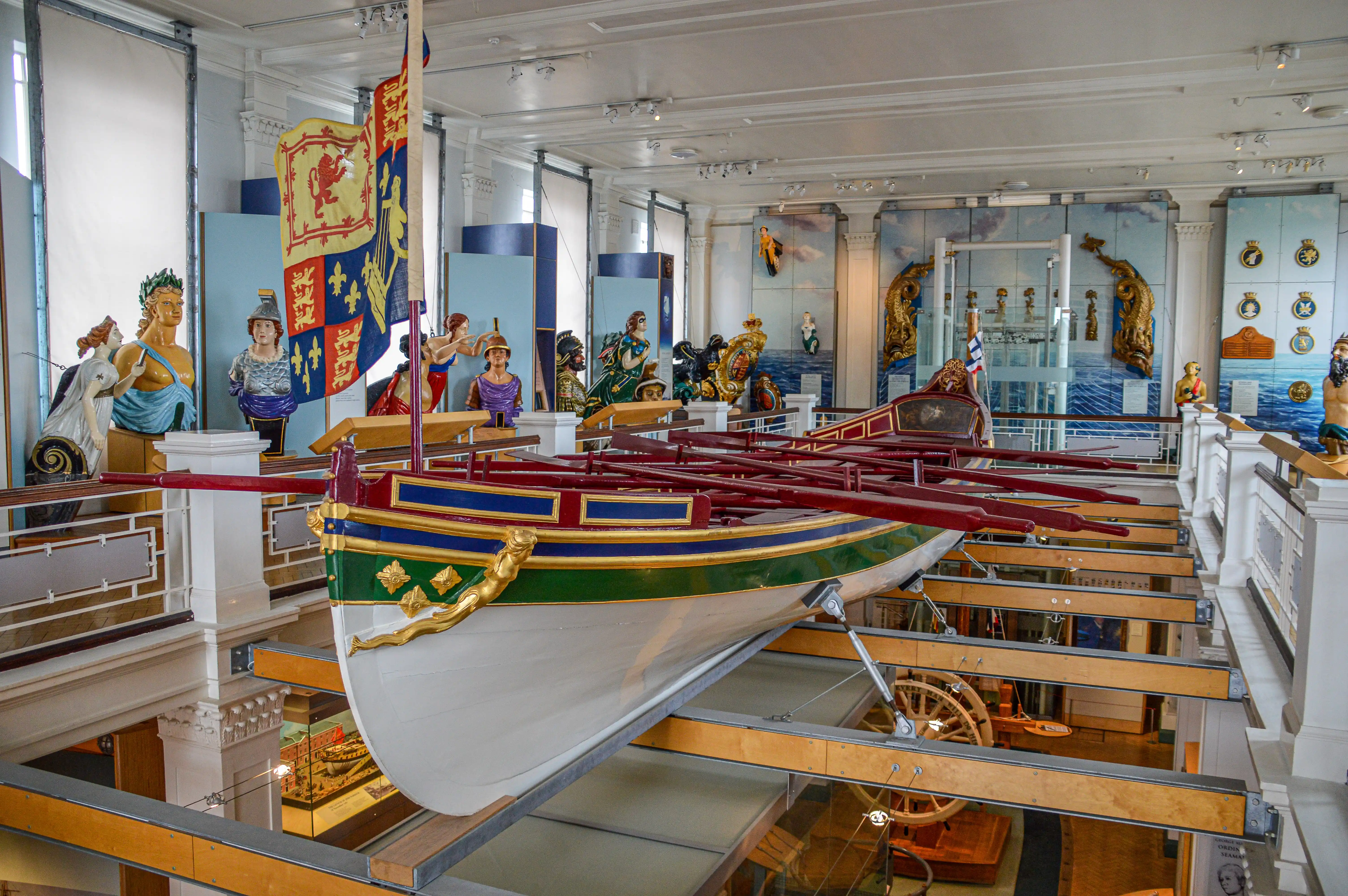
The image depicts a museum exhibit featuring a detailed model of an old sailing ship. The model is intricately designed with vibrant colors and gold accents, showcasing the ship's structure and decorations. Surrounding the ship are various maritime artifacts and statues, including figures in historical costumes and naval uniforms. The exhibit is well-lit, with spotlights highlighting different sections of the display. The background features blue and white wall panels, adding to the nautical theme of the exhibit.
Maritime Museum Display ‐ photo by ,
©www.mgaylard.co.uk.
The image shows a detailed and ornate coat of arms with a crown on top, likely representing a royal or noble lineage. The coat of arms features intricate gold detailing and includes several heraldic symbols and colors. The central shield is divided into multiple sections, each containing different emblems. Surrounding the shield are additional decorative elements and a banner with text. The coat of arms is displayed on a pedestal with a plaque that provides context about its historical significance.
HM Yacht Victoria and Albert II ‐ photo by ,
©www.mgaylard.co.uk.
The image depicts a statue of a person with a youthful face, curly hair, and a red draped garment over their shoulder. The statue appears to be made of a material that has been painted, with the skin tone of the person being a light brown and the hair black. The statue is likely of a significant historical or cultural figure, given the detailed craftsmanship and the careful attention to the attire and facial features.
HMS Actaeon ‐ photo by ,
©www.mgaylard.co.uk.
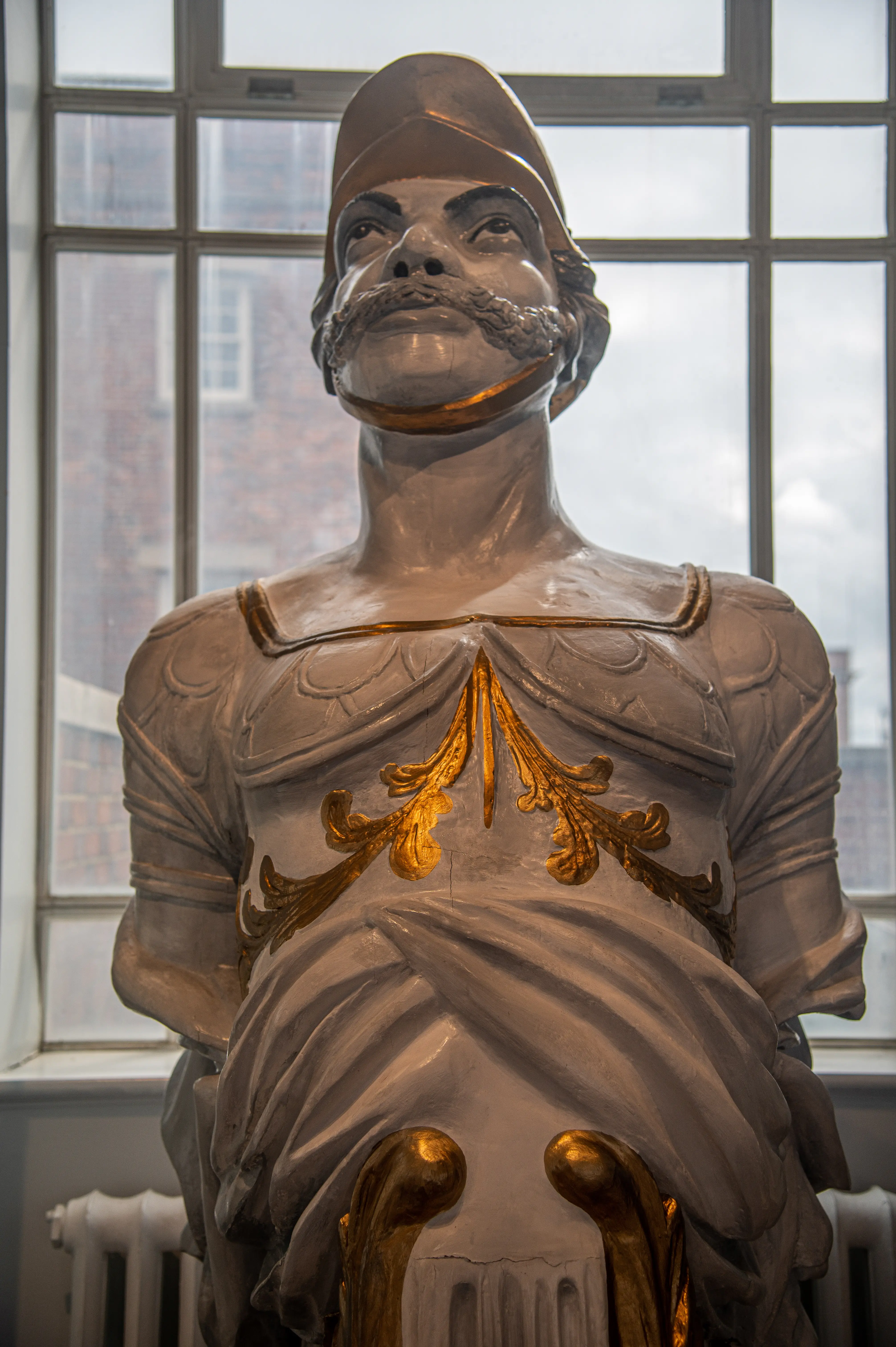
The image depicts a statue of a man wearing a helmet and a shirt with gold detailing. The statue is displayed indoors, near a window with a view of buildings outside. The man's face has distinct features, including a mustache and goatee
HMS Apollo ‐ photo by ,
©www.mgaylard.co.uk.
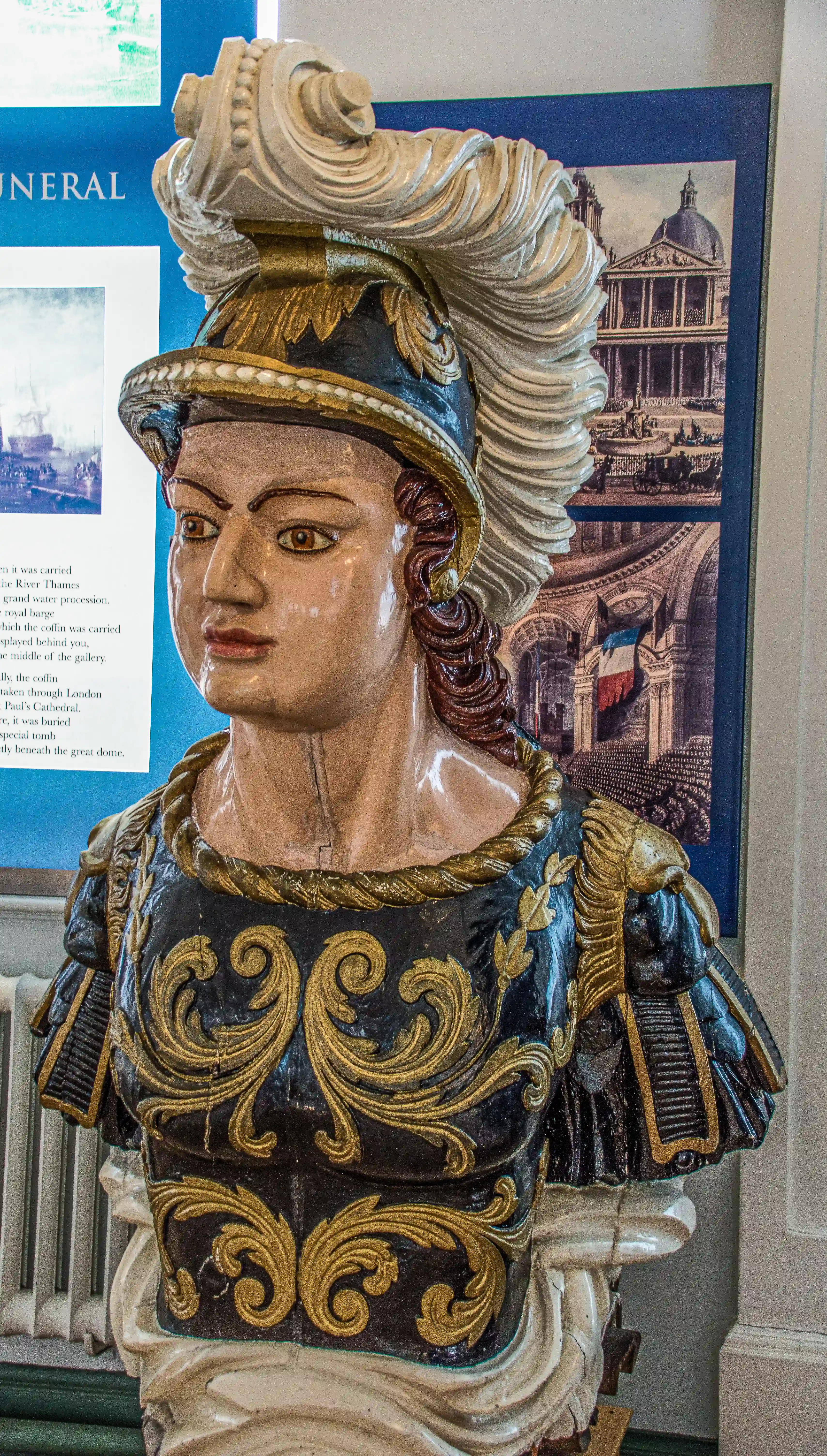
The image shows a detailed statue of a figure in elaborate armor, likely from a historical or ceremonial context. The statue features intricate designs and patterns on the armor, with a prominent helmet adorned with a large plume. The background includes historical images and text, suggesting the statue is part of an exhibit related to a significant historical event or figure.
Bellerophon ‐ photo by ,
©www.mgaylard.co.uk.
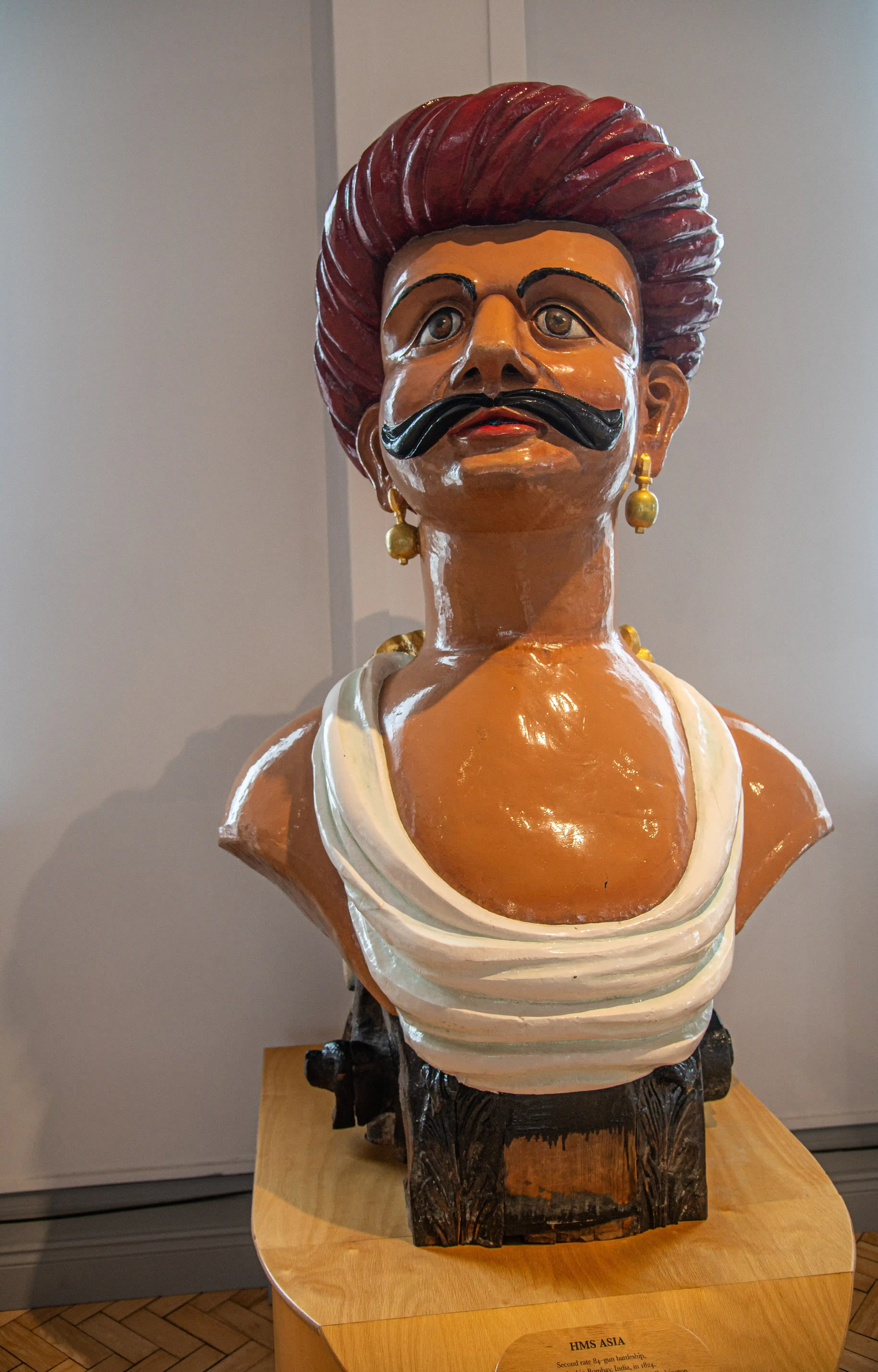
The image depicts a bust of a man with a red wig, wearing gold earrings, and adorned with a white cloth around his neck. The bust is displayed on a wooden pedestal with a plaque that reads 'HMS ASIA' and mentions a second-rate 98-gun ship launched in 1824.
Asia ‐ photo by ,
©www.mgaylard.co.uk.
The image depicts a museum exhibit featuring a large, ornate figurehead of a black eagle with outstretched wings, adorned with a golden crown. Next to it are two elaborate shields with royal insignia, one predominantly gold and the other bronze. The eagle figurehead is labeled 'HMS Black Eagle.' The display is set against a backdrop of a maritime scene with a statue of a woman holding a flag.
Black Eagle ‐ photo by ,
©www.mgaylard.co.uk.
The image depicts a golden sculpture of a face with a radiant, sun-like design surrounding it. The sculpture is placed on a wooden pedestal and is situated indoors, possibly in a museum or gallery setting. The background includes wooden railings and a tiled floor, with a fire extinguisher visible on the left side.
Blazer ‐ photo by ,
©www.mgaylard.co.uk.
The image depicts a statue of a woman dressed in ancient Greek or Roman attire, holding a black object, possibly a tablet or book. The statue is made of a material that appears to be painted wood or plaster, with a polished finish. The woman has curly hair and is adorned with a belt around her waist. The background suggests that the statue is displayed indoors, likely in a museum or similar setting.
Calliope ‐ photo by ,
©www.mgaylard.co.uk.
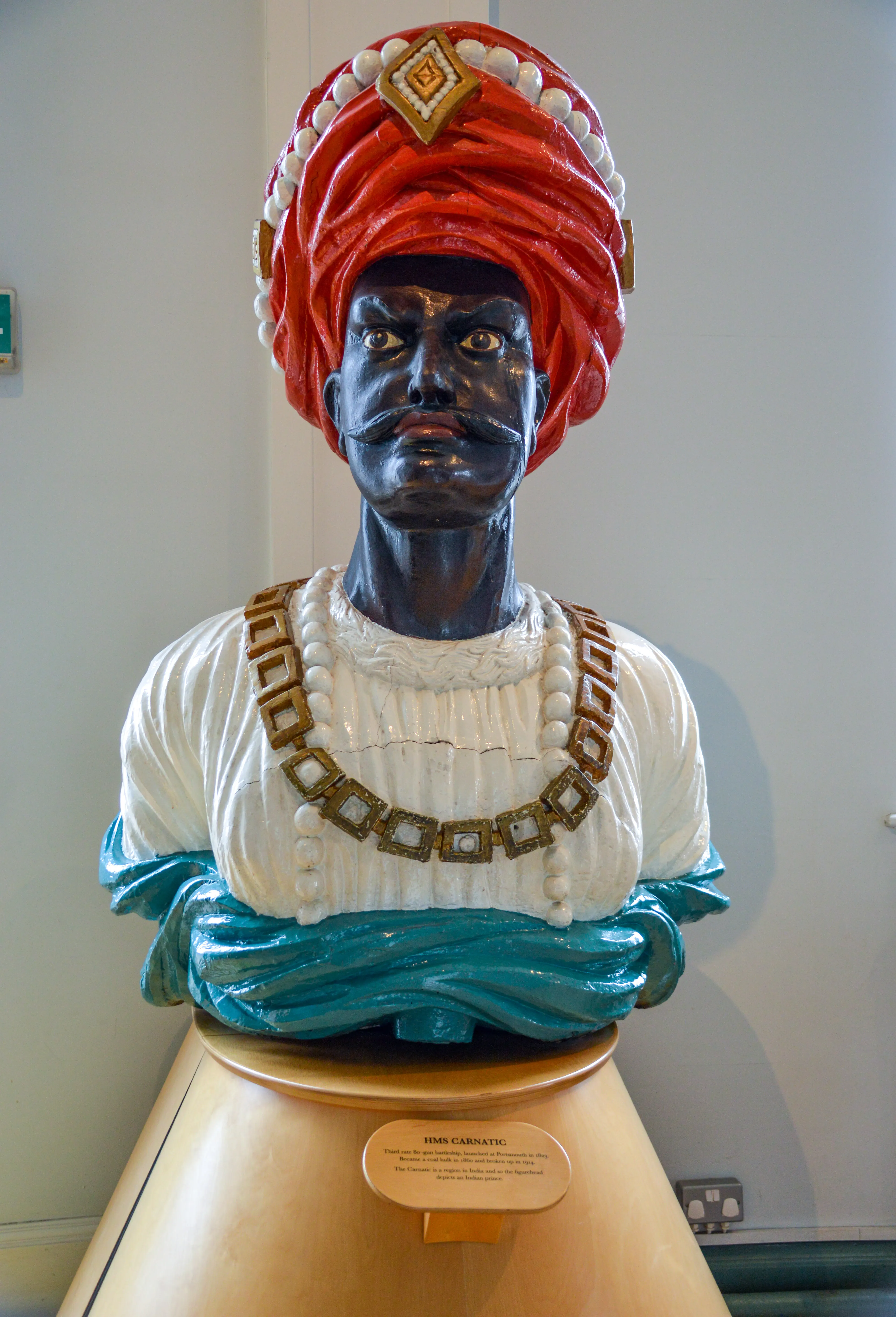
The document describes a figurehead from the HMS Carantic, a ship launched in 1822. The figurehead depicts an Indian prince, characterized by a black face with large, staring eyes, a red turban with a large jewel, a white robe adorned with a gold chain, and a blue sash. The ship was used to transport convicts to Australia and was later wrecked in 1834.
Carnatic ‐ photo by ,
©www.mgaylard.co.uk.
The image shows a statue of a woman dressed in a green and blue outfit with gold accents, holding a golden object close to her chest. She has long brown hair and is wearing a black eye mask. The statue is placed indoors near a window with other artifacts visible in the background.
Espiegle ‐ photo by ,
©www.mgaylard.co.uk.
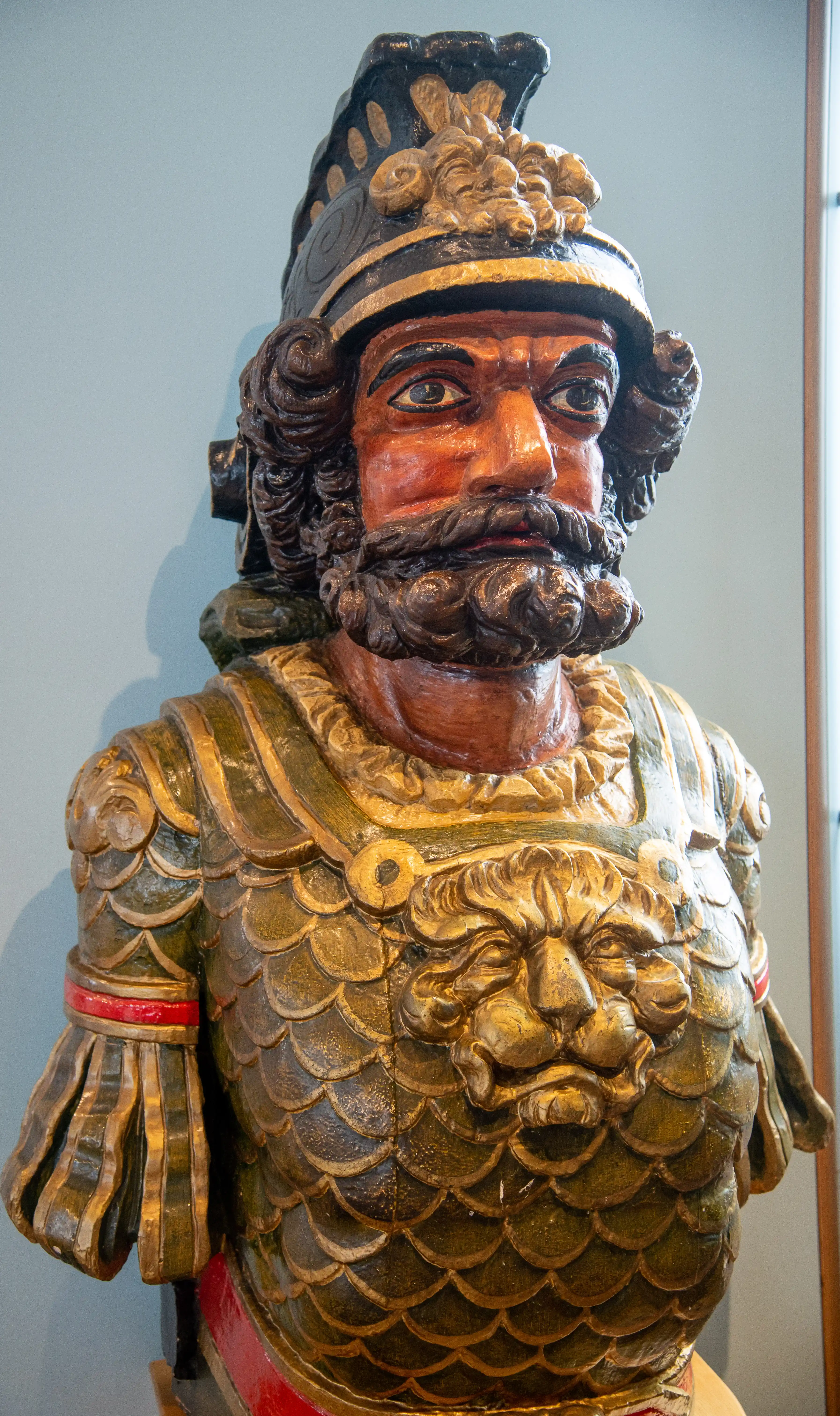
The image depicts a detailed statue of a bearded figure wearing elaborate armor. The armor is designed with a scale pattern, and the figure is adorned with a helmet featuring intricate decorations. The statue appears to be made of wood and painted with rich colors, giving it a lifelike and historical appearance. The figure's intense expression and detailed craftsmanship suggest it may represent a historical or mythical warrior.
Centurion ‐ photo by ,
©www.mgaylard.co.uk.
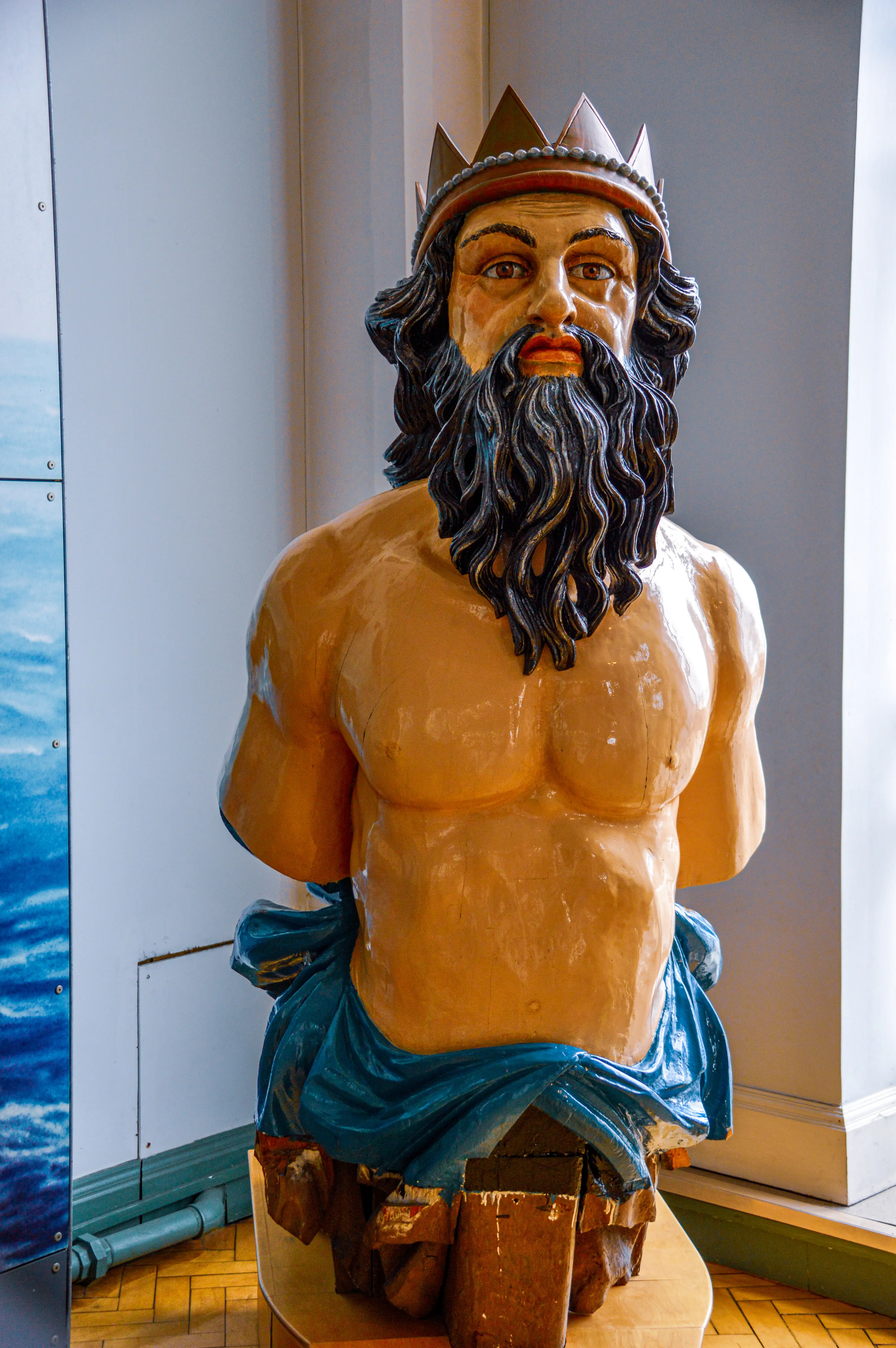
The image depicts a statue of a muscular, bearded man wearing a crown, draped in a blue cloth around his waist, seated on a wooden structure. The statue appears to be indoors, with a window and some pipes visible in the background.
Grampus ‐ photo by ,
©www.mgaylard.co.uk.
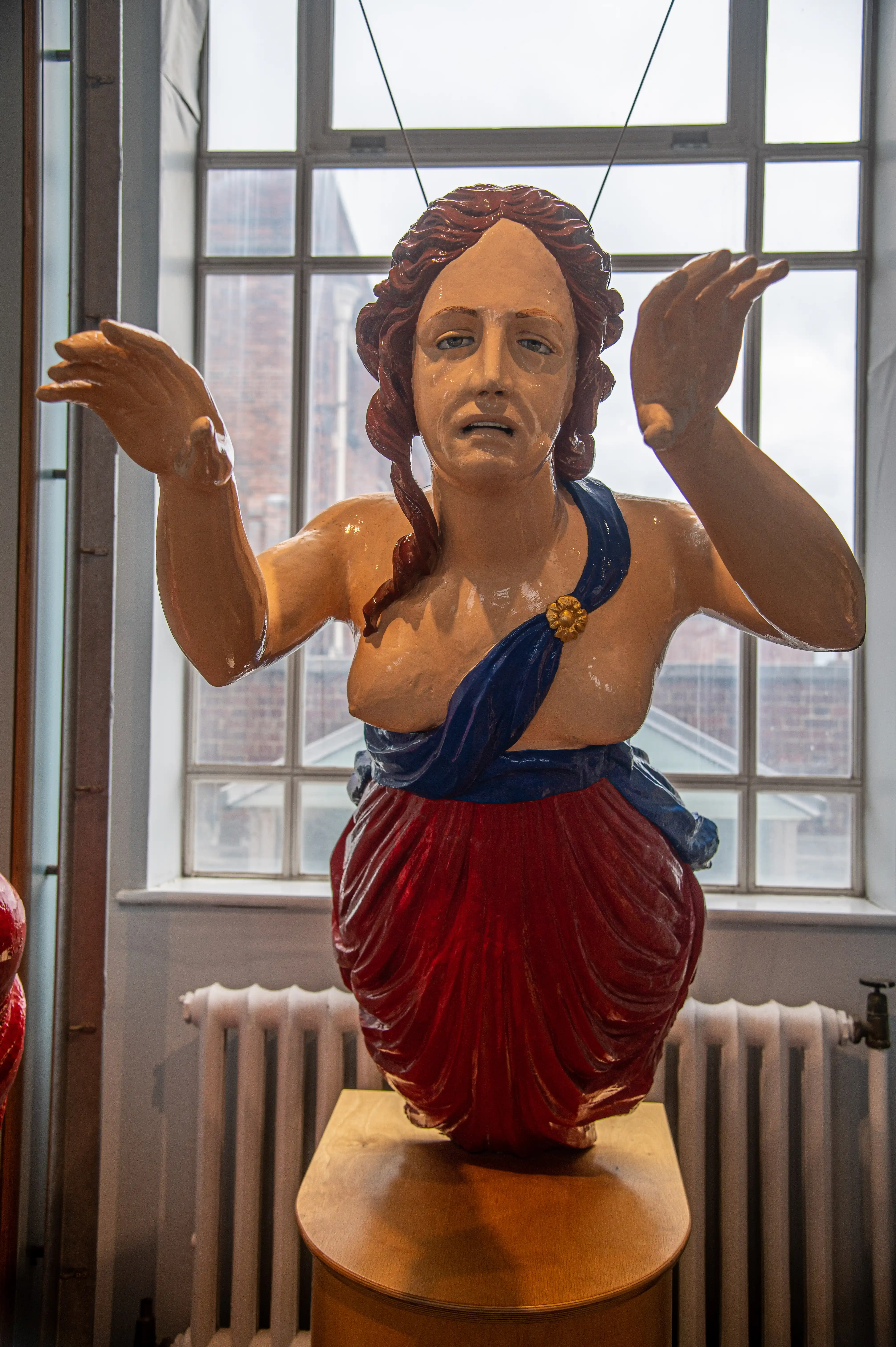
The image depicts a statue of a woman with a dramatic expression, wearing a blue and red garment, and positioned in front of a window with a view of buildings outside. The statue is placed on a wooden pedestal and is situated indoors, near a radiator.
Eurydice ‐ photo by ,
©www.mgaylard.co.uk.
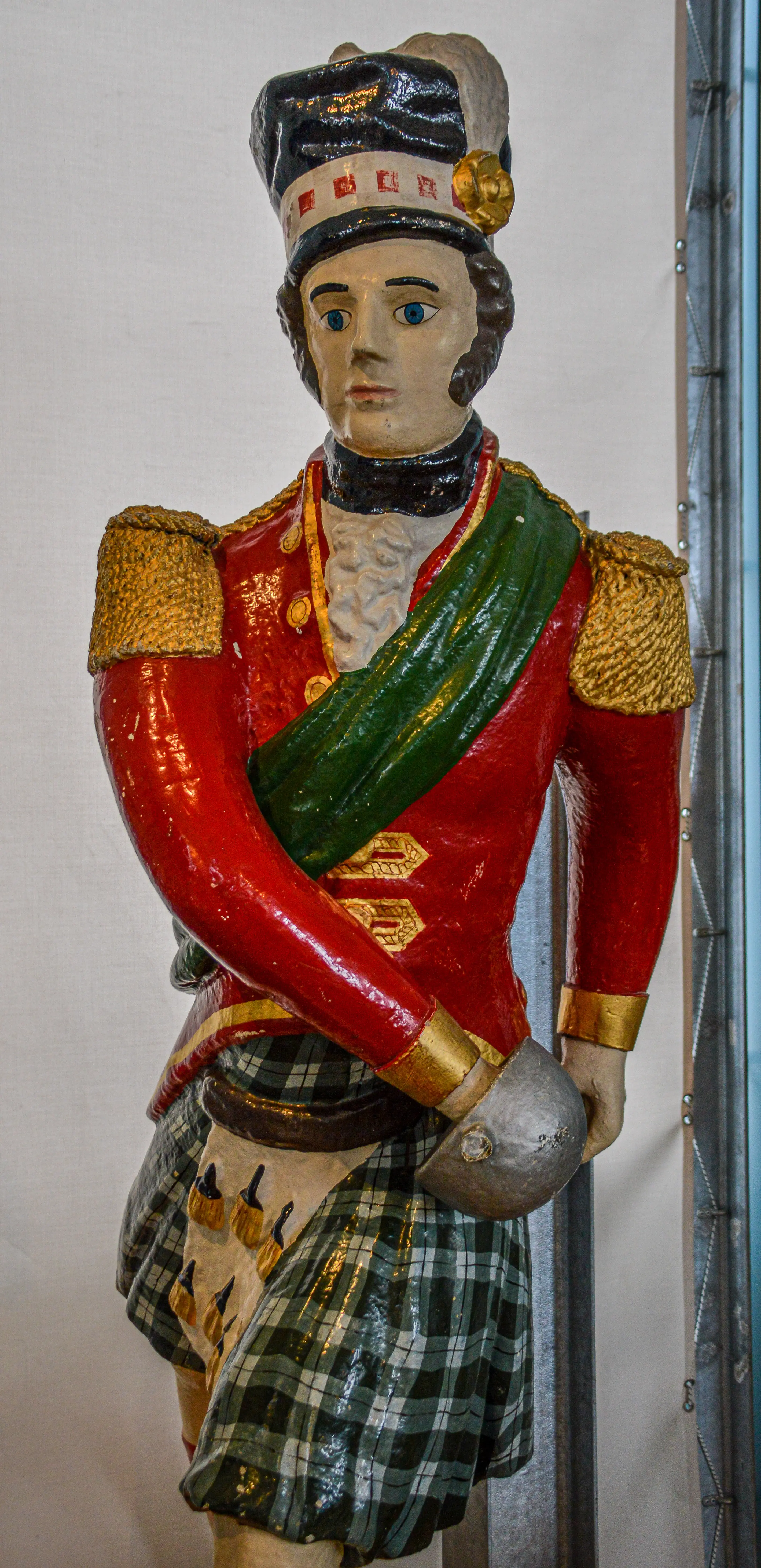
The image depicts a statue of a historical soldier dressed in traditional Highland military attire. The figure is adorned with a red jacket with gold accents, a green sash, a kilt with a plaid pattern, and a black hat with a red and gold band. The statue holds a sword in its right hand, resting it on a grey stone. The figure's face is painted with detailed features, including blue eyes and a serious expression. The overall appearance suggests a representation of a Scottish soldier from a bygone era.
Glasgow ‐ photo by ,
©www.mgaylard.co.uk.
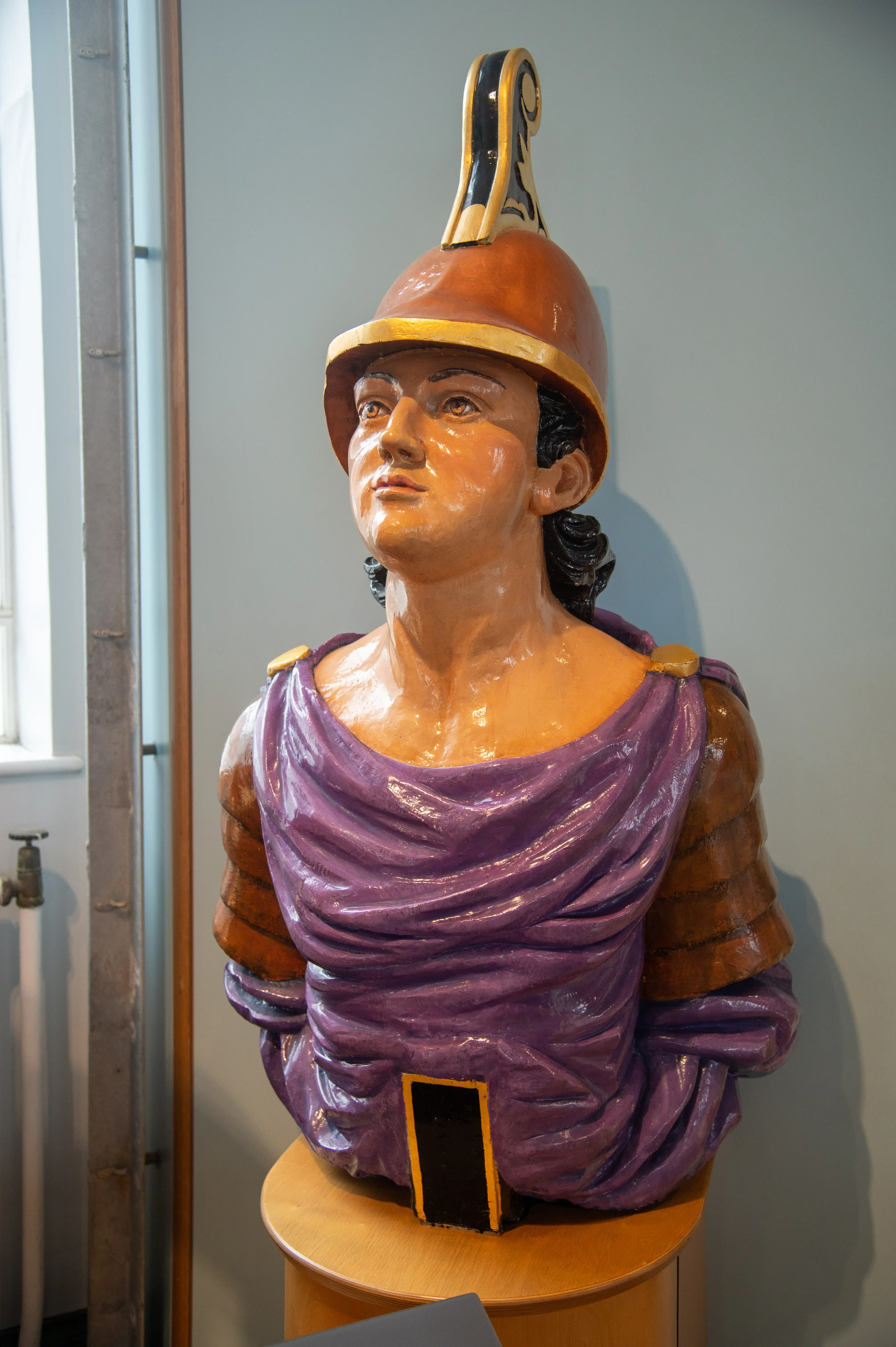
The image depicts a bust of a person wearing a purple garment and an orange helmet with a plume. The bust is placed on a wooden pedestal and is positioned indoors, possibly in a museum or gallery setting. The person's expression is serious, and the bust is detailed, showcasing the craftsmanship involved in its creation.
Orstes ‐ photo by ,
©www.mgaylard.co.uk.
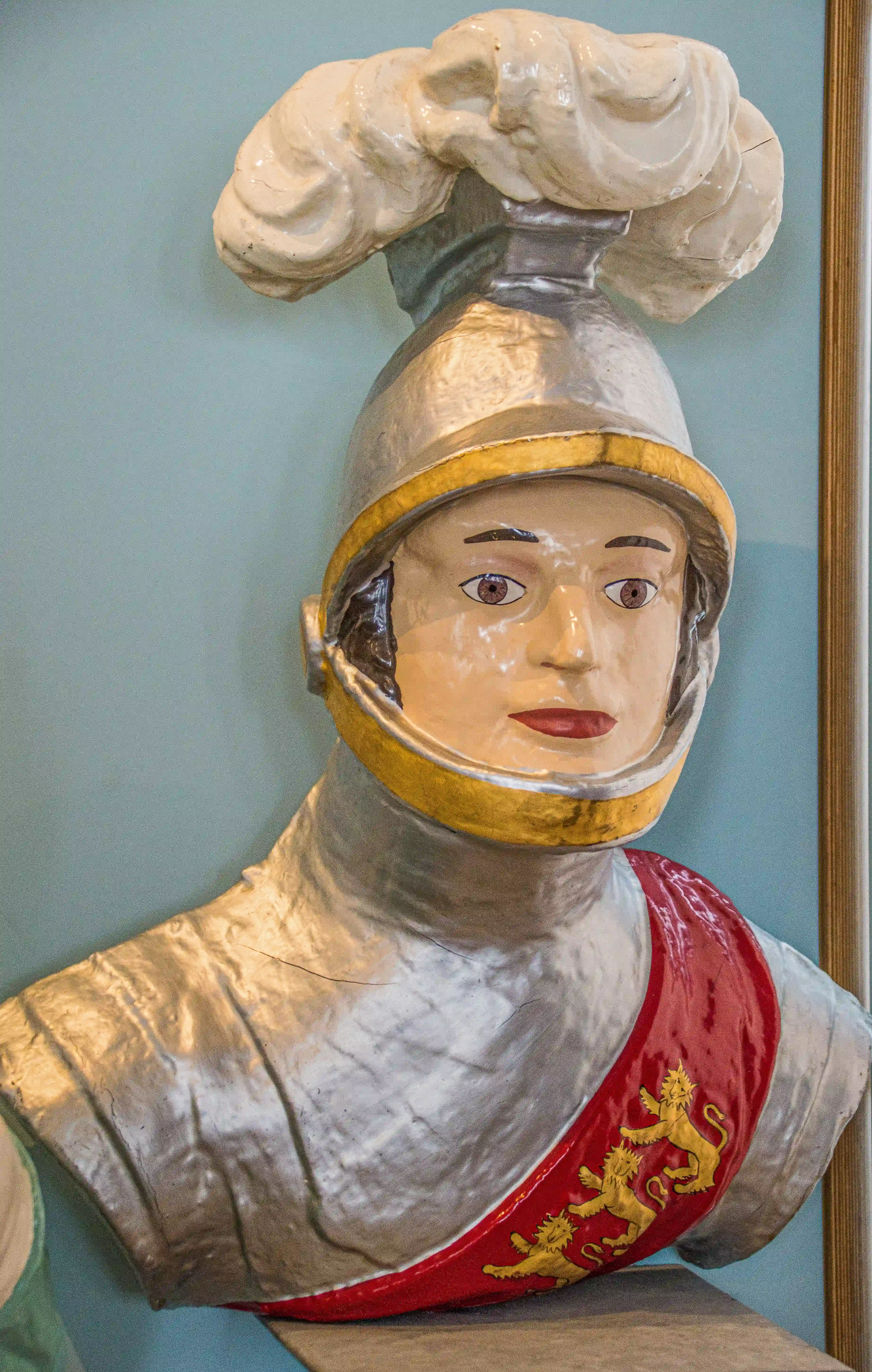
The image depicts a statue of a knight in armor, wearing a helmet with a yellow plume. The knight has a red sash with three golden lions, symbolizing a heraldic emblem. The statue appears to be made of a material resembling papier-mâché and is displayed against a light blue background
Poictiers ‐ photo by ,
©www.mgaylard.co.uk.
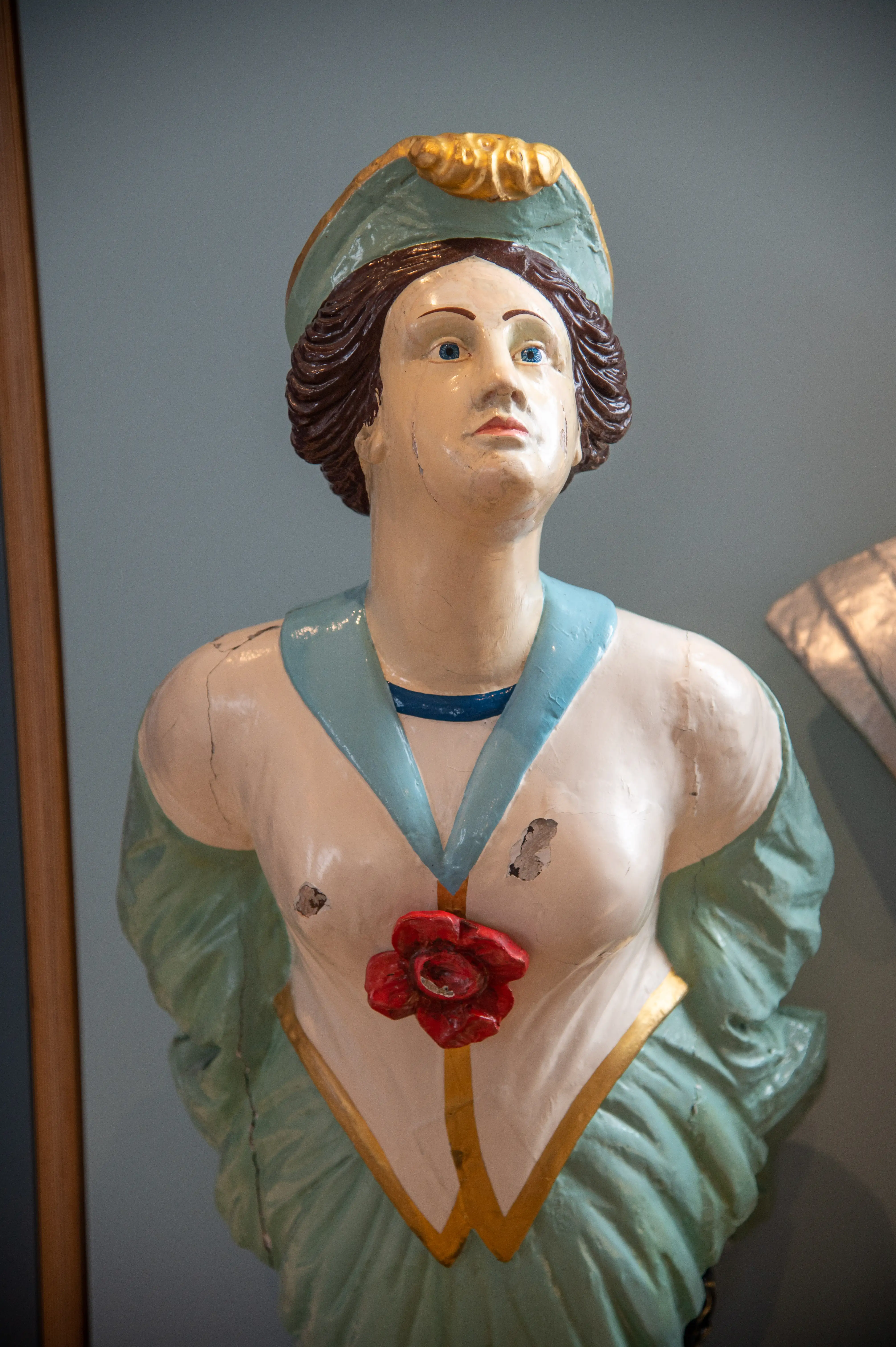
The image depicts a painted statue or figurine of a woman. The woman has a fair complexion, blue eyes, and brown hair, which is partially covered by a green headscarf with a yellow roll at the front. She is wearing a green dress with a low neckline, adorned with a red flower. The statue appears to be made of a material like papier-mâché or plaster and shows some signs of wear and damage.
Princess Alice ‐ photo by ,
©www.mgaylard.co.uk.
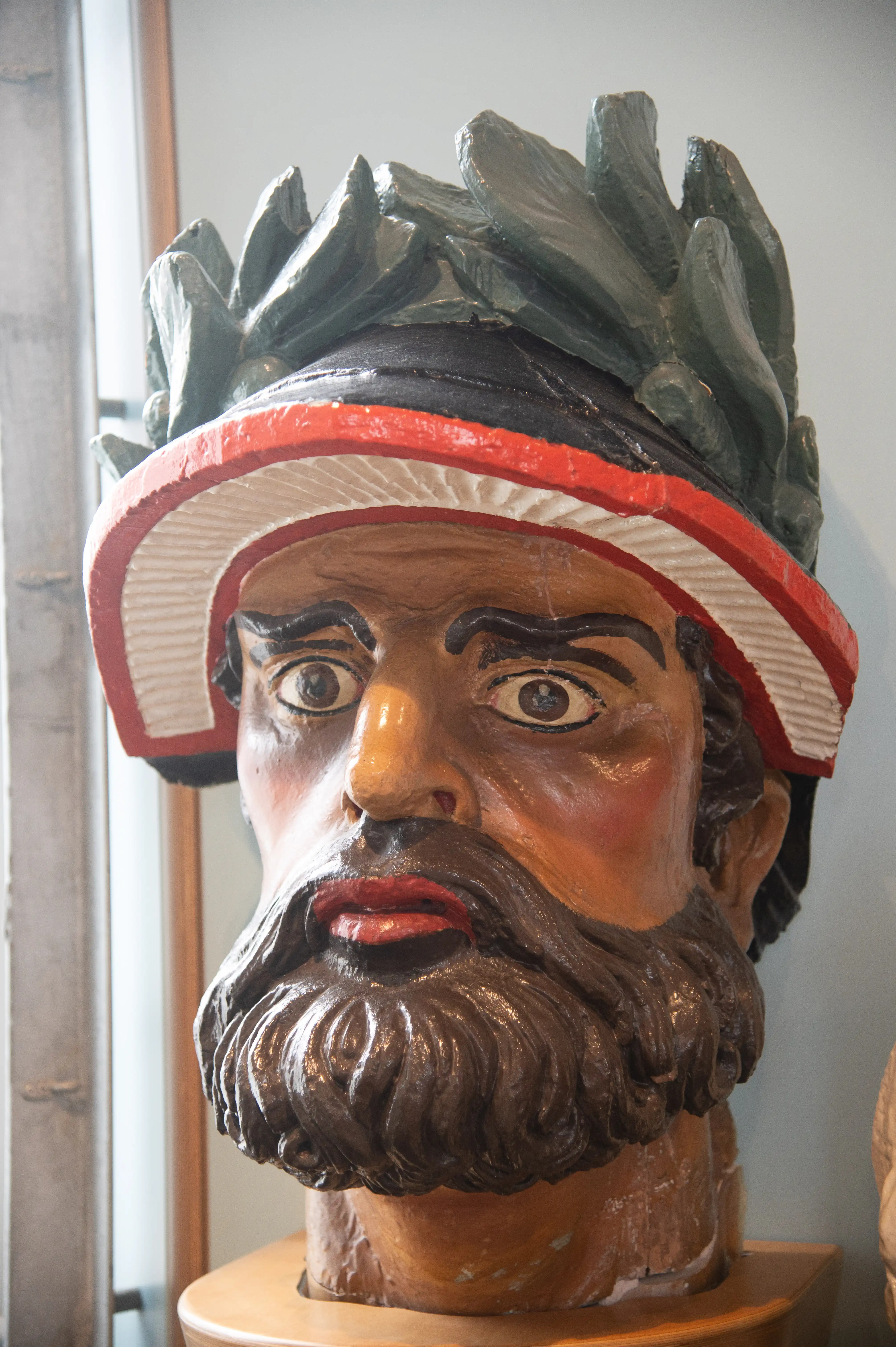
he image shows a detailed and colorful sculpture of a bearded man's head wearing a hat. The sculpture has expressive eyes, a prominent nose, and a red mouth. The hat is unique, featuring a combination of a straw hat and a green, leafy element on top.
Warrior ‐ photo by ,
©www.mgaylard.co.uk.

Portsmouth Historic Dockyard: Where Britain’s Naval Legacy Comes Alive

Portsmouth Historic Dockyard is the UK’s premier naval heritage site, where 800 years of maritime history come to life. Here, you can step aboard iconic ships like HMS Victory (Nelson’s flagship at Trafalgar), the Mary Rose (Henry VIII’s Tudor warship, raised from the seabed), and HMS Warrior (the world’s first iron-hulled warship), as well as explore the National Museum of the Royal Navy, Action Stations (interactive naval exhibits), and Boathouse 4 (showcasing traditional boatbuilding). The dockyard also offers harbour tours (with views of modern Royal Navy ships), the new Royal Marines Museum (opening summer 2026), and year-round access with an Ultimate Explorer ticket, making it a must-visit for history buffs and families alike

A Walk Through Five Centuries of Maritime History

Portsmouth Historic Dockyard is more than a museum—it is a living, breathing testament to the Royal Navy’s past, present, and future. Nestled within the working HMNB Portsmouth, this 12-acre heritage site is home to some of the most iconic ships in British history. Here, the timbers of HMS Victory—Nelson’s flagship at Trafalgar—still echo with the shouts of sailors, while the iron hull of HMS Warrior, the Navy’s first armored battleship, stands as a monument to the Industrial Revolution’s impact on warfare. The dockyard’s story begins in 1194, when King Richard I ordered the construction of a royal dockyard, and it has been at the heart of British naval power ever since. By the 19th century, it was the largest industrial complex in the world, its Block Mills pioneering mass production with steam-powered machinery. Today, the dockyard is managed by the National Museum of the Royal Navy, which oversees a collection of ships, museums, and historic buildings that together tell the story of a nation shaped by the sea

Icons of the Sea: Ships That Made History

The dockyard’s stars are its ships, each a chapter in the Royal Navy’s epic saga. The Mary Rose, Henry VIII’s favorite warship, sank in 1545 and was raised in 1982, her waterlogged timbers now preserved in a state-of-the-art museum that offers a haunting glimpse into Tudor life at sea. Nearby, HMS M.33, the sole surviving British vessel from the Gallipoli Campaign, and HMS Alliance, a Cold War-era submarine, reveal the evolution of naval warfare from sail to steam to nuclear power. The dockyard’s interactive exhibits, from the Dockyard Apprentice experience to the Action Stations simulator, bring these stories to life, allowing visitors to step into the boots of sailors past and present. The Waterbus ferry even connects the dockyard to the Royal Navy Submarine Museum and the Explosion Museum of Naval Firepower, offering a broader journey through Britain’s maritime heritage

A Dockyard That Built an Empire

Portsmouth’s dockyard was not just a place where ships were built—it was the engine of British sea power. The Block Mills, the world’s first steam-powered factory for mass production, revolutionized shipbuilding here, while the dockyard’s rope houses, storehouses, and dry docks (including the oldest surviving dry dock in the world) tell the story of an industrial revolution that made Britain the ruler of the waves. The dockyard’s role in major conflicts—from the Anglo-Dutch Wars to the Napoleonic Wars and beyond—is chronicled in its museums, where artifacts, personal accounts, and immersive displays bring the past vividly to life. The National Museum of the Royal Navy and the HMS Victory gallery offer deep dives into the lives of sailors, the tactics of admirals, and the battles that defined empires

A Living Link to the Royal Navy’s Future

Portsmouth Historic Dockyard is not just a relic of the past; it is a bridge to the Royal Navy’s future. The working naval base next door is home to the fleet’s most advanced ships, including the aircraft carriers HMS Queen Elizabeth and HMS Prince of Wales, ensuring that the dockyard remains a symbol of British maritime prowess. For visitors, the dockyard offers a unique blend of history and hands-on adventure, from traditional boatbuilding demonstrations at Boathouse 4 to the chance to climb the rigging of a Tall Ship. Whether you’re exploring the decks of HMS Victory, marveling at the Mary Rose’s artifacts, or simply soaking in the atmosphere of this historic waterfront, Portsmouth Historic Dockyard is a place where the past is not just preserved but celebrated—and where the spirit of the Royal Navy lives on

References

en.wikipedia.orgwww.visitportsmouth.co.ukwww.historyhit.comhistoricdockyard.co.uk/www.visit-hampshire.co.uk , Text generated by Mistral AI
To the top
Powered by w3.css. The images are all stored on link to www.gaylard.co.uk Photostream on Flickr   This website is hosted by link to 123Reg Web Hosting