Beaulieu Palace House

Beaulieu Palace House

ohn Montagu BuildingBeaulieuHampshire,   ,   United Kingdom

Beaulieu is a historic estate in the heart of the New Forest, Hampshire, home to the stunning Palace House, the world-famous National Motor Museum, and the picturesque Beaulieu Abbey. The estate offers visitors a unique blend of history, heritage, and motoring excellence. Palace House, the ancestral home of the Montagu family, showcases opulent interiors and beautiful gardens, while the National Motor Museum houses an unrivaled collection of over 250 vehicles, telling the story of motoring from its earliest days to the present.
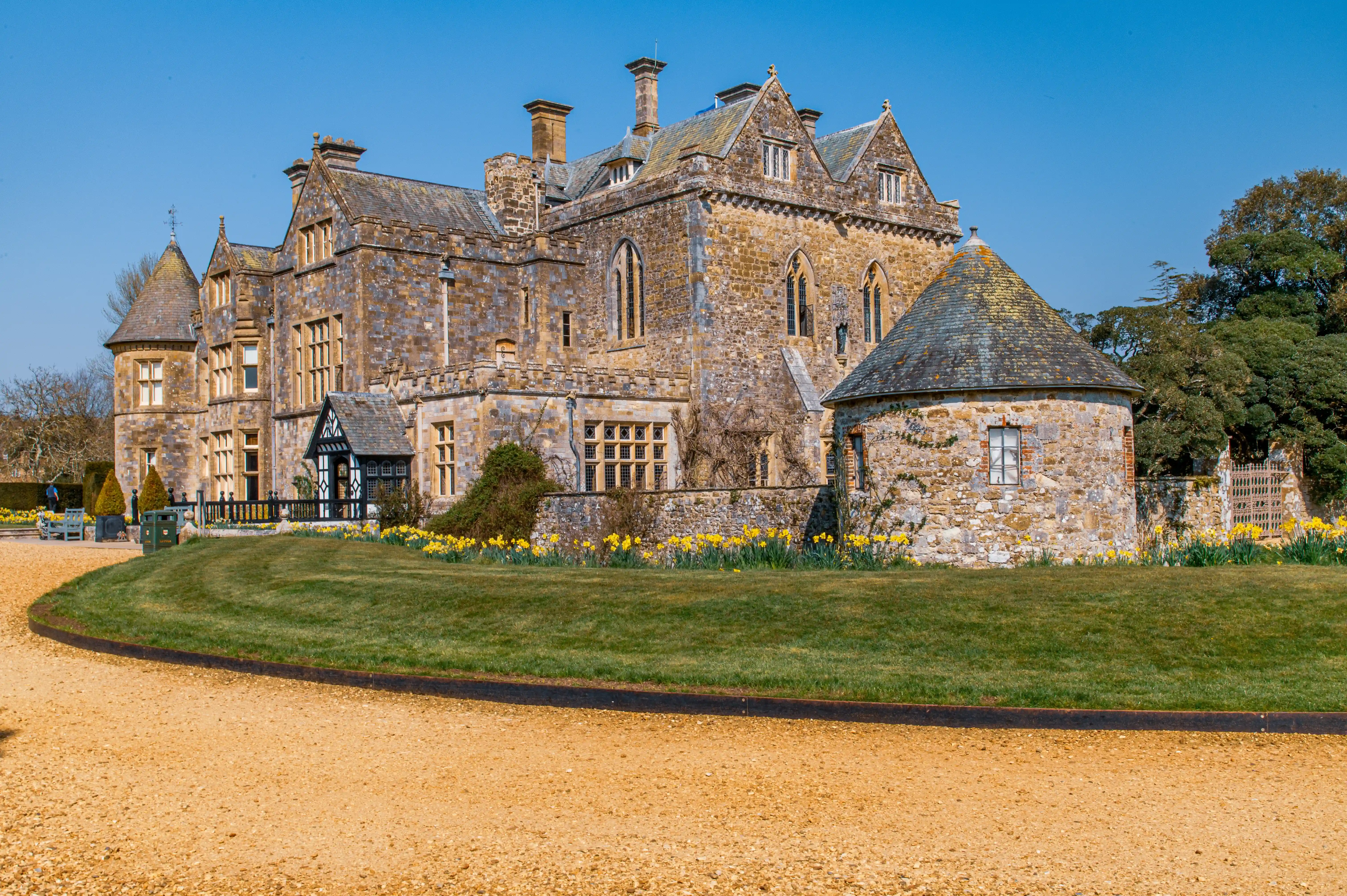
The image depicts a large, historic stone building with multiple towers and a steeply pitched roof. The structure features a combination of pointed and rounded architectural elements, with numerous windows and a central chimney. The building is surrounded by a well-maintained garden with a gravel path and vibrant yellow flowers in the foreground. The overall scene is set against a clear blue sky, suggesting a sunny day.
Grand Manor House Majesty ‐ photo by ,
©www.mgaylard.co.uk.
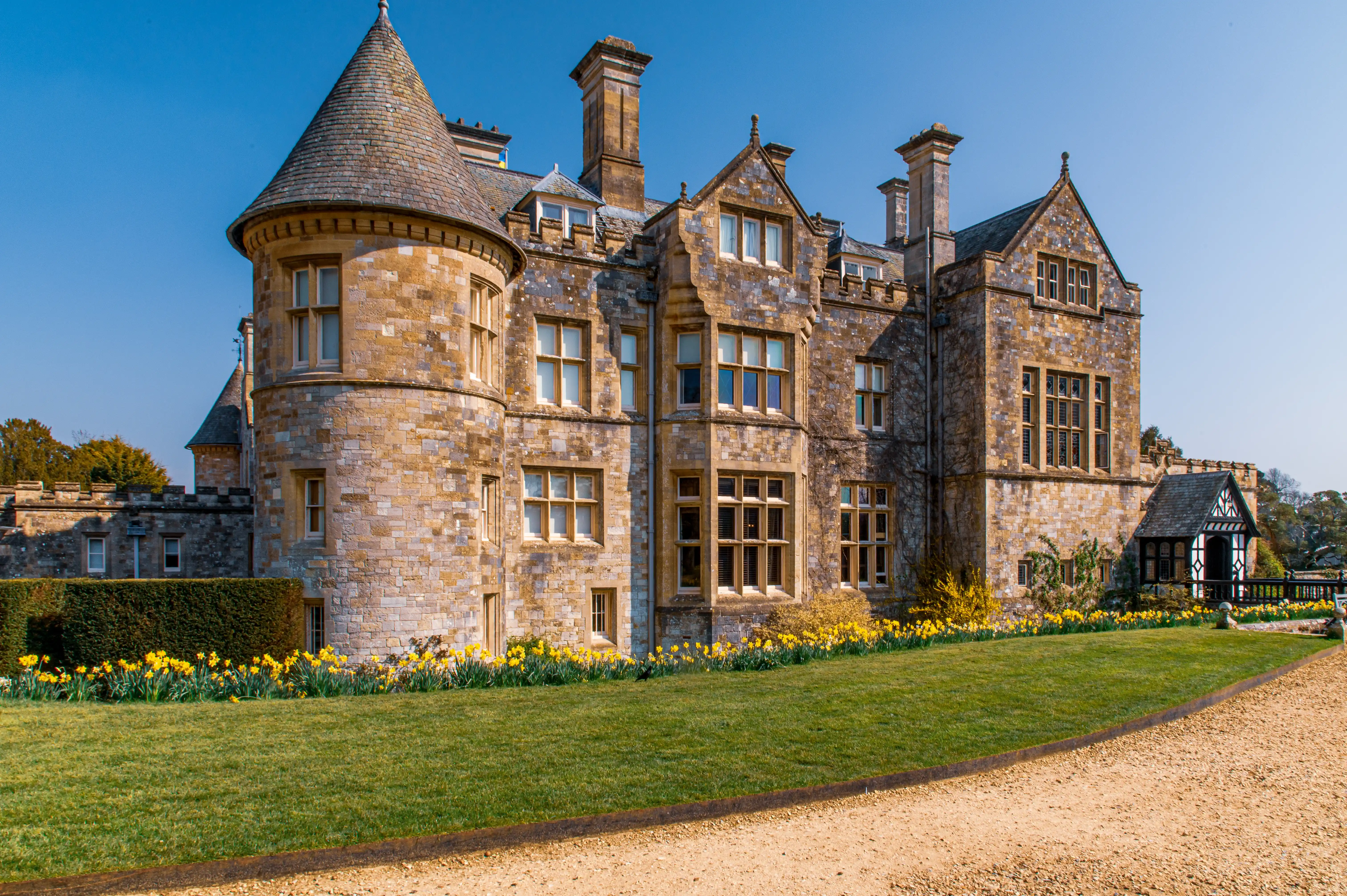
The image depicts a large, historic stone building with multiple turrets and chimneys, surrounded by a well-maintained garden with yellow flowers and a gravel pathway.
Manor House from Another Angle ‐ photo by ,
©www.mgaylard.co.uk.
The image depicts a historical ruin with a stone pathway leading to an arched entrance. The structure appears to be part of an old castle or fortification, characterized by its weathered stone walls. The surrounding area is well-maintained with green lawns, trees, and shrubs. There is a signboard placed on the lawn, likely providing information about the site. The scene is bathed in sunlight, suggesting it is a clear day.
Ancient Walls and Paving ‐ photo by ,
©www.mgaylard.co.uk.
The image shows a sundial mounted on a brick wall. The sundial features Roman numerals to indicate the hours and has a gnomon that casts a shadow to mark the time. Below the sundial, there is an inscription of a poem that reads: 'How many times do I love thee, dear? Tell me how many thoughts there be In the atmosphere of a new-fallen year, Whose white and sable hours appear The latest flake of Eternity.' Additionally, there is a plaque beneath the sundial that provides information about the sundial's history and dedication.
The Poet's Sundial ‐ photo by ,
©www.mgaylard.co.uk.
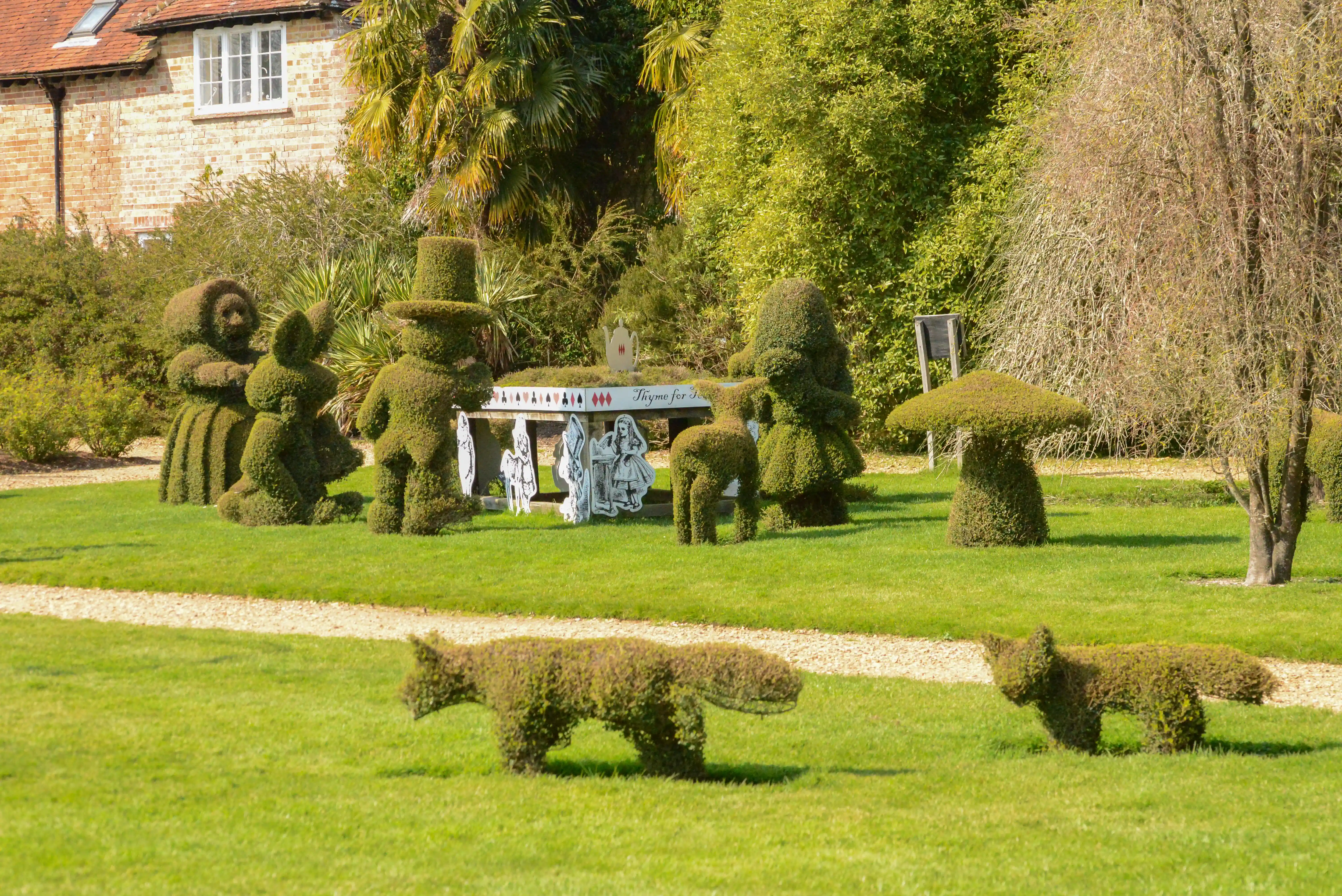
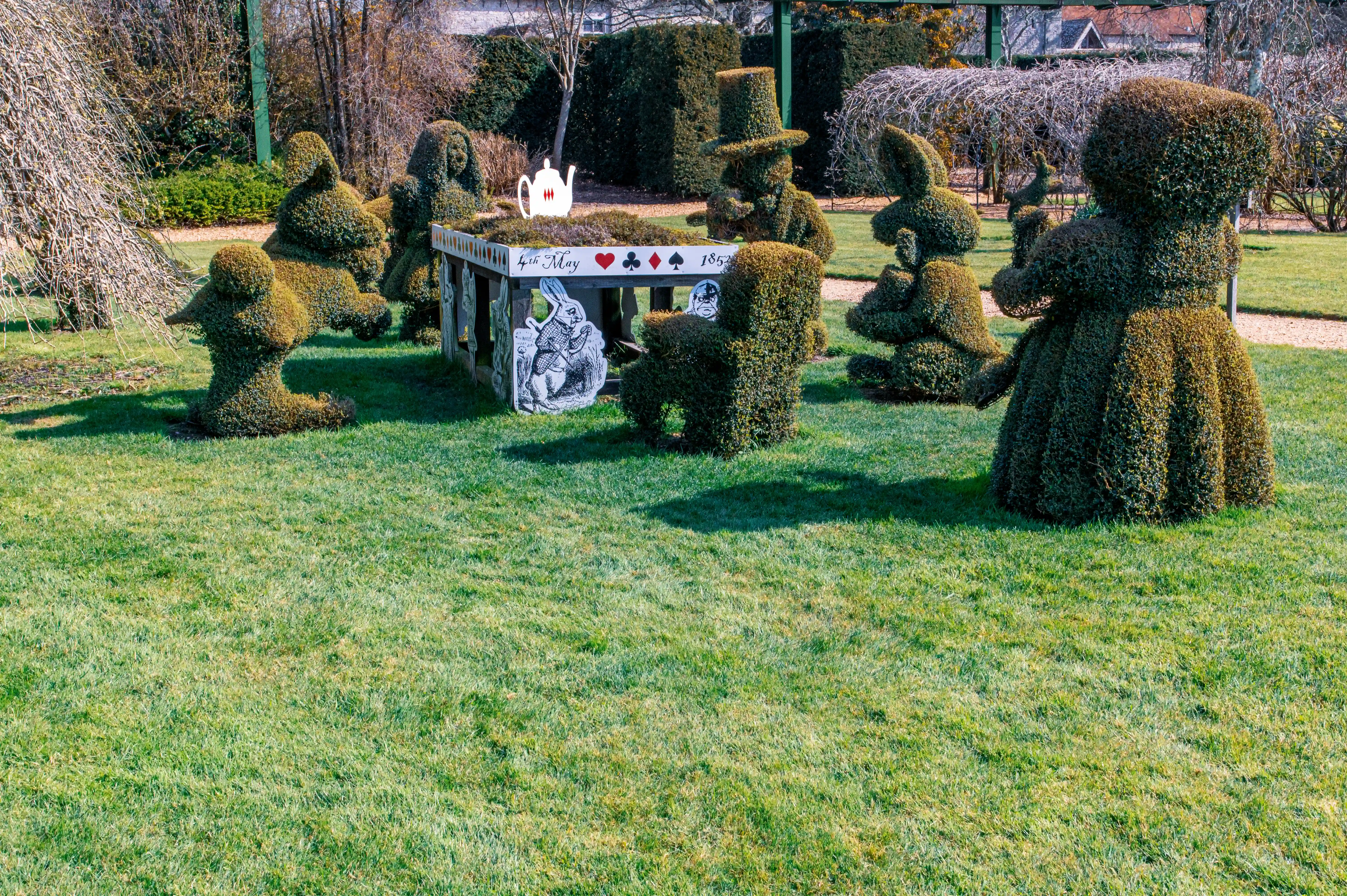
The image depicts a topiary garden featuring hedges sculpted into various shapes, including characters from 'Alice in Wonderland' and animals. The garden is well-maintained with green lawns and gravel paths. In the background, there is a brick building with a tiled roof, partially obscured by trees and shrubs. The scene is set on a sunny day, with clear skies and lush greenery.
Topiary Tales ‐ photo by ,
©www.mgaylard.co.uk.
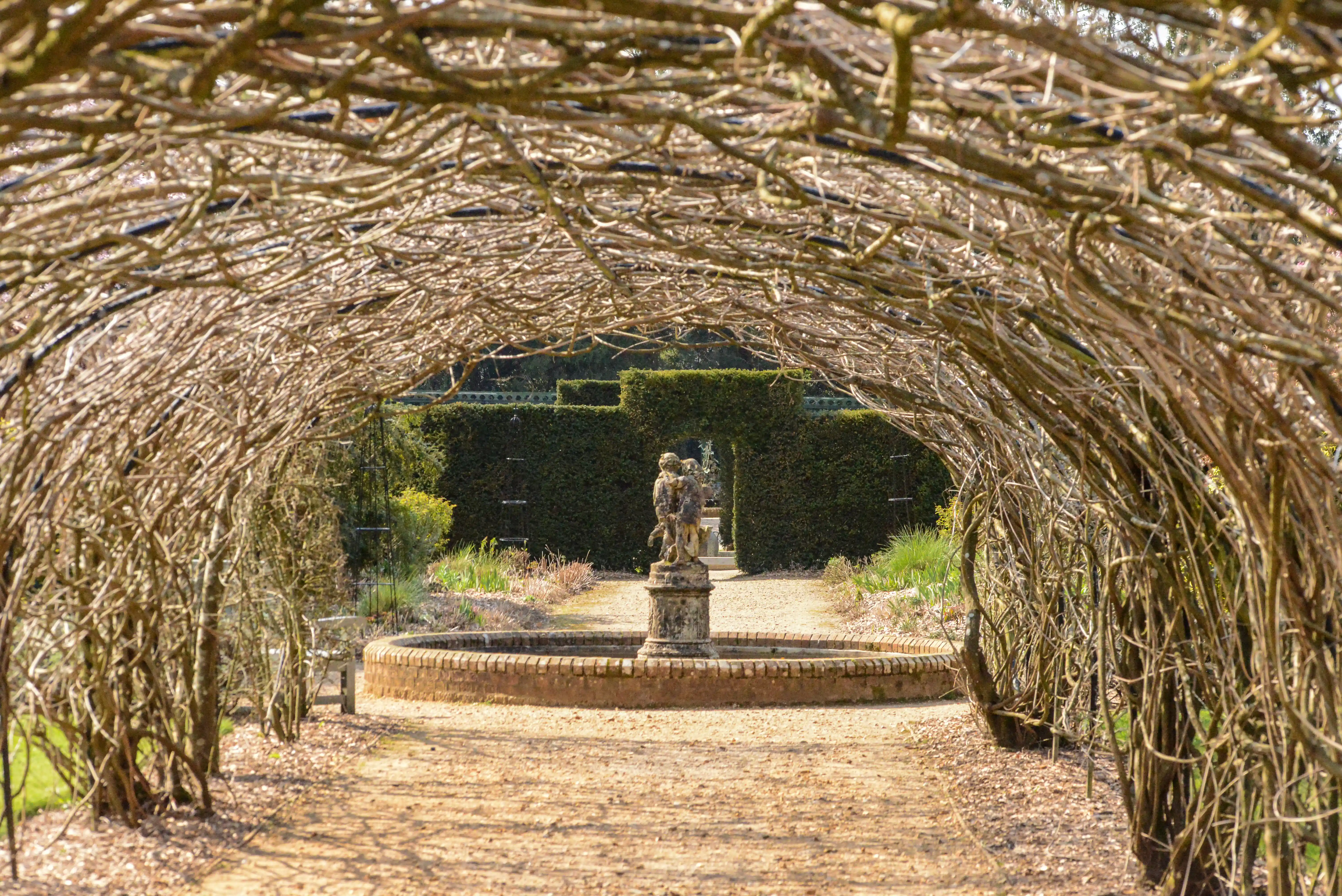
The image depicts a garden scene viewed through a tunnel-like structure made of intertwined branches. The garden features a statue on a pedestal in the center, surrounded by a circular brick border. In the background, there is a well-maintained hedge and various plants and trees. The overall atmosphere is serene and well-kept, suggesting a formal garden setting.
Under the Wisteria Arbour ‐ photo by ,
©www.mgaylard.co.uk.
The image depicts a well-maintained hedge in a garden setting. The hedge is neatly trimmed and has a dense, uniform appearance. Surrounding the hedge, there are some bare branches and other greenery. The ground is covered with grass, and there is a small path or gap at the base of the hedge.
A Bushy Character ‐ photo by ,
©www.mgaylard.co.uk.
The image depicts a topiary garden scene inspired by 'Alice in Wonderland.' It features hedges trimmed into the shapes of characters from the story, including Alice and the Mad Hatter, seated around a table. The table is adorned with playing cards and a teapot, and there is a sign indicating '4th May 1862,' the date of the Mad Hatter's tea party in the book. The scene is set in a well-maintained garden with green grass and various other plants and hedges in the background.
A Mad Hatter's Tea Party ‐ photo by ,
©www.mgaylard.co.uk.
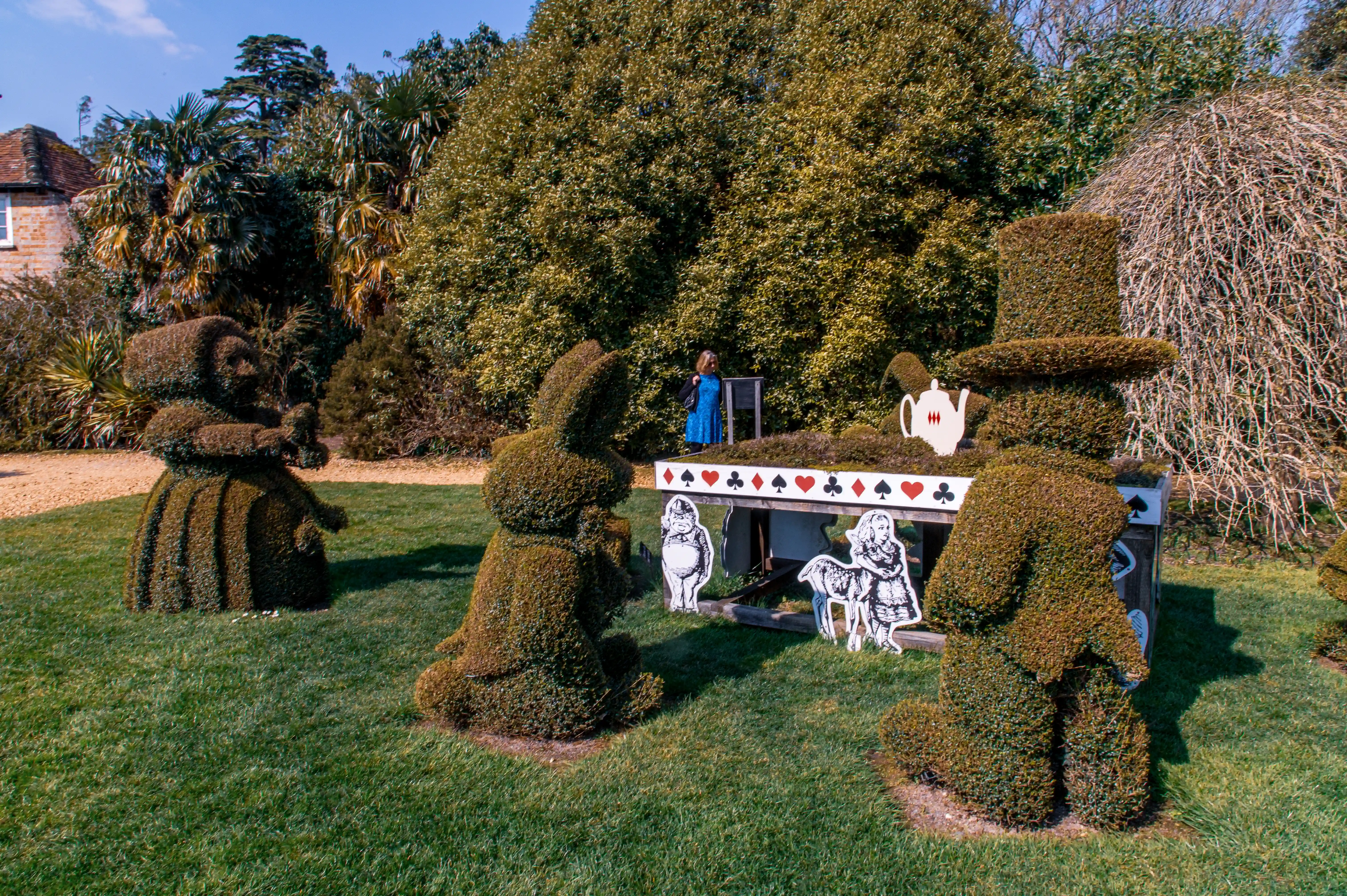
The image depicts a topiary garden scene inspired by 'Alice in Wonderland.' It features hedges sculpted into characters such as the Cheshire Cat, the Mad Hatter's teacup, and Alice herself. Additionally, there are cutouts of characters like the Cheshire Cat, Alice, and the March Hare, along with a table adorned with playing cards. The scene is set in a lush garden with various plants and trees in the background.
Wonderland Gathering ‐ photo by ,
©www.mgaylard.co.uk.
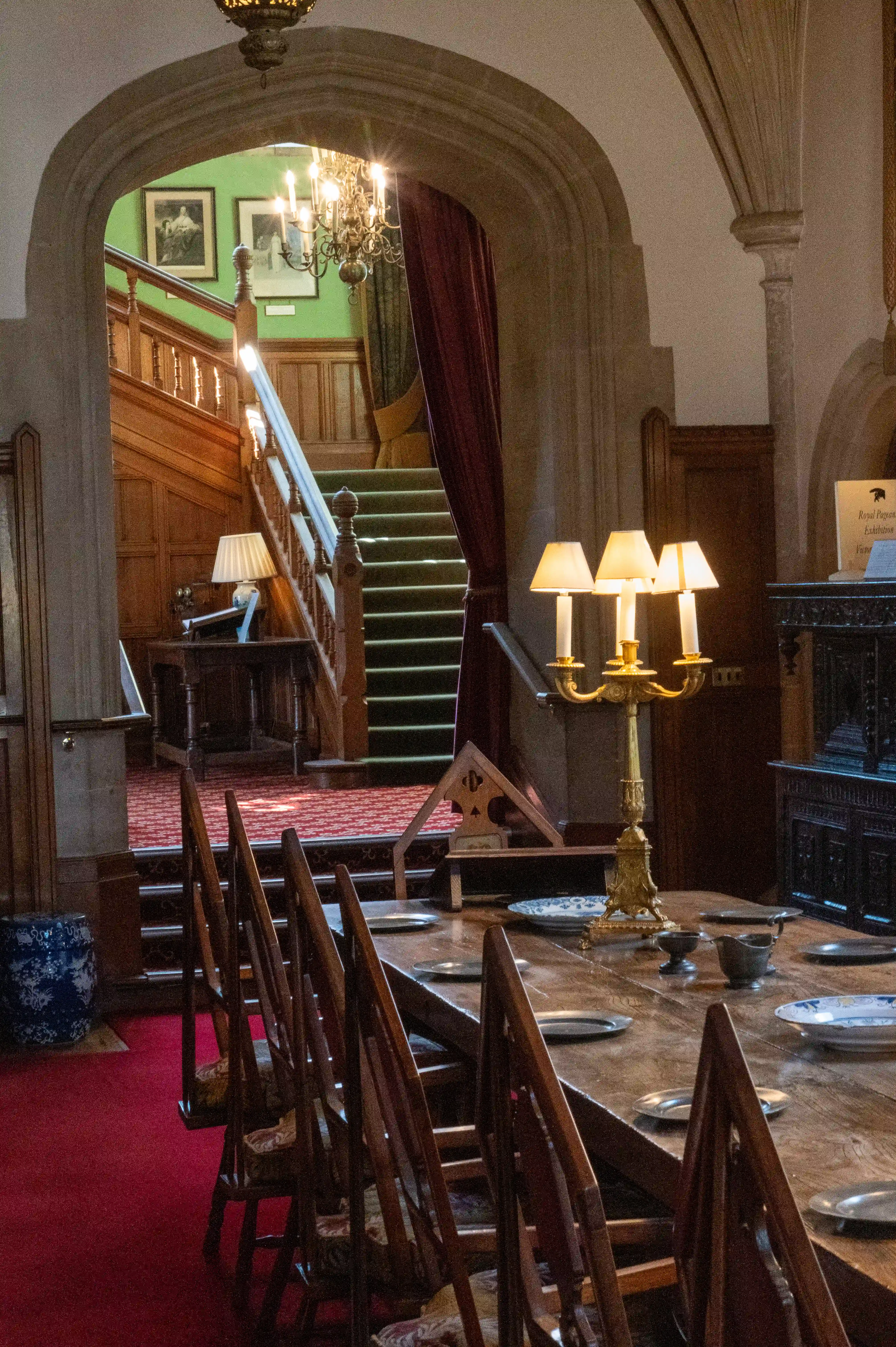
The image depicts an interior view of a grand, historic building. The focal point is a large wooden dining table set with plates and candlesticks, surrounded by high-backed wooden chairs. The room features a staircase with a wooden handrail and green carpet, leading up to a landing adorned with framed pictures. The walls and ceiling have intricate architectural details, including stone arches and a chandelier hanging from the ceiling. The overall ambiance suggests a formal dining area within a castle or manor house.
The Grand Dining Hall - Close Up ‐ photo by ,
©www.mgaylard.co.uk.
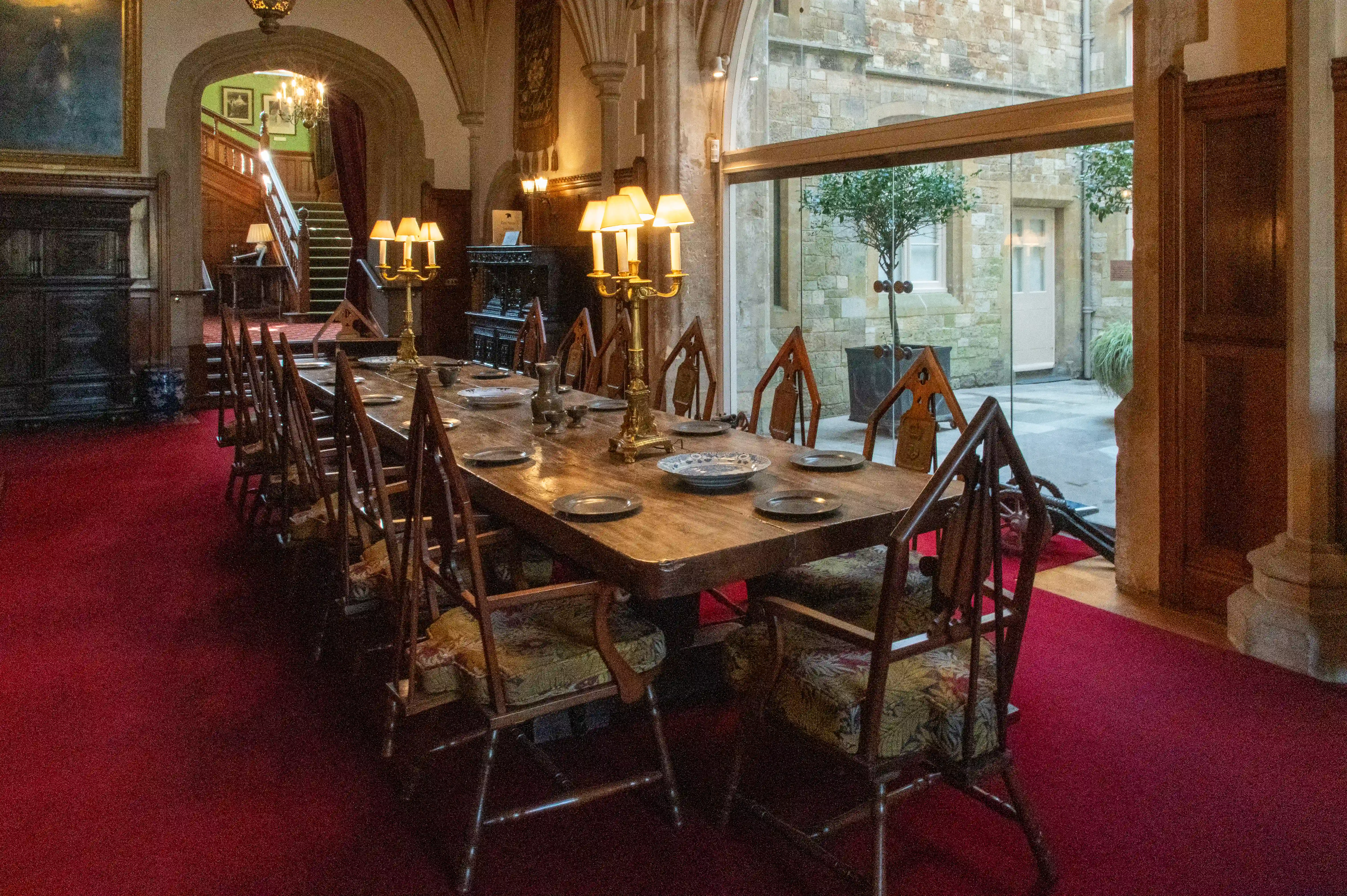
The image depicts an elegantly set dining room in what appears to be a historic or luxurious building. The room features a long wooden table with antique chairs, each set with plates and candelabras. The floor is covered with a red carpet, and the room is adorned with stone walls, large windows, and a grand staircase in the background. The architectural details, including arches and columns, suggest a medieval or Gothic style. The overall atmosphere is one of opulence and historical charm.
The Grand Dining Hall - Wider View ‐ photo by ,
©www.mgaylard.co.uk.
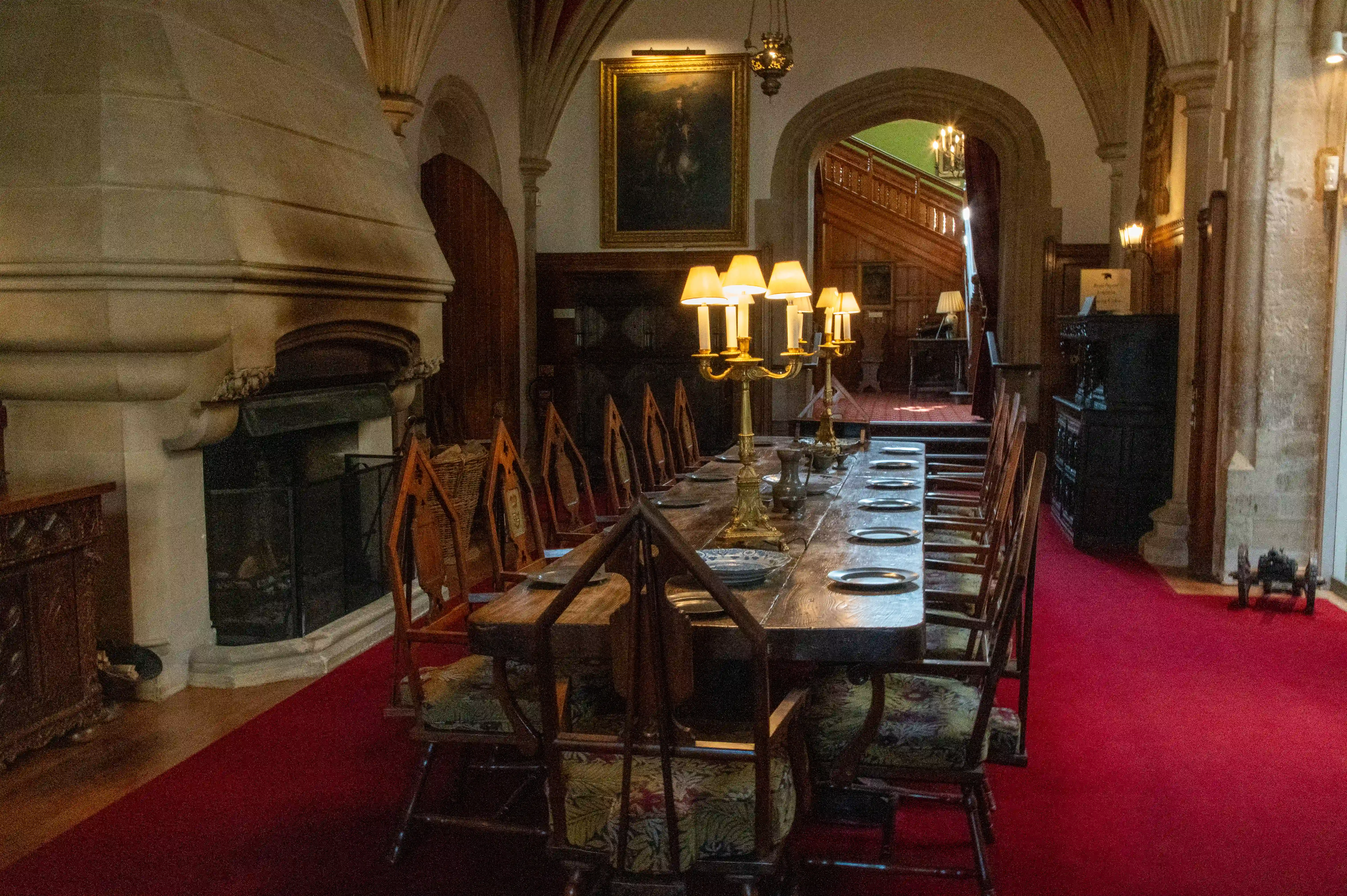
The image depicts an elegant, vintage dining room with a long wooden table set with candelabras and plates. The room features high, arched ceilings with stone walls, a grand fireplace, and a red carpet running down the center. There are wooden chairs with cushioned seats arranged around the table, and the room is illuminated by both chandeliers and wall-mounted lamps. The overall ambiance suggests a historical or formal setting, possibly within a castle or a grand manor.
The Grand Dining Hall - The Other End ‐ photo by ,
©www.mgaylard.co.uk.
The image displays historical coronation robes and crowns, including those worn by Queen Elizabeth II, alongside descriptive plaques detailing their significance and use in coronation ceremonies.
Royal Robes and Regalia ‐ photo by ,
©www.mgaylard.co.uk.
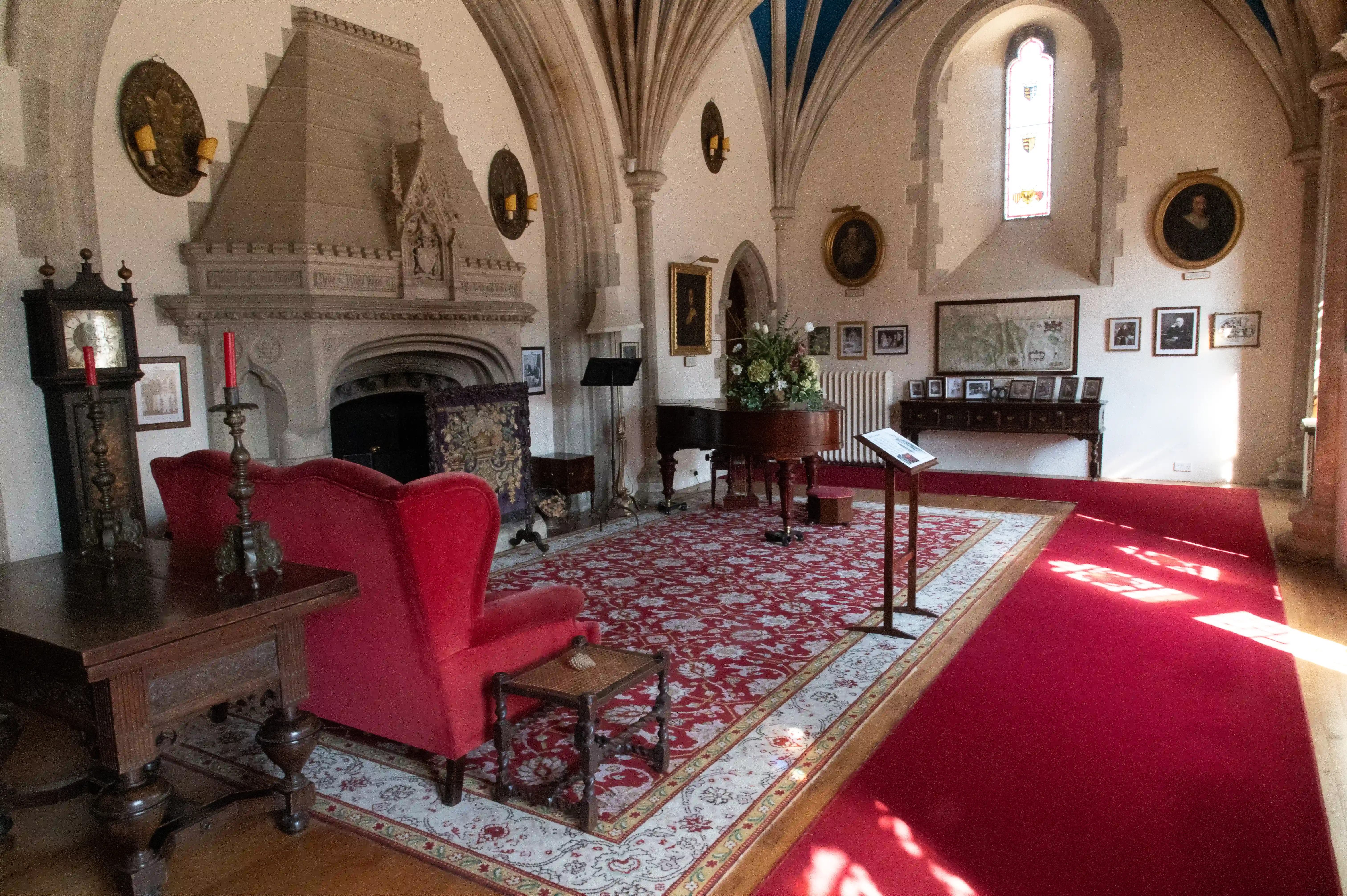
The image depicts an elegantly furnished room with a Gothic architectural style, featuring a large stone fireplace, arched windows, and intricate ceiling designs. The room is adorned with various portraits, photographs, and decorative items. The furniture includes red upholstered chairs, a wooden table, a piano, and a grandfather clock. The floor is covered with a red and cream patterned carpet, and the room is bathed in natural light from the windows.
A Grand Drawing Room ‐ photo by ,
©www.mgaylard.co.uk.
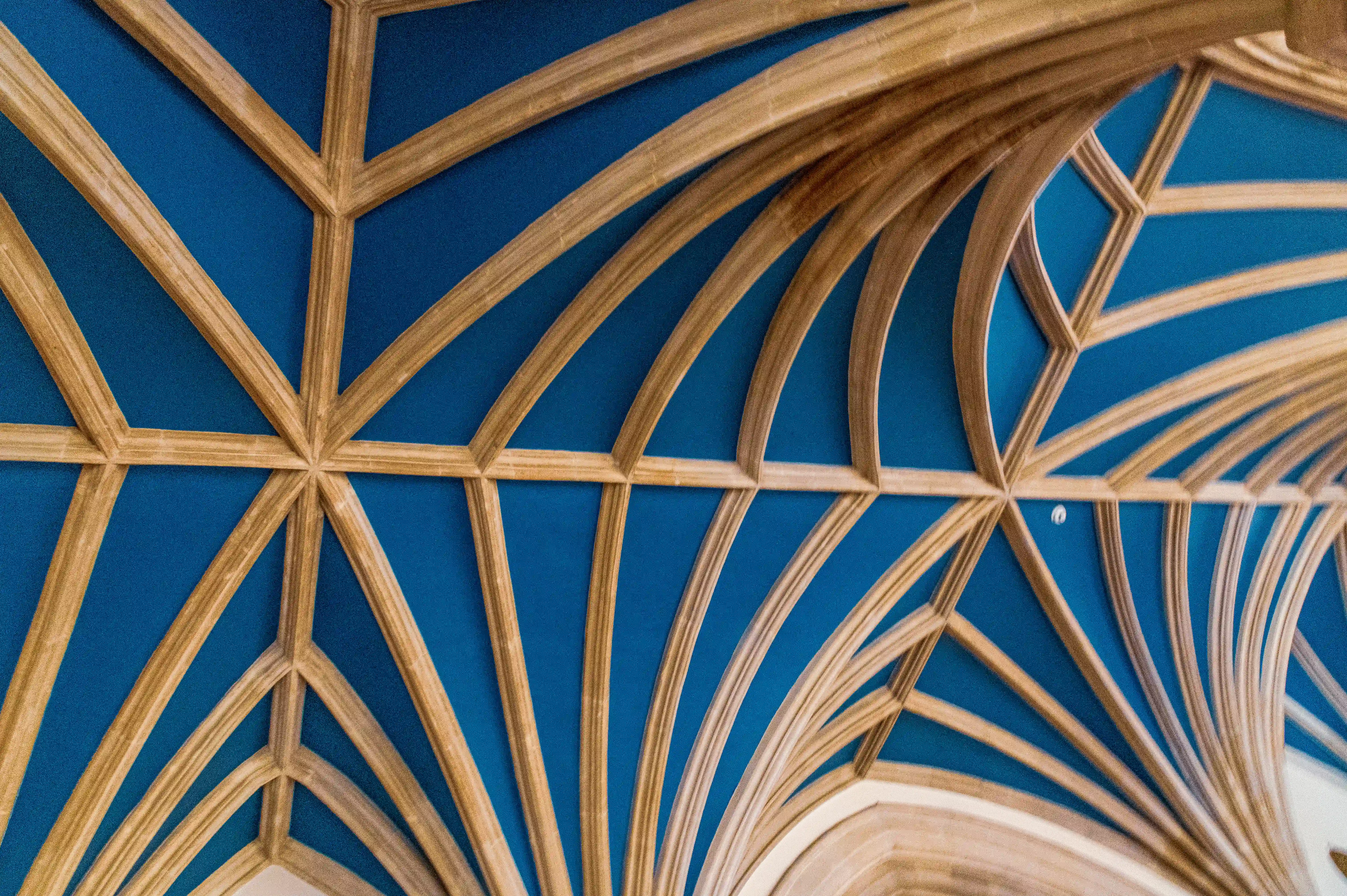
The image depicts an intricate architectural ceiling design featuring a combination of geometric patterns and ribbed vaulting. The ceiling is painted in a vibrant blue color, contrasted by golden, rib-like structures that form a complex, star-like pattern. The design showcases the intersection of these ribs, creating a visually striking and symmetrical effect. The craftsmanship highlights the detailed and ornate nature of the architecture, likely indicative of a historic or significant building
Intricate Gothic Vaulted Ceiling in Vibrant Blue ‐ photo by ,
©www.mgaylard.co.uk.
The image depicts an interior view of a grand staircase in a historic building. The staircase features intricate wooden railings and balusters, with detailed craftsmanship evident in the handrail and newel posts. The walls are painted green, and there are stained glass windows along the upper part of the wall, allowing natural light to filter into the space. The overall atmosphere is one of elegance and historical significance, suggesting that the building could be a museum, a university, or another type of heritage site.
Majestic Staircase and Chandelier ‐ photo by ,
©www.mgaylard.co.uk.
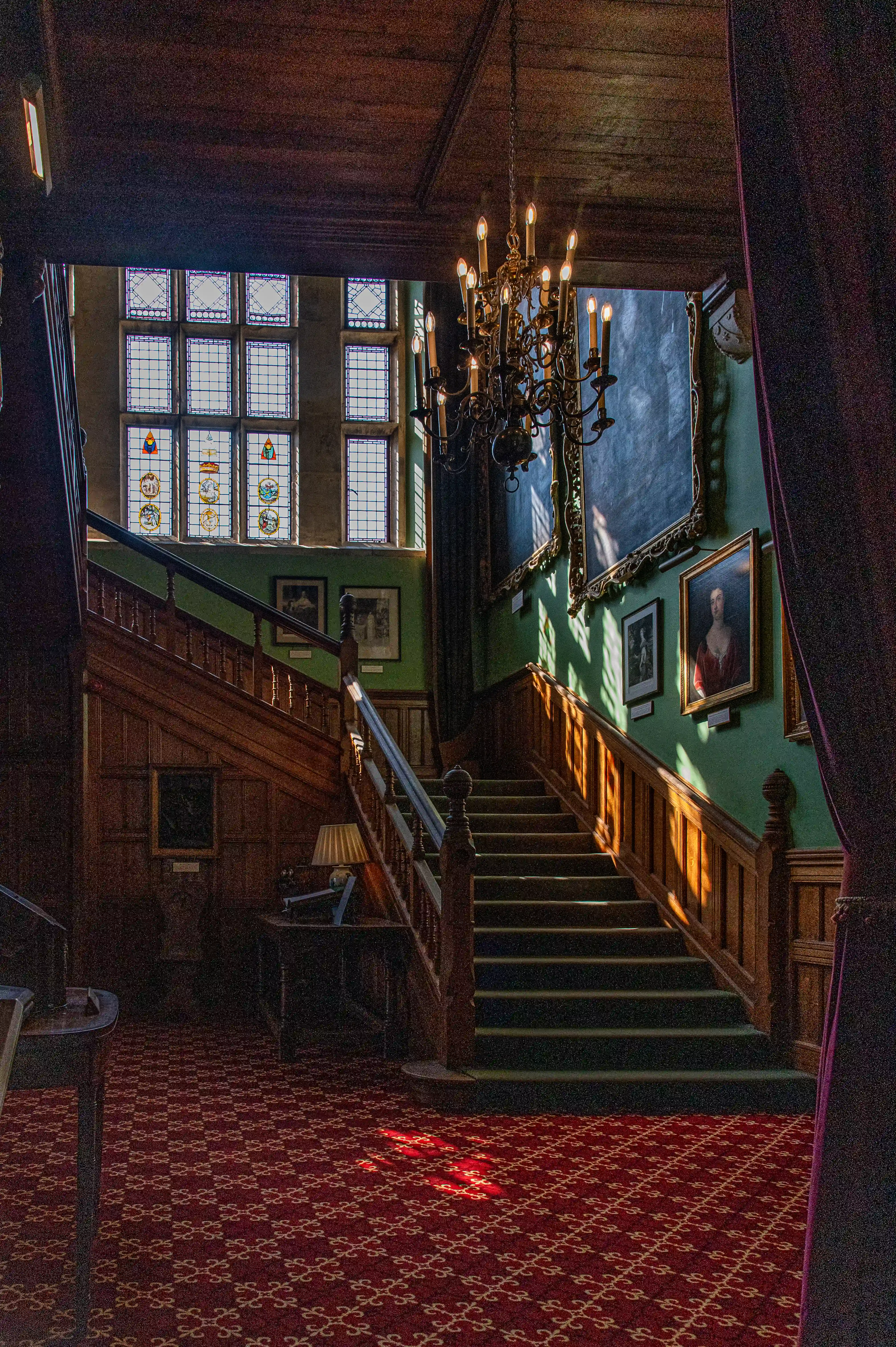
The image depicts an interior view of a grand, historic staircase with ornate wooden paneling, a chandelier, and stained glass windows. The staircase is illuminated by natural light streaming through the windows, casting a warm glow on the steps and surrounding walls. The walls are adorned with framed portraits and decorative elements, adding to the elegant and timeless atmosphere of the space.
Another Angle of the Grand Staircase ‐ photo by ,
©www.mgaylard.co.uk.
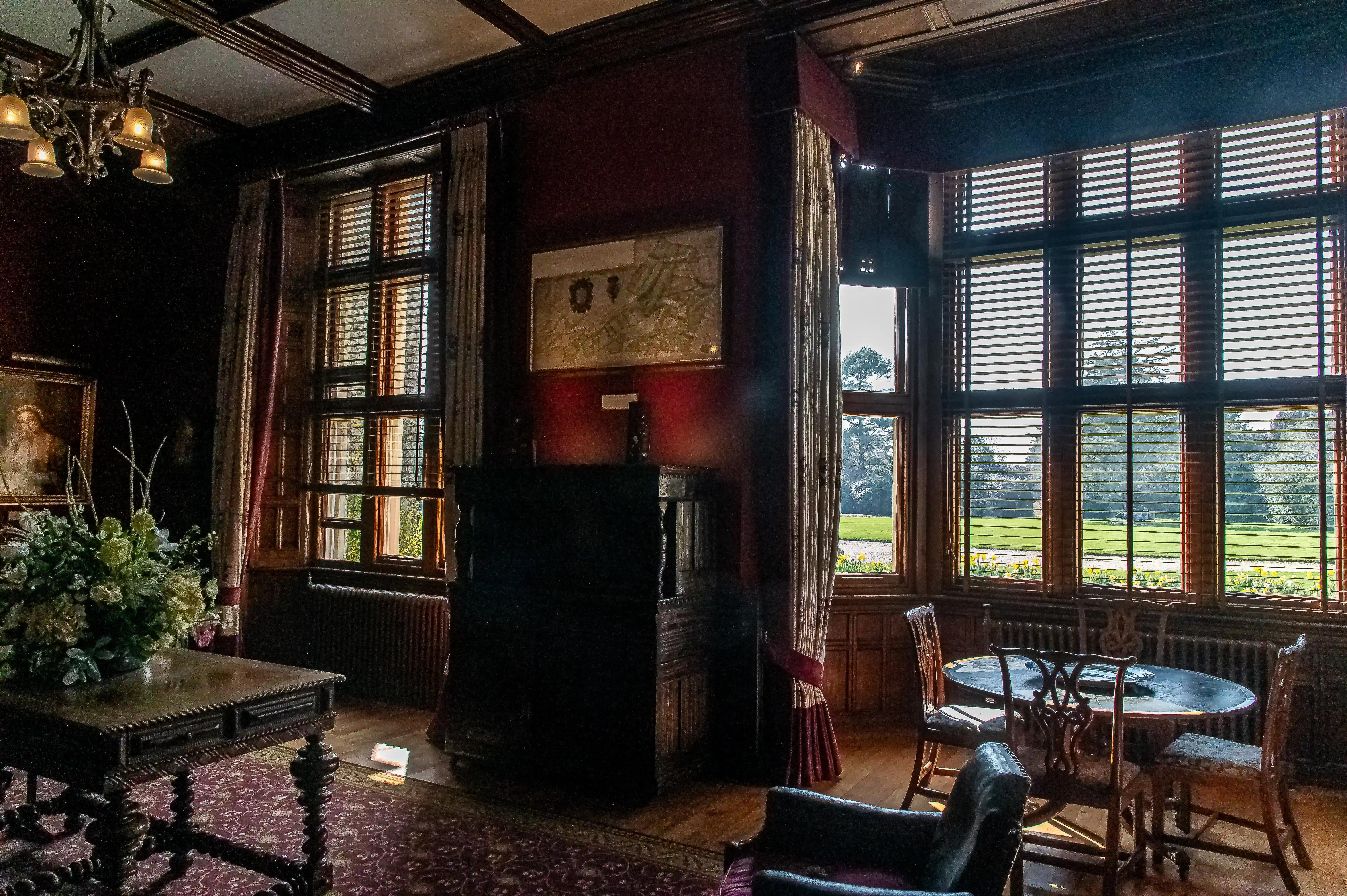
The image depicts a classic, dark-themed room with large windows allowing natural light to stream in. The room features antique furniture, including a large wooden table with intricate carvings, a smaller round table with wooden chairs, and a fireplace. There is a chandelier hanging from the ceiling, and the walls are adorned with a framed map and a painting. The room also includes a large flower arrangement on the main table, and the windows are dressed with heavy curtains and wooden blinds. Outside the windows, a well-maintained lawn and garden are visible.
A Cosy Library or Study ‐ photo by ,
©www.mgaylard.co.uk.
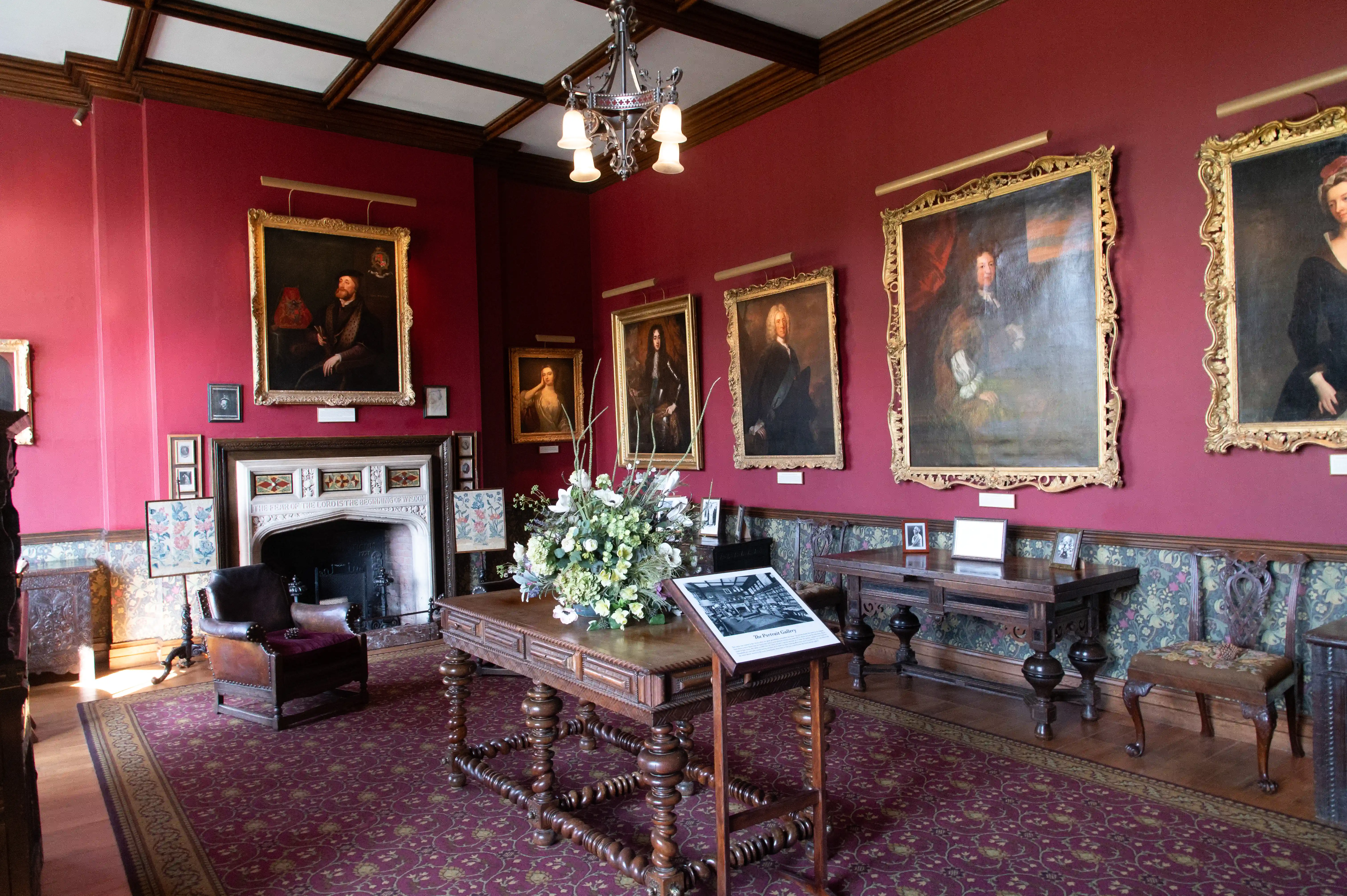
The image depicts a richly decorated room with deep red walls and ornate wooden furniture. The room features several large, gold-framed portraits of historical figures, a central table with a flower arrangement, and a fireplace with intricate detailing. There are also informational displays and smaller framed pictures on the walls and furniture, contributing to the room's historical and elegant ambiance.
A Gallery of Portraits ‐ photo by ,
©www.mgaylard.co.uk.
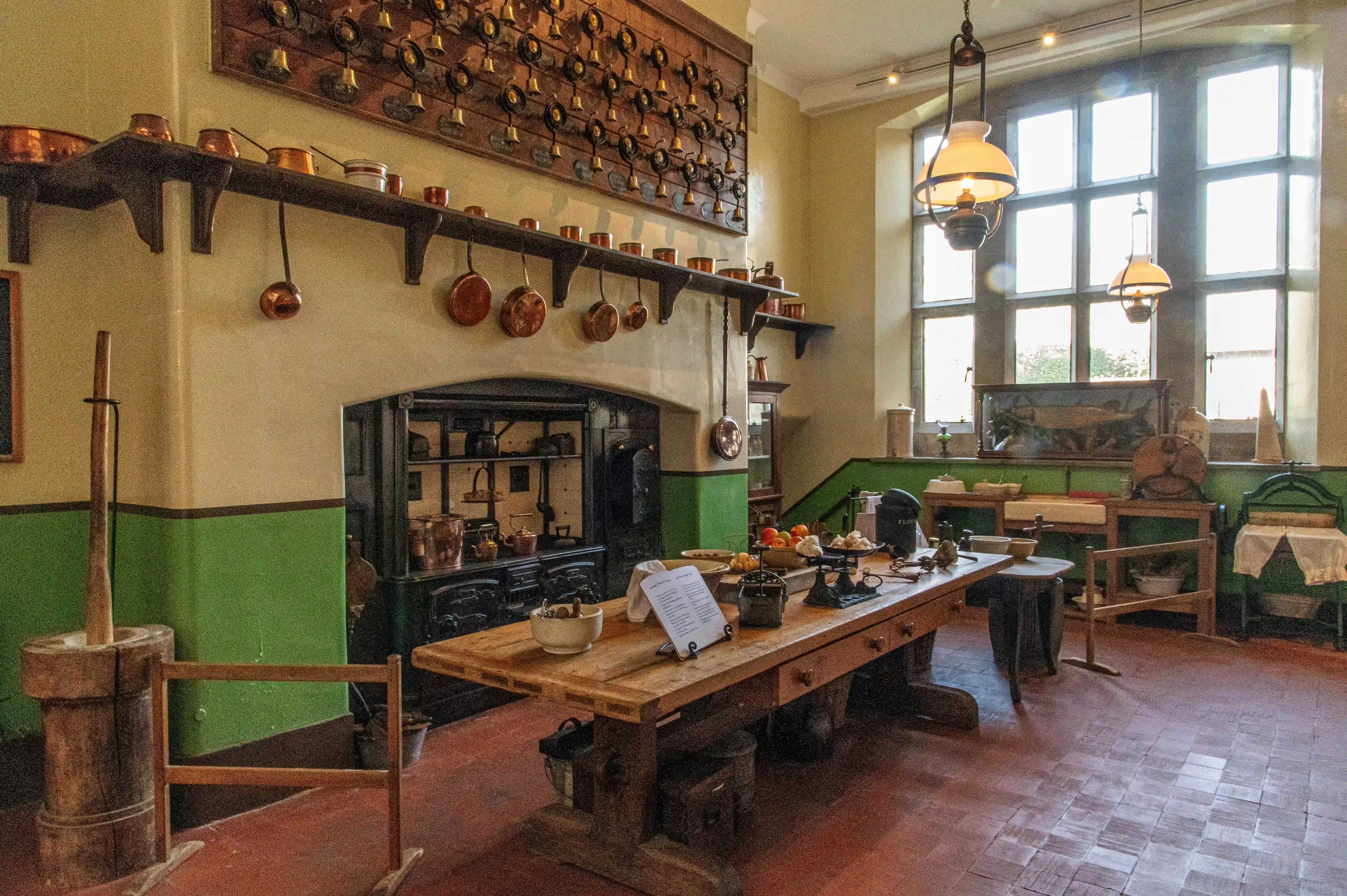
The image depicts a traditional kitchen with various vintage cooking utensils and appliances. The room features a large wooden table in the center, surrounded by other wooden furniture. Copper pots and pans are hanging on the walls, and there is a large, old-fashioned stove with multiple compartments. The kitchen has a rustic and historical ambiance, with green and beige walls, large windows allowing natural light, and several hanging lamps providing illumination.
The Grand Kitchen ‐ photo by ,
©www.mgaylard.co.uk.
The document is a menu from March 24, 1889, detailing meals for breakfast, luncheon, and dinner. Breakfast includes bacon, eggs, and Seville marmalade. Luncheon features salmon tart, pressed ox tongue, and Scaborough pudding. Dinner consists of Italian consomme, grilled herring, game pie, and mutton. Additionally, it notes meals for servants and lists specific individuals for lunch and dinner.
The Daily Menu ‐ photo by ,
©www.mgaylard.co.uk.
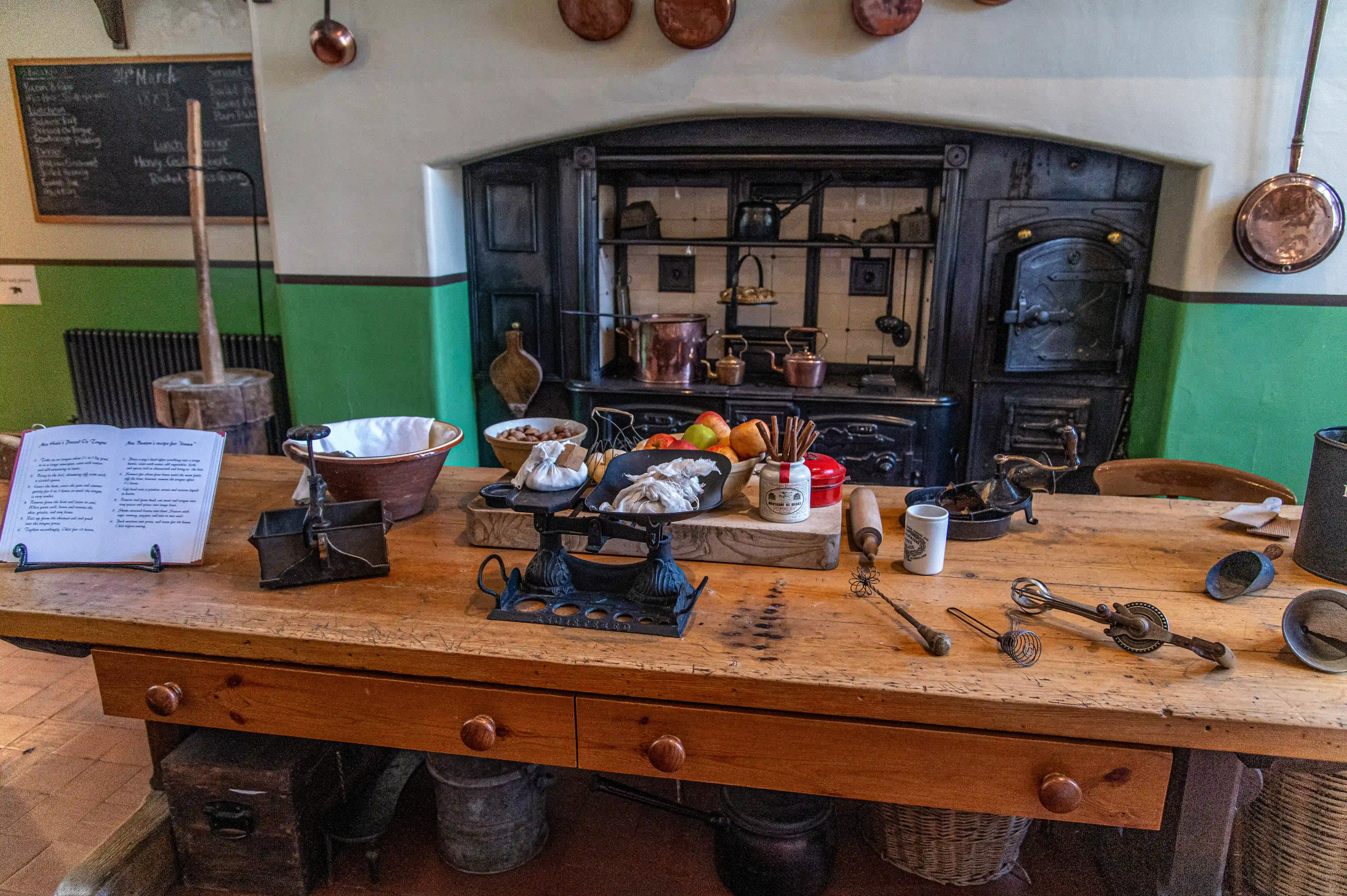
The image depicts a vintage kitchen setting with a wooden worktable cluttered with various old-fashioned kitchen tools and ingredients. The background features a large, antique stove with copper pots and pans hanging around it. The walls are painted green and white, and there are chalkboards with handwritten notes. The overall scene evokes a historical or rustic atmosphere, reminiscent of a bygone era of cooking.
Table Settings and Tools ‐ photo by ,
©www.mgaylard.co.uk.
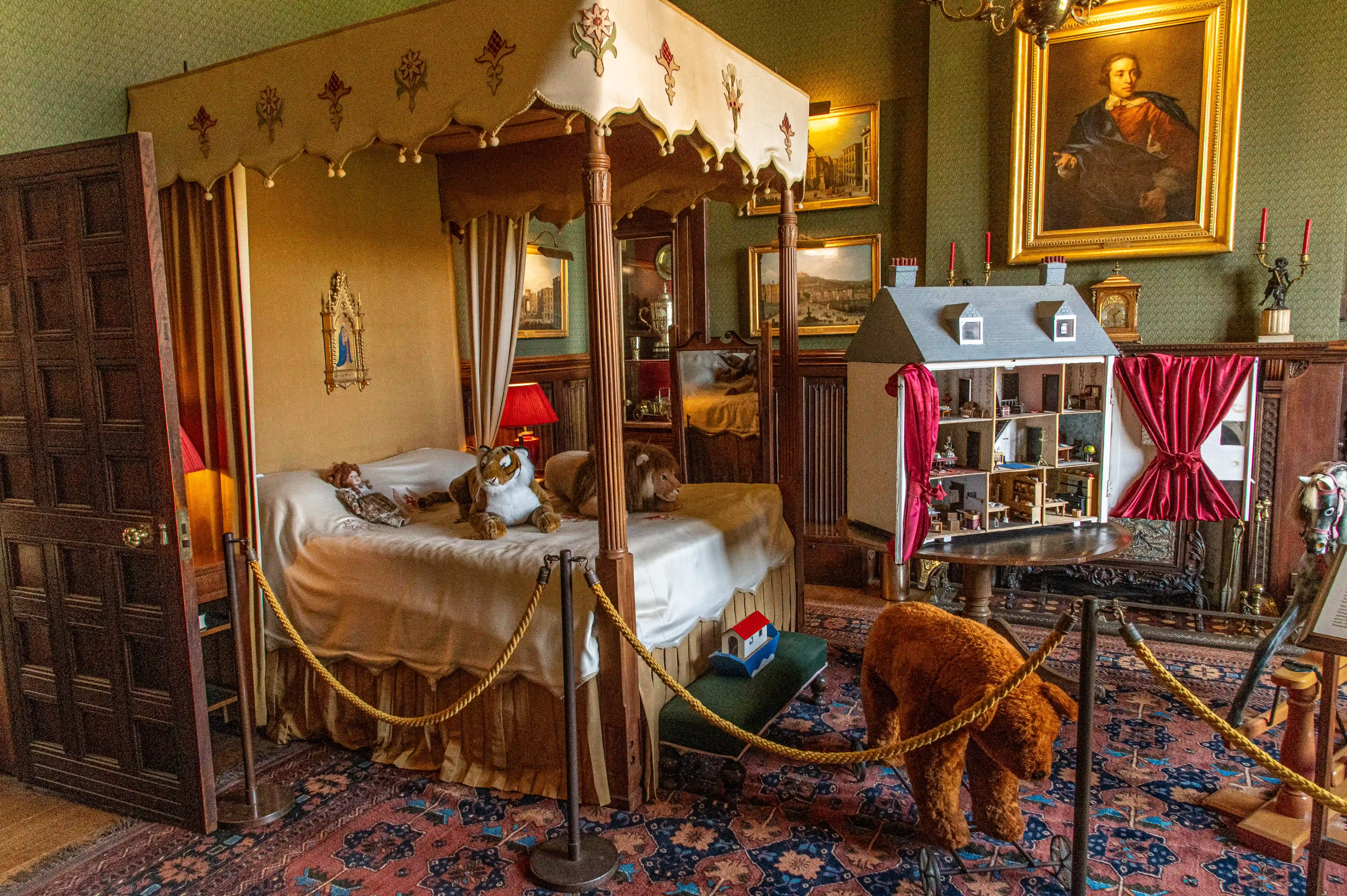
The image depicts a meticulously arranged room with a large, ornate bed adorned with stuffed animals. The room features rich, antique decor including a wooden door, framed paintings, and a dollhouse with detailed miniature furnishings. The space is cordoned off with ropes, suggesting it is part of a museum or exhibit. The overall atmosphere is one of historical elegance and careful preservation.
A Rather Regal Bedroom ‐ photo by ,
©www.mgaylard.co.uk.
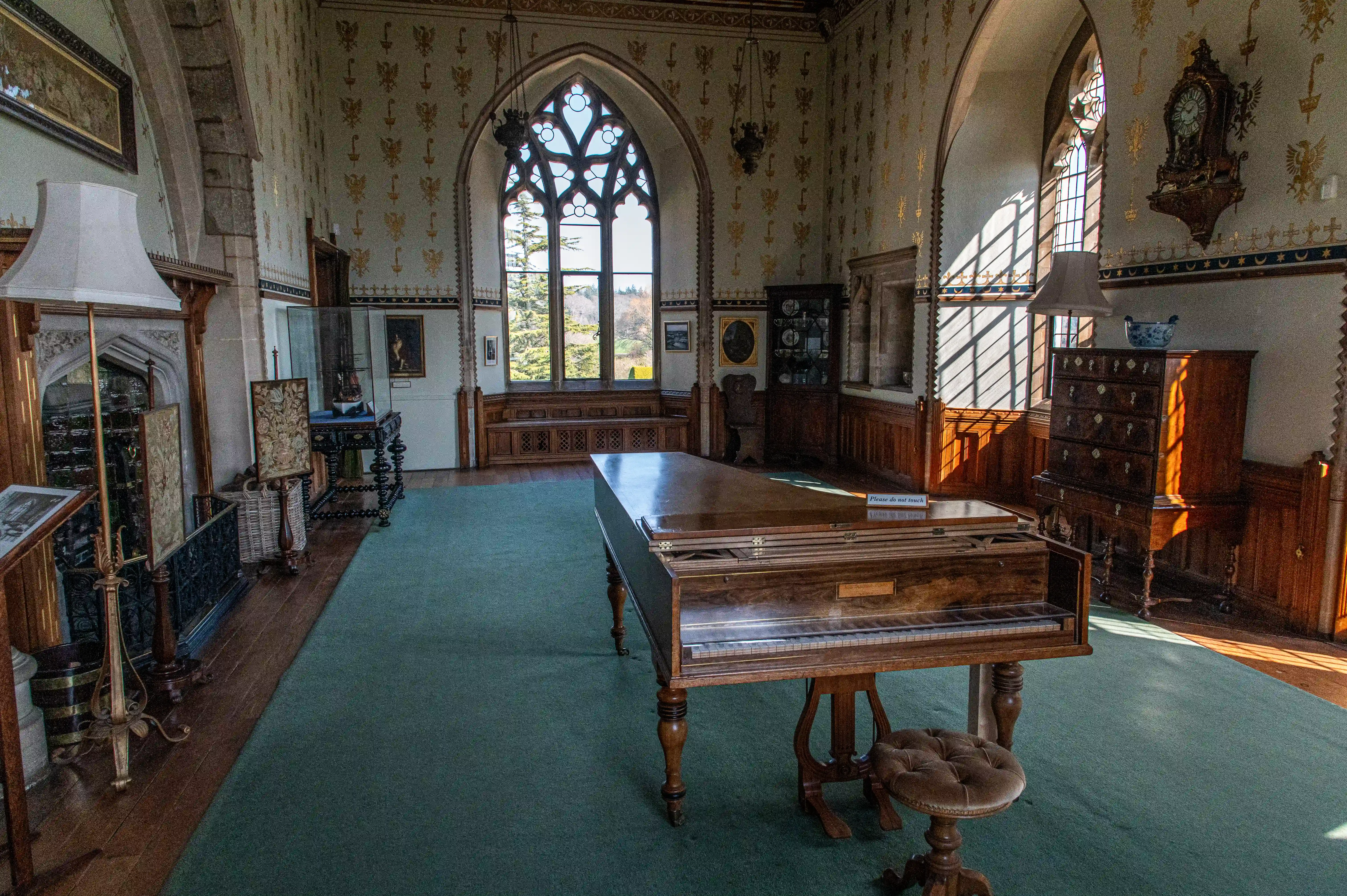
The image depicts an ornately decorated room with a grand piano as the central piece. The room features Gothic-style architecture with large arched windows, intricate wall decorations, and antique furniture. The walls are adorned with various paintings and decorative items, and the room is illuminated by natural light streaming through the windows.
A Sunny Room for Music and Contemplation ‐ photo by ,
©www.mgaylard.co.uk.
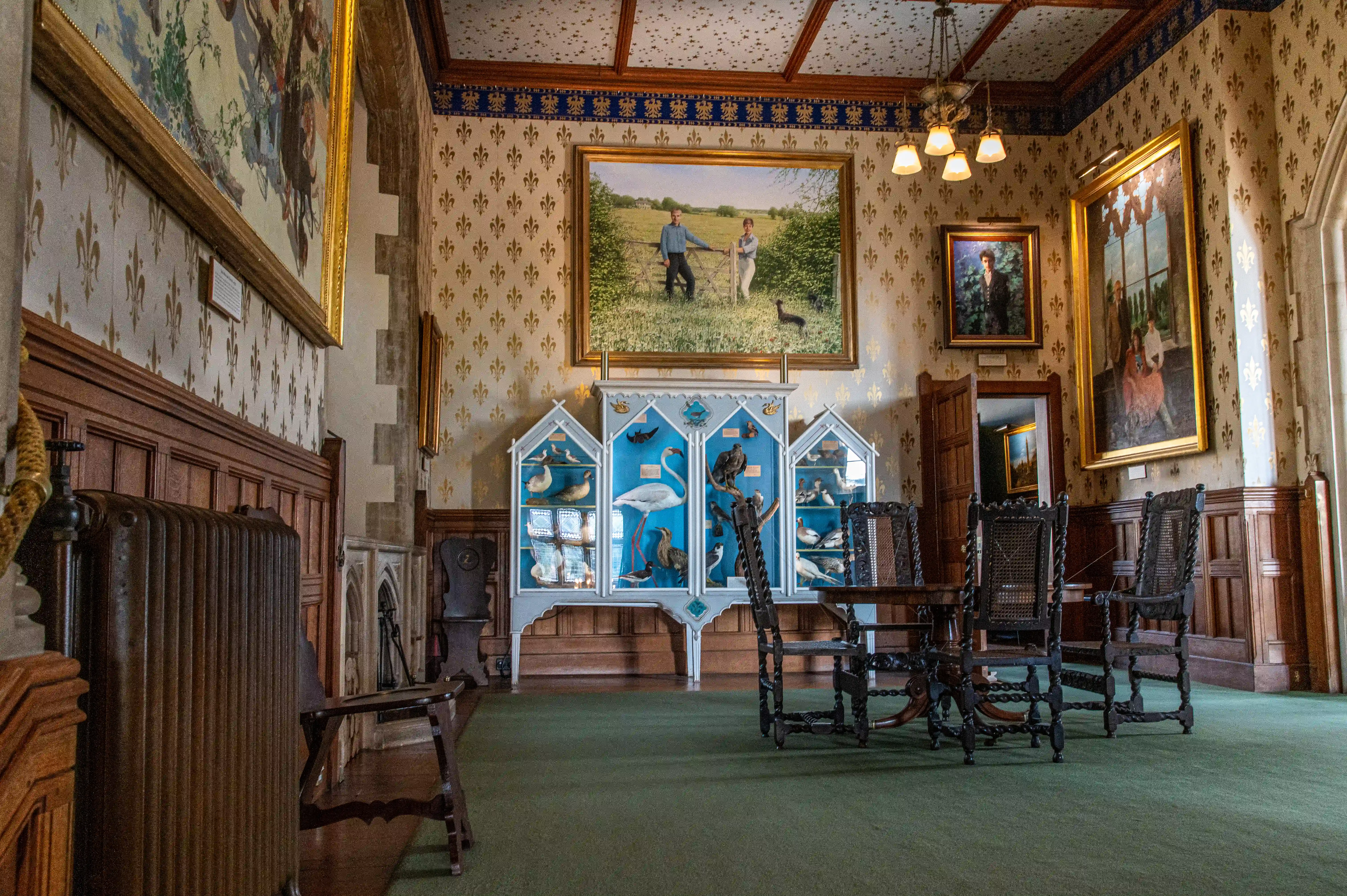
The image depicts an ornately decorated room with antique furniture and bird displays. The walls are adorned with intricate wallpaper and several framed paintings, including a large landscape painting and portraits. The room features wooden paneling, a green carpet, and a collection of antique chairs and benches. There is a display case with various birds, and the ceiling has a decorative pattern. The overall ambiance suggests a historical or museum setting.
A Very Curious Collection Room ‐ photo by ,
©www.mgaylard.co.uk.
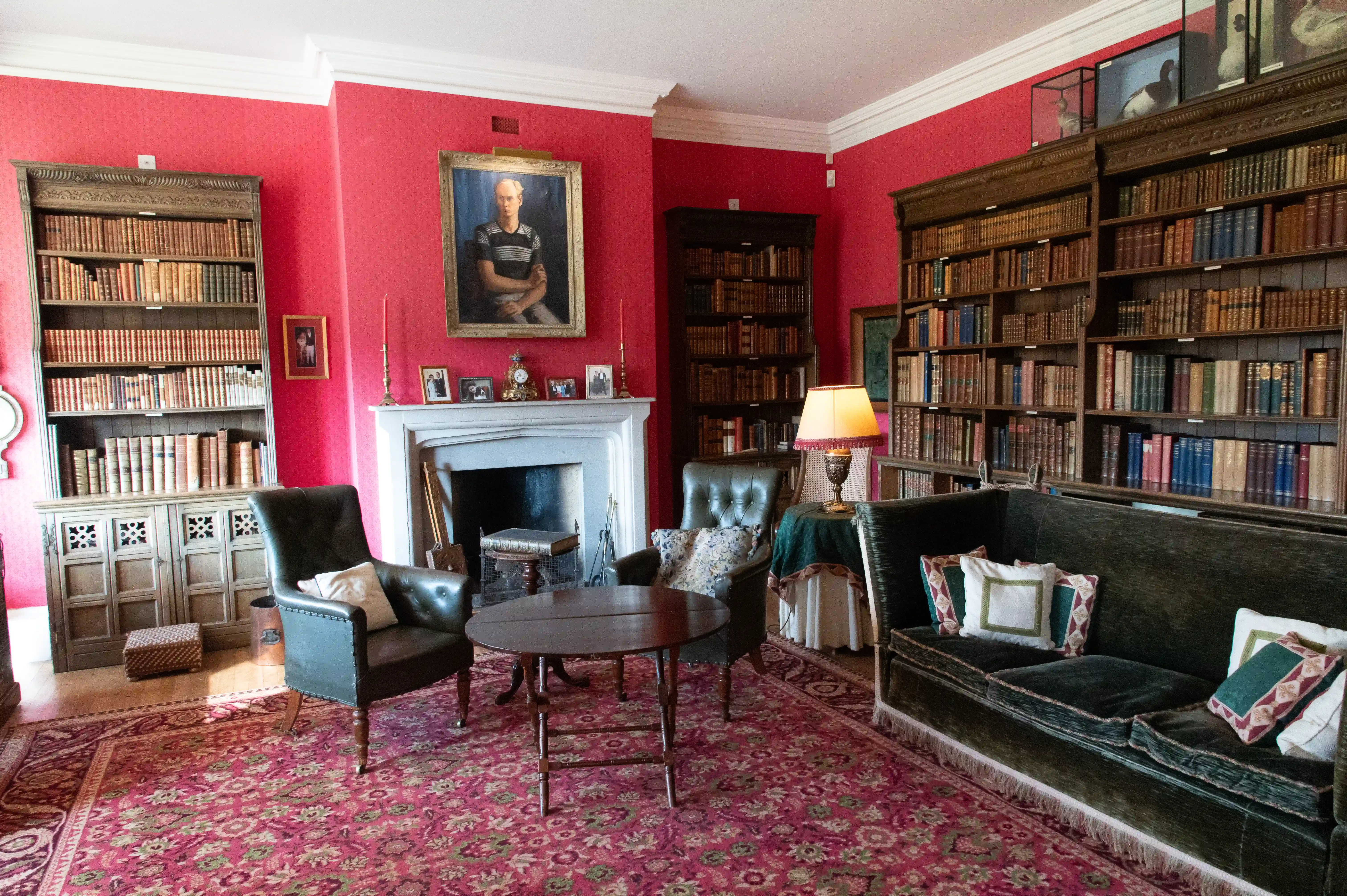
The image depicts a cozy, richly decorated library or study room with walls painted in a deep red color. The room features floor-to-ceiling bookshelves filled with books, a fireplace with a portrait above it, comfortable leather furniture including armchairs and a sofa, and a patterned rug covering the floor. There are also decorative items such as lamps, cushions, and small tables, creating an inviting and warm atmosphere.
The Grand Library Lounge ‐ photo by ,
©www.mgaylard.co.uk.
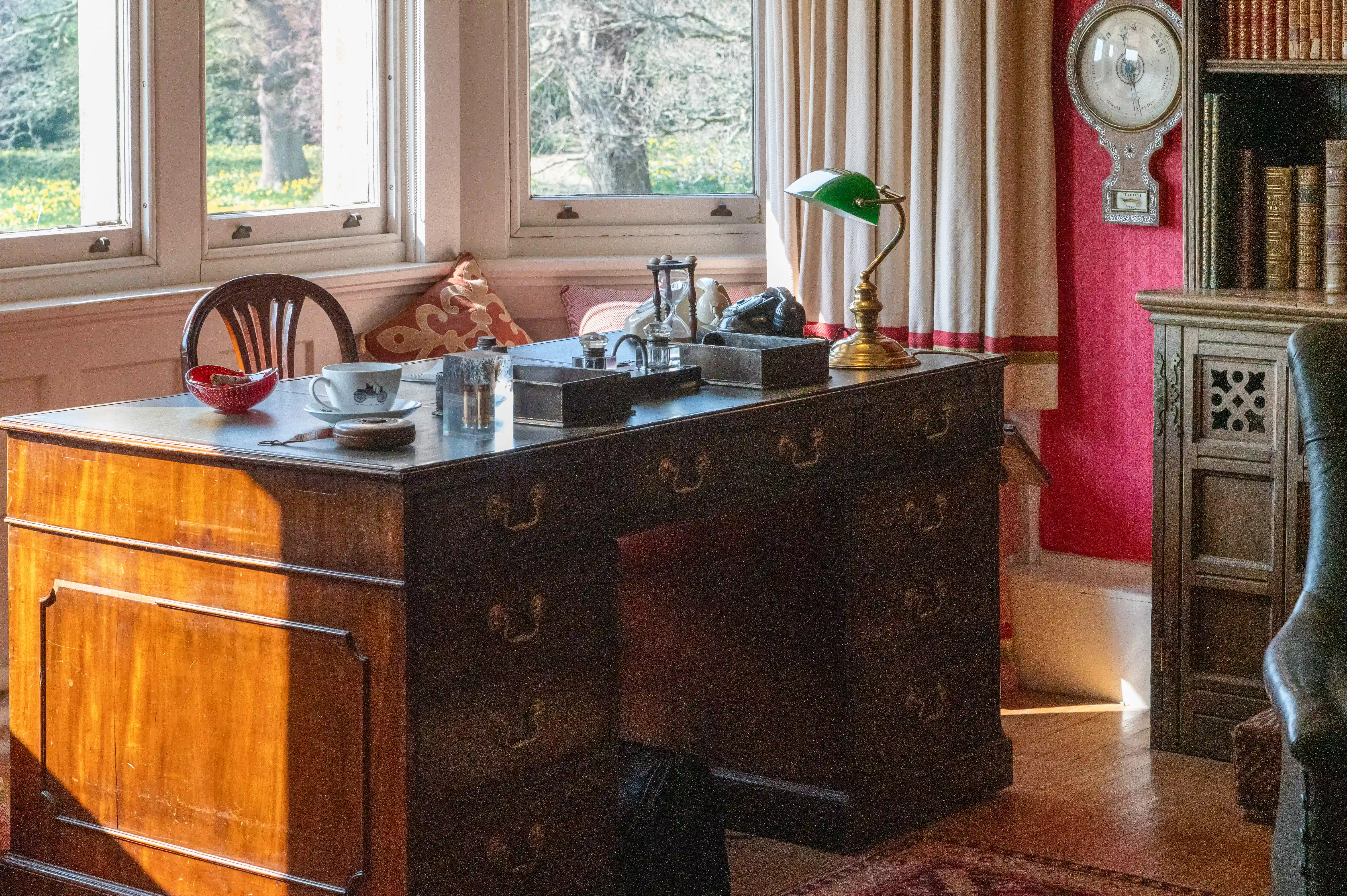
The image depicts a vintage-style study or office room with a wooden desk positioned near a window. The desk has several items on it, including a green desk lamp, an hourglass, a typewriter, a brass lamp, a telephone, and various other small objects. There is also a red basket and a cup and saucer on the desk. The room features wooden furniture, including a chair and a cabinet, with a patterned rug on the floor. The overall ambiance suggests a cozy, well-lit space suitable for reading, writing, or other desk work.
The Sunlit Study Desk ‐ photo by ,
©www.mgaylard.co.uk.
Open the full set flickr button this page

Beaulieu Palace House: A Gothic Jewel in the New Forest

Beaulieu Palace House in Hampshire is a stunning Gothic Revival mansion set in the heart of the New Forest, home to the Montagu family since 1538 and now a major visitor attraction. The estate includes the National Motor Museum (with over 285 historic vehicles, including the new "Driven: Britain’s Motoring Story" gallery), the ruins of Beaulieu Abbey, lush gardens, and family-friendly features like the Little Beaulieu adventure playground and a monorail ride. Visitors can explore the restored Victorian kitchen, themed exhibitions, and WWII spy history, while events like the BBC Gardeners’ World Spring Fair (1–3 May 2026) and seasonal activities make it a year-round destinatio

From Abbey Gatehouse to Aristocratic Home

Nestled in the heart of the New Forest, Beaulieu Palace House is a living testament to England’s medieval and Gothic heritage. Originally built in the 13th century as the grand gatehouse to Beaulieu Abbey—a Cistercian monastery founded by King John—the estate was transformed in 1538 when Thomas Wriothesley, 1st Earl of Southampton, acquired it after the Dissolution of the Monasteries. Over the centuries, the house evolved from a monastic entrance into a family residence, its stone walls absorbing the whispers of monks, the footsteps of kings, and the daily life of the Montagu family, who have called Beaulieu home for nearly 500 years. The house’s Gothic Revival façade, with its turrets and arched windows, overlooks the tranquil Beaulieu River, a scene that feels plucked from a medieval tapestry

A House of Royal Visits and Haunted Halls

Palace House has played host to royalty and intrigue alike. In 1613, King James I stayed here, granting an audience to the Venetian ambassador in its hallowed halls. Yet the house’s history is not all pageantry: it is also one of England’s most haunted places. Visitors and staff alike have reported encounters with the “Lady in Grey,” believed to be the spirit of Lady Isabella, Countess of Beaulieu, who died in 1786. The scent of incense, said to foretell tragedy, lingers in the old chapel, and the echoes of séances—including one attended by Arthur Conan Doyle—add a layer of mystery to the house’s already rich past. The Montagu family’s personal touch is everywhere, from the coronation robes on display to the portraits lining the walls, making Palace House feel less like a museum and more like a home steeped in history

A House of Royal Visits and Haunted Halls

Palace House has played host to royalty and intrigue alike. In 1613, King James I stayed here, granting an audience to the Venetian ambassador in its hallowed halls. Yet the house’s history is not all pageantry: it is also one of England’s most haunted places. Visitors and staff alike have reported encounters with the “Lady in Grey,” believed to be the spirit of Lady Isabella, Countess of Beaulieu, who died in 1786. The scent of incense, said to foretell tragedy, lingers in the old chapel, and the echoes of séances—including one attended by Arthur Conan Doyle—add a layer of mystery to the house’s already rich past. The Montagu family’s personal touch is everywhere, from the coronation robes on display to the portraits lining the walls, making Palace House feel less like a museum and more like a home steeped in history

A Living Legacy

Beaulieu Palace House is more than a historic building; it is a symbol of continuity and adaptation. The Montagu family’s stewardship has preserved not just the stones and timbers of the house, but its spirit—a place where medieval monks, Tudor courtiers, and modern visitors have all left their mark. Whether exploring the abbey’s ruins, strolling through the gardens, or marveling at the Gothic grandeur of the house itself, visitors are drawn into a story that spans centuries, a tale of faith, power, and the enduring allure of the English countryside

References

en.wikipedia.orgwww.beaulieu.co.ukwww.historyhit.comwww.britainexpress.comresearch.hgt.org.uk , Text generated by Mistral AI

Beaulieu

National Motor Museum

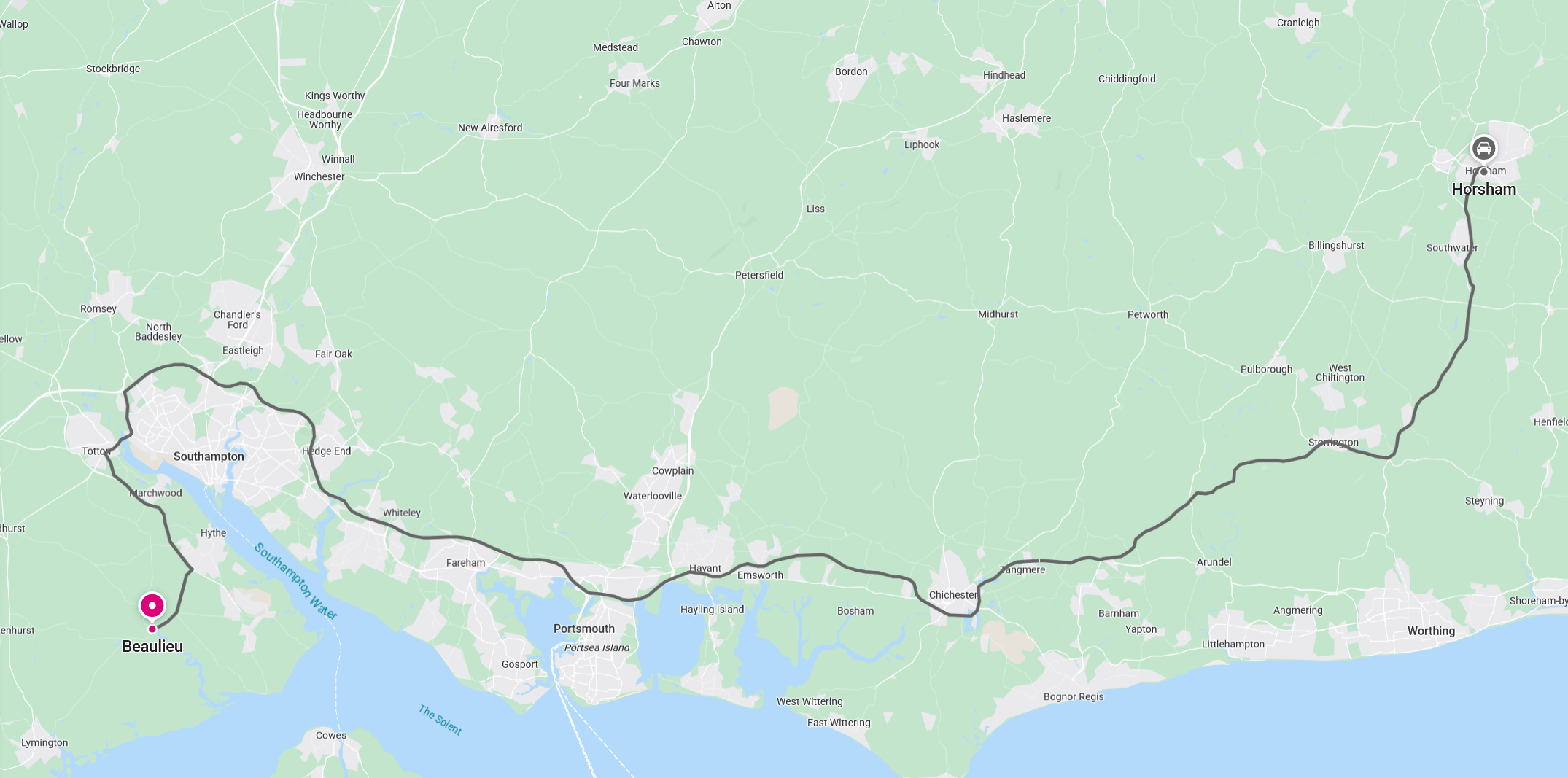
BeaulieuHampshire,   SO42 7ZN,   United Kingdom

The National Motor Museum, located at Beaulieu in the New Forest, Hampshire, is home to one of the world’s finest collections of historic vehicles. With over 250 cars, motorcycles, and other vehicles on display, the museum tells the story of motoring from its earliest days to the present. Founded in 1952 by Edward Douglas-Scott-Montagu, the museum is renowned for its diverse and iconic collection, interactive exhibits, and family-friendly attractions, making it a must-visit destination for motoring enthusiasts and history lovers alike.
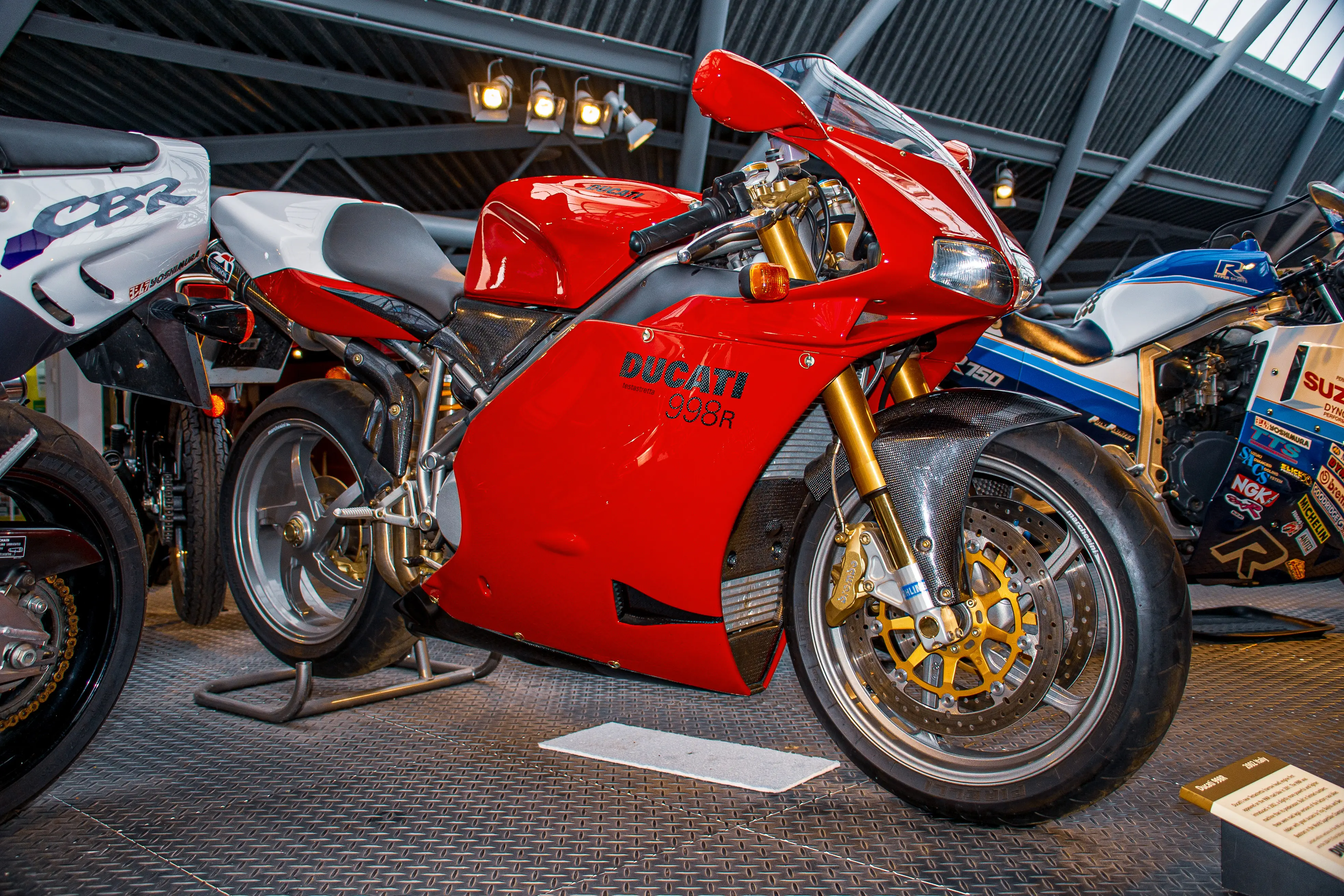
The image showcases a collection of high-performance motorcycles, prominently featuring a red Ducati 998R. The motorcycles are displayed in an indoor setting, likely a museum or showroom, with the Ducati 998R being the central focus due to its distinctive red color and gold components. The surrounding motorcycles include models from brands such as Suzuki and Yamaha, each with unique designs and color schemes. The display area is well-lit, highlighting the intricate details and features of the motorcycles. The setting suggests an exhibition aimed at showcasing the evolution and craftsmanship of high-end motorcycles.
Red Rocket ‐ photo by ,
©www.mgaylard.co.uk.
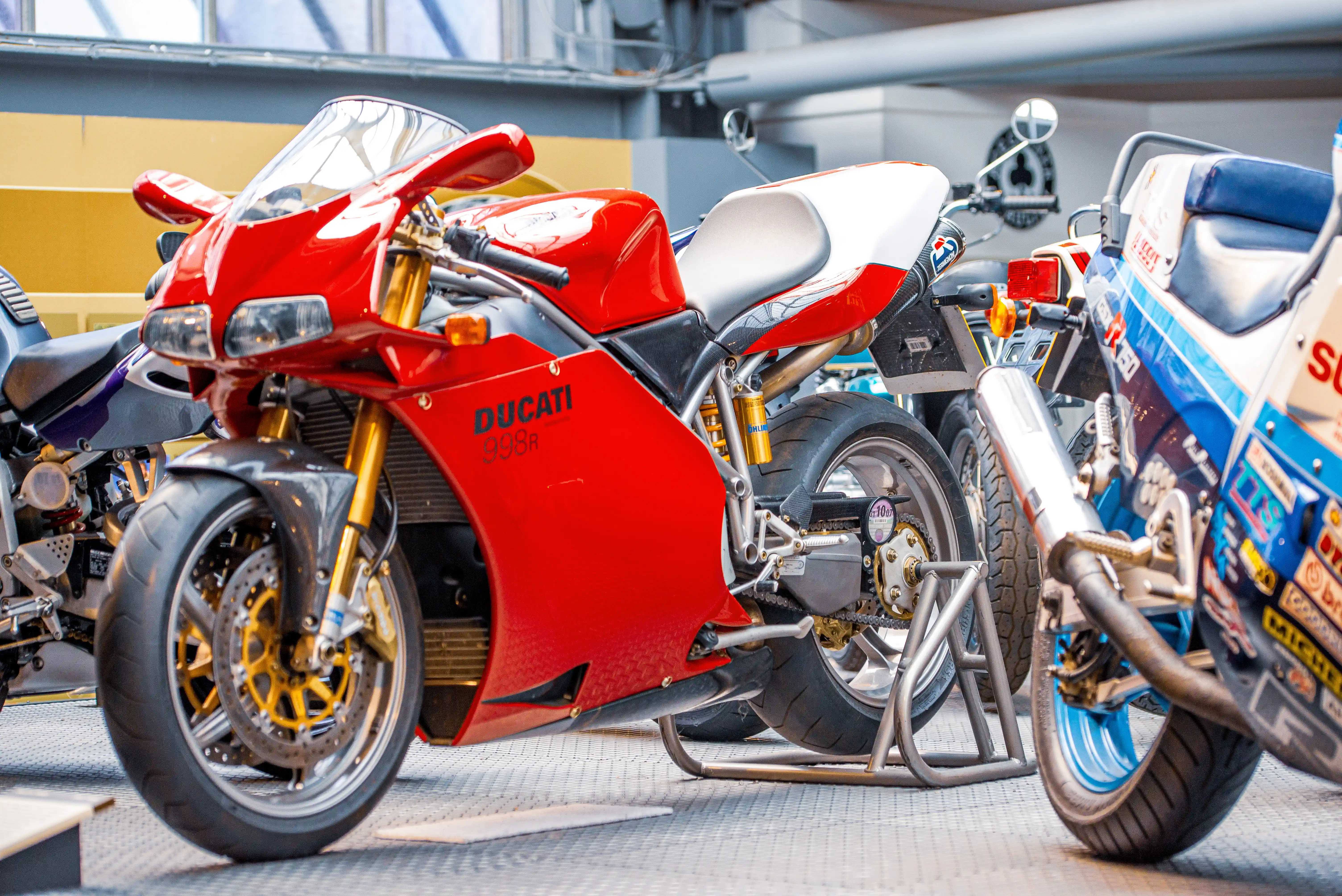
The image shows three motorcycles parked side by side. The motorcycle in the foreground is a red Ducati 958r with a distinctive red fairing and gold-colored components. The other two motorcycles have different designs and colors, with one featuring a predominantly white and blue color scheme and the other being black. The motorcycles are parked in what appears to be a garage or storage area with a concrete floor and metal beams in the background.
Side Profile Speedster ‐ photo by ,
©www.mgaylard.co.uk.
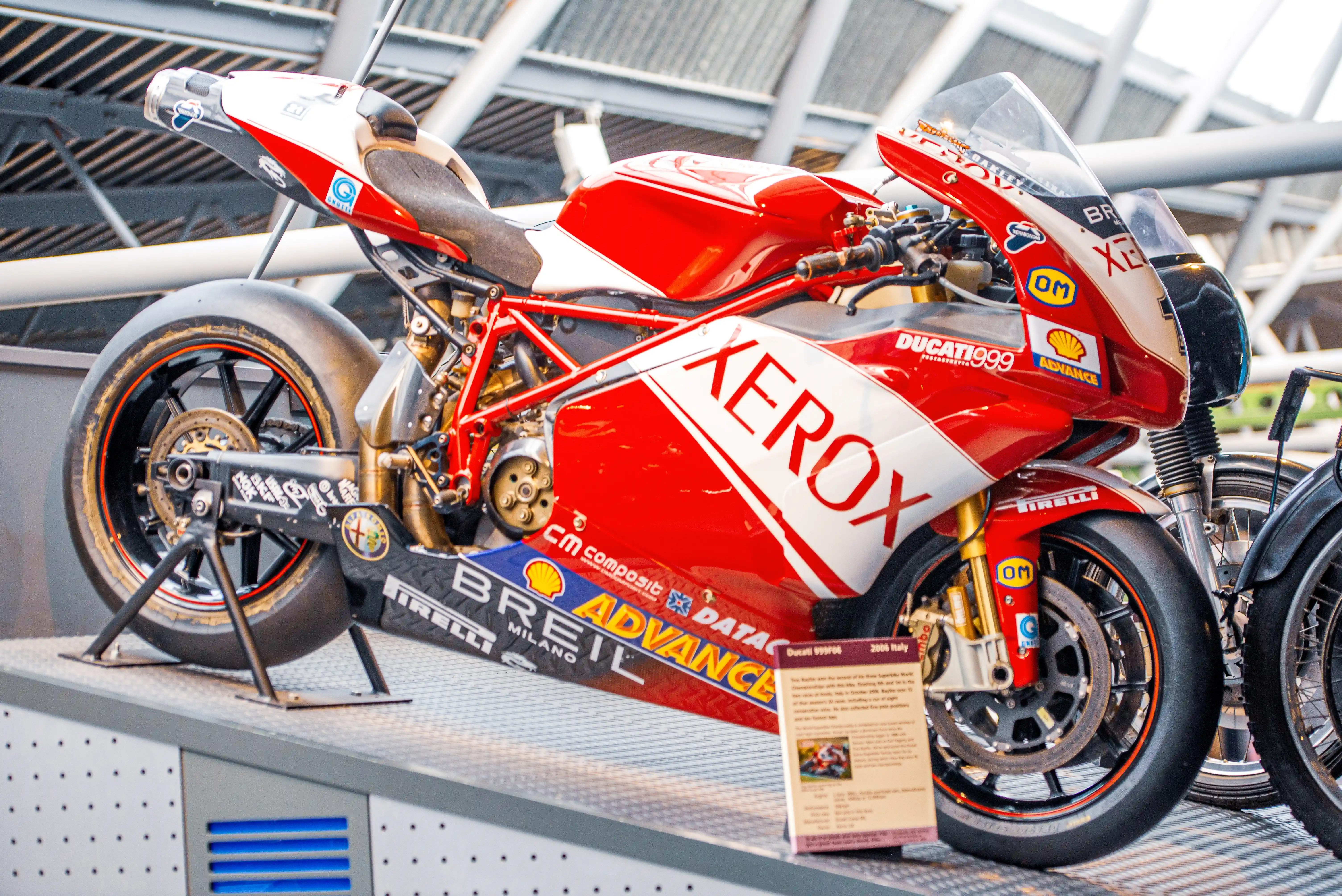
The image showcases a Ducati 999 motorcycle, prominently featuring the Zerox brand. The motorcycle is part of a display, likely in a museum or exhibition setting, as indicated by the informational plaque next to it. The bike is equipped with various sponsor logos, including Shell, Pirelli, and others, and has a distinctive red and white color scheme. The motorcycle appears to be a racing model, highlighted by its sleek design and exposed mechanical components.
Xerox Racing Beast ‐ photo by ,
©www.mgaylard.co.uk.
The image shows a classic Honda motorcycle on display in a museum or showroom. The motorcycle is teal with chrome accents and has a license plate reading 'VJF107H'. It features a large headlight with dual smaller lights, a black seat, and spoked wheels. The setting appears to be well-lit with a modern, industrial design ceiling.
Classic Cruiser Cool ‐ photo by ,
©www.mgaylard.co.uk.
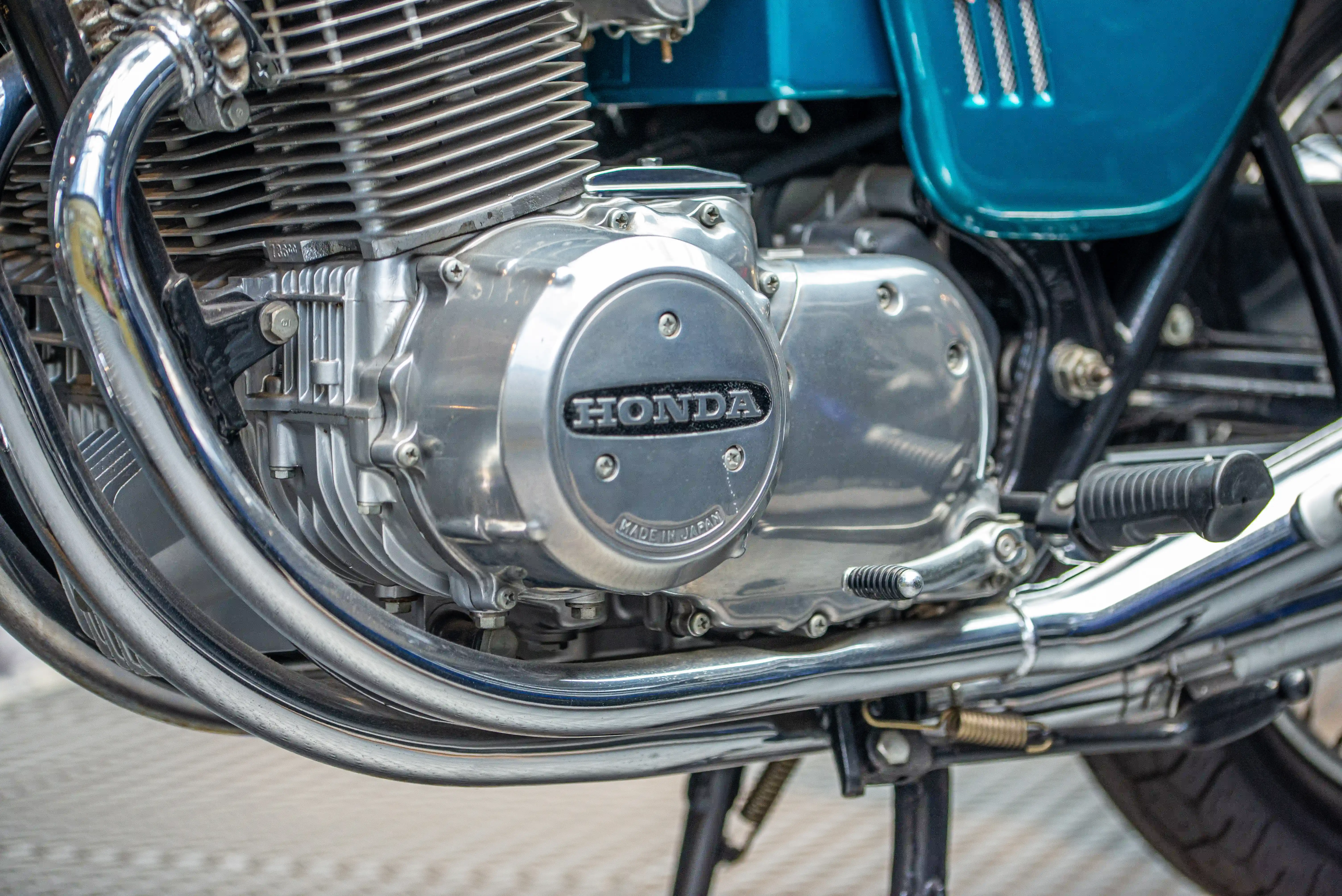
The image shows a close-up view of a motorcycle engine, prominently featuring the Honda brand logo on the engine cover. The motorcycle appears to be well-maintained and has a classic design, with visible components such as the cylinder head, fins, and various bolts and nuts. The engine cover also indicates that it is made in Japan. The surrounding area includes parts of the motorcycle's frame and some wiring.
Engine Detail ‐ photo by ,
©www.mgaylard.co.uk.
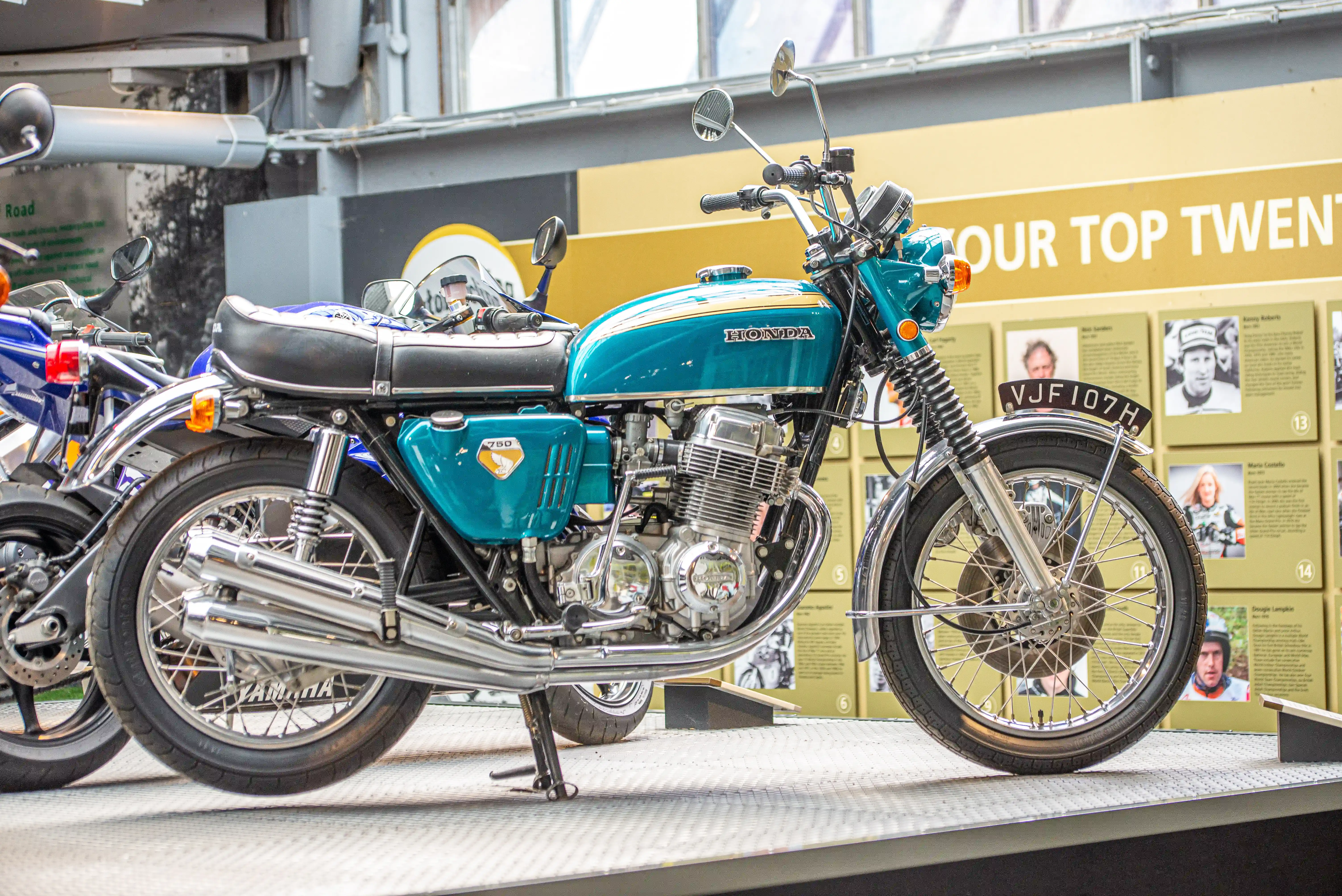
The image showcases a classic Honda motorcycle, specifically a model 750, displayed in a museum or exhibition setting. The motorcycle is teal and black with chrome details, and it features a distinctive design typical of older models. It is positioned on a platform with other motorcycles and informational displays in the background, highlighting notable individuals and their contributions. The setting suggests a celebration of motorcycle history and innovation.
Turquoise Timelessness ‐ photo by ,
©www.mgaylard.co.uk.
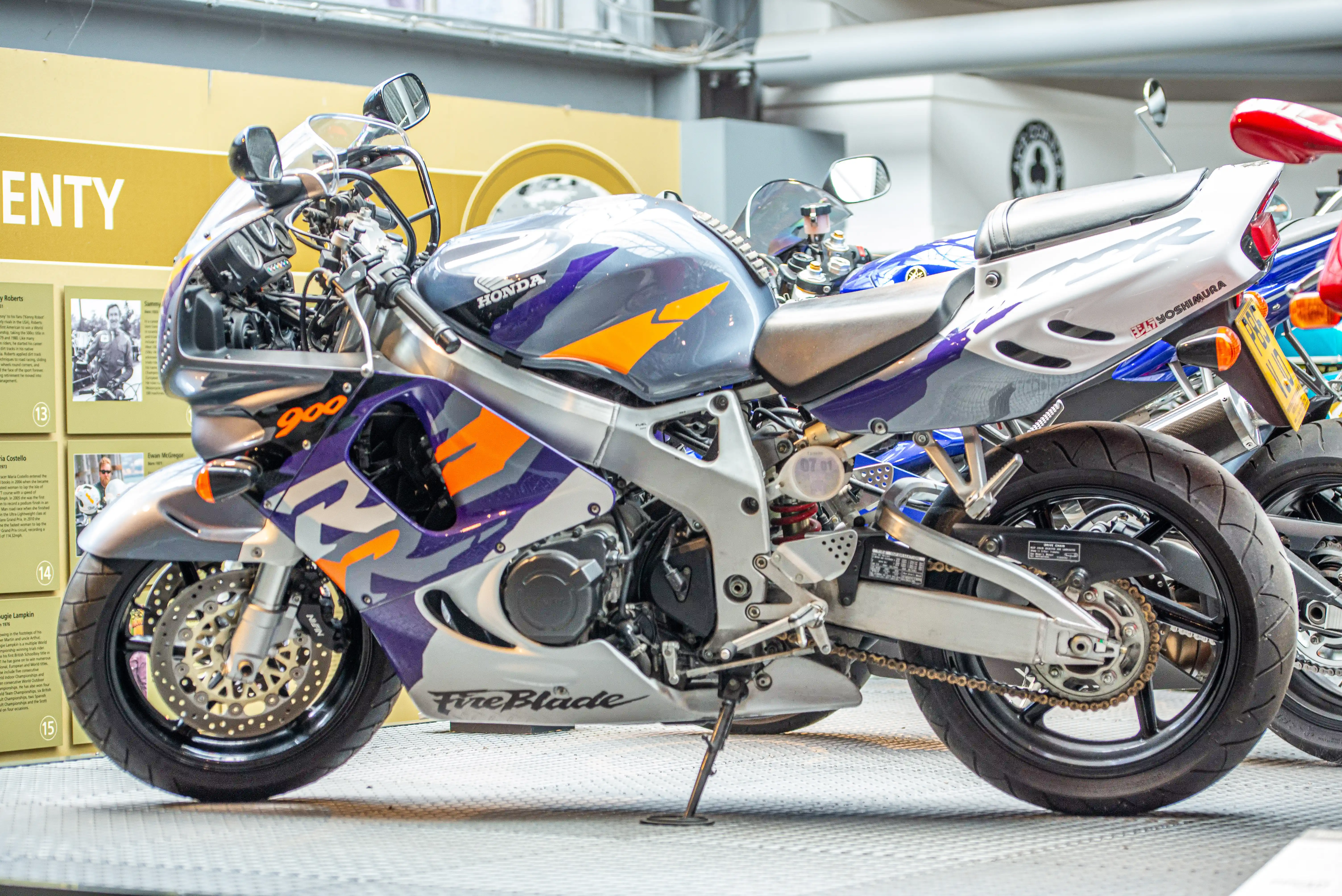
Right then, this first one is a proper beauty! It's a Honda CBR900RR Fireblade, and it looks like it's in absolutely mint condition. You can see the iconic 'Fireblade' logo proudly displayed on the fairing. It's got a wicked silver and purple paint job with some nice orange accents that really make it pop. The bike's a bit of a legend, really, known for its performance and how light it felt for its size back in the day. It's sitting on a display stand, looking ready to tear up the road, or maybe it's in a museum somewhere, judging by the display boards in the background. Definitely a sporty number.
The Sleek Fireblade ‐ photo by ,
©www.mgaylard.co.uk.
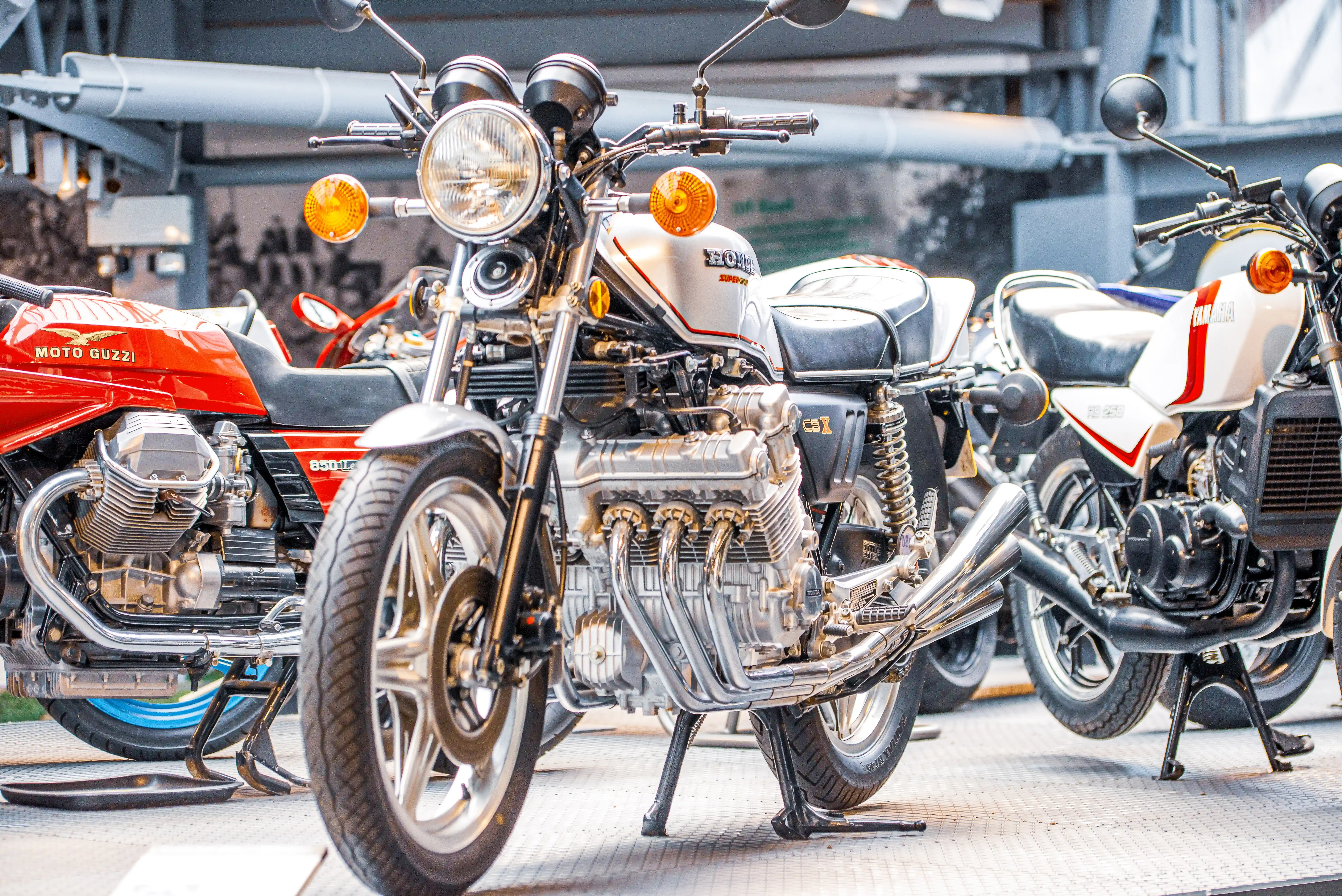
Now, this second image is a bit of a different vibe. We've got a few classic bikes lined up here, and the star of the show, right in the middle, is a Honda CBX. Look at that engine – it's a beast with six cylinders all lined up like soldiers! It's got that retro chrome look that's just timeless. To the left, you can spot a red Moto Guzzi, and to the right, another Honda, possibly a Gold Wing or something similar. These bikes have that old-school charm, all about that smooth ride and a bit of rumble. They look like they're ready for a leisurely cruise, perhaps down the coast or to a classic bike rally. It’s a real collection of motorcycling history here.
The Classic Cruiser Crew ‐ photo by ,
©www.mgaylard.co.uk.
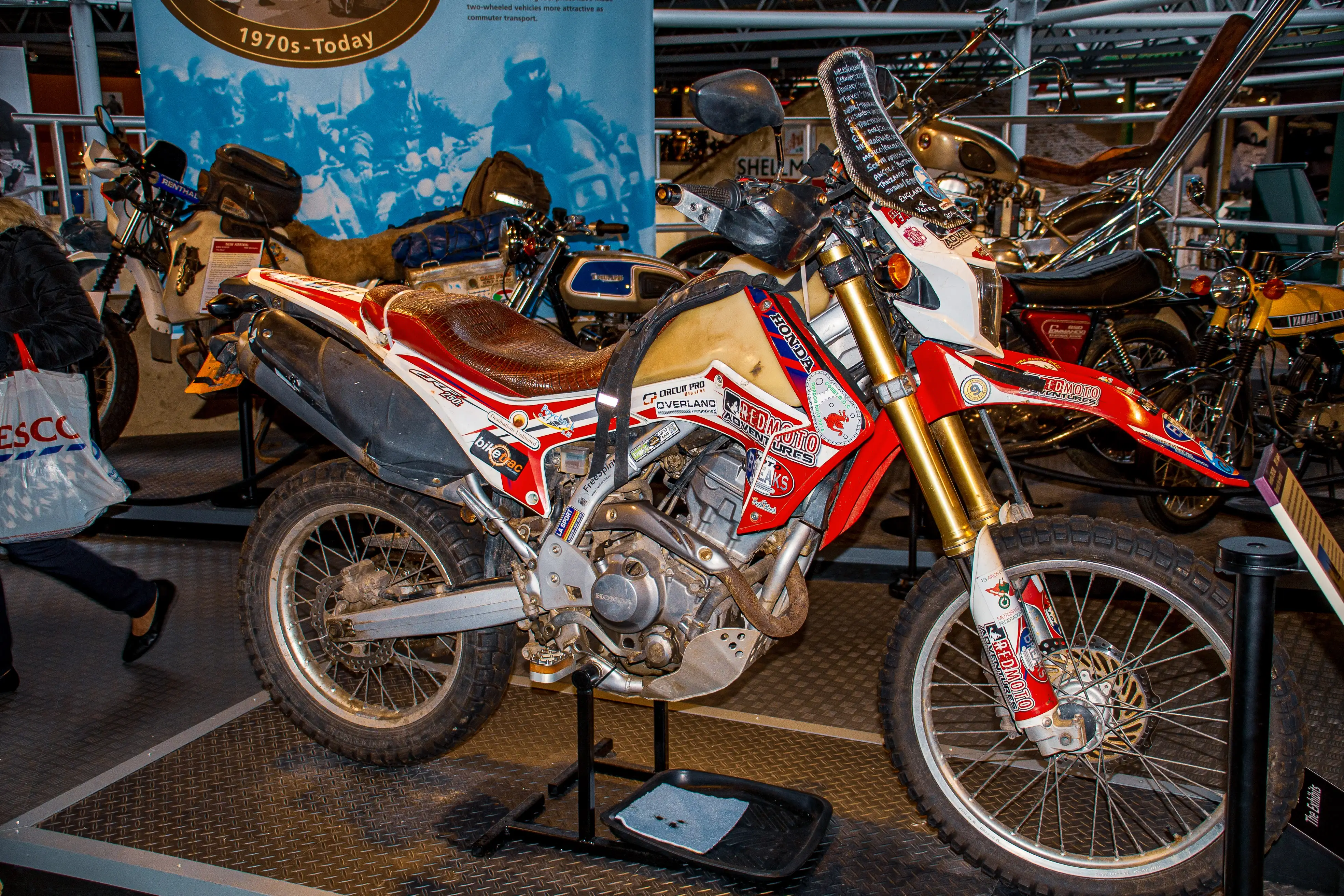
he image showcases a collection of motorcycles on display, with a prominent red, white, and gold motorcycle in the foreground. This motorcycle features various stickers and sponsors' logos, including KTM, Red Bull, and Mitas, and is equipped with a leather seat and gold-colored front forks. The background includes other motorcycles and a banner indicating the exhibit covers motorcycles from the 1970s to the present day. The setting appears to be an indoor exhibition space, likely a museum or showroom, with various motorcycle parts and accessories visible.
Rhonda the Honda ‐ photo by ,
©www.mgaylard.co.uk.
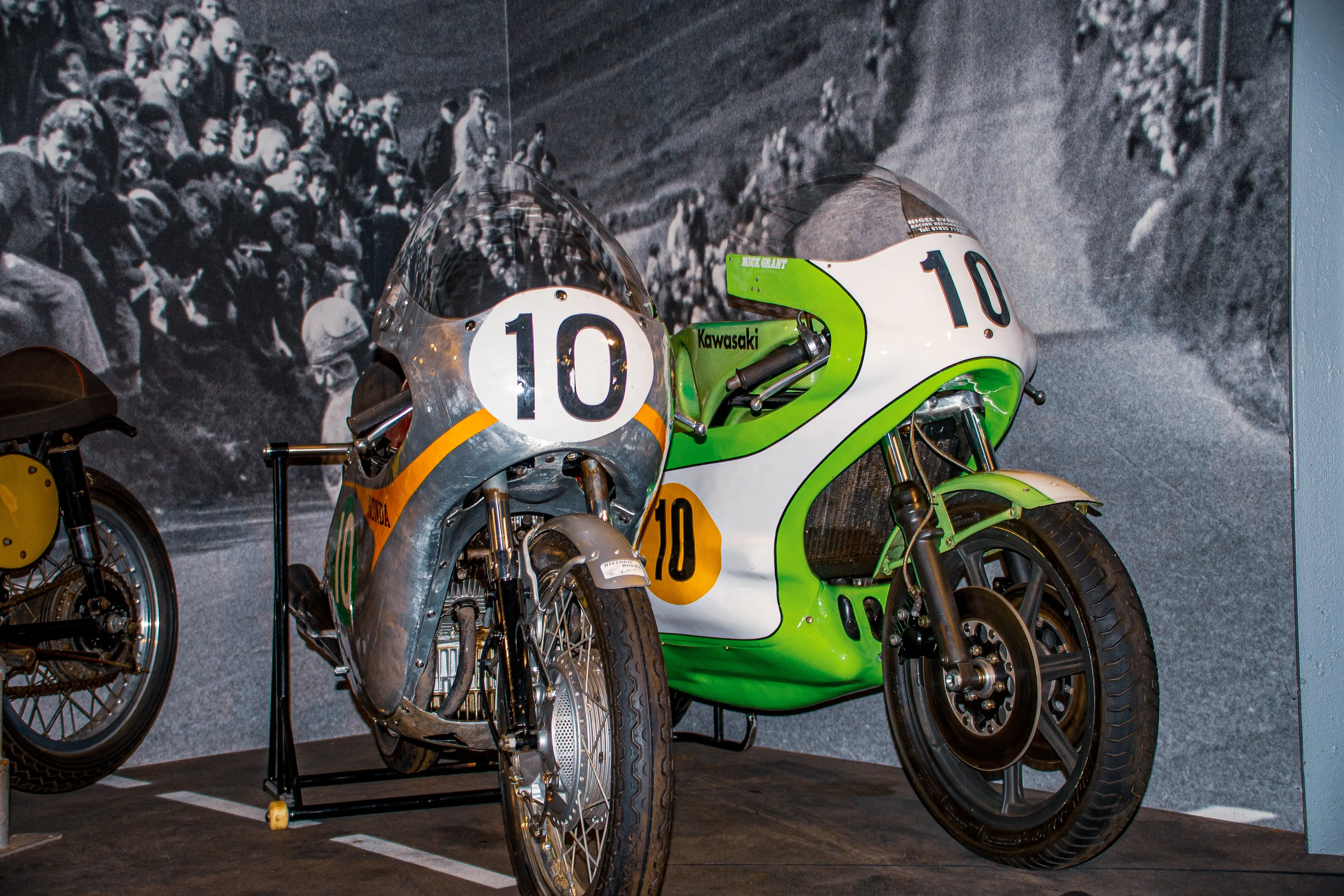
The image shows two vintage racing motorcycles on display. The motorcycle in the foreground is a Kawasaki, painted in green, white, and orange, with the number 10 prominently displayed. The motorcycle in the background is yellow and black, with the number 10 as well. Both motorcycles are positioned on stands, and the background features a black-and-white photograph of a crowd, likely from a past racing event.
Racers Ready to Roll ‐ photo by ,
©www.mgaylard.co.uk.
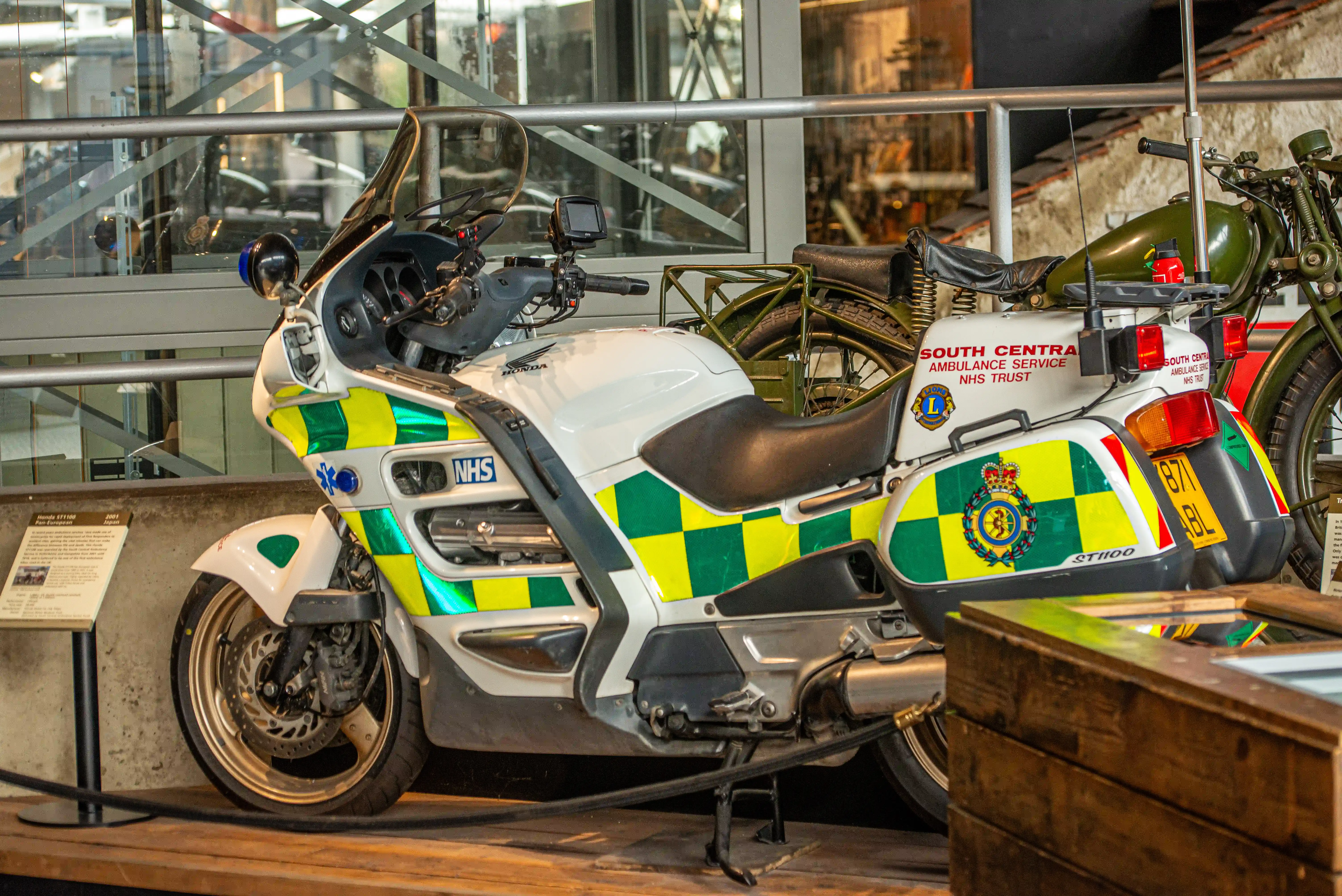
The image depicts an ambulance service motorcycle from the South Central Ambulance Service NHS Trust. The motorcycle is a Honda ST1100, equipped with medical supplies and marked with the NHS logo and checkered patterns in green and yellow. It is displayed in a museum-like setting, alongside another vintage motorcycle.
On the Way to Help  ‐ photo by ,
©www.mgaylard.co.uk.
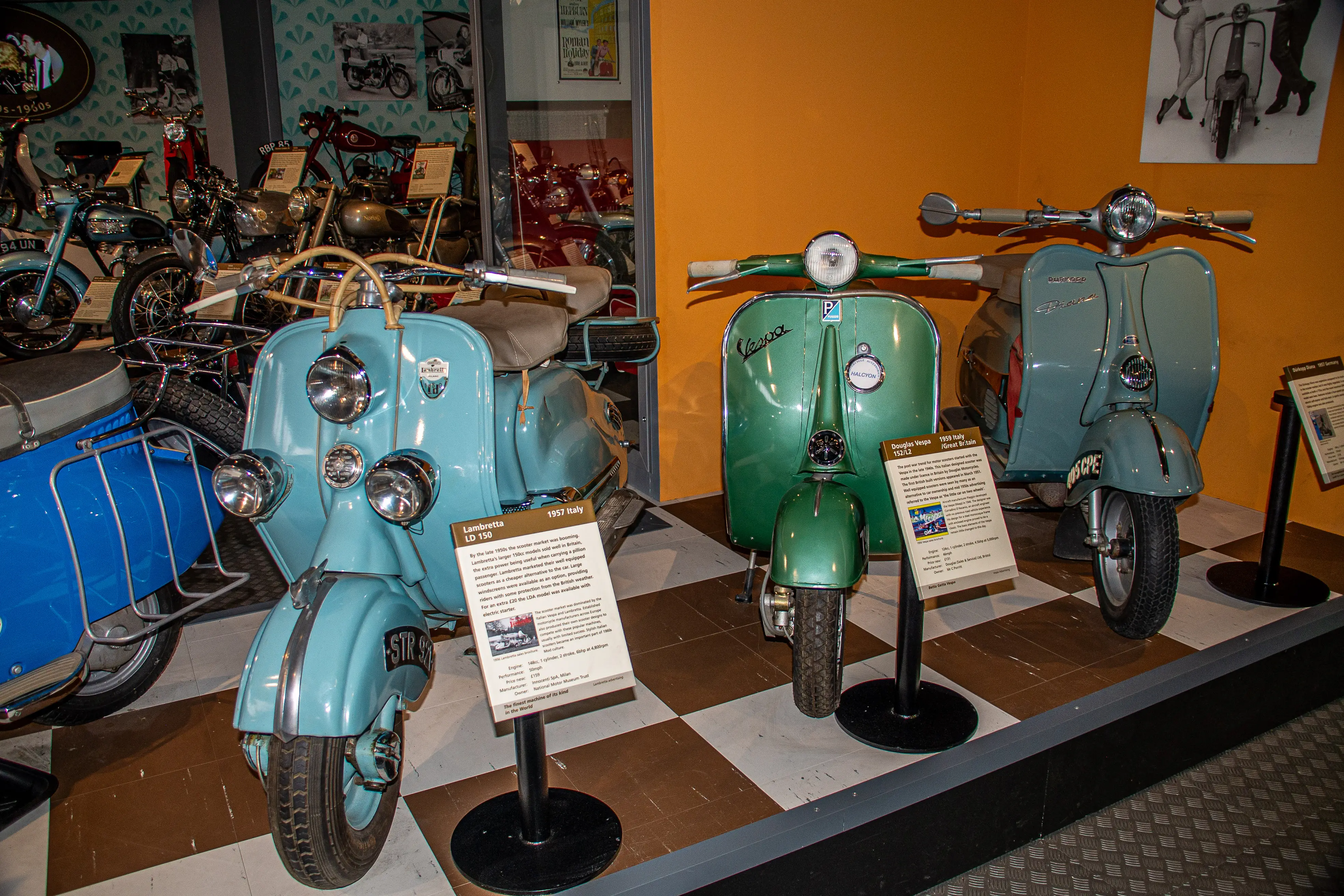
The image shows a display of vintage scooters in a museum setting. There are three scooters prominently featured: a Lambretta LD 150 from 1957 Italy and two Vespa models, including a Douglas Vespa 152 12 from 1953. Each scooter has an informational placard in front of it, providing details about its history and specifications. The background includes additional motorbikes and various vintage advertisements and posters related to scooters.
The image shows a display of vintage scooters in a museum setting. There are three scooters prominently featured: a Lambretta LD 150 from 1957 Italy and two Vespa models, including a Douglas Vespa 152 12 from 1953. Each scooter has an informational placard in front of it, providing details about its history and specifications. The background includes additional motorbikes and various vintage advertisements and posters related to scooters. ‐ photo by ,
©www.mgaylard.co.uk.
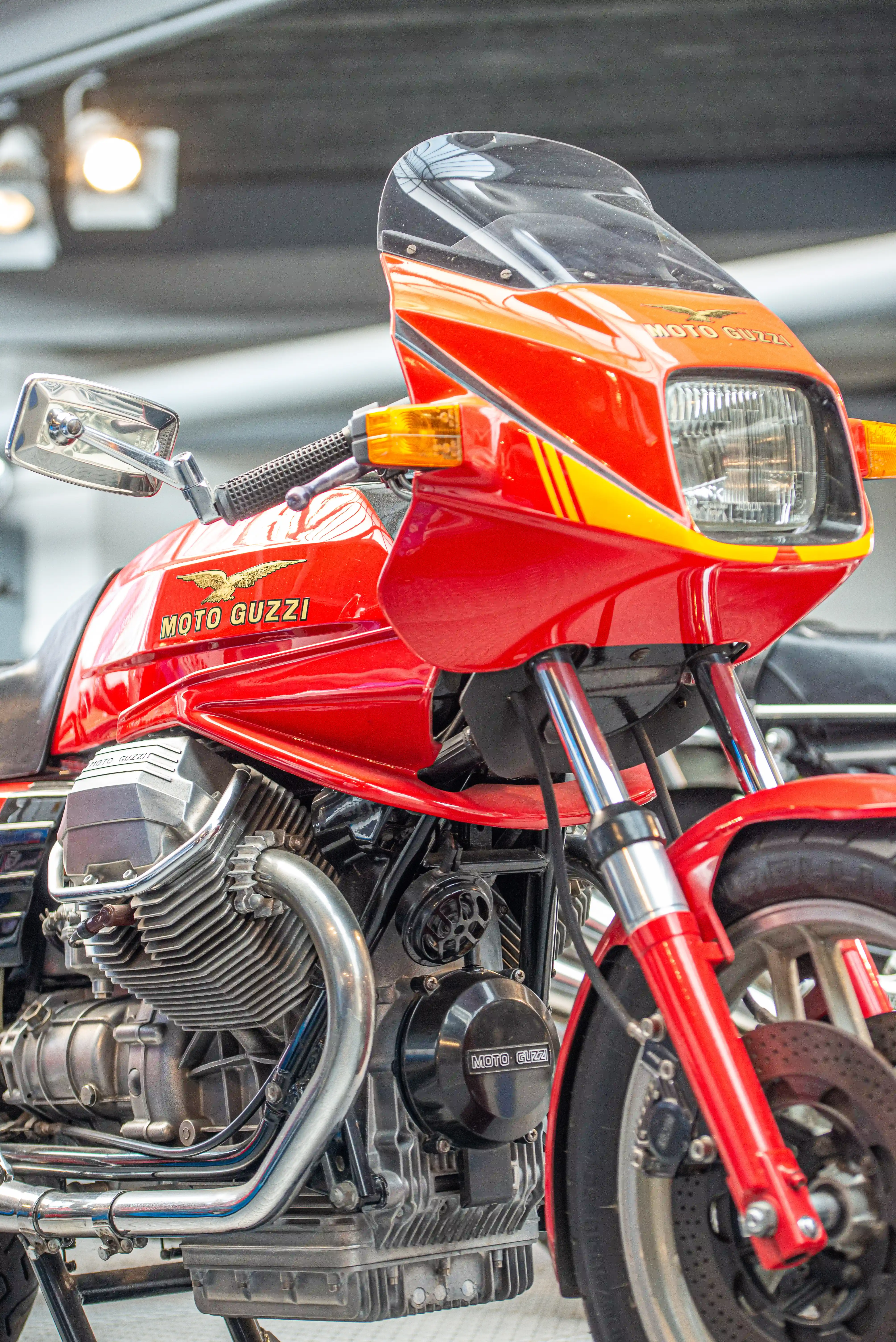
The image showcases a red Moto Guzzi motorcycle with a distinctive design, featuring a prominent front fairing, dual headlights, and a visible engine with the brand name 'Moto Guzzi' emblazoned on it. The motorcycle is parked indoors, possibly in a garage or showroom, with a sleek and polished appearance.
A Fiery Moto Guzzi ‐ photo by ,
©www.mgaylard.co.uk.
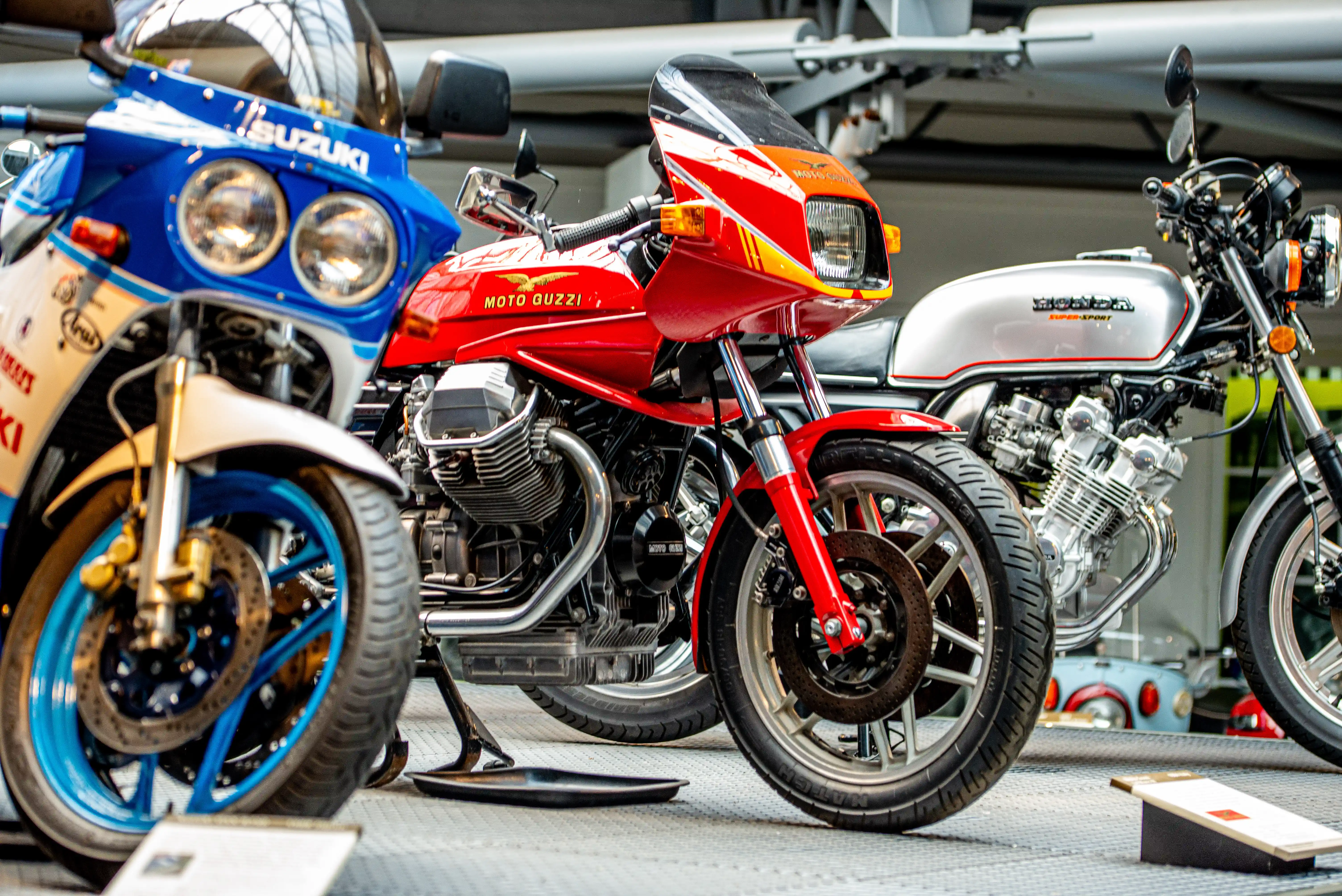
The image showcases three classic motorcycles parked side by side. The motorcycles are from different brands: Suzuki, Moto Guzzi, and Honda. Each motorcycle has distinct colors and designs, with the Suzuki being blue, the Moto Guzzi being red, and the Honda being silver. They are displayed in what appears to be a garage or showroom setting, with various tools and equipment visible in the background
A Line-Up of Motorbikes ‐ photo by ,
©www.mgaylard.co.uk.
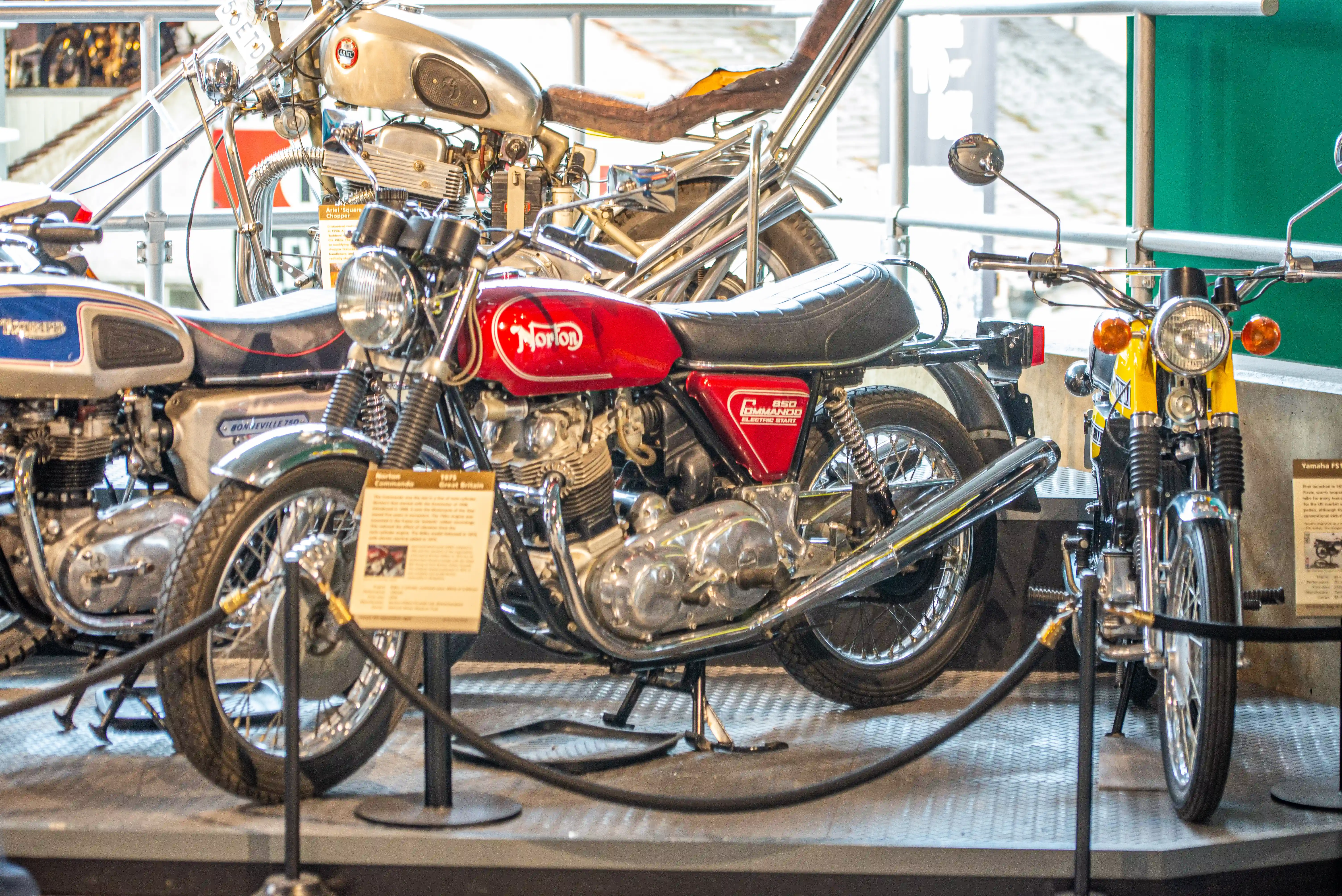
The image shows a collection of vintage motorcycles on display, including a prominent Norton motorcycle in the center with a red fuel tank and chrome engine, flanked by other classic bikes. Each motorcycle is mounted on stands with informational placards in front of them, suggesting they are part of an exhibition or museum display.
Classic British Bikes ‐ photo by ,
©www.mgaylard.co.uk.
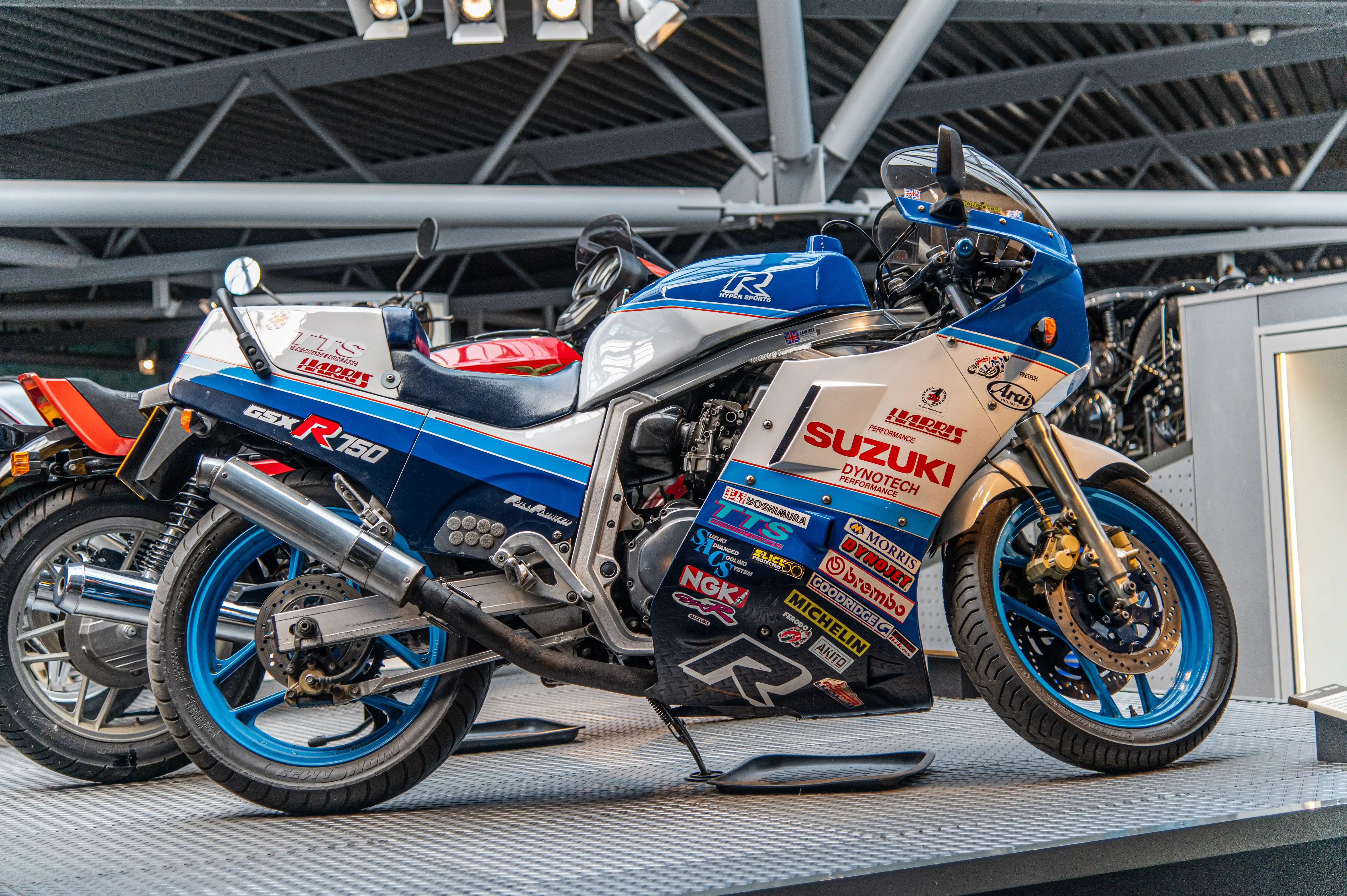
The image showcases a Suzuki GSX-R750 motorcycle, prominently displayed in a well-lit exhibition space. The motorcycle features a distinctive blue and white color scheme with numerous sponsor decals, including brands like Harris Performance, Dynotech, and Michelin. The bike is equipped with a single seat and various performance enhancements, indicating it is likely a racing or high-performance model. The setting appears to be an indoor venue, possibly a motorcycle show or museum, with other motorcycles visible in the background.
The Speed Demon Suzuki ‐ photo by ,
©www.mgaylard.co.uk.
The document describes a 1977 Triumph Bonneville motorcycle on display at the National Motorcycle Museum. This specific model, ridden by Elizabeth Beale, set a record for the fastest motorcycle across the United States in 1977. The bike features a 750cc parallel-twin engine and has distinctive features such as twin amalgamed steel alloy carburetor, twin 8-inch Brake headlamps, and a chrome rear mudguard. The motorcycle is part of the Great Britain display at the museum.
A Timeless Triumph ‐ photo by ,
©www.mgaylard.co.uk.
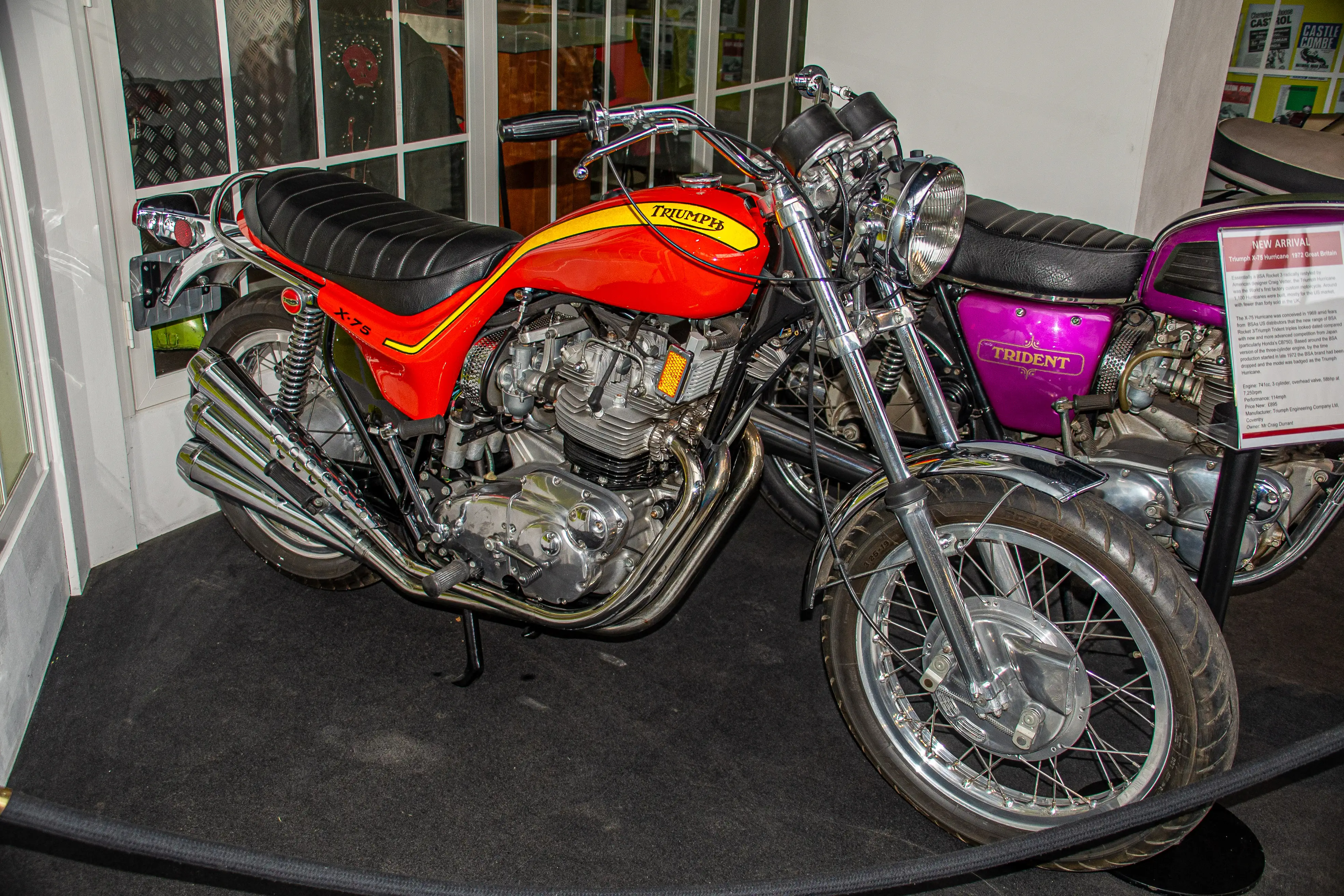
The image shows two vintage Triumph motorcycles on display. The motorcycle in the foreground is a Triumph Trident, characterized by its distinctive purple and chrome color scheme. The motorcycle behind it is a Triumph Bonneville, easily identifiable by its red and yellow paint job. Both motorcycles are displayed indoors, likely in a museum or showroom, with detailed information placards next to them. The motorcycles feature classic designs with polished chrome engines and black leather seats.
Triumph Trident ‐ photo by ,
©www.mgaylard.co.uk.
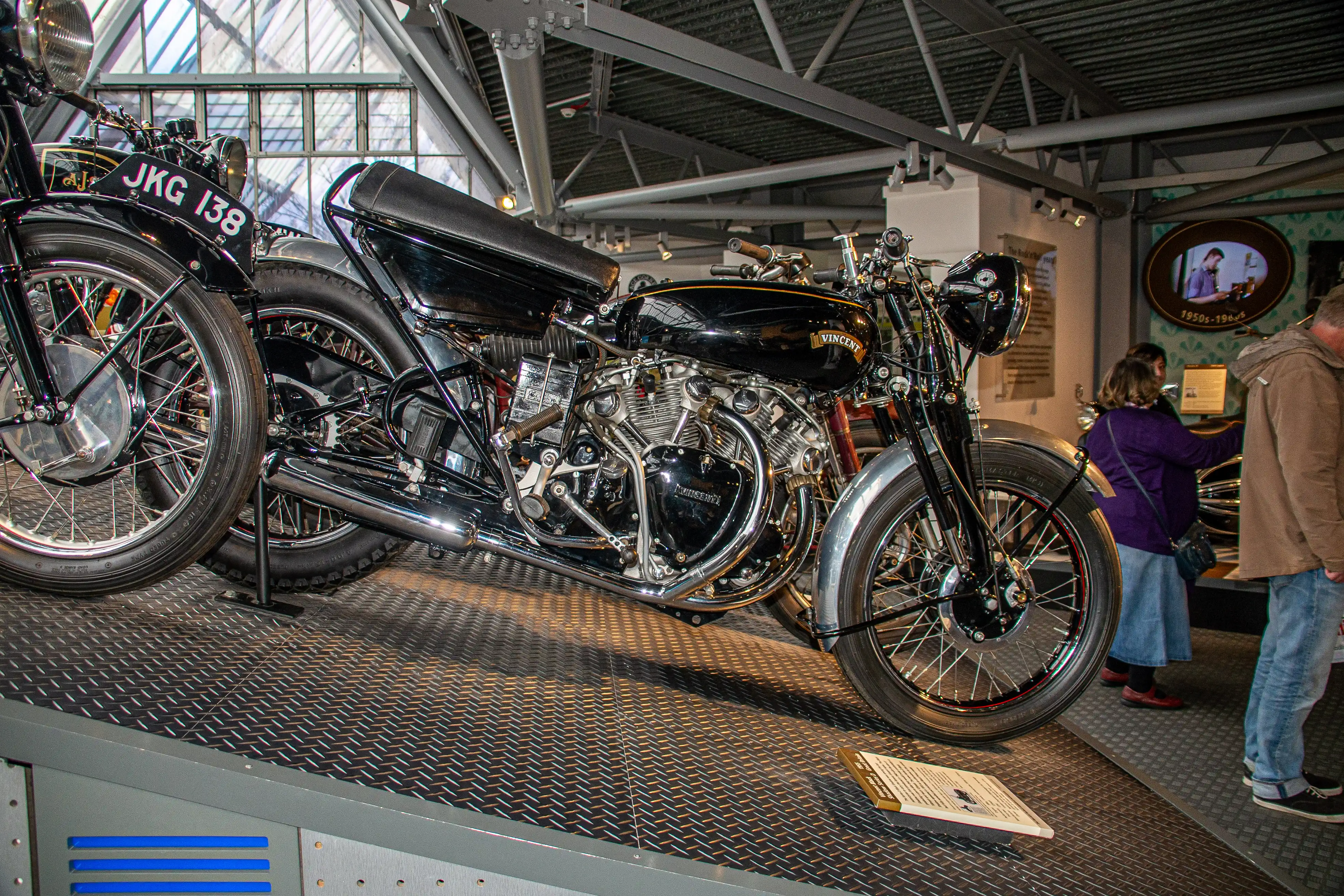
The image depicts a vintage motorcycle exhibit in a museum. The motorcycle is a Vincent, a classic model from the mid-20th century, known for its distinctive design and engineering. The exhibit is housed in a well-lit, modern space with a glass ceiling, allowing natural light to illuminate the motorcycle. Two individuals are observing the motorcycle, reading the information provided on placards. The setting suggests an educational environment focused on showcasing historical motorcycles.
Classic Vincent Motorcycle ‐ photo by ,
©www.mgaylard.co.uk.
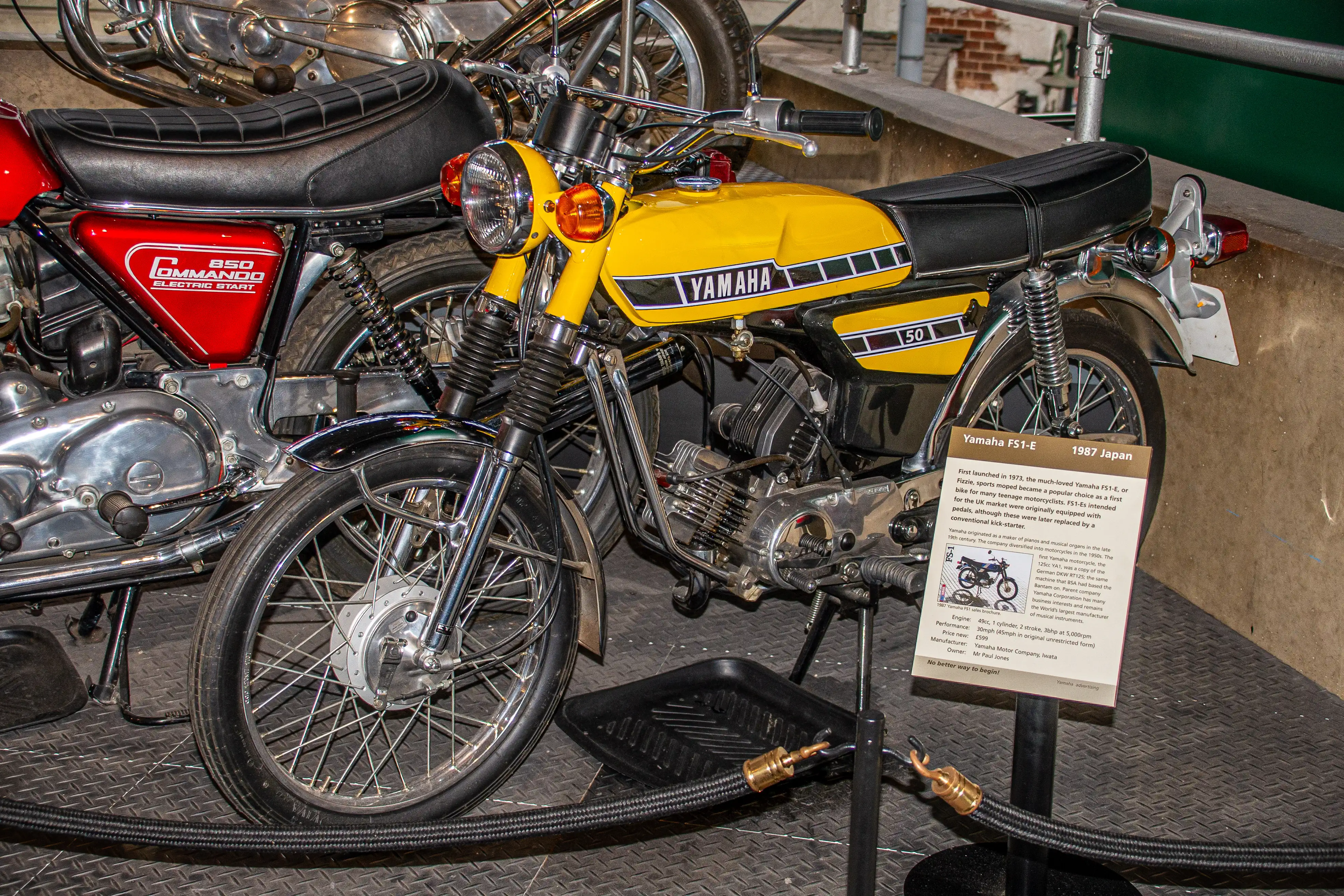
The document describes the Yamaha F51-E, a motorcycle first launched in 1973, also known as the Fizzle. It became popular among motorcyclists and was the first bike for many. Initially equipped with a kick-starter, it was later replaced by an electric starter. The motorcycle is noted for its performance, reliability, and affordability, and it remains a popular choice for beginners.
Yamaha_FS1E_Fizzy_0253.webp ‐ photo by ,
©www.mgaylard.co.uk.
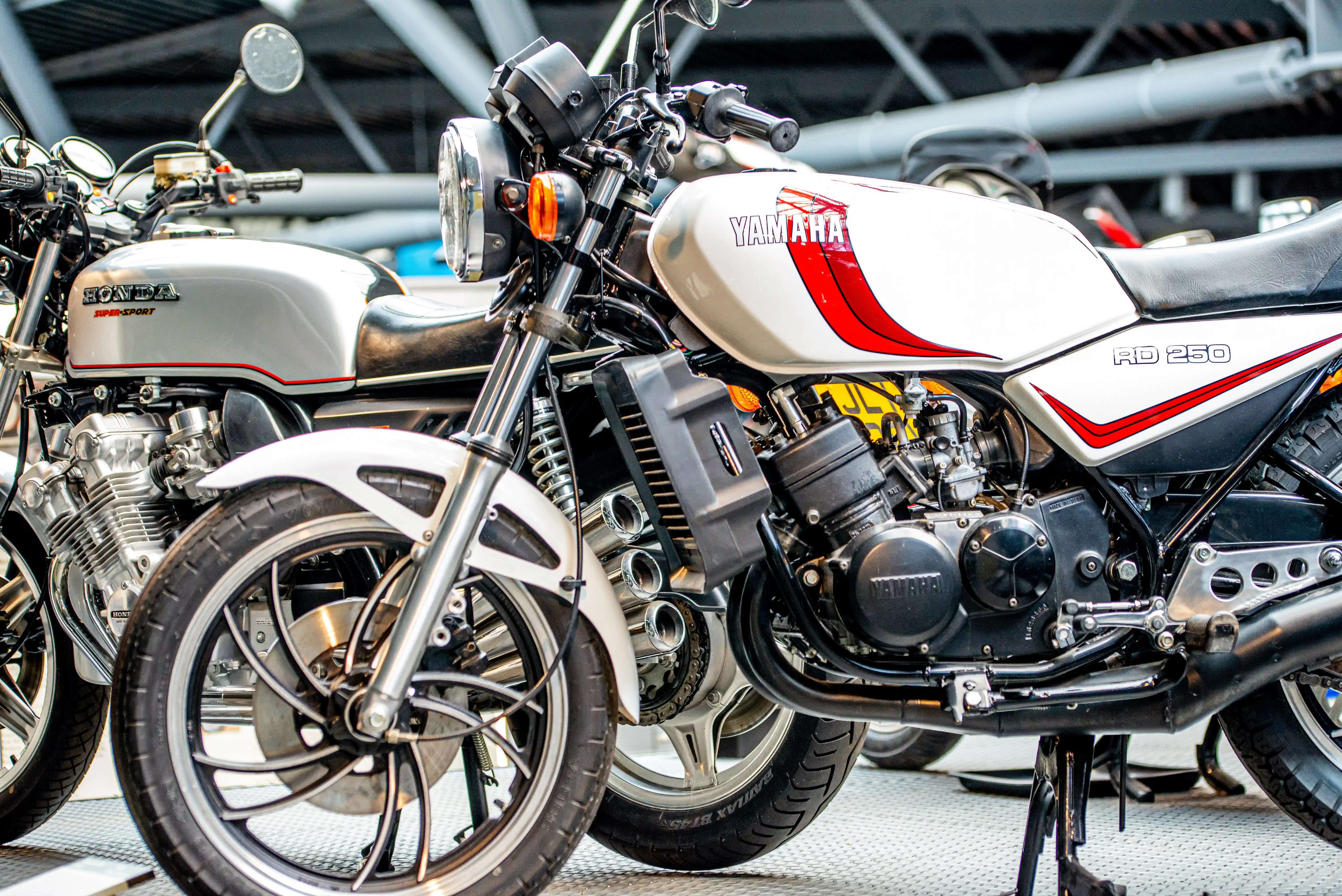
The image shows two motorcycles parked side by side. The motorcycle on the left is a Honda with the model name 'Sport' visible on its body. The motorcycle on the right is a Yamaha with the model name 'RD 250' visible on its body. Both motorcycles are displayed in a well-lit indoor setting, likely an exhibition or showroom.
The Sleek RD250 ‐ photo by ,
©www.mgaylard.co.uk.
The image shows a collection of motorcycles displayed in a showroom. The primary focus is on a blue sports motorcycle with a sleek design, featuring a prominent windscreen, gold-colored front fork, and a black and blue color scheme. Other motorcycles, including a teal one and a black one, are also visible in the background, showcasing a variety of styles and designs.
Electric Blue Beast ‐ photo by ,
©www.mgaylard.co.uk.
Open the full set flickr button this page

National Motor Museum, Beaulieu: A Journey Through Britain’s Motoring Heritage

The National Motor Museum at Beaulieu, Hampshire, is one of the world’s finest collections of over 285 historic vehicles, tracing the story of motoring from the earliest horseless carriages to land speed record breakers, Formula 1 racers, and iconic film cars like Chitty Chitty Bang Bang and James Bond vehicles. The museum’s new "Driven: Britain’s Motoring Story" gallery (opened in 2026) offers an immersive journey through British automotive history, while interactive exhibits, a monorail ride, and the World of Top Gear (featuring cars from the TV show) add to the experience. Visitors can also explore the Beaulieu estate, including Palace House, Abbey ruins, and gardens, all included in the admission ticket

From a Family Passion to a National Treasure

The National Motor Museum at Beaulieu began as a labor of love. In 1952, Edward, 3rd Baron Montagu of Beaulieu, opened a modest display of five cars in the entrance hall of his ancestral home, Palace House—a tribute to his father, John, 2nd Baron Montagu, a pioneer of British motoring. The collection quickly outgrew its home, moving to wooden sheds in the estate grounds before finding a permanent, purpose-built museum in 1972. This was no ordinary private collection: Lord Montagu’s vision was to create a national museum “worthy of the great achievements of its motor industry,” a place where the story of British motoring could be told in all its glory. Today, the museum stands as a testament to that ambition, its halls filled with over 280 vehicles that trace the evolution of motoring from its earliest days to the present

A Collection That Tells a Story

The National Motor Museum is more than a showcase of cars; it is a living narrative of innovation, adventure, and cultural change. Here, you can stand before the world’s first production car, marvel at the sleek lines of legendary Grand Prix racers, and trace the development of everyday family saloons that transformed British life. The museum’s exhibits span the spectrum of motoring history—from steam-powered carriages and Edwardian electric cars to land speed record breakers and iconic film and TV vehicles. Each vehicle is meticulously preserved, many kept in running order, ensuring that the past is not just seen but heard and felt. The museum’s archives, filled with blueprints, photographs, and technical drawings, make it a vital resource for researchers and enthusiasts alike, a place where the stories behind the machines are as carefully curated as the cars themselves

A Pioneering Approach to Preservation and Education

From its inception, the National Motor Museum has been a pioneer in making history accessible. Lord Montagu’s decision to open the museum to the public in the 1950s was groundbreaking, and his commitment to education and engagement continues to define the museum today. The new “Driven: Britain’s Motoring Story” gallery, opened in 2026, uses interactive displays, rare archival footage, and immersive exhibits to bring the history of motoring to life. Visitors can explore the social and technological revolutions that shaped the automobile, from the freedom of the open road to the environmental challenges of the modern age. The museum’s workshops and restoration projects ensure that these mechanical treasures are not just preserved but celebrated, their stories shared with new generations

A Destination for Enthusiasts and Families Alike

The National Motor Museum is part of the broader Beaulieu estate, which includes Palace House, the ruins of Beaulieu Abbey, and the stunning gardens that surround them. This makes a visit to the museum not just a journey through motoring history, but an exploration of British heritage in all its forms. Whether you’re a petrolhead drawn by the roar of classic engines, a historian fascinated by the social impact of the automobile, or a family looking for a day out, the museum offers something for everyone. Its blend of nostalgia, innovation, and hands-on experiences ensures that the story of motoring is not just preserved, but vividly brought to life

References

en.wikipedia.orgwww.beaulieu.co.uknationalmotormuseum.org.ukwww.wonderfulmuseums.comwww.visit-hampshire.co.u , Text generated by Mistral AI
To the top
Powered by w3.css. The images are all stored on link to www.gaylard.co.uk Photostream on Flickr   This website is hosted by link to 123Reg Web Hosting