HOME

Sé de Lisboa

Sé de Lisboa (Lisbon Cathedral)

Largo da SéLisbonLisbon District,   1100-585,   Portugal

Sé de Lisboa, or Lisbon Cathedral, is the oldest and most important church in Lisbon, Portugal. Built in 1147 after the city was reconquered from the Moors by Afonso Henriques, the first King of Portugal, the cathedral is a stunning example of Romanesque architecture with later Gothic, Baroque, and Neoclassical additions. Dedicated to Santa Maria Maior (St. Mary Major), Sé de Lisboa has witnessed and survived numerous historical events, including earthquakes and invasions, and remains a symbol of Lisbon’s resilience and faith. As the seat of the Patriarchate of Lisbon, it continues to serve as the spiritual heart of the city and a major tourist attraction.
A yellow and white tram, number 552, travels on tram tracks on a cobblestone street in Lisbon, with Coca-Cola advertisements on its side. People stand on the pavement, and historic buildings are in the background.
Miradouro de Santa Luzia - Tram 28 with Vintage Charm and Coca-Cola Branding ‐ photo by ,
©www.mgaylard.co.uk.

Tram 28 is Lisbon’s iconic vintage yellow tram running between Praça Martim Moniz and Campo de Ourique (Cemitério dos Prazeres); it’s a scenic 7–8 km route that’s extremely popular with tourists, so expect crowds and watch for pickpockets.
Highlights along the line include Miradouro da Graça, Sé (Lisbon Cathedral), Portas do Sol viewpoint, Alfama, Baixa/Chiado, Bica, Basílica da Estrela. These stops let you hop off to explore viewpoints, fado streets, and historic squares.
Historic experience: The trams are vintage “Remodelado” cars from the 1930s with wooden benches and narrow streets — great for photos and atmosphere.

References

santosdelisboa.ptfreetoursbyfoot.com , Text generated by Microsoft CoPilot

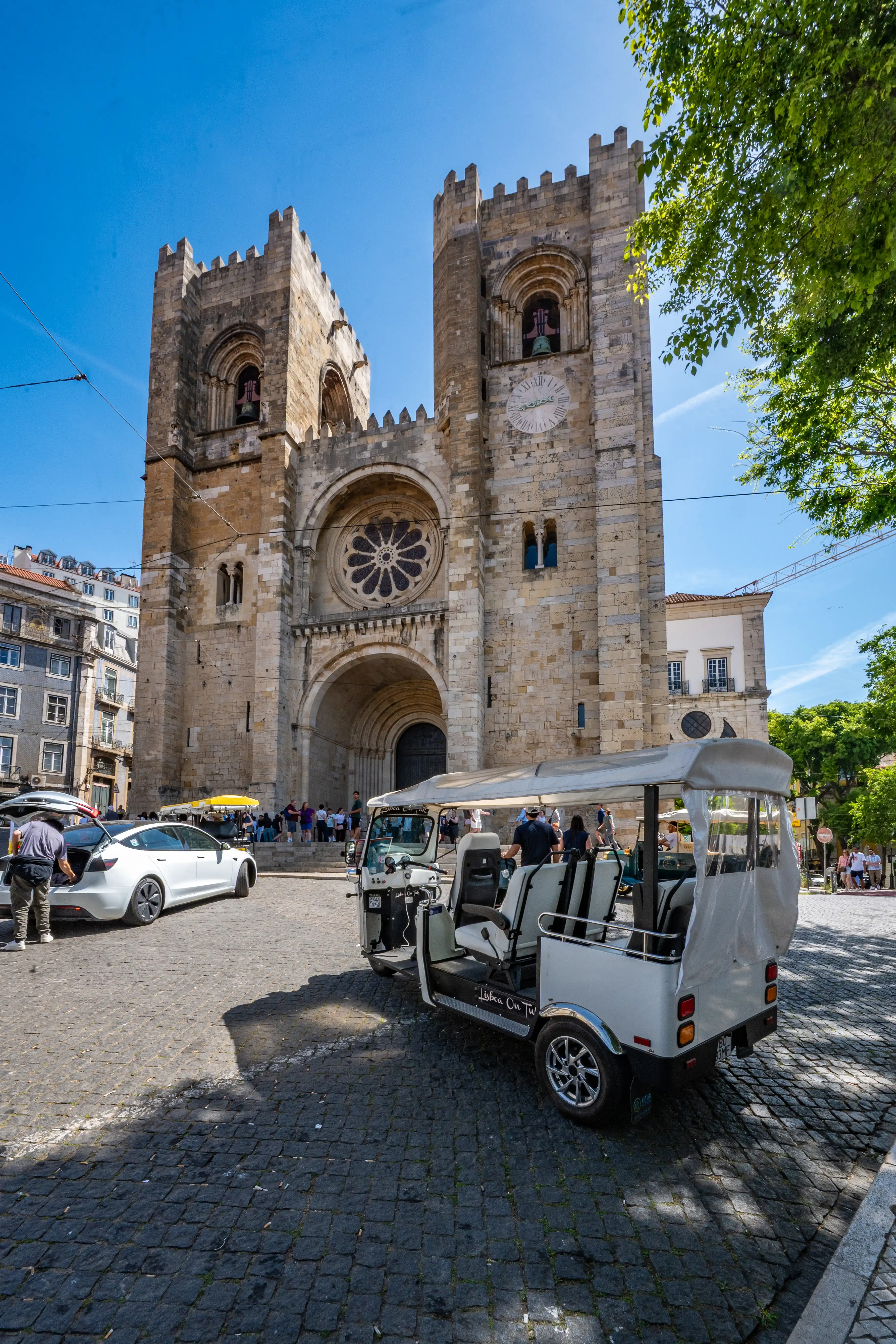
A white tourist tuk-tuk is parked on a cobblestone street in front of the Lisbon Cathedral, a large stone building with twin towers and a rose window. Several people are visible on the cathedral steps.
Sé de Lisboa with Tuk-Tuk Tour Vehicle ‐ photo by ,
©www.mgaylard.co.uk.
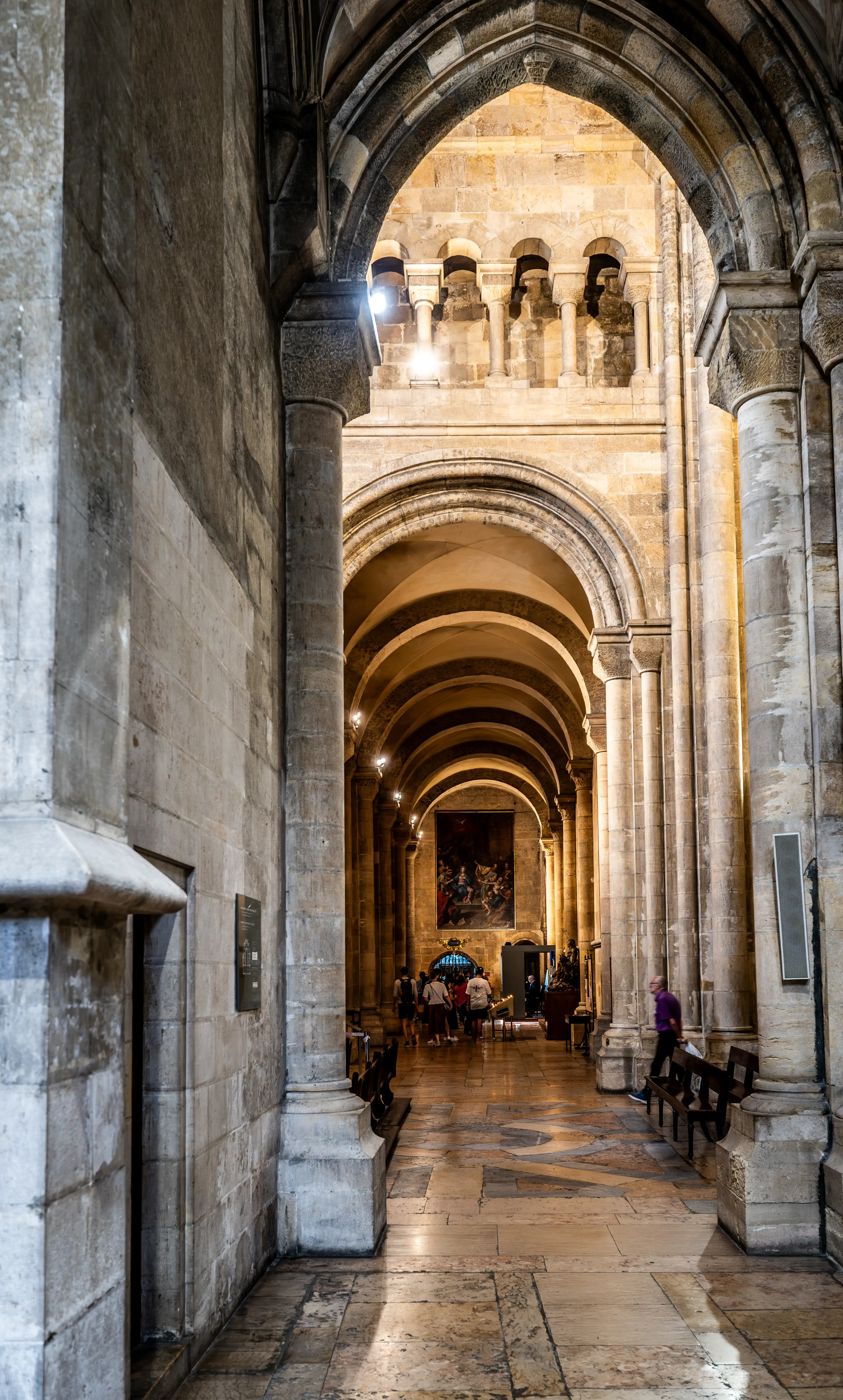
A person walks down a long, vaulted corridor with stone arches and columns inside a cathedral. Sunlight creates patterns on the floor and illuminates a large framed artwork at the far end.
title ‐ photo by ,
©www.mgaylard.co.uk.
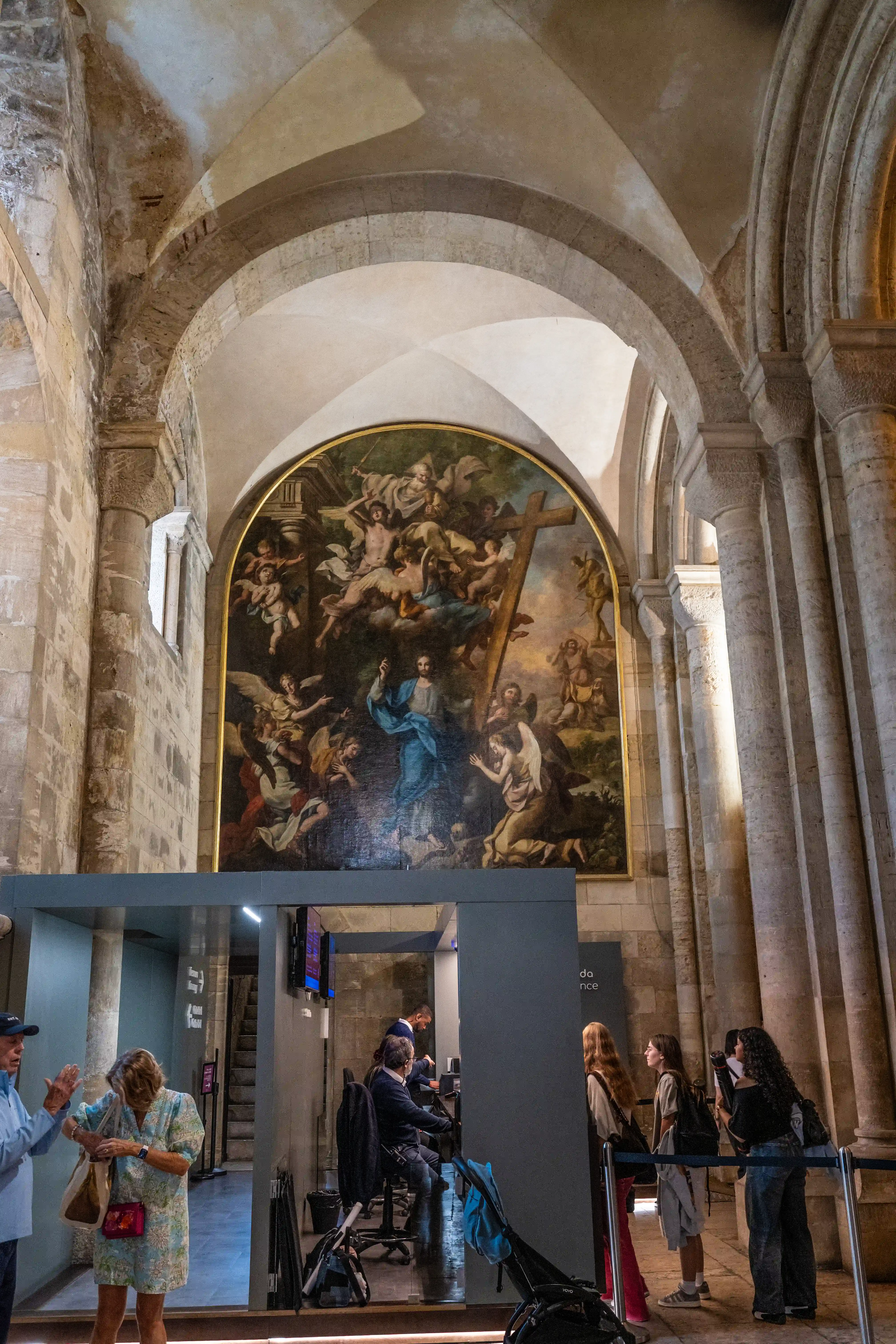
 Interior view of a grand cathedral with a large, ornate religious fresco on the far wall. In the foreground, there is a modern exhibition booth with several people.
Interior of Sé de Lisboa with Pipe Organ and Altar ‐ photo by ,
©www.mgaylard.co.uk.
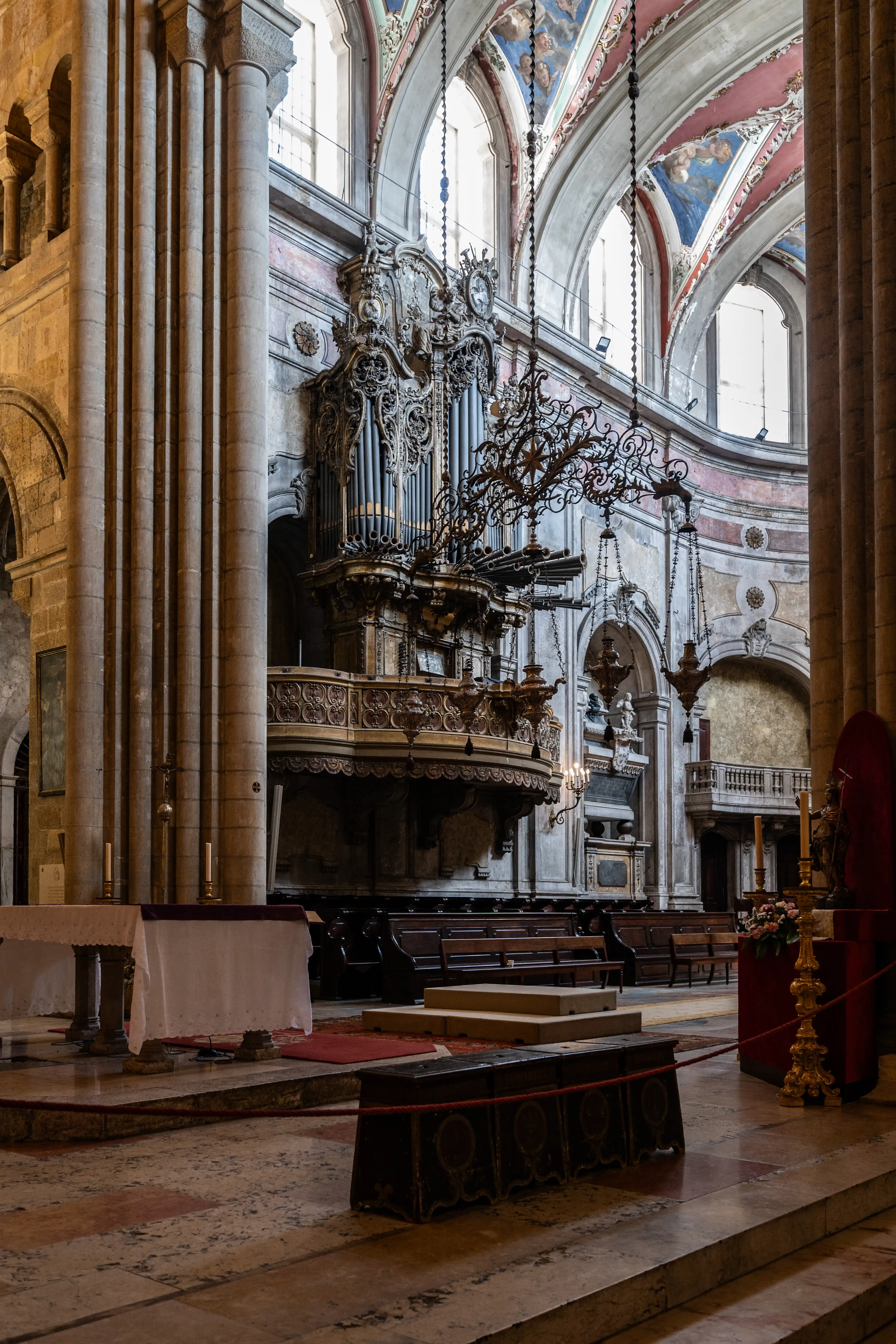
Interior of a large, ornate church with a prominent pipe organ on the left, an altar covered with a white cloth in the centre, and a frescoed ceiling with chandeliers.
Majestic Church Interior with Pipe Organ and Altar ‐ photo by ,
©www.mgaylard.co.uk.
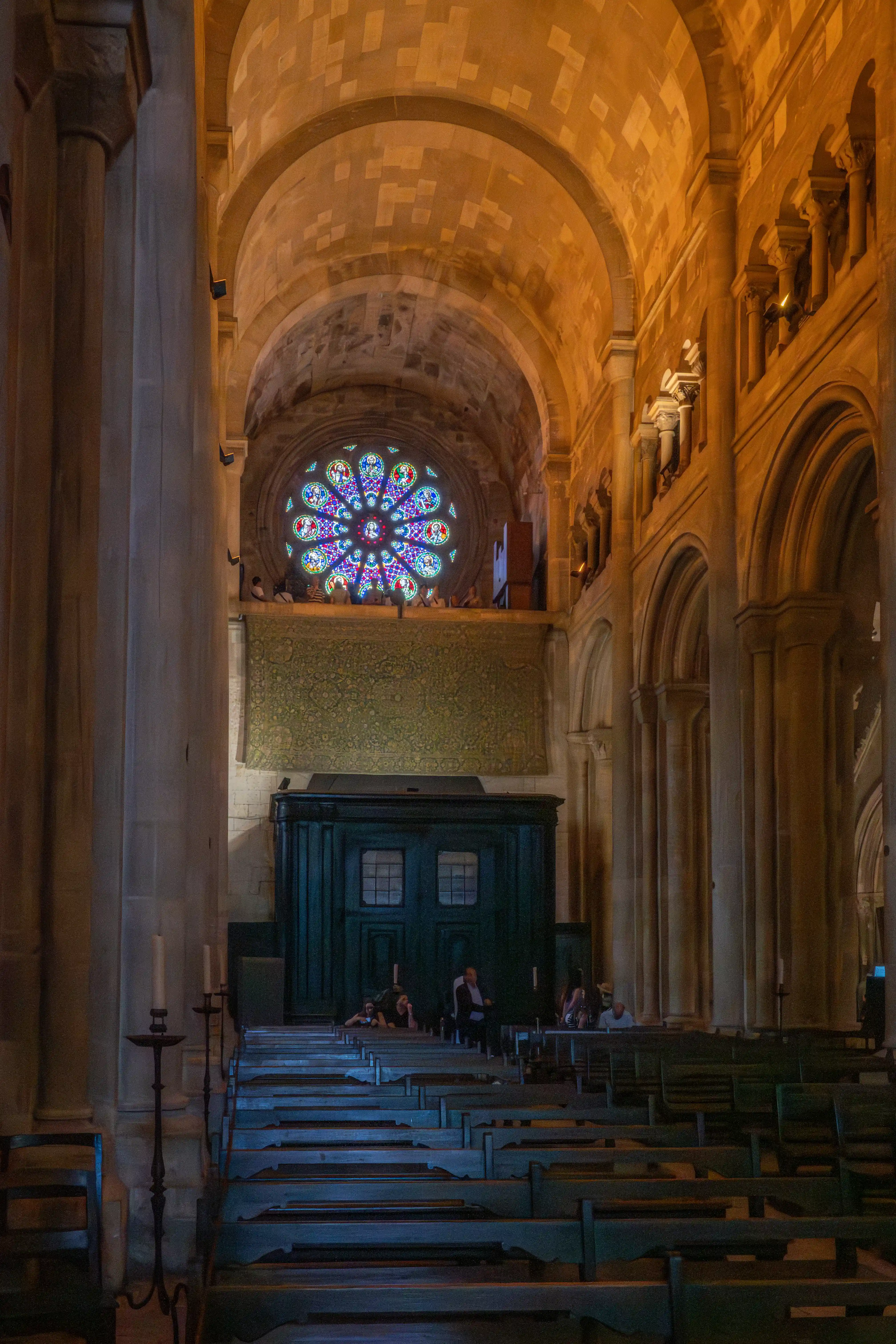
 Interior of a grand cathedral featuring a colourful stained-glass rose window above a dark green wooden structure, with rows of pews and large stone columns
Majestic Cathedral Nave with Rose Window and Seating ‐ photo by ,
©www.mgaylard.co.uk.
A wide-angle shot captures the ornate interior of a cathedral, dominated by a magnificent pipe organ mounted on a balcony. The organ's intricate golden detailing and rows of pipes are illuminated by natural light streaming through arched windows. In the foreground, an altar draped with a white cloth and adorned with candles sits on a raised platform. The scene also features carved wooden pews, decorative chandeliers, and frescoes adorning the vaulted ceiling, showcasing the grandeur and historical significance of the religious edifice.
Sé de Lisboa Interior with Ornate Pipe Organ and Altar ‐ photo by ,
©www.mgaylard.co.uk.
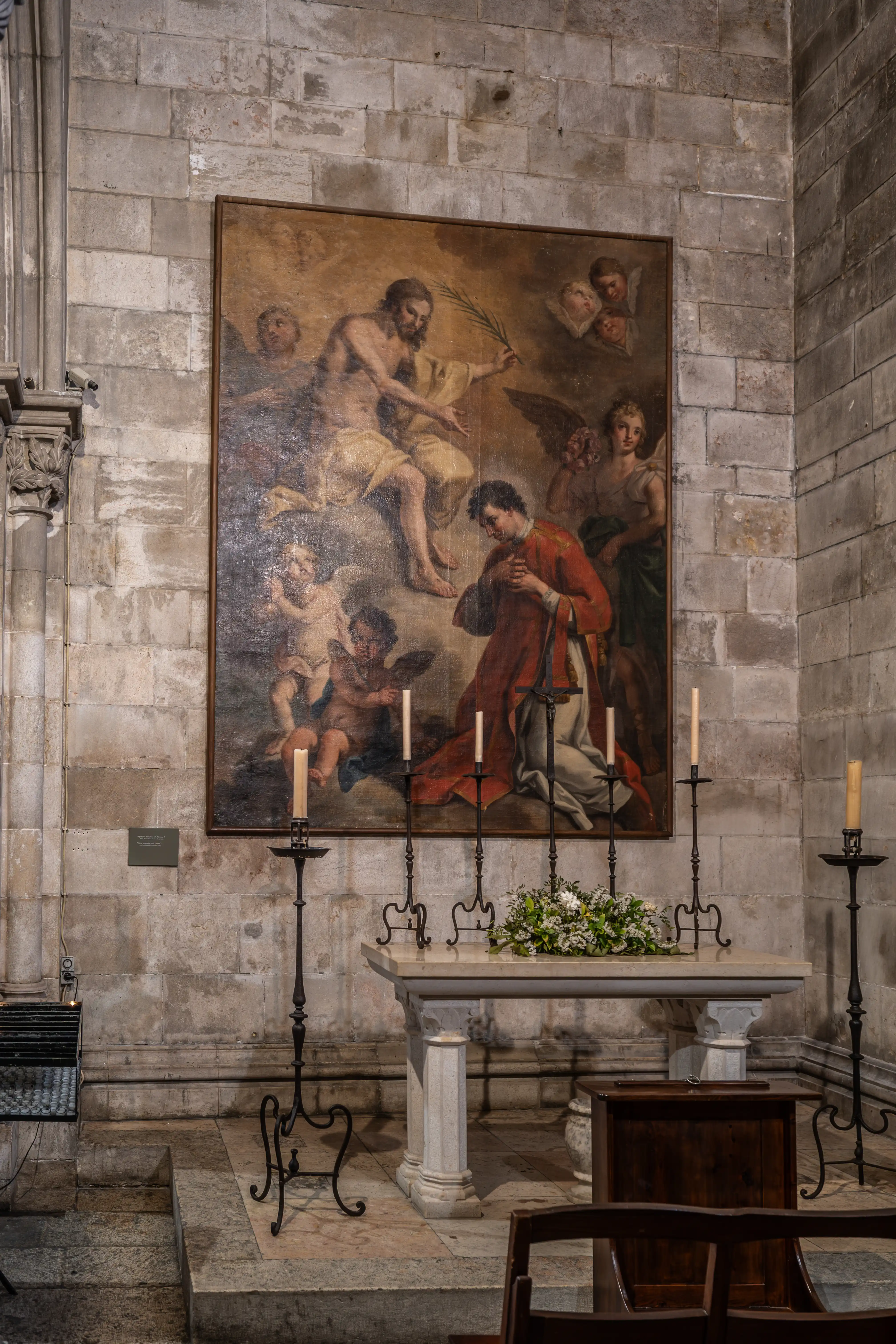
An ornate oil painting in a church depicts a bearded man in a toga offering a palm frond to a kneeling man in a red robe, with cherubs and an angel above. An altar with flowers and lit candles stands before the painting in the stone-lined interior.
Religious Painting and Altar in an Ancient Church ‐ photo by ,
©www.mgaylard.co.uk.
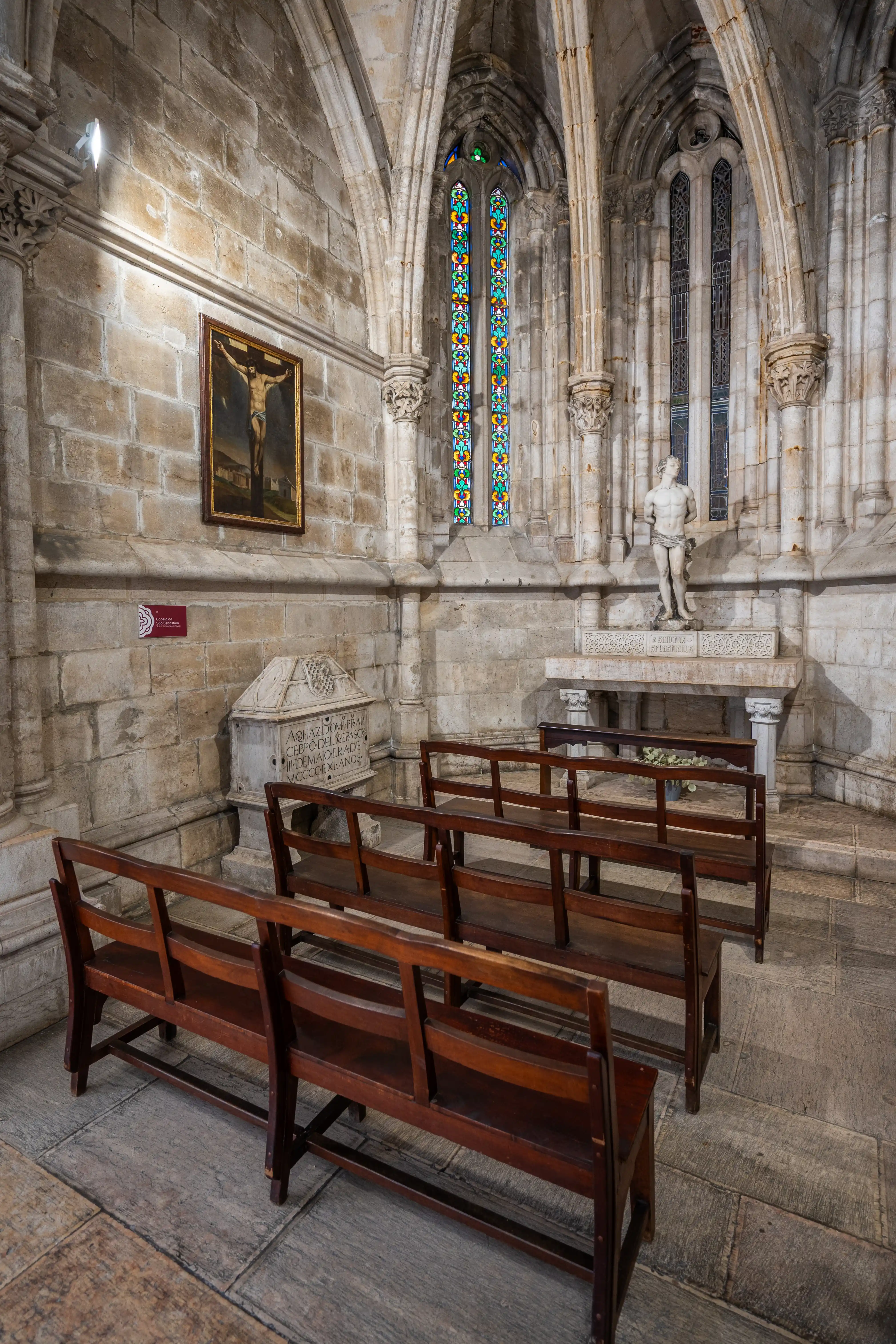
Interior of a historic chapel showing wooden pews, a painting of the Crucifixion, a sarcophagus, a marble statue, and stained-glass windows.
Chapel Interior with Pews, Crucifixion Painting, Sarcophagus, and Statue ‐ photo by ,
©www.mgaylard.co.uk.
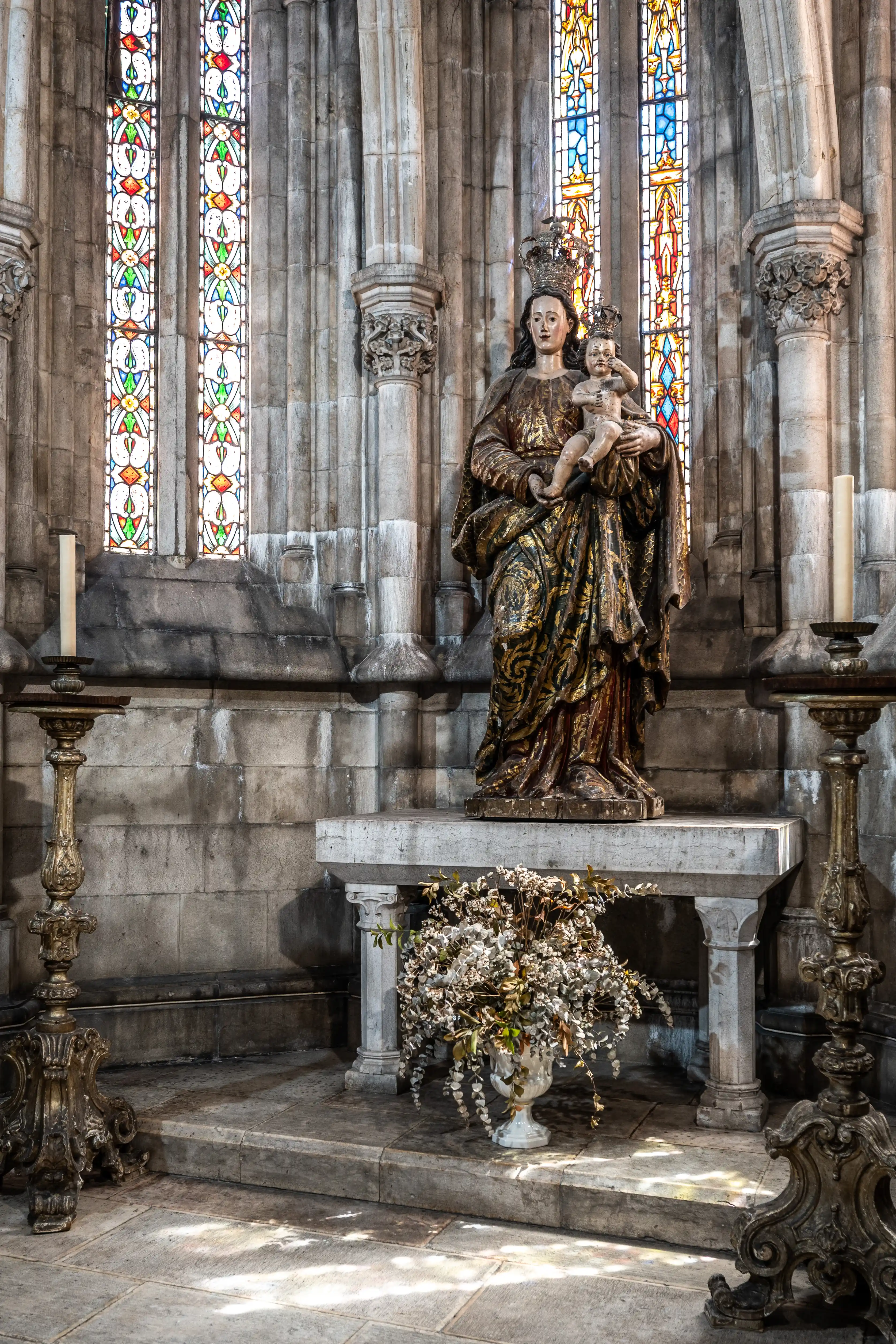
 A religious statue of the Virgin Mary holding baby Jesus, crowned and dressed in a golden, ornate robe, stands on a stone altar. Behind the statue are tall stone columns and brightly coloured stained glass windows. Two decorative candelabras, one with a lit candle, and a vase of dried flowers are also visible.
Sacred Devotion: Virgin and Child in Stained Glass Sanctuary ‐ photo by ,
©www.mgaylard.co.uk.
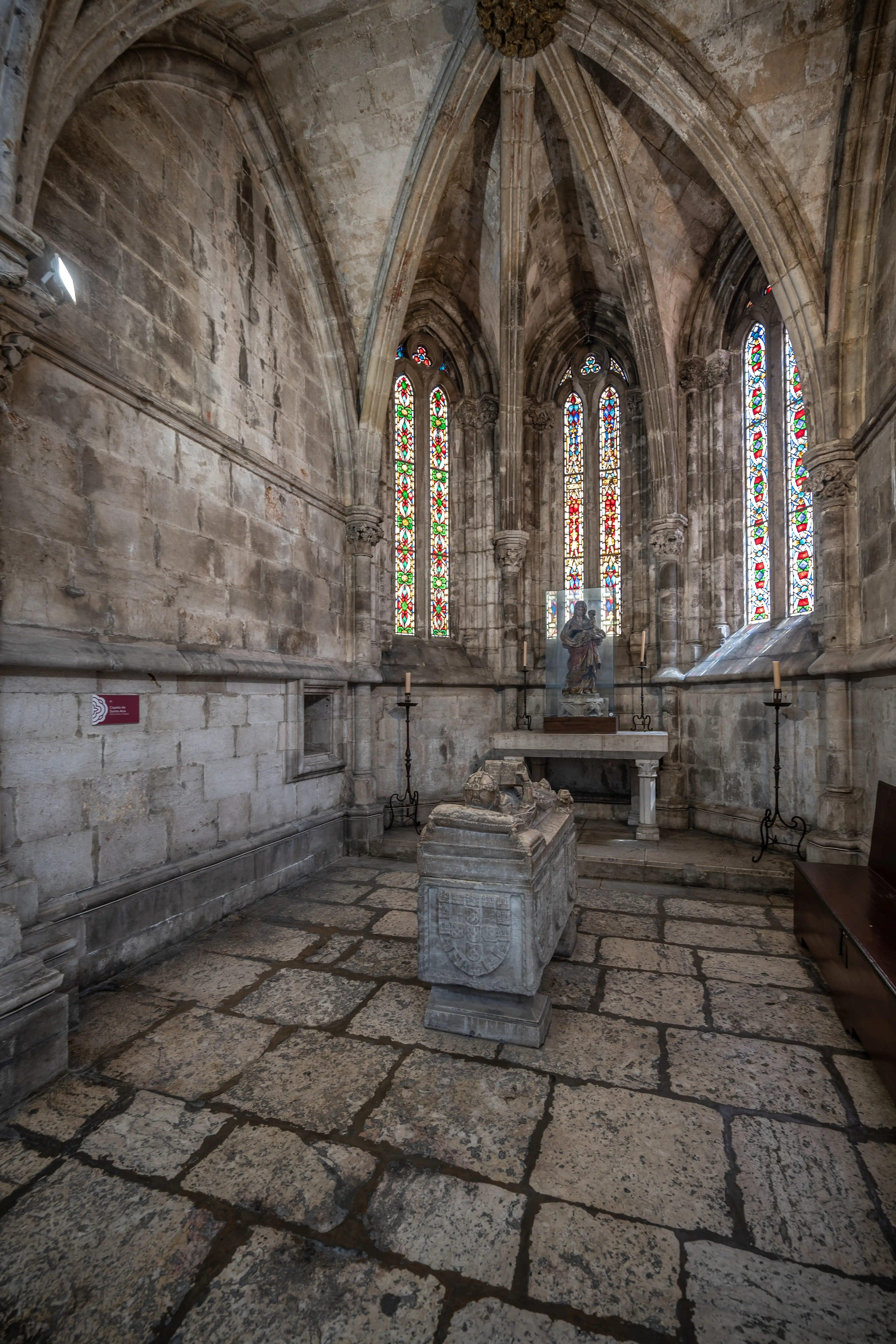
Interior view of a historic chapel featuring a stone sarcophagus in the foreground, colourful stained glass windows, vaulted stone ceilings, and stone block walls.
Interior of a Medieval Chapel with Sarcophagus and Stained Glass ‐ photo by ,
©www.mgaylard.co.uk.
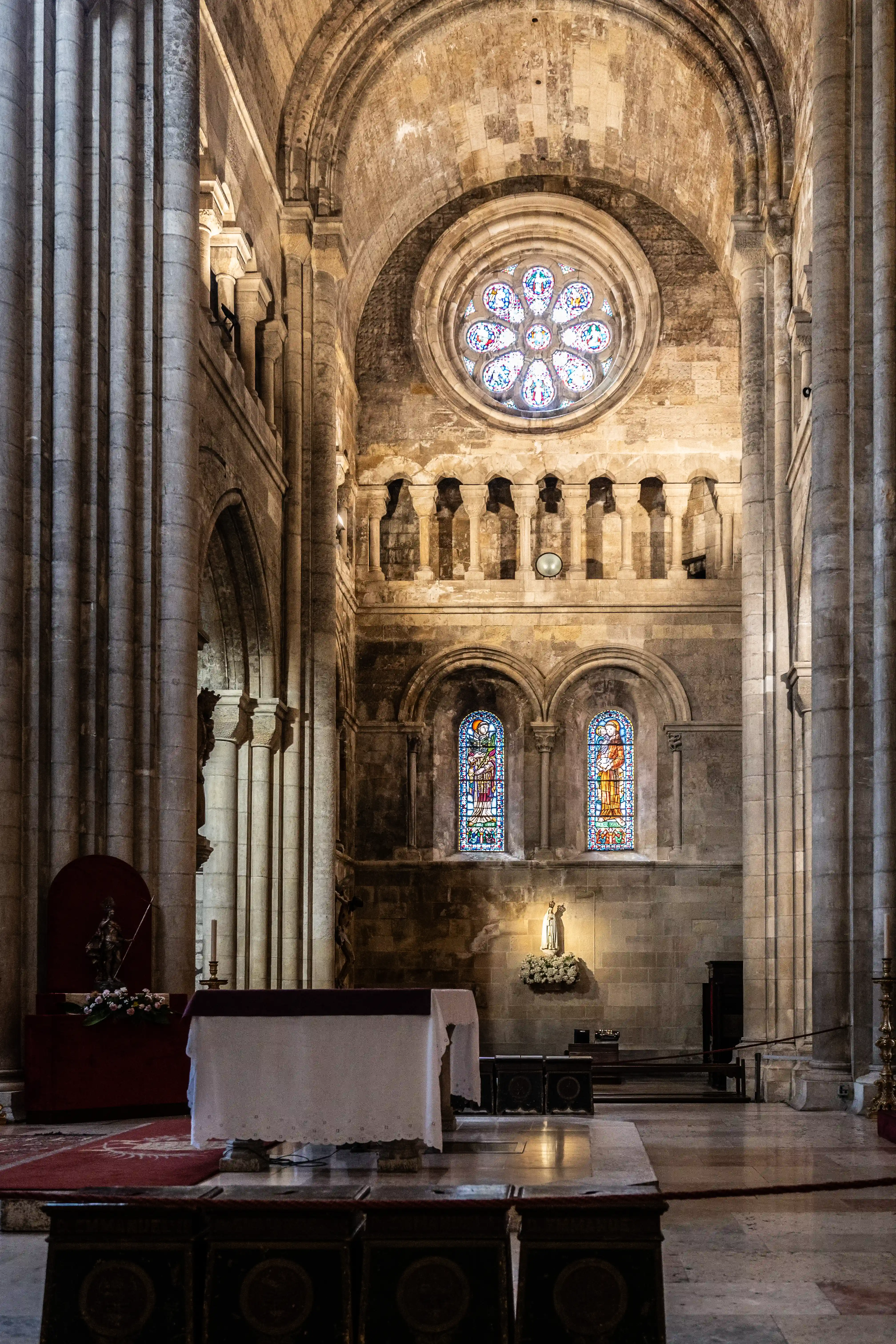
Inside of a cathedral with large stone columns, a rose stained-glass window, two rectangular stained-glass windows, an altar, and a statue of a religious figure.
Cathedral Interior with Stained Glass and Altar ‐ photo by ,
©www.mgaylard.co.uk.
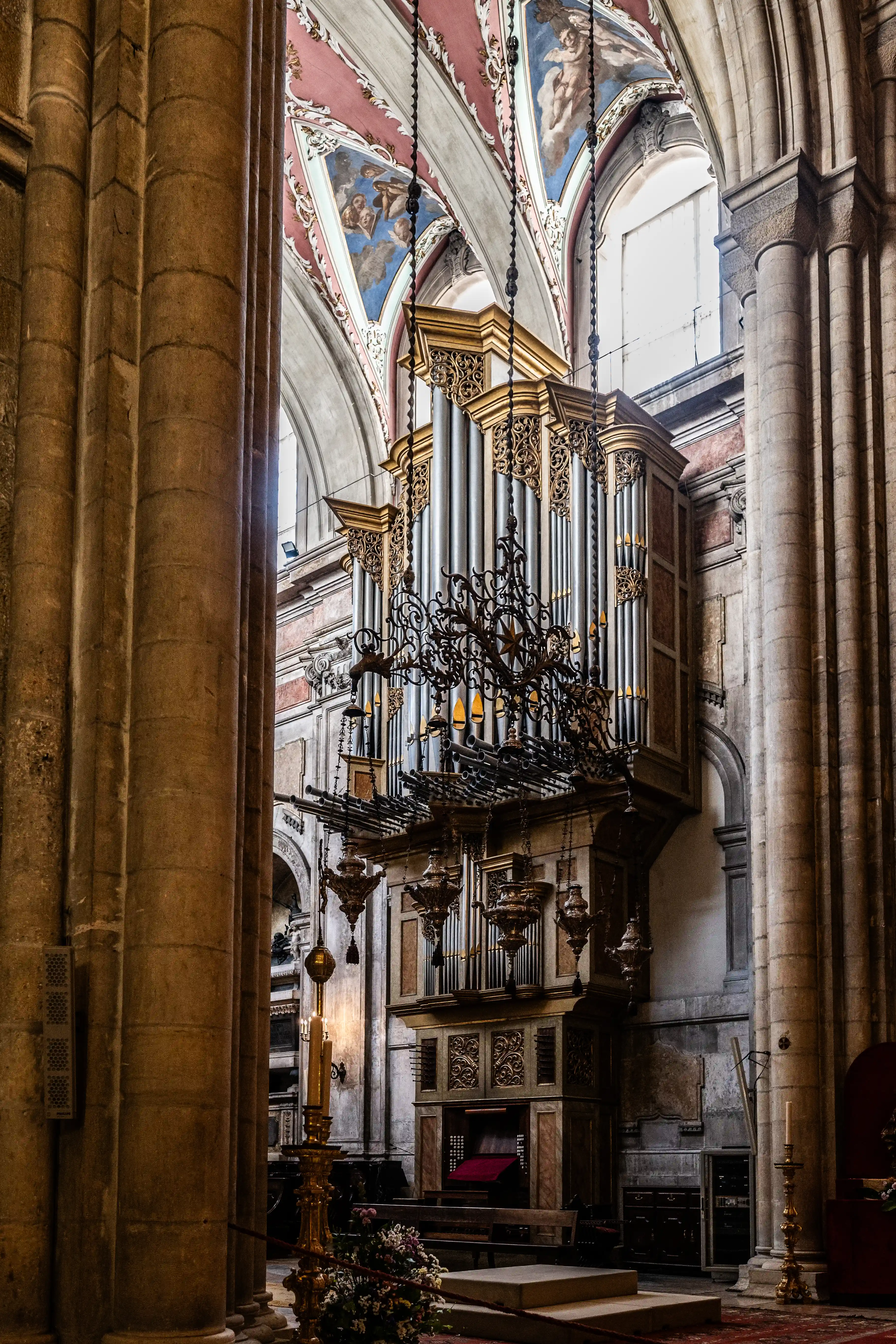
A large, ornate pipe organ inside a cathedral, with detailed silver pipes and gold decorative elements. The vaulted ceiling above features painted frescoes of angels. Large stone columns line the sides of the image, and a lit candelabra stands in the foreground.
The image captures a magnificent pipe organ situated within the impressive architecture of a cathedral. The perspective is slightly low-angled, emphasizing the grandeur of the organ and the surrounding space. ‐ photo by ,
©www.mgaylard.co.uk.
Interior view of a church with rows of wooden pews facing a brightly lit, ornate altar and gilded ceiling decorations.
Interior of Sé de Lisboa ‐ photo by ,
©www.mgaylard.co.uk.
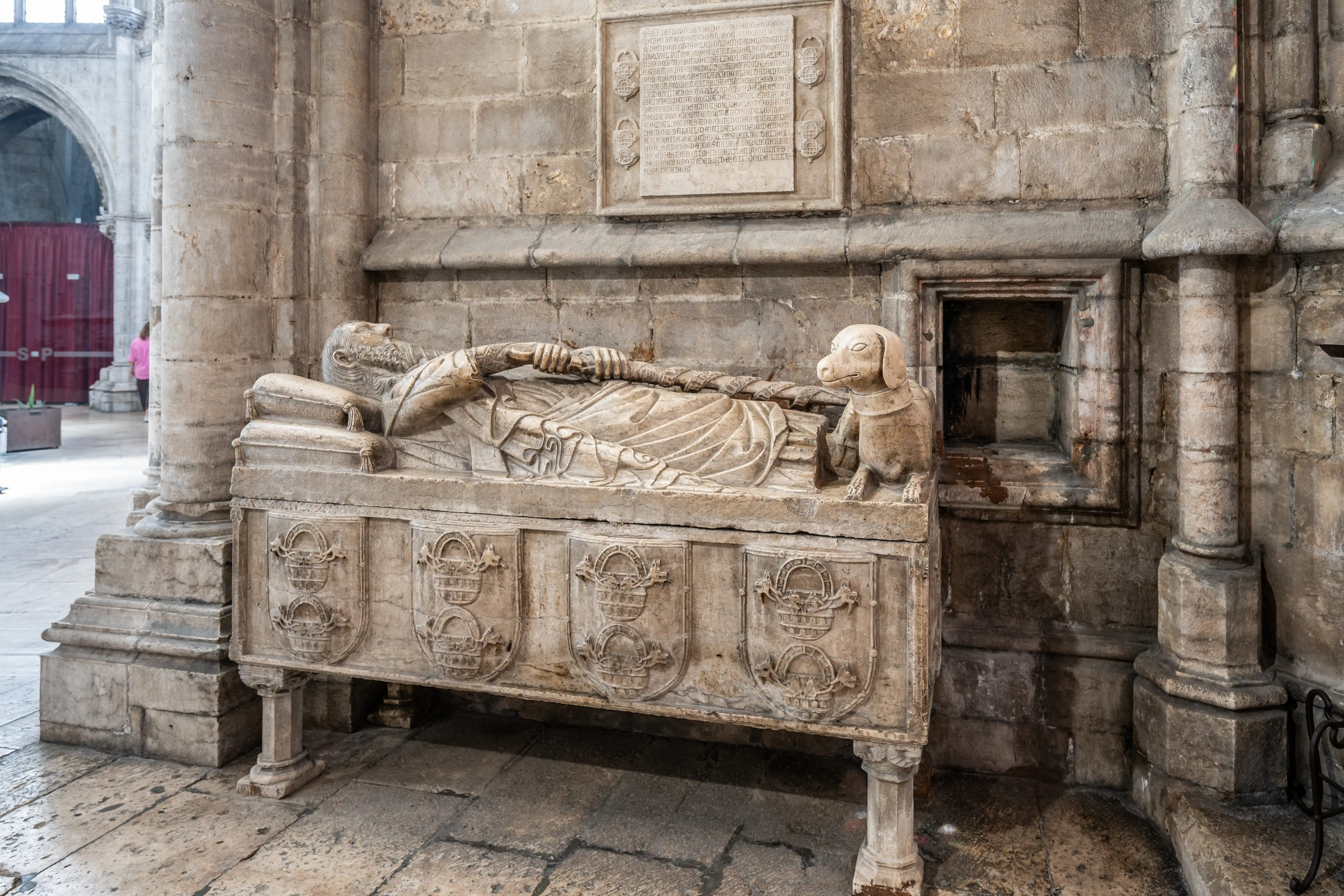
A stone sarcophagus with the effigy of a bearded man and a dog sculpture at his feet, set against a stone wall with a memorial plaque in a grand historical building.
Stone Sarcophagus Effigy with Dog and Shields ‐ photo by ,
©www.mgaylard.co.uk.
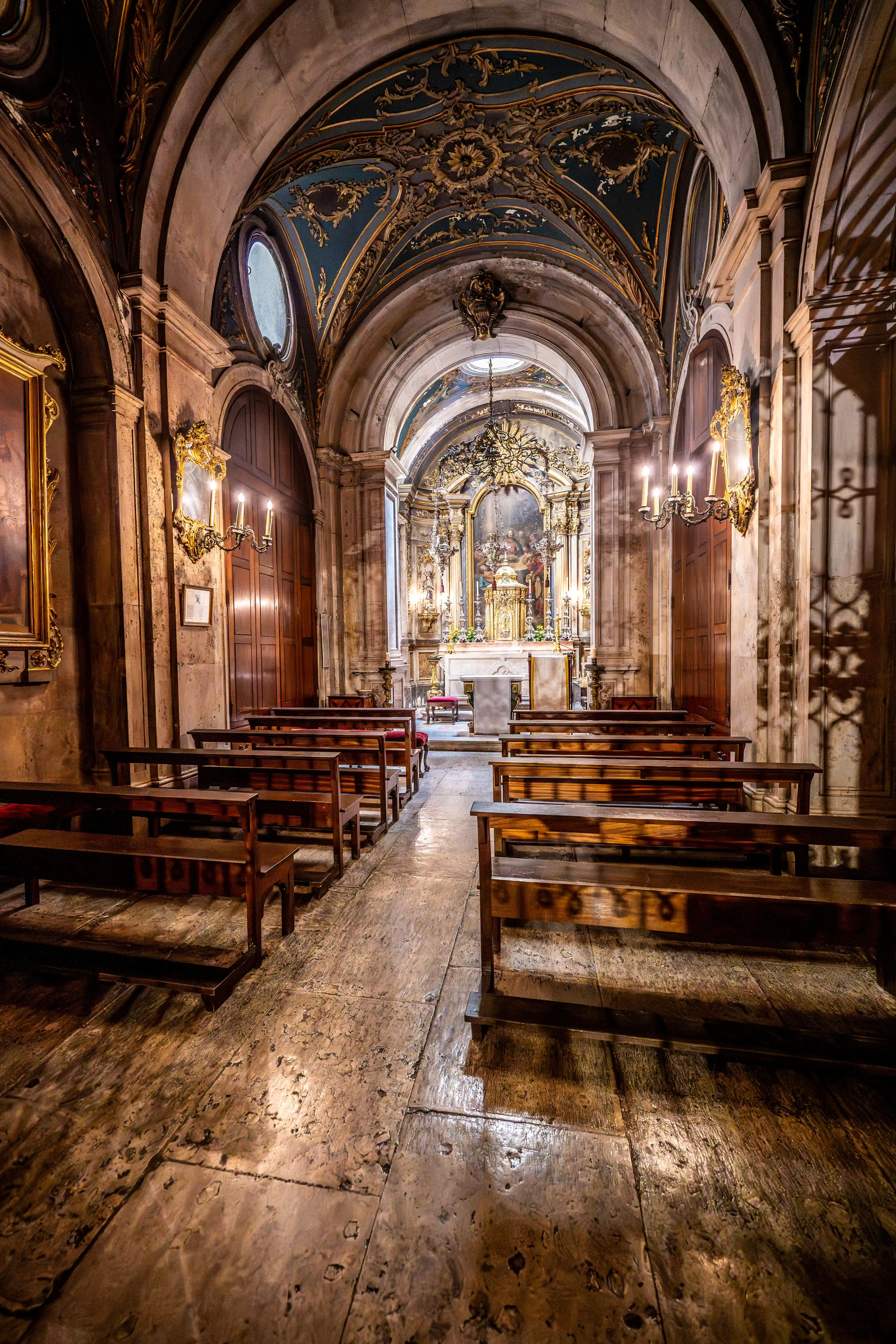
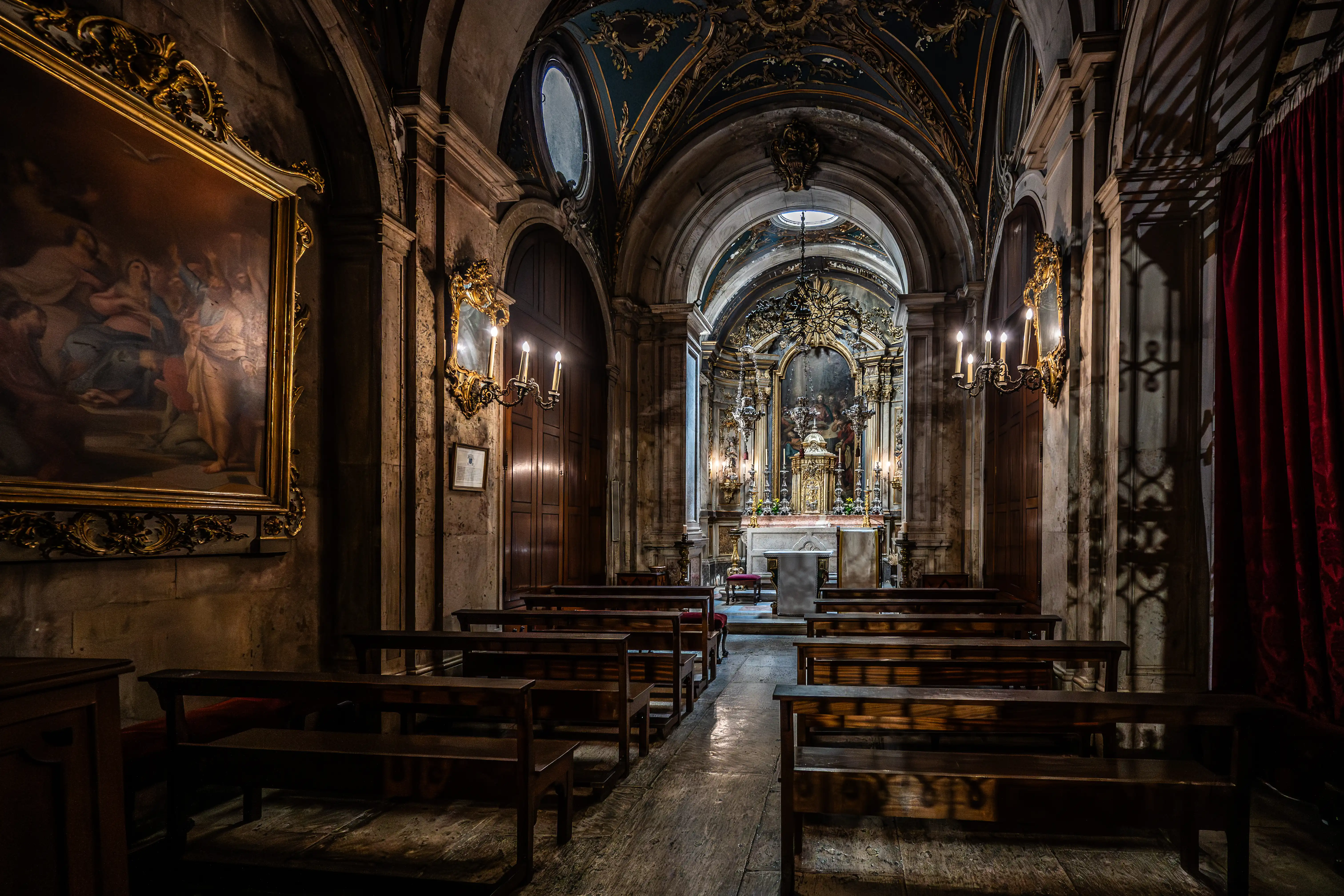
Interior of a dimly lit, ornate chapel with rows of wooden pews leading towards a decorated altar. A large framed painting hangs on the left wall, and candelabra illuminate the space. A red curtain is visible on the right.
Sé de Lisboa Chapel Interior with Altar and Pews ‐ photo by ,
©www.mgaylard.co.uk.
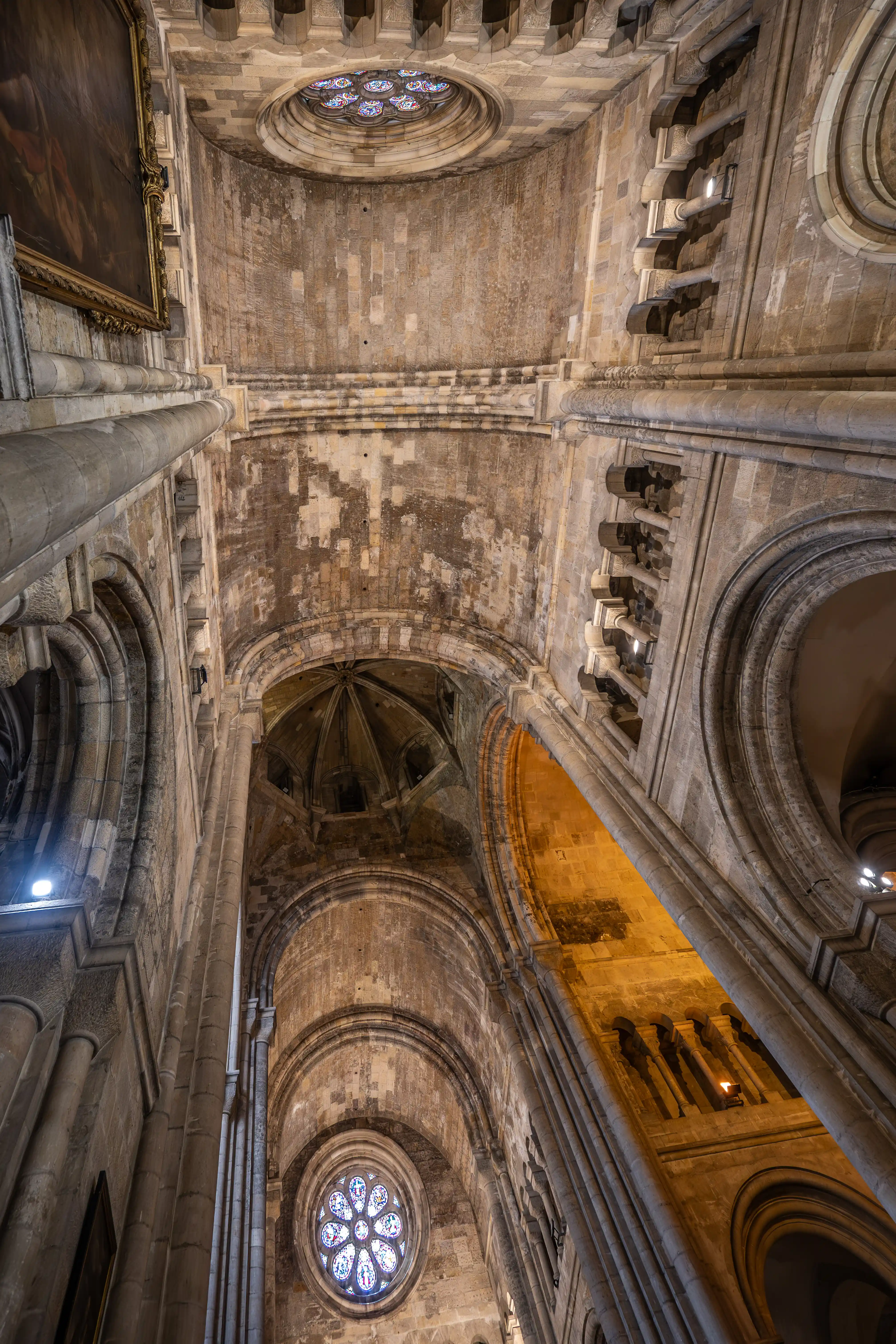
A wide-angle, low-angle view upwards into the interior of a grand cathedral, showcasing its impressive stone architecture, vaulted ceilings, and two circular rose windows filled with colourful stained glass.
Sé de Lisboa with Rose Windows ‐ photo by ,
©www.mgaylard.co.uk.
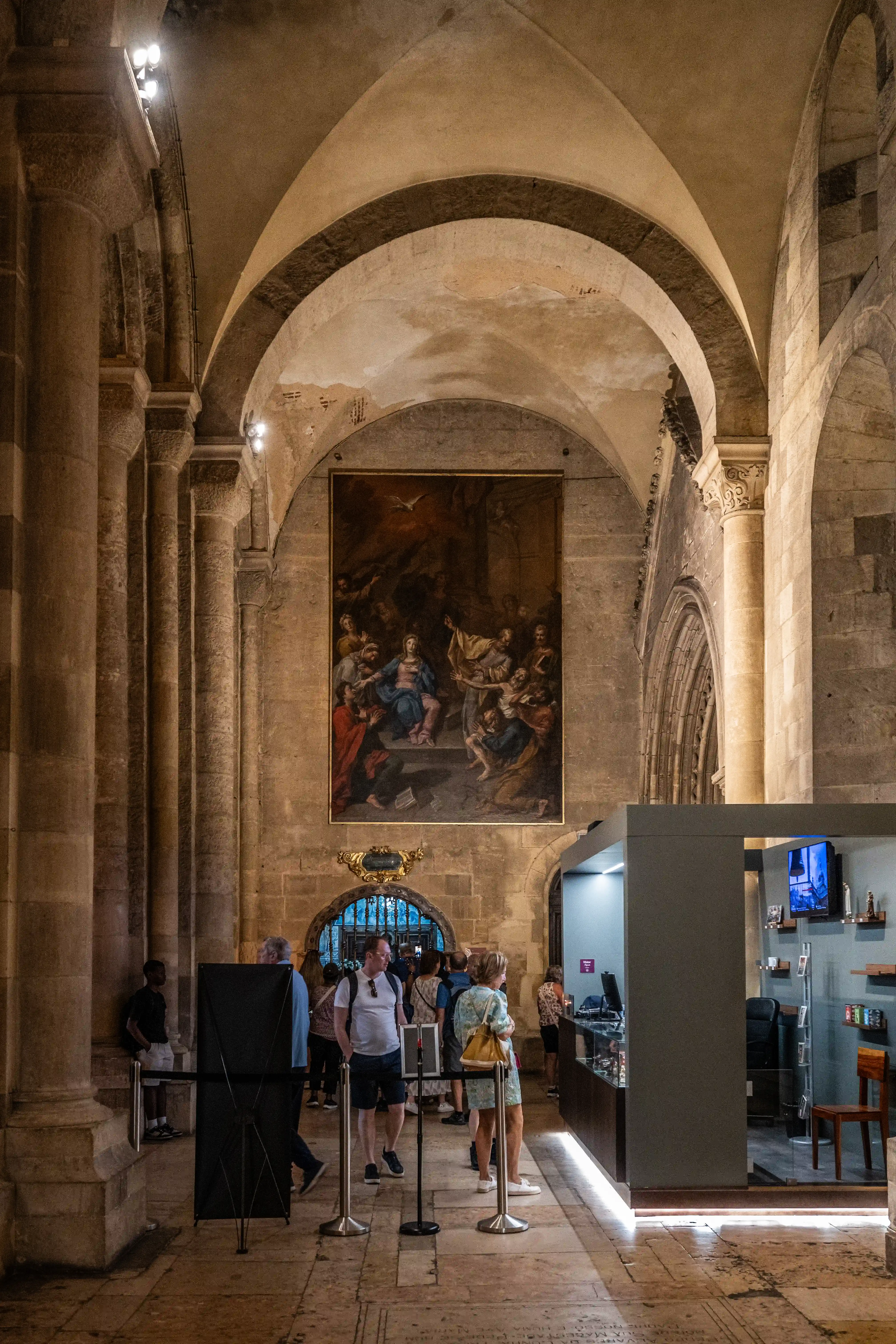
A wide-angle interior shot of a historic building with stone columns and arched ceilings. A large painting hangs on the far wall. Visitors are seen walking through the space, and a modern exhibition area is visible on the right.
Architectural Grandeur and Artistic Heritage: Visitors in Sé de Lisboa ‐ photo by ,
©www.mgaylard.co.uk.
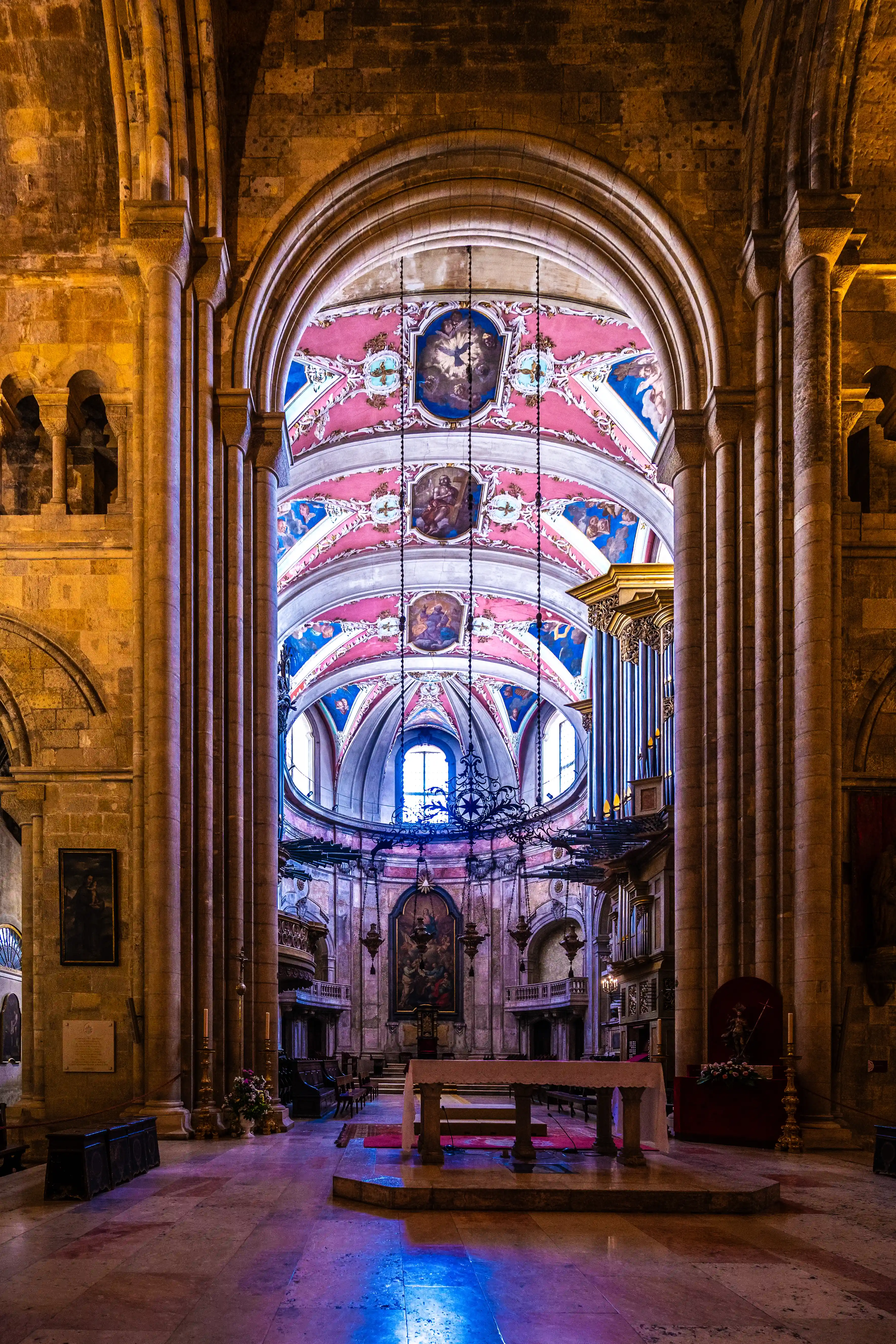
Interior view of a cathedral showcasing a richly decorated vaulted ceiling with religious paintings, stone columns, a pipe organ, and an altar illuminated by blue light
Cathedral Interior - Altar and Painted Ceiling ‐ photo by ,
©www.mgaylard.co.uk.
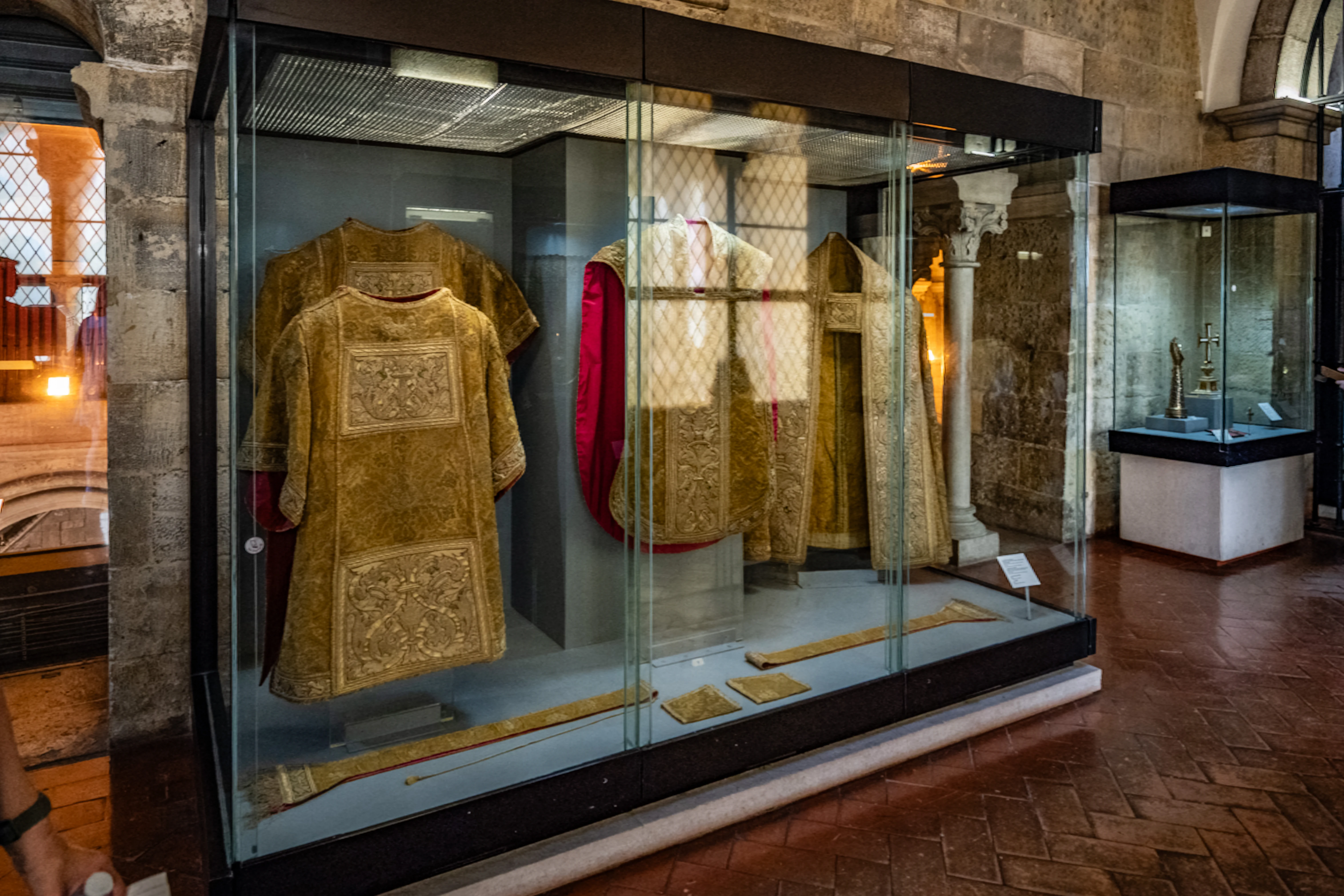
Several gold-coloured embroidered ecclesiastical robes are displayed in a glass case, with further religious artefacts visible in a smaller case in the background.
Museum Display of Religious Vestments and Artefacts ‐ photo by ,
©www.mgaylard.co.uk.
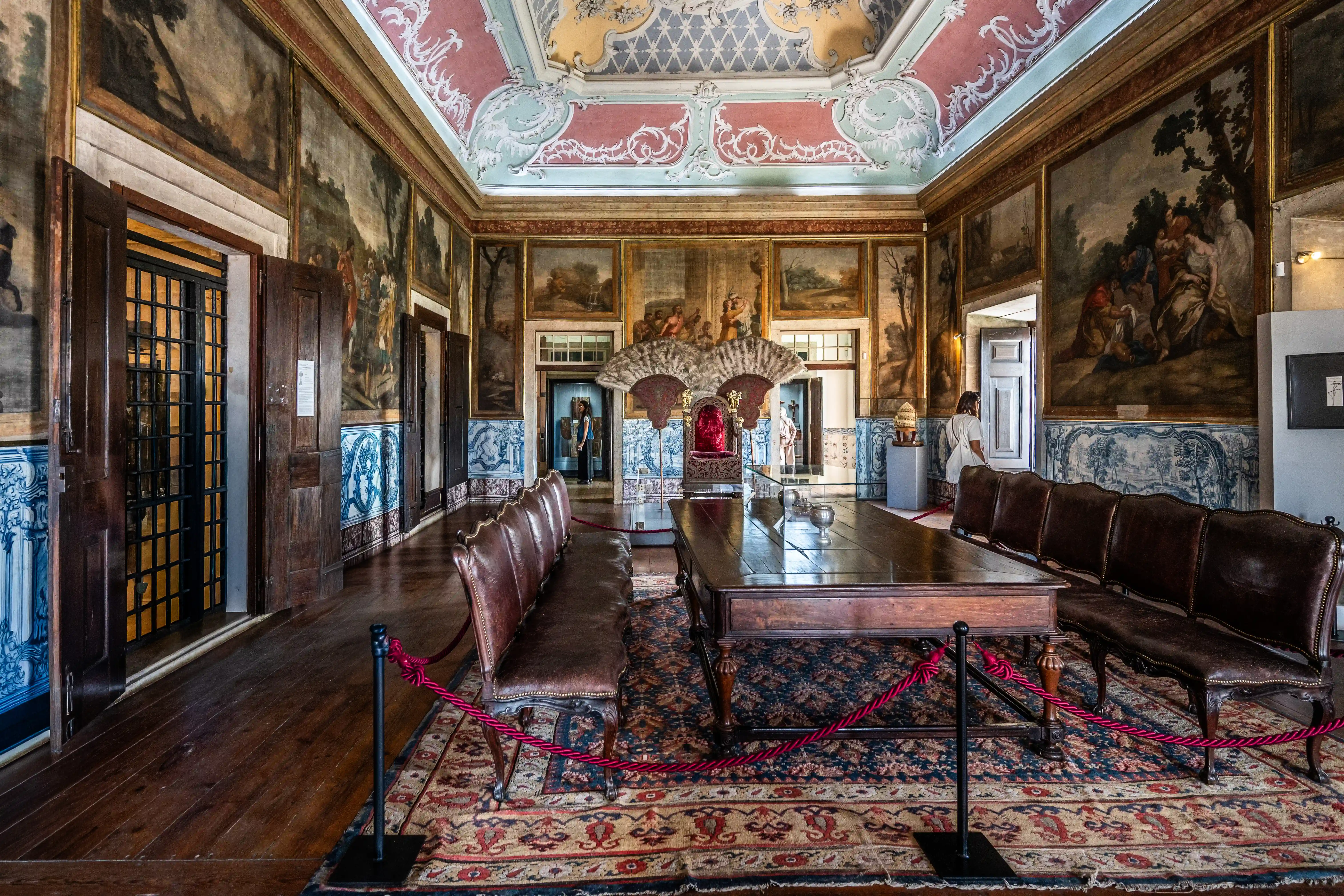
A wide shot of a richly decorated historic hall, showcasing a large wooden table, leather seating, a throne, and walls adorned with paintings and blue and white tiles.
The Royal Chamber: A Glimpse into Historical Grandeur ‐ photo by ,
©www.mgaylard.co.uk.
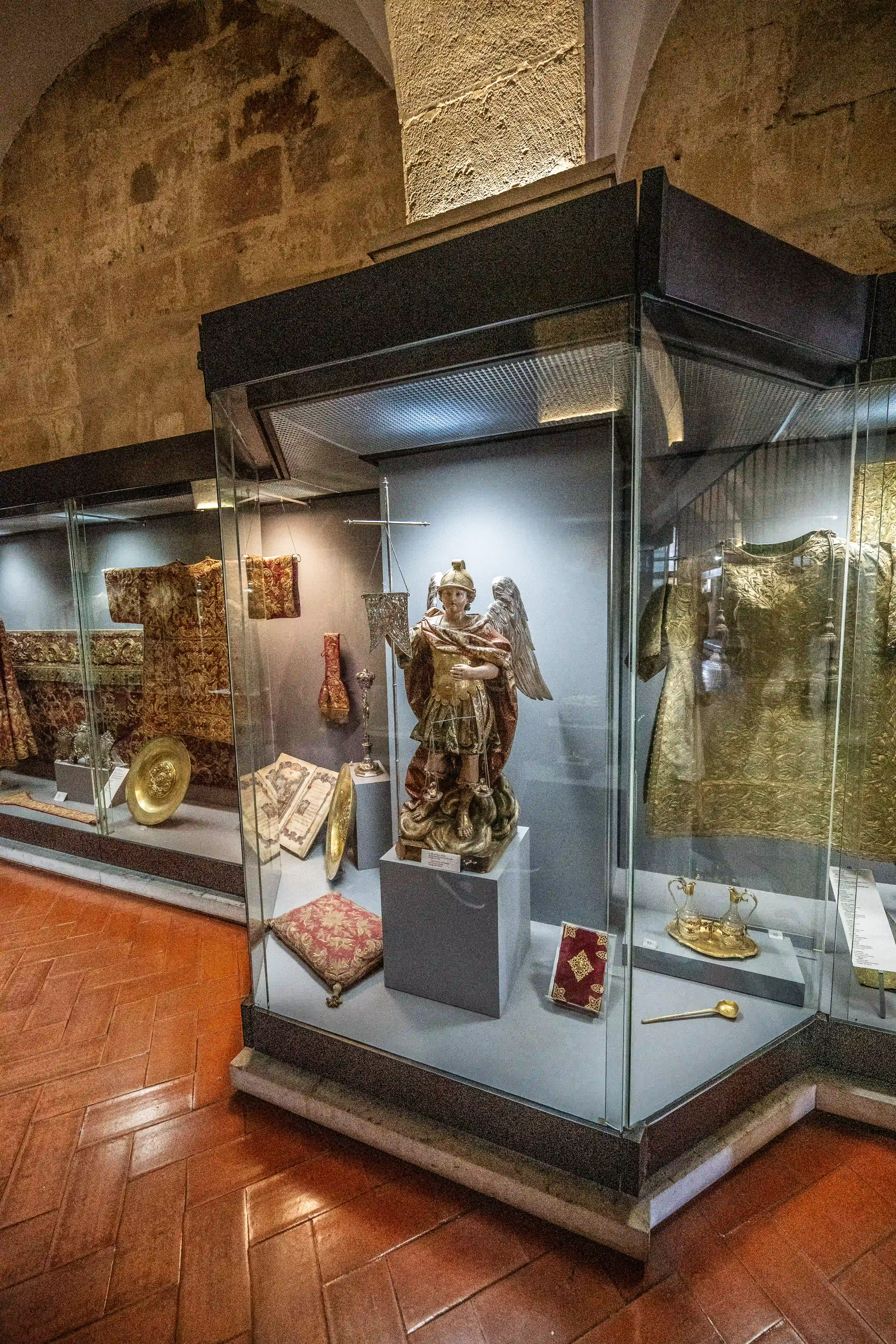
A museum display case containing a gilded statue of an angel with wings, elaborate religious garments, a golden dish, an ornate book, and other artefacts, set against a stone wall.
Museum Exhibition of Sacred Objects and Vestments ‐ photo by ,
©www.mgaylard.co.uk.
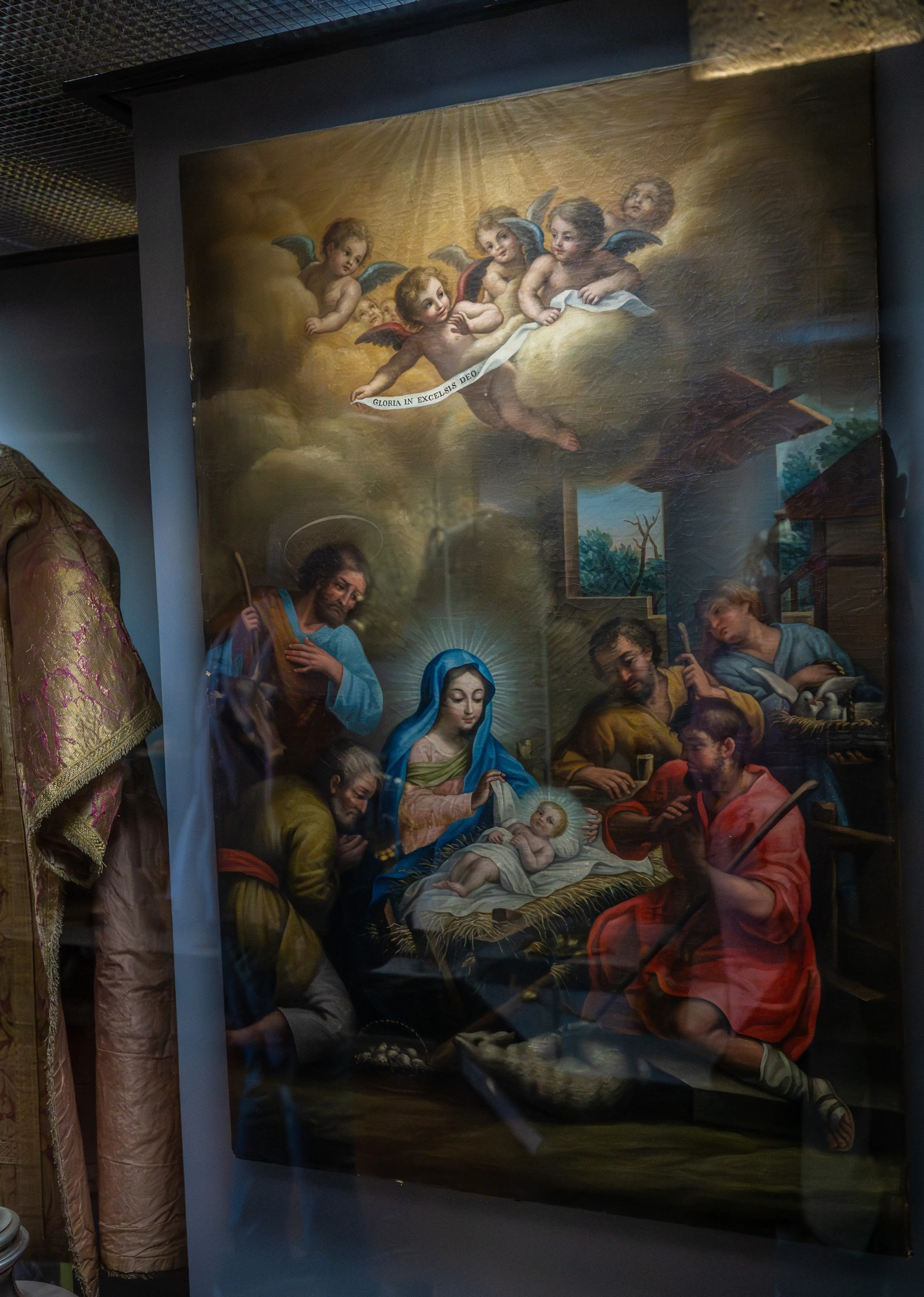
An oil painting of the Nativity scene, featuring the Virgin Mary, baby Jesus, Joseph, shepherds, and angels bearing a banner.
The Nativity: A Celestial Celebration ‐ photo by ,
©www.mgaylard.co.uk.
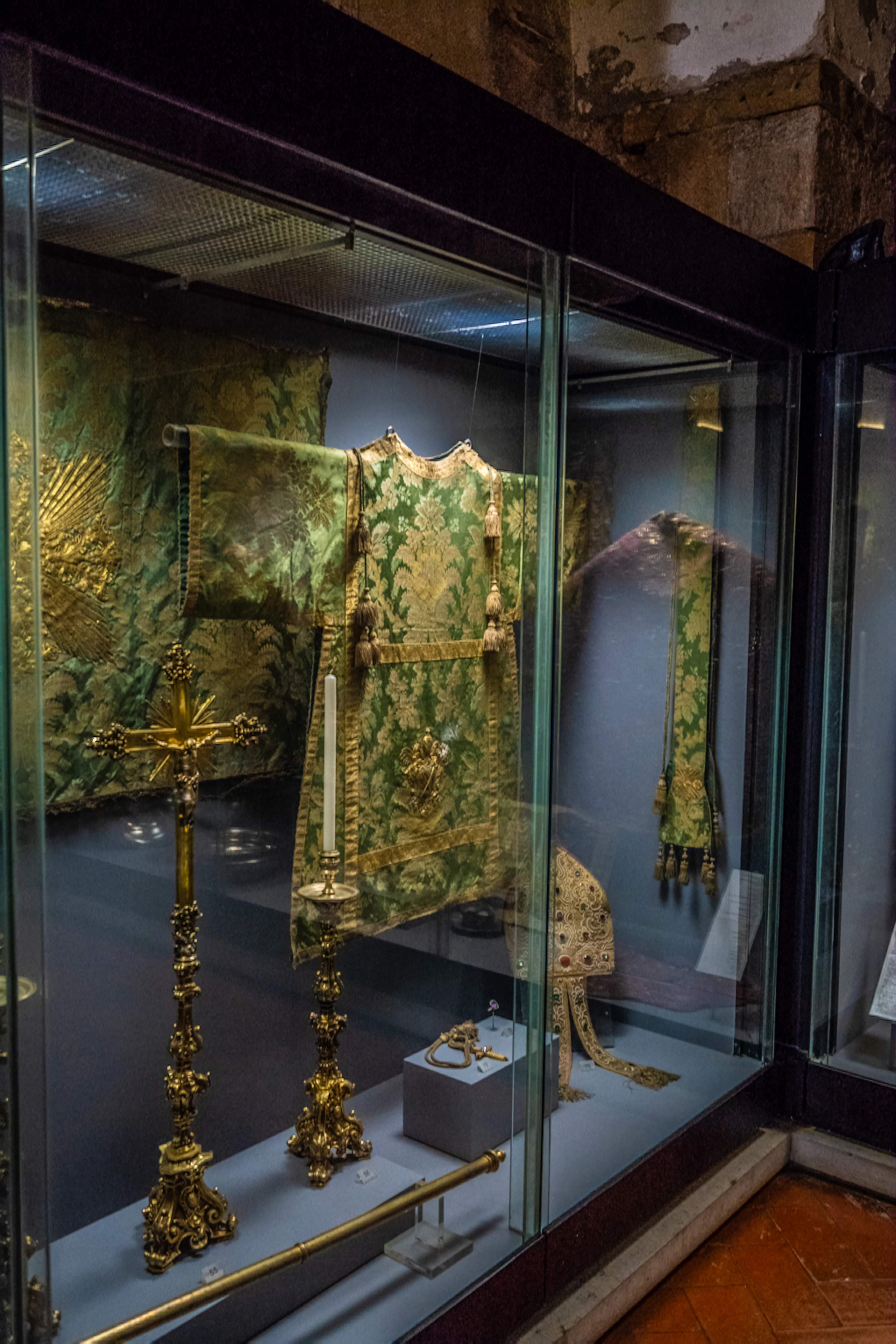
A museum display case featuring historical religious items, including a richly embroidered green chasuble, a golden crucifix, a candlestick, and a mitre.
Museum Display of Religious Vestments and Artefacts ‐ photo by ,
©www.mgaylard.co.uk.
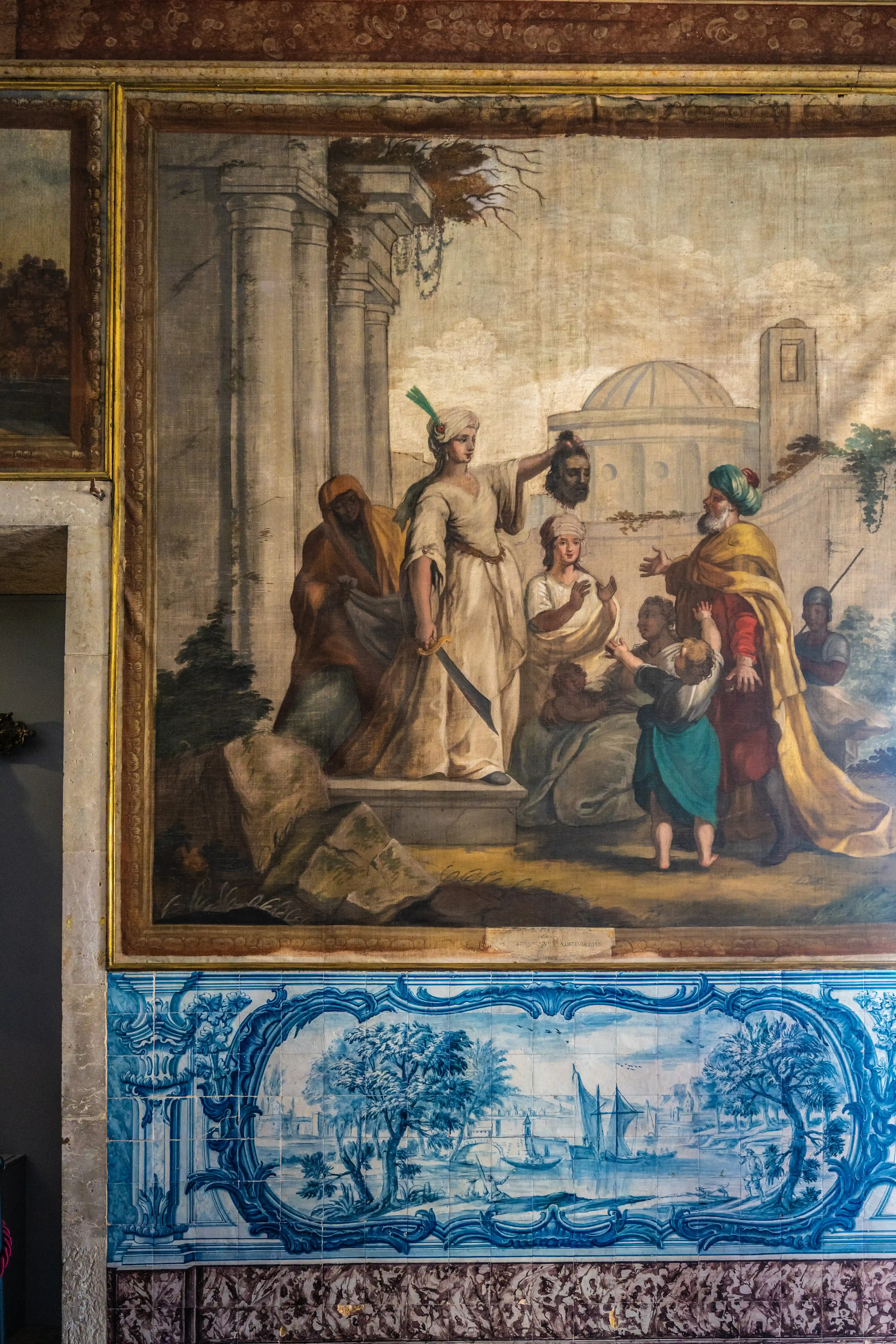
A grand fresco painting showing a scene with a woman holding a severed head, and other figures. Below the fresco is a detailed blue and white tiled panel with a pastoral landscape.
Ornate Fresco Above Historic Azulejo Tiles ‐ photo by ,
©www.mgaylard.co.uk.
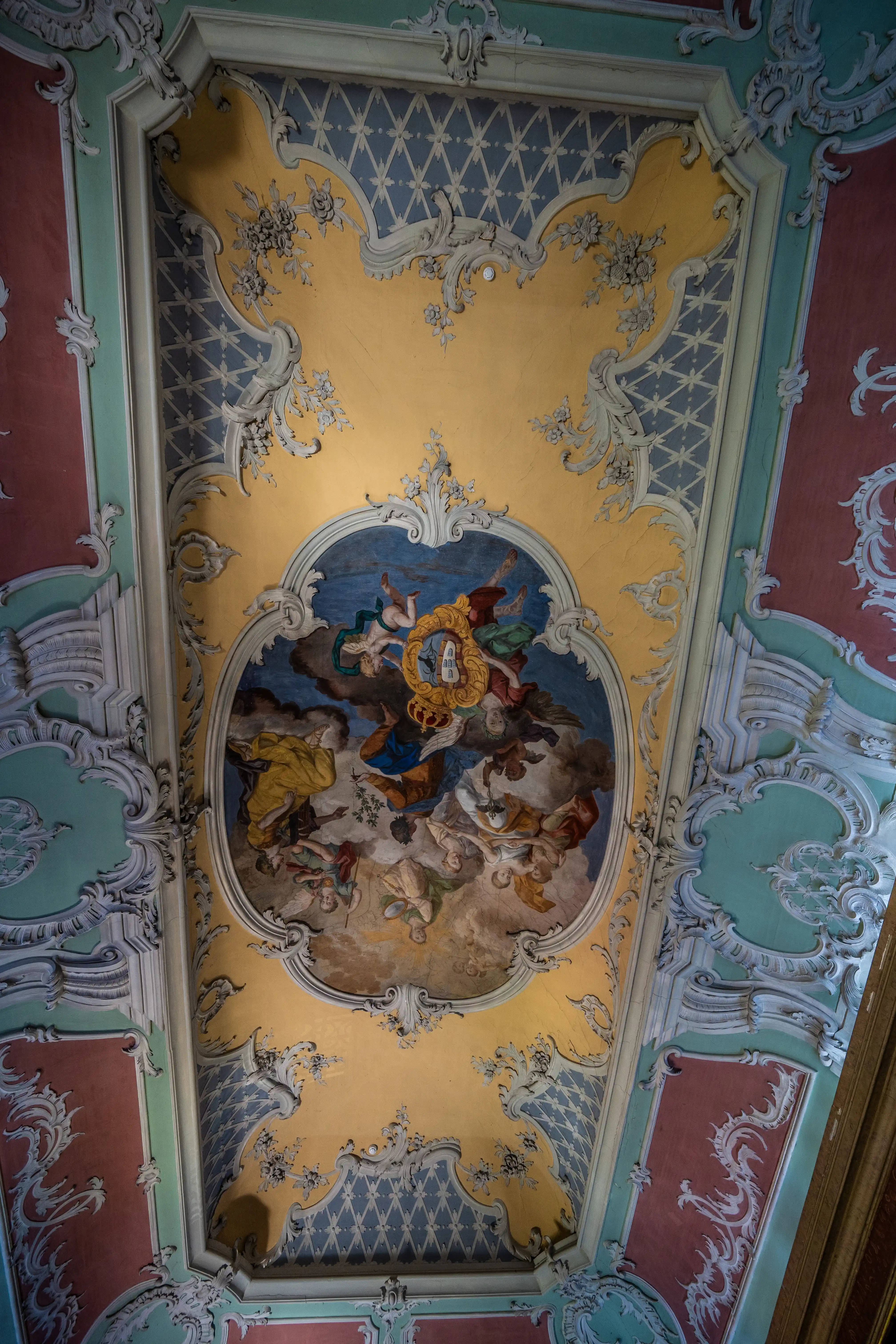
An ornate Baroque ceiling with a central fresco of figures in the sky, surrounded by intricate plasterwork in yellow, blue, rose, and teal.
Ornate Baroque Ceiling with Celestial Fresco ‐ photo by ,
©www.mgaylard.co.uk.
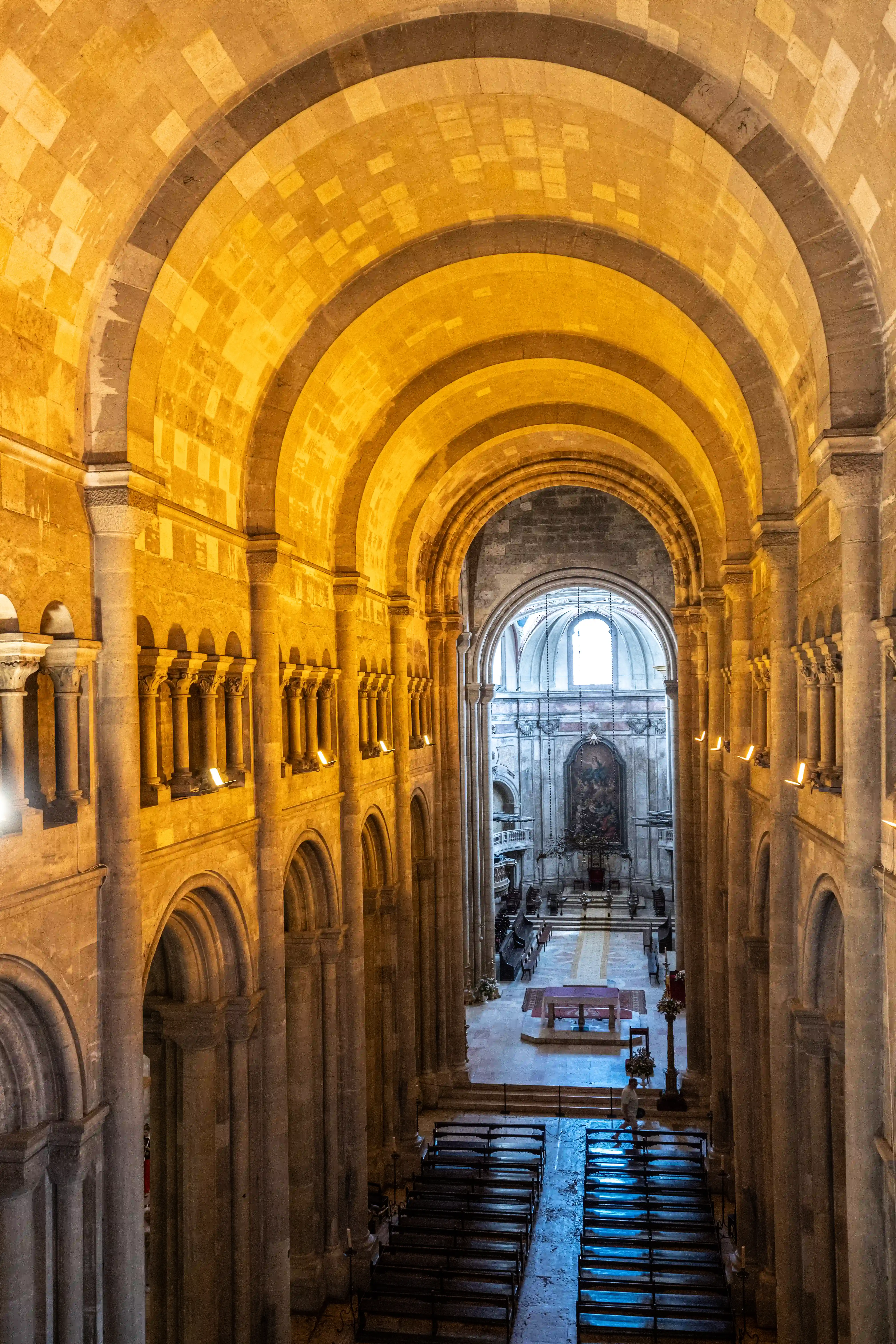
 Interior view of a large stone cathedral with multiple rounded arches receding into the distance, a lit altar at the far end, and rows of pews.
Majestic Cathedral Arches and Nave ‐ photo by ,
©www.mgaylard.co.uk.
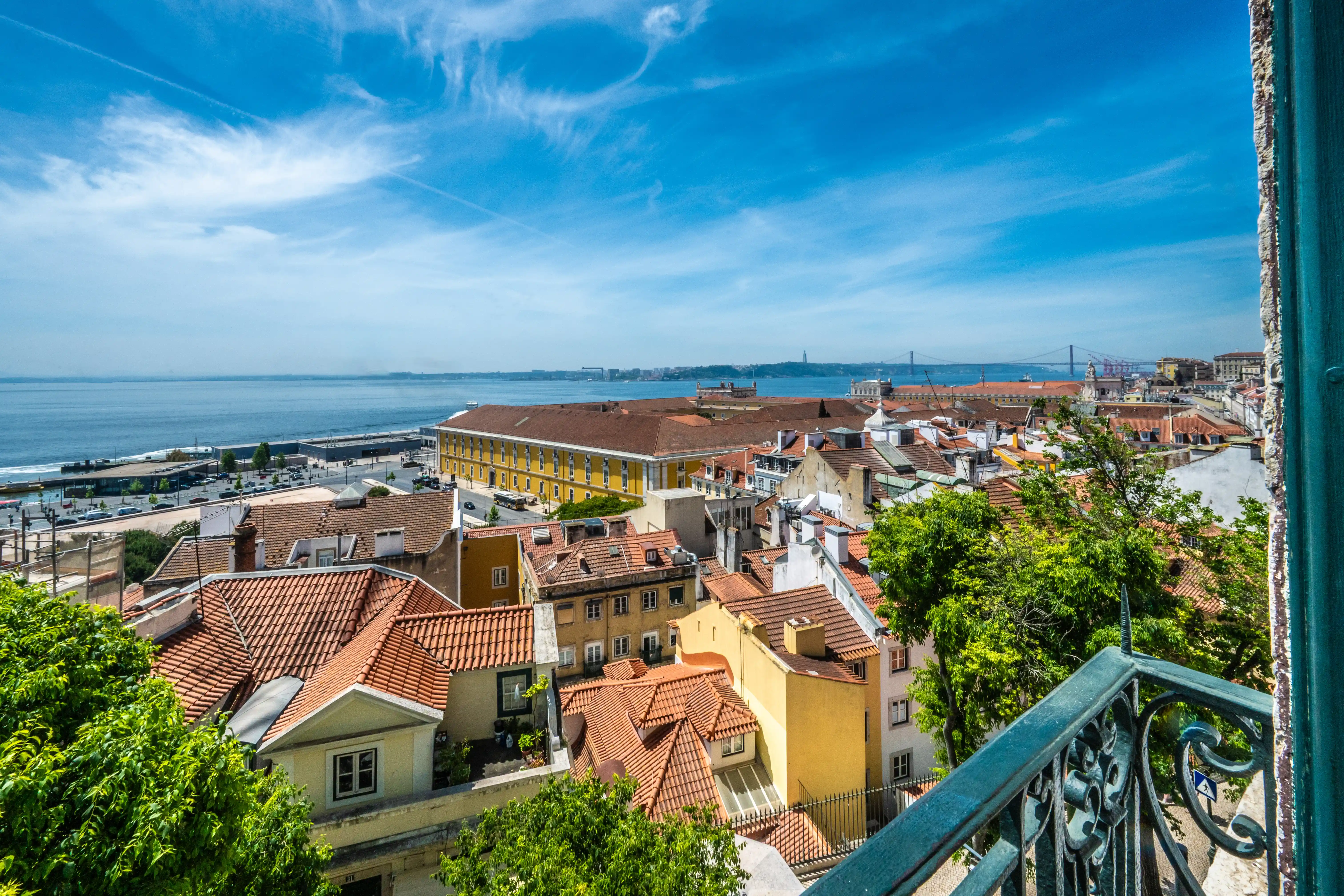
A scenic vista of red-tiled rooftops in Lisbon, Portugal, with the Tagus River and a distant bridge under a clear blue sky.
Lisbon Rooftop View of Tagus River and Ponte 25 de Abril ‐ photo by ,
©www.mgaylard.co.uk.
Aerial view of Lisbon's urban landscape with red-tiled roofs, a street scene with traffic, and the 25 de Abril Bridge visible across the river.
Lisbon Cityscape with 25 de Abril Bridge ‐ photo by ,
©www.mgaylard.co.uk.
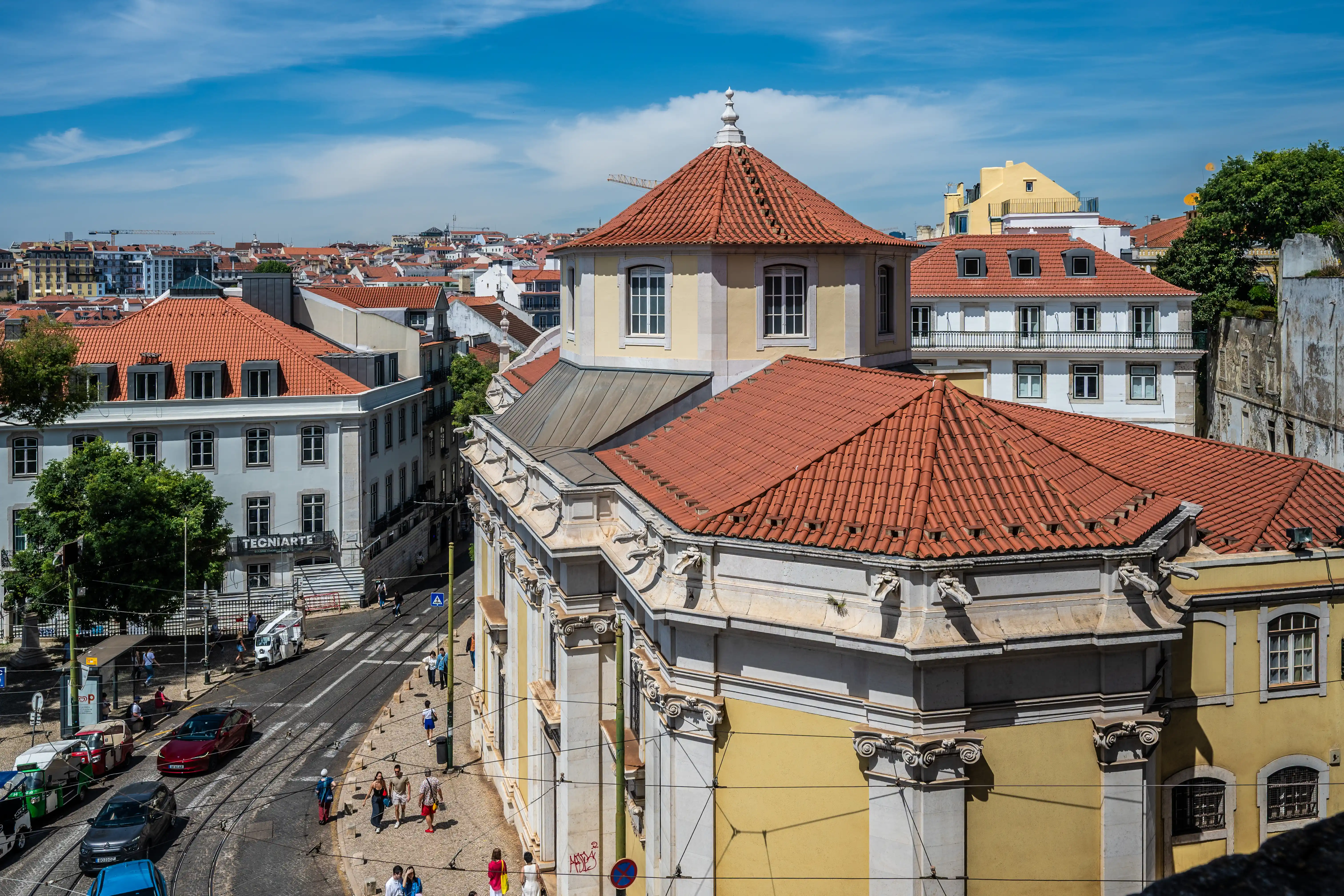
 A high-angle shot of a street in Lisbon, Portugal, showing numerous terracotta-tiled roofs of old buildings. In the foreground, a yellow building with classical architectural elements stands out. Cars, trams, and pedestrians are visible on the street below. The sky is blue with white clouds.
Lisbon Rooftops and Street Life ‐ photo by ,
©www.mgaylard.co.uk.
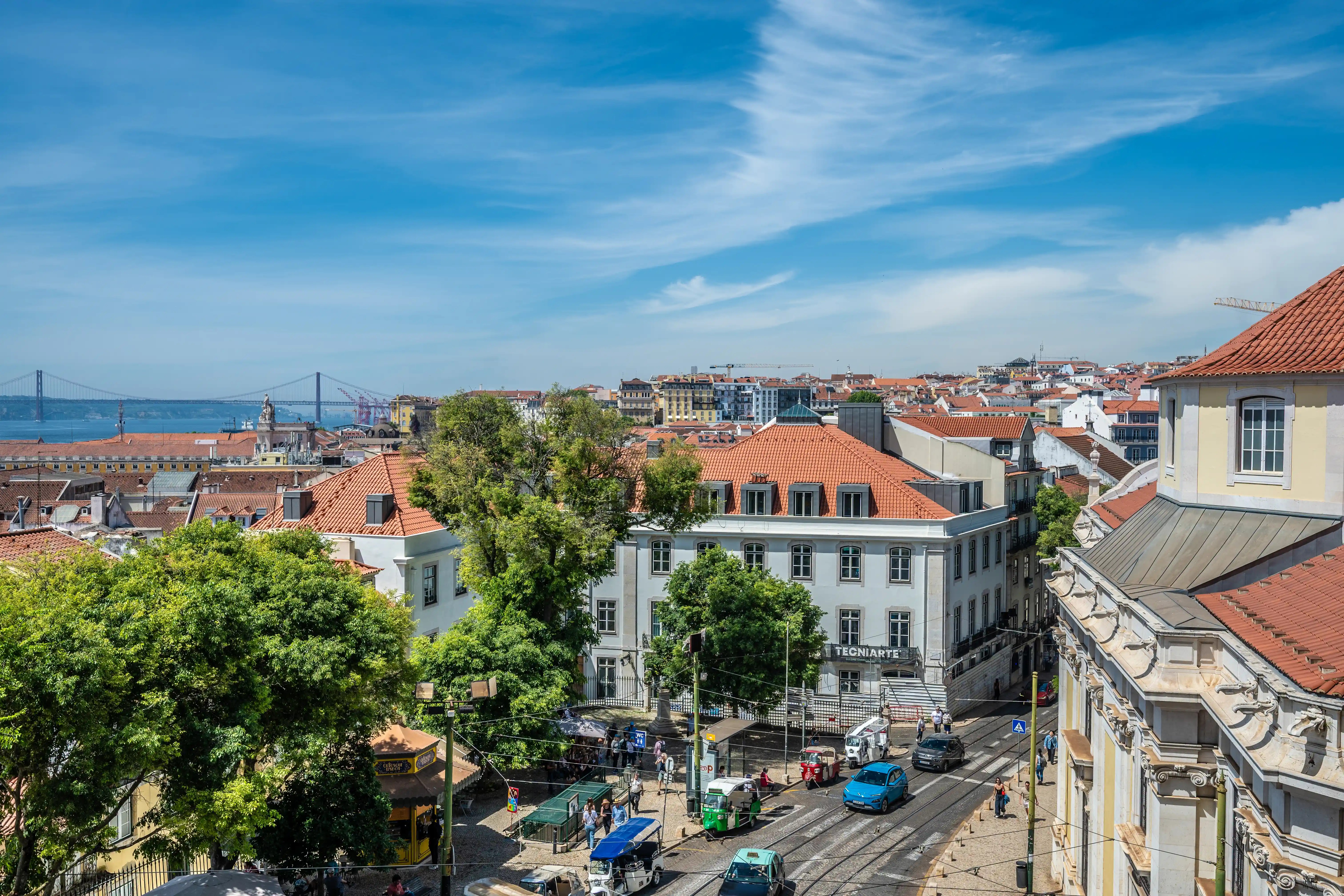
Overhead view of a sunny Lisbon street with terracotta rooftops, a market, tuk-tuks, tram tracks, and the Tagus River with a suspension bridge in the background.
Lisbon Rooftops and River View on a Sunny Day ‐ photo by ,
©www.mgaylard.co.uk.
Open the full set flickr button this page

Lisbon’s Majestic Cathedral of Light and History

Sé de Lisboa, or Lisbon Cathedral, is the oldest and most important church in Lisbon, Portugal. Built in 1147 after the city was reconquered from the Moors by Afonso Henriques, the first King of Portugal, the cathedral is a stunning example of Romanesque architecture with later Gothic, Baroque, and Neoclassical additions. Dedicated to Santa Maria Maior (St. Mary Major), Sé de Lisboa has witnessed and survived numerous historical events, including earthquakes and invasions, and remains a symbol of Lisbon’s resilience and faith. As the seat of the Patriarchate of Lisbon, it continues to serve as the spiritual heart of the city and a major tourist attraction.

A Fortress of Faith on the Hills of Alfama

The Sé de Lisboa (Lisbon Cathedral), officially known as the Catedral de Santa Maria Maior, is the oldest and most important church in Lisbon, Portugal. Perched on a hill in the historic Alfama district, the cathedral is a symbol of the city’s resilience, faith, and architectural grandeur. Its imposing Romanesque façade, twin bell towers, and rose window dominate the skyline of Lisbon, while its interior is a blend of Romanesque, Gothic, and Baroque styles, reflecting the evolving tastes and history of Portugal over the centuries.
The cathedral’s origins date back to the 12th century, when Afonso Henriques, the first King of Portugal, ordered its construction in 1147 after the reconquest of Lisbon from the Moors. The Sé de Lisboa was built on the site of a former mosque, symbolizing the Christianization of the city and the birth of Portugal as a nation. The cathedral was consecrated in 1150 and has since witnessed some of the most pivotal moments in Portuguese history, including royal coronations, marriages, and religious ceremonies.

A Masterpiece of Romanesque Architecture

The Sé de Lisboa is a masterpiece of Romanesque architecture, with influences from Gothic, Baroque, and Manueline styles added over the centuries. The exterior of the cathedral is fortress-like, with its thick stone walls, crenellated parapets, and two massive bell towers that flank the entrance. The rose window, a stunning example of Gothic craftsmanship, is one of the largest and most beautiful in Portugal, measuring over 6 meters (20 feet) in diameter. The main portal is adorned with intricate carvings depicting scenes from the Bible and the lives of saints, a testament to the skill of medieval stonemasons.
The interior of the Sé de Lisboa is equally impressive, with a spacious nave, soaring vaulted ceilings, and a series of chapels that showcase the cathedral’s rich history. The high altar, dedicated to Santa Maria Maior (St. Mary the Greater), is a focal point of the cathedral, surrounded by elaborate woodwork, gilded carvings, and religious artifacts. The choir stalls, dating from the 14th century, are a masterpiece of Gothic craftsmanship, featuring intricate carvings of animals, mythical creatures, and biblical figures.

A Cathedral of Light and Mystery

One of the most striking features of the Sé de Lisboa is its play of light. The stained-glass windows, including the rose window and the windows of the apse, cast vibrant colors across the stone walls and vaulted ceilings, creating an ethereal atmosphere that transports visitors to another world. The cathedral’s orientation—with its apse facing east—ensures that the morning sun illuminates the high altar in a dramatic display of light and shadow, a phenomenon that has captivated worshippers and visitors for centuries.
The cathedral also holds many secrets and legends. One of the most famous stories is that of the miracle of the ravens. According to legend, two ravens once nested in the cathedral’s towers and protected the relics of St. Vincent, the patron saint of Lisbon. The ravens were said to guard the saint’s remains from thieves and invaders, and their images are still used as a symbol of the cathedral today. Another legend tells of the "Devil’s Stone", a mysterious stone embedded in the cathedral’s cloister, said to be the spot where the devil was expelled during its construction.

A Treasury of Sacred Art and Relics

The Sé de Lisboa is home to a treasure trove of sacred art and relics, many of which are housed in the cathedral’s museum and cloister. Highlights include:
  • The Cloister: A peaceful and serene space, the cloister is adorned with azulejo (tile) panels depicting scenes from the Bible and the lives of saints. The tiles, dating from the 16th to 18th centuries, are a testament to Portugal’s rich tradition of ceramic art.
  • The Treasury: Located in the former sacristy, the treasury houses a collection of religious artifacts, including golden chalices, silver crosses, and medieval manuscripts. Among the most prized relics is the reliquary of St. Vincent, the patron saint of Lisbon, whose remains were brought to the cathedral in the 12th century.
  • The Baptismal Font: A 12th-century stone font, where Afonso Henriques and other Portuguese kings and queens were baptized, symbolizing the cathedral’s role in the foundation of Portugal.

References

Text generated by Mistral AI , generated by Google's AI Image Describer
To the top
Powered by w3.css. The images are all stored on link to www.gaylard.co.uk Photostream on Flickr   This website is hosted by link to 123Reg Web Hosting