HOME

Castelo de São Jorge

Castelo de São Jorge

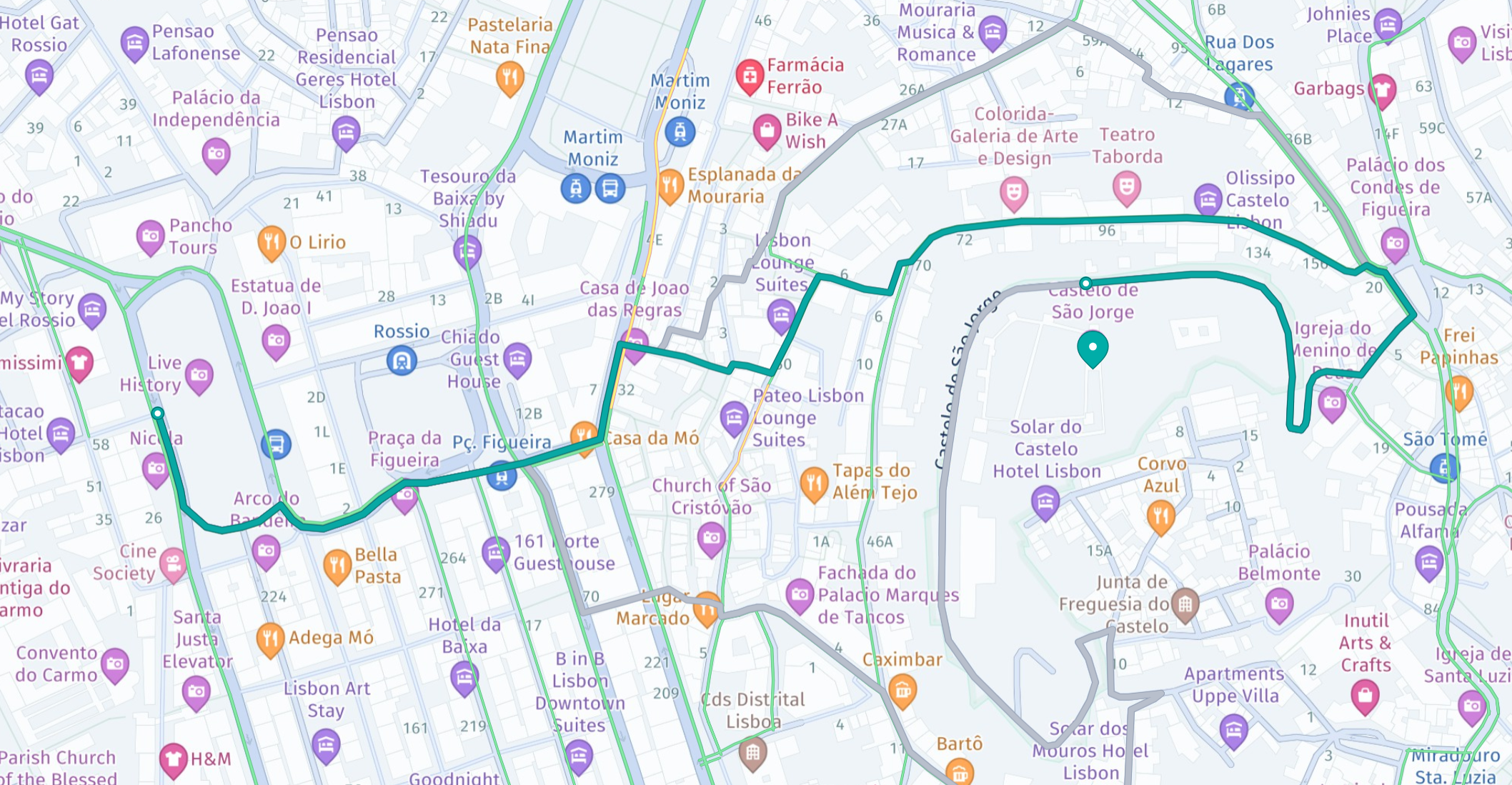
Rua da MadalenaCastelo de São JorgeLisbon District,   1100-348,   Portugal

Castelo de São Jorge is a historic Moorish castle perched on a hilltop in the Alfama district of Lisbon, Portugal. Originally built as a fortress in the 11th century during the Moorish occupation, it was later conquered by Afonso Henriques in 1147 and dedicated to Saint George. The castle served as a royal palace for Portuguese kings until the 16th century and played a pivotal role in the city’s defense. Today, it is one of Lisbon’s most iconic landmarks, offering breathtaking panoramic views of the city, the Tagus River, and the surrounding landscape. The castle’s ancient walls, towers, and archaeological site provide a fascinating glimpse into Lisbon’s layered history.
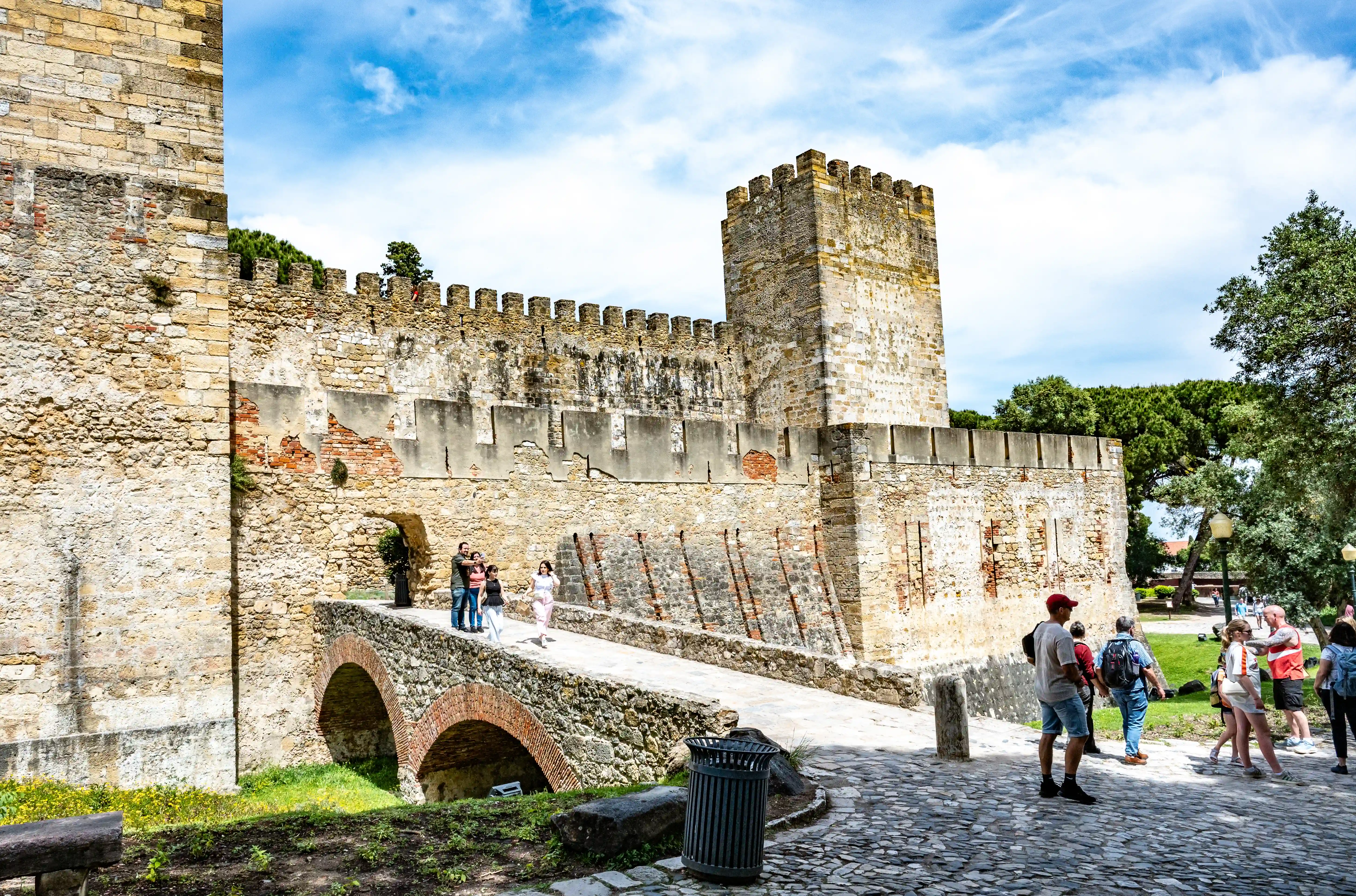
A group of tourists walk across a stone bridge towards the entrance of a large, ancient castle with stone walls and a tower under a cloudy blue sky.
A group of tourists walk across a stone bridge towards the entrance of a large, ancient castle with stone walls and a tower under a cloudy blue sky. ‐ photo by ,
©www.mgaylard.co.uk.
A bronze statue of a medieval knight stands tall on a stone monument. He is depicted with a helmet, armour, a shield in his left arm, and a sword held upright in his right hand. The monument is set in an outdoor plaza with trees providing shade, and people are seen in the background.
Monument of a Knight in Lisbon's Praça do Império ‐ photo by ,
©www.mgaylard.co.uk.
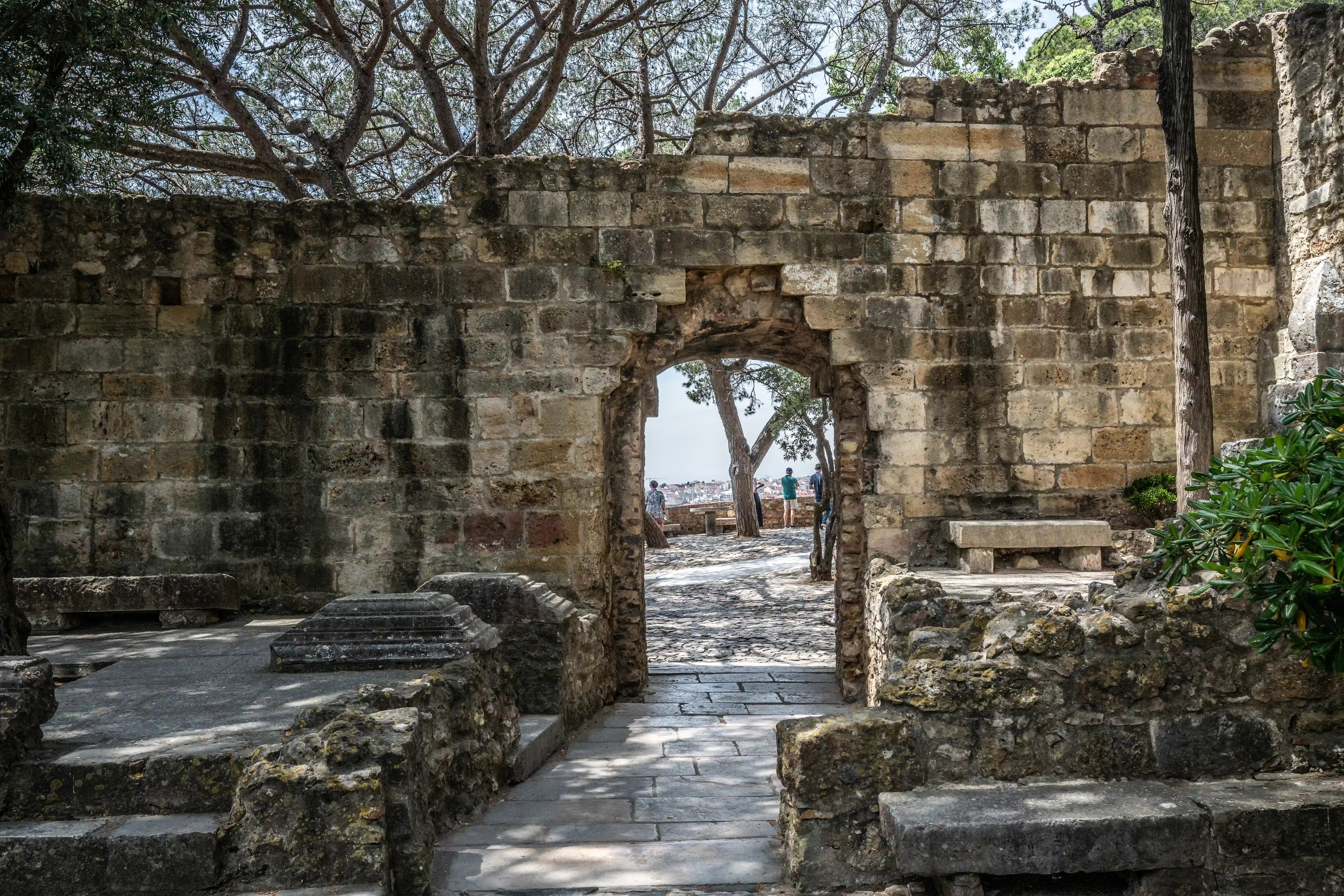
An arched opening in an old stone wall, revealing a sunlit path with scattered stone structures and people in the distance, framed by trees.
Ruins of an Old Stone Fortification with a View ‐ photo by ,
©www.mgaylard.co.uk.
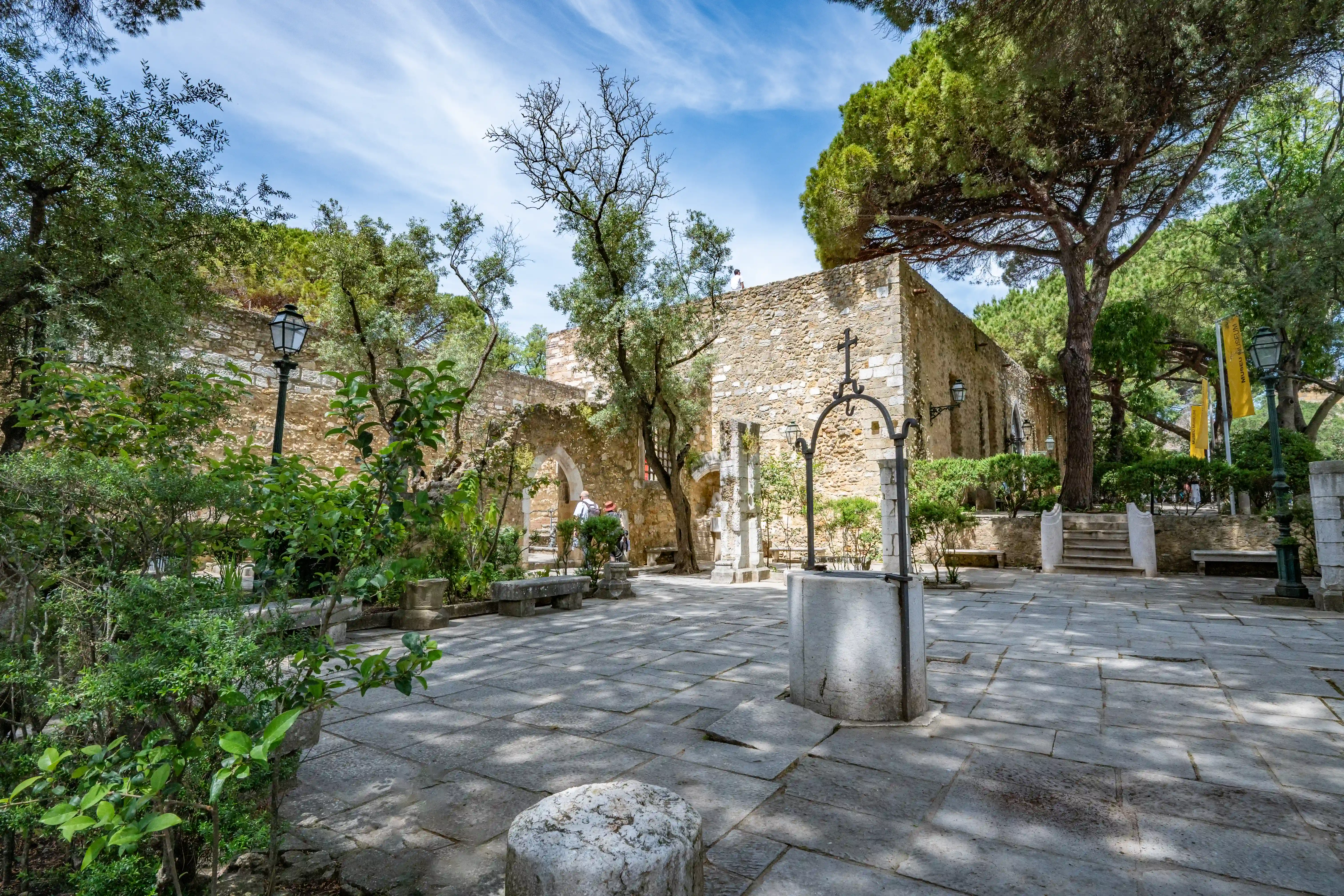
A serene view of a historic courtyard featuring an old stone well with a wrought-iron cross, surrounded by ancient stone walls, trees, and paved ground. The scene evokes a sense of timelessness and historical depth.
Historic Courtyard and Well with Cross ‐ photo by ,
©www.mgaylard.co.uk.
A stone statue of a man in regal attire, seated on a plinth in a garden, with trees and foliage in the background.
Stone Sculpture of a Seated Royal in a Garden ‐ photo by ,
©www.mgaylard.co.uk.
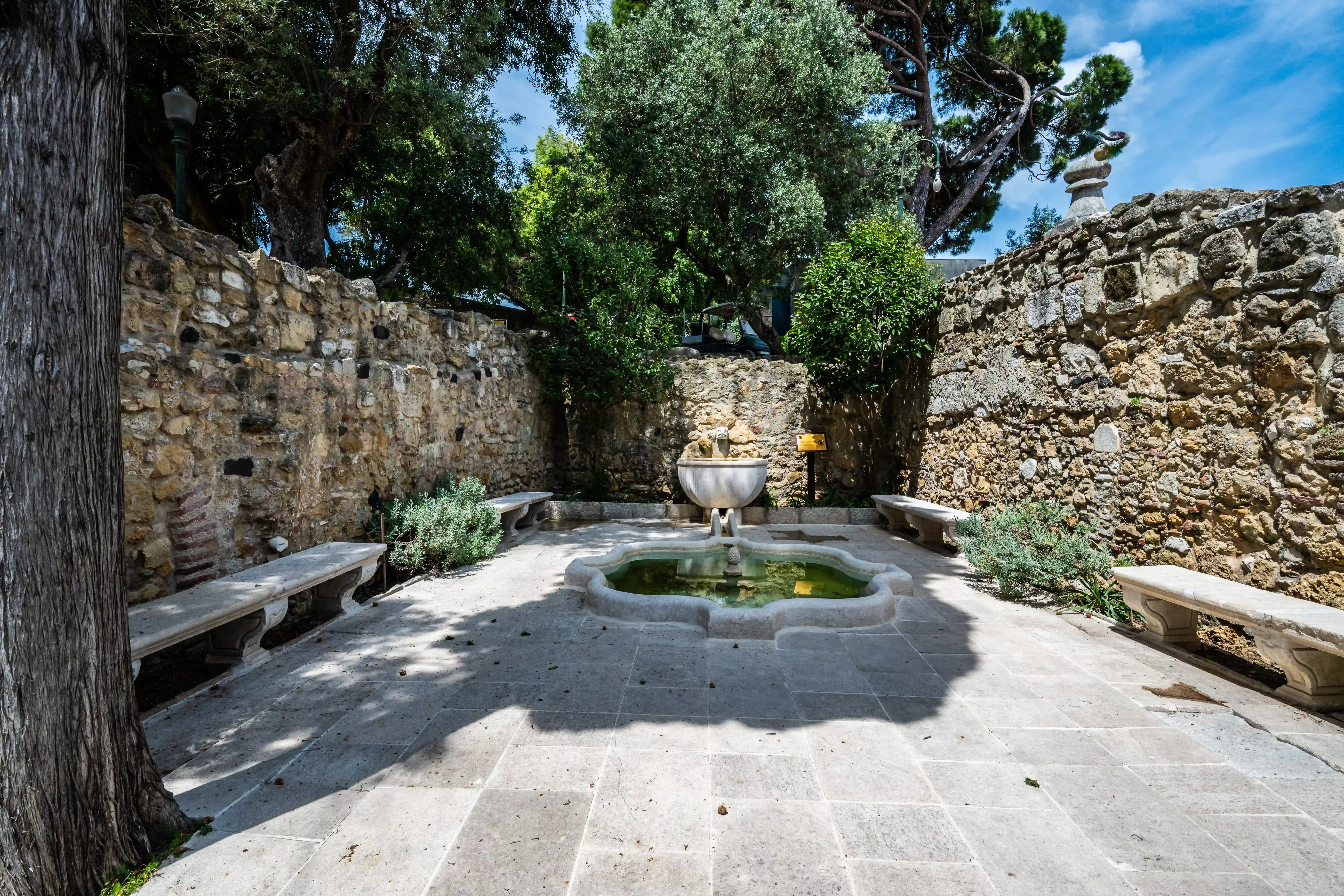
A courtyard scene with a stone fountain, stone benches, and stone walls, surrounded by trees.
Historic Courtyard with Fountain and Seating ‐ photo by ,
©www.mgaylard.co.uk.
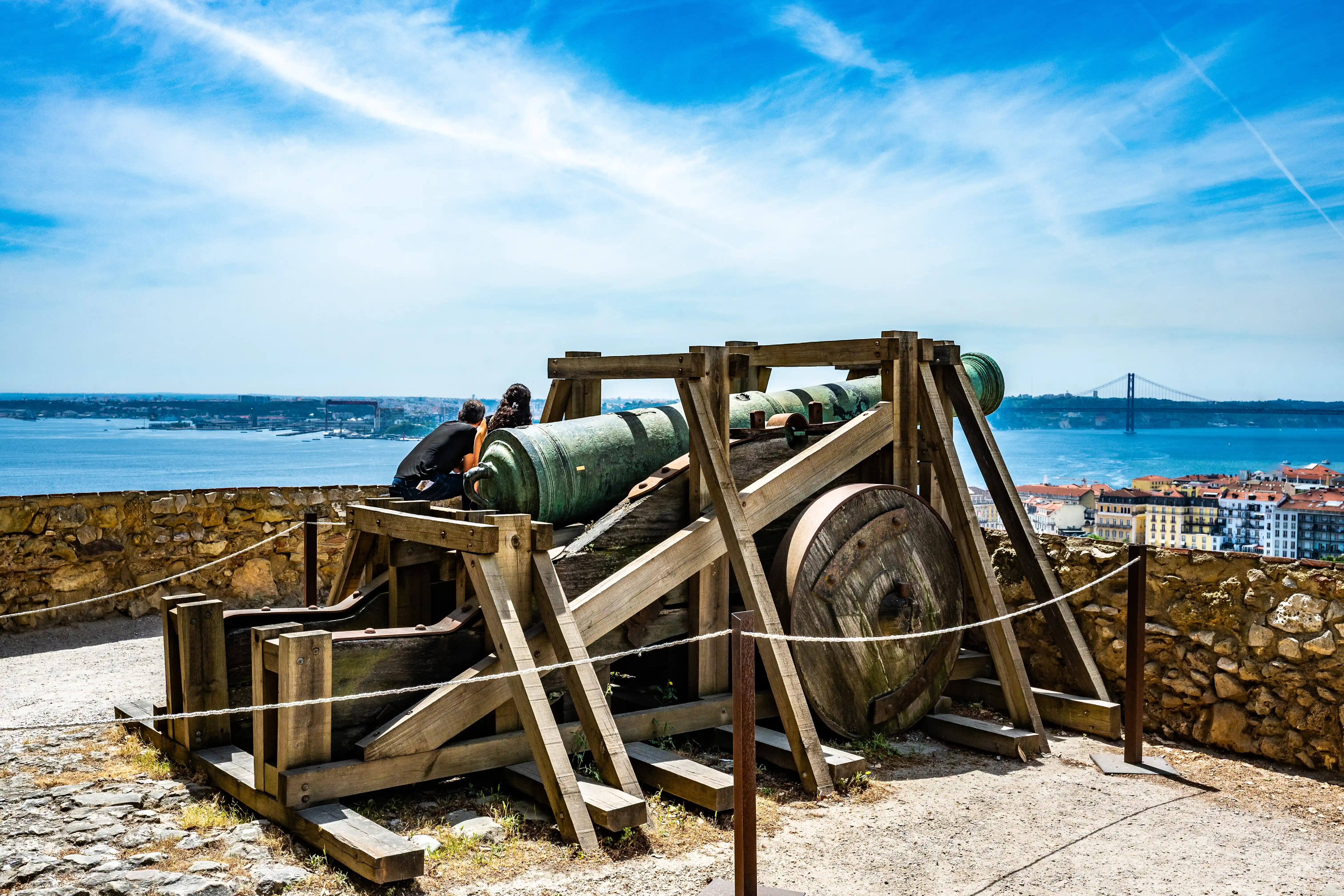
Two people observing a large, old cannon on a wooden mount, with a river, city, and bridge in the background under a bright sky.
Ancient Artillery Guards Lisbon's Riverfront ‐ photo by ,
©www.mgaylard.co.uk.
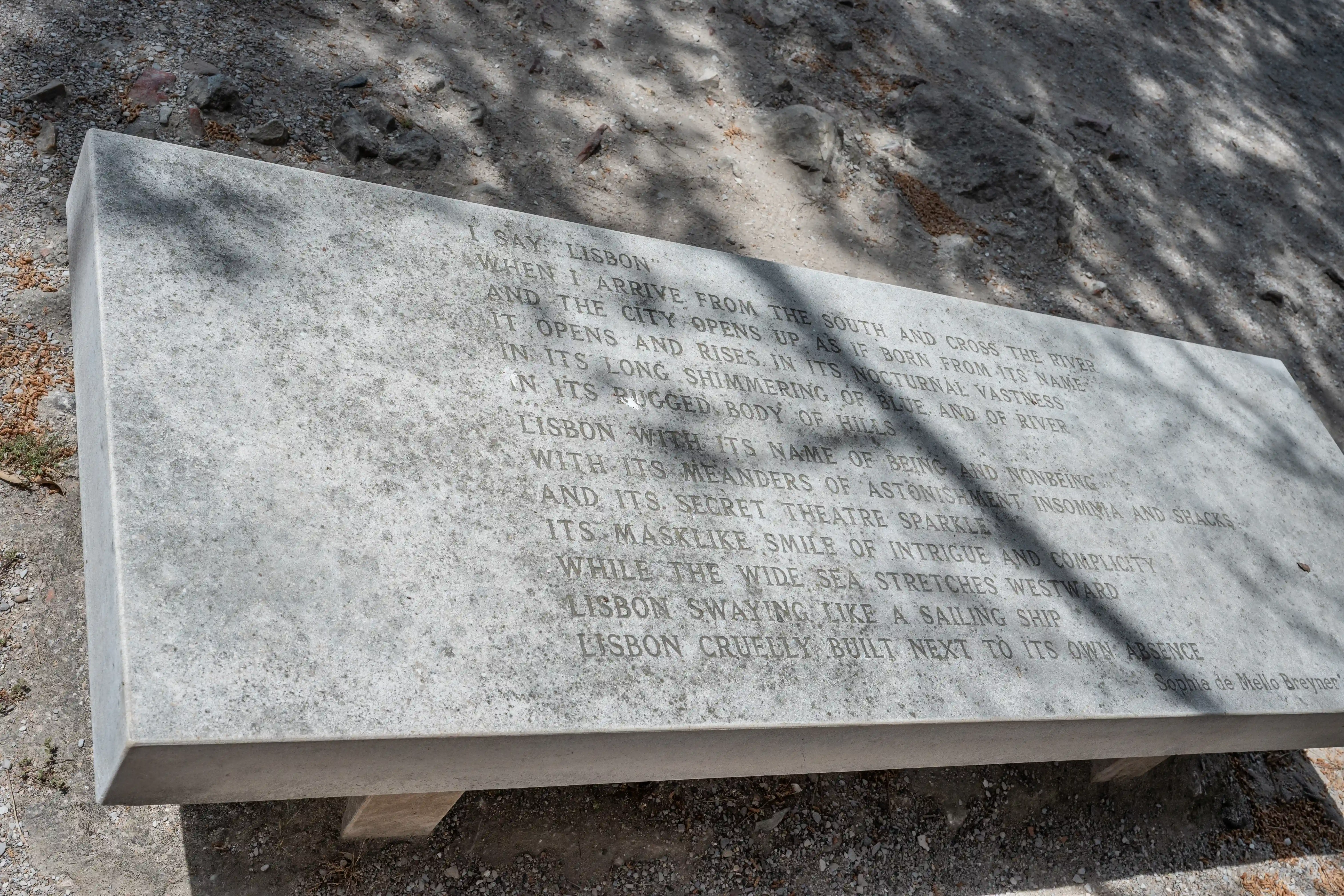
A light grey stone bench carved with a poem, detailing the city of Lisbon, set outdoors on a gravel path under dappled sunlight.
Lisbon Poetry Stone Bench ‐ photo by ,
©www.mgaylard.co.uk.
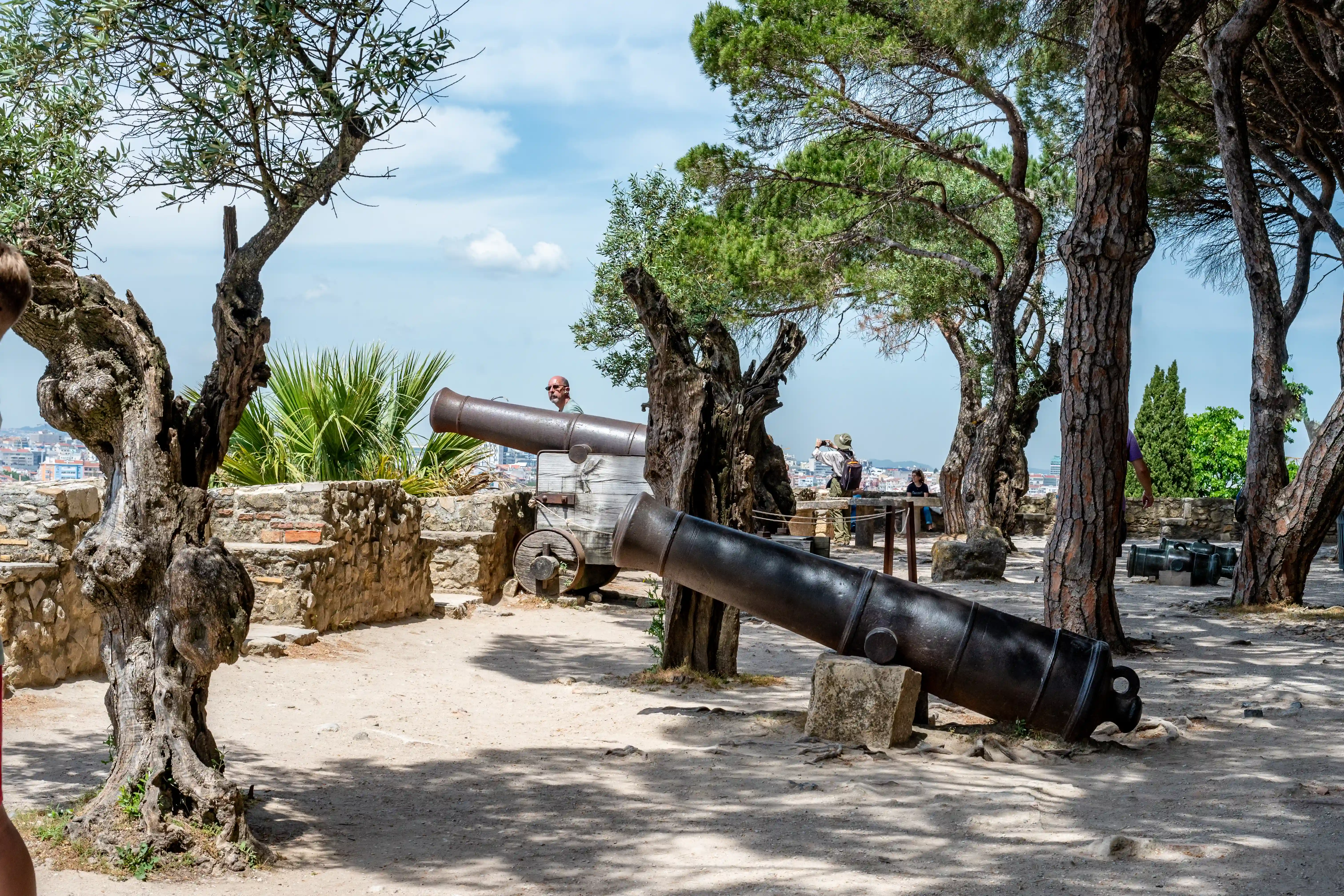
Two cannons, one in the foreground resting on stones and another on a wooden carriage behind it, are seen at a historical site with gnarled trees. A city skyline is visible in the distance under a blue sky with clouds. People are scattered around the site.
Cannons and Cityscape: A Glimpse of a Historic Coastal Defense ‐ photo by ,
©www.mgaylard.co.uk.
A view through an ancient stone archway showing a weathered fountain with a grotesque carving above the basin, set against a textured concrete wall.
Ancient Stone Archway and Fountain ‐ photo by ,
©www.mgaylard.co.uk.
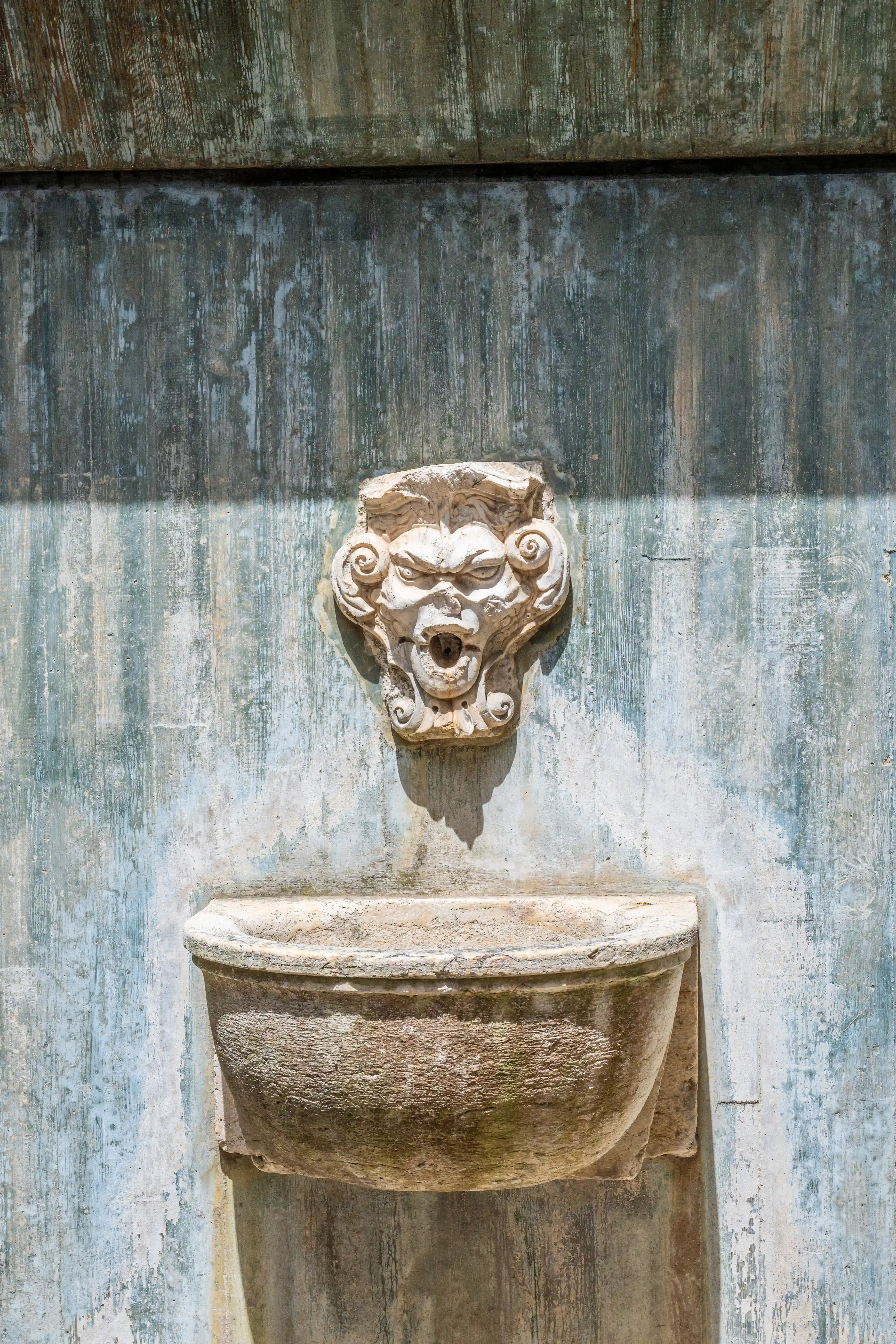
A weathered stone gargoyle fountain with an open mouth and a basin below, mounted on a textured, distressed wall with shadows cast across it.
Old Stone Gargoyle Fountain ‐ photo by ,
©www.mgaylard.co.uk.
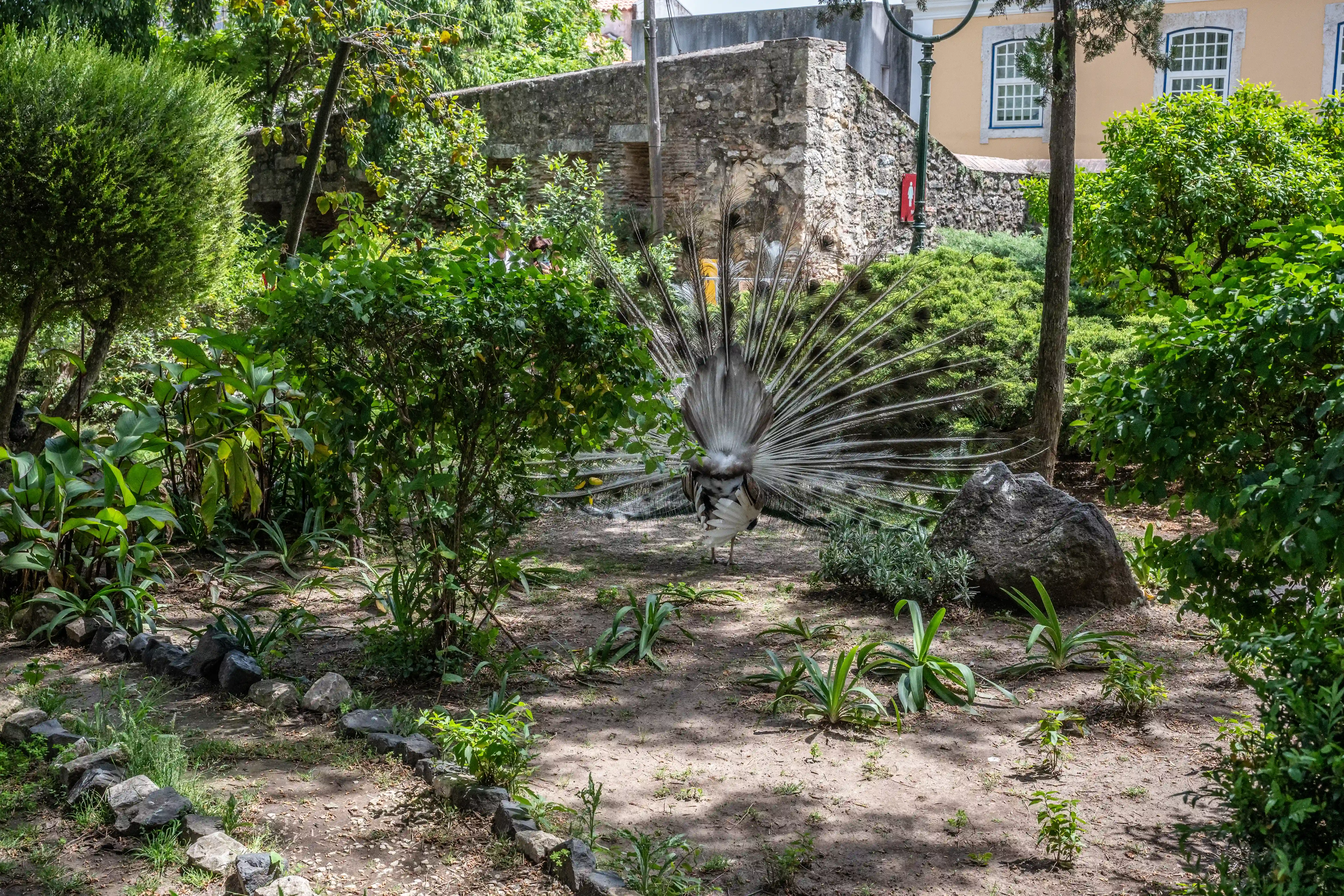
A male peacock with its tail feathers fanned out stands in the centre of a garden, surrounded by green bushes and plants. In the background, a stone building and part of a yellow building with white-framed windows are visible.
Majestic Peacock's Courtship Display in a Verdant Garden Setting ‐ photo by ,
©www.mgaylard.co.uk.
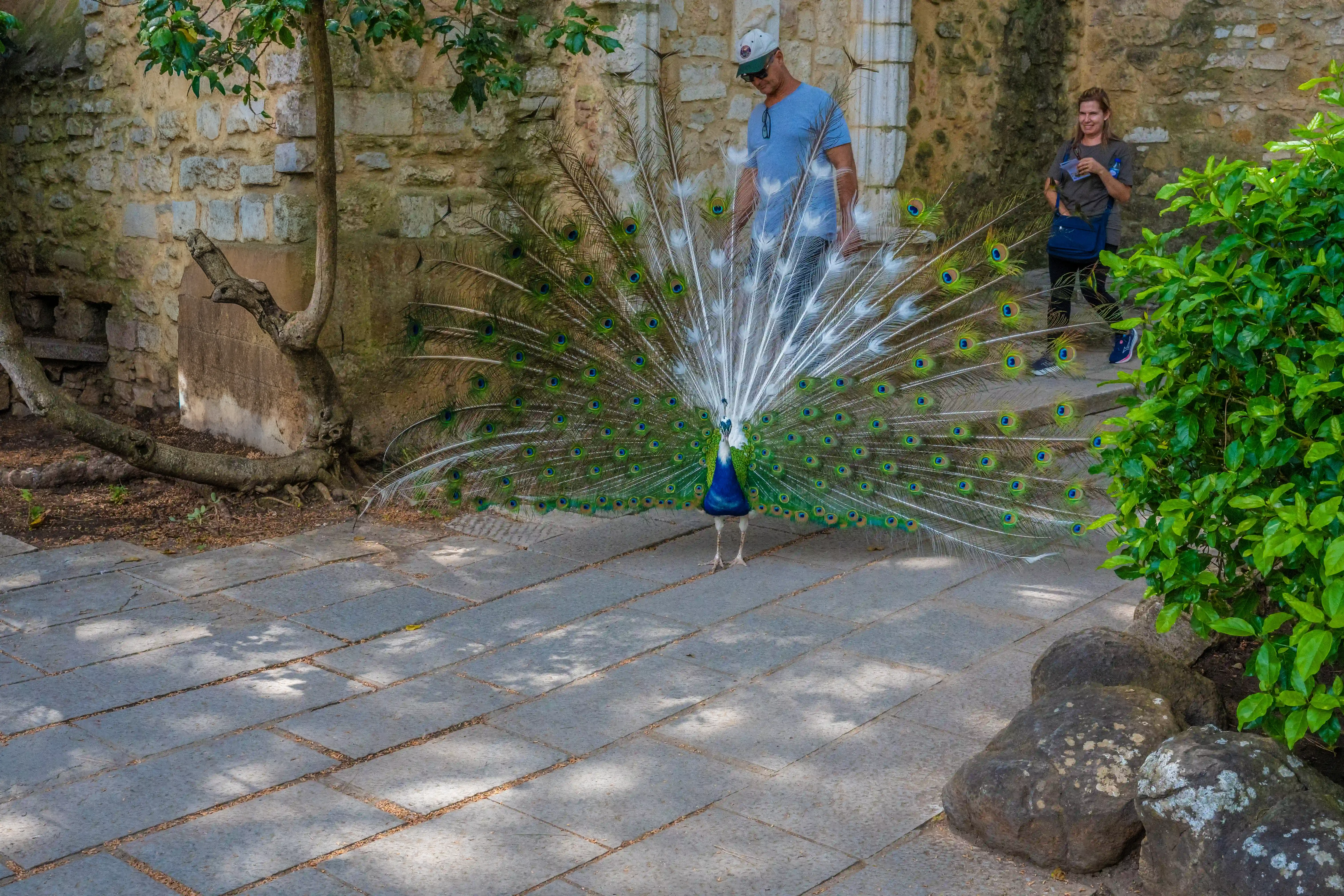
A peacock fans its iridescent tail feathers displaying vibrant green and blue eyespots. Two men and a woman are visible in the background, with one man walking uphill and the other watching the bird. Lush green foliage and a stone wall complete the scene.
A Majestic Peacock Shows Off its Plumage in a Stone Courtyard ‐ photo by ,
©www.mgaylard.co.uk.
A peacock with its tail feathers fully fanned out, displaying its vibrant colours. Two women stand in the background in a stone courtyard.
Peacock Display in Historic Setting ‐ photo by ,
©www.mgaylard.co.uk.
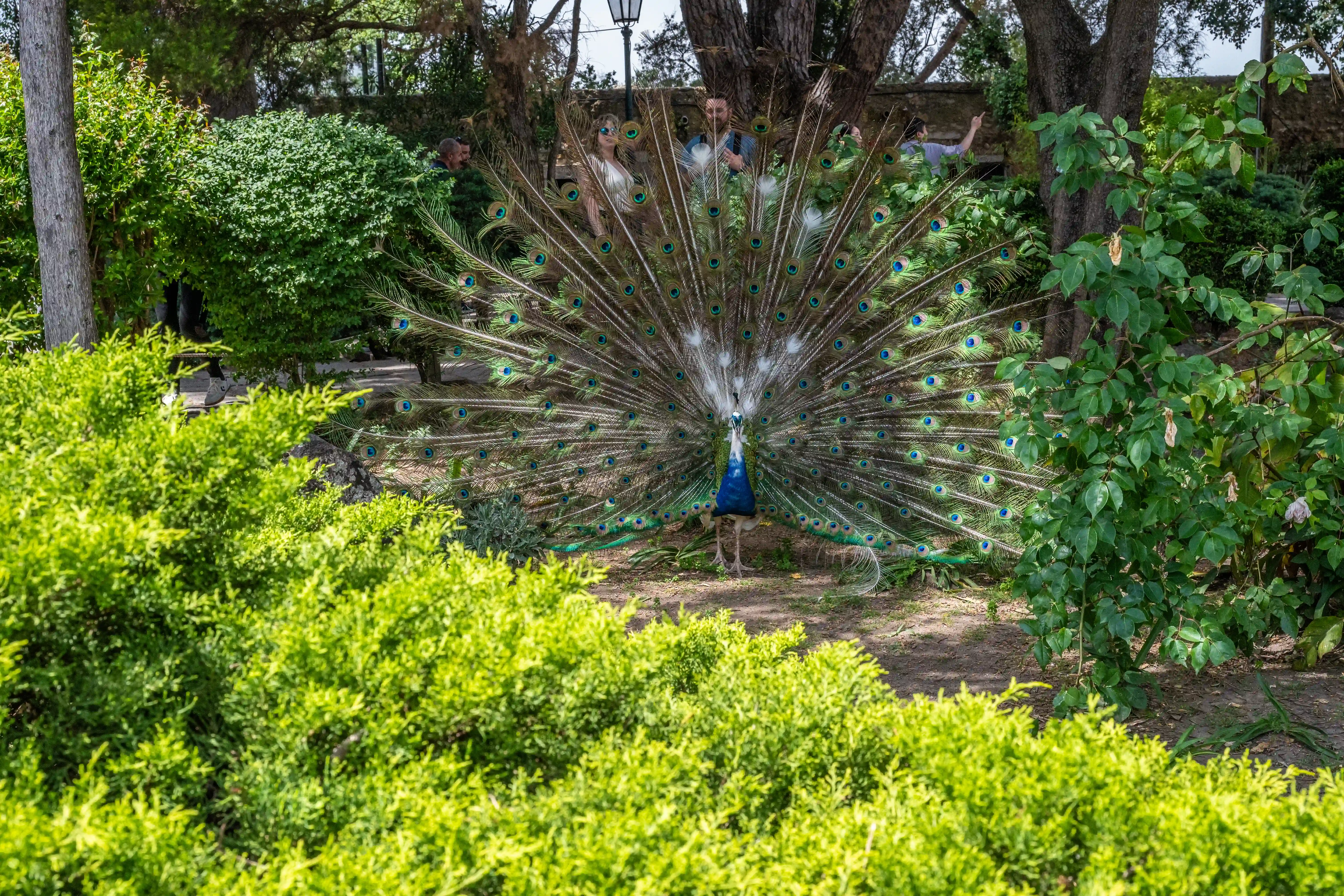
A male peacock stands with its tail feathers fully fanned out, revealing intricate eye-like patterns in blues and greens. The bird is in a garden setting with lush green bushes in the foreground and trees in the background. Several people are visible in the background behind the peacock's display.
Peacock in Full Display Amidst Verdant Gardens ‐ photo by ,
©www.mgaylard.co.uk.
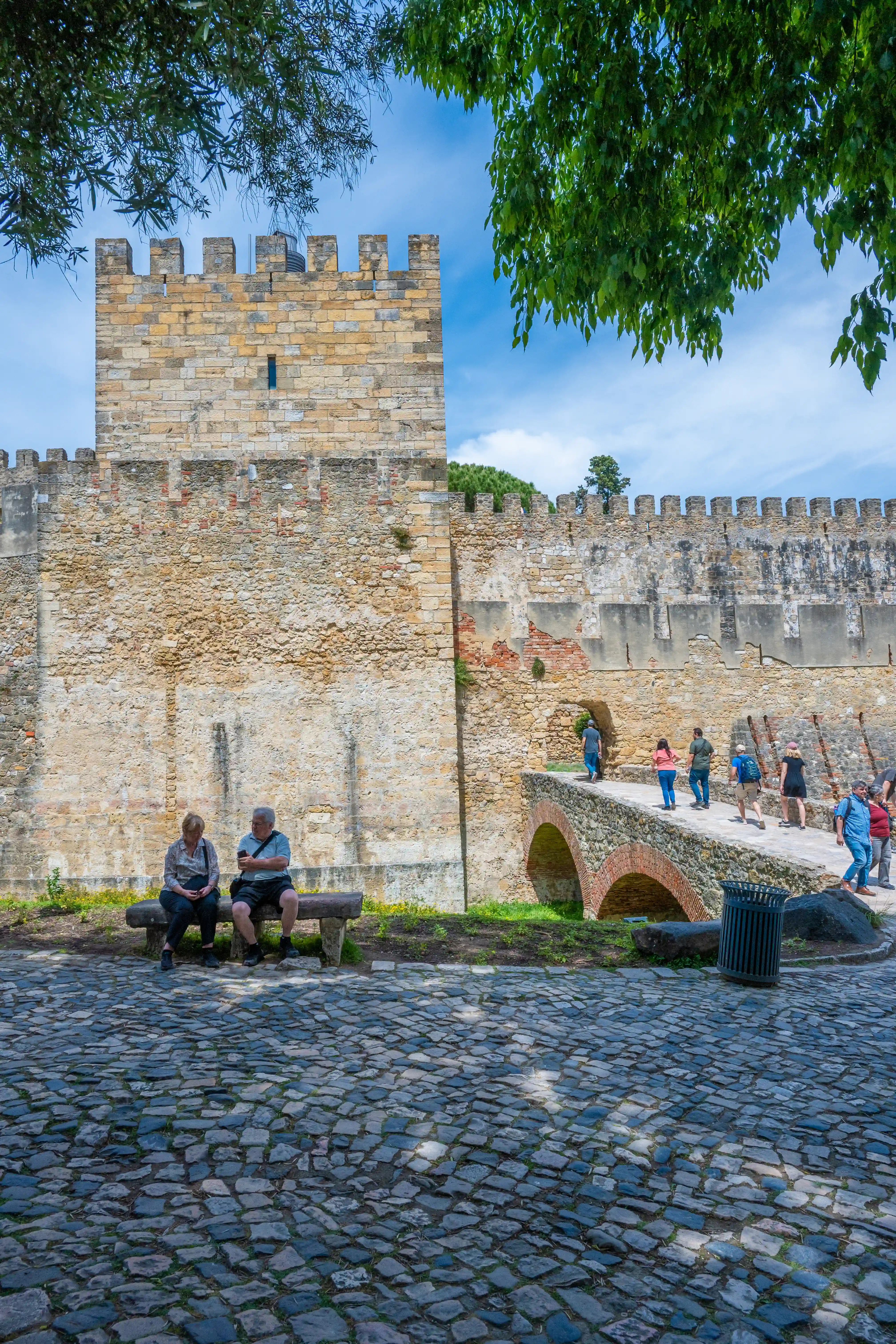
A stone castle wall with battlements under a cloudy sky, a cobblestone path in the foreground, two people sitting on a bench, and a group walking over a bridge.
Castle Walls and Visitors on a Cobbled Path ‐ photo by ,
©www.mgaylard.co.uk.
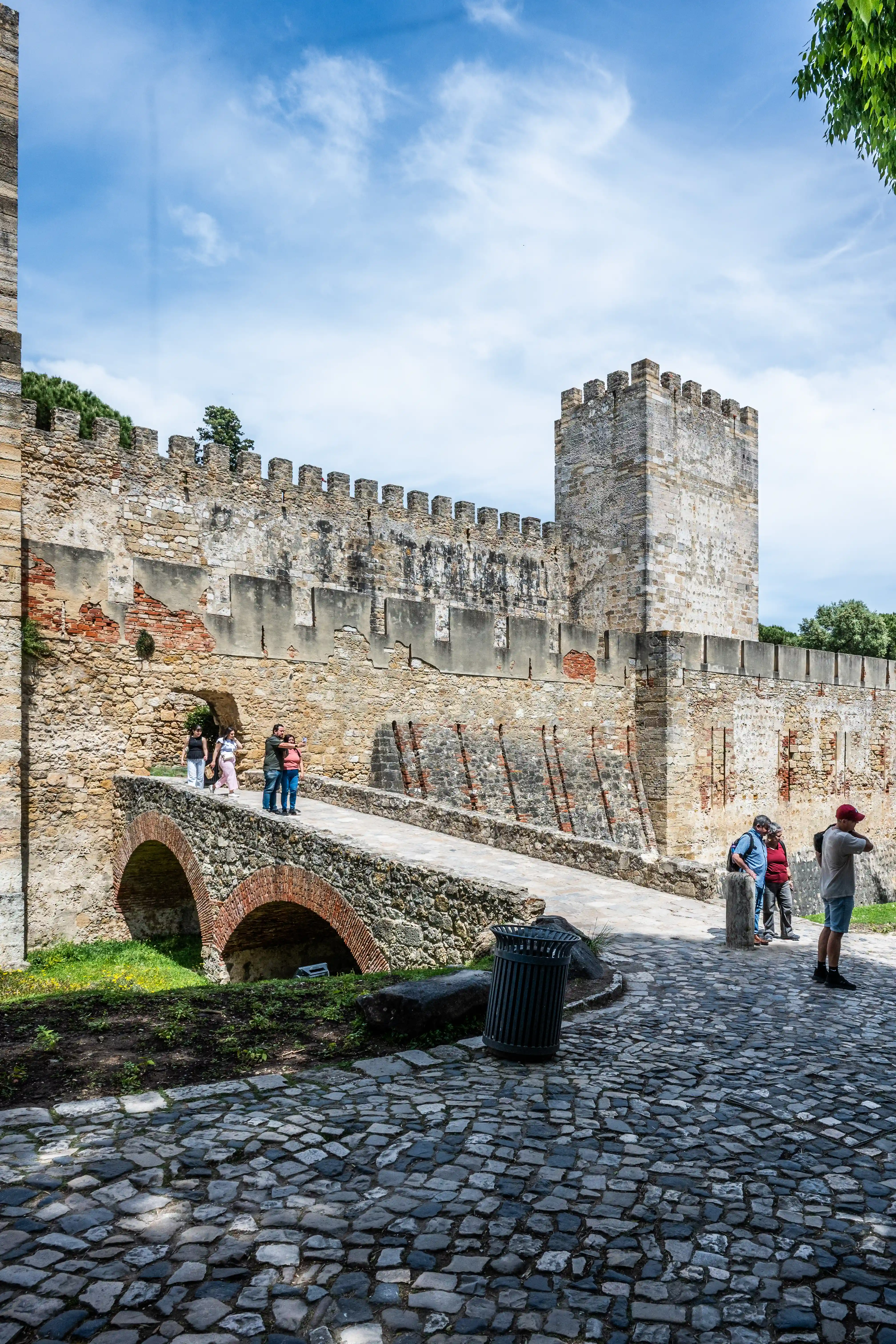
A stone bridge with arched foundations leads towards the weathered walls and a tower of an old castle. Several tourists are seen walking on the bridge and gathered near the entrance, whilst others stand on the cobbled courtyard. The sky above is partly cloudy, with patches of blue visible.
Visitors explore the stone bridge leading to the battlements and tower of a historic castle, with a cobbled path and scattered trees in the foreground. ‐ photo by ,
©www.mgaylard.co.uk.
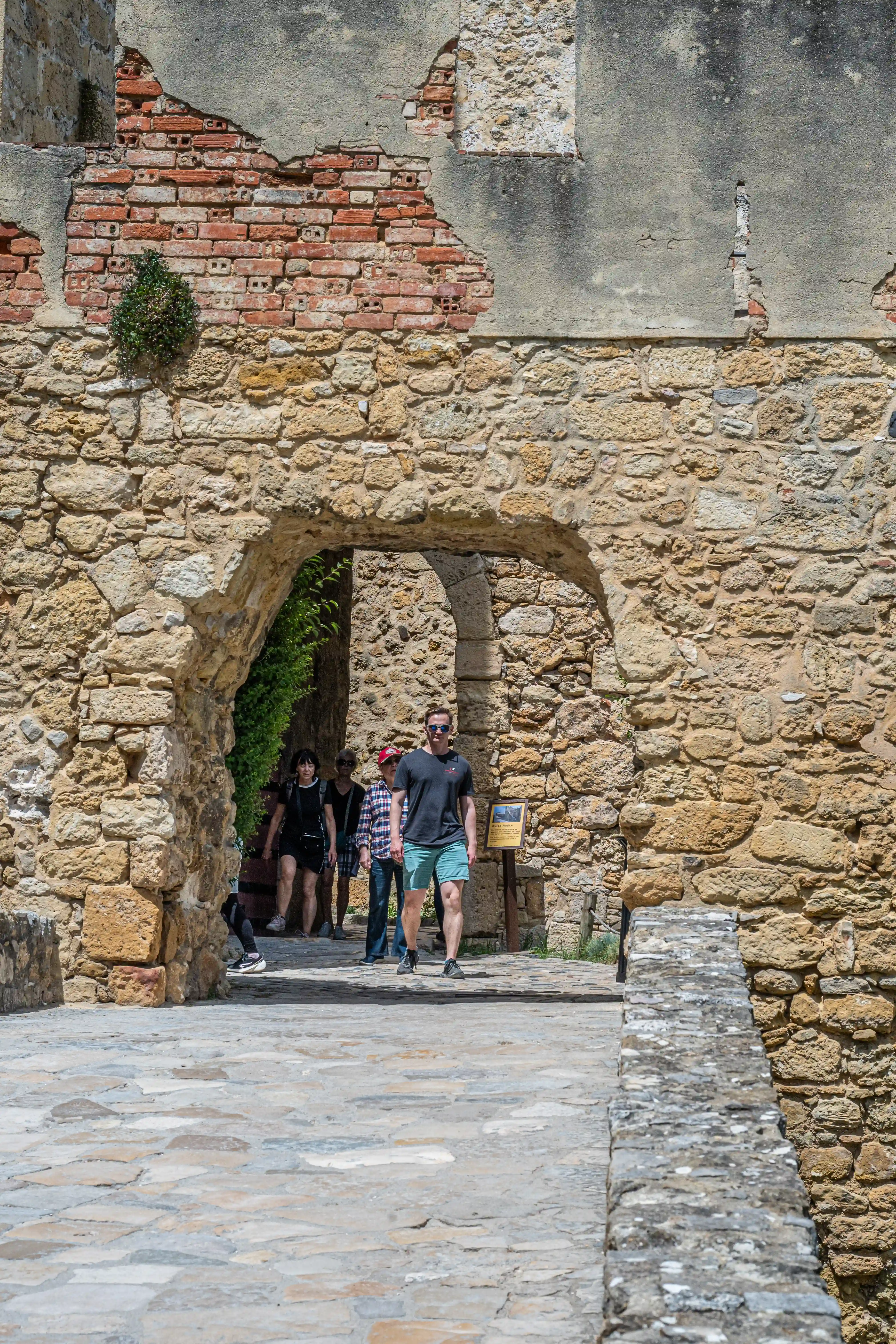
A man in a black t-shirt and blue shorts walks towards the camera through a stone archway, with other tourists behind him. The surrounding walls are made of rough stone with areas of crumbling plaster and brick.
Tourists pass through a historic stone archway in sunlight ‐ photo by ,
©www.mgaylard.co.uk.
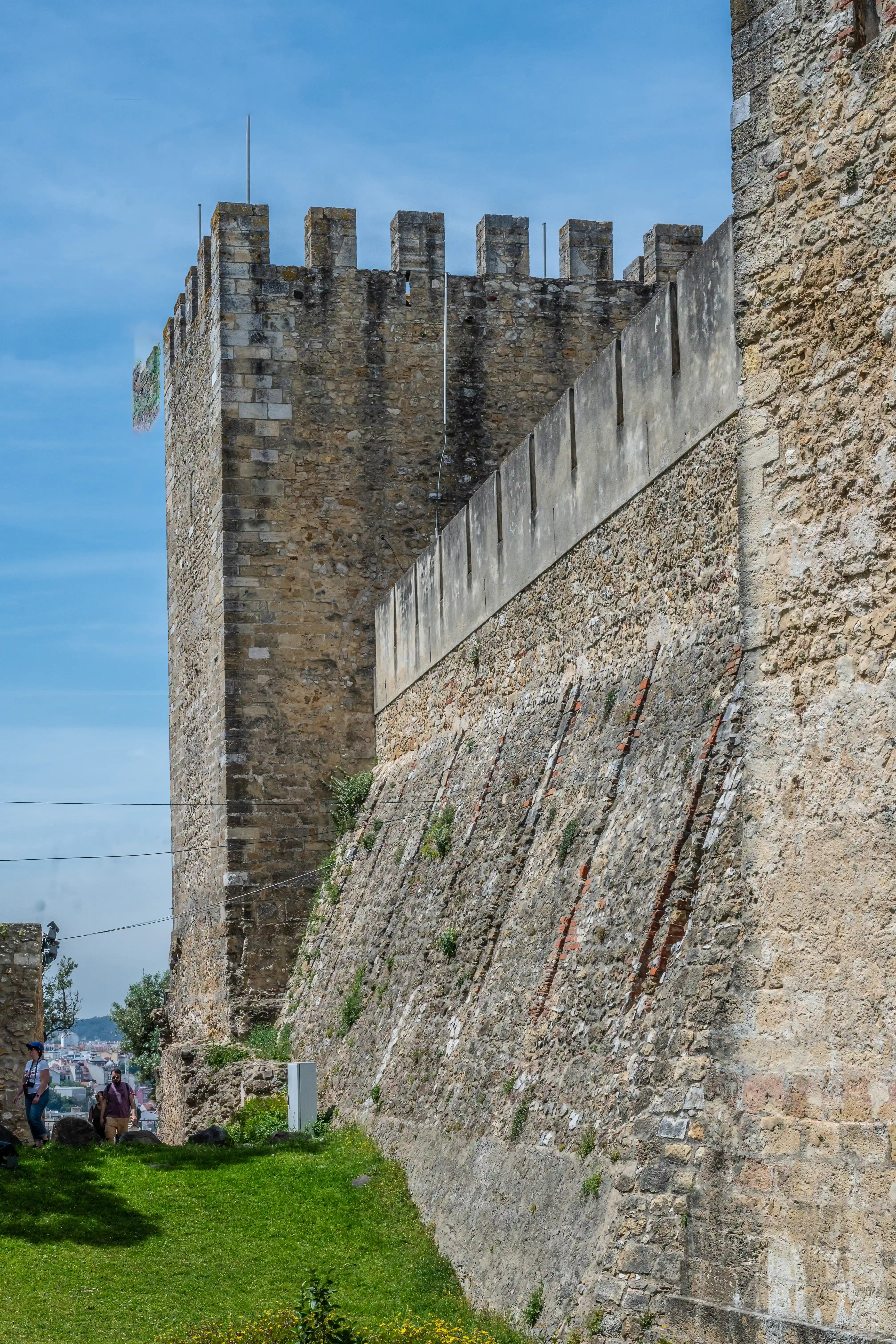
A tall stone tower and crenellated wall of an ancient fortress under a blue sky, with a green lawn and distant city in the background.
Historic Fortress Walls and Tower ‐ photo by ,
©www.mgaylard.co.uk.
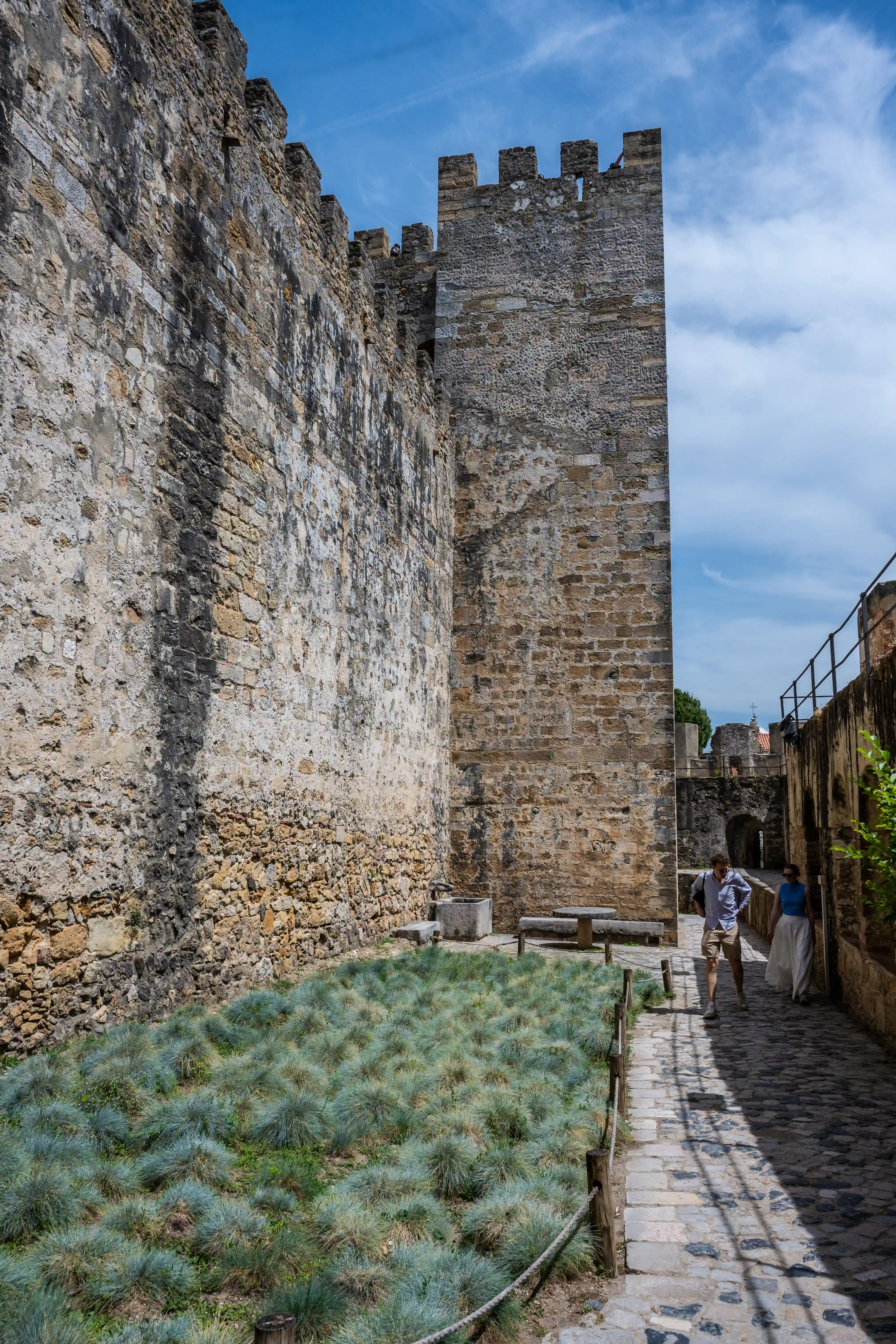
Two people walk along a cobbled path next to a high, ancient stone castle wall. In the foreground, a patch of fluffy, blue-green ornamental grass is enclosed by a rope fence.
Visitors explore a sun-drenched courtyard within ancient castle walls, featuring weathered stonework and lush ornamental grasses. ‐ photo by ,
©www.mgaylard.co.uk.
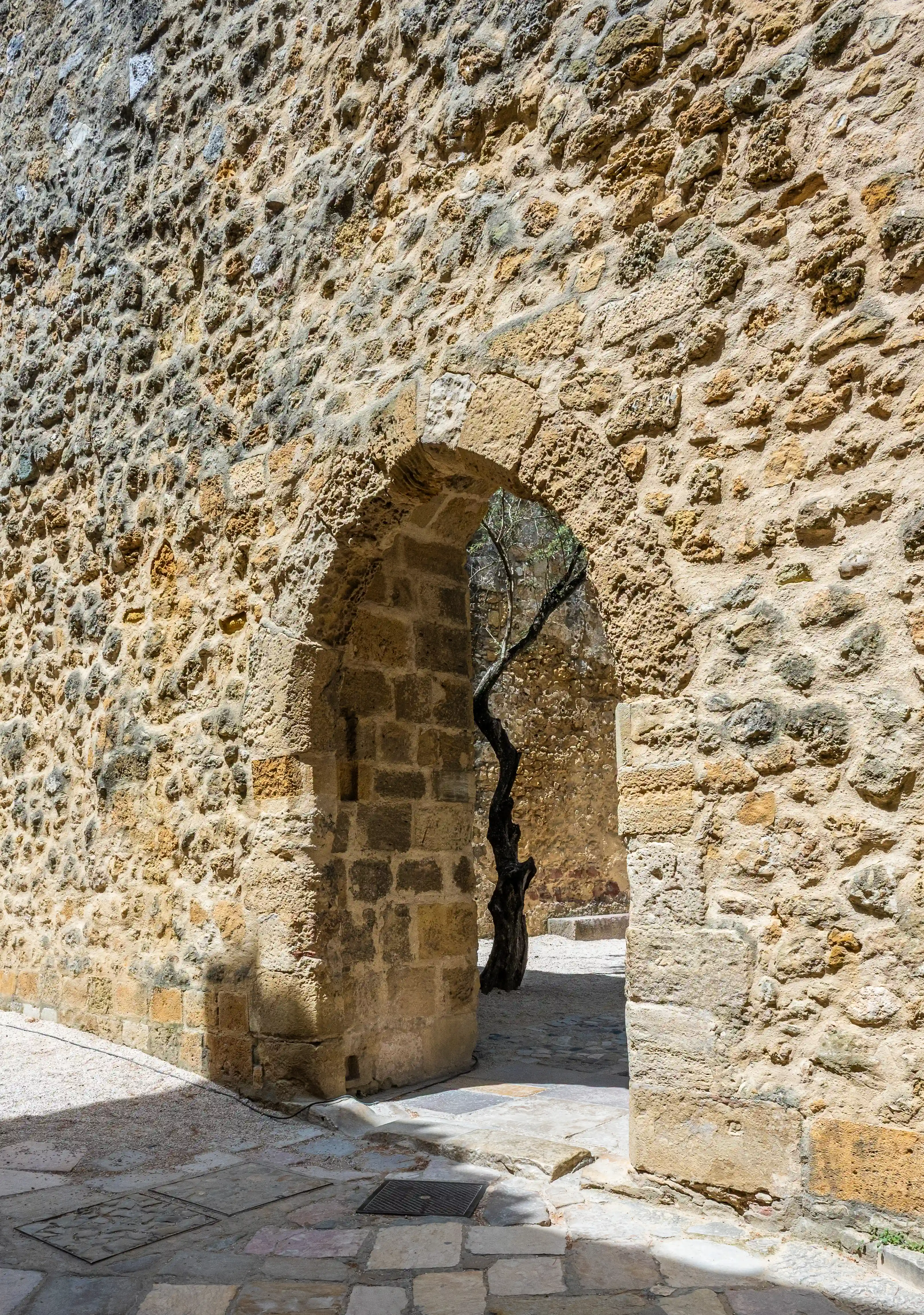
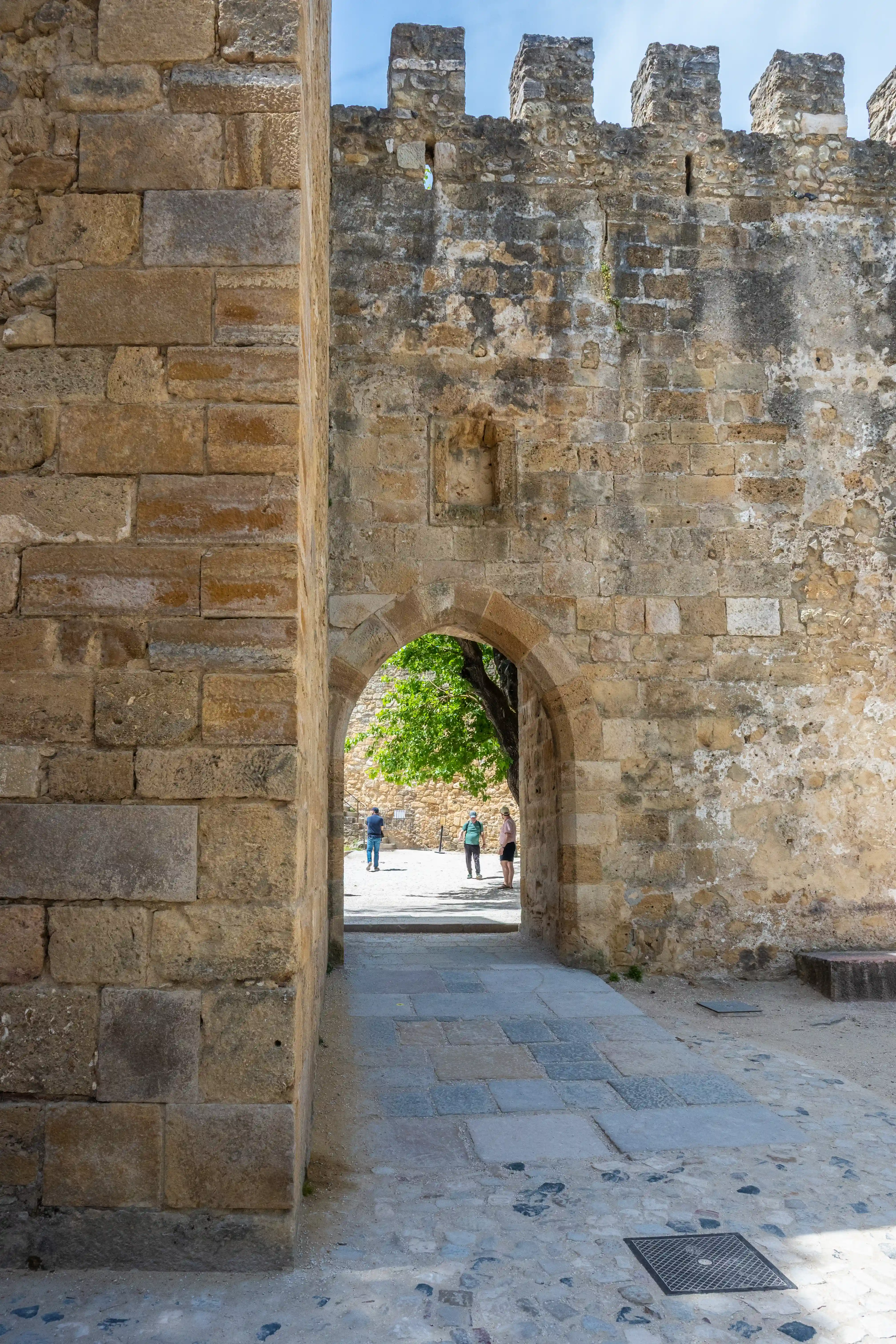
A sunlit stone pathway leads to an arched opening in a textured stone wall. A dark, twisted tree is visible through the archway.
Ancient Stone Archway and Lone Tree ‐ photo by ,
©www.mgaylard.co.uk.
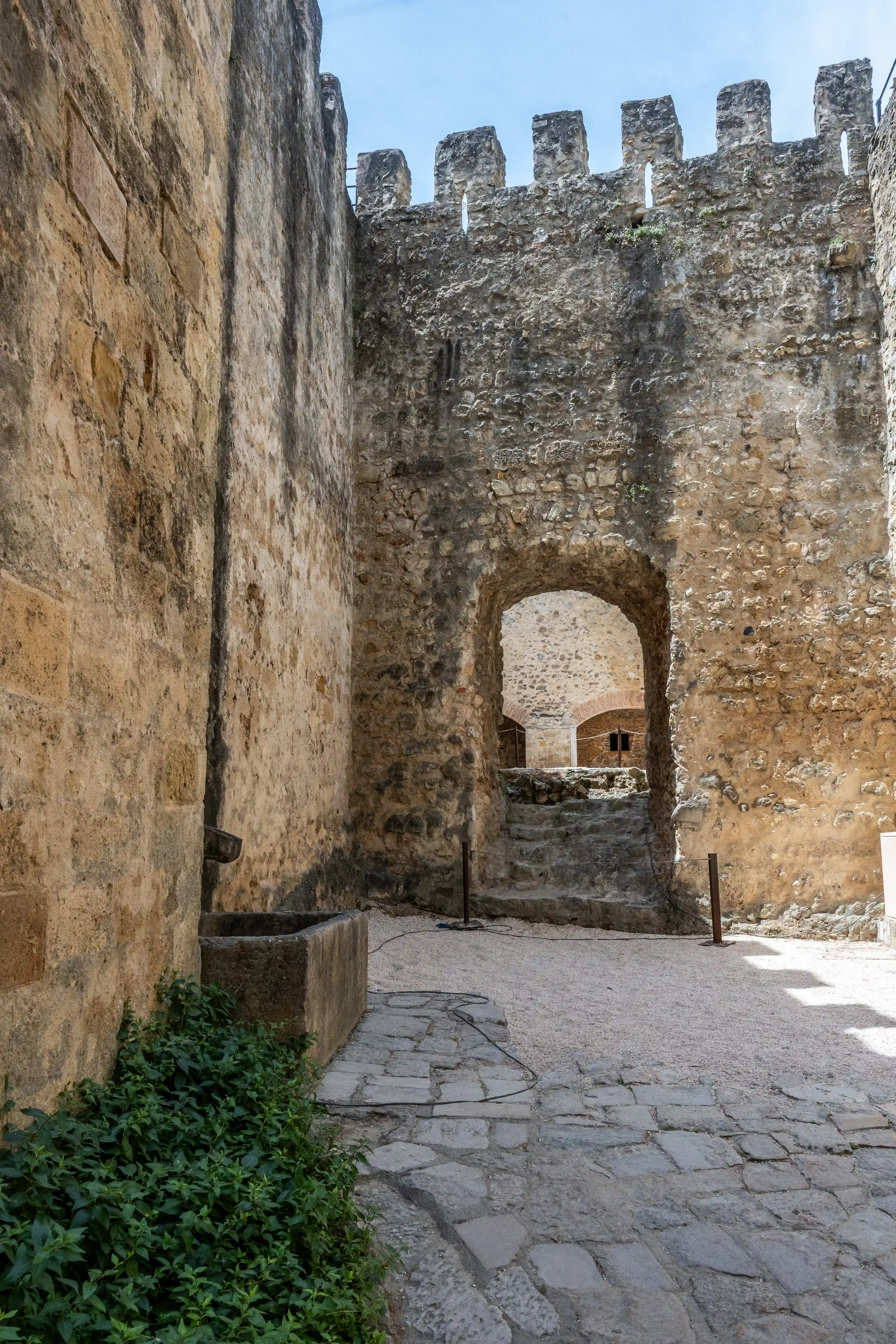
Arched stone gateway of an ancient castle courtyard, with weathered walls, a stone trough, green plants, and a sunlit paved area.
Ancient Castle Gateway ‐ photo by ,
©www.mgaylard.co.uk.
A stone tower with a red-tiled roof stands atop a thick stone wall, with three people looking out from the battlements. Green branches from trees hang into the frame, and the sky is cloudy.
Ancient Stone Fortification with a Tower and Visitors ‐ photo by ,
©www.mgaylard.co.uk.
View through an ancient stone archway of a castle, with people walking in the sunlit courtyard beyond.
A stone archway through a historic castle wall ‐ photo by ,
©www.mgaylard.co.uk.
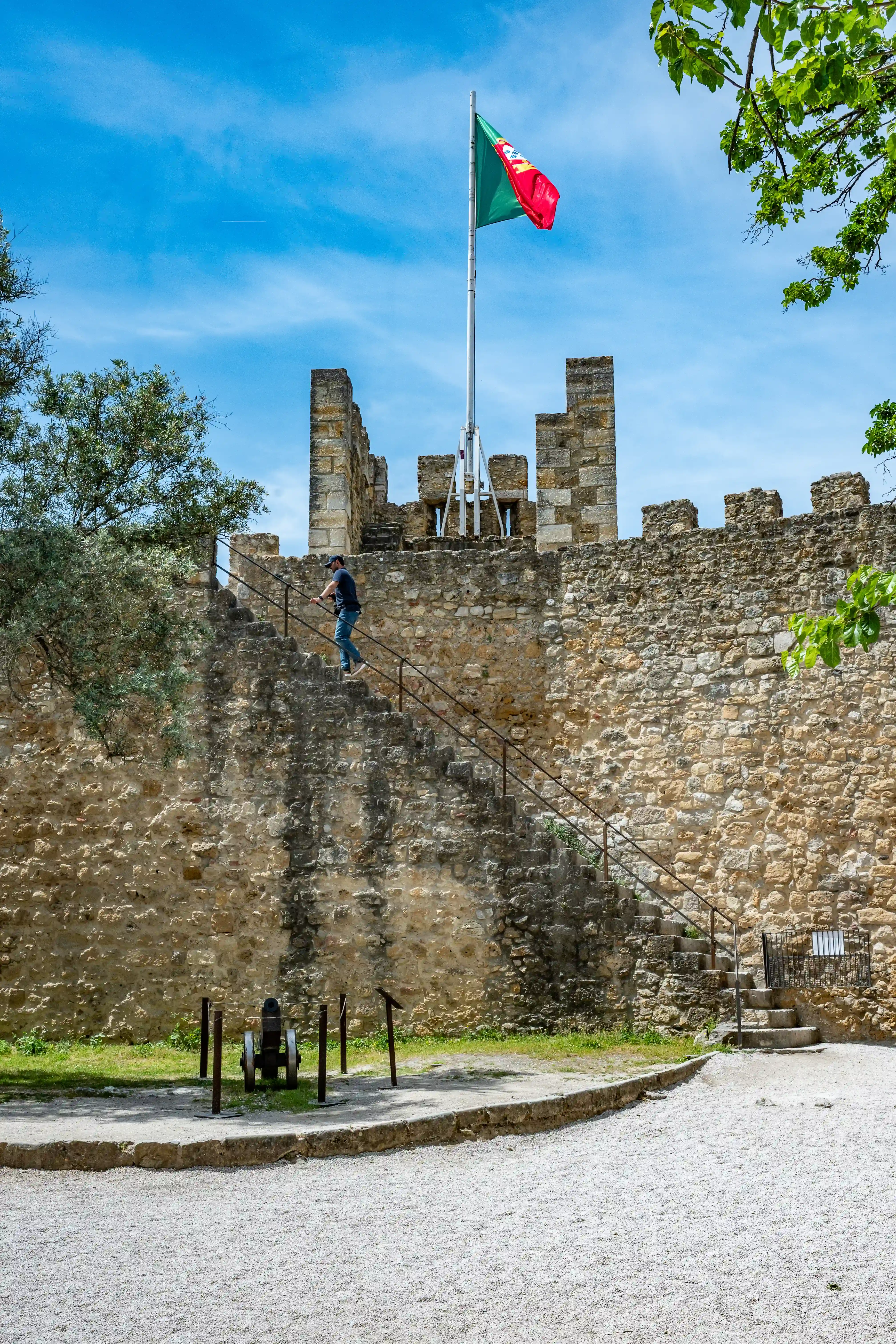
A person walks up the stairs of a stone castle wall with the Portuguese flag flying above. A small cannon is visible at the base of the wall.
Castle Walls, Portuguese Flag, and a Climb Through History ‐ photo by ,
©www.mgaylard.co.uk.
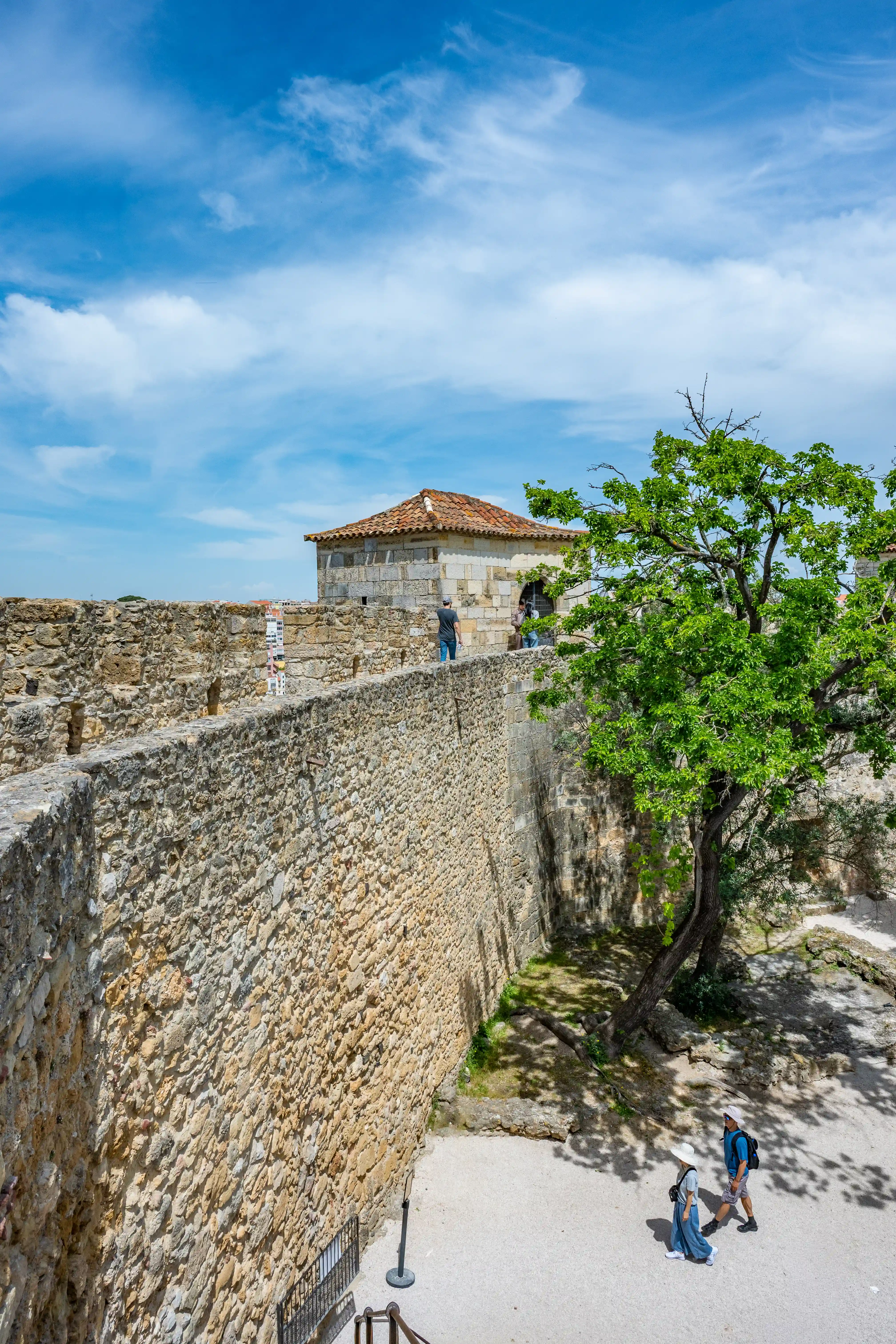
A wide shot showing the textured stone walls of a historic castle under a partly cloudy blue sky. Several individuals are visible, some walking along the parapet and others in the gravelled area below, where a mature tree casts dappled shadows.
Castle Ramparts and Visitors on a Sunny Day ‐ photo by ,
©www.mgaylard.co.uk.
A group of people walking in a sun-dappled courtyard surrounded by tall, ancient stone castle walls and large trees under a blue sky with scattered clouds.
Ancient Castle Courtyard on a Sunny Day ‐ photo by ,
©www.mgaylard.co.uk.
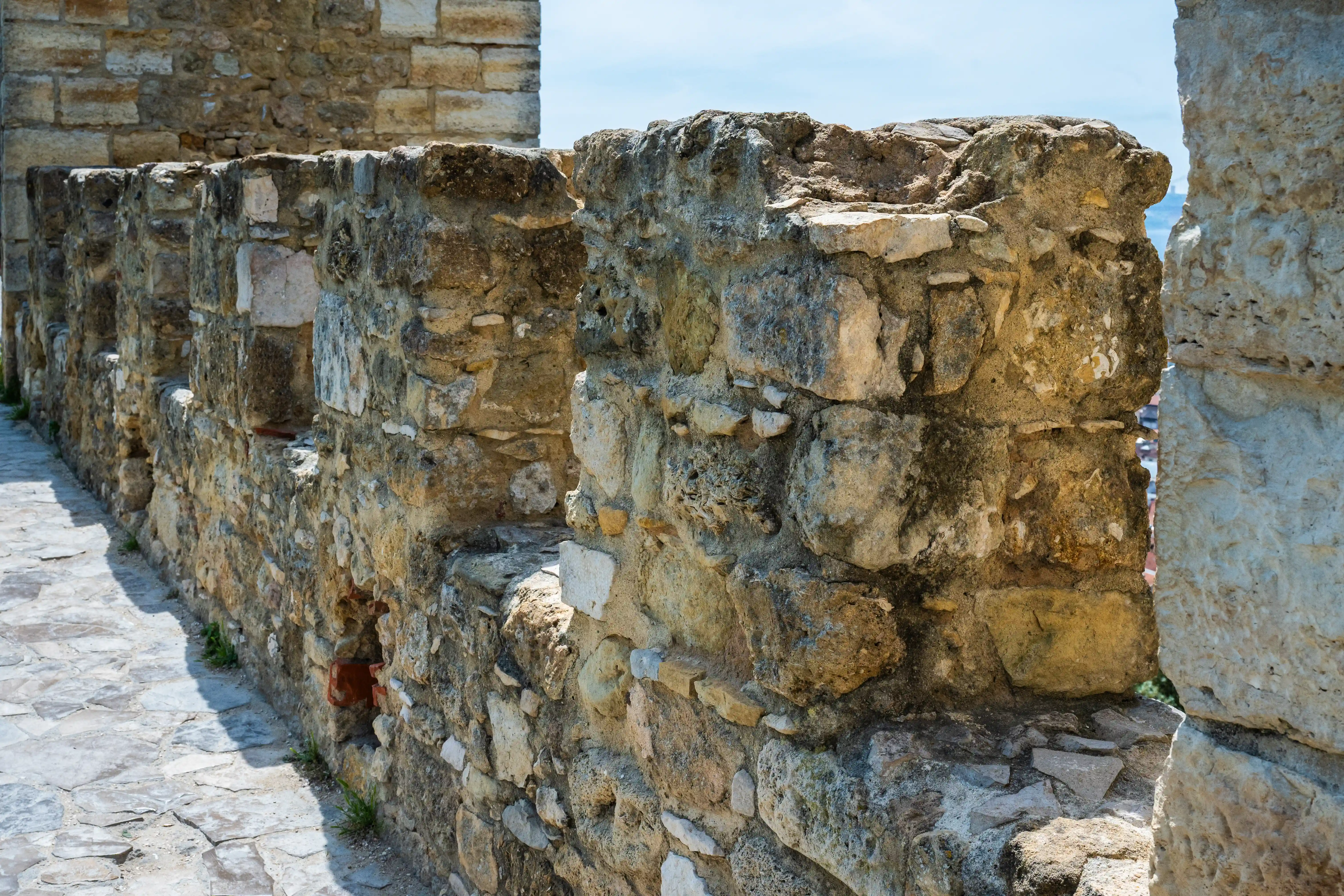
A close-up view of a rugged, ancient stone wall with several openings, casting shadows on a paved walkway below.
A Glimpse Through Time: Fortifications and Views ‐ photo by ,
©www.mgaylard.co.uk.
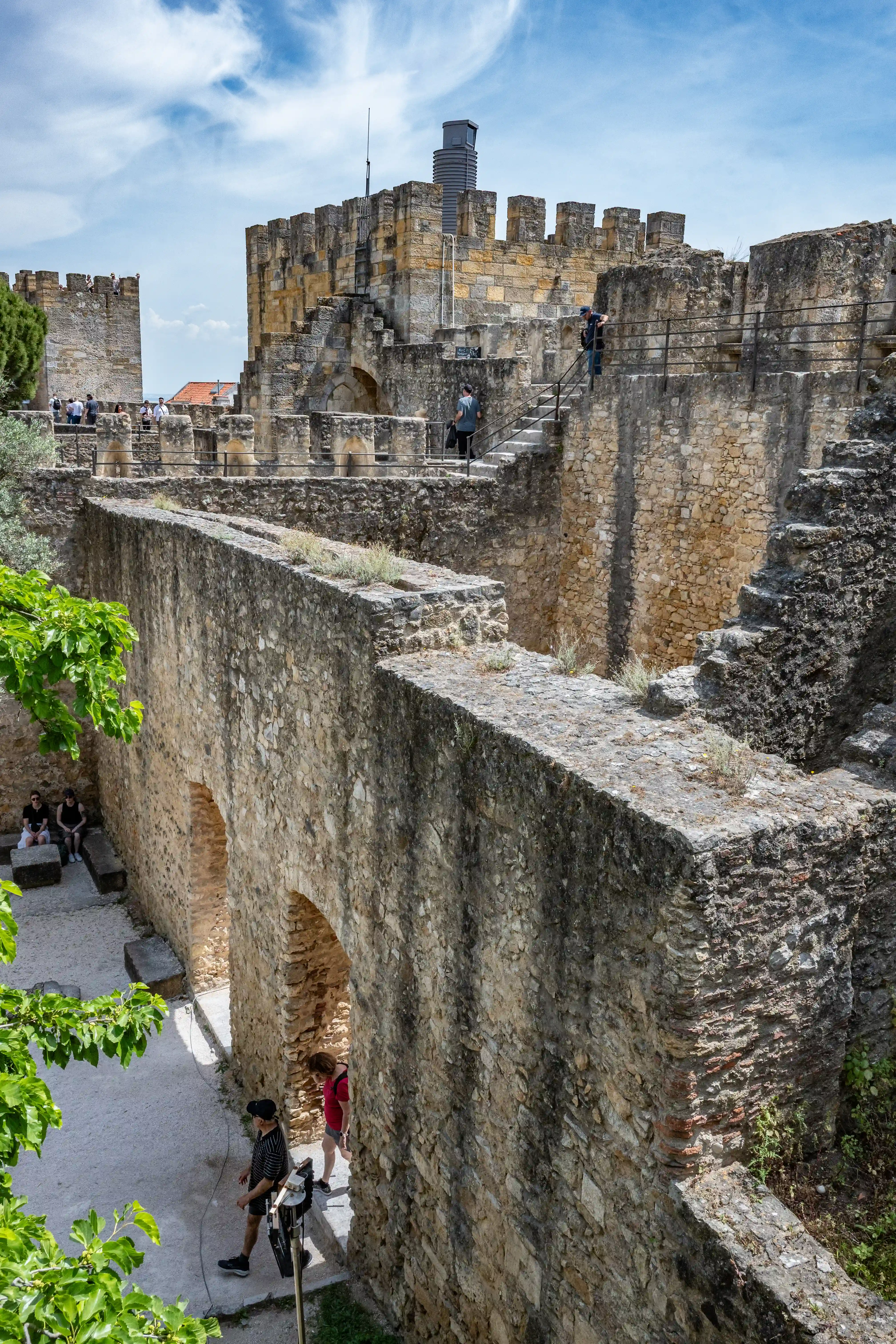
A stone castle with crenellated walls and towers under a partly cloudy sky. People are walking on the ramparts and stairs.
Exploring the Historic Fortifications of a Castle ‐ photo by ,
©www.mgaylard.co.uk.
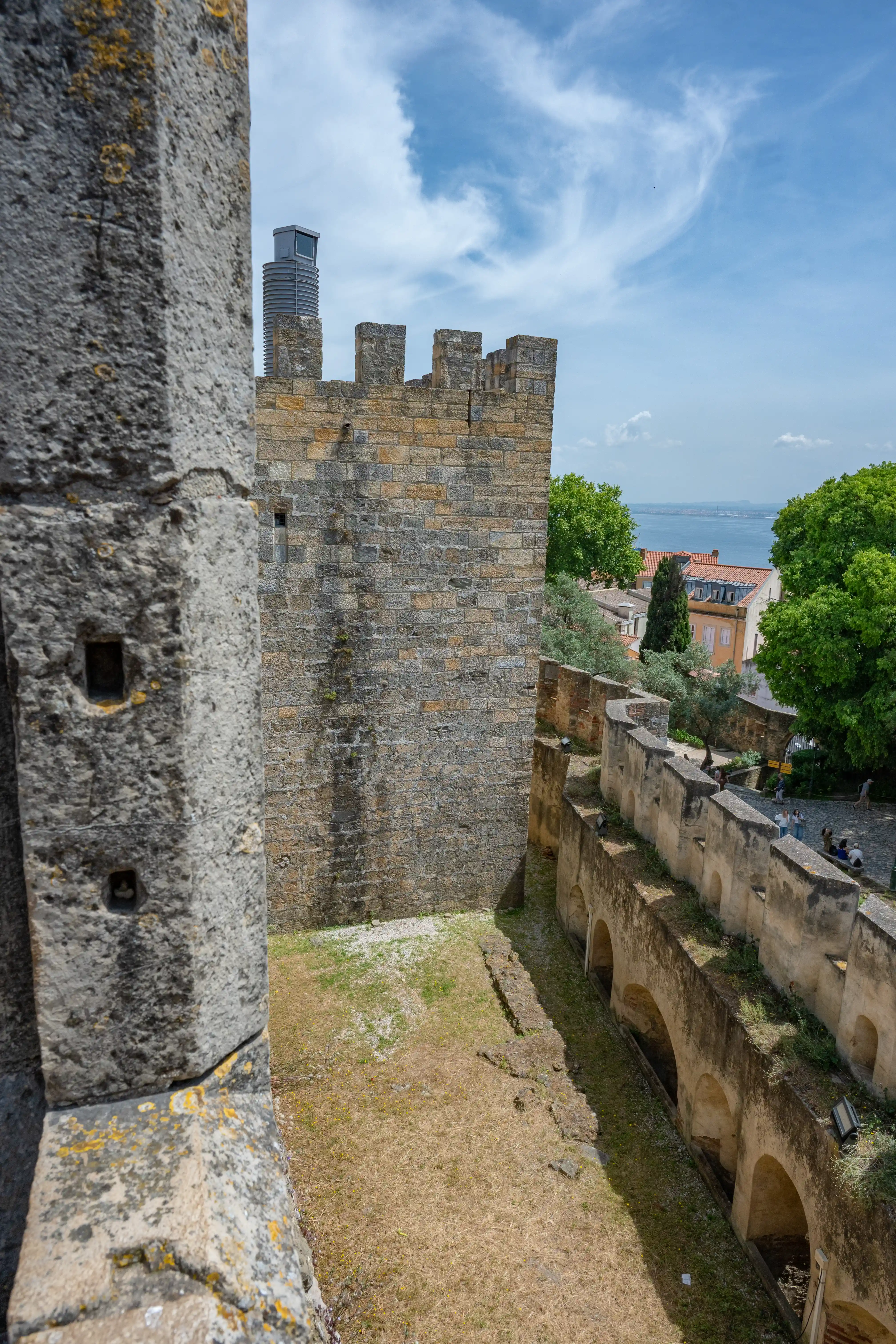
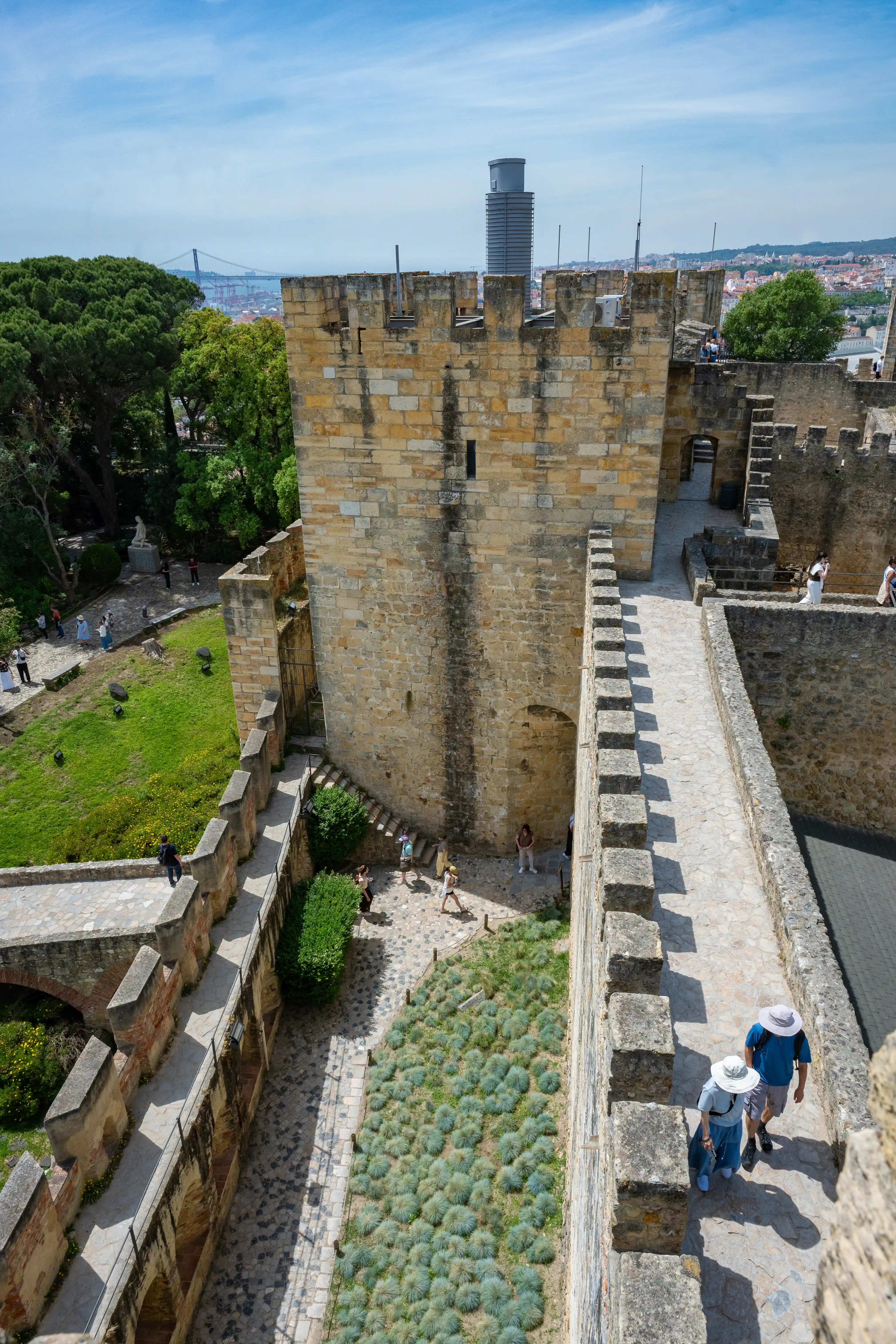
A high-angle view from ancient stone castle battlements, looking down onto a dry courtyard and a wall with arched openings. In the background, a city with red-tiled roofs, trees, and the sea can be seen under a blue sky with white clouds.
A Glimpse Over Castle Walls on a Sunny Day ‐ photo by ,
©www.mgaylard.co.uk.
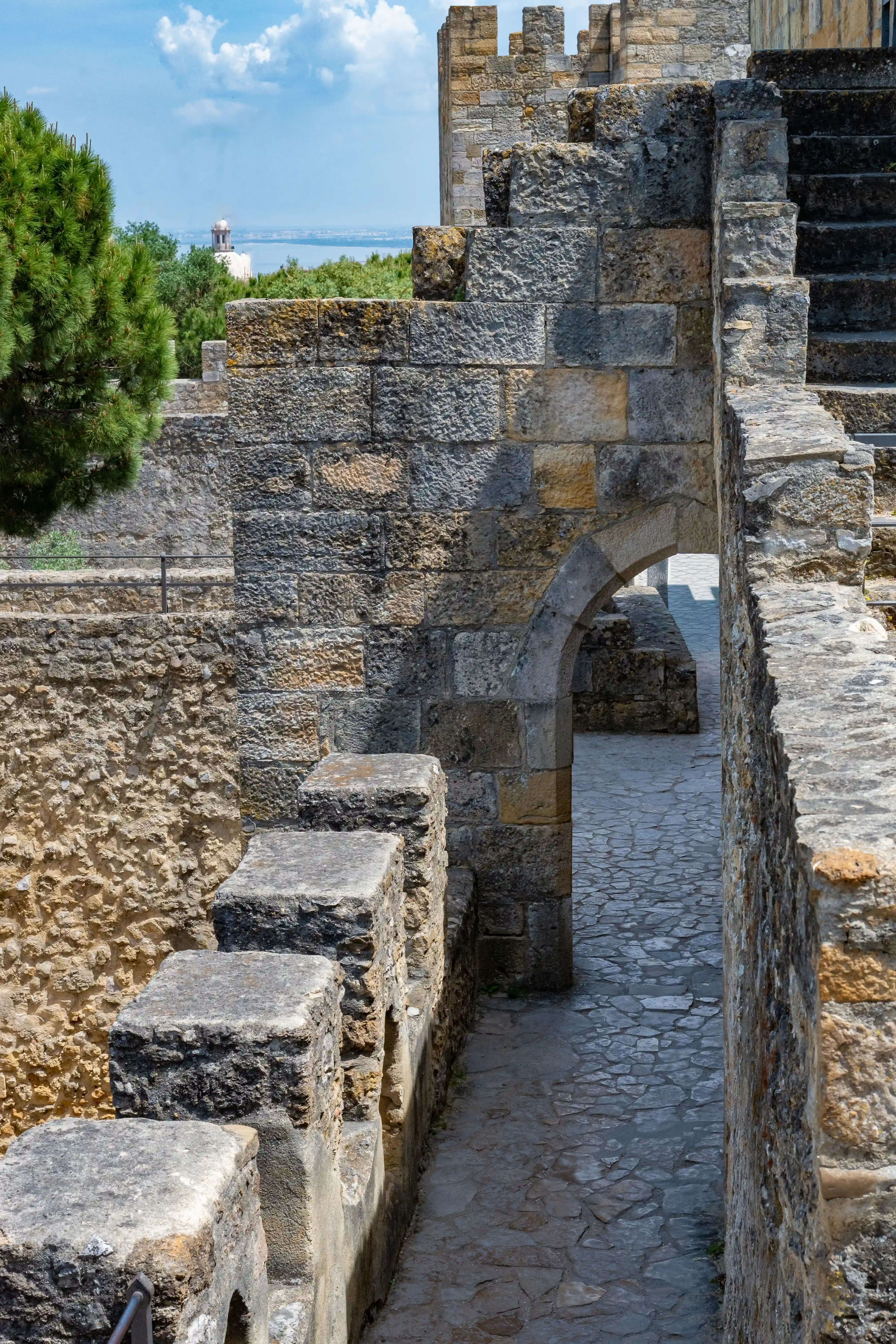
A sunlit scene inside a historic stone castle, showing a walkway bordered by thick, rough-hewn stone walls. A stone archway frames a view of the path beyond, where two people are visible. A large evergreen tree stands to the left, and in the far distance, a crane and a body of water are visible under a cloudy sky.
Castle Walkway with Stone Archway and Distant Crane ‐ photo by ,
©www.mgaylard.co.uk.
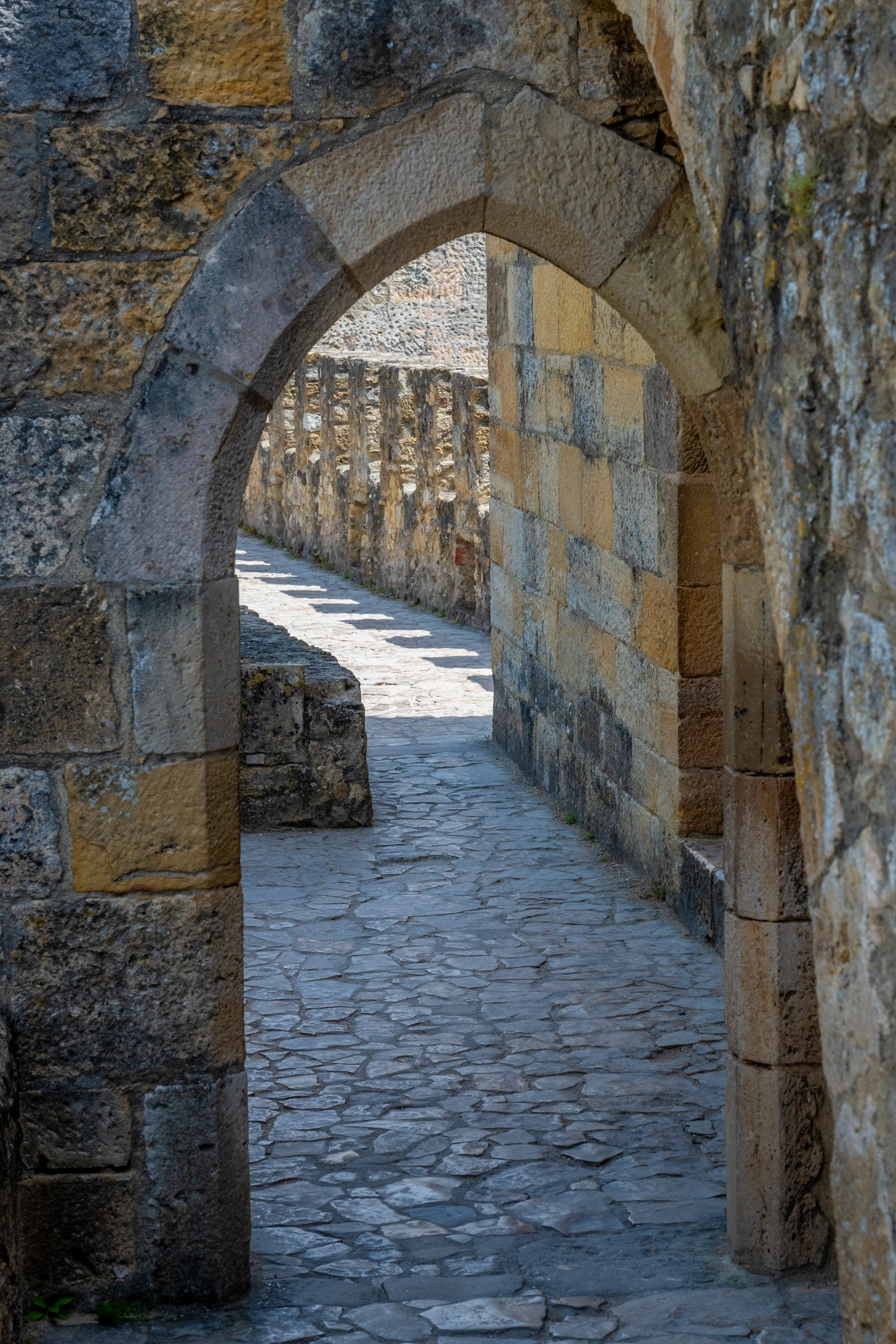
A stone archway frames a pathway within an ancient stone building, with sunlight and shadows on the cobblestone floor.
Ancient Stone Archway Perspective ‐ photo by ,
©www.mgaylard.co.uk.
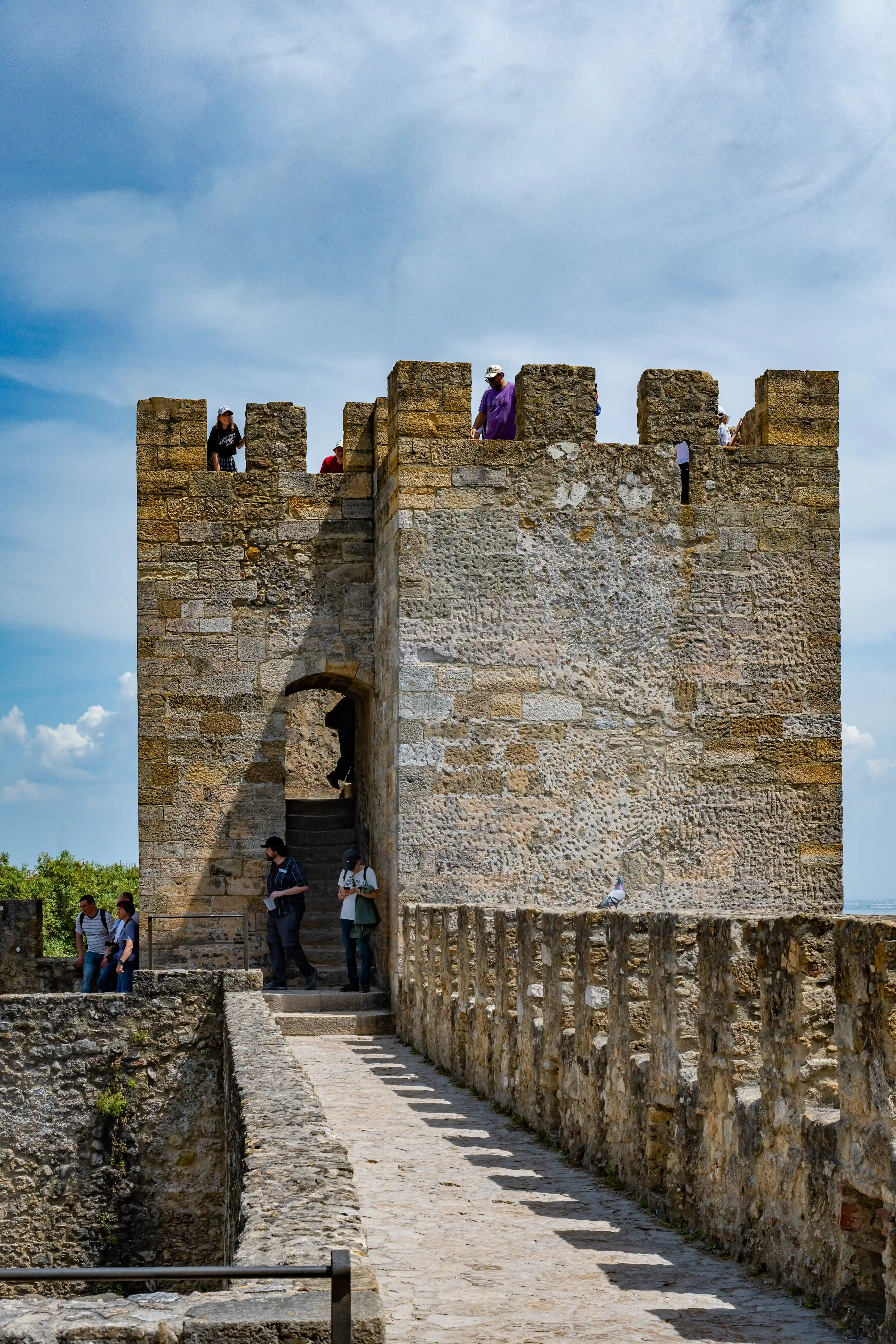
A group of people walk along a stone pathway on the ramparts of a castle. A tall stone tower with an arched entrance is visible. The sky is blue with some clouds.
Castle Ramparts and Tower with Visitors and Pigeon ‐ photo by ,
©www.mgaylard.co.uk.
 People walking on the stone ramparts of an old castle, with trees, greenery, and the city skyline in the background.
Castelo Sao Jorge ‐ photo by ,
©www.mgaylard.co.uk.
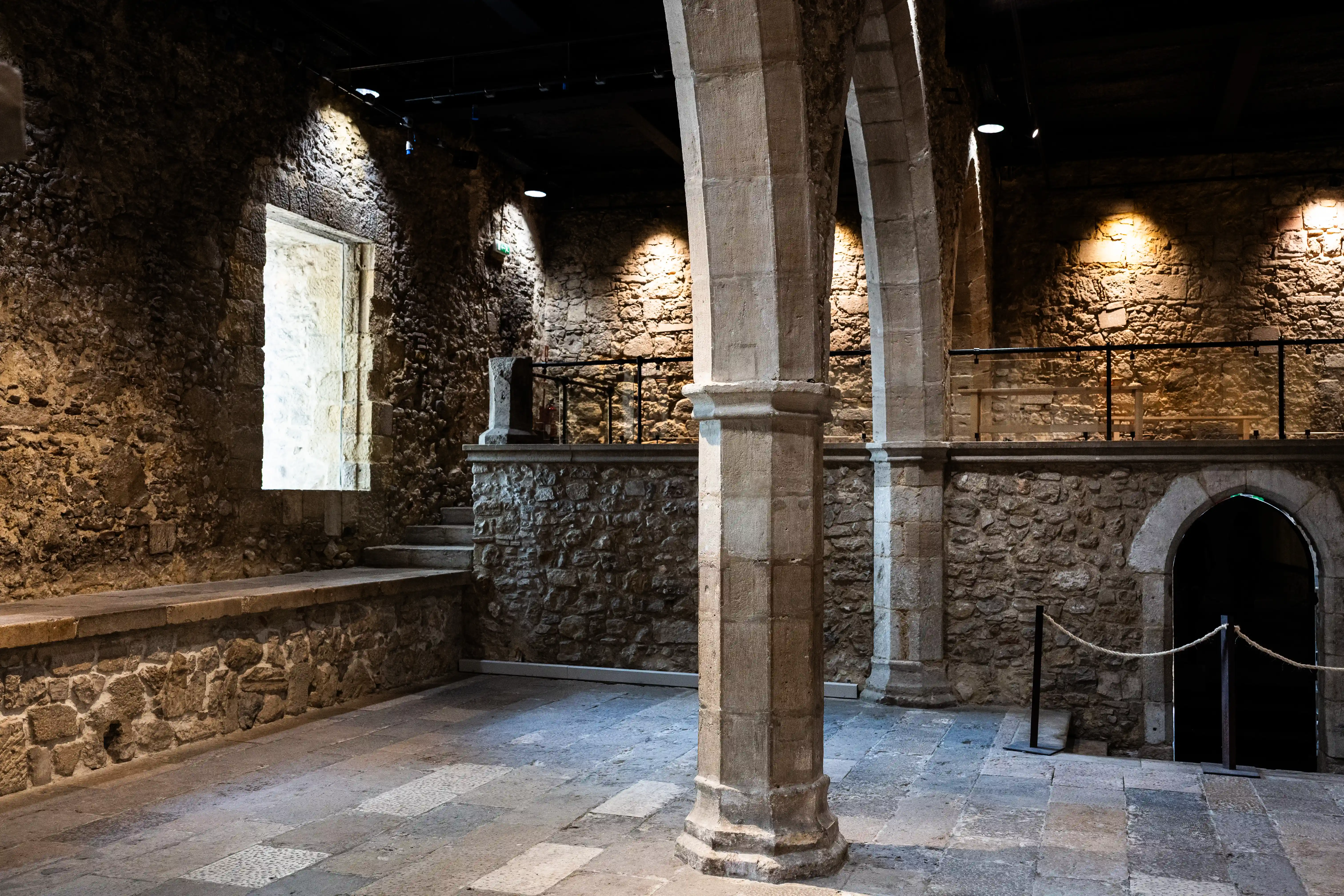
 Interior view of a historic stone building with rough walls, large stone pillars, a narrow window, a staircase, and an arched doorway. Spotlights cast dramatic shadows.
Illuminated Interior of a Historic Stone Building ‐ photo by ,
©www.mgaylard.co.uk.
Interior of an ancient stone hall with a flagstone floor, featuring rough stone walls, a large window letting in natural light, a stone staircase, and modern spotlights.
Interior of an ancient stone hall with a flagstone floor, featuring rough stone walls, a large window letting in natural light, a stone staircase, and modern spotlights. ‐ photo by ,
©www.mgaylard.co.uk.
A museum interior with a vaulted brick ceiling, showcasing artefacts in glass display cases. Visitors are seen observing the exhibits, with informational text panels on the walls.
Ancient Artefacts Exhibition in Historic Arched Hallway ‐ photo by ,
©www.mgaylard.co.uk.
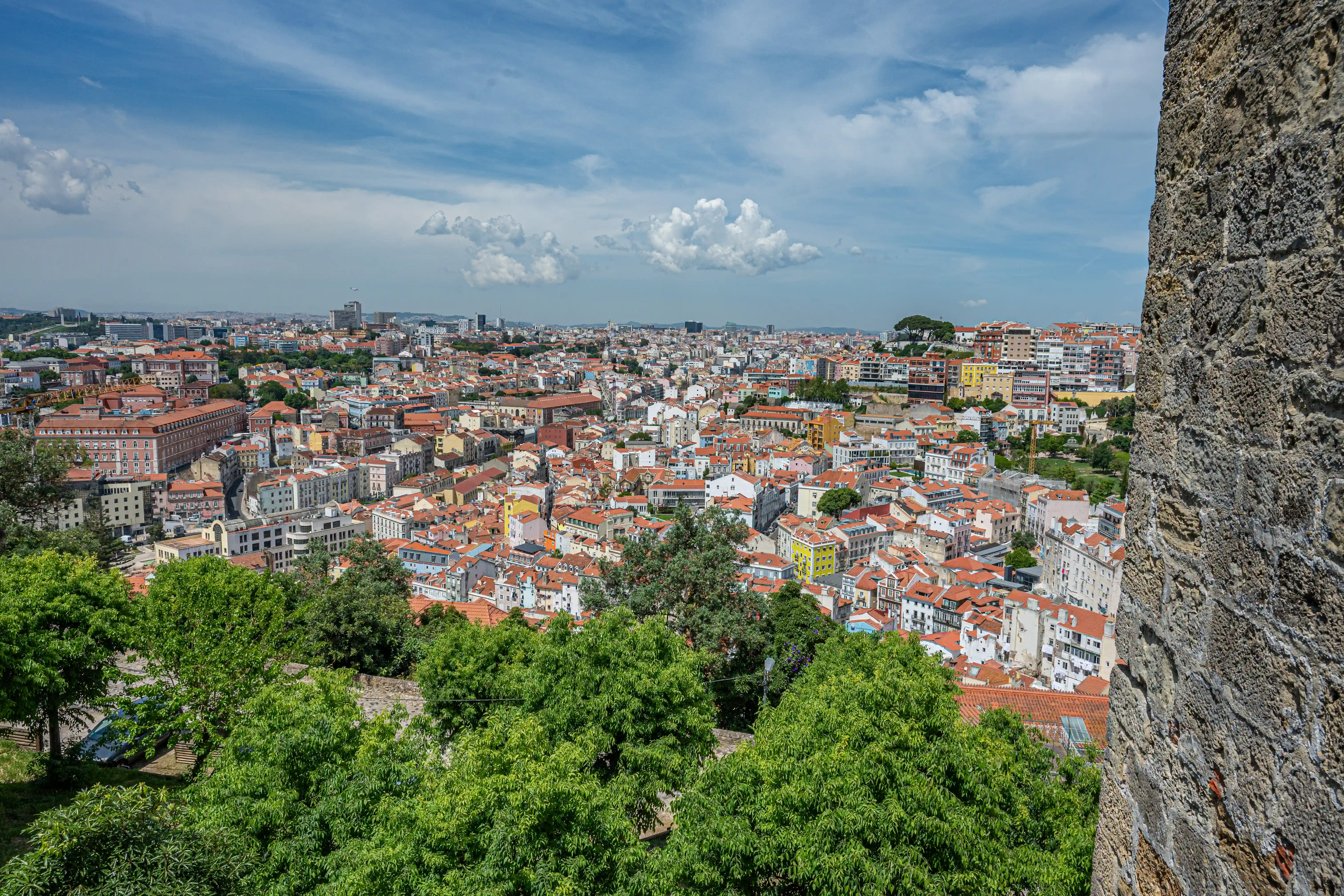
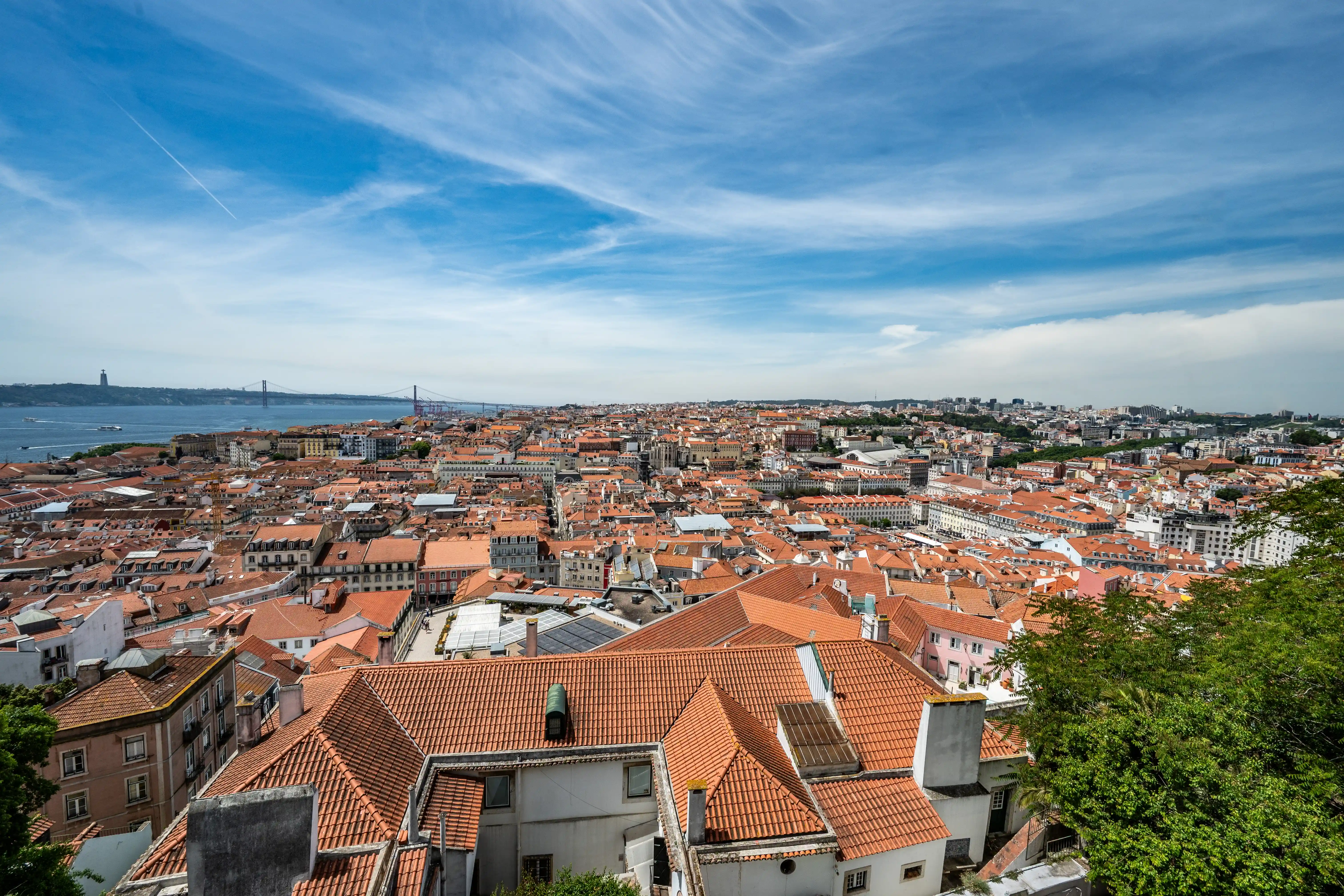
View over the rooftops of Lisbon, Portugal, with terracotta tiles and white buildings stretching to the horizon under a sky with fluffy white clouds. A textured stone wall is in the foreground.
Lisbon Cityscape with Terracotta Roofs and Stone Wall ‐ photo by ,
©www.mgaylard.co.uk.
A bronze statue of a medieval knight stands tall on a stone monument. He is depicted with a helmet, armour, a shield in his left arm, and a sword held upright in his right hand. The monument is set in an outdoor plaza with trees providing shade, and people are seen in the background.
Monument of a Knight in Lisbon's Praça do Império ‐ photo by ,
©www.mgaylard.co.uk.
 Rooftops of traditional houses in various shades of orange and grey, overlooking a modern building with sections painted bright blue, yellow, and red, with a body of water in the distance.
Colourful Modern Architecture Amidst Traditional Rooftops ‐ photo by ,
©www.mgaylard.co.uk.
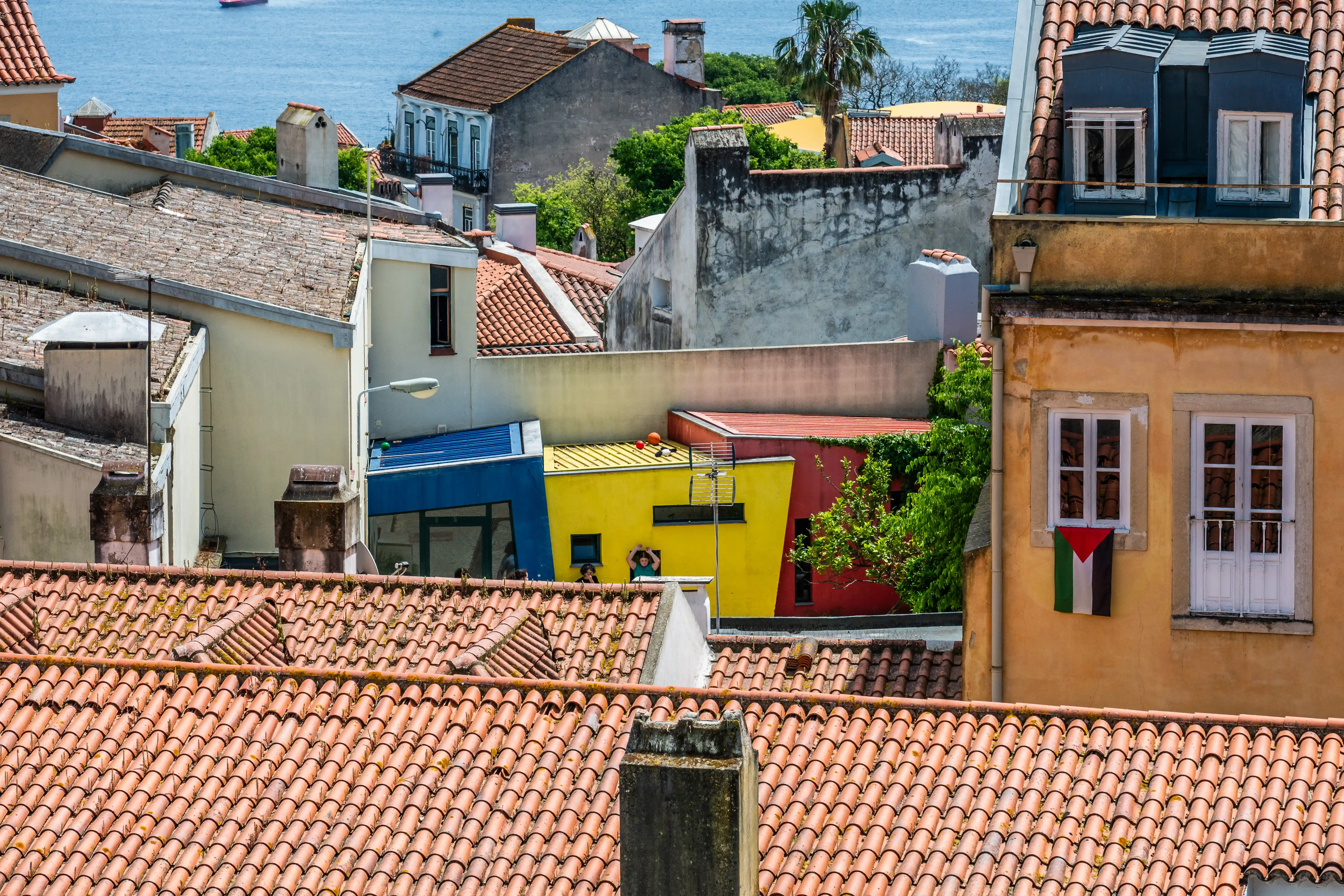
A view from above of a cityscape with many terracotta tiled roofs. In the middle ground, several buildings are painted in bright colours: blue, yellow, and red. A Palestinian flag hangs from a window on a yellow-ochre building on the right. The sea is visible in the background with a ferry boat.
Vibrant Cityscape with Rooftops and Palestinian Flag ‐ photo by ,
©www.mgaylard.co.uk.
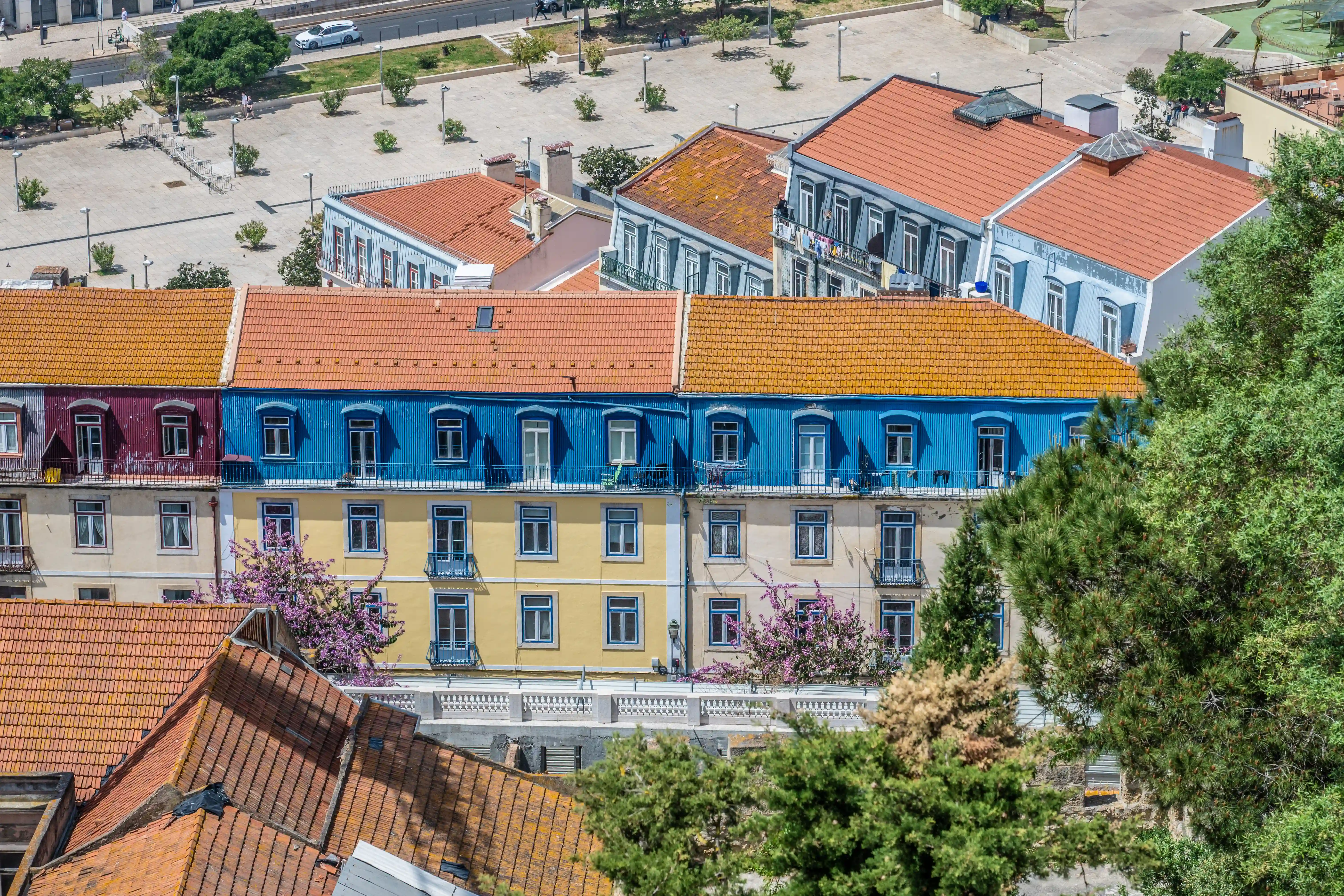
Aerial view of colourful apartment buildings in Lisbon with orange tiled roofs, blue and yellow facades, balconies, and trees with purple blossoms, overlooking a city plaza and street.
An Elevated View of Lisbon's Colourful Architecture ‐ photo by ,
©www.mgaylard.co.uk.
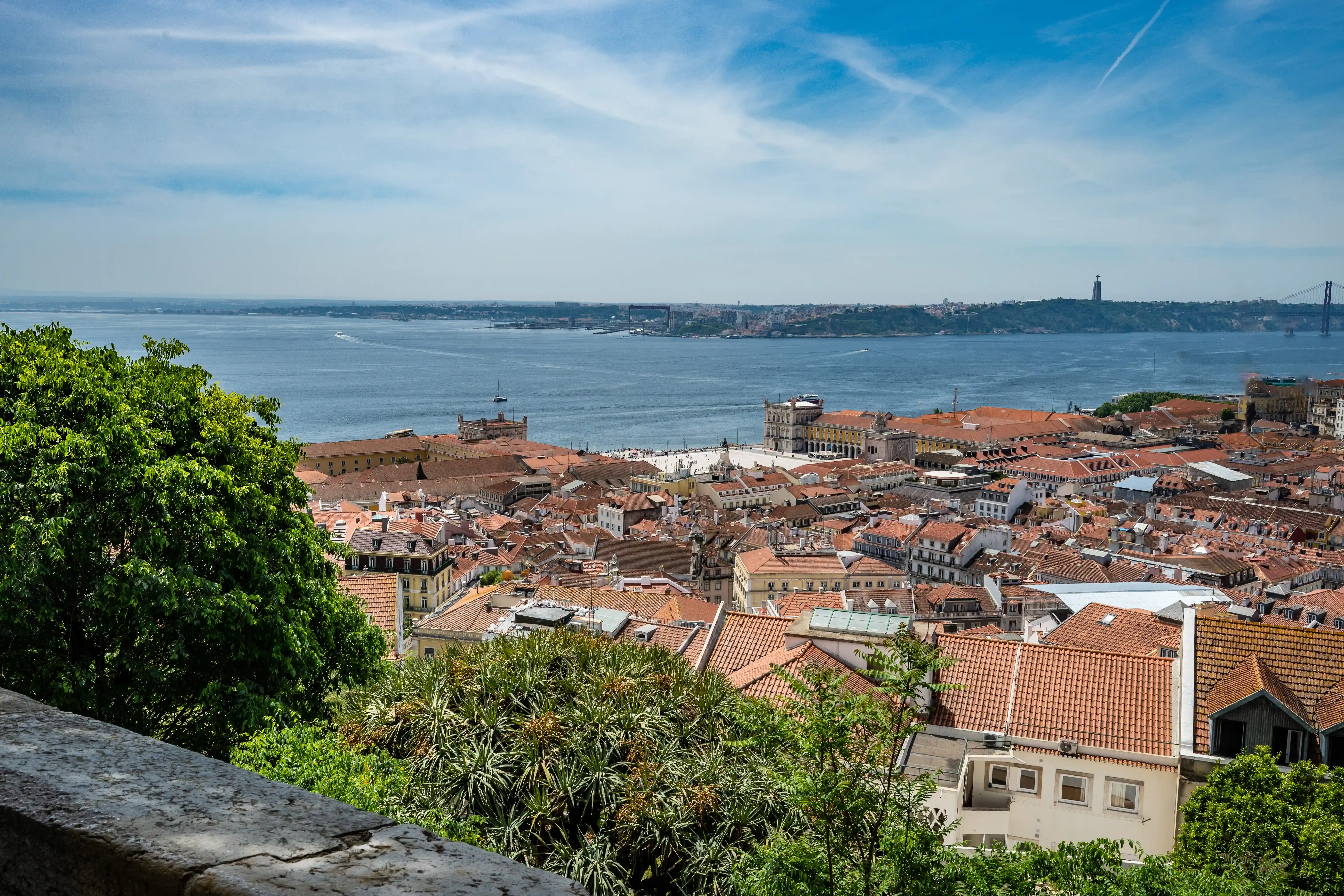
An aerial view of Lisbon, Portugal, showcasing a vast expanse of red-tiled roofs under a blue sky. A suspension bridge crosses the Tagus River in the distance, with a monument visible on the opposite bank.
Panoramic View of Lisbon, Portugal, with the Tagus River and Bridges in the Distance ‐ photo by ,
©www.mgaylard.co.uk.
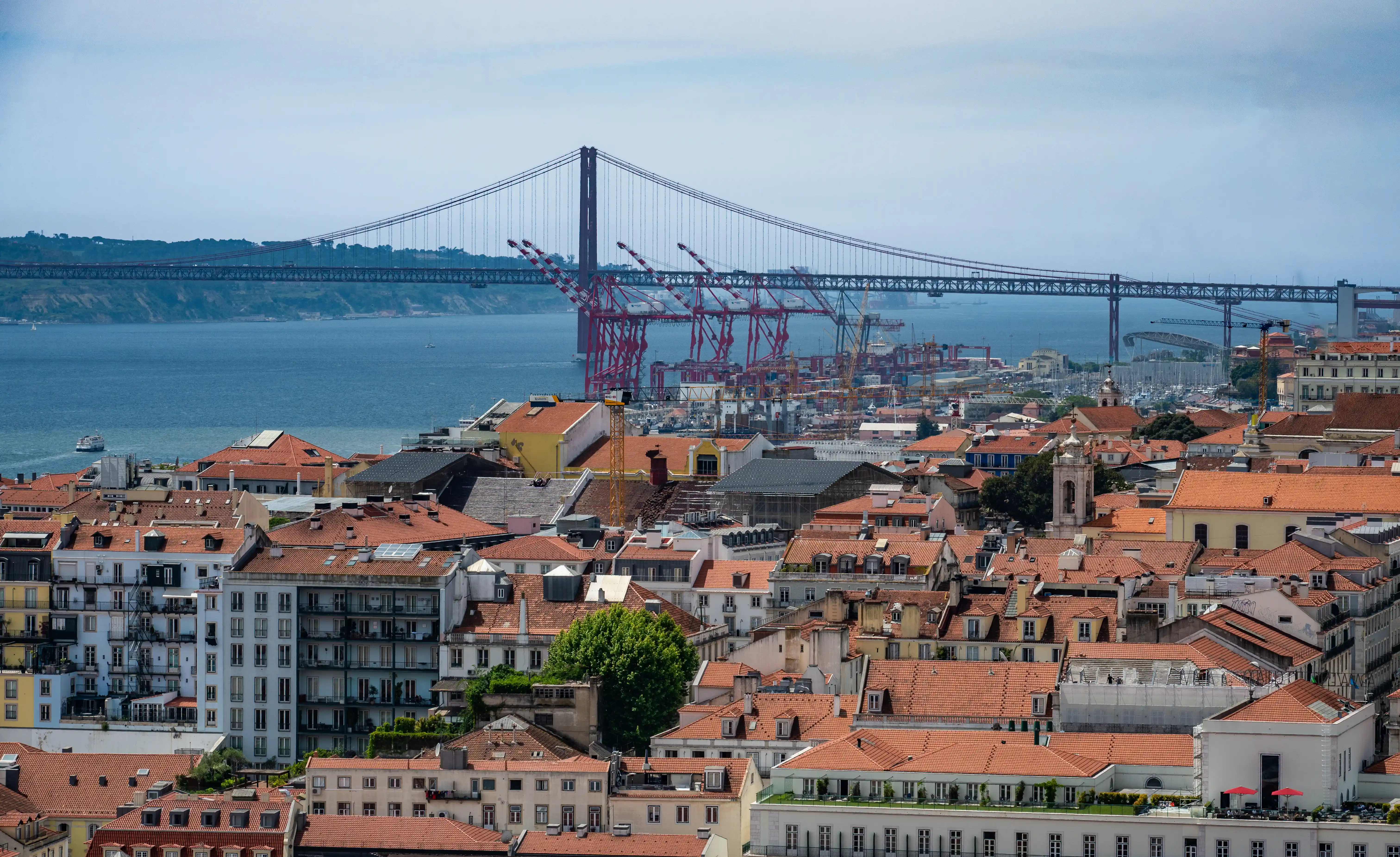
Wide shot of Lisbon, Portugal, showing the 25 de Abril Bridge and port in the distance, with a dense arrangement of red-tiled rooftops in the foreground.
Lisbon Cityscape with 25 de Abril Bridge and Port ‐ photo by ,
©www.mgaylard.co.uk.
Open the full set flickr button this page

Castelo de São Jorge

A Fortress of Conquest and Resilience

The Castelo de São Jorge (St. George’s Castle) is one of Lisbon’s most iconic and historically significant landmarks, a Moorish fortress that dominates the skyline of the Portuguese capital from its perch on a hill in the Alfama district. The castle’s imposing walls, towers, and battlements are a testament to its role as a defensive stronghold for centuries, and its history is a tapestry of conquest, resilience, and cultural exchange. Originally built by the Moors in the 11th century, the castle was captured by Christian forces in 1147 during the Second Crusade, led by Afonso Henriques, the first King of Portugal. The reconquest of Lisbon from the Moors marked a turning point in the formation of Portugal as a nation, and the Castelo de São Jorge became a symbol of this new era.

A Moorish Legacy

The origins of the Castelo de São Jorge trace back to the 9th or 10th century, when the Moors built a fortified palace on the hill as part of their defensive network in the Iberian Peninsula. The castle’s strategic location provided unobstructed views of the Tagus River and the surrounding countryside, making it an ideal lookout point for spotting approaching enemies. The Moors named the fortress "Castelo dos Mouros" (Castle of the Moors), and it served as a royal residence for the Moorish governors of Lisbon. The castle’s architecture reflects its Moorish roots, with thick stone walls, arched gateways, and geometric patterns that are hallmarks of Islamic design. The most prominent feature of the Moorish era is the Torre de Ulisses (Ulysses Tower), a massive tower that dominated the fortress and was later incorporated into the Christian structure. The Moors also built a palace within the castle walls, remnants of which can still be seen today, including the Cisterna (a large underground water reservoir) and the ruins of the royal quarters.

The Christian Reconquest and the Birth of Portugal

In 1147, during the Second Crusade, a Christian army led by Afonso Henriques laid siege to Lisbon. After a four-month battle, the Moors surrendered, and the city was reconquered for Christianity. The Castelo de São Jorge was renamed in honor of St. George, the patron saint of England, whose cult was popular among the Crusaders. The castle became a symbol of Christian victory and the birth of Portugal as an independent kingdom. Afonso Henriques established his royal court in the castle, and it served as the royal palace until the 13th century, when the Portuguese court moved to the Ribeira Palace.
The castle played a pivotal role in the defense of Lisbon during the subsequent centuries. It withstood sieges by the Castilians in 1373 and the Spanish in 1580, and its strategic importance ensured that it remained a key military outpost until the 16th century. The fortress was gradually modified over the centuries, with additions and renovations reflecting the changing needs of Portugal’s defensive and royal requirements.

A Royal Palace and a Symbol of Power

During the 13th and 14th centuries, the Castelo de São Jorge was expanded and embellished by Portuguese kings, who transformed it into a royal palace. The castle’s most famous resident was King Dinis I, who reigned from 1279 to 1325 and was known for his patronage of the arts and sciences. Dinis ordered the construction of the castle’s most iconic feature, the Torre de Menagem (Keep Tower), a massive cylindrical tower that offered panoramic views of Lisbon and the Tagus River. The keep was later used as a prison for political opponents and nobles who fell out of favor with the crown.
The castle’s royal apartments were lavishly decorated with tiles, tapestries, and gold leaf, reflecting the wealth and power of the Portuguese monarchy. The Sala Ogival (Ogival Room), a Gothic hall with a vaulted ceiling, was the heart of the royal palace and the setting for royal audiences and ceremonies. The castle also housed a chapel, dedicated to St. George, where royal weddings, baptisms, and coronations took place.

A Prison and a Military Outpost

By the 16th century, the Castelo de São Jorge had lost its role as a royal palace, and it was repurposed as a military outpost and prison. The fortress was used to house political prisoners, including nobles, clergy, and foreign dignitaries who had fallen out of favor with the Portuguese crown. The most famous prisoner was King Sebastian of Portugal, who was imprisoned in the castle in 1578 after his disastrous campaign in Morocco. The castle also served as a military barracks and a storage depot for weapons and supplies during times of war.

A National Monument and a Tourist Attraction

In the 20th century, the Castelo de São Jorge was restored and opened to the public as a national monument. Today, it is one of Lisbon’s most visited attractions, drawing millions of visitors each year. The castle’s walls and towers offer breathtaking views of the city, the Tagus River, and the Atlantic Ocean, making it a must-visit for anyone exploring Lisbon. The castle grounds are also home to a small museum, which showcases artifacts from its Moorish and Christian history, including weapons, pottery, and royal documents. The castle is a popular spot for sunset viewing, with visitors gathering on the walls to watch the sky turn shades of gold, pink, and orange as the sun sets over the river. The castle also hosts cultural events, such as concerts, theater performances, and historical reenactments, which bring its history to life for modern audiences.

A Castle of Legends and Mysteries

The Castelo de São Jorge is shrouded in legends and mysteries, adding to its allure and charm. One of the most famous stories is that of the ravens of the castle. According to legend, two ravens once nested in the castle’s towers and protected the relics of St. Vincent, the patron saint of Lisbon. The ravens were said to guard the saint’s remains from thieves and invaders, and their images are still used as a symbol of the castle today. Another legend tells of the "Devil’s Tower", a mysterious tower within the castle where prisoners were said to disappear without a trace, adding to the castle’s reputation as a place of intrigue.

A Symbol of Lisbon’s Identity

The Castelo de São Jorge is more than just a historical monument—it’s a symbol of Lisbon’s identity and a testament to the city’s resilience. Its walls have witnessed the rise and fall of empires, the birth of a nation, and the evolution of a city from a Moorish stronghold to a European capital. The castle’s enduring presence on the skyline of Lisbon serves as a reminder of the city’s rich history and its ability to adapt and thrive over the centuries. Whether you’re exploring its ancient walls, climbing its towers, or simply soaking in the views of the city and river below, the Castelo de São Jorge offers a profound and unforgettable experience that connects you to the heart of Lisbon’s past and present.
Text generated by Mistral AI , Text generated by Microsoft CoPilot , generated by Google's AI Image Describer
To the top
Powered by w3.css. The images are all stored on link to www.gaylard.co.uk Photostream on Flickr   This website is hosted by link to 123Reg Web Hosting