HOME

The London Transport Museum

The London Transport Museum

Covent Garden PiazzaLondonGtreater London,   United Kingdom

The London Transport Museum explores the story of London and its transport system over the past 200 years. Located in Covent Garden, the museum showcases the evolution of the city’s iconic buses, trams, trains, and the Underground, highlighting their impact on London’s growth and culture. The museum features historic vehicles, interactive exhibits, and engaging displays that bring the history of London’s transport to life.
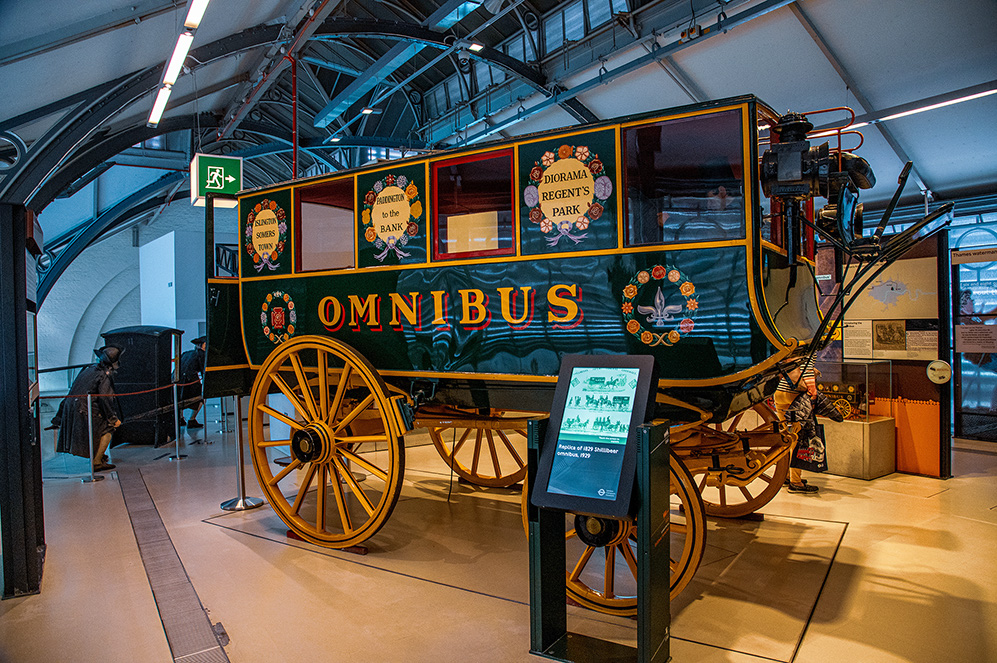
The image depicts an old-fashioned horse-drawn omnibus displayed in a museum setting. The omnibus is elaborately decorated with various signs and advertisements, including 'Diorama' and 'Regent's Park.' The vehicle is positioned on a polished floor with large wheels and a green and yellow exterior. There is an informational display panel in front of the omnibus, and the museum area features high ceilings with visible structural elements and lighting. A person is visible in the background, partially obscured by the display.
Omnibus ‐ photo by ,
©www.mgaylard.co.uk.
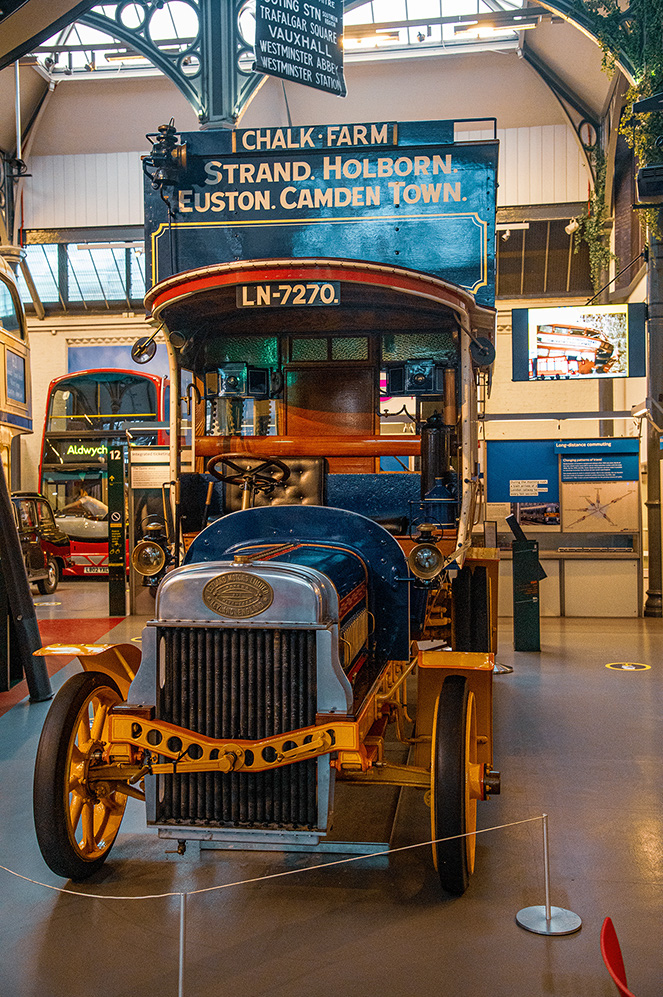
The image depicts a vintage bus on display in a museum. The bus has a sign on top indicating routes to Chalk Farm, Strand, Holborn, Euston, and Camden Town. The bus is marked with the identification number LN-7270. The display is part of a larger exhibit, with other vintage vehicles and informational plaques visible in the background.
Chalk Farm, Strand, Holborn, Euston, and Camden Town ‐ photo by ,
©www.mgaylard.co.uk.
The image shows an old tram with the number 284, labeled with destiUKs including Deptford, New Cross, Old Kent Road, and Waterloo. The tram is displayed indoors, possibly in a museum setting, with a green and cream color scheme and wooden panels. There is a sign above indicating an exit, and the tram is enclosed in a glass display case. Architectural elements such as arches and stained glass windows are visible in the background.
Deptford, New Cross, Old Kent Road, and Waterloo ‐ photo by ,
©www.mgaylard.co.uk.
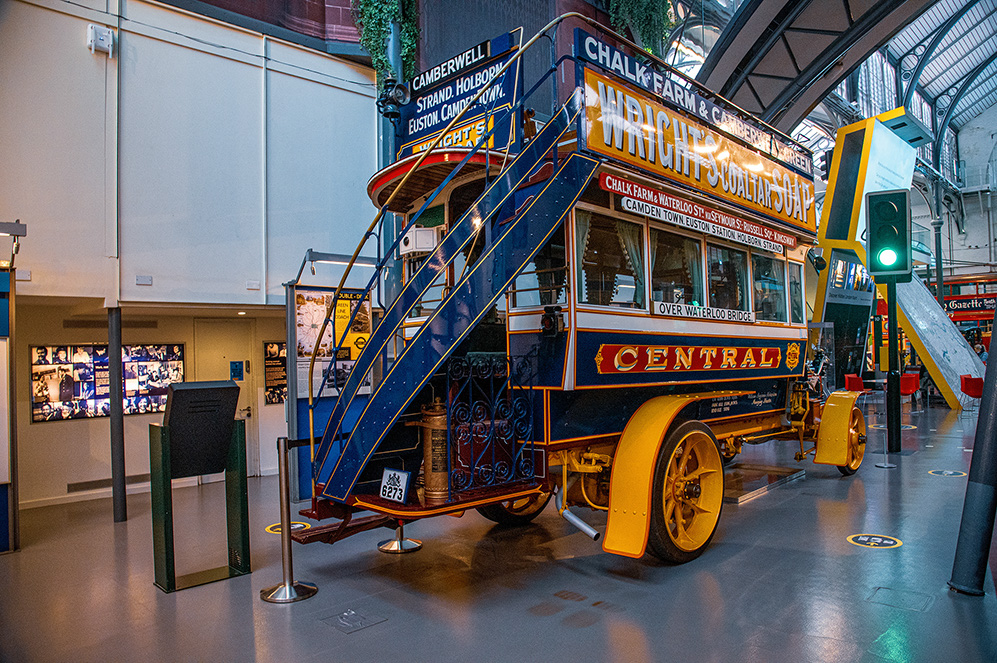
The image depicts a vintage double-decker tram on display in a museum. The tram, labeled 'CENTRAL,' is brightly colored with yellow and blue, and features a staircase for accessing the upper deck. The tram is surrounded by informational displays and barriers, indicating it is part of an exhibit. The setting appears to be indoors, with high ceilings and modern lighting. The tram's design and signage suggest it is a historical piece, likely from an era when such trams were used for public transportation.
Central Tram ‐ photo by ,
©www.mgaylard.co.uk.
The image depicts a vintage tram or bus on display in a museum-like setting with a high, arched glass ceiling and decorative elements. The vehicle is marked with the number 8186 and has a capacity of 25 persons. The interior of the vehicle is visible, showing wooden benches. The area around the vehicle is cordoned off with stanchions and ropes, indicating it is part of an exhibit. The setting suggests a historical or transportation museum.
Wartime Transport ‐ photo by ,
©www.mgaylard.co.uk.
The image depicts a classic red double-decker bus, likely a historical model, displayed indoors. The bus has a route sign indicating destiUKs such as Fulham, Chelsea, Victoria, Charing, Fleet Street, and Bank, with the final stop at Liverpool Street Station. The bus's registration number is 737 DYE. The setting appears to be a museum or an exhibition hall, as suggested by the polished floor and the presence of other exhibits in the background
View of museum ‐ photo by ,
©www.mgaylard.co.uk.
The image shows a vintage double-decker bus displayed in a museum. The bus is yellow and has the number 62 on it. It has a destiUK sign indicating routes to various museums such as Hainault, Chadwell Heath, Valence Avenue, Becontree, and Upney Lane, with Barking Garage as its starting point. The bus's license plate reads NXP 997. The setting appears to be an indoor exhibition area with other vintage vehicles and historical displays in the background.
62 To Barking Garage ‐ photo by ,
©www.mgaylard.co.uk.
The image depicts a display of vintage double-decker buses in what appears to be a museum or exhibition setting. The buses are painted in distinctive red and yellow colors and are positioned as if they are on a street, complete with traffic lights and street signs. The setting suggests a historical or nostalgic theme, showcasing the evolution of public transportation.
vintage double-decker buses ‐ photo by ,
©www.mgaylard.co.uk.
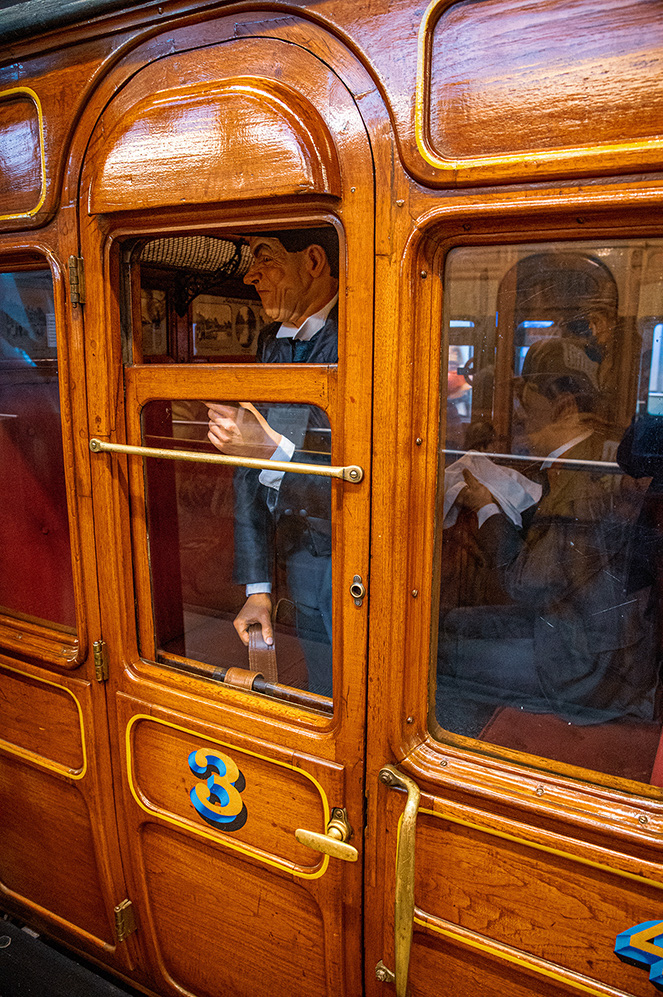
The image depicts a vintage train compartment with wooden interiors and large windows. Inside, there are two wax figures dressed in early 20th-century attire, with one figure leaning out of the open window and the other seated inside. The door of the compartment is marked with the number 3 and features brass fittings. The overall scene suggests a historical or museum setting.
vintage train compartment ‐ photo by ,
©www.mgaylard.co.uk.
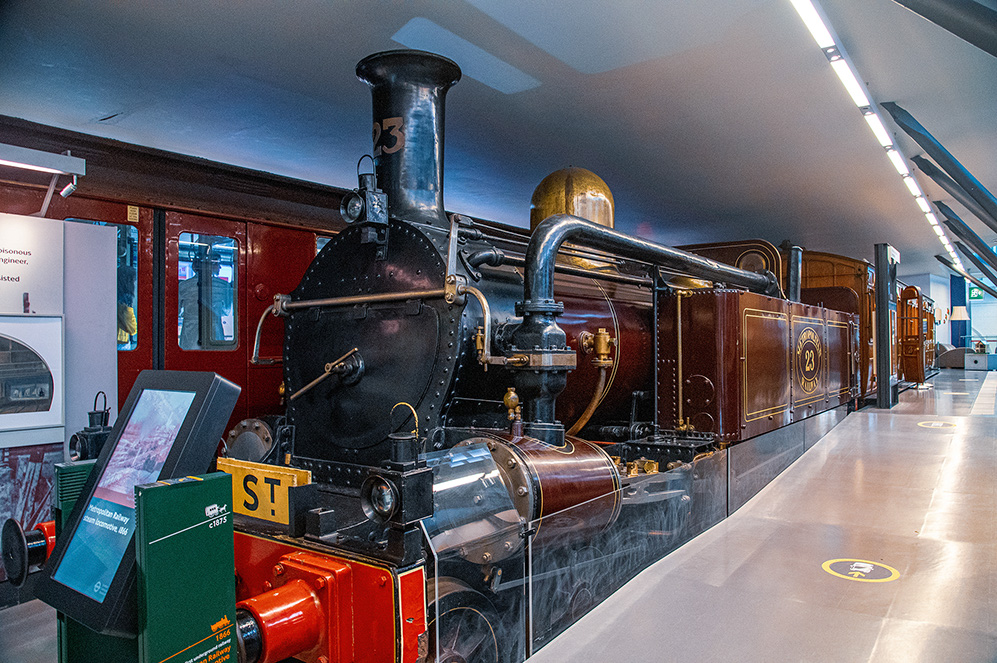
The image depicts a vintage steam locomotive on display in a museum. The locomotive, labeled with the number 23, is prominently featured with its intricate details and polished exterior. The display includes informational screens and signs, providing visitors with historical context and information about the exhibit. The setting appears to be well-lit and spacious, with other exhibits visible in the background.
number 23 ‐ photo by ,
©www.mgaylard.co.uk.
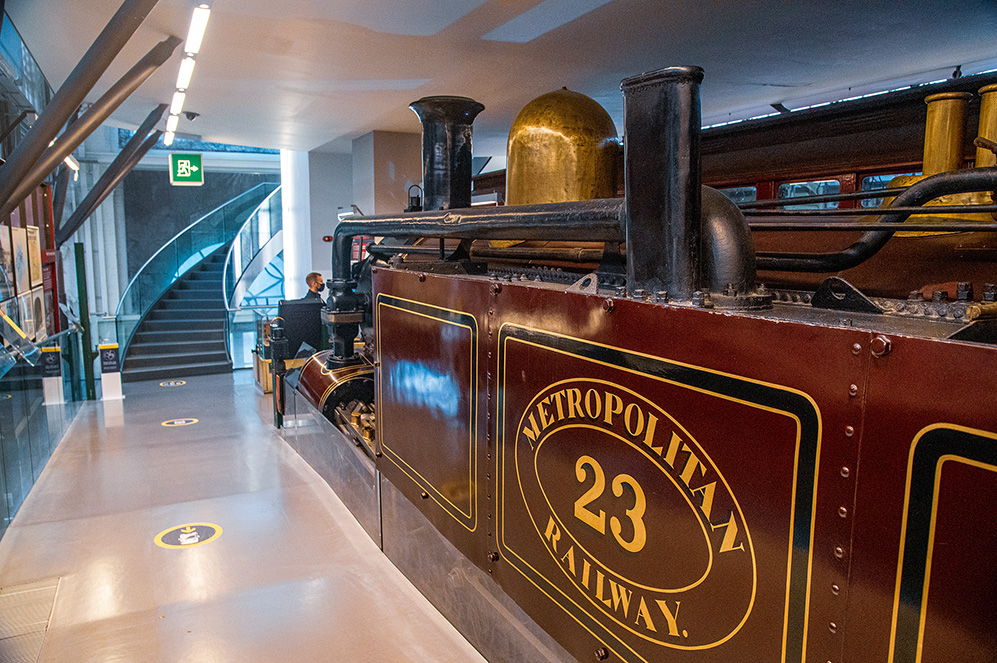
The image shows a vintage steam locomotive labeled 'Metropolitan Railway 23' on display in a modern, well-lit museum setting. The locomotive is polished and well-maintained, with a prominent gold and black color scheme. The museum features a staircase and an escalator in the background, indicating a multi-level exhibit space. The setting suggests an environment dedicated to preserving and showcasing historical railway artifacts.
Metropolitan Railway 23 ‐ photo by ,
©www.mgaylard.co.uk.
Open the full set flickr button this page
London Transport Museum

The London Transport Museum, located in Covent Garden, is dedicated to the history and evolution of London’s public transport system. The museum’s collection includes a wide range of vehicles—such as iconic red buses, Underground trains, trams, and taxis—as well as posters, signs, maps, and interactive exhibits that tell the story of how transport has shaped the city.

Historic Vehicles:

From the first horse-drawn buses and steam locomotives to the classic Routemaster bus and modern Tube trains.

Underground History:

Exhibits on the world’s first underground railway, the Metropolitan Railway, and the development of the London Underground network.

Design & Posters:

A vast collection of transport posters, many of which are celebrated as works of art, showcasing the evolution of graphic design in advertising public transport.

Interactive Experiences:

Simulators and hands-on exhibits that allow visitors to experience what it was like to drive a bus or operate a Tube train.

Future of Transport:

Displays on sustainable transport and innovations shaping the future of travel in London.
Text generated by Mistral AI

King’s Cross Station

Euston RoadKing’s CrossLondon,   United Kingdom

King’s Cross Station is one of London’s most famous and historic railway stations, serving as a major transport hub for both UKal and interUKal travel. Opened in 1852, the station is renowned for its stunning Victorian architecture, including the iconic train shed designed by Lewis Cubitt. King’s Cross is a gateway to destiUKs across the UK and Europe, and it is also famous for its literary and cultural connections, such as the Platform 9¾ from the Harry Potter series
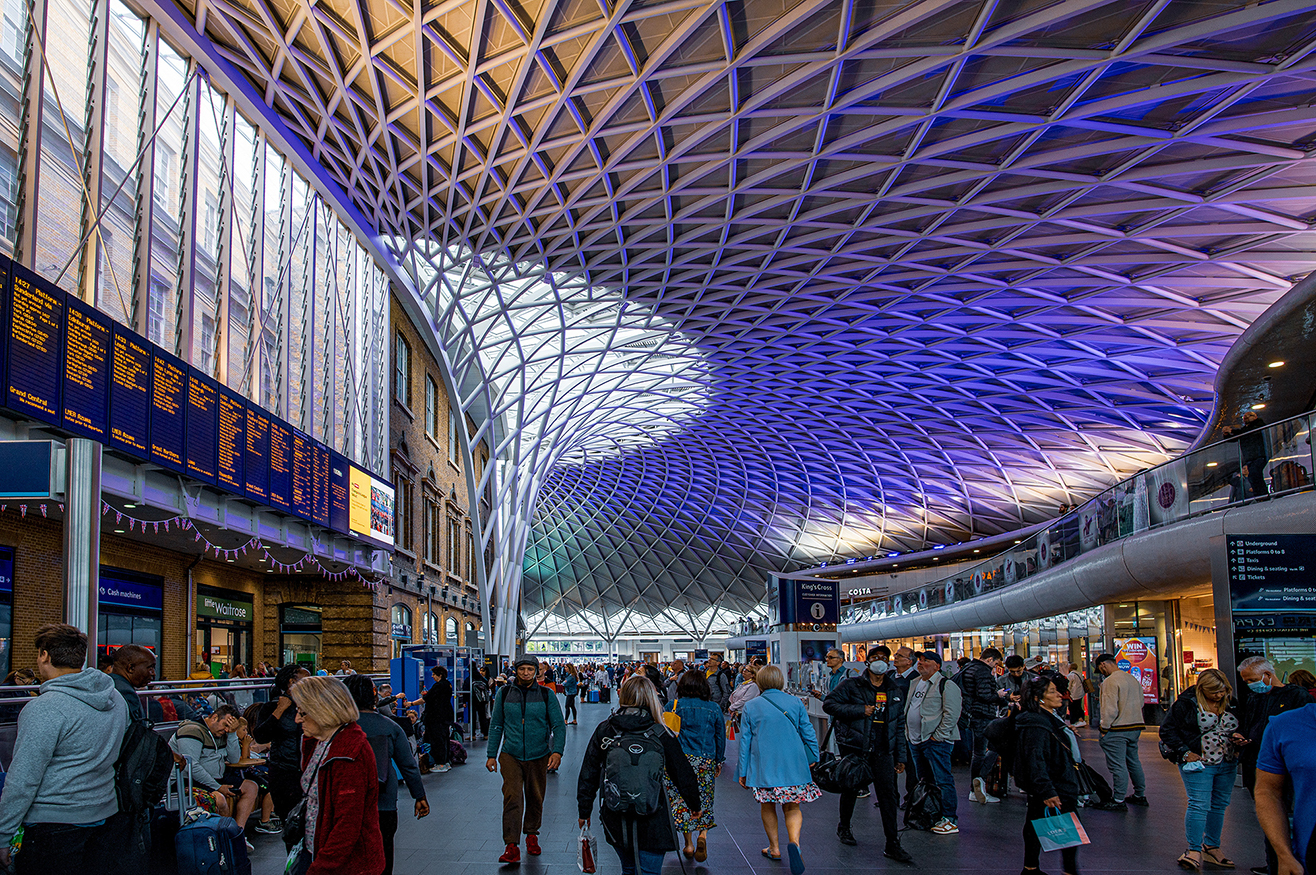
The image depicts a bustling train station with a modern, architecturally striking roof made of glass and steel. The station is filled with people, some walking and others waiting. There are multiple digital display boards showing train schedules and other information. Various shops and facilities, such as WHSmith and Costa Coffee, are visible along the sides of the station. The overall atmosphere is busy and vibrant, indicative of a major transportation hub.
Main Concourse ‐ photo by ,
©www.mgaylard.co.uk.
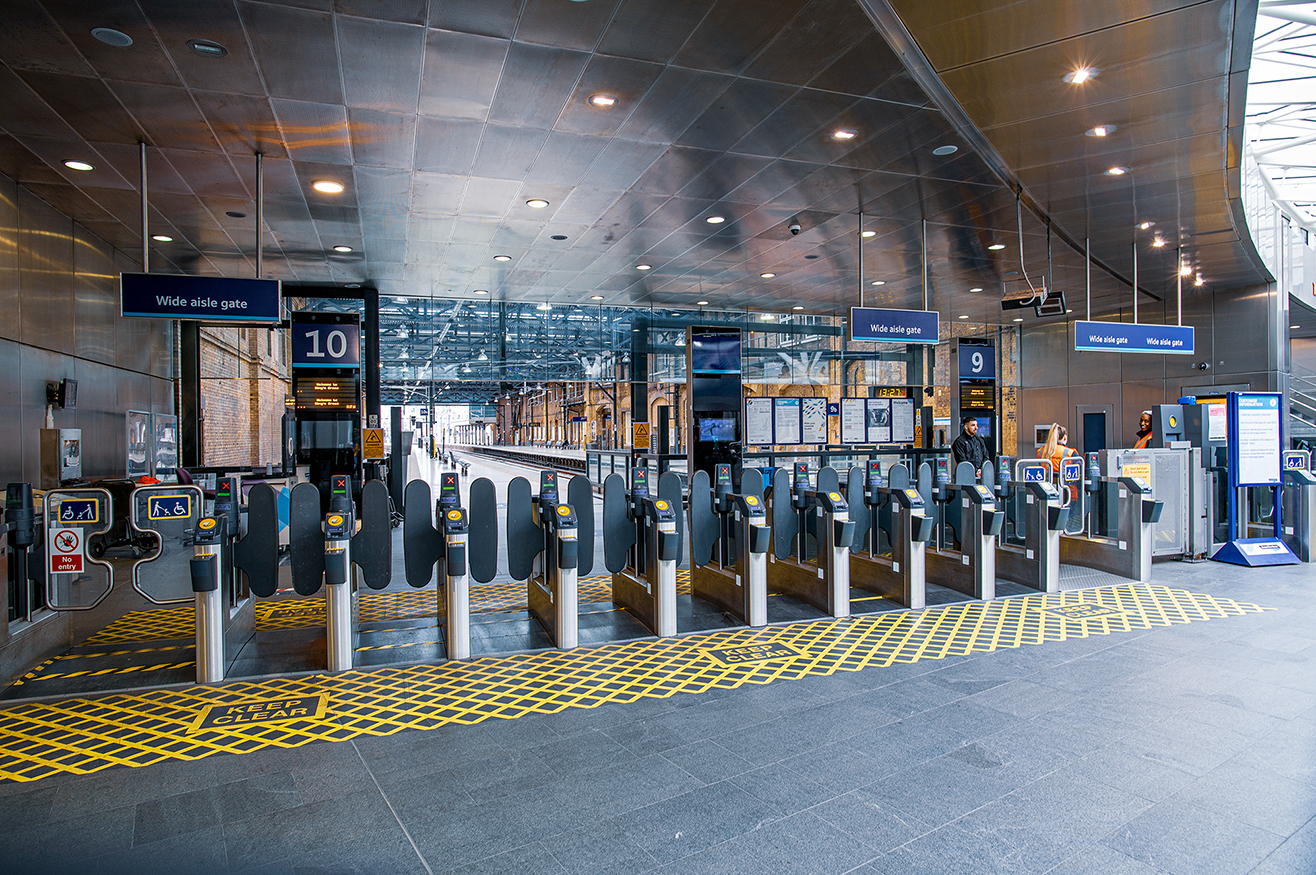
The image shows a modern train station entrance with multiple automated turnstile gates labeled as 'Wide aisle gate'. There are digital displays above the gates, showing information and time. The station has clear signage, a clean environment, and a few people are seen entering through the gates. The floor has yellow tactile paving for assisting visually impaired individuals, and there are various signs and posters on the walls.
Ticket Barriers ‐ photo by ,
©www.mgaylard.co.uk.
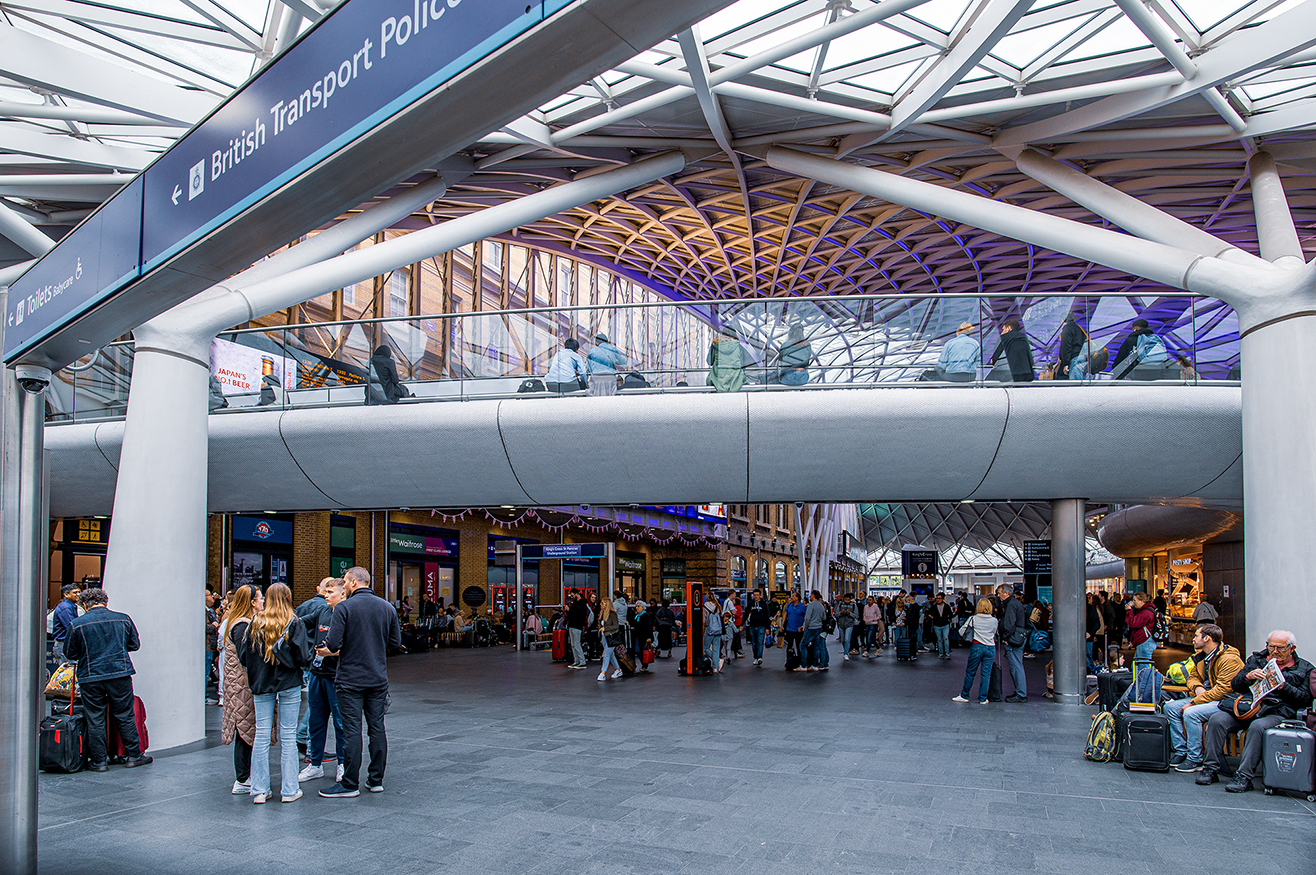
The image depicts a busy transportation hub, likely a train station, with a modern architectural design featuring a high ceiling with a complex network of metal beams and glass. There are numerous people, some standing and others walking, with luggage, indicating travel. Overhead signs point to the British Transport Police and other amenities. The station appears to be well-lit and bustling with activity.
Main Concourse ‐ photo by ,
©www.mgaylard.co.uk.
Open the full set flickr button this page
King’s Cross Station

Historical Overview

Construction and Opening:
King’s Cross Station was opened in 1852 by the Great Northern Railway as the London terminus for the East Coast Main Line. It was designed by Lewis Cubitt and quickly became a major transport hub in London.
Expansion and Development:
The station was expanded several times in the 19th century to accommodate growing passenger and freight traffic. It became a major terminus for the InterCity 125 and other high-speed trains

Architectural Significance

Design and Features:
King’s Cross Station is known for its iconic architecture, featuring a large, arched roof and a distinctive facade. The station’s design is often cited as an example of proto-modernism and has been compared favorably to other historic stations.
Redevelopment:
In the 1970s, the station underwent a significant redevelopment to modernize its facilities and improve passenger flow. The Western Concourse, designed by John McAslan + Partners, is a key feature of the station’s transformation and is widely regarded as a successful example of historic building renovation.

Cultural and Historical Impact

Location:
King’s Cross Station is located in Camden, on the edge of central London. It is adjacent to St Pancras International, the London terminus for Eurostar services to continental Europe.
Cultural References:
King’s Cross Station is famously associated with Harry Potter’s Platform 9¾, which has become a popular tourist attraction and a symbol of the station’s cultural significance.

Visitor Information

Transport Links:
King’s Cross Station is a major transport hub, with connections to National Rail, London Underground, and bus services. It is served by several London Underground lines, including the Circle, Metropolitan, Hammersmith & City, and Victoria lines.
Facilities and Amenities:
The station offers a range of facilities, including shops, cafes, and accessible parking. It is also near several tourist attractions, such as the British Library and Regent’s Park

References

www.networkrail.co.ukmedia.istockphoto.comvictorianweb.orgen.wikipedia.org , Text generated by Mistral AI

St Pancras International

Euston RoadKing's CrossLondon,   United Kingdom

St Pancras International is a world-famous railway station in London, serving as a major hub for domestic and international travel. Opened in 1868, the station is renowned for its stunning Victorian Gothic Revival architecture, designed by William Henry Barlow. St Pancras is the London terminus for Eurostar services to Europe, as well as domestic high-speed trains to the Midlands and Northern England. The station is also celebrated for its cultural and historical significance, including its role in literature and film.
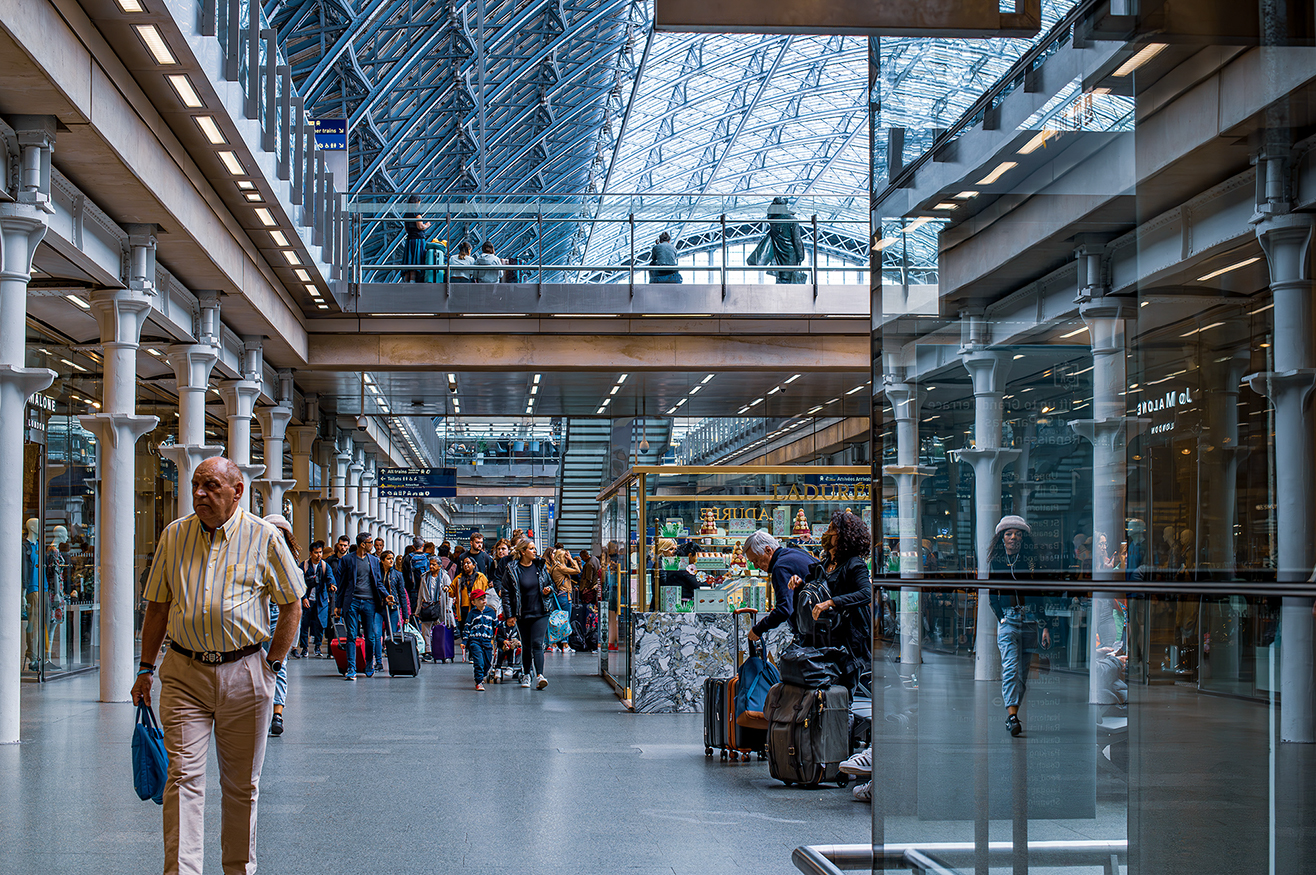
The image depicts a bustling scene at a modern train station. The station features a high, glass-paneled ceiling that allows natural light to flood the space, creating a bright and airy atmosphere. People are seen walking with luggage, indicating travel, and there are various shops and kiosks along the sides. The architecture includes sleek, contemporary design elements with glass and metal structures. Overall, it captures the dynamic and transient nature of a busy transportation hub.
St Pancras International ‐ photo by ,
©www.mgaylard.co.uk.
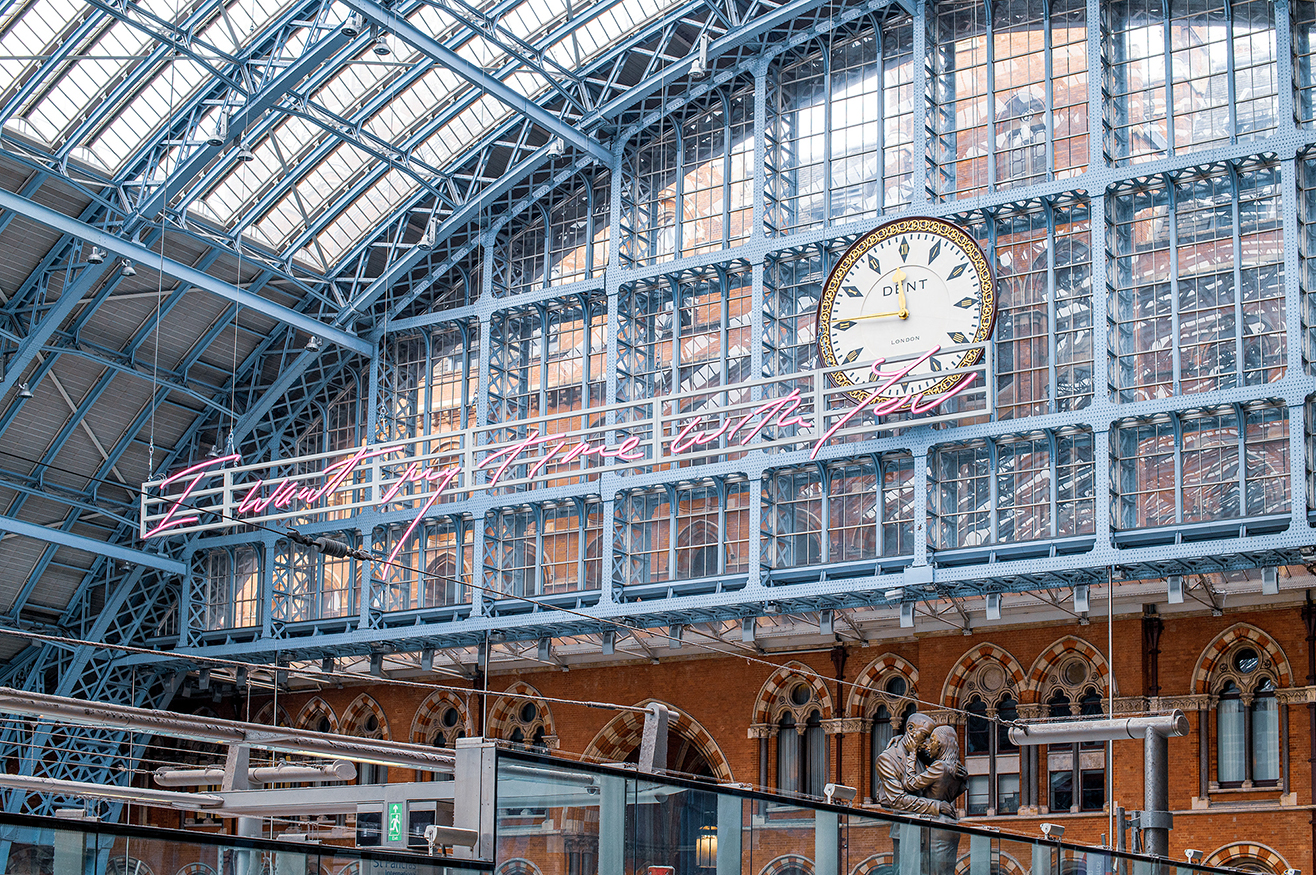
The image depicts the interior of a large, historic train station with a high, arched glass roof supported by a steel framework. A prominent clock with the name 'DENT' is centrally located on an upper level. The station features intricate architectural details, including arched windows and decorative elements. There are multiple levels with walkways and railings, and a statue of a man is visible on the lower level. The station appears to be bustling, with signs indicating directions and exits.
The Clock ‐ photo by ,
©www.mgaylard.co.uk.
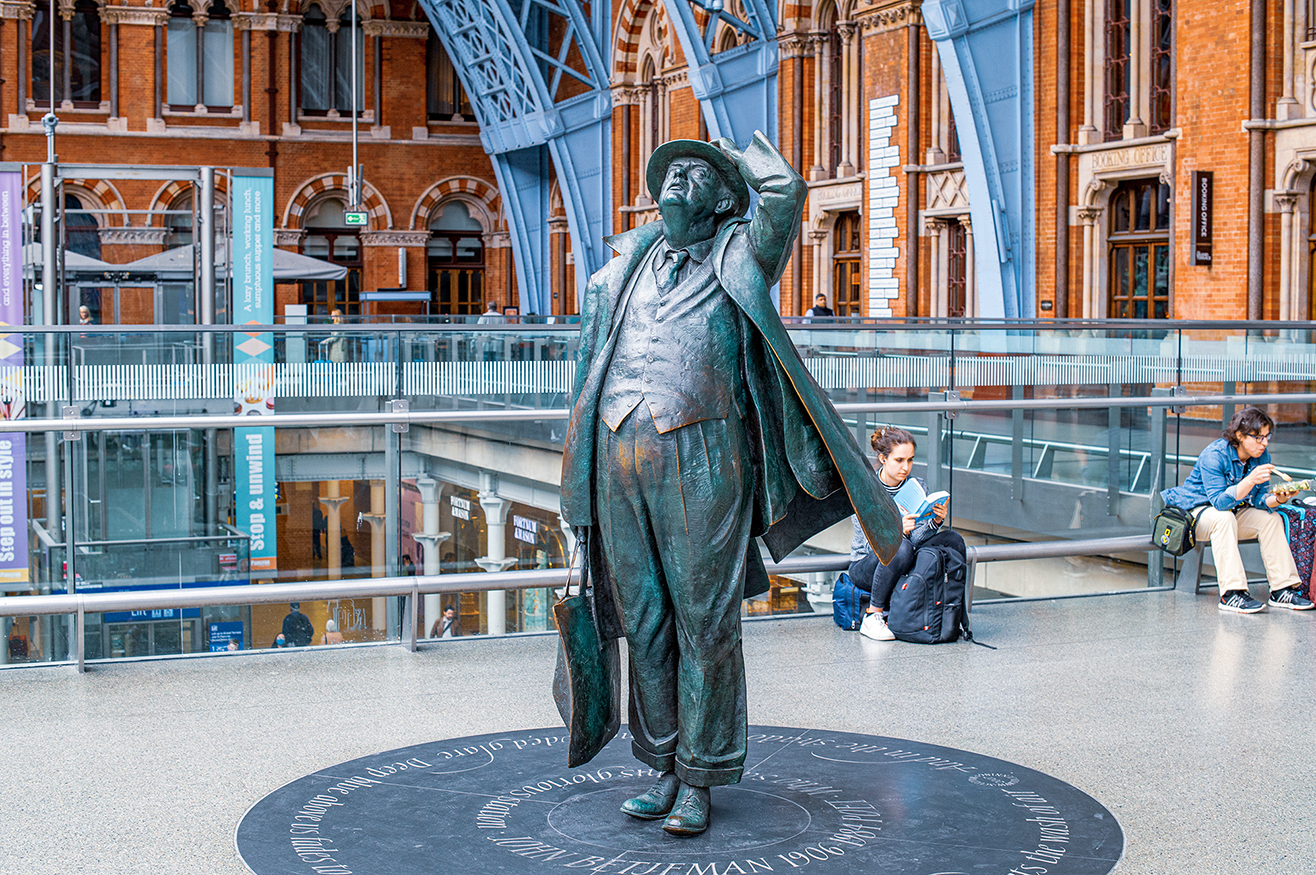
The image shows a statue of a man in a suit and hat, standing in a large, open indoor area with a high, arched ceiling and brick walls. The statue is positioned on a circular plaque with an inscription. The area around the statue is spacious, with a few people sitting and standing nearby. The architectural style of the building suggests it could be a train station or a similar public space.
Statue of Sir John Betjeman ‐ photo by ,
©www.mgaylard.co.uk.
The well-known statue of Sir John Betjeman is located at St Pancras International Station in London, where it commemorates his role in saving the station from demolition in the 1960s. The statue, sculpted by Martin Jennings, was unveiled in 2007 and stands as a tribute to Betjeman’s efforts in preserving this iconic piece of Victorian architecture
The image depicts a bustling airport terminal filled with travelers. People are seen walking with luggage, waiting in lines, and sitting in seating areas. The terminal features various shops and a large departure board displaying flight information. The scene is lively, with a significant number of individuals moving in different directions, indicating a busy travel day. The overall atmosphere suggests a typical, crowded airport environment.
Crowded Concourse ‐ photo by ,
©www.mgaylard.co.uk.
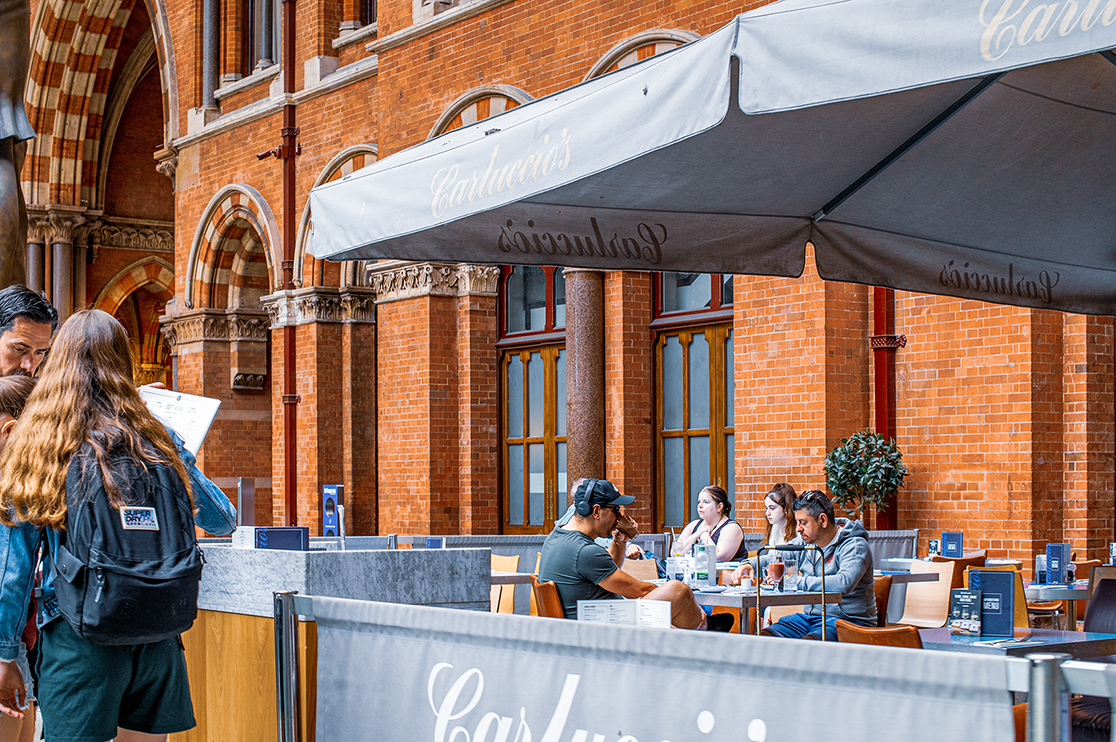
The image depicts an outdoor seating area of a café or restaurant named 'Carluccio's'. The setting is in front of a brick building with large arched windows and ornate columns. Several people are seated at tables under large umbrellas, enjoying their meals and drinks. Two individuals in the foreground appear to be looking at a menu or a map. The atmosphere seems relaxed and casual, typical of a pleasant day at an outdoor dining spot.
A moment of Calm ‐ photo by ,
©www.mgaylard.co.uk.
Open the full set flickr button this page
St Pancras Station

St Pancras Station was opened in 1868 as the London terminus of the Midland Railway. The station was designed by Sir George Gilbert Scott and William Henry Barlow, featuring a grand Gothic Revival facade and one of the largest single-span train shed roofs in the world at the time.

In the early 2000s, St Pancras underwent a major redevelopment to become the London terminus for Eurostar services to continental Europe. This transformation modernized the station while preserving its historic architecture

References

en.wikipedia.org , Text generated by Mistral AI

The London Underground

Greater London,   United Kingdom

The London Underground, commonly known as the Tube, is the world's oldest underground railway network, first opened in 1863. It serves as a vital part of London's public transport system, connecting millions of passengers to key destinations across the city and beyond. The Underground features 11 lines, over 250 stations, and a mix of historic and modern architecture, making it an iconic symbol of London's urban life and transport heritage.
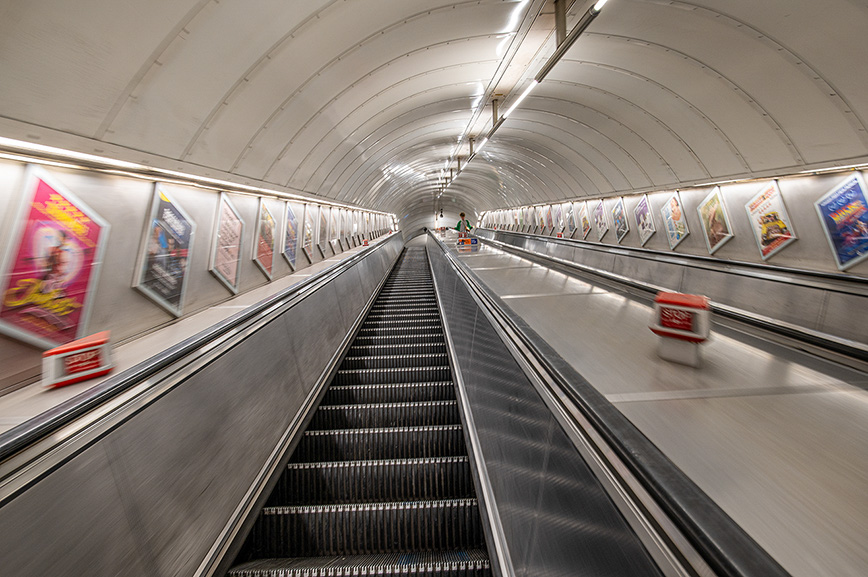
he image depicts a long, curved tunnel with two parallel escalators. The walls of the tunnel are adorned with various posters and advertisements. The escalators are moving, with a few people visible in the distance. The tunnel is well-lit with evenly spaced lights along the ceiling.
Euston Underground Escalators ‐ photo by ,
©www.mgaylard.co.uk.
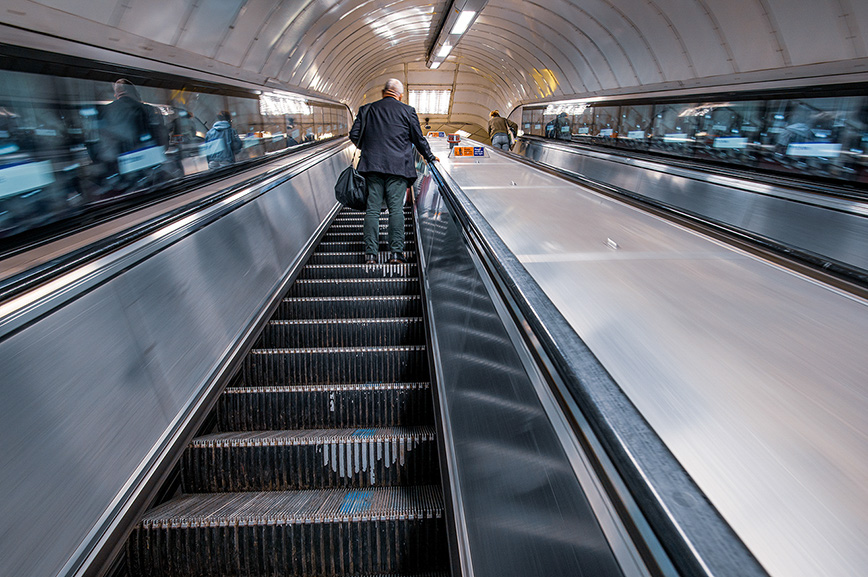
The image depicts a man standing on an escalator in a subway station, moving upwards. The station appears to be clean and well-lit, with other people visible in the background, some of whom are also on escalators. The man is wearing a dark jacket and green pants, and he is carrying a bag. The escalator is made of metal with visible steps and side panels.
a man standing on an escalator ‐ photo by ,
©www.mgaylard.co.uk.
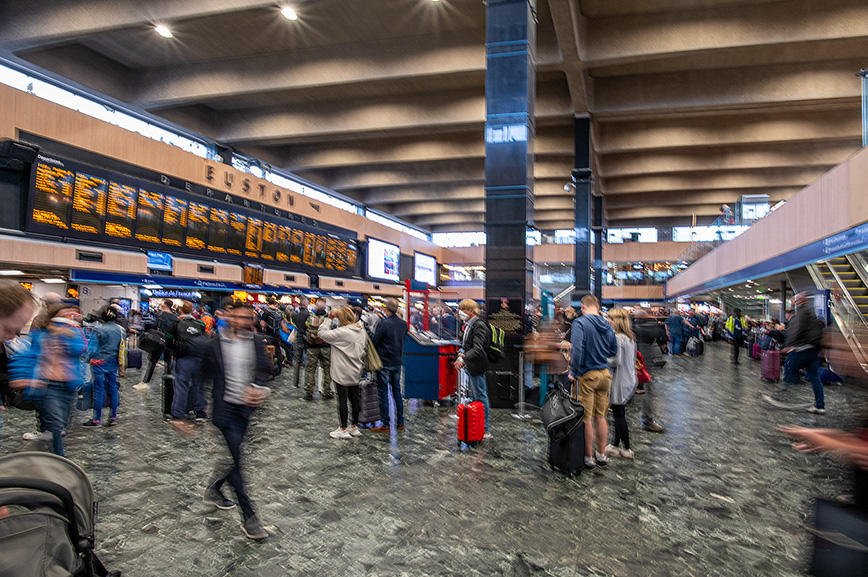
The image depicts a bustling scene at Euston railway station, with numerous people moving about, some carrying luggage. The station's departure board is prominently displayed, showing various train schedules. The architecture features a high ceiling with visible structural elements, and the area appears to be well-lit with natural light.
On The Move ‐ photo by ,
©www.mgaylard.co.uk.
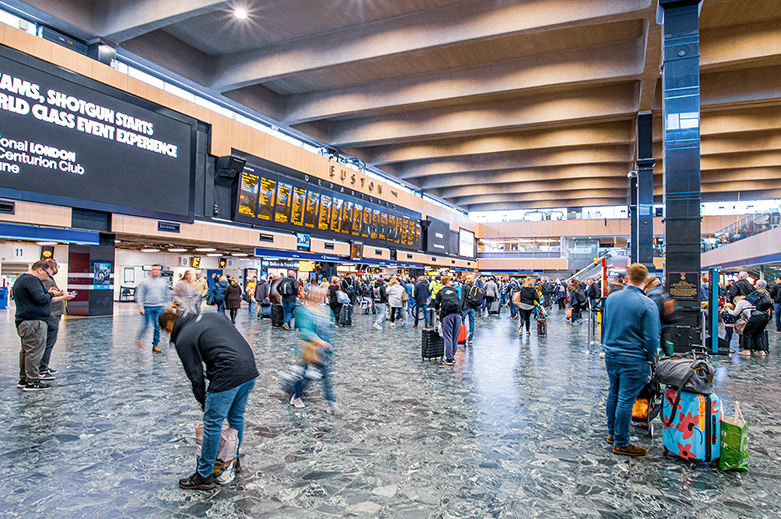
The image depicts a busy train station with numerous people moving about, some carrying luggage. The station has a large, modern interior with high ceilings and a tiled floor. There are digital departure and arrival boards prominently displayed in the background. Some individuals appear to be bending down, possibly tying their shoes or picking something up. The overall atmosphere suggests a typical bustling scene at a major transportation hub
carrying luggage ‐ photo by ,
©www.mgaylard.co.uk.
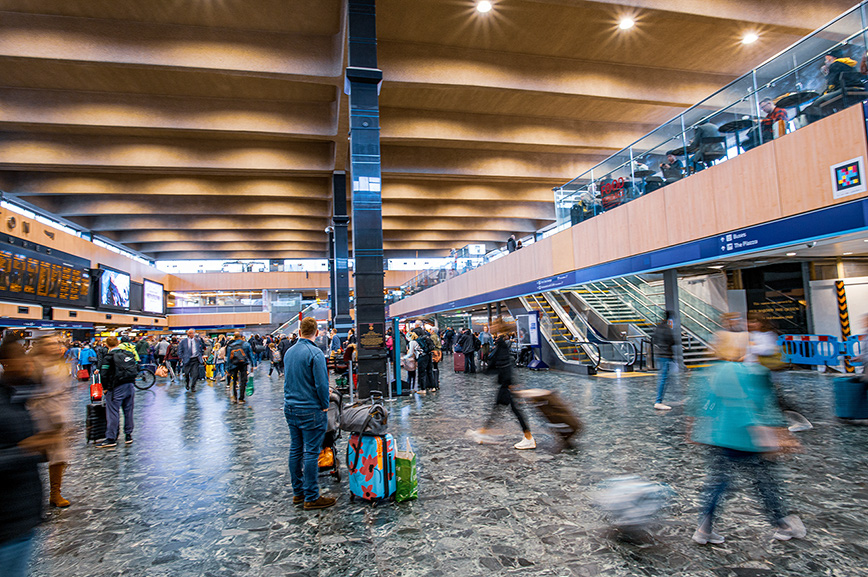
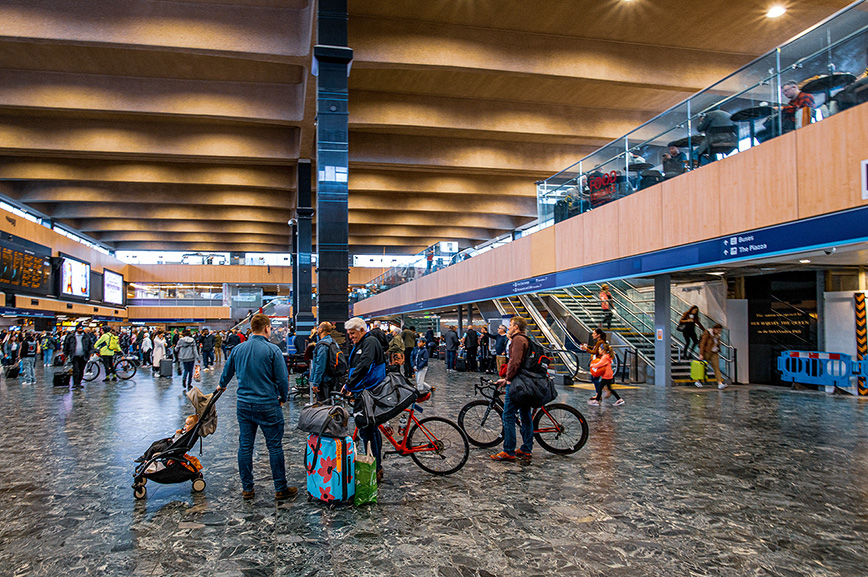
The image depicts a bustling airport terminal with numerous travelers moving about. The terminal features a high ceiling with wooden panels, large pillars, and a variety of shops and amenities on the upper level. There are escalators and stairs leading to the upper level, and a prominent display board showing flight information. The floor is made of polished stone, reflecting the overhead lights. The overall atmosphere is busy and dynamic, with people carrying luggage and moving in different directions
On The Mov ‐ photo by ,
©www.mgaylard.co.uk.
The image depicts a bustling indoor transportation hub, likely a train station, with people engaged in various activities such as standing, walking, and cycling. The architecture features a high ceiling with wooden panels and large columns. There are signs directing to different areas such as buses and platforms. The floor appears wet, suggesting recent cleaning or rain. Overall, it is a busy environment with a mix of travelers and commuters.
a bustling indoor transportation hub ‐ photo by ,
©www.mgaylard.co.uk.
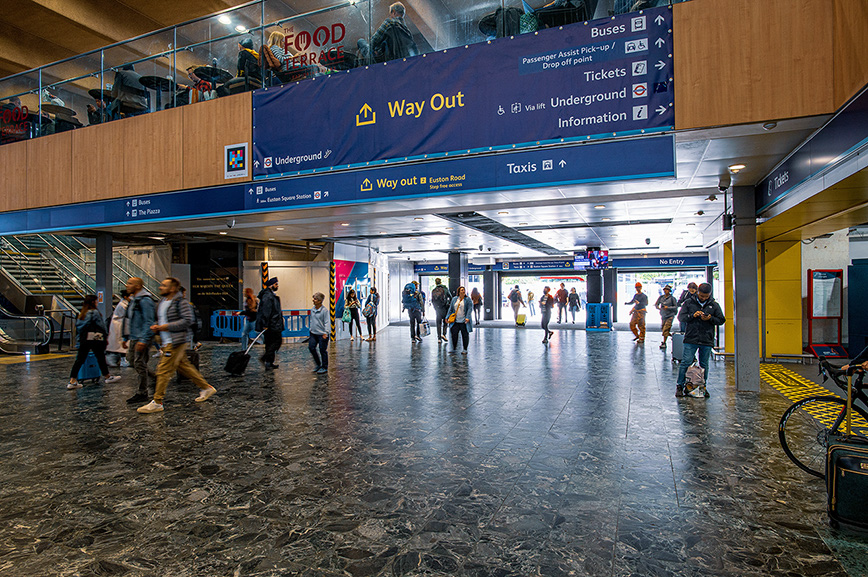
The image depicts a busy transportation hub, likely a train station or airport. There are clear signs directing passengers to various services such as buses, underground trains, taxis, and information desks. People are seen walking with luggage, indicating travel. The floor appears wet, suggesting recent cleaning or rain. The upper level has food and retail services.
Euston Concourse ‐ photo by ,
©www.mgaylard.co.uk.

Cannon Street Station

Cannon StreetLondonGreater London,   United Kingdom

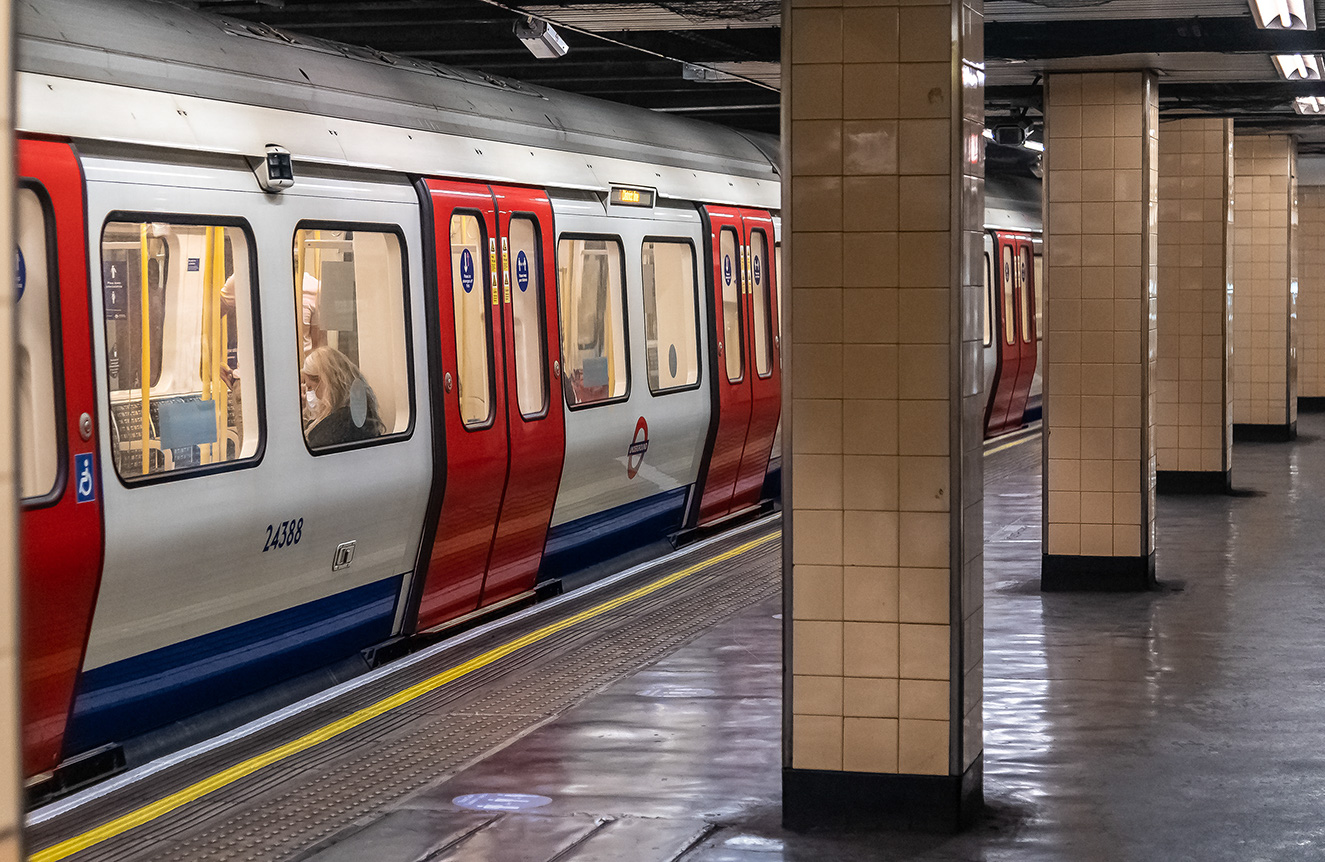
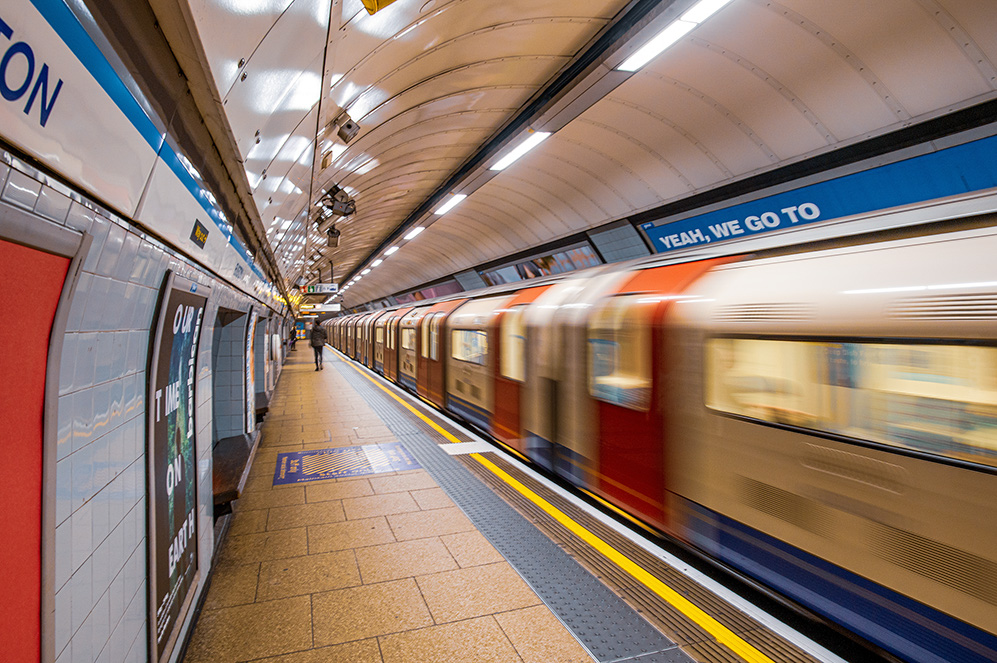
The image depicts a subway train at a station platform. The train is primarily silver with red doors and windows. The platform is tiled with light-colored tiles and has yellow safety lines along the edge. The train appears to be part of the London Underground system, as indicated by the logo on the side of the train.
Central and District Line ‐ photo by ,
©www.mgaylard.co.uk.
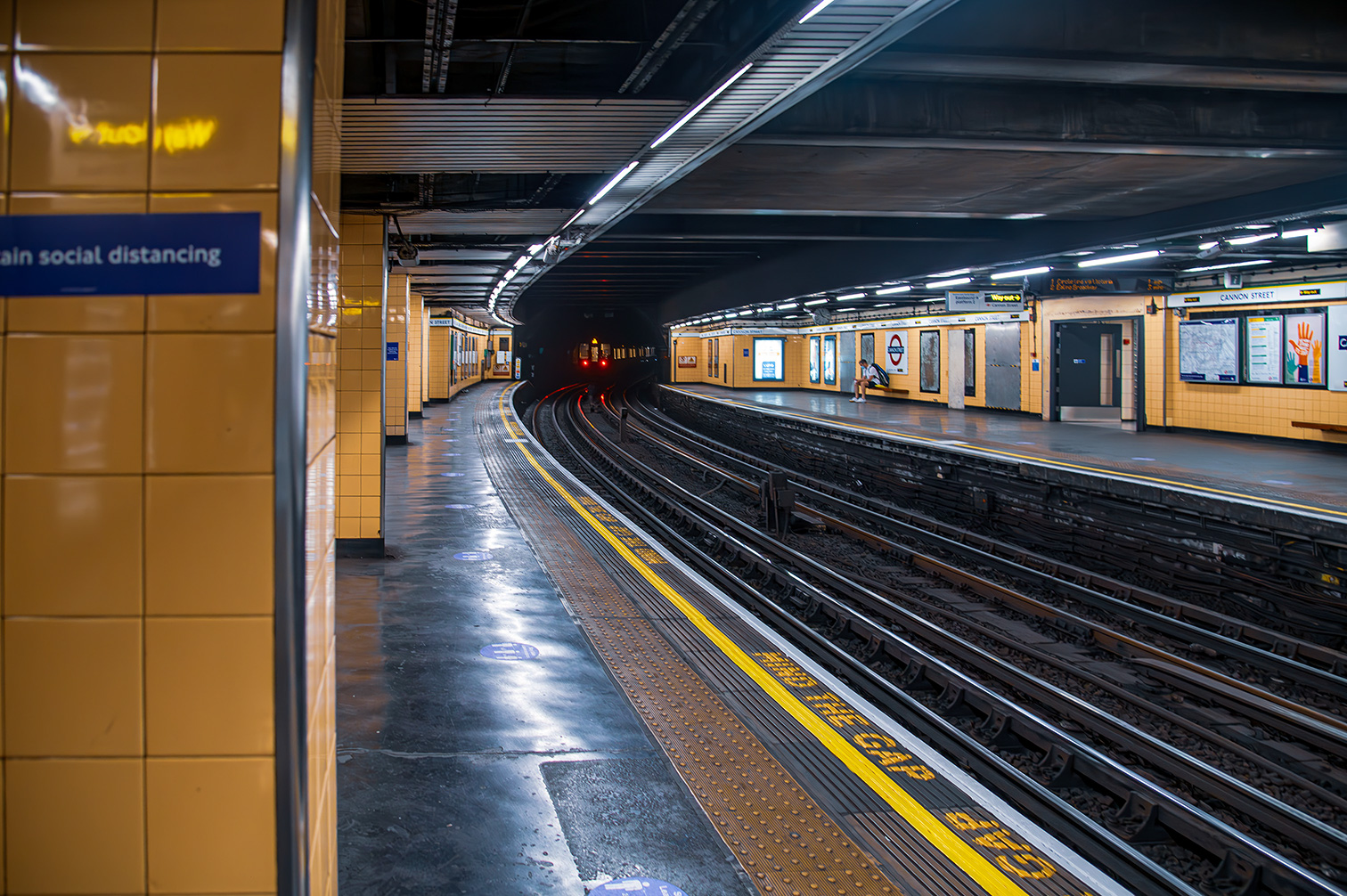
The image depicts an empty subway station with a curved platform and tracks extending into a dark tunnel. The station is well-lit with overhead lights, and there is a sign on the left wall reminding passengers to maintain social distancing. The platform has yellow safety lines and tactile paving for visually impaired individuals. The station appears clean and well-maintained, with various signs and advertisements on the walls.
Departing ‐ photo by ,
©www.mgaylard.co.uk.
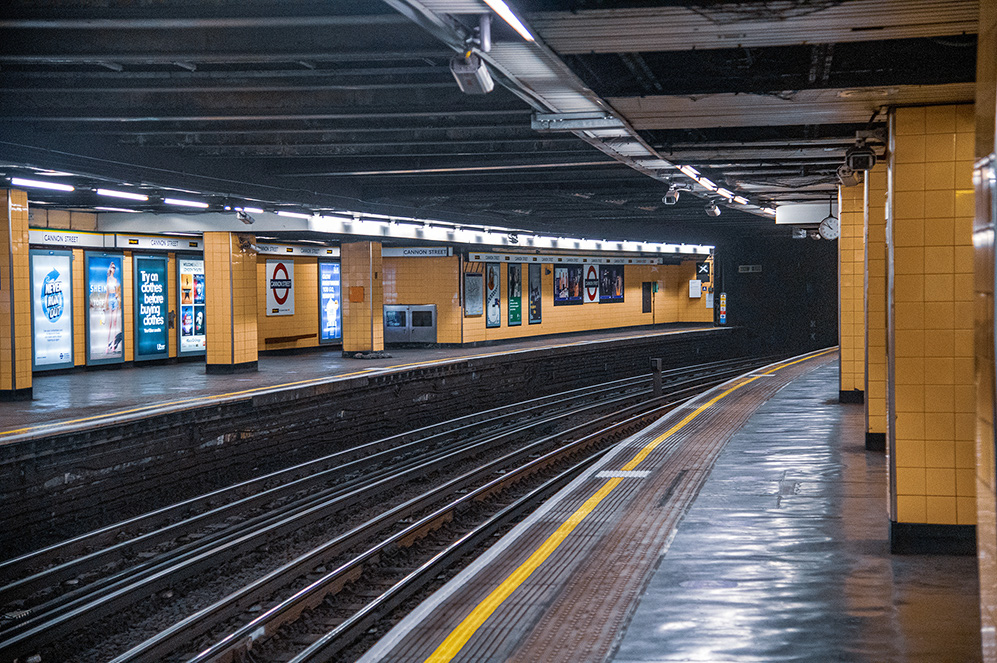
The image depicts an empty subway station with yellow-tiled walls, tracks in the center, and various advertisements on the platforms. The station appears clean and well-lit, with signs indicating it is the Cannon_Street_Station.
Empty Platforms ‐ photo by ,
©www.mgaylard.co.uk.
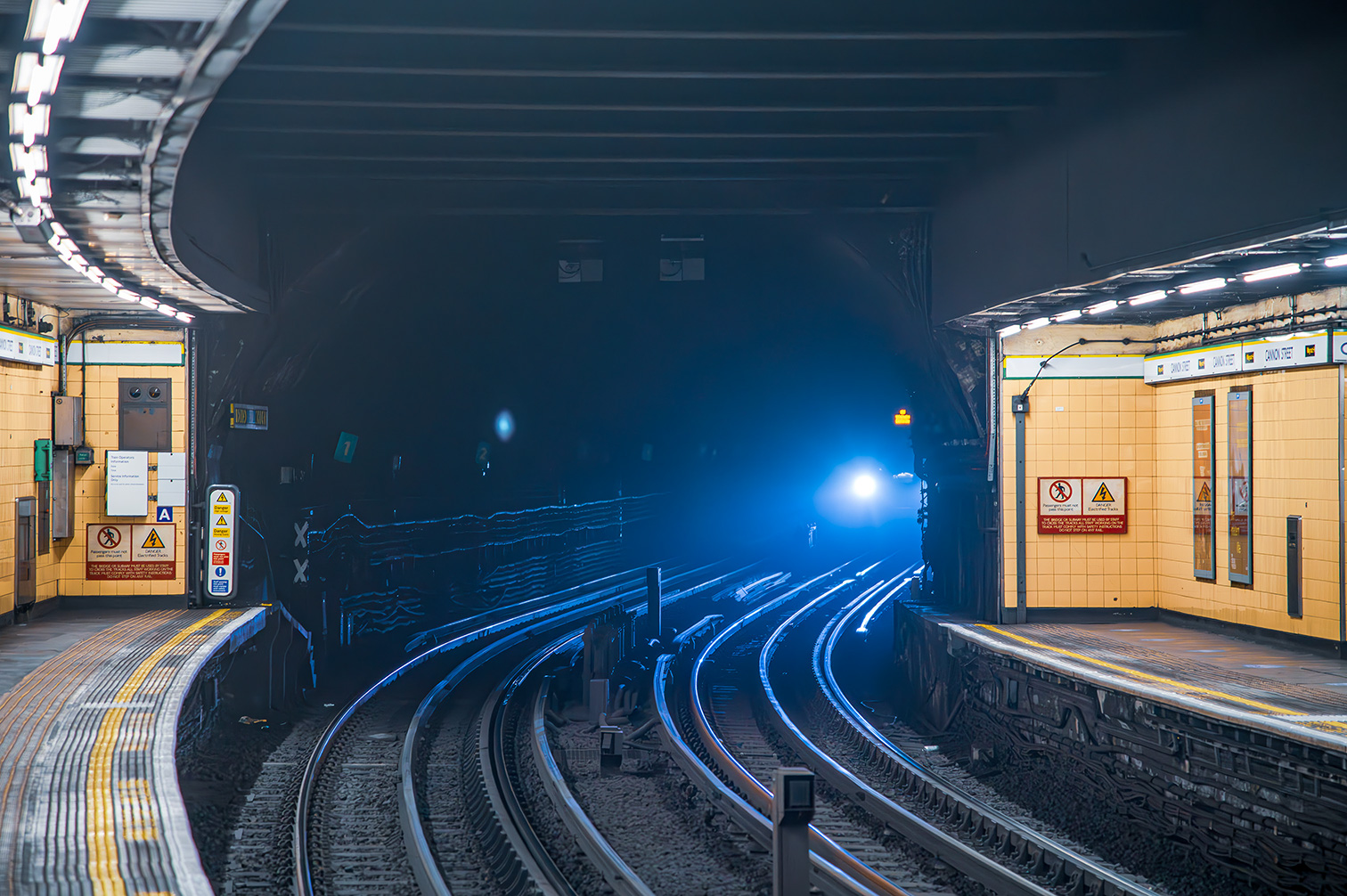
The image depicts an underground subway station with curved tracks extending into the distance. The station is well-lit with fluorescent lights on the ceiling, and there are various signs and notices on the walls. The tracks are bordered by yellow safety lines, and the station appears to be empty. The overall atmosphere is clean and orderly, with a sense of depth created by the converging tracks and the bright light at the end of the tunnel.
Approaching ‐ photo by ,
©www.mgaylard.co.uk.
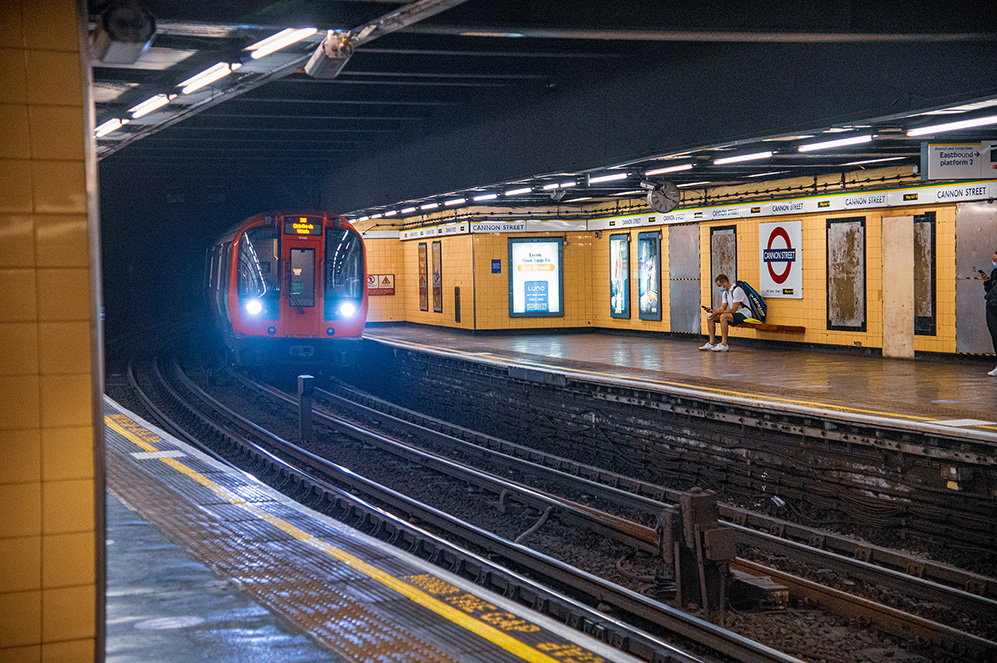
The image depicts a subway station with a train arriving at the platform. The station is identified as Cannon Street, part of the London Underground system. The platform is relatively empty, with only a few people visible. The station's design includes yellow tiles and typical underground signage. The train is red, indicating it is part of the London Underground network.
train arriving ‐ photo by ,
©www.mgaylard.co.uk.
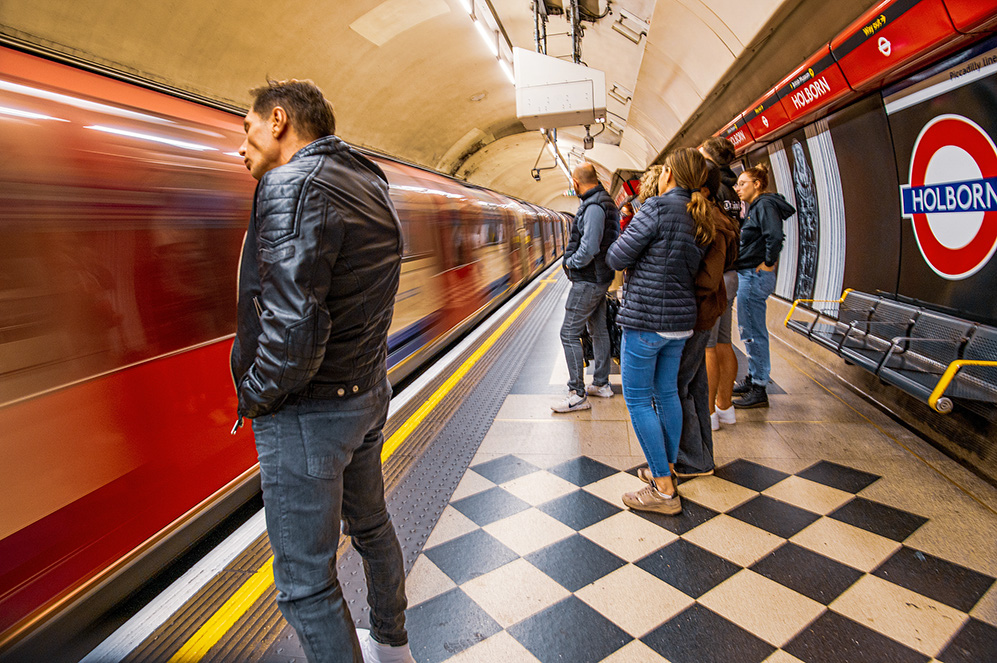
The image depicts a scene at the Holborn underground station. A train is moving quickly through the station, creating a blur on the left side of the image. Several people are waiting on the platform, some standing close to the edge and others near the benches. The station features a distinctive black and white checkered floor and a prominent Holborn station sign on the wall.
Holborn ‐ photo by ,
©www.mgaylard.co.uk.
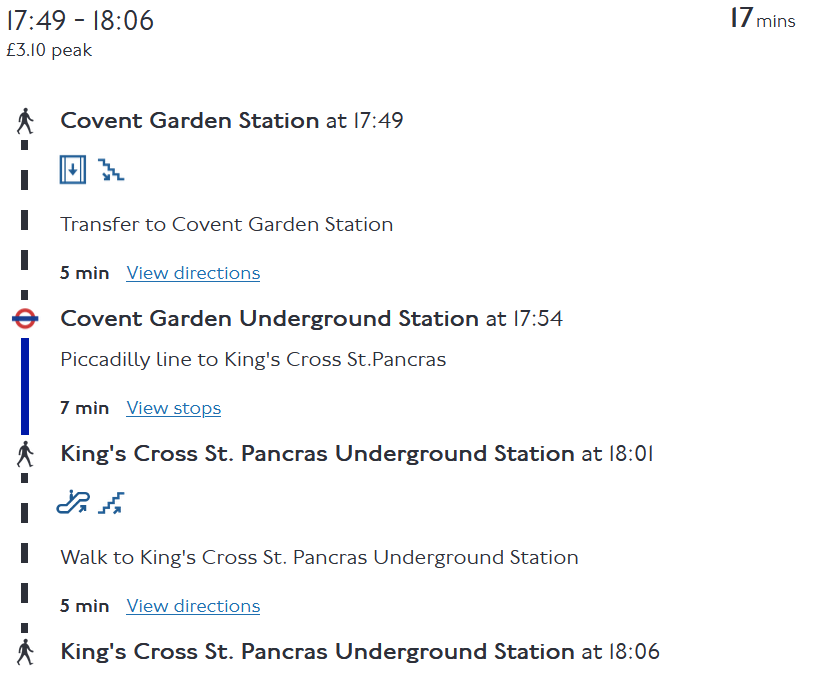
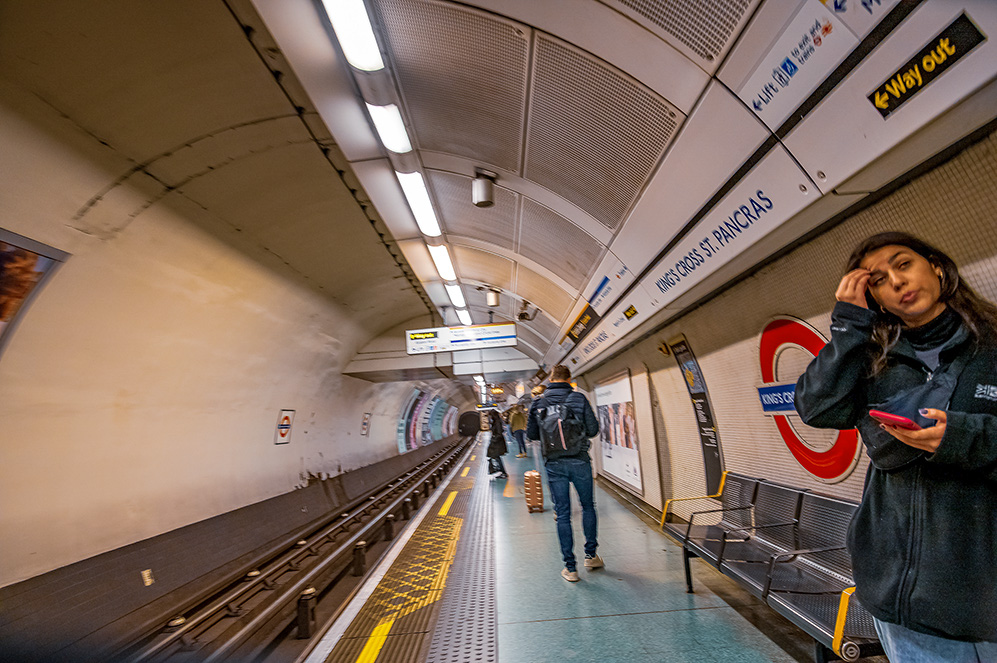
The image depicts a subway station platform, likely part of the London Underground system, as indicated by the iconic roundel sign. The station is Kings Cross St. Pancras, as seen from the signage. The platform is relatively empty, with a few people present. One person is walking away from the camera, while another person on the right is on the phone. The station is well-lit with fluorescent lights, and there are various advertisements and signs on the walls and ceiling.
Kings Cross St. Pancras ‐ photo by ,
©www.mgaylard.co.uk.
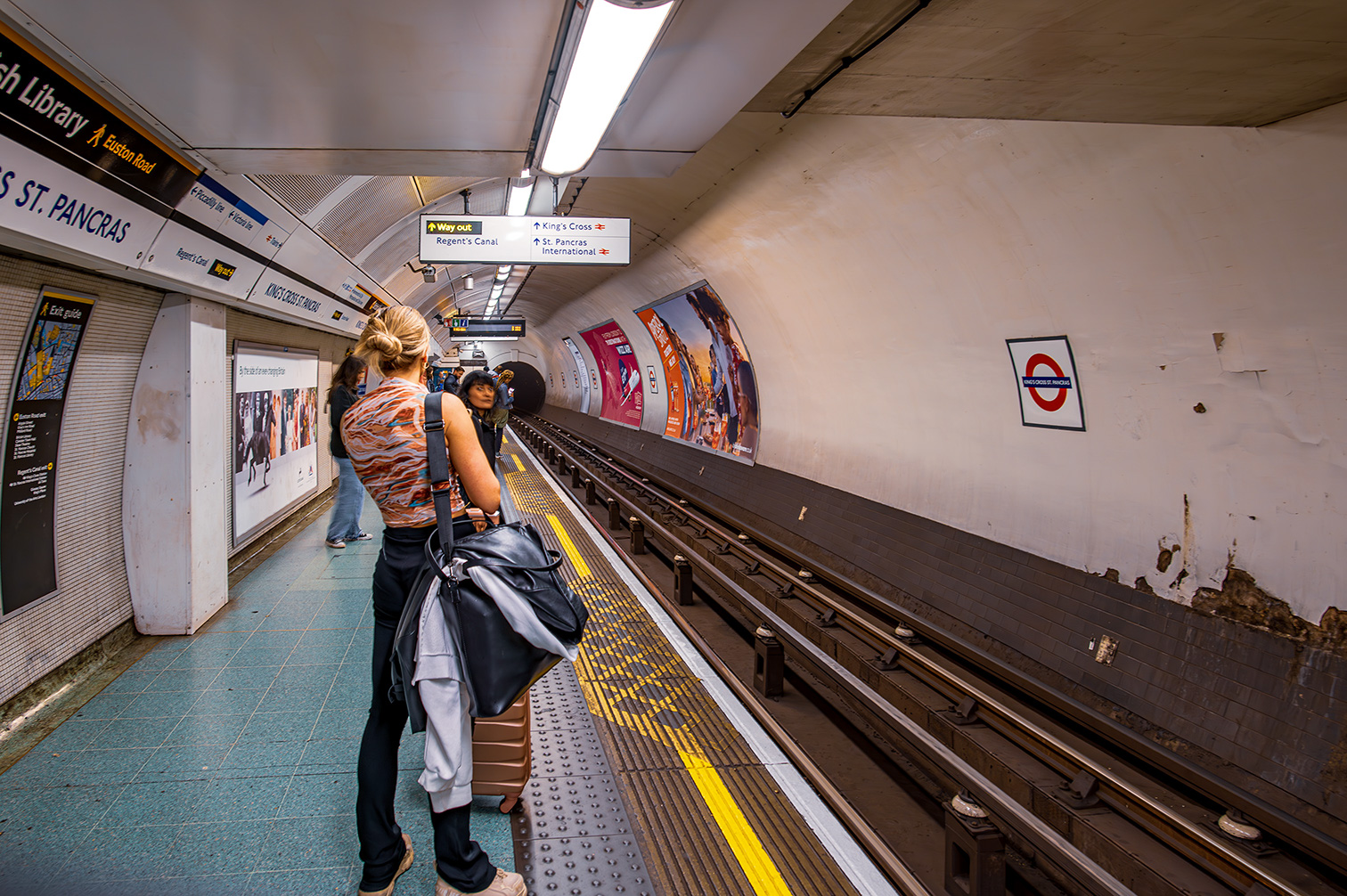
The image depicts a scene at a subway station. A train is arriving or departing, creating a motion blur effect. Several people are waiting on the platform, including a woman with luggage. Signage indicates directions to various locations such as King's Cross, St. Pancras International, and Regent's Canal. The station appears to be part of an urban public transportation system.
a motion blur effect ‐ photo by ,
©www.mgaylard.co.uk.
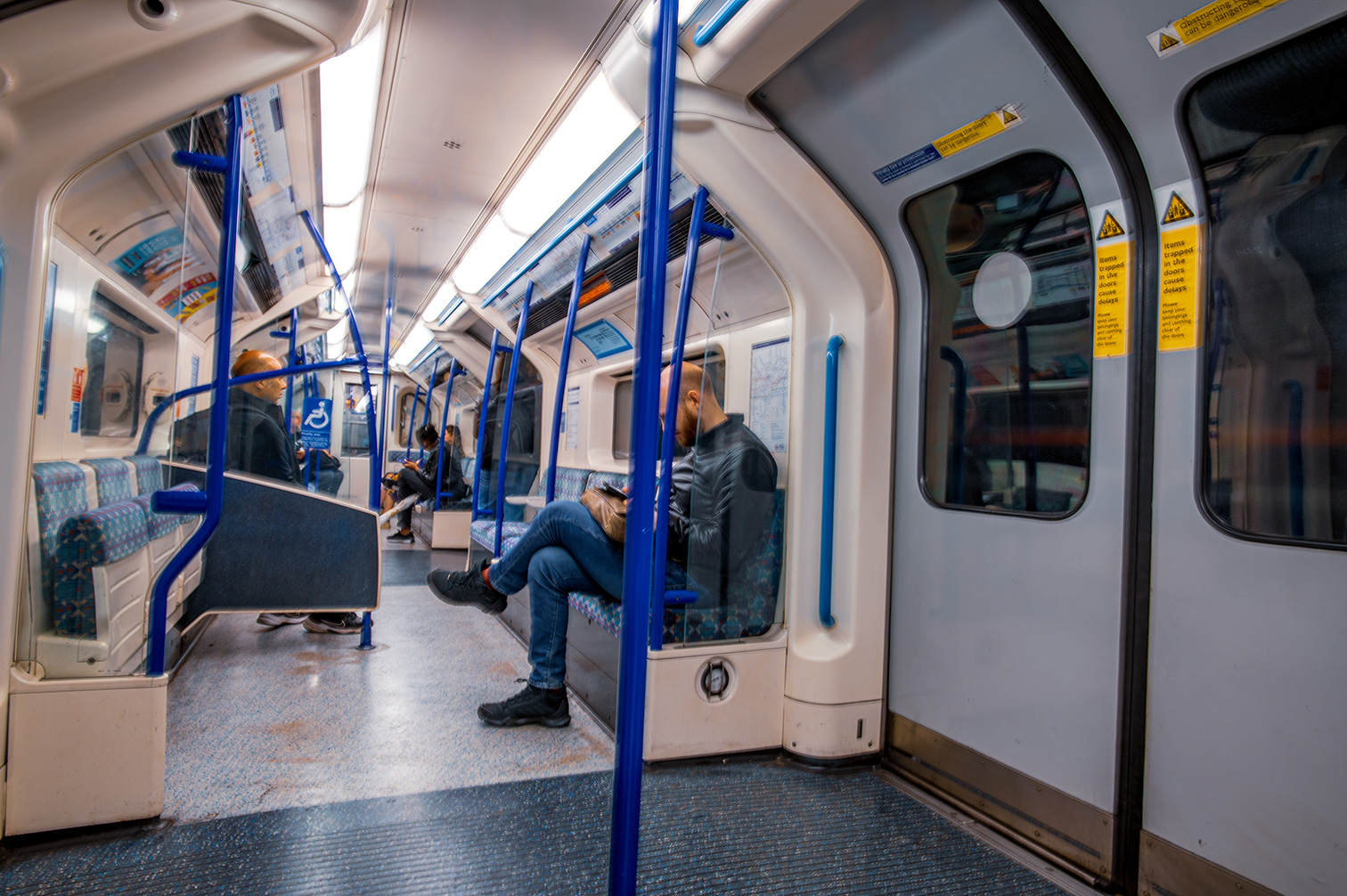
The image depicts the interior of a modern subway train. The train is relatively empty, with only a few passengers visible. The passengers are seated and appear to be engaged in various activities such as looking at their phones or resting. The train has blue handrails and seats with a patterned design. Safety notices are prominently displayed on the walls near the doors.
Victoria Line ‐ photo by ,
©www.mgaylard.co.uk.
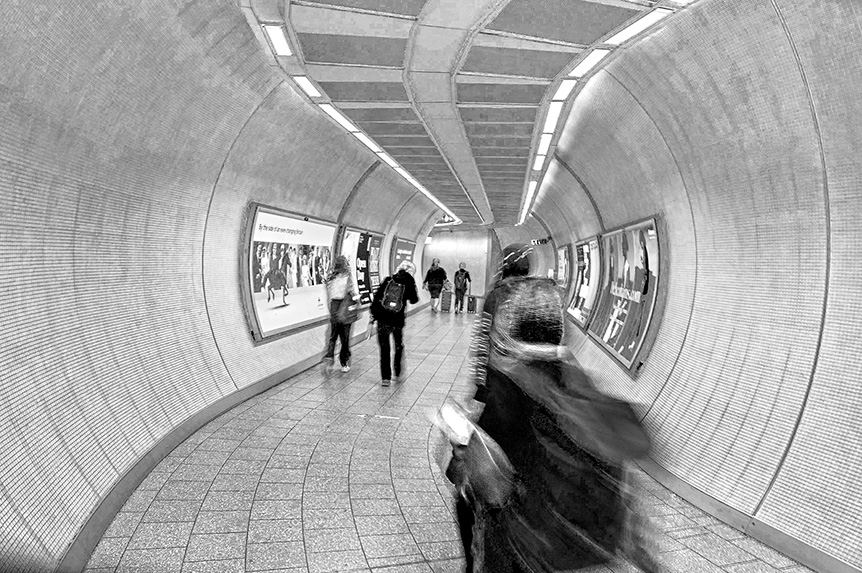
The image depicts a tunnel-like corridor with people walking through it. The corridor has a curved ceiling and walls lined with advertisements. The floor is tiled, and the scene is captured in black and white. The perspective is from someone walking through the corridor, with a slight motion blur effect. The people in the image appear to be in motion, heading towards the end of the corridor.
people On The Move ‐ photo by ,
©www.mgaylard.co.uk.
he image depicts a subway station with a train arriving or departing. The station features tiled walls with advertisements, a platform marked with safety tiles, and overhead lighting. The train is in motion, creating a sense of speed. The station appears clean and well-maintained, with clear signage and a relatively empty platform.
a sense of speed ‐ photo by ,
©www.mgaylard.co.uk.
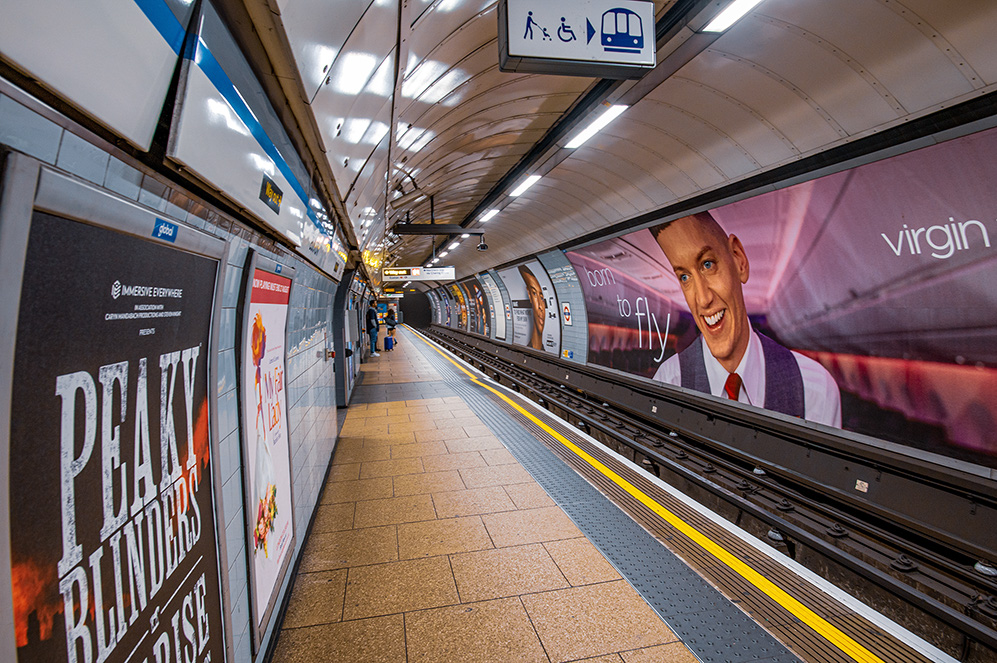
The image shows a subway platform with various advertisements on the walls. One prominent advertisement is for the musical 'Peaky Blinders the Musical' and another is for Virgin, featuring a smiling man with the text 'born to fly'. The platform is well-lit with overhead lights and has a sign indicating accessibility features. The platform appears to be clean and orderly, with a yellow safety line along the edge.
One advertisement is for the musical 'Peaky Blinders the Musical' and another is for Virgin ‐ photo by ,
©www.mgaylard.co.uk.
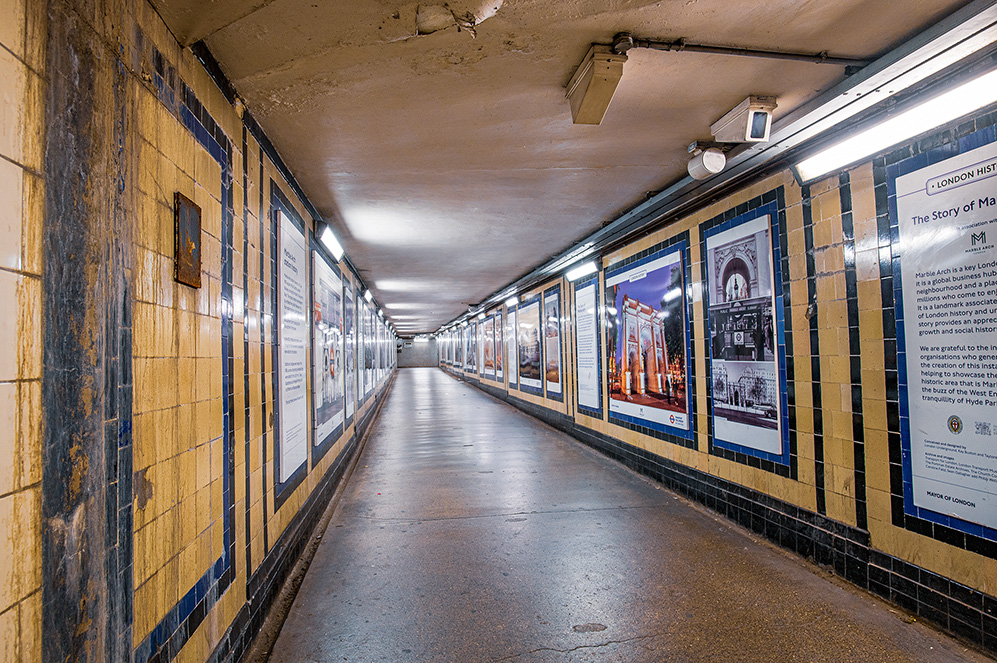
The document describes the history and significance of the Marble Arch, a key London landmark. It highlights the arch's role in celebrating major events and its importance as a symbol of London's history and culture. The text also mentions the creation of a community-based project to showcase the area's uniqueness and the support received from various organizations and individuals.
Underpass ‐ photo by ,
©www.mgaylard.co.uk.
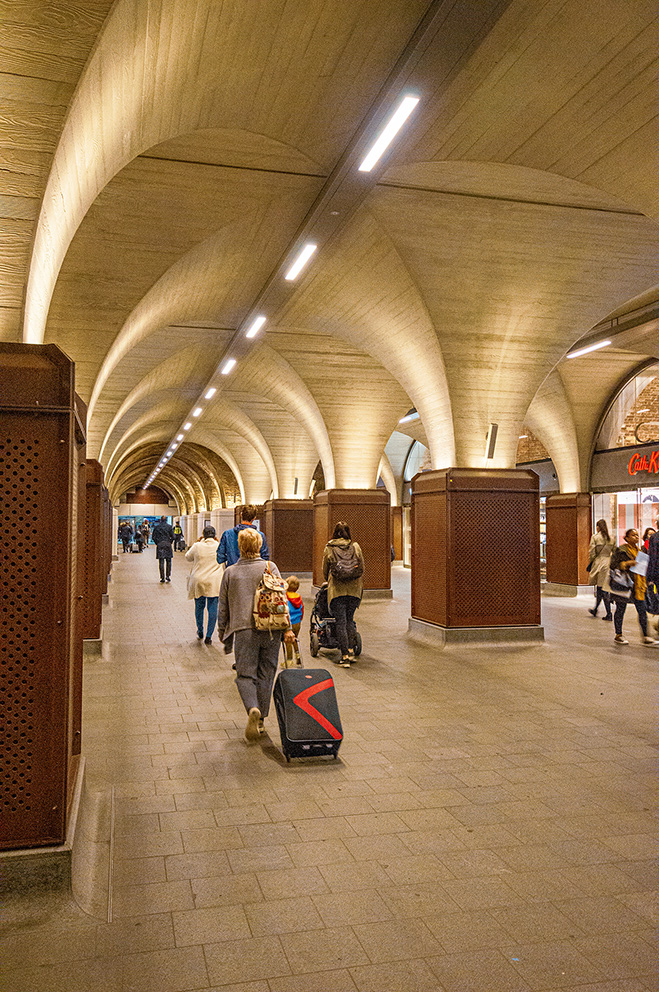
The image depicts a bustling underground passageway with arched ceilings and modern lighting. People are seen walking in both directions, some pulling luggage, indicating it might be a subway or metro station. The walls are adorned with wooden panels, and there are various shops and kiosks along the sides. The overall atmosphere is lively, with individuals engaged in their daily routines.
London Bridge ‐ photo by ,
©www.mgaylard.co.uk.
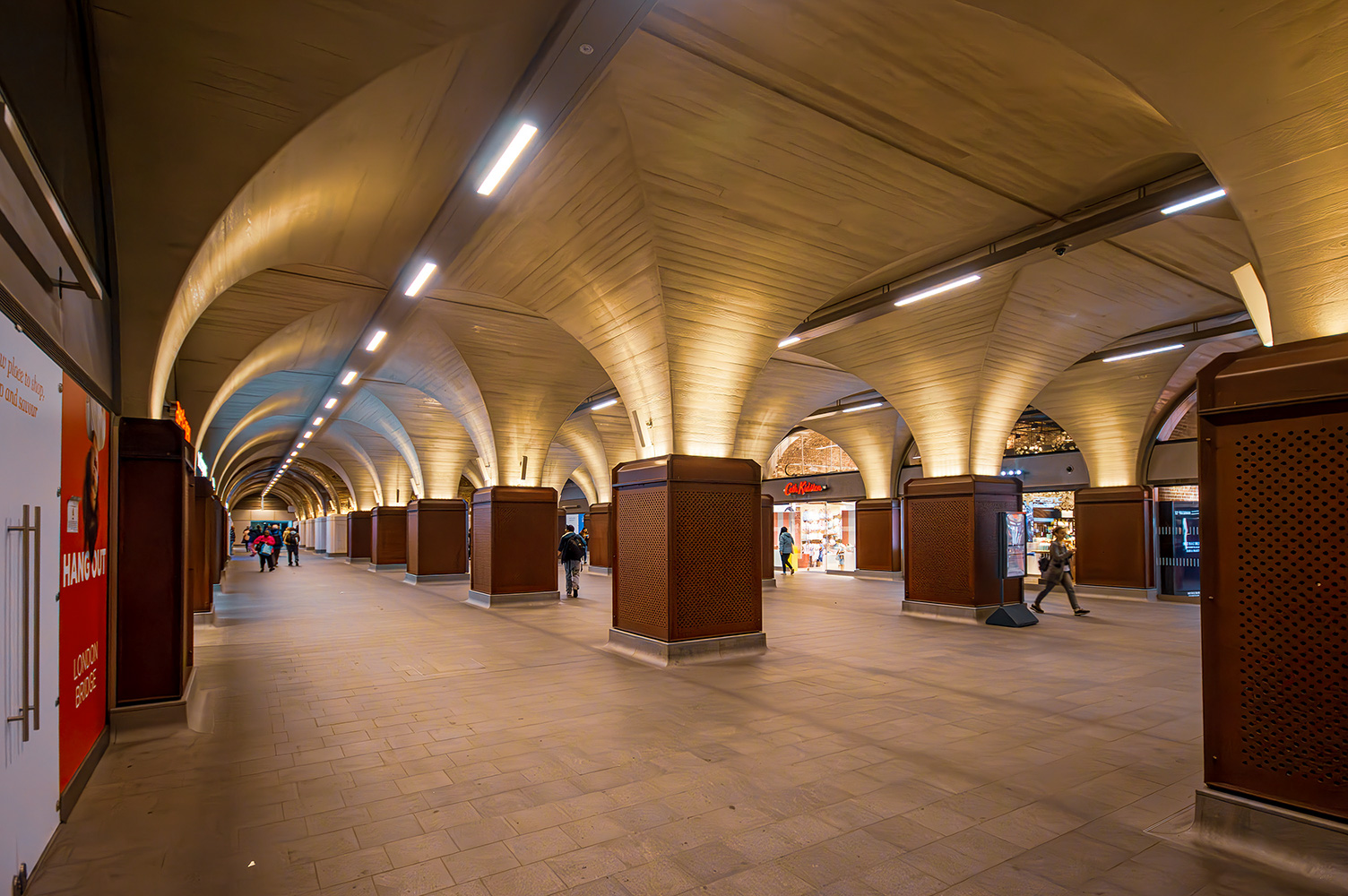
The image depicts an indoor shopping arcade with a series of arched ceilings lined with wooden panels and illuminated by linear lights. The floor is tiled, and there are several large, square pillars with textured surfaces. The arcade features various shops, including one with a prominent red sign that reads 'HAY.' The space is relatively empty, with only a few people visible in the distance, suggesting a quiet moment in the shopping area.
indoor shopping arcade ‐ photo by ,
©www.mgaylard.co.uk.
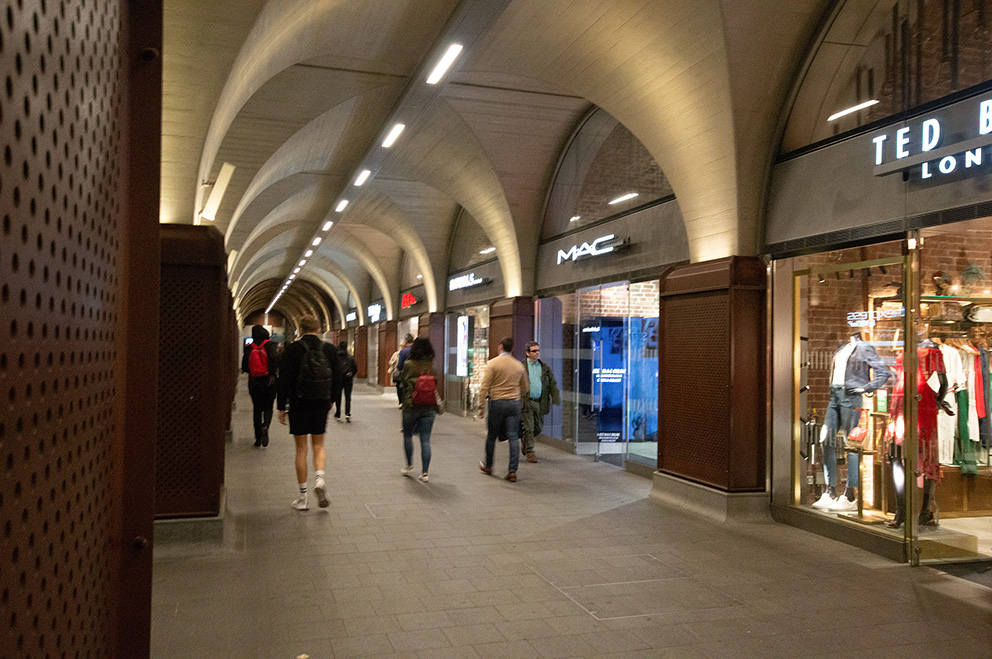
The image depicts an indoor shopping arcade with arched ceilings and various storefronts. People are walking through the corridor, and there are visible signs for stores such as MAC and Ted Baker London. The arcade is well-lit with modern lighting fixtures, and the overall atmosphere appears to be bustling yet orderly.
The arcade is well-lit with modern lighting ‐ photo by ,
©www.mgaylard.co.uk.

The London Underground

The London Underground, commonly known as the Tube, is the world’s oldest underground railway network, opening in 1863 with the Metropolitan Railway. It has since expanded into an extensive system of 11 lines, serving 272 stations and over 400 kilometers of track, connecting central London with its suburbs and beyond. The Underground played a pivotal role in shaping the city’s growth, enabling mass transit and influencing urban development, while also serving as a vital shelter during World War II. Known for its iconic roundel logo, distinctive map design by Harry Beck, and deep-level tunnels, the Tube remains a symbol of London’s ingenuity and resilience, carrying millions of passengers daily and continuously evolving with modern upgrades and expansions.

Transport for London

Transport for London (TfL) is the integrated transport authority responsible for most of the capital’s public transport network, including the London Underground (Tube), buses, trams, Overground, DLR (Docklands Light Railway), Elizabeth Line, river services, and Santander Cycles (boris bikes). Established in 2000, TfL oversees a system that facilitates over 27 million journeys daily, connecting millions of residents, commuters, and visitors across Greater London. It is renowned for its iconic red buses, the world-famous Tube, and innovations like contactless payment (Oyster and bank cards), which have revolutionized urban transit. TfL also plays a key role in managing London’s roads, promoting walking and cycling, and supporting the city’s ambition for sustainable, low-emission transport. Its operations are vital to London’s economy, mobility, and environmental goals.

Journey Planner

Tube and Rail Map

Bus Maps

Text generated by Mistral AI
To the top
Powered by w3.css. The images are all stored on link to www.gaylard.co.uk Photostream on Flickr   This website is hosted by link to 123Reg Web Hosting