HOME Places Home ABOUT CONTACT

HMS Belfast, Imperial War Museum

locale

The Queen's WalkSouthwarkLondon,   United Kingdom

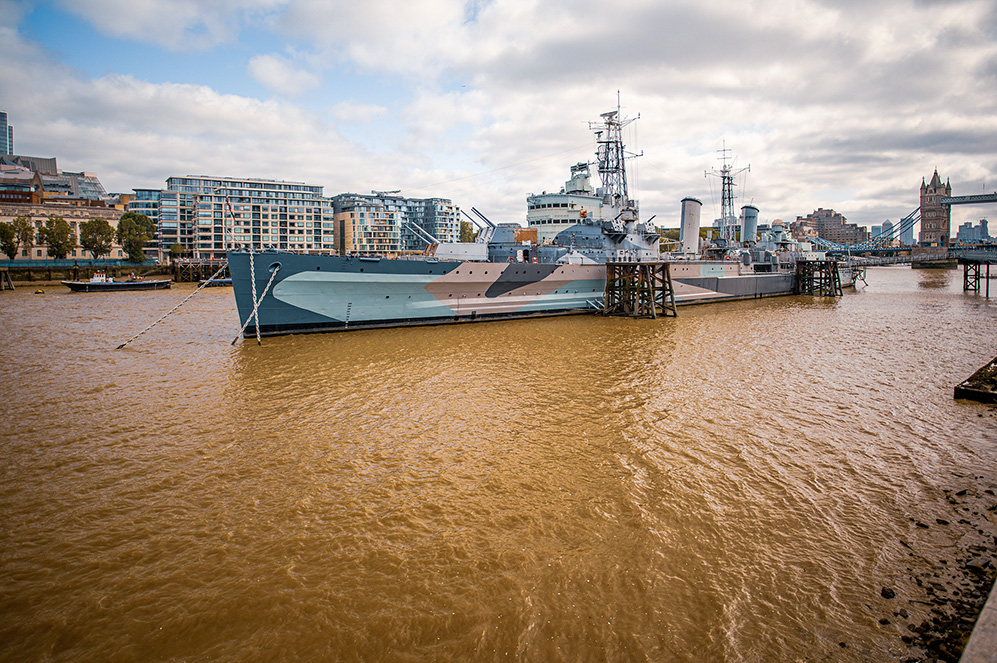
HMS Belfast is a Town-class light cruiser that served in the Royal Navy during World War II and beyond. Launched in 1938, she is now permanently moored on the River Thames in London as a branch of the Imperial War Museum. HMS Belfast offers visitors a unique opportunity to explore nine decks of this historic warship, including the bridge, engine rooms, and gun turrets, providing an immersive experience of naval life during the 20th century.
The image shows a large, camouflage-painted naval ship docked on the River Thames in London. The ship is moored near modern buildings and the iconic Tower Bridge, which is visible in the background. The sky is partly cloudy, and the water of the river appears brown and murky. The ship appears to be a museum or historical exhibit, as it is secured to the shore with wooden supports.
HMS Belfast ‐ photo by ,
©www.mgaylard.co.uk.
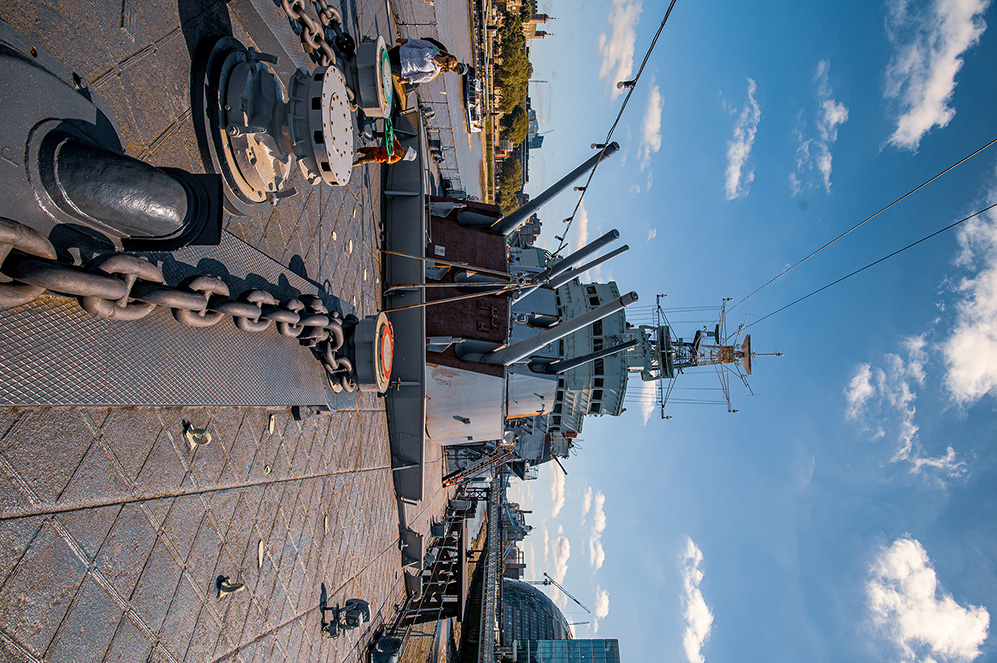
The image shows a large naval ship docked at a pier. The ship is equipped with various antennas and communication equipment, and its deck is visible with several features like lifebuoys and anchor chains. The sky is clear with some clouds, and the pier is made of stone with some people walking around. In the background, there are buildings and trees, indicating an urban setting near a body of water.
Main Guns ‐ photo by ,
©www.mgaylard.co.uk.
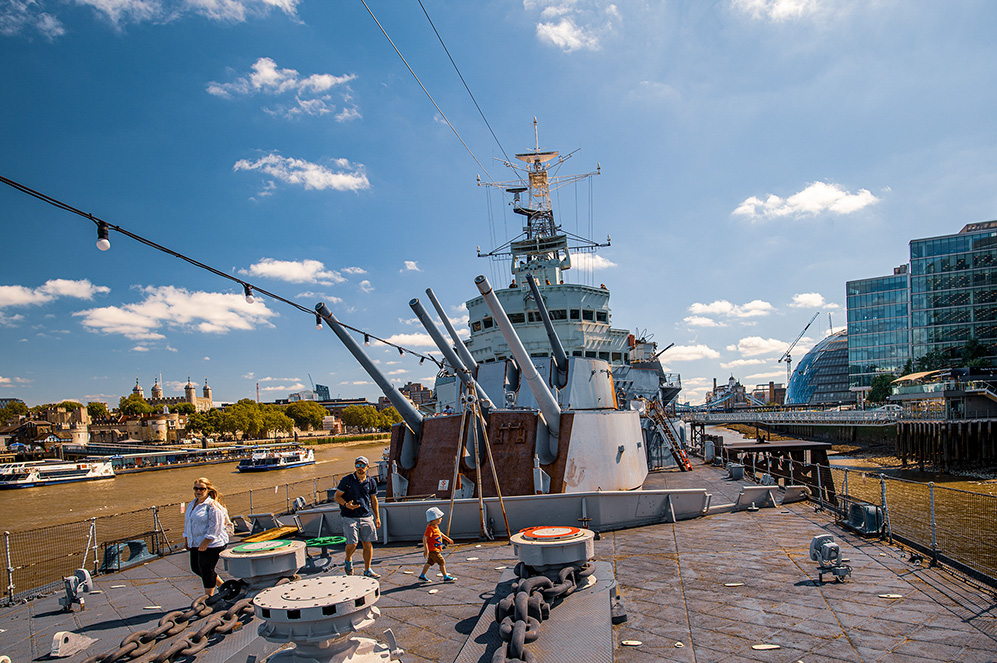
The image depicts a large naval ship docked at a harbor with several people walking on its deck. The ship is equipped with various antennas and equipment, and the background features a cityscape with modern buildings and historical structures, including a dome-shaped building and a bridge. The sky is clear with scattered clouds, and the overall scene suggests a sunny day at a busy waterfront.
Fo'csle deck and "A" Gun Turret ‐ photo by ,
©www.mgaylard.co.uk.
The image depicts a section of a naval ship docked along a river, with a prominent turret housing large guns. The ship is moored in an urban setting, with modern buildings and a bridge visible in the background. The deck is clear and well-maintained, with a few items like a trash bin and bollards present. The sky is clear with some clouds, suggesting a bright and sunny day. The overall scene suggests a historical or museum ship on display in a city.
Fo'csle deck and "A" Gun Turret ‐ photo by ,
©www.mgaylard.co.uk.
The image depicts the interior of a military tank, showing the turret mechanism and main gun. The view is from above, looking down into the turret, revealing various mechanical components and the complex structure of the tank's armament system.
Inside a Gun Turret ‐ photo by ,
©www.mgaylard.co.uk.
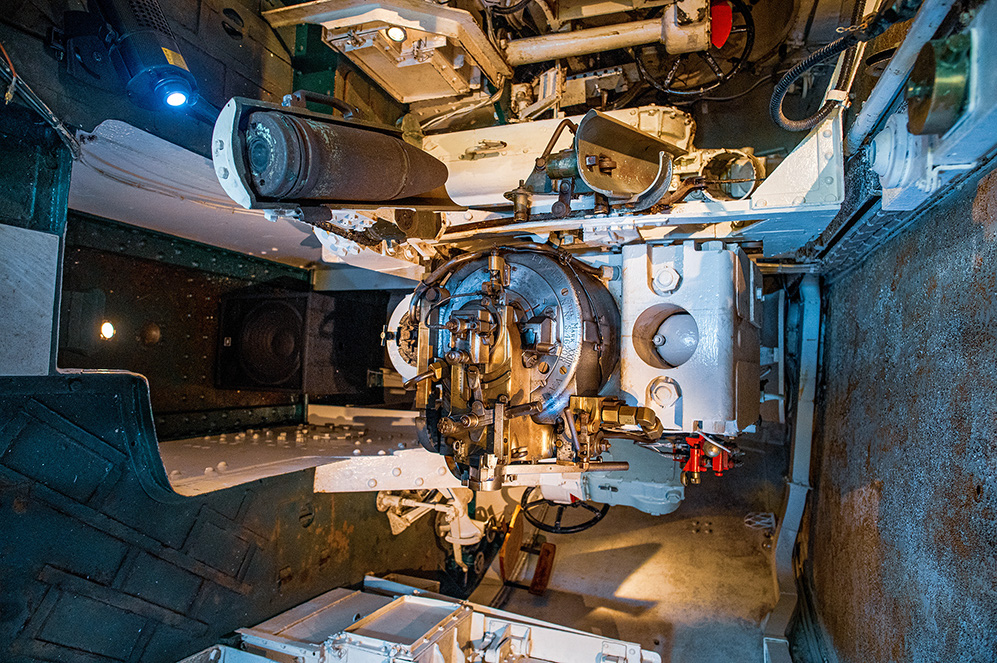
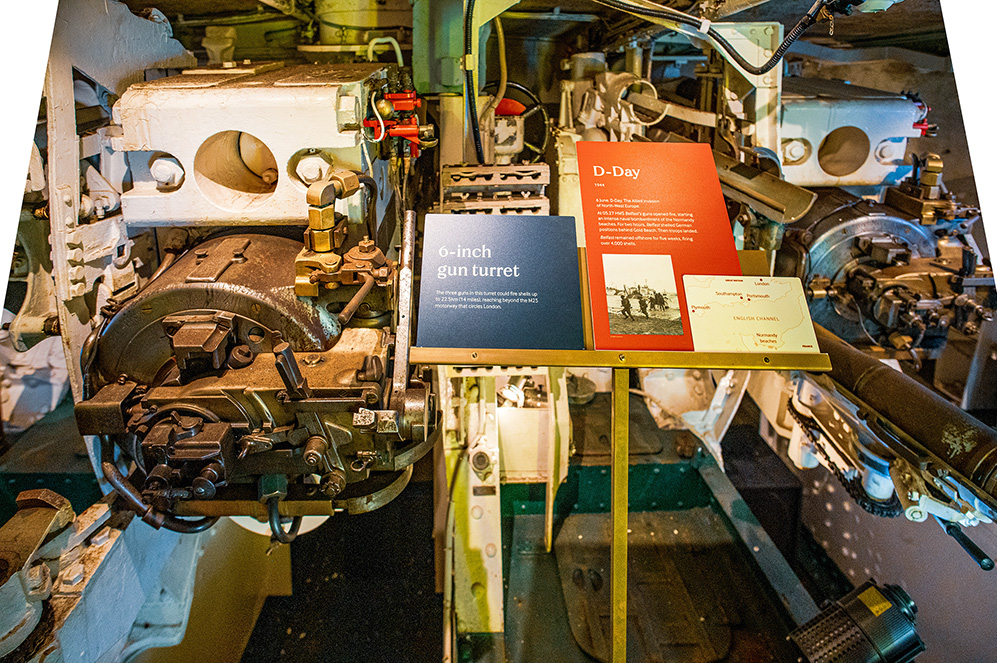
The image shows the interior of a military vessel, specifically focusing on a 6-inch gun turret. There are informational placards describing the turret and its historical context, including its use during D-Day. The turret is part of a museum exhibit, providing details about its operation and significance in naval history.
Inside a Gun Turret ‐ photo by ,
©www.mgaylard.co.uk.
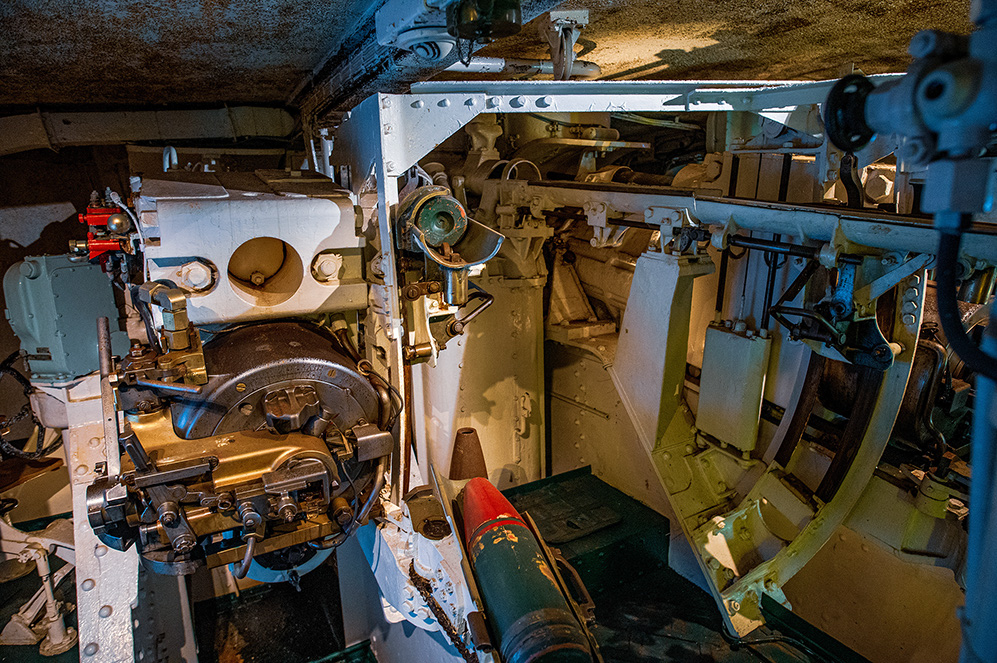
The image shows the interior of a military tank, focusing on the complex machinery and mechanisms involved in operating the main cannon. Various components such as the breech, loading mechanisms, and hydraulic systems are visible, highlighting the intricate engineering involved in tank design. The image provides a detailed view of the mechanical and operational aspects of a tank's main armament system.
Inside a Gun Turret ‐ photo by ,
©www.mgaylard.co.uk.
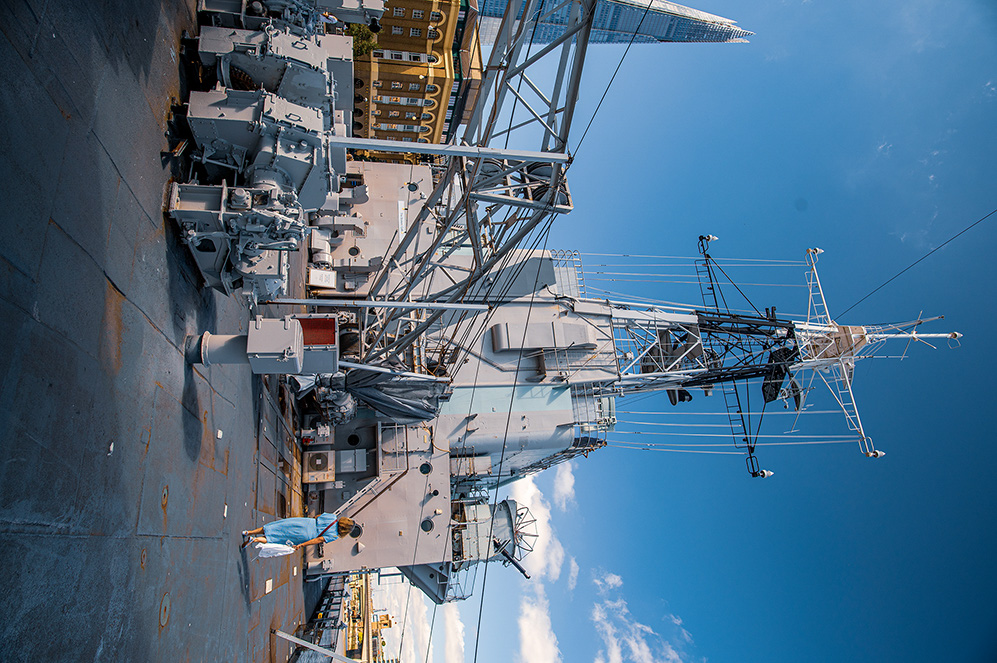
The image shows an aerial view of a naval ship docked at a port. The ship is equipped with various antennas and communication equipment, and a tall structure, possibly a mast or radar tower, rises from its deck. The surrounding area includes buildings and a clear blue sky with a few clouds. The ship appears to be in a well-maintained condition, indicating it is either in active service or undergoing maintenance
HMS Belfast Superstructure ‐ photo by ,
©www.mgaylard.co.uk.
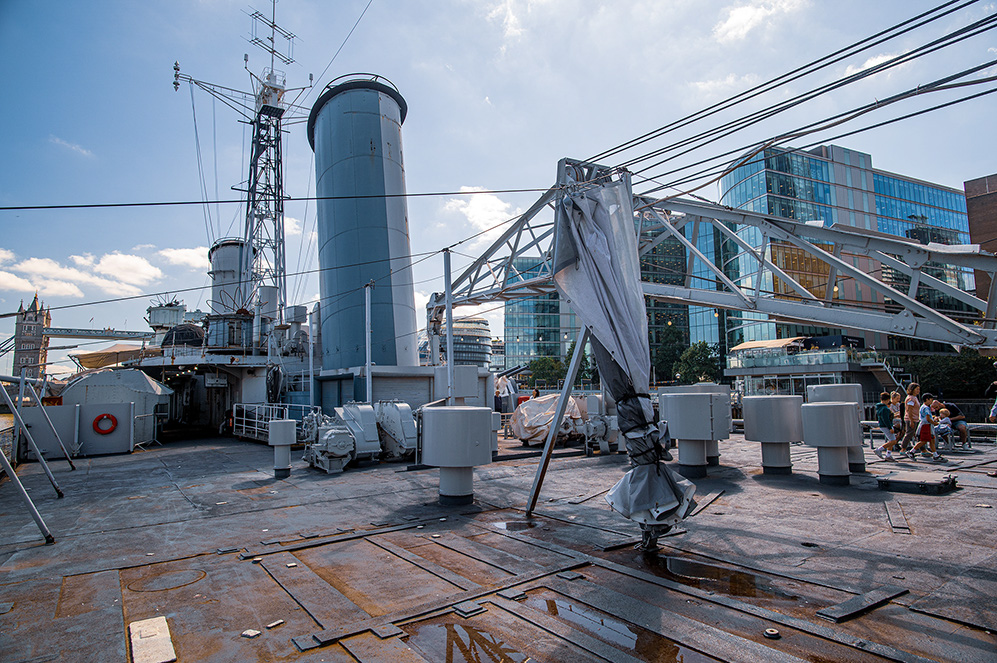
The image depicts the deck of a large ship, likely a museum ship given the modern buildings in the background and the presence of visitors. The deck features various maritime equipment, including a large crane covered with a tarp, several cylindrical structures, and a complex network of wires and rigging. The ship's deck is made of metal plates, some of which appear rusted. The background shows contemporary urban buildings, suggesting the ship is docked in a city setting.
a large crane ‐ photo by ,
©www.mgaylard.co.uk.
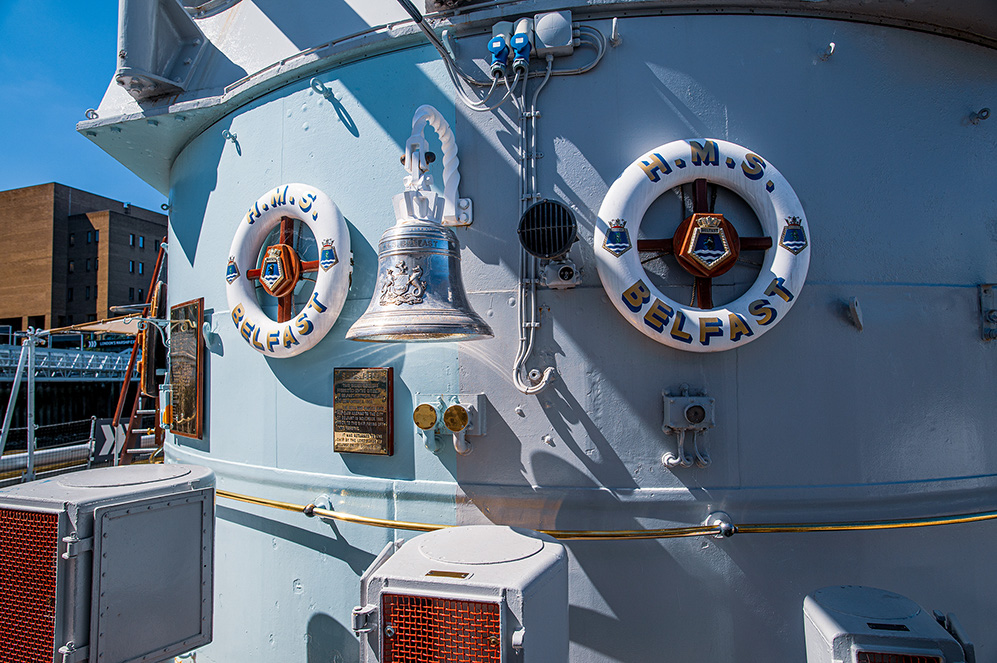
The image shows a close-up view of the side of a ship named H.M.S. Belfast. The ship's name is prominently displayed on two lifebuoys. There is a large, ornate bell mounted on the ship's side, and several plaques and insignias are visible, indicating the ship's identity and possibly its achievements or history. The ship appears to be docked, with some buildings visible in the background.
H.M.S. Belfastt ‐ photo by ,
©www.mgaylard.co.uk.
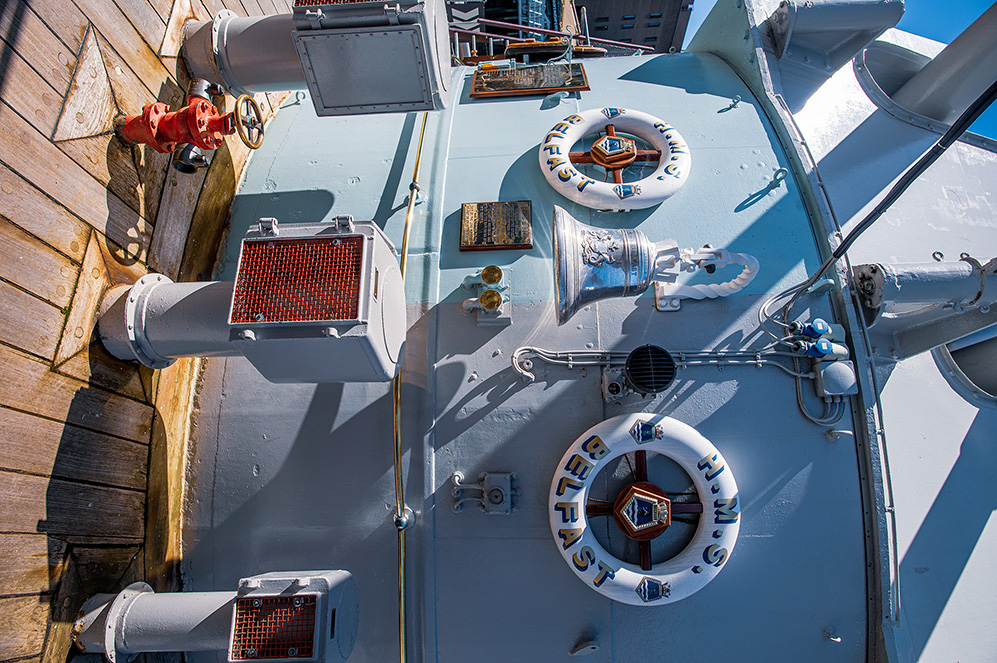
The image shows the deck of a ship, specifically the USS Iowa Museum, as indicated by the lifebuoys with 'USS Iowa' inscribed on them. The deck features various equipment, including large gray pipes, a red fire hydrant, and a white box with a grid pattern. There is also a plaque and a sculpture of an eagle, adding to the historical and maritime ambiance of the scene.
View of iwmbelfast ‐ photo by ,
©www.mgaylard.co.uk.
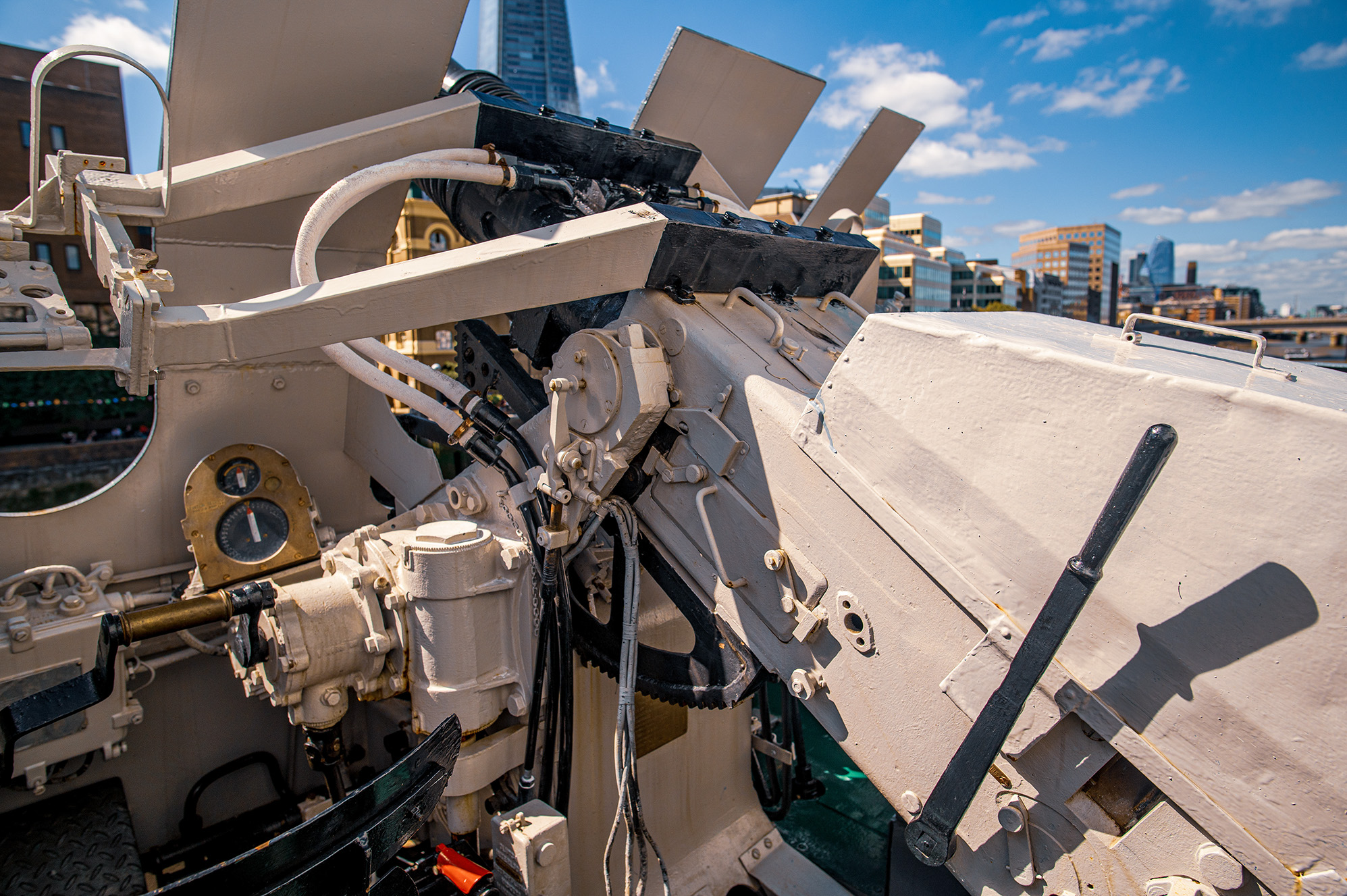
The image shows a close-up view of the turret and gun mechanism of a military tank. The tank is beige and black, with various mechanical components and instruments visible, including a pressure gauge, hydraulic systems, and control levers. The background features a cityscape with modern buildings under a partly cloudy sky.
HA/LA Guns ‐ photo by ,
©www.mgaylard.co.uk.
“HA / LA” means High Angle and Low Angle — shorthand for gun elevation modes: HA for high-angle (anti-aircraft) fire and LA for low-angle (surface/ship) fire.
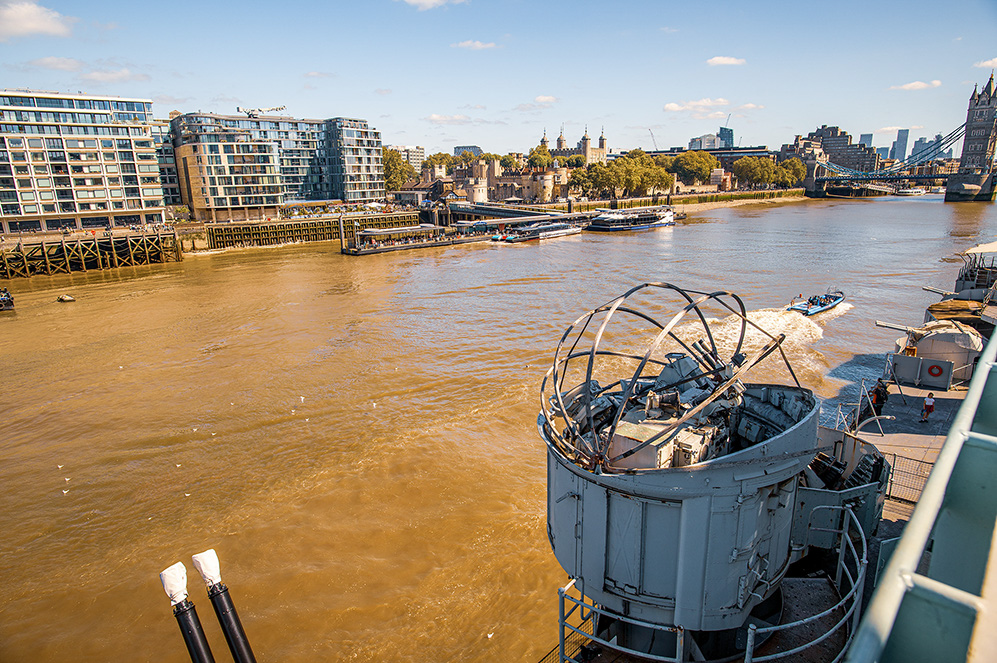
The image shows a view from the deck of a ship on a river, likely a historic or military vessel given the visible structures and cannons. The river is flanked by modern buildings and bridges, suggesting an urban setting. The sky is clear with some clouds, indicating a bright day. Other boats and watercraft are visible on the river, adding to the bustling atmosphere. The overall scene combines elements of history with modern city life.
View from the Admiral's Bridge ‐ photo by ,
©www.mgaylard.co.uk.
The image shows an aerial view of a large ship docked near a modern cityscape. The ship is equipped with various antennas and radar equipment. People are seen walking on the deck and along the riverside promenade. The sky is clear with a few clouds, and notable city buildings are visible in the background.
Aft Funnel ‐ photo by ,
©www.mgaylard.co.uk.
The image shows an aerial view of a naval ship docked at a port. The ship is equipped with two large missile launchers positioned in the center of the deck. The surrounding area includes various structures and equipment, likely part of the port's infrastructure. The water in the dock is a muddy brown color, and the ship's deck is mostly clear, with some equipment and personnel visible.
AA Guns ‐ photo by ,
©www.mgaylard.co.uk.
The image depicts a scenic view of the River Thames in London, featuring modern buildings on the left, a historic ship with a large radar structure in the foreground, and the iconic Tower Bridge in the background. The river is bustling with activity, including several boats navigating the waterway. The overall scene combines elements of historical and contemporary architecture, highlighting the blend of old and new that characterizes London.
Air Defence Gunst ‐ photo by ,
©www.mgaylard.co.uk.
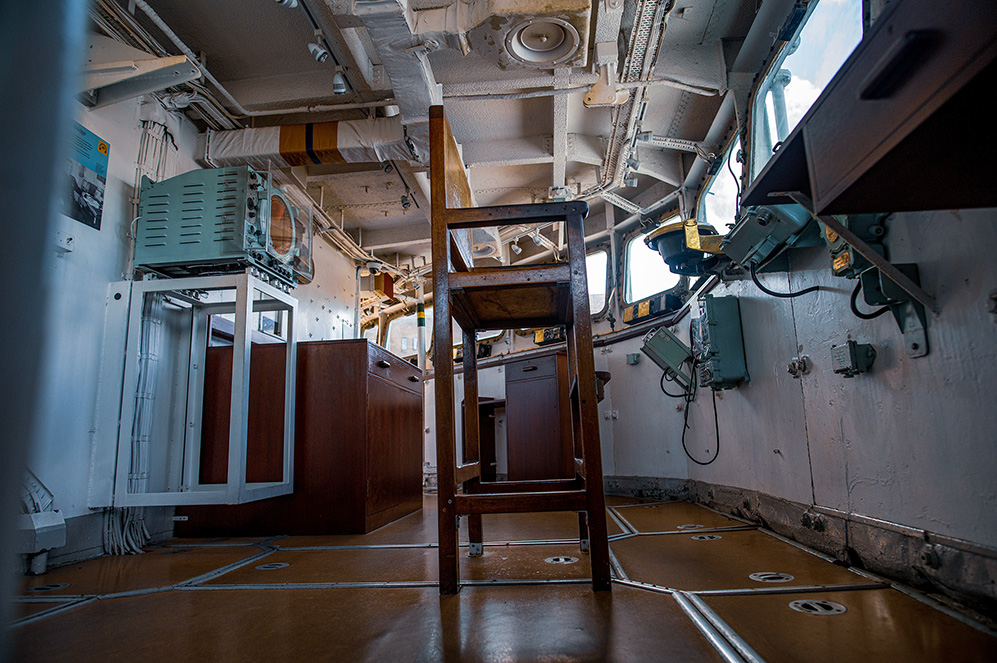
The image depicts the interior of a room, likely on a ship or a vessel. The room contains various equipment and machinery, with visible wiring and pipes along the walls and ceiling. There is a wooden chair in the center of the room, and the overall environment appears to be utilitarian and functional, designed for operational purposes.
Admiral's Bridge ‐ photo by ,
©www.mgaylard.co.uk.
The image shows a control room with various nautical instruments, including a large circular chart, communication devices, and a blackboard with various nautical terms and data. The room appears to be part of a ship's navigation or operations center, equipped for monitoring and coordinating fleet activities.
The Compass Bridge ‐ photo by ,
©www.mgaylard.co.uk.
The image shows a close-up of a control panel on a piece of machinery. The panel includes a dial labeled 'RUNNING SPEED RANGE' with settings for 'ON', 'OFF', and 'STARTING ONLY'. There are various technical details such as 'GROSS ANGLE OF SWEEP' and 'UNIT SERIAL NO.' visible. The machinery is identified as a 'MARINE WINDSCREEN WIPER' made in England by The Houdaillie Co. Ltd. in Twickenham, England.
Marine Windscreen Wiper ‐ photo by ,
©www.mgaylard.co.uk.
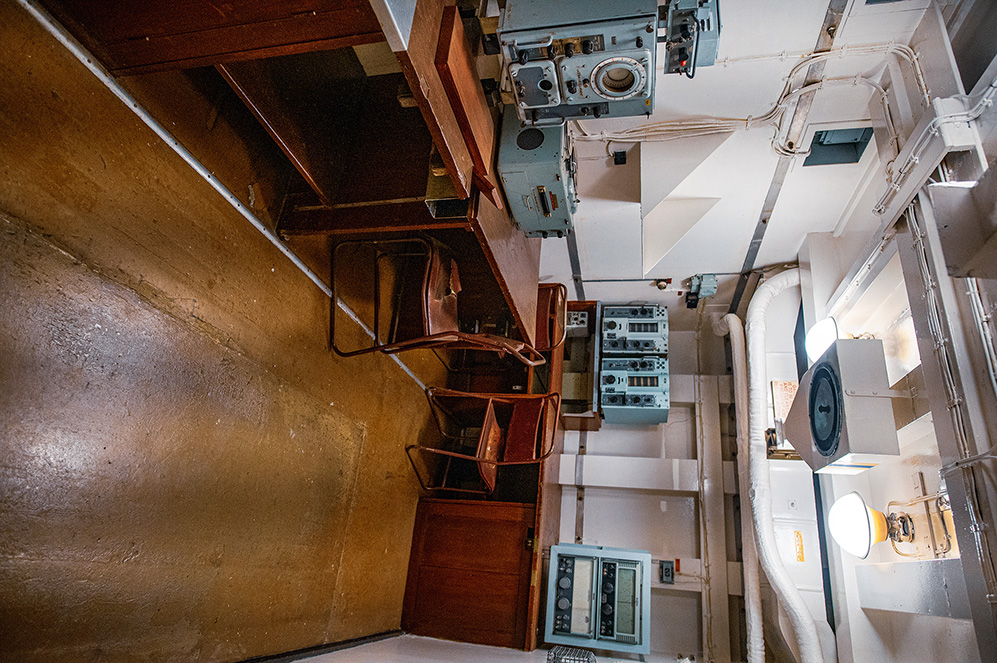
The image depicts a narrow, confined space with a steep staircase leading upwards. The walls are metallic, suggesting an industrial or maritime setting. On the left side, there are wooden benches or seats, while the right side is filled with various electronic equipment and control panels. The ceiling has exposed pipes and wiring, and there is a small, enclosed area at the bottom of the stairs that appears to be a compact bathroom.
Comms Equipment ‐ photo by ,
©www.mgaylard.co.uk.
The image depicts the interior of a ship's navigation bridge, featuring various navigational instruments, control panels, and a chair labeled 'Navigating Officer.' The bridge has multiple windows providing a view of the outside, likely a harbor or dock area with buildings in the background. The equipment appears to be vintage, suggesting the ship might be an older model or a museum piece.
Compass Platform ‐ photo by ,
©www.mgaylard.co.uk.
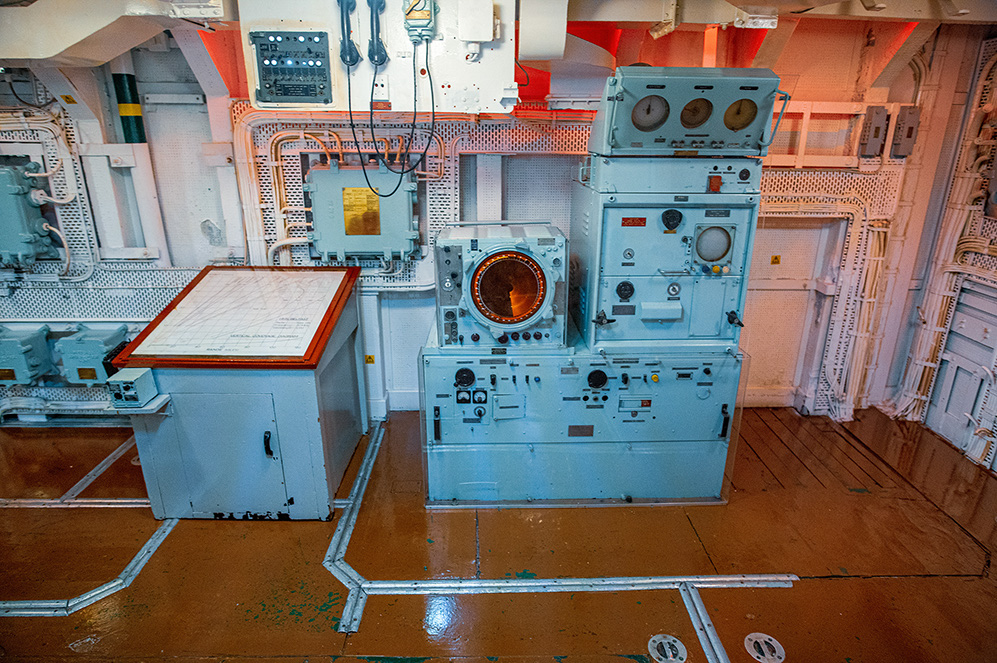
The image depicts an old, possibly vintage, control room or equipment room, likely from a ship or industrial setting. The room is filled with various pieces of equipment and control panels, all painted in a light blue color. The equipment includes dials, gauges, switches, and possibly some form of communication or radar equipment. The room has a somewhat worn and aged appearance, with visible signs of use and some rust. The floor is made of wood, and there are metal conduits running along it, connecting different pieces of equipment.
Operations Room ‐ photo by ,
©www.mgaylard.co.uk.
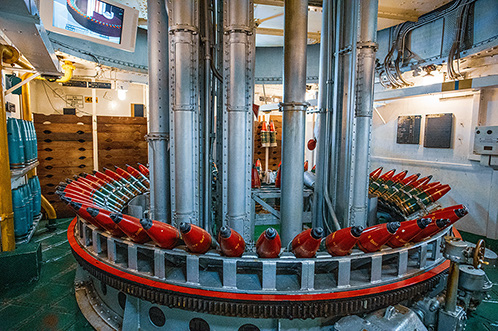
The image shows an industrial setting with a large, circular machine that has multiple vertical pipes and red-tipped components. The machine appears to be part of a manufacturing or processing facility, with various other equipment and structures visible in the background.
One of the Shell Rooms ‐ photo by ,
©www.mgaylard.co.uk.
The image depicts the interior of an old, possibly abandoned, industrial or mechanical space. The area is cluttered with various equipment, tools, and debris, indicating it may have been a workshop or machinery room. The walls and ceiling are exposed, revealing pipes, wiring, and structural elements. The lighting is dim, with a single bright light illuminating part of the space, creating a stark contrast with the surrounding darkness. The overall atmosphere suggests a sense of neglect and disuse.
Shipwrights Workshop ‐ photo by ,
©www.mgaylard.co.uk.
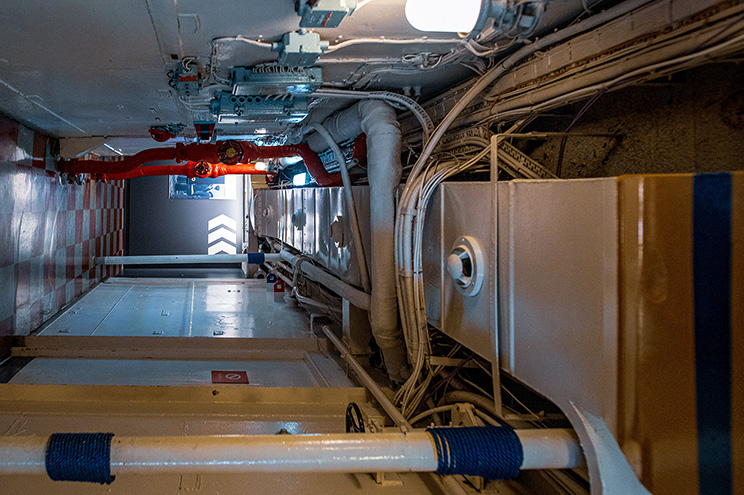
The image depicts the interior of a ship, likely showing a corridor or passageway with various mechanical and structural components. The scene includes visible pipes, cables, and other equipment, indicating it might be an engine room or a technical area of the ship. The lighting is artificial, and the space appears to be well-maintained and organized.
Top Deck Entrance ‐ photo by ,
©www.mgaylard.co.uk.
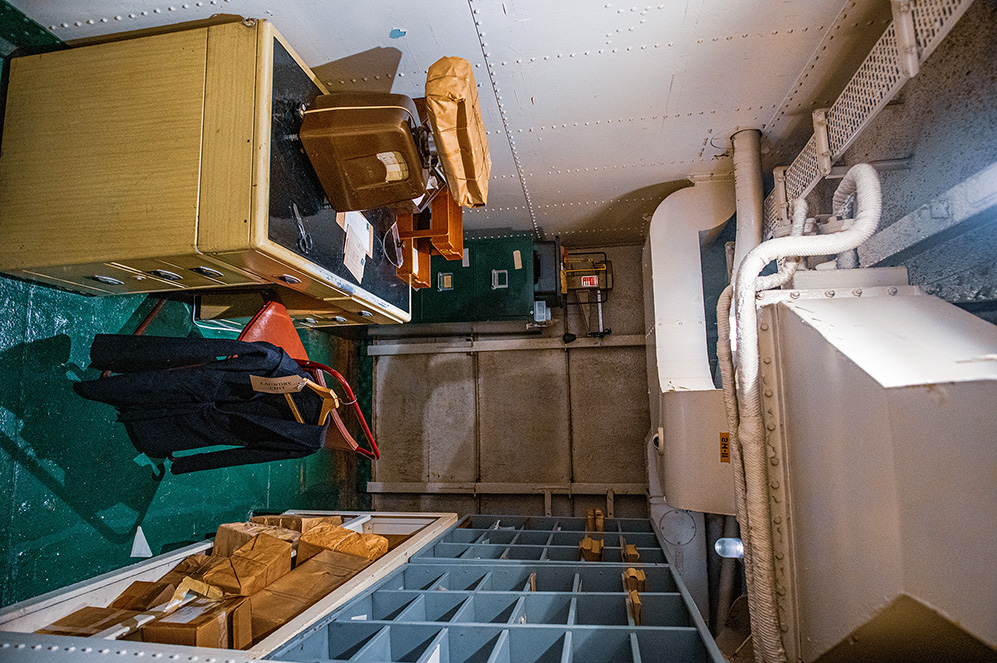
The image depicts a cluttered, narrow interior space, likely a storage or utility room. Various items, including cardboard boxes, a chair, and some personal belongings, are haphazardly placed. The room has visible pipes and a small ladder leading to a lower level. The overall appearance suggests a disorganized and possibly seldom-used area.
Post Room ‐ photo by ,
©www.mgaylard.co.uk.
The image depicts a laundry room equipped with industrial washing machines and dryers, likely on a ship or a large vessel. The room is well-lit with overhead lighting and has a tiled floor. There is a sign indicating the 'Laundry' area, and the machines are arranged along the walls. A barrier with a mesh screen is present, possibly for safety or organizational purposes. The overall environment appears clean and organized, designed to handle large volumes of laundry efficiently.
Laundry ‐ photo by ,
©www.mgaylard.co.uk.
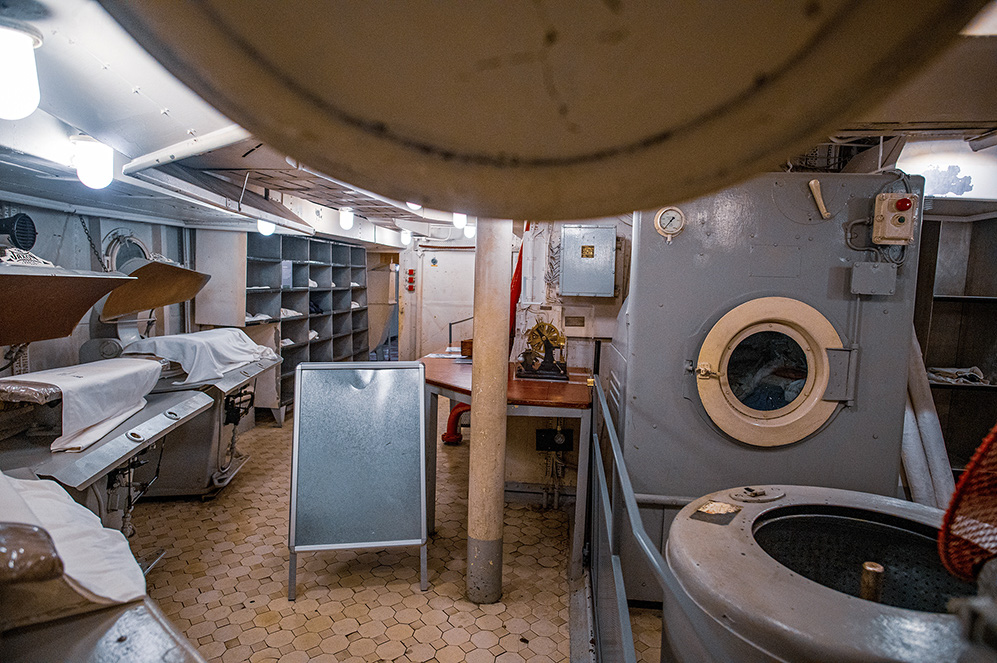
The image depicts an interior space, likely a medical or examination room on a ship or vessel. The room features several medical beds with white covers, shelves for storage, a metal cabinet, and a porthole door. The floor is tiled with small, hexagonal tiles, and the ceiling has a curved, metallic surface with lights.
Laundry ‐ photo by ,
©www.mgaylard.co.uk.
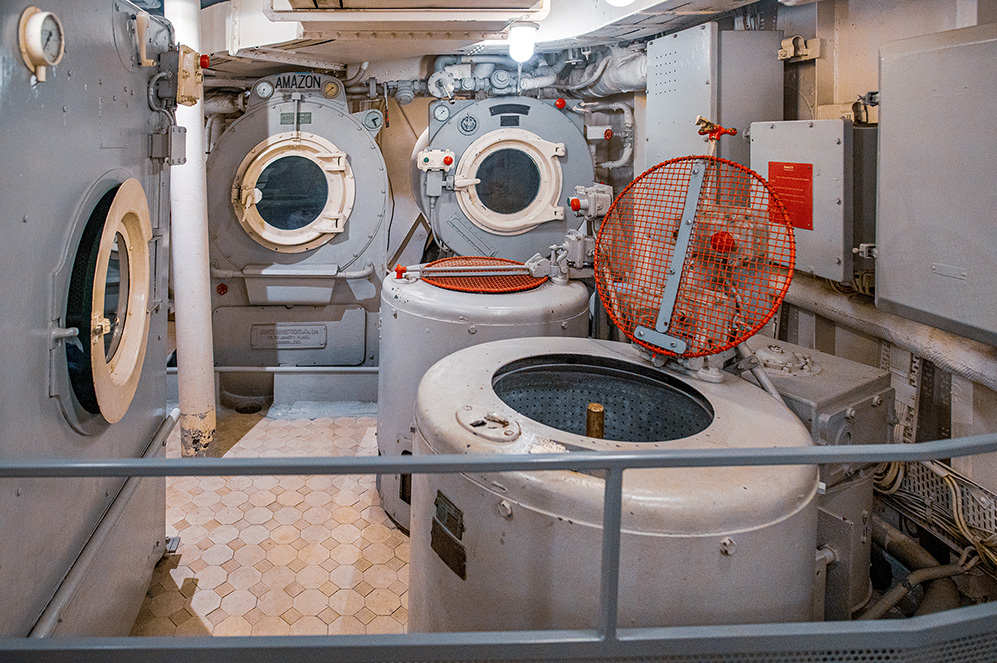
The image shows an industrial laundry room with large washing machines and dryers, likely on a ship or in a large facility. The equipment appears to be old and well-used, with a fan placed in front of one of the machines, possibly for drying clothes. The room is enclosed with a glass barrier, and the floor is covered with small, light-colored tiles.
Laundry ‐ photo by ,
©www.mgaylard.co.uk.
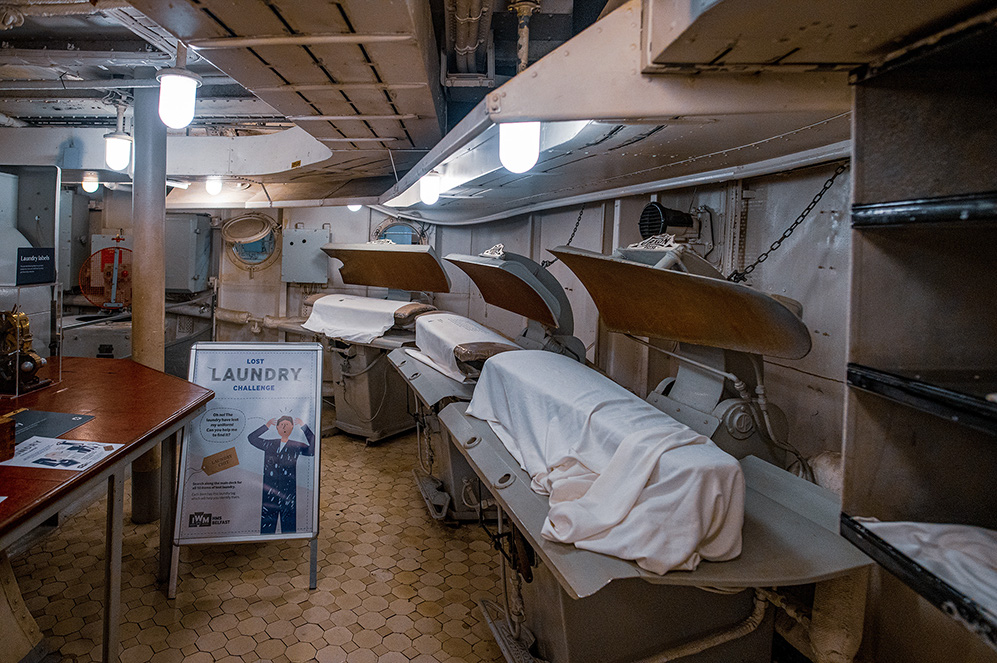
The image depicts an old-fashioned laundry room, likely on a ship, with multiple mangle irons and a sign promoting a 'Laundry Challenge'. The room is equipped with vintage machinery and has a rustic, utilitarian appearance. The sign suggests an interactive exhibit, inviting visitors to participate in a historical laundry task.
Laundry ‐ photo by ,
©www.mgaylard.co.uk.
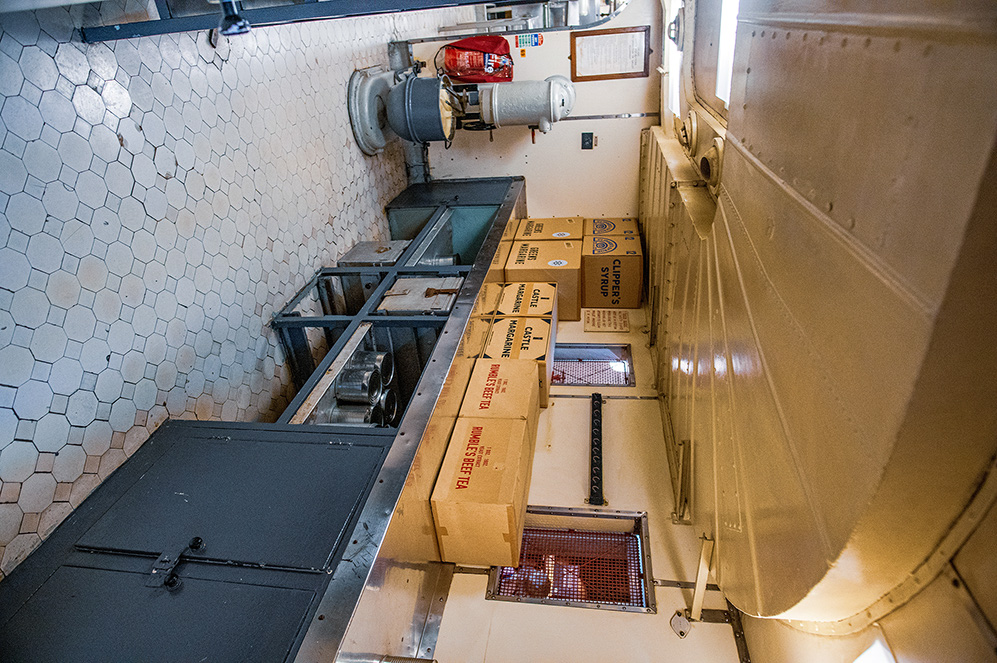
The image shows an interior space, likely a ship's galley or storage area. There are several cardboard boxes labeled with items such as 'Cup-a-Soup' and 'Instant Tea' stacked on a counter. The walls are covered with hexagonal white tiles, and there is a fire extinguisher mounted on the wall. Various pieces of equipment and storage compartments are visible, indicating a functional and utilitarian space.
ship's galley  ‐ photo by ,
©www.mgaylard.co.uk.
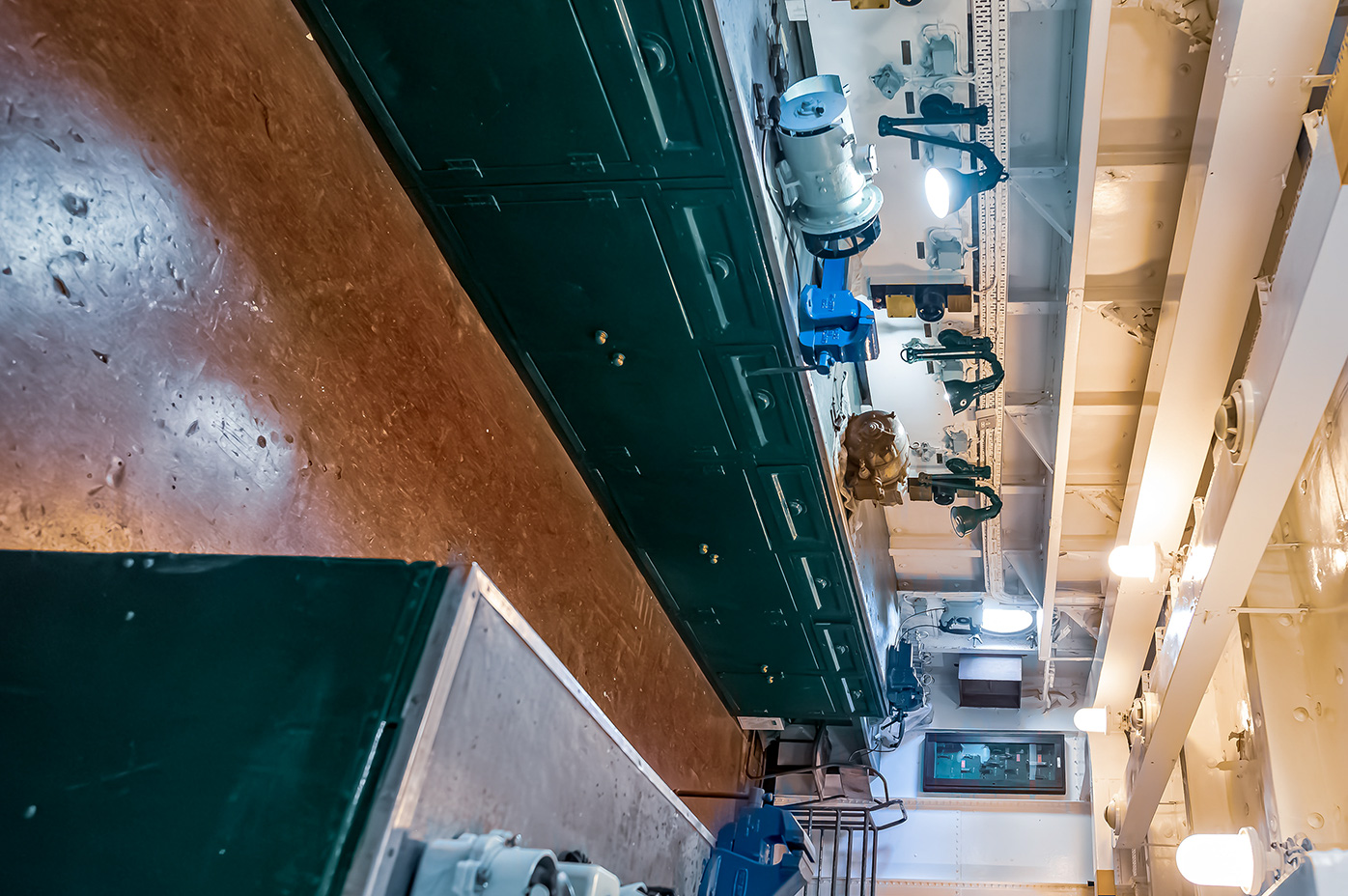
The image depicts a narrow corridor with a low ceiling, likely within an industrial or mechanical setting. The corridor is lined with green cabinets on one side and various mechanical components, pipes, and wires on the other. The ceiling has exposed beams and several lights, some of which are on. The floor appears to be metallic and slightly worn, with visible signs of use and some water or liquid spillage.
workshop ‐ photo by ,
©www.mgaylard.co.uk.
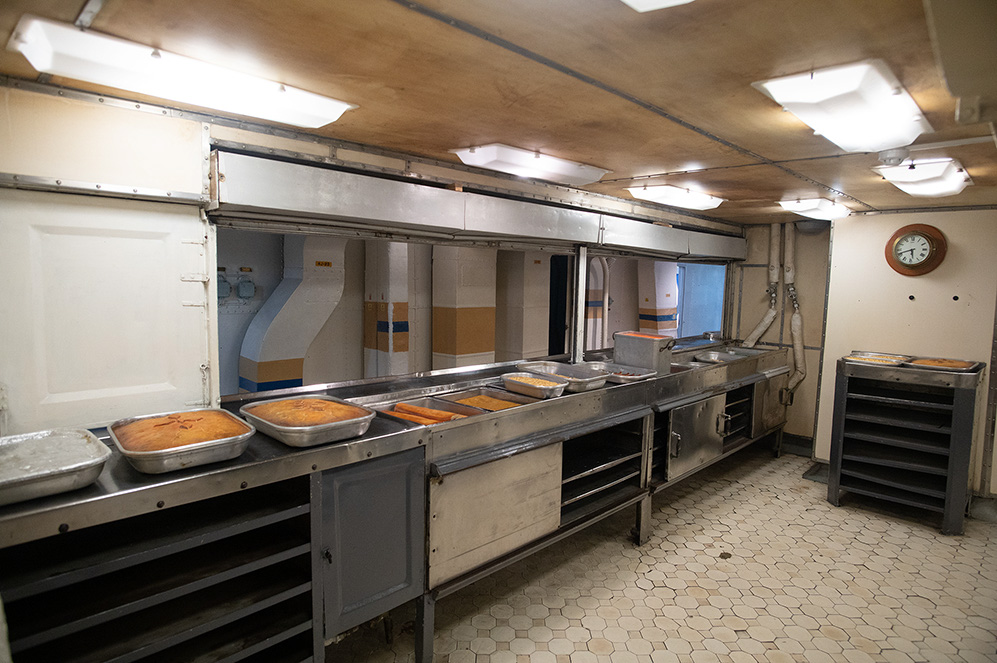
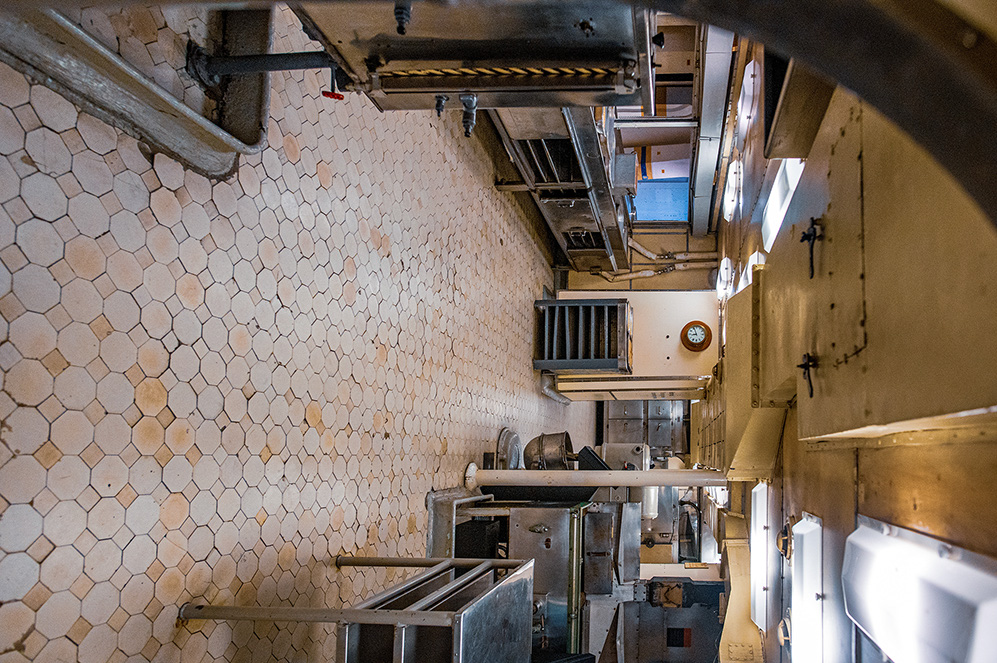
The image depicts a large industrial kitchen with stainless steel counters, trays of food, and various cooking equipment. The kitchen is well-lit with overhead lights and has a tiled floor. There is a clock on the wall, and the overall environment appears clean and organized.
a large industrial kitchen with stainless steel counters ‐ photo by ,
©www.mgaylard.co.uk.
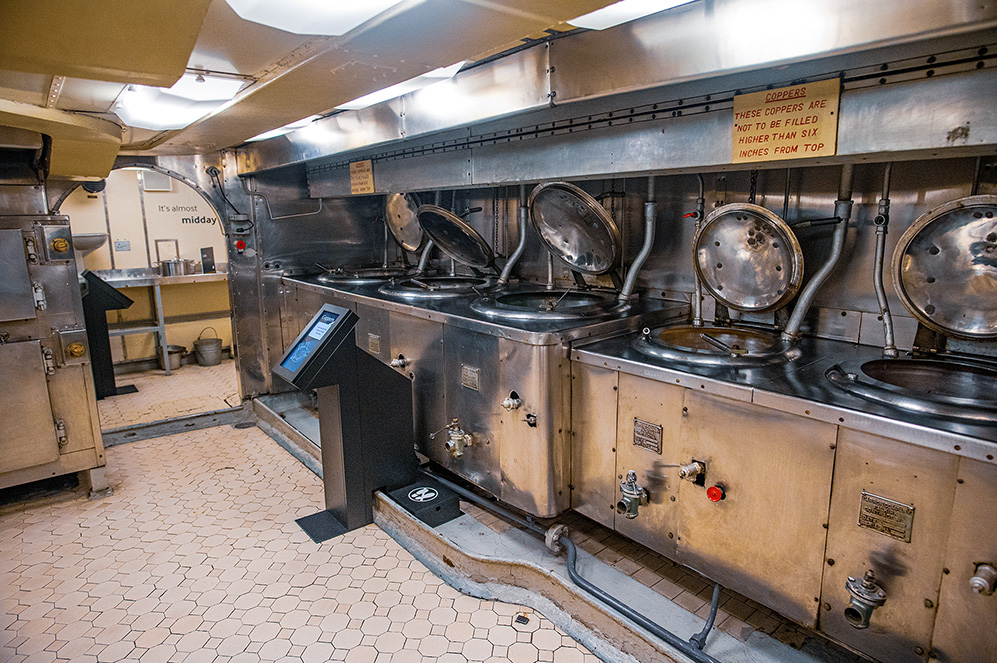
The image depicts a galley kitchen with large, industrial-sized cooking equipment, likely from a ship or large vessel. The equipment includes multiple copper pots with lids, and there is a sign indicating that the coppers should not be filled higher than six inches from the top. The floor is tiled, and there is a touchscreen display in the foreground, possibly for informational purposes. The overall setting appears to be well-maintained and organized.
industrial-sized cooking equipment ‐ photo by ,
©www.mgaylard.co.uk.
The image shows an industrial machine, likely a mixer or processor, with a large metal bowl containing a spiral-shaped blade. The machine appears to be used for mixing or processing ingredients, possibly in a food production setting. The interior of the machine is metallic and has a polished finish. The machine is likely used in commercial or industrial kitchens for large-scale food preparation.
View of iwmbelfast ‐ photo by ,
©www.mgaylard.co.uk.
The image depicts an industrial or commercial kitchen with hexagonal tiled walls, stainless steel surfaces, and various kitchen equipment. The space appears to be well-lit and organized, with visible ventilation systems and a clock on the wall.
industrial kitchen ‐ photo by ,
©www.mgaylard.co.uk.
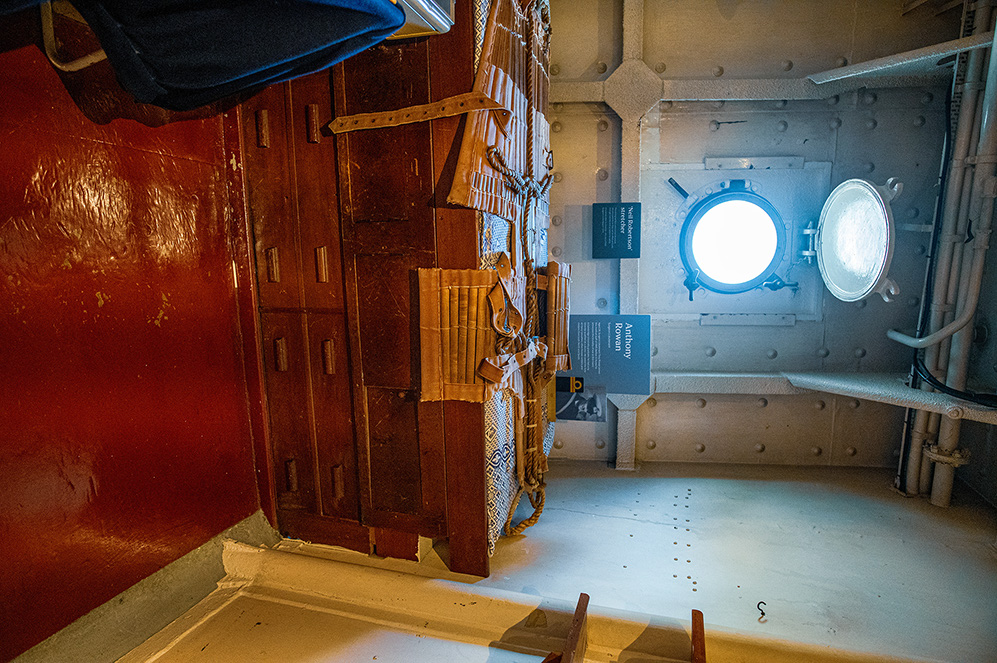
The image depicts the interior of a ship, specifically a section with a wooden door and a metal bulkhead. The wooden door is secured with metal straps and a padlock, and there is a small informational plaque on the wall. The metal bulkhead has two round portholes that allow light to enter the space. The floor is made of metal and appears to be part of a lower deck or cargo hold. The overall setting suggests an old or historical ship, possibly a cargo or storage area.
Neil Robertson stretcher ‐ photo by ,
©www.mgaylard.co.uk.
The Neil Robertson stretcher is a wrap-around rescue stretcher constructed from wooden slats, canvas (or rot-proof cotton) and strong rope/straps, designed so the casualty is enveloped and lashed in for lifting or lowering.
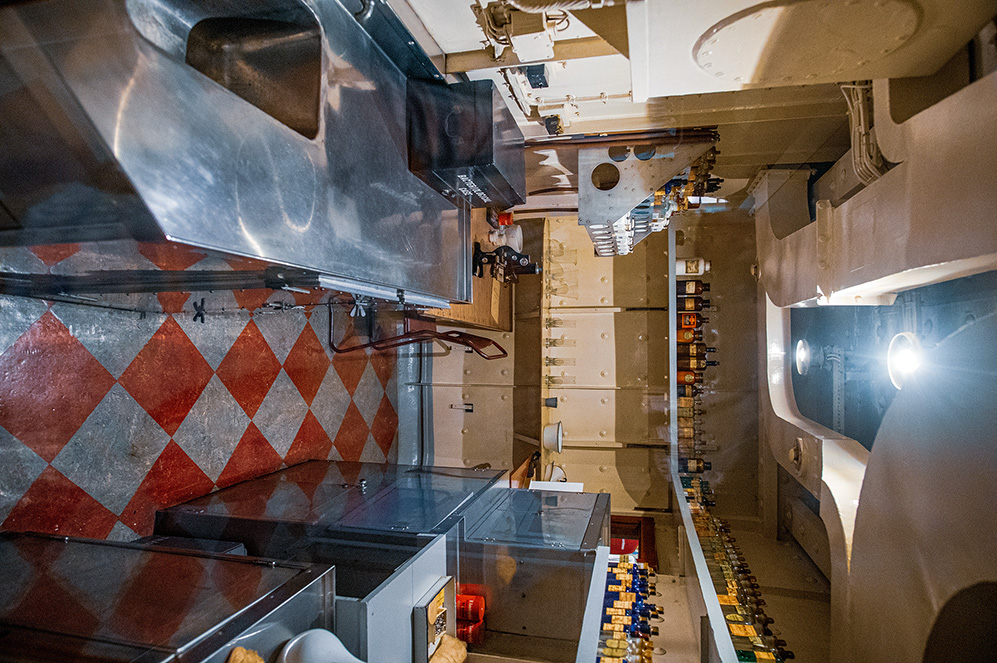
Pharmacy Stores
Pharmacy Stores ‐ photo by ,
©www.mgaylard.co.uk.
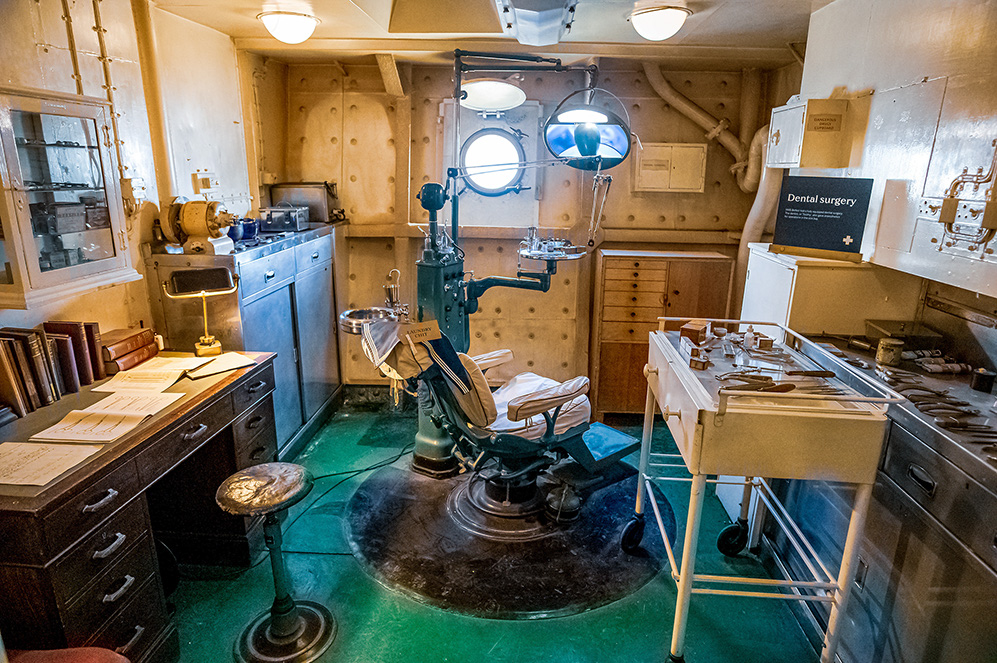
Ships Dentistry
Ships Dentistry ‐ photo by ,
©www.mgaylard.co.uk.
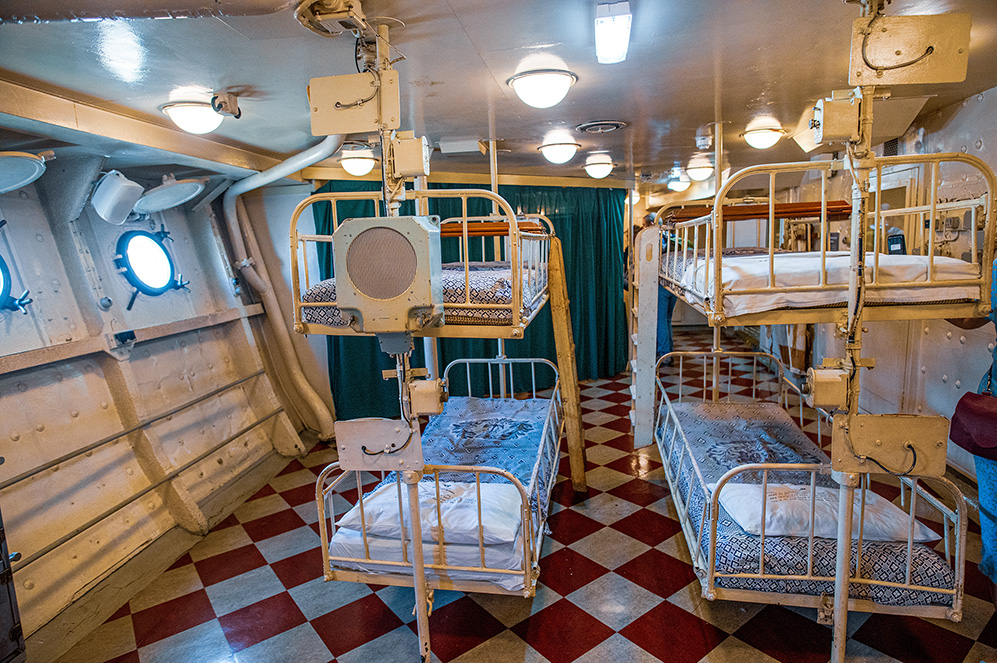
The image depicts a small, compact room with multiple bunk beds, likely a dormitory or shared sleeping quarters on a ship or vessel. The room features metal walls with porthole windows, a checkered floor, and a green curtain dividing the space. The bunk beds are arranged in a way to maximize the use of limited space, with some beds stacked three levels high. The overall design suggests a utilitarian and functional environment, prioritizing efficiency and practicality
Sick Bay ‐ photo by ,
©www.mgaylard.co.uk.
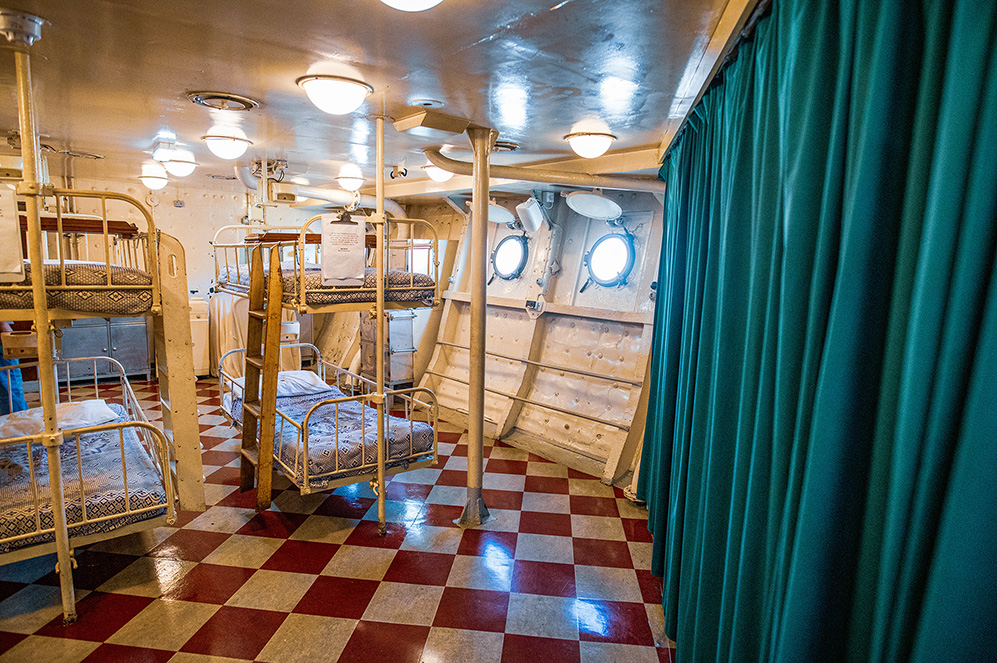
The image depicts the interior of a ship's cabin with multiple bunk beds arranged in a compact space. The cabin features a checkered floor, metal bunk beds with mattresses, and portholes for natural light. The ceiling is adorned with circular light fixtures, and a green curtain serves as a partition. The overall setting suggests a utilitarian and functional design typical of maritime accommodations.
Sick Bay ‐ photo by ,
©www.mgaylard.co.uk.
The image depicts an old-fashioned dental surgery room with vintage equipment, including a dental chair, various tools, and cabinets. The room has a historical feel, with a green-tinted floor and round porthole windows, suggesting it might be on a ship. There are books, instruments, and other medical supplies scattered around, giving it an authentic, well-used appearance. A sign on the wall reads 'Dental surgery,' confirming the room's purpose. The overall ambiance is one of historical preservation, likely part of a museum exhibit.
dental surgery room with vintage equipment ‐ photo by ,
©www.mgaylard.co.uk.
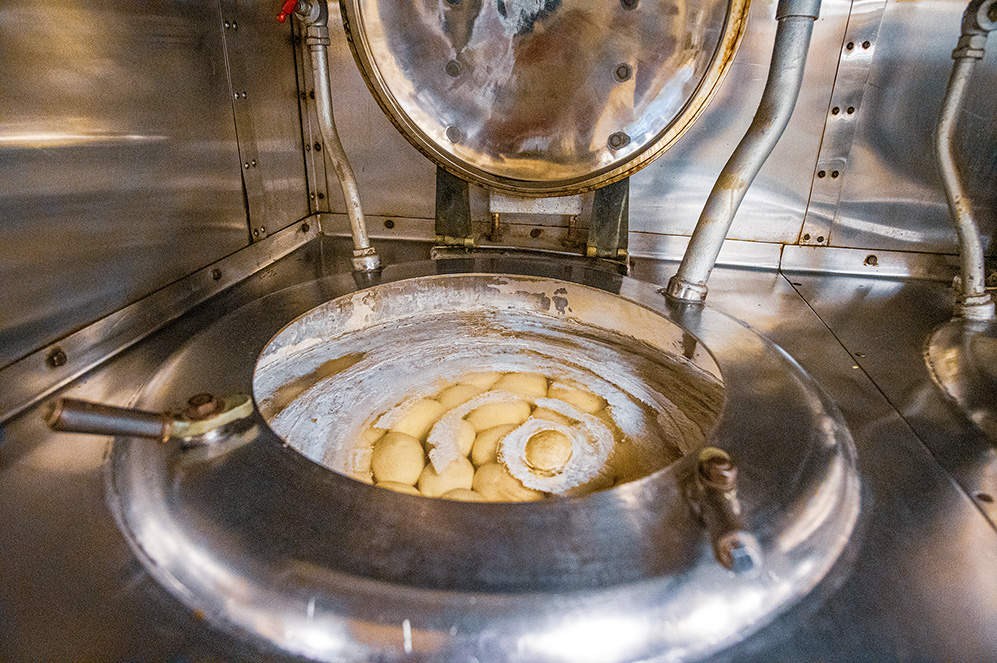
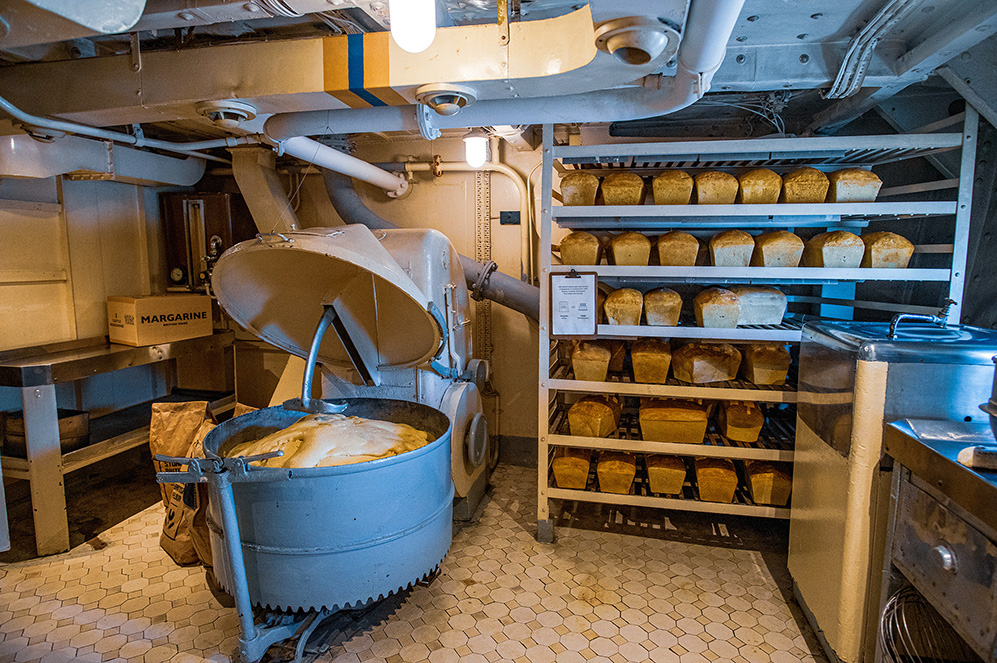
The image depicts an industrial bread-making facility with a large mixing machine and shelves filled with loaves of bread
bread-making ‐ photo by ,
©www.mgaylard.co.uk.
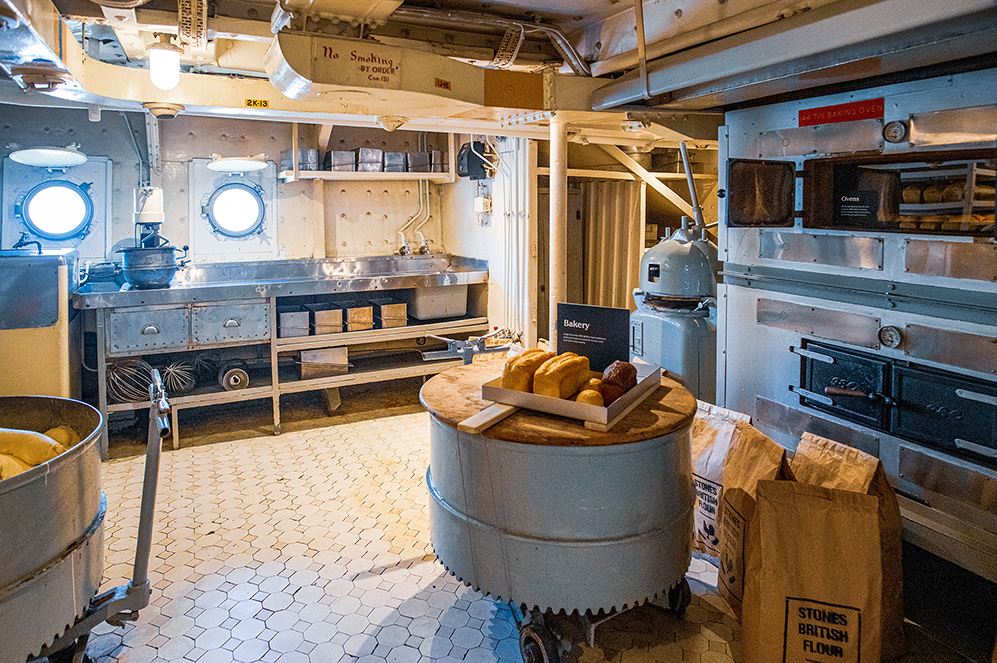
The image depicts a vintage bakery, likely on a ship, featuring old-fashioned baking equipment, including ovens, a dough mixer, and various baking utensils. The setting includes a tiled floor, metal surfaces, and porthole windows, giving it a historical and industrial feel. There are loaves of bread on display, and signs indicating 'No Smoking' and 'Bakery' are visible. The overall atmosphere suggests a well-preserved or restored historical bakery environment.
Bakery ‐ photo by ,
©www.mgaylard.co.uk.
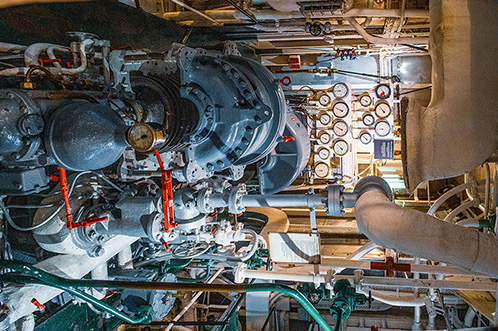
The image depicts an industrial or mechanical setting, likely the engine room of a ship or a similar vessel. It shows a complex array of machinery, pipes, and controls, with a prominent wheel and various gauges. The environment appears to be well-maintained and organized, with a focus on functionality and efficiency.
engine room ‐ photo by ,
©www.mgaylard.co.uk.
The image depicts an intricate and complex mechanical setup, likely an engine room or similar industrial environment. The machinery includes large, metallic components with various pipes, wires, and gauges. The area is well-lit, highlighting the detailed and meticulous arrangement of the equipment. The presence of a gloved hand suggests ongoing maintenance or inspection. Overall, the image conveys a sense of industrial precision and engineering complexity.
engine room ‐ photo by ,
©www.mgaylard.co.uk.
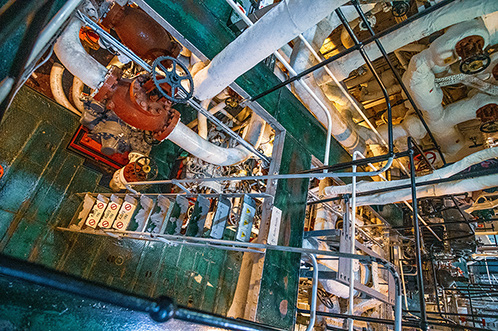
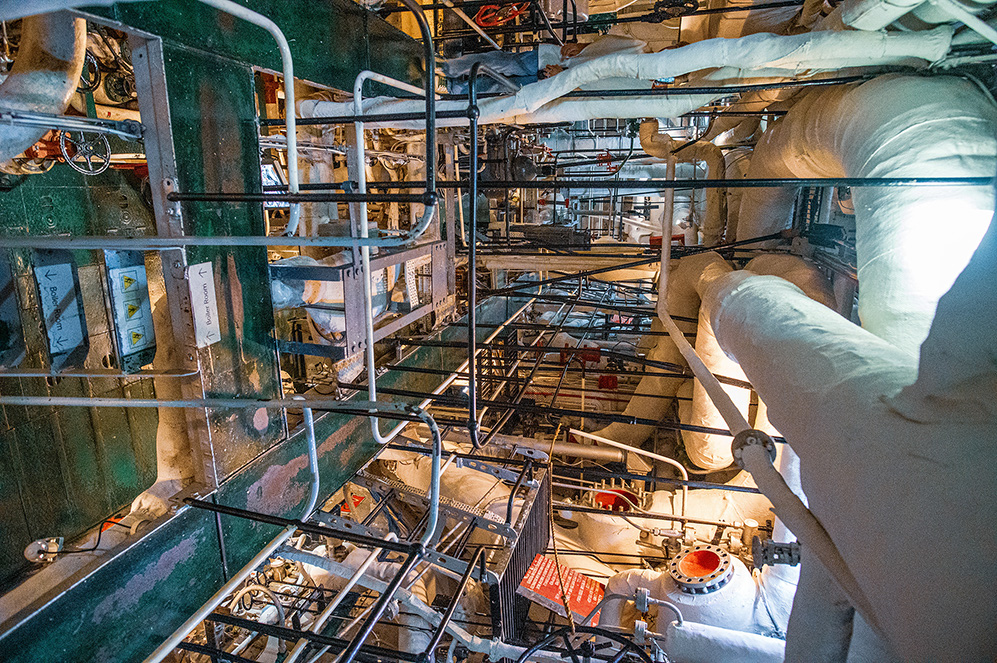
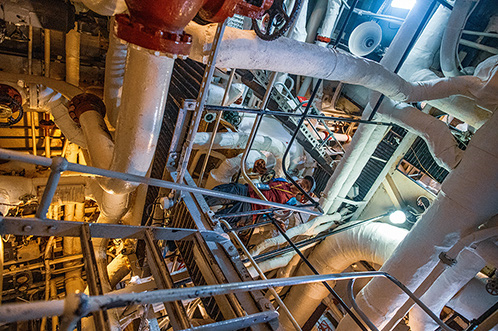
The image depicts the interior of an industrial facility, likely a power plant or a chemical processing plant. It shows a complex array of pipes, valves, and machinery, with some areas covered in protective insulation. The environment appears to be well-lit and organized, with safety railings and platforms for maintenance access. The overall scene suggests a highly technical and controlled industrial setting.
Boiler Room ‐ photo by ,
©www.mgaylard.co.uk.
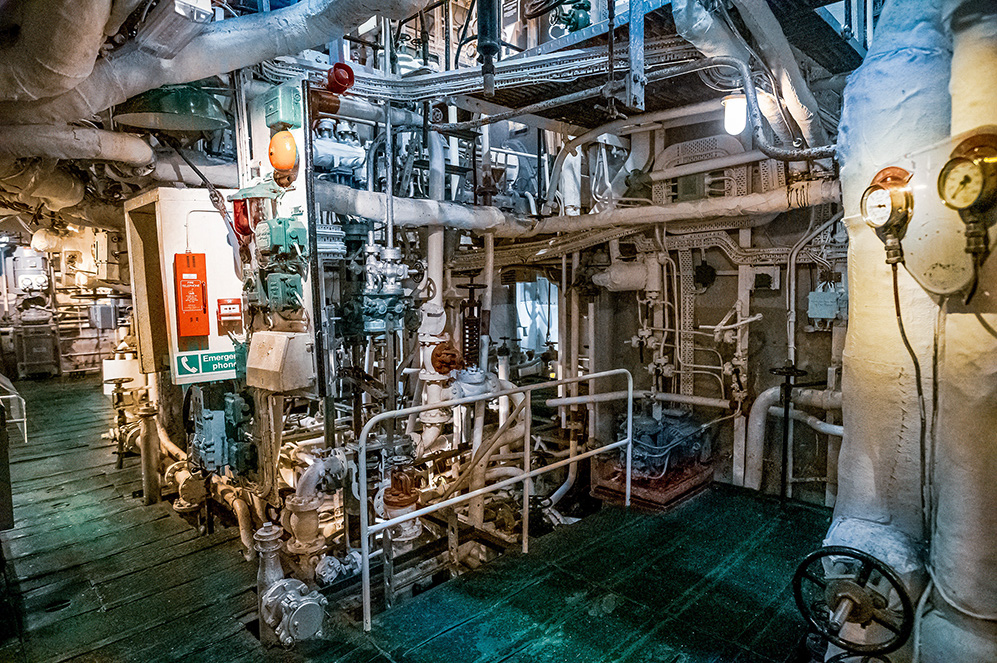
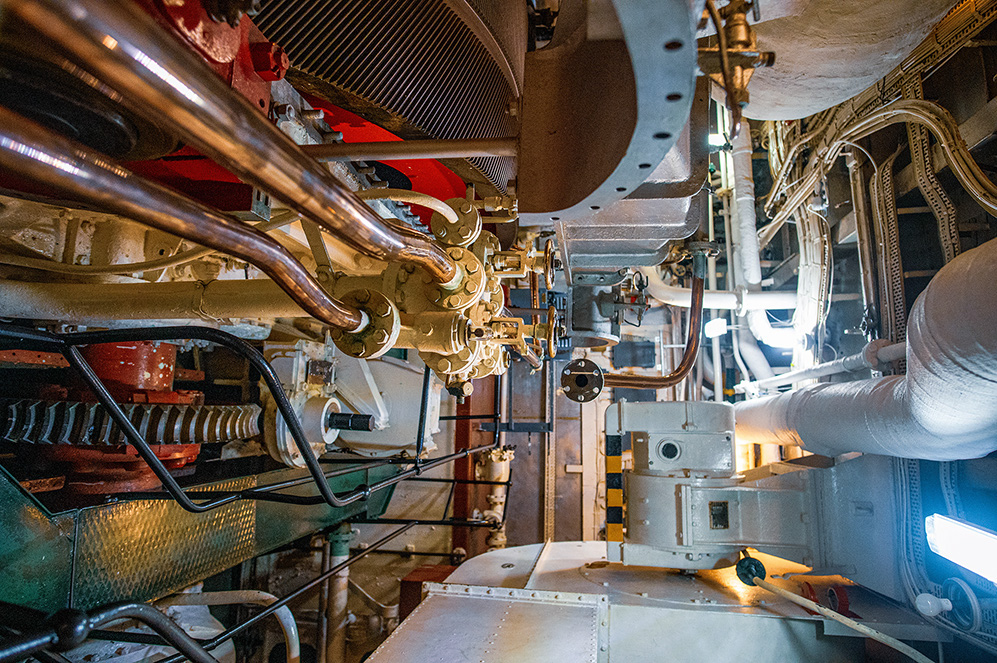
The image depicts an industrial setting, likely the engine room of a ship. It features a complex array of pipes, valves, gauges, and machinery. The environment appears to be well-lit with various lights and signs, including an emergency phone sign. The floor is covered with a greenish material, possibly to reduce slip hazards. The overall scene suggests a well-maintained and organized mechanical space.
Engine Room ‐ photo by ,
©www.mgaylard.co.uk.
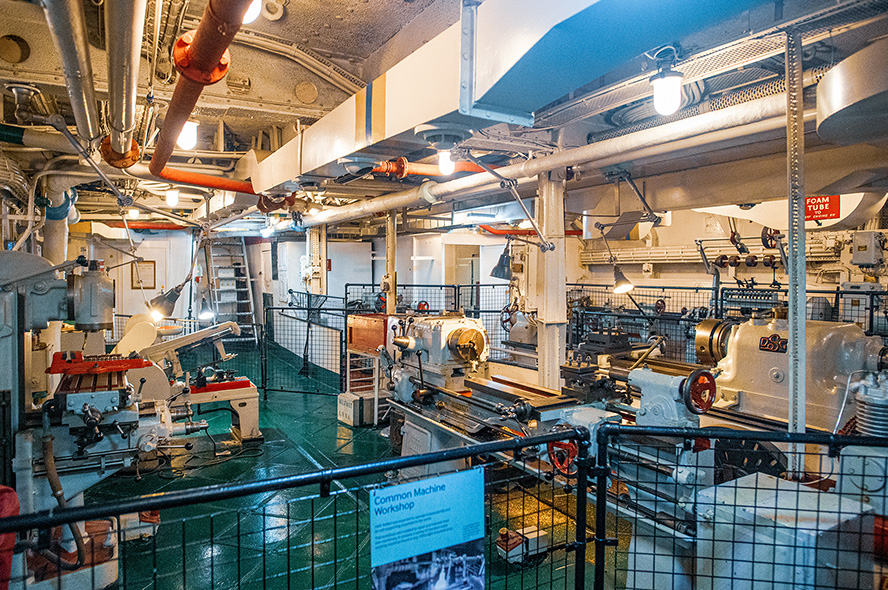
The image depicts an industrial workshop filled with various types of machinery and equipment. The workshop appears to be well-lit with overhead lights and has a green floor. There are multiple machines, including lathes, milling machines, and other metalworking tools. The area is cordoned off with a metal grate fence, and there is an informational sign visible in the foreground. The overall environment suggests a well-maintained and organized workspace dedicated to manufacturing or repair tasks.
Engineering Workshop ‐ photo by ,
©www.mgaylard.co.uk.
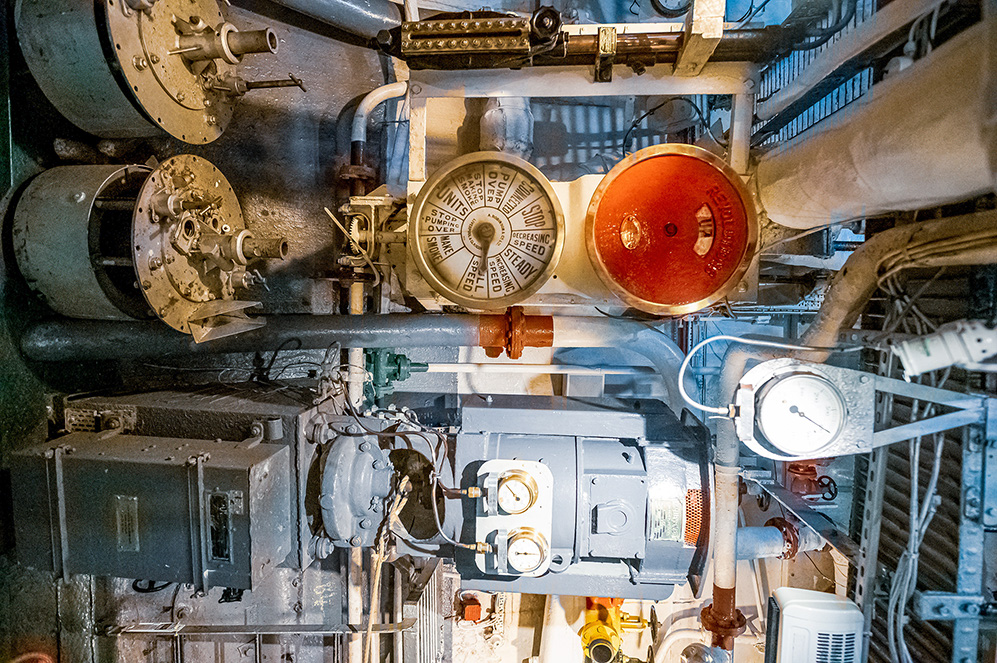
The image depicts a complex and densely packed mechanical system, likely part of an industrial or maritime engine room. It features various gauges, valves, pipes, and machinery components, including a prominent red gauge and a large cylindrical object. The setup appears to be well-maintained, with visible labels and markings on the equipment, indicating a structured and organized environment. The overall scene suggests a highly technical and specialized area designed for monitoring and controlling mechanical operations.
View of iwmbelfast ‐ photo by ,
©www.mgaylard.co.uk.
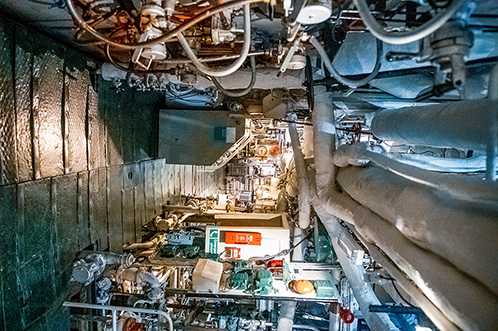
The image depicts the interior of the engine room, showcasing its complex and compact machinery and equipment. The view includes various pipes, wires, and mechanical components, highlighting the intricate and tightly packed nature of the vessel's systems. The lighting illuminates the narrow passage, revealing the detailed and industrial environment within the vessel.
Engineering ‐ photo by ,
©www.mgaylard.co.uk.
The image depicts an industrial setting, likely the engine room of a ship. It shows a complex network of pipes, valves, and machinery. There are two individuals wearing orange safety gear, possibly engineers or maintenance workers, engaged in their tasks. The area is well-lit with overhead lighting, and the environment appears to be well-organized and meticulously maintained.
View of iwmbelfast ‐ photo by ,
©www.mgaylard.co.uk.
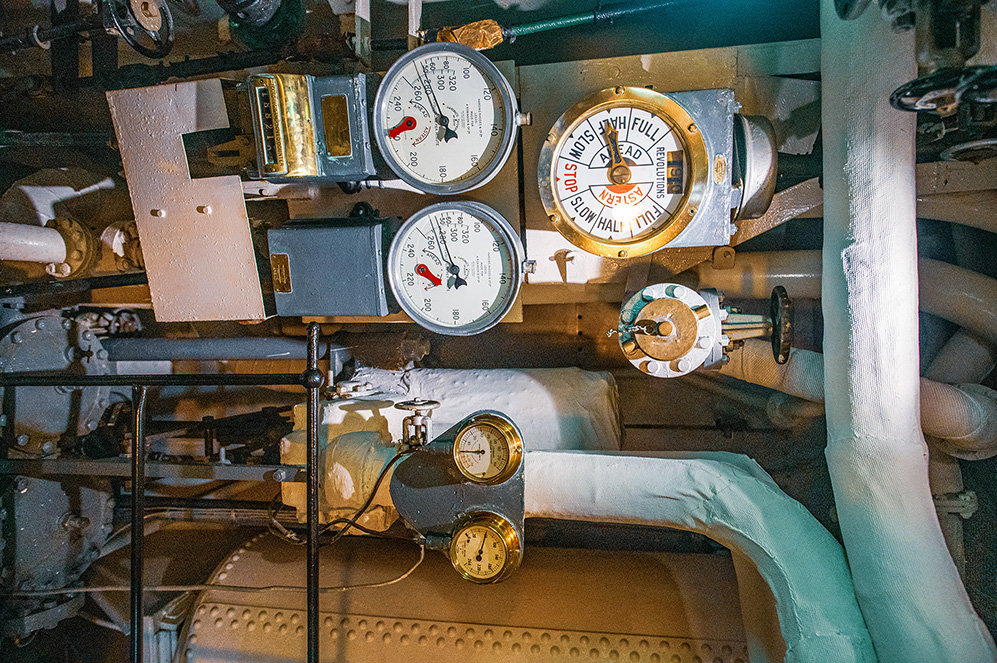
The image shows a complex industrial setup with multiple gauges and valves. There are three prominent pressure gauges with needles pointing to different pressure levels. A large valve with a circular handle is labeled with instructions such as 'FULL,' 'SLOW,' 'STOP,' and directional arrows. The setup includes various pipes and metal components, indicating a system likely used for monitoring and controlling pressure in an industrial environment.
'FULL,' 'SLOW,' 'STOP,' ‐ photo by ,
©www.mgaylard.co.uk.
The image depicts the intricate inner workings of a complex mechanical system, likely the engine room of a ship or industrial machinery. It showcases a variety of pipes, valves, and mechanical components, highlighting the detailed and robust engineering involved. The environment appears well-lit, emphasizing the maintenance and operational readiness of the machinery.
Engine Room ‐ photo by ,
©www.mgaylard.co.uk.
The image depicts the interior of the engine room. It shows a complex array of pipes, valves, and machinery, with some areas covered in protective insulation. The environment appears to be well-lit and organized, with safety railings and platforms for maintenance access. The overall scene suggests a highly technical and controlled industrial setting.
Engine Room ‐ photo by ,
©www.mgaylard.co.uk.
The image depicts an industrial setting, likely the engine room of a ship. It features a complex array of pipes, valves, gauges, and machinery. The environment appears to be well-lit with various lights and signs, including an emergency phone sign. The floor is covered with a greenish material, possibly to reduce slip hazards. The overall scene suggests a well-maintained and organized mechanical space.
Engine Room ‐ photo by ,
©www.mgaylard.co.uk.
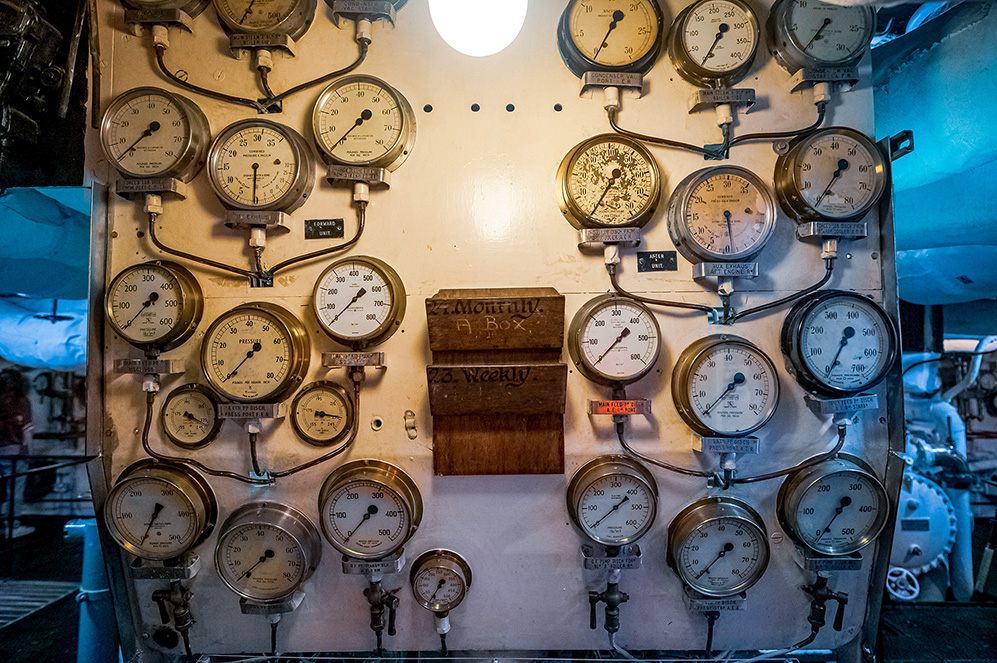
The image shows a control panel with numerous analog pressure gauges and valves, likely from an industrial or maritime setting. The gauges are arranged in a grid pattern and are connected by a network of pipes and tubes. There is a wooden box labeled 'Monthly' and 'Weekly' in the center of the panel. The overall appearance suggests an older, possibly vintage, mechanical system used for monitoring and controlling pressure in various systems.
Engine Room ‐ photo by ,
©www.mgaylard.co.uk.
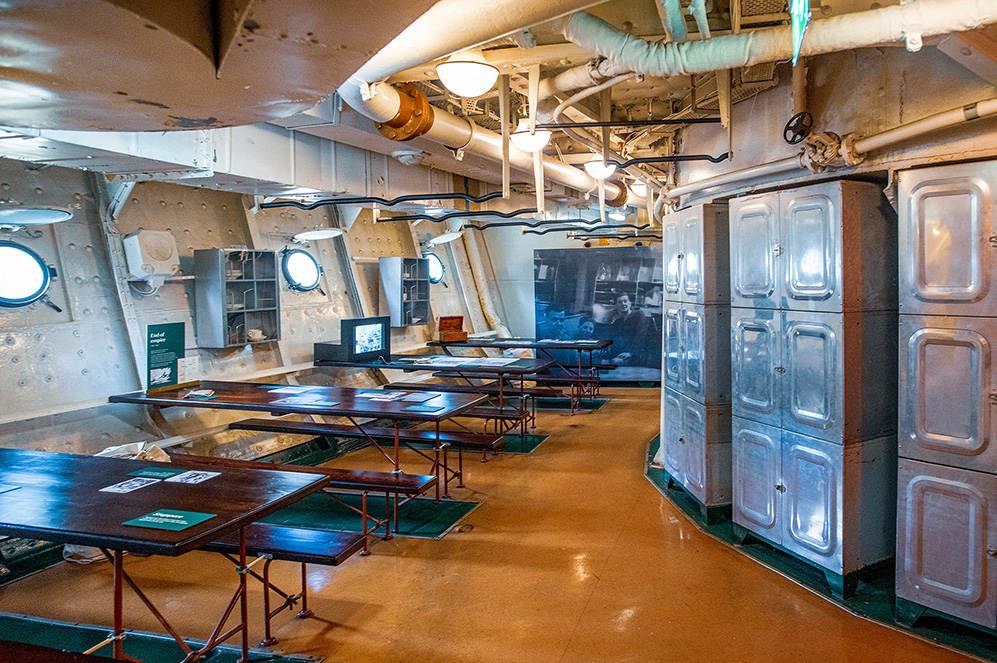
The image depicts the interior of a historical ship, likely a naval vessel, showcasing a mess hall or dining area. The room features several long wooden tables and benches, with round porthole windows along the wall. The walls and ceiling have exposed pipes and industrial elements, giving it a utilitarian and vintage appearance. There are also large metal cabinets and a television screen displaying information, suggesting the space is part of a museum or exhibit.
Crew Quarters ‐ photo by ,
©www.mgaylard.co.uk.
Open the full set flickr button this page

HMS Belfast

HMS Belfast is a Town-class light cruiser that was built by Harland and Wolff in Belfast. She was launched in 1938 and commissioned into the Royal Navy in 1939, just before the outbreak of World War II. During World War II, HMS Belfast played a significant role in several key operations, including the bombardment of Normandy during the D-Day landings and the Arctic convoys to the Soviet Union.

Key Features and Exhibits

Armament and Design:
HMS Belfast is equipped with a variety of armaments, including 6-inch guns, anti-aircraft guns, and torpedo tubes. The ship's design and armament reflect the technological advancements of the time en.wikipedia.org+1.
Museum Ship:
Today, HMS Belfast serves as a museum ship and is open to the public. Visitors can explore various parts of the ship, including the bridge, engine rooms, and living quarters iwm.org.uk+1.

Visitor Information

Location and Access:
HMS Belfast is moored on the River Thames near Tower Bridge in London. It is easily accessible and offers a unique experience for visitors interested in naval history iwm.org.uk+1.
Admission and Facilities:
Admission to HMS Belfast is not free, but the experience includes access to all decks and exhibits. The ship offers various facilities, including audio guides and interactive displays iwm.org.uk.

Cultural and Educational Impact

Historical Significance:
HMS Belfast is the most significant surviving Second World War Royal Navy warship and provides valuable insights into the life and operations of the Royal Navy during World War II iwm.org.uk+1.
Educational Programs:
The ship offers educational programs and resources for visitors of all ages, aiming to inspire an appreciation for naval history and engineering

References

www.iwm.org.ukHMS_Belfast , Text generated by Mistral AI
To the top
Powered by w3.css. The images are all stored on link to www.gaylard.co.uk Photostream on Flickr   This website is hosted by link to 123Reg Web Hosting