HOME

South Kensington

Science Museum

Exhibition RoadSouth KensingtonLondon,   United Kingdom

The Science Museum in London is one of the world's leading museums dedicated to the history and future of science, technology, engineering, and medicine. Founded in 1857, it houses a vast collection of over 300,000 items, including iconic objects like Stephenson’s Rocket, the Apollo 10 command module, and the first jet engine. The museum offers interactive exhibits, educational programs, and inspiring experiences for visitors of all ages.
The image shows a large, red and brass-colored steam engine on display in a museum. The engine features prominent gears and pistons, and is encased behind a wooden and metal barrier. The setting appears to be an industrial or technology museum with a modern, well-lit interior and several people observing the exhibit.
red and brass-colored steam engine ‐ photo by ,
©www.mgaylard.co.uk.
The image depicts a bustling, multi-level indoor space with a high, arched ceiling featuring large glass windows. The area is well-lit with natural light streaming through the windows, and the architecture includes wooden beams and modern design elements. There are various shops and displays visible on the lower levels, with people gathered around, suggesting a commercial or public venue. The sign 'Energy Hall' indicates that this might be part of a science or technology museum. The overall atmosphere is lively and vibrant, with a mix of modern and industrial design elements.
multi-level indoor space with a high, arched ceiling featuring large glass windows ‐ photo by ,
©www.mgaylard.co.uk.
The image depicts an old, large, red and black steam engine on display in a museum. The engine features a prominent flywheel and various mechanical components, showcasing the industrial design and engineering of the era. The display is enclosed by a black metal railing, and the background shows other exhibits in a well-lit, spacious room with high ceilings.
The engine features a prominent flywheel and various mechanical components ‐ photo by ,
©www.mgaylard.co.uk.
The image depicts an exhibit in a museum featuring a large, ancient piece of machinery, likely a reconstruction of a historical device. The exhibit is housed in a spacious room with high ceilings and large windows, allowing natural light to illuminate the display. Several people are observing the exhibit, indicating it is of interest to visitors. Informational panels and displays are visible around the main exhibit, providing context and details about the machinery. The overall setting suggests an educational environment aimed at showcasing historical artifacts and their significance.
Nodding Donkey ‐ photo by ,
©www.mgaylard.co.uk.
The image shows an old, large, and complex steam engine on display in a museum. The engine is made of metal with a prominent cylindrical boiler and various mechanical components. It is situated on a platform with a protective railing around it. The setting appears to be well-lit with natural light coming from large windows in the background. The engine is likely a historical artifact showcasing early industrial technology.
an old, large, and complex steam engine ‐ photo by ,
©www.mgaylard.co.uk.
he image shows a museum exhibit featuring a replica of the Apollo Lunar Module, which was used in the Apollo missions to land on the Moon. The exhibit is displayed in a dimly lit room with a lunar surface backdrop. Several people, including children and adults, are observing and interacting with the exhibit. An American flag is visible on the Lunar Module, and there are informational displays and other space-related artifacts around the exhibit.
Apollo Lunar Module ‐ photo by ,
©www.mgaylard.co.uk.
The image depicts an old, large, and intricate steam engine on display in a museum. The engine features a complex arrangement of pipes, wheels, and mechanical components, showcasing the engineering of early industrial machinery. The setting is well-lit with spotlights highlighting the exhibit, and the background includes other display cases and museum fixtures.
Steam Locomotive ‐ photo by ,
©www.mgaylard.co.uk.
The image depicts a museum exhibit featuring an early automobile with a green body and large spoked wheels. The vehicle has a large, prominent engine or boiler at the back, indicating it might be a steam-powered car. The exhibit is cordoned off with glass barriers, and there are several people observing the display. The museum has multiple levels with various other mechanical exhibits visible in the background.
an early automobile with a green body and large spoked wheels ‐ photo by ,
©www.mgaylard.co.uk.
The image depicts a vintage steam locomotive on display in a museum. The locomotive, numbered 1808, features intricate black and gold detailing, with prominent copper elements on the top. The setting appears to be an indoor exhibit with various other historical vehicles and artifacts visible in the background.
vintage steam locomotive ‐ photo by ,
©www.mgaylard.co.uk.
The image shows an indoor exhibit featuring a vintage biplane suspended from the ceiling. The exhibit also includes several classic cars displayed on multiple levels. The setting appears to be a spacious, well-lit museum or exhibition hall with a high ceiling and large windows.
a vintage biplane suspended from the ceiling ‐ photo by ,
©www.mgaylard.co.uk.
The image depicts a museum exhibit featuring historical mechanical engineering artifacts. The main focus is on a large, vintage steam-powered machine with a prominent green and brass-colored boiler, large wheels, and intricate piping. In the background, there are various other mechanical exhibits displayed on multiple levels, including a suspended boat and numerous smaller engines and machinery parts. The setting is well-lit, with a modern architectural design, showcasing the evolution of mechanical technology.
Steam Traction Engine ‐ photo by ,
©www.mgaylard.co.uk.
The image shows an antique mechanical device, likely an early industrial machine, displayed in a museum setting. The machine features a complex arrangement of gears, levers, and other mechanical components, indicating its use in manufacturing or processing. The device is mounted on a sturdy frame with large gears prominently visible. The background includes a sign indicating the exhibit is part of a display on technology in everyday life from 1800 to 1930. The overall setting suggests a focus on historical technological advancements.
Printing Press ‐ photo by ,
©www.mgaylard.co.uk.
The image depicts an indoor museum exhibit featuring various vintage aircraft and vehicles suspended from the ceiling. Visitors are seen observing the displays, which include airplanes, cars, and other historical artifacts. The museum has a spacious, well-lit interior with high ceilings and large windows.
vintage aircraft and vehicles suspended from the ceiling ‐ photo by ,
©www.mgaylard.co.uk.
The image shows a vintage Foden Diesel No. 1 truck built in 1931, displayed in a modern museum setting. The truck is painted green with red wheels and features a flatbed design. The museum has a contemporary design with glass and metal elements, and other vintage vehicles and artifacts are visible in the background.
a vintage Foden Diesel No. 1 truck built in 1931 ‐ photo by ,
©www.mgaylard.co.uk.
The image depicts a classic car on display in a museum. The car is a vintage, dark-colored convertible with red wheels and the word 'JELV' visible on the front license plate. The car is cordoned off with barriers, and there are people around it, observing the exhibit. The background shows various mechanical exhibits and informational displays, indicating that the car is part of a larger collection related to automotive history or technology.
classic car ‐ photo by ,
©www.mgaylard.co.uk.
The image shows a vintage scooter mounted on a wall. The scooter is gold in color and has a classic design with a single seat, a small front fairing, and a rearview mirror. The scooter appears to be displayed in a museum or a showroom setting.
a vintage scooter mounted on a wall ‐ photo by ,
©www.mgaylard.co.uk.
The image shows a missile suspended from the ceiling in an indoor setting, likely a museum or exhibition space. The torpedo has markings indicating it is associated with Raytheon and the Royal Navy. The surrounding architecture features large windows and modern design elements.
a marble sculpture from the Parthenon ‐ photo by ,
©www.mgaylard.co.uk.
Open the full set flickr button this page

Science Museum

The Science Museum was founded in 1857 under Bennet Woodcroft from the collection of the Royal Society of Arts and surplus items from the Great Exhibition. It was part of the South Kensington Museum, which later split into the Science Museum and the Victoria and Albert Museum

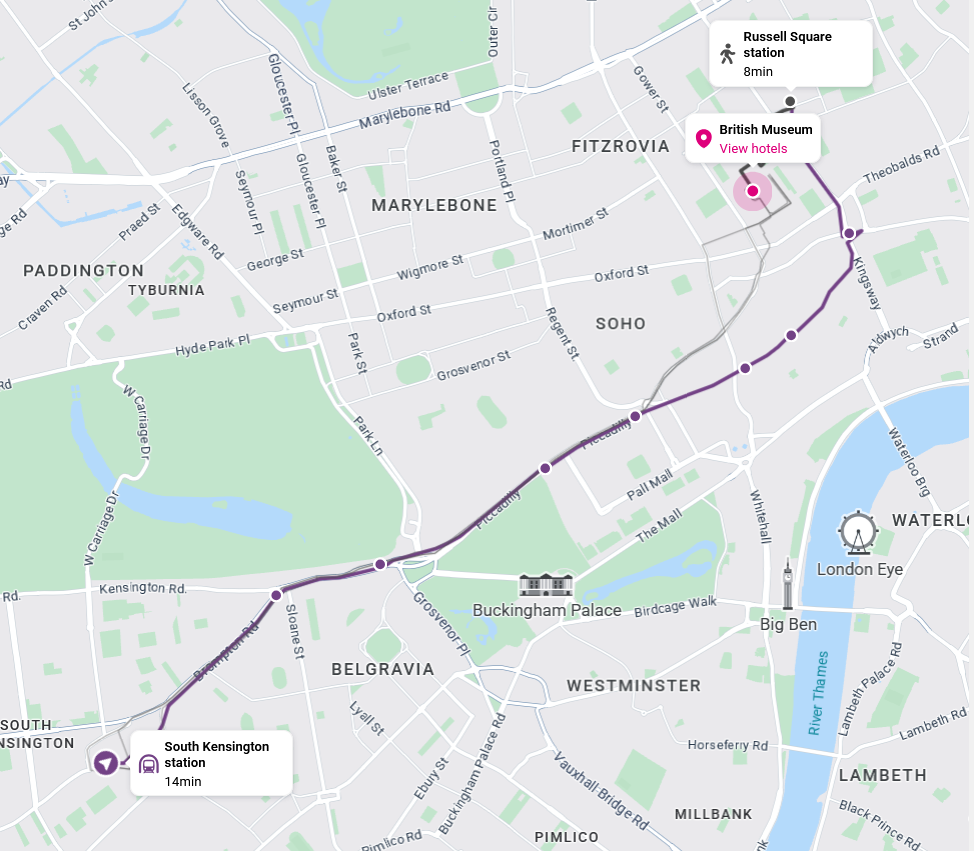
The museum is located on Exhibition Road in South Kensington, near the Natural History Museum and the Victoria and Albert Museum. The building itself is an example of early 20th-century architecture
The museum houses a vast collection of scientific, technological, and industrial artifacts. Notable exhibits include the Clockmakers' Museum, which is the world's oldest clock and watch museum, and the Flight gallery, which features a replica of the Wright brothers' Wright Flyer
The museum offers interactive galleries such as the Launchpad and Pattern Pod, designed to engage children and adults with hands-on scientific experiences

References
en.wikipedia.orgblog.sciencemuseum.org.uken.wikipedia.org , Text generated by Mistral AI

South Kensington

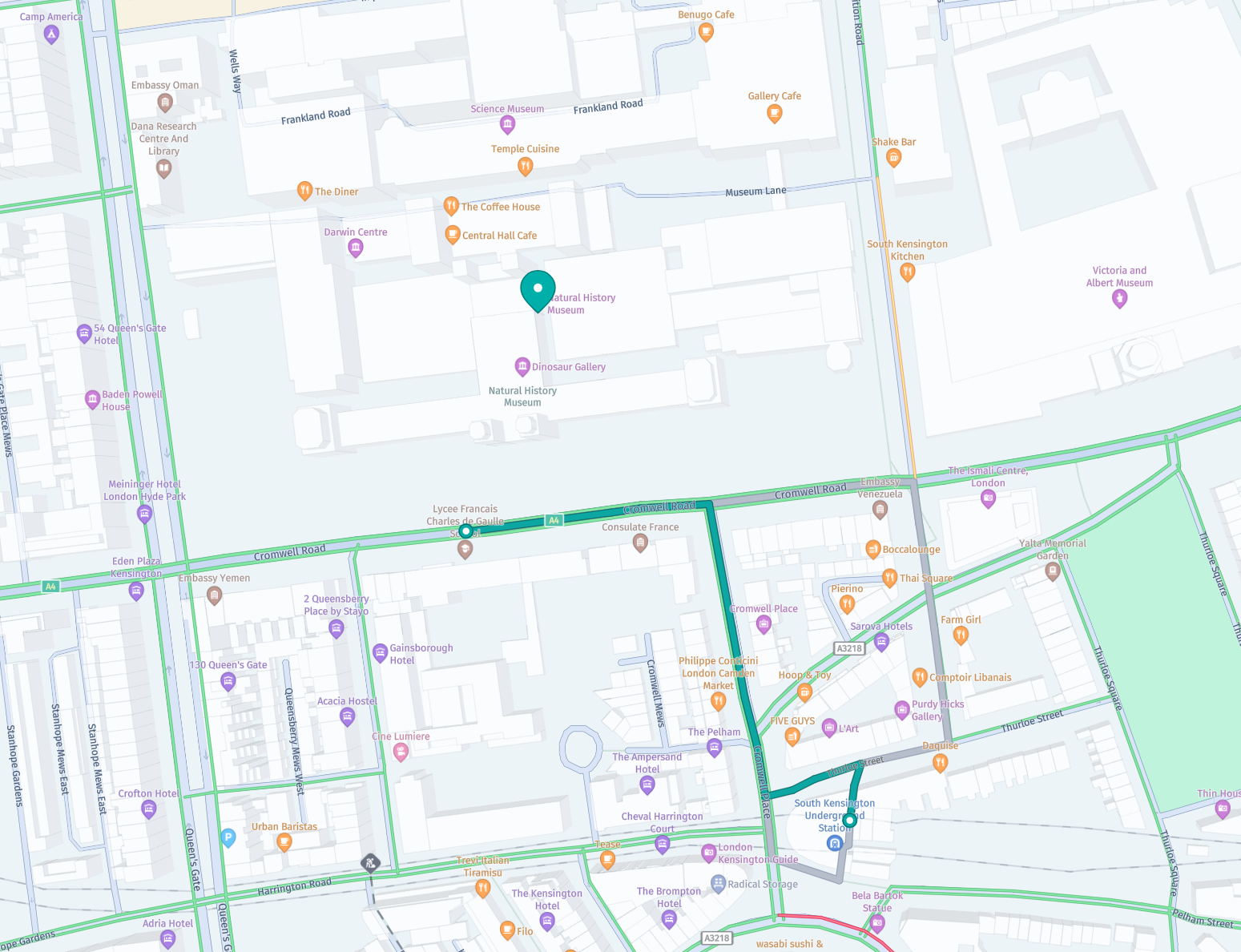
Natural History Mueum

Cromwell RoadSouth KnesnigtonLondon,   United Kingdom

The Natural History Museum in South Kensington, London, is one of the world's leading museums dedicated to natural history. Founded in 1881, it houses over 80 million specimens, including dinosaur skeletons, rare fossils, and interactive exhibits that explore the diversity of life on Earth. The museum is renowned for its stunning Romanesque architecture, iconic Hintze Hall, and groundbreaking research in biodiversity and conservation.
The image depicts the grand interior of a museum, specifically the Natural History Museum in London. The hall is characterized by its high, ornate ceiling with intricate designs and large stained glass windows. Hanging from the ceiling is a large skeleton of a whale, which is a prominent exhibit. The architecture features multiple levels with arches and balconies, and the space is filled with numerous visitors.
a marble sculpture from the Parthenon ‐ photo by ,
©www.mgaylard.co.uk.
The image shows a large skeleton of a blue whale hanging from the ceiling of a museum. The skeleton is suspended in an upright position, with its massive jawbones wide open. The architectural details of the museum, including arches, columns, and stained glass windows, are visible in the background. The setting suggests a natural history museum, likely the Natural History Museum in London, known for its impressive whale skeleton exhibit.
a large skeleton of a blue whale ‐ photo by ,
©www.mgaylard.co.uk.
The image depicts a detailed carving of a monkey-like figure on a textured, bronze or brass background. The figure is intricately designed, showing the monkey in a seated position, holding its hand to its face in a thoughtful or contemplative pose. The background consists of geometric patterns and designs, adding to the overall artistic and ornate appearance of the piece.
a detailed carving of a monkey-like figure ‐ photo by ,
©www.mgaylard.co.uk.
The image depicts the interior of a large, historic museum hall with a high, arched ceiling and large stained-glass windows. Dominating the center of the hall is the skeleton of a massive whale, suspended from the ceiling. The hall is bustling with visitors, some of whom are observing the exhibit while others are walking around or sitting. The architectural details of the hall include intricate stonework and balconies on the upper levels.
Dominating the center of the hall is the skeleton of a massive whale ‐ photo by ,
©www.mgaylard.co.uk.
The image depicts several birds, including a prominent one with a distinctive red face and a brown and white speckled body, perched on metal bars. The background shows other birds with similar features, suggesting a diverse group of birds, possibly pheasants, in a controlled environment like an aviary or a zoo.
VBird Sculptures ‐ photo by ,
©www.mgaylard.co.uk.
The image depicts the grand interior of a large, historic museum with intricate architectural details, including arched doorways, ornate columns, and a high, glass-paneled ceiling. Visitors are seen walking around, observing exhibits, and taking photos. A large whale skeleton is prominently displayed on the left side. The scene is bustling with activity, indicating a popular and well-visited location.
a marble sculpture from the Parthenon ‐ photo by ,
©www.mgaylard.co.uk.
The image depicts the interior of a grand, historic building with ornate architectural details, featuring a large skeleton of a whale suspended from the ceiling. The building has multiple levels with arches and large windows, and numerous people are present, observing the exhibit and walking around.
a large skeleton of a whale suspended from the ceiling ‐ photo by ,
©www.mgaylard.co.uk.
The image depicts a museum exhibit featuring the skeleton of an extinct mammal, mounted in a climbing position on a tree trunk. The exhibit is displayed against a brick wall with a skylight above, and there is an informational placard in front of it.
skeleton of an extinct mammal ‐ photo by ,
©www.mgaylard.co.uk.
The image shows the grand interior of a museum, featuring a large skeleton of a whale suspended from the ceiling. The architecture is impressive with high, arched windows, detailed stonework, and a large central staircase. The space is filled with visitors, indicating it is a popular attraction.
a large skeleton of a whale suspended from the ceiling ‐ photo by ,
©www.mgaylard.co.uk.
The image depicts a high ceiling room with ornate architectural details and stained glass windows. Three large, colorful bird sculptures are suspended from the ceiling, appearing to fly. The birds are vividly colored, with one predominantly yellow and blue, another green, and a third red and blue. The room has a historic and artistic ambiance, enhanced by the intricate designs on the walls and the natural light filtering through the stained glass.
bird sculptures ‐ photo by ,
©www.mgaylard.co.uk.

Natural History Museum

The Natural History Museum was officially separated from the British Museum and opened in its current location in South Kensington in 1881. The museum building, designed by Alfred Waterhouse, is an example of Romanesque architecture

The museum houses over 80 million specimens spanning billions of years, including dinosaur fossils, meteorites, and a vast collection of minerals. The Treasures Gallery features iconic items such as Guy the Gorilla and Charles Darwin's specimens
The museum offers interactive exhibits like the Vault, where visitors can see unique treasures such as a piece of the Winchcombe meteorite
The Natural History Museum is a leading center for scientific research and education, with a mission to promote the understanding and appreciation of the natural world
The museum regularly hosts special exhibitions and events, such as the Wildlife Photographer of the Year competition

References

artsandculture.google.comwww.nhm.ac.uk/discoveren.wikipedia.org , Text generated by Mistral AI

The British Museum

The British Museum

Great Russell StreetBloomsburyLondon,   United Kingdom

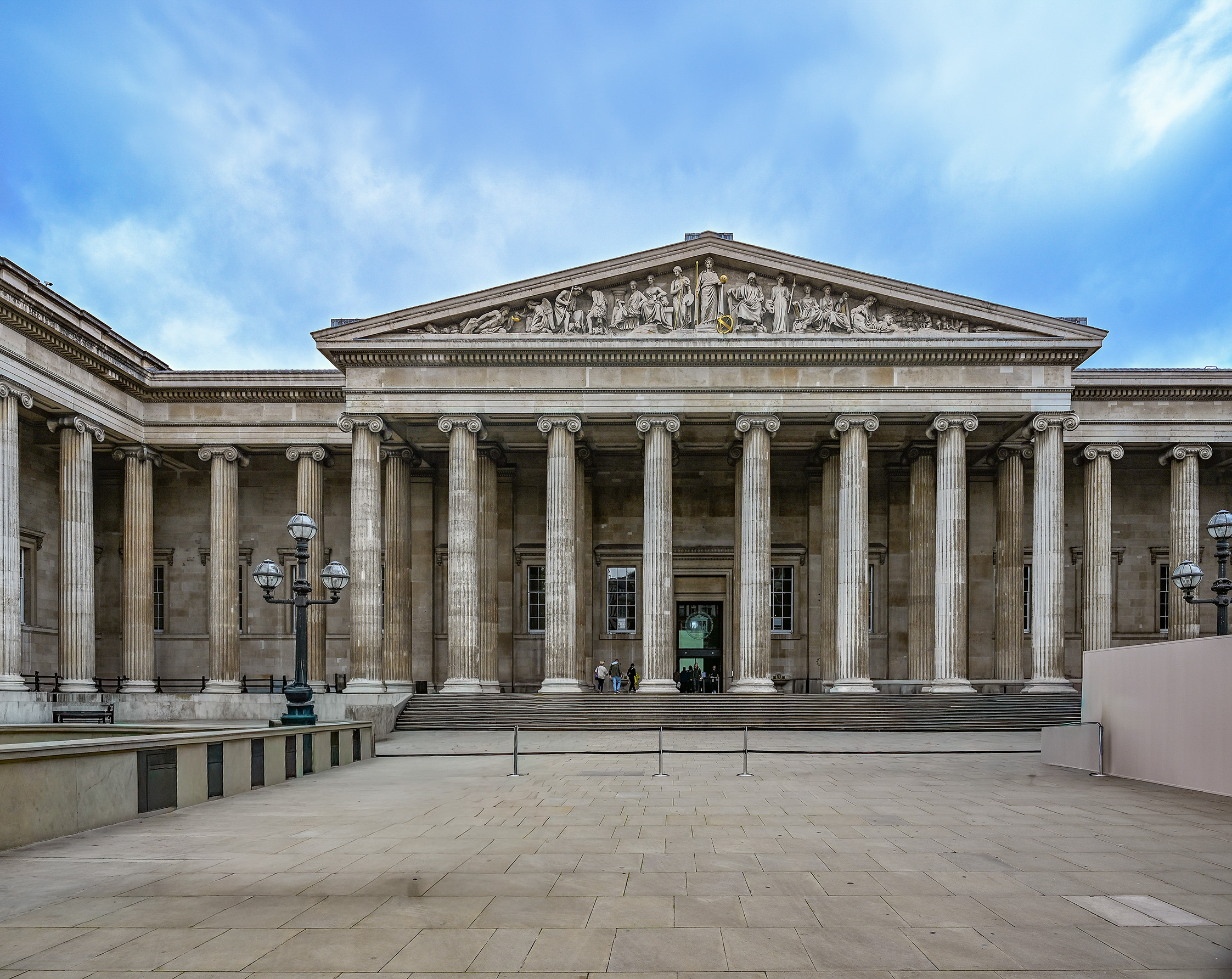
The image depicts the front facade of a grand neoclassical building, characterized by its large, imposing columns and intricate pediment. The structure features a series of tall, fluted columns with ornate capitals, supporting a triangular pediment adorned with detailed sculptures. The entrance is accessed by a set of wide steps, leading up to large doors. The sky above is partly cloudy, and the area in front of the building is an open, paved plaza with a few people visible near the entrance.
The British Museum ‐ photo by ,
©www.mgaylard.co.uk.
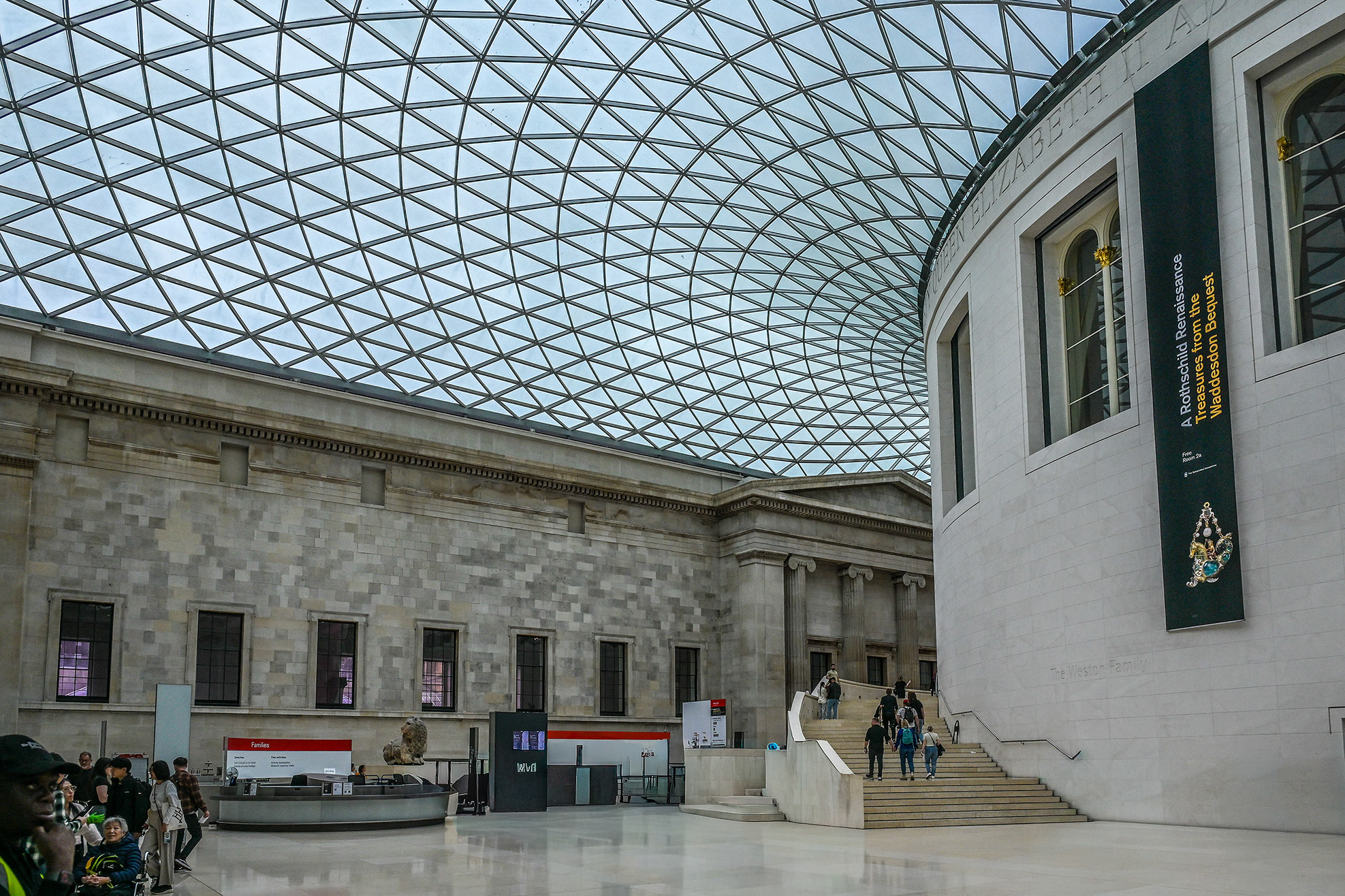
The image depicts the interior of a large, modern building with a distinctive geometric glass roof. The space appears to be a public area, possibly a museum or an exhibition hall, with various people walking around and gathering in groups. The architecture features classical elements such as columns and ornate detailing, combined with contemporary design elements. There are informational displays and signs, including one that mentions 'Ancient India' and another encouraging visitors to 'Get closer as a Member.' The overall atmosphere is spacious and well-lit, with a blend of historical and modern aesthetics.
geometric glass roof ‐ photo by ,
©www.mgaylard.co.uk.
The image depicts the interior of a large, modern building with a distinctive glass roof composed of a geometric grid pattern. The space features classical architectural elements such as stone walls, columns, and large windows. There are several people in the area, some walking up a set of stairs and others gathered around a central information desk. The overall atmosphere is bright and spacious, indicative of a public or cultural institution, likely a museum or gallery.
Foyer ‐ photo by ,
©www.mgaylard.co.uk.
The image depicts the interior of a large, modern building with a distinctive glass roof composed of a geometric grid pattern. The space features classical architectural elements such as stone walls, columns, and large windows. There are several people in the area, some walking up a set of stairs and others gathered around a central information desk. The overall atmosphere is bright and spacious, indicative of a public or cultural institution, likely a museum or gallery.
The space features classical architectural elements such as stone walls, columns, and large windows ‐ photo by ,
©www.mgaylard.co.uk.
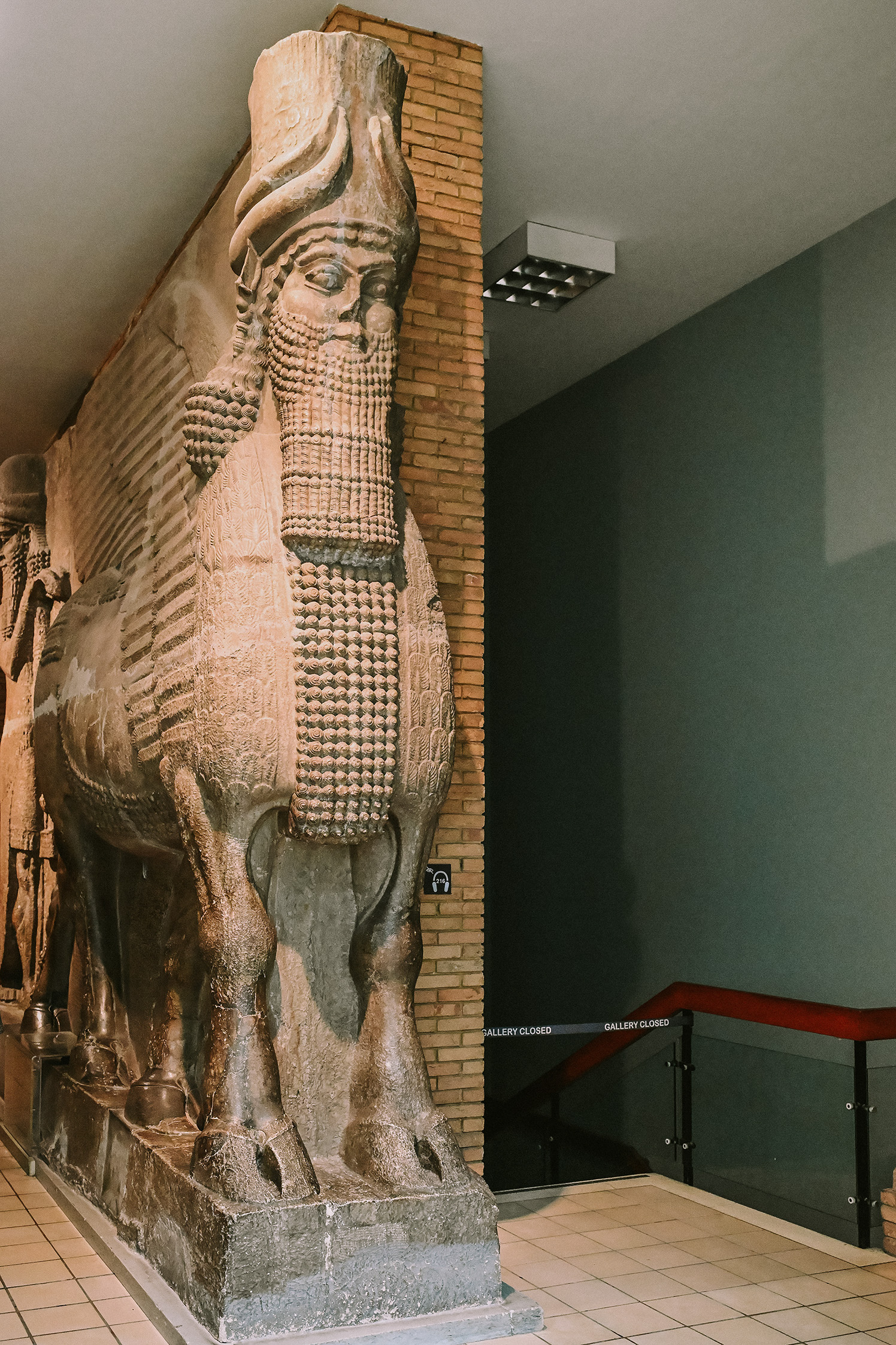
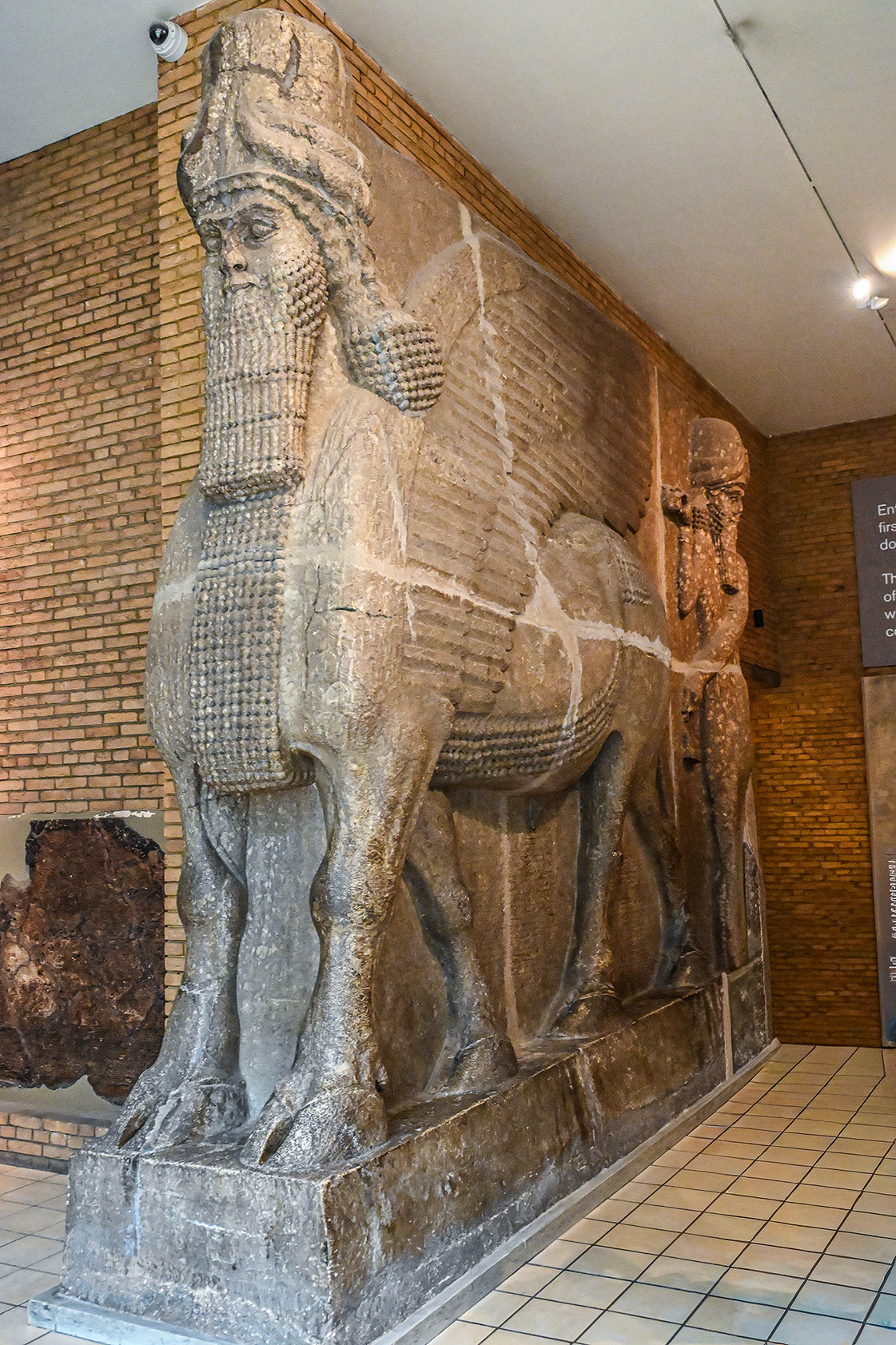
The image shows a large, intricately carved stone statue of a winged figure with a human head and a bull's body, known as a lamassu. This statue is displayed in a museum setting, with a brick wall behind it and a modern gallery environment around it. The lamassu has detailed features, including a beard, headdress, and intricate clothing. The gallery appears to be closed, as indicated by a sign on a glass door.
statue of a winged figure with a human head and a bull's body, known as a lamassu ‐ photo by ,
©www.mgaylard.co.uk.
The image depicts an ancient bas-relief sculpture, likely of Assyrian origin, showcasing a winged figure with detailed features and intricate craftsmanship. The sculpture is displayed in a museum setting with brick walls and tiled flooring. The figure appears to be part of a larger relief panel, with other figures visible in the background. The craftsmanship and style suggest it is a significant historical artifact.
statue of a winged figure with a human head and a bull's body, known as a lamassu ‐ photo by ,
©www.mgaylard.co.uk.
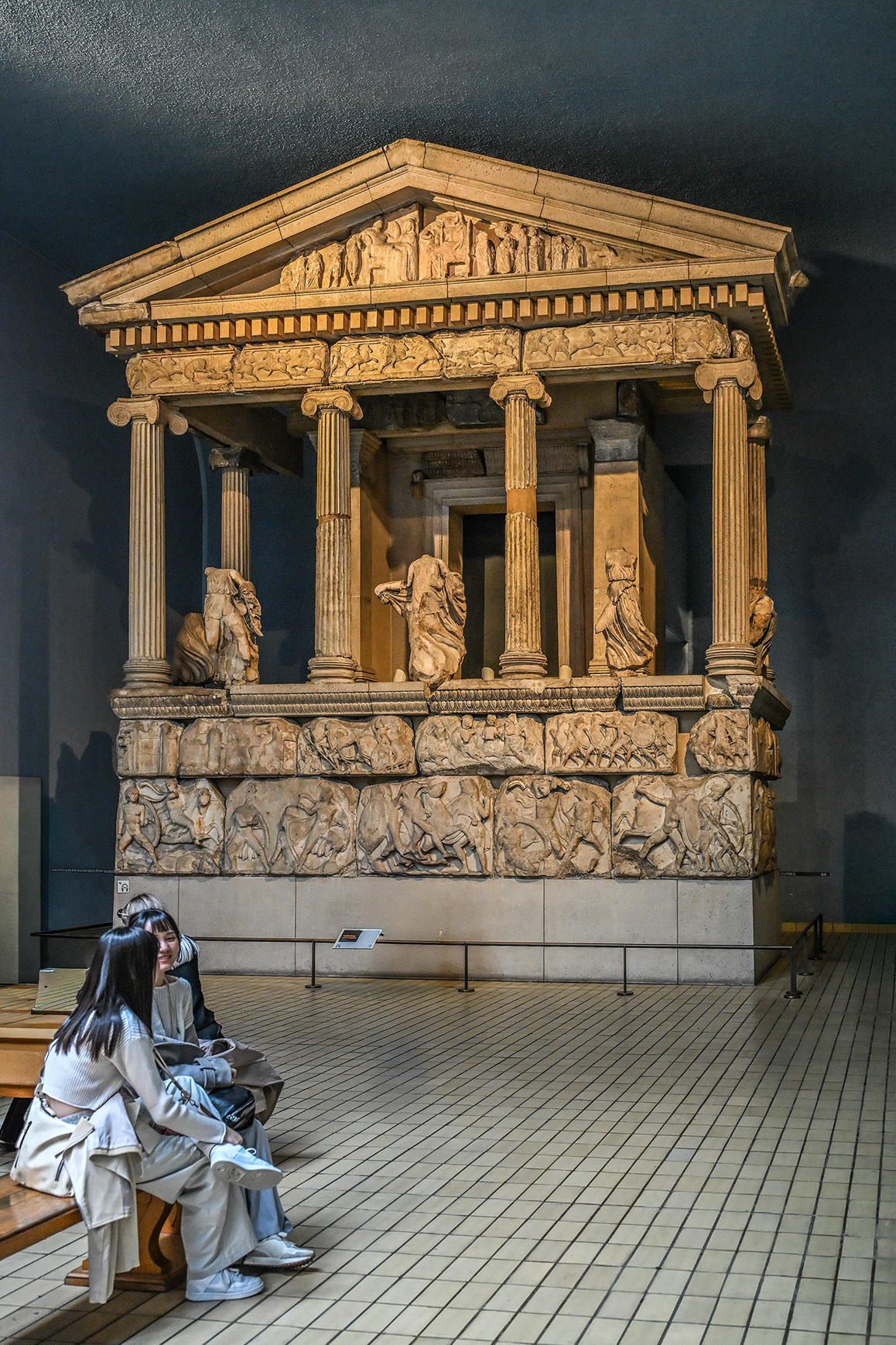
The image shows two individuals sitting and observing an ancient Greek temple-like structure with intricate carvings and statues. The structure features classical architectural elements such as columns and detailed friezes, likely depicting mythological scenes. The setting appears to be an indoor museum or exhibition space, with the individuals seemingly engaged in a discussion or admiring the historical artifact.
an ancient Greek temple-like structure with intricate carvings and statues ‐ photo by ,
©www.mgaylard.co.uk.
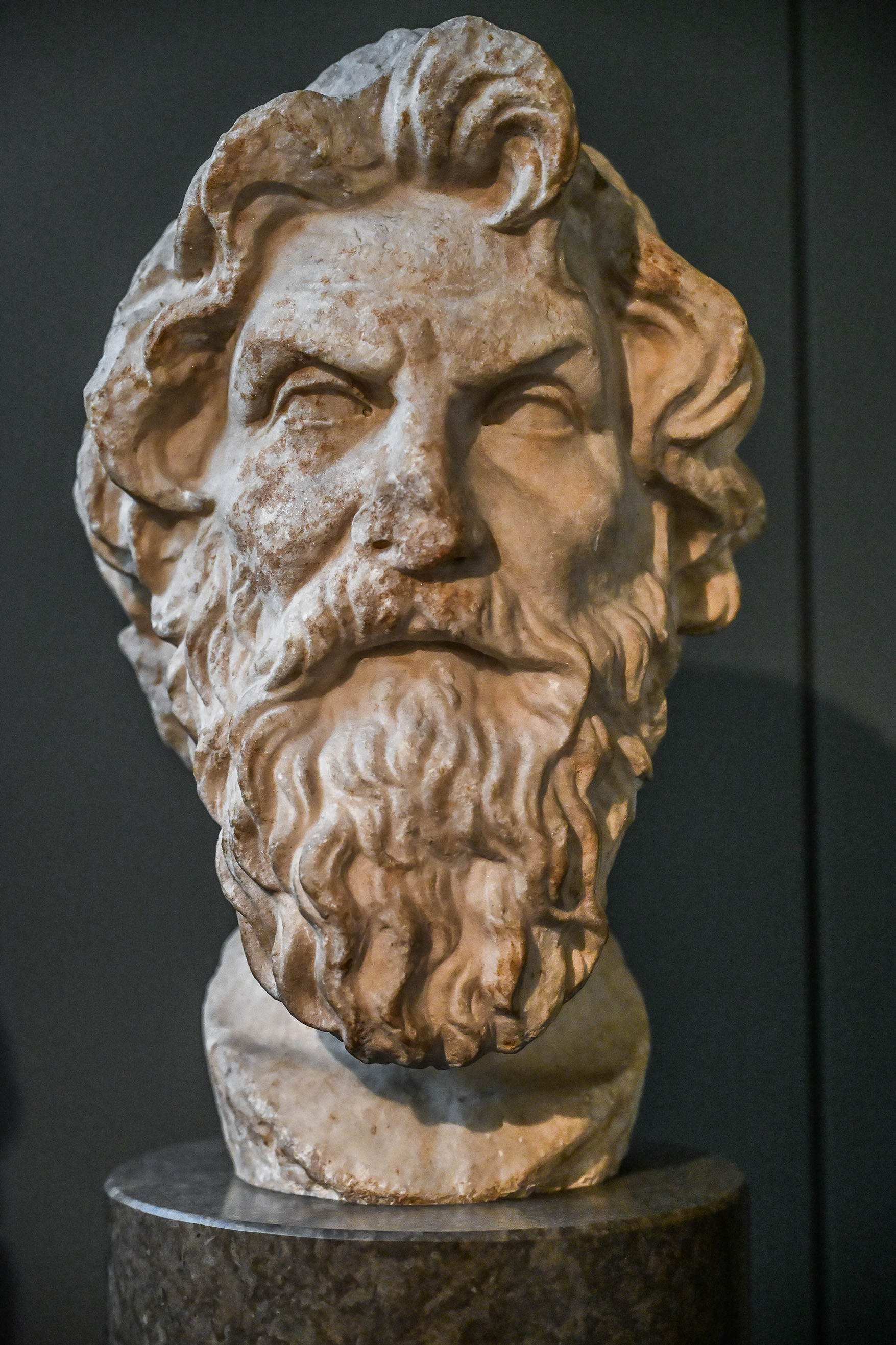
The image depicts a stone bust of an elderly man with a long, curly beard and wavy hair. The sculpture appears to be an ancient or classical artwork, characterized by detailed facial features and a serene expression. The bust is mounted on a cylindrical pedestal, and the background is dark, which accentuates the details of the sculpture.
Antisthenes ‐ photo by ,
©www.mgaylard.co.uk.
The image shows a detailed bust of an elderly man with a beard, likely a historical figure, sculpted from stone or marble. The bust is displayed on a pedestal, and the background is a plain dark surface, which emphasizes the sculpture. The craftsmanship highlights the wrinkles, facial features, and texture of the beard, suggesting a realistic portrayal of the subject.
Chrisyppos ‐ photo by ,
©www.mgaylard.co.uk.
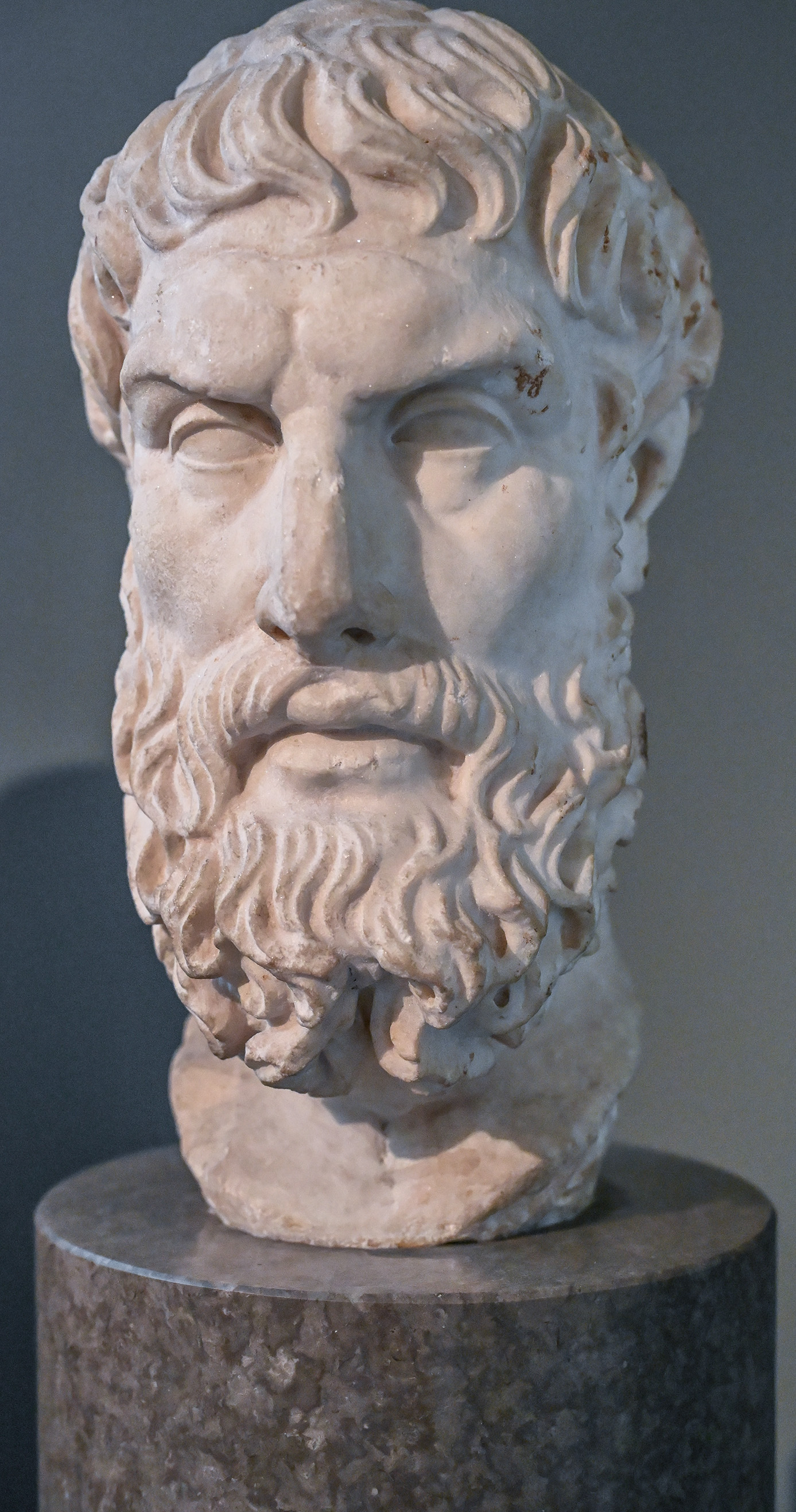
The image shows a marble bust of an ancient figure, likely from classical antiquity. The bust depicts a bearded man with curly hair, characterized by detailed craftsmanship. The eyes appear to be hollow, a common feature in ancient sculptures. The bust is mounted on a cylindrical pedestal, suggesting it is part of a museum or historical collection.
Epikouros ‐ photo by ,
©www.mgaylard.co.uk.
The image depicts a stone sculpture of a bearded face, likely an ancient or classical artifact, characterized by detailed facial features and a prominent beard.
Socrates ‐ photo by ,
©www.mgaylard.co.uk.
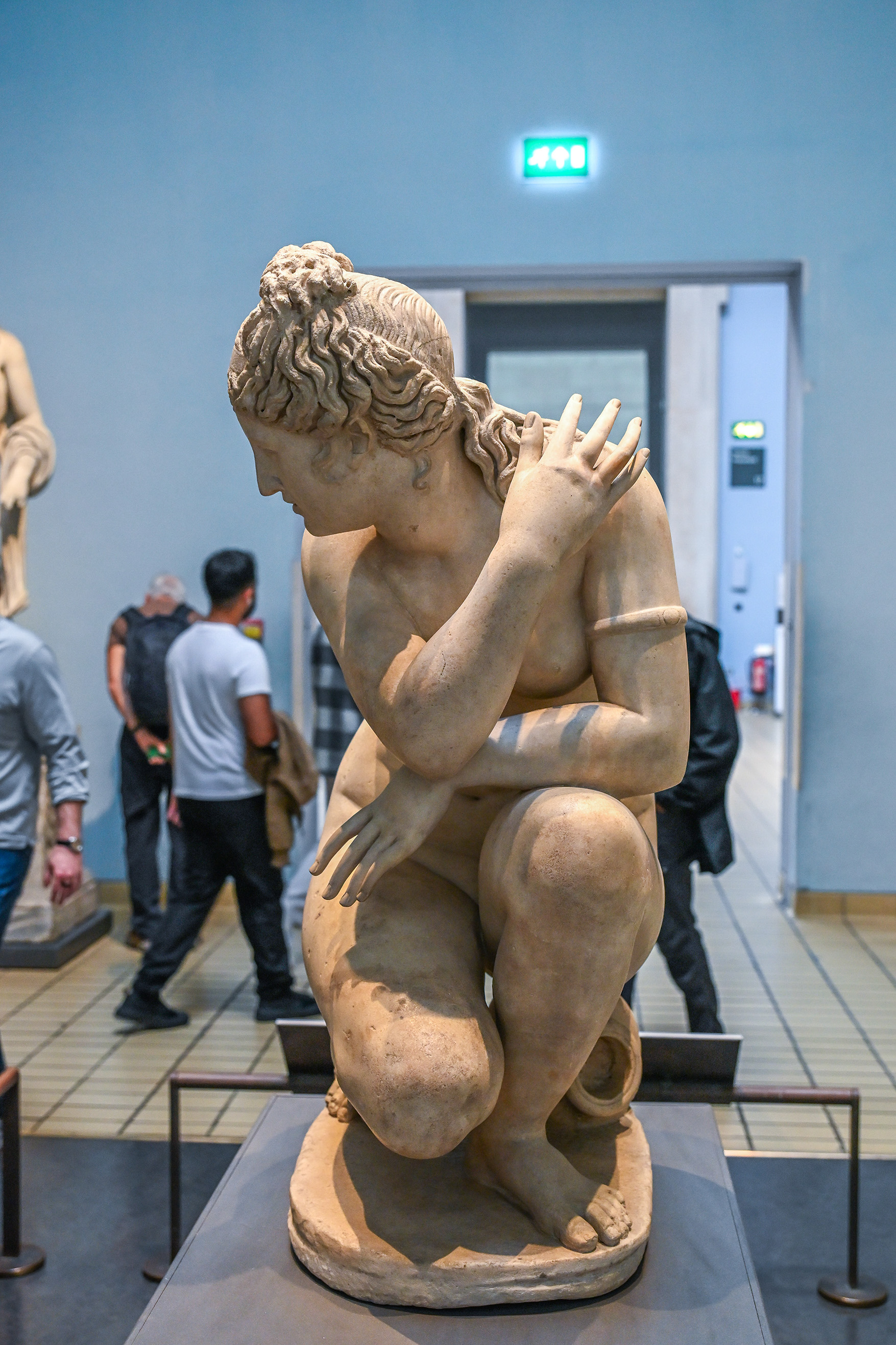
The image shows a classical statue of a seated figure, likely from ancient Greek or Roman art, displayed in a museum. The statue depicts a muscular male figure in a contemplative pose, with one arm resting on its knee and the other hand supporting its head. The figure has detailed curly hair and is shown in a dynamic, slightly twisted position. The statue is placed on a pedestal and is cordoned off with ropes to prevent visitors from touching it. In the background, several people are observing the statue and other artworks in the museum.
Sculpture of Crouching Venus ‐ photo by ,
©www.mgaylard.co.uk.
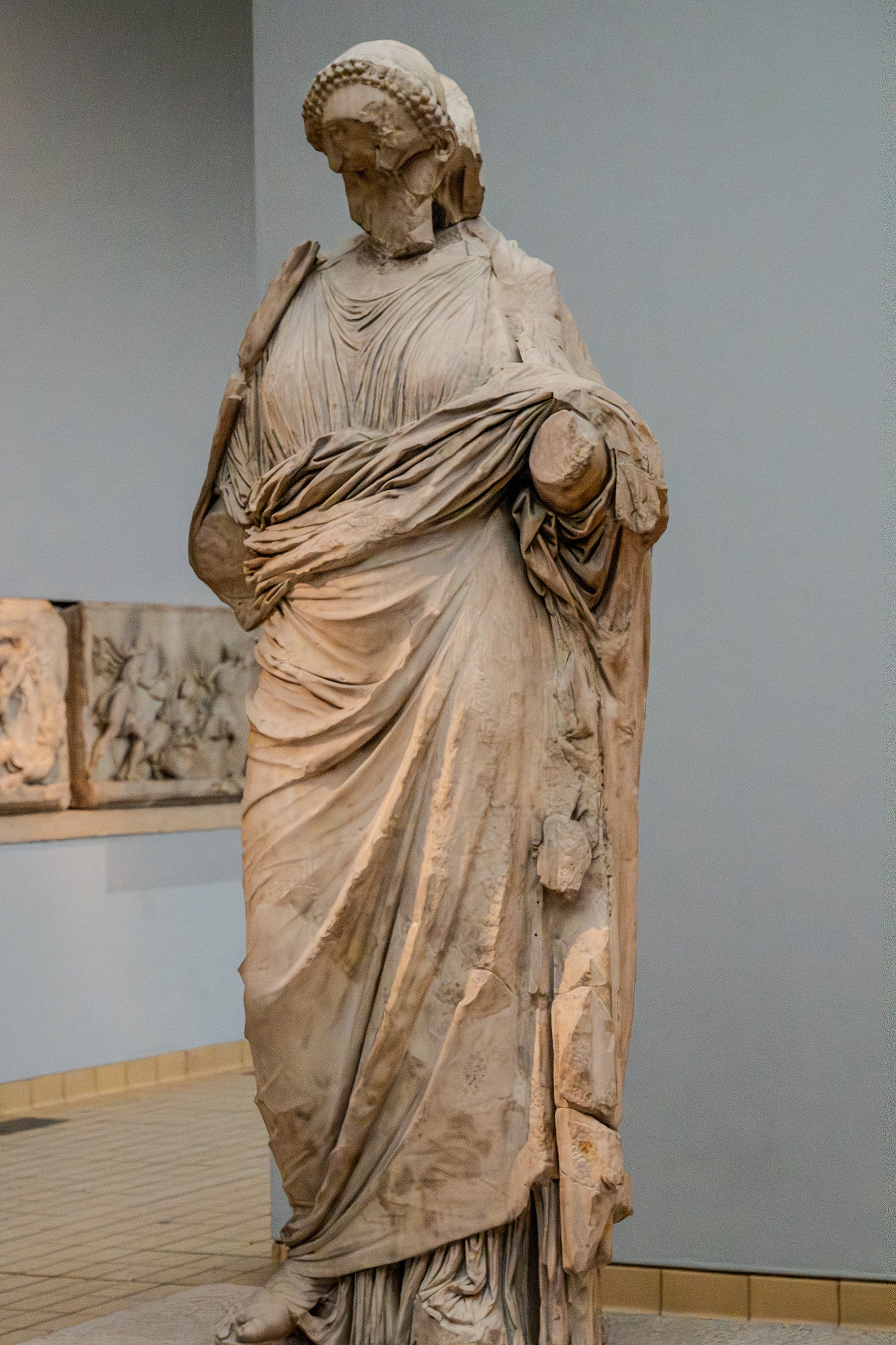
The image depicts a classical statue of a robed figure, likely from ancient Greece or Rome, displayed in a museum. The statue is made of marble and shows a person draped in elaborate, detailed clothing. The figure's head is adorned with a braided hairstyle, and the statue appears to be in a standing pose with one arm bent at the elbow. The background includes a wall with a relief sculpture and a tiled floor.
Artmeisia the wife of Mausollos ‐ photo by ,
©www.mgaylard.co.uk.
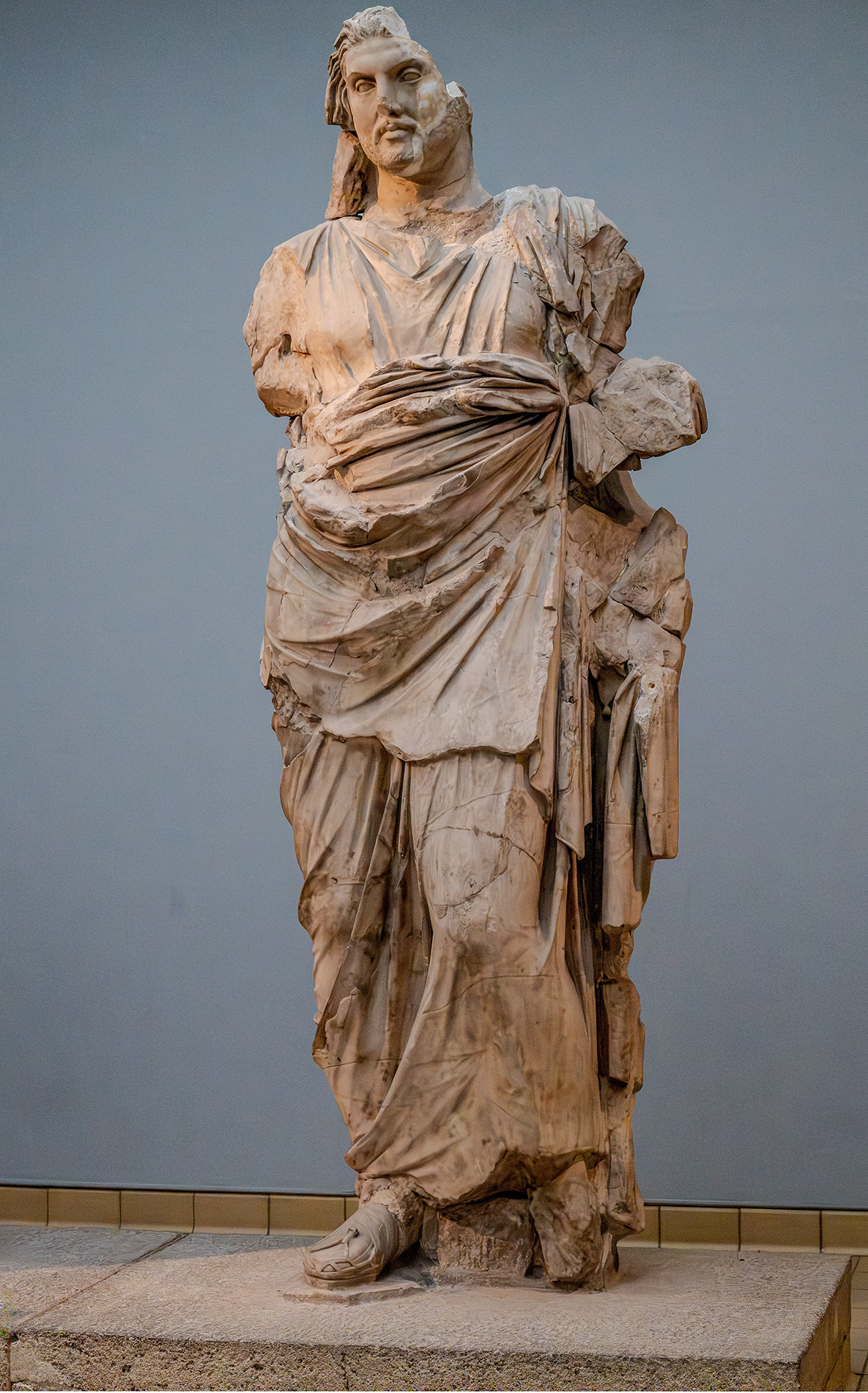
The image depicts a large, ancient statue of a robed figure, possibly from classical antiquity. The statue is made of stone and shows significant wear and damage, with parts of the figure's limbs and drapery missing or broken. The figure is standing upright with one arm bent at the elbow, holding what appears to be a scroll or a similar object. The statue is displayed indoors, likely in a museum setting, with a plain background and a tiled floor.
Statue of Mausollos ‐ photo by ,
©www.mgaylard.co.uk.
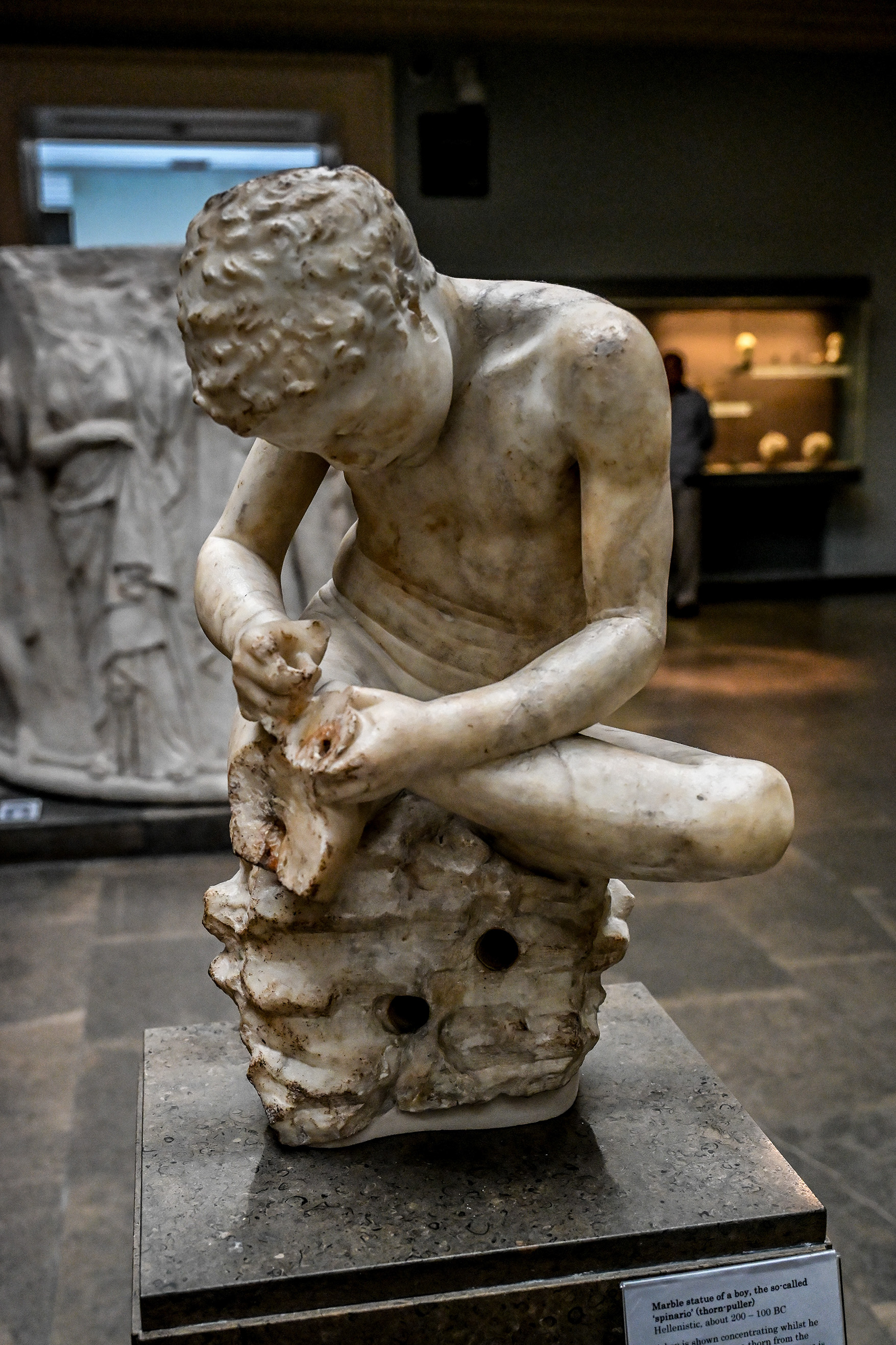
The image shows a marble statue of a boy, known as the 'spinario' or thorn puller, from the Hellenistic period around 200-100 BC. The statue depicts the boy in a concentrated pose as he removes a thorn from the sole of his foot. The statue is displayed in a museum setting, with a descriptive plaque in front of it.
The Thorn Puller ‐ photo by ,
©www.mgaylard.co.uk.
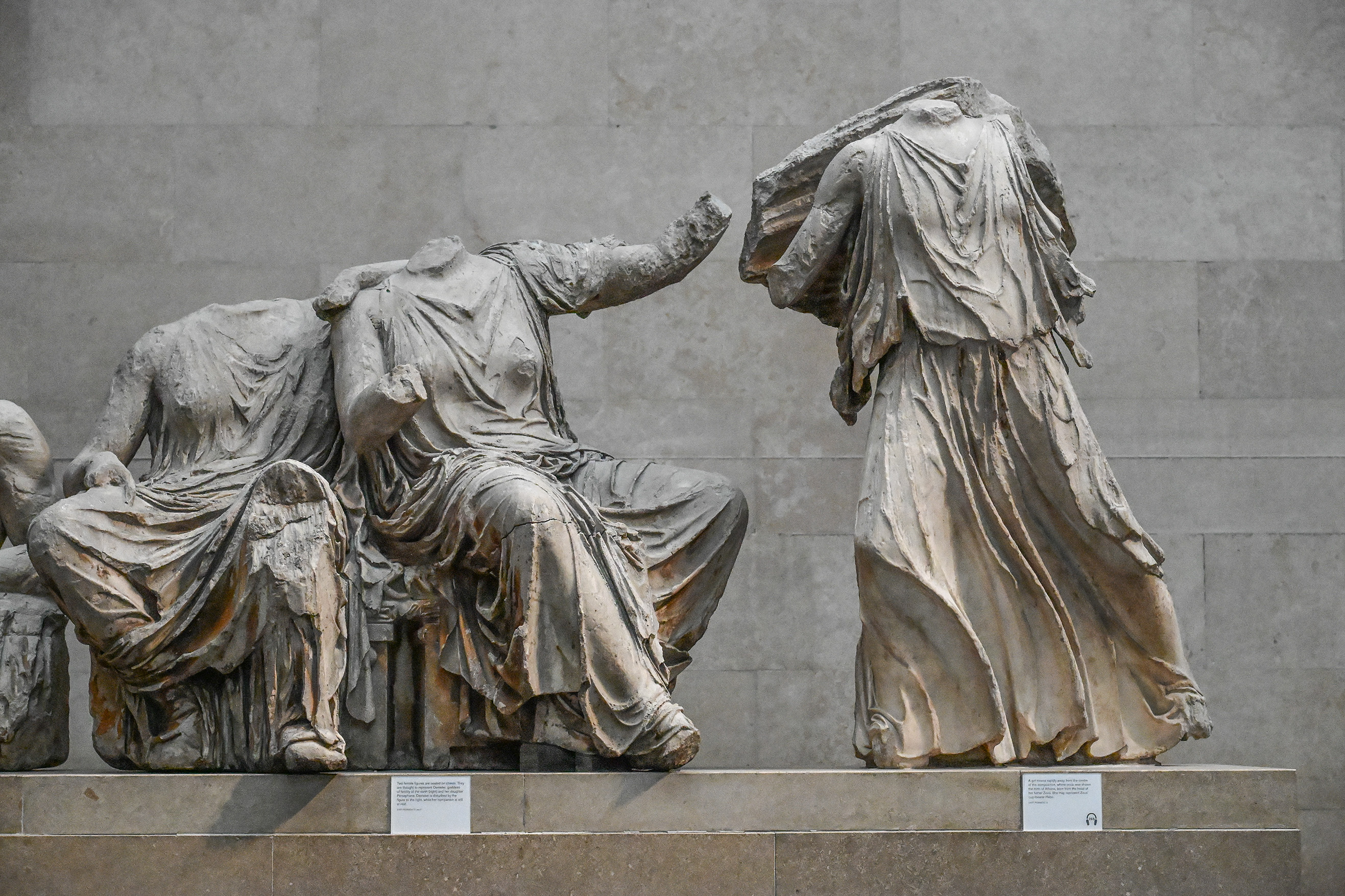
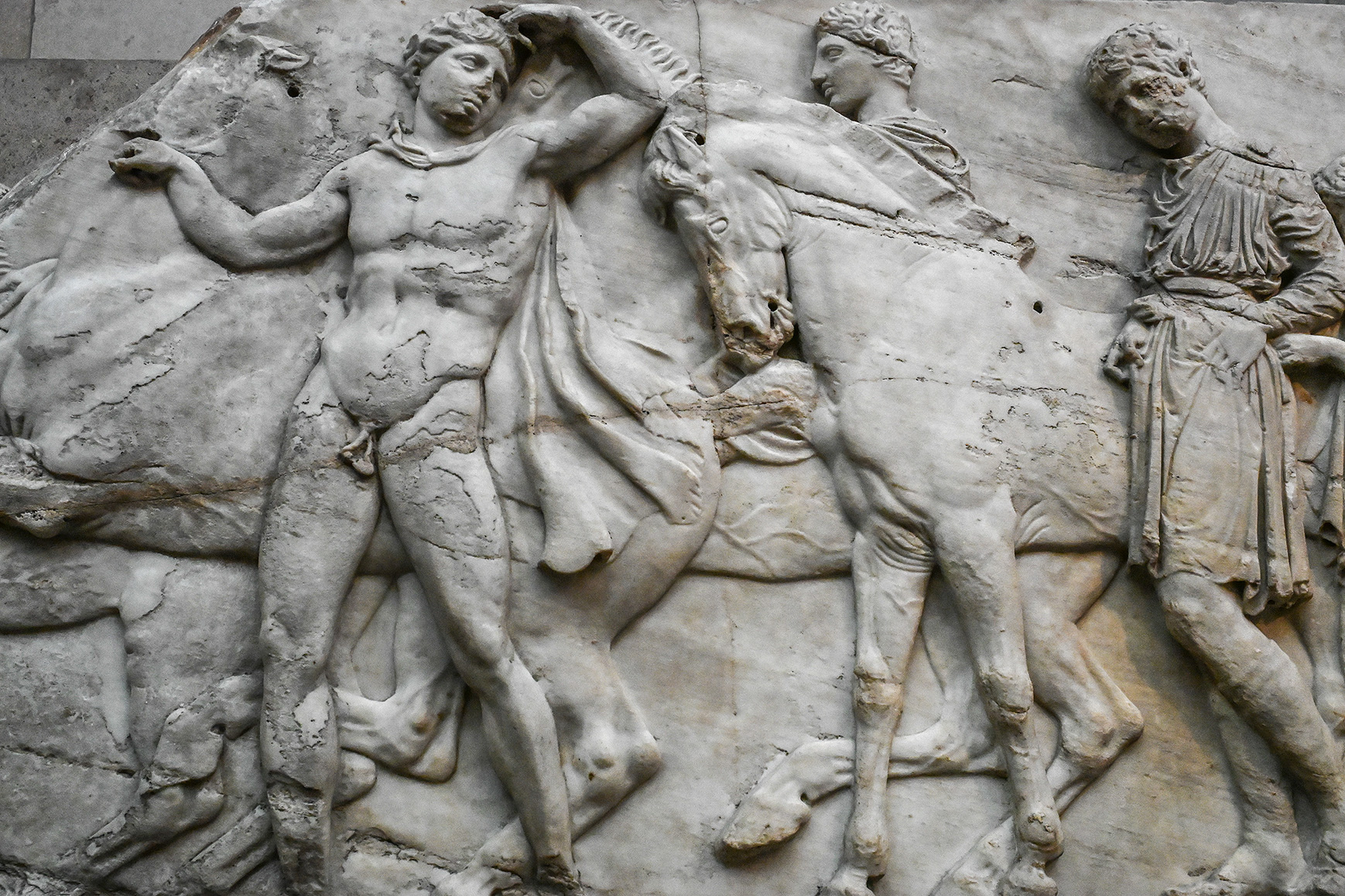
The document describes a marble sculpture from the Parthenon, created around 442-438 BC by an unknown sculptor. It depicts three figures: Artemis, goddess of the hunt; a seated goddess, possibly Demeter or Hestia; and a third figure, likely Iris or another goddess. The sculpture is part of the 'Pediment of the Parthenon' and is currently housed in the British Museum. The figures are shown in a dramatic scene, with Artemis gesturing towards a bull, and the seated goddess in a contemplative pose. The sculpture is noted for its intricate details and the flowing drapery of the figures' garments.
a marble sculpture from the Parthenon ‐ photo by ,
©www.mgaylard.co.uk.
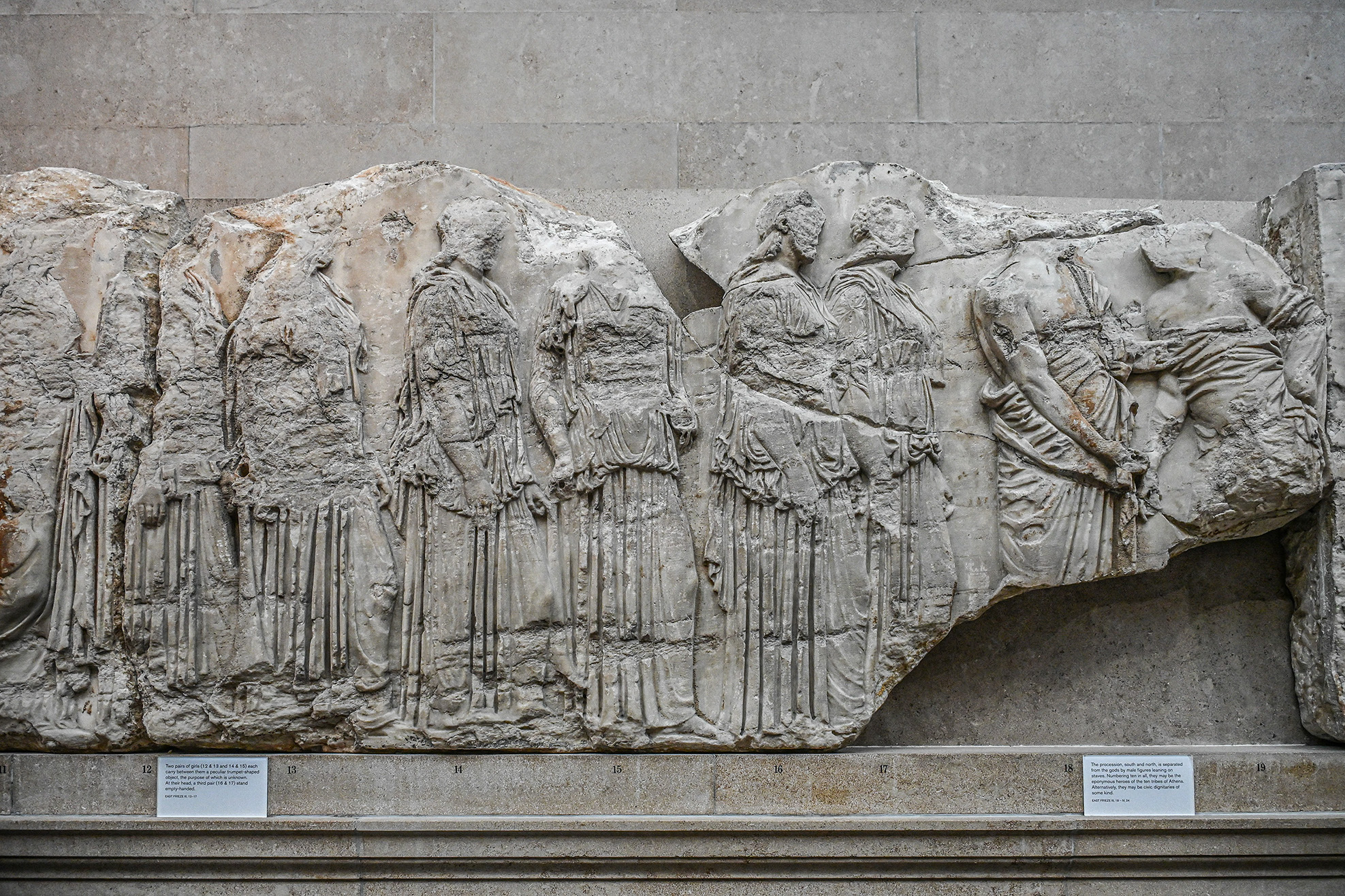
The image depicts an ancient stone relief sculpture featuring a group of figures dressed in flowing robes. The figures appear to be in various poses, with some holding objects or gesturing. The sculpture shows signs of aging and weathering, with some areas of the stone appearing darker, possibly due to the remnants of paint or staining. The craftsmanship suggests it could be of historical or cultural significance, potentially dating back to ancient Greek or Roman times.
a marble sculpture from the Parthenon ‐ photo by ,
©www.mgaylard.co.uk.
The image depicts an ancient Greek frieze, a sculpted relief originally part of a larger architectural structure. It features a procession of robed figures, likely from classical antiquity, showcasing intricate detailing of their garments and postures. The figures appear to be in a ceremonial or religious context, reflecting the artistic style and cultural themes of ancient Greek art.
a marble sculpture from the Parthenon ‐ photo by ,
©www.mgaylard.co.uk.
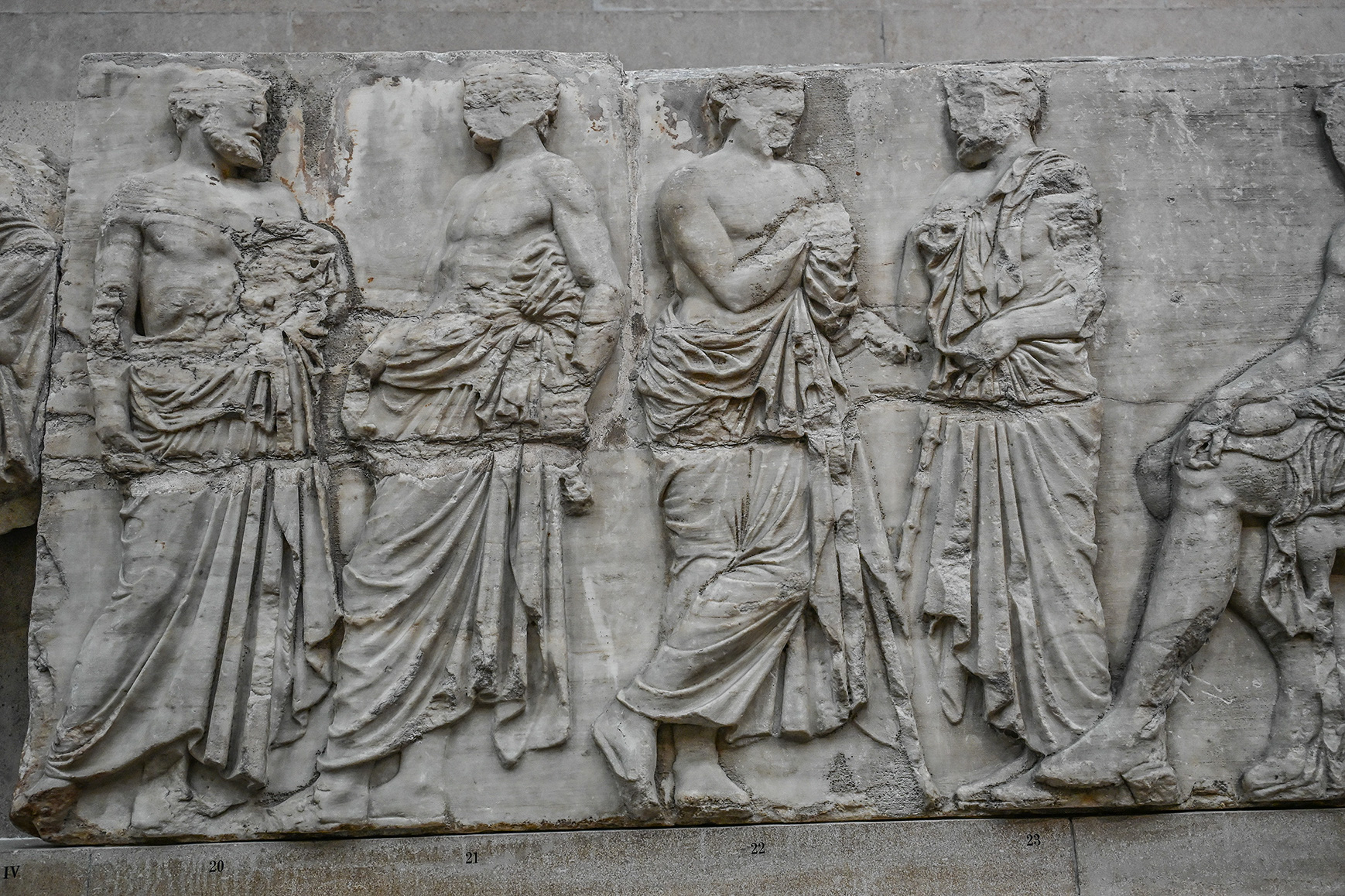
The image depicts an ancient Greek frieze, a sculpted relief originally part of a larger architectural structure. It features a procession of robed figures, likely from classical antiquity, showcasing intricate detailing of their garments and postures. The figures appear to be in a ceremonial or religious context, reflecting the artistic style and cultural themes of ancient Greek art.
a marble sculpture from the Parthenon ‐ photo by ,
©www.mgaylard.co.uk.
The image depicts an ancient Greek relief sculpture featuring a group of figures in flowing robes, likely goddesses or important women, standing in a row. The sculpture showcases intricate details of drapery and form, characteristic of classical Greek art. The figures are partially eroded, indicating its age and historical significance. This type of artwork is often found in museums or historical sites dedicated to ancient Greek culture.
a marble sculpture from the Parthenon ‐ photo by ,
©www.mgaylard.co.uk.
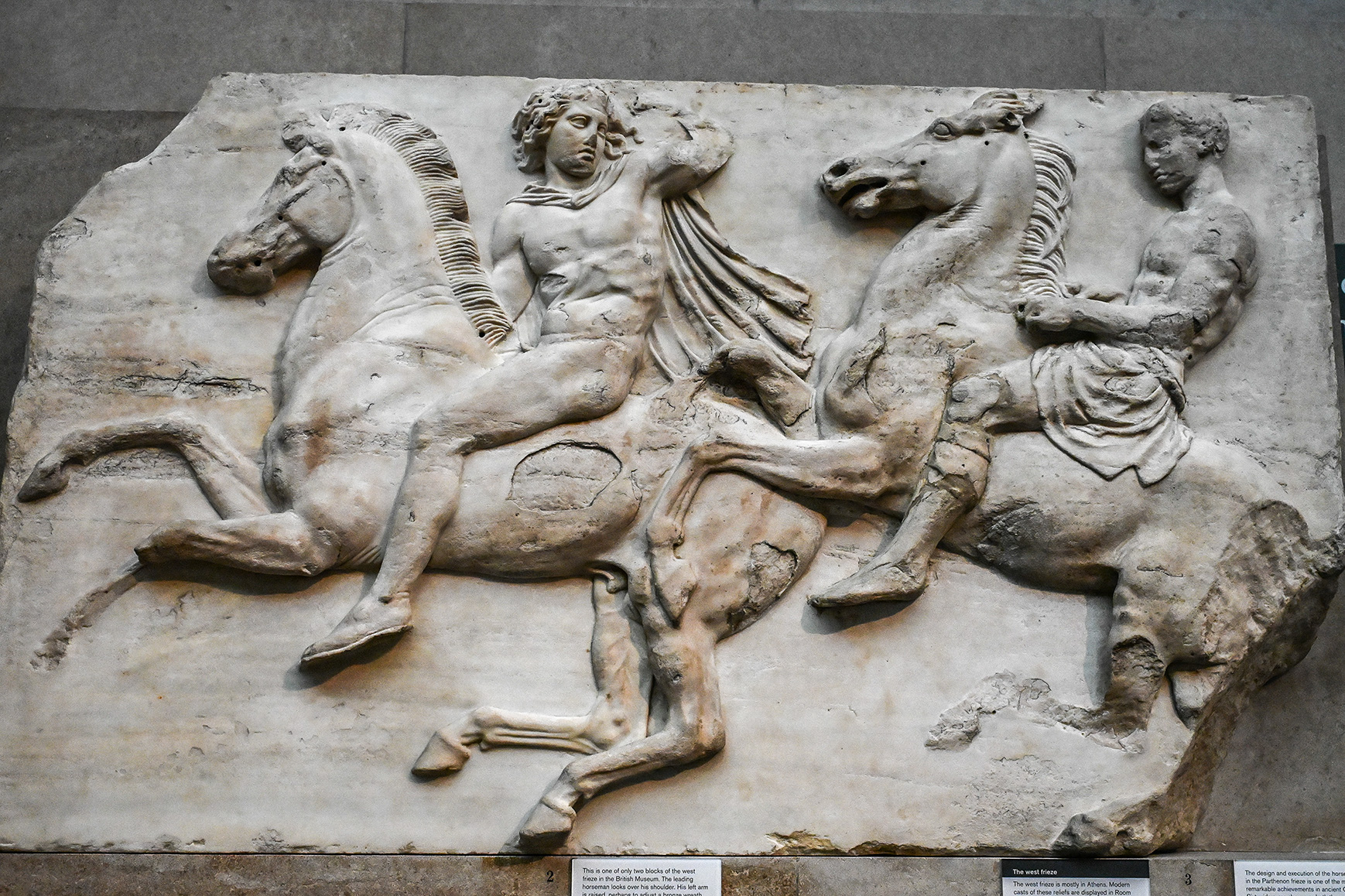
The image depicts a marble relief sculpture featuring two men riding horses. The central figure is a bearded man, likely a warrior, holding a spear and a shield, riding a horse. He is accompanied by another figure, possibly a younger man or a boy, who is also on horseback. The sculpture is part of the west frieze of the Parthenon and is currently housed in the British Museum. The relief showcases the detailed craftsmanship and artistic style characteristic of ancient Greek art, highlighting the dynamic movement and anatomical precision of the figures.
a marble sculpture from the Parthenon ‐ photo by ,
©www.mgaylard.co.uk.
The image depicts a classical Greek sculpture, likely a marble relief, featuring three human figures and a horse. The central figure is a muscular man holding a horse by its reins, while the other two figures, dressed in draped garments, appear to be engaged in some form of activity or interaction. The art style and attire suggest it is from ancient Greece, possibly representing a mythological or historical scene.
a marble sculpture from the Parthenon ‐ photo by ,
©www.mgaylard.co.uk.
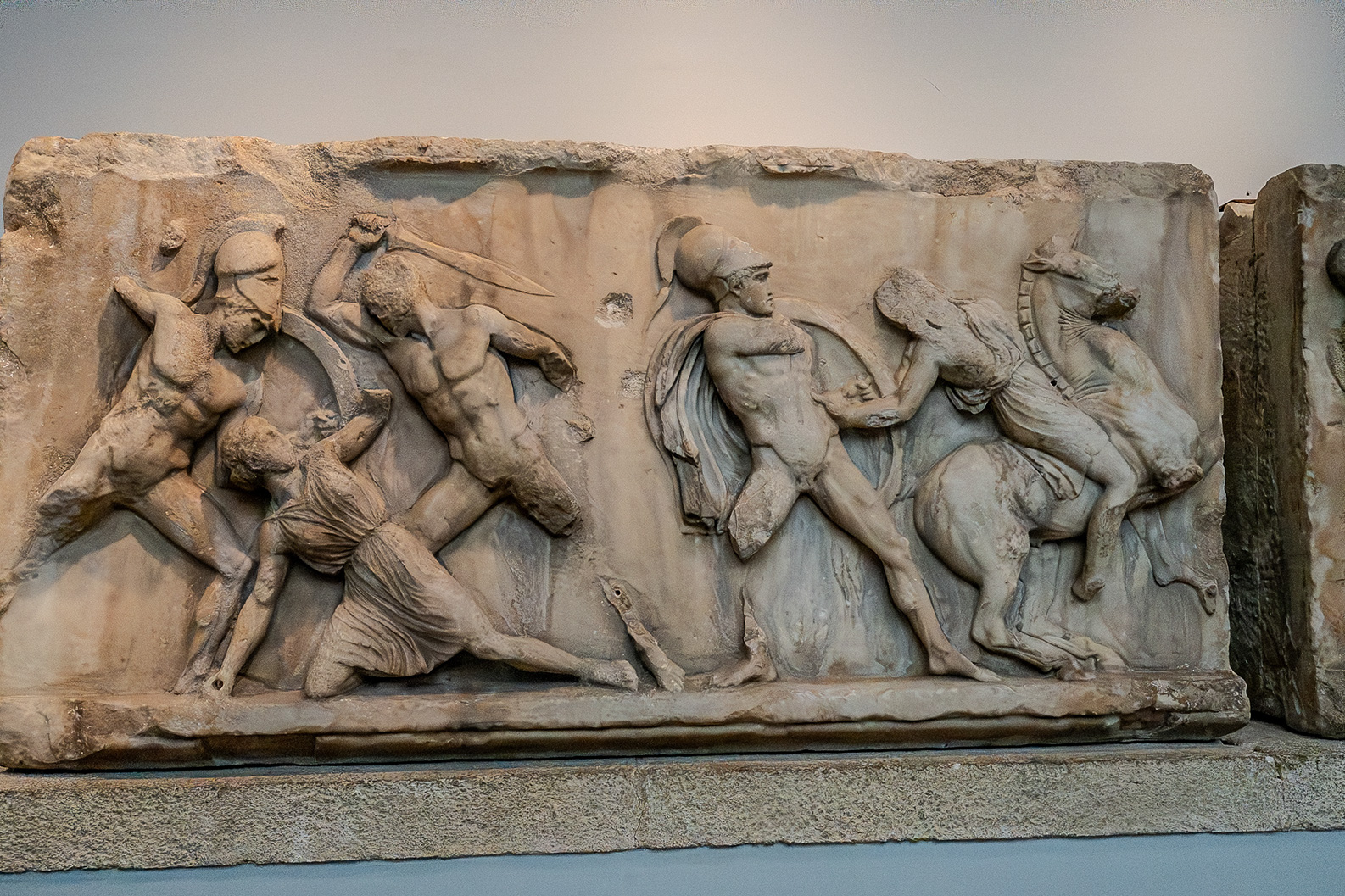
The image depicts an ancient Greek relief sculpture showing a battle scene with various figures engaged in combat, including soldiers and a horse. The sculpture is intricately detailed, capturing the dynamic movement and intensity of the battle. The figures are shown in a combination of defensive and offensive poses, highlighting the chaos and action of the scene. The relief is likely part of a larger architectural element, possibly from a temple or monument, and showcases the artistic skill of the period.
a marble sculpture from the Parthenon ‐ photo by ,
©www.mgaylard.co.uk.
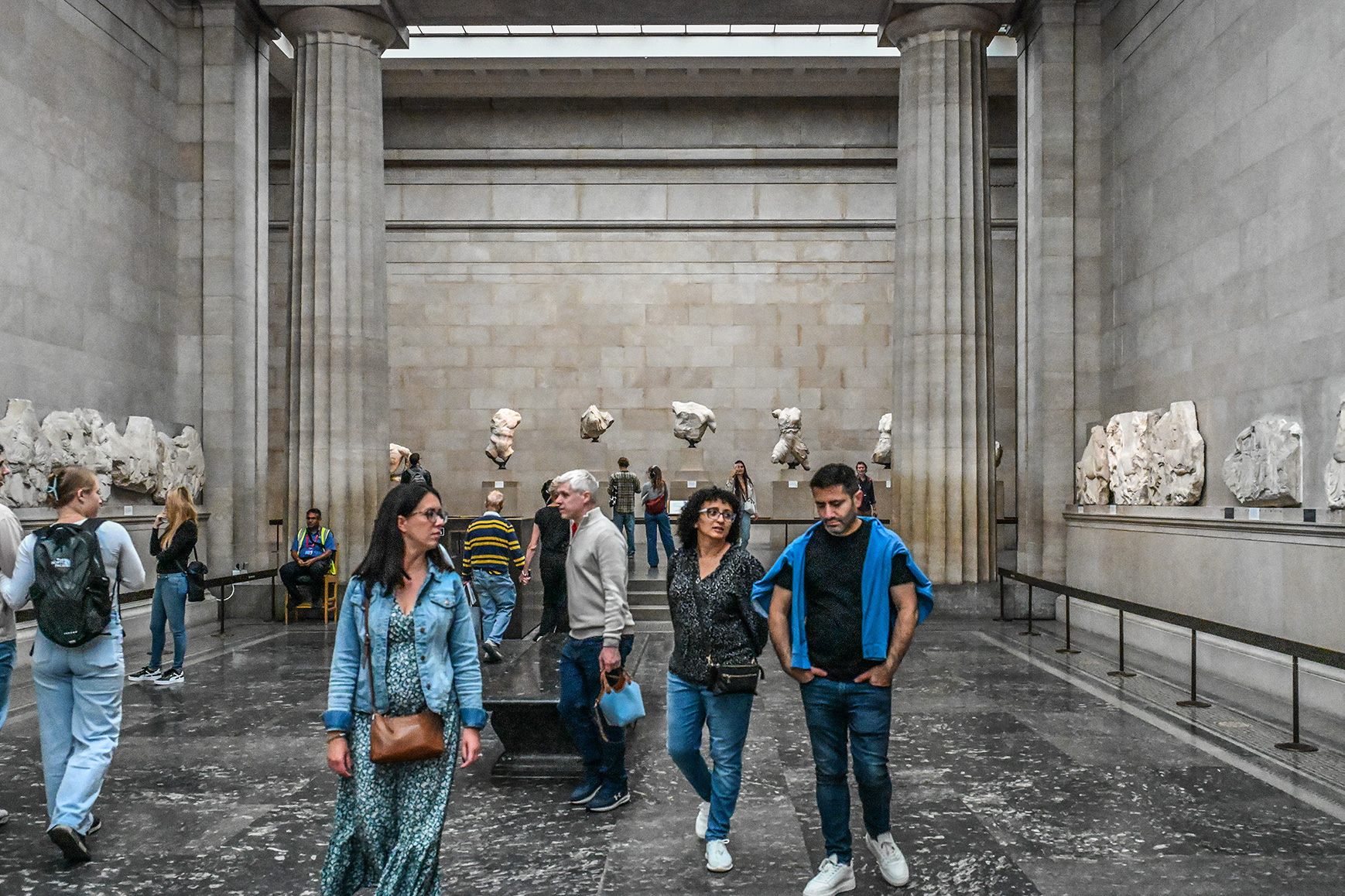
The image depicts a group of people walking through a museum gallery adorned with ancient stone carvings and sculptures. The gallery features large stone columns and fragments of classical sculptures mounted on the walls. Visitors are seen observing the exhibits, with some standing and others walking through the space. The atmosphere suggests a quiet, contemplative environment typical of a museum setting.
a group of people walking through a museum gallery ‐ photo by ,
©www.mgaylard.co.uk.
Open the full set flickr button this page

The British Museum

The British Museum was founded in 1753 based on the collection of Sir Hans Sloane, a physician and naturalist. It was the first national public museum in the world

The museum's collection has grown to over 8 million objects, spanning human history from its beginnings to the present
The museum is located in Bloomsbury, London, and is renowned for its grand architecture and extensive collections. The Great Court, with its glass roof, is a major highlight
The museum houses many famous artifacts, including the Rosetta Stone, the Elgin Marbles, and treasures from the Sutton Hoo ship burial

References

www.timeout.comwww.britannica.com , Text generated by Mistral AI
To the top
Powered by w3.css. The images are all stored on link to www.gaylard.co.uk Photostream on Flickr   This website is hosted by link to 123Reg Web Hosting