HOME

Chelsea and Pimlico

The Royal Hospital Chelsea

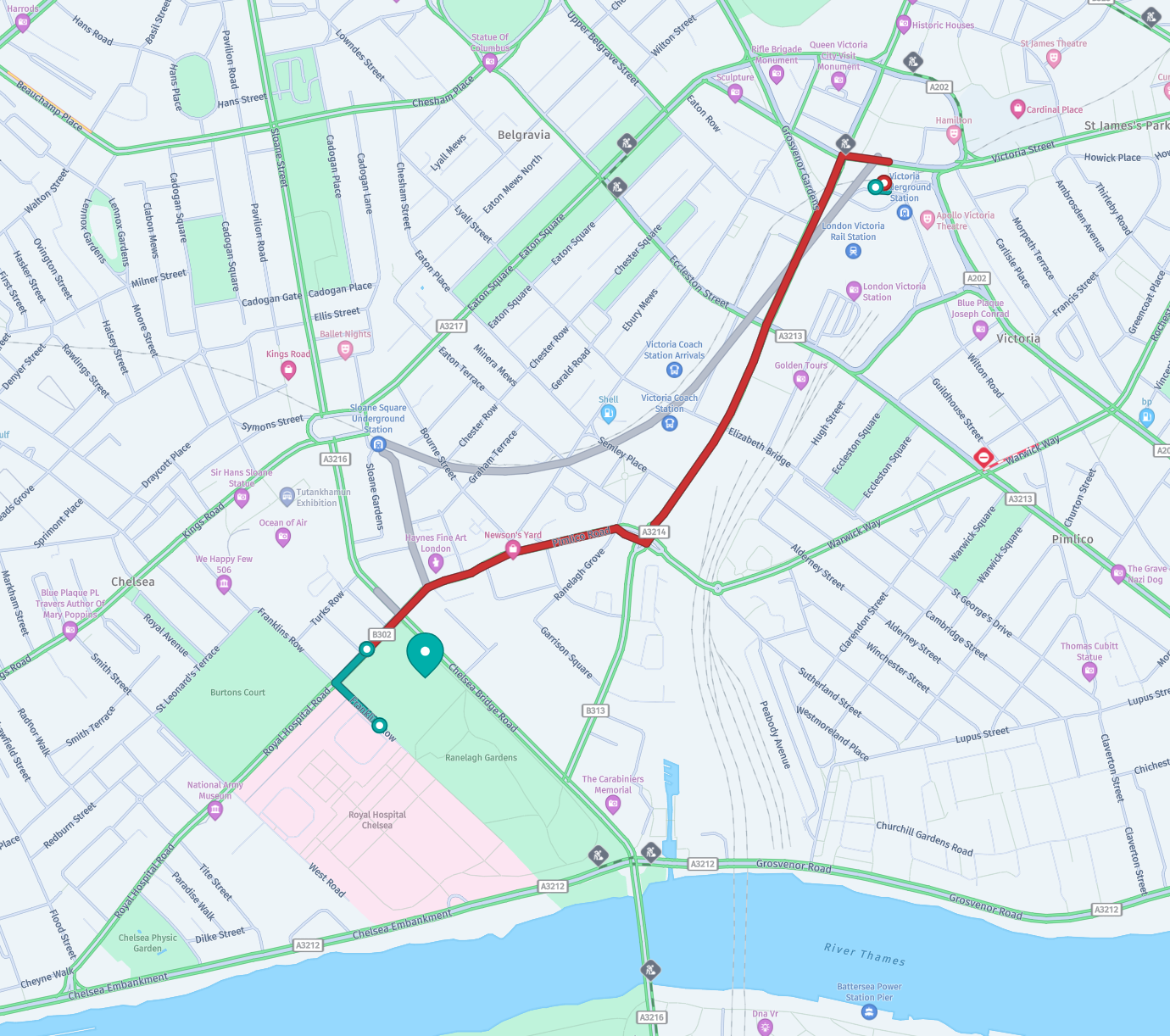
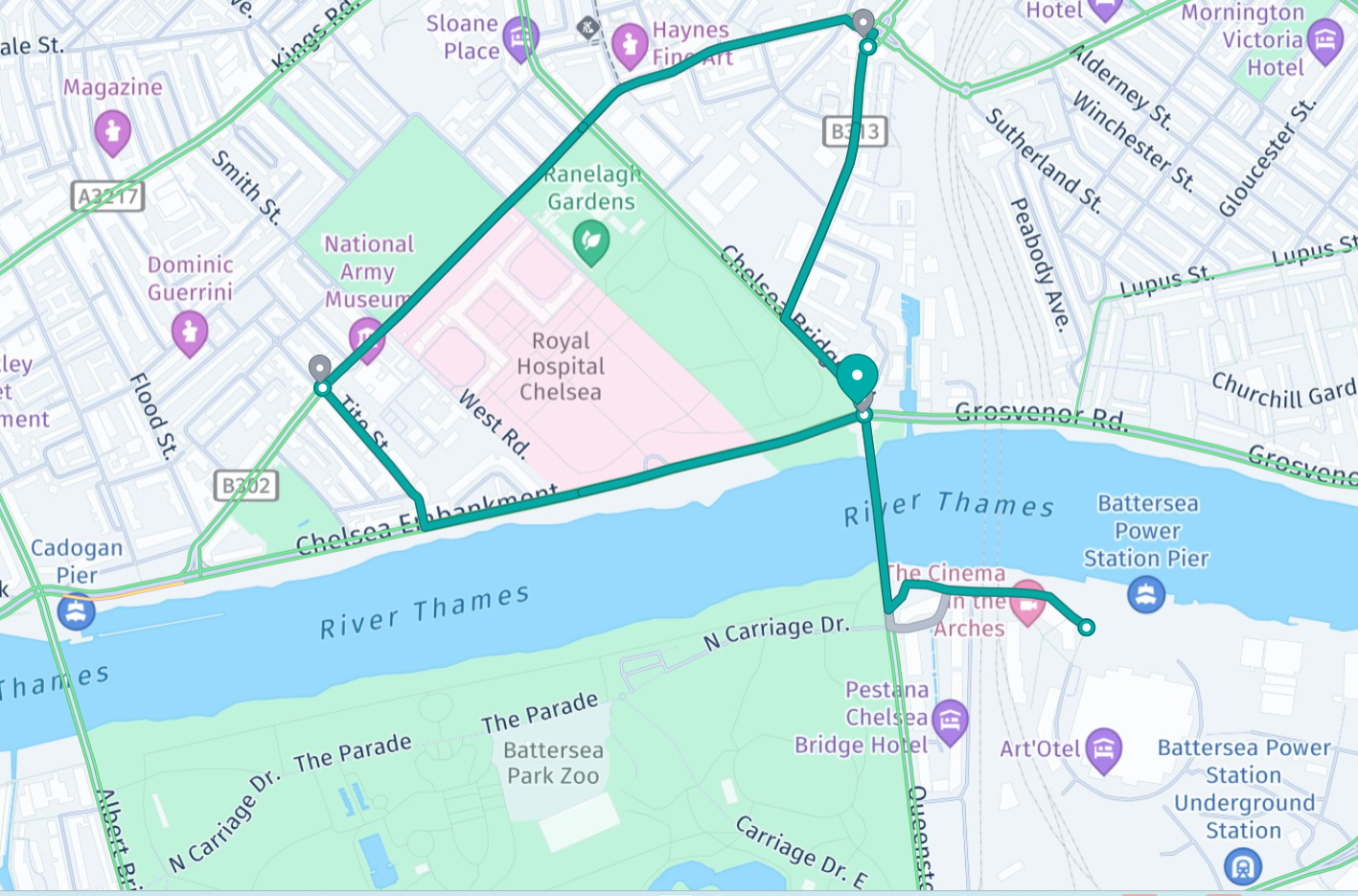
Royal Hospital RoadChelseaLondon,   United Kingdom

The Royal Hospital Chelsea is a retirement home and nursing home for British Army veterans, founded by King Charles II in 1682. Located in Chelsea, London, it is renowned for its stunning Baroque architecture designed by Sir Christopher Wren. The hospital is also famous for its annual Chelsea Pensioners in their distinctive scarlet coats and the Chelsea Flower Show, held in its grounds.
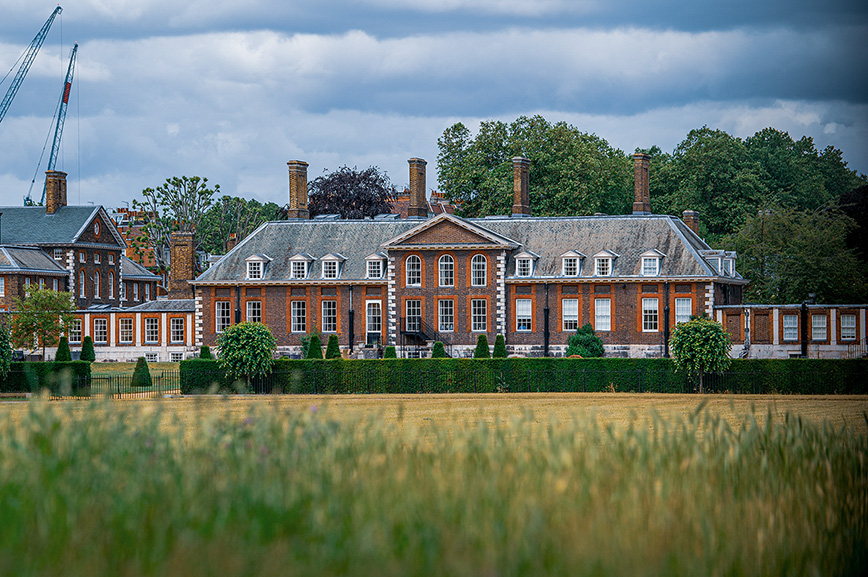
The image depicts a large, historic building with classical architecture, featuring red brick walls, white accents, and a prominent central entrance with a dome and columns. The building is set in an open field with tall grass in the foreground and a cloudy sky overhead.
The Royal Hospital ‐ photo by ,
©www.mgaylard.co.uk.
The image depicts a modern urban scene with a large, contemporary building complex featuring glass facades and multiple chimneys. In the foreground, there is a bridge with distinctive red supports crossing over a body of water. The sky is overcast, and construction cranes are visible, indicating ongoing development in the area.
Chelsea Bridge ‐ photo by ,
©www.mgaylard.co.uk.
The image shows a large boat labeled 'UberBoat by thames clipper' on a body of water, with a distinctive pagoda-style structure and lush greenery in the background.
The River Thames at Chelsea ‐ photo by ,
©www.mgaylard.co.uk.
The image depicts a river scene with a barge in the foreground and a suspension bridge in the middle ground. On the far side of the river, there are several boats docked, and in the background, there are modern buildings and construction cranes, indicating ongoing development. The sky is overcast, and there are trees visible on the left side of the image.
The River Thames at Chelsea ‐ photo by ,
©www.mgaylard.co.uk.
The image depicts a river scene with several boats docked along the bank. In the background, there is a bridge under construction with multiple cranes and scaffolding visible. Tall buildings and construction sites are also present, indicating ongoing development in the area.
The River Thames at Chelsea ‐ photo by ,
©www.mgaylard.co.uk.
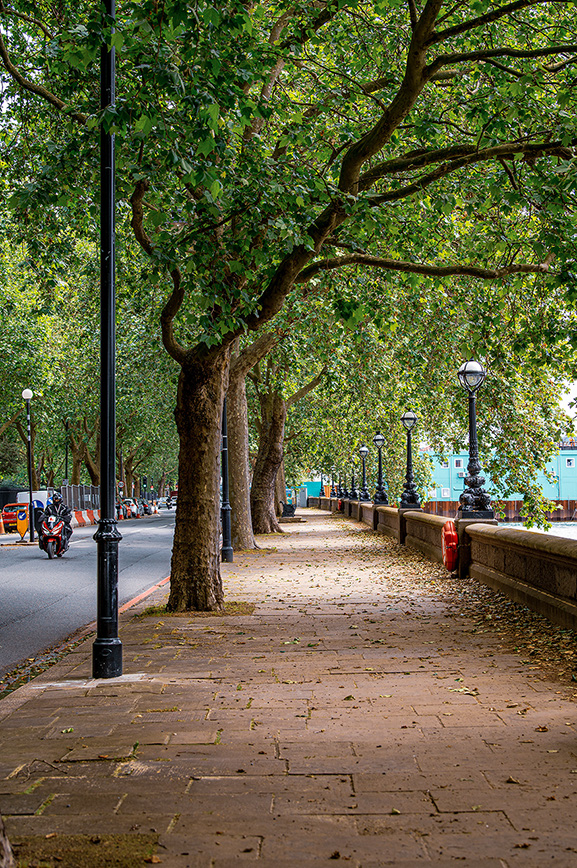
The image depicts a serene, tree-lined sidewalk along a street. The trees have thick trunks and lush green foliage, providing ample shade. The sidewalk is made of stone tiles and is bordered by black lampposts. A road runs parallel to the sidewalk, with a few vehicles visible in the distance. The scene is peaceful and well-maintained, suggesting a quiet, possibly residential area.
Chelsea Embankment  ‐ photo by ,
©www.mgaylard.co.uk.
The image depicts a serene pathway lined with trees and lampposts, creating a tranquil and inviting atmosphere. The path is bordered by a stone wall on one side and trees on the other, with fallen leaves scattered on the ground, suggesting it might be autumn. The lampposts are evenly spaced, adding to the aesthetic appeal of the scene. In the background, there are some colorful structures and a bus, indicating that the path might lead to a more urban area.
Chelsea Embankment ‐ photo by ,
©www.mgaylard.co.uk.

Chelsea Embankment is a scenic riverside promenade in central London, running along the north bank of the River Thames between Chelsea Bridge and the Albert Bridge, lined with historic houses and lush greenery. Originally constructed in the 19th century, it offers picturesque views, a popular walking route, and access to landmarks like the Chelsea Physic Garden and the Royal Hospital Chelsea.
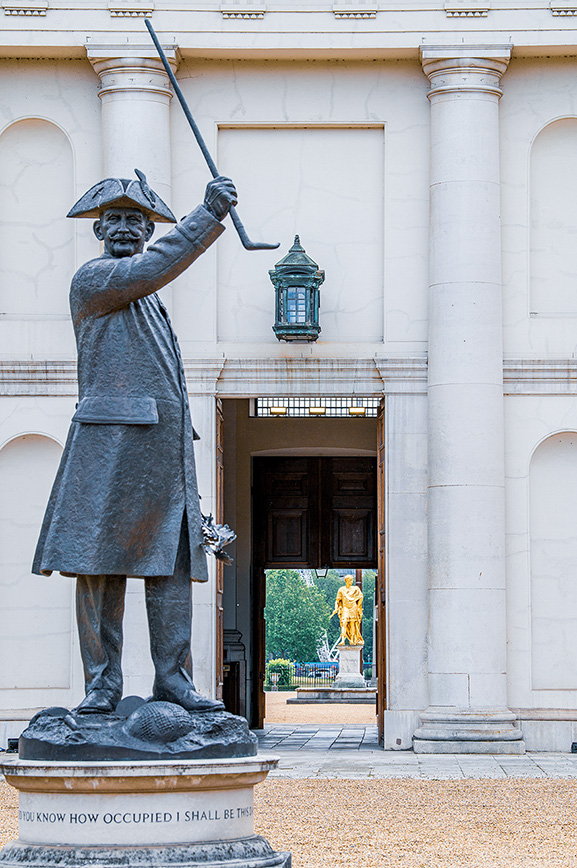
The image shows a statue of a man in historical attire, standing in front of a building with columns. The statue holds a pole in one hand and has a tricorn hat. The base of the statue has an inscription. Through the open doors of the building, another statue can be seen in the background.
The In-Pensioner Statue ‐ photo by ,
©www.mgaylard.co.uk.
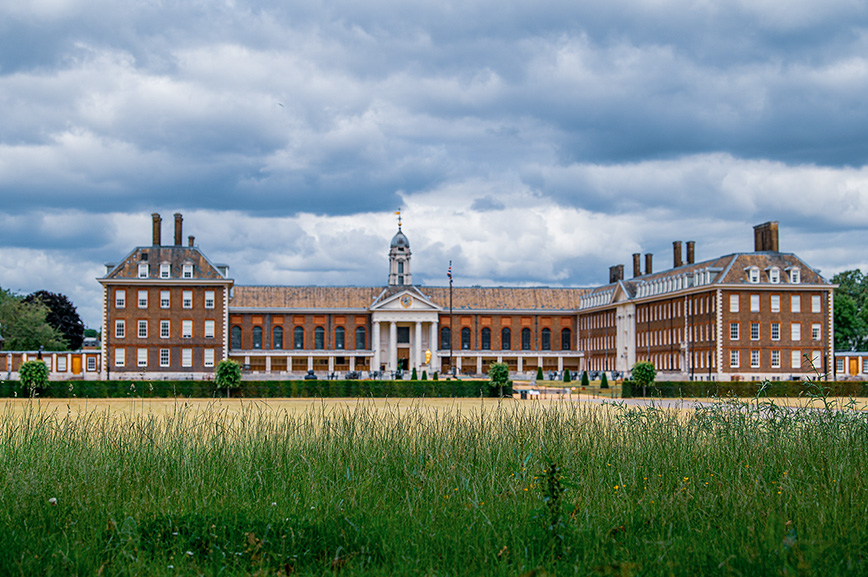
The image depicts a large, historic building with classical architecture, featuring red brick walls, white accents, and a prominent central entrance with a dome and columns. The building is set in an open field with tall grass in the foreground and a cloudy sky overhead.
Royal Hospital Chelsea ‐ photo by ,
©www.mgaylard.co.uk.
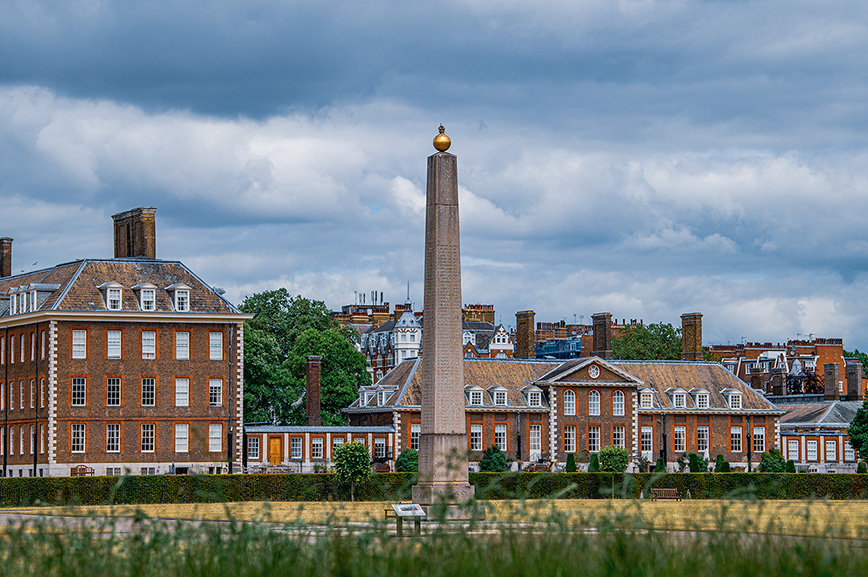
The image depicts a historic building with a tall obelisk in the foreground. The building is made of red brick with white detailing and features multiple chimneys and dormer windows. The sky is overcast, and the scene is set in a well-maintained, green open space.
Memorial Obelisk, Royal Hospital ‐ photo by ,
©www.mgaylard.co.uk.
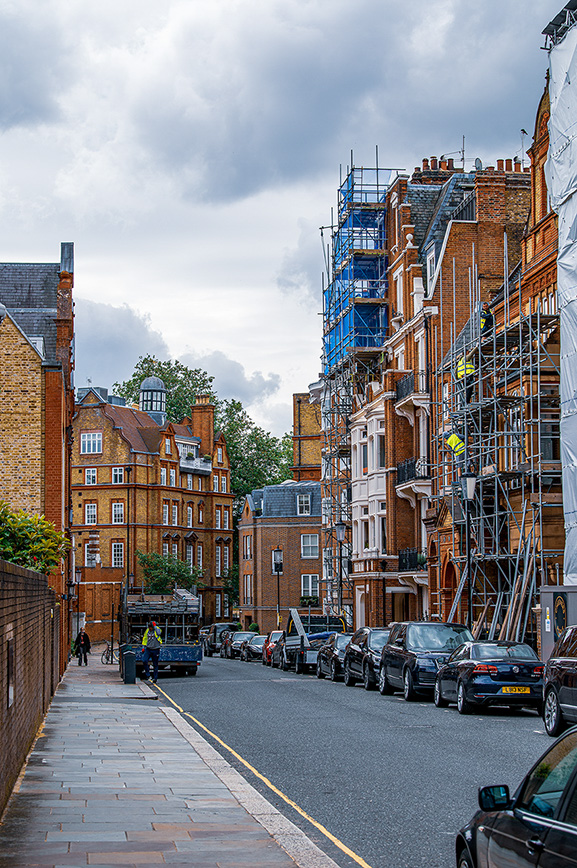
The image depicts a street in a residential area with brick buildings, some of which are under construction or renovation as evidenced by the scaffolding. Cars are parked along the street, and a few people are visible walking or riding bicycles. The sky is overcast, suggesting it might rain soon.
Tite Street, Chelsea ‐ photo by ,
©www.mgaylard.co.uk.
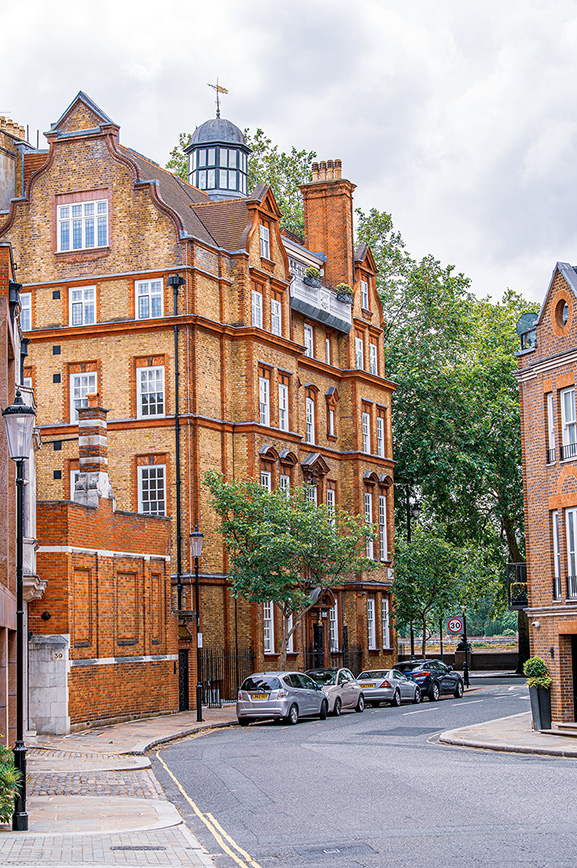
The image depicts a street scene with a prominent, multi-story brick building featuring classic architectural details such as arched windows, decorative cornices, and a dome-like structure on the roof. The building has a distinct, historical appearance with a mix of red and brown bricks. Several cars are parked along the street in front of the building, and the street itself is lined with trees and traditional street lamps. The overall setting suggests a quiet, possibly residential or upscale urban area.
Tite Street, Chelsea ‐ photo by ,
©www.mgaylard.co.uk.
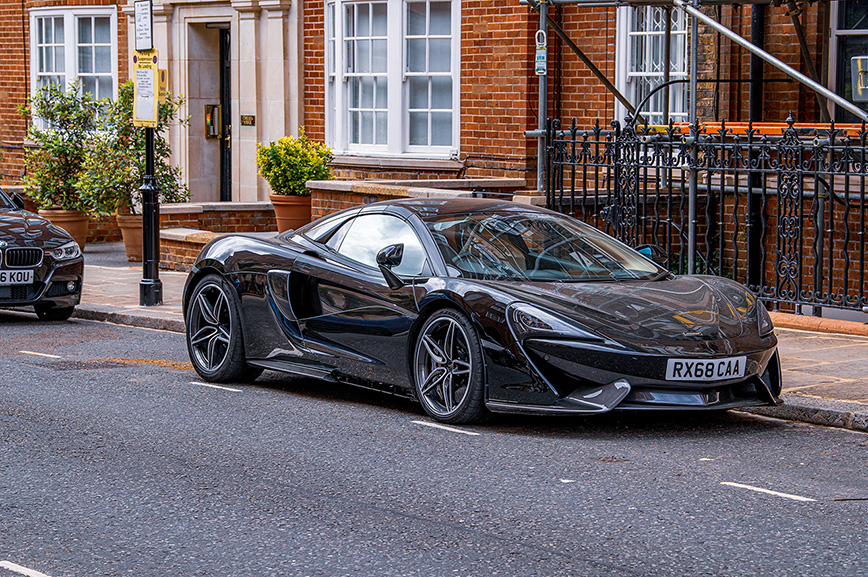
The image shows a sleek, black sports car parked on a street in front of a brick building with large windows and a black wrought iron fence. The car has a low profile, aerodynamic design, and distinctive features such as a large air intake on the side and a prominent front splitter. The license plate reads 'RX68 CAA'. There is another car parked behind the sports car, and the street is lined with potted plants and a lamppost.
Chelsea Chariot ‐ photo by ,
©www.mgaylard.co.uk.
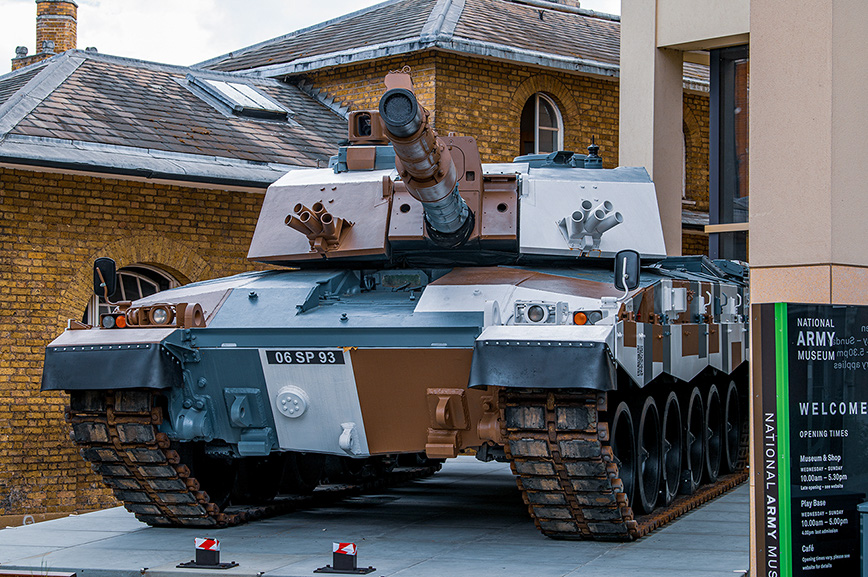
The image shows a military tank displayed outside the National Army Museum. The tank has the identification number '06 SP 93' and features camouflage paint. The museum's sign is visible, providing information about opening times and facilities. The setting appears to be an urban area with brick buildings in the background.
Chelsea Off-Roader ‐ photo by ,
©www.mgaylard.co.uk.
Open the full set flickr button this page

Royal Hospital Chelsea

The Royal Hospital Chelsea was founded in 1682 by King Charles II as a home for retired soldiers, known as Chelsea Pensioners. It was designed by Sir Christopher Wren and opened its doors in 1692

Cultural and Historical Significance

Chelsea Pensioners:
The hospital is home to about 300 army veterans, known as Chelsea Pensioners, who are entitled to come and go as they please and wear a distinctive blue uniform within the hospital en.wikipedia.org+1.
Traditions and Events:
The hospital hosts several traditions, including the Ceremony of the Christmas Cheeses and the Founder's Day, which takes place close to the birthday of King Charles II en.wikipedia.org.

Modern Features and Facilities

Guided Tours:
Visitors can take guided tours led by Chelsea Pensioners to explore the history and architecture of the hospital visitlondon.com+1.
Museum and Exhibitions:
The hospital features a museum and interactive exhibitions that provide insight into the history and life of the Chelsea Pensioners

References

www.visitlondon.comMistral AI

Pimlico

London/span>,  Greater London,   United Kingdom

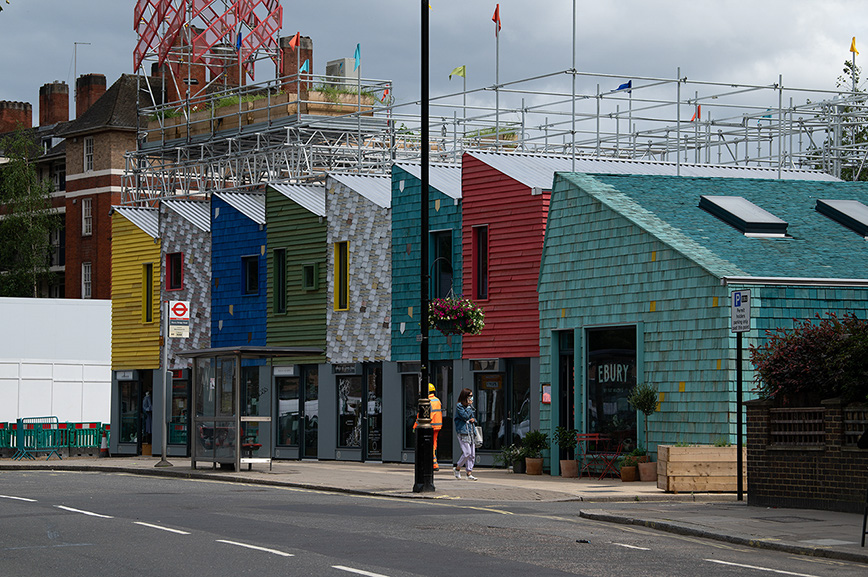
The image depicts a row of colorful buildings with various architectural styles and facades, including a yellow, blue, green, red, and teal structure. The buildings are part of a commercial area with shops and businesses. There are construction scaffolding and structures visible on top of the buildings, indicating ongoing construction or renovation work. The street in front of the buildings is relatively quiet, with a few pedestrians and a traffic sign visible. The overall scene suggests a vibrant and developing commercial district.
Ebury Bridge Rd ‐ photo by ,
©www.mgaylard.co.uk.
The image depicts a lively pedestrian street scene in an urban area. The street is lined with cobblestones and flanked by historic buildings with ornate architectural details. On the right side, there are several outdoor cafes with white umbrellas and wooden furniture, where people are seated and enjoying their time. Pedestrians, including couples and individuals, are walking along the street, some engaged in conversation. The atmosphere appears to be relaxed and bustling, with a mix of locals and tourists enjoying the ambiance.
Ebury Bridge Rd ‐ photo by ,
©www.mgaylard.co.uk.
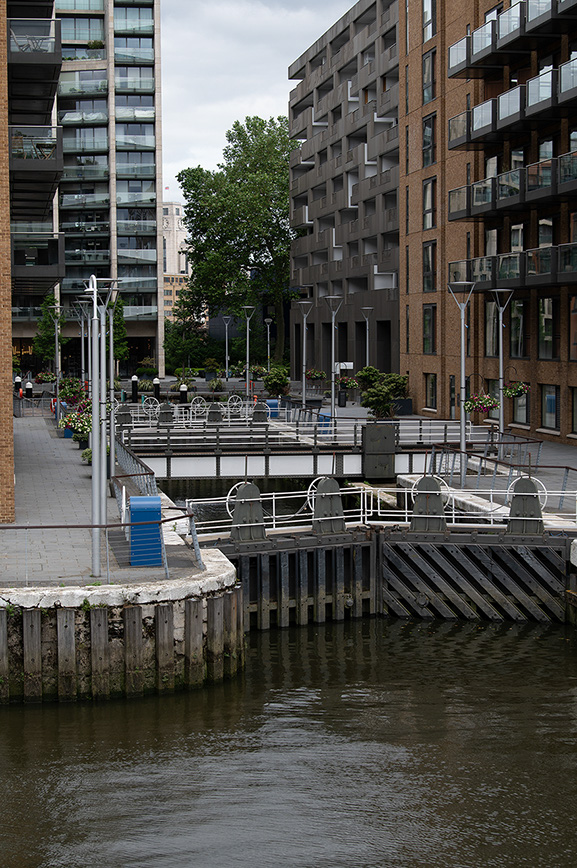
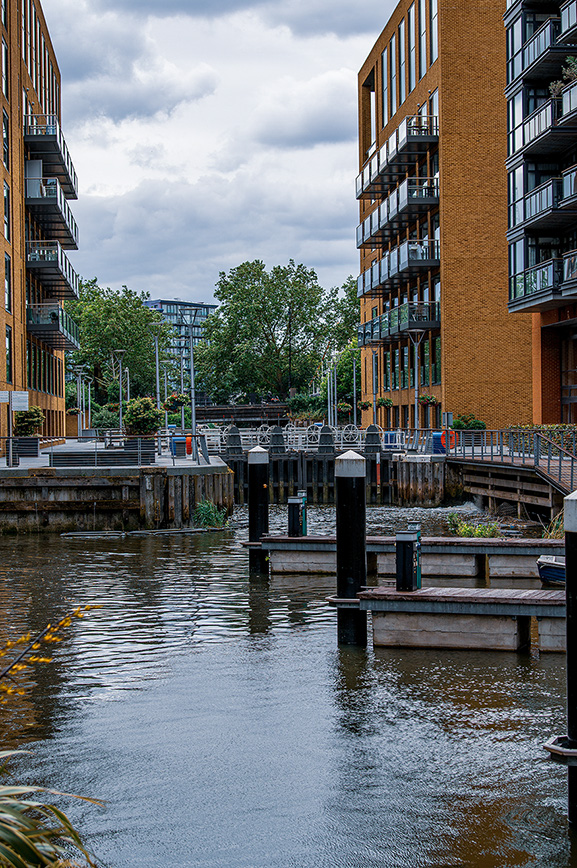
The image depicts a modern urban waterfront scene with high-rise residential buildings, a pedestrian walkway, and a dock area adjacent to a body of water. The buildings feature balconies and a mix of brick and glass exteriors. The dock area includes railings, lighting fixtures, and some planters with greenery.
Grosvenor Waterside ‐ photo by ,
©www.mgaylard.co.uk.
The image depicts a modern residential building with multiple balconies, some featuring plants and flowers. The building is part of a larger complex with similar structures in the background. The sky is overcast, and there are hanging flower baskets in the foreground, adding a touch of color to the urban scene.
>Grosvenor Waterside - Caro Point ‐ photo by ,
©www.mgaylard.co.uk.
The image depicts a concrete bridge spanning over a river or canal. The bridge is surrounded by lush greenery, including trees and bushes. There is a red double-decker bus visible on the bridge, indicating it is a road bridge. The water beneath the bridge appears to be flowing gently, and the bridge structure includes a series of vertical slats on the underside, likely serving as a type of weir or flow control mechanism. The overall scene is serene and suggests an urban or suburban setting.
Outlet to the River Thames ‐ photo by ,
©www.mgaylard.co.uk.
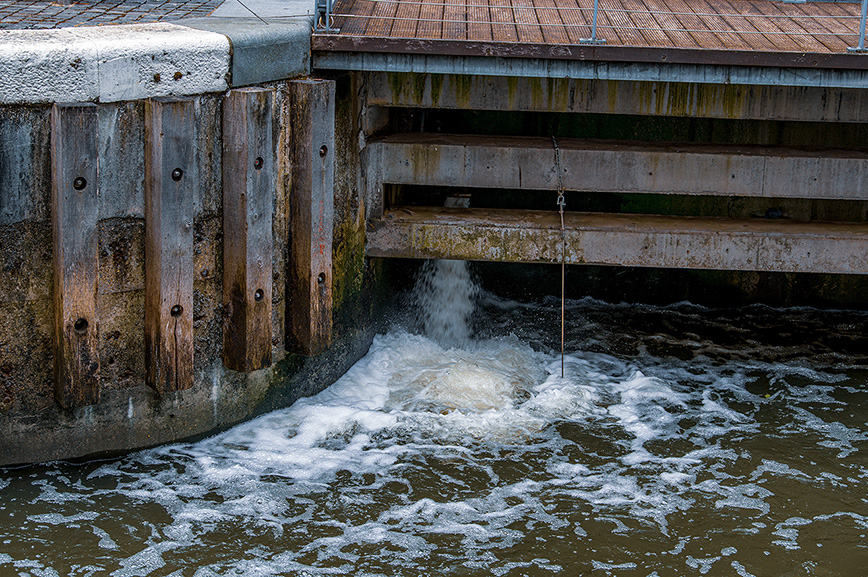
The image shows a section of a waterway with a small waterfall or spillway. Water is flowing over a wooden structure into a lower body of water. The structure appears to be part of a lock or dam, with visible bolts and a chain hanging down. The surroundings include a concrete or stone wall and a wooden deck or walkway above.
Grosvenor Waterside Lock ‐ photo by ,
©www.mgaylard.co.uk.
The image depicts a modern building with multiple floors, featuring large glass windows and balconies. The building is situated next to a waterway, with a wooden walkway and railings along the edge of the water. The architecture includes a mix of glass and brick elements, and some balconies have plants and outdoor furniture.
Grosvenor Waterside ‐ photo by ,
©www.mgaylard.co.uk.
The image depicts a serene canal flanked by modern residential buildings with balconies. The waterway is bordered by walkways and greenery, with a bridge in the background connecting the two sides. The overall atmosphere is calm and urban, suggesting a peaceful residential area.
Grosvenor Waterside ‐ photo by ,
©www.mgaylard.co.uk.
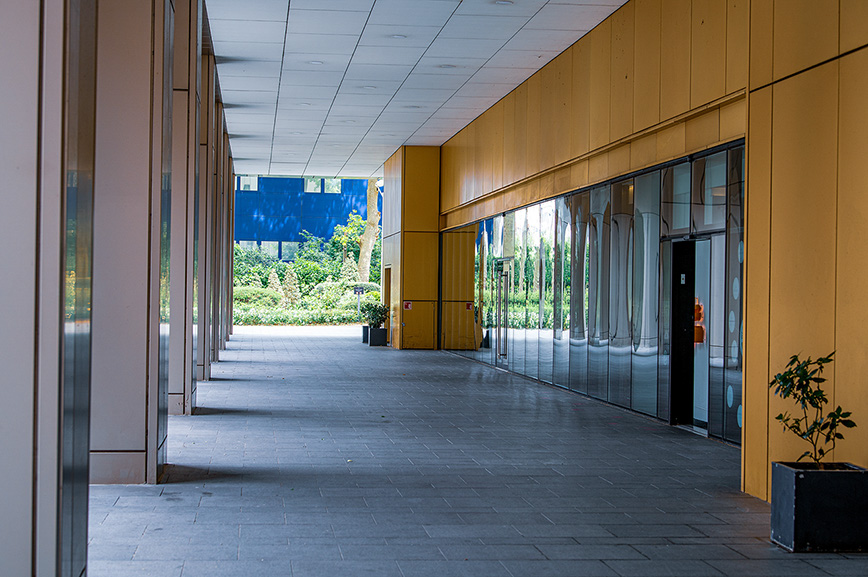
The image depicts a modern, open corridor with a tiled floor and large glass windows on one side. The corridor is lined with wooden panels on the ceiling and part of the walls. There are a few doors along the corridor, and a potted plant is visible on the right side near the end of the corridor. The area outside the windows appears to be a landscaped garden with greenery and a blue structure in the background.
Grosvenor Waterside ‐ photo by ,
©www.mgaylard.co.uk.
The image depicts an urban street scene with a pedestrian bridge crossing over a road. The bridge is yellow with black and white striped railings. The street below has several vehicles, including cars and a van. The surroundings include trees, street lamps, and buildings, indicating a city environment with a mix of modern and older architecture.
Grosvenor Road ‐ photo by ,
©www.mgaylard.co.uk.

Pimlico

Pimlico was developed in the early 19th century by Thomas Cubitt, who designed the area with a grid of residential streets and garden squares. The area was built as a southern extension to neighboring Belgravia

Historical Overview

Origins and Development:
Pimlico was developed in the early 19th century by Thomas Cubitt, who designed the area with a grid of residential streets and garden squares. The area was built as a southern extension to neighboring Belgravia en.wikipedia.org+1.
Architectural Style:
The district is renowned for its Regency architecture, with many buildings featuring the characteristic white stucco facades and grand garden squares.

Cultural and Historical Significance

Location and Boundaries:
Pimlico is bounded by the River Thames to the south, Vauxhall Bridge Road to the east, the former Grosvenor Canal to the west, and Victoria Railway Station to the north.
Historical References:
The name "Pimlico" has historical roots, with references dating back to the 17th century. It is believed to have been derived from the name of a local landowner or a tavern.

Modern Features and Facilities

Residential and Commercial Areas:
Pimlico offers a mix of residential properties, including grand Georgian and Victorian terraced houses, as well as modern apartments. The area is also home to a variety of shops, cafes, and restaurants.
Transport Links:
The district is well-connected with Pimlico Underground Station on the Victoria Line, providing easy access to central London and other parts of the city

References

en.wikipedia.orwww.marshandparsons.co.ukwww.british-history.ac.ukwww.foxtons.co.uk , Text generated by Mistral AI
To the top
Powered by w3.css. The images are all stored on link to www.gaylard.co.uk Photostream on Flickr   This website is hosted by link to 123Reg Web Hosting