HOME

City of Westminster

The Palace of Westminster

WestminsterLondonGreater London,   United Kingdom

The Palace of Westminster, also known as the Houses of Parliament, is the seat of the UK government and a UNESCO World Heritage Site. Located on the north bank of the River Thames in London, it is renowned for its stunning Gothic Revival architecture, including the iconic clock tower, Elizabeth Tower (commonly called Big Ben). The palace houses the House of Commons and the House of Lords and is a symbol of British democracy and history.
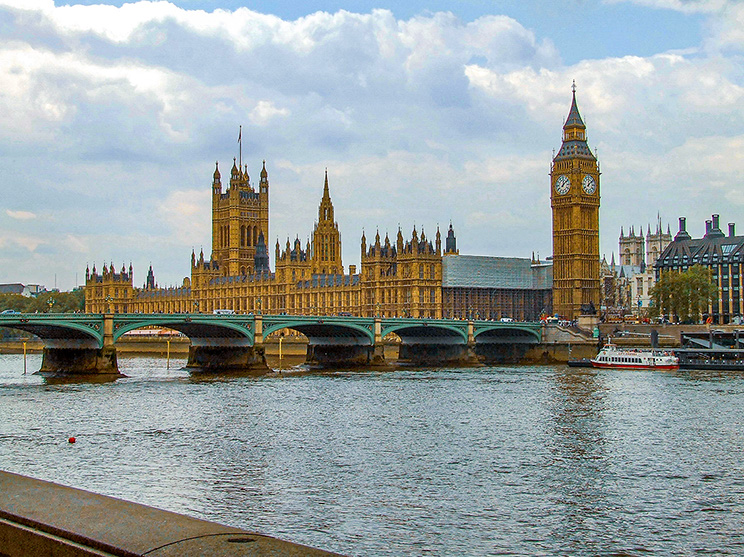
The image depicts the iconic Palace of Westminster and the Elizabeth Tower, commonly known as Big Ben, in London. The scene includes the Westminster Bridge spanning the River Thames, with a boat navigating the river. The sky is partly cloudy, and the architectural details of the Gothic Revival style buildings are prominently displayed.
the iconic Palace of Westminster and the Elizabeth Tower, commonly known as Big Ben ‐ photo by ,
©www.mgaylard.co.uk.
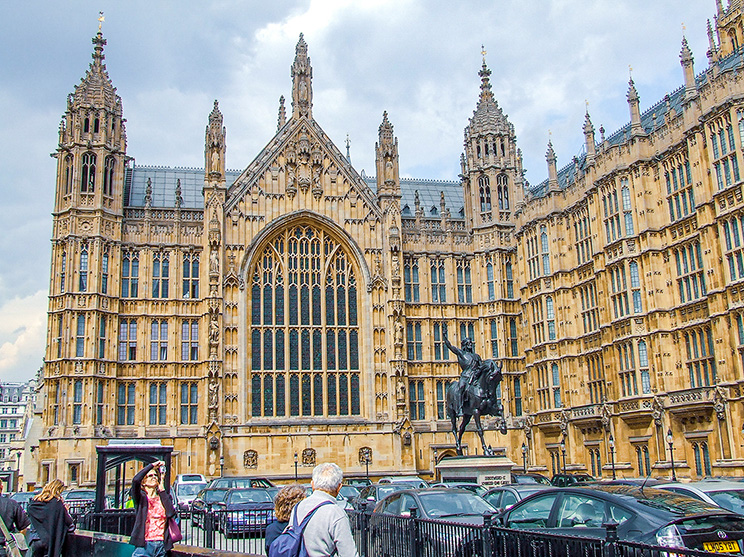
The image depicts the Palace of Westminster in London, UK, featuring its iconic Gothic architecture with detailed stone carvings and large pointed arches. In the foreground, there is a statue of a prominent figure on horseback, surrounded by parked cars and several people walking and taking photos.
Palace of Westminster ‐ photo by ,
©www.mgaylard.co.uk.
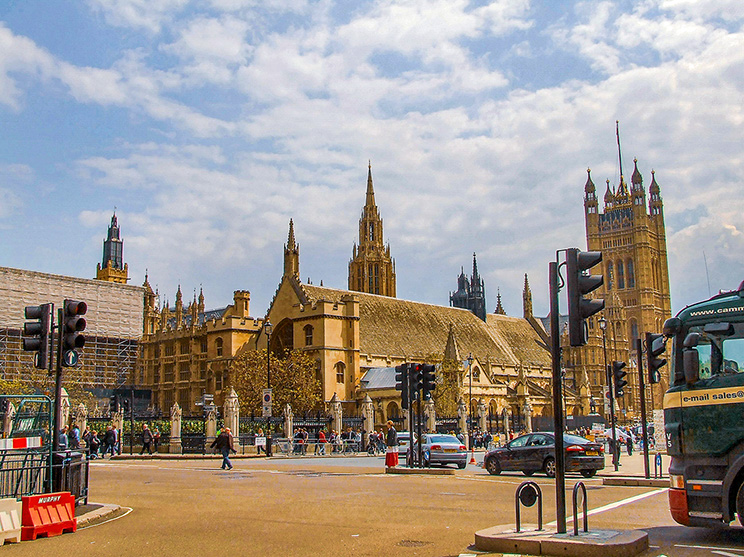
The image depicts a busy street scene in front of a large, historic building with Gothic architecture, likely a cathedral or significant landmark. The building features tall spires, intricate stonework, and large windows. There are several people walking and a few vehicles, including a bus and cars, on the street. Traffic lights and street signs are visible, indicating a well-regulated urban area. The sky is clear with some clouds, suggesting a pleasant day.
Palace of Westminster ‐ photo by ,
©www.mgaylard.co.uk.
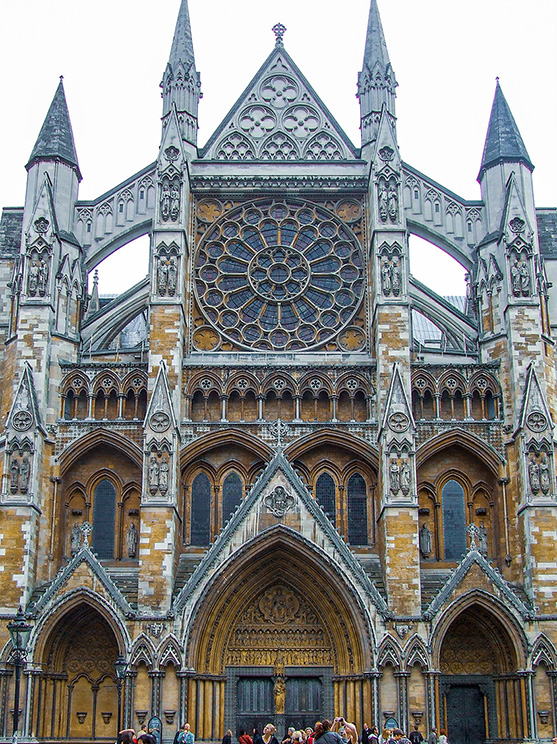
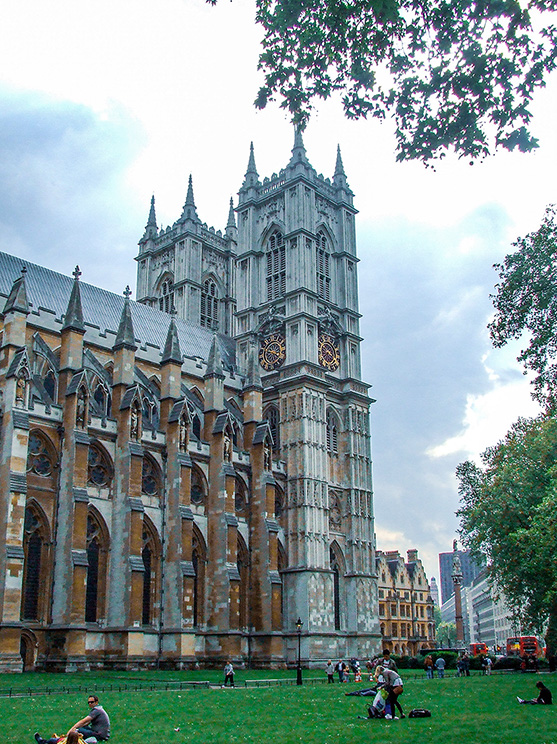
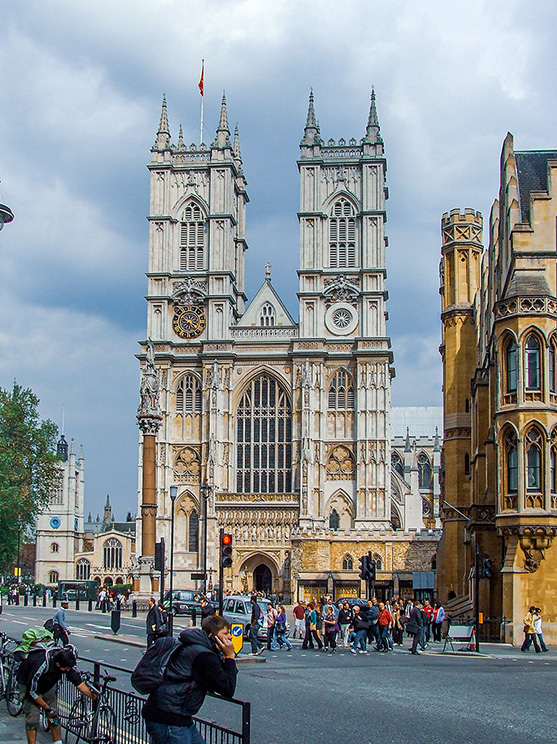
The image depicts the intricate and grand facade of Westminster Abbey, a large Gothic church in London. The structure features pointed spires, detailed stone carvings, and a prominent rose window. The entrance is framed by ornate arches and statues, with a crowd of people gathered in front, highlighting its significance as a historical and cultural landmark.
the intricate and grand facade of Westminster Abbey ‐ photo by ,
©www.mgaylard.co.uk.
Westminster Abbey ‐ photo by ,
©www.mgaylard.co.uk.
The image depicts a large, historic building with intricate Gothic architecture, featuring pointed arches, tall windows, and detailed stonework. The building has multiple towers and a prominent entrance in the center. In front of the building, there is a tall column with a statue on top. The scene is bustling with people walking and gathering in the open square, indicating a popular or significant whitehall. The overall atmosphere suggests a blend of historical grandeur and modern activity.
Attorney General's Office ‐ photo by ,
©www.mgaylard.co.uk.
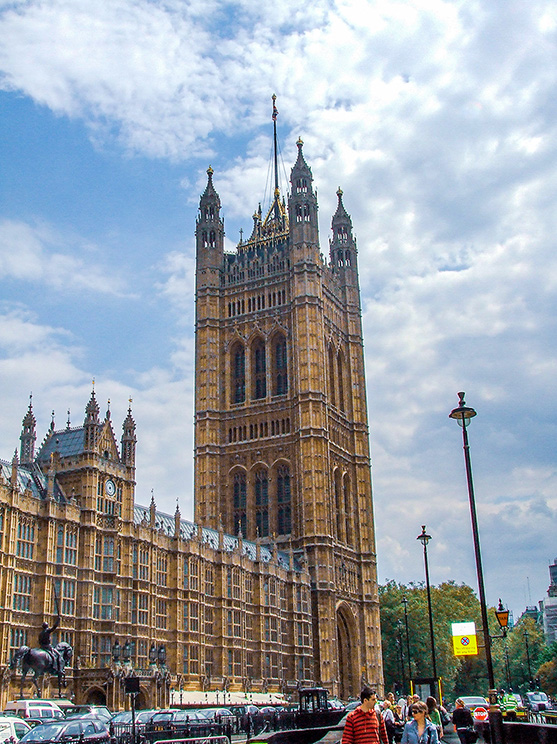
The image depicts the Palace of Westminster, a renowned landmark in London, United Kingdom. The photograph showcases the intricate Gothic architecture of the building, including the iconic Victoria Tower. The scene is bustling with activity, featuring numerous people walking on the street and several vehicles, including cars and buses, parked along the road. The sky is partly cloudy, adding to the overall atmosphere of the image. The photograph captures the grandeur and historical significance of this famous political and architectural site.
Palace of Westminster ‐ photo by ,
©www.mgaylard.co.uk.
The image depicts Westminster Abbey, a large, mainly Gothic abbey church in London, England. It is one of the most notable religious buildings in the UK and has been the traditional place of coronation and burial site for English and, later, British monarchs. The image shows the intricate architectural details of the abbey, including its twin towers, large windows, and clock face. There are people and vehicles around the abbey, indicating it is a busy and popular whitehall.
Westminster Abbey ‐ photo by ,
©www.mgaylard.co.uk.
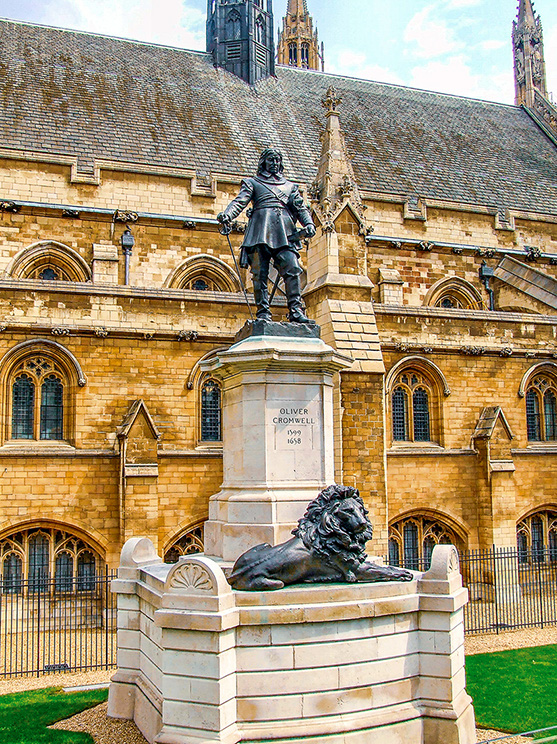
The image depicts a statue of Oliver Cromwell, a historical figure, situated in front of a large, ornate building with Gothic architecture. The statue stands on a pedestal with a lion at its base. The pedestal bears the inscription 'Oliver Cromwell 1599-1658'. The building behind the statue features pointed arches, intricate stonework, and tall, narrow windows, indicative of Gothic style.
View of whitehall ‐ photo by ,
©www.mgaylard.co.uk.
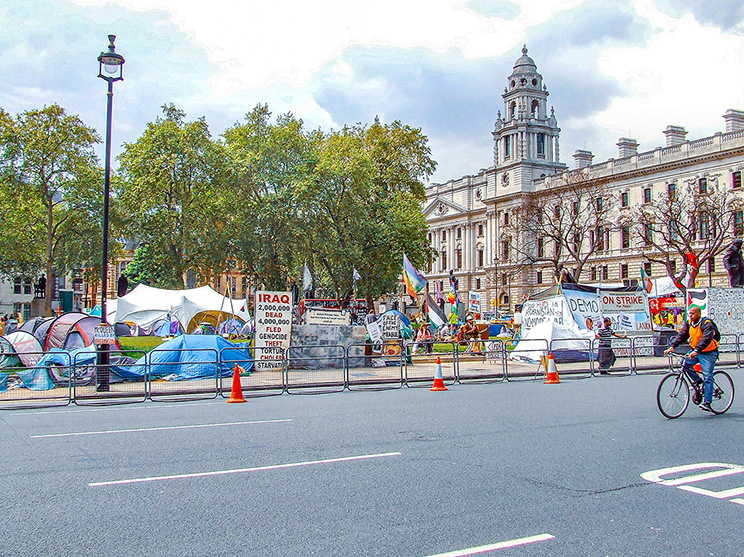
The image depicts a protest or demonstration taking place in front of a large, historic building. Various tents and signs are set up, with one prominent sign mentioning 'IRAQ.' There are barriers and traffic cones separating the protest area from the street. A cyclist is seen riding past the protest on the street. The scene is set on a wide road with trees and a lamppost visible in the background.
Parliament Square Demonstrators Camp ‐ photo by ,
©www.mgaylard.co.uk.
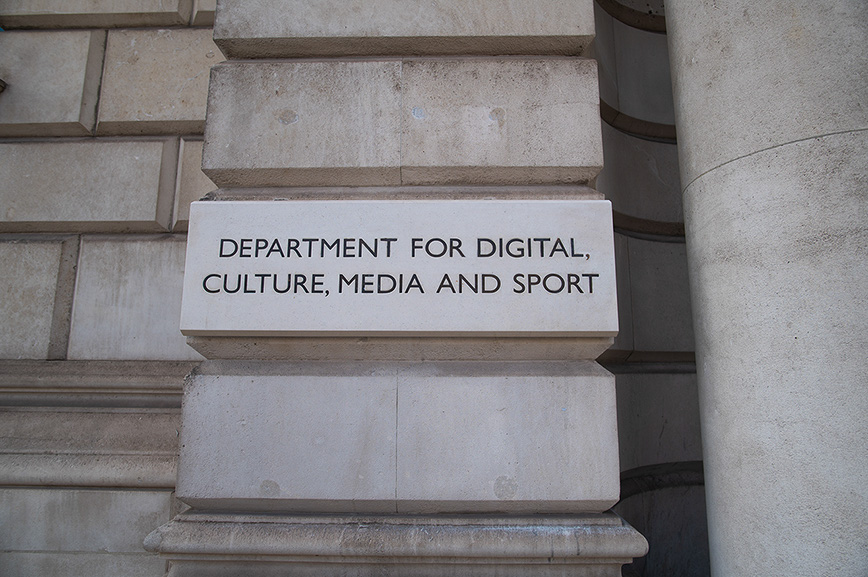
The image shows a stone plaque mounted on a stone wall. The plaque reads 'DEPARTMENT FOR DIGITAL, CULTURE, MEDIA AND SPORT'.
DEPARTMENT FOR DIGITAL, CULTURE, MEDIA AND SPORT ‐ photo by ,
©www.mgaylard.co.uk.

The Palace of Westminster

The Palace of Westminster, also known as the Houses of Parliament, is one of London’s most iconic and historically significant buildings.

Historical Overview

Origins and Construction:
The Palace of Westminster was originally a royal residence, but it has served as the meeting place of the Parliament of the United Kingdom since the 13th century. The current building was designed by Sir Charles Barry and Augustus Welby Northmore Pugin in the Gothic Revival style and completed in 1870 after a fire destroyed much of the original palace in 1834 whc.unesco.org+1.
Royal and Political Significance:
The palace has been the center of British politics for centuries and is home to the House of Commons and House of Lords en.wikipedia.org.

Architectural Significance

Design and Features:
The Palace of Westminster is renowned for its Gothic Revival architecture, featuring a grand facade, intricate stonework, and iconic towers, including Big Ben (officially the Great Bell of the clock at the north end of the palace) en.wikipedia.org+1.
UNESCO World Heritage Site:
The palace, along with Westminster Abbey and St Margaret’s Church, is a UNESCO World Heritage Site, recognized for its historical and architectural importance whc.unesco.org.

Cultural and Historical Impact

Role in British Government:
The Palace of Westminster is the meeting place of the UK Parliament, where laws are debated and passed. It is also a symbol of British democracy and political history en.wikipedia.org.
Decorative Elements:
The palace features decorative references to Ireland, including symbols like the Irish harp and the shamrock, reflecting its historical connections en.wikipedia.org.

Visitor Information

whitehall:
The Palace of Westminster is located in Westminster, London, next to Westminster Abbey and St James’s Park. It is easily accessible via the Westminster Underground Station en.wikipedia.org.
Guided Tours and Access:
Visitors can tour the palace, including the House of Commons, House of Lords, and Westminster Hall. Guided tours and audio guides are available, and tickets can be booked in advance en.wikipedia.org.

References

en.wikipedia.orgwhc.unesco.org , Text generated by Mistral AI

Whitehall

WestminsterLondon,   United Kingdom

Whitehall is a historic street in Westminster, London, renowned as the center of the UK government. It is lined with government departments, ministries, and iconic landmarks, including 10 Downing Street, the Houses of Parliament, and the Cenotaph. Whitehall has been the heart of British political power for centuries and is a symbol of the country's governance and history.
The image depicts a bustling street scene in front of a traditional pub named 'The Red Lion,' located on Parliament Street in London. The pub features ornate architecture with hanging flower baskets and a sign displaying its name. People are seen walking and interacting outside the pub, and a traffic light with a red pedestrian signal is visible in the foreground. The surrounding buildings have a classic, historic appearance, contributing to the overall ambiance of the scene.
The Red Lion ‐ photo by ,
©www.mgaylard.co.uk.
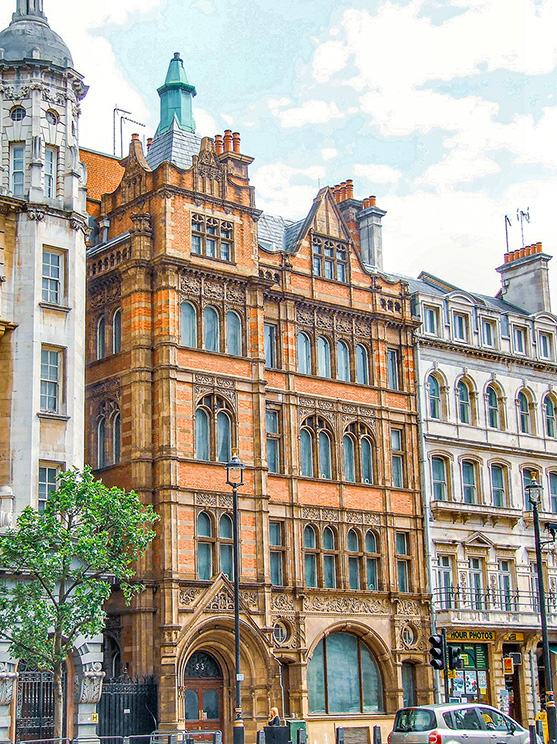
The image depicts a street scene with a prominent, ornate building made of red brick with intricate architectural details. The building features arched windows and decorative stonework. It is situated between other buildings of varying architectural styles. There is a tree and a car parked in front of the building, and the sky is partly cloudy.
55 Parliament Street, is a government-area address in Westminster, directly off Whitehall, opposite the Treasury and just a few metres from Parliament Square.  ‐ photo by ,
©www.mgaylard.co.uk.
The image depicts a street corner in an urban area with historic architecture. The buildings are ornately designed with large windows and intricate details. There are several pedestrians and outdoor seating areas, suggesting a bustling, lively atmosphere. The sky is partly cloudy, and the overall scene conveys a sense of a busy city environment with a mix of commercial and possibly residential buildings.
The Red Lion ‐ photo by ,
©www.mgaylard.co.uk.
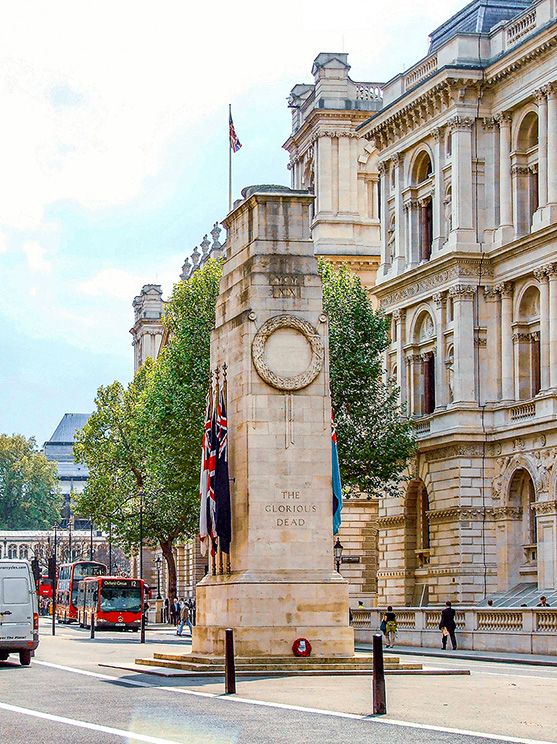
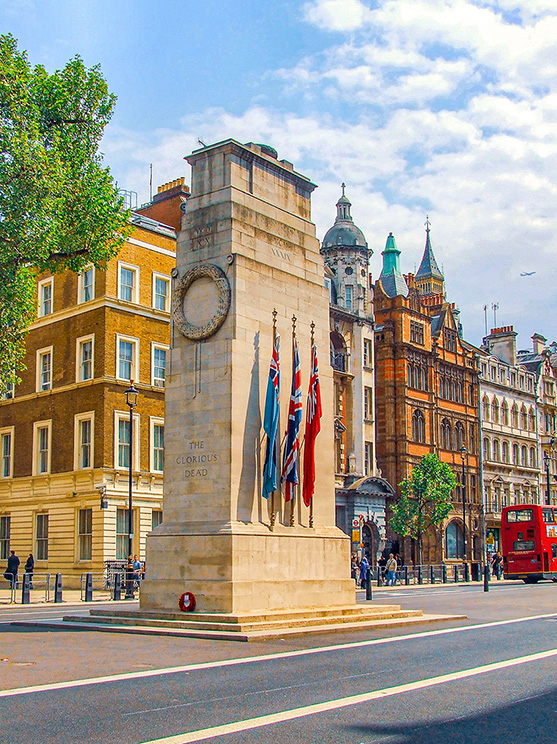
The image depicts a war memorial monument situated in a busy urban area, likely in London. The monument is adorned with flags and features an inscription that reads 'The Glorious Dead.' The surrounding architecture is grand and classical, with a prominent building in the background. The street is lined with trees and bustling with vehicles, including a red double-decker bus and a white van.
Cenotaph ‐ photo by ,
©www.mgaylard.co.uk.
The image depicts a war memorial in a bustling city square, featuring a tall stone monument with a circular design at the top and several flags, including the Union Jack. The monument is inscribed with 'The Glorious Dead.' The background showcases historic buildings with classic European architecture, including domes and spires. A red double-decker bus and pedestrians are also visible, indicating a lively urban environment.
Cenotaph ‐ photo by ,
©www.mgaylard.co.uk.
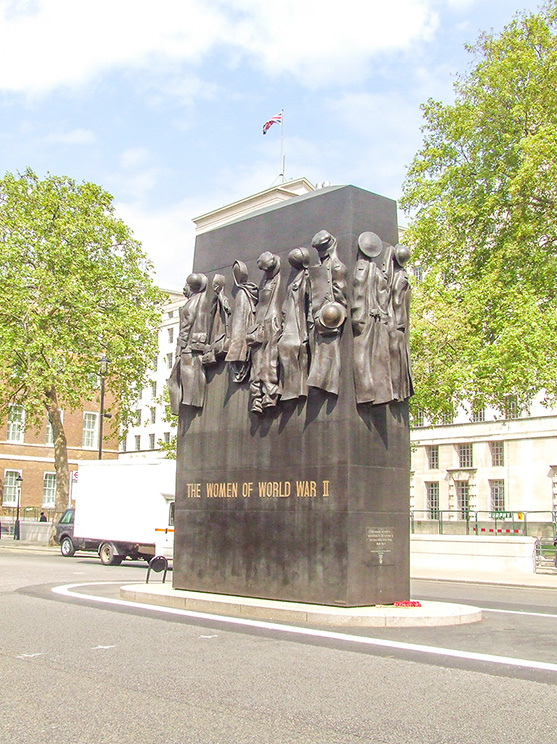
The image depicts a monument dedicated to the women of World War II. The monument features a large, dark stone structure with relief sculptures of women in various roles and attire, symbolizing their contributions during the war. The inscription on the monument reads 'The Women of World War II.' The setting appears to be an urban area with trees and buildings in the background, and a flag flying atop the monument.
The Women of World War II ‐ photo by ,
©www.mgaylard.co.uk.

The Cenotaph in London, located on Whitehall, is the UK’s primary national war memorial, honoring the armed forces and civilians who have died in conflicts since World War I. Designed by Sir Edwin Lutyens and unveiled in 1920, it serves as the focal point for the annual Remembrance Sunday service and other national commemorations, symbolizing gratitude and remembrance for the nation’s war dead.
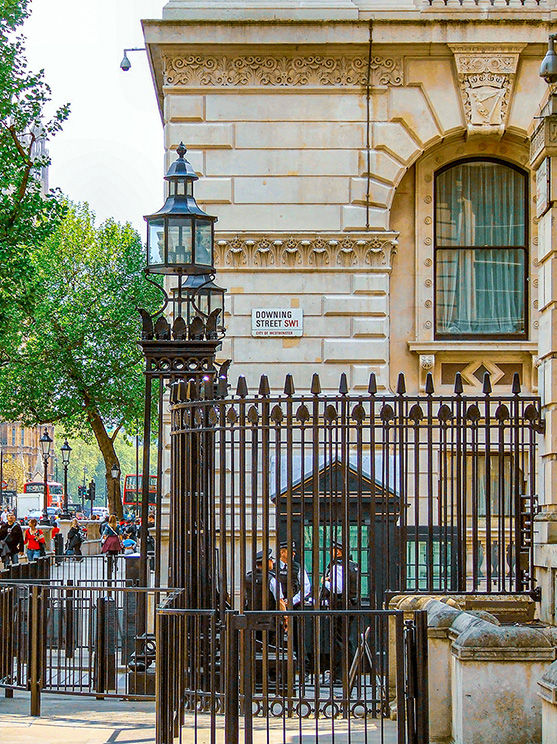
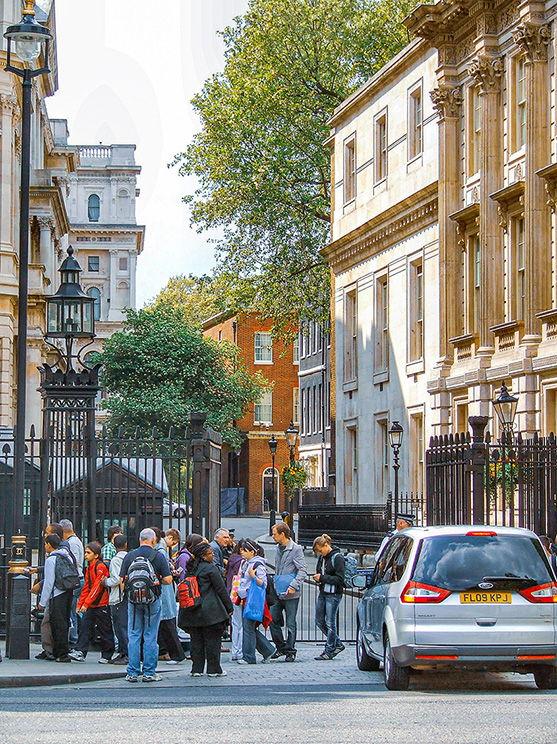
The image depicts the entrance to Downing Street in London, UK. The entrance features a black wrought iron gate with a guard post, and a traditional black lantern. The building has a classical architectural style with stone walls and large windows. There are people and police officers visible near the entrance, indicating security presence. The street sign 'Downing Street SW1' is prominently displayed on the building.
Downing Street ‐ photo by ,
©www.mgaylard.co.uk.
he image depicts a busy street scene in an urban area with historic architecture. People are gathered near a gated entrance, possibly tourists or visitors. The street is lined with tall, ornate buildings and trees. A car is parked on the right side of the street. The overall atmosphere suggests a mix of historical significance and modern activity.
Downing Street ‐ photo by ,
©www.mgaylard.co.uk.

Downing Street in London is the iconic address of the official residences and offices of the UK Prime Minister (10 Downing Street) and the Chancellor of the Exchequer (11 Downing Street), symbolizing the heart of British government. Known for its distinctive black door and strict security, it is a historic and politically significant location, often associated with major national decisions and media briefings.
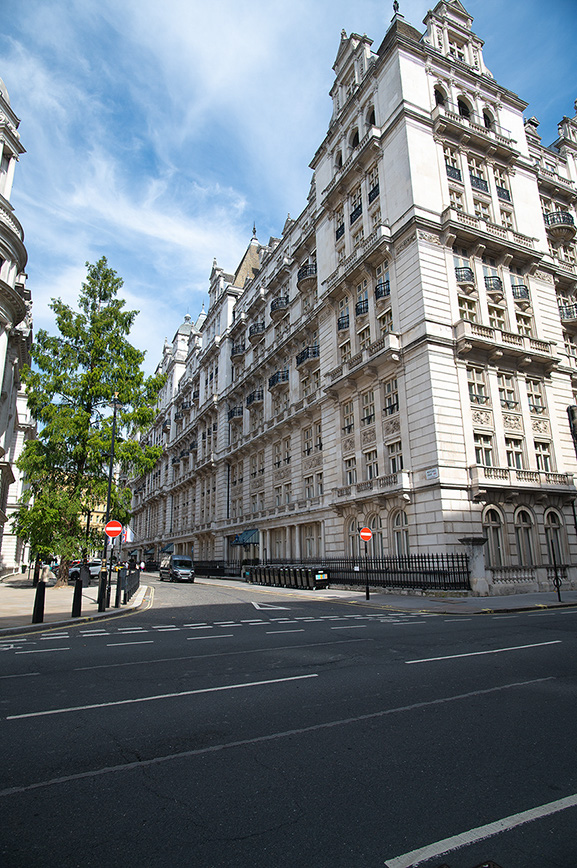
The image depicts a large, historic building with classical architecture, featuring tall windows and ornate details. The building is situated along a wide street with a few pedestrians and vehicles. A large tree is visible on the left side of the image, and a modern sculpture is positioned on the sidewalk near the building. The sky is partly cloudy, and the overall scene suggests a European city setting.
Cabinet Office ‐ photo by ,
©www.mgaylard.co.uk.

Whitehall

Whitehall is a historic street and area in Westminster, London, known for its political and cultural significance.

Historical Overview

Origins and Name: Whitehall takes its name from the Palace of Whitehall, which was the primary residence of English monarchs from 1530 to 1698. The palace was largely destroyed by fire in 1698, and only the Banqueting House—the last surviving part—remains today . Historical Significance: Whitehall has long been the center of British government and administration. It is home to many government buildings and institutions that have played a key role in the UK’s political history .

Key Landmarks and Institutions

Banqueting House:
The Banqueting House is the only remaining part of the Palace of Whitehall. It is famous for its ceiling painted by Peter Paul Rubens and its historical significance as a venue for royal masques and events .
Other Notable Buildings:
Downing Street:
The official residence of the Prime Minister of the UK (at 10 Downing Street) and the Chancellor of the Exchequer (at 11 Downing Street) are located on Whitehall .
Horse Guards Parade:
A large open area used for ceremonial events, including the Trooping the Colour and the changing of the guard .
Cenotaph:
The Cenotaph, a war memorial, is located in Whitehall and serves as the focal point for national remembrance ceremonies, including the annual Remembrance Day service .

Cultural and Political Significance

Government Hub:
Whitehall is synonymous with the UK government and is home to many ministries, departments, and agencies. It is a symbol of British political power and administration .
Parliamentary and Royal Connections:
Whitehall is adjacent to the Palace of Westminster and the Houses of Parliament, further emphasizing its role in British governance .

Visitor Information

Location:
Whitehall runs from Trafalgar Square in the south to Parliament Square in the north, passing landmarks like the Banqueting House, Downing Street, and the Cenotaph .
Accessibility:
The area is easily accessible via public transport, including Westminster and Charing Cross Underground stations. It is a popular destination for tourists and visitors interested in London’s political history .
Text generated by Mistral AI

Banqueting House

WhitehallWestminsterLondon,   United kingdom

The Banqueting House is the last surviving remnant of the Palace of Whitehall, once the largest royal palace in Europe. Designed by Inigo Jones and completed in 1622, it is renowned for its stunning Renaissance architecture and the magnificent ceiling painted by Sir Peter Paul Rubens. The Banqueting House is famous as the site of King Charles I's execution in 1649 and remains a masterpiece of 17th-century design.
he image depicts a street scene with a large, ornate building on the corner. The building is multi-storied with a classical architectural style, featuring numerous windows and decorative elements. The street is relatively empty, with a few cars parked along the side and some trees lining the sidewalk. The sky is clear with some clouds, suggesting a bright day.
Banqueting House ‐ photo by ,
©www.mgaylard.co.uk.
The image depicts a large, historic building with classical architecture, featuring tall columns and ornate details. The building is situated along a wide street with several vehicles parked in front, including a truck with the name 'Jones' on it. The sky is clear with a few clouds, and there are trees visible on the left side of the image..
Banqueting House ‐ photo by ,
©www.mgaylard.co.uk.
The image depicts a long, elegant hallway with a series of arches and candle holders. The floor is tiled with a checkerboard pattern of light and dark tiles. The walls are smooth and white, and the ceiling has a series of arches that create a rhythmic pattern. The hallway is illuminated by candles placed in ornate, black candle holders, which cast a warm, inviting glow. The overall atmosphere is serene and somewhat grand, suggesting a historic or formal setting.
Banqueting House ‐ photo by ,
©www.mgaylard.co.uk.
The image depicts a ceremonial throne room with a prominent red throne adorned with a royal crest, situated on a raised platform with steps leading up to it. The room features classical architectural elements such as columns and ornate detailing, suggesting a formal and historic setting.
Banqueting House ‐ photo by ,
©www.mgaylard.co.uk.
The image showcases an ornately decorated ceiling with intricate frescoes and gold detailing. The ceiling features multiple panels with detailed paintings of various scenes, likely of historical or mythological significance. A large, central oval fresco is surrounded by smaller rectangular and oval panels, each filled with elaborate artwork. The room is adorned with grand chandeliers, adding to the opulence of the setting. The architecture and decor suggest a historical or classical style, possibly from a palace or a grand public building.
ornately decorated ceiling with intricate frescoes and gold detailing ‐ photo by ,
©www.mgaylard.co.uk.
The image depicts an opulent, grand interior of a historical building, possibly a courtroom or a hall of justice. The room is adorned with tall, white columns, ornate chandeliers, and detailed ceiling artwork. Three individuals are present, seemingly tourists, observing and discussing the space. The room features large windows allowing natural light to flood in, and the floor is made of polished wood. The overall ambiance is one of grandeur and historical significance.
opulent, grand interior ‐ photo by ,
©www.mgaylard.co.uk.
The image showcases an ornate ceiling featuring a large, detailed fresco surrounded by intricate gold and white decorative elements. The fresco depicts a scene with numerous figures, possibly from a historical or mythological narrative, set against a cloudy sky. The surrounding architecture includes elaborate moldings and patterns, adding to the overall grandeur of the ceiling.
ceiling featuring a large, detailed fresco ‐ photo by ,
©www.mgaylard.co.uk.
The image depicts an ornate, two-story room with a high, intricately decorated ceiling featuring a large dome and detailed artwork. The room is adorned with grand chandeliers, classical columns, and large windows that allow natural light to flood the space. Several people are seen walking around and observing the room, which appears to be part of a historic or significant building, possibly a museum or a government building.
ceiling featuring a large dome and detailed artwork ‐ photo by ,
©www.mgaylard.co.uk.
The image depicts an ornate ceiling adorned with multiple intricate paintings, each framed with elaborate gold and white moldings. The paintings showcase various scenes with numerous figures, likely depicting historical, mythological, or religious themes. The ceiling is richly decorated, highlighting classical artistic styles and detailed craftsmanship.
ceiling adorned with multiple intricate paintings ‐ photo by ,
©www.mgaylard.co.uk.
The image depicts an ornately decorated room with a high, intricately painted ceiling featuring classical motifs and a central oval fresco. The room has tall columns and large windows that allow natural light to illuminate the space. There is a balcony with a balustrade on one side, and chandeliers hang from the ceiling, adding to the grandeur of the room.
ornately decorated room with a high, intricately painted ceiling ‐ photo by ,
©www.mgaylard.co.uk.

Banqueting House

The Banqueting House in Whitehall is the last surviving remnant of the Palace of Whitehall, which was once the primary residence of English monarchs

Historical Overview

Construction and Origins:
The Banqueting House was designed by Inigo Jones and completed in 1622. It served as a venue for royal masques, entertainments, and grand celebrations during the reign of King James I and later King Charles I .
Architectural Significance:
The Banqueting House is a prime example of English Palladian architecture, characterized by its clean lines, symmetry, and classical details. It features a coved ceiling painted by Peter Paul Rubens, depicting the Apotheosis of King James I .

Cultural and Artistic Importance

Ceiling Painting:
The Rubens ceiling is one of the most significant works of art in London. It depicts the divine right of kings and the glory of King James I, with allegorical figures and scenes from classical mythology .
Historical Events:
The Banqueting House is also notable for its role in a pivotal moment in British history. It was here that King Charles I was tried and sentenced to death in 1649, marking the end of the monarchy’s absolute power in England .

Visitor Information

Location:
The Banqueting House is located on Whitehall, just north of Downing Street and close to the Houses of Parliament. It is easily accessible via public transport, including Westminster Underground Station .
Admission and Tours:
The Banqueting House is open to the public and offers guided tours and audio guides. Entry is by ticket, and visitors can explore the grand hall, the Rubens ceiling, and the historic site where Charles I was tried .
Text generated by Mistral AI
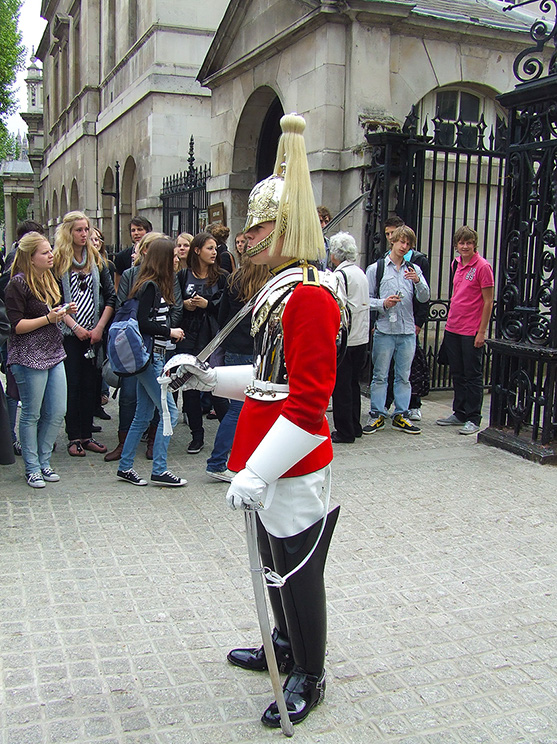
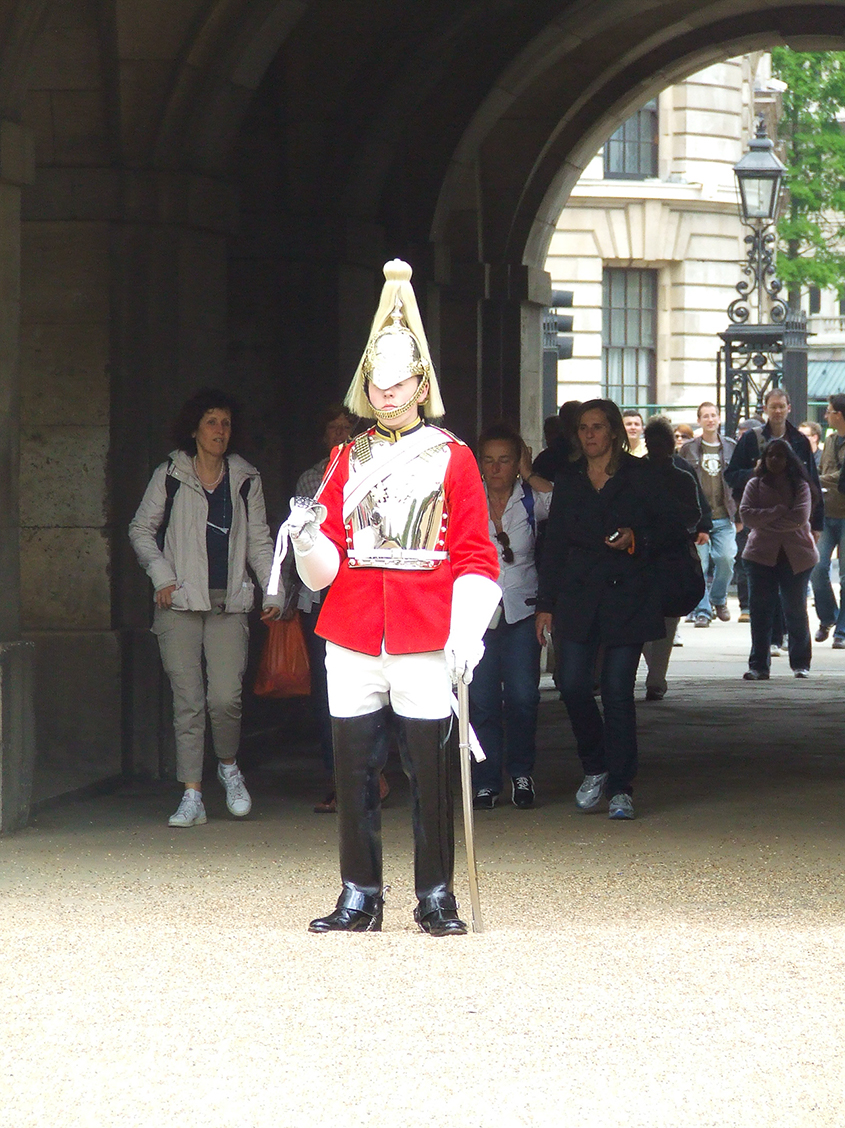
The image depicts a ceremonial guard, likely a member of the Queen's Guard, standing at attention in a traditional red uniform with white accents and a tall bearskin hat. The guard is holding a weapon and white glove, positioned in front of an archway. Several people are observing the guard, suggesting a tourist setting, possibly at a historic or royal site in the UK.
Horse Guards Sentry Duty ‐ photo by ,
©www.mgaylard.co.uk.
The image depicts a ceremonial guard dressed in a traditional red and white uniform with a tall bearskin hat, standing at attention in front of a historic building with a crowd of tourists observing and taking pictures.
Horse Guards Sentry Duty ‐ photo by ,
©www.mgaylard.co.uk.
The image depicts a ceremonial scene at the Horse Guards in London. A guard in traditional attire is mounted on a horse, positioned at the archway of the building. Several uniformed officers and police personnel stand nearby, overseeing the area. A few civilians, including a woman in white attire, are observing the scene. The architecture and setting suggest a formal and historical context.
Horse Guards Sentry Duty ‐ photo by ,
©www.mgaylard.co.uk.
To the top
Powered by w3.css. The images are all stored on link to www.gaylard.co.uk Photostream on Flickr   This website is hosted by link to 123Reg Web Hosting