





A Cathedral Born from a King’s Vow
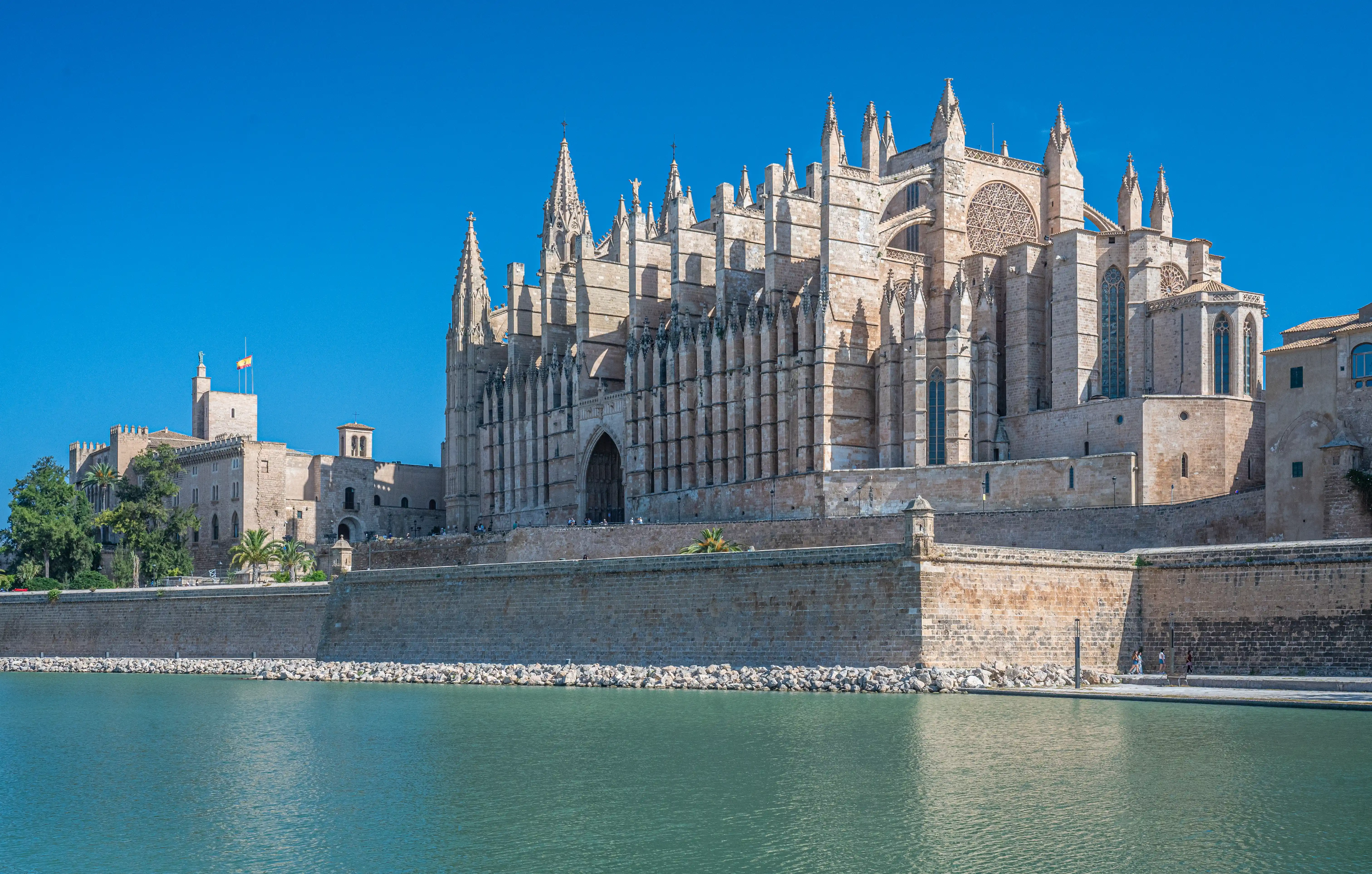
The Catedral-Basílica de Santa María de Mallorca, commonly known as La Seu (Catalan for "the seat" of the bishop), is the crown jewel of Palma de Mallorca and one of the most iconic landmarks in the Balearic Islands. This Gothic Roman Catholic cathedral stands majestically on the seashore of Palma, its towering spires and intricate stonework dominating the city’s skyline. Its history begins with the Christian reconquest of Mallorca in 1229, when King Jaume I of Aragon (James I) led a fleet of 150 ships to reclaim the island from the Moors. According to legend, a violent storm threatened to sink the king’s fleet during the voyage. In a moment of desperation, Jaume I vowed to the Virgin Mary that if he survived the storm and conquered Mallorca, he would build a grand cathedral in her honour. After landing in Santa Ponça and defeating the Moors in the Battle of Porto Pi on September 13, 1229, the king fulfilled his promise by ordering the construction of a cathedral dedicated to Santa María on the site of the island’s largest mosque.
Architectural Grandeur and Historical Significance
A Blend of Styles Across Centuries
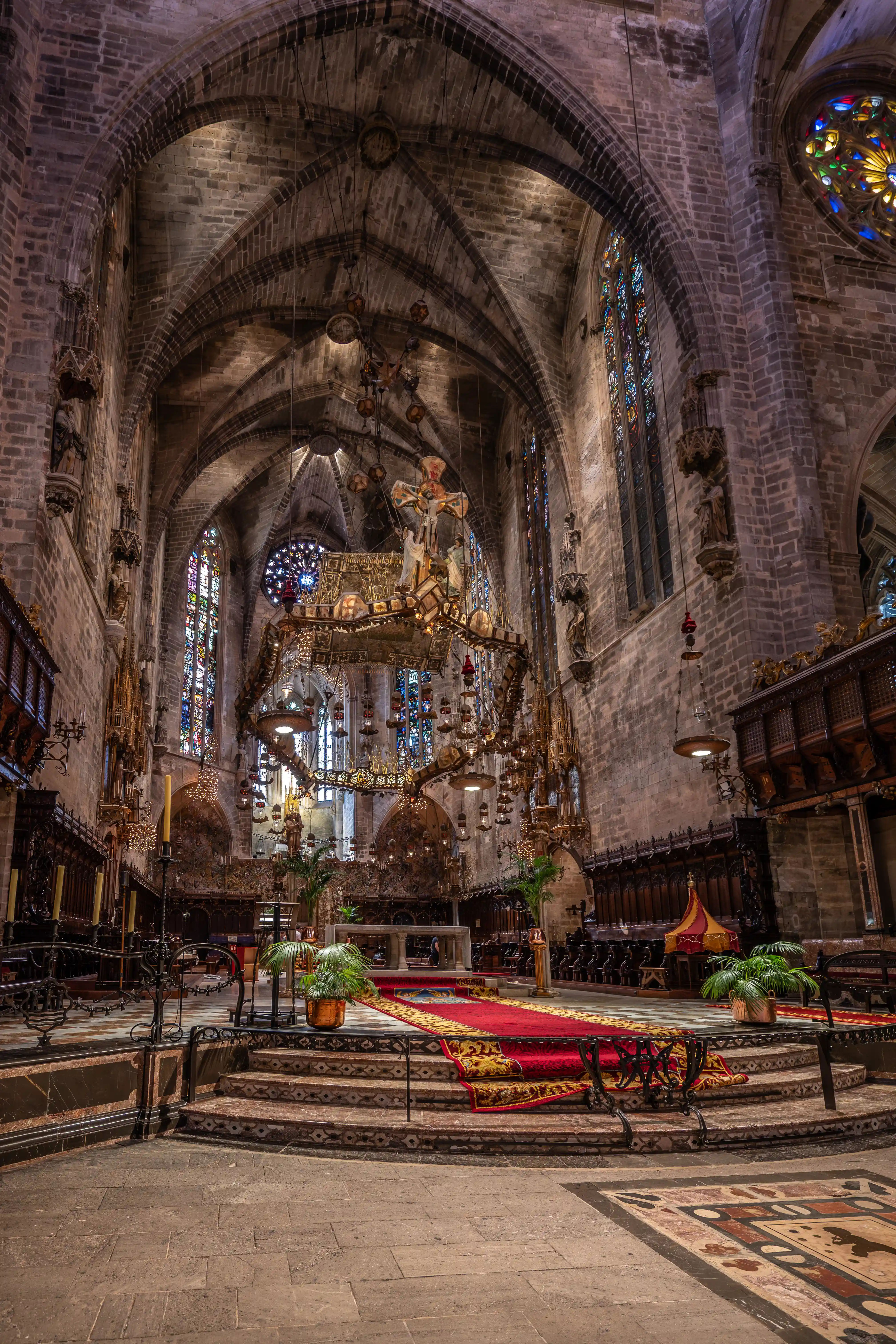
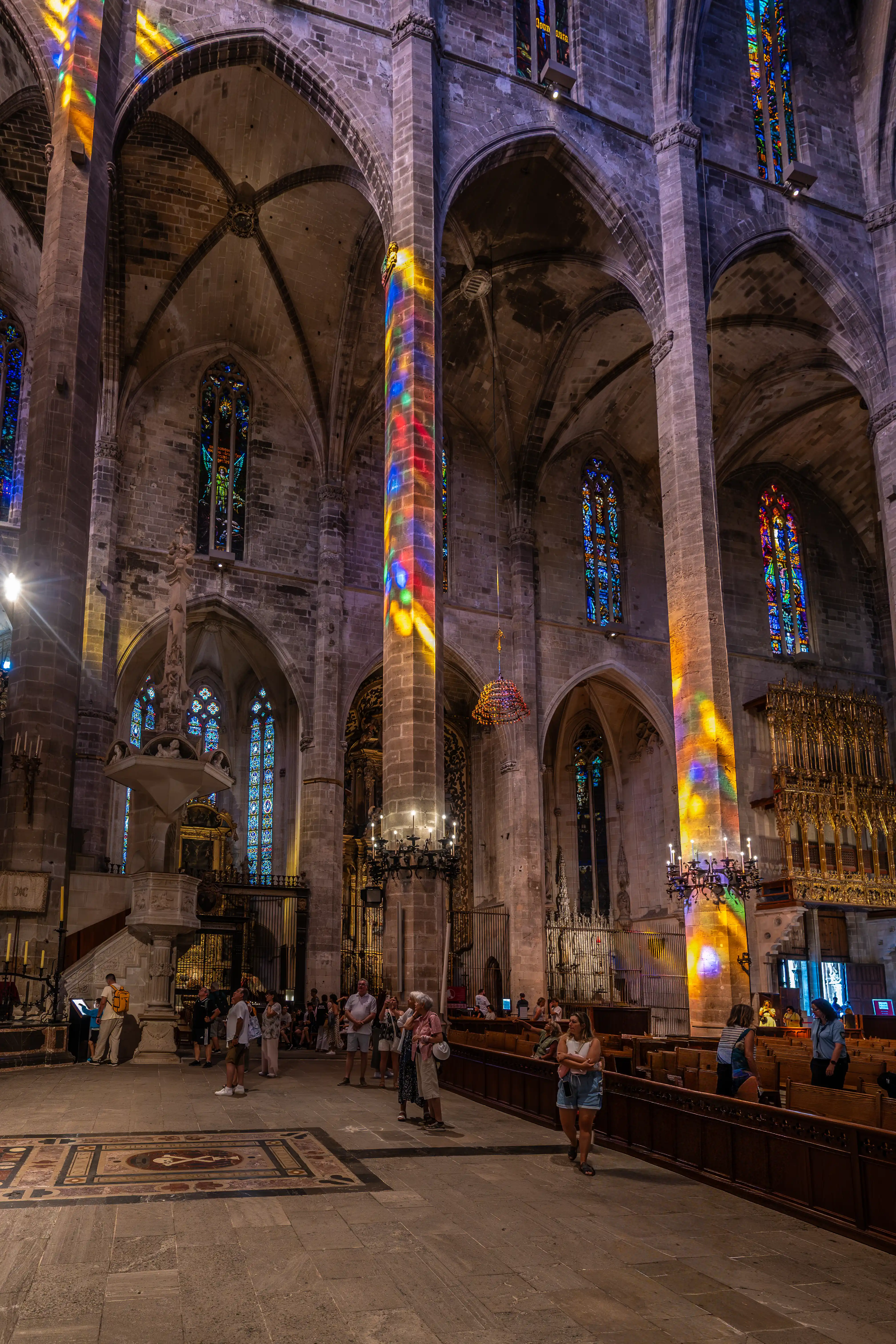
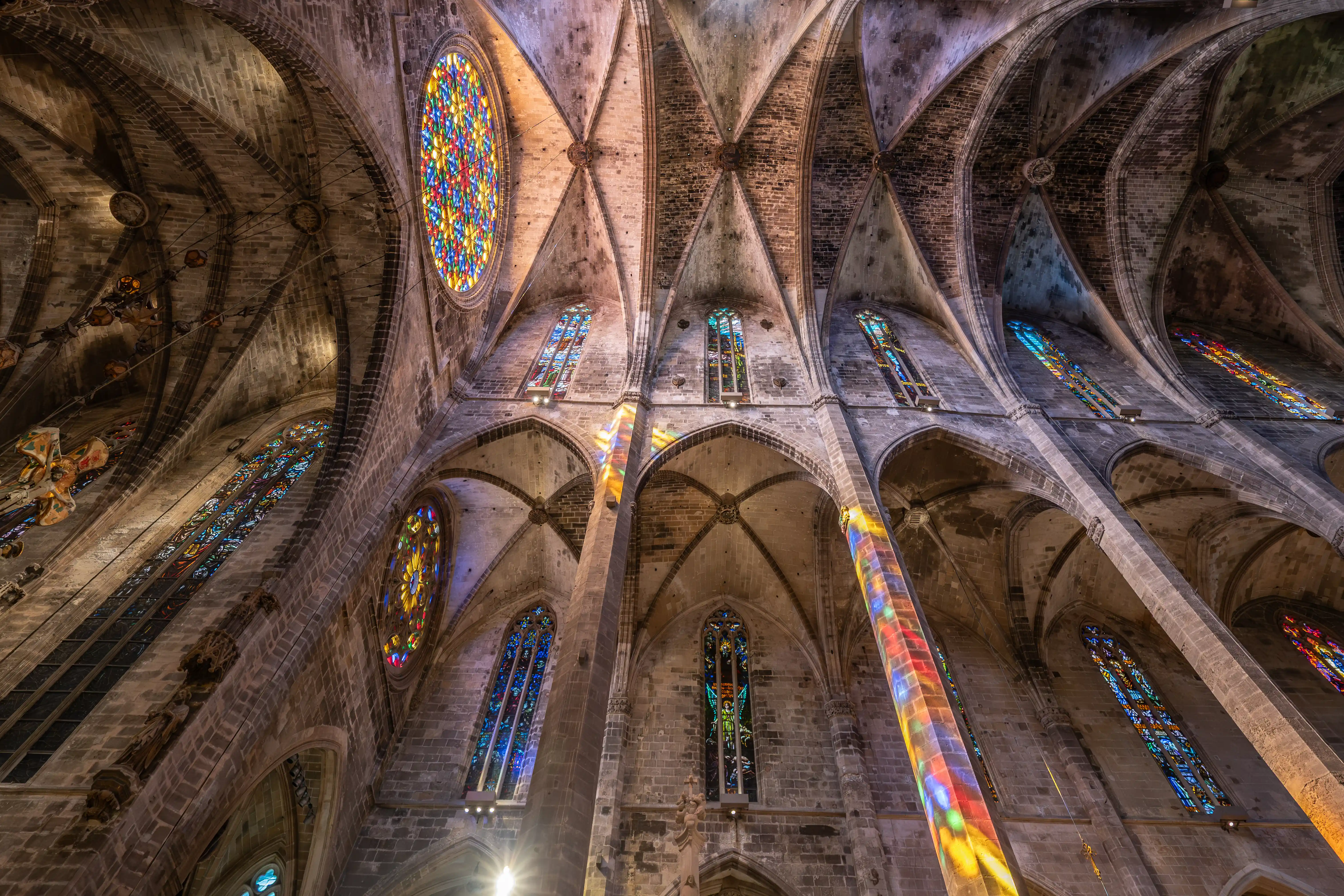
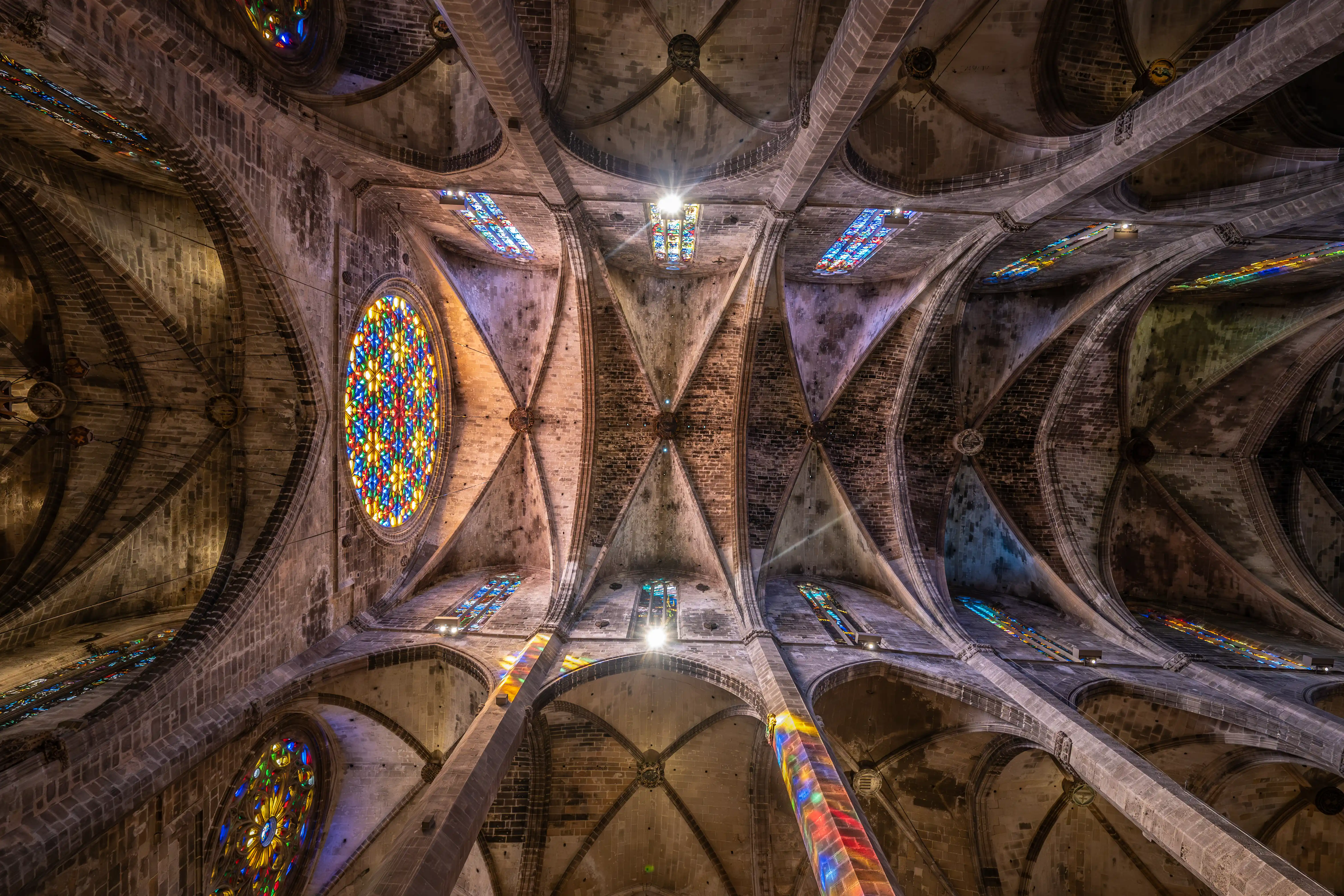
Construction of La Seu began in 1230 under the direction of Bishop Pere de Morella, and spanned four centuries, with the final changes completed in 1601. This 372year endeavour resulted in a masterpiece of Gothic architecture, blending Catalan, French, and Mediterranean influences into a unique and awe-inspiring structure. The cathedral’s imposing nave is one of the tallest in the world, surpassing even the naves of Notre Dame in Paris and Milano Cathedral. Its soaring vaults, slender columns, and vast stained-glass windows create an ethereal atmosphere, flooding the interior with colourful light and a sense of divine grandeur.The cathedral’s design reflects the evolution of architectural styles over the centuries. The earliest surviving section, the Chapel of the Holy Trinity, was completed in 1327 and was intended as a burial space for the Monarchs of Mallorca. The Royal Chapel, located at the end of the central nave, houses the tombs of Kings James II and James III of Mallorca, resting in elaborate marble tombs beside the Episcopal Throne of 1346, carved from white marble.
A Treasury of Art and Innovation
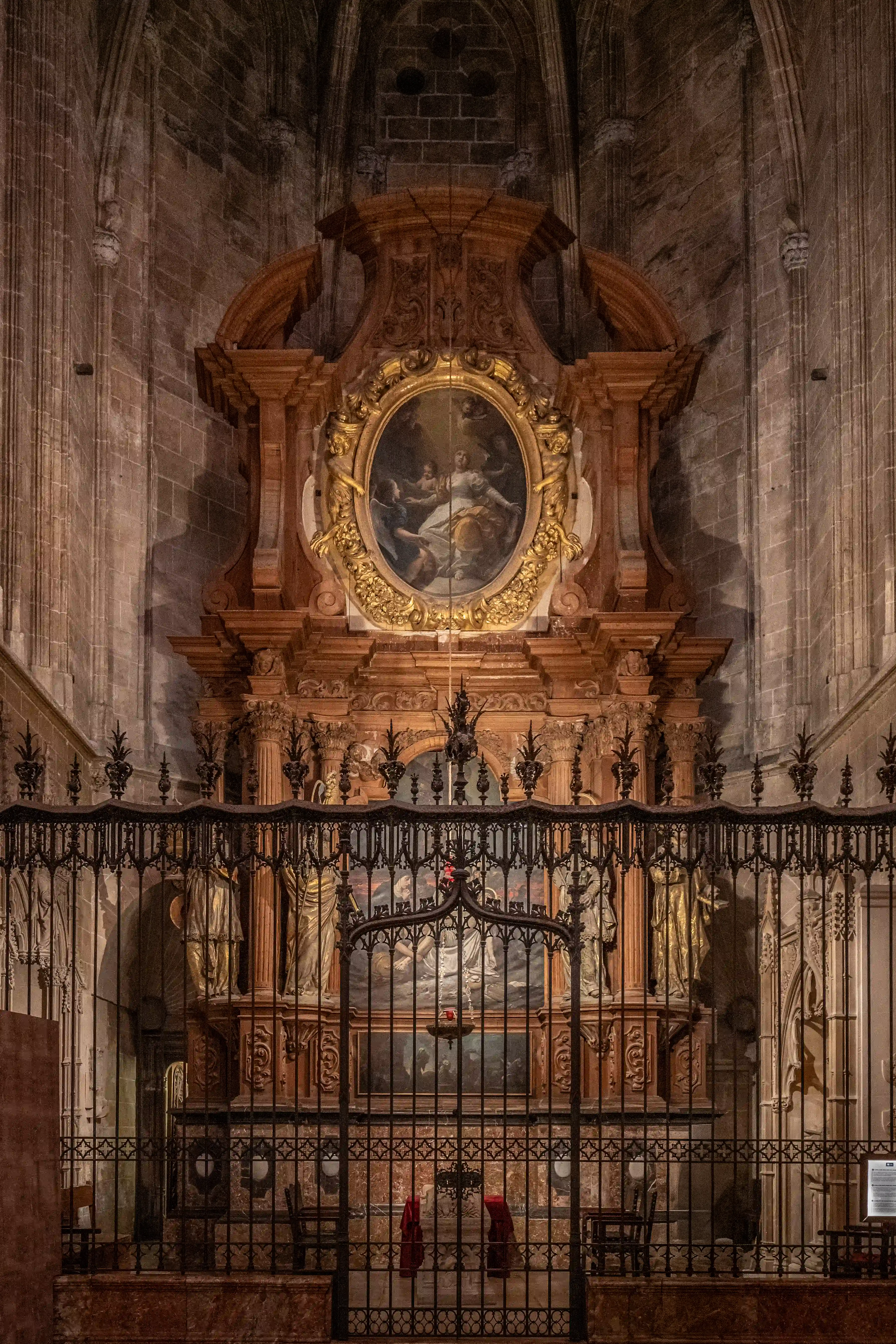
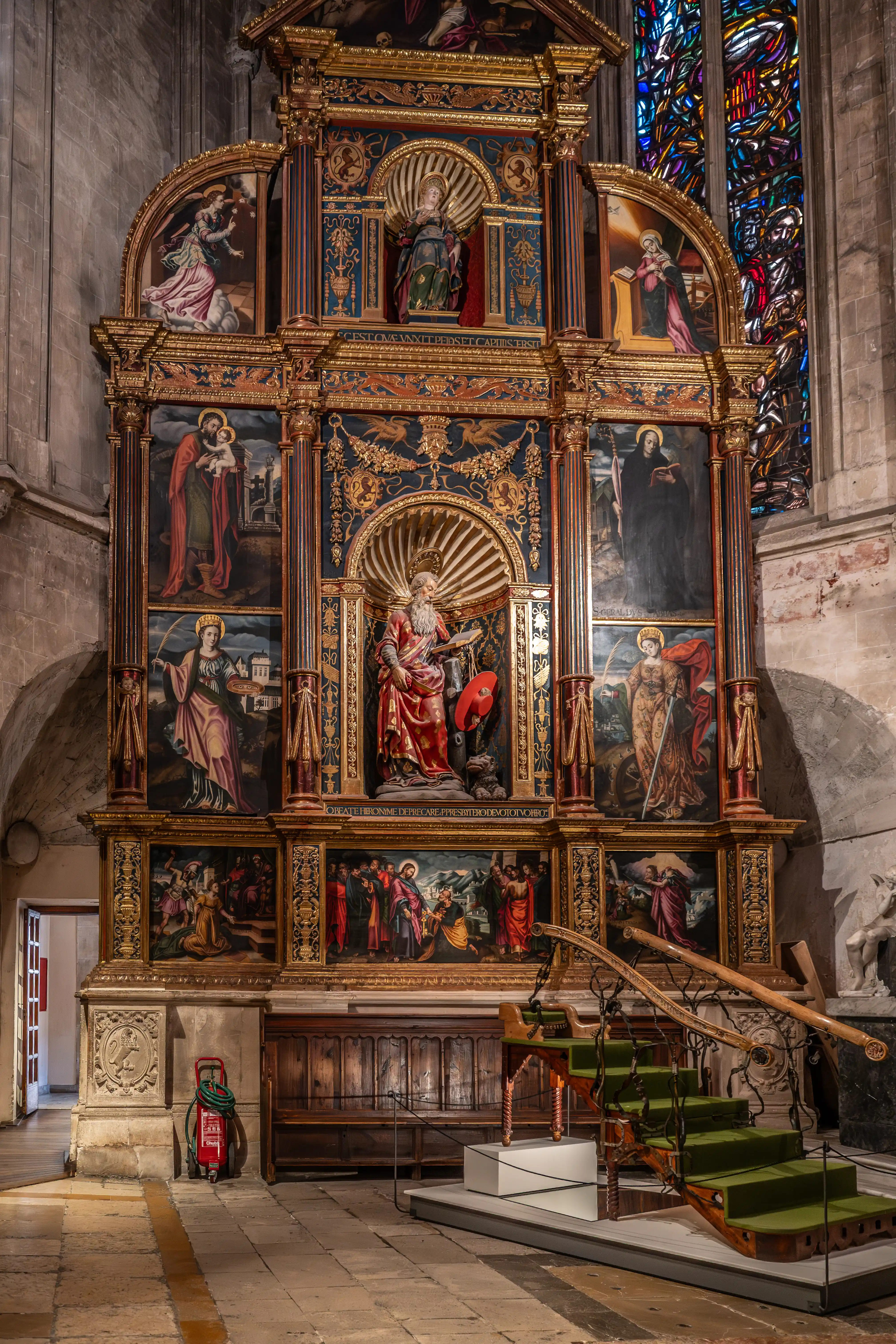
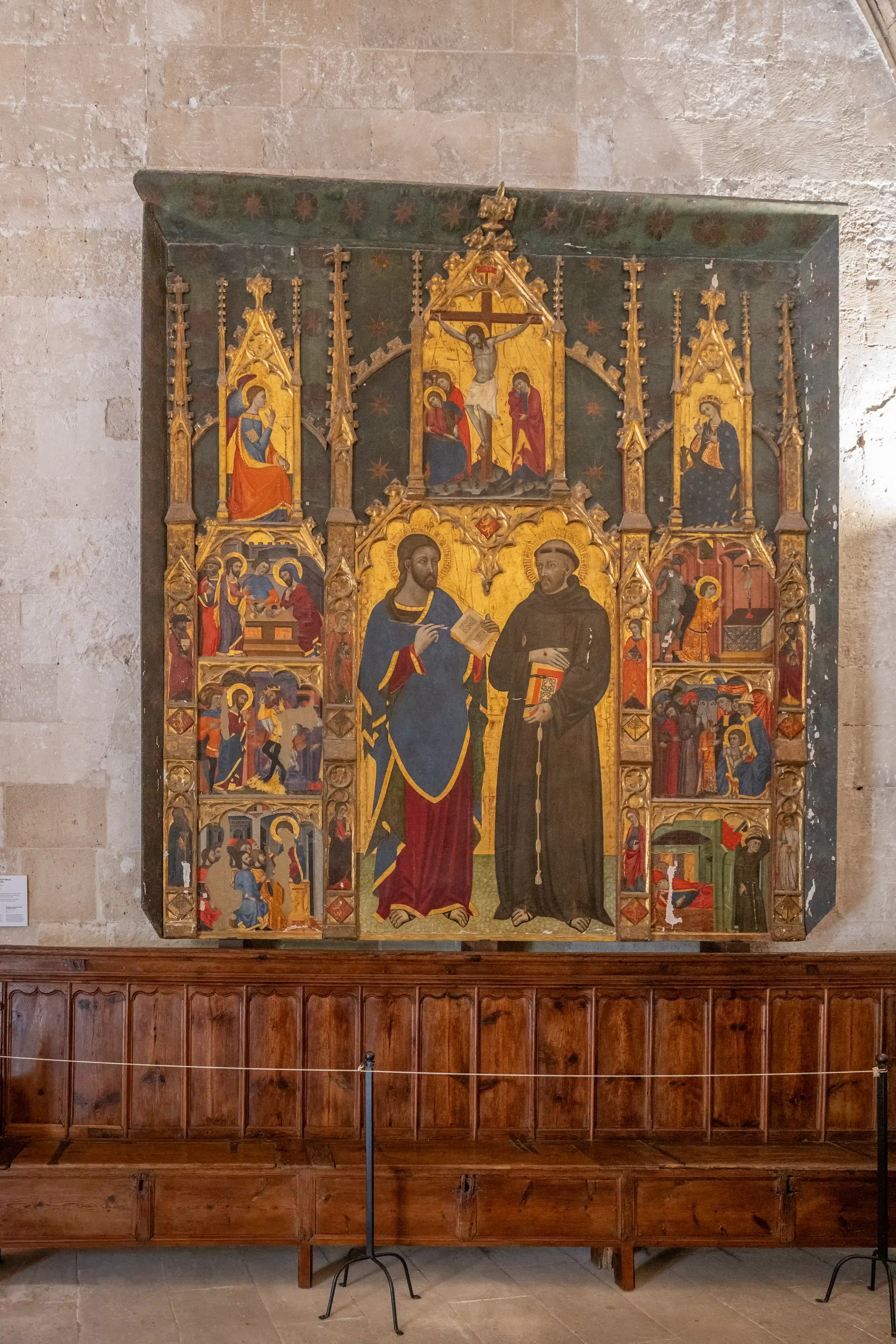
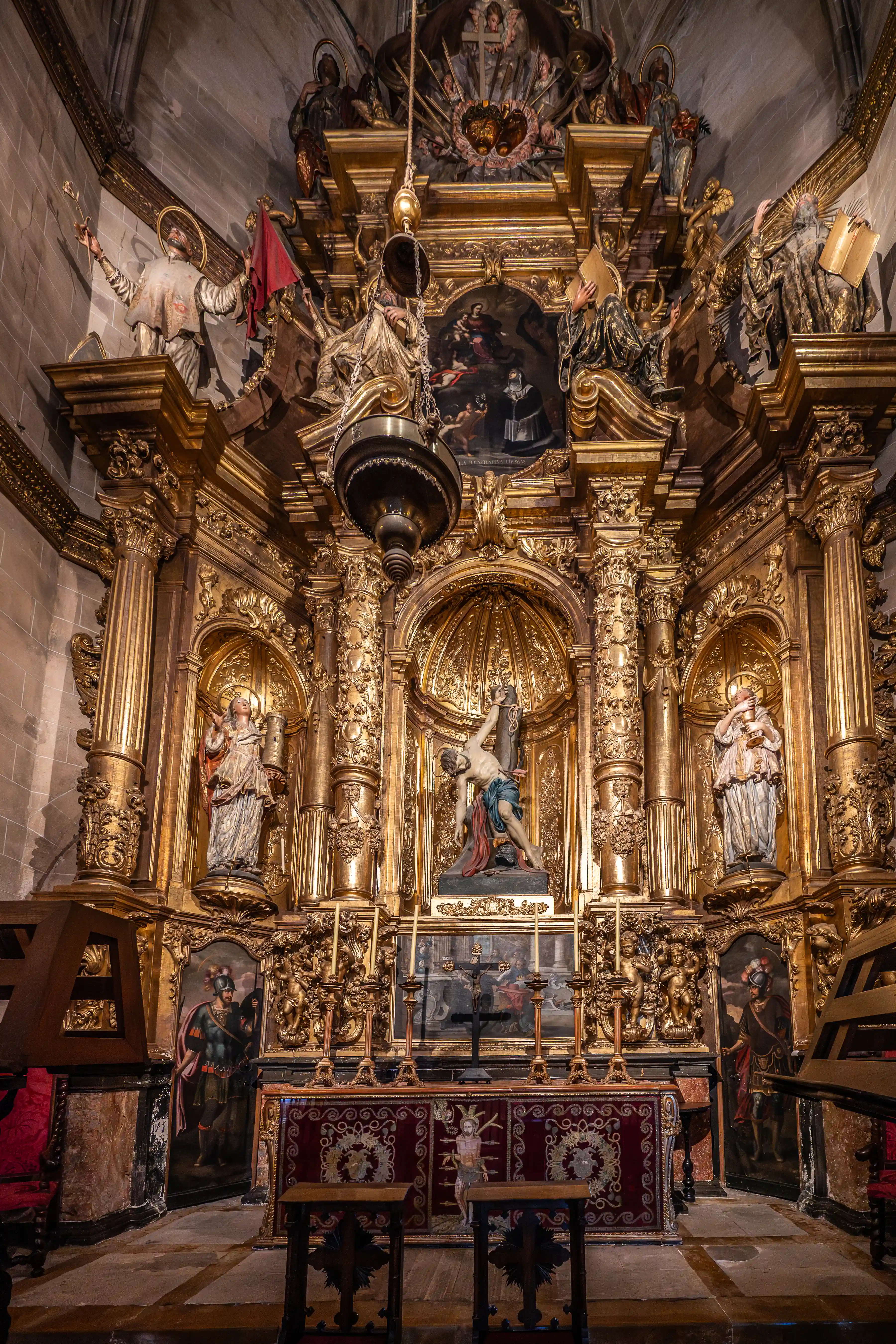
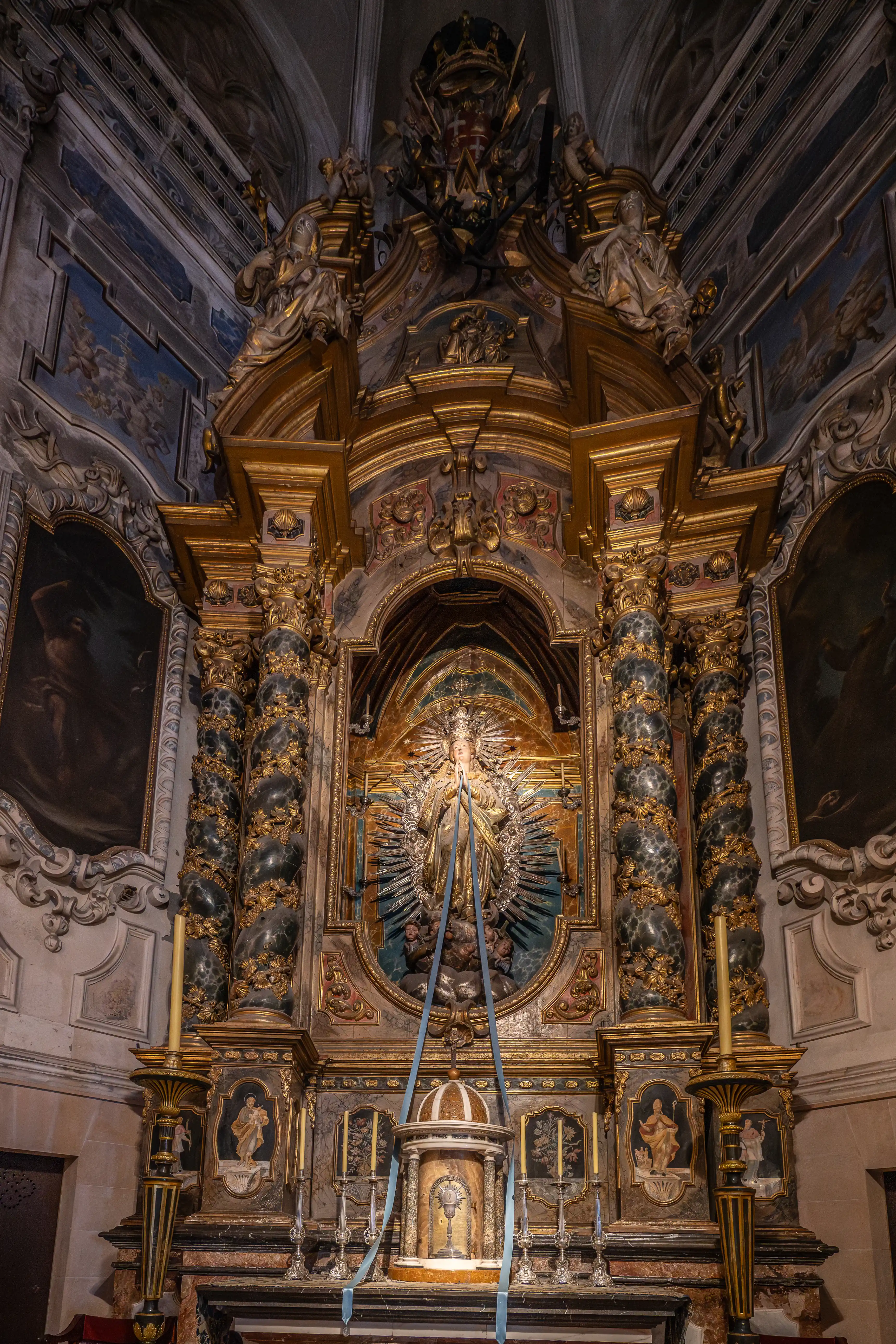
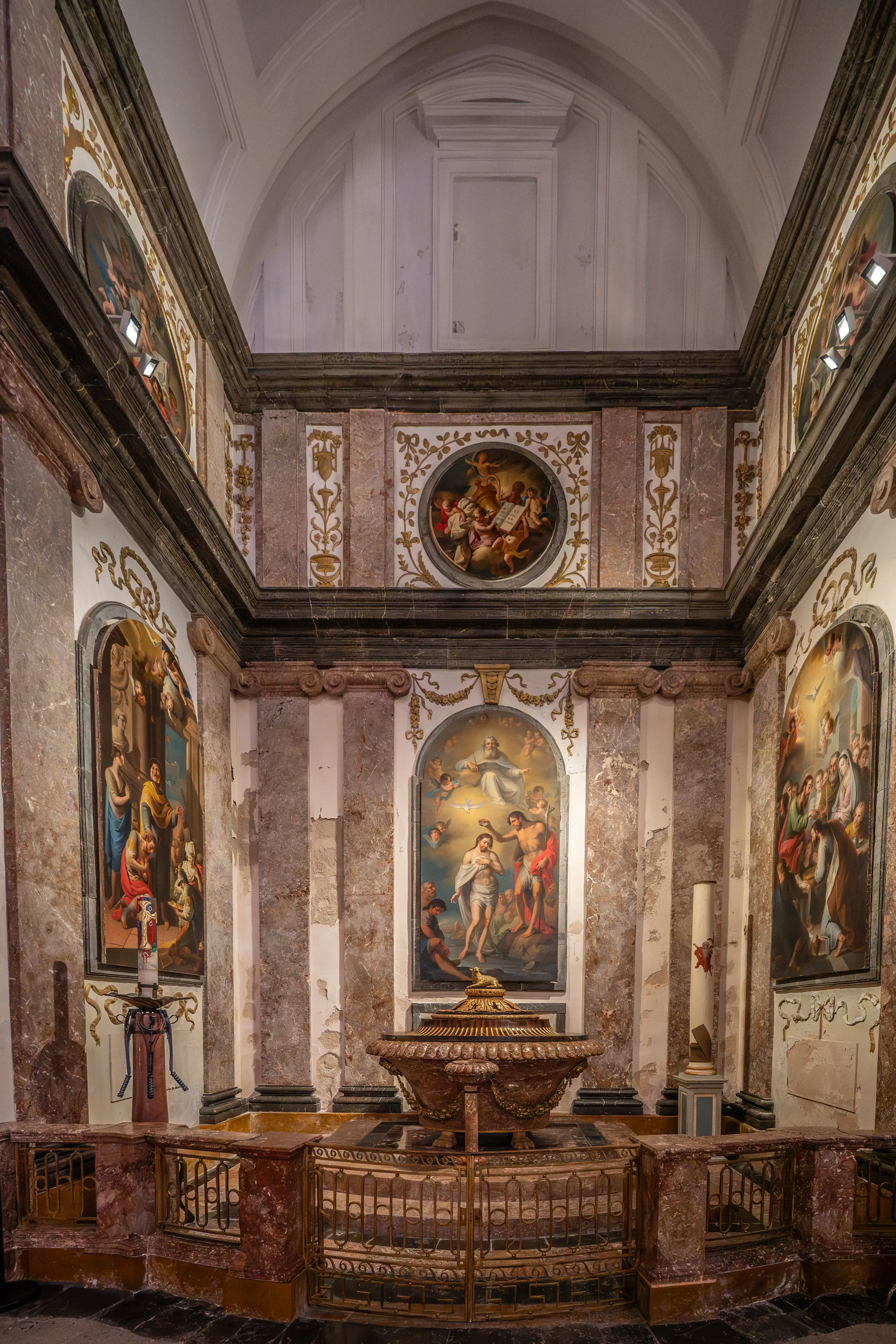
The Catedral-Basílica de Santa María de Mallorca is a living museum of art and architecture, with additions and renovations that span the centuries. Some of its most notable features include:-
The Rose Window: One of the largest and most beautiful rose windows in the world, measuring nearly one hundred square meters (1,076 square feet). It is composed of 1,236 pieces of stained glass, creating a kaleidoscope of colours that illuminates the cathedral’s interior.
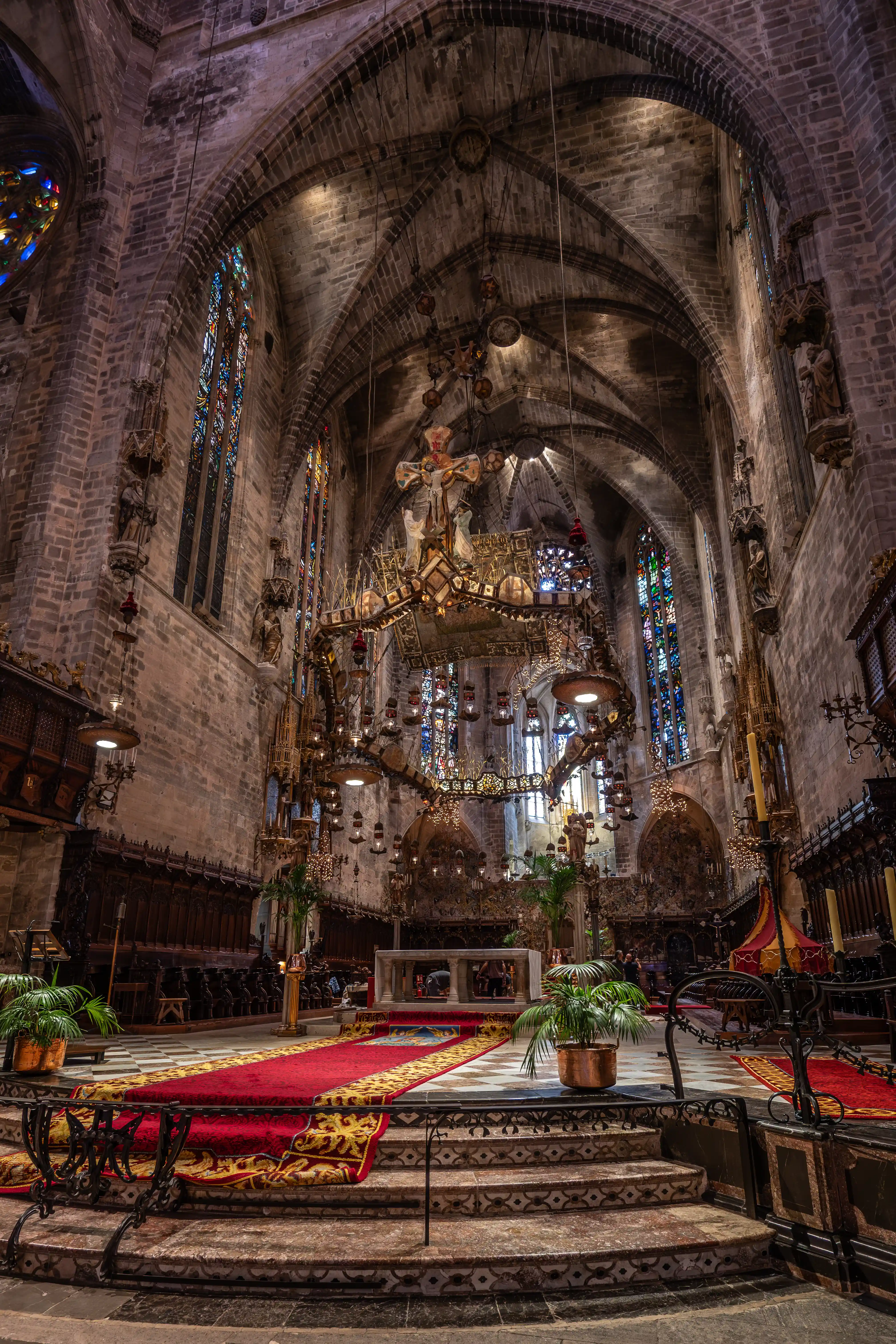
The Crown of Thorns Canopy: A dramatic and modern addition, this enormous, illuminated canopy hangs over the main altar. Though often attributed to Antoni Gaudí, it was designed by Gaudí’s pupil, Joan Rubió, and completed in 1909. The canopy symbolizes the Crown of Thorns worn by Jesus and is a striking contrast to the cathedral’s Gothic surroundings.
The Chapel of the Blessed Sacrament: In 2001–2006, the Mallorcan artist Miquel Barceló undertook a radical redesign of this chapel, transforming it into a modern masterpiece. Barceló’s ceramic mural, inspired by the miracle of the loaves and fishes, covers three hundred square meters (3,230 square feet) and is one of the largest ceramic artworks in the world. The controversial project was met with criticism for its bold intervention into the historic space but has since become a celebrated fusion of tradition and contemporary art.
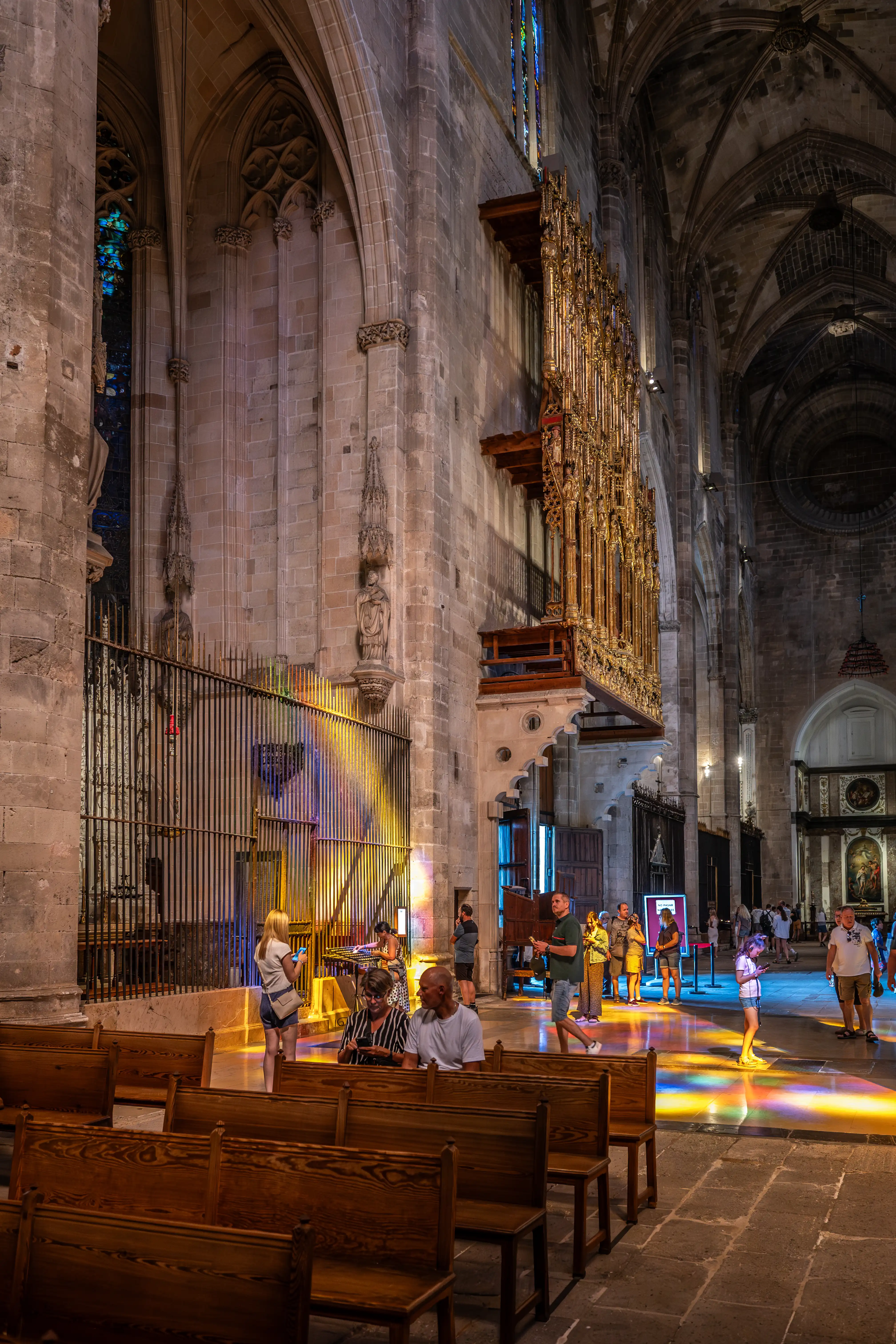
The Organ: La Seu houses the largest organ in Mallorca, dating back to 1328. With four 56note keyboards and a 30note pedalboard, it is a testament to the cathedral’s musical heritage and continues to be used for concerts and ceremonies.
Cultural and Spiritual Significance
A Symbol of Mallorca’s Heritage
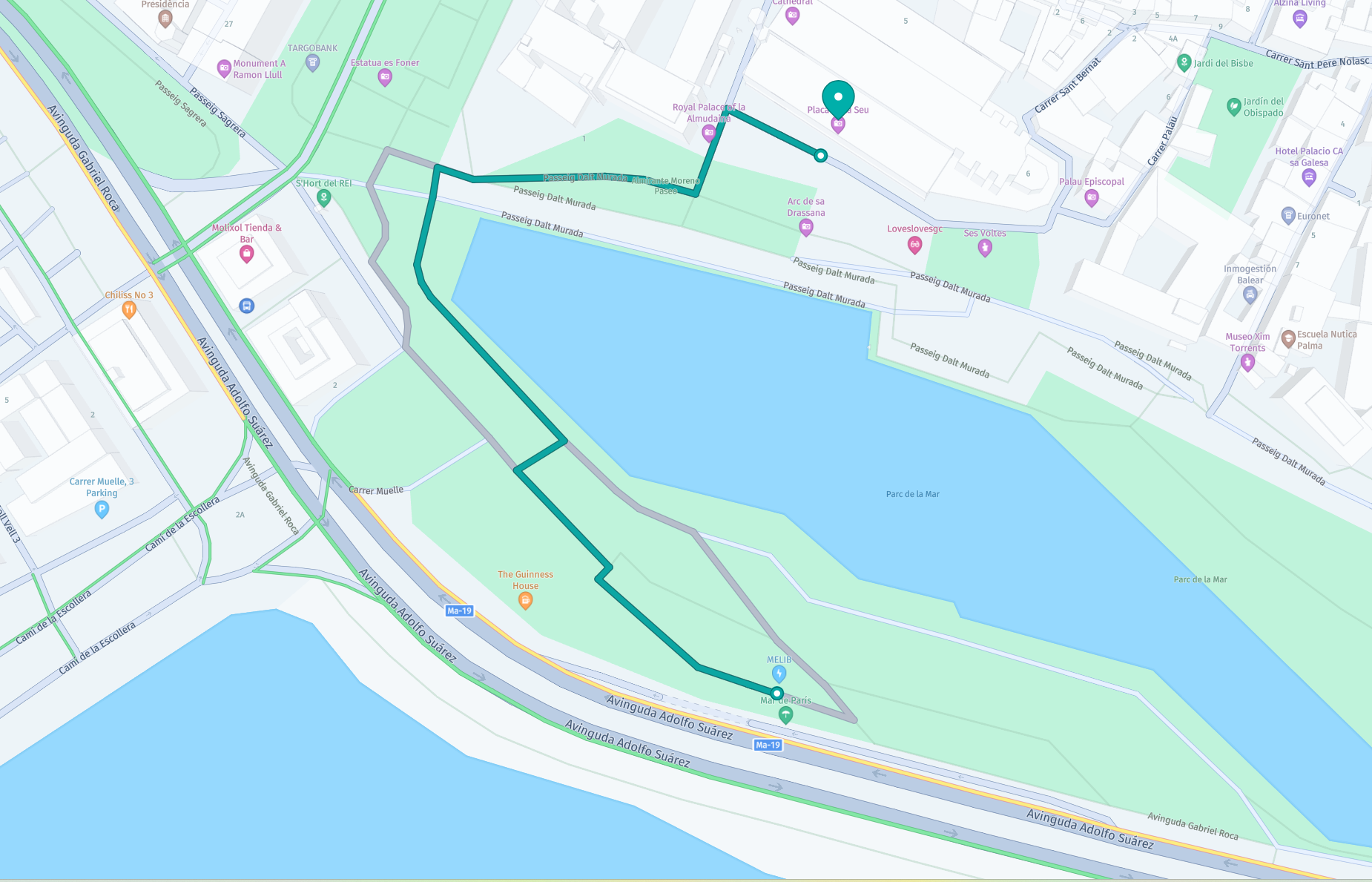
La Seu is more than just a religious building—it is a symbol of Mallorca’s spiritual and cultural identity. The cathedral overlooks the Parc de la Mar and the Mediterranean Sea, its location by the water making it a beacon for sailors and a landmark for travellers approaching Palma by sea. The cathedral’s dedication to Santa María reflects the deep devotion of the Mallorcan people to the Virgin Mary, and its history is intertwined with the island’s journey from Islamic rule to Christian dominance. The cathedral has witnessed some of the most pivotal moments in Mallorca’s history. It was here that King Jaume I established the Diocese of Mallorca after the reconquest, and the cathedral became the heart of the island’s religious life. Over the centuries, it has survived earthquakes, wars, and political upheavals, standing as a testament to the resilience of the Mallorcan people and their enduring faith.A Cathedral of Light and Mystery
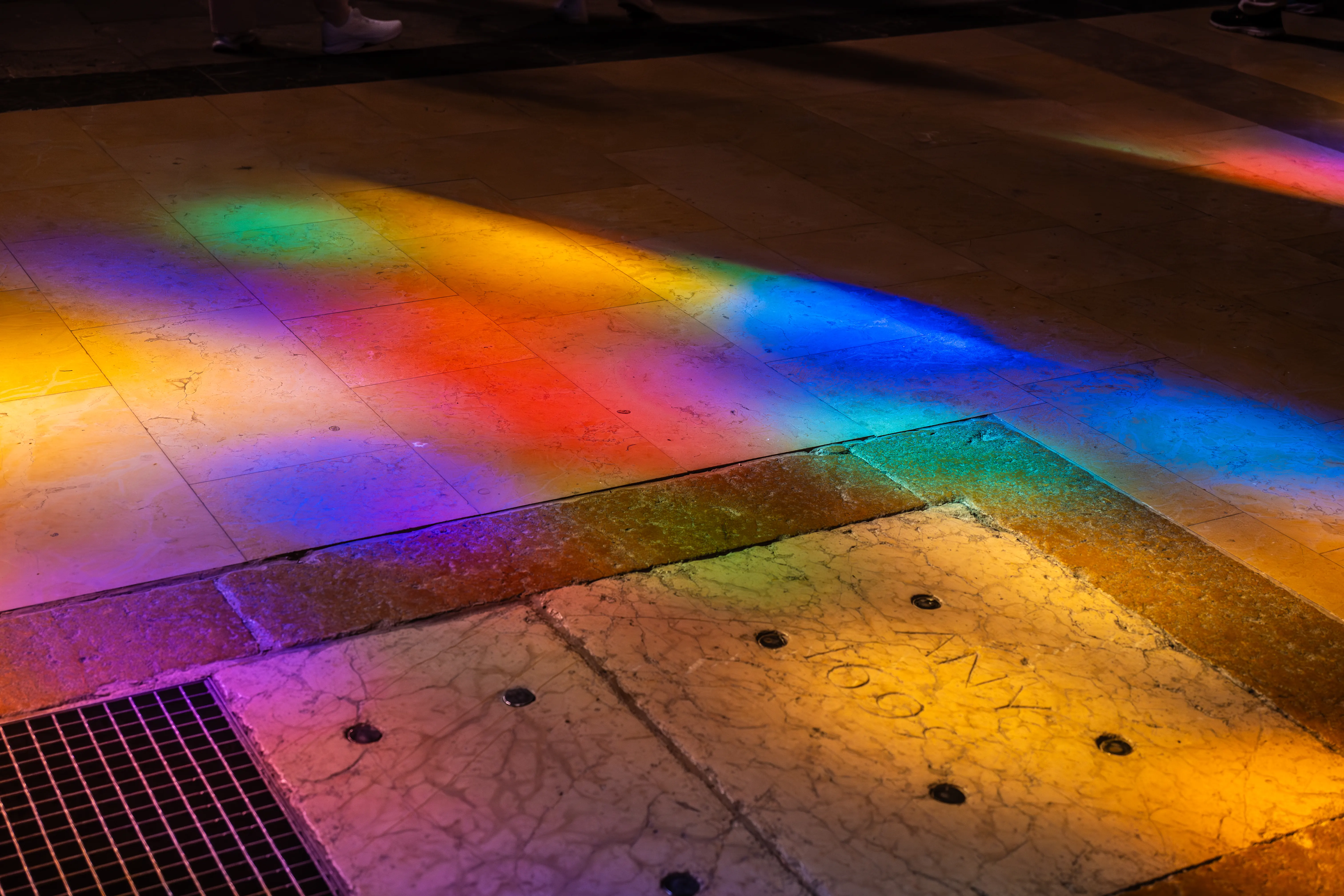
The Catedral-Basílica de Santa María de Mallorca is renowned for its play of light, which transforms the interior into a luminous spectacle. The stained-glass windows, including the rose window and the windows of the apse, cast vibrant colours across the stone walls and vaulted ceilings, creating an almost otherworldly atmosphere. The cathedral’s orientation—with its apse facing east—ensures that the morning sun illuminates the high altar in a dramatic display of light and shadow, a phenomenon that has captivated visitors for centuries.The cathedral also holds many secrets and legends. One of the most famous stories is that of the "Miracle of the Light", where a mysterious light is said to appear in the cathedral every February 2nd (Candlemas), symbolizing the purification of the Virgin Mary. Another legend tells of the "Devil’s Window", a small opening in the cathedral’s south wall through which, according to folklore, the devil was expelled during its construction.
