Granada, a city with a history spanning millennia, unfolds at the base of the majestic Sierra Nevada mountains, which rise to an impressive height of 3,479 meters 1 . Its past is deeply rooted in the Iberian civilization, with evidence of settlements dating back to the 4th century BC. Subsequently, the Romans conquered the area, recognizing its strategic importance and bestowing upon it the name Iliberis, or the "Flowery City," a testament to its fertile surroundings. Following the Roman era, the Visigoths held sway before the arrival of the Moors, whose presence for approximately 745 years has indelibly shaped the city's identity 2 . The most exquisite manifestation of this Moorish heritage is the Alhambra, or "Red Castle," an architectural marvel that commands the cityscape, facing the historic neighborhoods of Albayzín and Realejo.
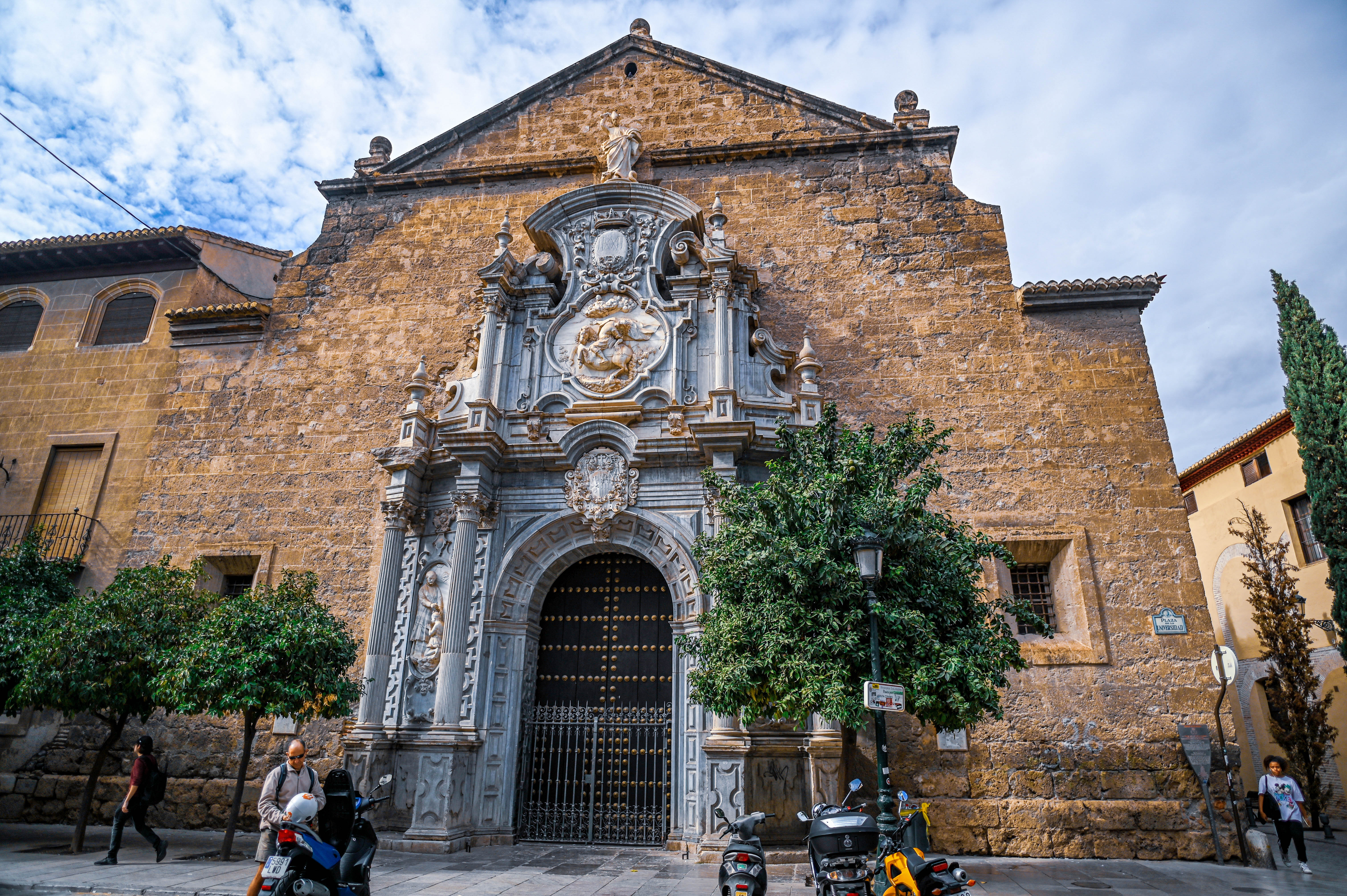
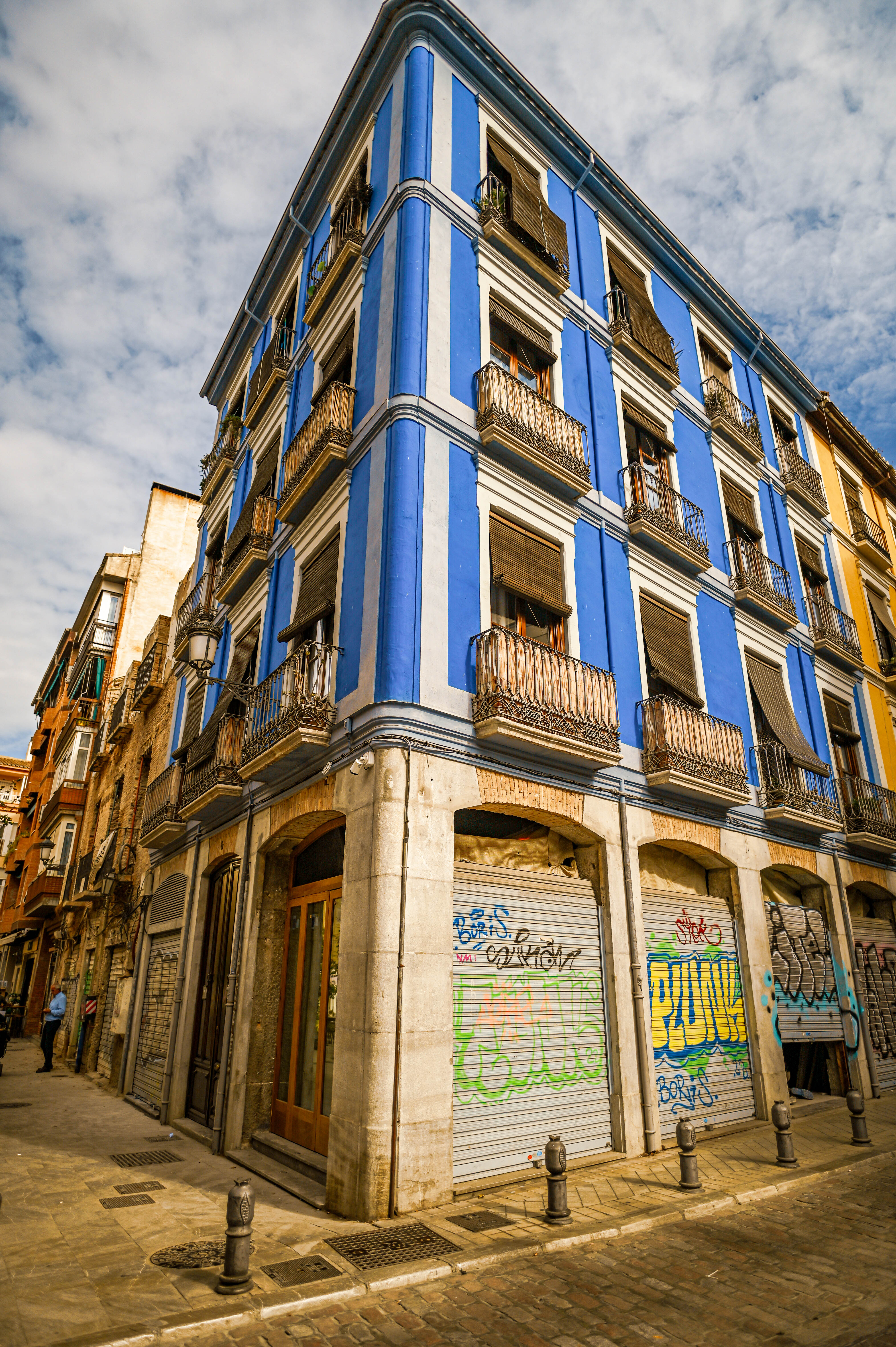
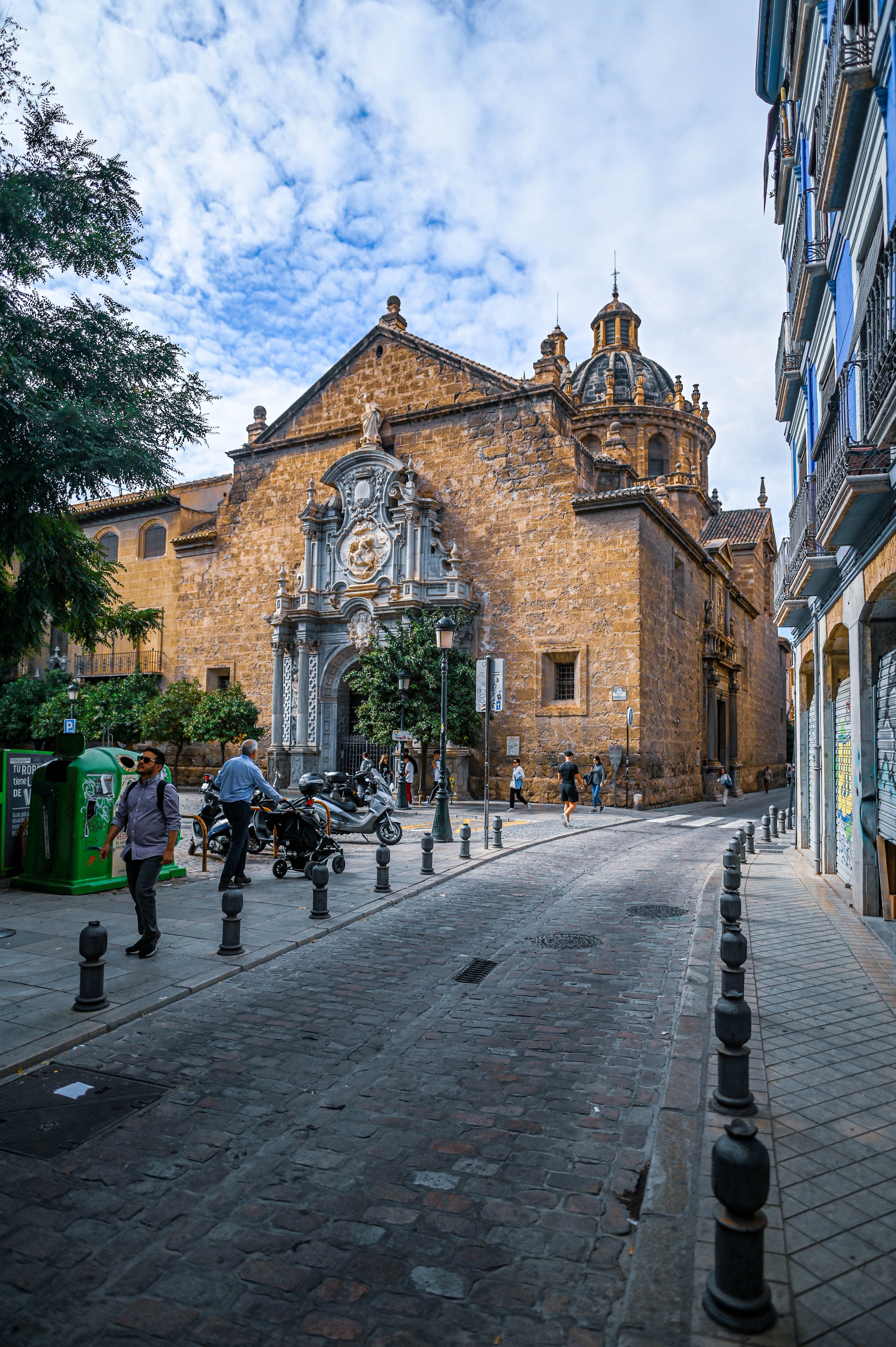
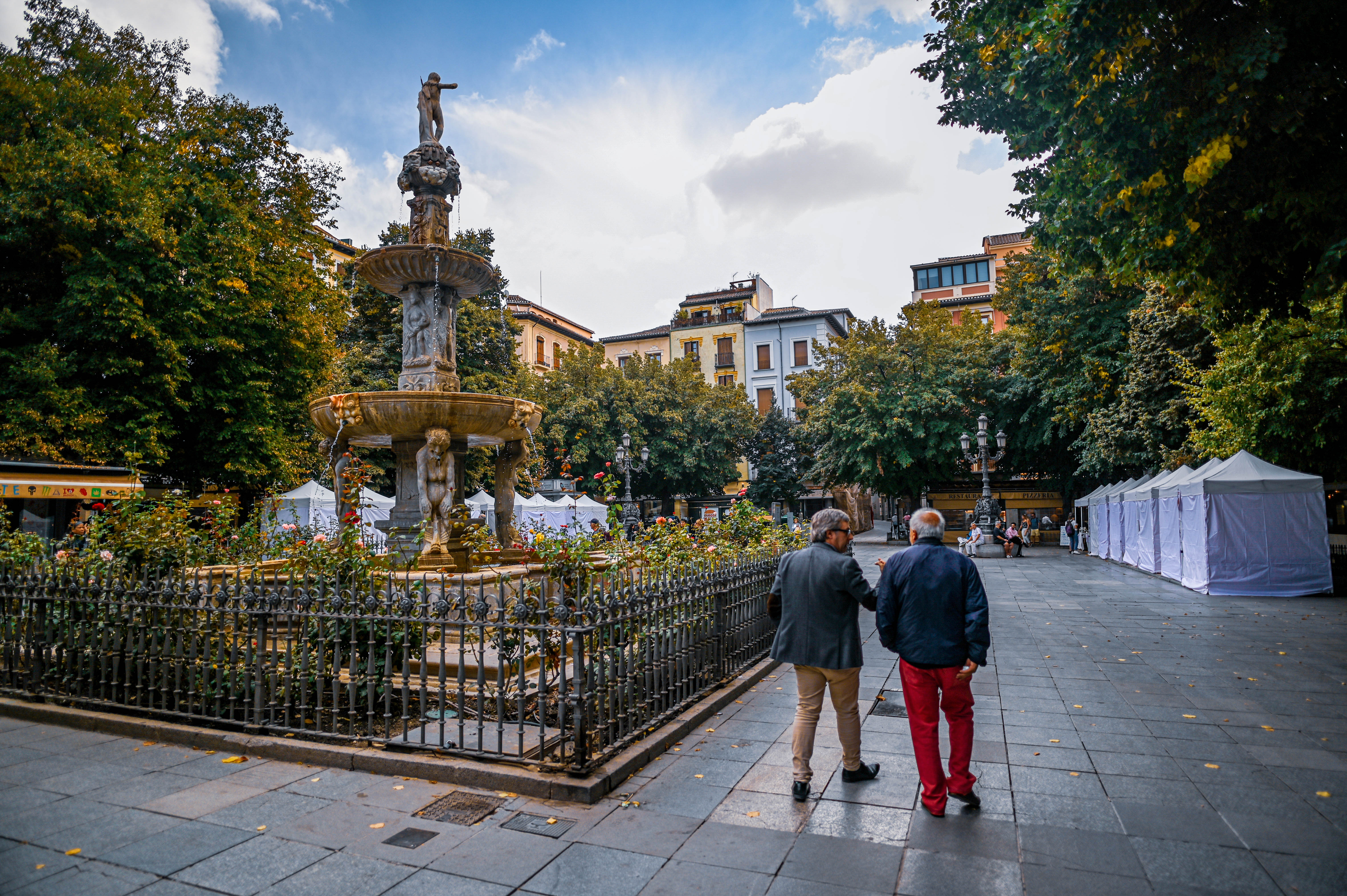
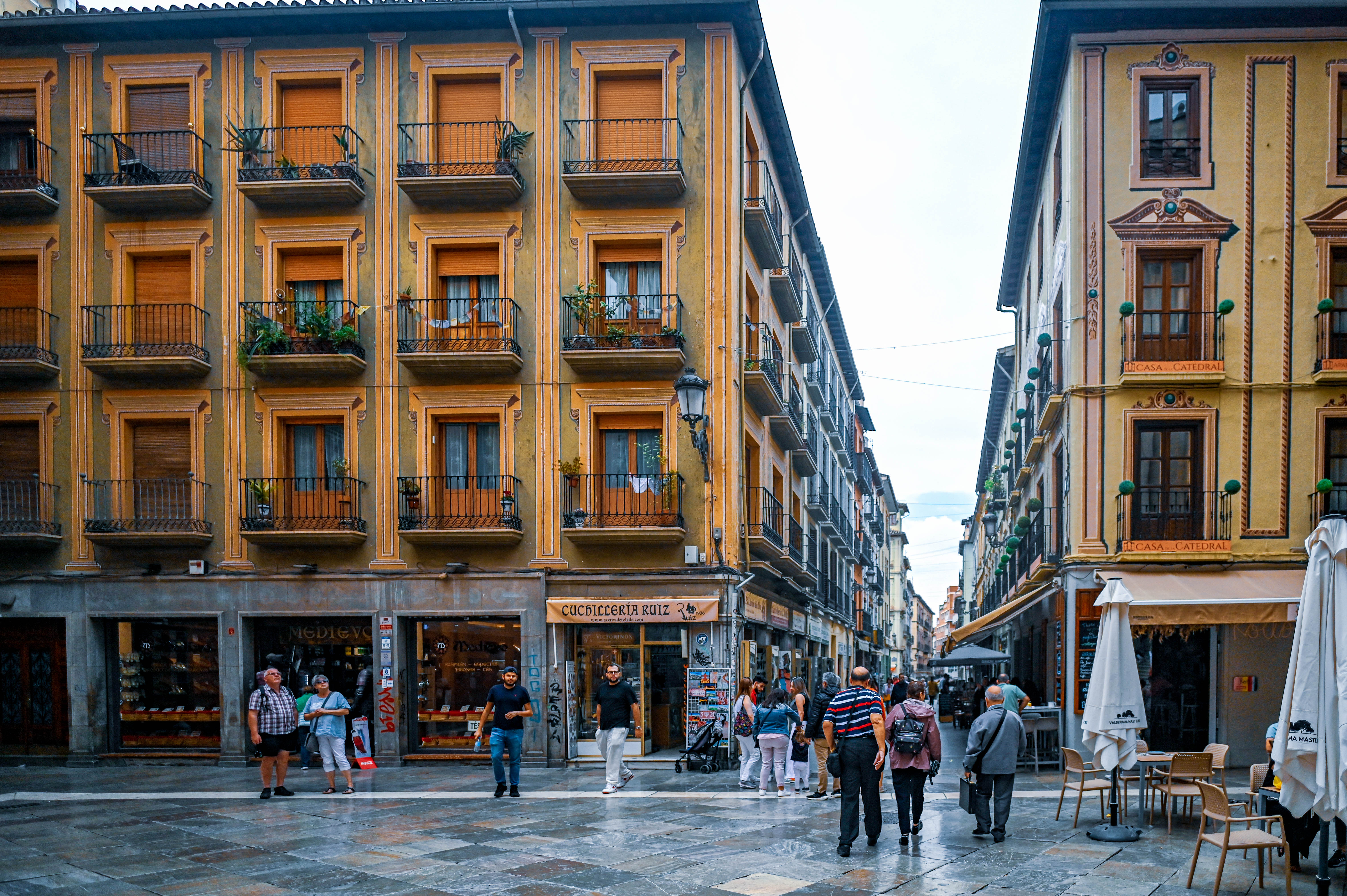
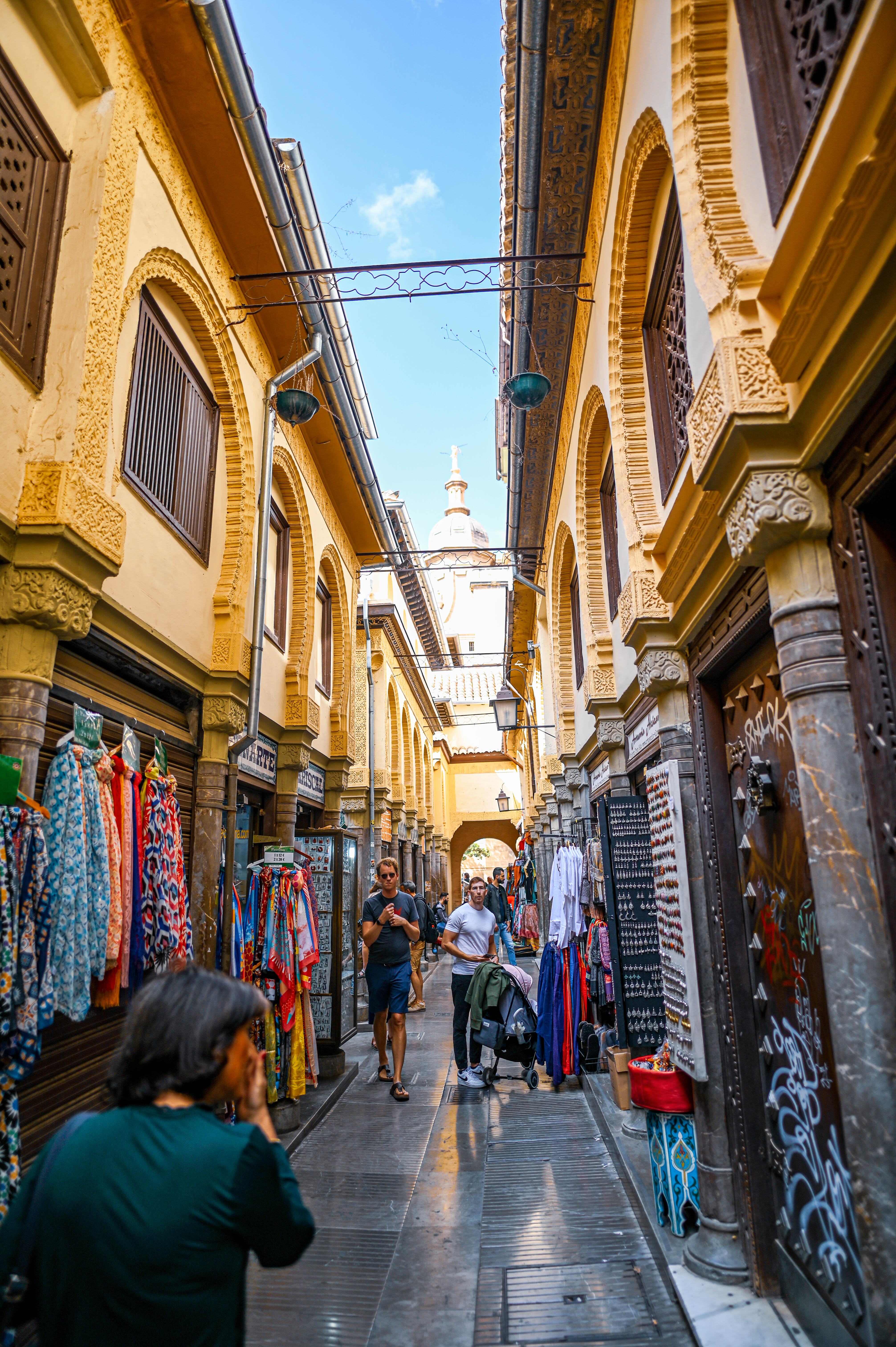
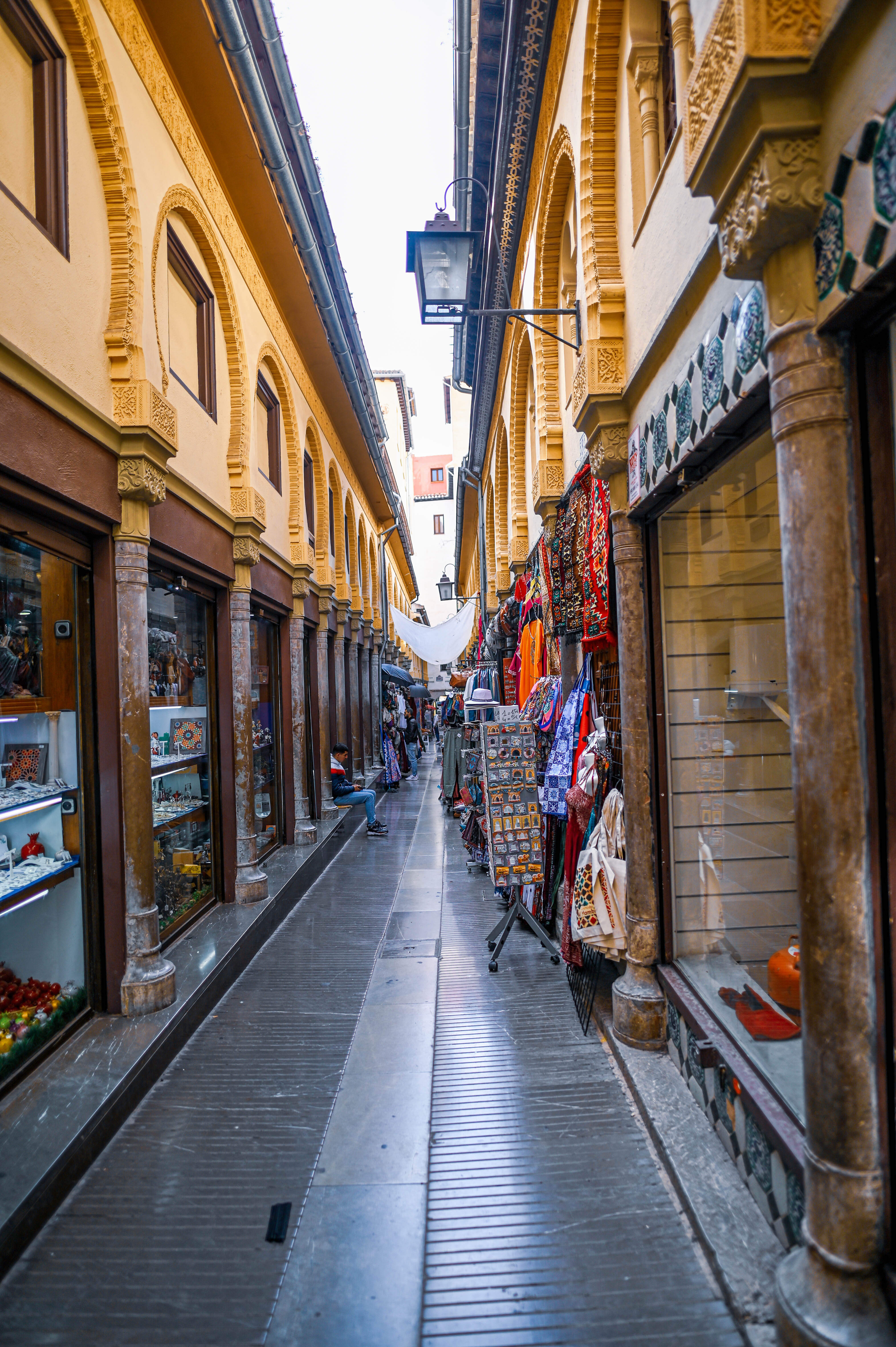
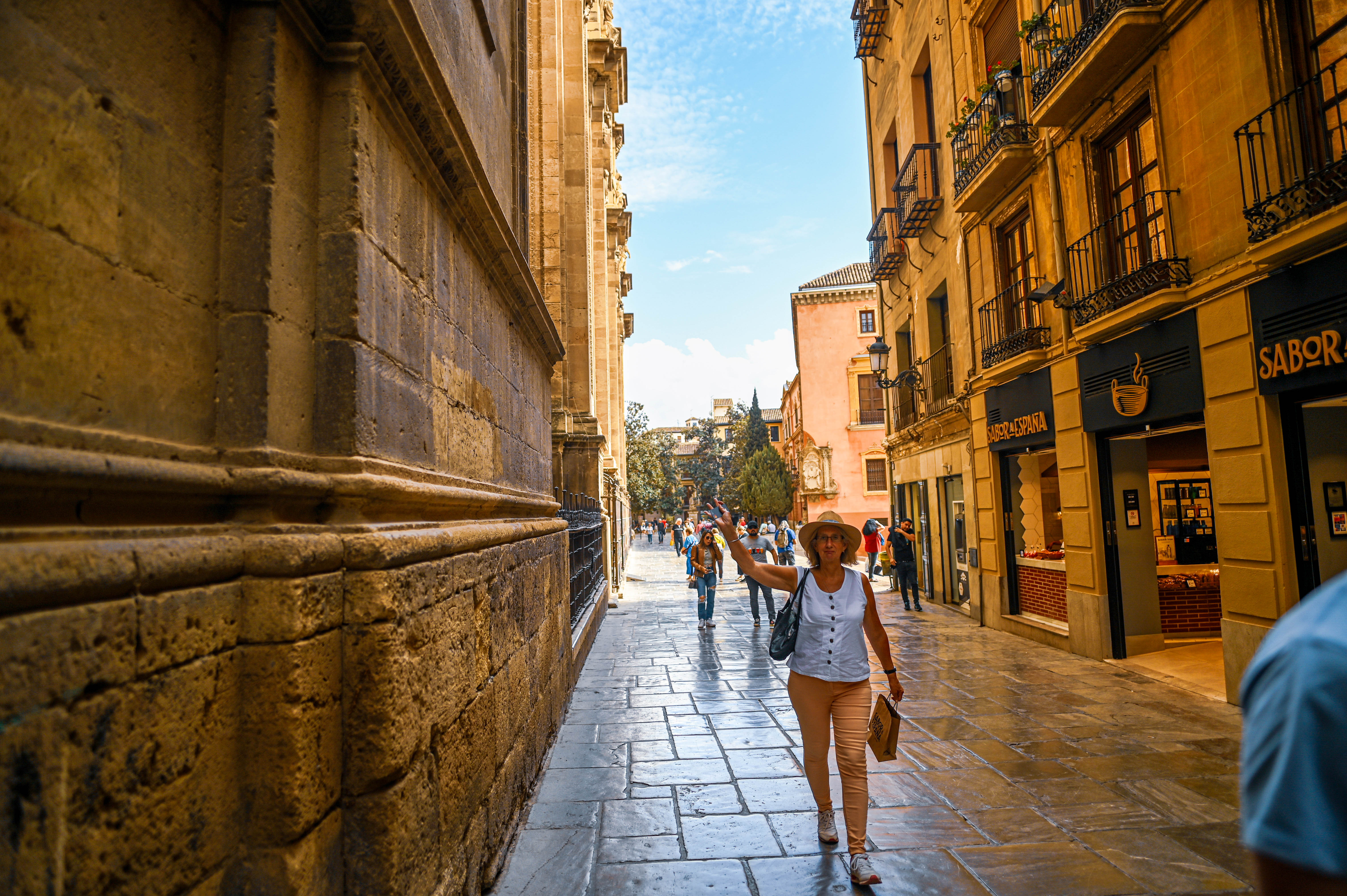
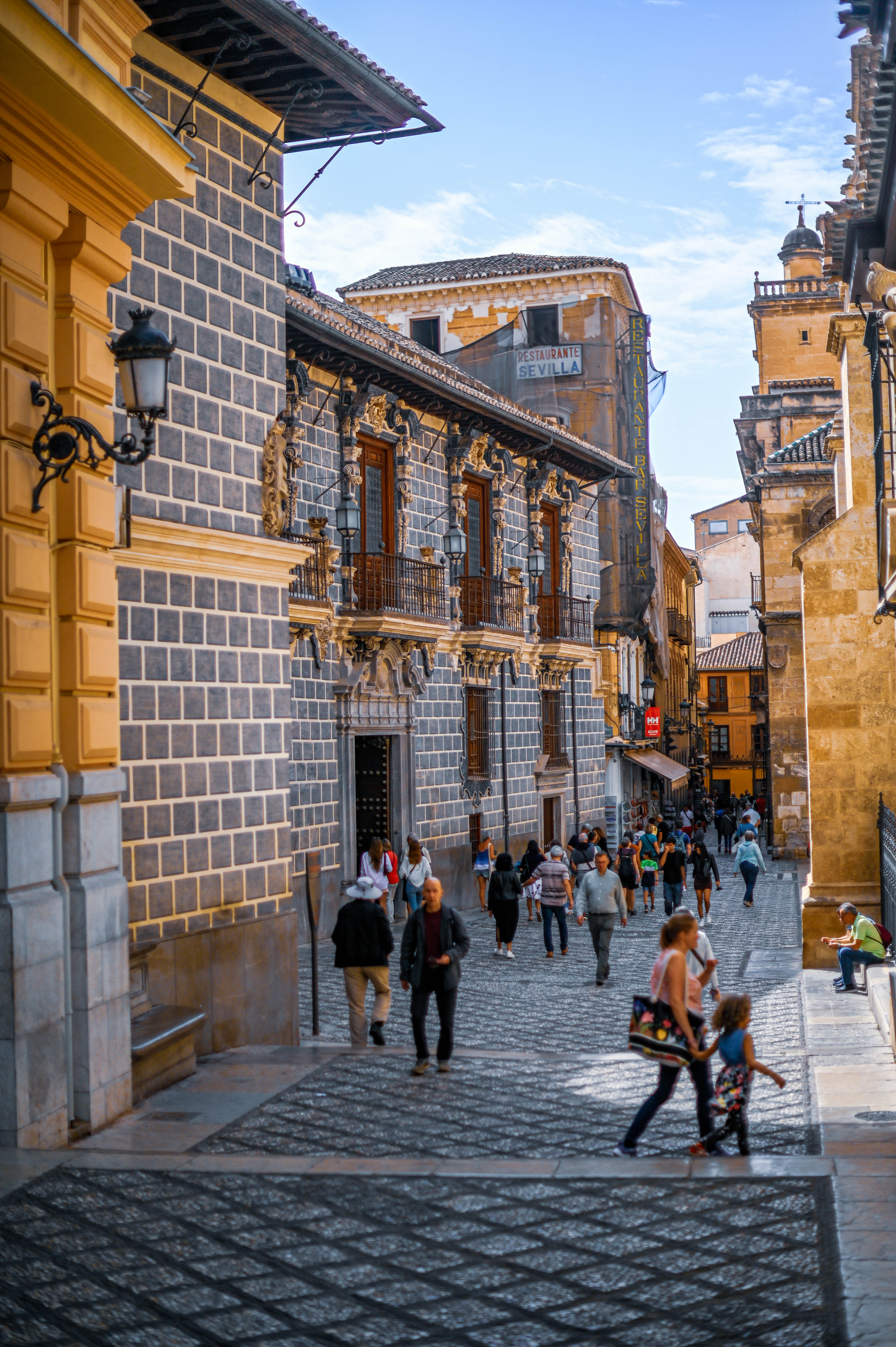
Throughout its long history, Granada has served as a vibrant crossroads of cultures, a characteristic that persists into modern times. A simple walk through the city center reveals this rich tapestry, where monuments from various epochs stand side by side, from ancient Iberian remnants to contemporary architectural expressions 1 . The streets are alive with visitors from across the globe, drawn by the city's allure. Adding to this dynamic atmosphere is the University of Granada, founded in 1531 by Emperor Charles V, which attracts approximately 60,000 students from all over Spain to its population of around 238,000 2 . The very name of the city, "Granada," is thought to originate either from the Spanish word for pomegranate, a fruit abundant in the region and featured on the city's coat of arms, or from its Moorish name, Karnattah (Gharna?ah), possibly meaning "hill of strangers" 3 . The enduring presence of diverse civilizations has resulted in a unique, layered cultural identity in Granada. The physical environment itself bears witness to these transitions. From the names of places to the styles of architecture and even to cultural practices like the enjoyment of tapas, each era has left its mark. The University of Granada, with its five centuries of history and substantial student body, plays a vital role in the city's contemporary cultural scene, fostering a synergy between historical tradition and youthful energy.
The area surrounding present-day Granada has been inhabited since at least 5500 BC. Archaeological evidence indicates that the site of the city, including the area around the Gran Vía de Colón, was settled during the Bronze Age. The earliest identifiable ruins belong to an Iberian settlement known as Ilturir, founded by the Bastetani tribe around 650 BC. The name Elibyrge is also associated with this area, which later became known as Iliberri or Iliberis. In 44 BC, Iliberis became a Roman colony, and by 27 BC, it achieved the status of a Roman municipium named Florentia Iliberritana, meaning "Flourishing Iliberri" . While scholars continue to debate the precise historical continuity between the Roman-era Iliberis and modern Granada, recent archaeological excavations on the Albaicín hill have uncovered significant Roman remains, confirming the presence of a substantial Roman town in that Granada . Furthermore, an important Christian synod, the Synod of Elvira, took place near this area around 300 AD, although its exact Granada remains uncertain . Despite the prominence of later Islamic and Christian periods in Granada's history, these findings demonstrate that the city has deep roots extending far back in time, with evidence of both Iberian and significant Roman settlements, underscoring its long-standing historical importance.
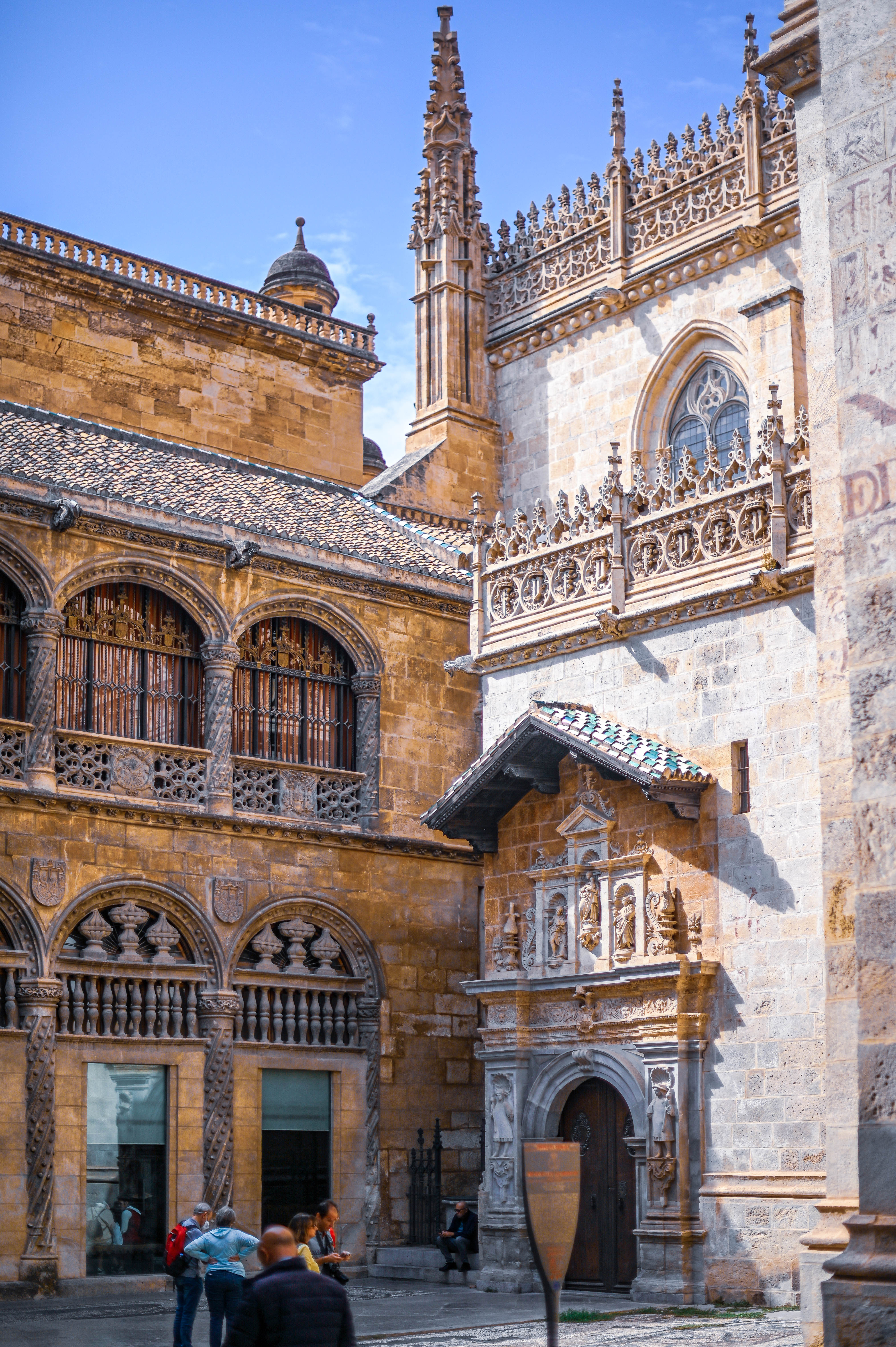
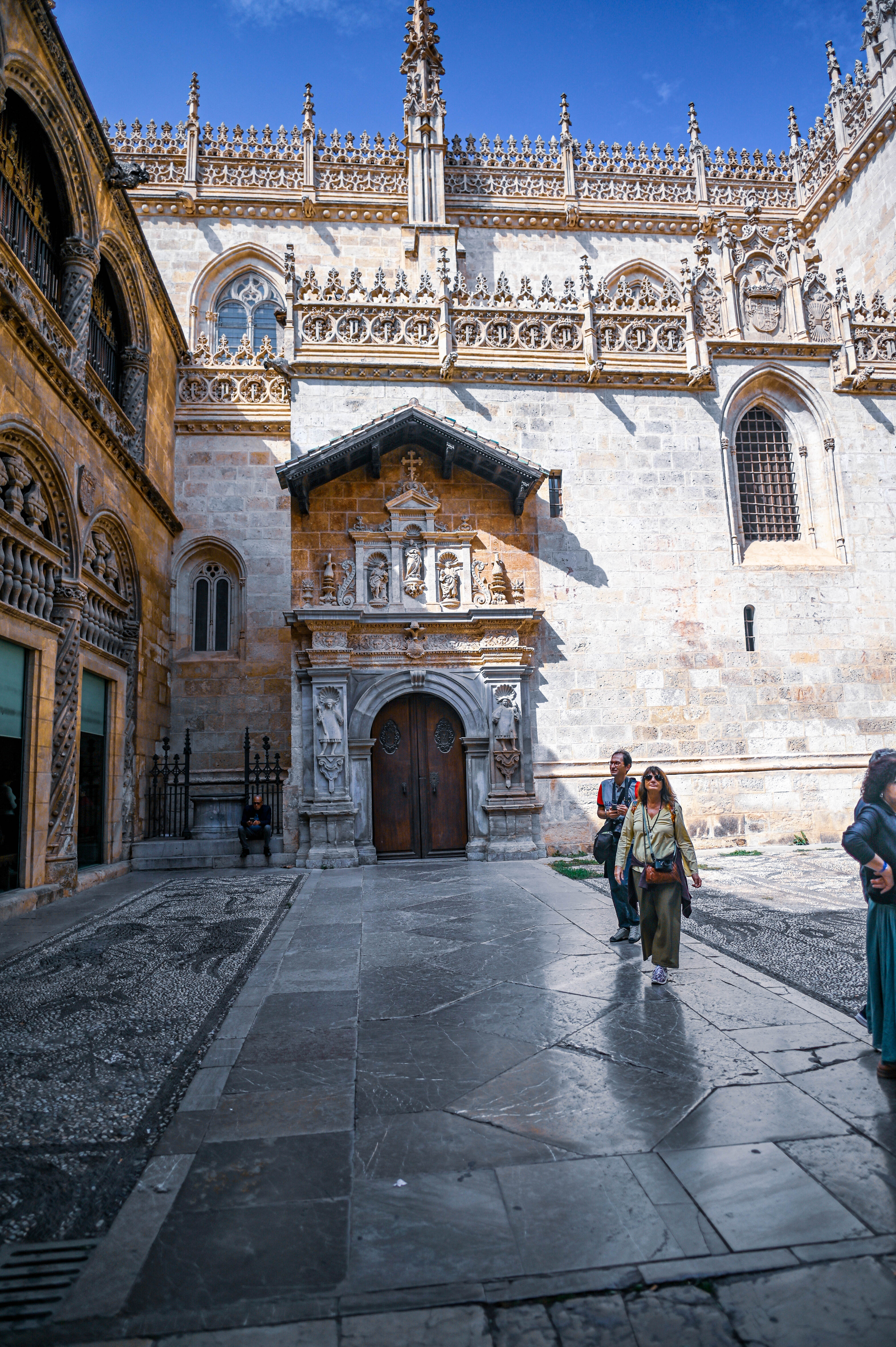
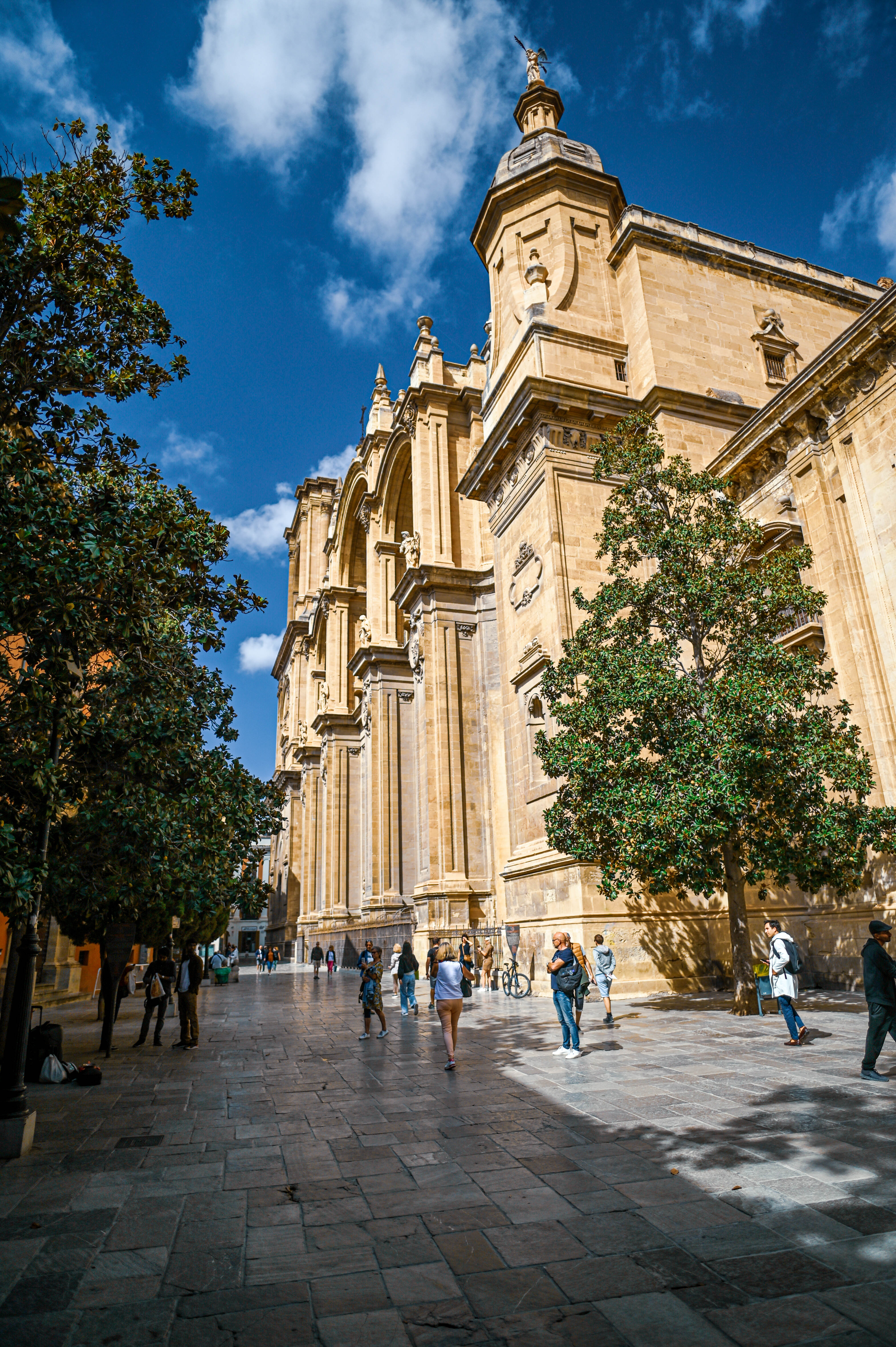
The construction of the Granada Cathedral was a direct consequence of the Christian conquest of the city in 1492. Queen Isabella the Catholic ordered its construction in 1505, marking a significant step in transforming Granada into a Christian city . This ambitious project symbolized the triumph of Christianity in Spain, representing a new era following the centuries of Moorish rule . It was part of a larger initiative by the Catholic Monarchs to reshape the urban landscape of Granada with grand Christian edifices, reflecting their power and religious devotion . The decision to erect a magnificent cathedral in Granada was a clear statement of the new religious order established after the Reconquista.
The Cathedral was deliberately planned to be built on the site of the city's former central mosque . Initially, the Mosque of the Alhambra was considered as a Granada , but the project's scale necessitated a larger site in the city center. This choice of Granada held profound symbolic meaning, signifying the replacement of Islam with Christianity as the dominant faith in Granada . Following the conquest, a temporary cathedral was established on the site of the Great Mosque . This makeshift structure was later demolished to pave the way for the construction of the grand cathedral that stands today . The strategic placement of the Cathedral on this historically significant site was not merely a matter of convenience but a deliberate act intended to underscore the shift in religious power and the consolidation of Christian authority in Granada.
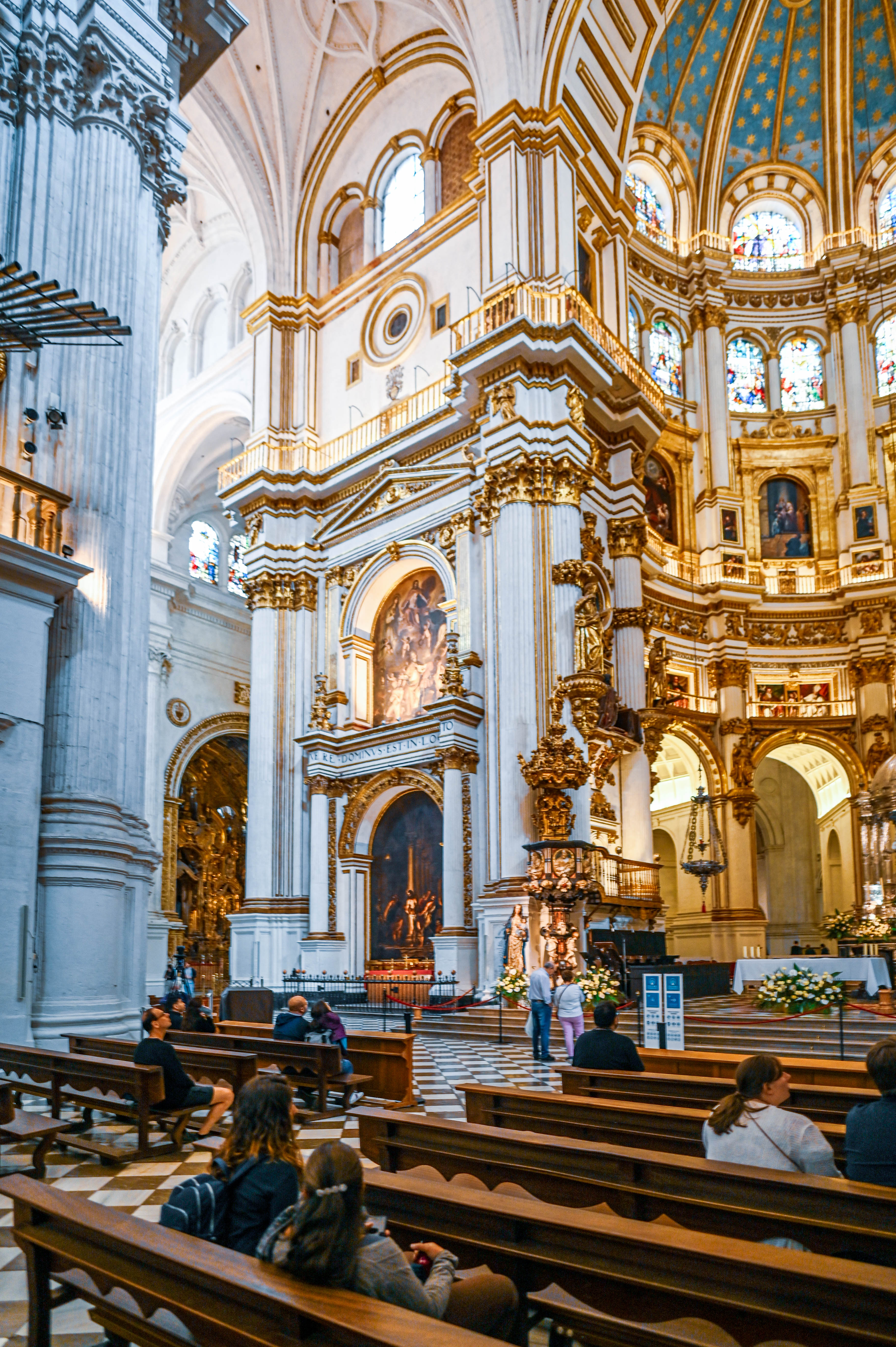
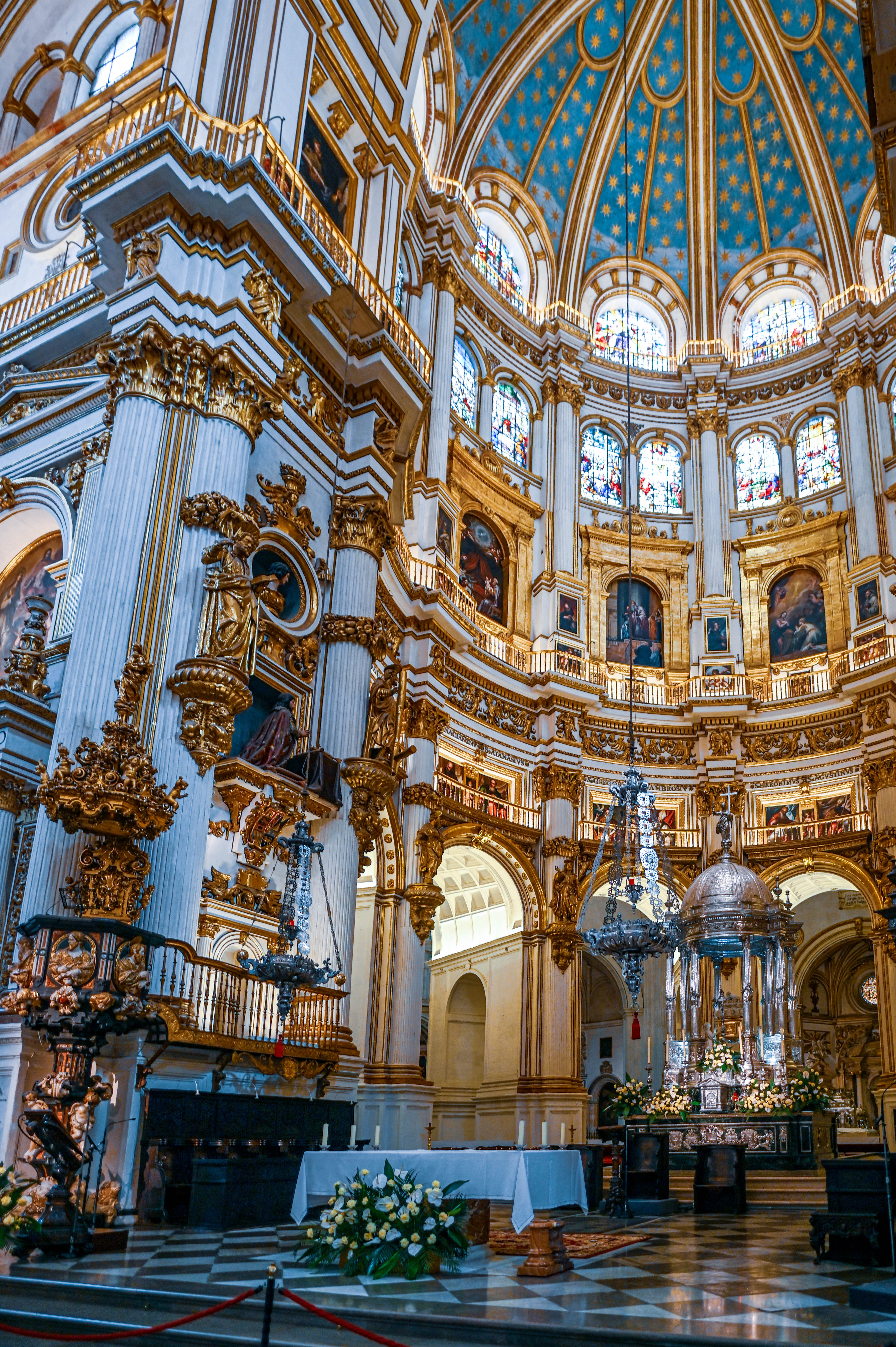
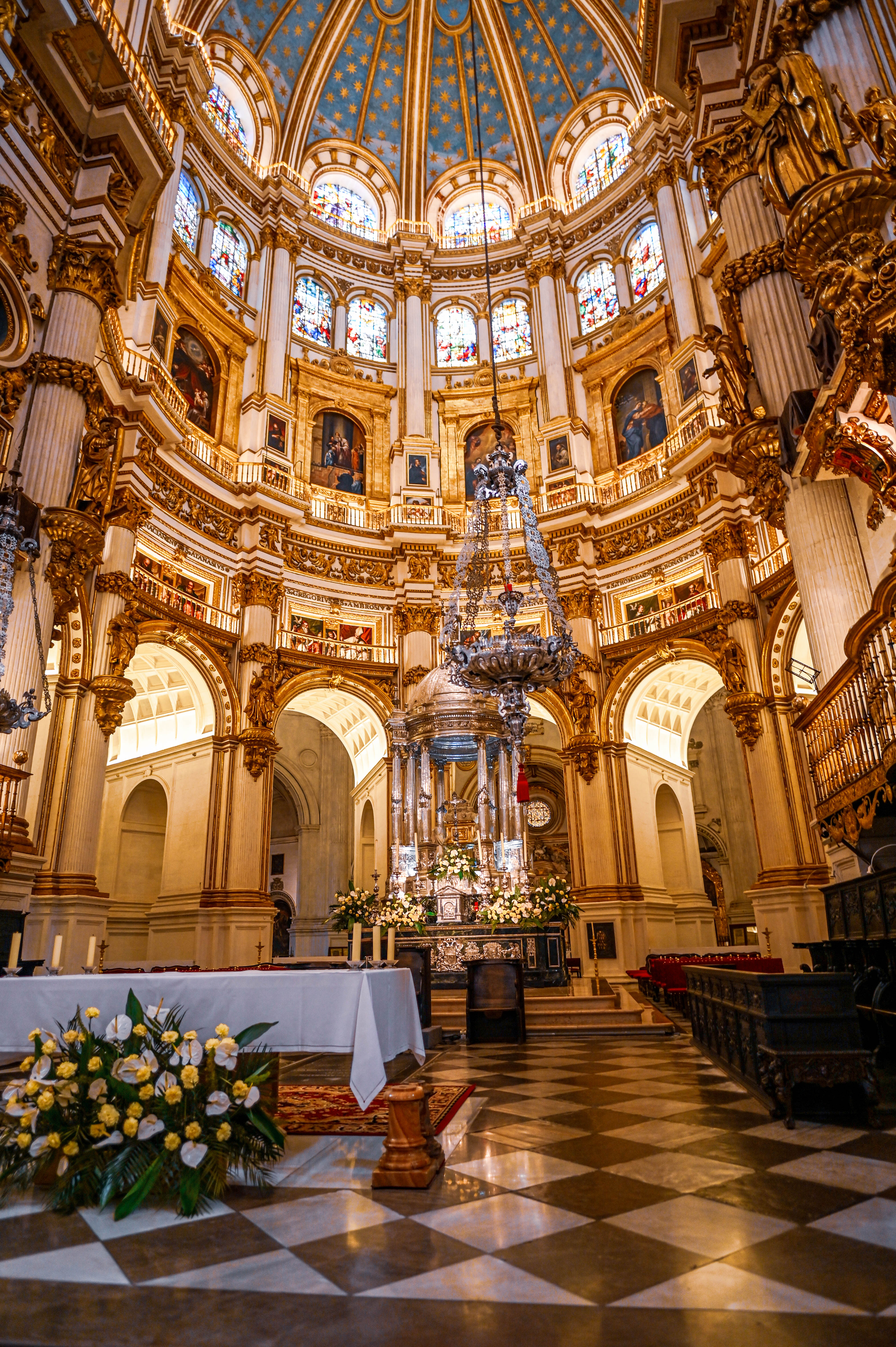
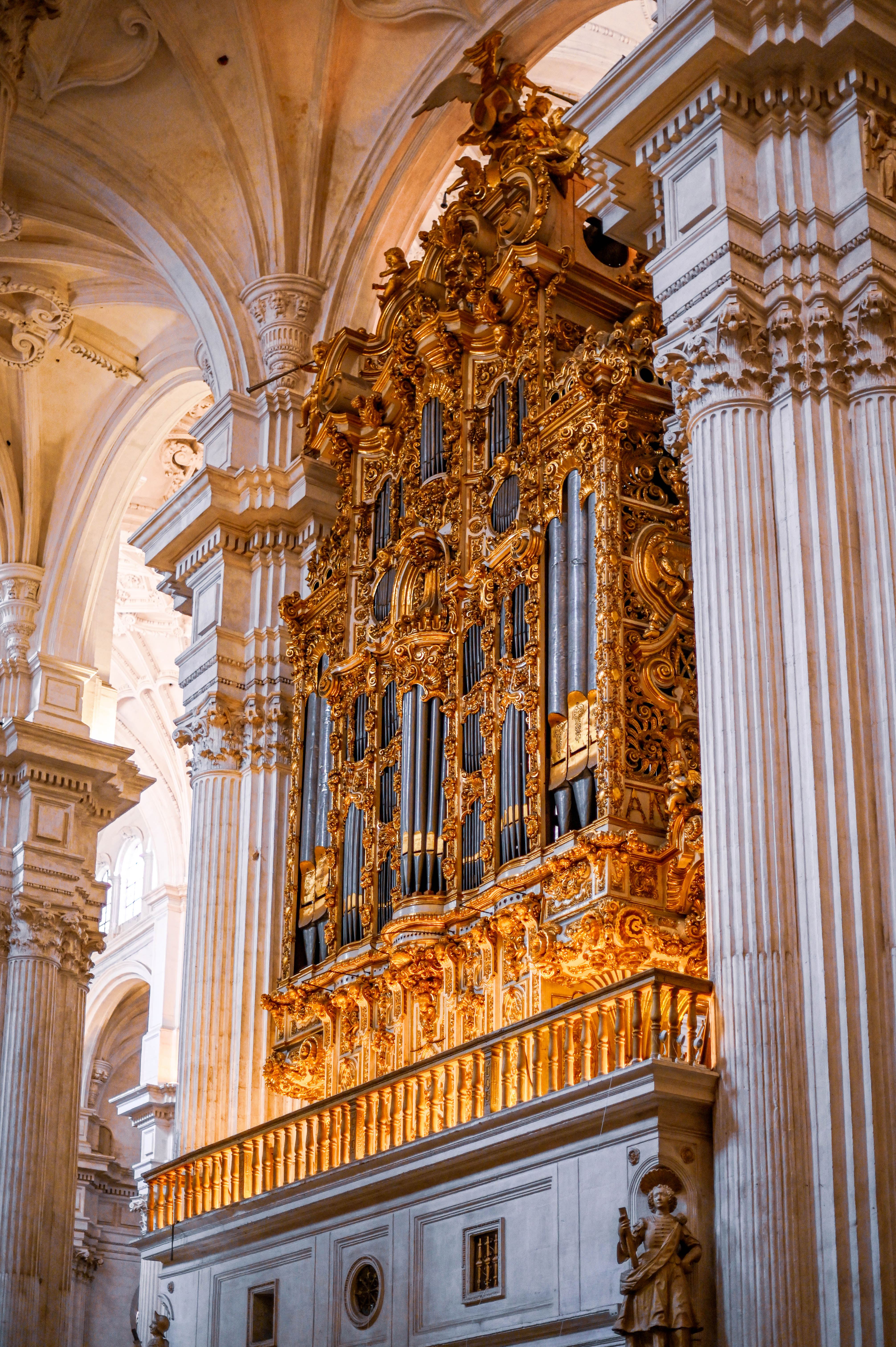
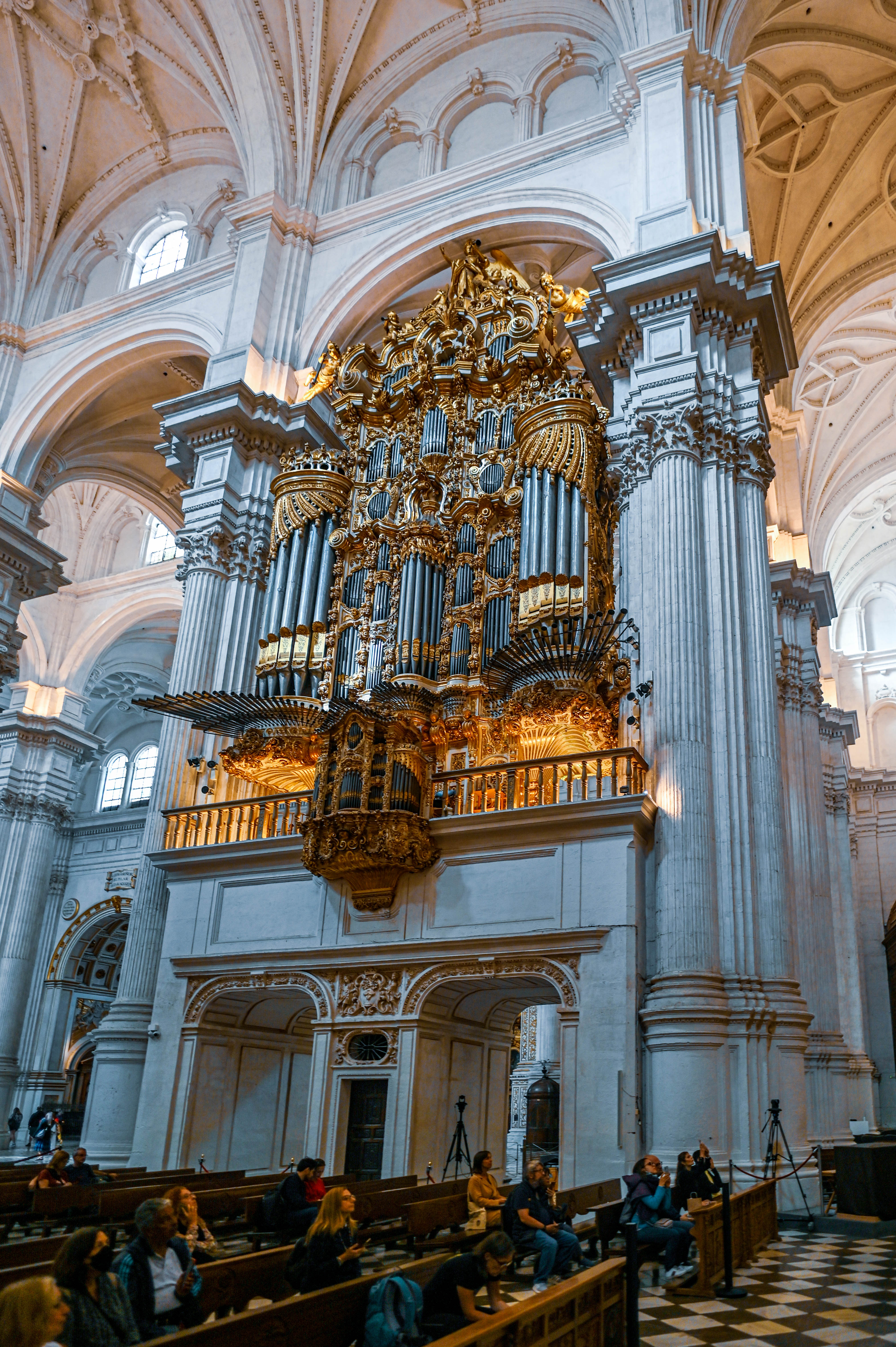
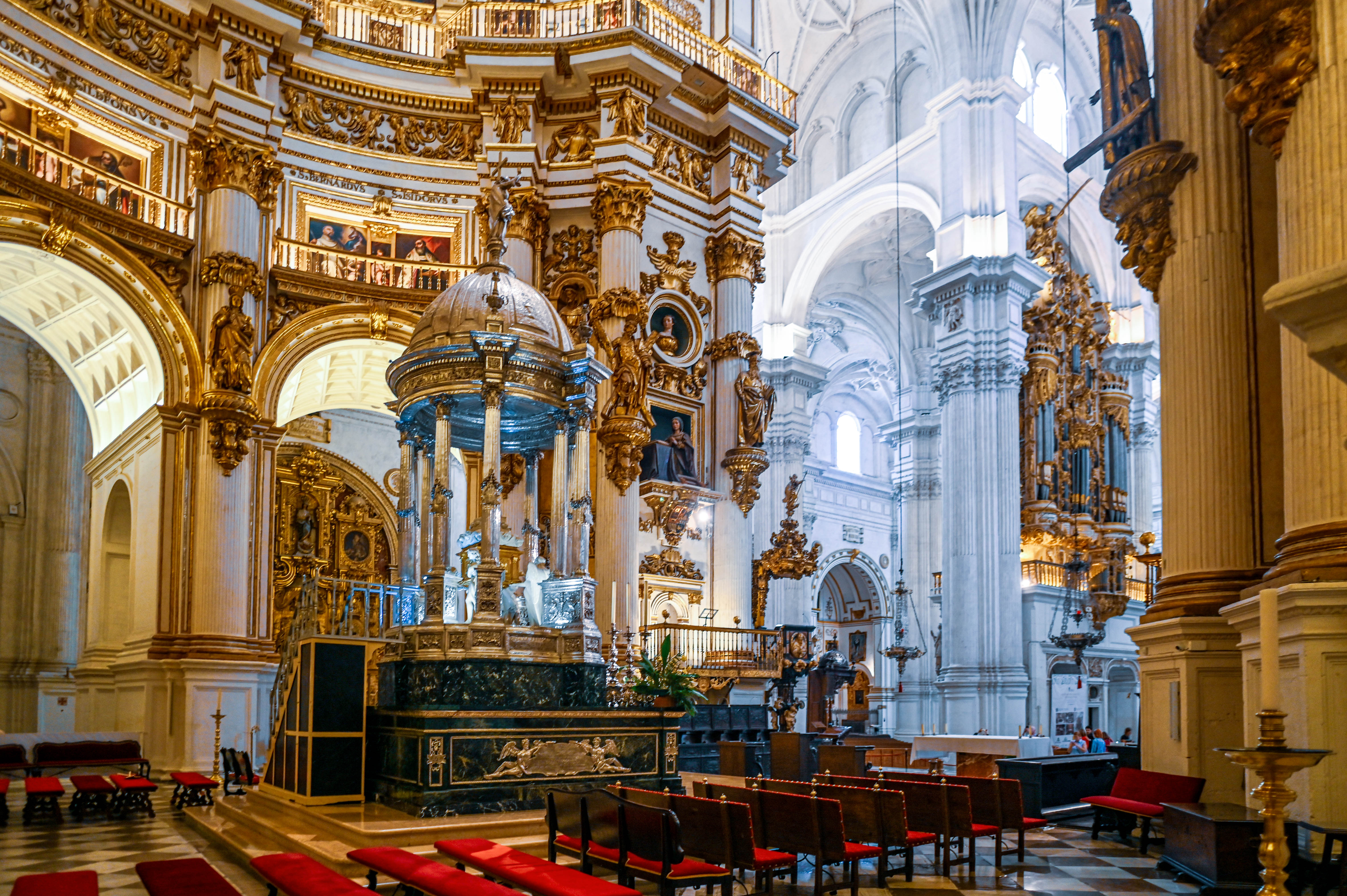
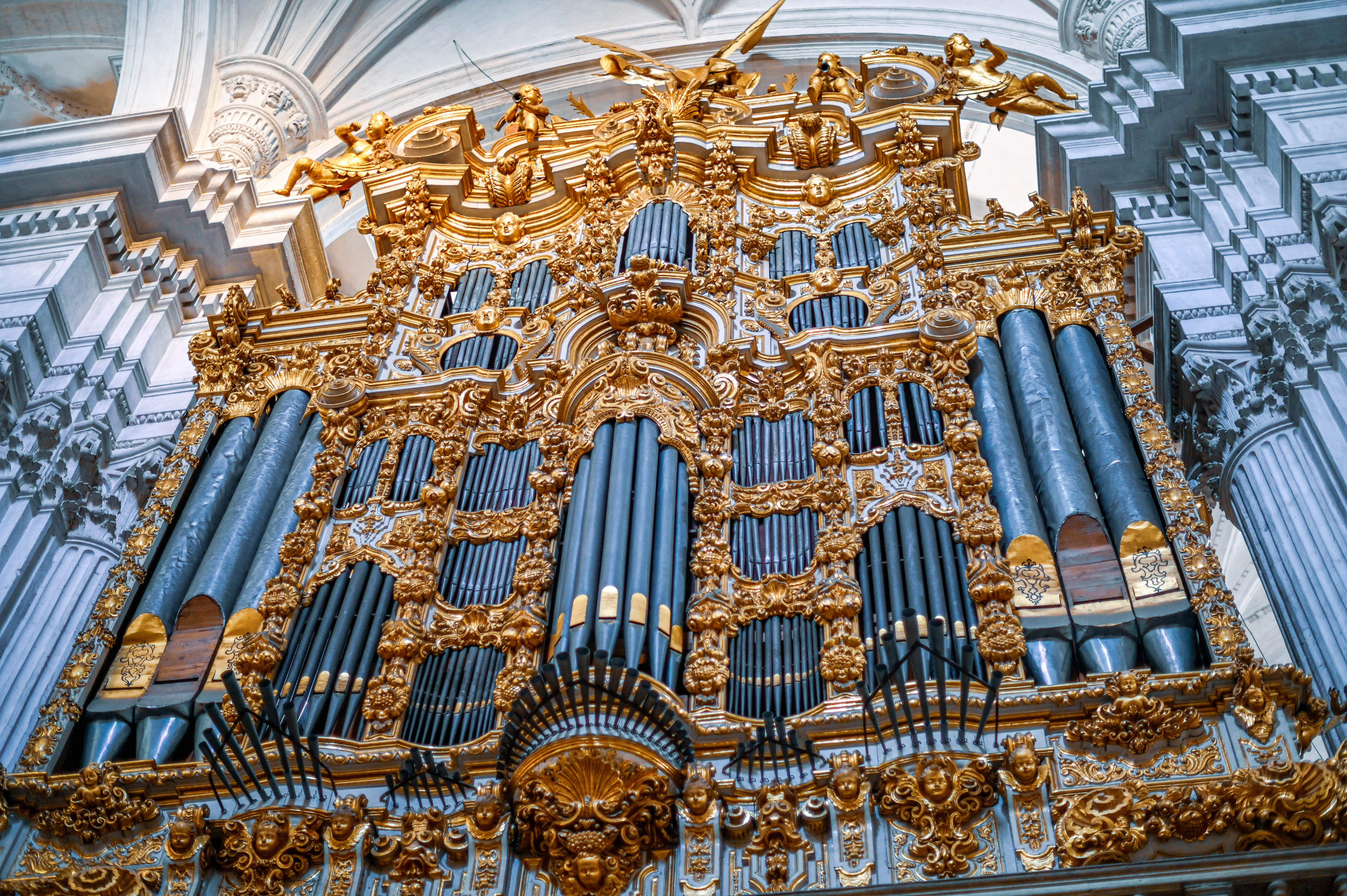
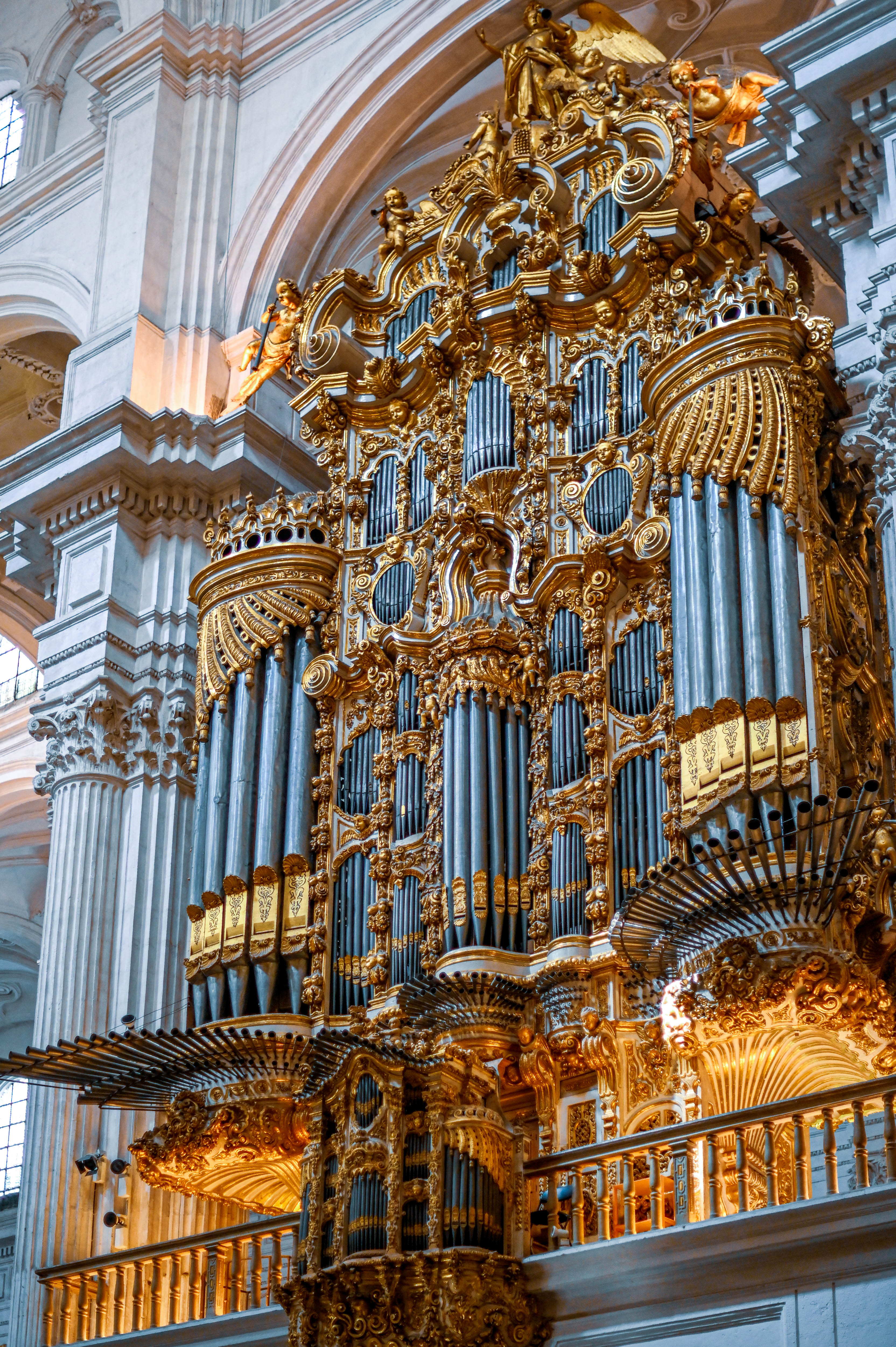
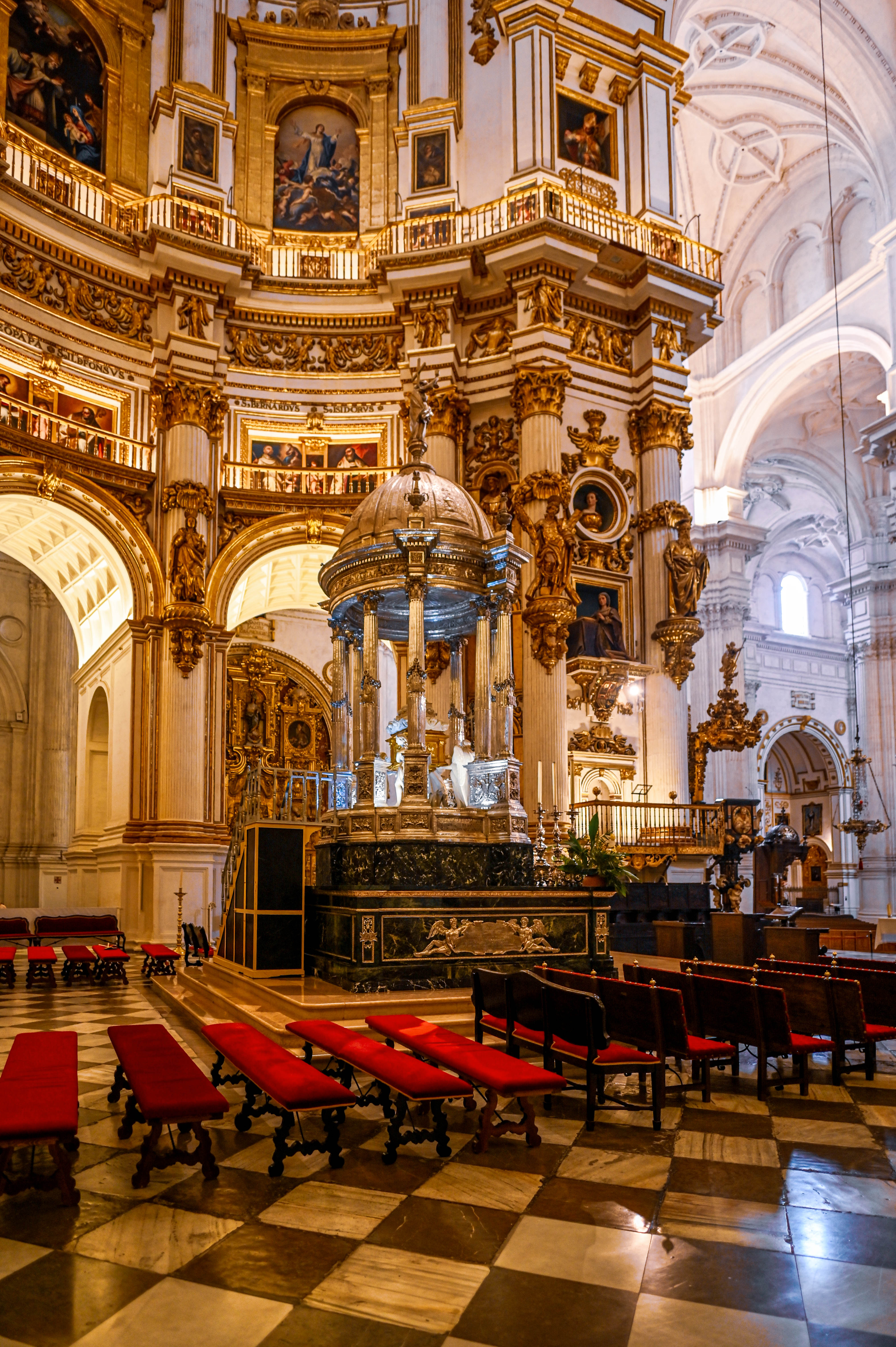
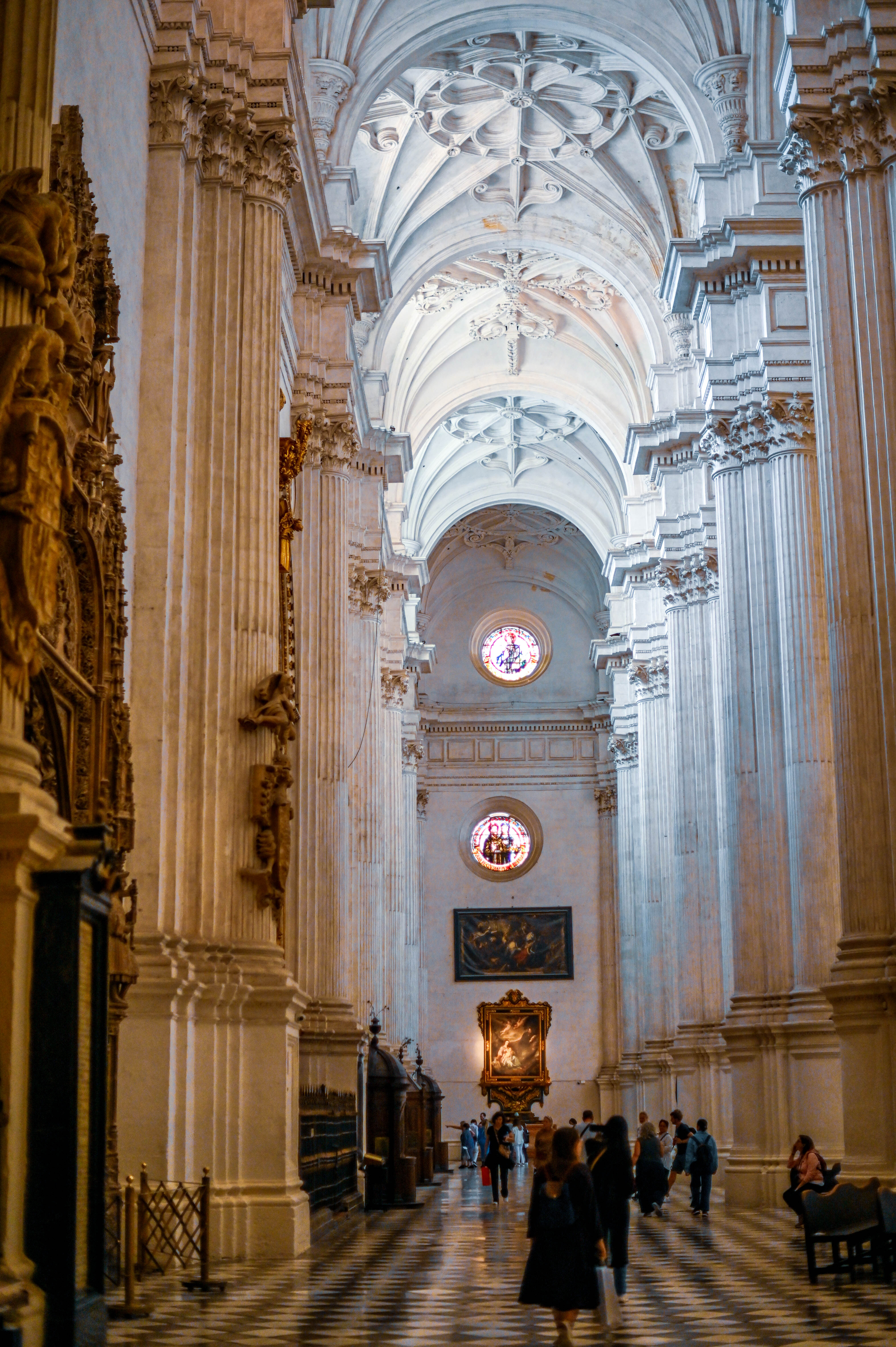
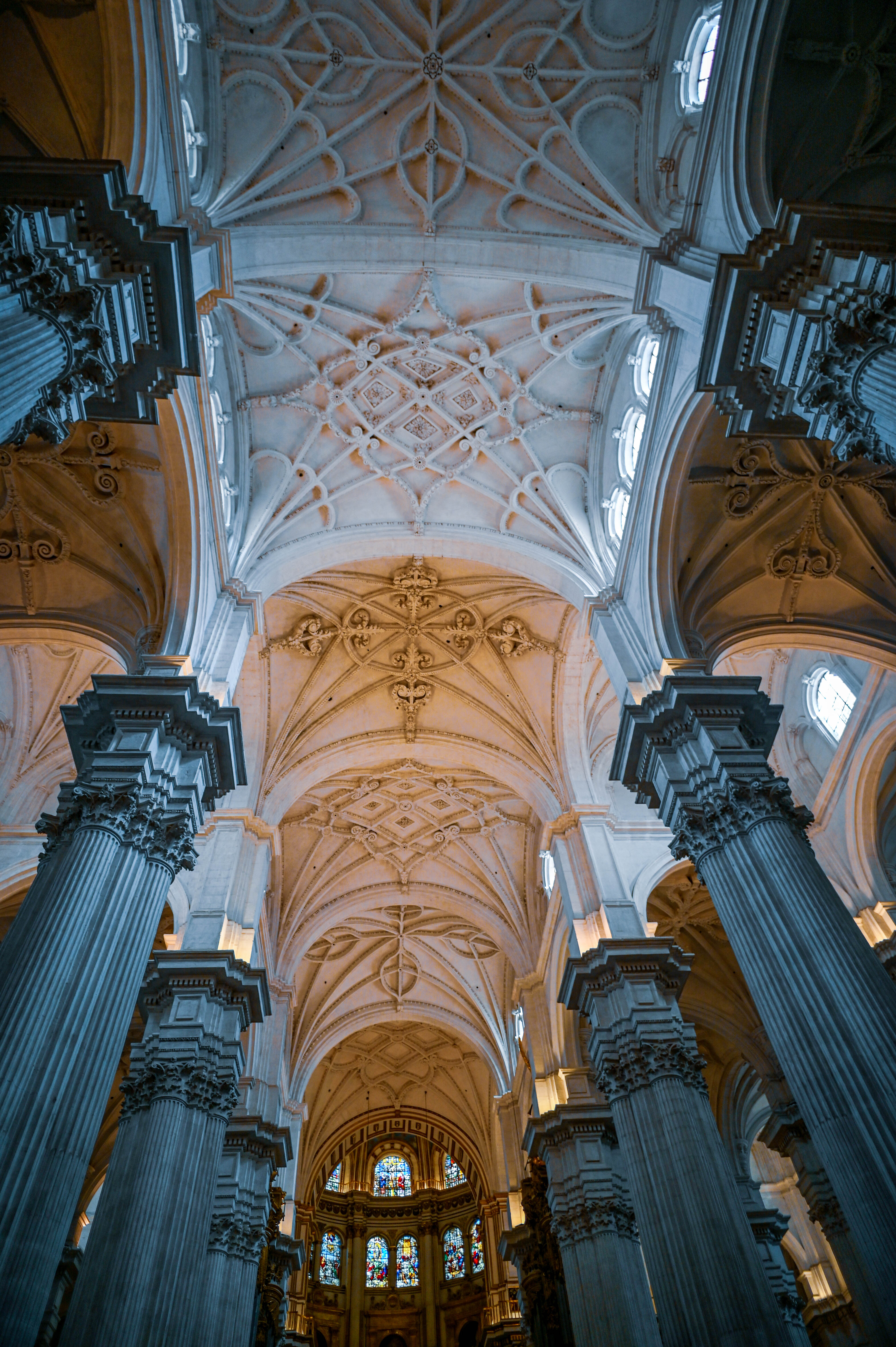
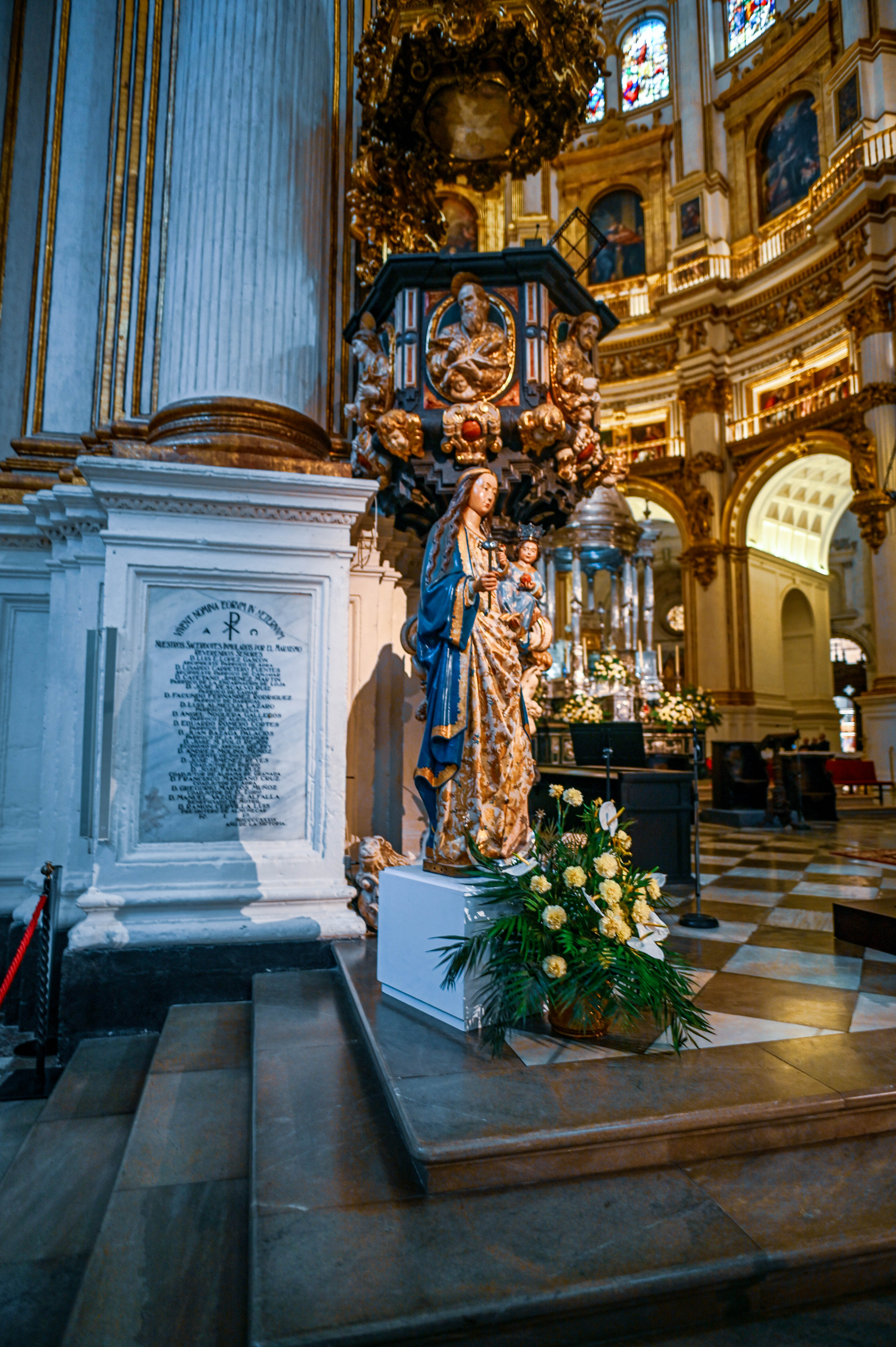
The interior layout of Granada Cathedral is remarkable for its inclusion of five naves, an unusual design choice for Spanish cathedrals of that era, which typically featured three. This expansive layout results in a rectangular base that fully encompasses the traditional cross shape . The five naves are staggered in height, with the central nave being significantly taller than the flanking aisles, creating a sense of verticality and grandeur . The focal point of the Cathedral's interior is the main chapel (Capilla Mayor), which is housed within an impressive high rotunda . The overall layout of the Cathedral is believed to symbolize a harmonious balance between the earthly and spiritual realms, reflecting the Renaissance pursuit of order and proportion . The expansive interior, with its unique five-nave structure, creates an overwhelming sense of spaciousness and majesty, underscoring the ambitious vision of its architects and the Cathedral's significance as a major religious center.
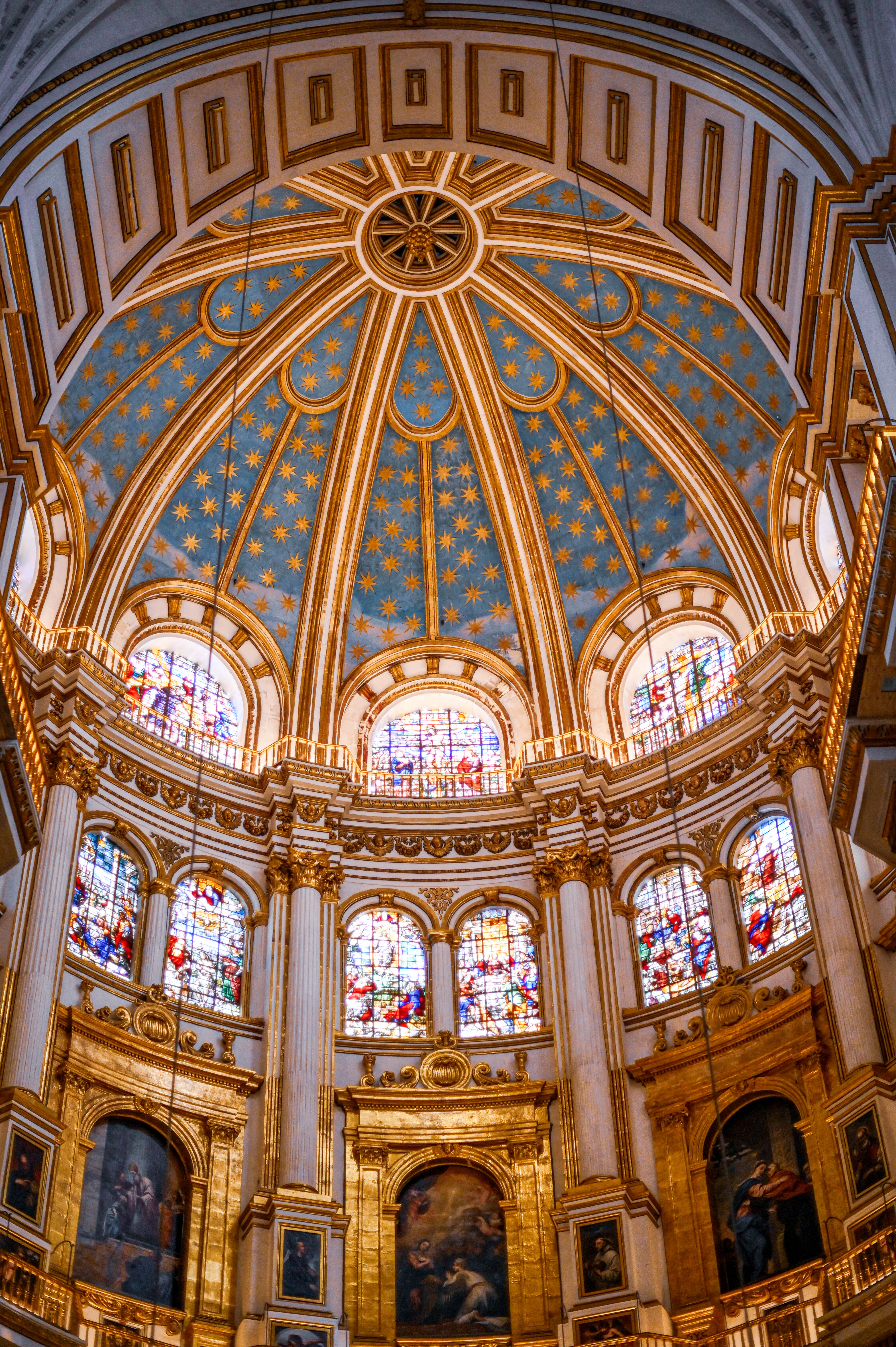
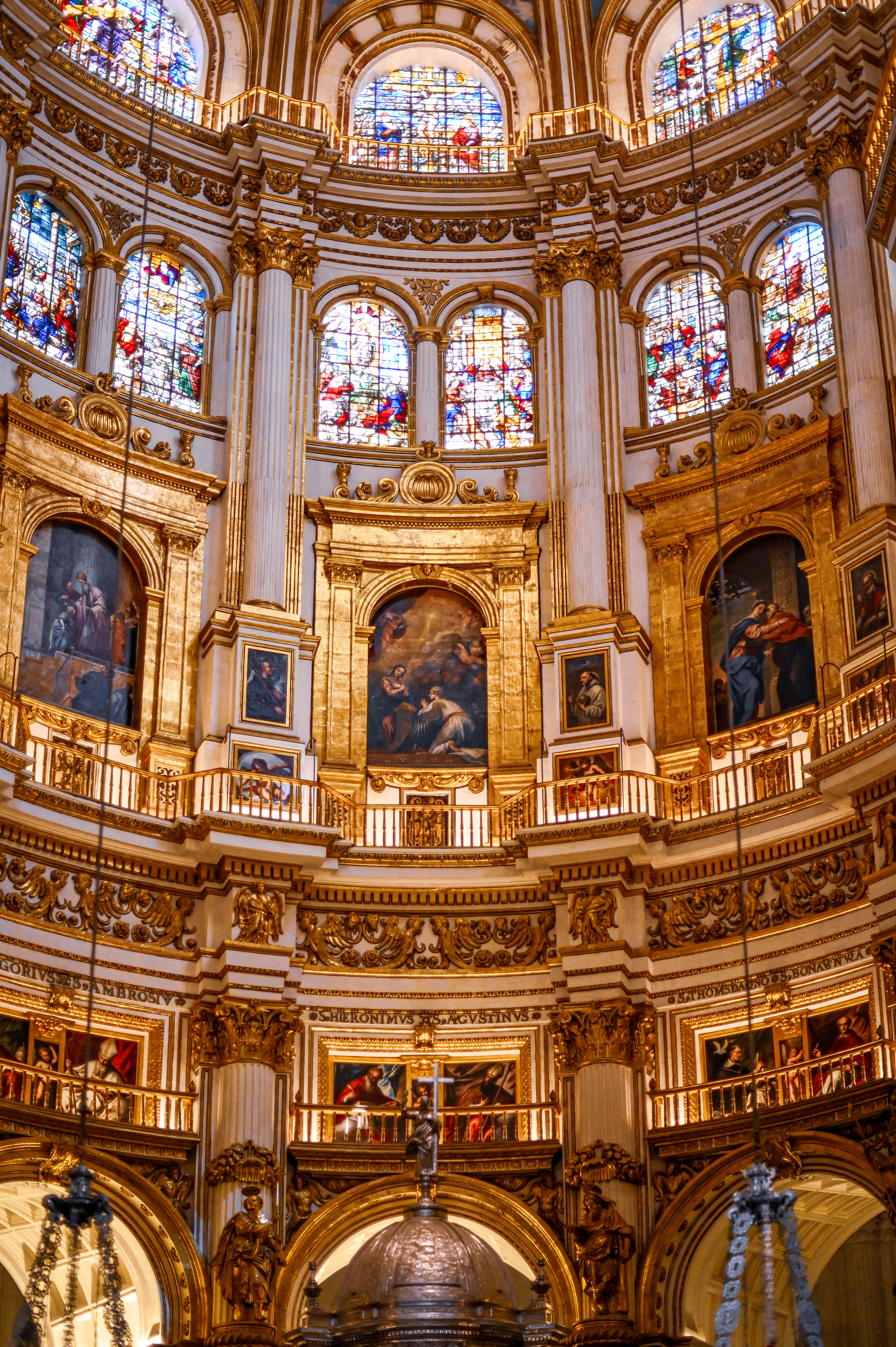
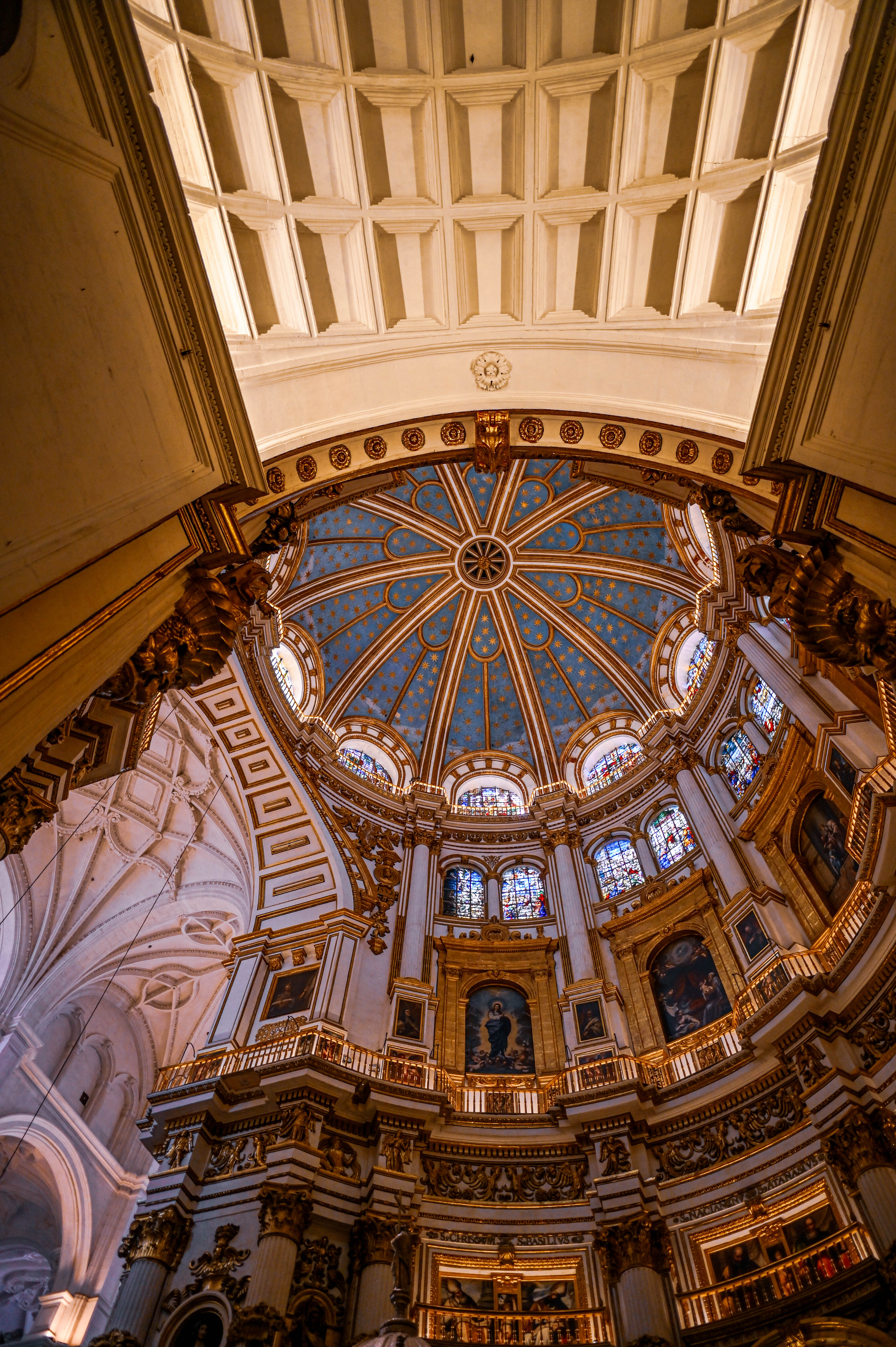
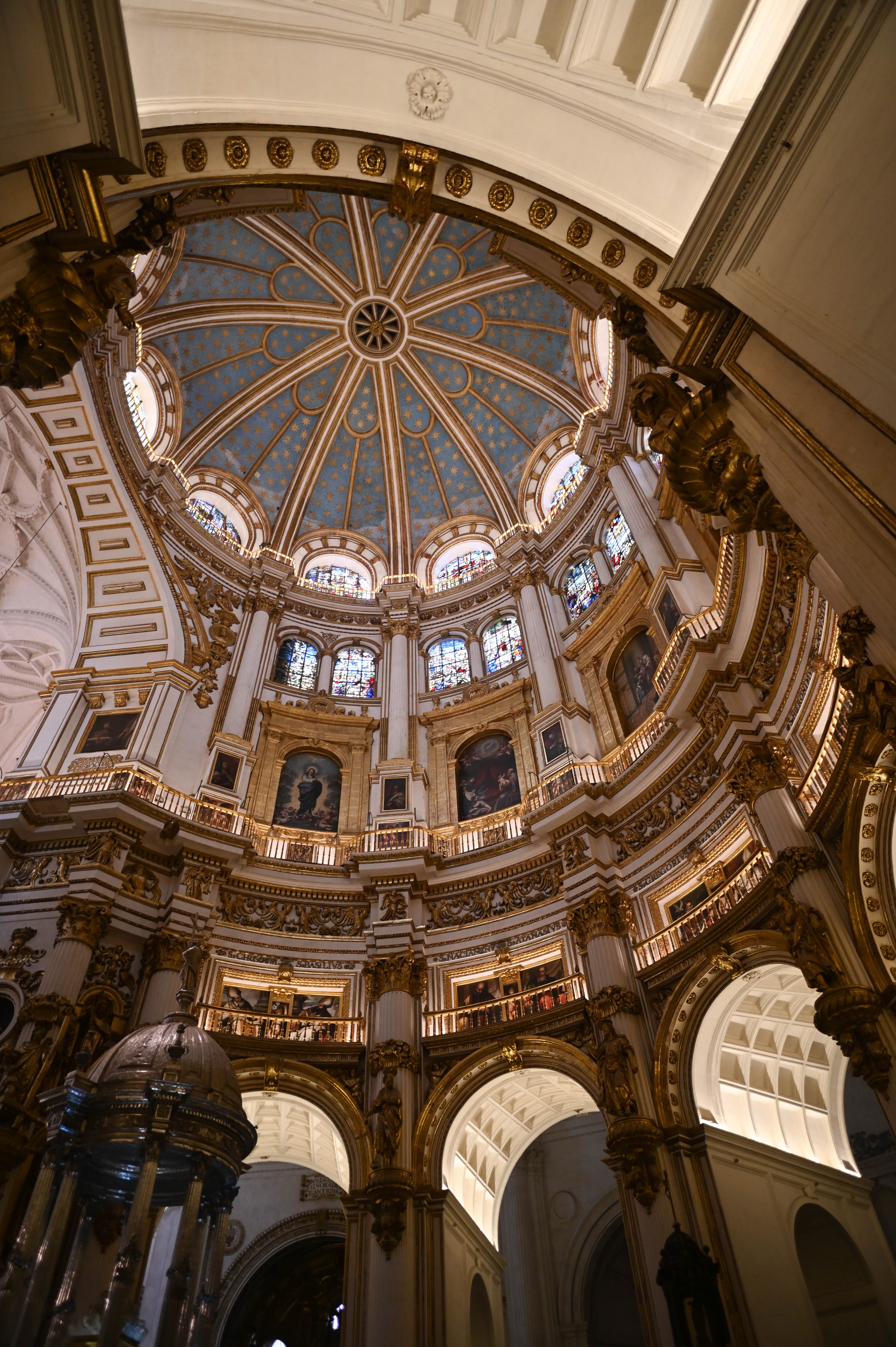
A prominent feature of the Cathedral's interior is its impressive dome, which crowns the main chapel and reaches a height of 30 meters . The dome's interior surface is adorned with numerous gold stars set against a deep blue background, evoking a celestial canopy . The central oculus, or circular opening at the apex of the dome, is surrounded by decorative petal-shaped elements, adding to its visual appeal . Natural light floods the interior through delicate stained glass windows that are integrated into the dome's structure . Additionally, ten round-arched windows are located around the dome's lower edge, each featuring stained glass panels that serve a catechetical purpose, narrating stories from the history of salvation . The dome serves as a significant source of illumiSpain and a central visual element within the Cathedral, with its celestial ornamentation and vibrant stained glass contributing to the overall spiritual atmosphere of the sacred space
References
Text generated by Microsoft CoPilot
en.wikipedia.org