HOME

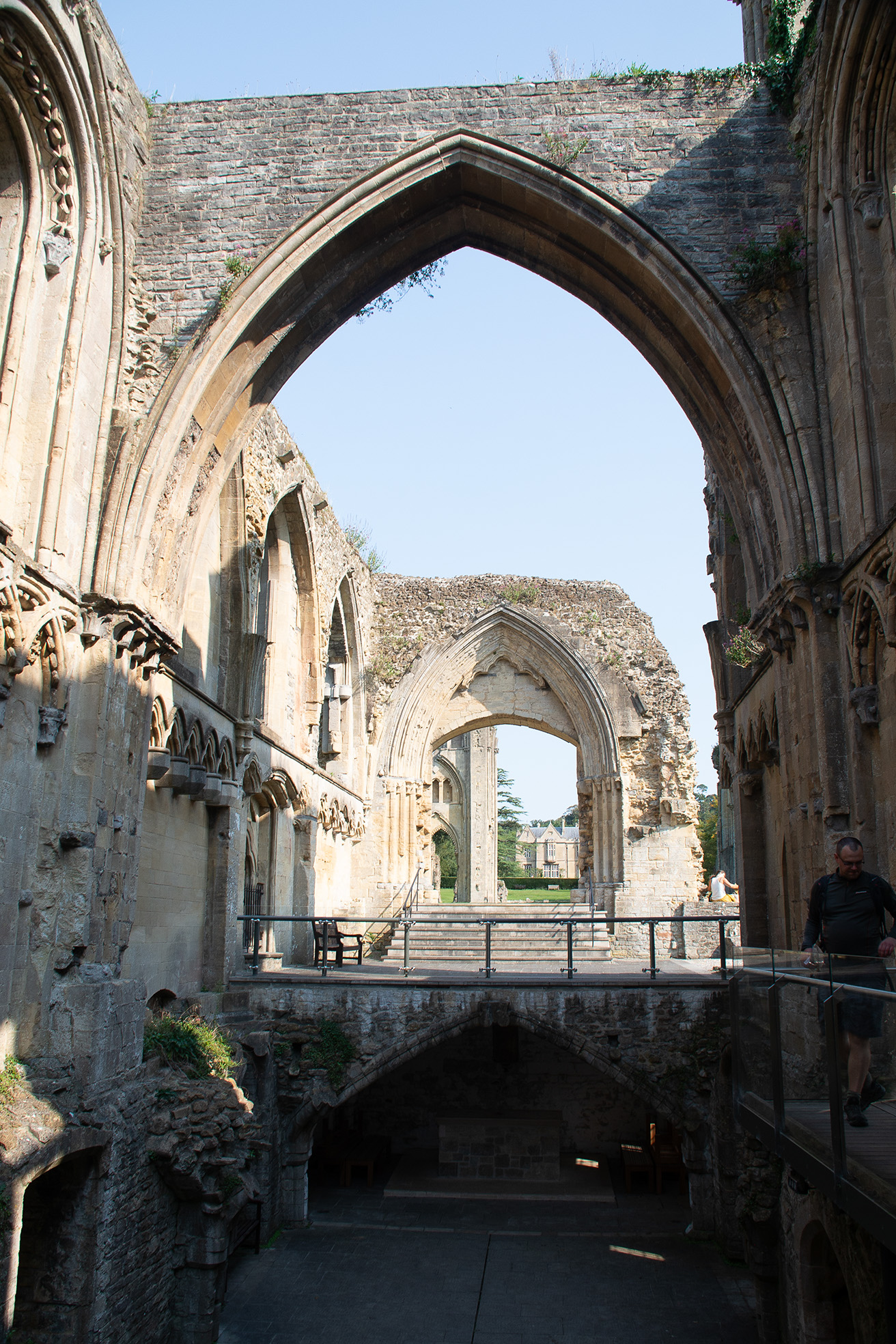
Glastonbury Abbey

Glastonbury Abbey

Magdalene StreetGlastonburySomerset,   BA6 9EL,   United Kingdom

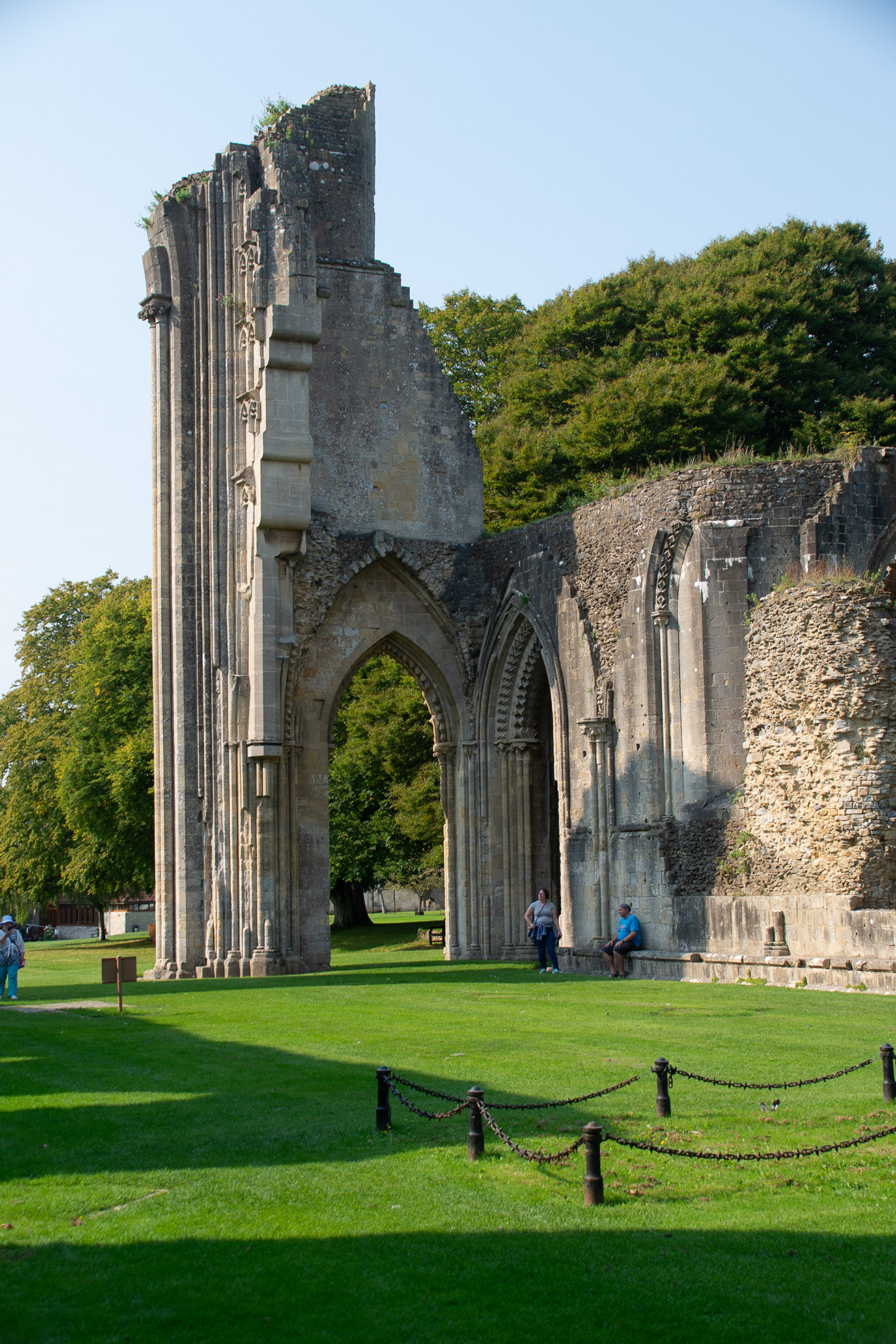
The image depicts the ruins of a historic abbey or cathedral, characterized by its large stone arches and remnants of walls. The scene is set in a well-maintained grassy area with a few people walking and enjoying the surroundings. The ruins are surrounded by trees and other buildings in the background, suggesting a blend of nature and architecture. The sky is clear, indicating a sunny day. The overall atmosphere is serene and inviting, making it a likely spot for visitors and tourists.
The Great Church ‐ photo by ,
©www.mgaylard.co.uk.
The image shows an old, historic site with stone ruins and a well-maintained grassy area. There is a stone pathway leading to a signpost with information about the site. The area is fenced off with chains and posts, and there are benches for visitors to sit and enjoy the view.
King Arthur's Tomb ‐ photo by ,
©www.mgaylard.co.uk.
The image depicts the ruins of an old stone structure, possibly part of a historic building or castle, situated in a well-maintained grassy area. In the background, there is a large, elegant building with a slate roof and multiple windows, surrounded by lush greenery and trees. A bench is placed in front of the ruins, inviting visitors to sit and enjoy the scenic view.
Glastonbury Abbey ‐ photo by ,
©www.mgaylard.co.uk.
The image depicts the ruins of an old stone structure, possibly part of a historic building or castle, situated in a grassy area. The ruins consist of two tall, partially collapsed walls with remnants of windows or arches visible. A wooden bench is placed in front of the ruins, suggesting it is a spot for visitors to sit and observe. The background includes trees and some modern buildings, indicating the ruins are located in a park or a similar public space.
Glastonbury Abbey ‐ photo by ,
©www.mgaylard.co.uk.
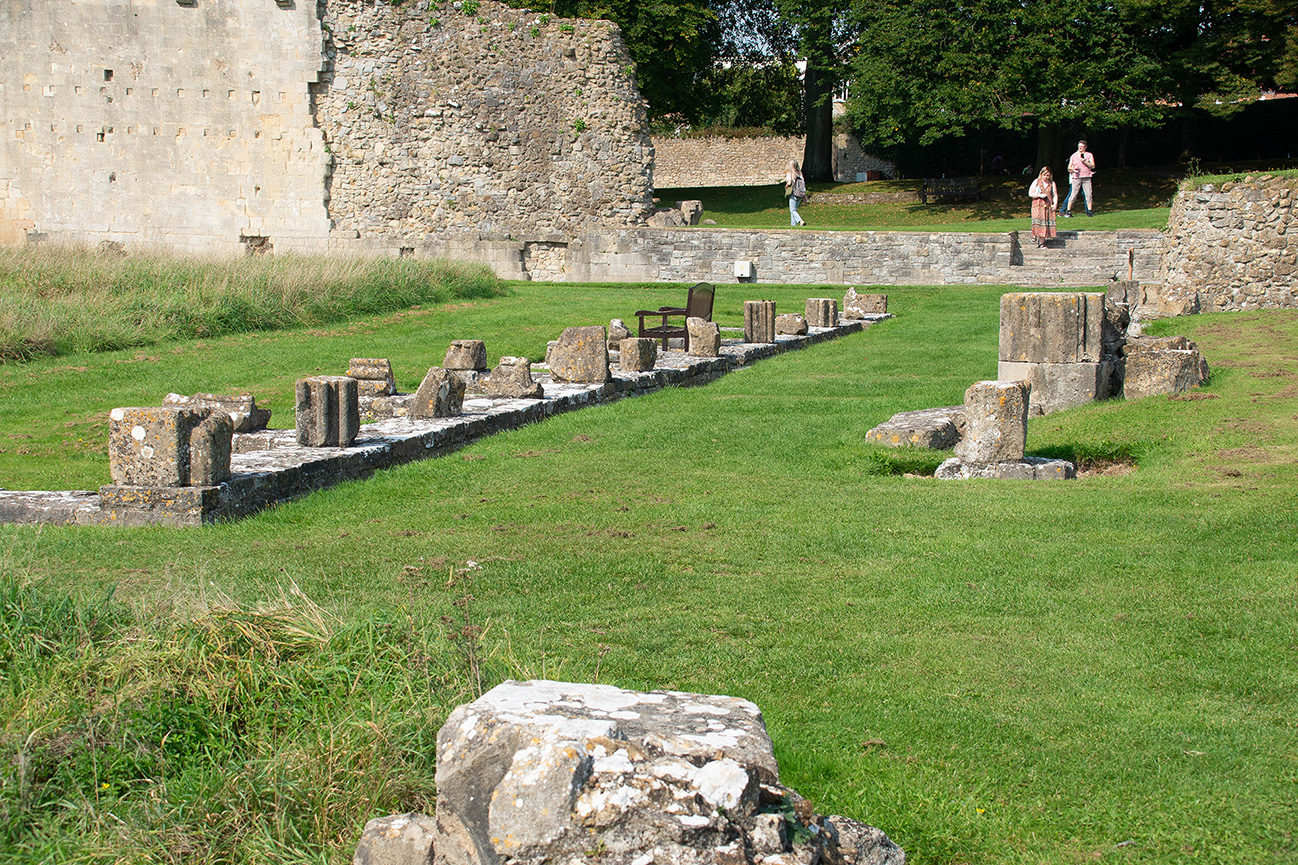
The image depicts an ancient, partially ruined structure, possibly a historical site or archaeological ruin. The remains consist of stone foundations and scattered stones, suggesting the outlines of former walls or buildings. The area is grassy and well-maintained, with a few people walking around, indicating it might be a tourist attraction or a preserved historical Brassknocker. The backdrop includes old stone walls and lush greenery, enhancing the historical ambiance of the scene.
Glastonbury Abbey ‐ photo by ,
©www.mgaylard.co.uk.
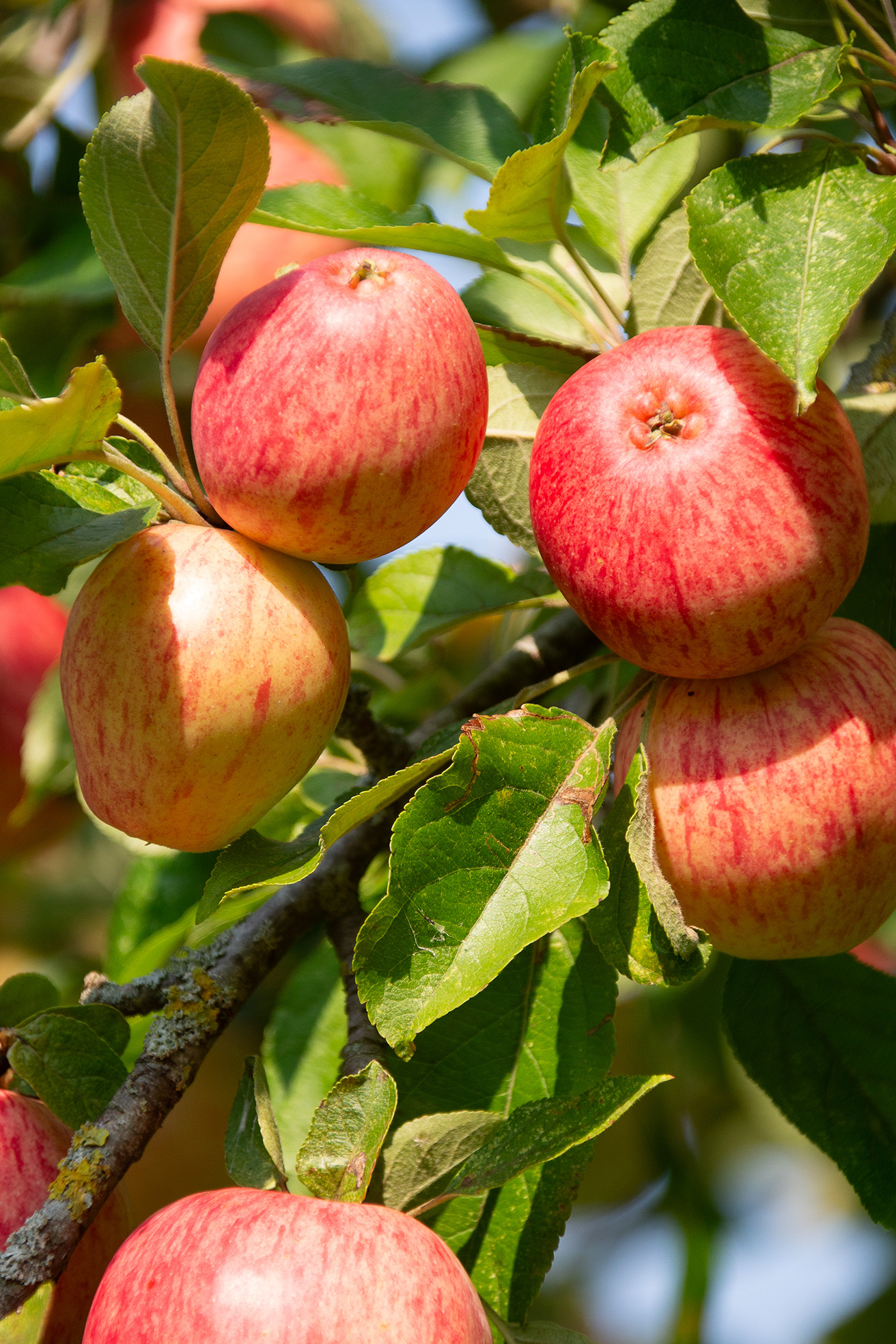
The image shows a cluster of apples growing on a tree. The apples are a mix of red and yellow colors, indicating they are ripe. The leaves surrounding the apples are green with some showing signs of damage or disease. The background is blurred, focusing attention on the apples and leaves in the foreground.
apples growing on a tree ‐ photo by ,
©www.mgaylard.co.uk.
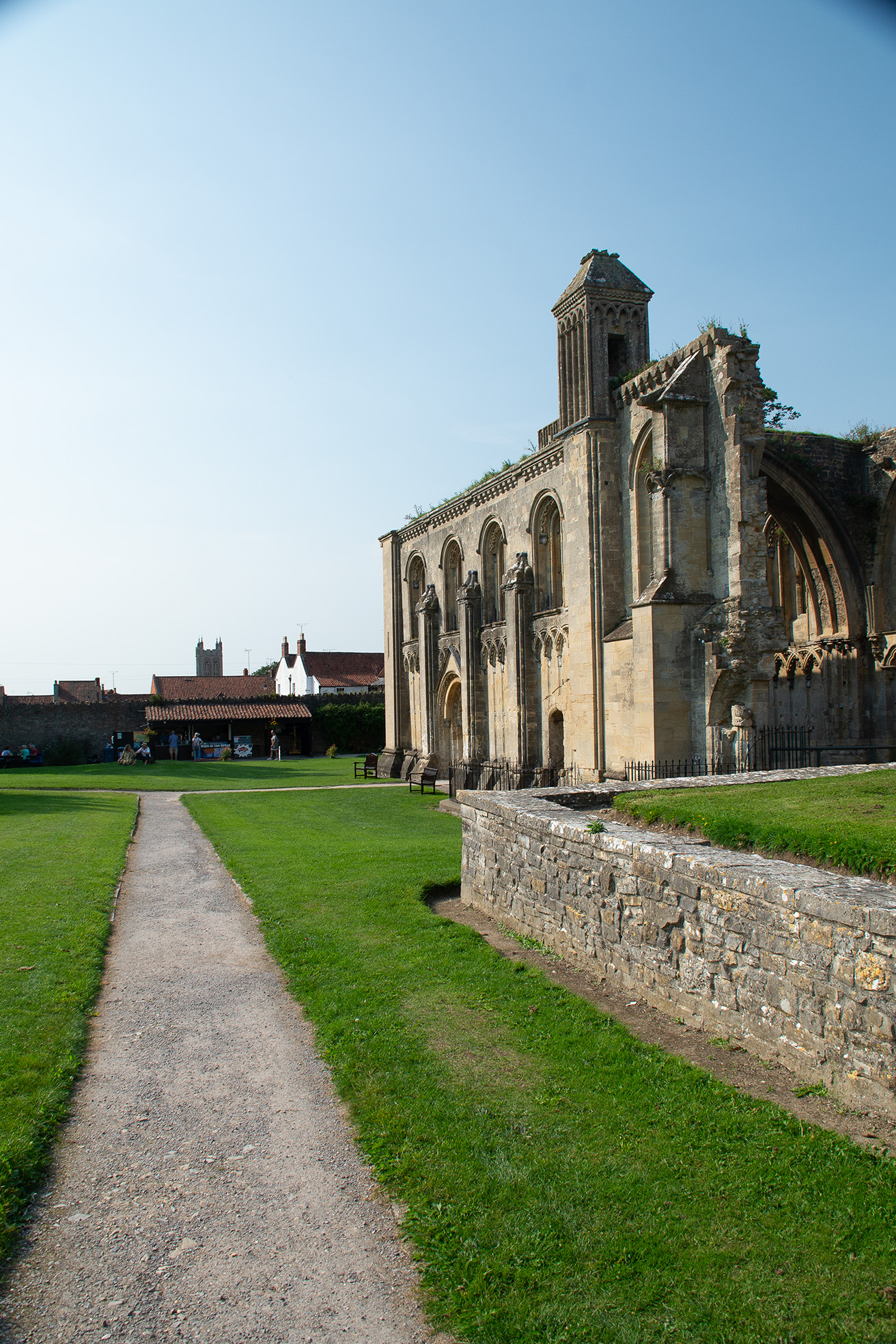
The image depicts the ruins of an old stone building, likely a historical or medieval structure, situated in a well-maintained grassy area. The building features large, arched windows and a tower-like structure on the right side. A gravel path leads up to the building, and there are a few people visible in the background, suggesting it might be a tourist site or a place of historical significance.
Glastonbury Abbey ‐ photo by ,
©www.mgaylard.co.uk.
The image depicts an interior of a historic chapel with religious artwork and stained glass windows. The walls are adorned with faded frescoes, including depictions of saints and religious figures. The floor features a colorful, geometric tile pattern. The overall atmosphere is serene and reflective, typical of a place of worship.
Glastonbury Abbey - St Patrick's Chapel ‐ photo by ,
©www.mgaylard.co.uk.
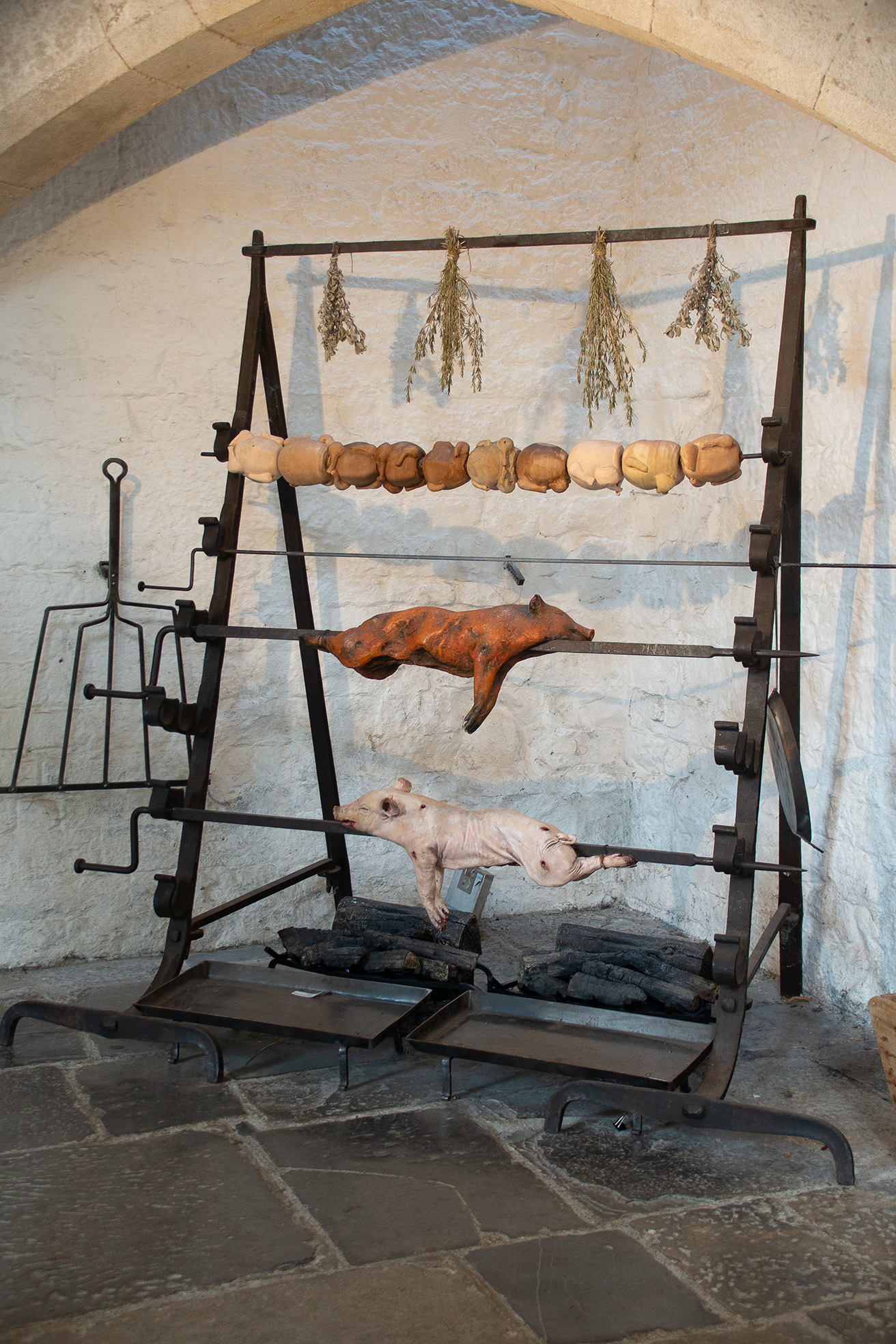
The image depicts a traditional roasting setup with a pig and a boar being roasted on a spit over an open fire. Above them, there are various vegetables and herbs hanging, likely for drying or as part of the roasting process. The setup is situated in a rustic, stone-walled room, suggesting a historical or medieval cooking method.
The Abbot's Kitchen ‐ photo by ,
©www.mgaylard.co.uk.
The Abbot's Kitchen ‐ photo by ,
©www.mgaylard.co.uk.
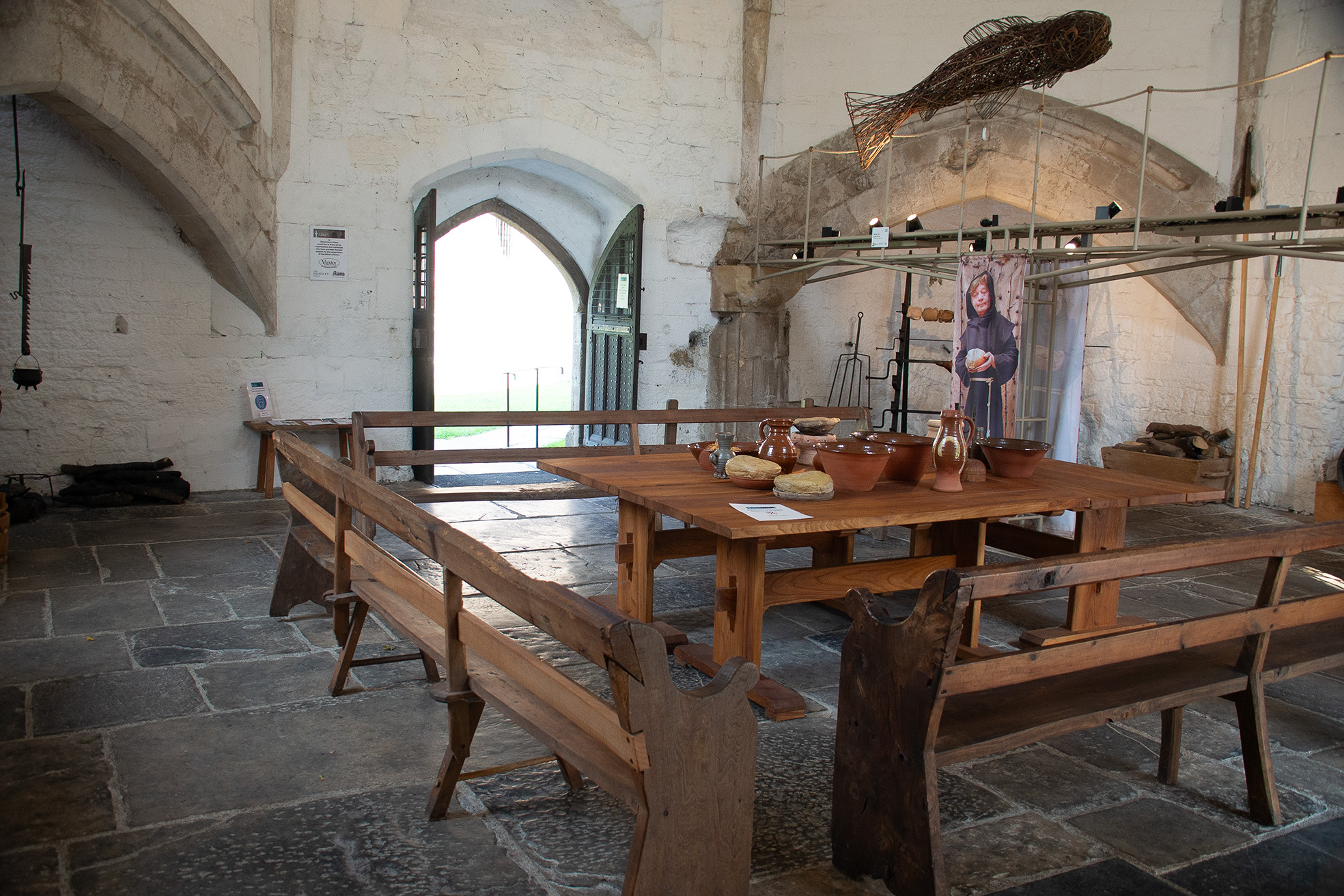
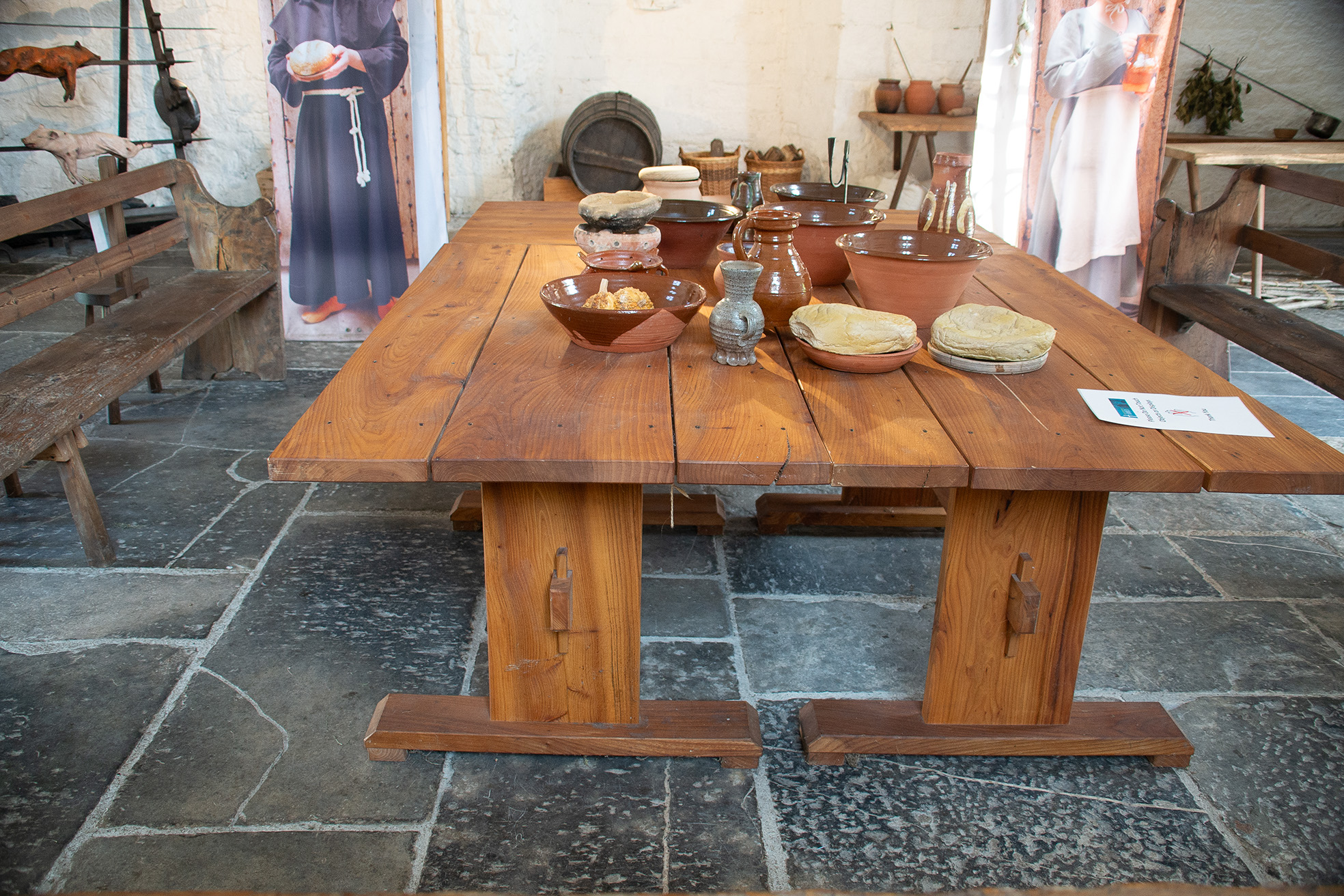
The image depicts a rustic, medieval-style dining setup with a wooden table and benches. The table is set with various pottery dishes, bowls, and jugs, some containing food items. The room features stone walls and floor, with a few decorative elements such as posters and hanging items, suggesting a historical or reenactment setting.
medieval-style dining setup with a wooden table and benches ‐ photo by ,
©www.mgaylard.co.uk.
The image depicts the ruins of an old stone building, likely a historical or medieval structure, with a prominent archway in the center. The structure is surrounded by a well-maintained grassy area and trees, suggesting it is part of a park or garden. The sky is clear, indicating a sunny day. The ruins have intricate stonework and appear to be part of a larger complex, possibly an abbey or cathedral. The scene conveys a sense of history and tranquility.
The Great Church ‐ photo by ,
©www.mgaylard.co.uk.
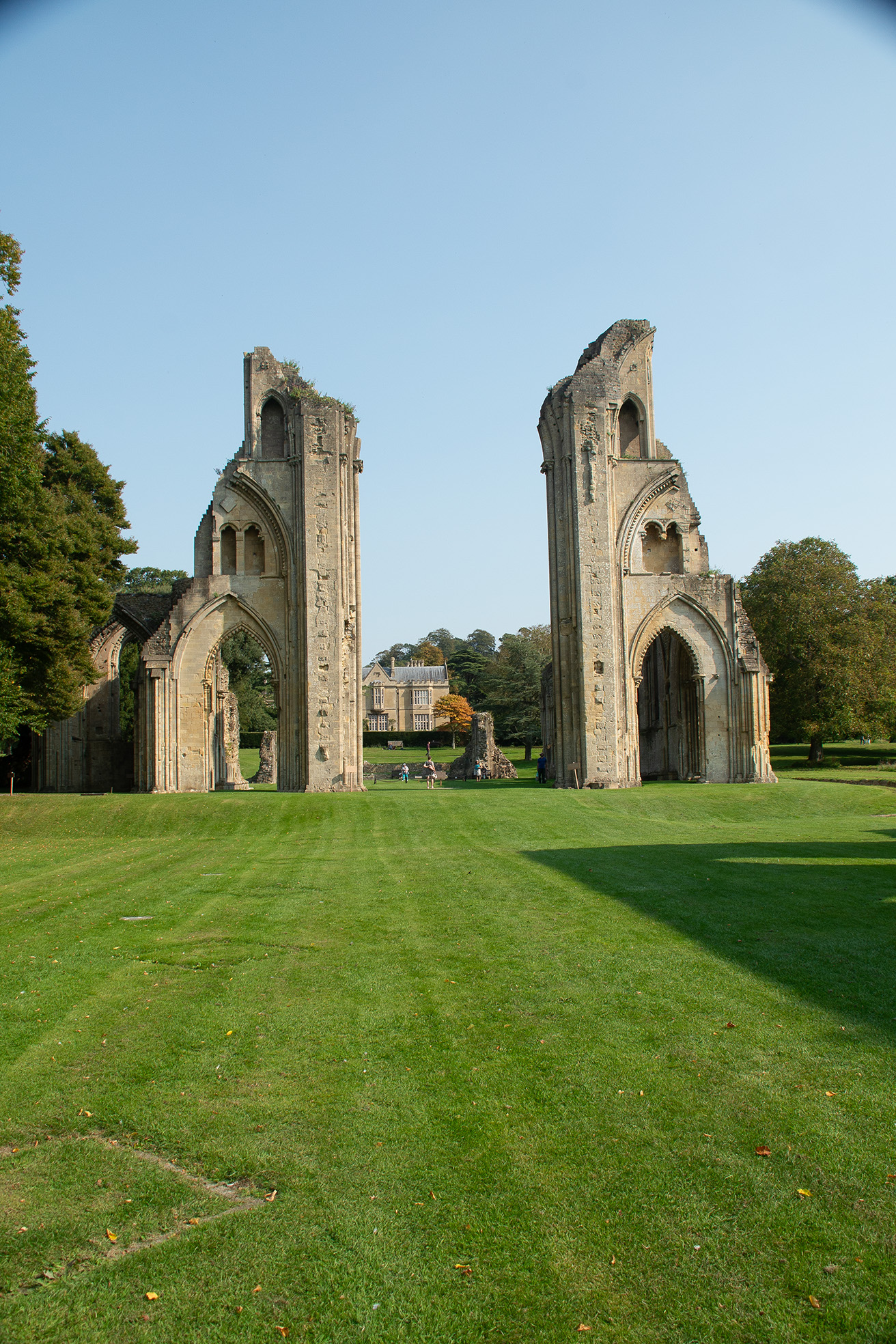
The image depicts the ruins of a historic abbey or cathedral, characterized by its tall, weathered stone arches and remnants of walls. The scene is set in a well-maintained grassy area with a clear blue sky overhead. In the background, a large, stately house is visible, surrounded by trees. The overall atmosphere is serene and picturesque, suggesting a Brassknocker of historical significance and beauty.
The Great Church ‐ photo by ,
©www.mgaylard.co.uk.
The image depicts the ruins of a historic stone building, likely a church or abbey, with intricate Gothic architectural details such as pointed arches and ornate window frames. The structure is partially intact, with some walls and arches still standing, while the upper sections are mostly ruined. The scene is set in a well-maintained grassy area with a few people and a dog walking around, and a large building visible in the background.
The Great Church ‐ photo by ,
©www.mgaylard.co.uk.
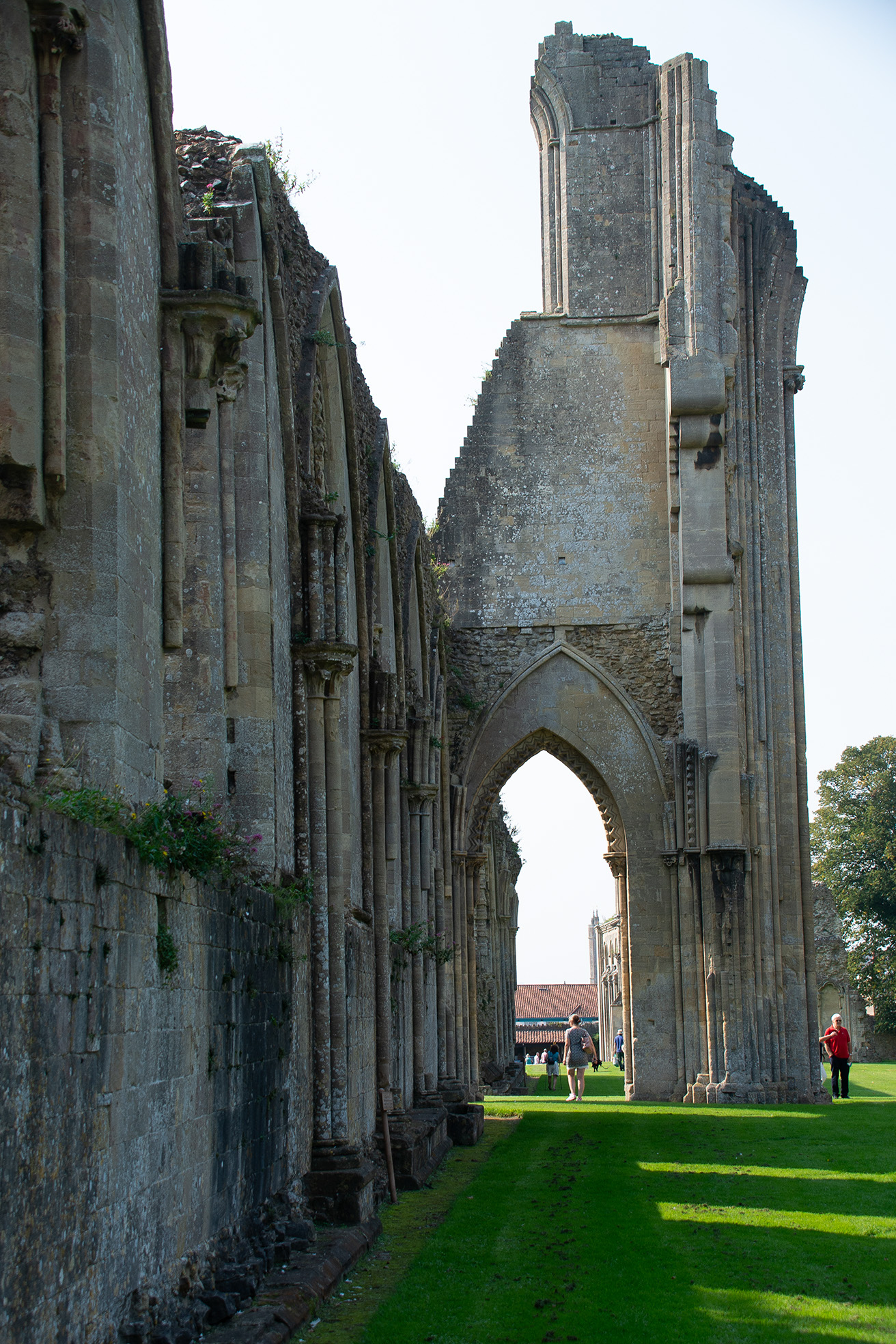
The image depicts the ruins of an old stone building, likely a historic abbey or church. The structure features tall, weathered walls and arches, with some sections of the walls partially collapsed. The interior is open to the sky, and the ground is covered with green grass. Two people are walking through the ruins, providing a sense of scale to the massive stone walls. The scene is bathed in natural light, suggesting it is daytime.
The Great Church ‐ photo by ,
©www.mgaylard.co.uk.
The image depicts the ruins of an old stone building, likely a historical or medieval structure, with tall, arched windows and intricate stonework. The ruins are set in a grassy area with a few people nearby, suggesting it is a tourist site or place of interest. The surrounding area is lush with greenery, and the sky is clear, indicating a sunny day. The overall scene conveys a sense of history and tranquility.
The Great Church ‐ photo by ,
©www.mgaylard.co.uk.
The image depicts the ruins of an old stone structure, likely a historical or medieval building, set in a well-maintained grassy area with a clear blue sky in the background. The ruins feature tall, weathered stone walls and arches, with some sections partially collapsed. A few people are seen walking and exploring the area, providing a sense of scale to the ruins. The scene is serene and well-lit, suggesting a sunny day.
The Great Church ‐ photo by ,
©www.mgaylard.co.uk.
The image depicts the ruins of a historic stone building, likely a medieval abbey or cathedral, characterized by its large, arched windows and intricate stonework. The structure is partially intact, with some walls and arches still standing. The ruins are situated in a grassy area with a few scattered benches and stone remnants. Trees and modern buildings can be seen in the background, indicating the ruins are located in a contemporary setting. The scene suggests a place of historical significance, possibly a popular spot for visitors and tourists.
The Great Church ‐ photo by ,
©www.mgaylard.co.uk.
The image depicts the ruins of a historic stone building, likely a former abbey or church, with intricate Gothic architecture. The structure features large arched windows and doorways, some of which are partially collapsed. The scene is set in a grassy area with yellow flowers scattered on the ground. Several people are seen sitting on benches and picnic tables in front of the ruins, enjoying the sunny weather. The surrounding area is lush with trees, adding to the serene and picturesque setting.
The Lady Chapel ‐ photo by ,
©www.mgaylard.co.uk.
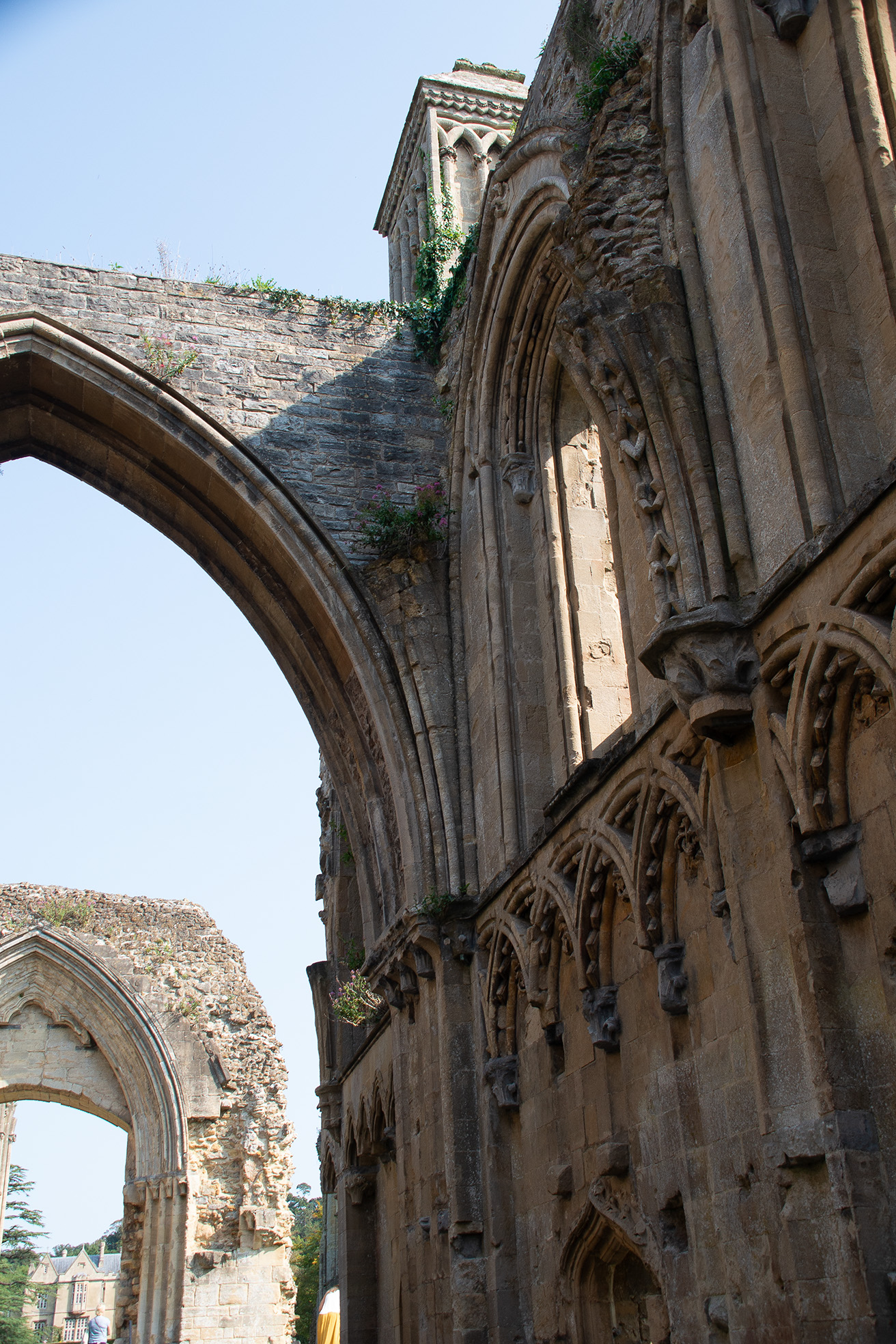
The image depicts the ruins of an old stone structure, likely a historical or medieval building. The architecture features intricate stone carvings, pointed arches, and detailed columns, indicative of Gothic or Romanesque design. The structure is partially overgrown with vegetation, suggesting it has been abandoned for a significant period. The sky is visible through the gaps in the ruins, and there are other stone structures in the background. The overall scene conveys a sense of historical significance and architectural grandeur.
The Lady Chapel ‐ photo by ,
©www.mgaylard.co.uk.
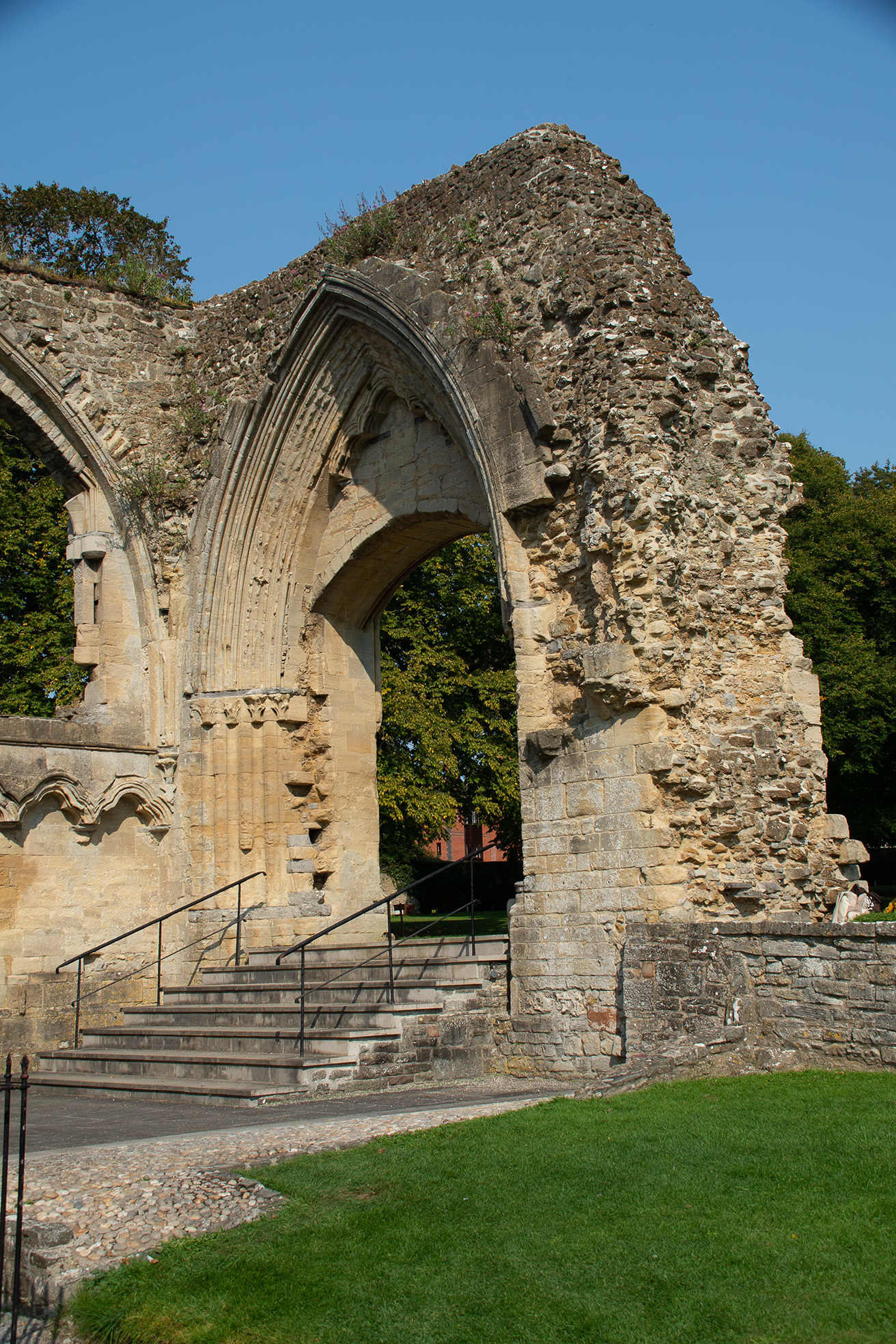
The image depicts the ruins of an old stone building, likely a historical or medieval structure. The remnants include a large, intricately designed archway with detailed stone carvings, supported by partially standing walls. There are steps leading up to the archway, and the area around the ruins is grassy with a clear, sunny sky in the background.
The Lady Chapel ‐ photo by ,
©www.mgaylard.co.uk.
The image depicts the ruins of a historic stone structure, likely an old abbey or cathedral, with two prominent, partially collapsed arches in the background. The perspective is from a set of wide stone steps leading down to a grassy area where the ruins stand. The scene is bathed in sunlight, and there are a few people walking around the area, suggesting it might be a tourist site or a place of historical interest.
The Lady Chapel ‐ photo by ,
©www.mgaylard.co.uk.
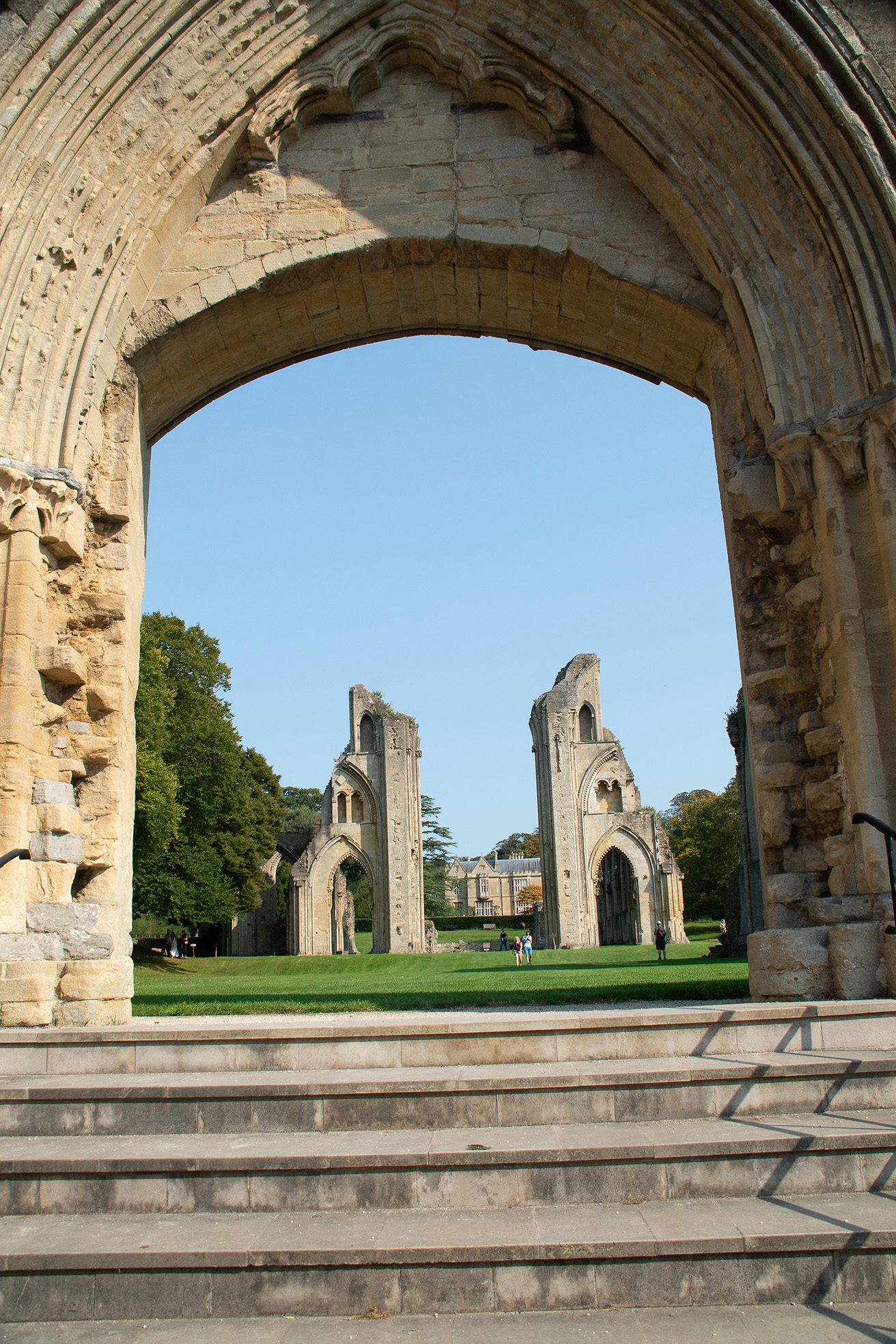
The image depicts the ruins of an old stone structure, possibly a historical or medieval building, viewed through a large archway. The ruins consist of tall, partially collapsed walls and arches, set within a well-maintained grassy area. The sky is clear and blue, and there are a few people walking and standing around the ruins, suggesting it is a tourist site or a place of historical interest.
The Lady Chapel ‐ photo by ,
©www.mgaylard.co.uk.
the crypt chapel of St. Joseph of Arimathea ‐ photo by ,
©www.mgaylard.co.uk.
the crypt chapel of St. Joseph of Arimathea ‐ photo by ,
©www.mgaylard.co.uk.
Open the full set flickr button this page
Glastonbury Abbey

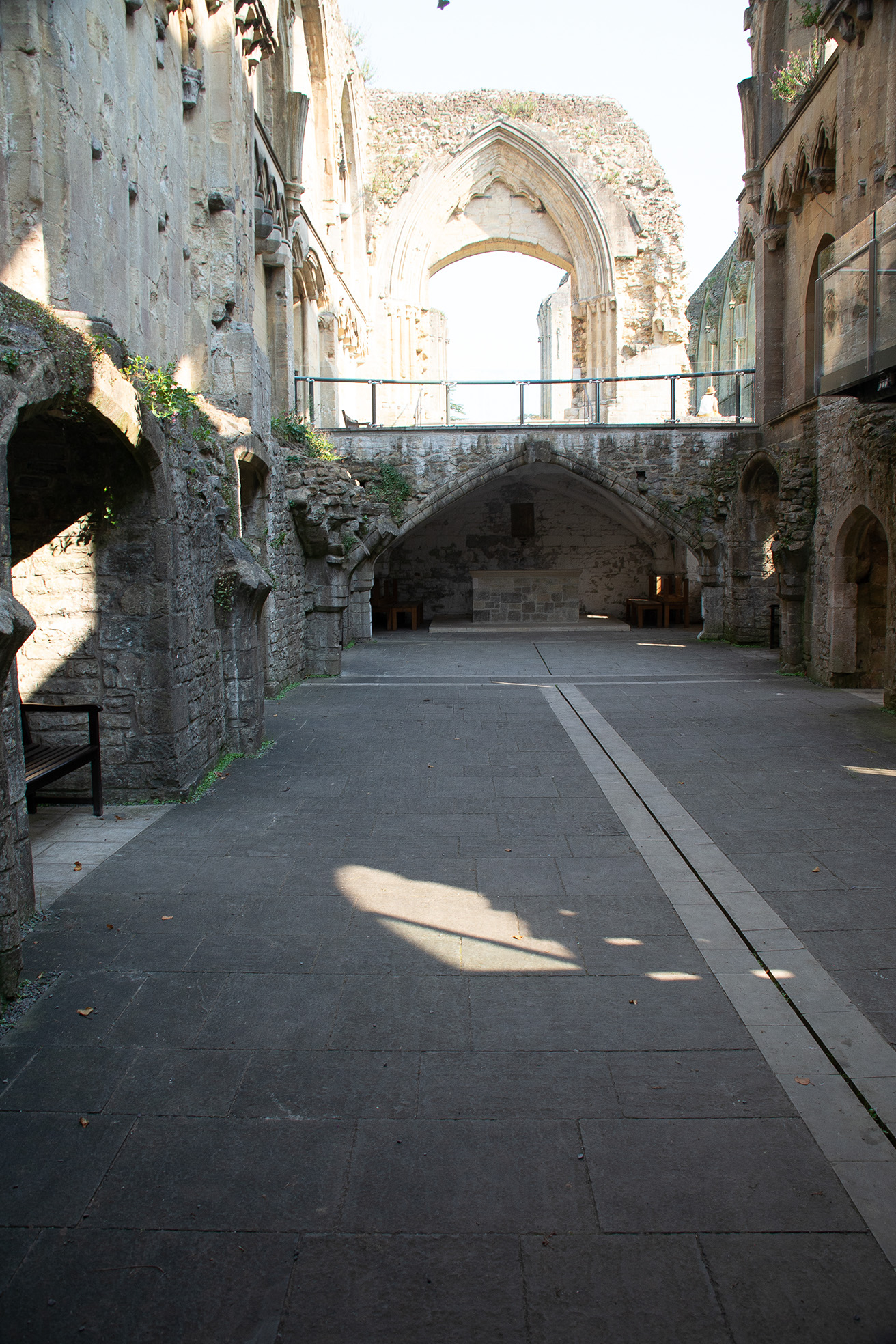
The image depicts an ancient, stone architectural structure, likely a historical ruin. The scene features a walkway with stone walls on either side, leading to a large, arched opening in the distance. The structure is illuminated by natural light, casting shadows on the ground. There is a bench on the left side of the walkway and some greenery growing on the walls. The overall atmosphere is serene and reminiscent of a bygone era.

Historical Overview

Founding and Early History: Glastonbury Abbey is believed to have been founded in the 7th century and is associated with early Christian traditions in Britain. By the time of the Norman Conquest, it was the wealthiest monastery in England british-history.ac.uk+1. Legendary Founder: According to medieval legends, the abbey was founded by Joseph of Arimathea in the 1st century, who was said to have brought the Holy Grail to Glastonbury.

Architectural and Cultural Significance

Wealth and Power: By the 16th century, Glastonbury Abbey was one of the richest and most powerful monasteries in England. The abbey controlled large tracts of land and played a significant role in drainage projects on the Somerset Levels. King Arthur Legend: Glastonbury Abbey is famously linked to the legend of King Arthur. In the 12th century, monks claimed to have discovered the graves of King Arthur and his queen, Guinevere, which brought many pilgrims and wealth to the abbey.

Dissolution and Decline

Dissolution of the Monasteries: The abbey was dissolved in 1539 during the reign of King Henry VIII. The last abbot, Richard Whiting, was executed on Glastonbury Tor . Fire and Rebuilding: A major fire in 1184 destroyed much of the abbey, leading to significant rebuilding efforts. The new construction included the Lady Chapel and other expansions.

Myths and Legends

Joseph of Arimathea: The legend that Joseph of Arimathea founded the abbey and brought the Holy Grail to Glastonbury has been a significant part of the abbey’s lore since medieval times. Holy Thorn: The abbey is also associated with the legend of the Holy Thorn, which is said to have grown from Joseph of Arimathea’s staff.

References

www.glastonburyabbey.comen.wikipedia.orgwww.british-history.ac.uk , Text generated by Mistral AI

Glastonbury

Brassknocker Basin

Brassknocker HillMonktonSomerset,   United Kingdom

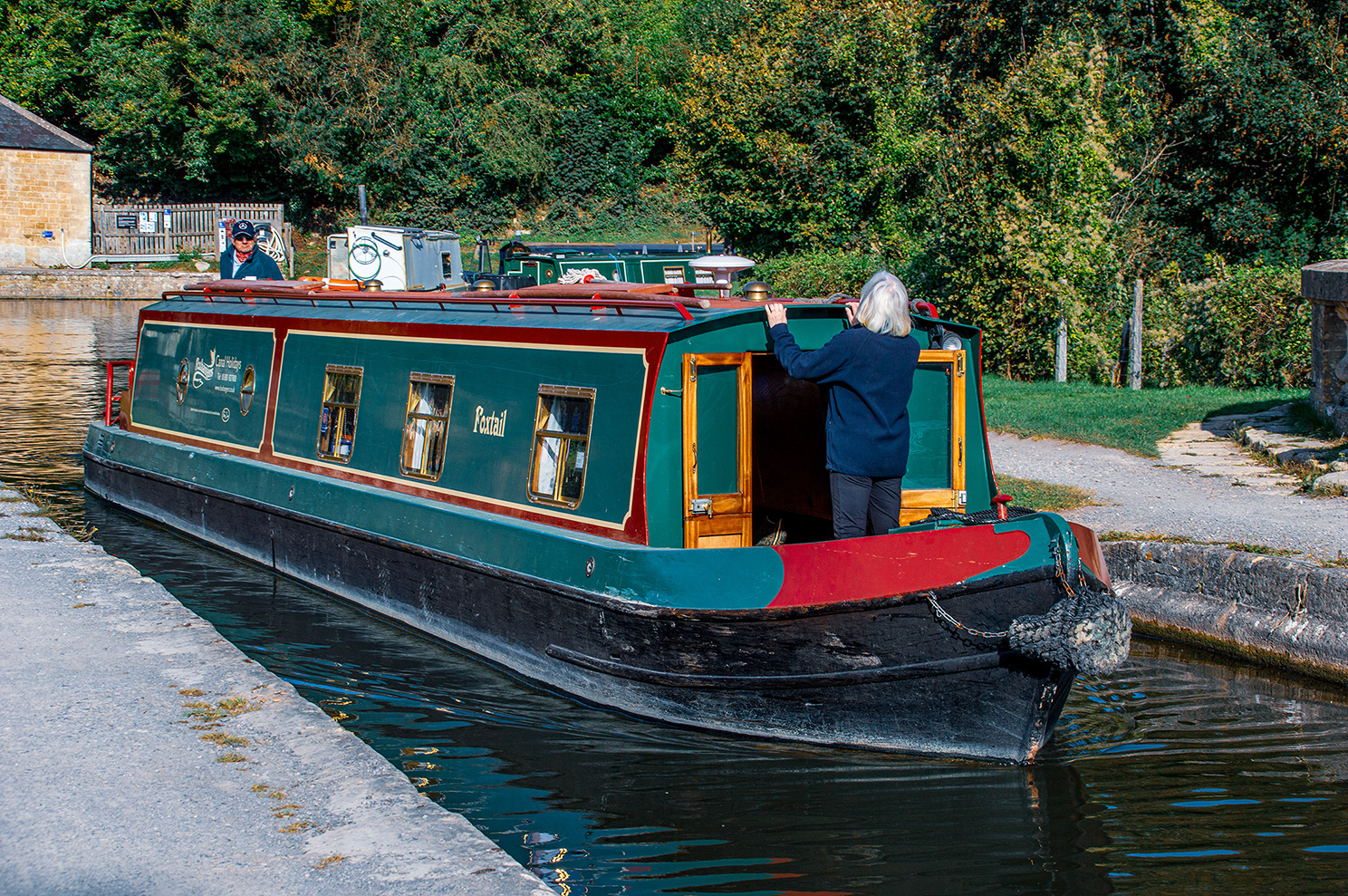
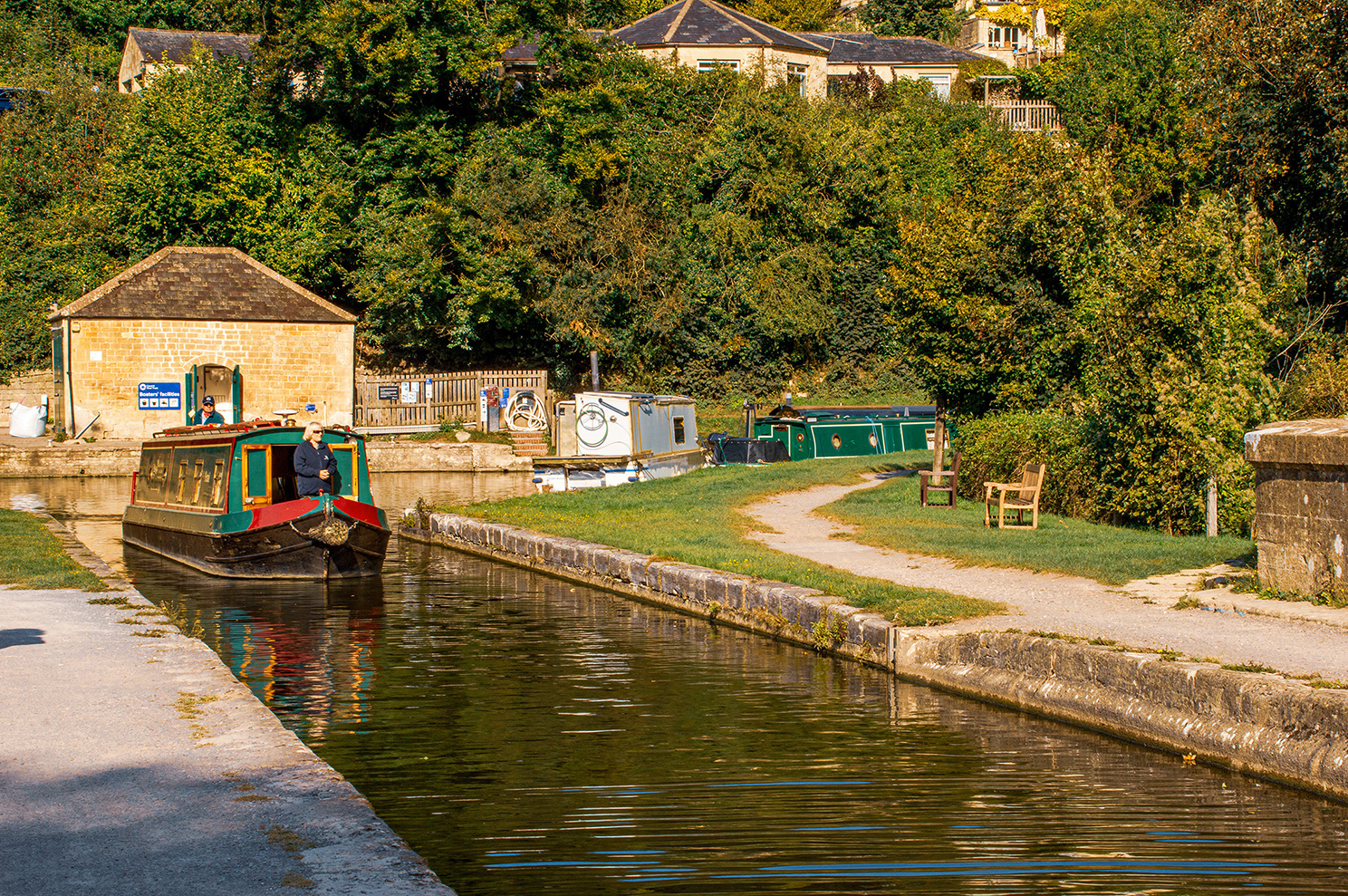
The image depicts a narrowboat named 'Portnell' on a canal. Two individuals are visible: one steering the boat from the rear, and another standing at the entrance of the boat. The boat is painted in dark green with red and black accents, and it is passing through a lock in the canal. The surroundings include lush greenery and a stone building in the background.
Kennet and Avon Canal  ‐ photo by ,
©www.mgaylard.co.uk.
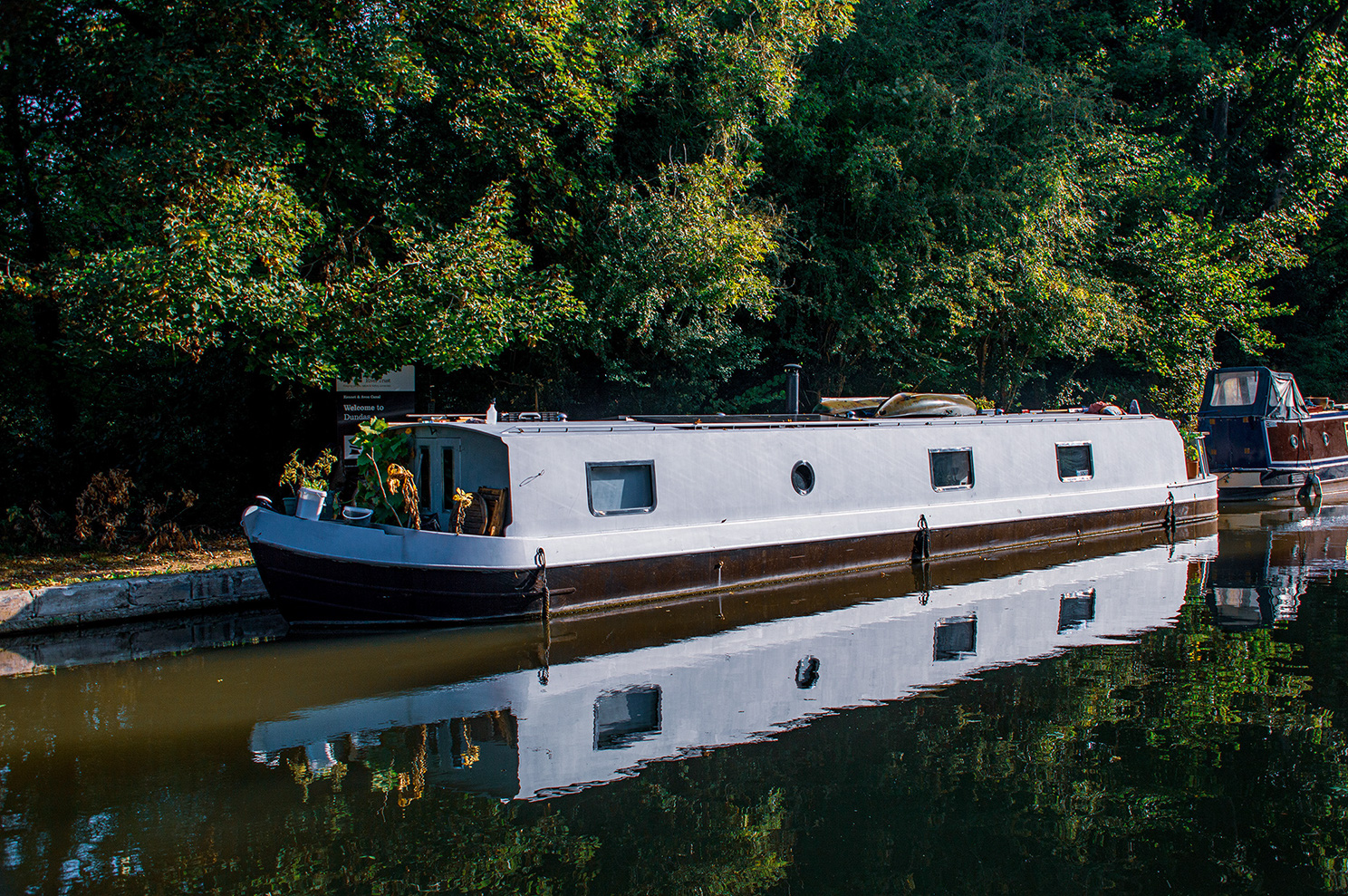
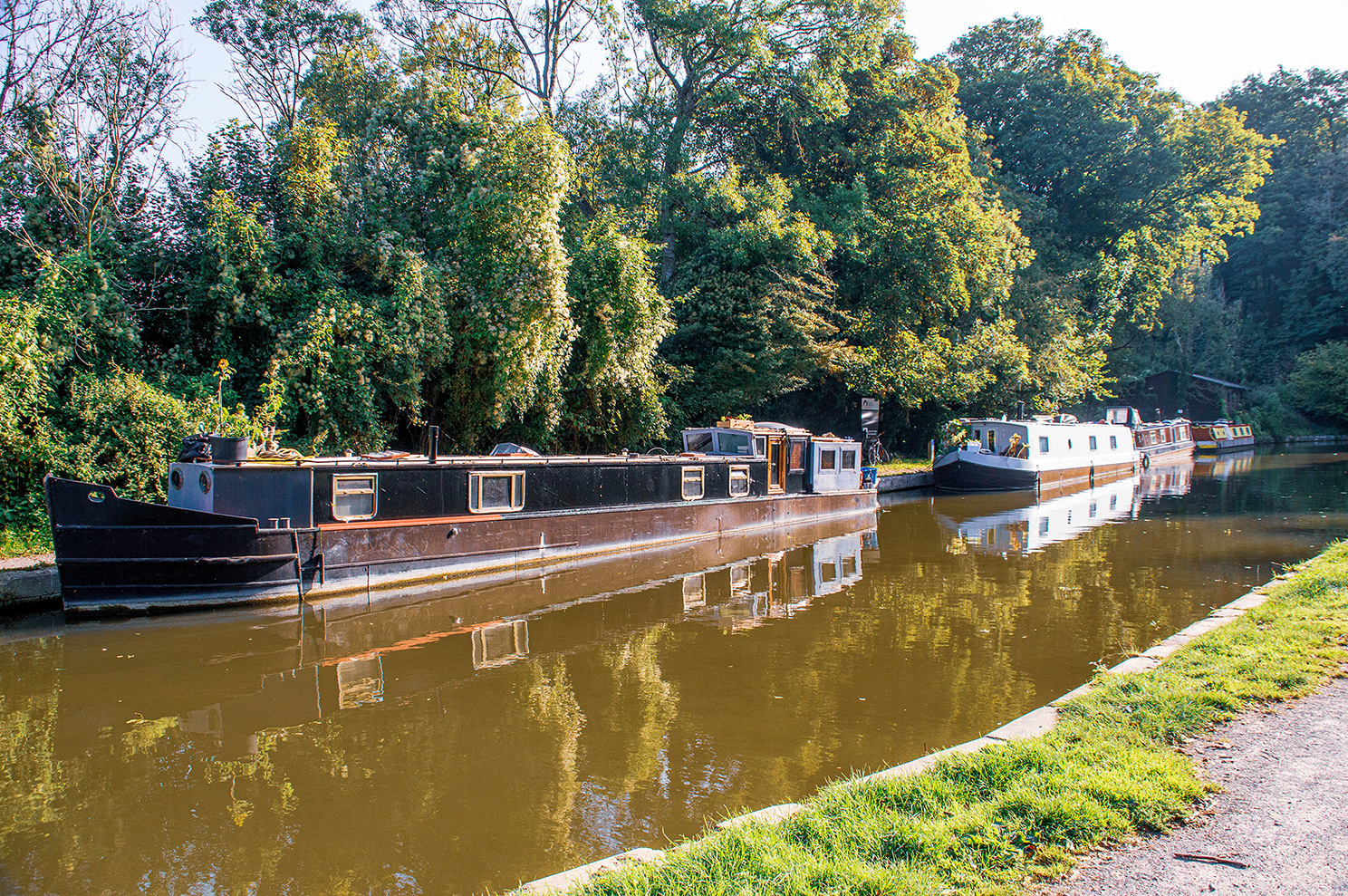
The image depicts a serene scene of a narrowboat moored on a calm canal, surrounded by lush greenery and trees. The boat is white with several windows and a round porthole, and it is equipped with various plants and items on the roof. The water is still, creating a perfect reflection of the boat and the surrounding environment. Another boat is partially visible to the right. The setting suggests a peaceful, rural Brassknocker, ideal for a tranquil boating experience.
Kennet and Avon Canal  ‐ photo by ,
©www.mgaylard.co.uk.
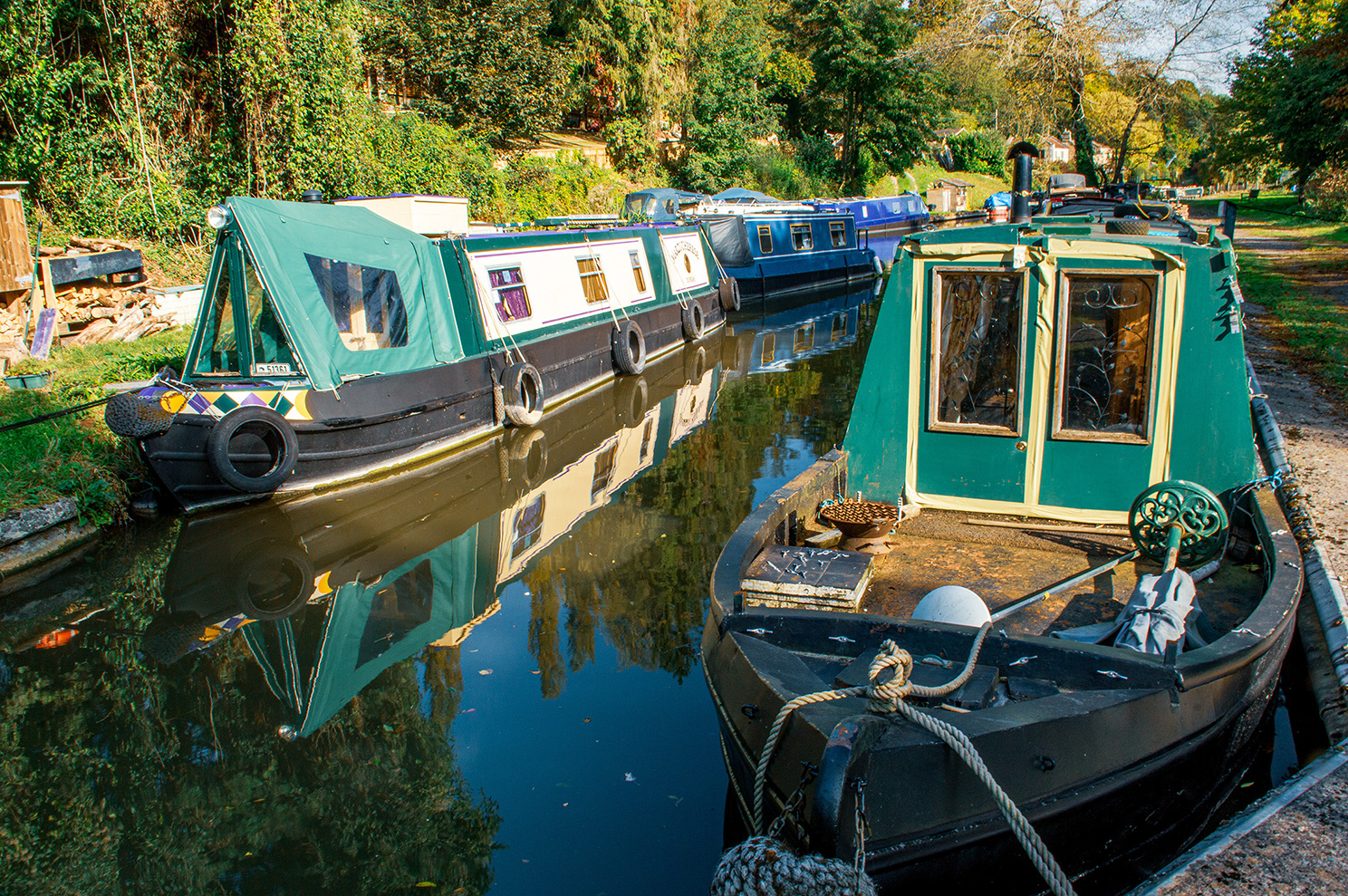
The image depicts a serene canal scene with several narrowboats moored along the bank. The water is calm, reflecting the boats and the surrounding greenery. The canal is lined with lush trees and grass, creating a peaceful and picturesque setting. The boats are painted in various colors, adding a vibrant touch to the natural landscape. The overall atmosphere is tranquil and inviting, suggesting a quiet, rural Brassknocker.
Kennet and Avon Canal  ‐ photo by ,
©www.mgaylard.co.uk.
The image depicts a serene canal scene with narrowboats moored along the side. A man is steering a narrowboat towards the camera. The canal is lined with stone walls and surrounded by lush greenery. There are several narrowboats docked on the opposite side, and a small stone building with a sign is visible. The overall atmosphere is peaceful and picturesque, suggesting a quiet, rural setting.
Kennet and Avon Canal  ‐ photo by ,
©www.mgaylard.co.uk.
The image depicts a serene canal scene with lush greenery on both sides. A narrowboat is moored on the right side of the canal, with various items visible on its roof. The canal is flanked by a well-maintained grassy path, which is bordered by dense foliage and trees. The sky above is clear with a few scattered clouds, suggesting a pleasant day. The overall atmosphere is tranquil and picturesque, typical of a peaceful countryside setting.
Kennet and Avon Canal  ‐ photo by ,
©www.mgaylard.co.uk.
The image depicts a serene canal scene with several narrowboats moored along the waterway. The canal is lined with lush green trees and grass, creating a tranquil and picturesque environment. A few people are walking along the towpath on the right side of the image, enjoying the peaceful surroundings. The water in the canal is calm, reflecting the boats and the surrounding greenery. The overall atmosphere is one of relaxation and natural beauty.
Kennet and Avon Canal  ‐ photo by ,
©www.mgaylard.co.uk.
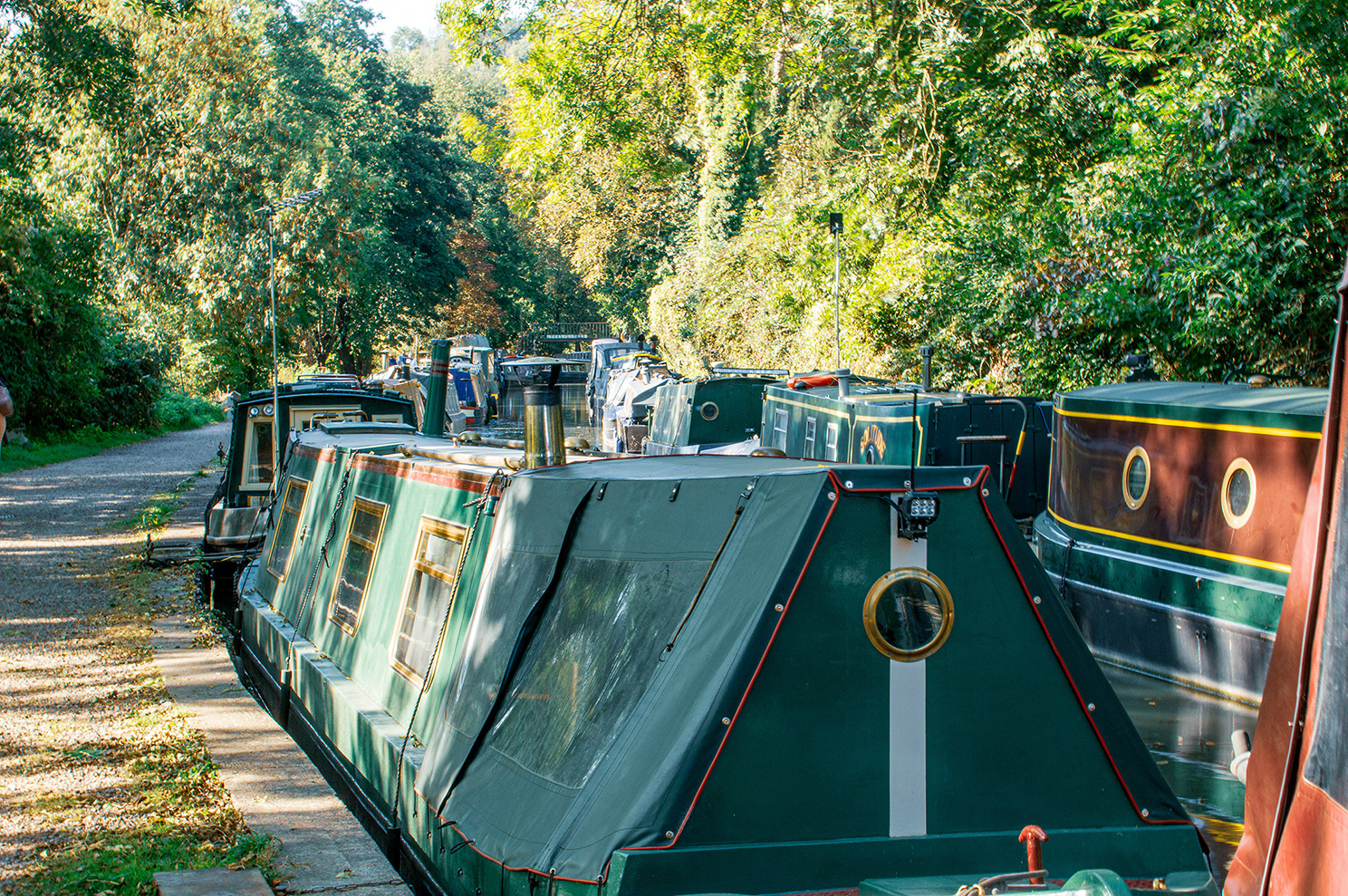
The image depicts a serene canal scene with several narrowboats moored along the waterway. The canal is lined with lush green trees and grass, creating a tranquil and picturesque setting. The water is calm, reflecting the boats and surrounding greenery. The scene suggests a peaceful, rural Brassknocker, likely in the countryside. The boats are of various sizes and colors, adding to the charm of the landscape.
Kennet and Avon Canal  ‐ photo by ,
©www.mgaylard.co.uk.
The image shows a serene canal scene with several narrowboats moored along the bank. The boats are painted in various colors, with the foreground featuring a green narrowboat with a wooden deck. The surrounding area is lush with greenery, and the water in the canal is calm, reflecting the boats and trees. The scene conveys a peaceful, rural atmosphere, typical of narrowboat moorings in the countryside.
Kennet and Avon Canal  ‐ photo by ,
©www.mgaylard.co.uk.
The image shows a row of narrowboats moored along a canal, surrounded by lush greenery and trees. The boats are painted in various colors, with the closest one being green with gold accents. The scene is peaceful and picturesque, suggesting a serene and scenic environment, likely in a rural or semi-rural area.
Kennet and Avon Canal  ‐ photo by ,
©www.mgaylard.co.uk.
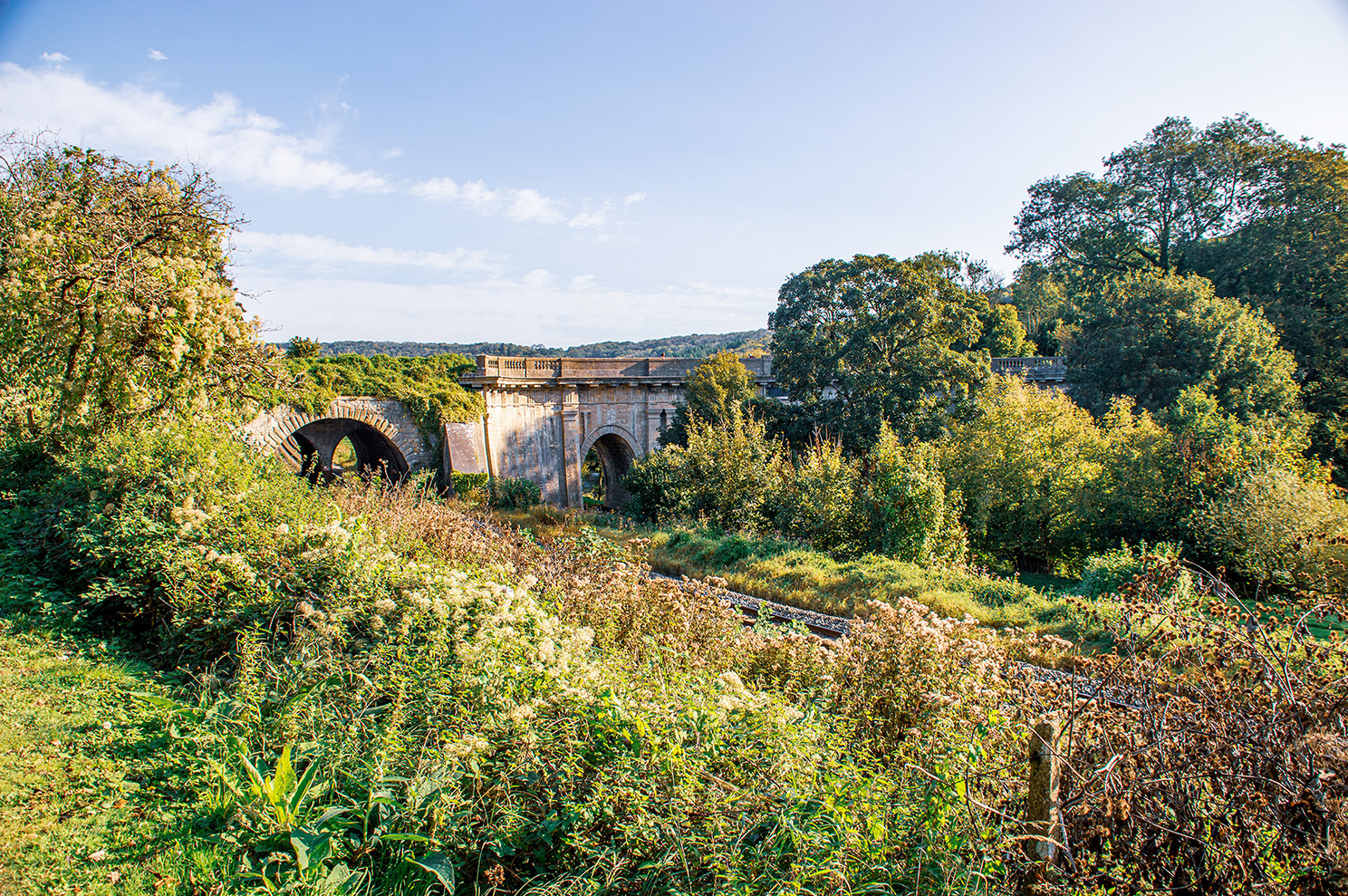
The image depicts an old, overgrown stone bridge with multiple arches, surrounded by dense vegetation and trees. The bridge appears to be in a state of disrepair, with some arches partially obscured by foliage. The scene is set in a rural, natural environment under a clear blue sky.
Kennet and Avon Canal  ‐ photo by ,
©www.mgaylard.co.uk.
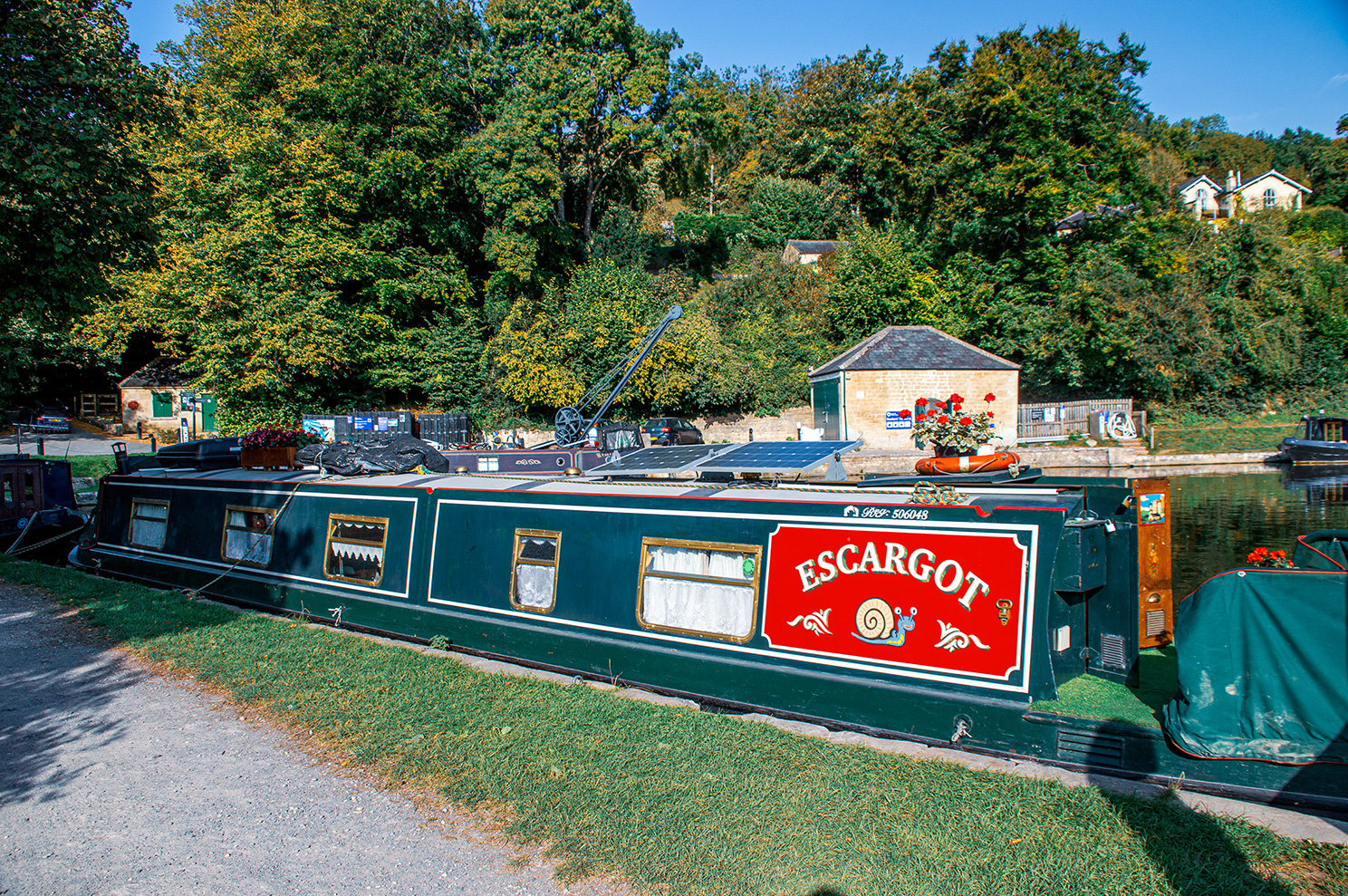
The image depicts a narrowboat named 'Escargot' moored on a canal. The boat is painted green with a red and white sign featuring snails. It is adorned with potted plants and has various equipment on its roof. The surroundings include a grassy path, trees, and a few buildings in the background.
Kennet and Avon Canal  ‐ photo by ,
©www.mgaylard.co.uk.
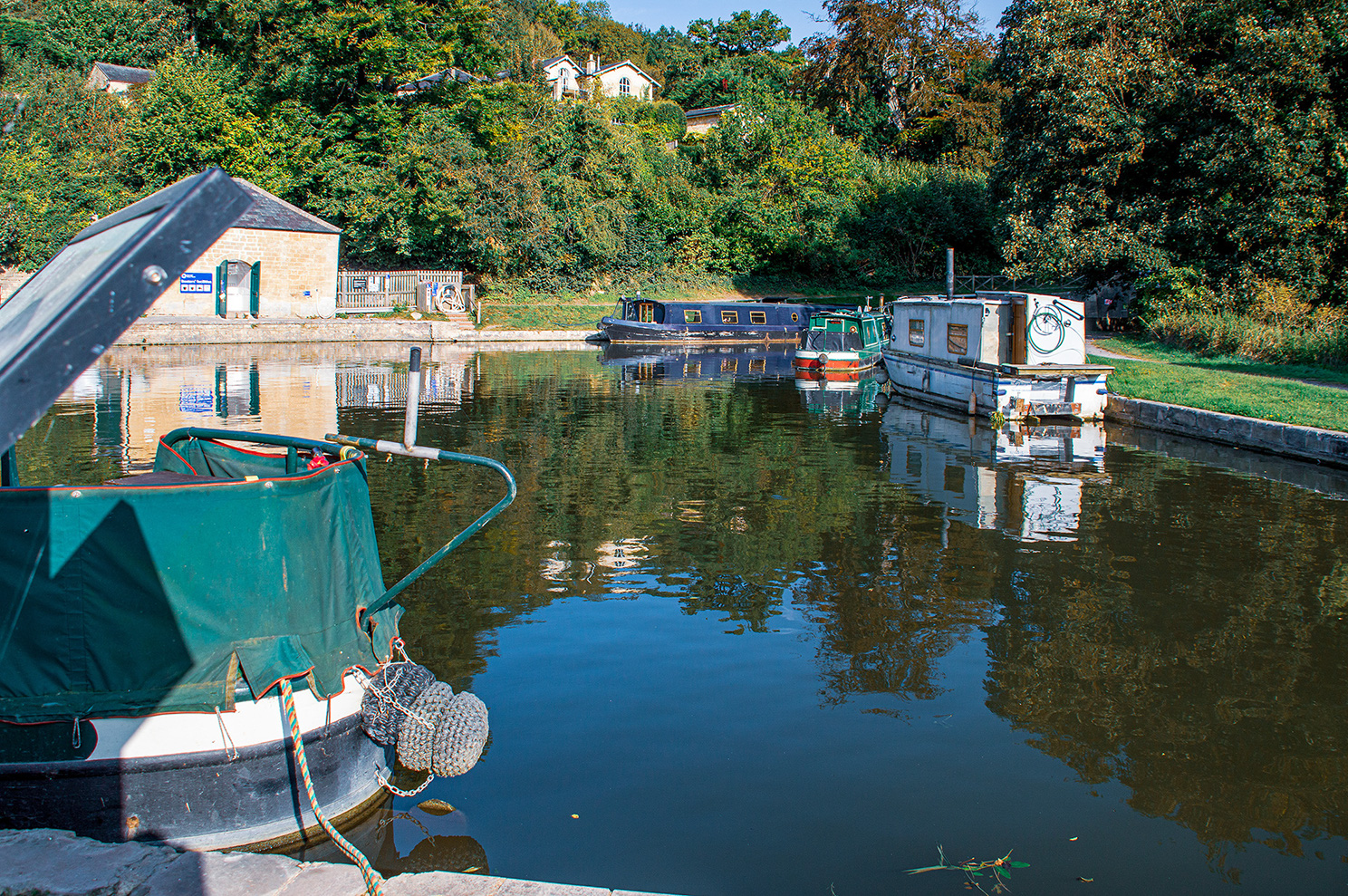
The image depicts a serene canal scene with several narrowboats moored along the bank. The water is calm, reflecting the boats and surrounding greenery. The scene is framed by the bow of a boat in the foreground, with a green canopy and a fender hanging off the side. The background features lush trees and a few buildings, including a small stone structure with green shutters. The overall atmosphere is peaceful and picturesque, typical of a quiet canal setting.
Kennet and Avon Canal  ‐ photo by ,
©www.mgaylard.co.uk.
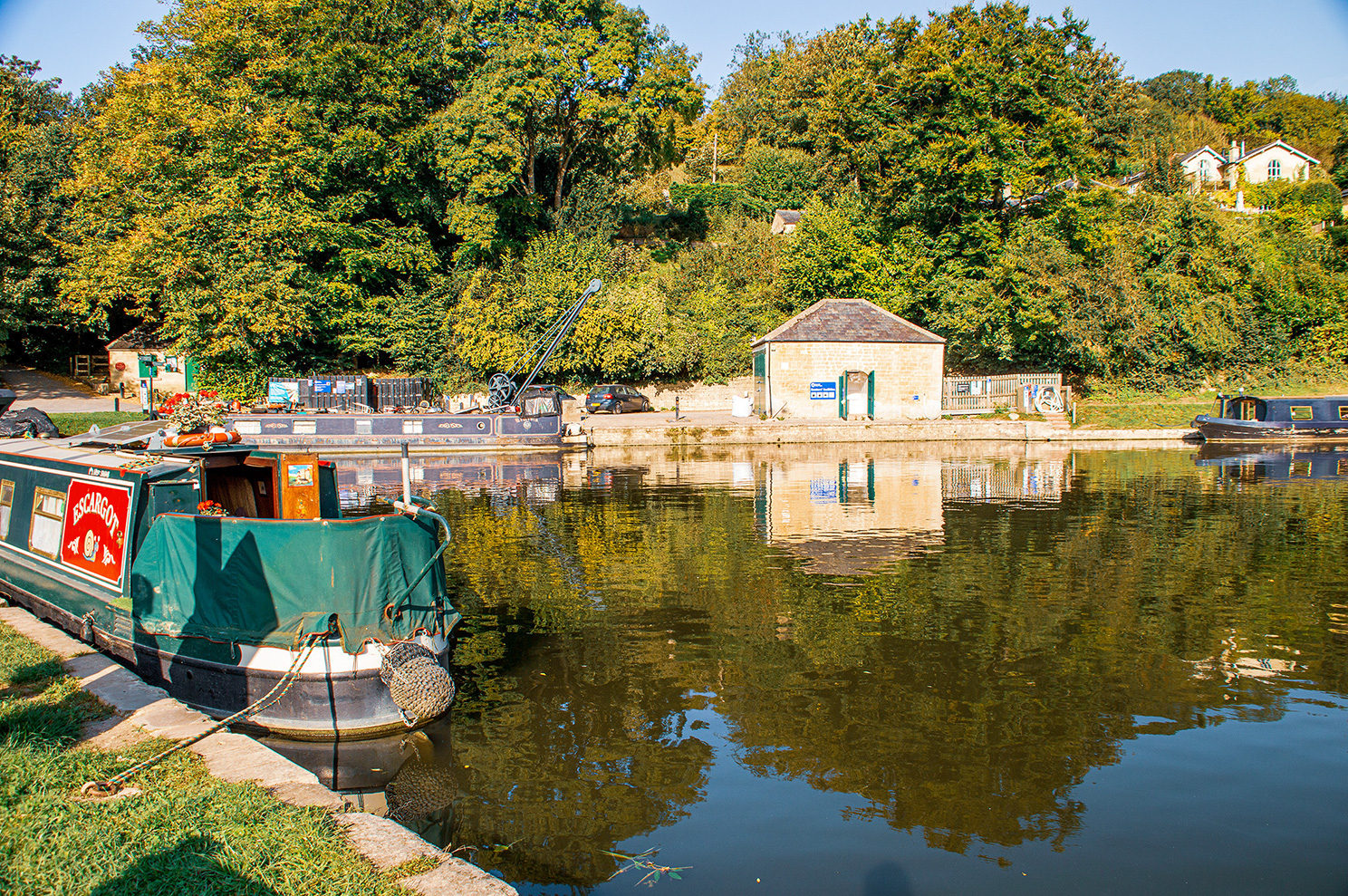
The image depicts a serene canal scene with several narrowboats moored along the bank. The water is calm, reflecting the surrounding greenery and boats. There is a small stone building with a green door and a blue sign, likely a canal office or facility. The area is lush with trees and foliage, indicating a peaceful, rural setting. The overall atmosphere is tranquil and picturesque.
Kennet and Avon Canal  ‐ photo by ,
©www.mgaylard.co.uk.
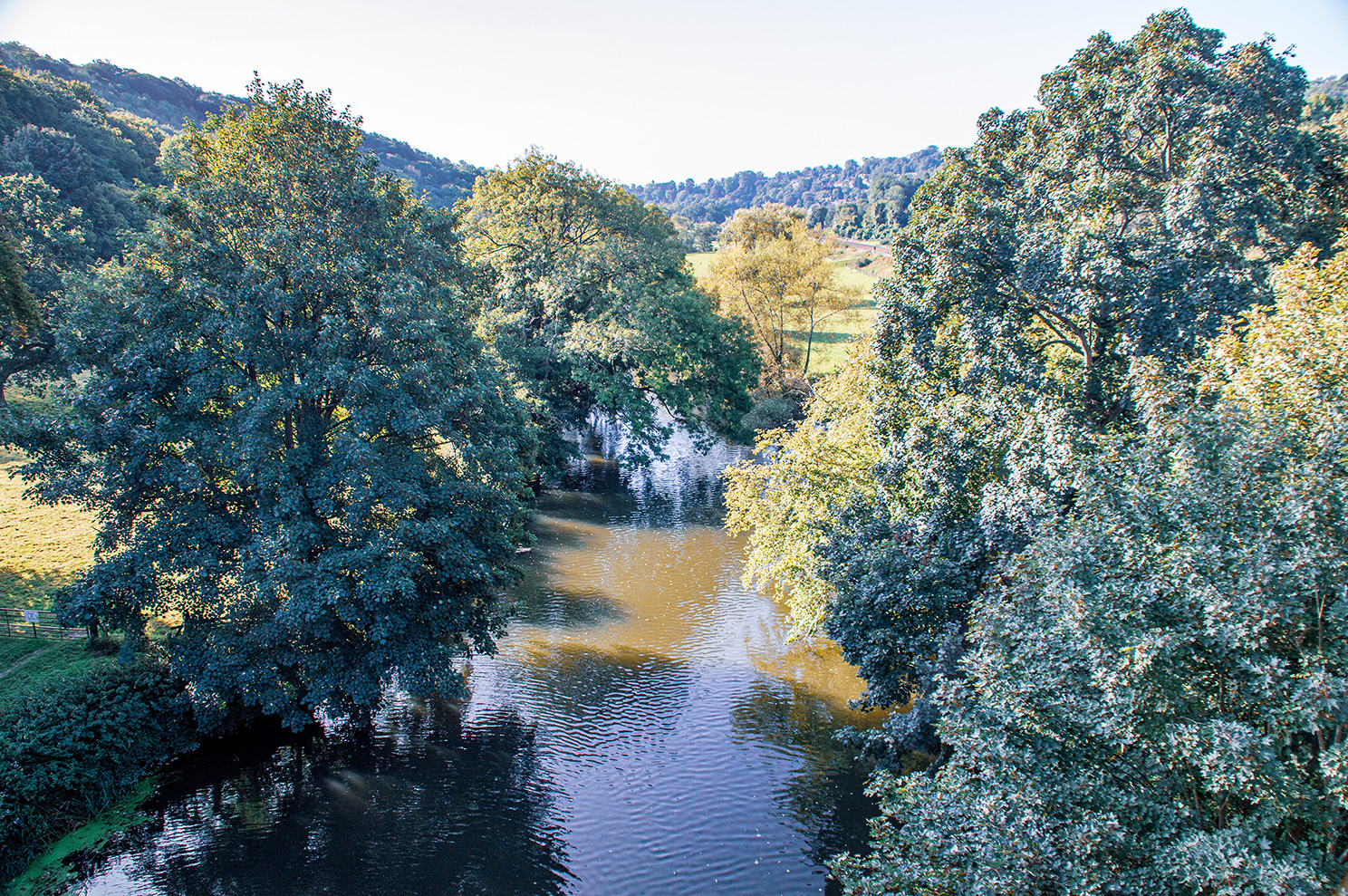
The image depicts a serene, tree-lined river flowing through a lush, green landscape. The trees on both sides of the river are dense with foliage, casting reflections on the calm water surface. The scene is bathed in natural light, suggesting a clear, sunny day. The background features rolling hills and open grassy areas, enhancing the tranquil and picturesque setting.
Kennet and Avon Canal  ‐ photo by ,
©www.mgaylard.co.uk.
The image depicts a serene canal scene with several narrowboats moored along the bank. The water is calm, reflecting the boats and the surrounding greenery. The canal is lined with lush trees and vegetation, creating a tranquil and picturesque setting. The boats vary in color and design, adding to the charm of the scene. The overall atmosphere is peaceful and inviting, suggesting a quiet, rural location.
Kennet and Avon Canal  ‐ photo by ,
©www.mgaylard.co.uk.
Open the full set flickr button this page
Brassknocker Basin

Brassknocker Basin is a notable waterway location on the Kennet and Avon Canal i

Location and Features

Connection to Kennet and Avon Canal: Brassknocker Basin is located at the junction where the Somerset Coal Canal meets the Kennet and Avon Canal. It is situated near Dundas Aqueduct, a significant engineering landmark canalrivertrust.org.uk+1. Facilities: The basin is used for boat moorings, cycle hire, and has a café. It is a popular spot for visitors and boaters canalplan.uk+1.

Historical Context

Somerset Coal Canal: The basin is part of the historic Somerset Coal Canal, which was primarily used for transporting coal during the industrial era. Although much of the canal is now derelict, the stretch at Brassknocker Basin has been restored and remains in use canalplan.uk+1. Dundas Aqueduct: The nearby Dundas Aqueduct is a Scheduled Ancient Monument, highlighting its historical importance

References

canalrivertrust.org.ukcanalplan.ukwww.cotswolds-nl.org.uk , Text generated by Mistral AI

Wells Cathedral

Wells Cathedral

Cathedral GreenWellsSomerset,   BA5 2UEUnited Kingdom

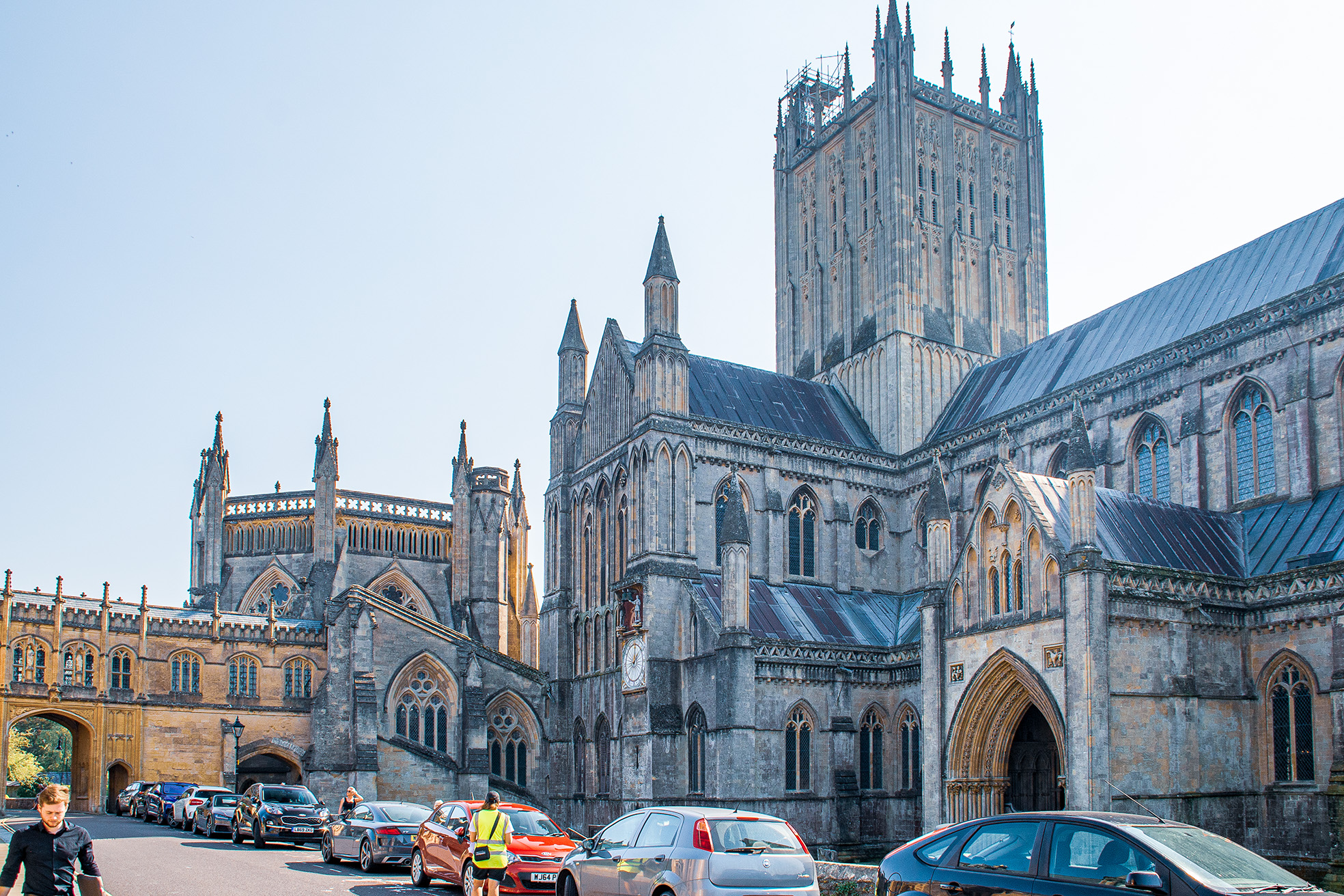
Wells Cathedral is a historic Anglican cathedral located in Wells, Somerset, England. Founded in 1175, it is renowned for its stunning medieval architecture, including the famous scissor arches, the West Front with its hundreds of statues, and the beautiful Chapter House. Wells Cathedral is a major tourist attraction and a place of worship, offering visitors a glimpse into its rich history and spiritual heritage.
The image depicts a large, historic cathedral with intricate Gothic architecture, featuring pointed arches, ribbed vaults, and flying buttresses. The structure includes a tall central tower with detailed stonework and multiple smaller spires. The building is constructed from light-colored stone, giving it a grand and majestic appearance. In the foreground, there are several parked cars and a few people, indicating the cathedral is situated in an urban area. The overall scene suggests a blend of historical significance and modern-day activity.
Wells Cathedral ‐ photo by ,
©www.mgaylard.co.uk.
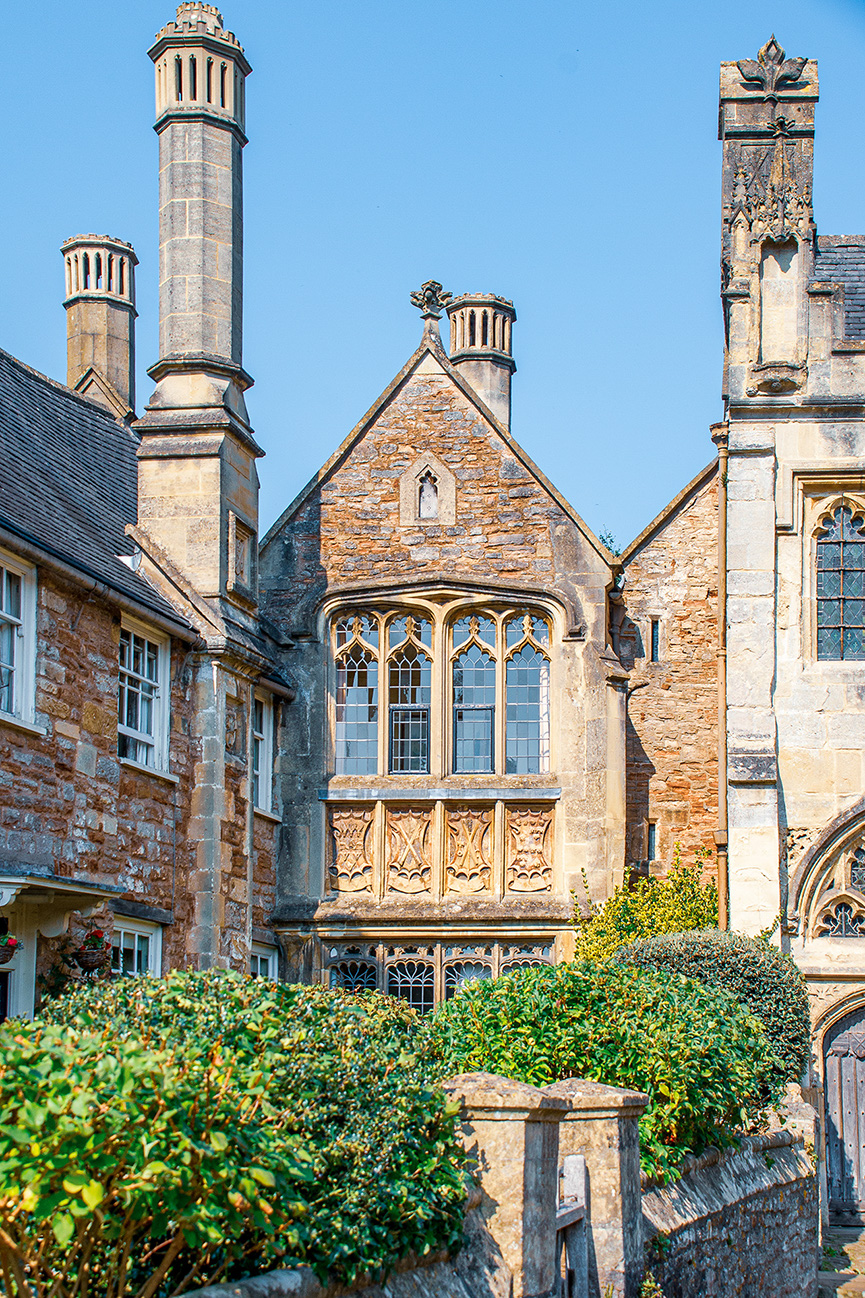
The image depicts a historic building with intricate stone architecture, featuring tall chimneys, ornate windows, and detailed stone carvings. The building is surrounded by lush greenery and appears to be part of a larger complex, possibly a university or a historic site..
Vicars' Close ‐ photo by ,
©www.mgaylard.co.uk.
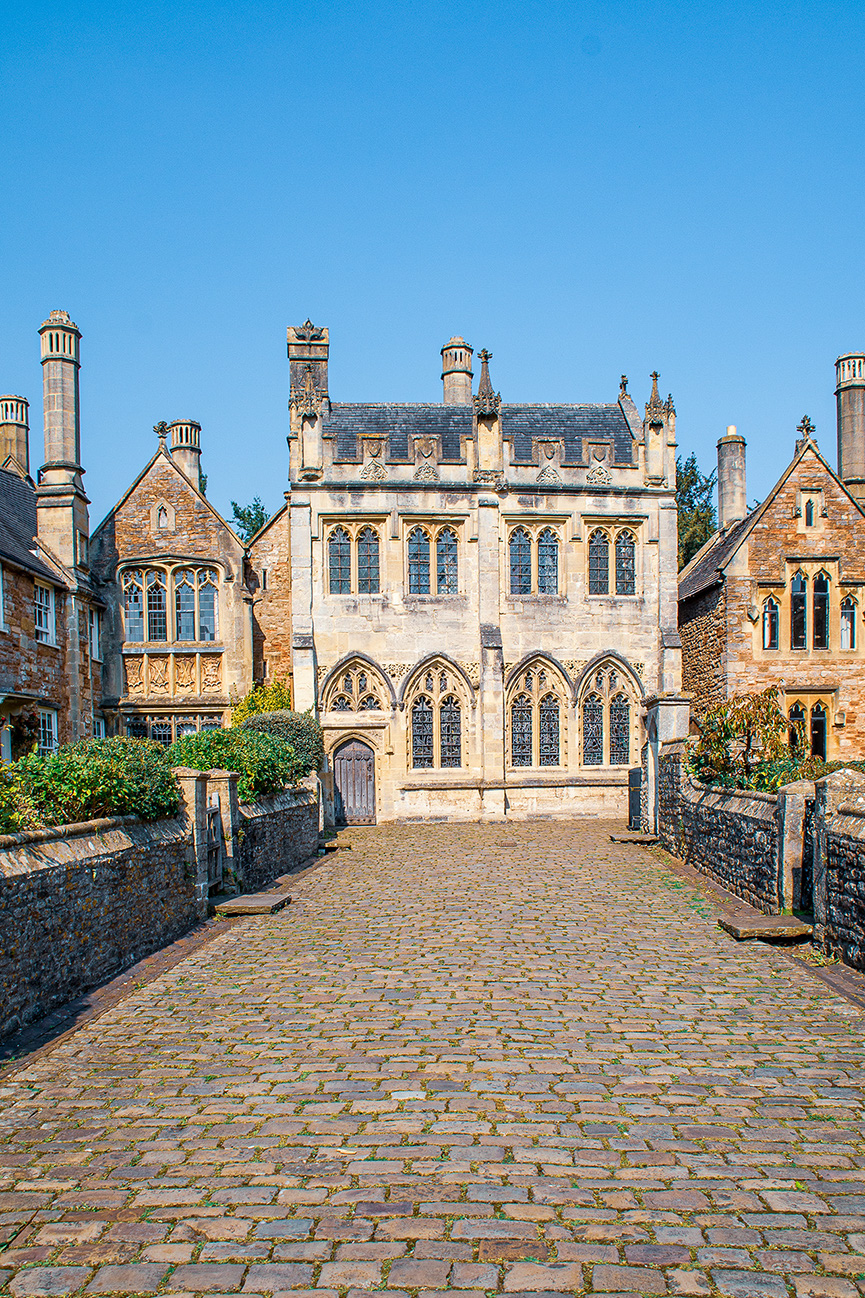
The image depicts a historic building with Gothic architectural elements, such as pointed arches and intricate stonework. The building is surrounded by a cobblestone courtyard with low stone walls and some greenery. The sky is clear and blue, suggesting a sunny day.
Considered the oldest continuously inhabited medieval street in Europe. ‐ photo by ,
©www.mgaylard.co.uk.
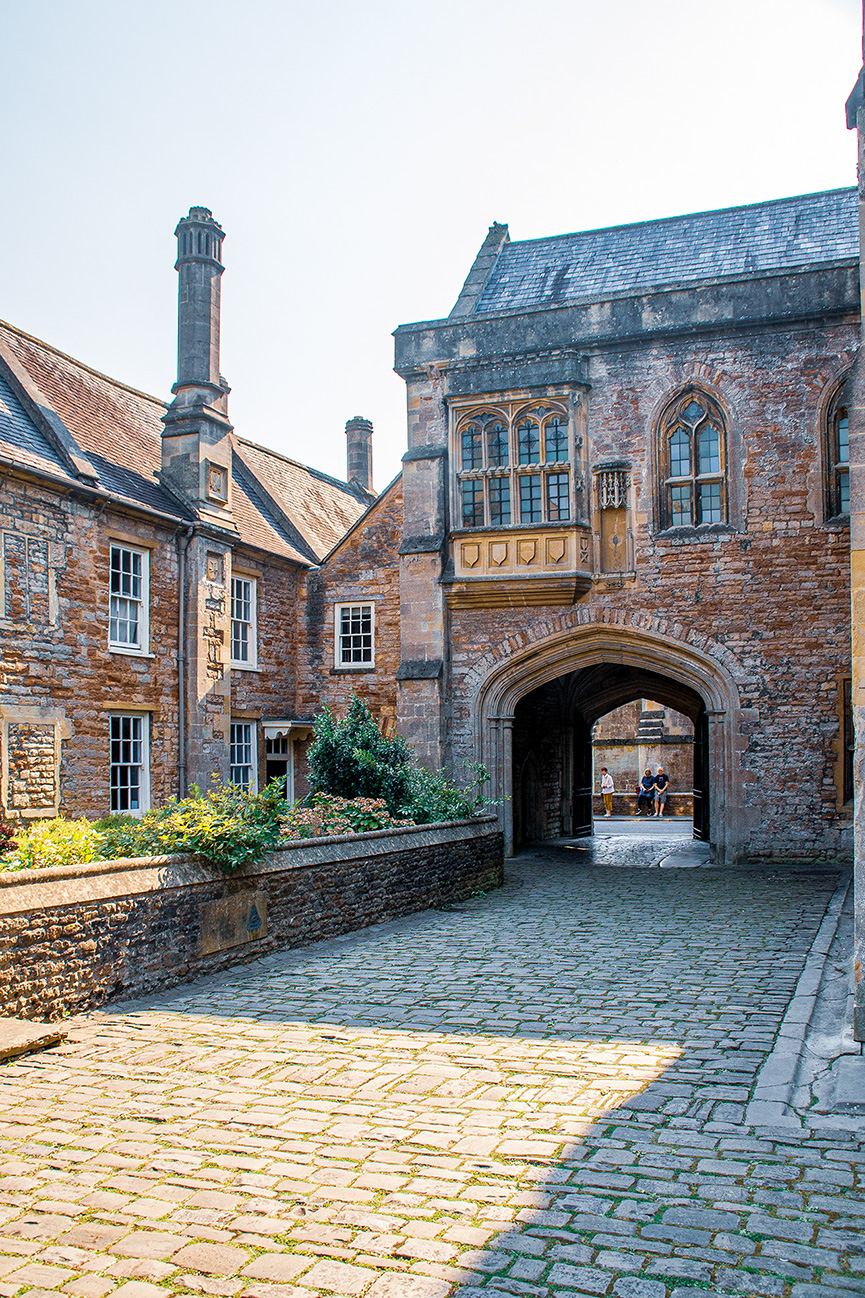
The image depicts a historic building with a cobblestone courtyard. The architecture features a mix of brick and stone, with large windows and a prominent archway. There are two people visible through the archway, and the building has several chimneys and a tiled roof. The courtyard is lined with plants and flowers, adding a touch of greenery to the scene.
Built between 1348 and the 1420s for the Vicars Choral, the clergy who sang daily services in Wells Cathedral. ‐ photo by ,
©www.mgaylard.co.uk.
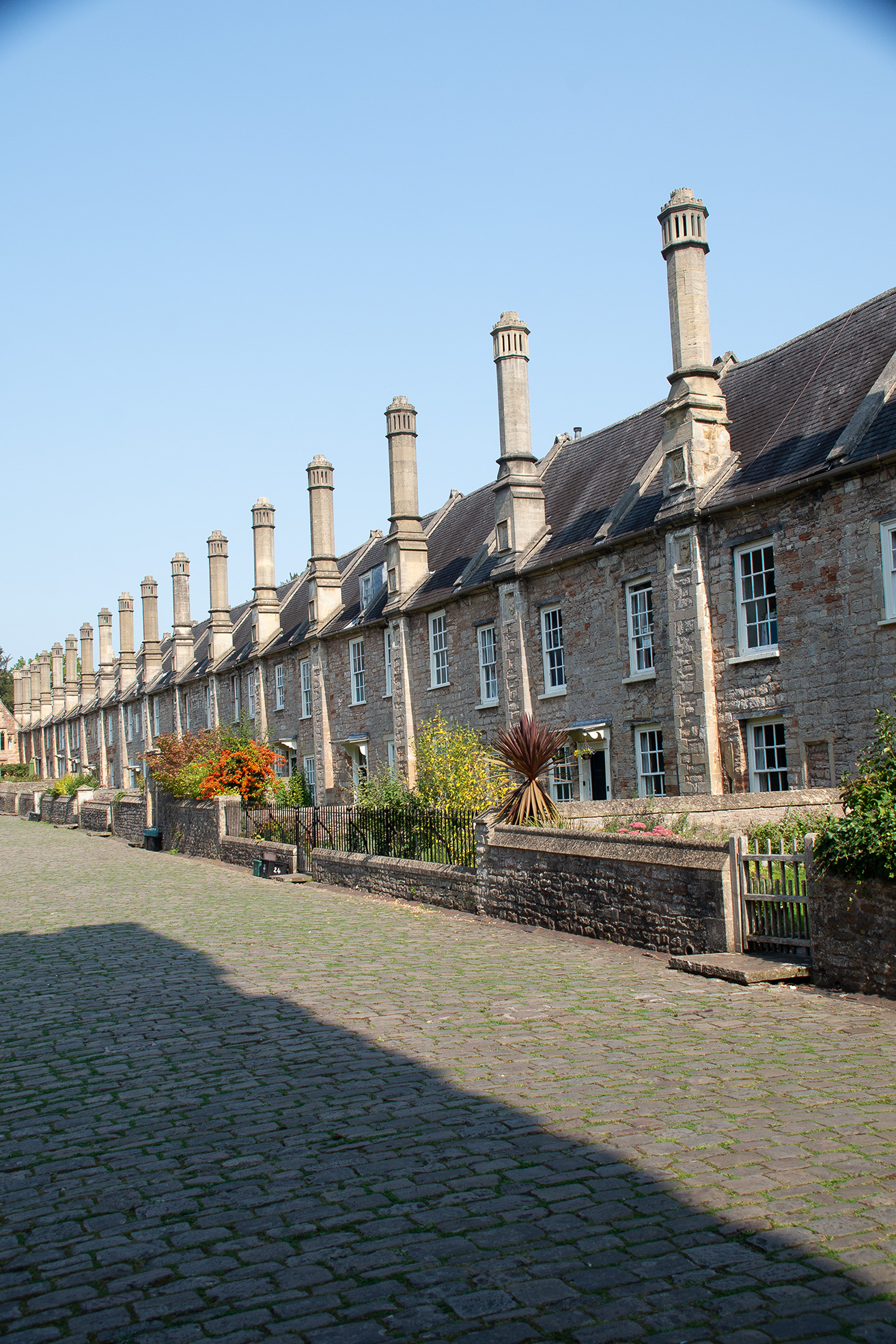
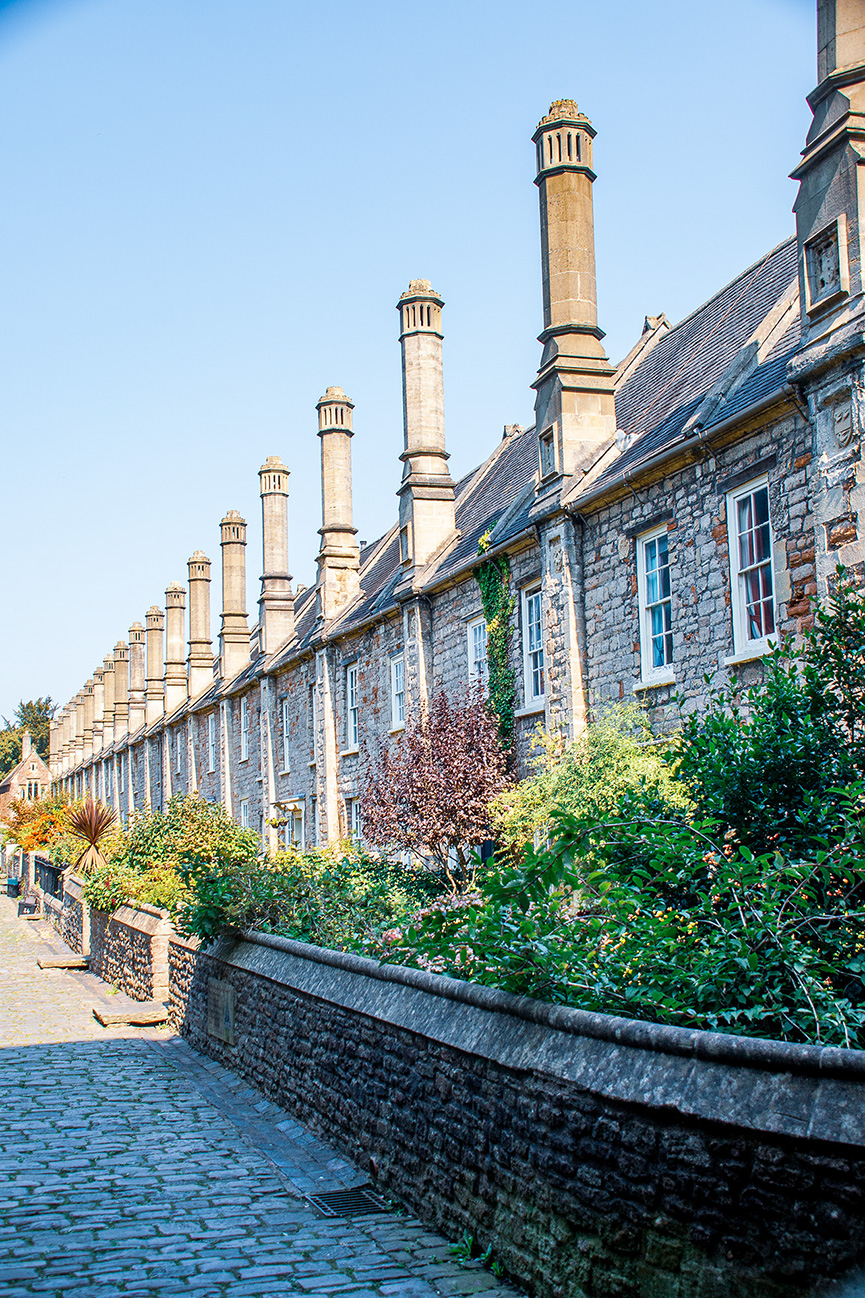
The image depicts a row of historic, stone-built houses with distinctive chimneys, likely from the 17th or 18th century. The houses have a uniform architectural style, featuring large windows and steeply pitched roofs. The street in front is paved with cobblestones, and there are small, well-maintained gardens with plants and flowers in front of each house. The overall scene suggests a quaint, picturesque setting, possibly in a rural or small-town environment.
A rare example of a planned medieval community, complete with uniform houses, communal hall, chapel, and even early sanitation and piped water.  ‐ photo by ,
©www.mgaylard.co.uk.
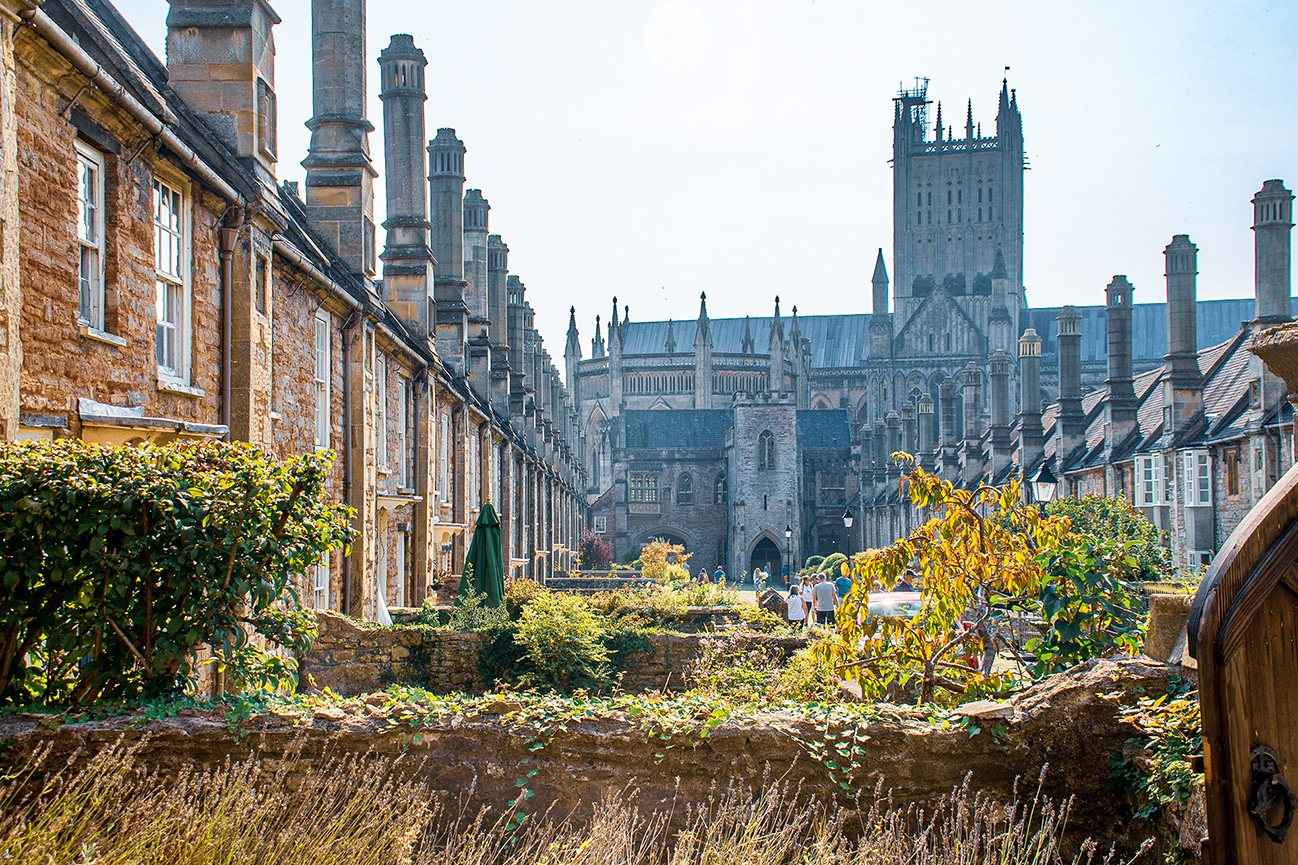
The image depicts a scenic view of a historic university campus, featuring traditional stone buildings with Gothic architecture. The central focus is a large, ornate cathedral or chapel with intricate details and towering spires. The foreground includes lush greenery and a pathway where people are walking, adding a sense of scale and liveliness to the scene. The overall atmosphere is serene and scholarly, characteristic of an old, prestigious academic institution.
Vicar's Close ‐ photo by ,
©www.mgaylard.co.uk.
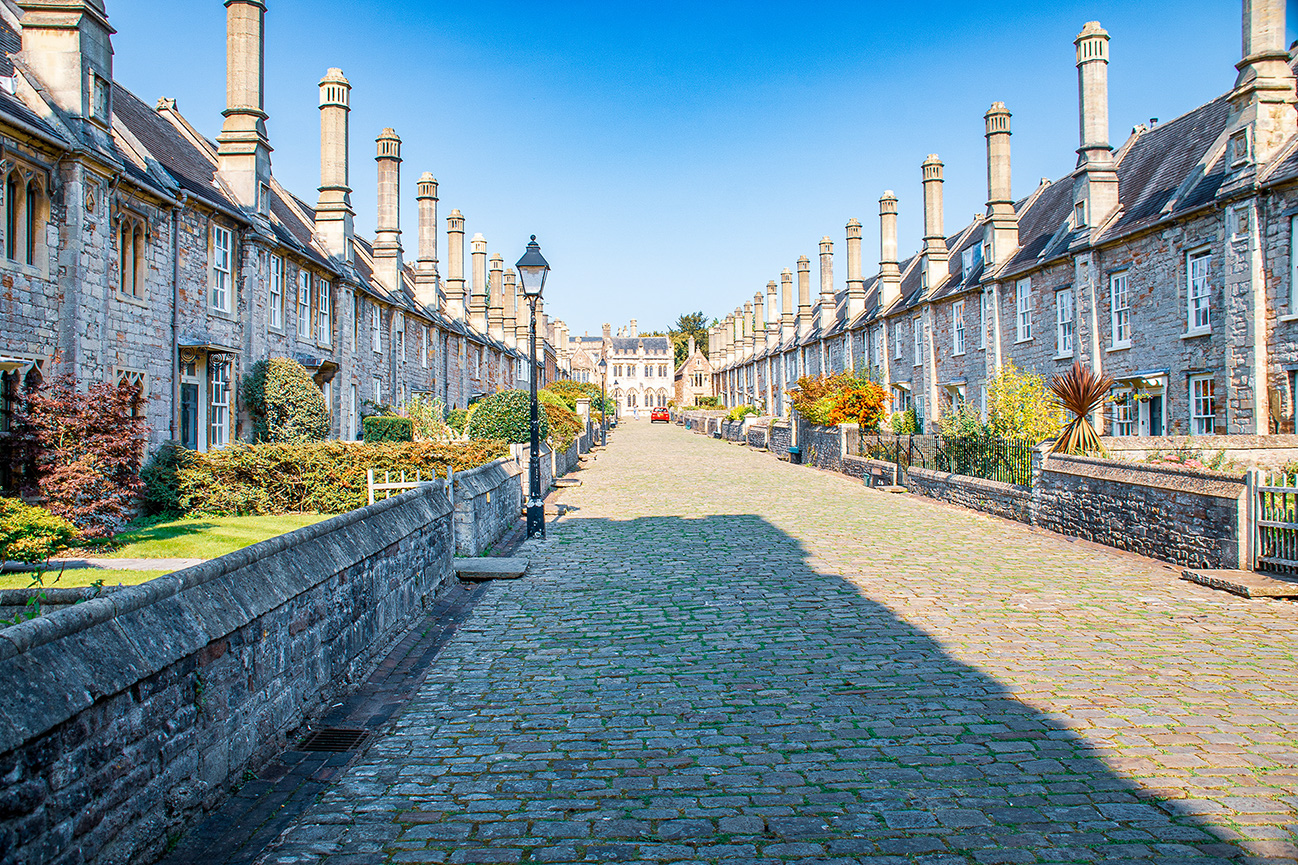
The image depicts a picturesque street in what appears to be a historic or traditional European town. The street is lined with uniform, stone-built buildings featuring numerous chimneys and small windows. The cobblestone path in the center is flanked by well-maintained gardens with various plants and shrubs. The scene is bathed in bright sunlight, creating a serene and inviting atmosphere.
- The street is 140 metres long, paved with setts, and lined with 27 surviving residences (originally 44). -  ‐ photo by ,
©www.mgaylard.co.uk.
The image depicts a row of historic stone buildings with tall, ornate chimneys, likely part of a university or college. The buildings have a traditional architectural style with slate roofs and stone walls. The scene is set on a cobblestone path bordered by a stone wall and lush greenery, suggesting a serene and picturesque environment.
- The width tapers by about 3 metres, creating a deliberate optical illusion:  ‐ photo by ,
©www.mgaylard.co.uk.
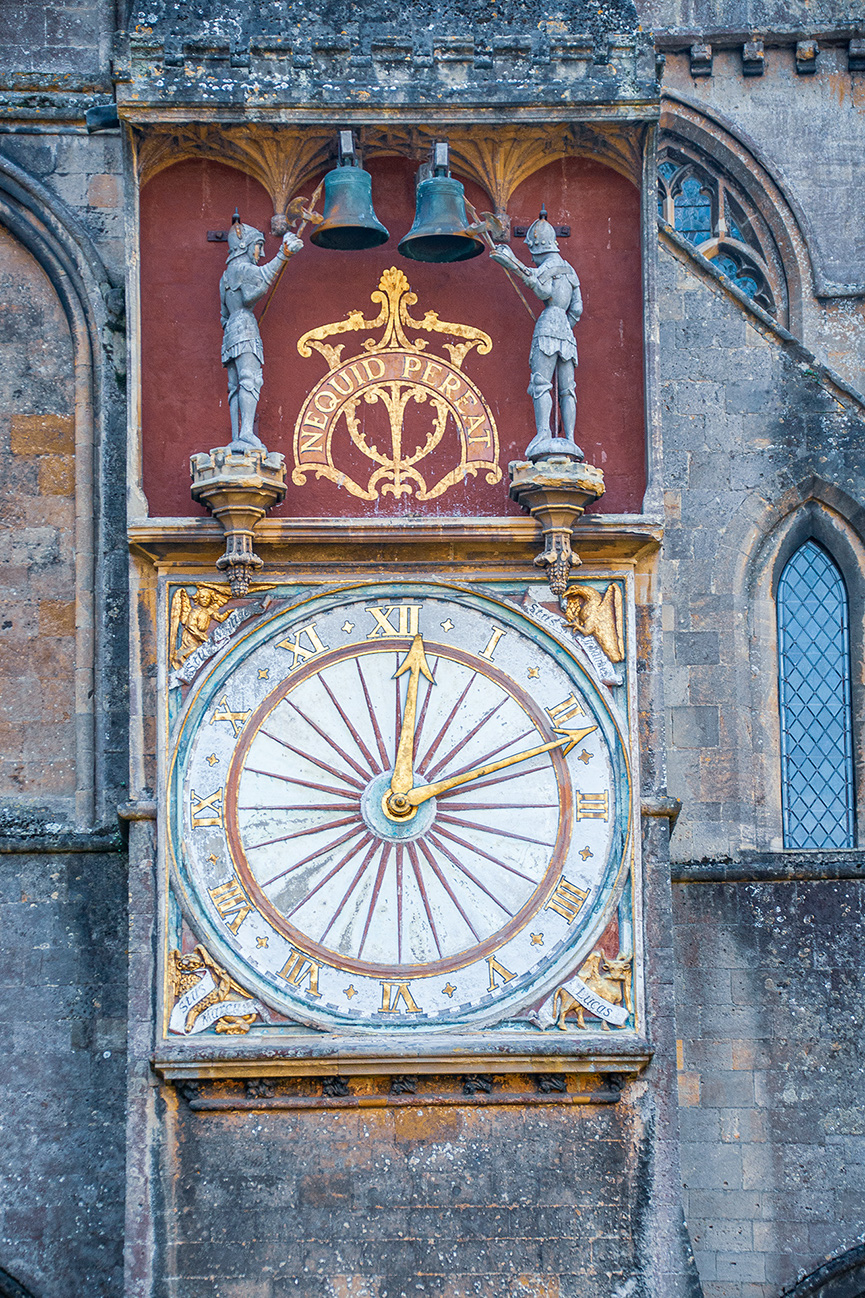
The image depicts an ornate astronomical clock with Roman numerals and intricate details, including two statues ringing bells and a Latin inscription. The clock is part of a historic building with Gothic architectural elements.
An ornate astronomical clock with Roman numerals ‐ photo by ,
©www.mgaylard.co.uk.
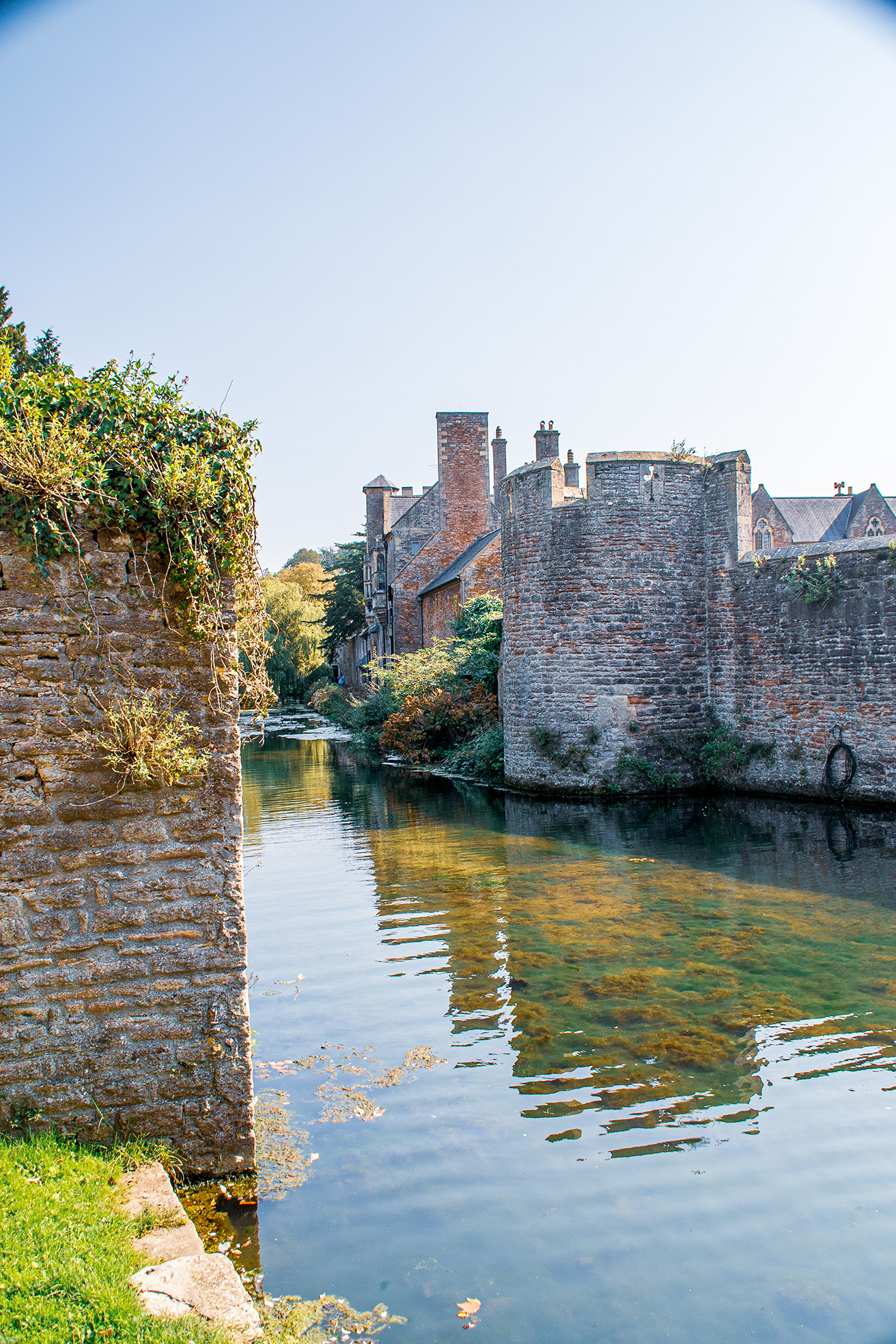
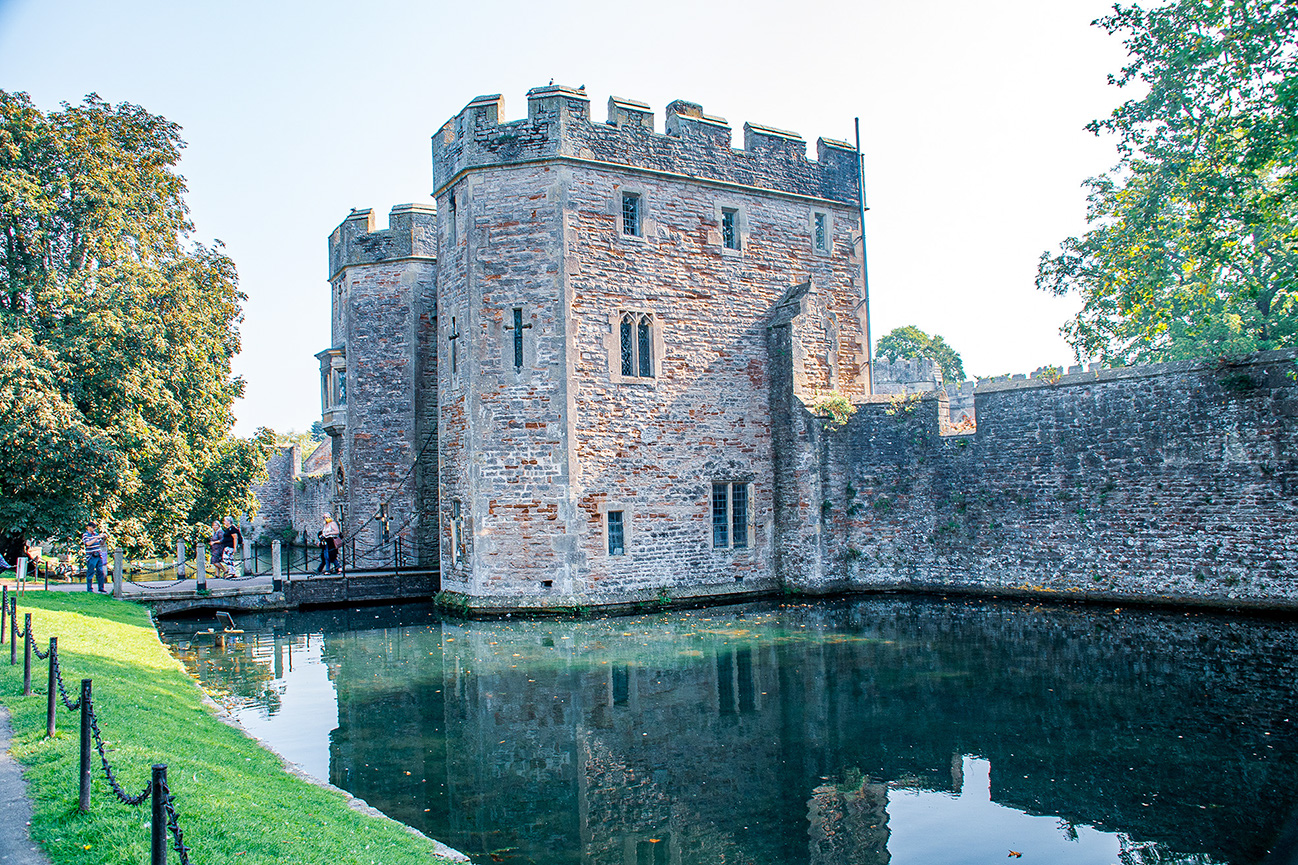
The image depicts a serene scene of a historic castle or fortification with a moat. The structure is made of stone and brick, featuring a prominent tower and chimneys. The moat is filled with clear water reflecting the surrounding greenery and the stone walls. The scene is bathed in natural light, suggesting a clear day. Vegetation, including ivy and grass, is visible around the base of the walls and along the edge of the moat.
Bishops Palace and moat ‐ photo by ,
©www.mgaylard.co.uk.
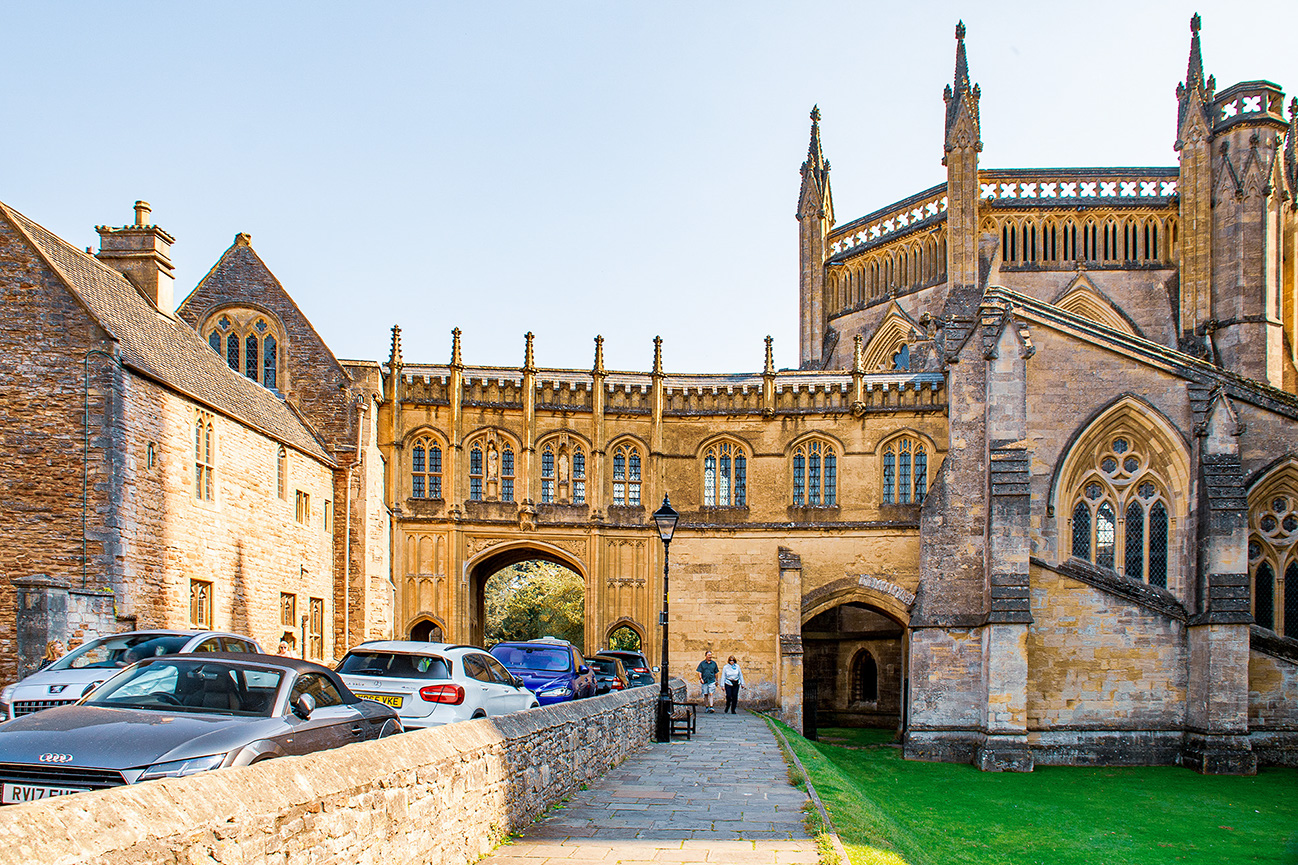
The image depicts an architectural scene featuring a historic building with Gothic elements, such as pointed arches, intricate stonework, and tall spires. The building appears to be part of a larger complex, possibly a cathedral or university. Cars are parked along the side of a narrow road leading to an arched gateway. The setting is well-maintained, with a stone wall and a small patch of green grass. The overall atmosphere is serene and picturesque, suggesting a location of historical and cultural significance.
Wells Cathedral ‐ photo by ,
©www.mgaylard.co.uk.
The image depicts an outdoor scene with people sitting at tables and chairs on a grassy area in front of a historic building. The building has a castle-like appearance with stone walls, arched windows, and a large arched entrance. The people are engaged in various activities such as eating, drinking, and socializing. The weather appears to be sunny and pleasant, contributing to a relaxed and leisurely atmosphere.
Cathedral Green ‐ photo by ,
©www.mgaylard.co.uk.
The image depicts a historic castle with stone walls and a moat, surrounded by greenery and trees. The castle features multiple towers with battlements and small windows. People are seen walking along a pathway near the castle, and the scene is reflected in the calm water of the moat.
Bishops Palace and moat ‐ photo by ,
©www.mgaylard.co.uk.
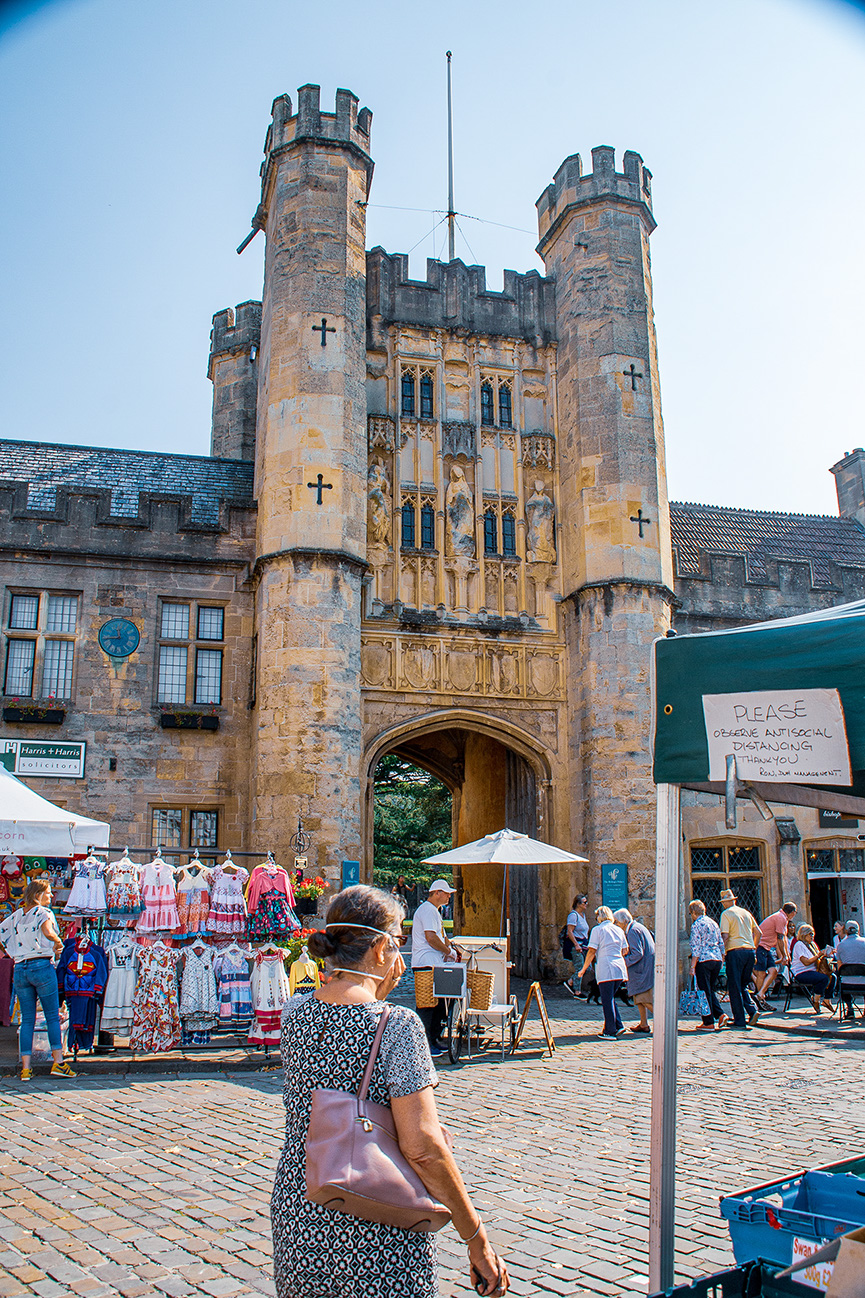
The image depicts a bustling scene in front of a historic castle gatehouse. The gatehouse features two large towers with crosses on them and intricate stone carvings above the archway. Various people are seen walking around, shopping at stalls selling colorful clothing, and sitting at outdoor tables. A sign asks visitors to observe social distancing. The overall atmosphere is lively and vibrant, with a mix of tourists and locals enjoying the area.
Bishops Palace ‐ photo by ,
©www.mgaylard.co.uk.
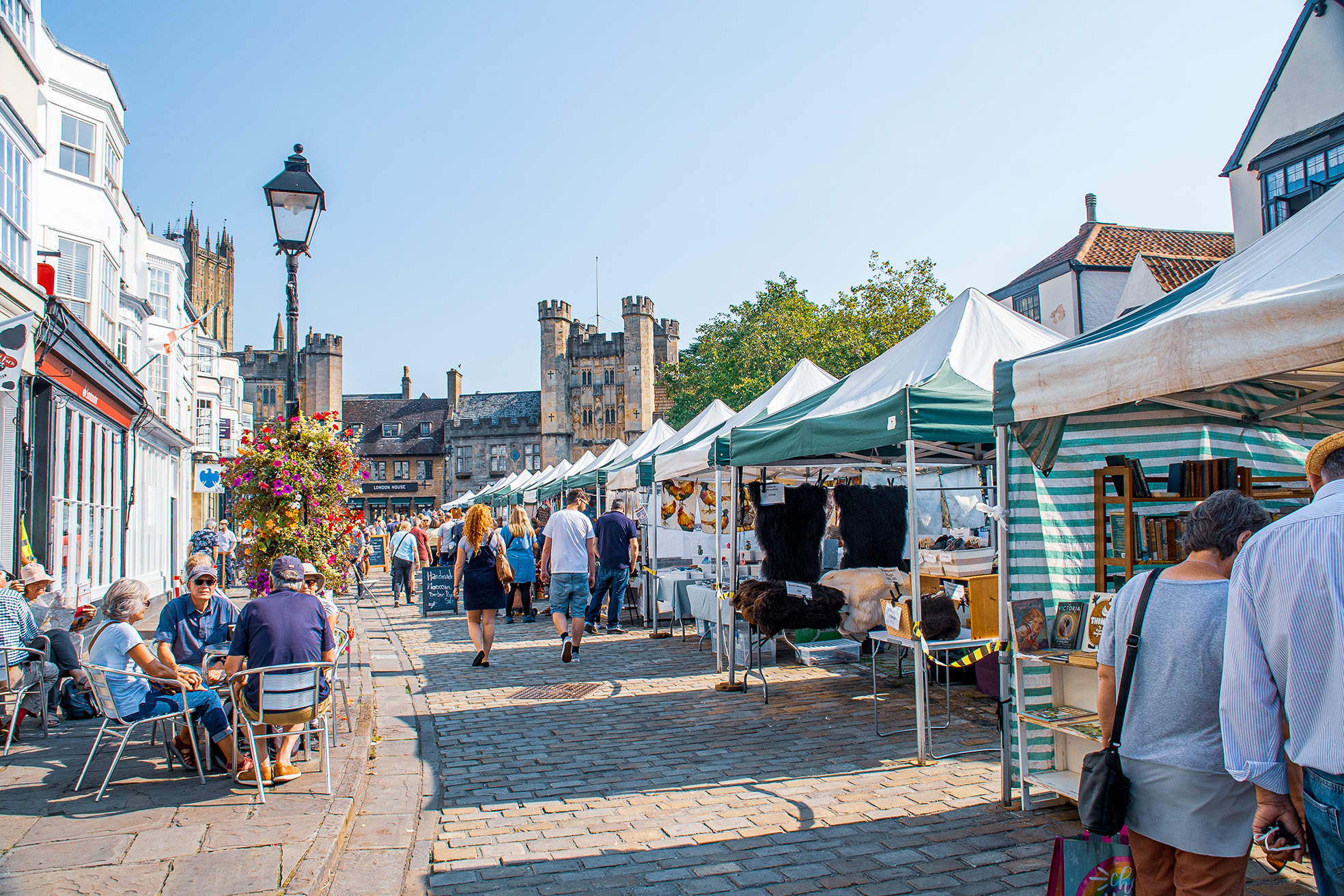
The image depicts a bustling outdoor market set in a charming, historic town. The market features numerous stalls with green and white canopies displaying various goods, including artwork and textiles. People are seen walking, browsing, and sitting at outdoor cafes along the cobblestone street. The architecture includes a mix of modern and historic buildings, with a prominent castle-like structure in the background. The scene is lively and vibrant, with clear skies and a sunny atmosphere.
Market Place ‐ photo by ,
©www.mgaylard.co.uk.
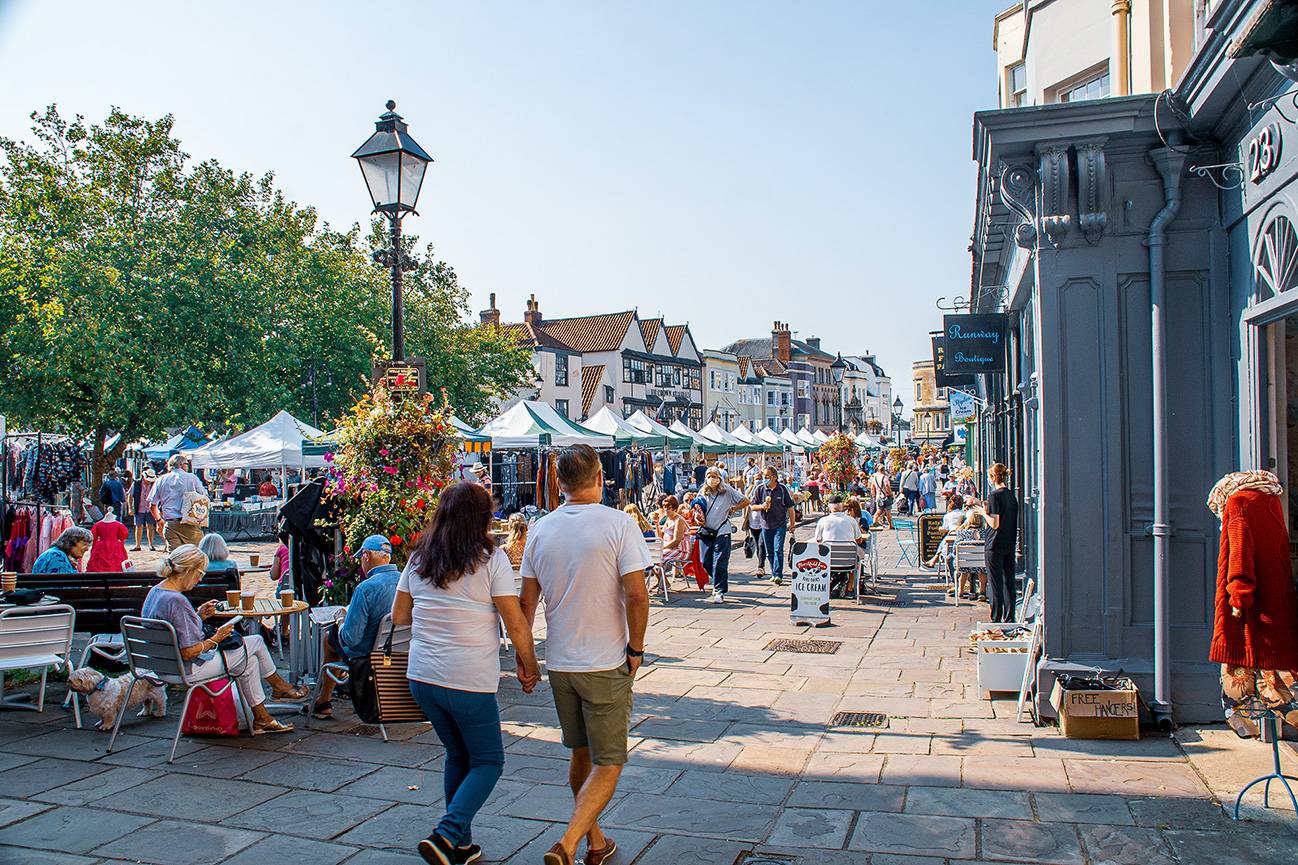
The image depicts a bustling outdoor market scene on a sunny day. People are walking, shopping, and sitting at outdoor cafes. Various stalls and tents are set up, selling different items. The market is lined with historic buildings and trees, creating a lively and vibrant atmosphere.
Market Place ‐ photo by ,
©www.mgaylard.co.uk.
Open the full set flickr button this page
Wells Cathedral

Wells Cathedral is a historic and architecturally significant cathedral located in Wells, Somerset, England.

Historical Overview

Origins: The cathedral was originally established as an abbey church in 705 AD by Aldhelm, the first bishop of the newly established Diocese of Sherborne. The earliest documented reference to it is in a charter of 766 AD, where it is described as "the minster near the Great Spring of Wells". Diocese Establishment: Wells became the seat of a bishopric in 909 AD when the diocese of Sherborne was split. The cathedral has been the mother church of the Diocese of Bath and Wells since then.

Architectural Features

Gothic Style: The present cathedral was begun around 1175 and is one of the first English cathedrals to be built entirely in the Gothic style. It is renowned for its harmonious and predominantly Early English Gothic architecture . West Front: The cathedral's west front is one of the most impressive examples of medieval architecture in England, featuring intricate sculpture and design.

Unique Features

Scissor Arches: One of the unique features of Wells Cathedral is the scissor arches supporting the central tower. These were added in 1338 to prevent the tower from collapsing due to the weight of a new spire Jesse Window: The cathedral houses the Jesse Window, one of the most splendid examples of 14th-century stained glass in Europe. Wells Clock: Another notable feature is the Wells Clock, considered to be the second oldest clock mechanism in Britain, dating back to around 1390.

Cultural and Historical Significance

Chapter House: The cathedral has an octagonal Chapter House, which is one of only four chained libraries in the UK. This library houses a collection of historic documents and books wellssomerset.com. Historical Events: The cathedral has been a site of significant historical events and has been described as "the most poetic of the English Cathedrals"

References

en.wikipedia.orgwww.britainexpress.comwww.wellscathedral.org.ukhistoricengland.org.ukwww.wellssomerset.com , Text generated by Mistral AI
To the top
Powered by w3.css. The images are all stored on link to www.gaylard.co.uk Photostream on Flickr   This website is hosted by link to 123Reg Web Hosting