HOME Places Home ABOUT CONTACT

RN Fleet Air Arm Museum, Yeovilton

Fleet Air Arm Museum

RNAS YeoviltonIlchesterSomerset,   United Kingdom

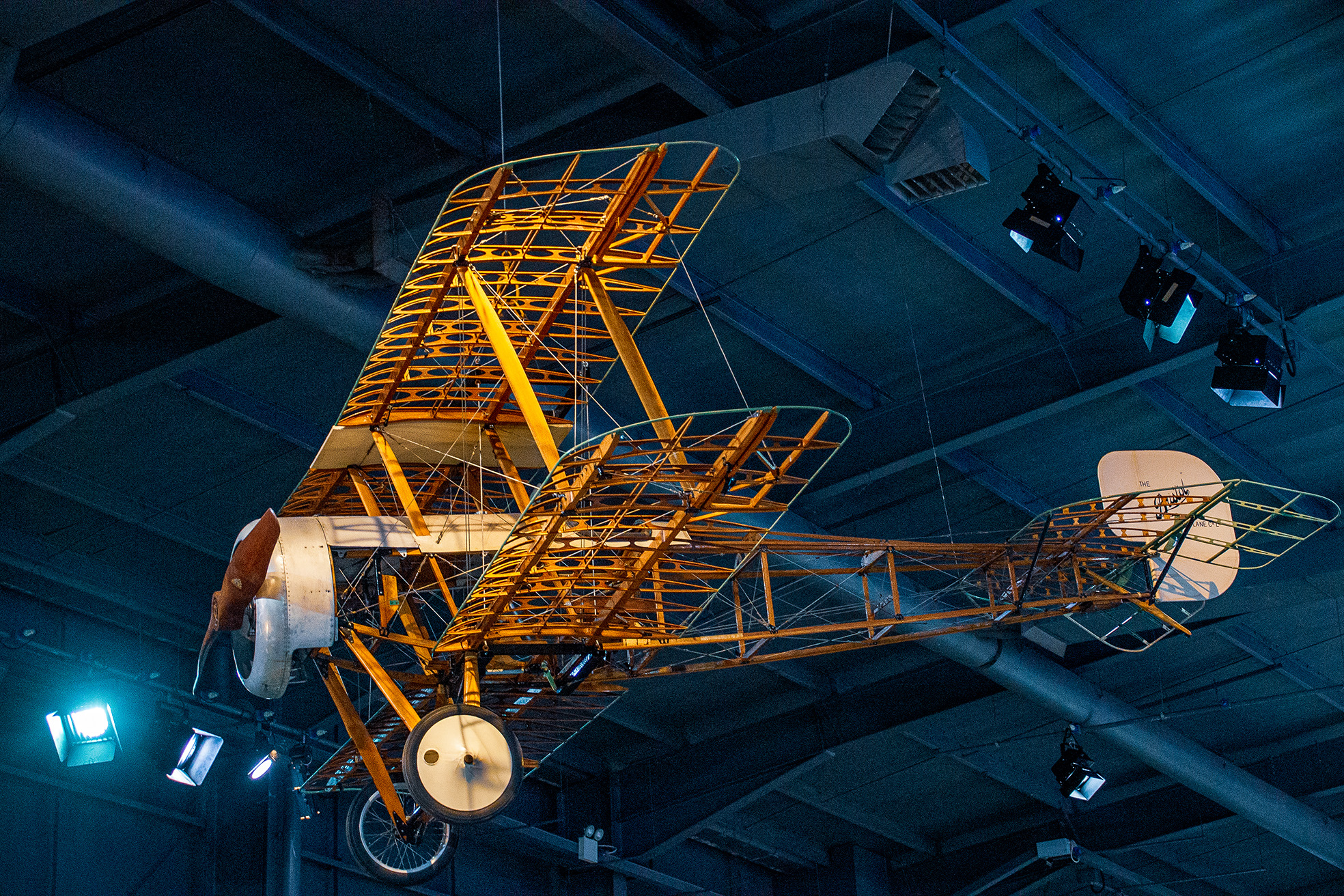
The image depicts an early model of an airplane, likely from the pioneering era of aviation.
Bristol Scout D (N5419)  ‐  photo by , ©www.mgaylard.co.uk.
Bristol Aeroplane Company
The Bristol Scout D (serial number N5419) is a historic British single-seat biplane aircraft, designed and built by the Bristol Aeroplane Company. It was one of the first single-seat fighters used by the Royal Flying Corps during World War I. The Scout D is renowned for its agility and speed, playing a significant role in early aerial combat and reconnaissance missions.
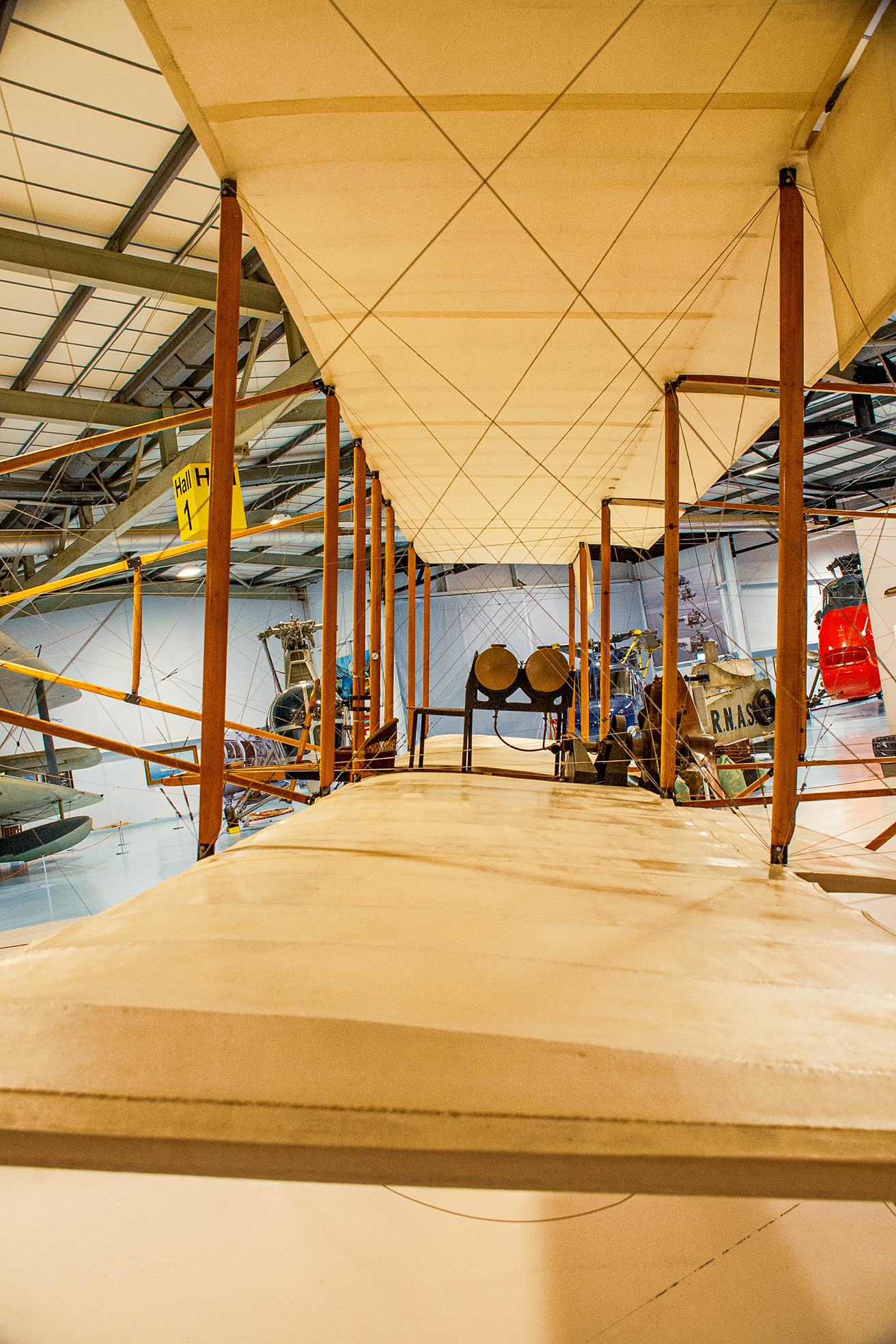
The image depicts an interior view of an aviation museum, showcasing an early aircraft suspended from the ceiling. The aircraft has a wooden frame and fabric covering, indicative of early 20th-century design. The perspective is from the end of the wing of the aircraft, looking down its length towards the fuselage.
Short S.27  ‐  photo by , ©www.mgaylard.co.uk.
The image depicts an aviation museum exhibit featuring a full-scale replica of an early aircraft, likely from the pioneering era of flight. The aircraft has a wooden frame with canvas covering, characteristic of early 20th-century designs. The museum displays various other aircraft and aviation artifacts in the background, showcasing the evolution of flight technology. Visitors are seen observing the exhibit, indicating an educational and historical context. The setting appears to be indoors, with informative displays and signage around the exhibit.
Short S.27  ‐  photo by , ©www.mgaylard.co.uk.
The original Short S27 was equipped with a Gnome rotary engine. This replica in the Fleet Air Arm Museum is fitted with a similar Gnome Le Rhone engine and representative propeller to illustrate the appearance of the aircraft in service.
The image depicts an aviation museum exhibit featuring early aircraft. The central display is a large, vintage biplane with a wooden frame and canvas covering, suspended in the air. Surrounding the biplane are various informational displays and smaller exhibits. The museum is spacious with high ceilings and several visitors are seen observing the exhibits. The overall atmosphere suggests a focus on historical aviation.
Short Brothers S.27  ‐  photo by , ©www.mgaylard.co.uk.
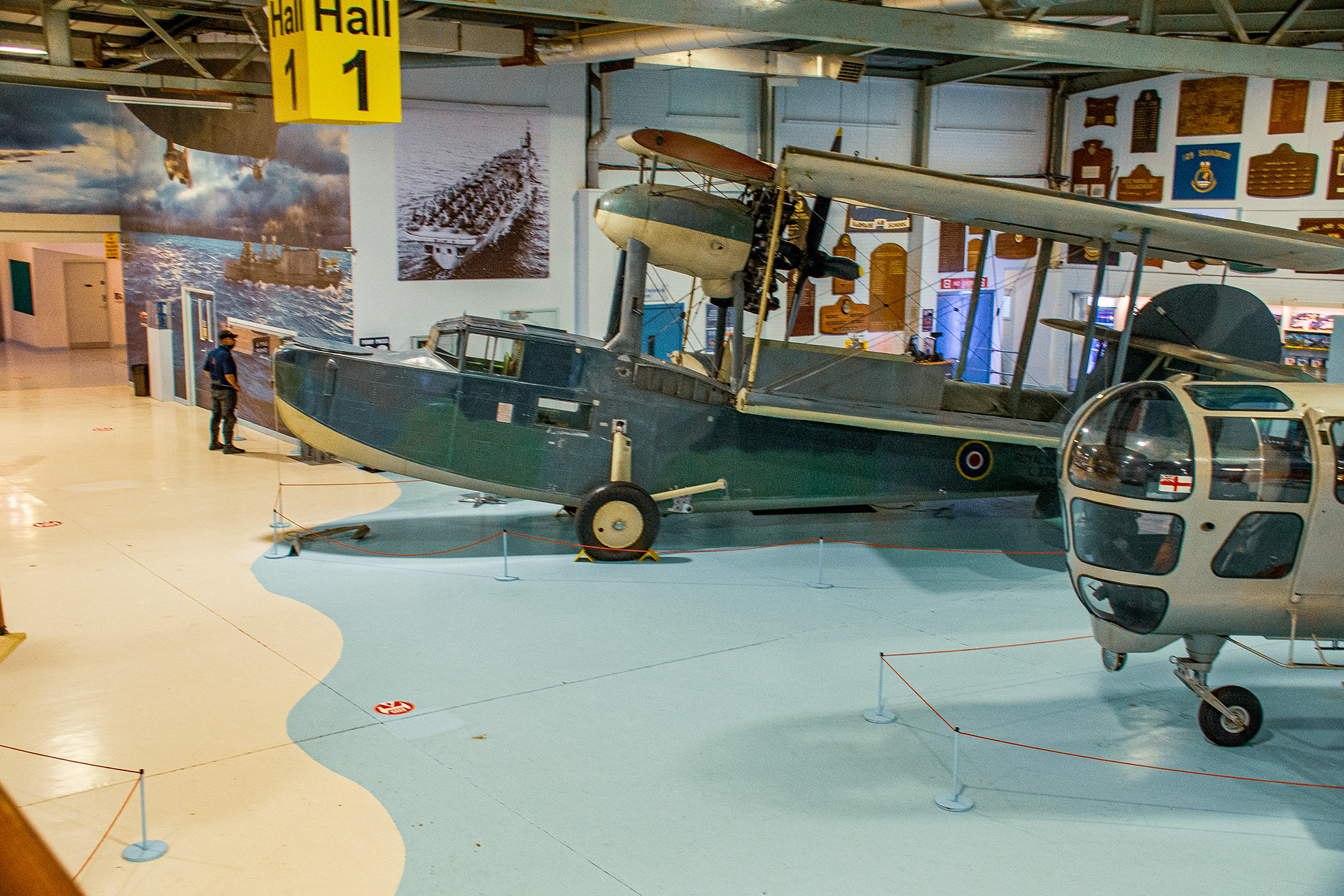
The image depicts an aviation museum exhibit featuring a vintage seaplane and a modern helicopter. The seaplane, with its distinctive floaters, is prominently displayed in the center, while the helicopter is positioned in the foreground. The museum hall is spacious with high ceilings, and various historical aviation artifacts and photographs adorn the walls. A sign indicating 'Hall 1' is visible, suggesting this is one of several exhibit halls in the museum. The overall atmosphere is one of historical preservation and educational display.
Supermarine Walrus  ‐  photo by , ©www.mgaylard.co.uk.
The Supermarine Walrus was a British amphibious reconnaissance aircraft designed by R.J. Mitchell (yes — the designer of the Spitfire). It first flew in 1933 and served throughout WWII with the Fleet Air Arm, RAF, and Commonwealth navies. It was rugged, quirky, and famously unglamorous — but incredibly useful.
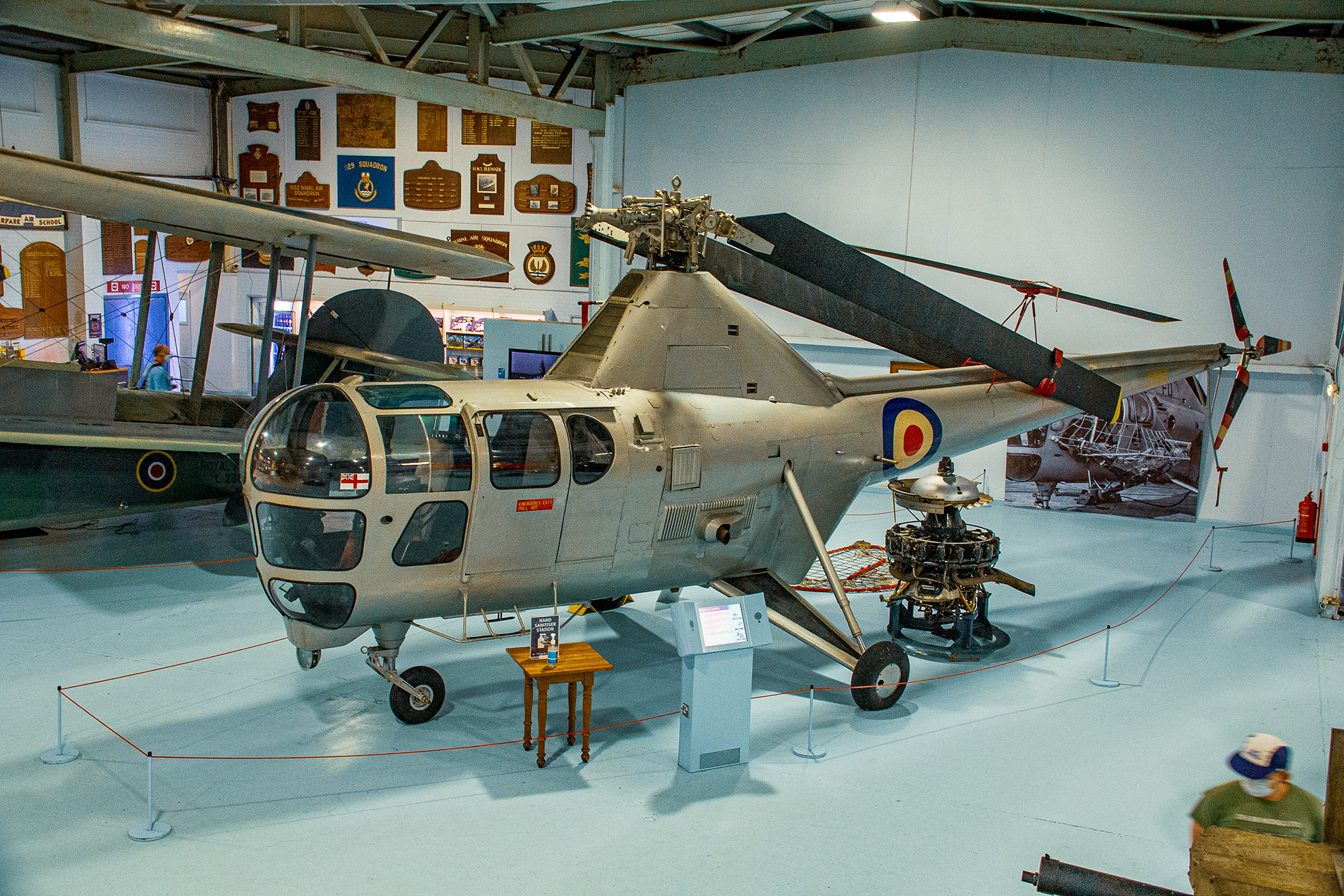
The image shows a vintage helicopter on display in a museum. The helicopter has a metallic finish with a roundel marking on its side, indicating it might be a military aircraft. It features a bubble cockpit, dual landing skids, and a visible engine mounted at the front. There is an informational display and a small table with a booklet next to the helicopter. The background includes various aviation artifacts and plaques.
Westland Dragonfly  ‐  photo by , ©www.mgaylard.co.uk.
The Westland Dragonfly was the first helicopter to enter Royal Navy service, built under licence from the American Sikorsky S-51. It flew from 1949 and served into the mid-1950s, marking the beginning of British naval rotary-wing aviation.
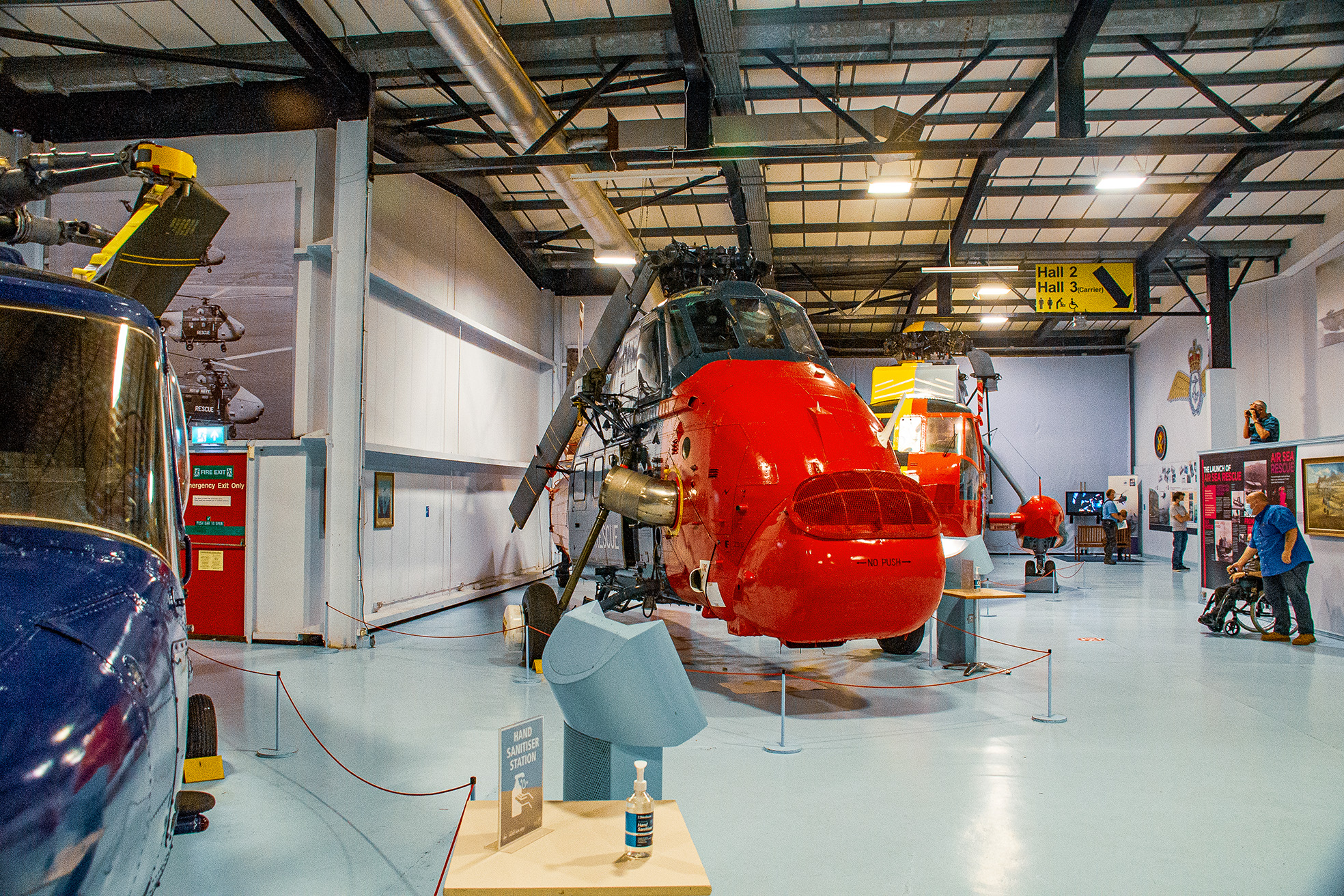
The image depicts an indoor aviation museum exhibit featuring various aircraft, including a prominent red helicopter in the center. The museum has a high ceiling with exposed beams and industrial lighting. Visitors are seen observing the exhibits, and there are informational displays and signs, including a hand sanitizer station in the foreground. The environment suggests a well-organized and educational space dedicated to showcasing historical and technological aspects of aviation.
Westland Wessex  ‐  photo by , ©www.mgaylard.co.uk.
The Westland Wessex is a British-built turbine-powered development of the American Sikorsky S-58 helicopter. It was produced by Westland Helicopters (now part of Leonardo S.p.A.) and served primarily with the Royal Navy and the Royal Air Force, as well as several other military and civilian operators around the world.
The image shows a Royal Navy rescue helicopter on display in a museum. The helicopter is painted in a distinctive color scheme with a red front and grey body. It has markings and insignia indicating its affiliation with the Royal Navy. The helicopter is cordoned off with red ropes and stands on a polished floor, suggesting it is part of an exhibit. The background shows other aircraft and museum elements.
Westland Sea King HC4  ‐  photo by , ©www.mgaylard.co.uk.
Sea King HC4
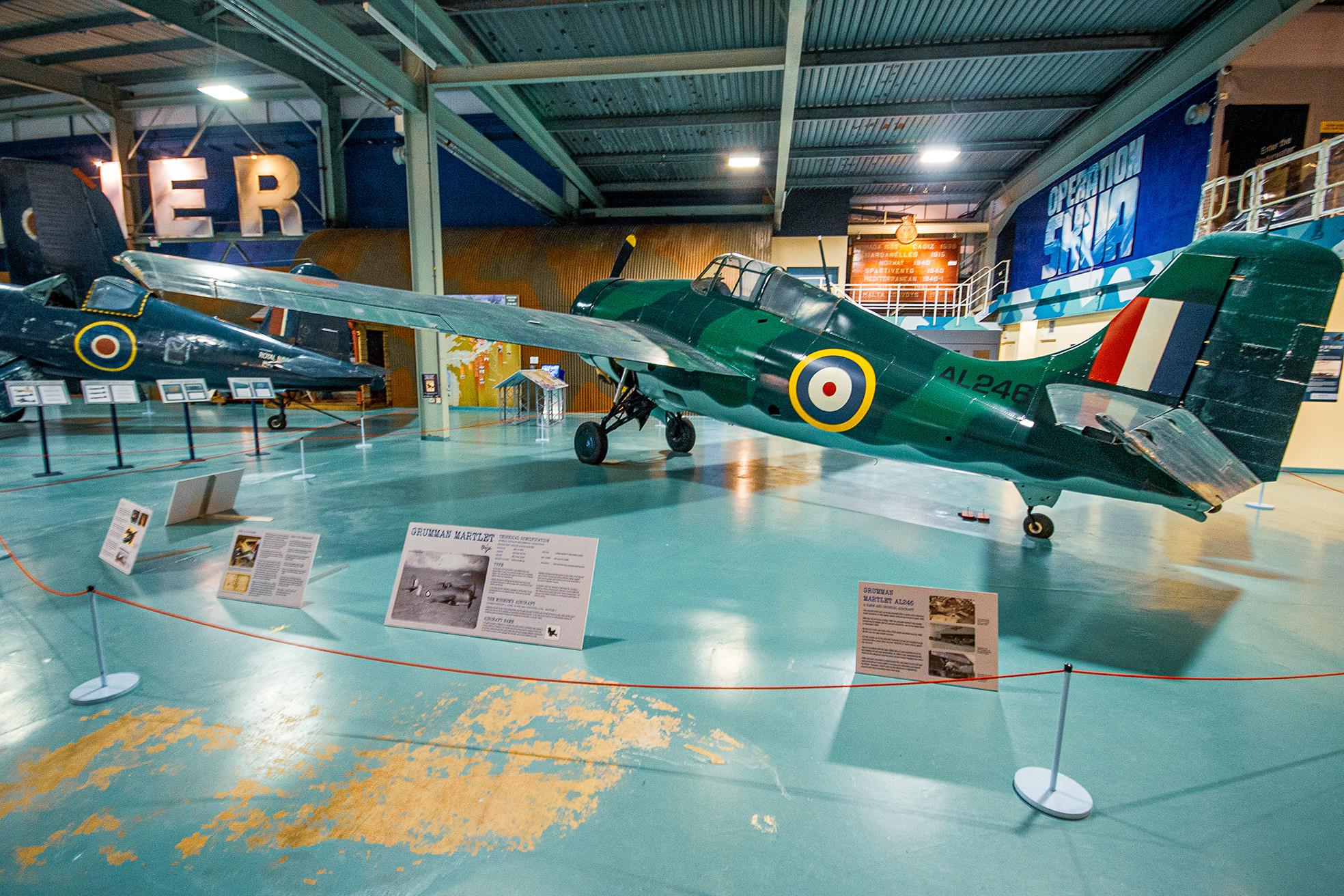
The image depicts a museum exhibit featuring a Grumman Martlet, a World War II aircraft. The aircraft is displayed indoors with informational placards around it, providing details about its history and specifications. The plane is painted in a green color scheme with distinctive roundels on its wings and fuselage. The museum setting includes other aircraft and exhibits in the background, with a high ceiling and large windows.
Grumman Martlet  ‐  photo by , ©www.mgaylard.co.uk.
The Grumman Martlet is the British name for the American Grumman F4F Wildcat, a rugged, carrier-borne fighter that entered Fleet Air Arm service in 1940–41 and proved a vital, reliable naval fighter in the Atlantic and Mediterranean theatres. It combined good low-speed handling and deck-landing qualities with heavy armament for its era.
The image depicts an aircraft displayed in a museum. The aircraft is a Vought Corsair F4U, identifiable by its distinctive inverted gull wing design and large propeller. The plane is painted in a dark blue color scheme with yellow and white markings. It is positioned indoors, under a large hangar-like structure with high ceilings and ample lighting. There are informational placards around the aircraft providing details about its history and specifications. In the background, there is a sign that reads 'OPERATION STRIKE'.
Vought Corsair  ‐  photo by , ©www.mgaylard.co.uk.
The Vought F4U Corsair is one of the most iconic American fighter aircraft of World War II and the Korean War, renowned for its distinctive inverted gull-wing design and outstanding combat performance.
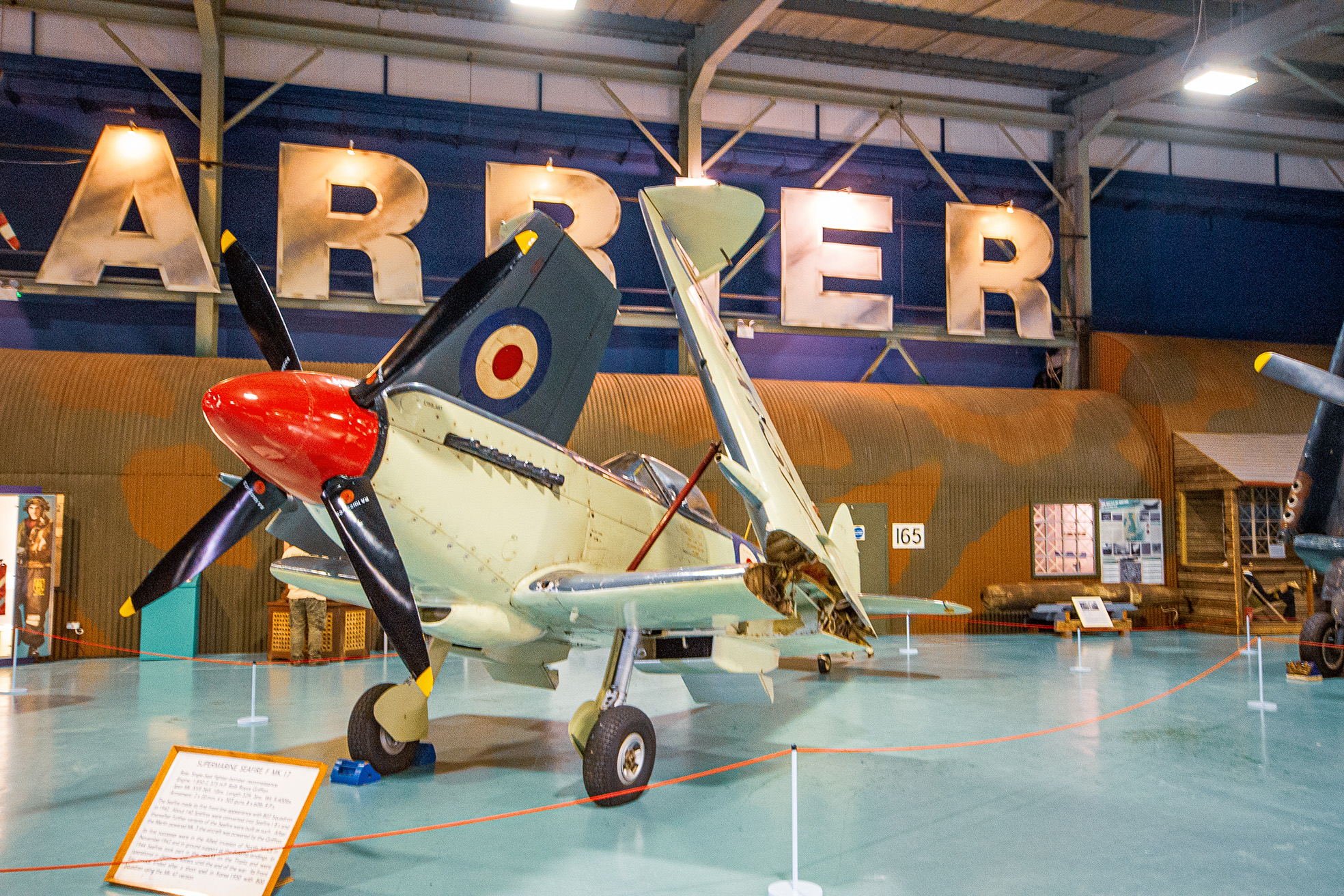
The image shows a vintage military aircraft displayed in a museum. The aircraft is a Supermarine Spitfire, identifiable by its distinctive elliptical wings and the roundel markings on its fuselage. The setting appears to be an indoor hangar with large letters spelling 'ABER' on the wall in the background. The aircraft is cordoned off with red ropes and has an information placard in front of it, suggesting it is part of an exhibit.
Supermarine Seafire F17  ‐  photo by , ©www.mgaylard.co.uk.
The Supermarine Seafire F17 was the final and most advanced variant of the Seafire series, which was the naval version of the famous Supermarine Spitfire, adapted for operation from aircraft carriers.
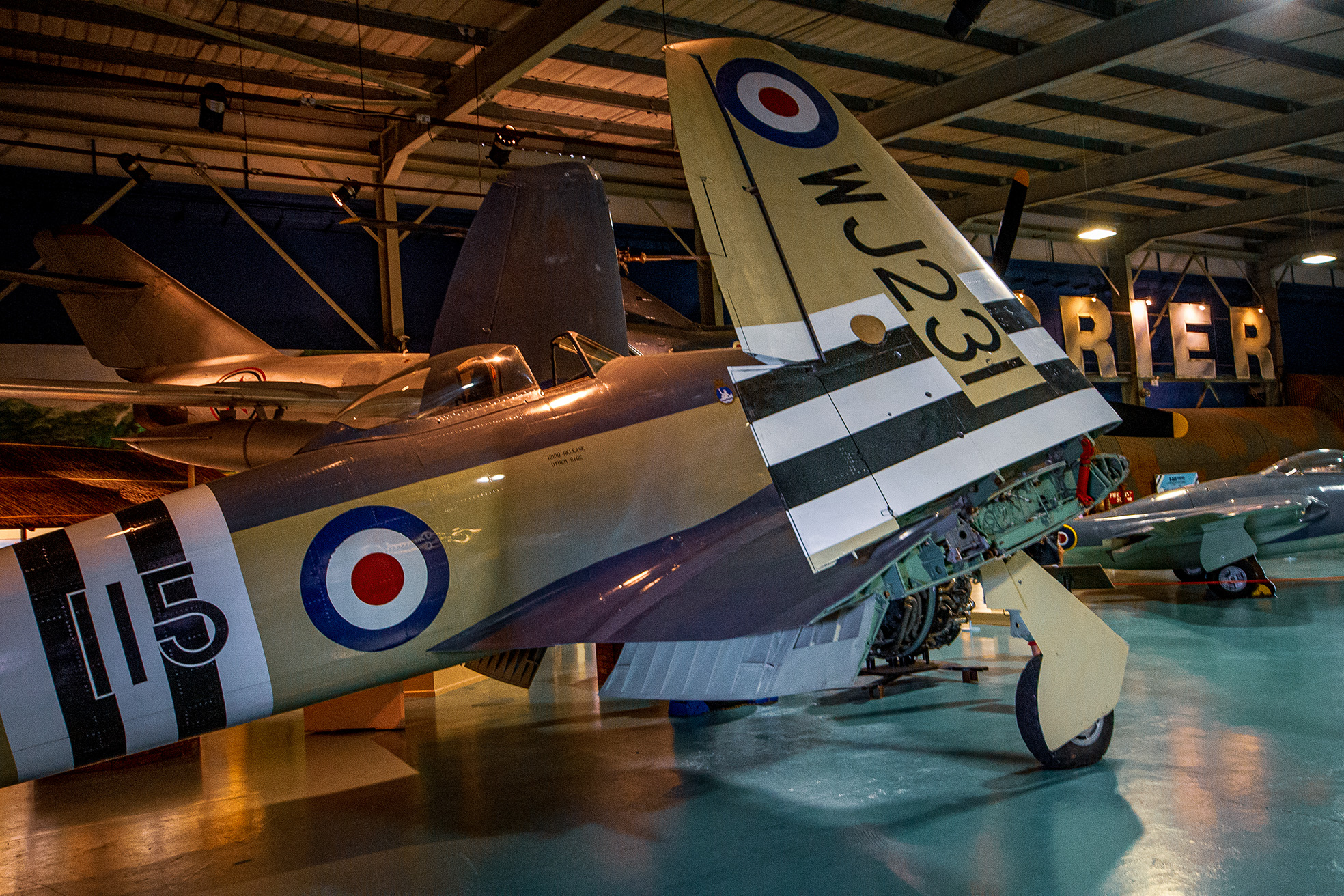
Hawker Sea Fury FB.11  ‐  photo by , ©www.mgaylard.co.uk.
The Hawker Sea Fury FB.11 was the definitive fighter-bomber variant of the Sea Fury series, representing the pinnacle of British piston-engine naval aviation.
The image shows a collection of Royal Navy aircraft, specifically Sea Hawks, displayed in a hangar. The aircraft are marked with Royal Navy insignias and identification numbers. The setting appears to be an aviation museum or a similar exhibit, showcasing these historical naval aircraft.
Supermarine Attacker  ‐  photo by , ©www.mgaylard.co.uk.
The Supermarine Attacker was the first jet fighter to enter operational service with the Royal Navy’s Fleet Air Arm (FAA), marking a significant transition from piston-engine to jet-powered naval aviation.
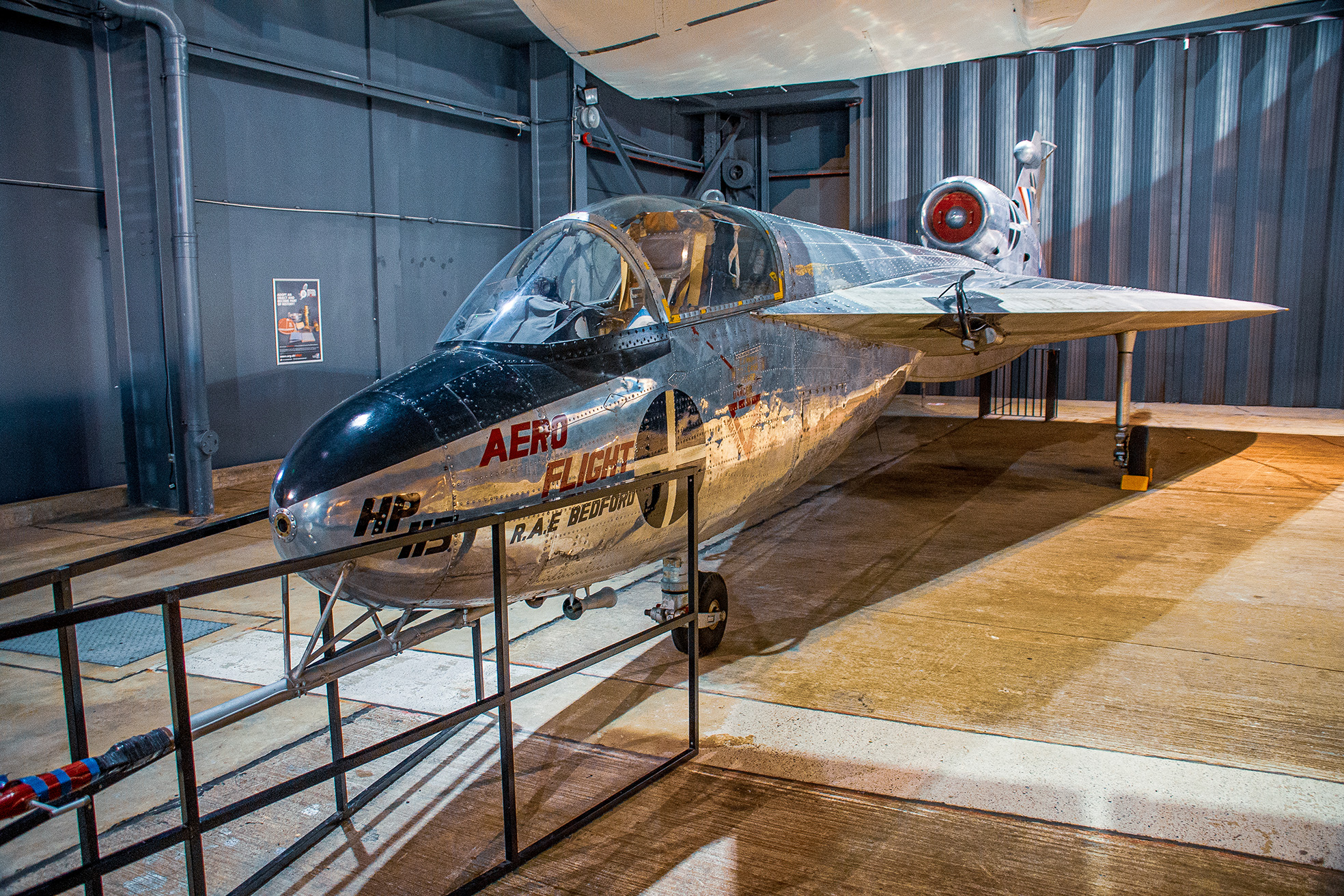
The image shows an aircraft on display in a museum. The aircraft, marked with 'AERO FLIGHT' and 'R.A.E. BEDFORD,' is positioned on a stand with barriers around it. The plane has a sleek, metallic body with a pointed nose and a single propeller at the front. The setting appears to be an indoor exhibit area with a concrete floor and industrial-style walls. Informational posters are visible on the walls behind the aircraft.
HandleyPage HP.115  ‐  photo by , ©www.mgaylard.co.uk.
The Handley Page HP.115 was a groundbreaking British experimental aircraft, designed to test the low-speed handling characteristics of a slender delta wing configuration—key research for the development of future supersonic airliners, most notably Concorde.
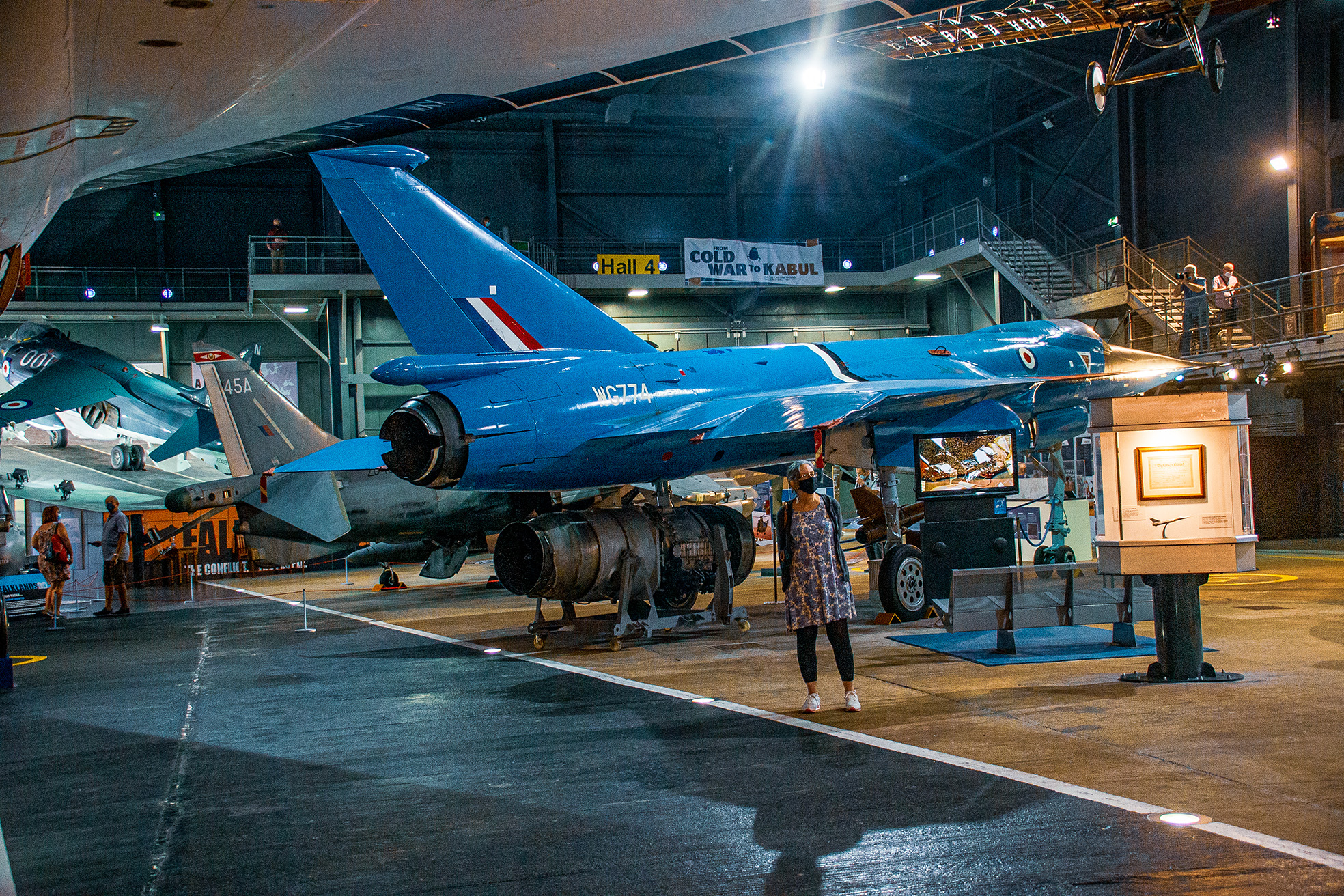
The image depicts an indoor aviation exhibit featuring a blue fighter jet on display. The jet is mounted on a stand with informational displays around it. Several people are present, observing the exhibit. The setting appears to be a large hangar or museum space, with high ceilings and industrial lighting. A sign indicating 'Hall 4' and a banner reading 'From Cold War to Kabul' are visible in the background.
BAC 221  ‐  photo by , ©www.mgaylard.co.uk.
The BAC 221 was a pivotal British experimental aircraft, developed to test the high-speed handling and aerodynamic characteristics of the slender ogival delta wing design intended for the Concorde supersonic airliner.
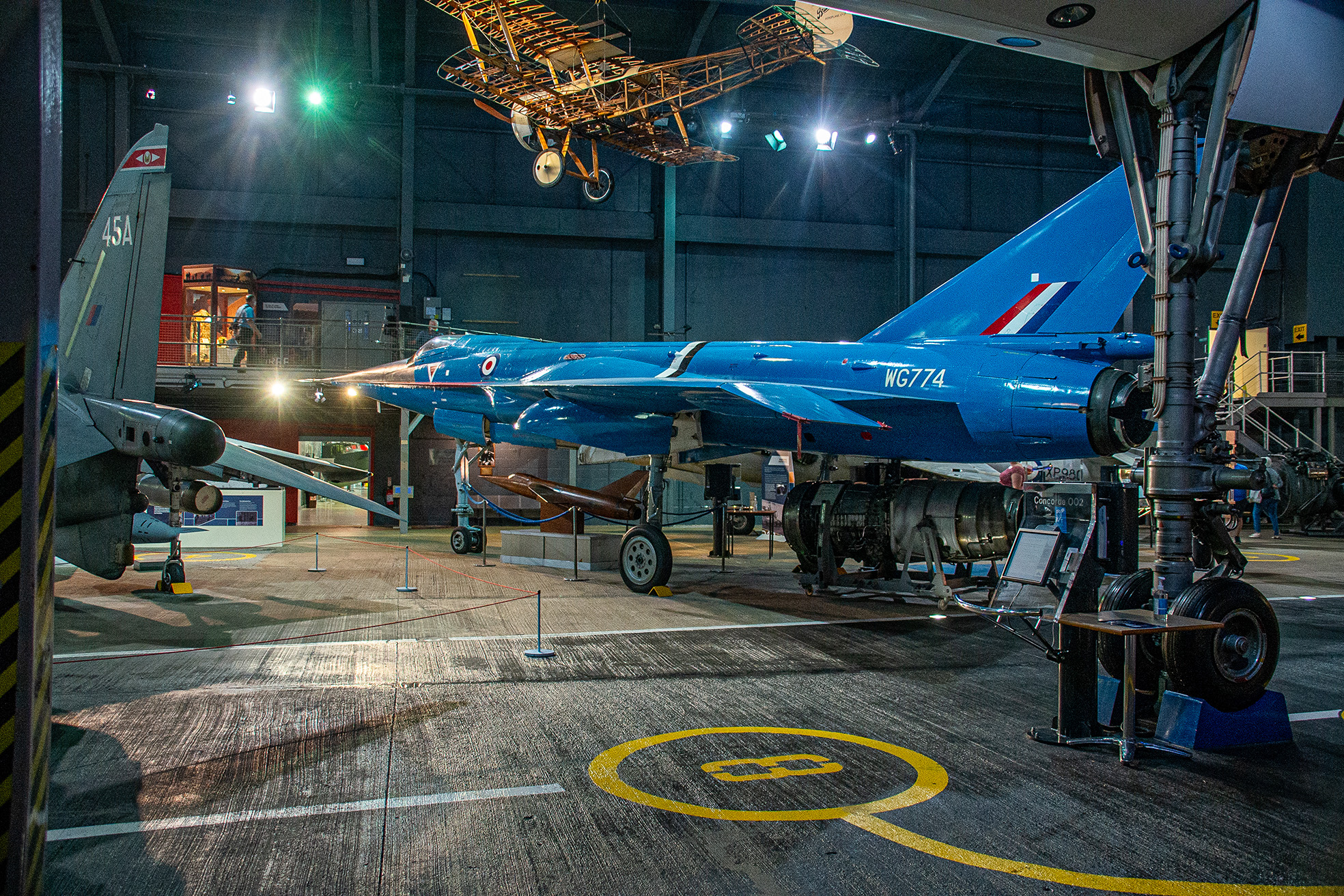
The image depicts an aircraft hangar with a prominent blue jet, marked with WG774, on display. The jet is elevated on supports, showcasing its undercarriage. In the background, there is a vintage biplane suspended from the ceiling. The hangar also features various other aircraft components and exhibits, with informational placards visible near the blue jet. The setting is well-lit, highlighting the aircraft and creating a museum-like atmosphere.
BAC 221  ‐  photo by , ©www.mgaylard.co.uk.
WG774
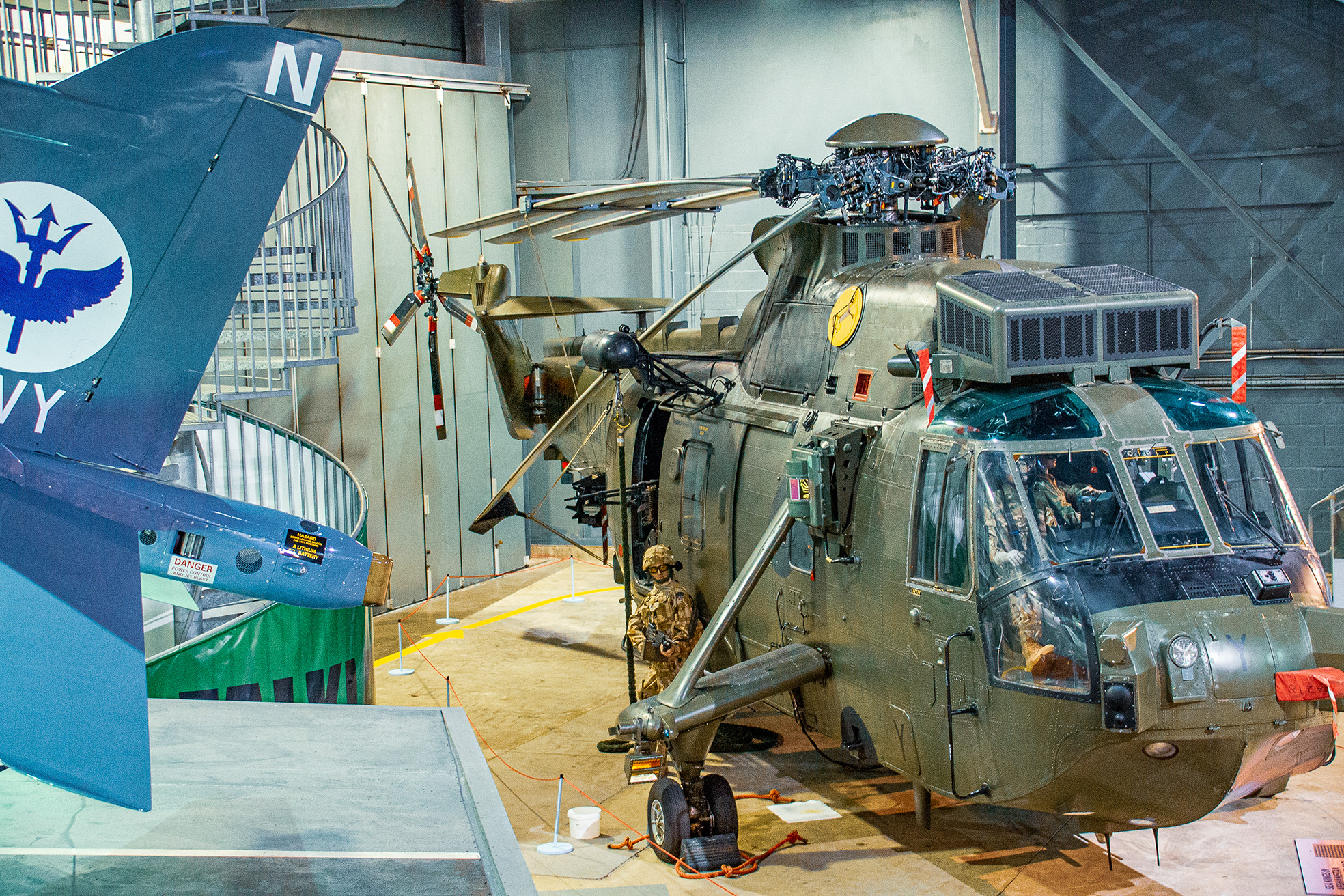
The image shows a military helicopter on display in a museum or exhibition setting. The helicopter is painted in a camouflage pattern and has various equipment attached to it. There is a mannequin dressed in military gear positioned near the helicopter, likely representing a crew member. The tail of the helicopter features a large blue emblem with the word 'NAVY' and an eagle or bird graphic. The setting appears to be indoors, with the helicopter secured on a platform and surrounded by barriers to keep visitors at a safe distance.
Westland Sea King HC4  ‐  photo by , ©www.mgaylard.co.uk.
The HC4 was designed as a Commando troop transport and resupply helicopter, optimized for amphibious assault and support of Royal Marines operations. It could carry up to 28 fully equipped troops or cargo, making it a versatile asset for both combat and logistical missions.
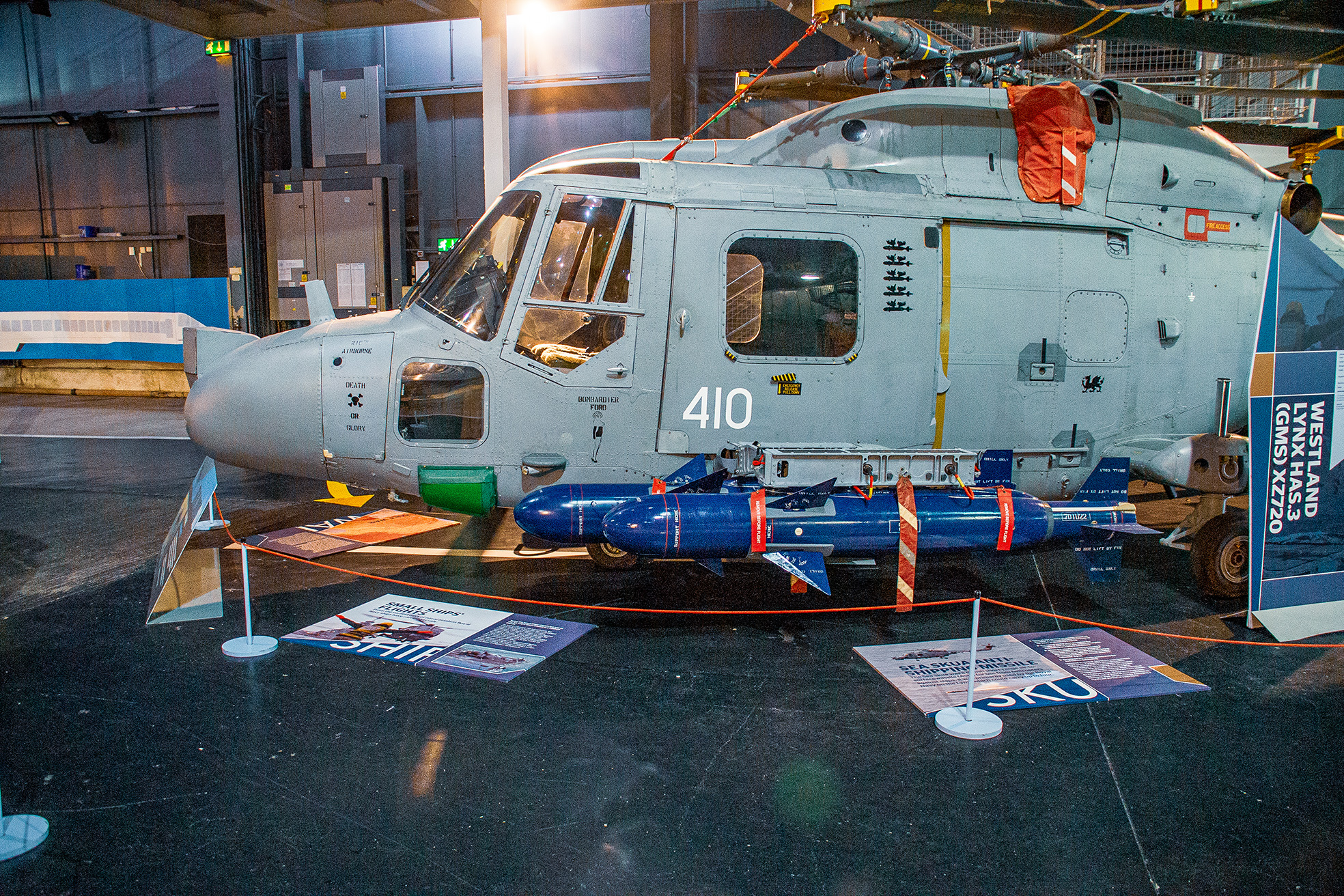
The image depicts a military helicopter on display in a museum or exhibition setting. The helicopter, marked with the number 410 and various insignia, is equipped with armaments attached to its underside. Informational placards and displays surround the helicopter, providing context and details about its history and specifications. The setting appears to be indoors, with the helicopter positioned on a polished floor and cordoned off with barriers and ropes to prevent close access.
Westland Lynx HAS.3  ‐  photo by , ©www.mgaylard.co.uk.
The Westland Lynx HAS.3 was a versatile naval helicopter used by the Royal Navy, primarily in anti-submarine warfare (ASW) and maritime attack roles.
The image shows a military aircraft housed in a hangar, specifically a jet from the Royal Navy. The jet is painted in a dark green and grey camouflage scheme and bears the insignia of the Royal Navy. The aircraft's tail number is XZ493. The hangar appears to be part of a museum or exhibition, as indicated by the display setup and informational signs.
Hawker Siddeley Sea Harrier FRS.1  ‐  photo by , ©www.mgaylard.co.uk.
The Sea Harrier FRS.1 (Fighter, Reconnaissance, Strike Mark 1) was the Royal Navy’s first operational VTOL (Vertical Take-Off and Landing) jet fighter, designed specifically for carrier-based operations. It played a pivotal role in British naval aviation, most famously during the Falklands War (1982).
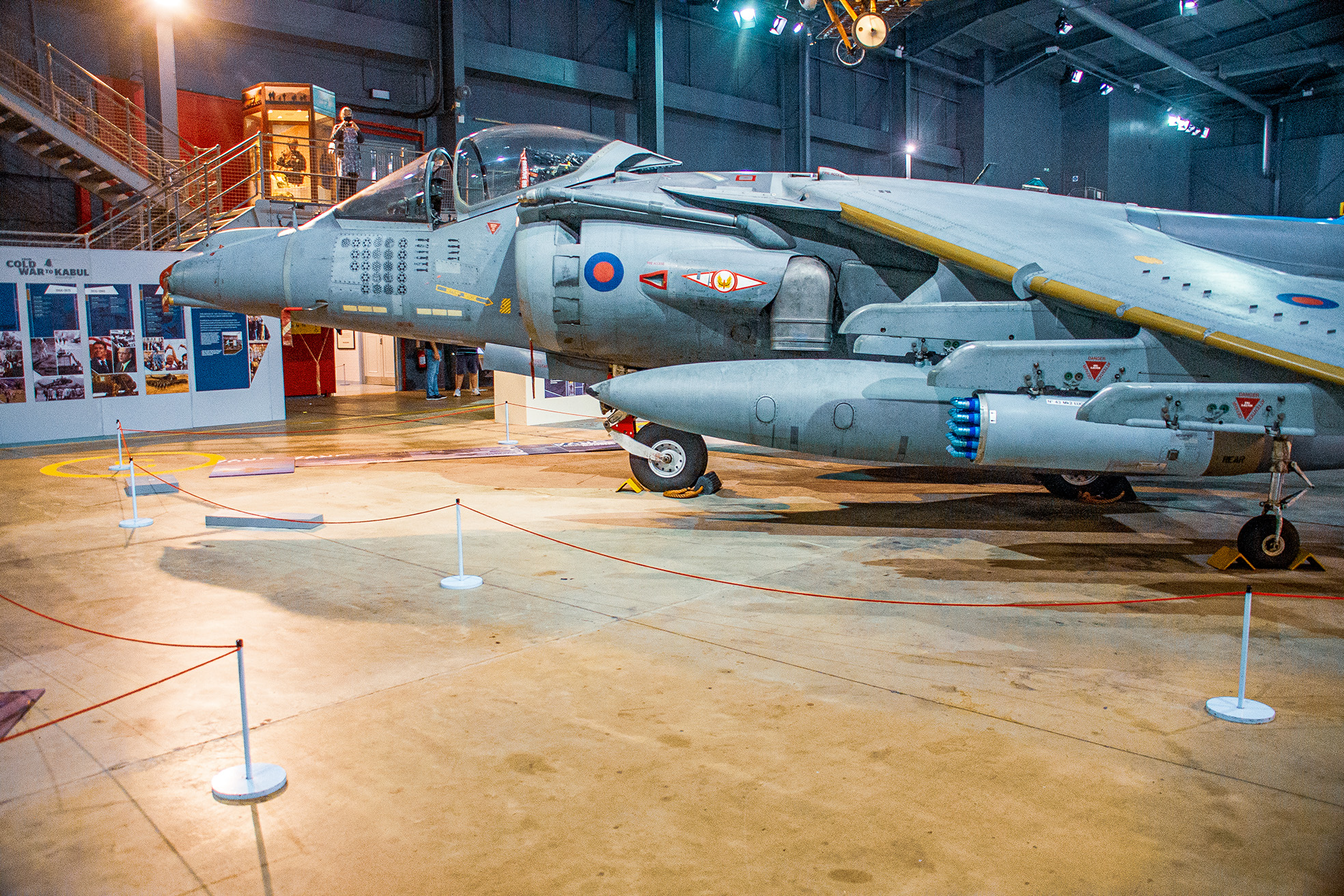
The image depicts a military aircraft on display in a museum. The aircraft is a SEPECAT Jaguar, identifiable by its distinctive shape and markings. It is equipped with various weapons and missiles, showcasing its role as a ground attack aircraft. The display is cordoned off with red ropes and white posts to prevent visitors from touching the exhibit. The background shows informational panels and a staircase leading to an upper viewing area.
BAe Harrier GR.9  ‐  photo by , ©www.mgaylard.co.uk.
The BAe Harrier GR.9 (and its upgraded variant, the GR.9A) was the final and most advanced version of the Harrier II family used by the Royal Air Force (RAF) and the Royal Navy’s Joint Harrier Force. It represented the pinnacle of British V/STOL (Vertical/Short Take-Off and Landing) strike aircraft, optimized for close air support, reconnaissance, and precision strike missions.
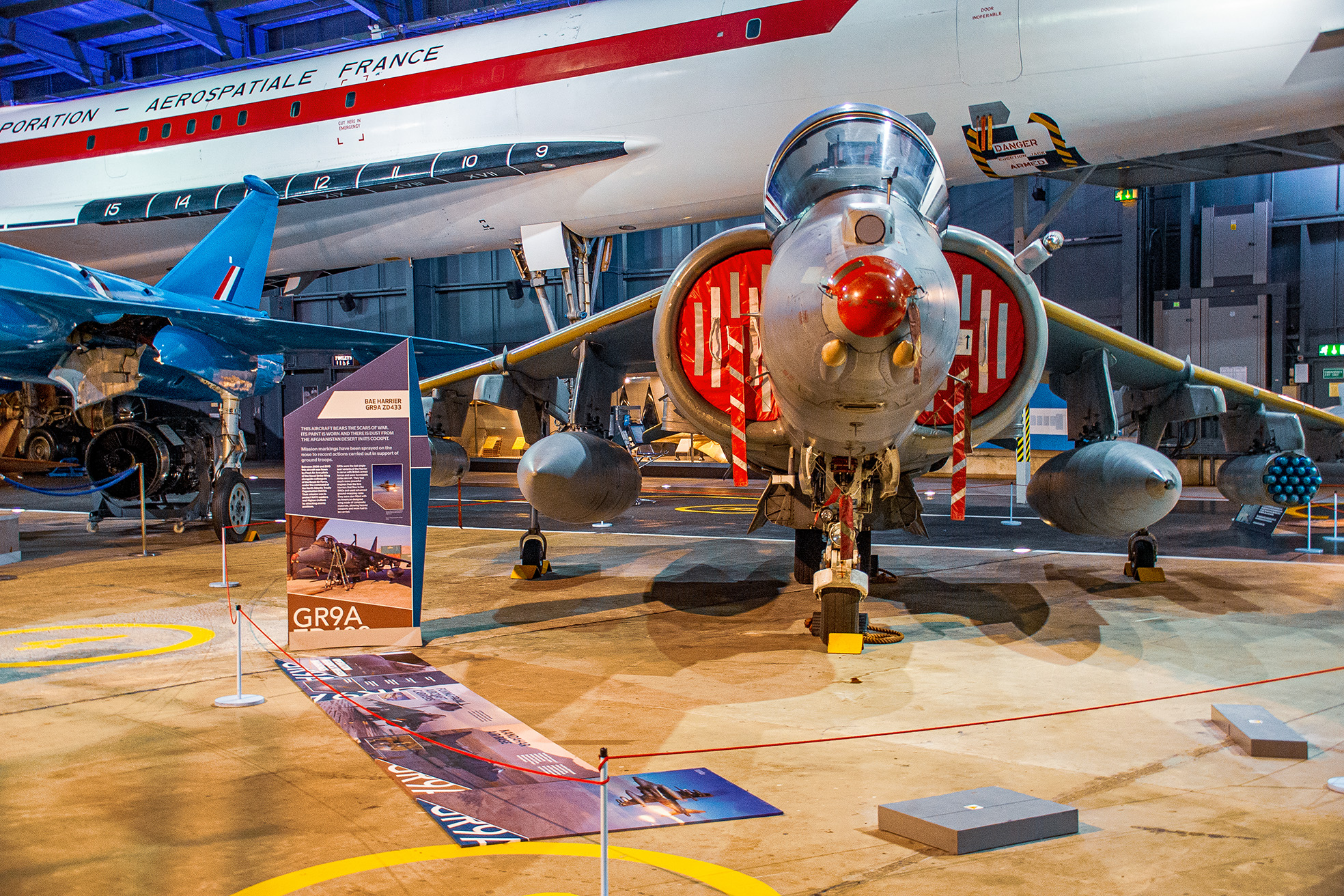
The image depicts a military aircraft exhibit in a museum. The aircraft shown is a GR9A, which is part of the museum's collection. The exhibit includes informational displays about the aircraft's history and specifications. The aircraft is equipped with various armaments and is displayed in a hangar alongside other aircraft. The exhibit is cordoned off with ropes and stands to guide visitors.
Hawker Siddeley P.1127  ‐  photo by , ©www.mgaylard.co.uk.
The Hawker Siddeley P.1127 and its development variant, the Kestrel FGA.1, were groundbreaking experimental aircraft that pioneered vertical/short take-off and landing (V/STOL) technology. These aircraft directly led to the iconic Hawker Siddeley Harrier family, the world’s first operational V/STOL jet fighter-bomber.
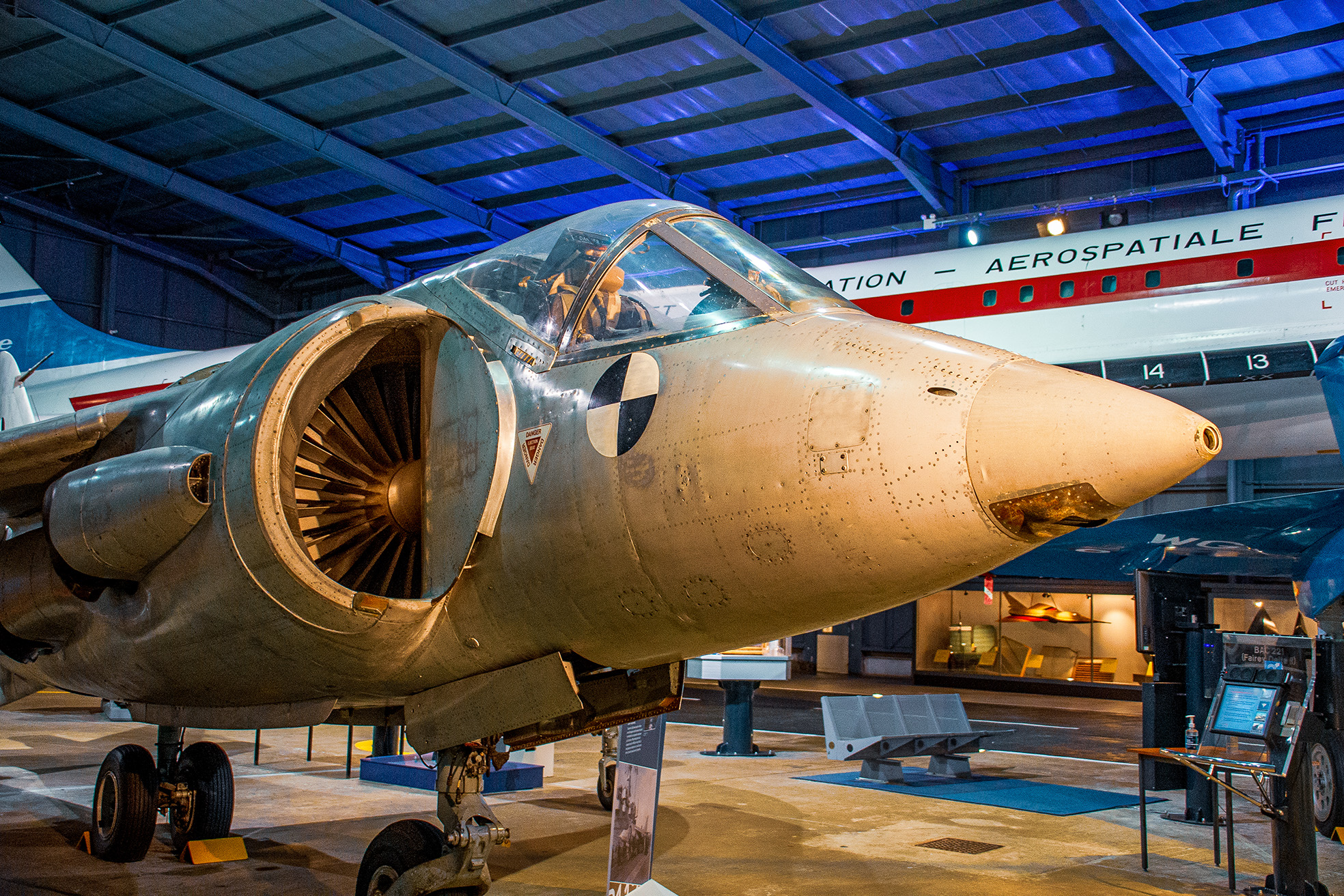
The image shows a military aircraft on display in a museum. The aircraft has a single large engine with a prominent circular intake and a jet exhaust nozzle. The nose of the aircraft is painted with a distinctive roundel marking. The display area includes informational placards and is well-lit, with other aircraft visible in the background. The setting appears to be an aviation museum, showcasing historical aircraft
Hawker Siddeley P.1127  ‐  photo by , ©www.mgaylard.co.uk.
The Hawker Siddeley P.1127 and its development variant, the Kestrel FGA.1, were groundbreaking experimental aircraft that pioneered vertical/short take-off and landing (V/STOL) technology. These aircraft directly led to the iconic Hawker Siddeley Harrier family, the world’s first operational V/STOL jet fighter-bomber.
Open the full set flickr button this page

Yeovilton

Overview

Location and Size:
The museum is located at RNAS Yeovilton in Somerset, England. It is Europe's largest naval aviation museum, featuring four exhibition halls, over ninety aircraft, and more than 2 million records and 30,000 artefacts nmrn.org.uk+1.
Collection:
The museum houses an extensive collection of military and civilian aircraft, aero engines, models of aircraft and Royal Navy ships, and paintings and drawings related to naval aviation en.wikipedia.org.

Key Exhibits

Concorde 002:
The museum is home to the first British Concorde, which is on loan from the Science Museum. Visitors can board the aircraft and view its cockpit nmrn.org.uk+1. Aircraft Carrier Experience: This immersive exhibit replicates life on board an aircraft carrier, providing a unique and educational experience nmrn.org.uk+1.
Barracuda Live:
The Big Rebuild: This exhibit showcases the ongoing restoration of a Fairey Barracuda, offering visitors insight into the conservation process nmrn.org.uk.

References

en.wikipedia.orwww.nmrn.org.uk , Text generated by Mistral AI
To the top
Powered by w3.css. The images are all stored on link to www.gaylard.co.uk Photostream on Flickr   This website is hosted by link to 123Reg Web Hosting