ABOUT KNOLE

Ightham Mote

Ightham Mote

Mote RoadIghthamKent,   TN15 0NT,   United Kingdom

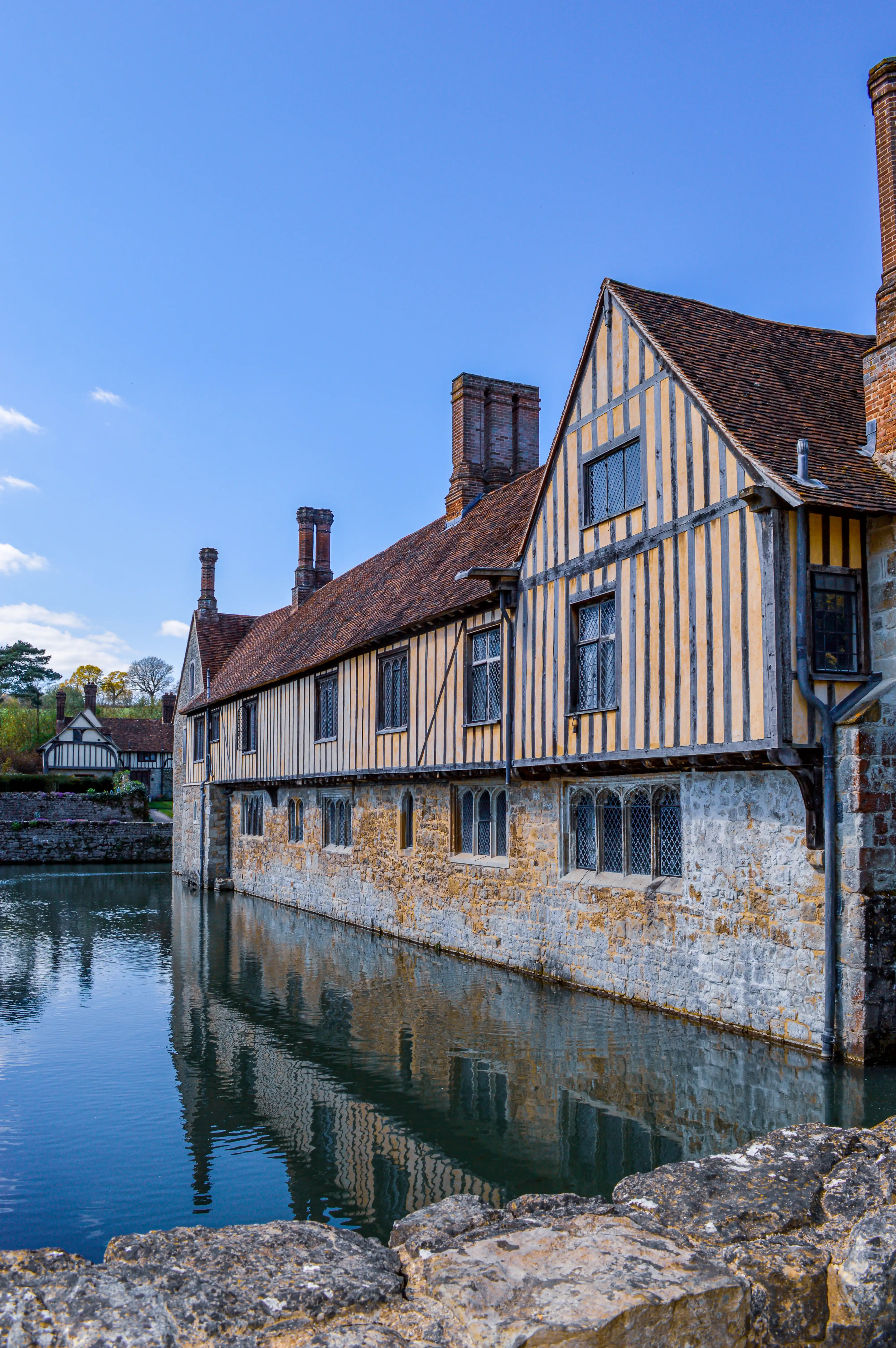
Ightham Mote is a 14th-century moated manor house located in the picturesque countryside of Kent, England. Surrounded by a tranquil moat and set within a beautiful estate, this medieval gem is one of the best-preserved examples of a moated manor in the country. Owned and managed by the UKal Trust, Ightham Mote offers visitors a fascinating glimpse into medieval architecture, history, and rural life. The house, its gardens, and the surrounding woodlands provide a serene and immersive experience for history lovers, nature enthusiasts, and families alike.
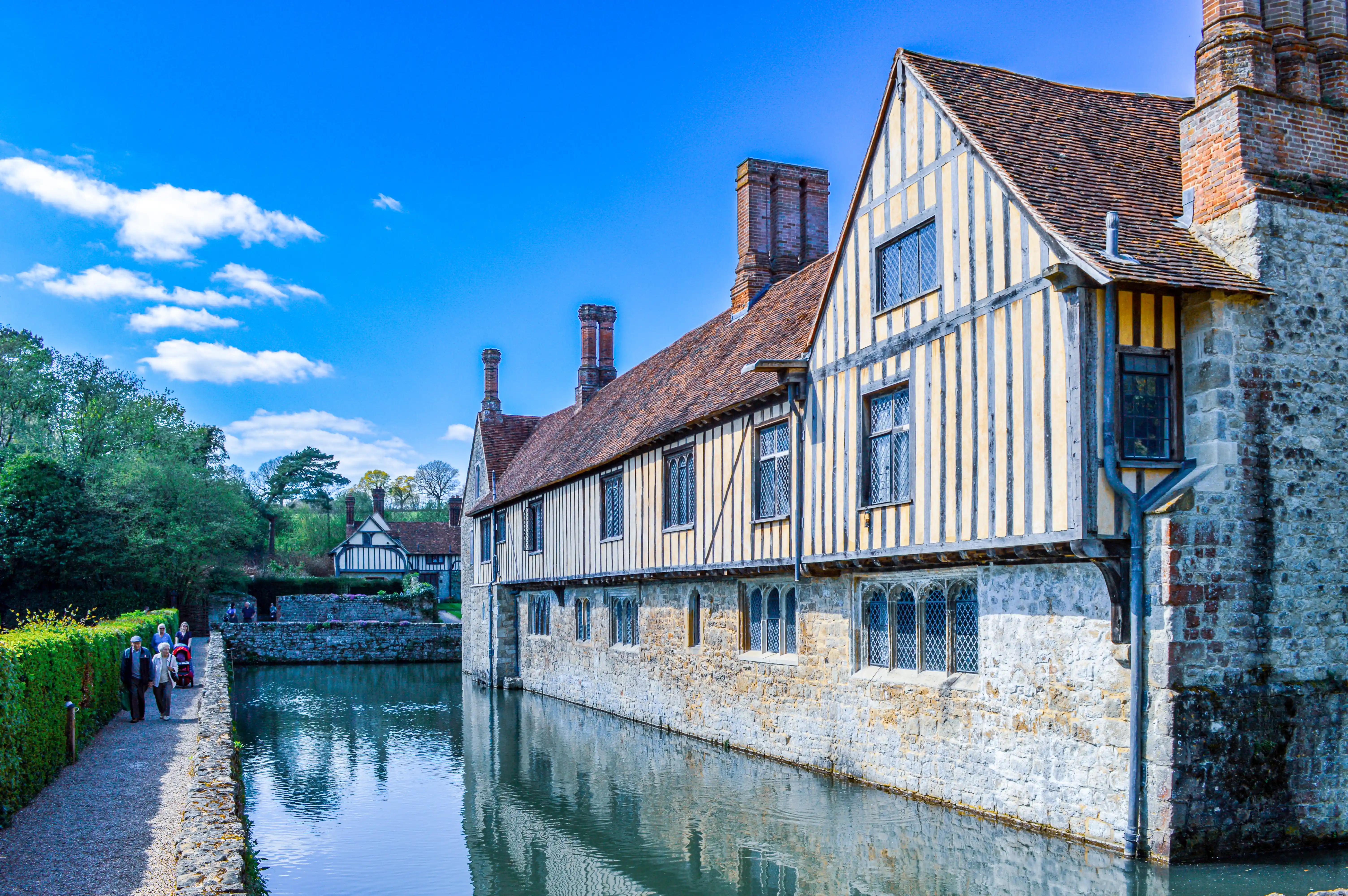
A historic timber-framed building with a stone foundation and a tiled roof, surrounded by a moat, with a gravel path and a green hedge to the left. Several people are walking on the path, and trees are visible in the background under a clear blue sky with white clouds.
Moated Tudor Manor House and Gardens ‐ photo by ,
©www.mgaylard.co.uk.
A historic Tudor building with a stone base and timber-framed upper storeys, reflected in a calm moat under a bright blue sky.
Historic Tudor Manor House with Moat Reflection ‐ photo by ,
©www.mgaylard.co.uk.
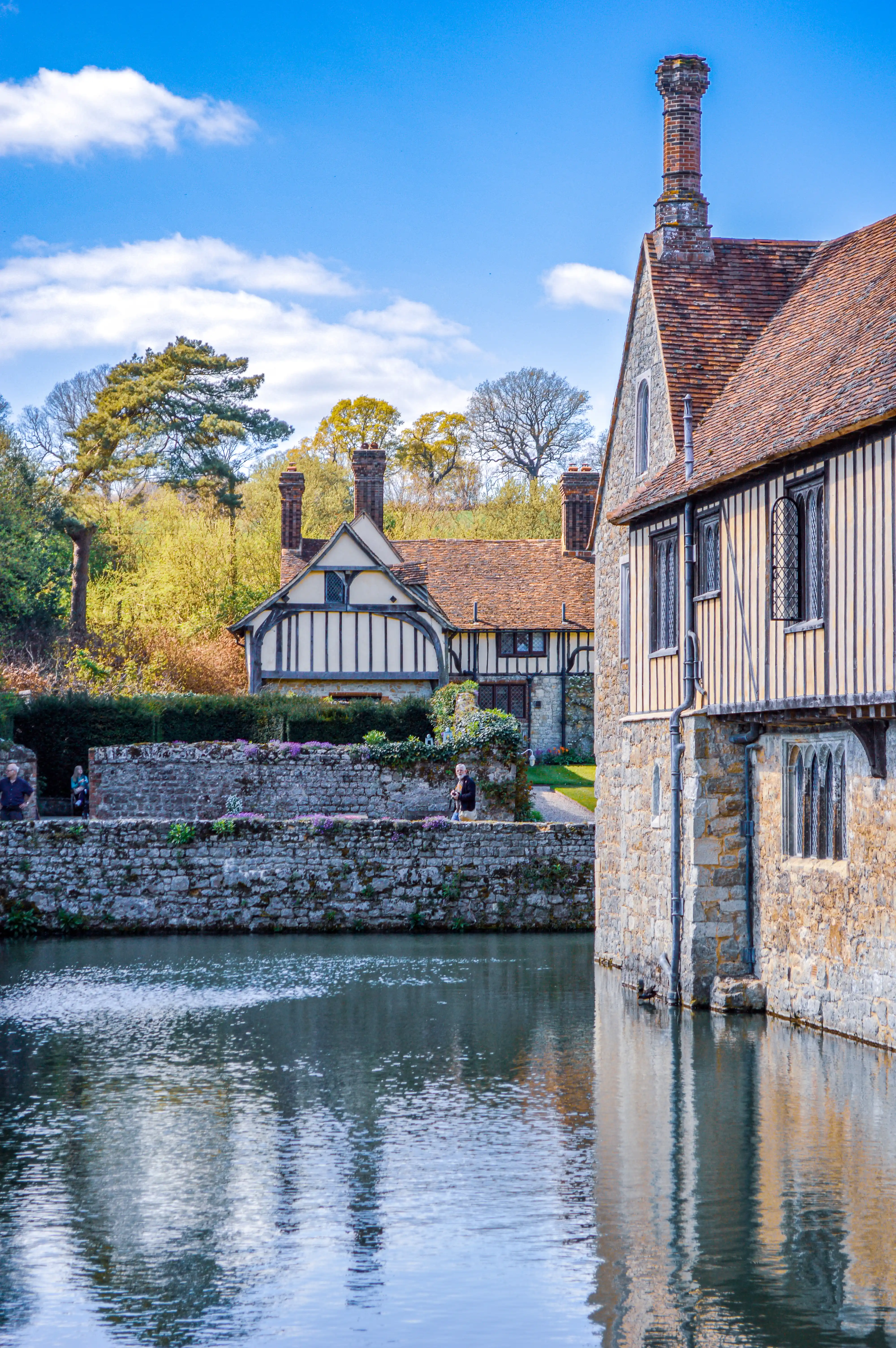
Historic timber-framed manor house with a stone moat wall, purple flowers, and reflections in the water under a blue sky.
A Timeless English Manor by the Water ‐ photo by ,
©www.mgaylard.co.uk.
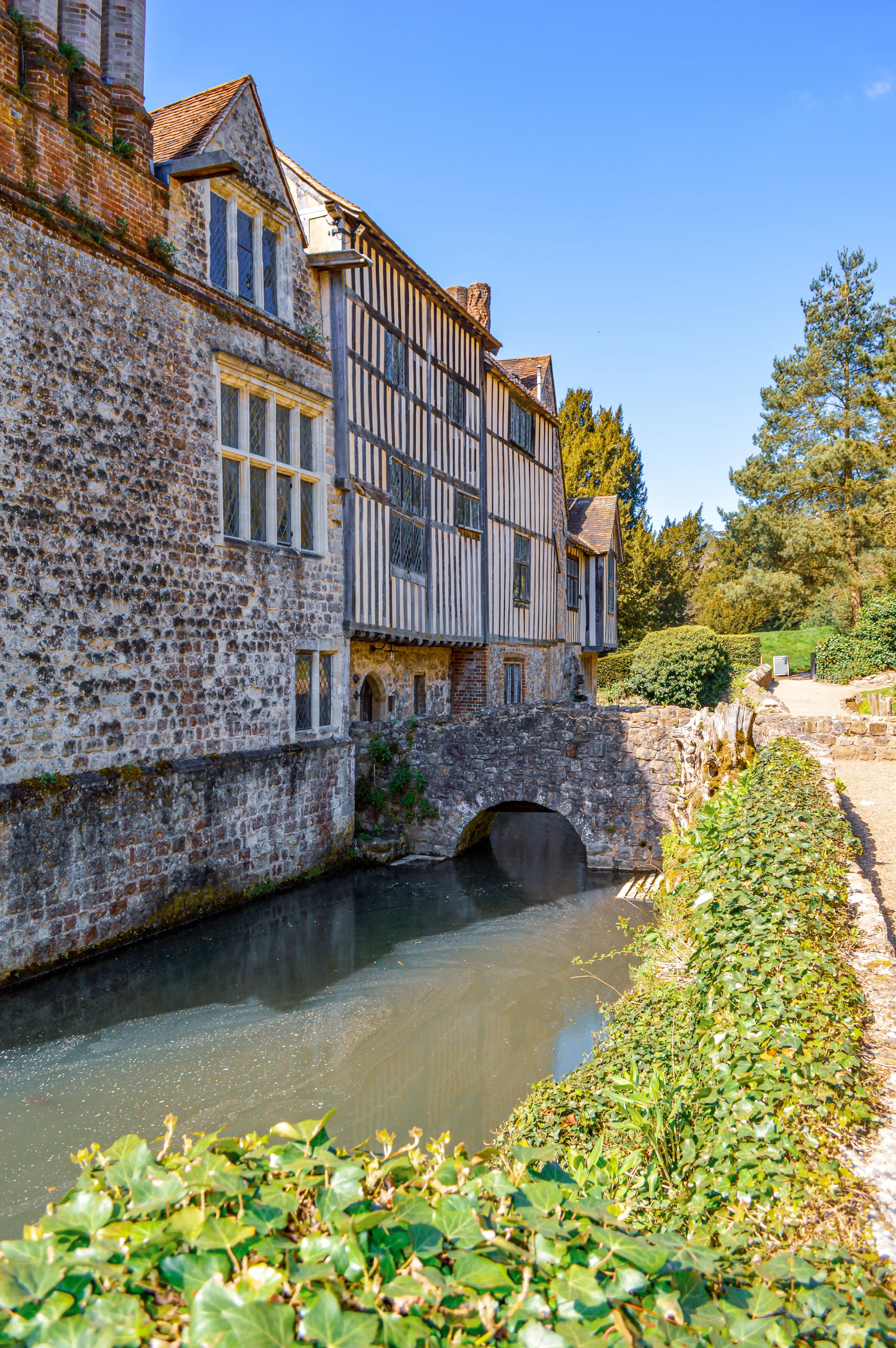
A half-timbered historic building with stone foundations stands next to a reflective moat, crossed by an ancient stone arched bridge. Green foliage and trees surround the scene under a bright blue sky.
Historic Timber-Framed Manor House and Moat in Sunlight ‐ photo by ,
©www.mgaylard.co.uk.
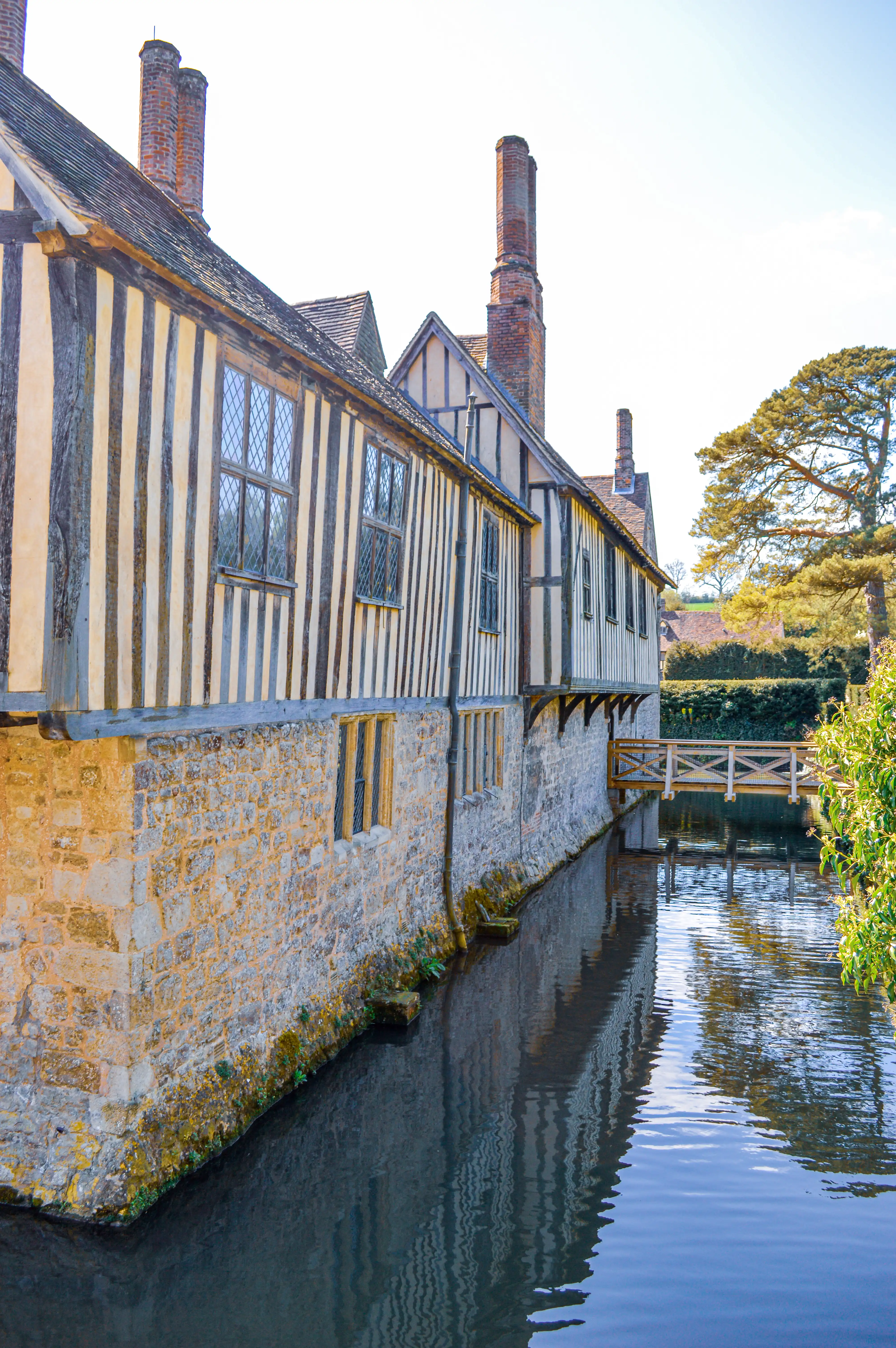
A long, two-storey timber-framed building with a stone lower level stands next to a dark, reflective body of water. A wooden bridge spans the water. Tall brick chimneys rise from the roof, and leaded glass windows are visible. Green foliage and a large tree are to the right of the building.
Medieval Timber-Framed House by the Water ‐ photo by ,
©www.mgaylard.co.uk.
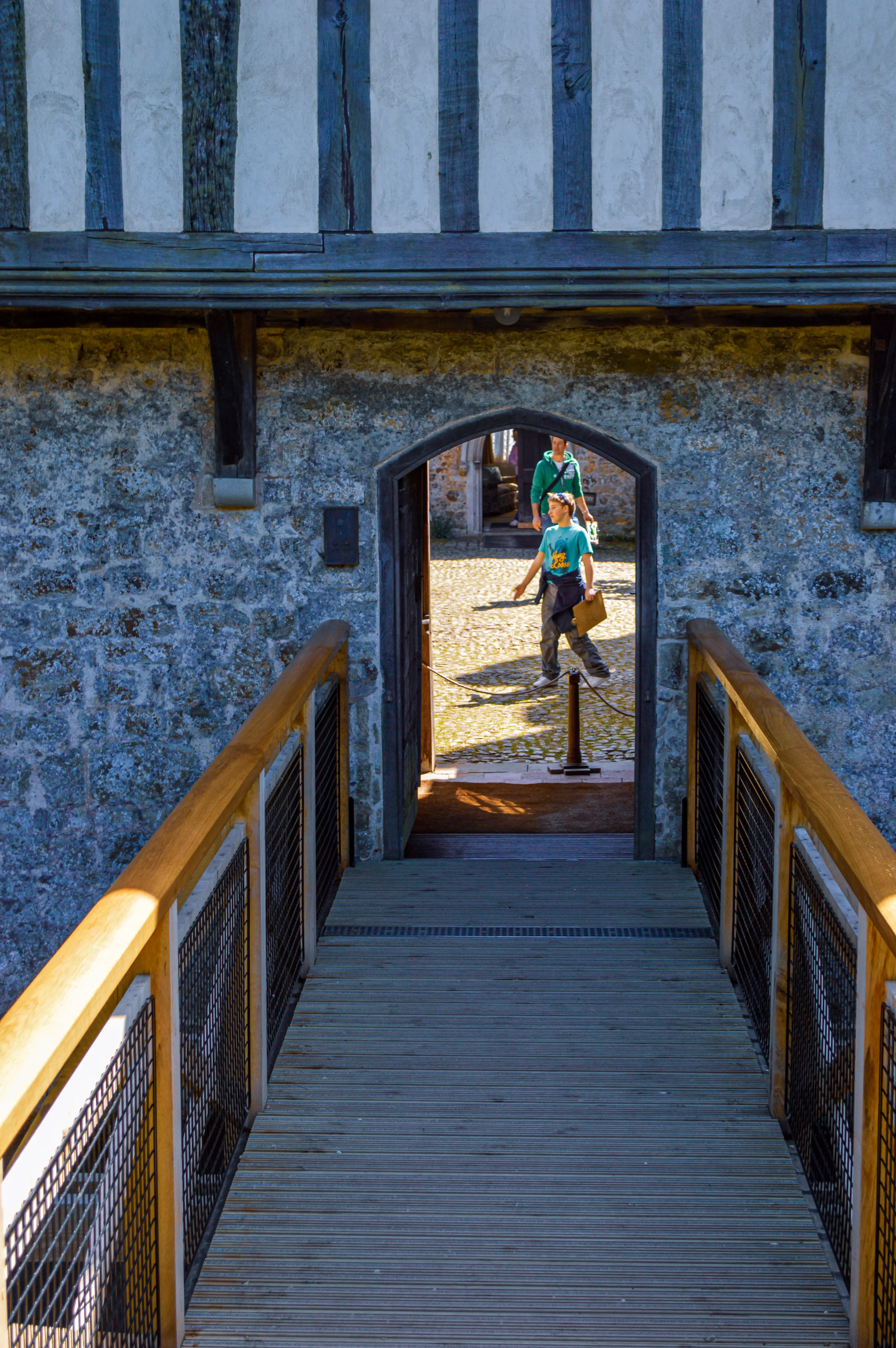
A person in a teal t-shirt and grey trousers walks through an arched stone doorway into a courtyard, with a wooden bridge leading up to the entrance.
Historic Castle Entrance with Wooden Drawbridge and Visitors ‐ photo by ,
©www.mgaylard.co.uk.
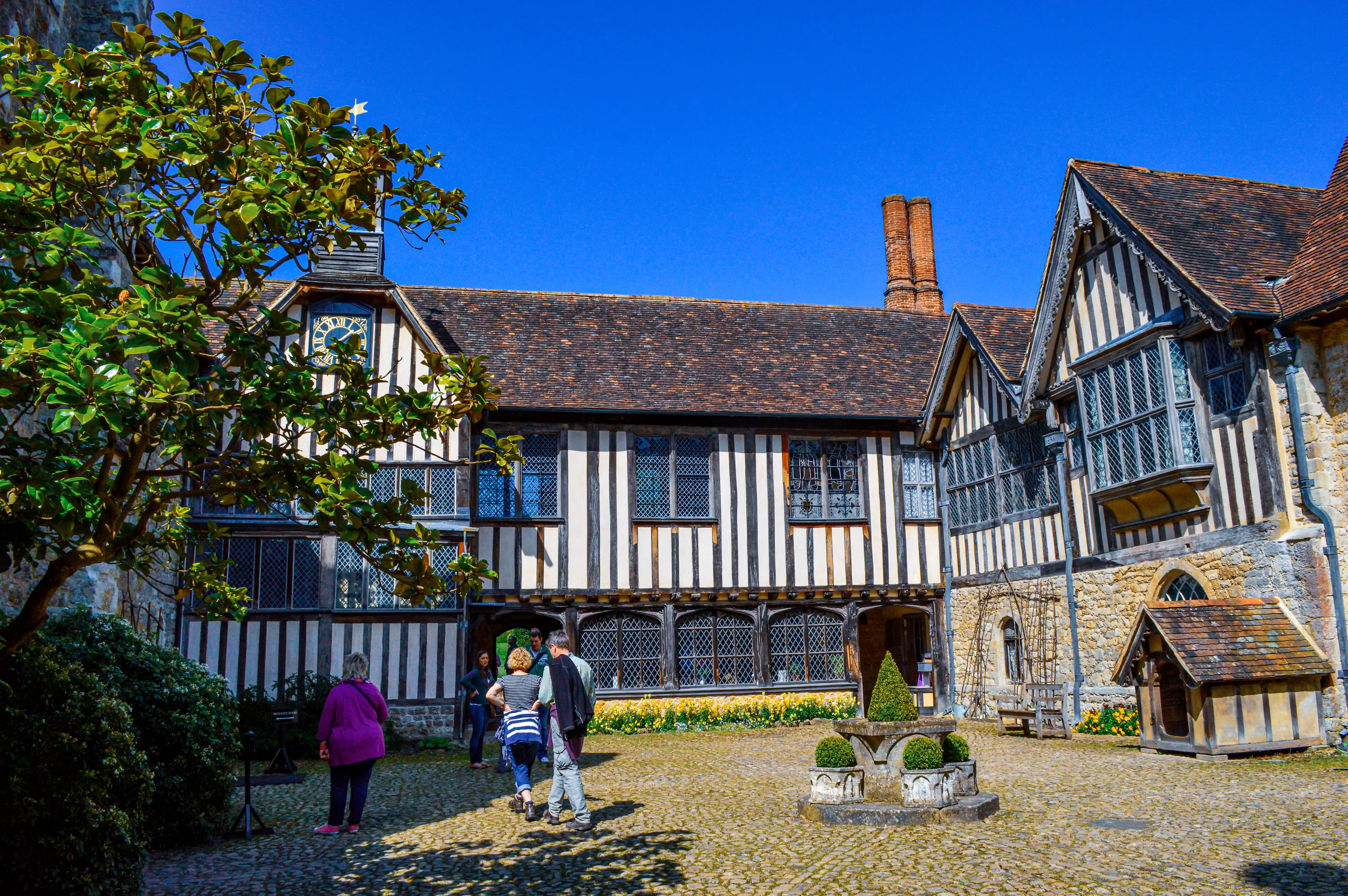
People walking in a courtyard of a historic timber-framed building under a clear blue sky.
A Glimpse into Tudor Architecture and Outdoor Leisure ‐ photo by ,
©www.mgaylard.co.uk.
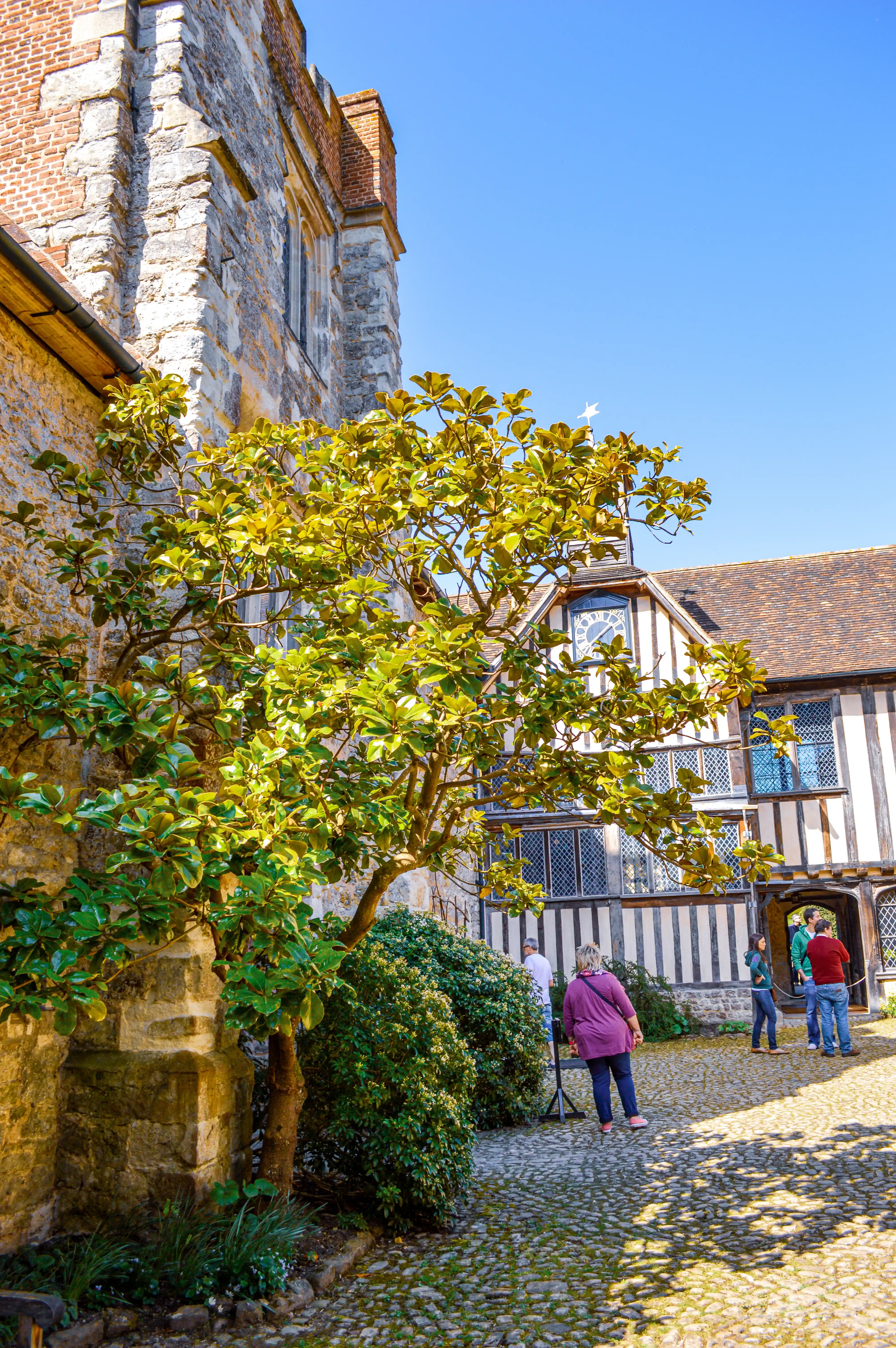
A courtyard with a large green magnolia tree in the foreground, leading to a historic building with stone walls and a Tudor-style structure with half-timbering and leaded glass windows. People are standing in the courtyard.
Enchanting Courtyard of Historic Buildings with a Flourishing Magnolia ‐ photo by ,
©www.mgaylard.co.uk.
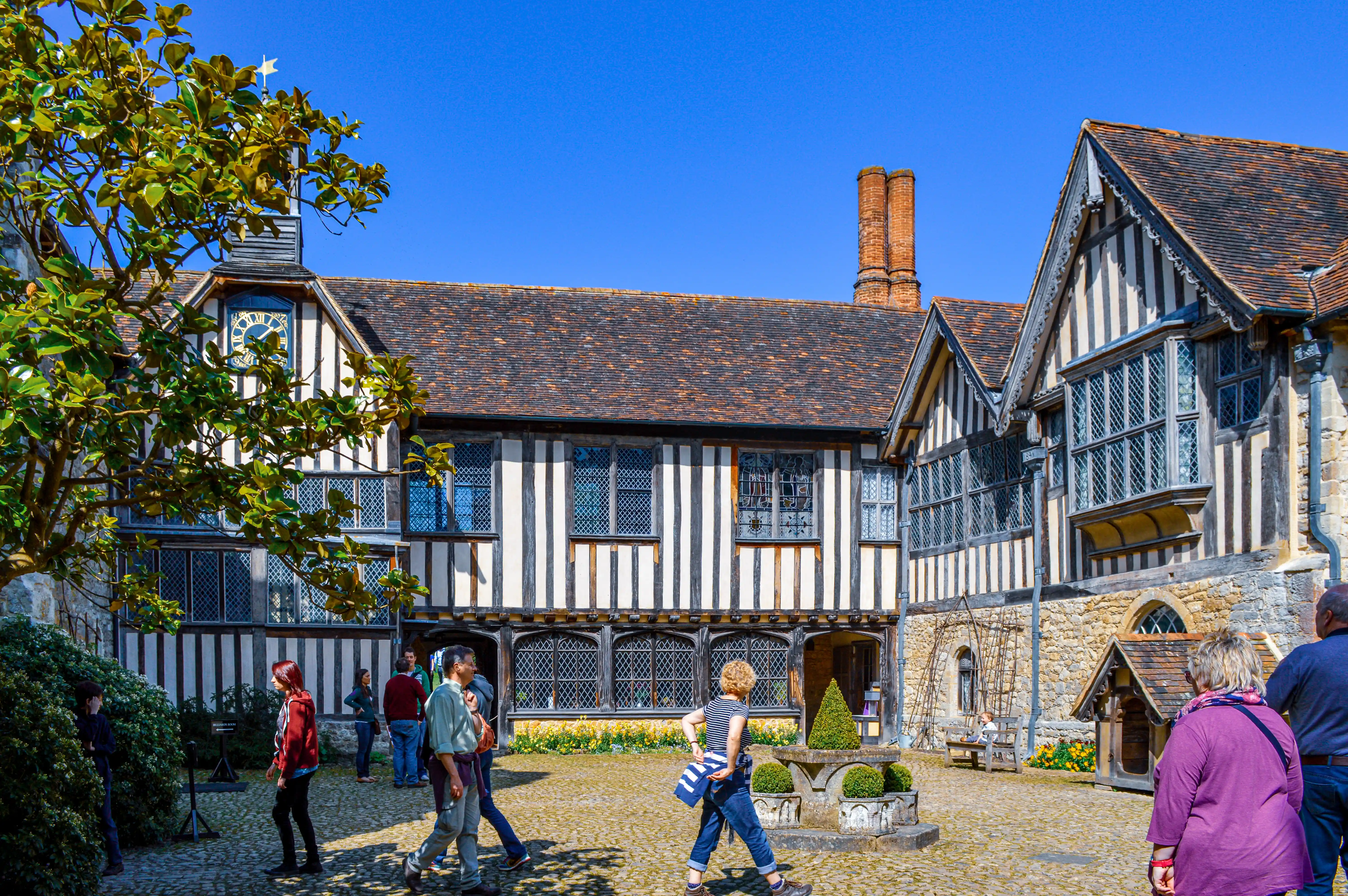
A sunlit courtyard of a historic timber-framed building, with visitors walking on cobblestones, a large green tree, and a stone fountain.
Tudor Splendour: A Sunny Day in the Historic Courtyard ‐ photo by ,
©www.mgaylard.co.uk.
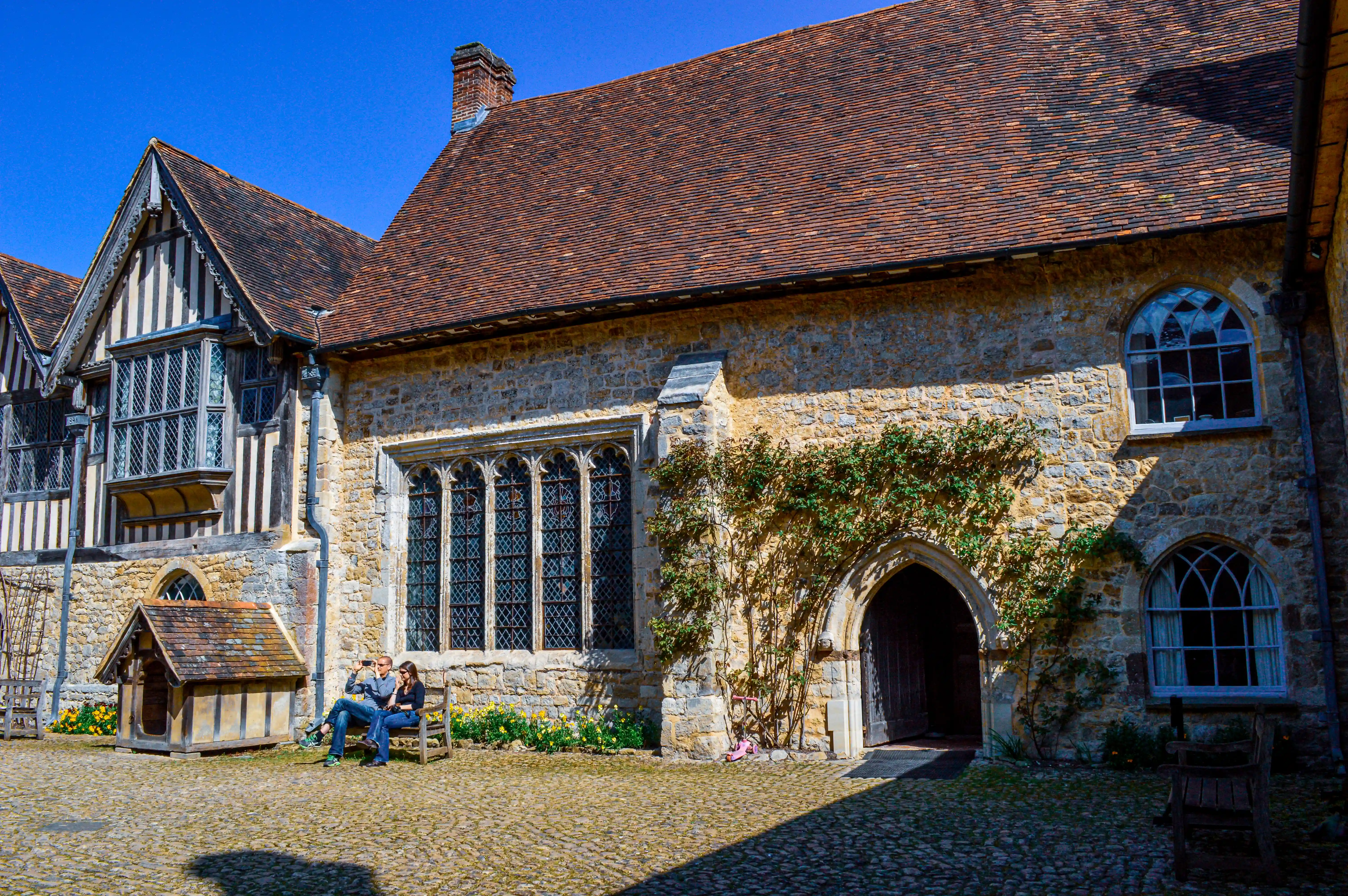
A couple sits on a wooden bench in a cobblestone courtyard in front of a historic stone building with a large arched doorway and leaded glass windows.
English Courtyard Scene ‐ photo by ,
©www.mgaylard.co.uk.
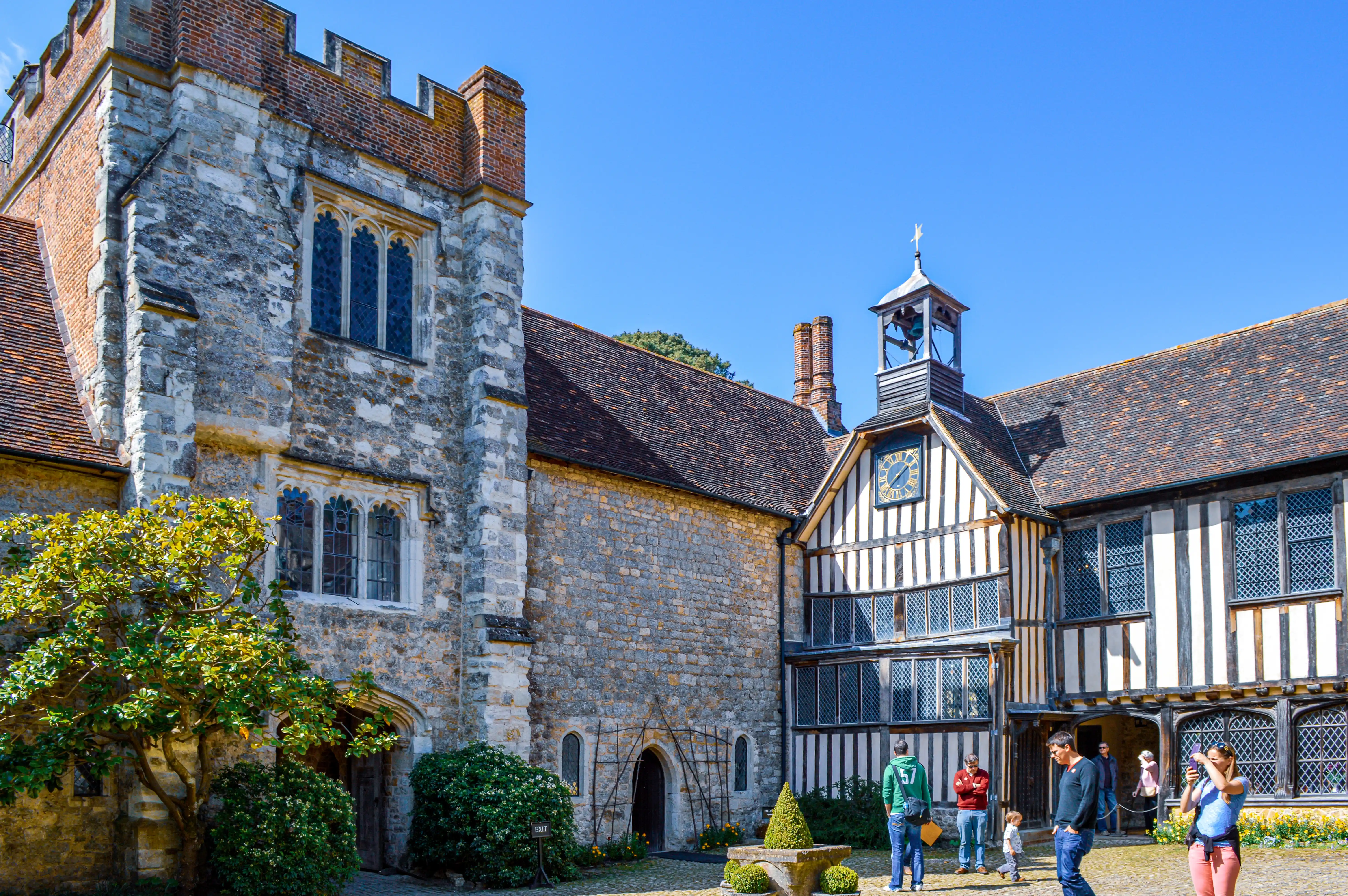
A courtyard of a historic building with a stone section on the left and a timber-framed section with a clock on the right. People are standing in the courtyard, and the sky is clear blue.
Courtyard of an Ancient Manor House on a Sunny Day ‐ photo by ,
©www.mgaylard.co.uk.
Open the full set flickr button this page

Ightham Mote: Kent’s Medieval Moated Masterpiece

Ightham Mote (pronounced "Eye-tam Moat") is a 14th-century moated manor house in Kent, England, often described as one of the most complete and picturesque medieval homes in the country. Owned by the National Trust, this Grade I listed building is a hidden gem surrounded by a serene moat, woodlands, and gardens, offering a peaceful escape into history.

A 700-Year-Old Time Capsule

Ightham Mote (pronounced "Item Moat") is one of England’s most enchanting and best-preserved medieval manor houses, a hidden gem nestled in the Kentish countryside near Sevenoaks. Dating back to the 1340s, the house is a rare survival of 14th-century domestic architecture, its four wings arranged around a central courtyard and encircled by a glassy moat that reflects its timber-framed and stone facades. Unlike many manor houses that were modernized or demolished over the centuries, Ightham Mote retains its original medieval layout, offering a unique glimpse into the lives of its past inhabitants—from knights and gentry to Tudor courtiers and Victorian aristocrats.
The house’s name likely derives from the Old English Ightham (meaning "Isolde’s home") and "mote" (a moat), a fitting description for this secluded, water-ringed retreat. Its defensive moat, though not designed to withstand a serious siege, was likely intended to deter wild animals and unwanted visitors—a practical feature in the wilds of medieval Kent

A House of Hidden Stories and Royal Connections

Ightham Mote’s history is a tapestry of intriguing characters and quiet resilience. Unlike many grand estates, it was never the stage for great historical dramas—instead, it was home to a succession of well-heeled but unassuming gentry who preserved its medieval charm while adapting it to their needs. The Haut (or Haute) family owned the estate from 1399 to 1519, followed by the Selby family, who added Tudor and Stuart touches to the interiors. By the 17th century, the house had passed to the Colyer-Fergusson family, who restored and modernized it in the 19th century, adding bathrooms, central heating, and a billiard room—luxuries that ensured its survival into the modern era
One of the most colorful chapters in Ightham Mote’s history came in 1887, when it was rented to William Jackson Palmer, an American railway magnate and founder of Colorado Springs. Palmer, a patron of the arts, turned the house into a center for the Aesthetic Movement, hosting artists and writers like John Singer Sargent, Henry James, and Ellen Terry. The house became a haven for creativity, its medieval halls and oak-paneled rooms filled with lively debate and artistic inspiration
In 1953, the estate was purchased by Charles Henry Robinson, another American who had fallen in love with Ightham Mote during a 1920s vacation. Robinson lavished care on the house, restoring its medieval features and furnishing it with 17th-century English pieces. In a generous final act, he bequeathed Ightham Mote to the National Trust in 1985, ensuring its preservation for future generations. His ashes were immured in the crypt, a fitting tribute to his devotion to the house

A Medieval Marvel with Timeless Charm

What makes Ightham Mote so special is its authenticity. The house is one of the oldest medieval manor houses in England to survive largely unchanged, its courtyard, great hall, and chapel still evoking the atmosphere of the 14th century. The moat, drawbridge, and stone gatehouse create a fairytale-like entrance, while the interiors reveal a layered history of Tudor, Stuart, and Victorian influences. Highlights include:
  • The Great Hall, with its massive oak beams and stone fireplace, where feasts and gatherings were once held.
  • The Crypt, one of the oldest parts of the house, with its vaulted ceiling and ancient stonework.
  • The Library, a 1950s addition that blends modern comfort with historic charm.
The Chapel, with its medieval frescoes and stained glass, offering a glimpse into the spiritual life of its past inhabitantsboutique-retreats.co.uk+3. The gardens and estate are equally captivating. Surrounding the house are 546 acres of parkland, woodland, and lakes, including a walled garden, orchards, and natural play areas for children. The estate’s trails lead visitors through ancient woodlands, past fishponds, and across the moat, offering peaceful walks and stunning views of the Kentish countryside.

References

en.wikipedia.orgboutique-retreats.co.ukwww.nationaltrustcollections.org.ukwww.britainexpress.combitaboutbritain.com , Text generated by Mistral AI , Text generated by Microsoft CoPilot , generated by Google's AI Image Describer

Knole

Knole

Knole ParkSevenoaksKent,   TN15 0RP,   United Kingdom

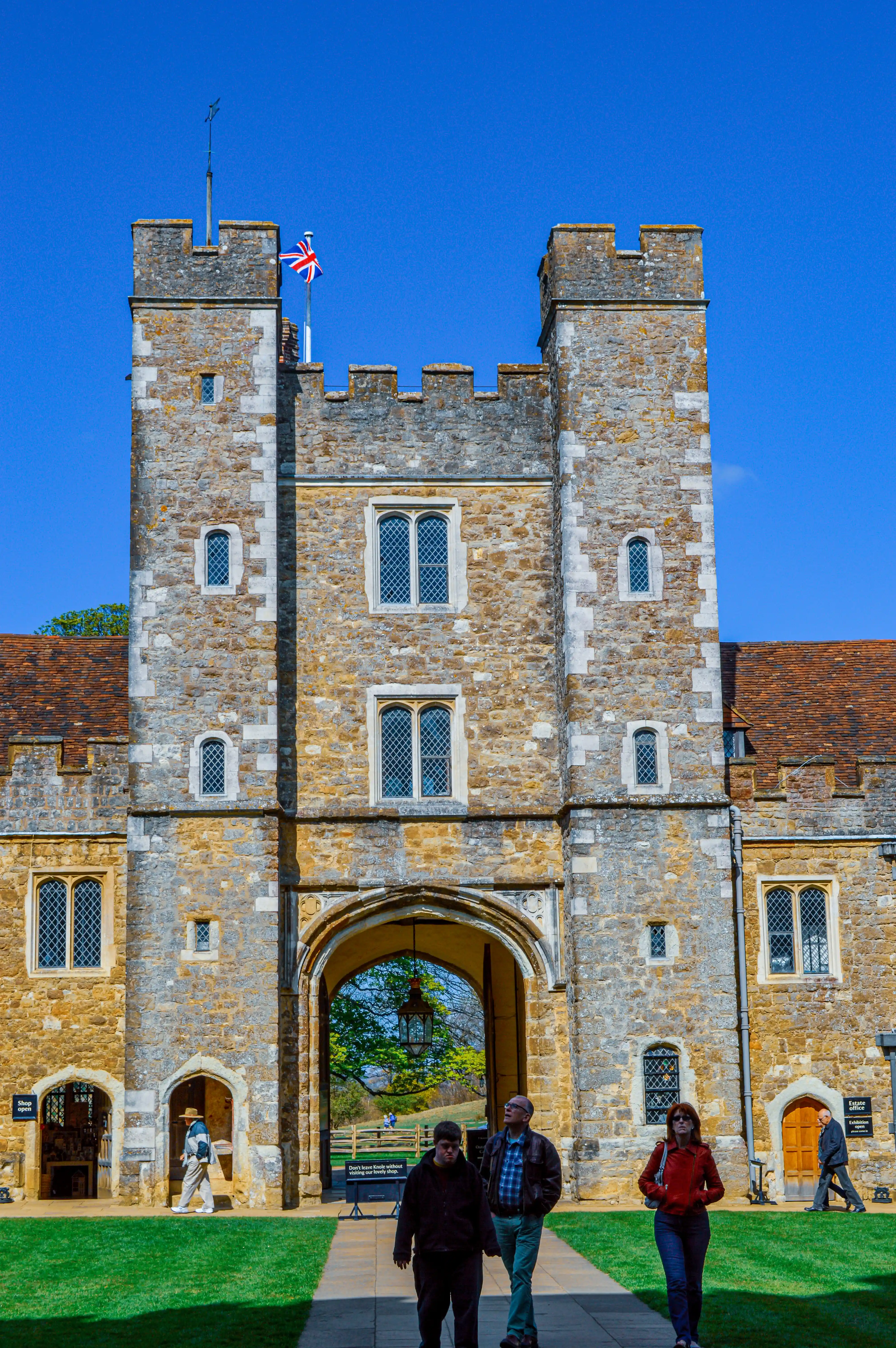
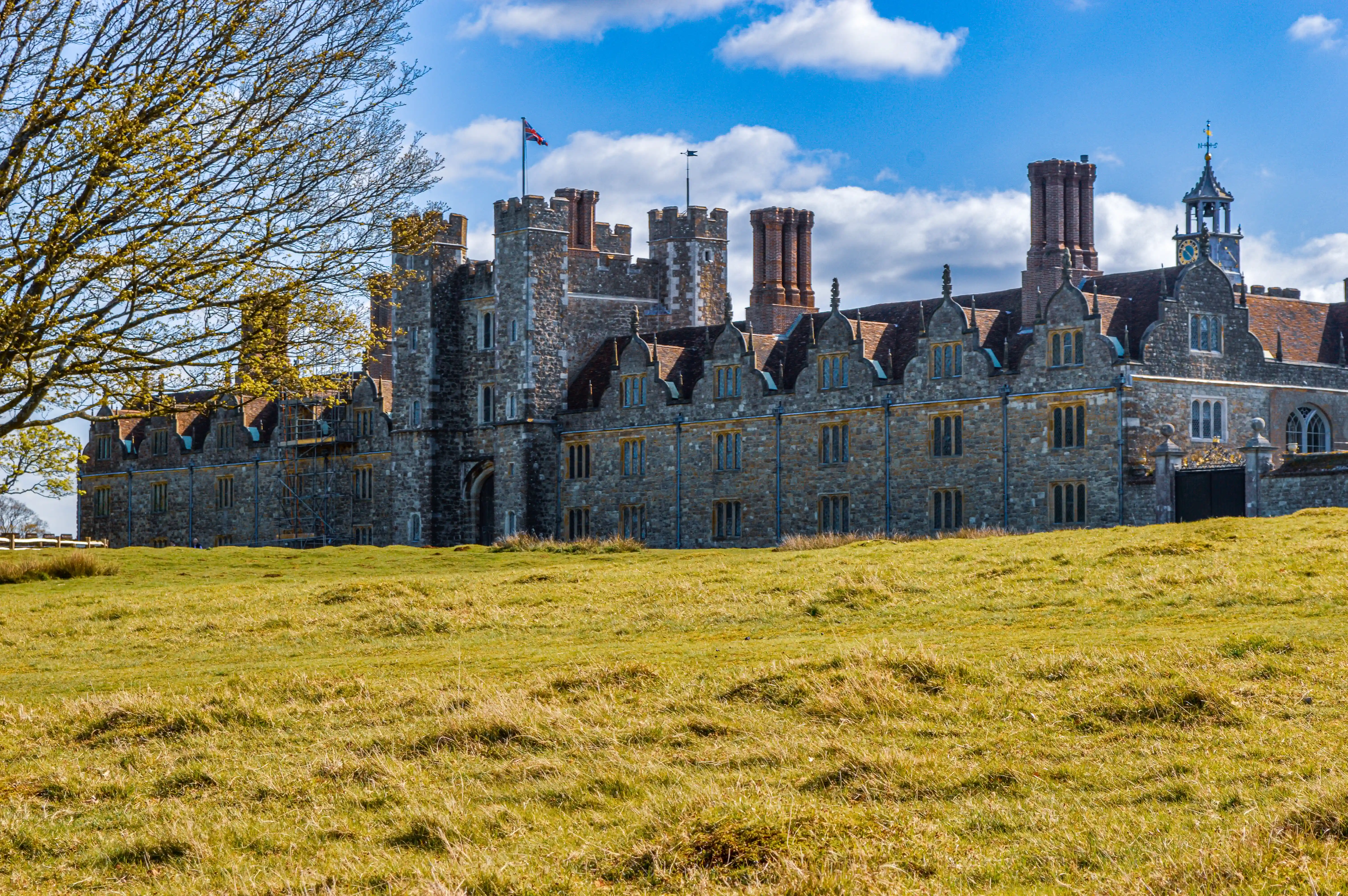
Knole is a stunning 15th-century country house and deer park located in Sevenoaks, Kent, England. Known as the "Calendar House" due to its 365 rooms, 52 staircases, 12 entrances, and 7 courtyards, Knole is one of the largest and most architecturally significant houses in England. Surrounded by a 1,000-acre deer park, the estate has been the home of the Sackville family for over 400 years and is now managed by the National Trust. Knole offers visitors a unique blend of history, art, and natural beauty, with its grand interiors, world-class art collection, and serene parkland.
Stone Mansion with Grassy Field and Blue Sky ‐ photo by ,
©www.mgaylard.co.uk.
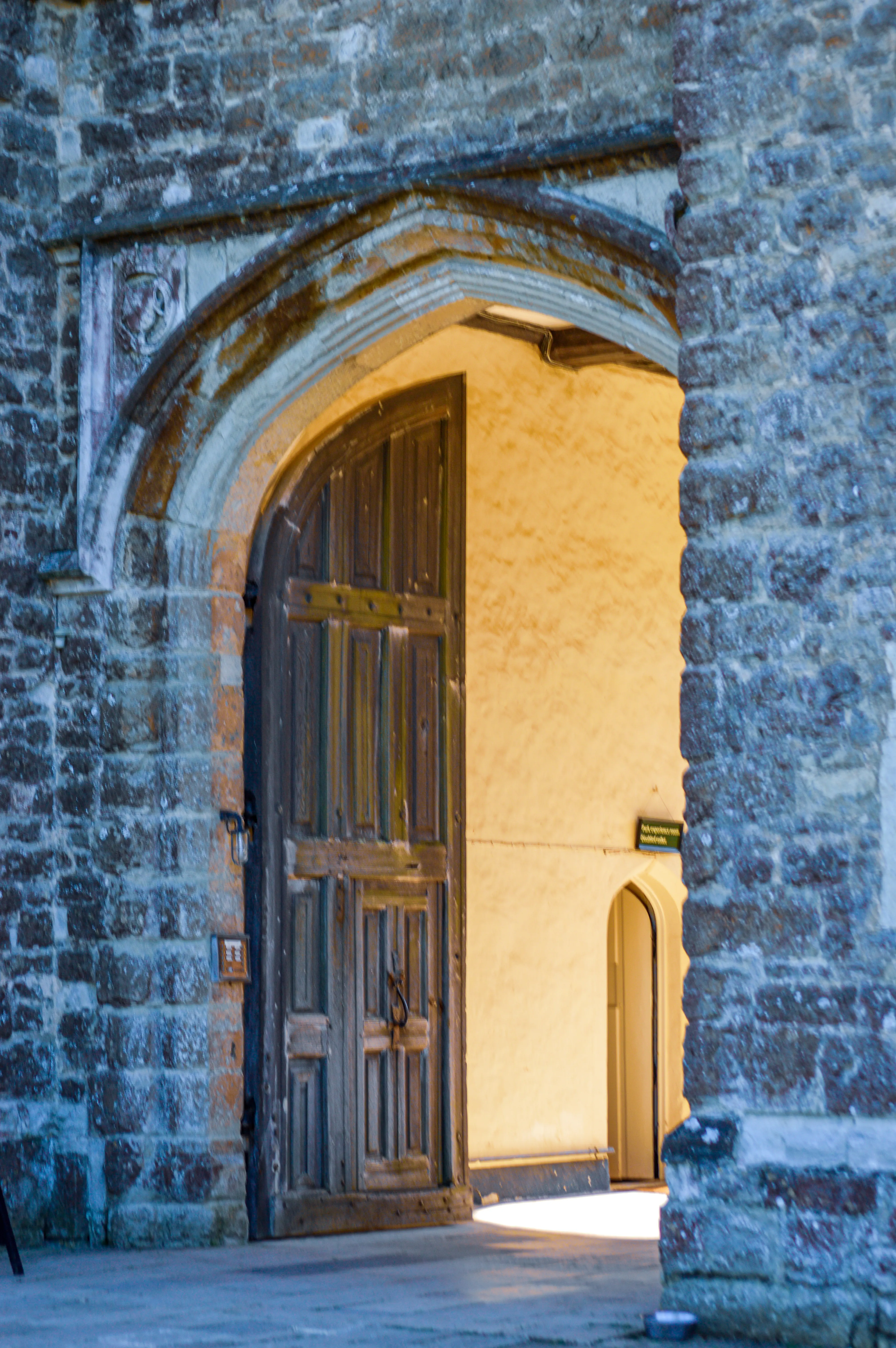
A stone archway frames a partially open, dark wooden door. The stonework is rough-hewn and ancient. Beyond the door, a brightly lit interior with another smaller, arched doorway is visible.v
Through the Ancient Archway: A Glimpse into the Past ‐ photo by ,
©www.mgaylard.co.uk.
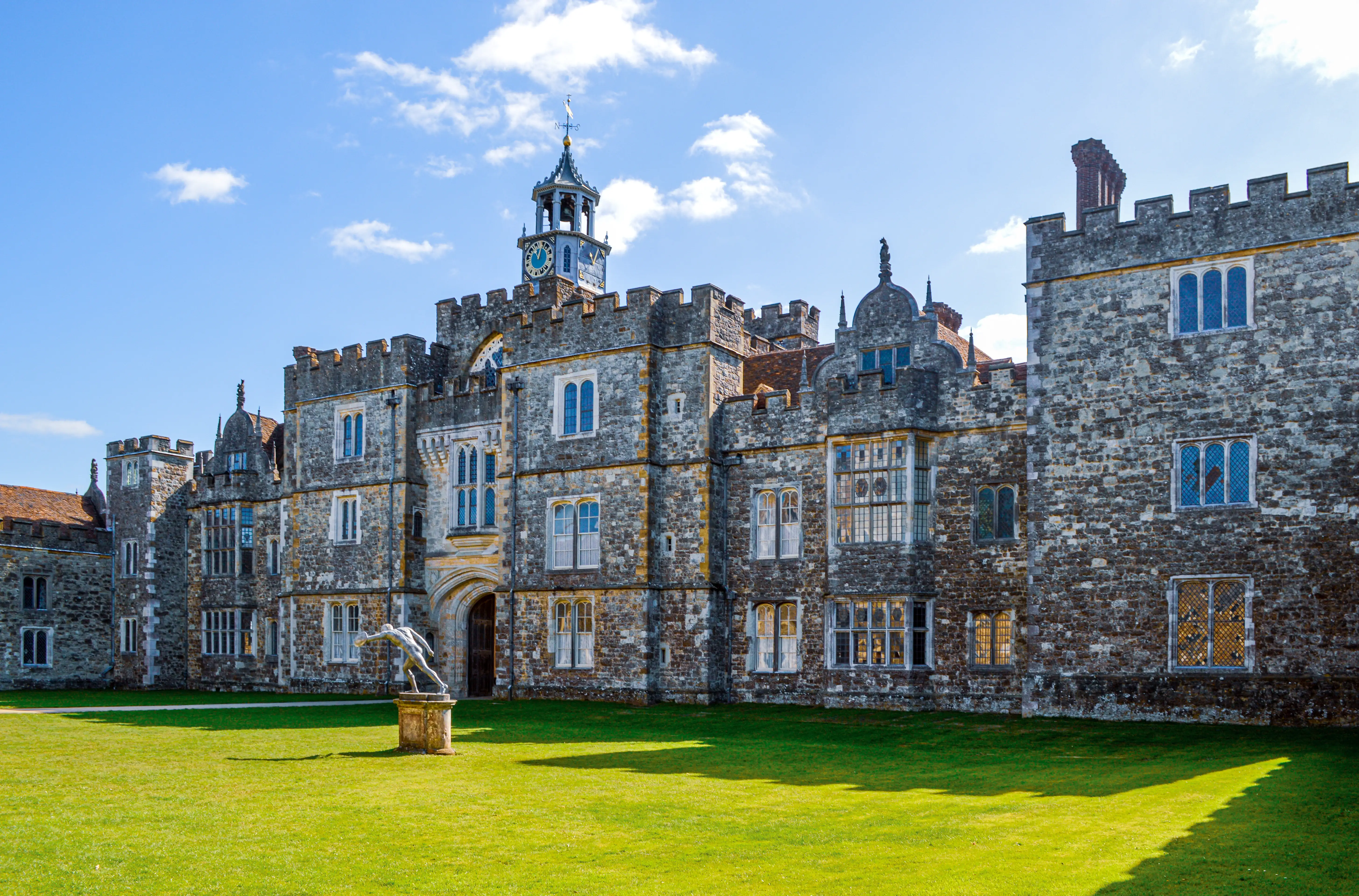
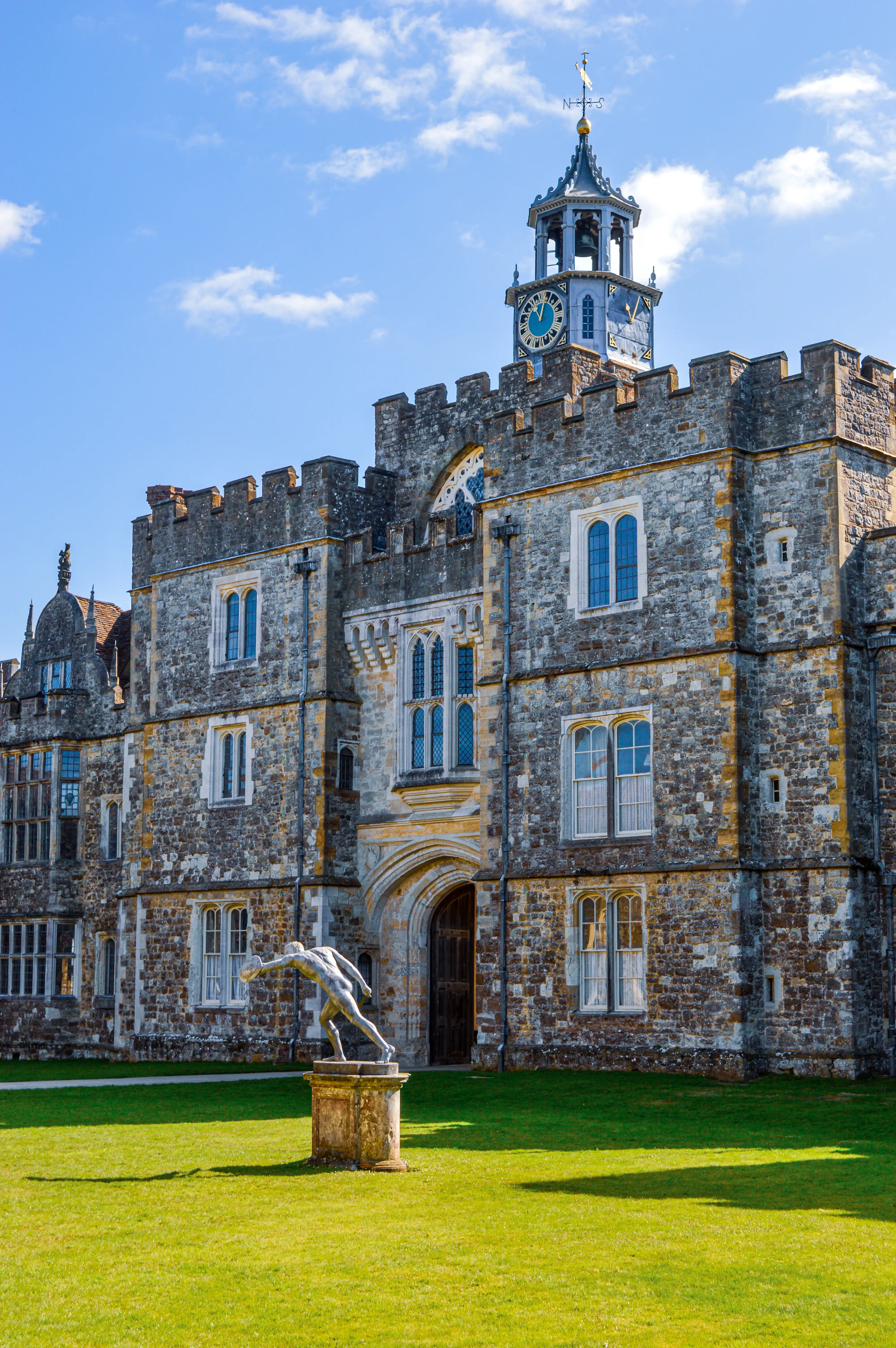
A majestic stone manor house with a clock tower and a statue of a man on a pedestal in front of it, set against a blue sky.
Historic Manor House with Clock Tower and Garden Statue ‐ photo by ,
©www.mgaylard.co.uk.
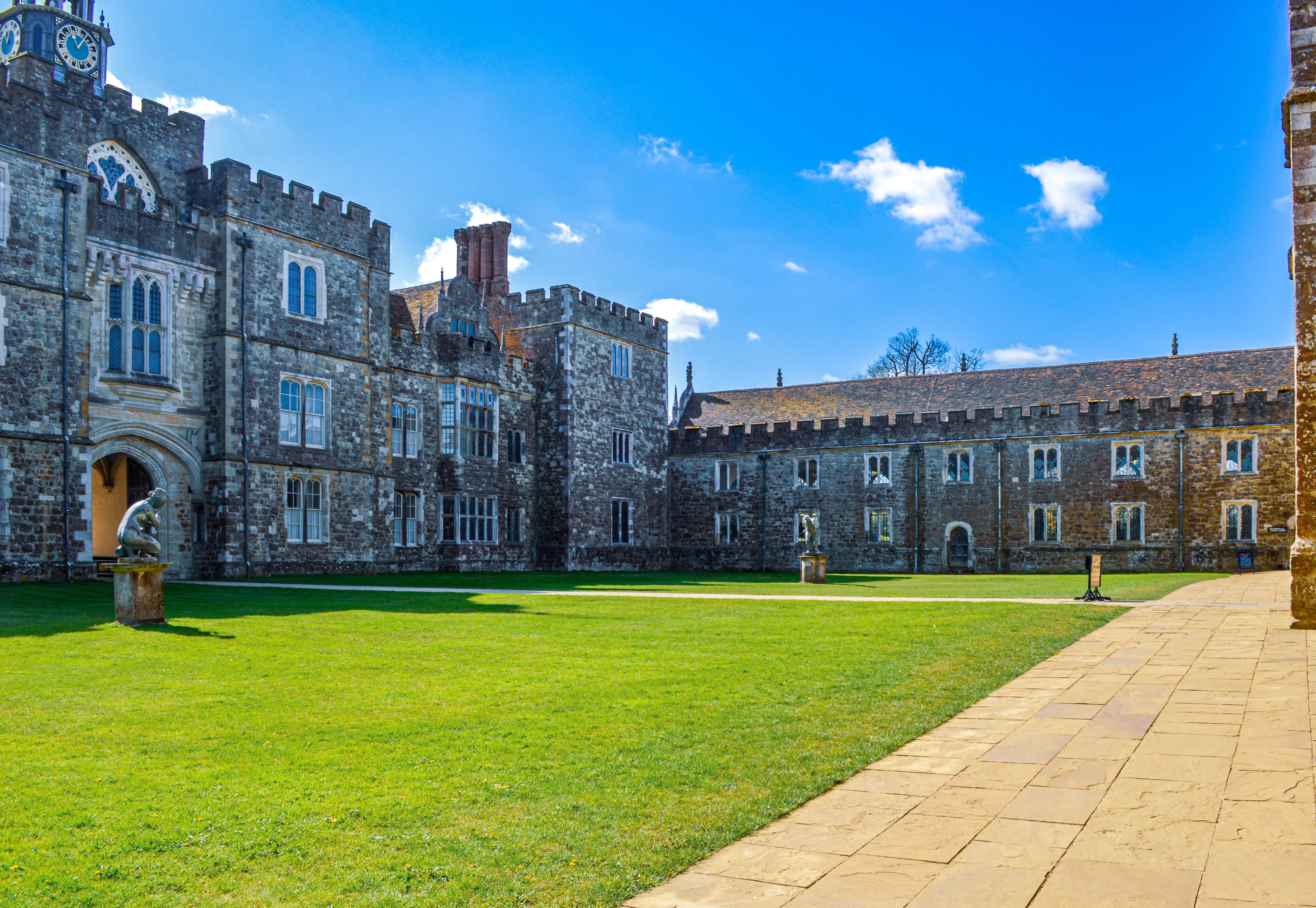
A wide shot of a grand, old stone building with a clock tower and crenellated battlements, viewed across a lush green lawn and a paved pathway.
Medieval Courtyard with Clock Tower and Gardens ‐ photo by ,
©www.mgaylard.co.uk.
A stone archway frames a partially open, dark wooden door. The stonework is rough-hewn and ancient. Beyond the door, a brightly lit interior with another smaller, arched doorway is visible.
Through the Ancient Archway: A Glimpse into the Past ‐ photo by ,
©www.mgaylard.co.uk.
Manor House with Clock Tower and Garden Statue
Historic Manor House with Clock Tower and Garden Statue ‐ photo by ,
©www.mgaylard.co.uk.
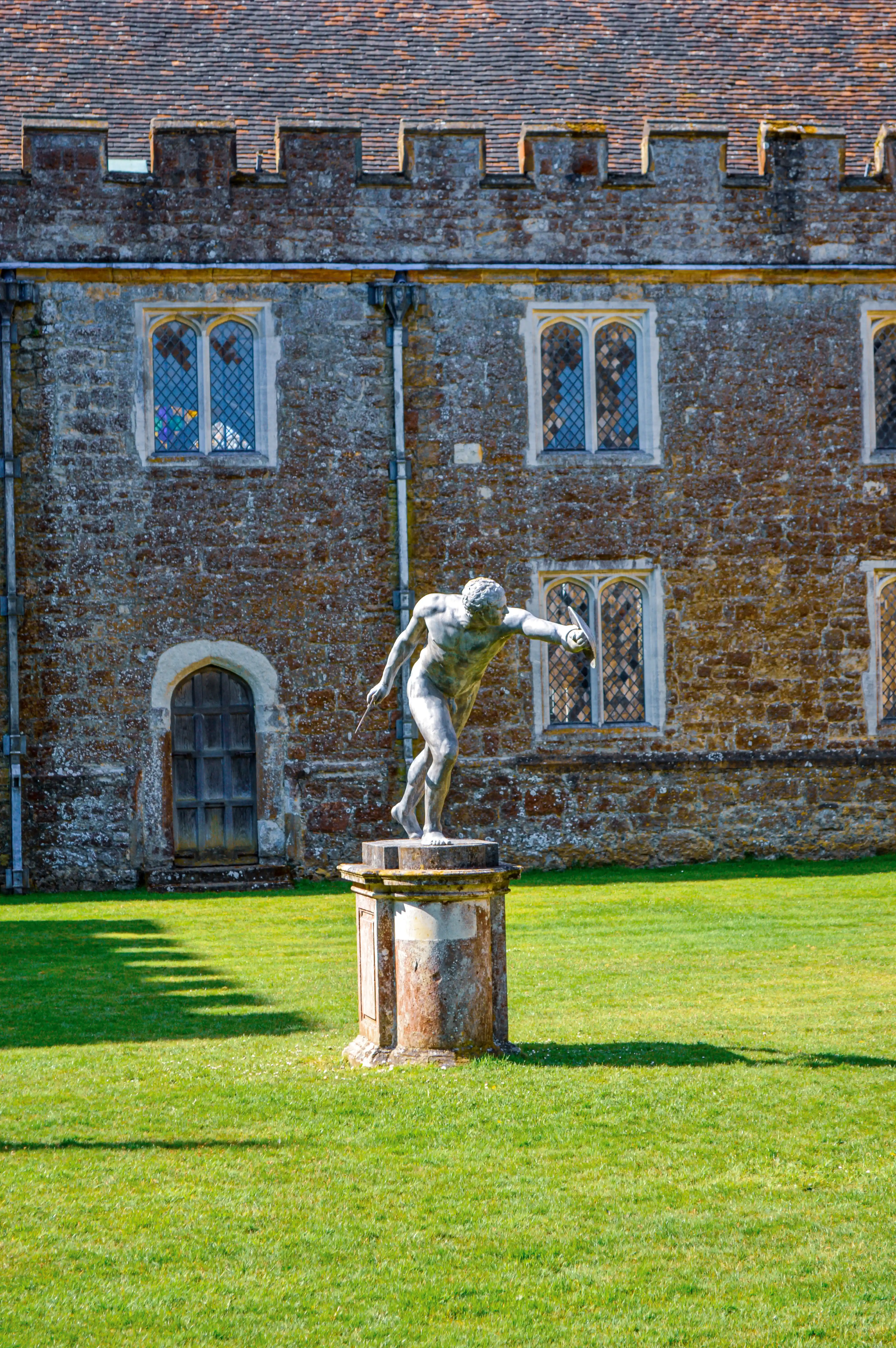
A bronze statue of a muscular male figure, poised as if in mid-action with a spear and shield, stands on a weathered stone plinth in a lush green garden. Behind the statue, a large stone building with battlements, leaded glass windows, and a red tiled roof is visible.
Manoeuvring Through History: A Statue in a Historic Manor Garden ‐ photo by ,
©www.mgaylard.co.uk.
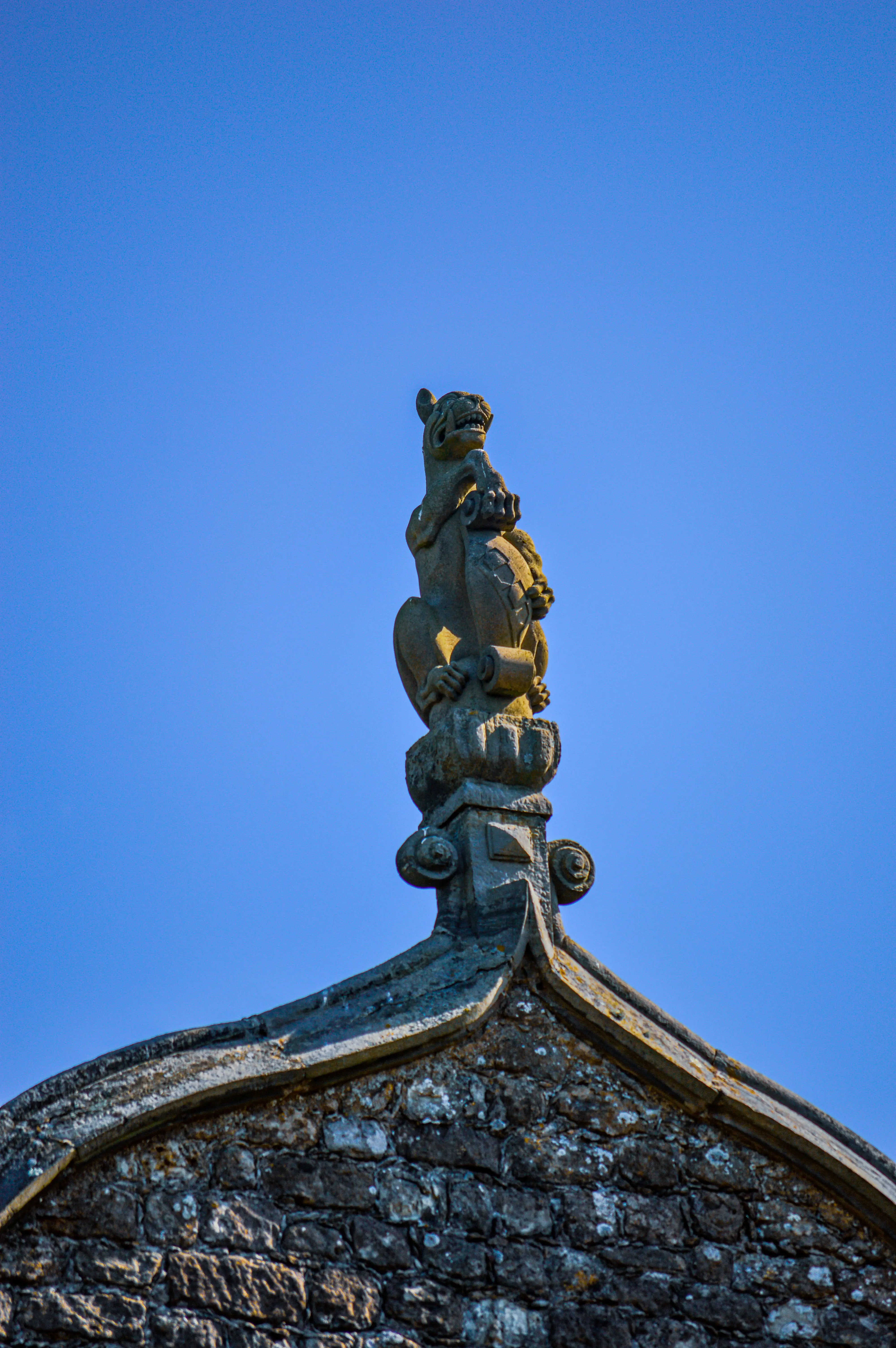
A stone gargoyle or griffin sculpture with its mouth open and paws resting on a shield, set against a vivid blue sky. The sculpture sits atop a decorative stone structure on the peak of a stone building.
A stone gargoyle or griffin sculpture with its mouth open and paws resting on a shield, set against a vivid blue sky. The sculpture sits atop a decorative stone structure on the peak of a stone building. ‐ photo by ,
©www.mgaylard.co.uk.
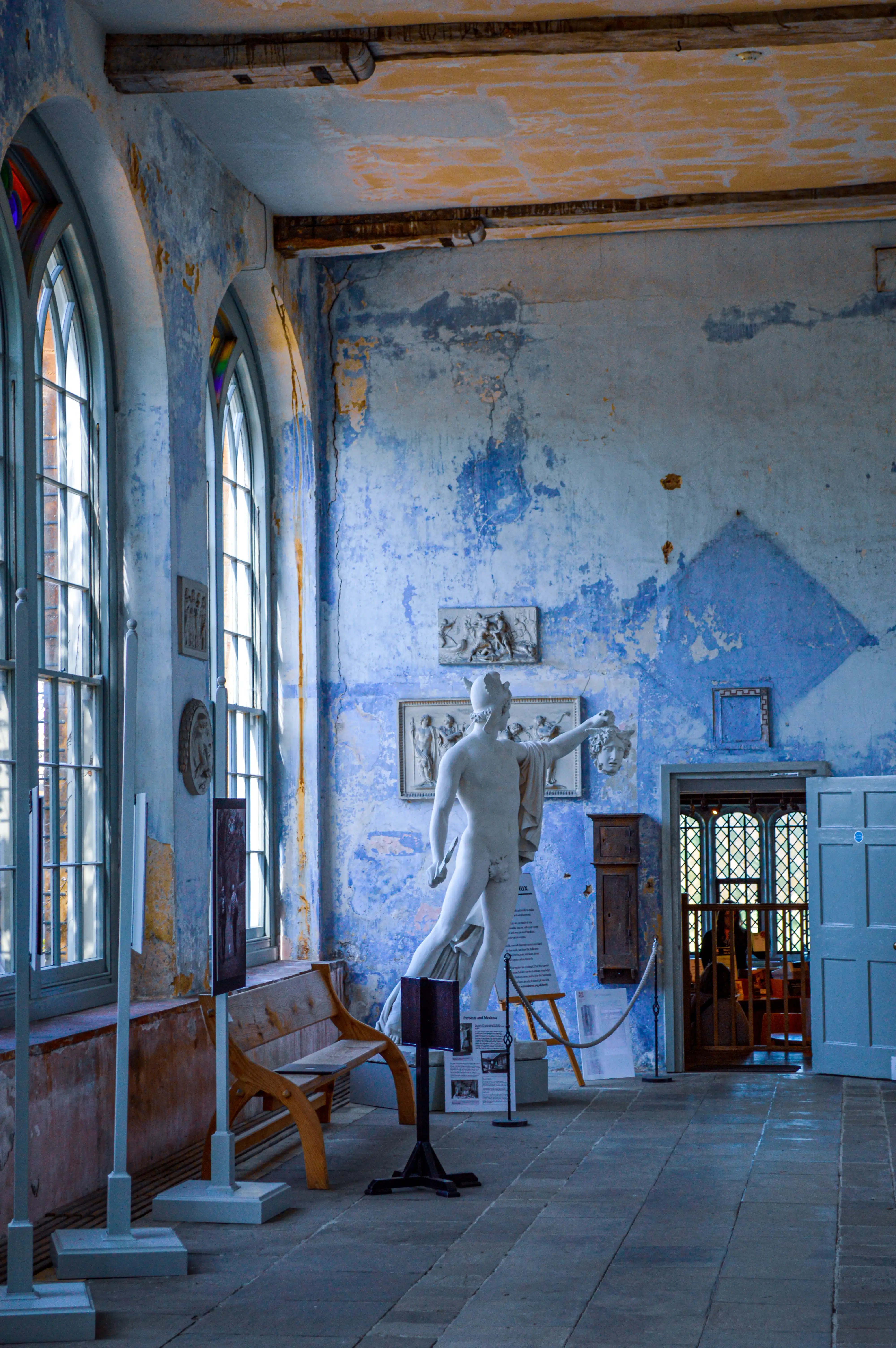
A white marble statue of a male figure holding a severed head, positioned in a room with distressed blue walls, arched windows, and wooden beams overhead.
Artistic Display in an Aged Hallway ‐ photo by ,
©www.mgaylard.co.uk.
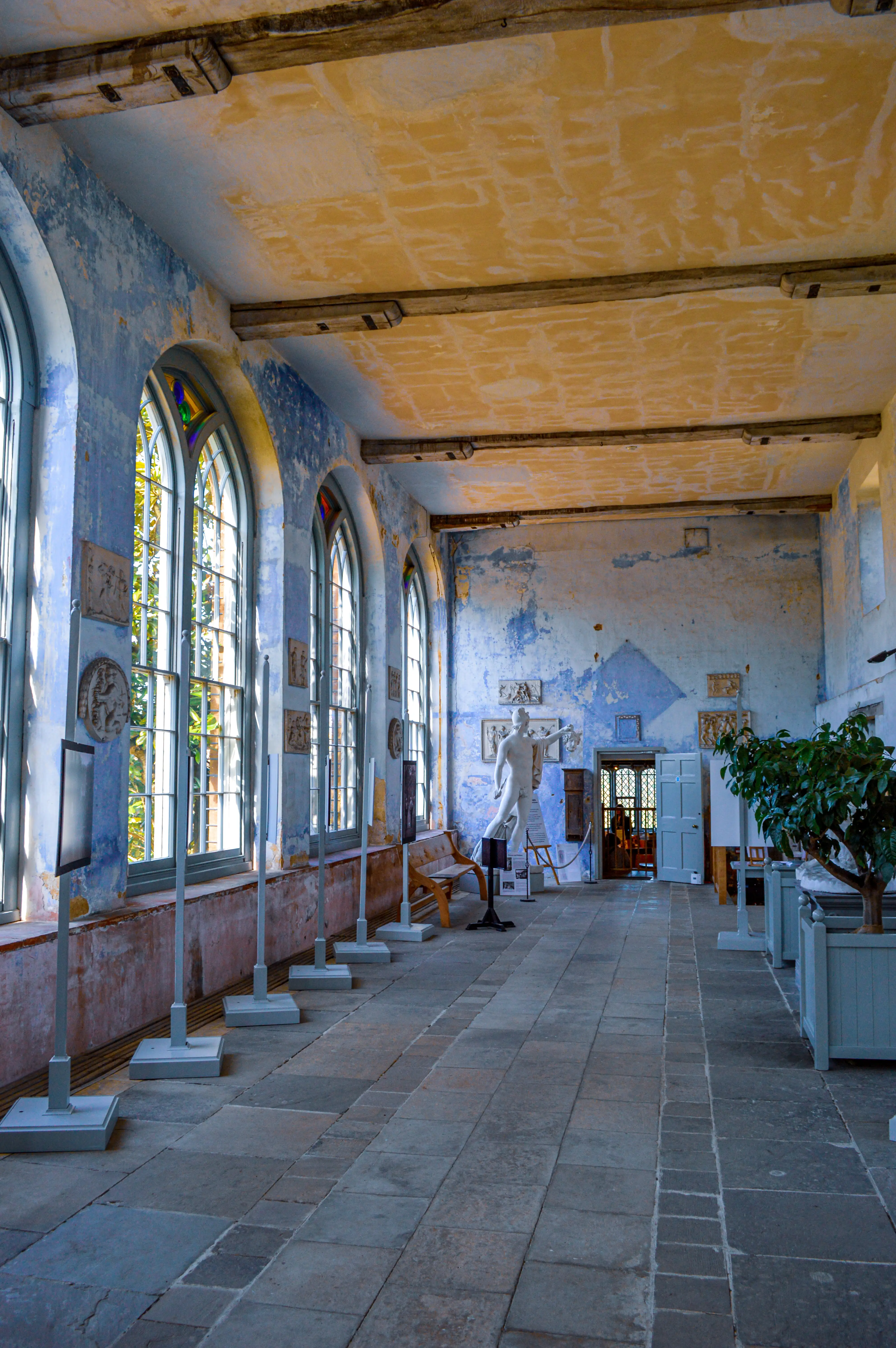
Interior of a historical gallery space with peeling blue walls, tall arched windows letting in sunlight, a classical white sculpture, and a stone floor.
Sunlit Gallery Hall with Classical Sculpture and Arched Windows ‐ photo by ,
©www.mgaylard.co.uk.
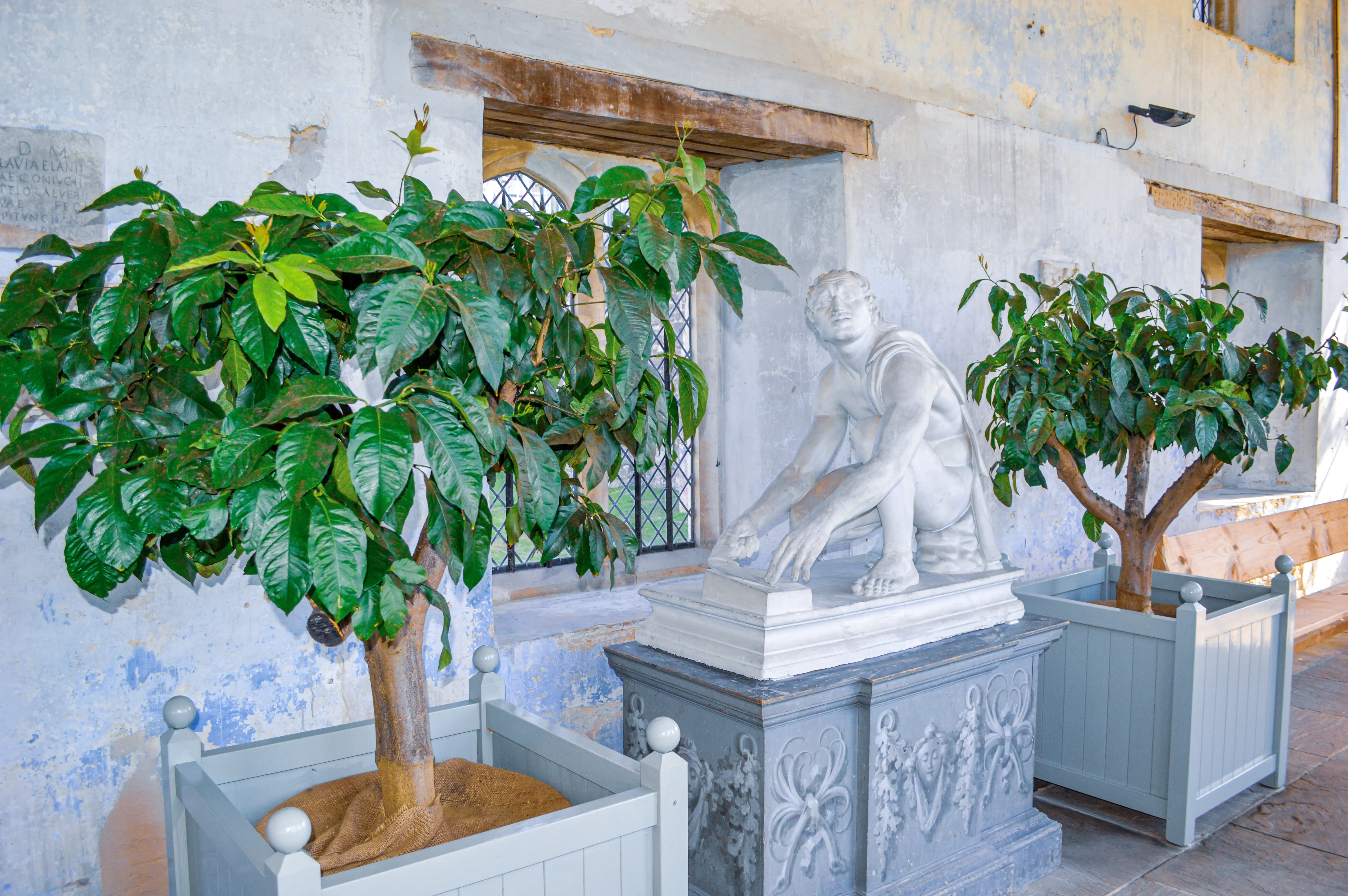
A white marble statue of a man kneeling, placed next to two large potted green plants in light grey rectangular planters inside a building with a blue and white textured wall and a Gothic-style window.
Interior with Sculptural Element and Foliage ‐ photo by ,
©www.mgaylard.co.uk.
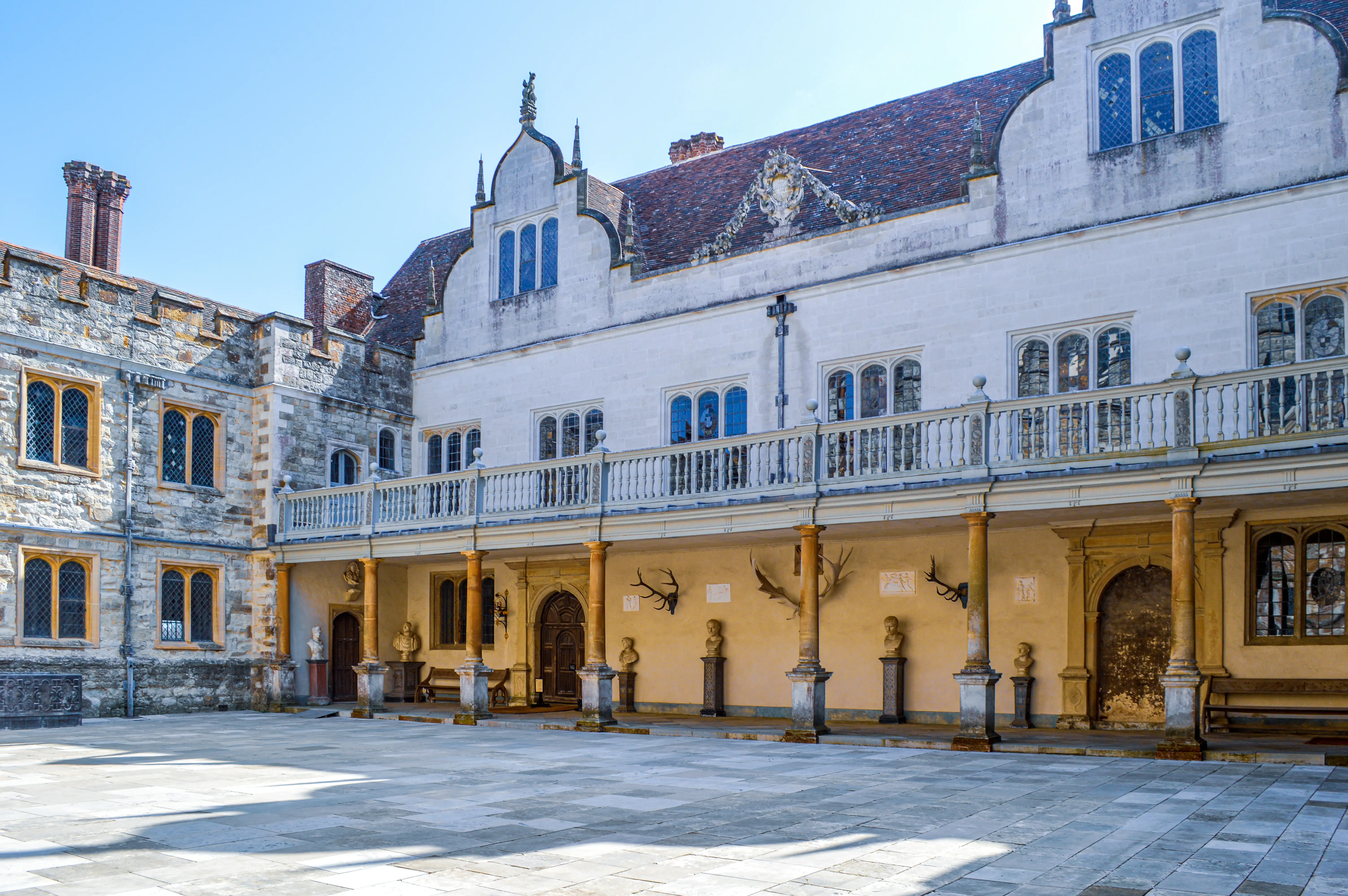
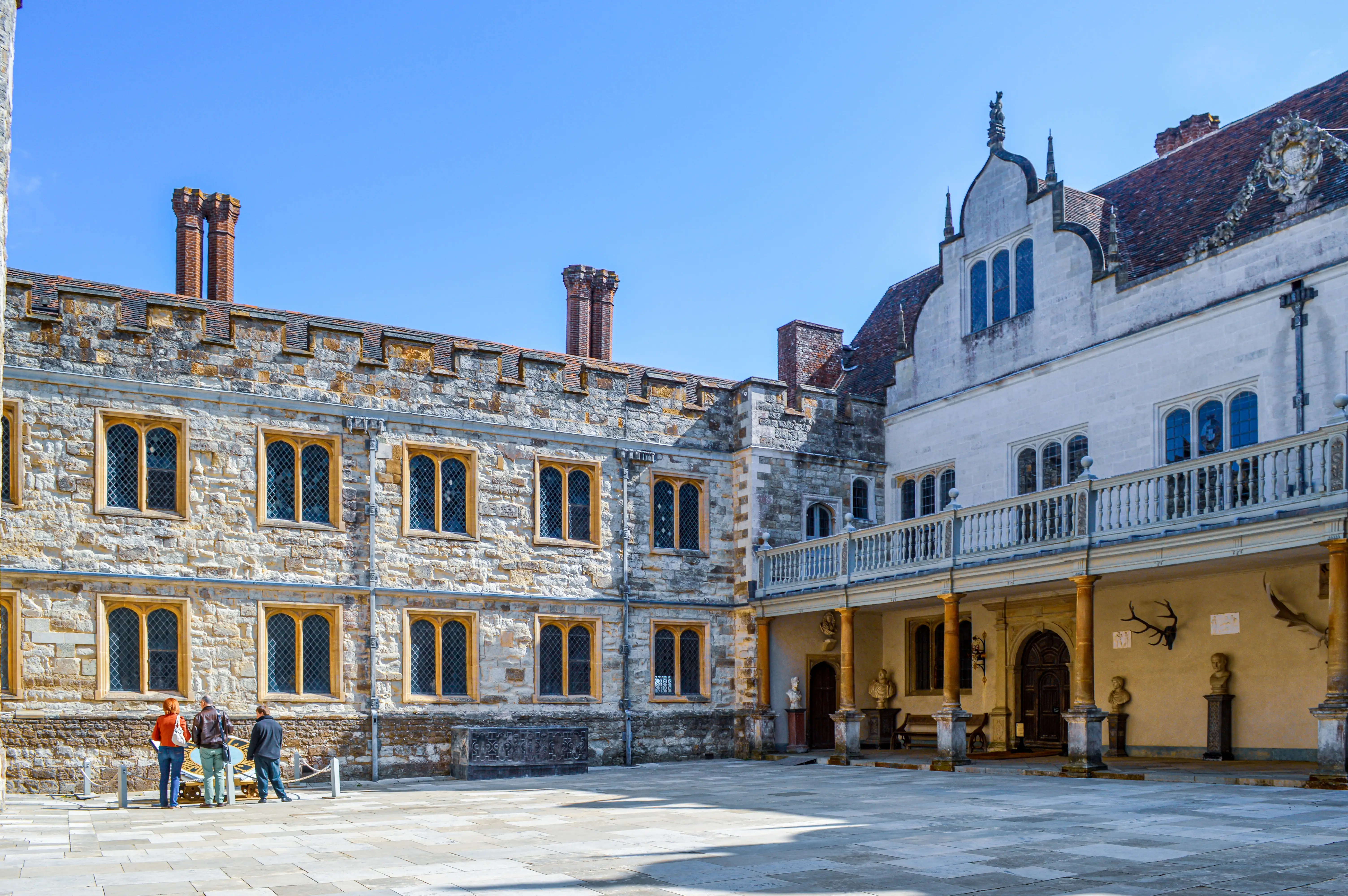
A wide-angle view of a stone-paved courtyard in front of a historic building with a white facade and a stone wing. The white facade has a covered walkway with columns and a decorative balcony above. The stone wing features mullioned windows. The sky is clear and blue.
Courtyard at Knole House ‐ photo by ,
©www.mgaylard.co.uk.
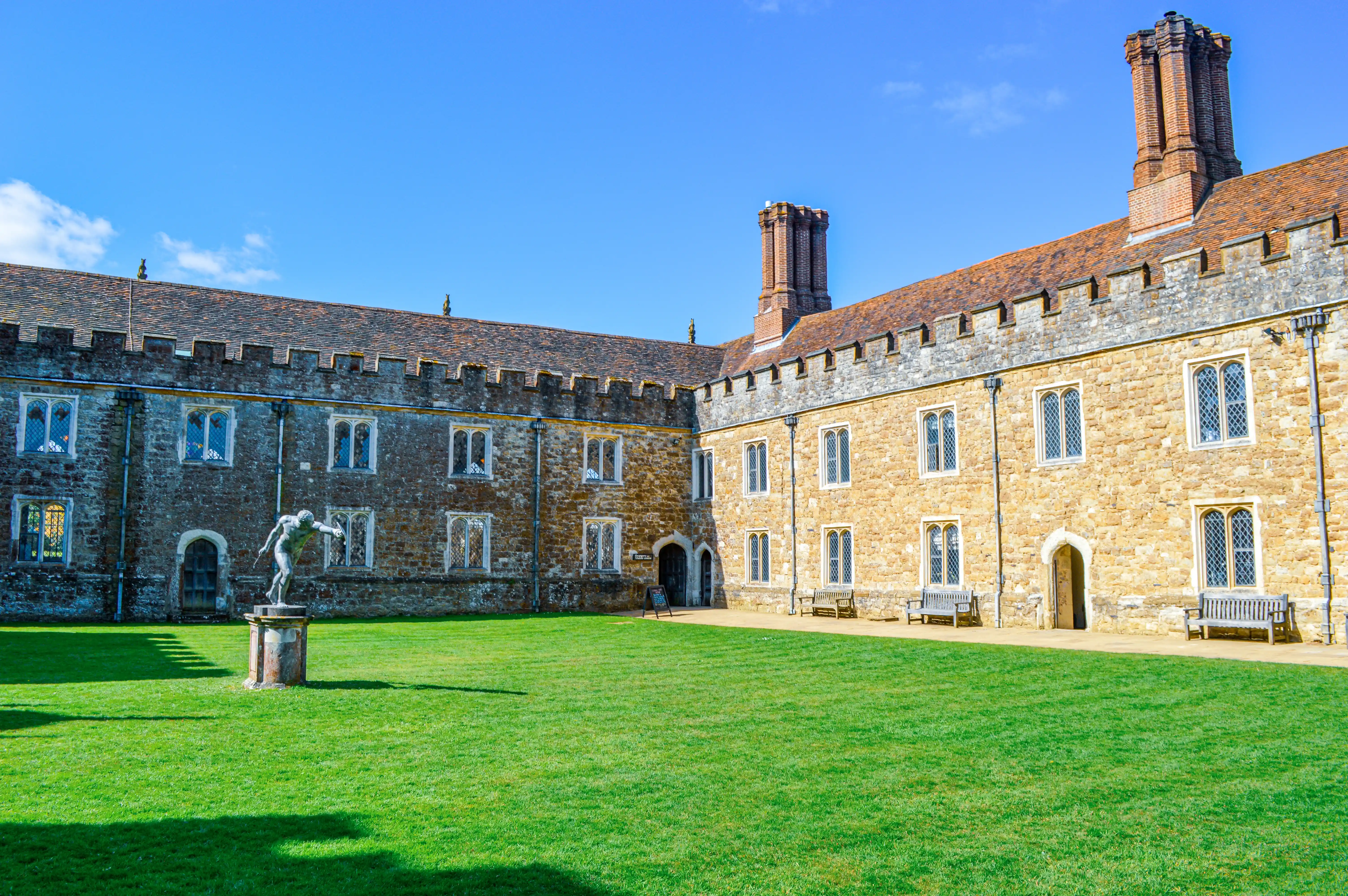
A wide shot of a tranquil courtyard with manicured green grass, an ancient stone building with ornate windows and crenellations, and a bronze statue of a dynamic figure standing on a stone plinth.
Knole House ‐ photo by ,
©www.mgaylard.co.uk.
A wide shot of a historic courtyard on a clear day, featuring stone buildings with mullioned windows and a balcony. Three people are standing in the foreground, looking at the buildings.
Sunny Courtyard of a Historic Building ‐ photo by ,
©www.mgaylard.co.uk.
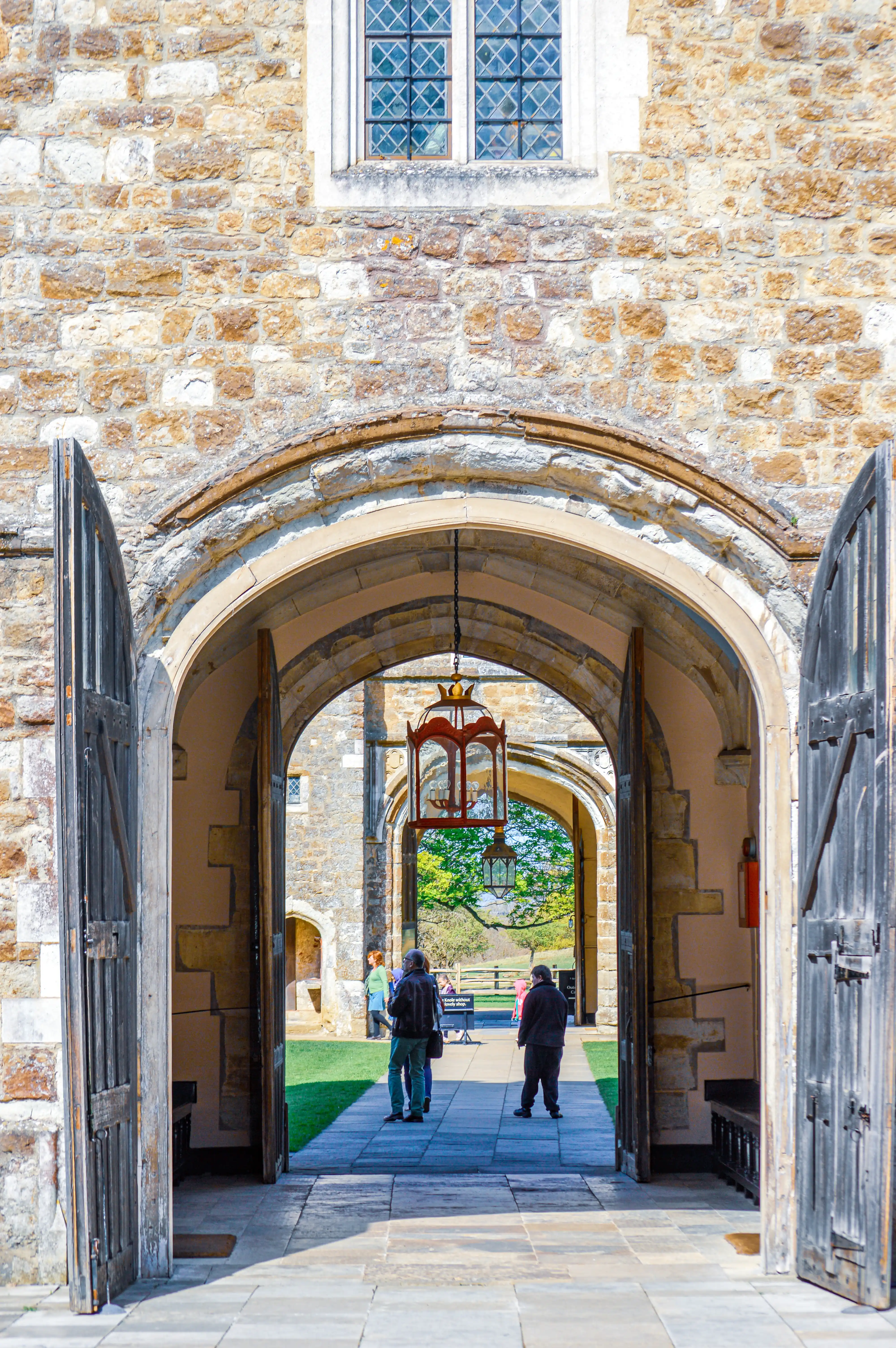
A view through an ancient stone archway into a sunlit courtyard, featuring ornate lanterns and people walking.
Ancient Stone Archway Entrance to Courtyard ‐ photo by ,
©www.mgaylard.co.uk.
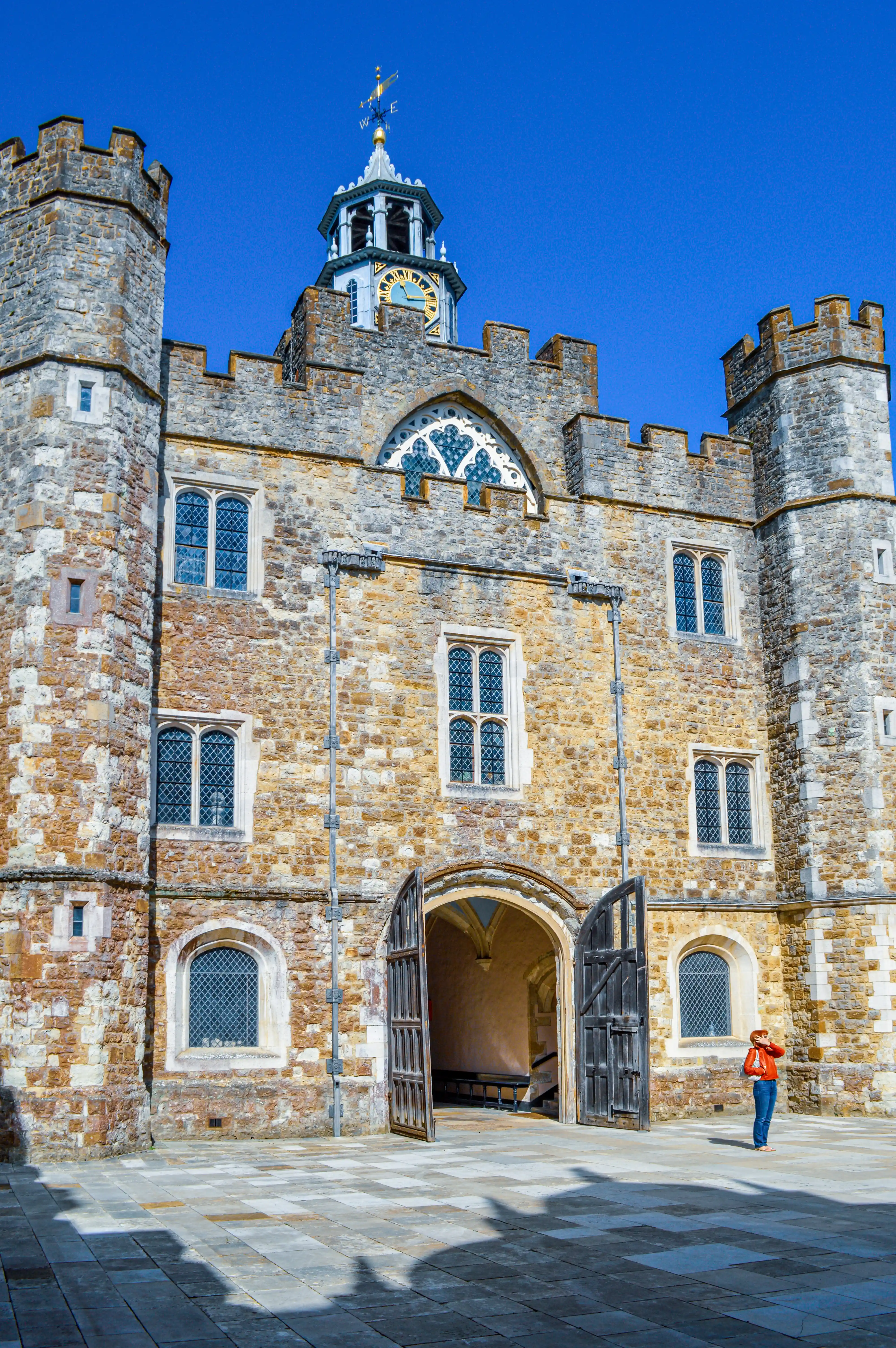
A person in an orange jacket stands in a paved courtyard in front of a large, old stone building with turrets, a clock tower, and open wooden doors.
Historic Architecture with Clock Tower and Courtyard Scene ‐ photo by ,
©www.mgaylard.co.uk.
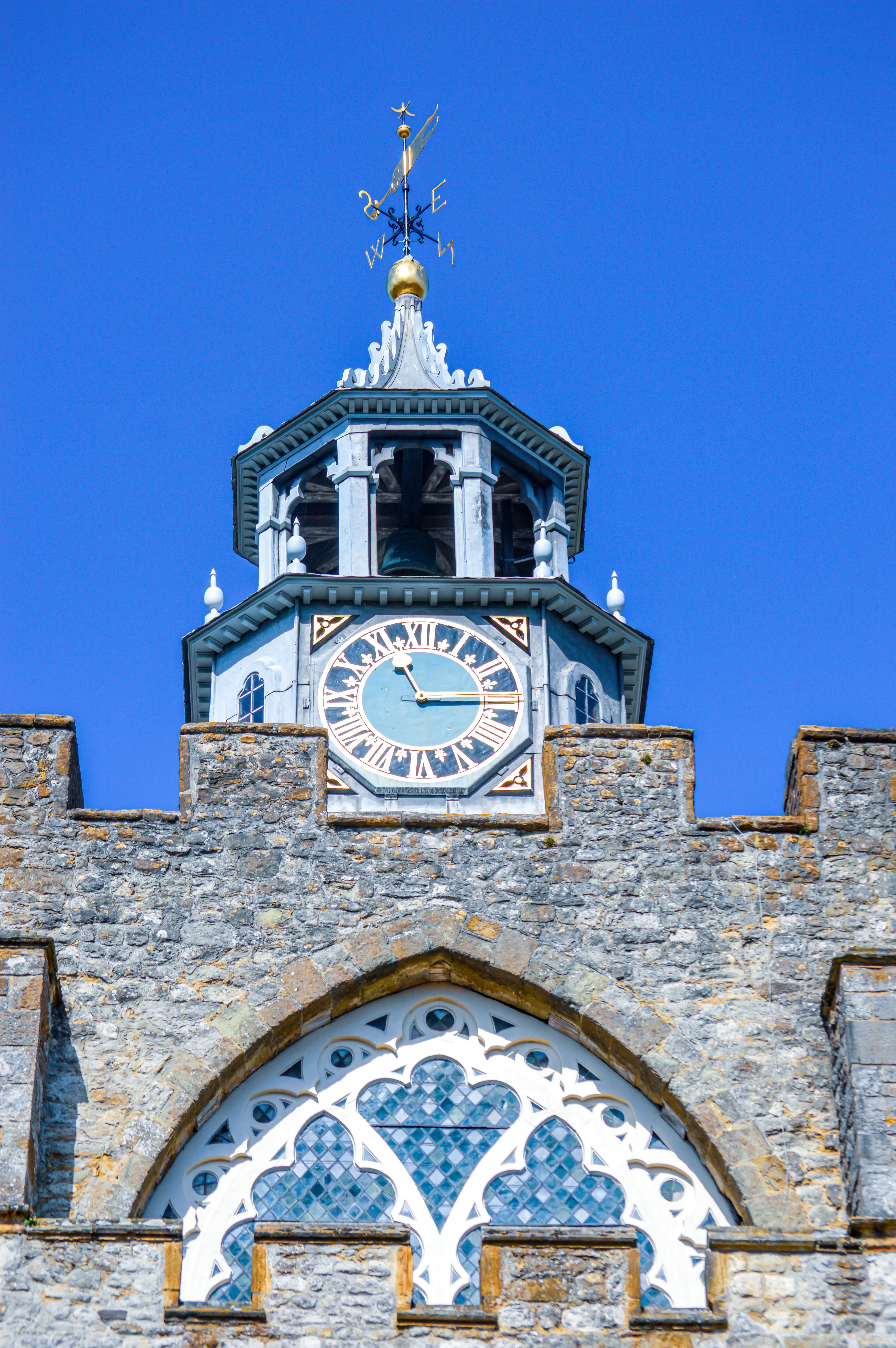
A detailed view of a historic clock tower featuring a large blue clock face with Roman numerals, a bell, a golden weather vane, and rough stone masonry, set against a vivid blue sky.
Clock Tower with Weather Vane ‐ photo by ,
©www.mgaylard.co.uk.
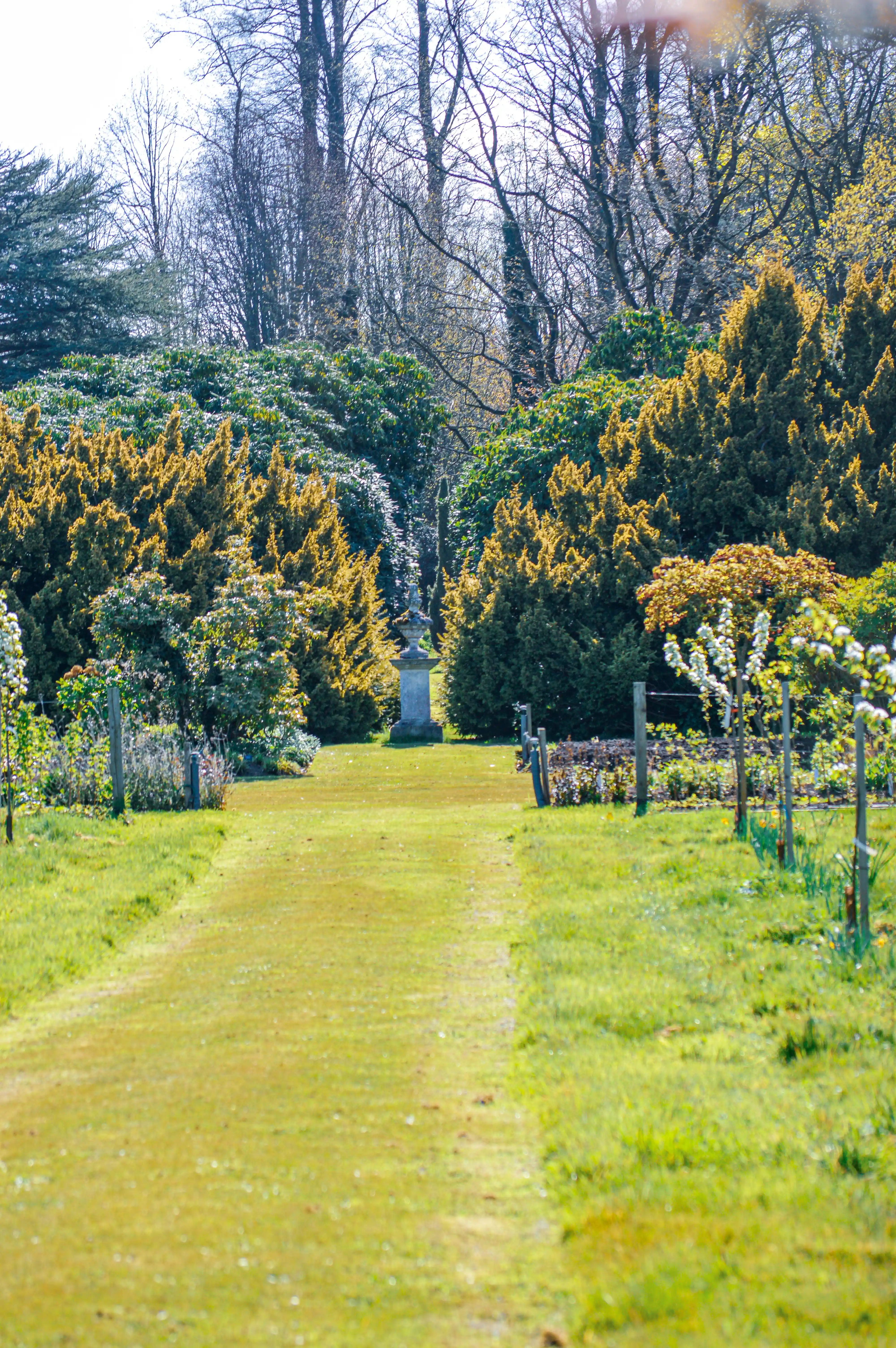
Tranquil Garden Path with Springtime Bloom
Spring Garden Scene with Urn and Blossoms ‐ photo by ,
©www.mgaylard.co.uk.
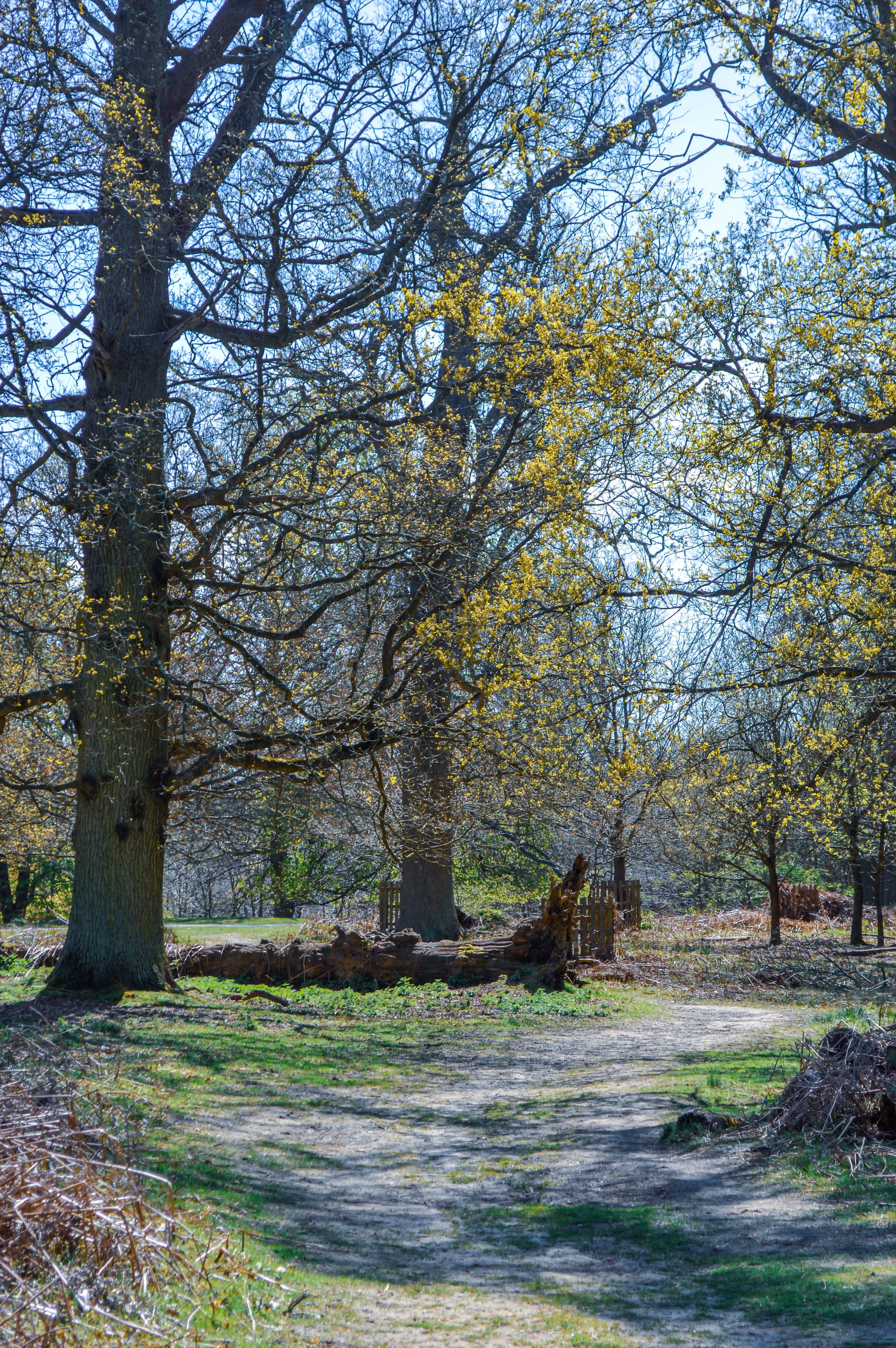
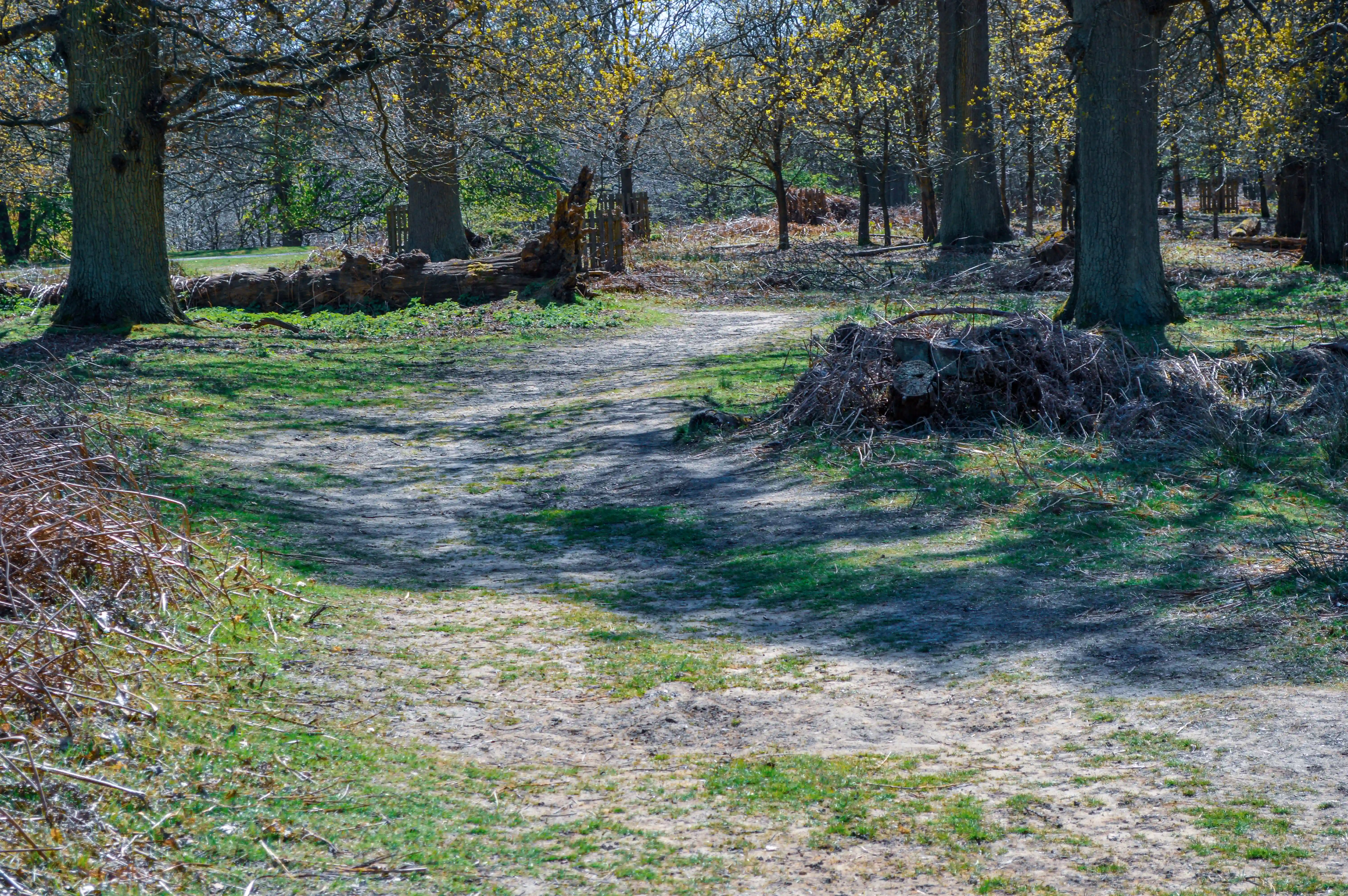
A dusty woodland path curves through a forest in early spring, with sunlight filtering through trees that are starting to bud with yellow leaves. A large fallen tree trunk rests on the left side of the path.
Woodland Path with Spring Foliage and Fallen Log ‐ photo by ,
©www.mgaylard.co.uk.
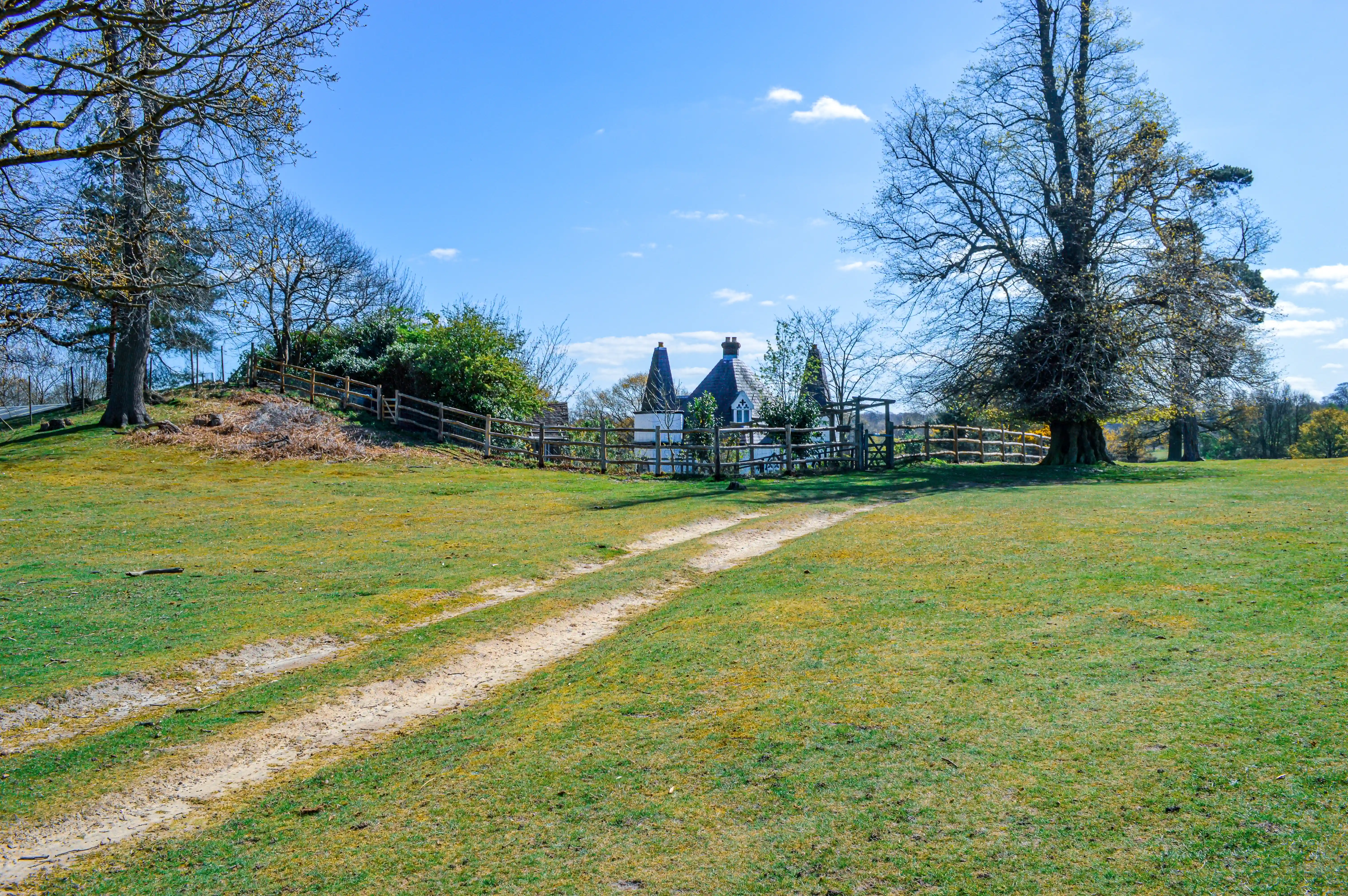
Two dirt tracks lead across a grassy field towards a white oast house with conical roofs, enclosed by a wooden fence, under a bright blue sky with scattered clouds. Large bare trees are visible on either side of the scene.
Idyllic English Oast House and Country Path ‐ photo by ,
©www.mgaylard.co.uk.
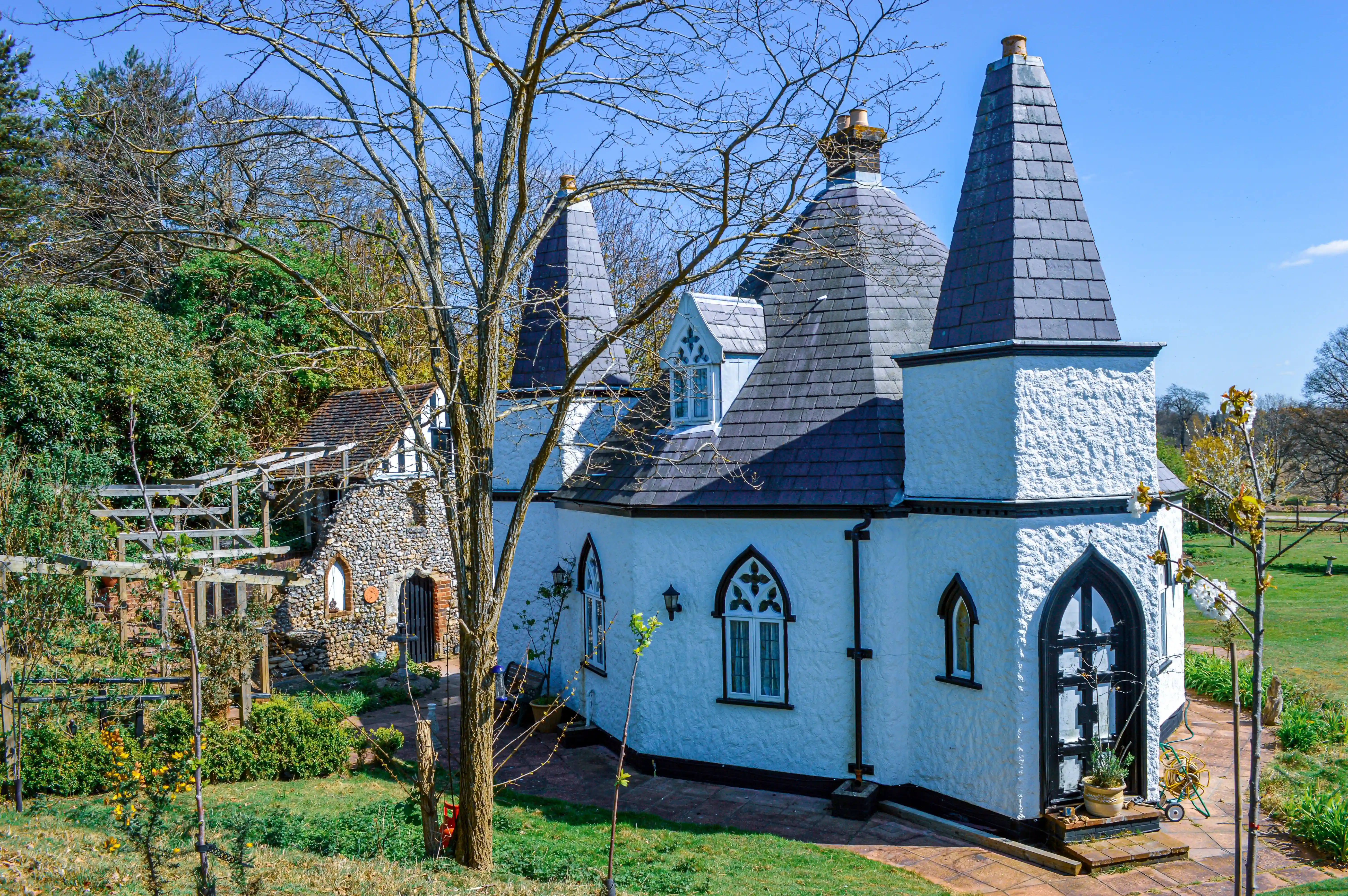
An exterior view of a unique white cottage featuring multiple conical turrets topped with slate tiles, gothic arched windows, and a rough stucco finish. Beside it, a charming, weathered stone structure with a wooden roof stands amidst a garden setting with trees and a bright blue sky.
Fairy Tale Cottage with Turrets and Stone Outbuilding in Sunlight ‐ photo by ,
©www.mgaylard.co.uk.
A winding dirt and gravel path through a woodland with large trees, some featuring yellow-green spring foliage, and fallen logs on either side.
Woodland Spring Path with Dappled Sunlight ‐ photo by ,
©www.mgaylard.co.uk.
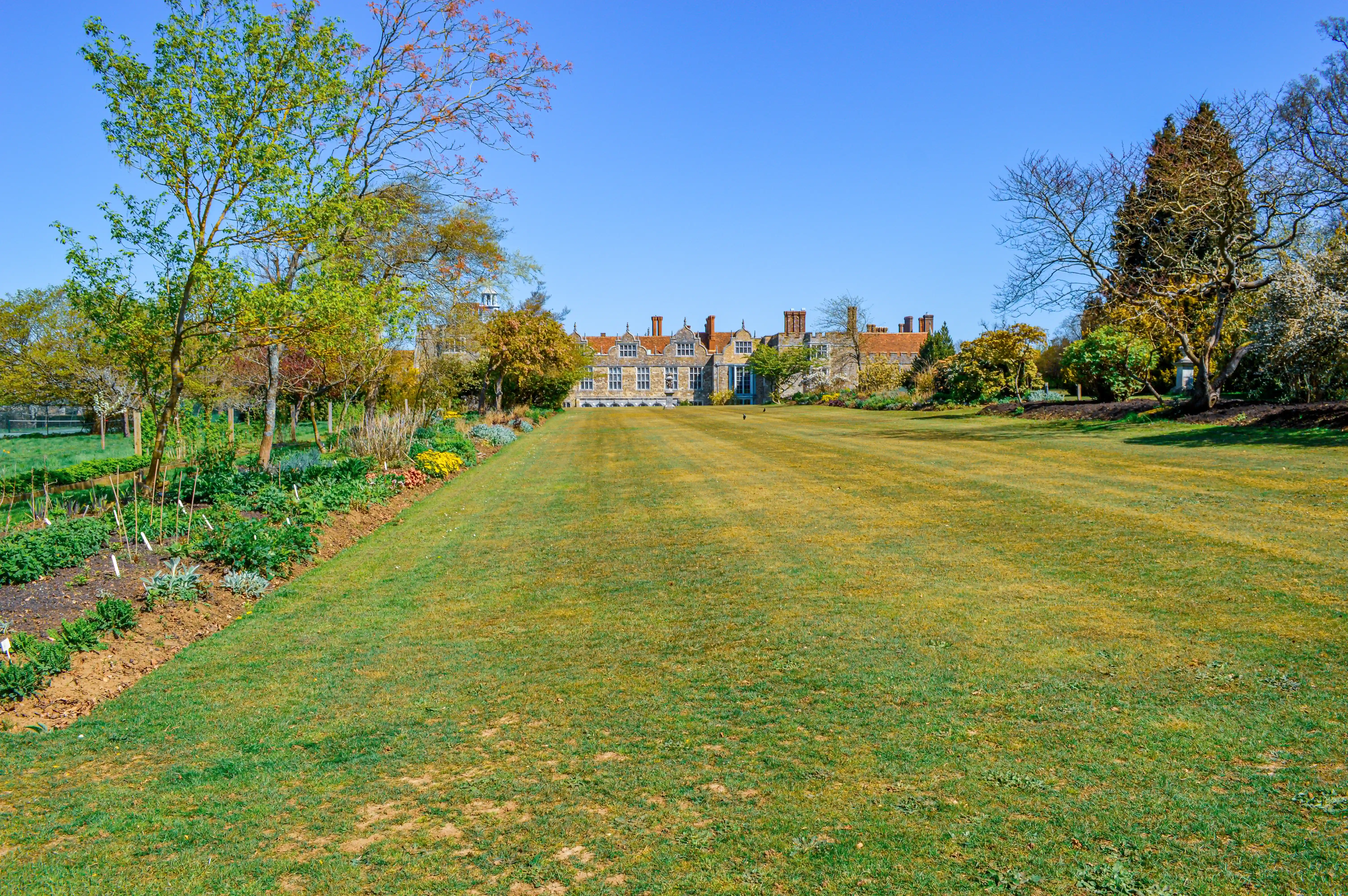
Wide shot of a large, traditional stone manor house with multiple chimneys and rows of windows, viewed across a vast, green, slightly yellowed lawn. To the left, a terraced flowerbed is filled with diverse, colourful plants and flowers. Trees with emerging green and red leaves, and bare branches, flank the lawn and grounds. The sky is a clear, bright blue.
Majestic Manor Gardens in Spring Bloom ‐ photo by ,
©www.mgaylard.co.uk.
Open the full set flickr button this page

Knole: A Grand Historic House with a Literary Soul

Knole is a magnificent 15th-century stately home in Sevenoaks, Kent, often called "Calendar House" because it was said to have 365 rooms, 52 staircases, 12 entrances, and 7 courtyards—one for each day, week, and month of the year. Owned by the National Trust, Knole is a masterpiece of Tudor, Stuart, and Georgian architecture, surrounded by a 1,000-acre deer park and beautiful gardens.

A Palace of Archbishops and Kings

Knole is one of England’s most magnificent and historically rich country houses, a sprawling estate set within a 1,000-acre medieval deer park in the heart of Kent. Its origins trace back to the late 15th century, when Thomas Bourchier, Archbishop of Canterbury, transformed a manor house into a grand palace fit for royalty and the church’s highest ranks. The name "Knole" derives from the Old English cnoll, meaning "hill", a reference to its elevated position atop a gentle rise, offering sweeping views across the Kentish Weald. The house’s imposing ragstone façade, turrets, and gatehouse give it the appearance of a fortress, yet its interiors reveal a world of opulence, art, and literary legend .
Knole’s royal connections are deep and varied. Henry VIII was a frequent visitor, drawn by the estate’s excellent hunting in its ancient deer park. During his turbulent divorce from Catherine of Aragon, he even suggested that his daughter, the future Queen Mary I, stay at Knole. The house later passed through the hands of Thomas Cranmer, Henry’s Archbishop of Canterbury, who was forced to surrender it to the Crown in 1538. In 1561, Elizabeth I granted Knole to her cousin, Thomas Sackville, who remodeled and expanded the house into the Renaissance palace we see today. The Sackville family has called Knole home for over 400 years, and their legacy is woven into every stone, portrait, and tapestry within its walls.

A House of Literary Legend

Knole is not just a historic house—it’s a literary landmark. The estate’s most famous resident was Vita Sackville-West, the poet, novelist, and gardener, who was born at Knole in 1892. Though she loved the house deeply, she was denied inheritance due to primogeniture laws (which favored male heirs), a bitter irony that inspired her masterpiece, Knole and the Sackvilles (1922). Her passionate affair with Virginia Woolf further cemented Knole’s place in literary history, as Woolf’s novel Orlando (1928) was inspired by Vita’s life and the house itself. Woolf famously described Knole as "more like a town than a house", a testament to its vast scale—with legendary claims of 365 rooms, 52 staircases, and 7 courtyards (though the actual count is closer to 400 rooms, with 15 open to the public).
The house’s interiors are a treasure trove of art and history. The Brown Gallery, a long, narrow chamber, is lined with portraits of dignitaries, ancestors, and royalty, including works by Van Dyck, Reynolds, and Gainsborough. The Great Hall features a magnificent oak screen and heraldic devices, while the King’s Room is said to have hosted James I. The state apartments are furnished with lavish tapestries, antique furniture, and priceless artifacts, many collected by the Sackville family over the centuries .

A Deer Park and a Living Estate

Knole’s 1,000-acre deer park is the last surviving medieval deer park in Kent, a wild and beautiful landscape that has changed little since the Middle Ages. The park is home to herds of fallow and red deer, which roam freely across the rolling hills and ancient woodlands. Visitors can explore its meandering paths, spot wildlife, and enjoy panoramic views of the Kent countryside. The National Trust, which has managed Knole since 1946, works closely with the Sackville-West family (who still live in private apartments within the house) to preserve its heritage while opening its doors to the public

A House of Scandal, Survival, and Splendor

Knole’s history is not without its dramas. During the English Civil War, the Sackville family backed the Royalists, leading to raids by Parliamentarian forces. Yet, the family weathered the storm, and under Charles II, their fortunes were restored. Over the centuries, the Sackvilles filled Knole with treasures—paintings, sculptures, and tapestries—from across Europe, turning it into a living museum of art, history, and aristocratic life.

References

www.britainallover.comwww.thameslinkrailway.comwww.nationaltrustcollections.org.uken.wikipedia.orgen.wikipedia.orgwww.historyextra.com , Text generated by Mistral AI , Text generated by Microsoft CoPilot , generated by Google's AI Image Describer

Ightham

locale

streetIghthamKent,   postcode,   UK

Open the full set flickr button this page
To the top
Powered by w3.css. The images are all stored on link to www.gaylard.co.uk Photostream on Flickr   This website is hosted by link to 123Reg Web Hosting