HOME Cleopatra's Pools Hierapolis Pamukkale

Pamukkale

Cleopatra's Springs (Cleopatra's Pool)

sublocPamukkaleDenizli,   Turkey

Cleopatra's Springs, also known as Cleopatra's Pool, is a historic thermal pool located in Pamukkale, Turkey. According to legend, the pool was a gift from Mark Antony to Cleopatra, who bathed in its warm, mineral-rich waters. The pool is surrounded by ancient Roman columns and ruins, and its waters are believed to have healing properties. It is one of the most famous attractions in Pamukkale, offering visitors a unique opportunity to swim among ancient artifacts.
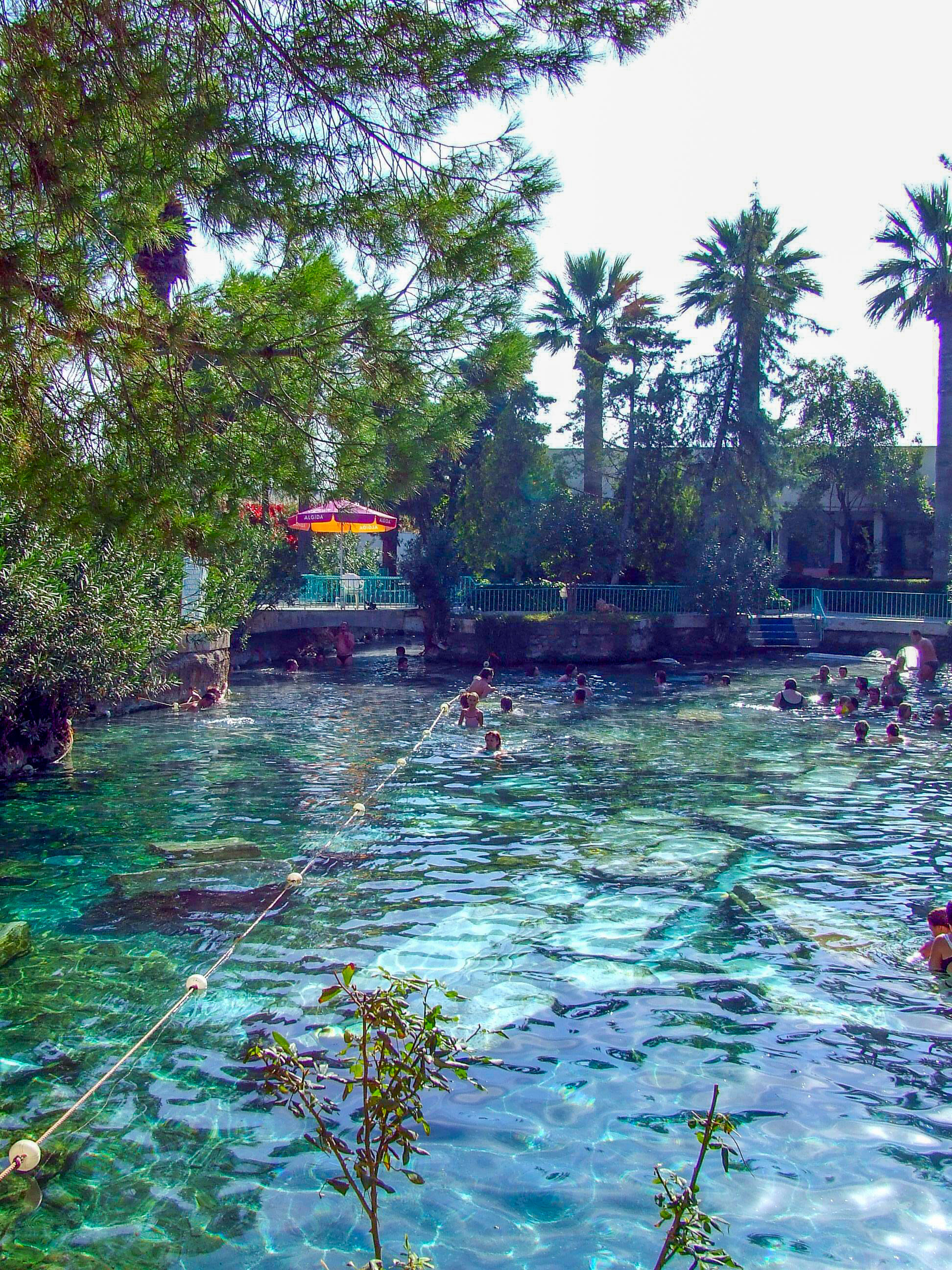
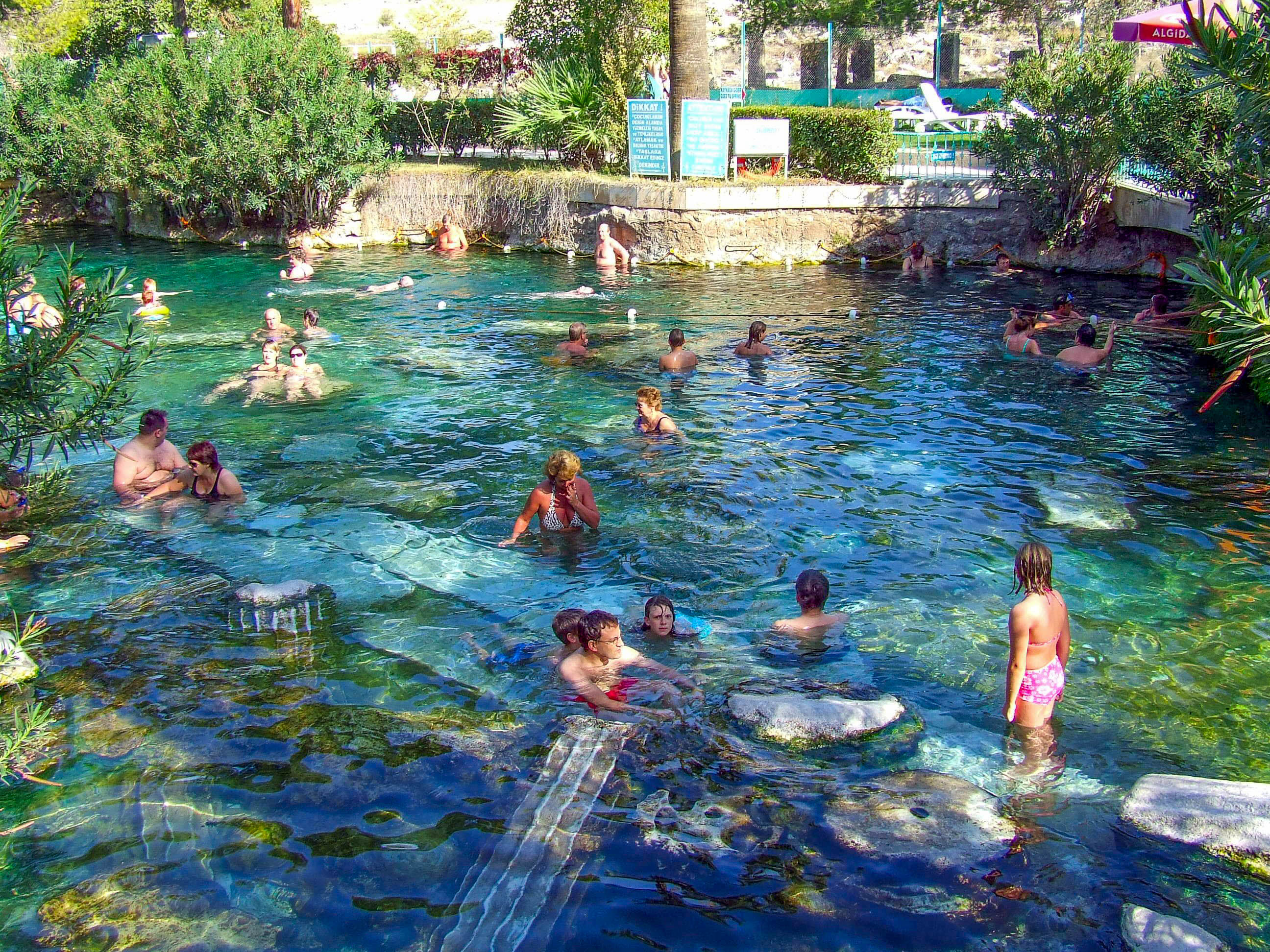
swimming and enjoying the clear, blue-green water
swimming and enjoying the clear, blue-green water ‐ photo by ,
©www.mgaylard.co.uk.
a natural swimming area surrounded by lush greenery and trees
a natural swimming area surrounded by lush greenery and trees ‐ photo by ,
©www.mgaylard.co.uk.
relaxed and leisurely
relaxed and leisurely ‐ photo by ,
©www.mgaylard.co.uk.

Cleopatra's Springs (Cleopatra's Pool)

Cleopatra’s Pool (also called the Antique Pool) is a thermal spring pool set within the ruins of Hierapolis, adjacent to the travertine terraces of Pamukkale in Denizli province, Turkey. The pool contains submerged Roman columns and architectural fragments that fell during ancient earthquakes, creating the unique experience of bathing among ruins.

History and the Cleopatra legend

Legend: Local tradition links the pool to Cleopatra VII, claiming it was a gift from Mark Antony and that the queen bathed there; this story is part of the site’s popular appeal but is not firmly proven by contemporary sources.
Archaeology: The pool formed where a Roman temple complex (often associated with Apollo and the spa town of Hierapolis) collapsed in an earthquake; columns, capitals, and marble fragments now lie submerged. Excavations and finds from the site date mainly to the Roman Imperial

What you’ll see and why it’s special

Thermal water: The pool is fed by warm, mineral-rich springs (around mid-30s °C), long believed to have therapeutic properties.
Underwater ruins: Visitors can swim among fallen columns and marble blocks that once belonged to the Roman temple complex, a rare combination of active bathing and visible submerged archaeology.
References

theothertour.comwww.pamukkale-turkey.com/turquiaexclusiva.com , Text generated by Microsoft CoPilot

Hierapolis

PamukkaleDenizli,   Turkey

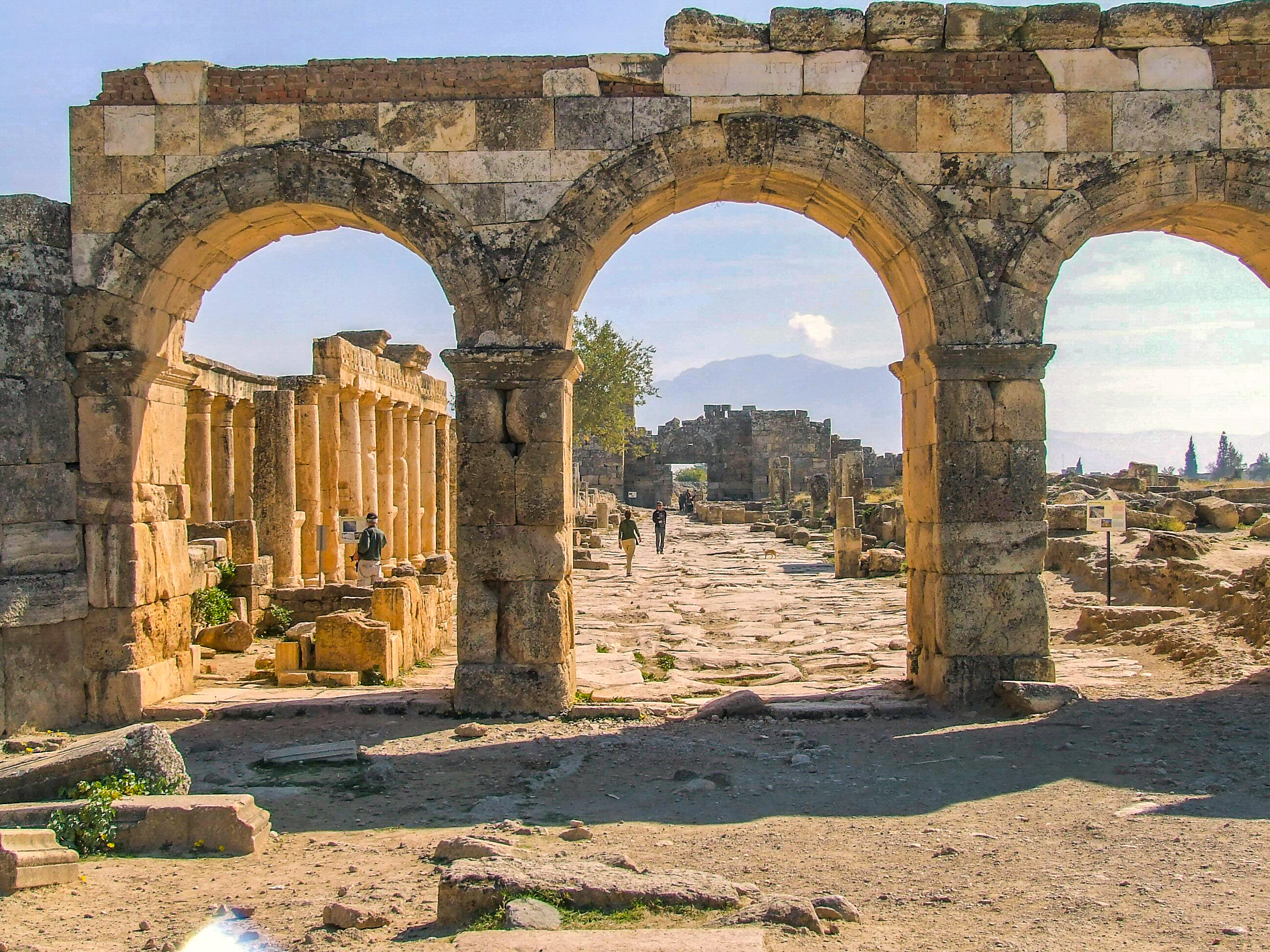
Hierapolis is an ancient Greco-Roman city located in Pamukkale, Turkey. Founded in the 2nd century BCE, it was renowned for its thermal springs, which were believed to have healing properties. Hierapolis became a significant spa and religious center, attracting visitors from across the ancient world. Today, it is a UNESCO World Heritage Site, featuring well-preserved ruins such as the Great Theatre, the Necropolis, and the Sacred Pool (Cleopatra's Pool).
a prominent stone archway
a prominent stone archway ‐ photo by ,
©www.mgaylard.co.uk.
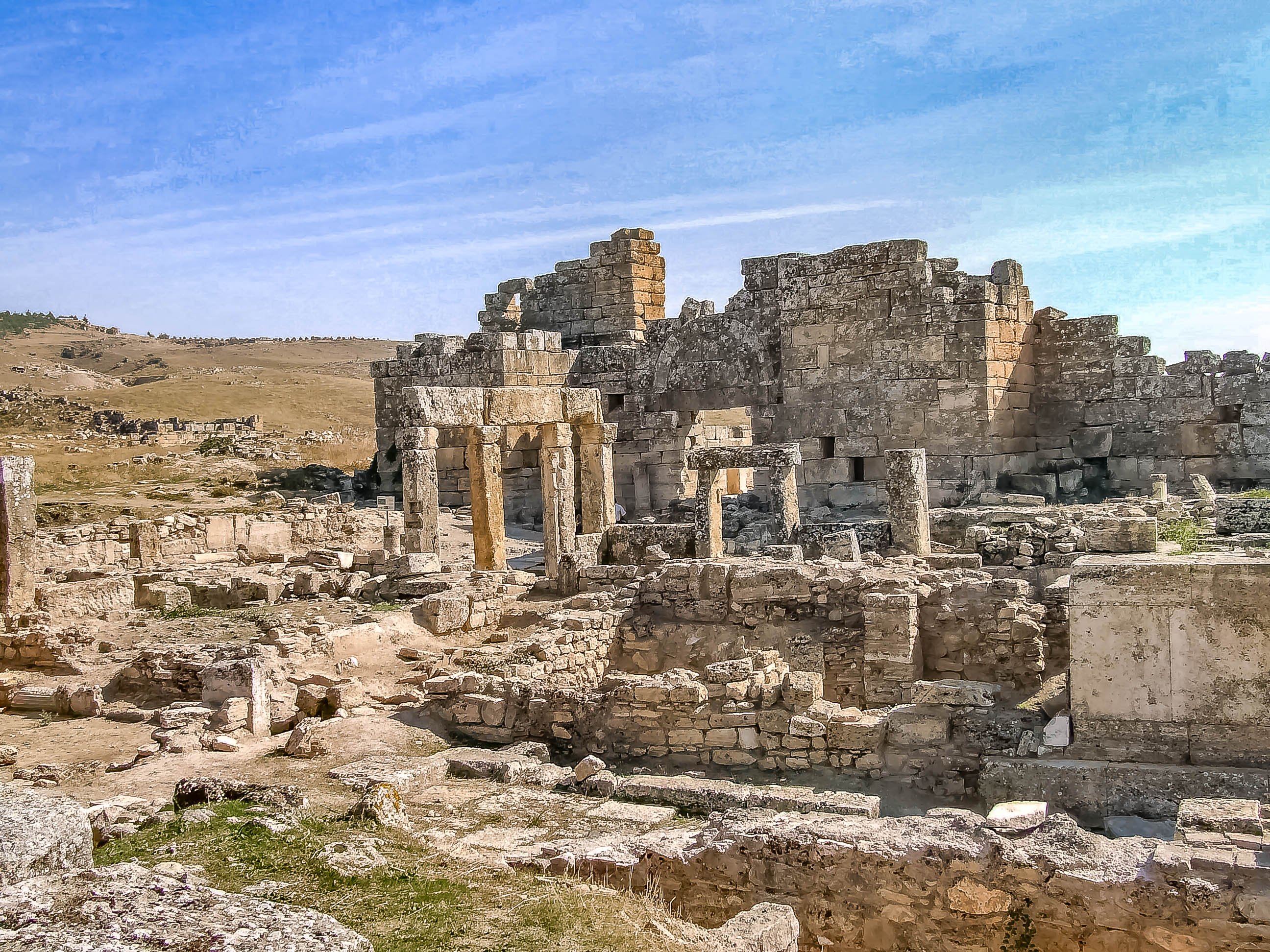
The image depicts the ruins of an ancient structure situated on a hillside. The remnants of the building, made of stone, are scattered across the landscape, indicating the passage of time and the structure's historical significance. The surrounding area is arid with sparse vegetation, and the ruins are set against a backdrop of rolling hills and distant mountains under a clear sky.
the ruins are set against a backdrop of rolling hills and distant mountains ‐ photo by ,
©www.mgaylard.co.uk.
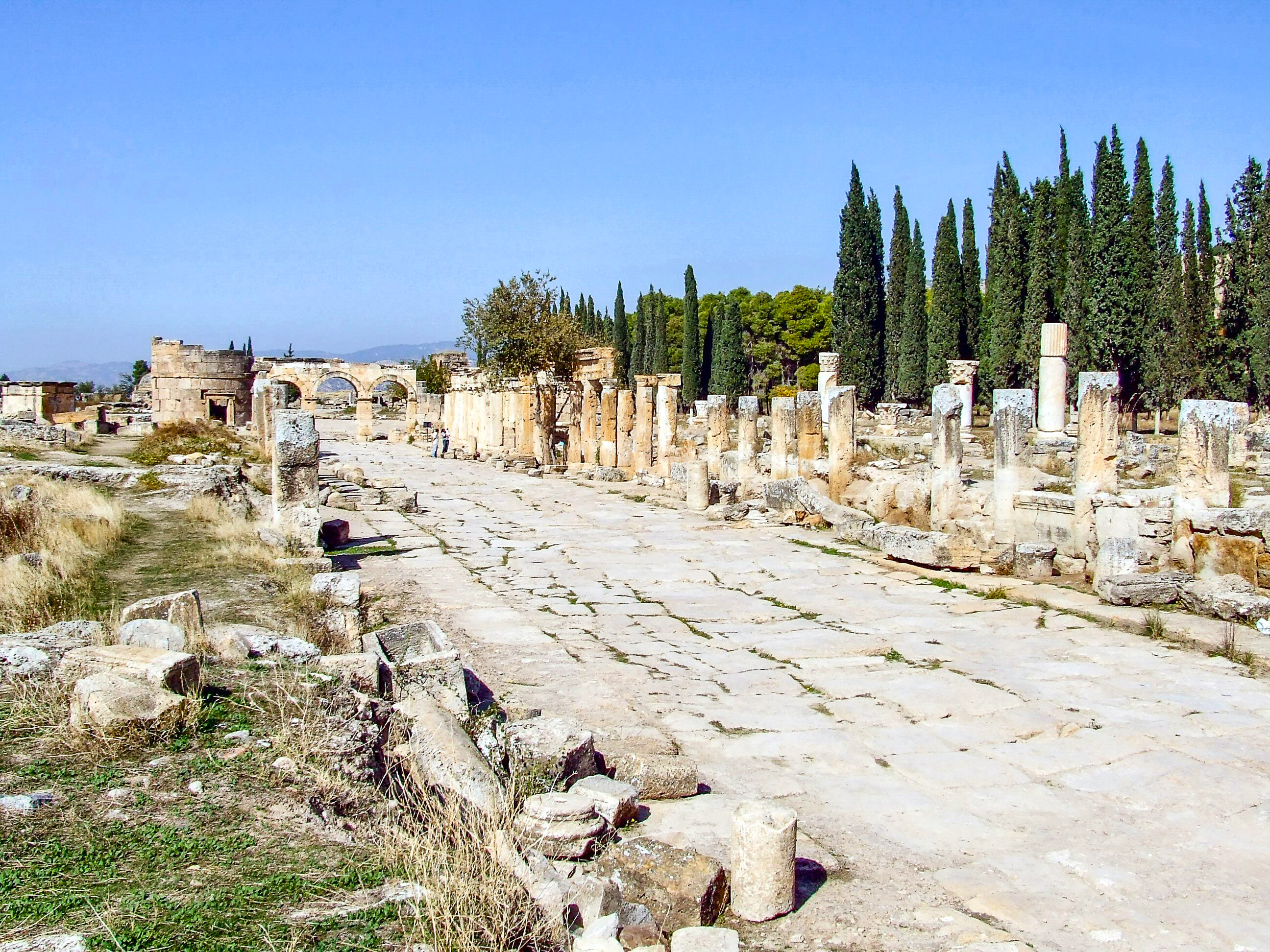
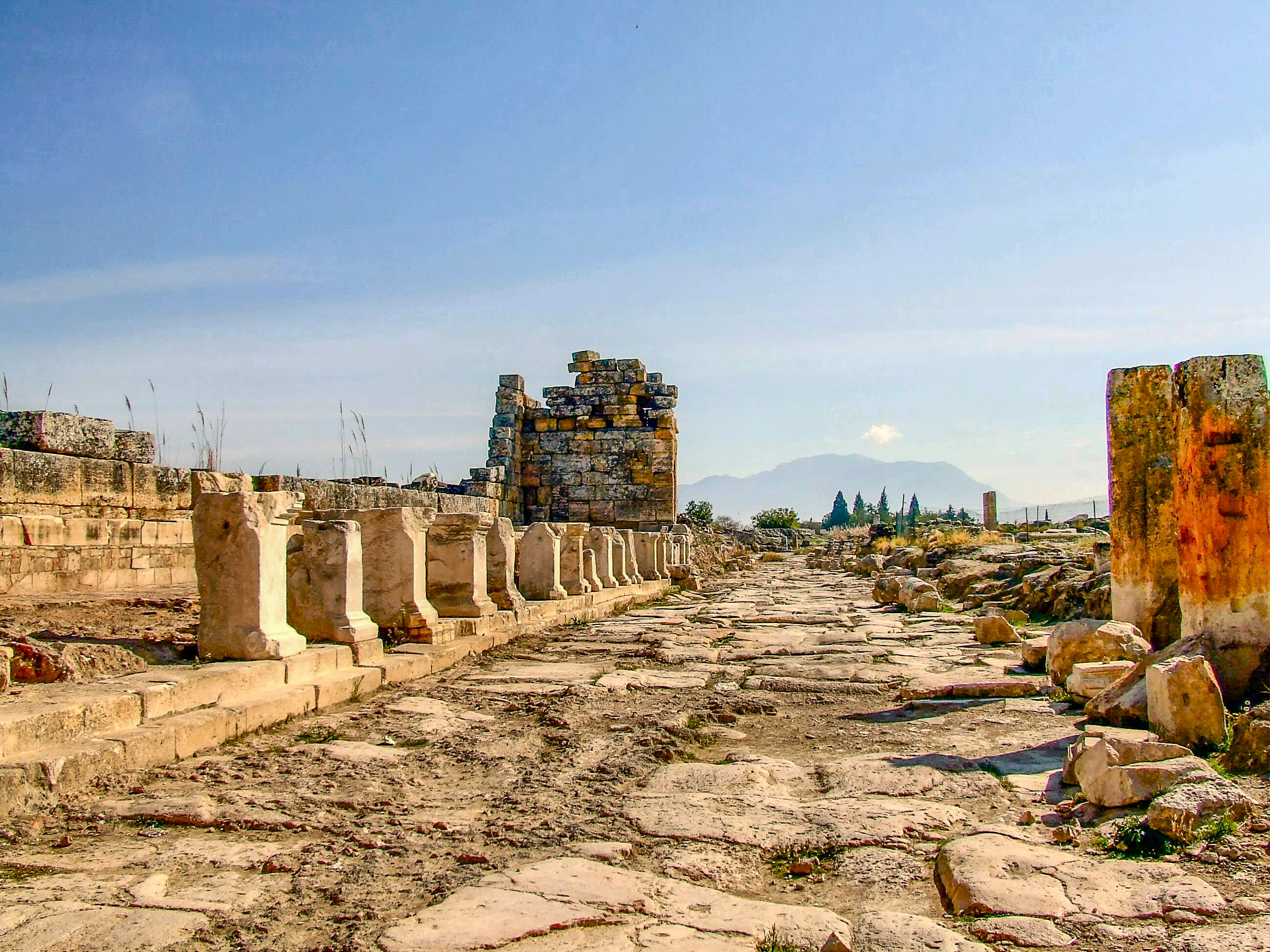
The image depicts an ancient archaeological site with a stone-paved pathway flanked by the remnants of stone columns and structures. The site is surrounded by tall cypress trees and other greenery, indicating a historical ruin possibly from a Roman or Greek era. The clear blue sky suggests a sunny day, and the overall scene conveys a sense of historical significance and tranquility.
a stone-paved pathway flanked by the remnants of stone columns and structures ‐ photo by ,
©www.mgaylard.co.uk.
View of springs ‐ photo by ,
©www.mgaylard.co.uk.
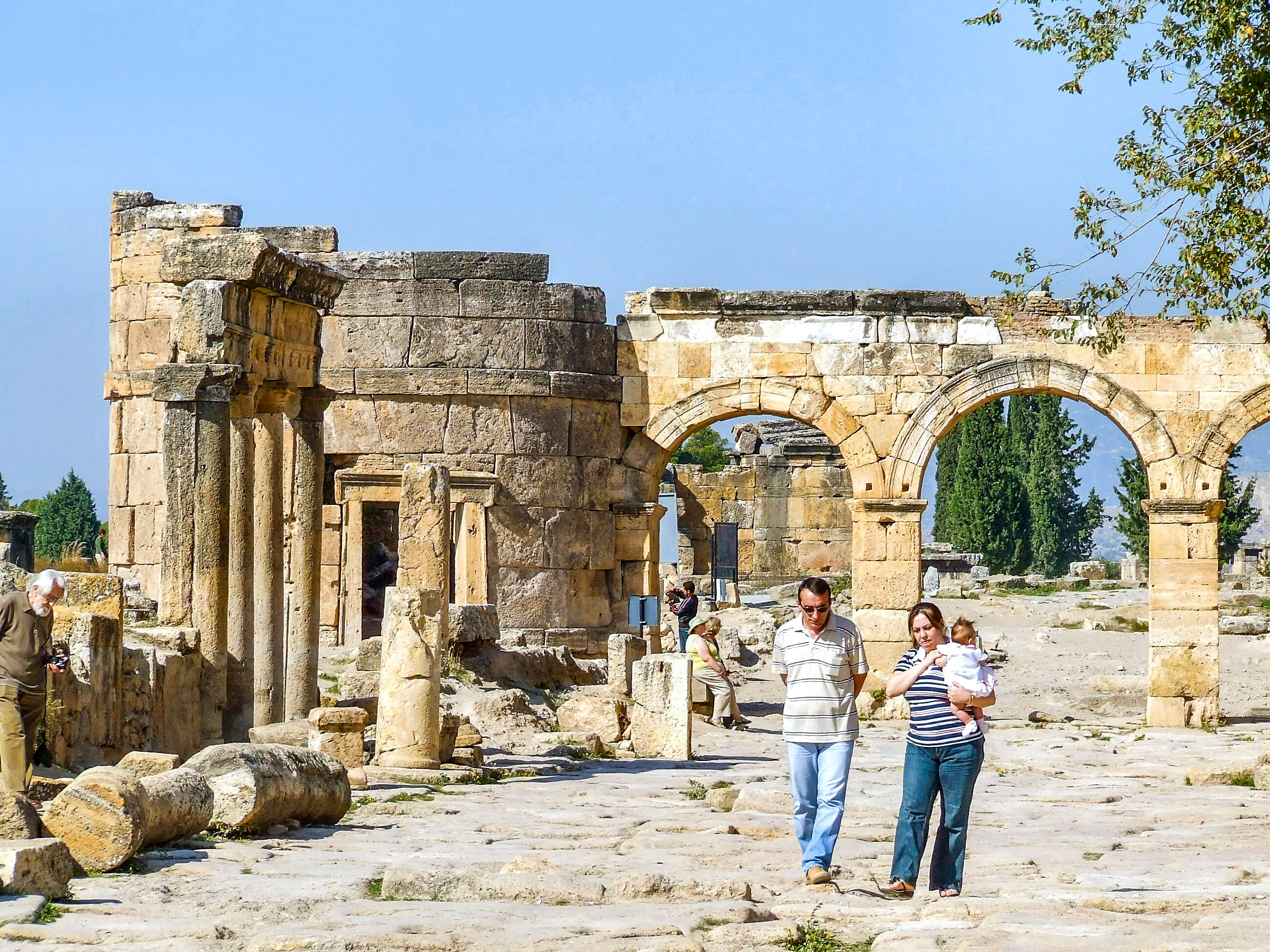
The image depicts an ancient archaeological site with stone ruins and columns. Several people, including a couple with a baby, are walking and exploring the site. The weather appears to be clear and sunny, and the surroundings include some greenery and trees.
stone ruins and columns ‐ photo by ,
©www.mgaylard.co.uk.
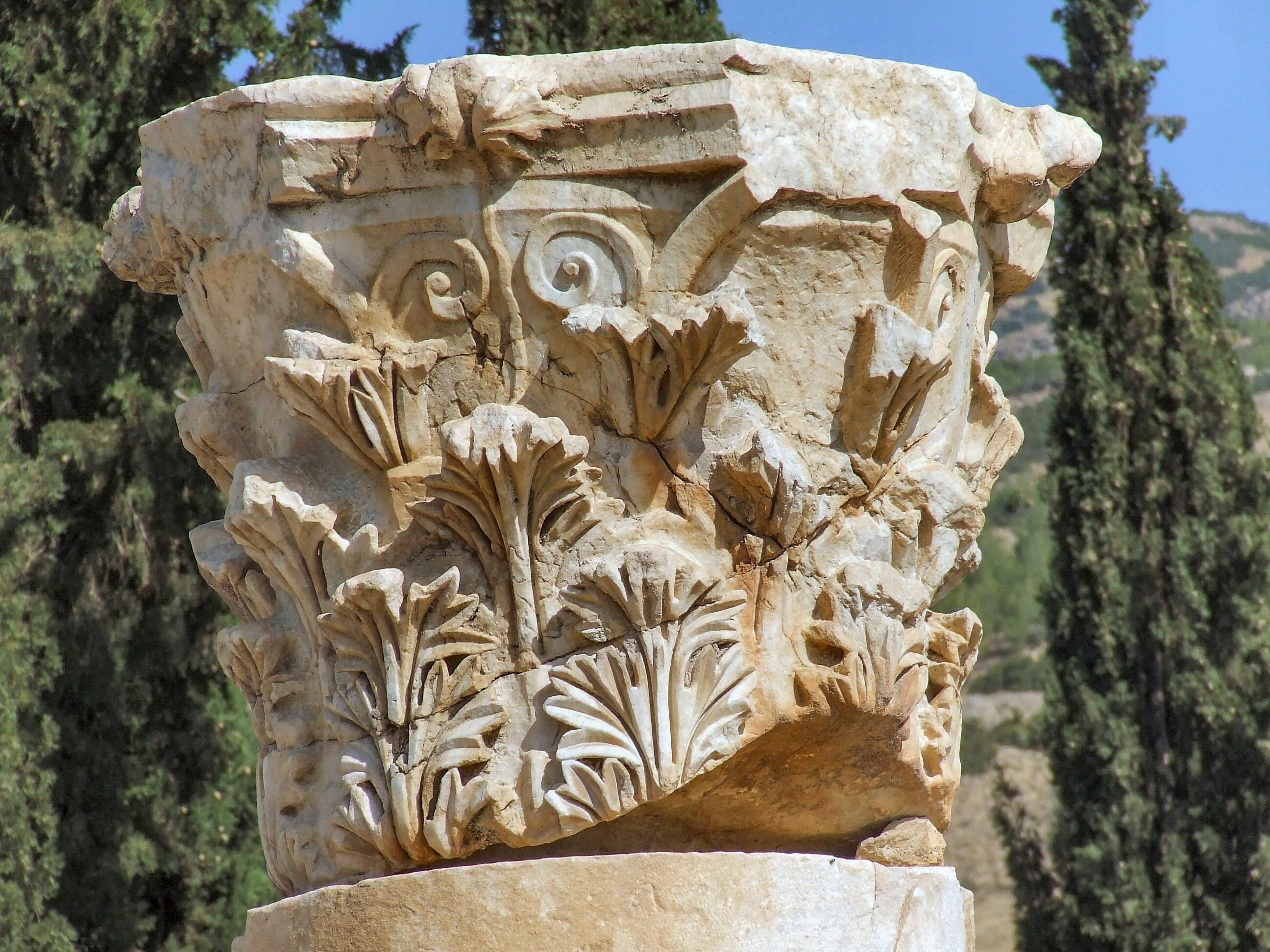
The image depicts an ancient, weathered stone capital, likely from a column, featuring intricate carvings of acanthus leaves and volutes characteristic of Corinthian architecture. The stone is set against a backdrop of green trees and a distant landscape, suggesting it is part of a ruin in a natural setting.
weathered stone capital ‐ photo by ,
©www.mgaylard.co.uk.
Roman ruin
Roman ruin ‐ photo by ,
©www.mgaylard.co.uk.
a pathway flanked by tall, weathered stone columns and walls
a pathway flanked by tall, weathered stone columns and walls ‐ photo by ,
©www.mgaylard.co.uk.
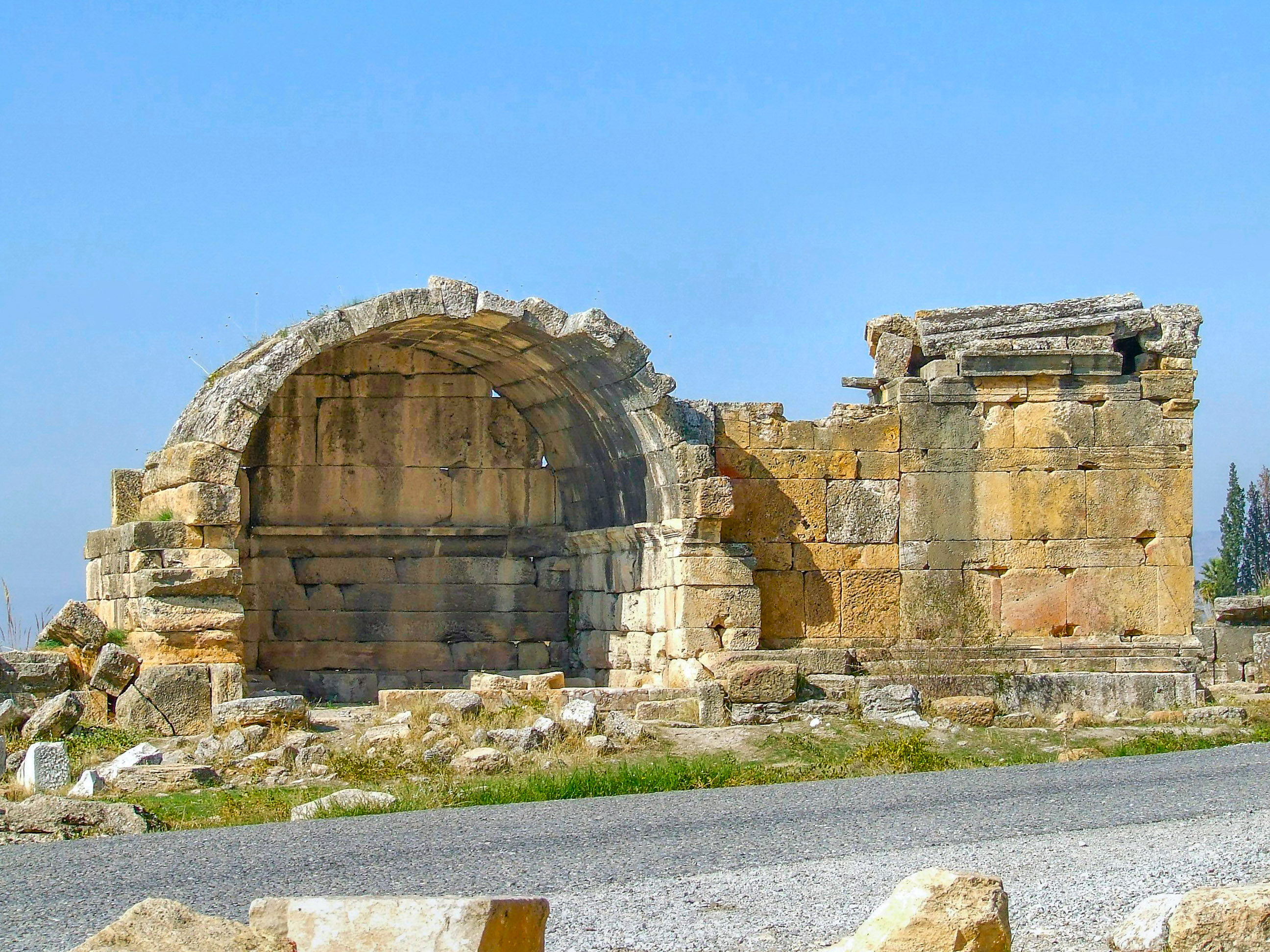
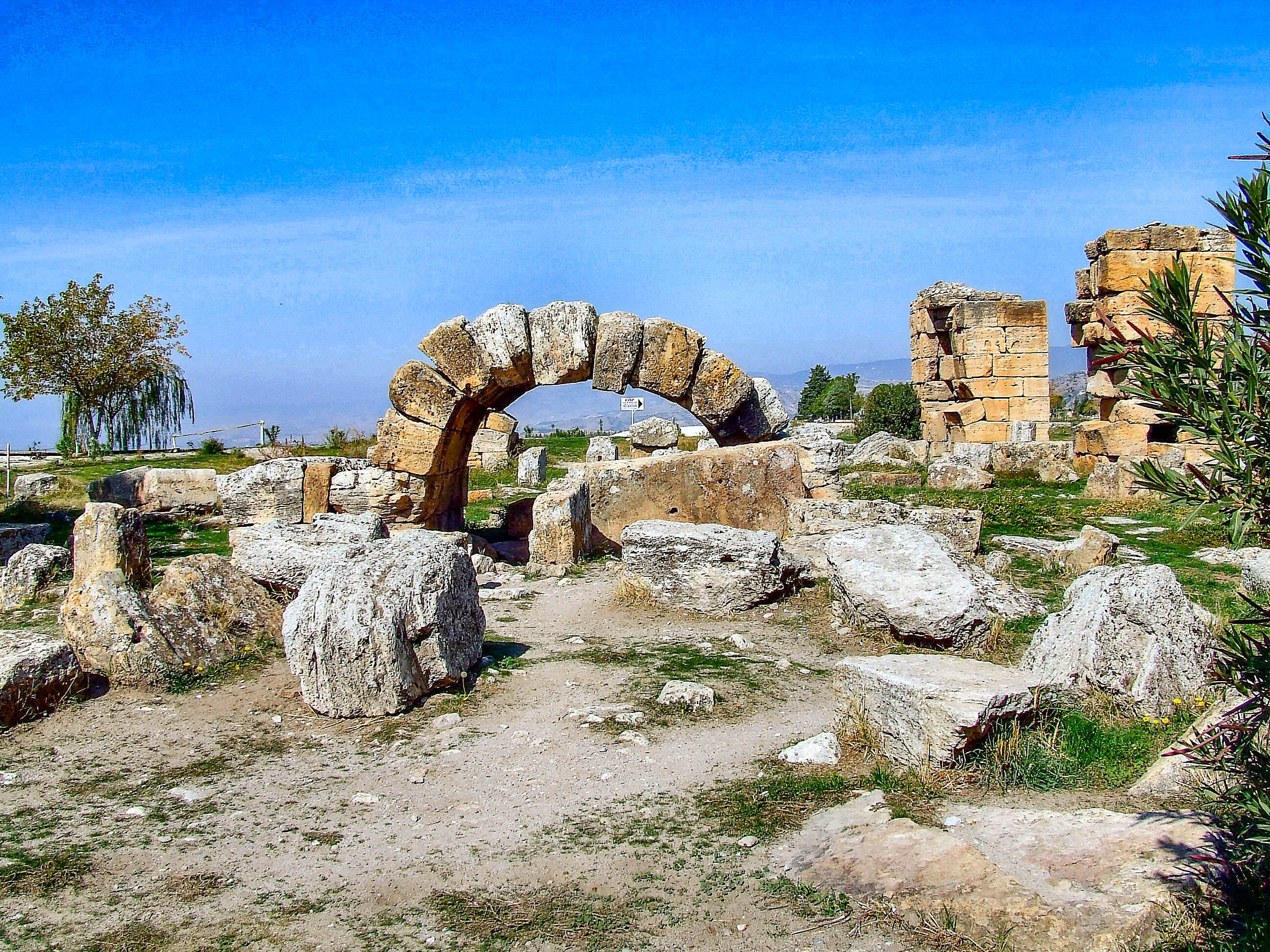
The image depicts an ancient stone structure with a prominent archway, likely part of a historical or archaeological site. The structure is made of large, weathered stones and appears to be in a state of ruin, with some parts of the walls and archway missing or crumbling. The ground around the structure is uneven and strewn with additional stones and debris, indicating it has not been maintained or restored recently. The sky is clear and blue, suggesting it is a sunny day. The overall scene conveys a sense of antiquity and historical significance.
Necropolis Tomb ‐ photo by ,
©www.mgaylard.co.uk.
The image depicts ancient stone ruins, likely part of a historical or archaeological site. The structures are made of large, weathered stone blocks, with some walls and doorways still discernible. The area appears to be an open site with a gravel path running through it, suggesting it is maintained for visitors. The sky is clear and blue, indicating a sunny day. The overall scene conveys a sense of historical significance and antiquity.
Necropolis Tomb ‐ photo by ,
©www.mgaylard.co.uk.
The image depicts the ruins of an ancient structure, likely a historical or archaeological site. The scene features old stone walls and columns, some of which are partially standing while others are in ruins. The ground is uneven with scattered stones and patches of dirt. In the background, there are distant mountains and a clear blue sky, suggesting a dry and possibly Mediterranean climate. The overall atmosphere is one of antiquity and historical significance.
old stone walls and columns ‐ photo by ,
©www.mgaylard.co.uk.
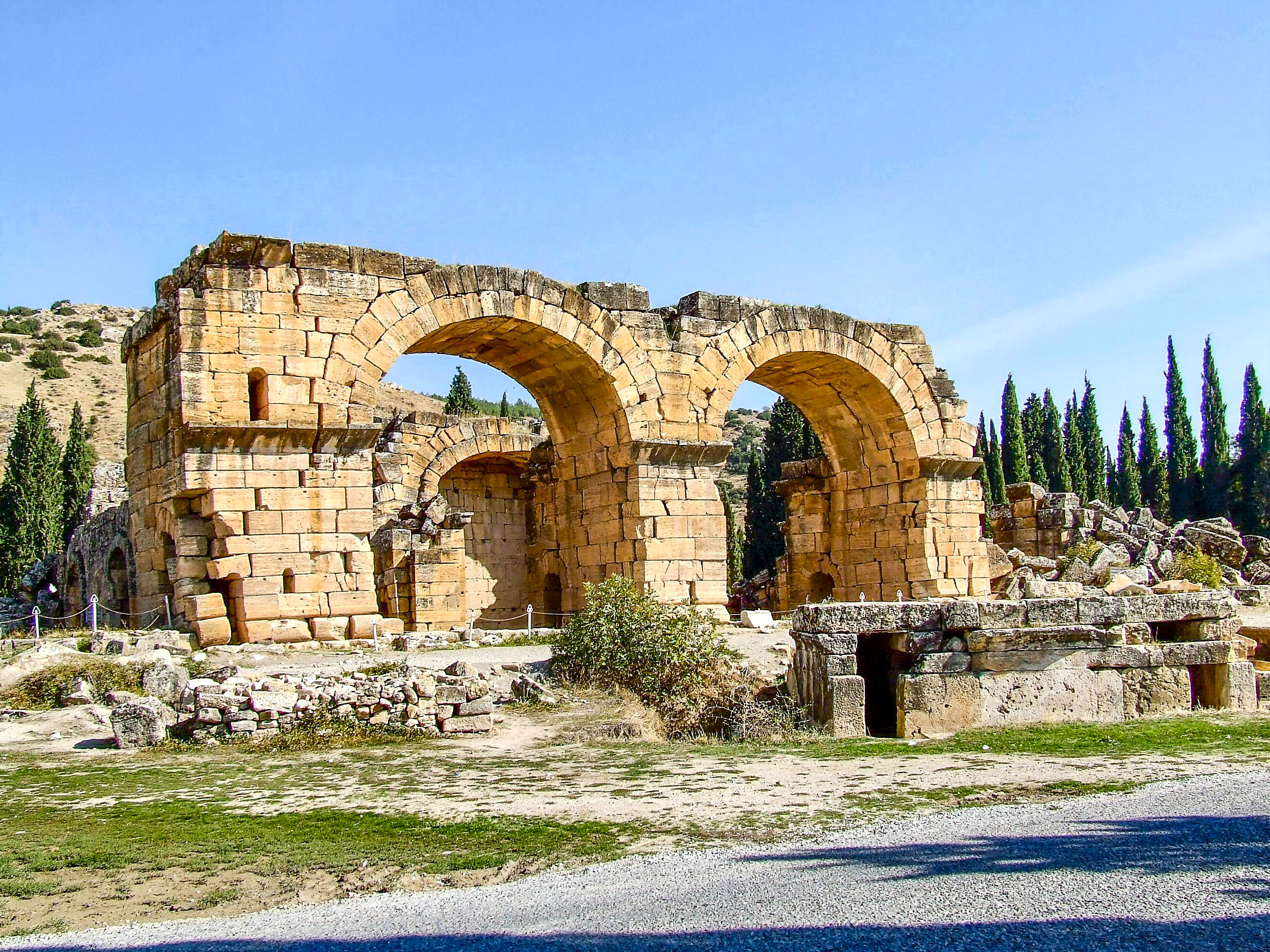
The image depicts the ancient ruins of an aqueduct
Hierapolis ‐ photo by ,
©www.mgaylard.co.uk.

Hierapolis

Hierapolis was an ancient spa city perched above the white travertine terraces of Pamukkale in southwestern Anatolia (modern Denizli province). It developed as a sacred healing centre built around thermal springs and flourished under Hellenistic, Roman, and Byzantine rule; today the combined natural and archaeological ensemble is a UNESCO World Heritage site.

Key historical phases and turning points

Foundation and Hellenistic growth
Likely refounded or expanded by the Attalid kings of Pergamon in the 2nd century BCE; the name Hierapolis means “holy city,” reflecting its cultic and therapeutic role.
Roman prosperity and rebuilding
Major Roman-era monuments (the theatre, baths, colonnaded streets) date to the 1st–3rd centuries CE after destructive earthquakes prompted lavish reconstructions.
Christian period
Hierapolis became an early Christian centre; local tradition and later archaeology associate the city with the martyrdom and tomb of the Apostle Philip.

Principal monuments and features

Antique Pool (Cleopatra’s Pool)
A thermal pool containing submerged columns and architectural fragments from collapsed Roman structures; popular for bathing among ruins.
Roman theatre
Large, well-preserved theatre used for performances and civic events; its scale reflects the city’s regional importance.
Plutonium (Gate to the Underworld)
A sacred cave or fissure that emitted toxic gases and was used in ritual contexts; ancient writers and archaeological work highlight its ritual significance.
Necropolis
One of the largest ancient cemeteries in Anatolia, with richly inscribed tombs that illuminate social status, professions, and funerary practice.

Archaeology, conservation, and recent discoveries

Systematic excavation and conservation have been ongoing since the 19th century, with Turkish and international teams uncovering streets, baths, temples, and the Martyrium of Philip. Conservation balances visitor access (including controlled bathing in the Antique Pool) with protection of fragile travertines and submerged archaeological material. Recent work has refined the city’s chronology and clarified the location of key Christian monuments.

References

turkeytravelplanner.comtheturkeytraveler.comturkpidya.com

locale

sublocplaceDenizli,   Turkey

a stunning natural landscape featuring terraces filled with water
a stunning natural landscape featuring terraces filled with water ‐ photo by ,
©www.mgaylard.co.uk.
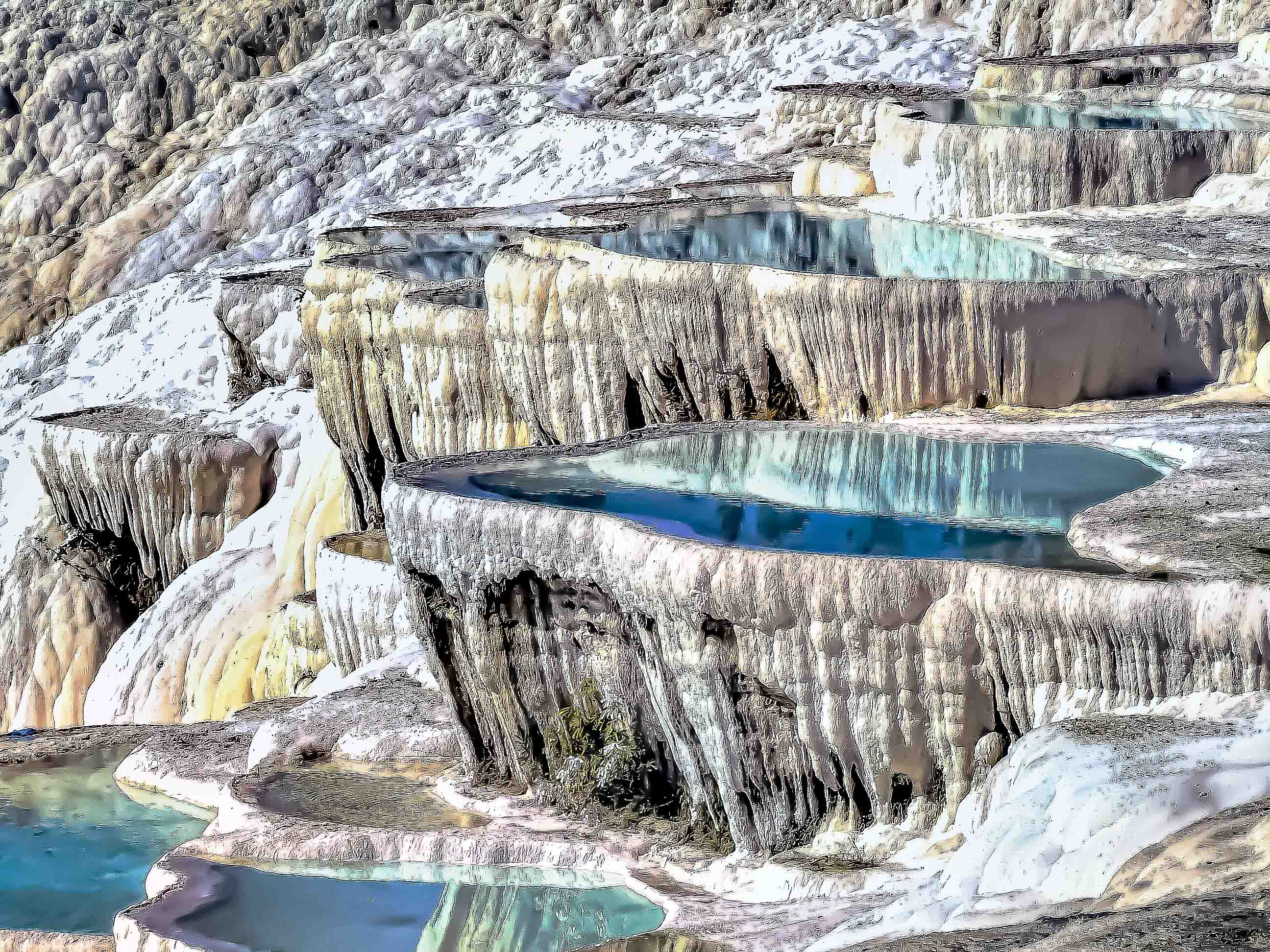
erraces of white travertine, a form of limestone deposited by mineral springs
Terraces of white travertine, a form of limestone deposited by mineral springs ‐ photo by ,
©www.mgaylard.co.uk.
mineral-rich white travertine pools
mineral-rich white travertine pools ‐ photo by ,
©www.mgaylard.co.uk.
a natural site with white terraces and mineral-rich waters
a natural site with white terraces and mineral-rich waters ‐ photo by ,
©www.mgaylard.co.uk.
hot springs and mineral deposits
hot springs and mineral deposits ‐ photo by ,
©www.mgaylard.co.uk.
The formations resemble frozen, icy structures, creating a surreal and beautiful scene
The formations resemble frozen, icy structures, creating a surreal and beautiful scene ‐ photo by ,
©www.mgaylard.co.uk.
Mineral Cliff of Travertine ‐ photo by ,
©www.mgaylard.co.uk.
View of springs ‐ photo by ,
©www.mgaylard.co.uk.
View of springs ‐ photo by ,
©www.mgaylard.co.uk.
Open the full set flickr button this page

Pamukkale

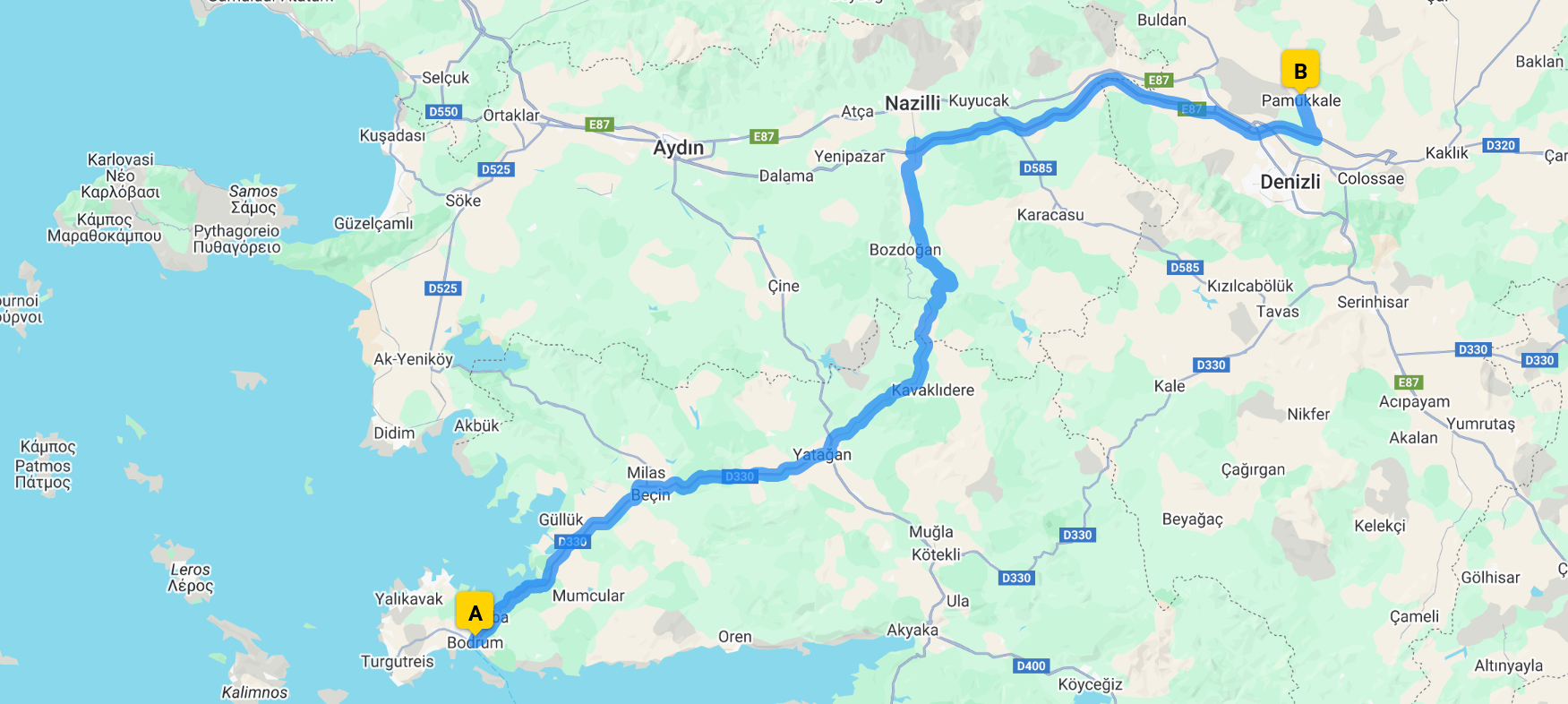
What it is — A striking natural site of white travertine terraces formed by mineral-rich thermal springs, adjacent to the ancient Greco-Roman city of Hierapolis. Location — Denizli Province, southwestern Turkey.

How the terraces formed

Hot spring water supersaturated with calcium carbonate flows down the slope; as carbon dioxide degasses the carbonate precipitates and crystallizes into travertine, building the terraces over millennia.The travertine formation stretches for about 2,700 m in length, 600 m wide and up to 160 m high; local springs range roughly from 35 °C to 100 °C.
Access is controlled, and water flow management and restricted walking routes were introduced after damage from mass tourism; ongoing conservation balances visitor access with preserving the travertine.

References

antalyatouristinformation.comen.wikipedia.org , Text generated by Microsoft CoPilot
To the top
Powered by w3.css. The images are all stored on link to www.gaylard.co.uk Photostream on Flickr   This website is hosted by link to 123Reg Web Hosting