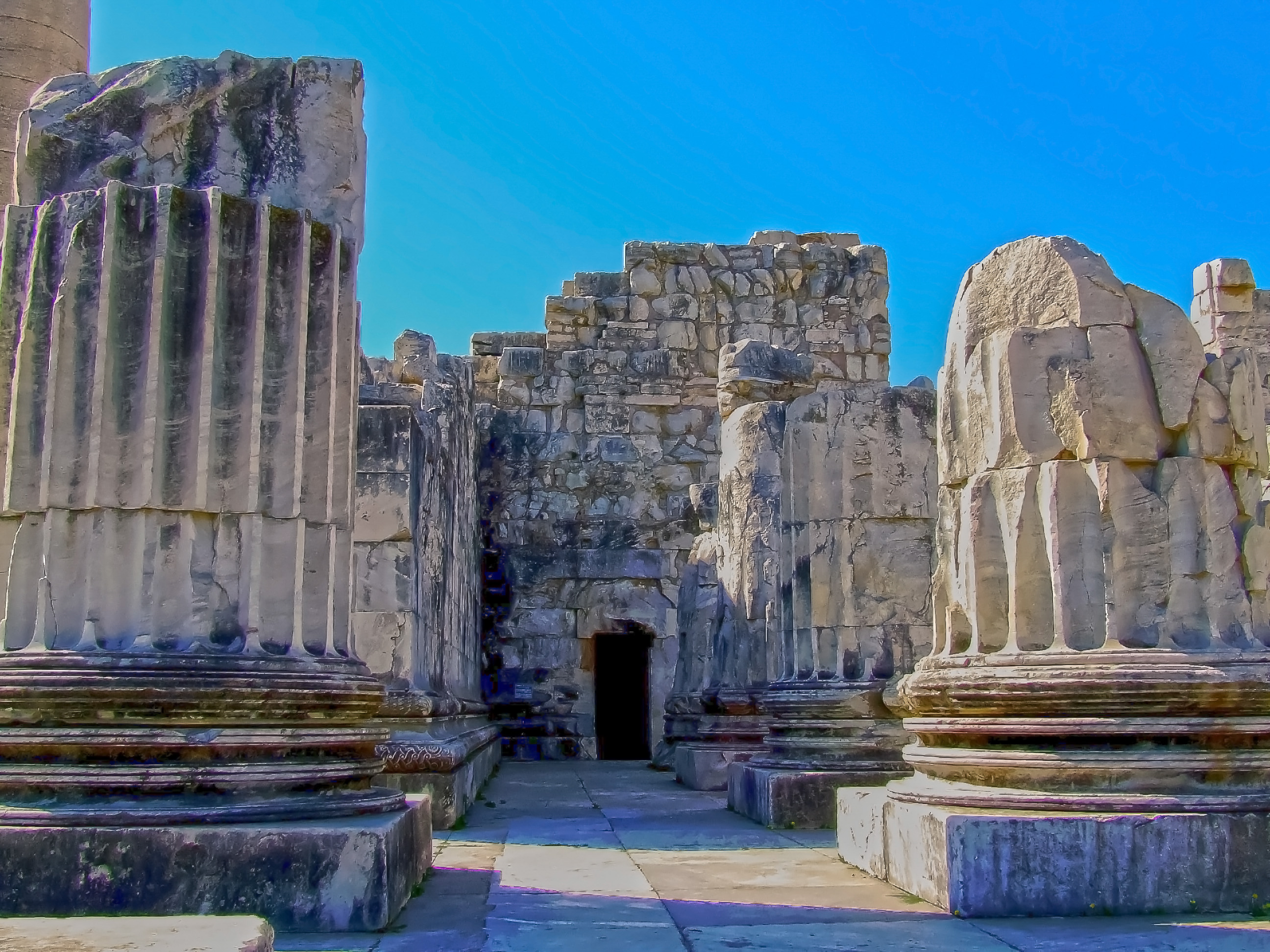
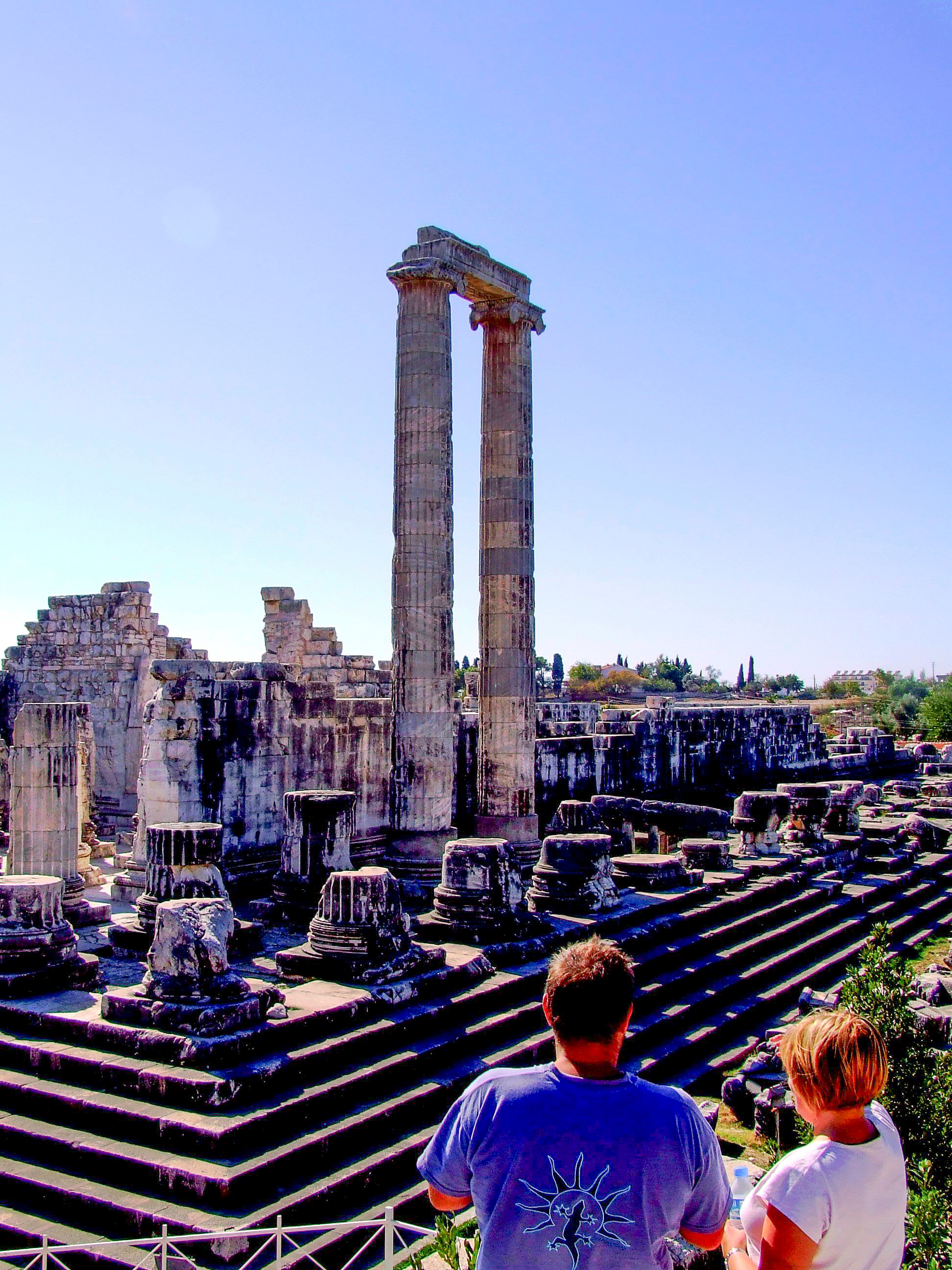
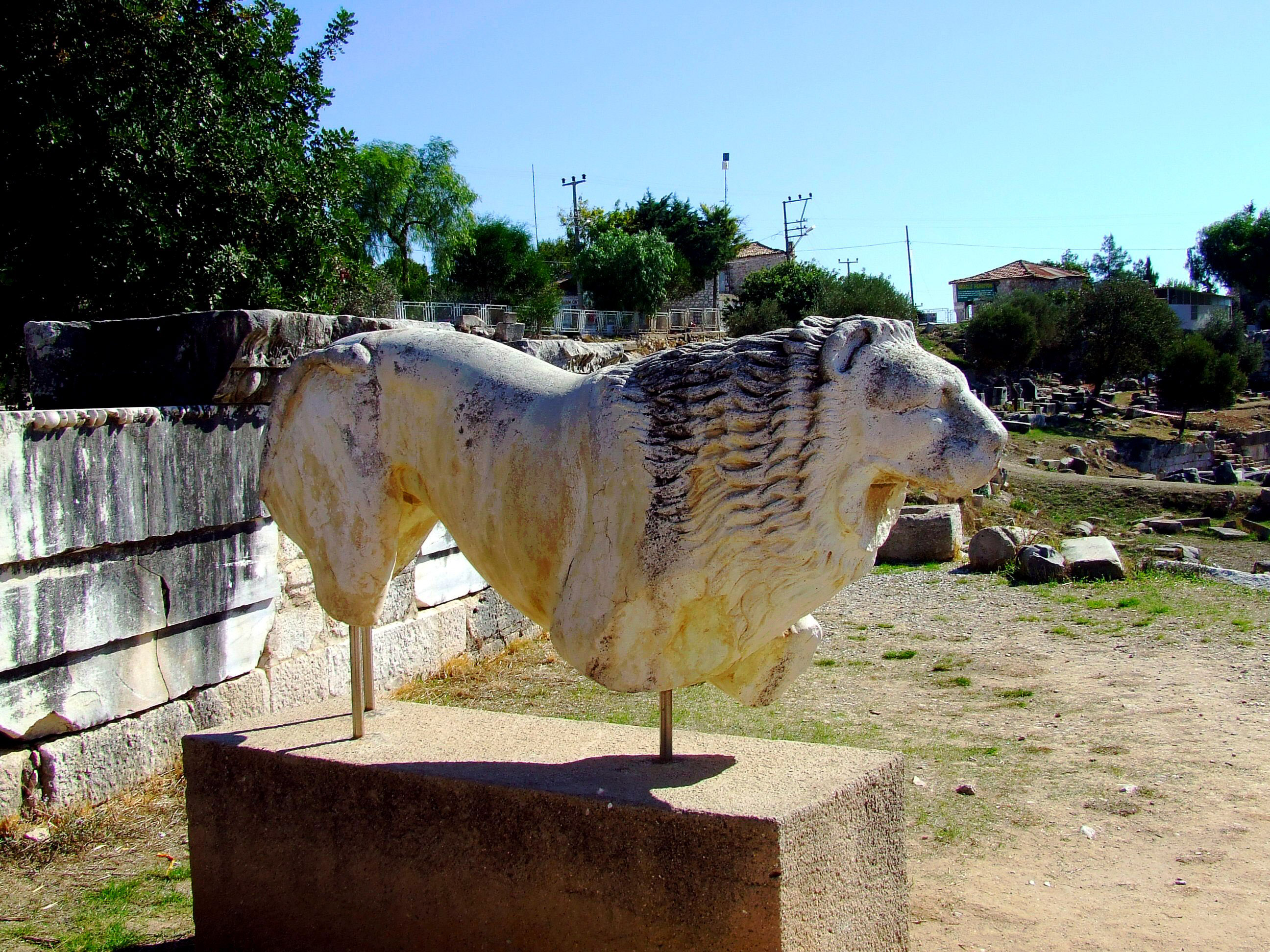
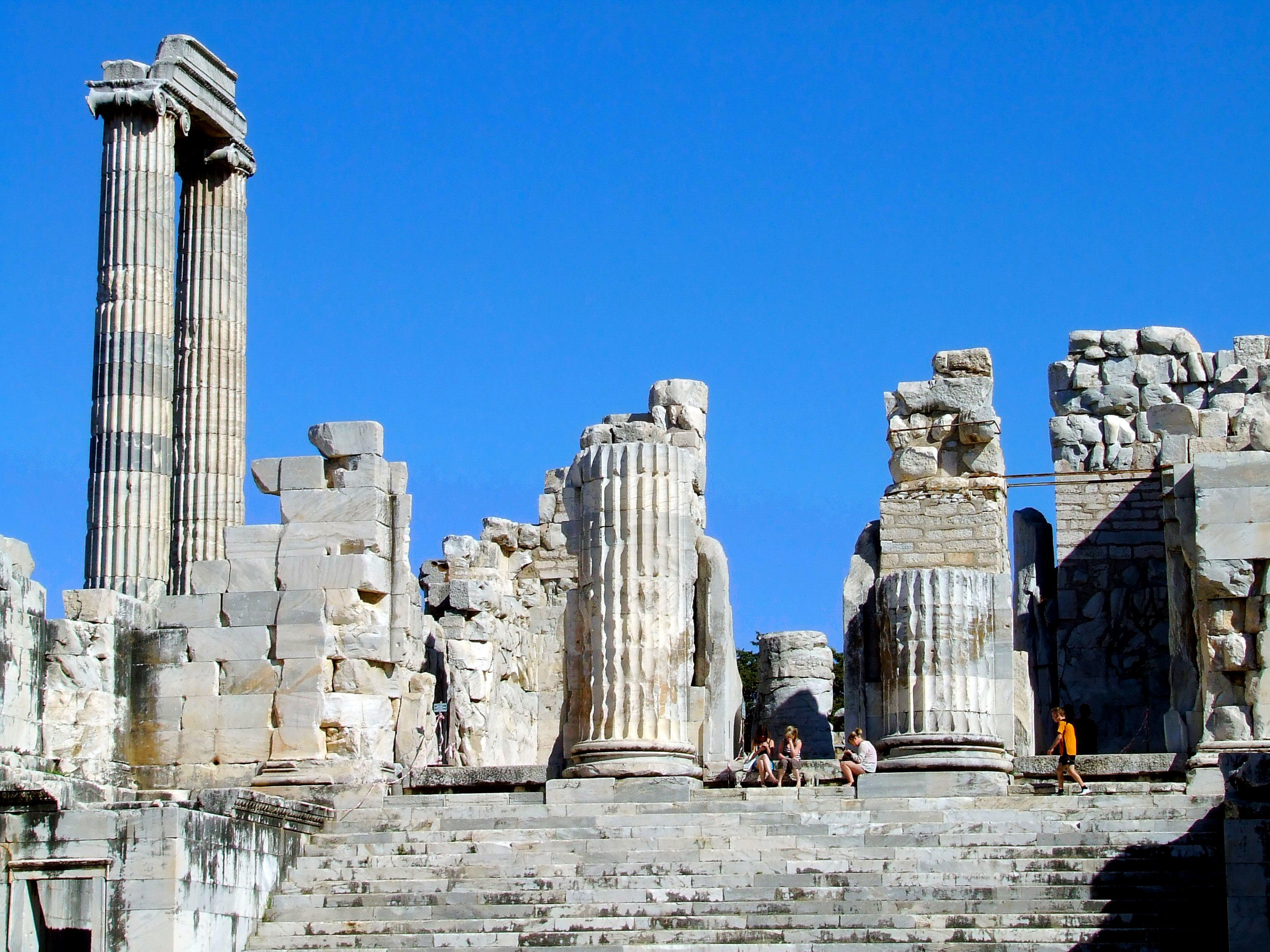
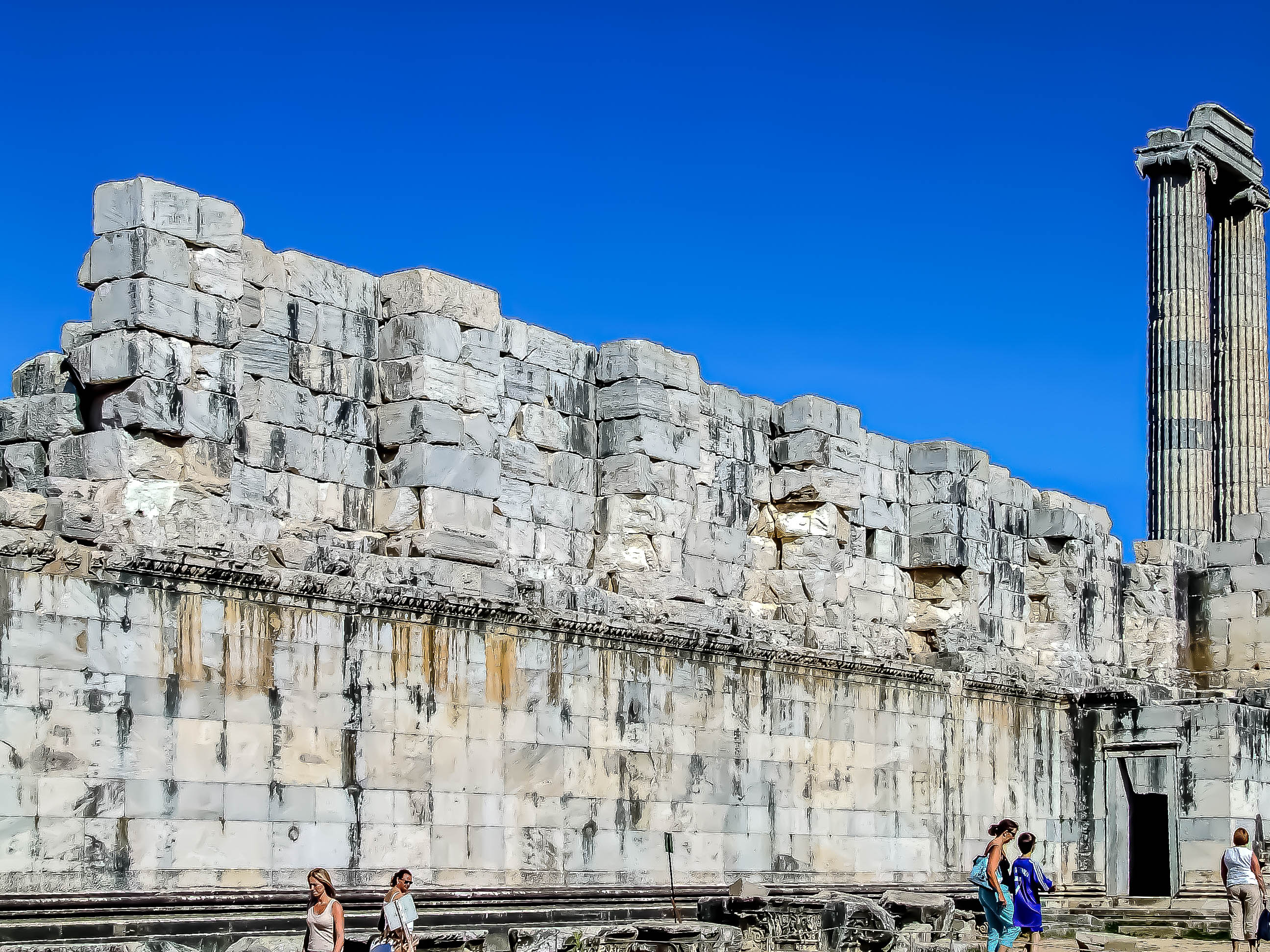
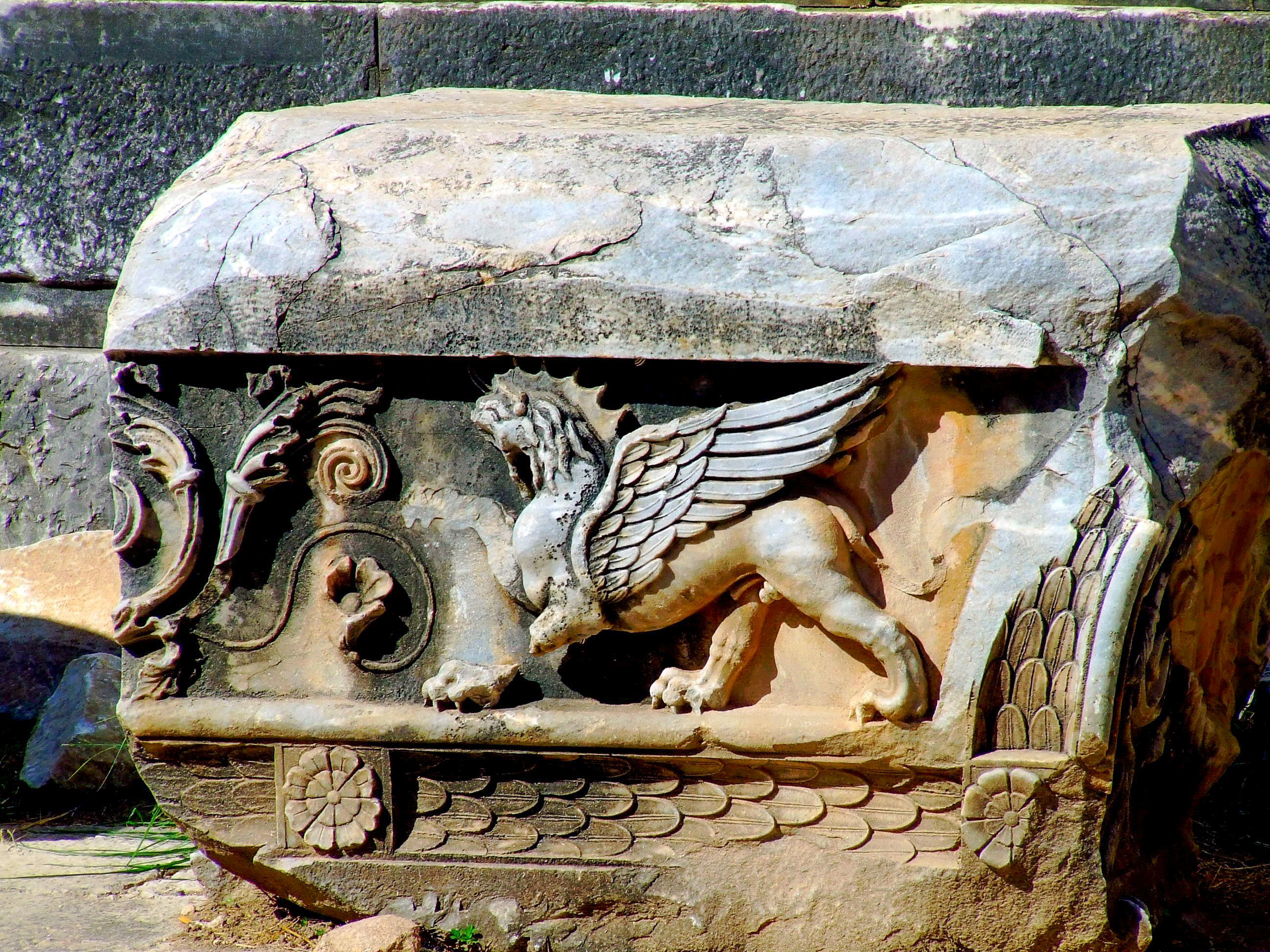
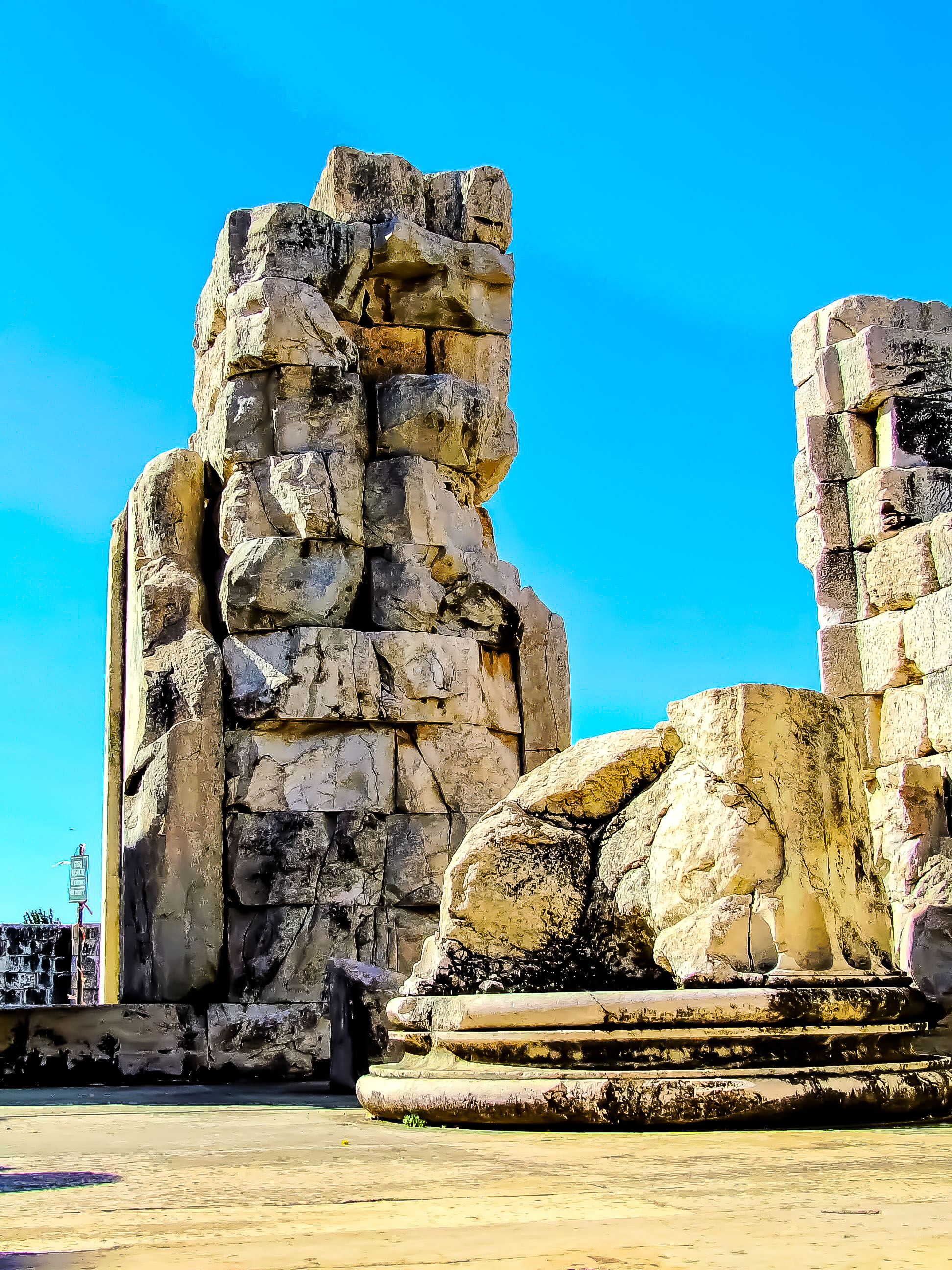
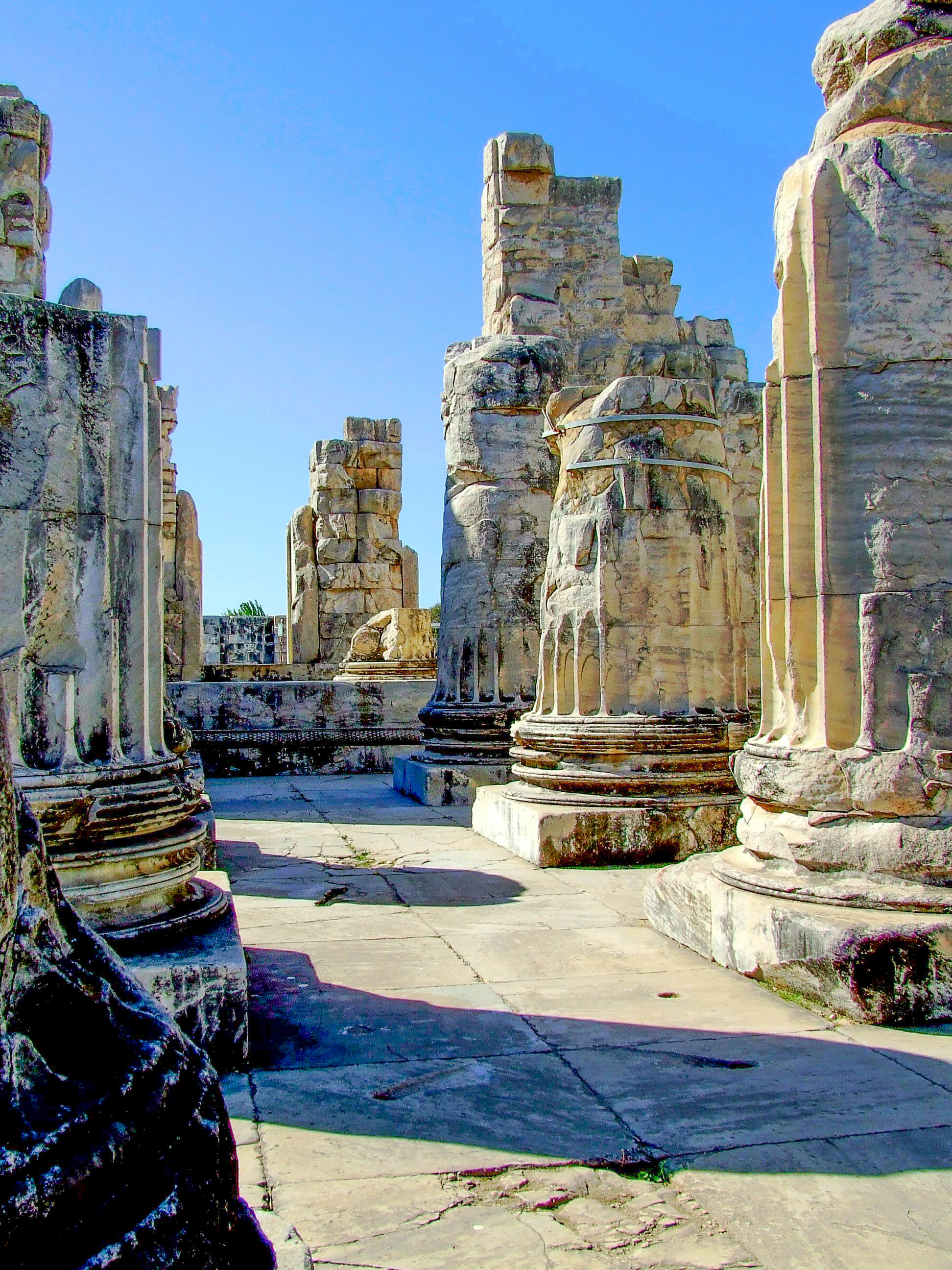
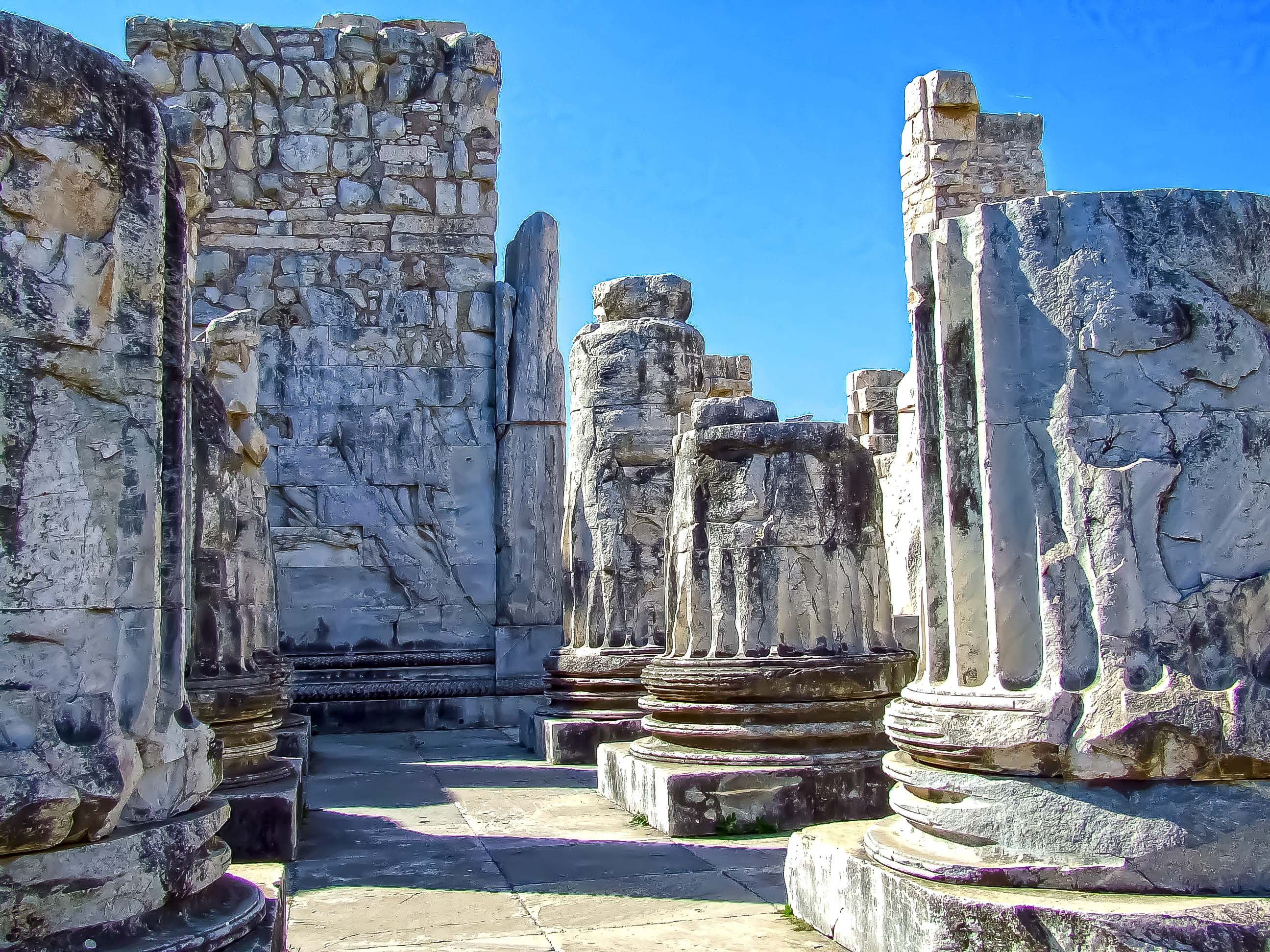
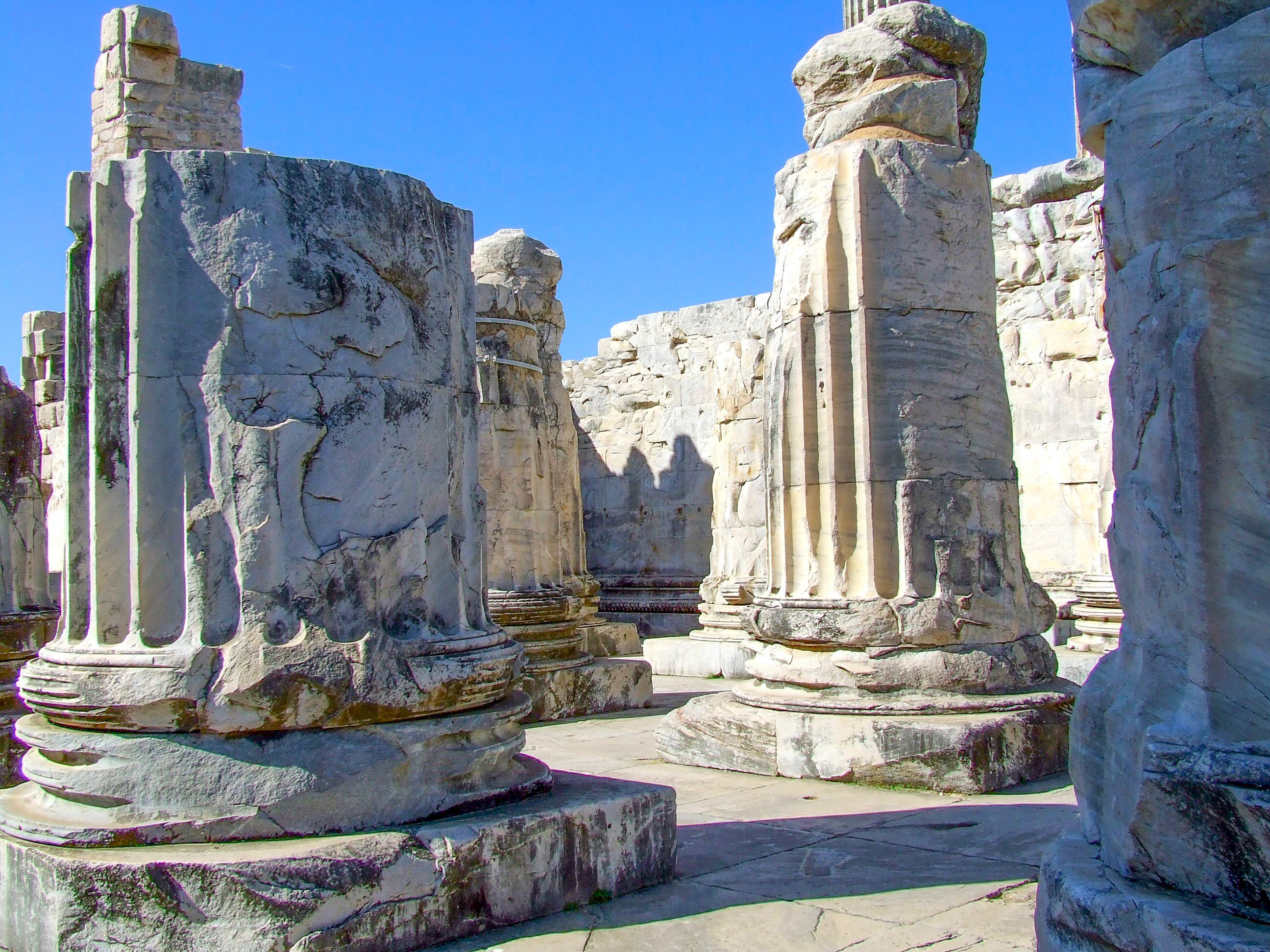
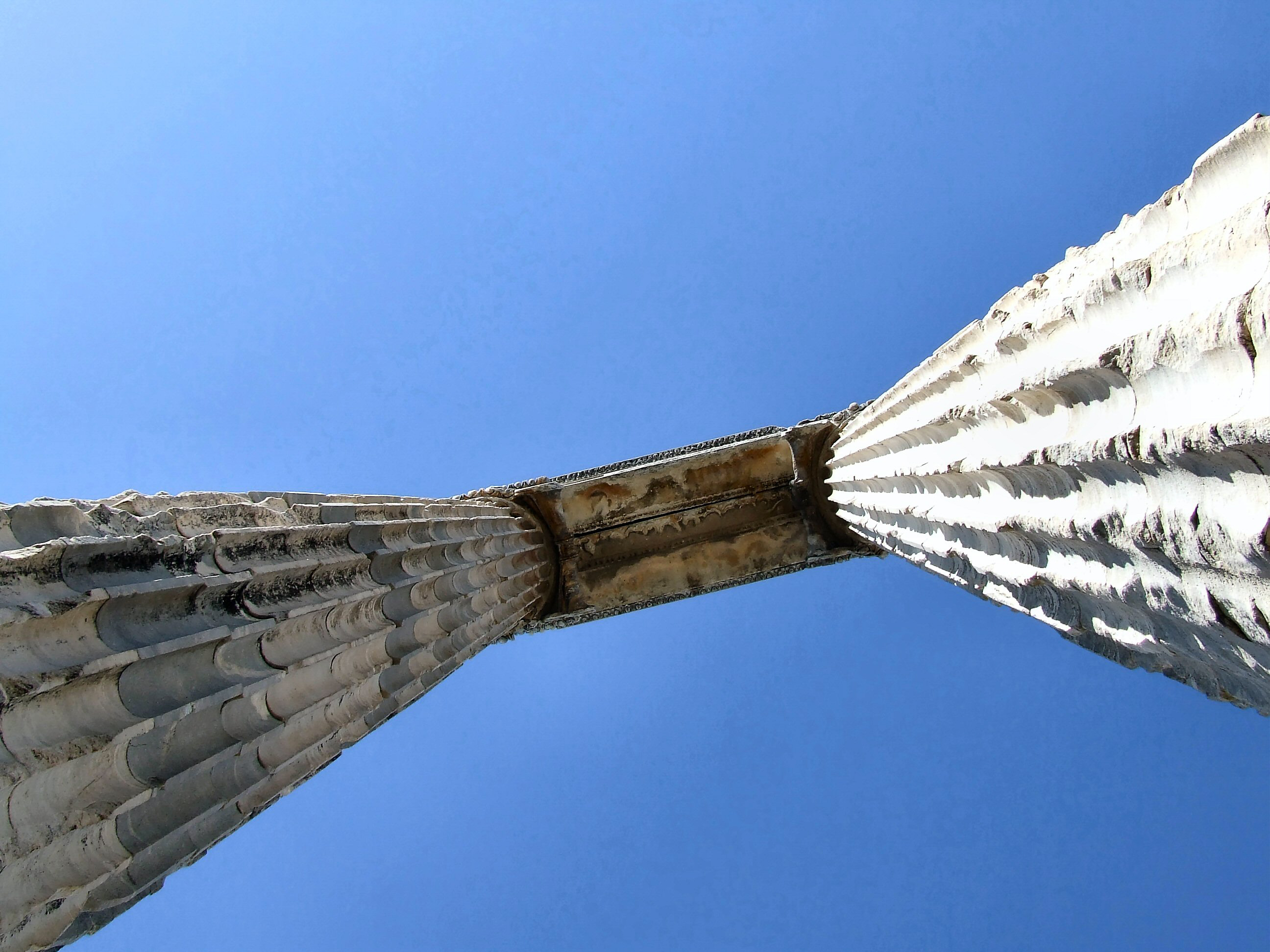
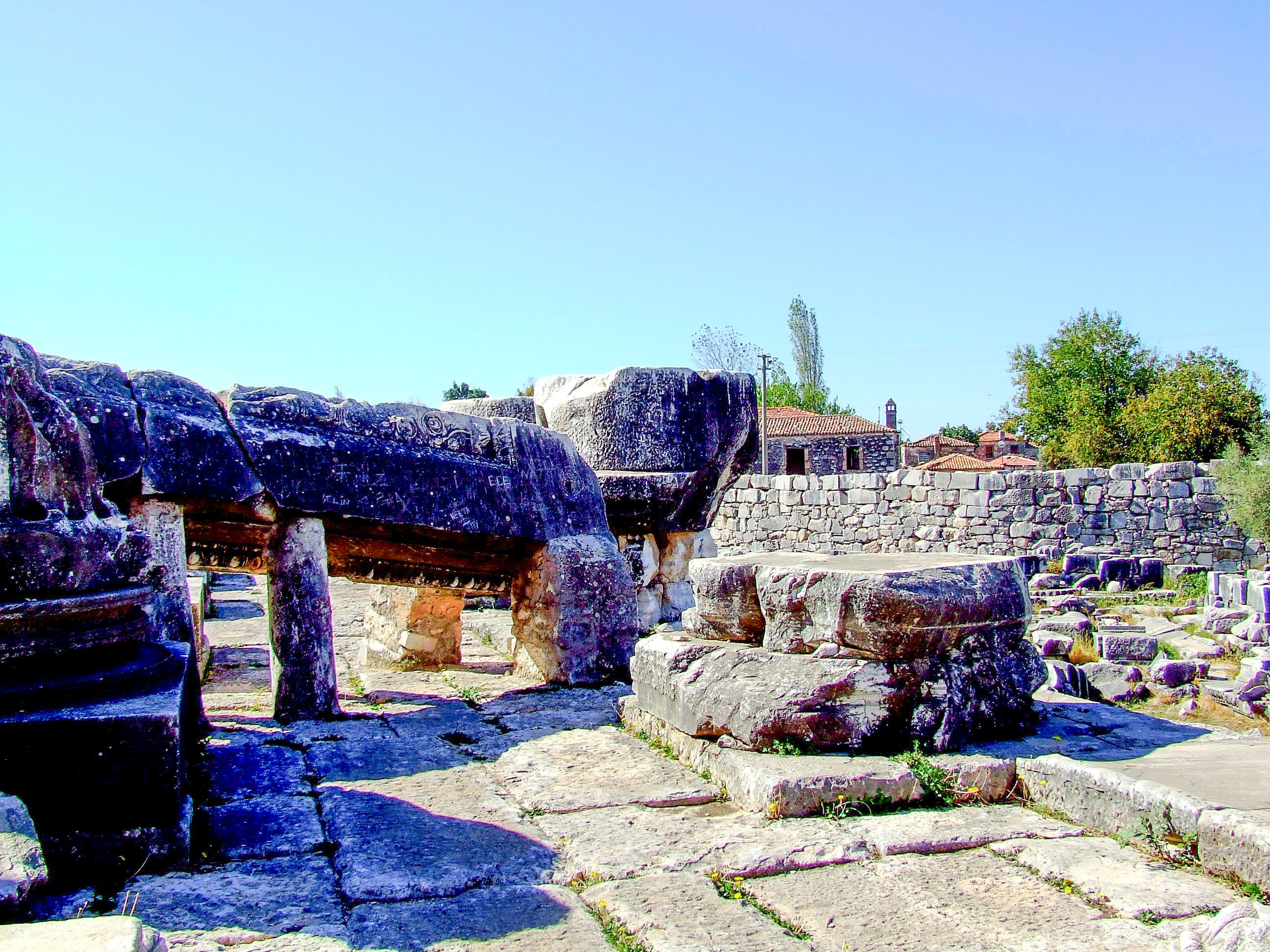
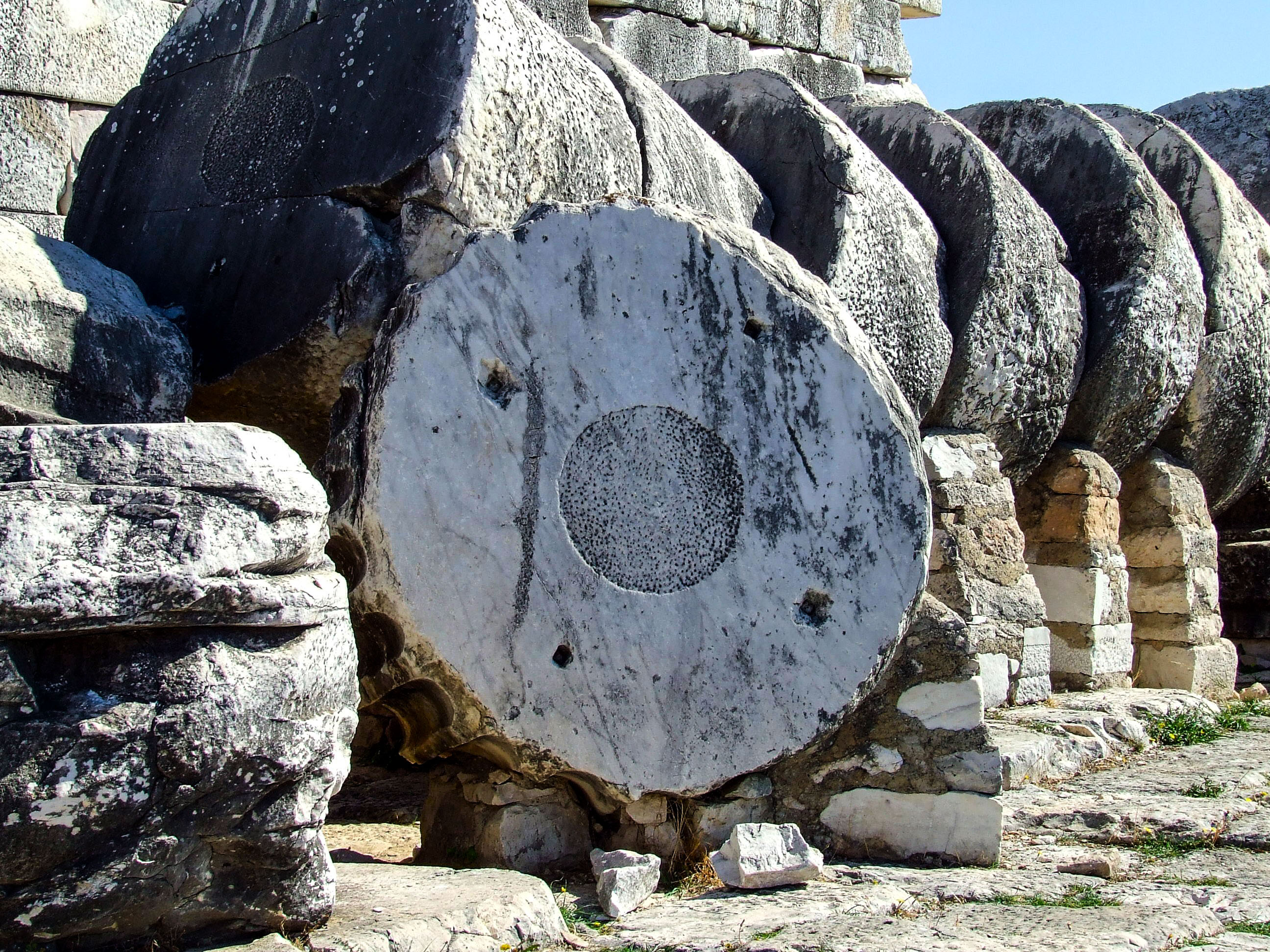
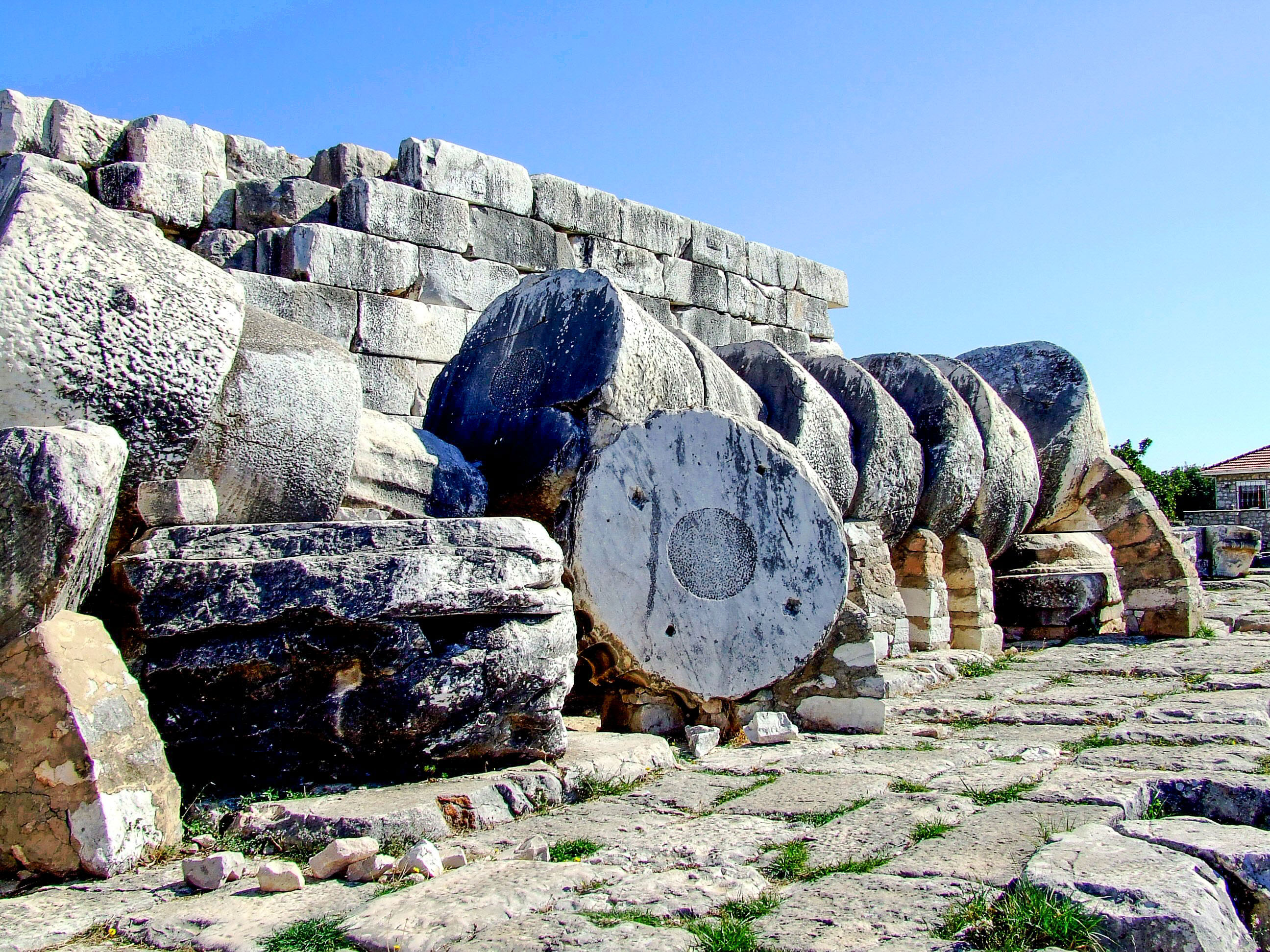
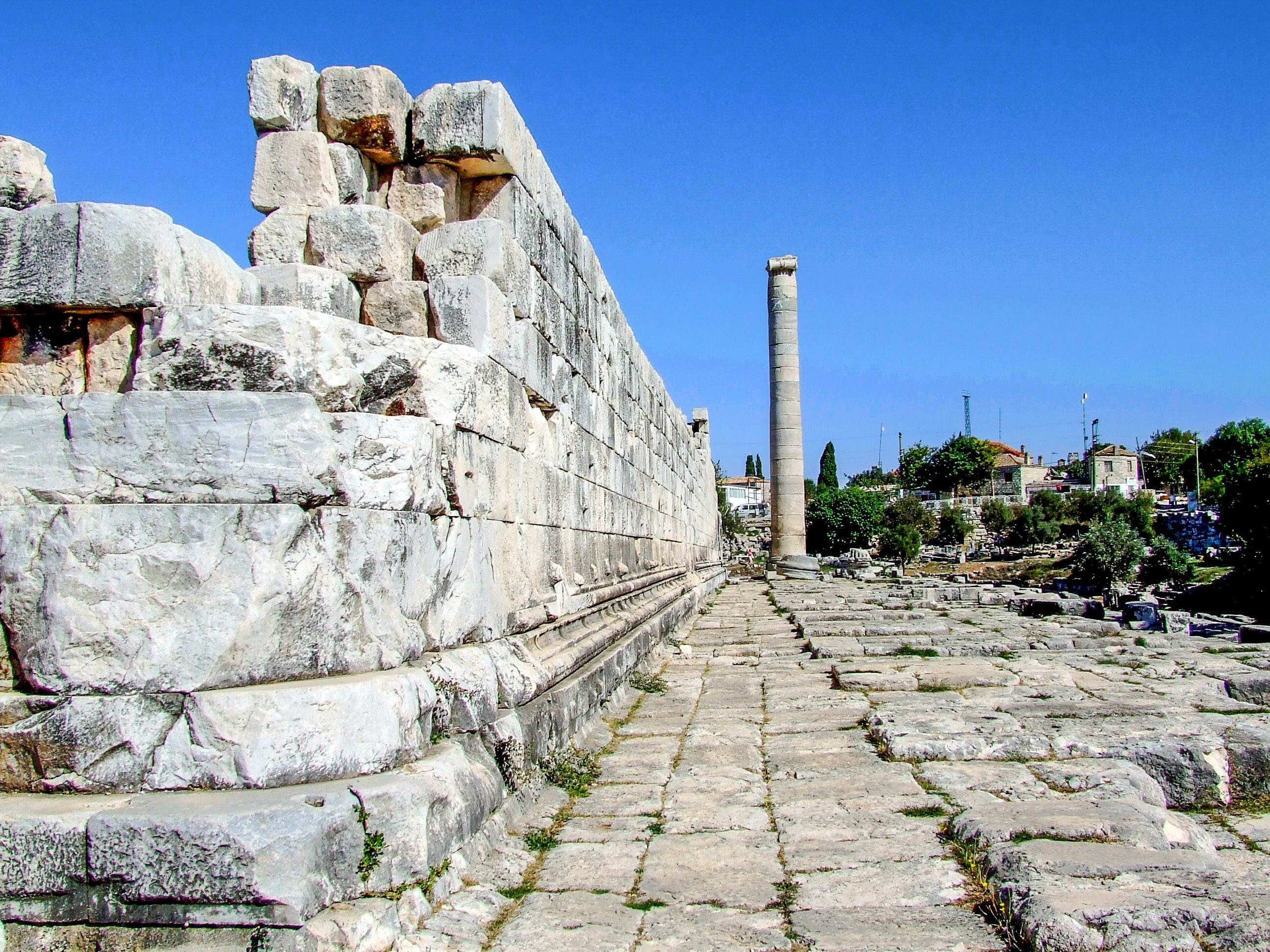
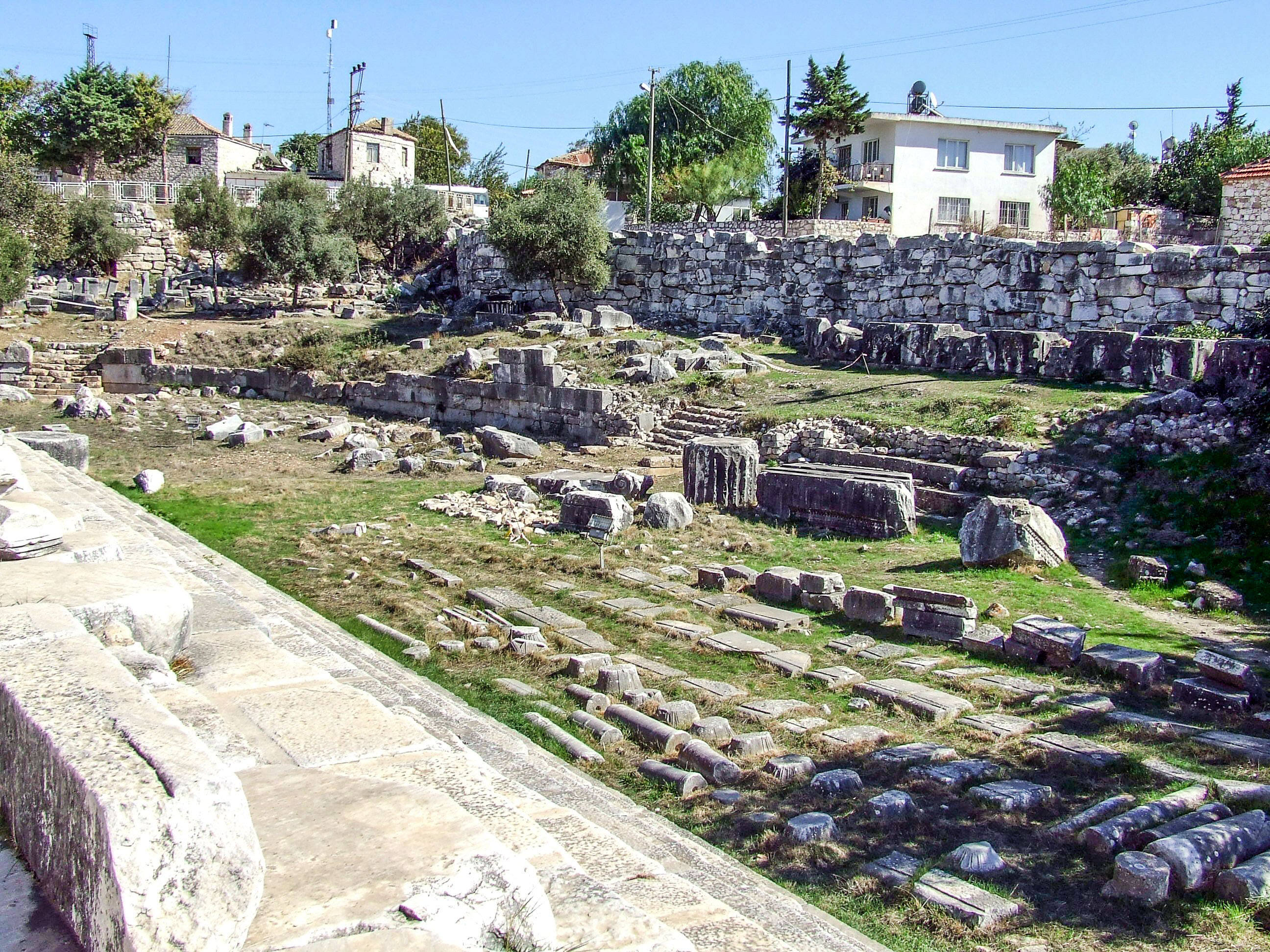


The Temple of Apollo at Didim (ancient Didyma) was one of the most important oracle centres of the Greek world, second only to Delphi. Its scale, architectural ambition, and long, turbulent history make it one of the most remarkable sanctuaries in Asia Minor.
Didyma was not a city but a sacred precinct belonging to nearby Miletus. Pilgrims travelled the Sacred Way to consult Apollo’s oracle, undergoing rituals and sacrifices before receiving prophetic responses. The sanctuary’s importance is attested from at least the 6th century BCE, when construction of the first monumental temple began. This early phase was interrupted by the Persian invasion of 494 BCE, which halted building and disrupted the oracle.
After Alexander the Great expelled the Persians in 334 BCE, construction resumed on an even more ambitious scale. Although the temple was never fully completed, it became one of the largest Ionic temples ever attempted.
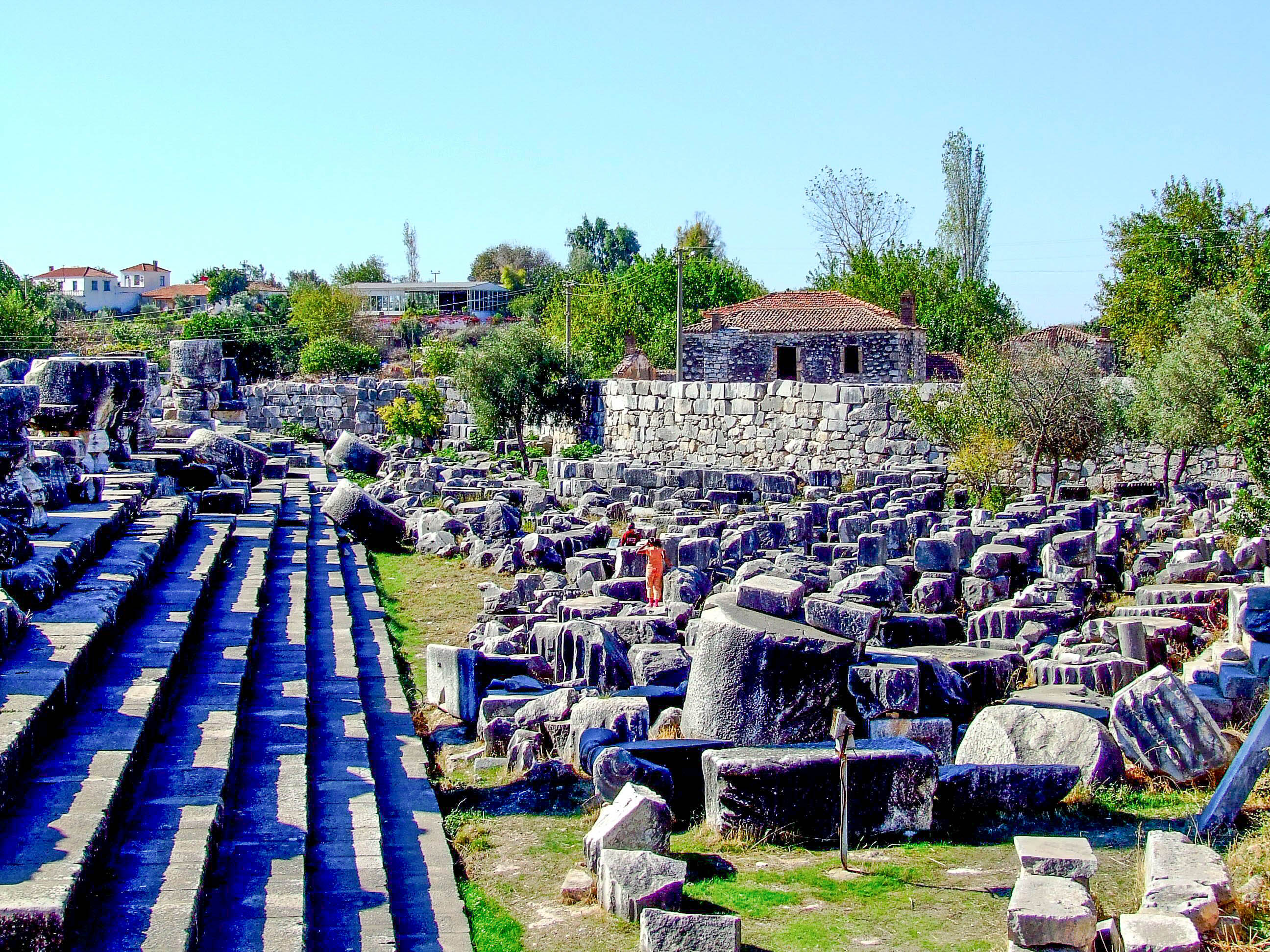
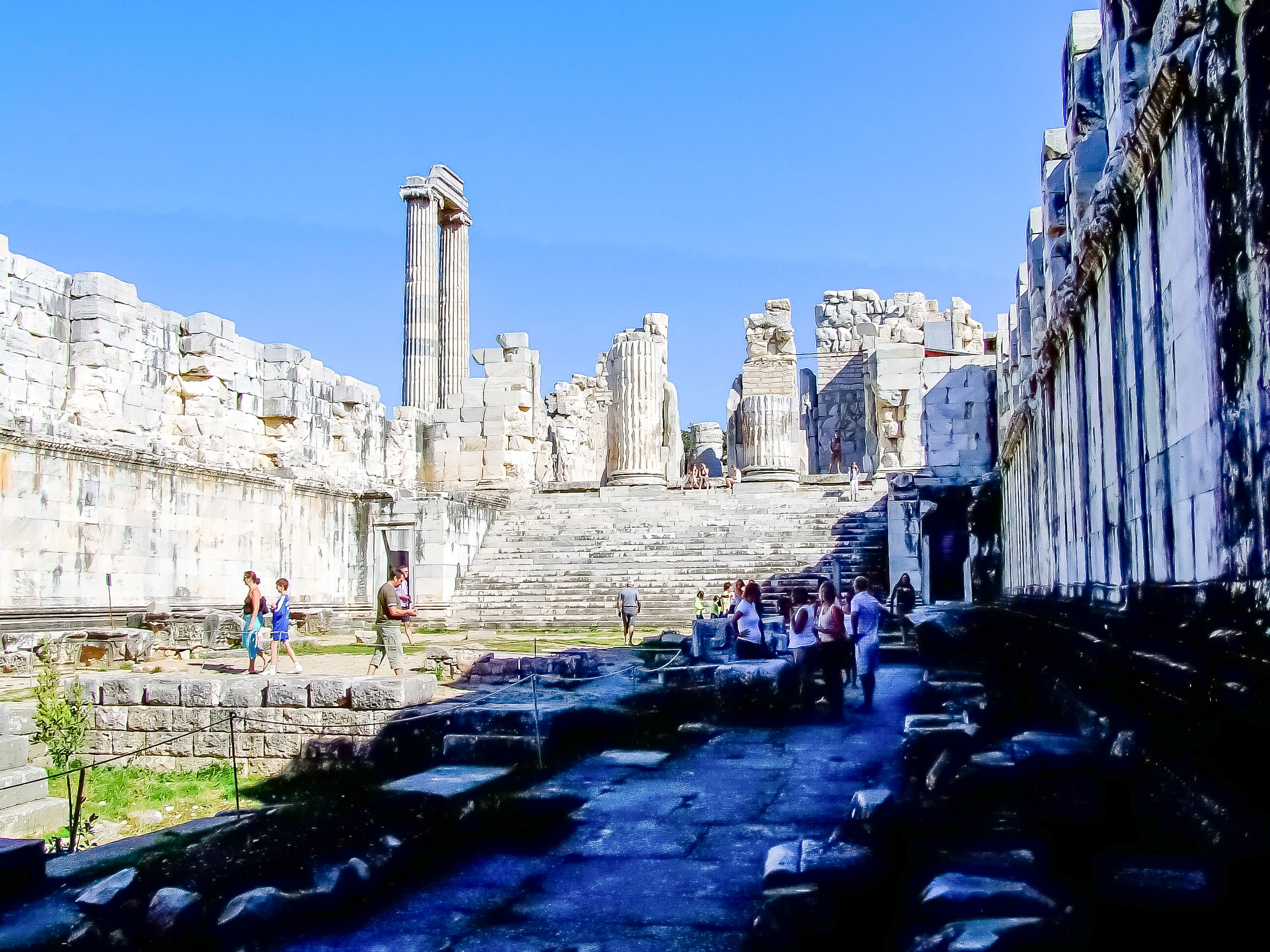
Dimensions: approx. 109 × 51 metres, with a vast inner sella (53 × 21 m).
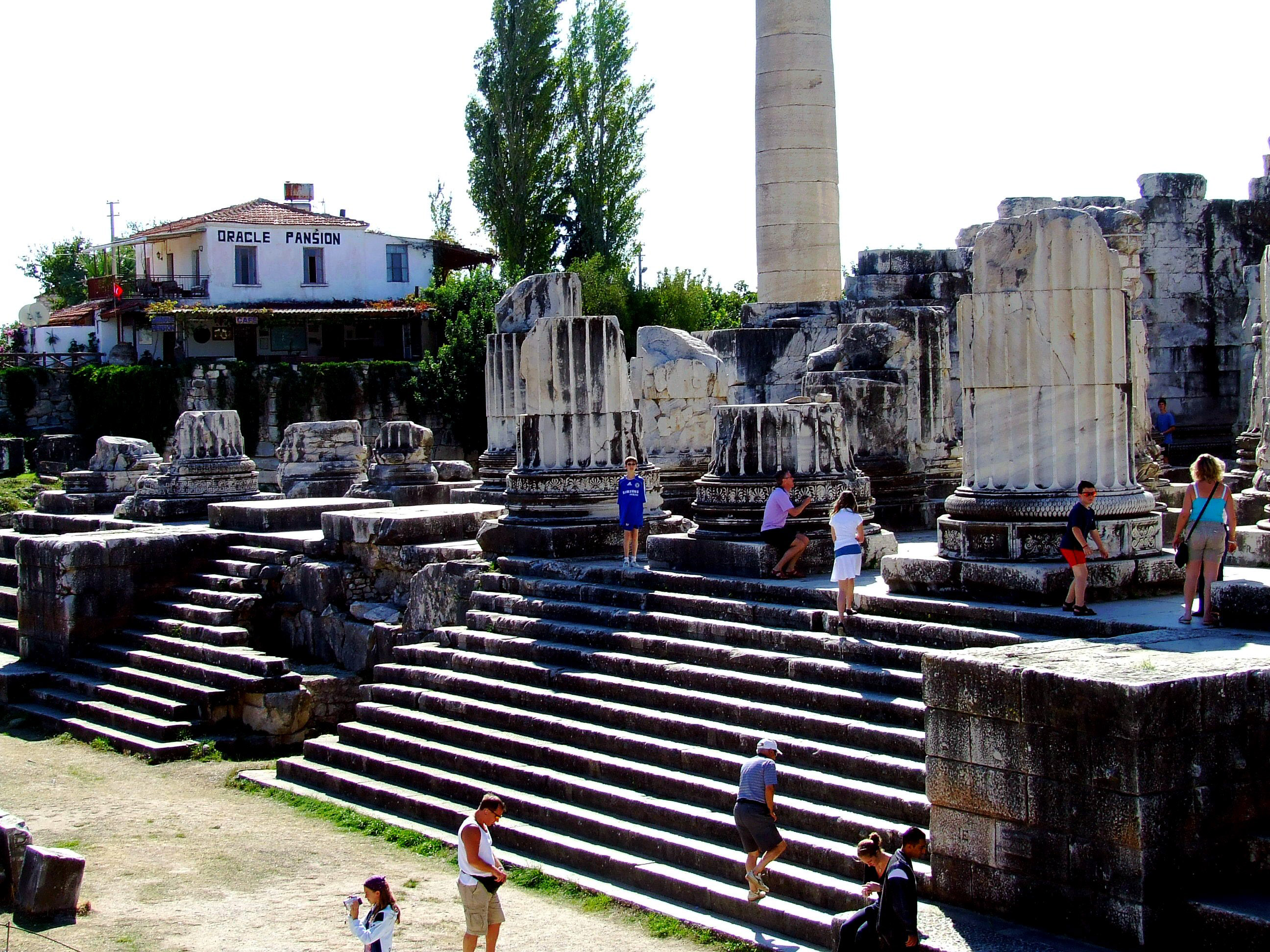
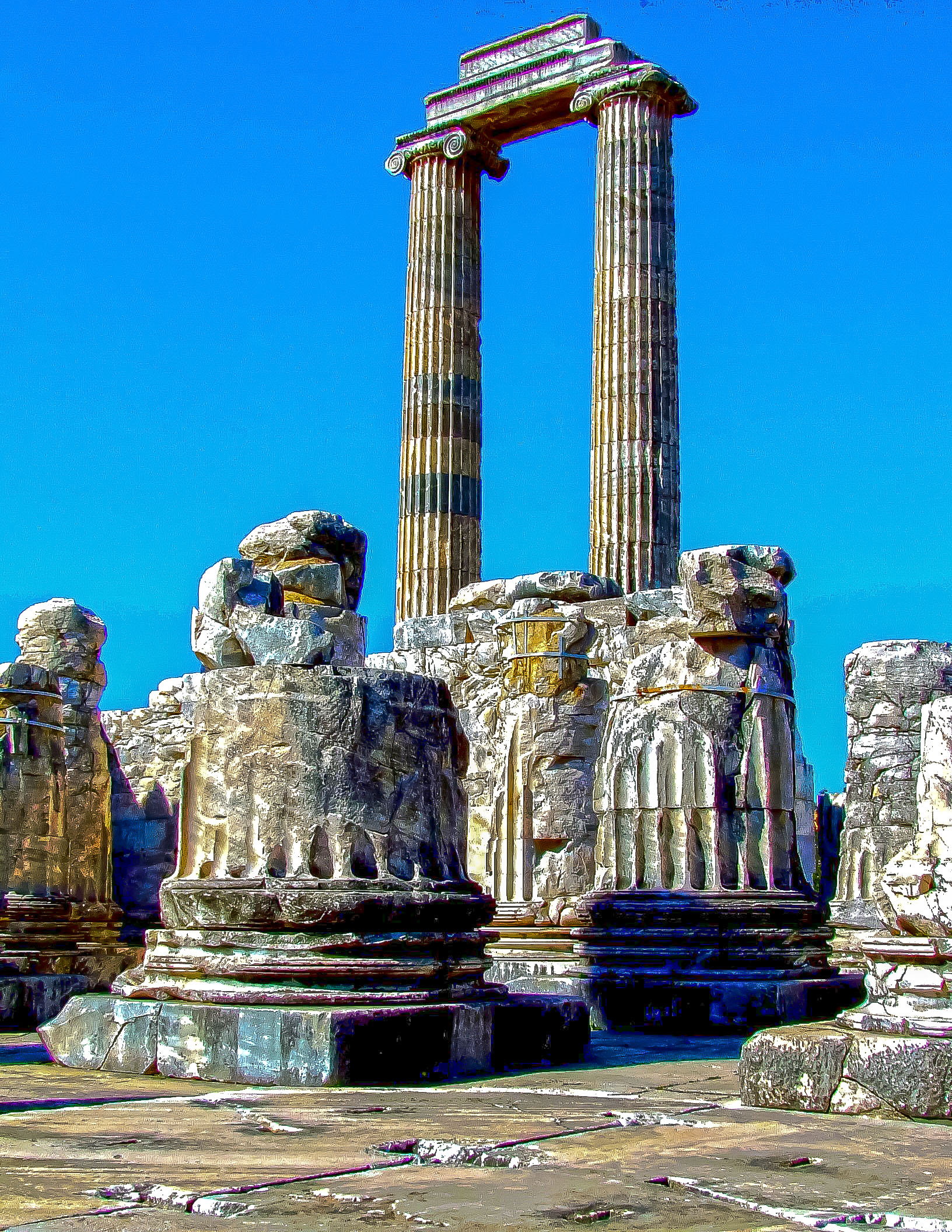
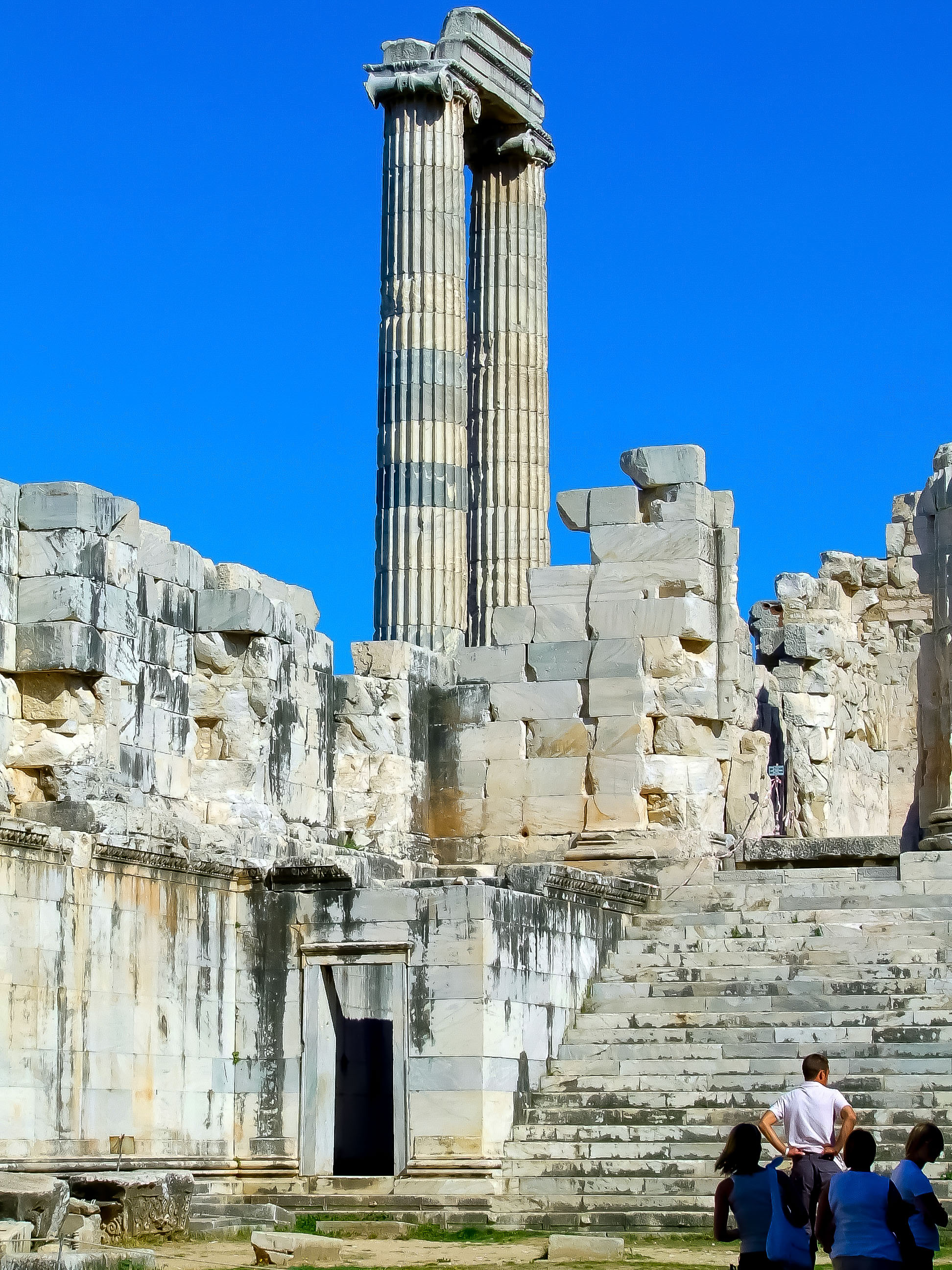
Columns: 124 colossal Ionic columns arranged in double rows.
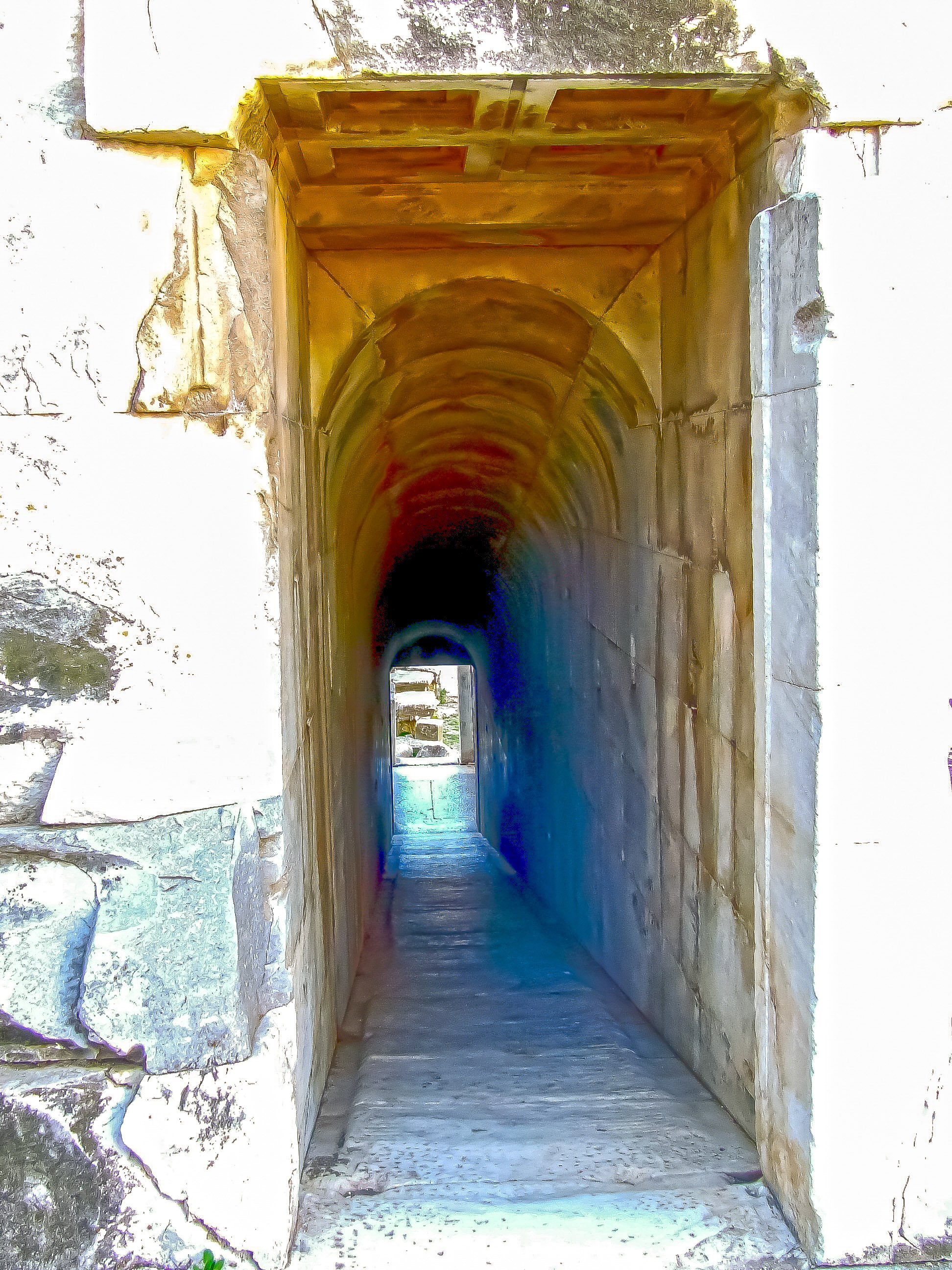
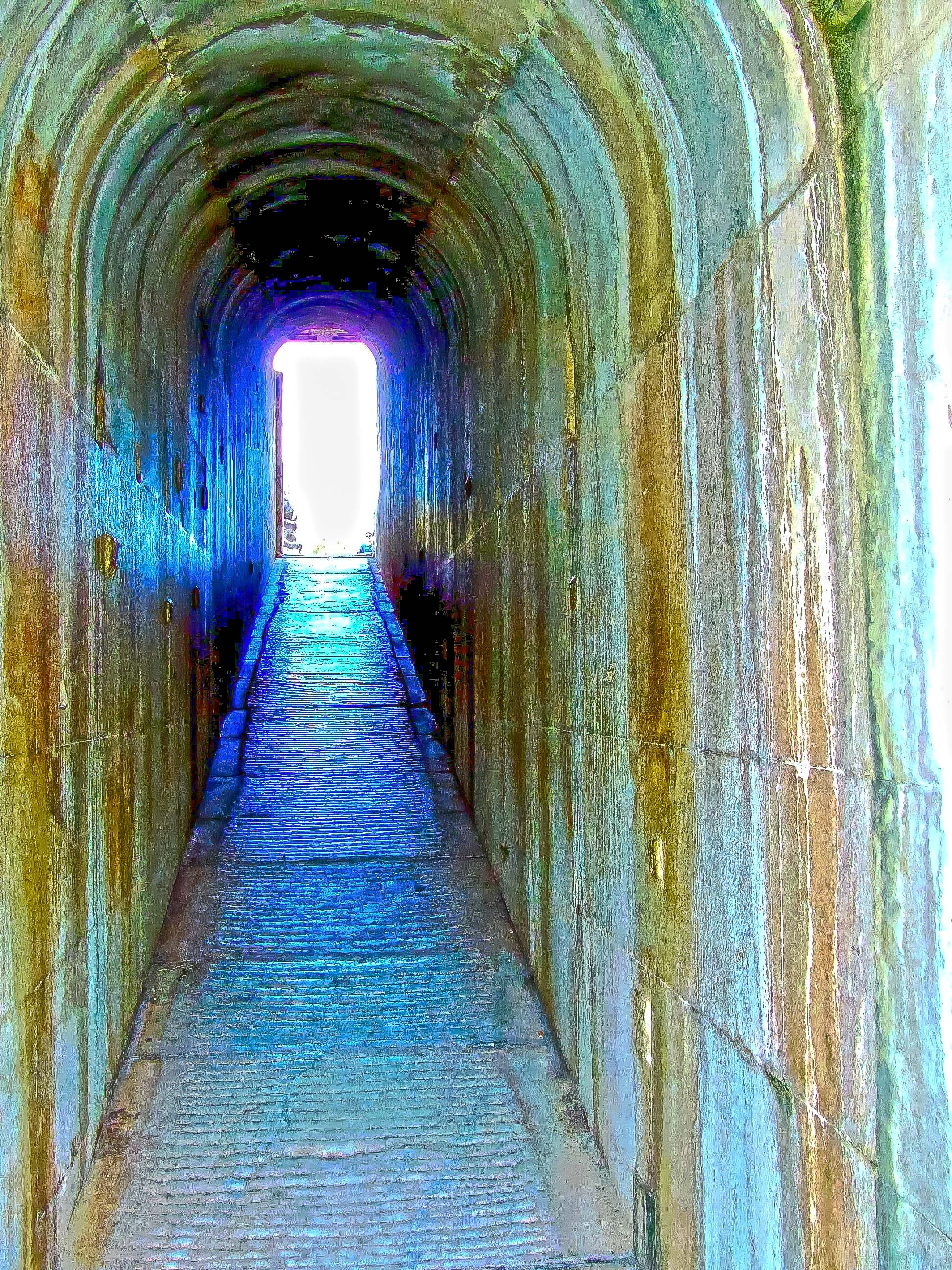
Features: vaulted passageways, purification wells, altars, and a dramatic descent into the inner sanctuary where the oracle operated.
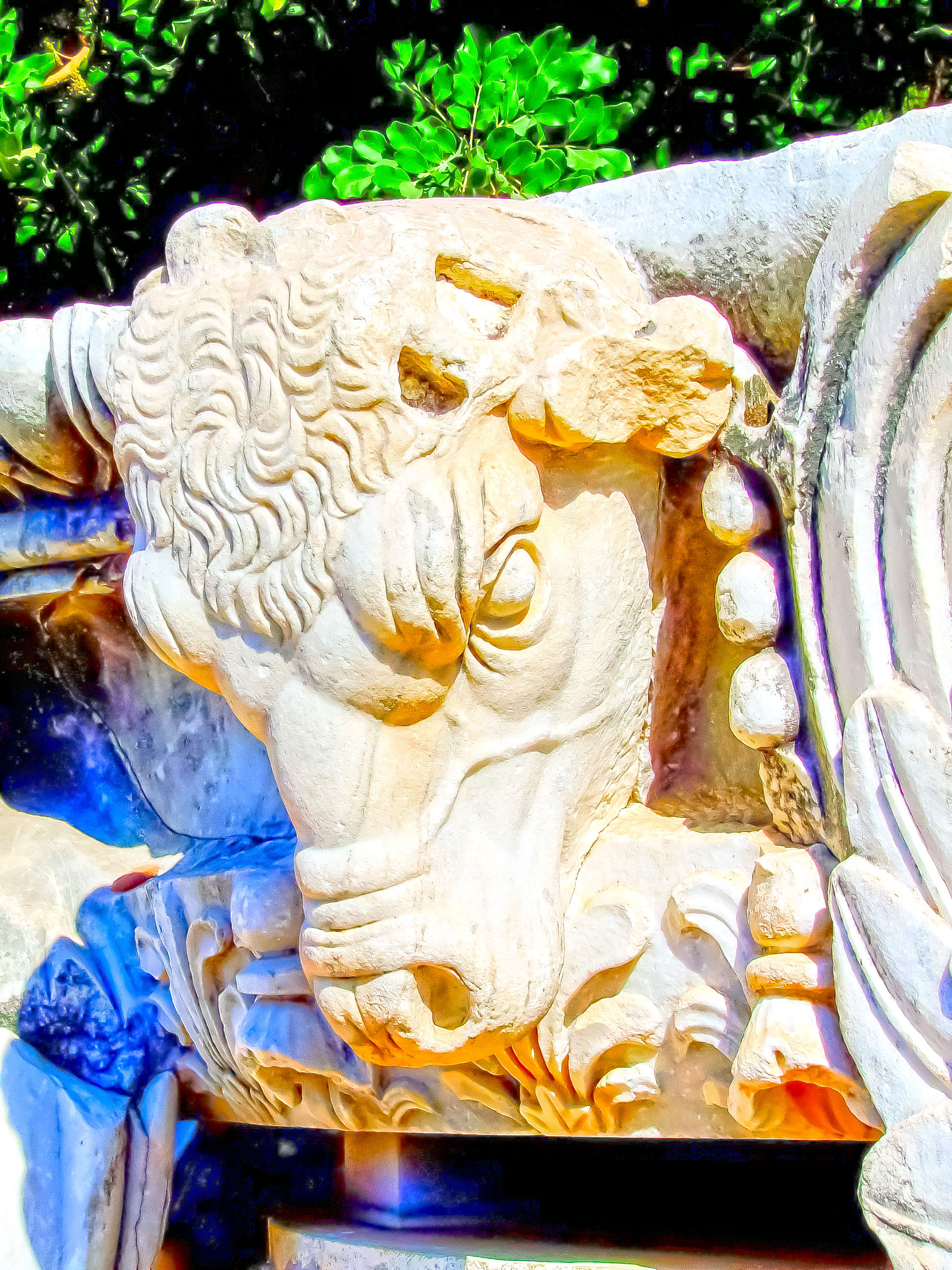
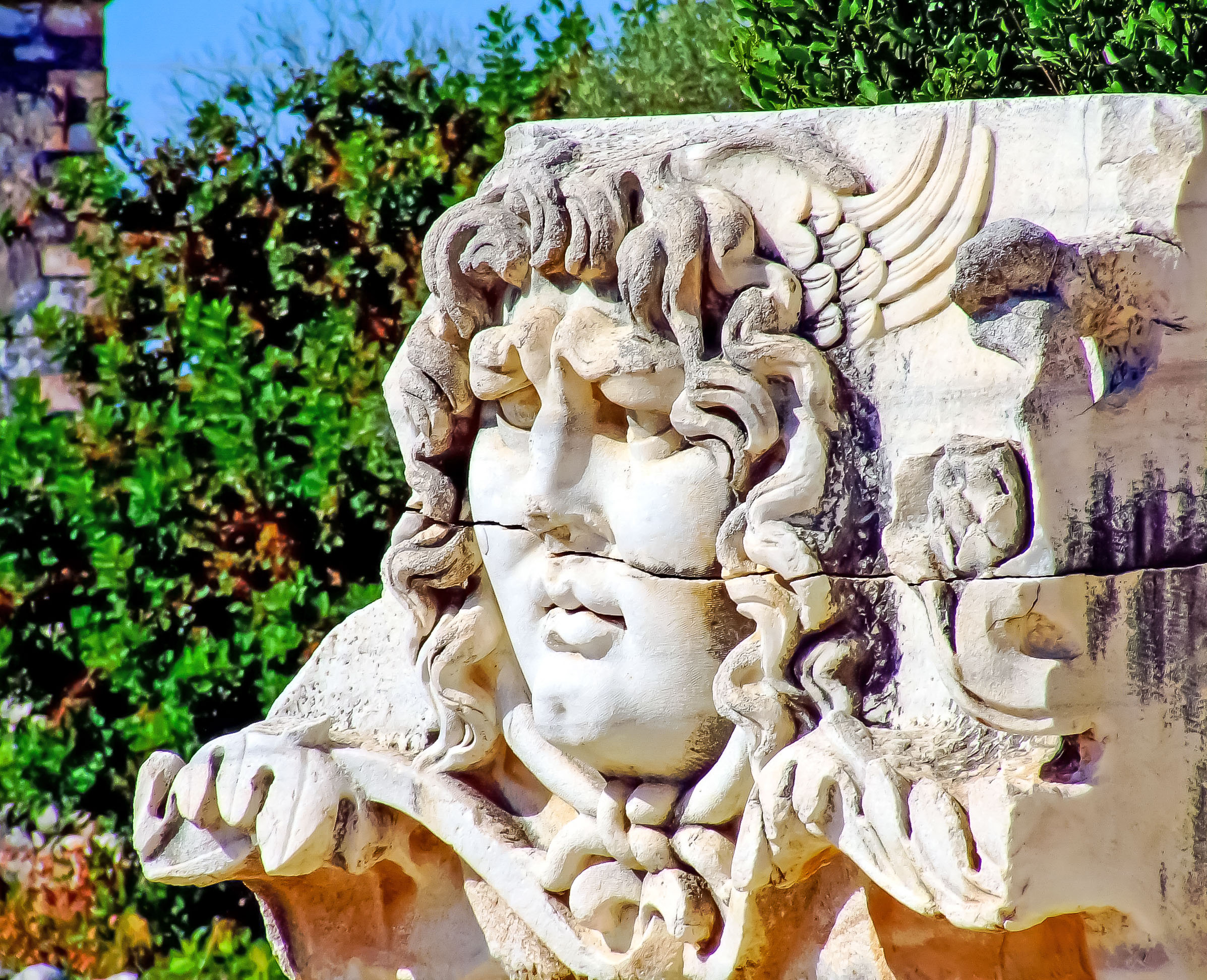
Iconic sculpture: the famous Medusa head, now one of the most recognisable symbols of the site.
Excavations began in 1904 and revealed layers of earlier cult activity, including evidence of pre-Ionian worship and animal sacrifice.
Under Persian rule, the oracle fell silent.
Under Alexander and the Hellenistic kings, the sanctuary revived and expanded.
By the 4th century CE, with the rise of Christianity, pagan worship ceased; a church was later built within the temple’s precinct.
After Alexander the Great expelled the Persians in 334 BCE, construction resumed on an even more ambitious scale. Although the temple was never fully completed, it became one of the largest Ionic temples ever attempted.
Architecture and Design
The Didymaion is extraordinary for its size and complexity:Dimensions: approx. 109 × 51 metres, with a vast inner sella (53 × 21 m).
Columns: 124 colossal Ionic columns arranged in double rows.
Features: vaulted passageways, purification wells, altars, and a dramatic descent into the inner sanctuary where the oracle operated.
Iconic sculpture: the famous Medusa head, now one of the most recognisable symbols of the site.
Excavations began in 1904 and revealed layers of earlier cult activity, including evidence of pre-Ionian worship and animal sacrifice.
Historical Transformations
The temple’s history reflects the shifting religious landscape of Asia Minor:Under Persian rule, the oracle fell silent.
Under Alexander and the Hellenistic kings, the sanctuary revived and expanded.
By the 4th century CE, with the rise of Christianity, pagan worship ceased; a church was later built within the temple’s precinct.


