HOME

The Monument to the Great Fire of London

Fish Street HillCity Of LondonGreater London,   United Kingdom

The Monument to the Great Fire of London, often simply called "The Monument," is a 202-foot-tall Doric column located near the northern end of London Bridge. Designed by Sir Christopher Wren and Dr. Robert Hooke, it was built between 1671 and 1677 to commemorate the Great Fire of London, which devastated the city in 1666. The Monument offers panoramic views of the City of London from its viewing platform, accessible via a 311-step spiral staircase.
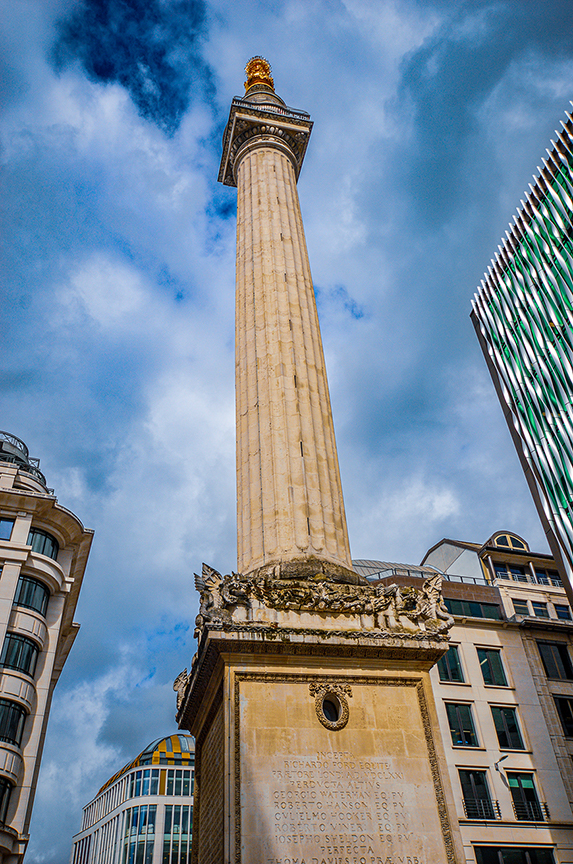
The image depicts a tall, ornate column monument set against a partly cloudy sky. The column is surrounded by modern buildings, suggesting it is located in an urban area. The base of the column features intricate carvings and inscriptions, indicating it may be a historical or commemorative structure.
Monument to the Great Fire of London ‐ photo by ,
©www.mgaylard.co.uk.
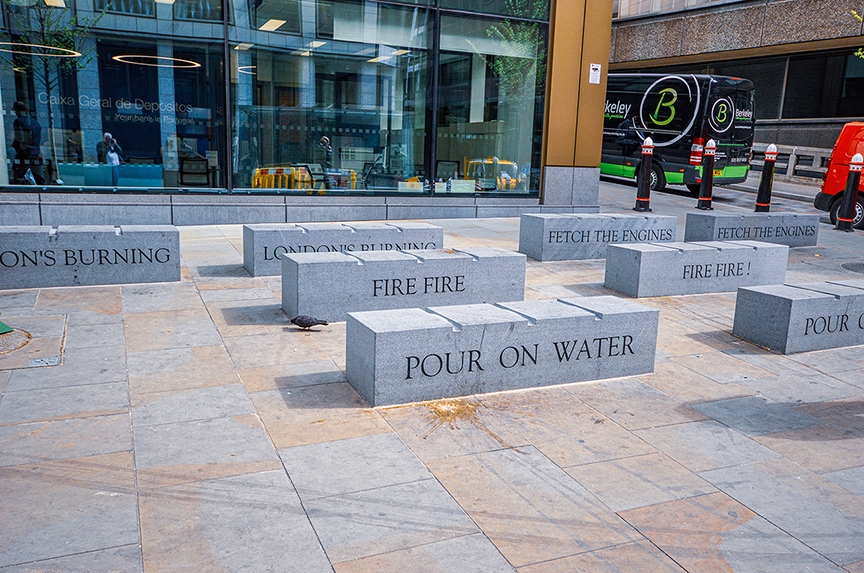
The image shows a series of concrete blocks arranged on a paved area, each block containing a segment of a message related to a fire emergency. The blocks collectively spell out: 'LONDON'S BURNING, LONDON'S BURNING, FETCH THE ENGINES, FETCH THE ENGINES, FIRE FIRE, FIRE FIRE, POUR ON WATER.' This is a reference to the old nursery rhyme and cry of fire. The scene is set in an urban environment with modern buildings and vehicles in the background.
LONDON'S BURNING, LONDON'S BURNING ‐ photo by ,
©www.mgaylard.co.uk.
Open the full set flickr button this page

The Monument to the Great Fire of London

The Monument to the Great Fire of London is one of the City of London’s most iconic landmarks, commemorating the Great Fire of 1666, which destroyed much of the medieval city.

Historical Overview

The Great Fire of London:
The fire began on September 2, 1666, in a bakery on Pudding Lane and raged for four days, destroying 13,200 houses, 87 parish churches, and St Paul’s Cathedral. The fire led to the rebuilding of London in brick and stone, transforming the city’s architecture .
Construction of the Monument:
Designed by Sir Christopher Wren and Dr. Robert Hooke, the Monument was built between 1671 and 1677 to commemorate the fire and celebrate the rebirth of the city. It stands 202 feet (61 meters) tall, making it the tallest isolated stone column in the world at the time of its completion .

Architectural Features

Design:
The Monument is a Doric column made of Portland stone, topped with a gilded urn of fire. The column’s height of 202 feet is equal to the distance from its base to the site of the bakery where the fire began .
Viewing Platform:
Visitors can climb 311 spiral steps to a viewing platform at the top, offering panoramic views of the City of London and the River Thames .
Latin Inscription:
The base of the Monument bears a Latin inscription describing the fire’s destruction and the city’s rebirth, as well as the names of the Lord Mayor and aldermen who oversaw its construction .

Cultural and Historical Significance

Symbol of Resilience:
The Monument is a symbol of London’s resilience and its ability to rebuild and thrive after disaster. It also serves as a reminder of the fire’s impact on the city’s history and architecture .
Scientific Experiments:
In the 18th and 19th centuries, the Monument was used for scientific experiments, including studies of gravity and air pressure .

Visitor Information

Location:
The Monument is located at the junction of Monument Street and Fish Street Hill, near London Bridge and the River Thames. It is easily accessible via public transport, with the nearest Tube station being Monument (District and Circle lines) .
Admission:
Visitors can climb the Monument for a small fee, with tickets available on-site or online. The climb is not recommended for those with mobility issues due to the narrow spiral staircase .
Opening Hours:
The Monument is open daily, though hours may vary seasonally. It is a popular tourist attraction, especially for those interested in history and architecture .

Fun Facts

Golden Urn:
The gilded urn at the top of the Monument is often mistaken for a flame, but it is actually a symbol of rebirth .
Survivor:
The Monument is one of the few 17th-century structures in the City that has survived intact to the present day .
Inspiration:
The Monument’s design influenced later structures, including the Washington Monument in the United States .
Text generated by Mistral AI

Sky Garden

20 Fenchurch StreetCity of LondonGreater London,   United Kingdom

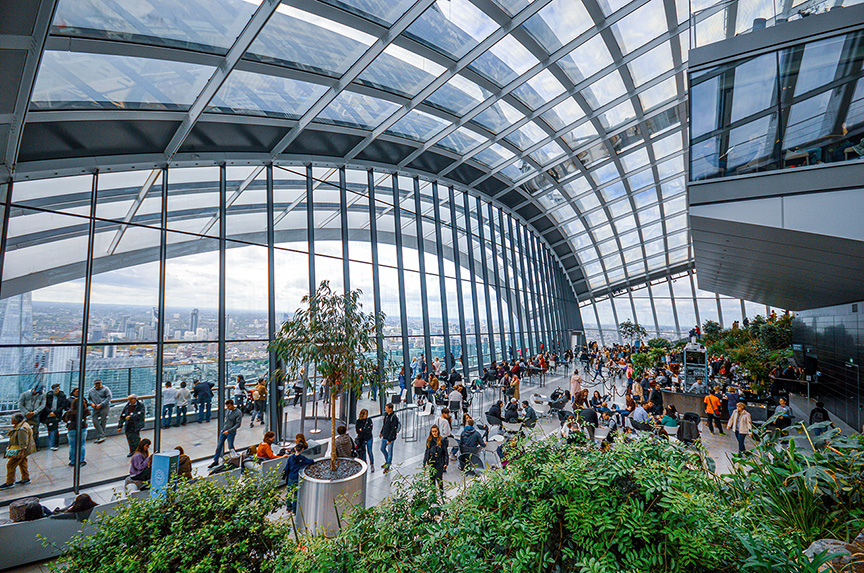
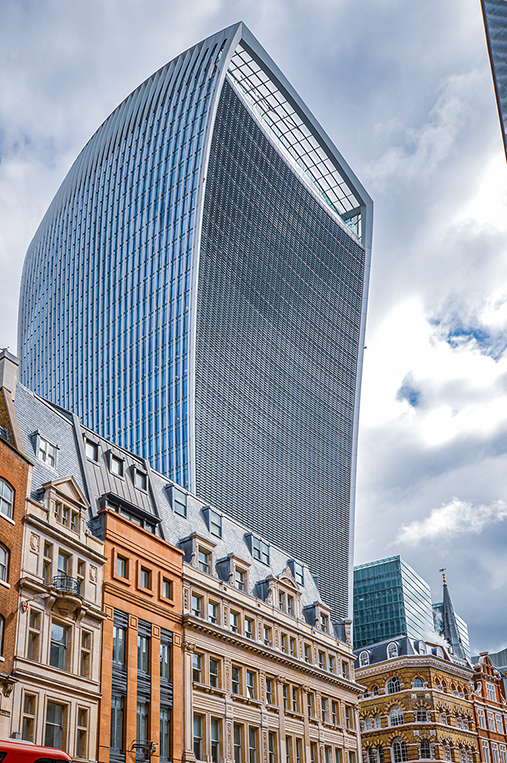
Sky Garden is London’s highest public garden, located at the top of the Walkie Talkie building (20 Fenchurch Street). Offering 360-degree panoramic views of the city, Sky Garden features lush landscapes, observation decks, and a variety of dining options. This unique attraction is a blend of nature and urban architecture, providing visitors with a breathtaking experience high above the streets of London.
The image depicts a modern, spacious indoor area with large glass windows and a high ceiling, filled with numerous people engaging in various activities. The space features abundant greenery and plants, creating a lively and vibrant atmosphere. It appears to be a public or communal area, possibly a rooftop garden or an observation deck, offering a panoramic view of the city outside.
Sky Garden ‐ photo by ,
©www.mgaylard.co.uk.
The image showcases a modern skyscraper with a distinctive curved shape, surrounded by older, more traditional buildings. The skyscraper's glass facade reflects the sky, and its unique design stands out against the backdrop of the historic architecture. The scene is set under a partly cloudy sky, highlighting the contrast between contemporary and classical architectural styles.
The Fenchurch Building (The Walkie-Talkie) ‐ photo by ,
©www.mgaylard.co.uk.
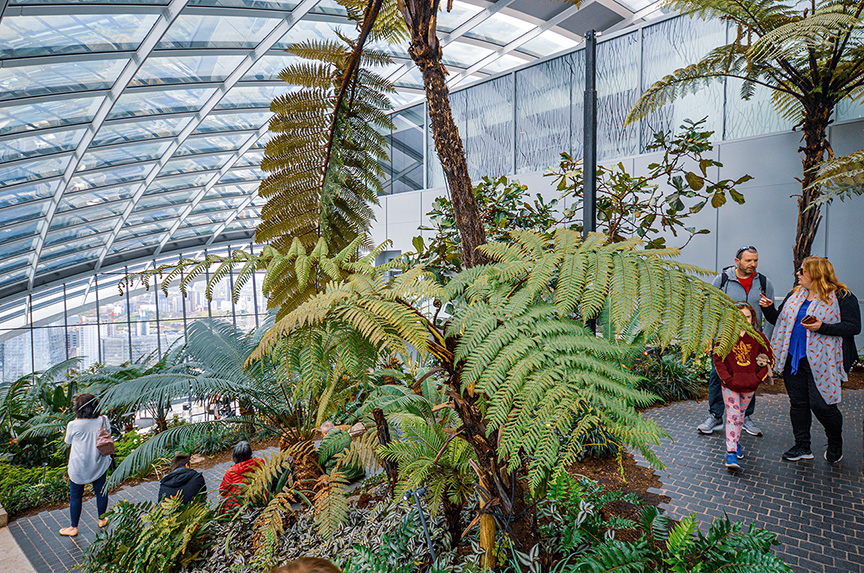
The image depicts a group of people inside a large greenhouse or conservatory. The space is filled with various types of ferns and other lush greenery. The structure features a high, glass ceiling allowing natural light to flood the area. Some individuals are observing the plants closely, while others are walking around, suggesting a leisurely or educational visit.
Sky Garden ‐ photo by ,
©www.mgaylard.co.uk.
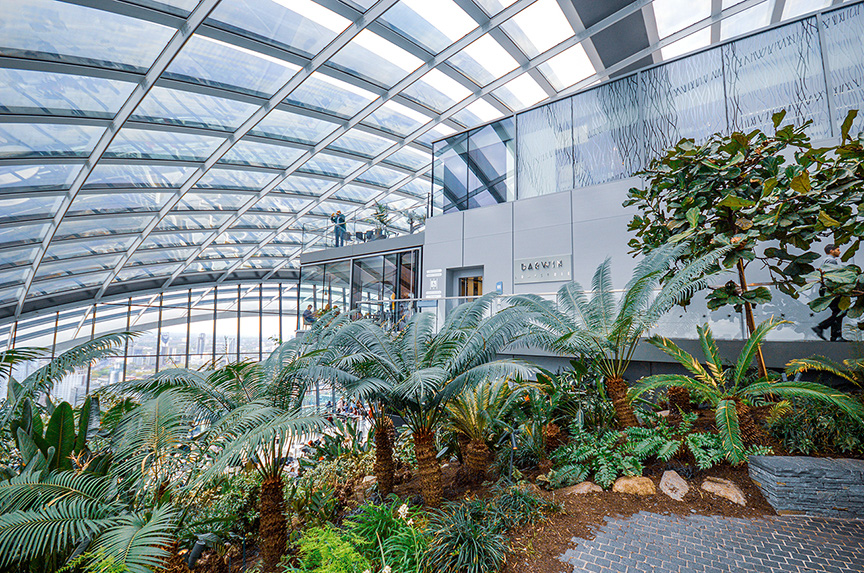
The image depicts a large indoor botanical garden with a high, glass ceiling allowing natural light to illuminate the space. The garden is filled with a variety of lush, green plants and trees, creating a tropical atmosphere. There are pathways for visitors to walk through and enjoy the greenery. The structure appears to be part of a modern building with a glass facade, and there are people visible in the background, indicating it is a public space.
Sky Garden ‐ photo by ,
©www.mgaylard.co.uk.
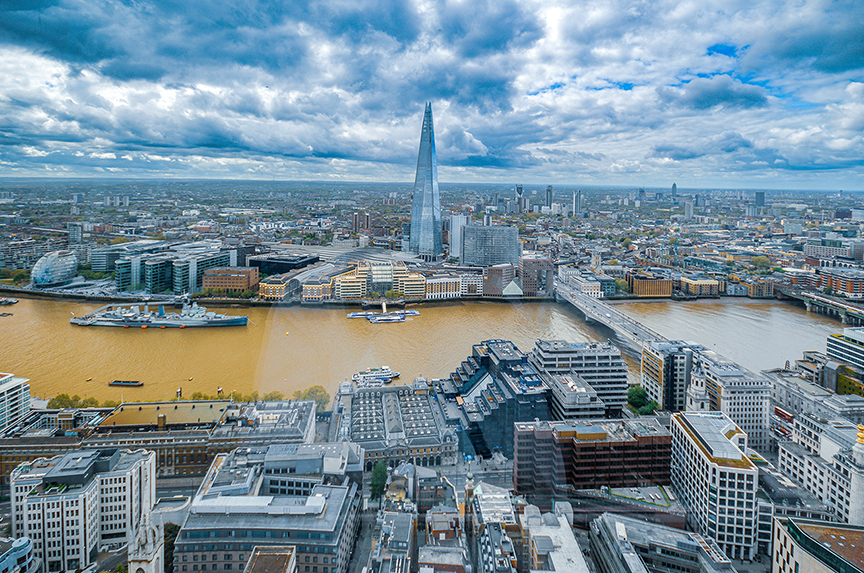
The image showcases a panoramic view of a cityscape with a prominent river running through it. The Shard, a distinctive skyscraper, stands out in the center of the image. The city is densely populated with various buildings, and a large ship is docked on the river. The sky is filled with clouds, suggesting an overcast day. The overall scene captures the bustling urban environment of the city.
View of The shard ‐ photo by ,
©www.mgaylard.co.uk.
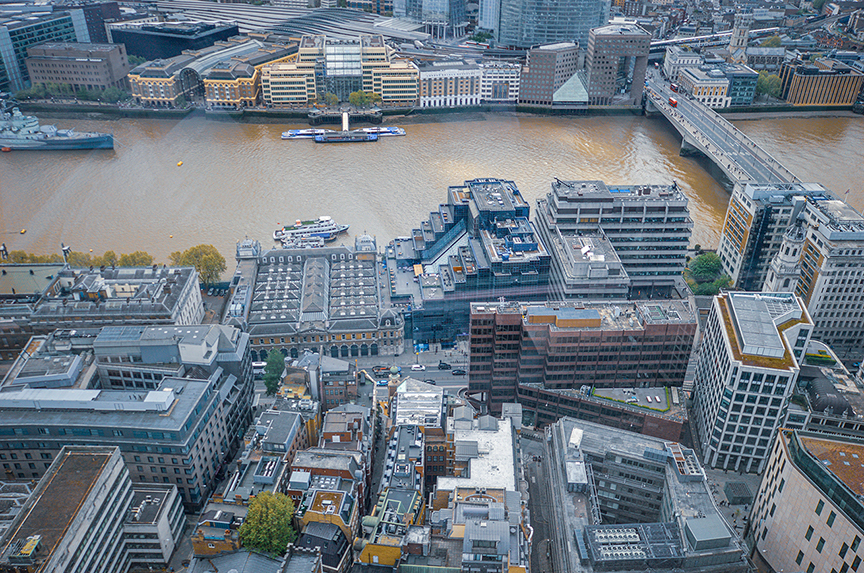
The image depicts an aerial view of a cityscape near a river. The river has several boats and is flanked by buildings on both sides. A bridge spans the river, connecting the two sides of the city. The buildings are a mix of modern and older architecture, with varying heights and designs. The area appears to be a bustling urban environment with a mix of residential, commercial, and possibly industrial structures.
View of Old Billingsgate and London Bridge ‐ photo by ,
©www.mgaylard.co.uk.
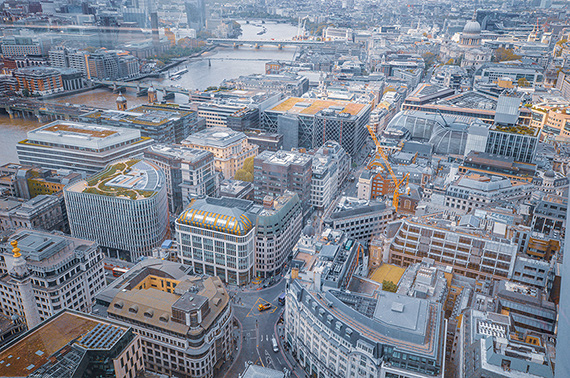
The image depicts an aerial view of a densely built urban area, featuring a mix of modern and older architectural styles. The scene includes a variety of buildings, roads, and a river running through the city. The buildings vary in height and design, with some having distinctive rooftops and others showcasing glass facades. The overall atmosphere suggests a bustling, developed cityscape.
View Towards Blackfriars ‐ photo by ,
©www.mgaylard.co.uk.
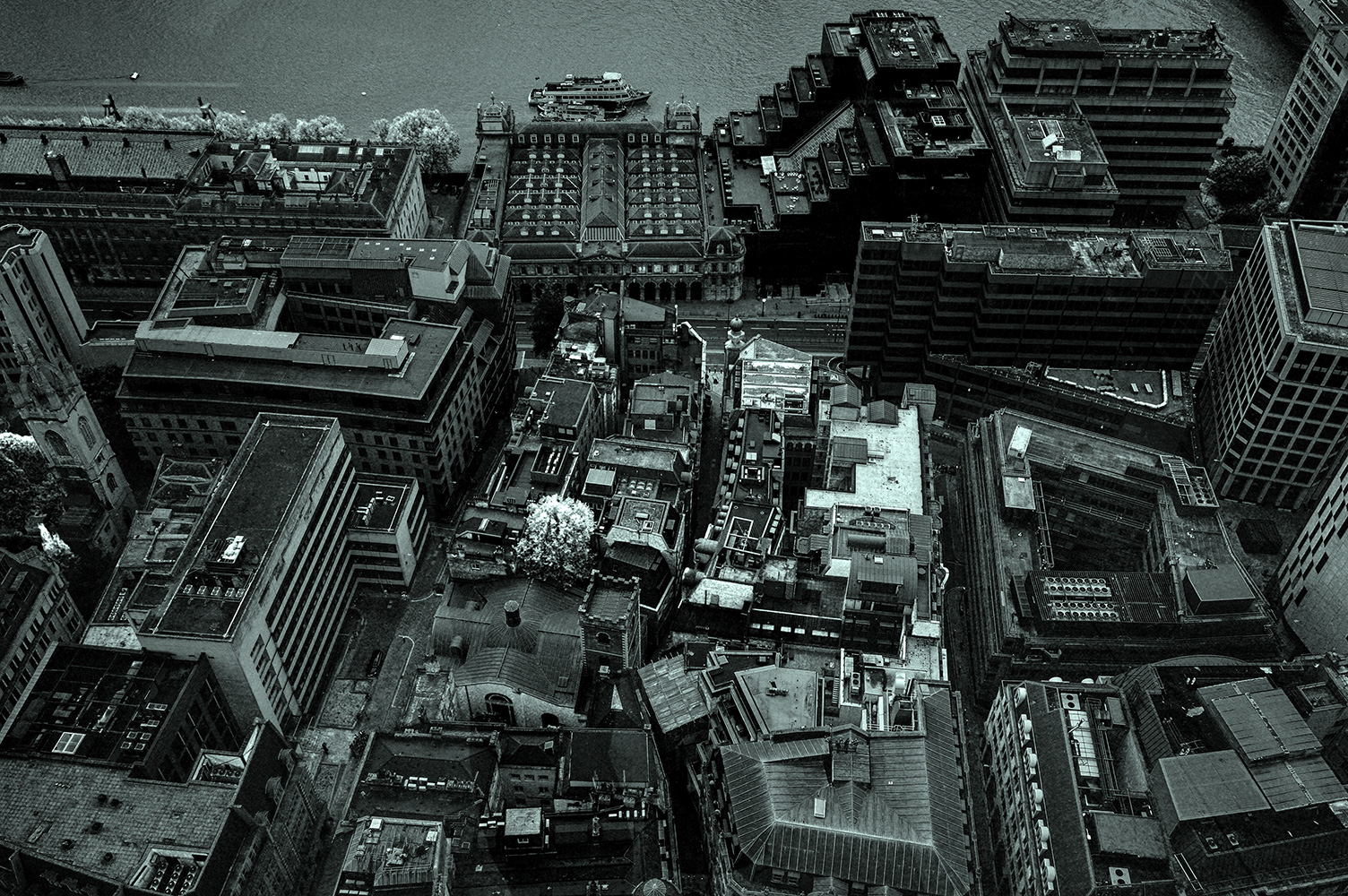
The image depicts an aerial view of a densely built urban area, likely a city center, with a mix of modern and older architecture. The buildings are closely packed, creating a grid-like pattern of streets. A notable feature is a large, historic-looking building near the waterfront, possibly a hotel or a significant public building. There is a body of water adjacent to the city, with a large ship docked at the waterfront. The overall scene is captured in black and white, emphasizing the contrast and details of the urban landscape.
Monument and Old Billingsgate ‐ photo by ,
©www.mgaylard.co.uk.

Sky Garden

Sky Garden is London’s highest public garden, offering stunning panoramic views of the city from the top of 20 Fenchurch Street (nicknamed the "Walkie-Talkie" building).

Overview and History

Location and Design:
Sky Garden is located on the 35th–37th floors of 20 Fenchurch Street, a 525-foot (160-meter) skyscraper in the City of London. It was designed as part of the building’s planning agreement to provide a public space with uninterrupted views of London’s skyline.
Opening:
The garden opened to the public in January 2015 and quickly became one of London’s most popular free attractions, offering a unique blend of nature and urban architecture.

Key Features

Panoramic Views:
Sky Garden provides 360-degree views of London, including landmarks like St Paul’s Cathedral, the Tower of London, the Shard, and the River Thames. The open-air terraces and indoor observation decks allow visitors to enjoy the scenery in all weather.
Gardens and Plants:
The space features lush, landscaped gardens with drought-resistant plants from the Mediterranean and South Africa, including French lavender, African lilies, and birds of paradise. The design aims to create a tranquil escape from the bustle of the city below
Dining and Events:
Sky Garden is home to three restaurants and bars:
Sky Pod Bar:
A relaxed space for drinks with a view.
Darwin Brasserie:
Offers British cuisine with a focus on seasonal ingredients.
Fenchurch Restaurant:
A fine-dining experience with a seafood and grill menu.
Yoga and Wellness:
The garden hosts sunrise yoga sessions and wellness events, allowing visitors to start their day with meditation and exercise high above the city.

Visitor Information

Admission:
Entry to Sky Garden is free, but advance booking is required due to high demand. Visitors can book timed slots online, with early access tickets available for those who want to avoid crowds.
Accessibility:
The garden is wheelchair accessible, and the viewing areas are designed to accommodate all visitors. However, the open terraces can be chilly and windy, so dressing appropriately is recommended.
Location and Transport:
Sky Garden is located at 1 Sky Garden Walk, London EC3M 8AF, near Monument Tube Station. It is a 10-minute walk from London Bridge.

Visitor Reviews and Tips

Positive Feedback:
Visitors praise Sky Garden for its breathtaking views, beautiful gardens, and unique atmosphere. Many recommend visiting at sunset or during early access hours to avoid crowds and enjoy the best lighting for photography.
Criticisms:
Some reviews note that the views can feel distant due to the building’s design, and the restaurants can be pricey. However, the free entry and stunning vistas make it a must-visit for both locals and tourists.

Cultural and Architectural Significance

Public Space:
Sky Garden was created as a compromise to allow the construction of a large commercial skyscraper in a conservation area. It has since become a beloved public space, offering a green oasis in the heart of the financial district.
Architectural Design:
The glass-walled gardens and terraced levels were designed to maximize natural light and blend seamlessly with the surrounding cityscape.

References

www.thingstodoinlondon.comwww.tripadvisor.co.ukskygarden.london20 Fenchurch Street , Text generated by Mistral AI

Leadenhall Market

Gracechurch StreetCity of LondonGreater London,   United Kingdom

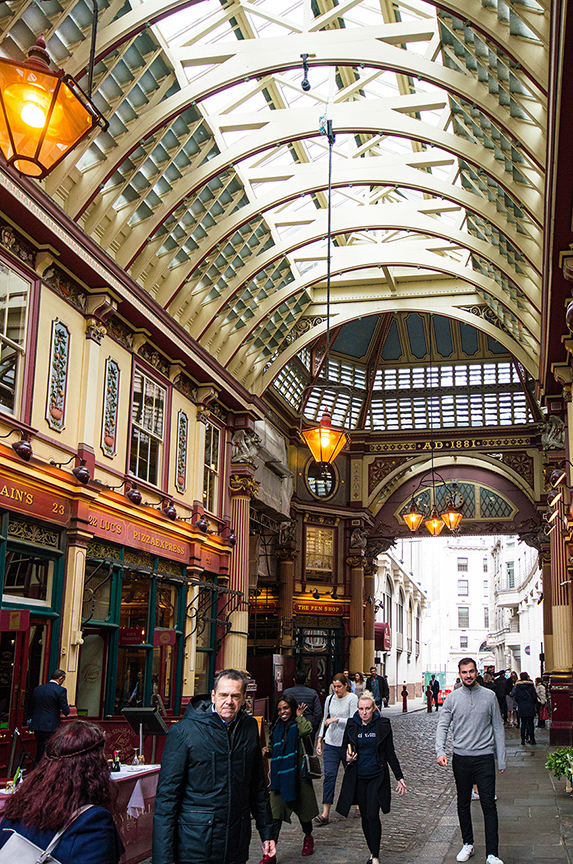
Leadenhall Market is one of London's oldest and most beautiful covered markets, located in the heart of the City of London. Dating back to the 14th century, the market is renowned for its ornate Victorian architecture, featuring wrought iron and glass canopies. Today, Leadenhall Market is a bustling hub for food, drink, and shopping, offering a mix of traditional butchers, fishmongers, and modern eateries. It is also famous as a filming leadenhall for the Harry Potter series, adding to its cultural appeal.
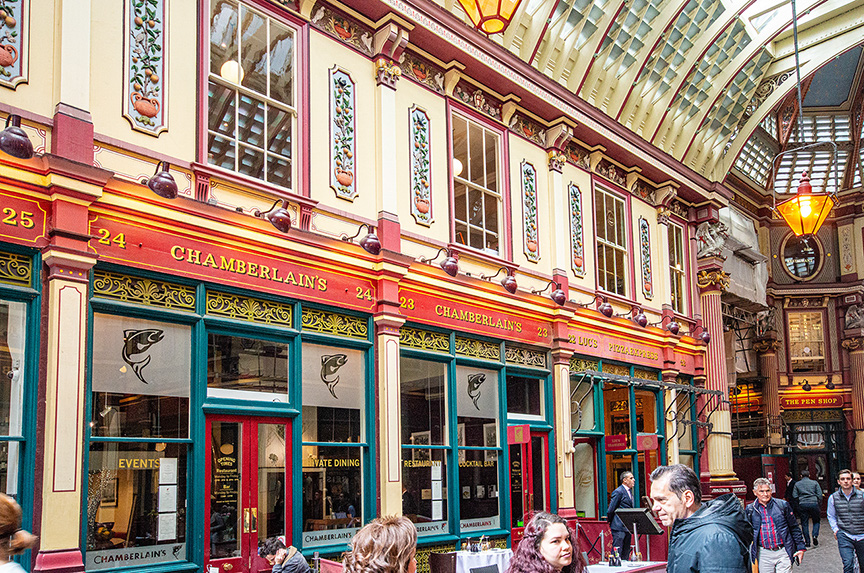
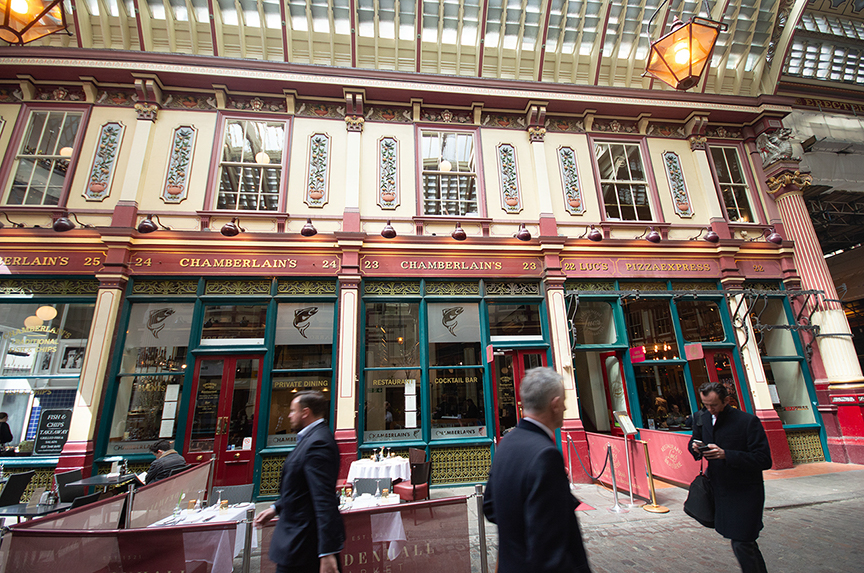
The image depicts a vibrant and ornate indoor market or shopping arcade. The architecture features colorful, detailed facades with large windows and decorative elements. The establishment named 'Chamberlains' is prominently displayed, offering events and estate dining. The arcade is bustling with people, and the ceiling is adorned with a glass roof, allowing natural light to illuminate the space.
View of leadenhall ‐ photo by ,
©www.mgaylard.co.uk.
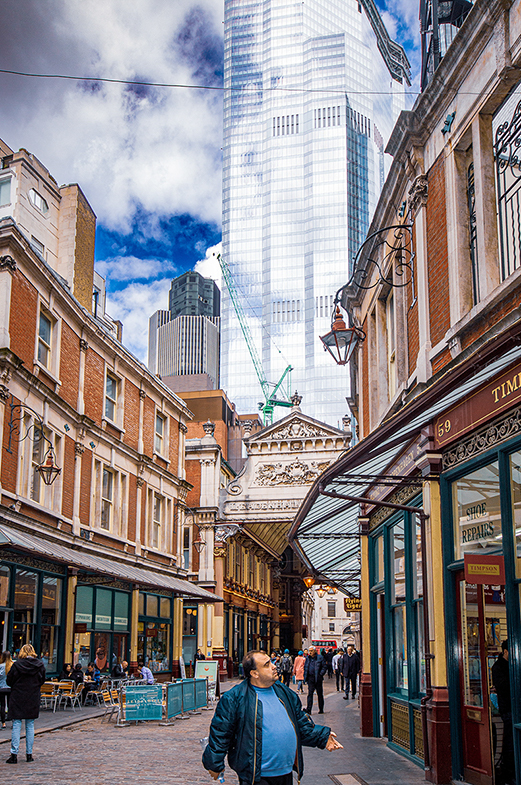
The image depicts a bustling urban street scene with a mix of modern and historic architecture. A tall, reflective skyscraper dominates the background, while older, brick buildings line the street. The street is lively with people walking and sitting at outdoor cafes. The sky is partly cloudy, adding a dynamic element to the scene. The overall atmosphere is vibrant and busy, capturing the essence of city life.
View of leadenhall ‐ photo by ,
©www.mgaylard.co.uk.
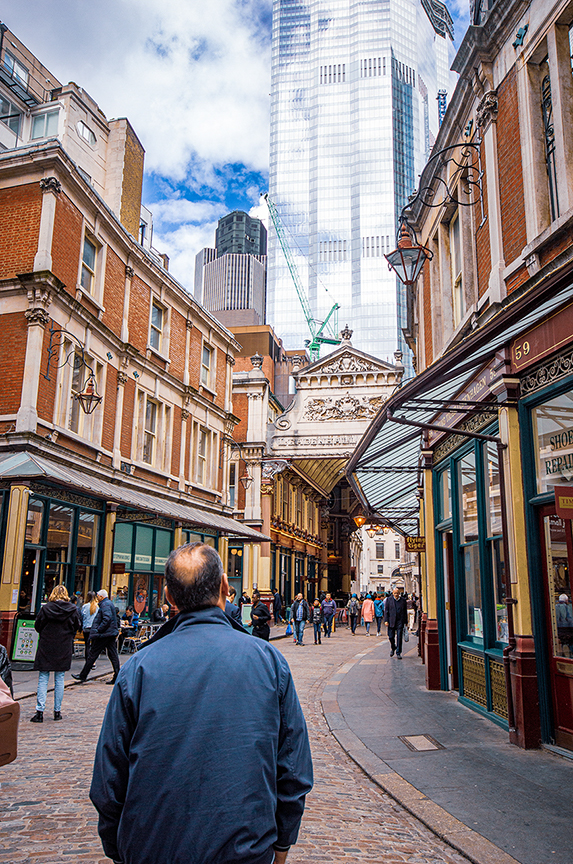
The image depicts a bustling urban street scene with a mix of historic and modern architecture. A man in a blue jacket is seen walking away from the camera, surrounded by various shops and buildings. The street is lined with brick buildings featuring ornate details and a covered walkway. In the background, tall modern skyscrapers tower over the scene, creating a contrast between old and new architectural styles. The sky is partly cloudy, adding to the vibrant atmosphere of the city.
View of leadenhall ‐ photo by ,
©www.mgaylard.co.uk.
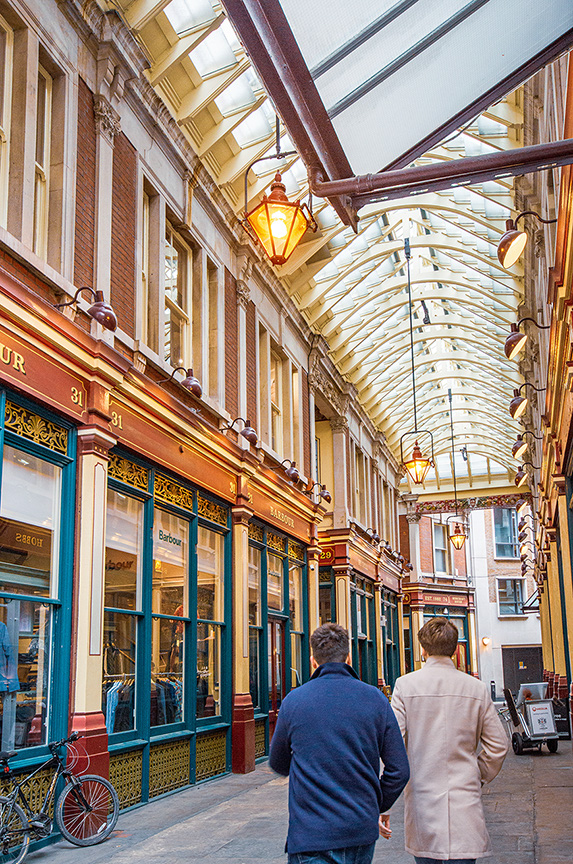
The image depicts an indoor shopping arcade with a glass-roofed ceiling, featuring two men walking away from the camera. The arcade has a vintage architectural style with ornate details, large windows displaying various shops, and hanging lantern-style lights. The overall atmosphere is bright and inviting, suggesting a pleasant shopping environment.
View of leadenhall ‐ photo by ,
©www.mgaylard.co.uk.
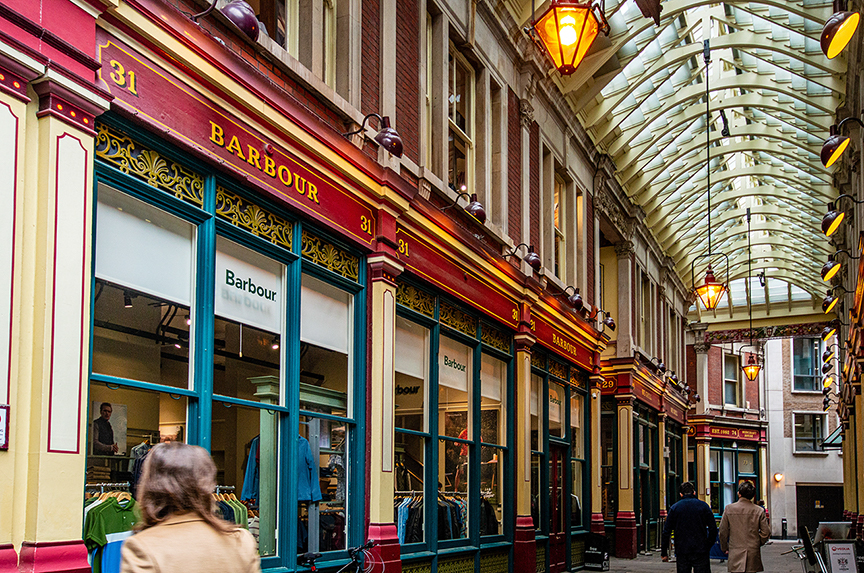
The image depicts a street view of a shopping arcade with a glass-covered walkway. The prominent store in the image is 'Barbour' with its distinctive red and gold signage. The storefronts are adorned with large windows displaying various items, and the arcade is illuminated by hanging lanterns. People are seen walking and shopping in the arcade.
View of leadenhall ‐ photo by ,
©www.mgaylard.co.uk.
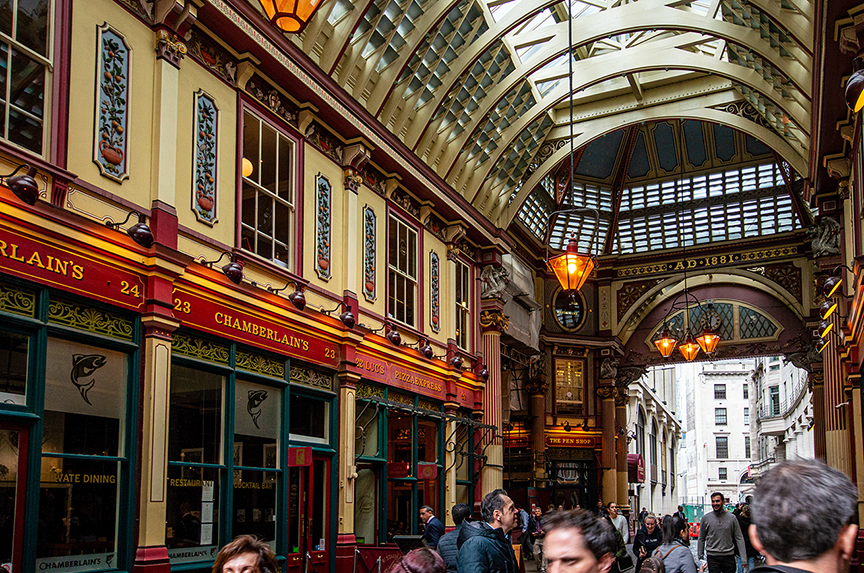
The image depicts a bustling indoor market or arcade with a high, arched glass ceiling allowing natural light to illuminate the space. The architecture features ornate details, including decorative columns and intricate moldings. Various shops line the sides of the arcade, with visible signage such as 'Chamberlain's' and 'The Pen Shop.' The area is crowded with people, indicating a lively atmosphere.
View of leadenhall ‐ photo by ,
©www.mgaylard.co.uk.
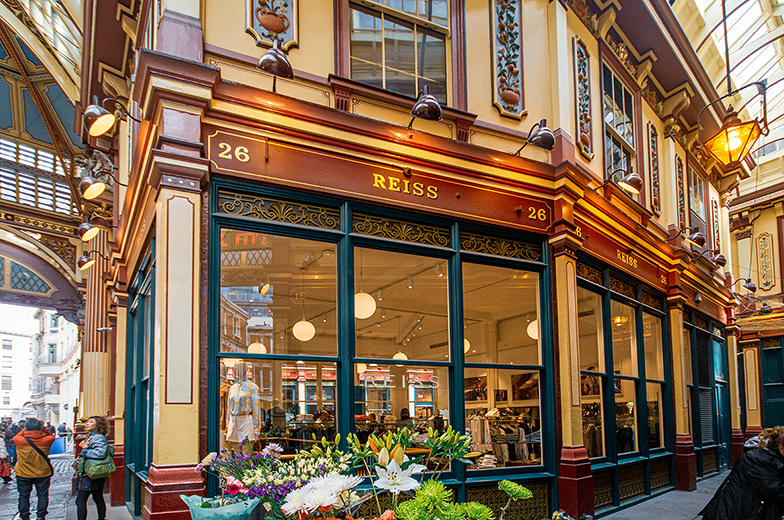
The image depicts a storefront located at 26 Royal Arcade, with the store name 'Reiss' prominently displayed above the entrance. The building features ornate architectural details, including decorative columns, intricate moldings, and large windows that allow natural light to illuminate the interior. The storefront is adorned with a variety of colorful flowers, adding a vibrant touch to the scene. People can be seen walking by and entering the store, indicating a bustling environment. The overall atmosphere suggests a lively shopping area with historical charm.
View of leadenhall ‐ photo by ,
©www.mgaylard.co.uk.
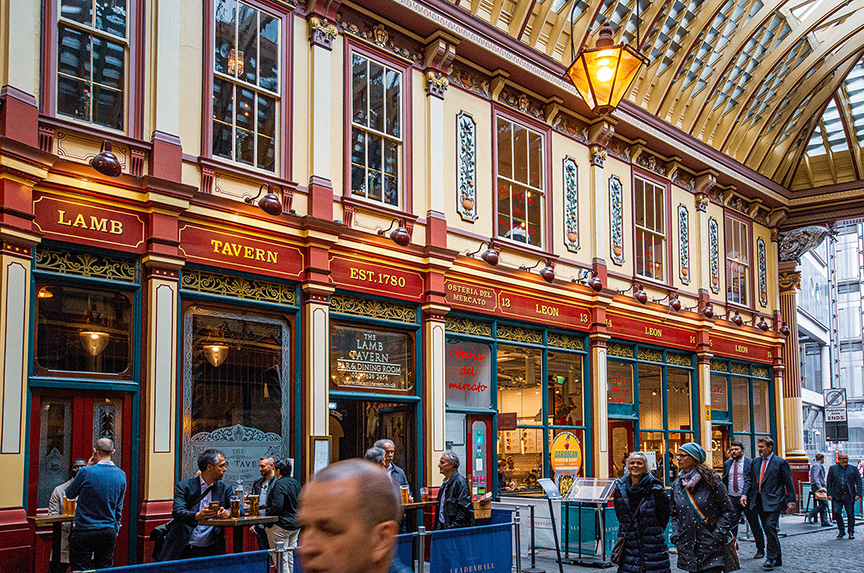
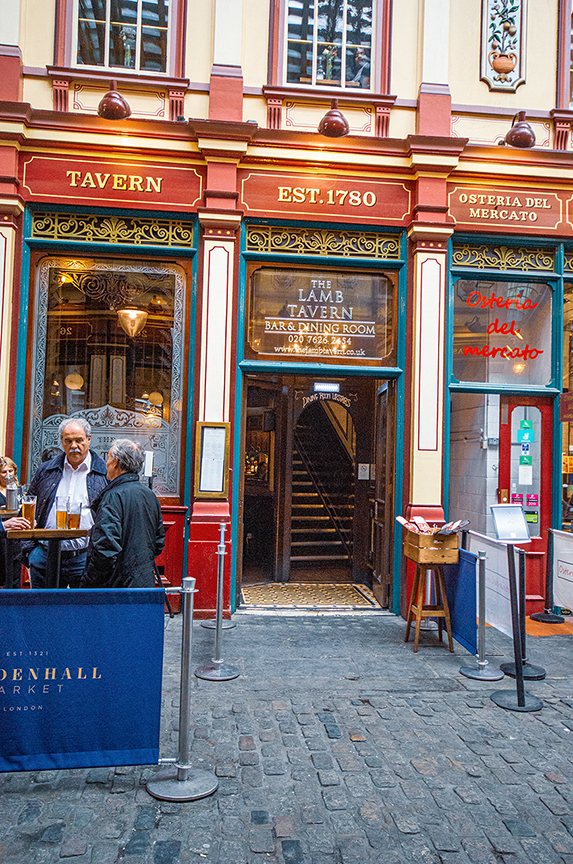
The image depicts a bustling scene outside The Lamb Tavern, a historic pub established in 1780. The building features ornate architecture with large windows and decorative elements. People are seen walking and sitting outside the tavern, enjoying the ambiance. The setting appears to be a covered market or arcade, indicated by the glass roof structure. The overall atmosphere is lively and inviting, with a mix of locals and tourists.
View of leadenhall ‐ photo by ,
©www.mgaylard.co.uk.
The image depicts a bustling indoor market or arcade with a high, arched, glass-paneled ceiling allowing natural light to illuminate the space. The architecture features ornate details and hanging lanterns. Various shops and eateries line the sides, with people walking through the corridor, engaging in activities such as shopping and dining.
View of leadenhall ‐ photo by ,
©www.mgaylard.co.uk.
The image depicts the exterior of The Lamb Tavern, a historic establishment founded in 1780. The building features classic architecture with ornate details and signage indicating the tavern's name and contact information. Adjacent to it is Osteria del Mercato, another dining establishment. Two individuals are seen standing outside, engaged in conversation near a high table with drinks. The scene is set on a cobblestone street, adding to the historic ambiance.
View of leadenhall ‐ photo by ,
©www.mgaylard.co.uk.
The image depicts a street scene with a row of shops and restaurants. The buildings have ornate facades with large windows and decorative elements. The establishments include Chamberlain's, Luc's, and Pizza Express. There are people walking on the street, and some are standing near a table with items on it. The overall atmosphere suggests a busy, urban setting with a mix of commercial activity.
View of leadenhall ‐ photo by ,
©www.mgaylard.co.uk.
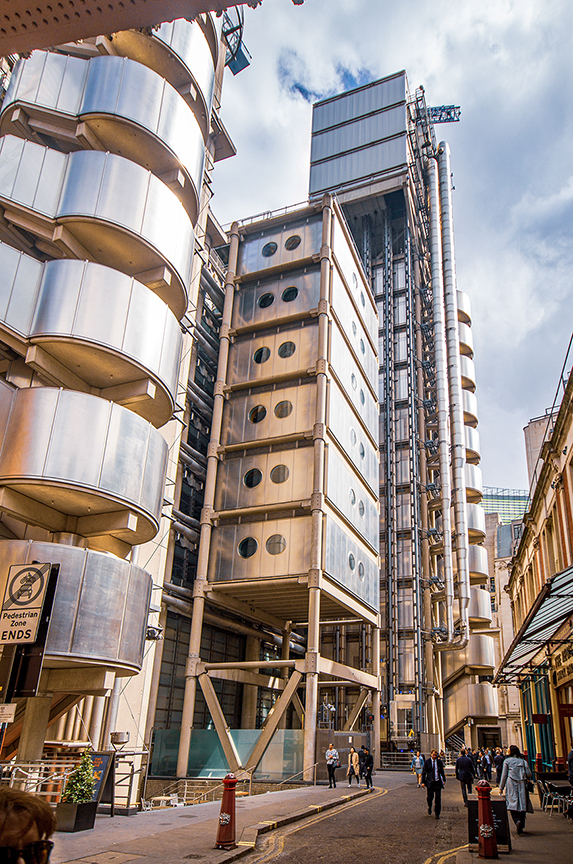
The image depicts a modern, uniquely designed building with a distinctive architectural style. The structure features a combination of cylindrical and rectangular forms, with a series of circular windows and a tall, slender tower extending upwards. The building is situated in an urban environment, with people walking on the sidewalk in front of it. The sky is partly cloudy, and the overall atmosphere appears to be bustling and lively.
Lloyds Of London ‐ photo by ,
©www.mgaylard.co.uk.
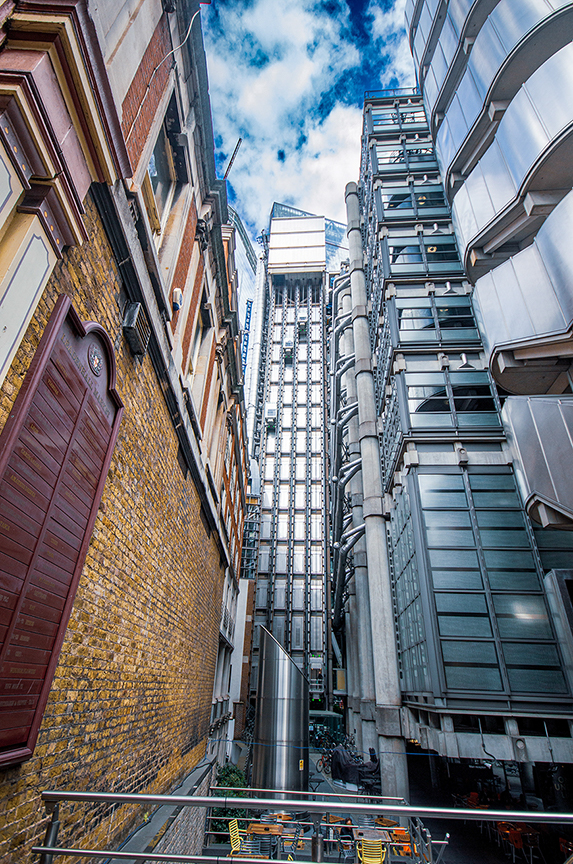
The image depicts a narrow urban alleyway flanked by tall buildings. On the left, there is an older, ornate brick building with intricate architectural details. On the right, there is a modern, glass-and-steel high-rise building. The alleyway leads to a larger, more prominent building in the background, characterized by a distinctive, industrial design with exposed pipes and a grid-like facade. The sky above is partly cloudy, adding a dramatic effect to the scene.
Lloyds Of London ‐ photo by ,
©www.mgaylard.co.uk.
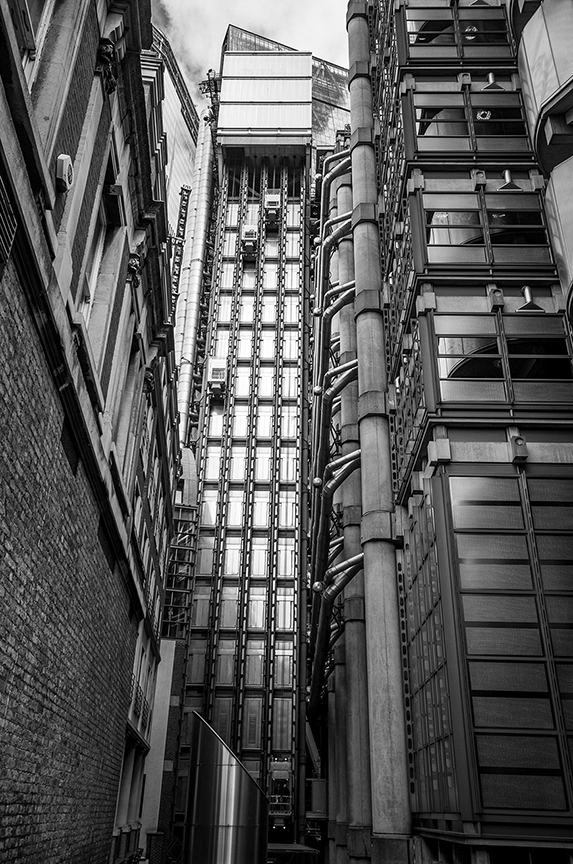
The image depicts a black and white photograph of a tall, modern building with a unique architectural design. The building features a grid-like facade with numerous windows and external structural elements. The photograph is taken from a narrow alleyway, emphasizing the height and grandeur of the structure. The surrounding buildings are more traditional in design, contrasting with the contemporary style of the central building.
Lloyds Of London ‐ photo by ,
©www.mgaylard.co.uk.

Leadenhall Market

Leadenhall Market is one of London’s oldest and most historic covered markets, located in the heart of the City of London’s financial district.

Historical Overview

Roman Origins:
Leadenhall Market stands on the site of the Roman Forum and Basilica, the commercial and administrative center of Roman Londinium. The market has been a hub of trade and commerce since the 14th century.
Medieval and Modern History:
The market was rebuilt in 1881 by Sir Horace Jones, who also designed Billingsgate and Smithfield Markets. The current structure features a Victorian wrought-iron and glass roof, cobbled floors, and ornate architectural details.
Dick Whittington Connection:
In 1408, Richard “Dick” Whittington (the inspiration for the folk tale of Dick Whittington and his cat) acquired the site and gifted it to the City of London Corporation, which has managed it ever since.

Architectural and Cultural Significance

Grade II Listed:
The market is a Grade II listed building, recognized for its historical and architectural importance. Its colorful roof, cobbled streets, and intricate ironwork make it a popular tourist attraction and a favorite filming location.

Harry Potter Connection:

Leadenhall Market was used as the filming location for Diagon Alley and the Leaky Cauldron in Harry Potter and the Philosopher’s Stone (2001), adding to its global fame.
Dragons and Symbols:
The market’s entrances are adorned with carved dragons and shields, reflecting its rich heritage and London’s medieval guild traditions.

Shopping and Dining

Retail and Food:
Today, Leadenhall Market is home to a mix of independent shops, boutiques, cafes, bars, and restaurants. Visitors can find:
  • Fresh food stalls (cheese, meat, fish, and flowers)
  • Unique gifts and fashion boutiques
  • Historic pubs and modern eateries, including the Lamb Tavern, a traditional gathering spot for City workers
Atmosphere:
The market is buzzy and vibrant, especially during lunchtime, when City workers fill the cafes and bars. It is also a popular spot for evening drinks and dining.

Visitor Information

Location:
Leadenhall Market is located on Gracechurch Street, in the City of London, near Monument and Bank Tube stations.
Opening Hours:
The market’s public areas are open 24/7, but individual shops, bars, and restaurants have varying hours, typically 10:00 AM to 6:00 PM on weekdays.
Accessibility:
The market is wheelchair accessible, and its cobbled streets and historic architecture make it a photogenic and atmospheric place to explore.

Fun Facts and Pop Culture

Olympic Marathon:
Leadenhall Market was part of the 2012 London Olympics marathon route, with runners passing through its historic arches.
Film and TV:
Beyond Harry Potter, the market has appeared in films like The Imaginarium of Doctor Parnassus (2009) and Love Aaj Kal (2009), as well as music videos and TV shows.
References

en.wikipedia.orgleadenhallmarket.co.ukwww.atlasobscura.com Text generated by Mistral AI
To the top
Powered by w3.css. The images are all stored on link to www.gaylard.co.uk Photostream on Flickr   This website is hosted by link to 123Reg Web Hosting