HOME Places Home ABOUT CONTACT

City Of London

City of London

LondonGreater London,   United Kingdom

The City of London, often referred to as the "Square Mile," is the historic and financial heart of London. It is a major global financial center, home to the Bank of England, the London Stock Exchange, and numerous multinational corporations. The City is also rich in history, with landmarks such as St Paul's Cathedral, the Tower of London, and the Monument to the Great Fire of London. It retains its ancient traditions and governance, including the Lord Mayor of London and the City of London Corporation.

Moorgate

City Of LondonGreater London,   United Kingdom

Moorgate is a major street and area in the City of London, historically known as one of the city's ancient gates. Today, it is a bustling financial and commercial hub, home to numerous corporate offices, financial institutions, and modern skyscrapers. Moorgate is also a key transportation node, with Moorgate Station serving as a major interchange for London Underground and National Rail services. The area blends historic charm with contemporary urban development.
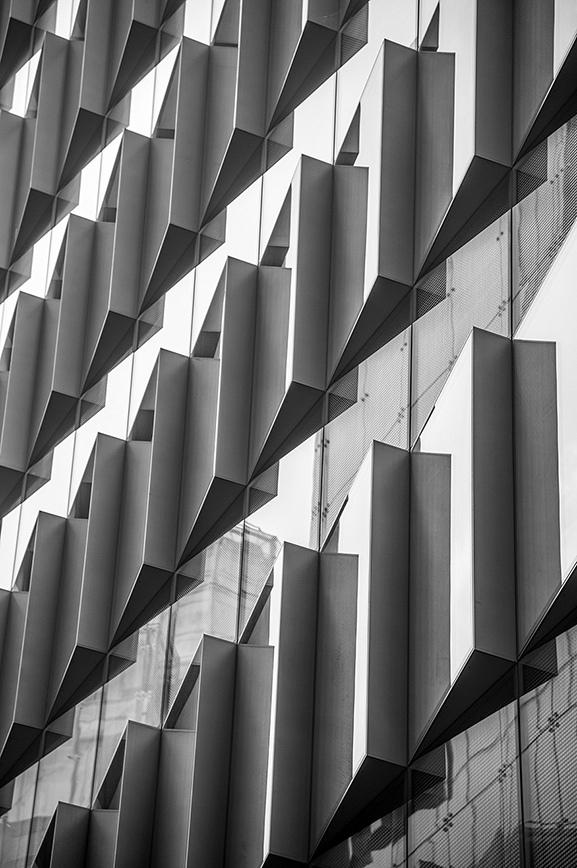
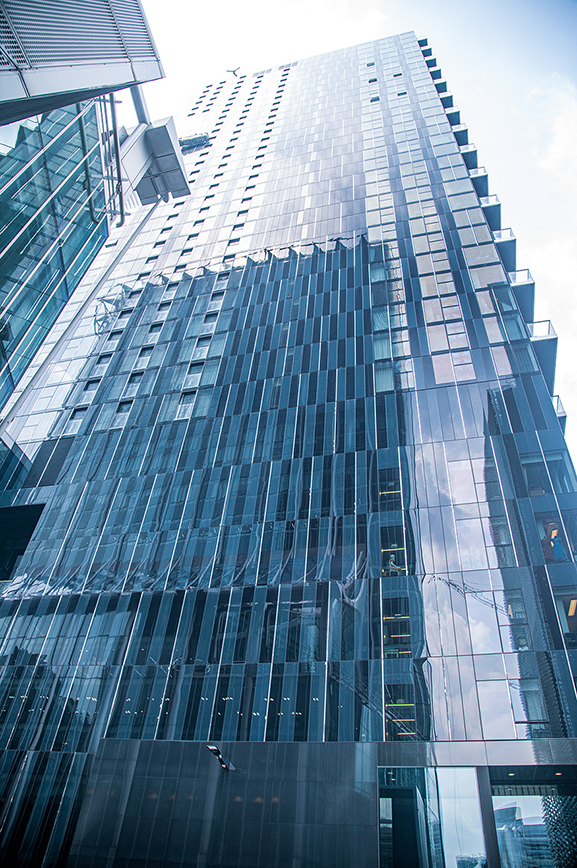
The image depicts a modern building facade with a unique geometric design, featuring a series of angular, overlapping panels that create a dynamic and intricate pattern. The structure appears to be made of metal or a similar material, with a mix of solid and semi-transparent elements. The design gives the building a contemporary and artistic appearance, with shadows and light playing off the various angles and surfaces.
Office Windows ‐ photo by ,
©www.mgaylard.co.uk.
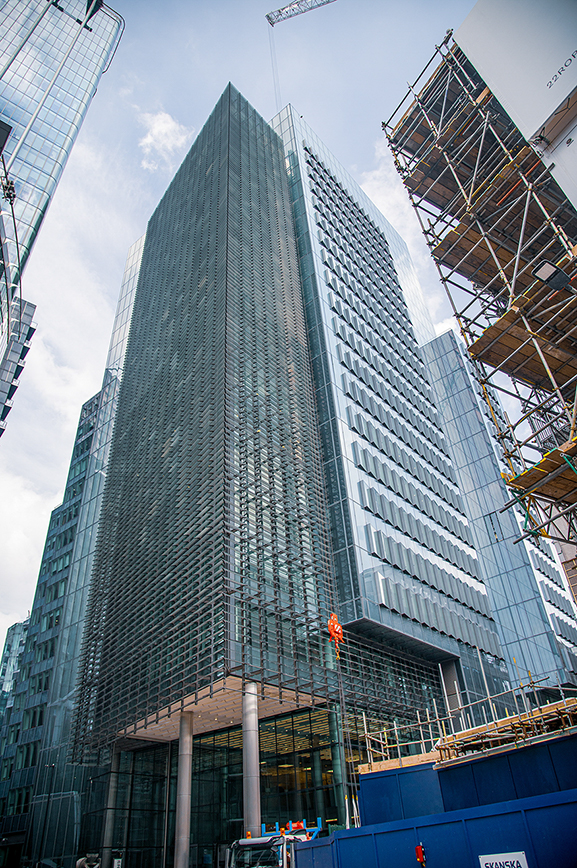
The image depicts a tall, modern skyscraper under construction. The building features a glass facade with a grid-like pattern and is surrounded by scaffolding and construction equipment. The sky is partly cloudy, and there are other high-rise buildings in the vicinity.
Ropemaker Street ‐ photo by ,
©www.mgaylard.co.uk.
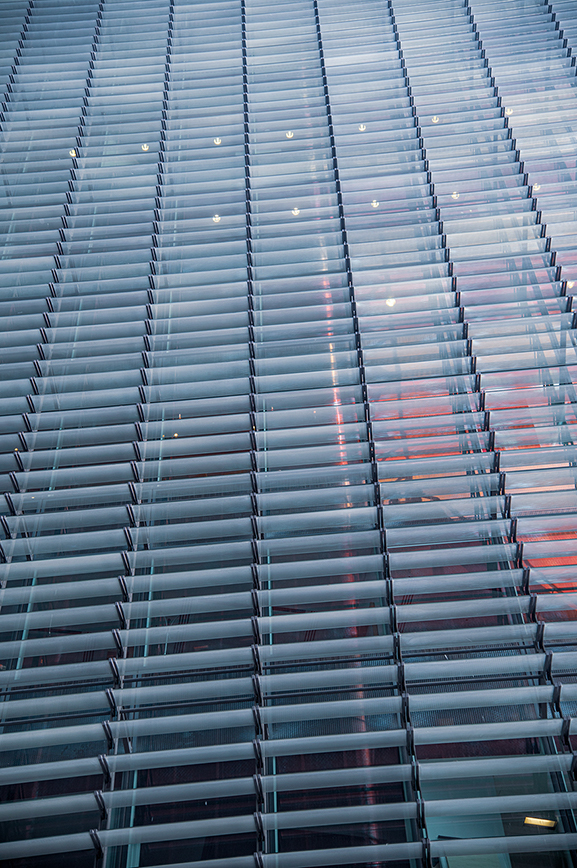
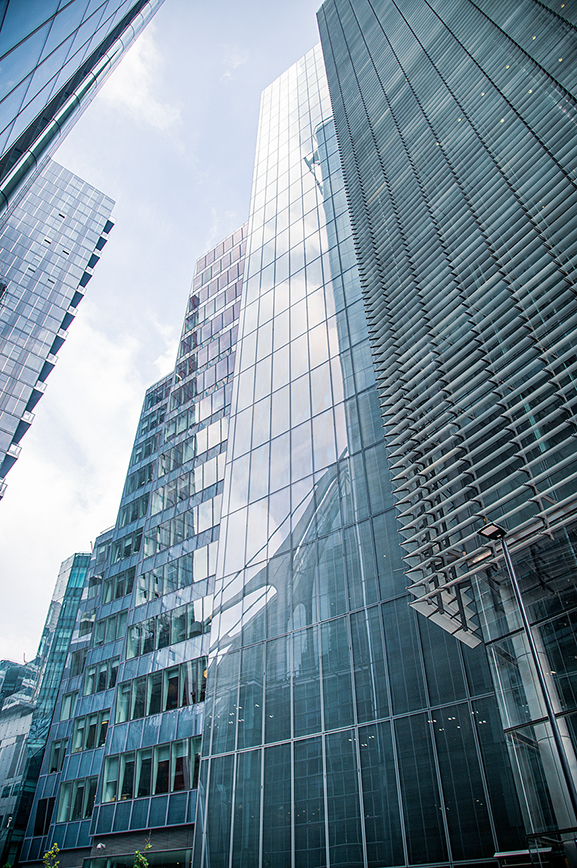
The image shows a modern building facade with a unique design featuring horizontal glass louvers. The louvers are arranged in a staggered pattern, creating an interesting visual effect. The glass reflects the sky and surrounding environment, adding a dynamic element to the building's appearance. The overall design is sleek and contemporary, emphasizing clean lines and a minimalist aesthetic.
horizontal glass louvers. ‐ photo by ,
©www.mgaylard.co.uk.

Ropemaker Street in London is a prominent address in the City and Islington, known for its modern commercial developments, including high-rise office buildings like 20-22 Ropemaker Street, which boasts BREEAM ‘Outstanding’ and WELL Platinum sustainability certifications. The area is characterized by a mix of contemporary architecture, vibrant public spaces, and proximity to major transport hubs such as Moorgate Station, making it a key city for business and urban development
www.makearchitects.com

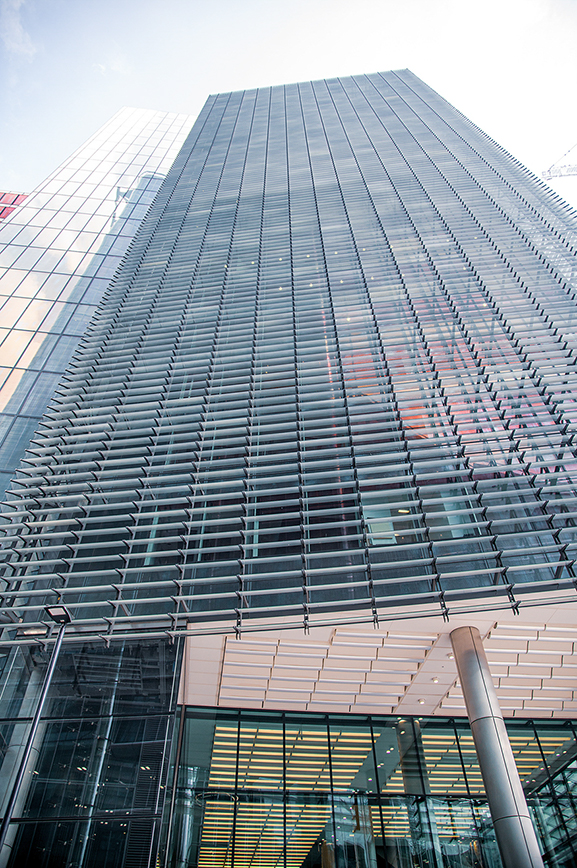
The image depicts a modern skyscraper with a distinctive facade featuring horizontal and vertical lines. The building has a sleek, glass exterior with a grid-like pattern of metal supports. The perspective of the photo is from a low angle, looking upwards, emphasizing the height and grandeur of the structure. The sky is visible in the background, suggesting it is a clear day. The architectural design is contemporary and impressive, showcasing advanced engineering and aesthetic appeal.
Ropemaker Street ‐ photo by ,
©www.mgaylard.co.uk.
The image shows a tall, modern skyscraper with a reflective glass facade. The building has a sleek design with numerous windows and a grid-like pattern. The photograph is taken from a low angle, emphasizing the height and grandeur of the structure. The sky is visible in the background, and the reflection of nearby buildings can be seen on the glass surface.
Ropemaker Street ‐ photo by ,
©www.mgaylard.co.uk.
The image depicts a cluster of modern skyscrapers with reflective glass facades. The buildings are closely packed, showcasing a variety of architectural designs and reflective surfaces that mirror the sky and surrounding structures. The perspective is from a low angle, emphasizing the height and grandeur of the buildings. The sky is visible in the background, with some clouds scattered across it. The overall scene is a typical representation of a contemporary urban landscape.
Chiswell Street Dining Rooms ‐ photo by ,
©www.mgaylard.co.uk.
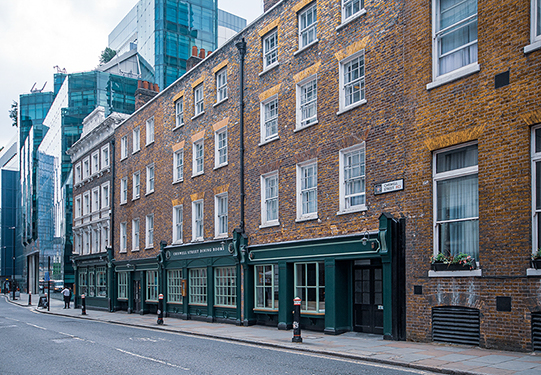
The image depicts a street scene with a row of traditional brick buildings. The buildings have large windows and some have green awnings. The street is relatively quiet with a few pedestrians and no visible vehicles. Modern glass buildings are visible in the background, indicating a blend of old and new architecture. The overall atmosphere is calm and typical of an urban setting.
View of city ‐ photo by ,
©www.mgaylard.co.uk.
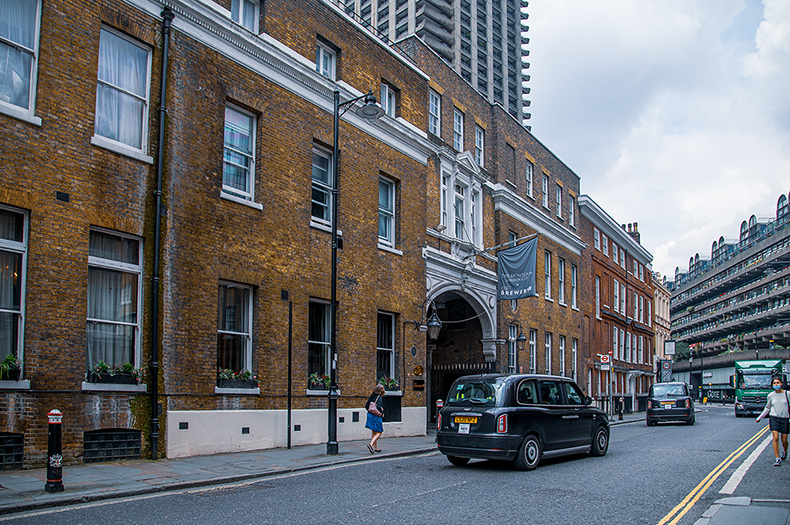
The image depicts a street scene in an urban area with brick buildings, a black taxi, and a pedestrian crossing the street. The architecture features traditional brickwork with white window frames, and there is a notable archway on one of the buildings. The scene appears to be in a city, likely in the UK, given the style of the taxi and the architecture.
Chiswell Street ‐ photo by ,
©www.mgaylard.co.uk.

The Chiswell Street Dining Rooms is an elegant restaurant and cocktail bar located at 56 Chiswell Street in the heart of London’s City, near Barbican and Moorgate stations. Known for its refined Modern British cuisine, sophisticated ambiance, and versatile private dining spaces, it is a popular choice for weekday lunches, pre-theatre dinners, weddings, and corporate events, accommodating up to 65 seated or 120 standing guests
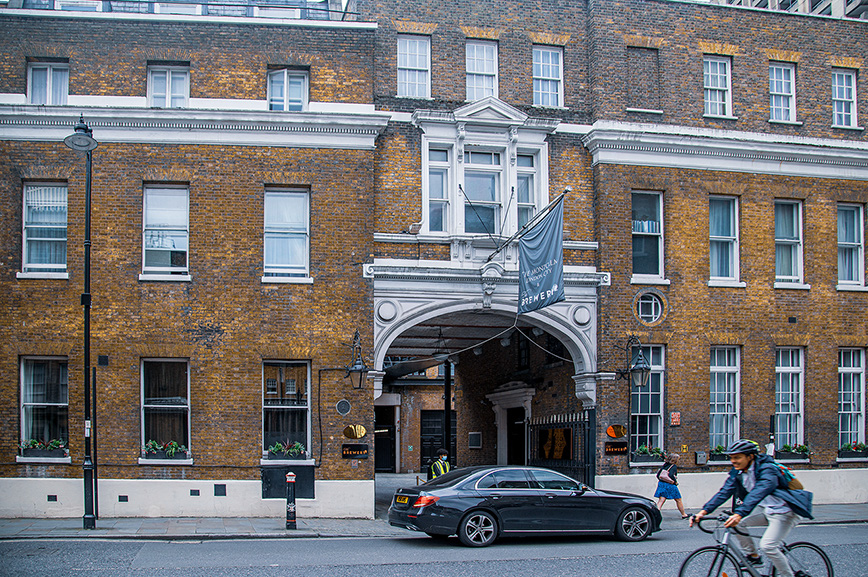
The image depicts the exterior of a brick building with a central entrance archway. The building has multiple windows with white frames and some have flower boxes. There is a flag above the entrance displaying the name 'The Resident Victoria'. A black car is parked in front of the entrance, and a cyclist is riding past on the street. The scene appears to be in an urban setting with typical city activity.
View of city ‐ photo by ,
©www.mgaylard.co.uk.
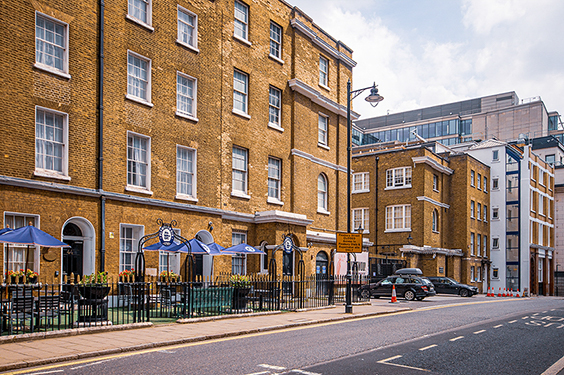
The image depicts a street scene in an urban area with a row of three-story brick buildings. The buildings have a classic architectural style with large windows and decorative cornices. Each building has a black wrought iron fence in front, and there are blue umbrellas and outdoor seating areas at the ground level, suggesting the presence of cafes or restaurants. The street is relatively quiet with a few parked cars and a single car driving by. The sky is overcast, indicating it might be a cloudy day.
Montcalm Brewery Townhouse - Hotel ‐ photo by ,
©www.mgaylard.co.uk.

The Whitbread Brewery on Chiswell Street was established in 1750 by Samuel Whitbread, becoming the UK’s first purpose-built mass-production brewery and a cornerstone of London’s brewing industry for over 225 years. The brewery was renowned for its innovative use of steam power, royal visits (including from King George III and Queen Elizabeth II), and its vast scale, which made it a major industrial and social landmark in the City of London. Brewing ceased in 1976, and the historic site has since been repurposed as a venue for events, conferences, and weddings, preserving its architectural heritage and connection to London’s brewing www.thebrewery.co.uk.
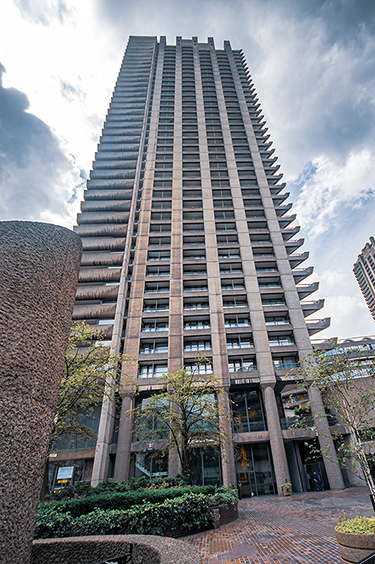
The image depicts a tall, modern high-rise building with a distinctive architectural design. The building features numerous balconies and a facade composed of a mix of concrete and glass elements. The structure is surrounded by a well-maintained garden area with greenery and a paved walkway in the foreground. The sky above is partly cloudy, and the overall scene suggests an urban setting.
The Barbican Cromwell Tower ‐ photo by ,
©www.mgaylard.co.uk.
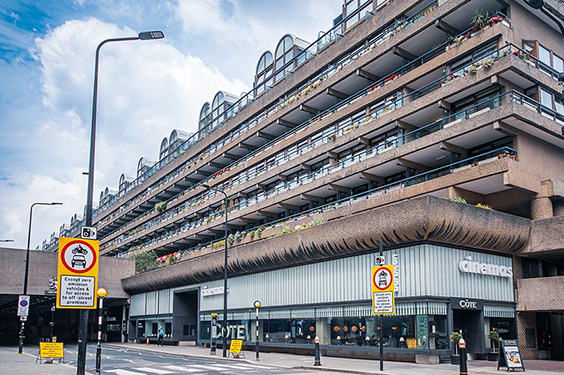
The image depicts a multi-story residential building with a distinctive architectural design, featuring multiple levels of balconies. The building is situated in an urban area with various street signs and commercial establishments on the ground floor. The sky is partly cloudy, and the overall scene suggests a typical day in a city environment.
The Barbican Centre — Europe’s largest multi-arts venue, hosting concerts, theatre, cinema, exhibitions, and more. ‐ photo by ,
©www.mgaylard.co.uk.
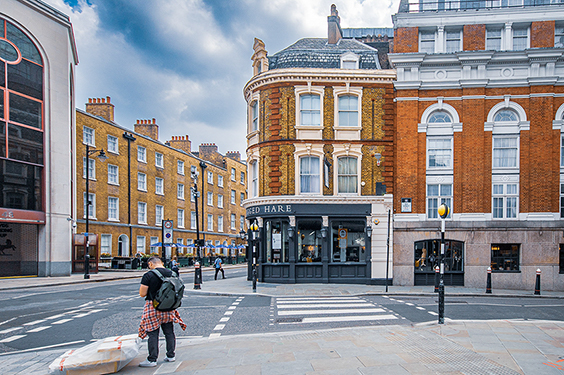
The image depicts a street scene in an urban area with a mix of architectural styles. There is a prominent corner building with ornate details and a sign that reads 'TO HARE.' The street is relatively quiet with a few pedestrians, including a person carrying a child and wearing a backpack, waiting to cross the street at a marked crosswalk. The buildings are primarily made of brick, and the sky is partly cloudy.
The Jugged Hare — a well-known gastropub on the Moorgate side of the street. ‐ photo by ,
©www.mgaylard.co.uk.

The Barbican Estate, a landmark of Brutalist architecture in London, was designed by Chamberlin, Powell and Bon and completed in 1976 on a 35-acre site devastated by World War II bombing. It features three iconic residential towers—Cromwell Tower (completed in 1973 and named after Oliver Cromwell), Lauderdale Tower, and Shakespeare Tower—alongside terrace blocks, mews houses, and a raised pedestrian podium that separates residents from street-level traffic. The estate is celebrated for its cohesive design, integration of cultural facilities like the Barbican Centre, and its status as a Grade II listed site, embodying both the ambition of post-war urban planning and the distinctive aesthetic of Brutalismen.wikipedia.org.
Cromwell Tower, the easternmost of the three towers, stands 43 storeys high and is recognized as one of the finest examples of Brutalist architecture in the UK. Its design, with exposed concrete and dramatic vertical lines, reflects the estate’s emphasis on creating a self-contained, elevated community with landscaped gardens, lakes, and cultural amenities, all while preserving fragments of London’s Roman and medieval history within the modern complex www.barbicanliving.co.uk..

Moorgate

Moorgate is a historic and modern district in the City of London, best known for its financial and business significance. The name originates from a medieval gate in London’s city wall, built in the 15th century to provide access to the marshy Moorfields area, which lay just beyond the wall. Moorgate was one of the last of the City’s seven gates to be constructed and was demolished in 1762, but the name lives on in the street and surrounding area.

Today, Moorgate is a major financial hub, home to many of the UK’s leading banks, investment firms, and corporate headquarters. The district is also a key transport interchange, served by Moorgate station, which connects the Circle, Hammersmith & City, Metropolitan, and Northern lines of the London Underground, as well as regional rail services. Moorgate station is infamous for the 1975 Moorgate tube crash, the worst peacetime accident in London Underground history, which led to the introduction of automatic train stopping systems (Moorgate Control).

References

en.wikipedia.orgMoorgate station , Text generated by Microsoft CoPilot

Walking Route: London Wall to Skinners’ Hall

London WallCity of LondonGreater London,   United Kingdom

This scenic walking route takes you from the historic remnants of the ancient London Wall to the grand Skinners’ Hall, one of the City of London’s livery company halls. Along the way, you’ll encounter a blend of Roman, medieval, and modern landmarks, including remnants of the old city wall, historic churches, and contemporary architecture. This route offers a unique journey through the heart of the City of London, showcasing its rich history and cultural heritage.
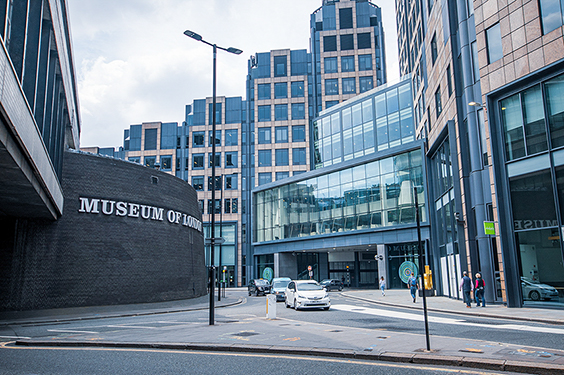
The image depicts an urban scene with the Museum of London building prominently displayed on the left. The museum has a modern architectural design with a curved facade and large glass windows. Adjacent to the museum are tall, contemporary office buildings with a mix of glass and brick exteriors. The street in front of the buildings is relatively quiet, with a few pedestrians and vehicles visible. The overall atmosphere is that of a bustling city center with a blend of cultural and commercial elements.
London Wall ‐ photo by ,
©www.mgaylard.co.uk.

The London Wall was originally built by the Romans between 190 and 225 AD as a defensive barrier around the city of Londinium, stretching about two miles and standing up to six meters high. Over the centuries, the wall was reinforced and extended during the medieval period, but much of it was obscured or demolished as London expanded; today, only fragments remain visible, with some of the most impressive sections found near Tower Hill, the Museum of London, and within the Barbican Estate en.wikipedia.org. These remnants offer a tangible connection to London’s Roman and medieval past, with some areas revealing layers of history from the original Roman stonework to later medieval additions.
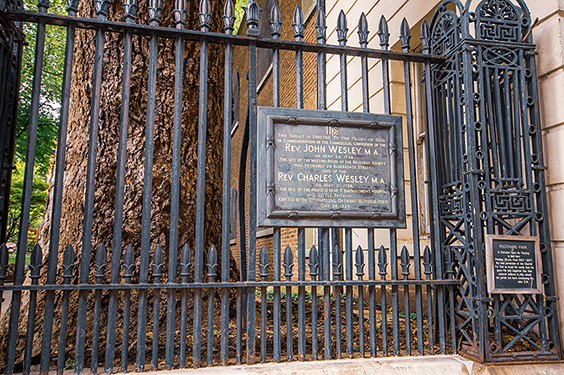
The image shows a metal gate with two plaques mounted on it. The plaques commemorate Rev. John Wesley, M.A., and Rev. Charles Wesley, M.A., noting their significant contributions and roles in religious and educational fields. The gate is part of a historical site, likely a church or educational institution, and is surrounded by trees.
London City Presbyterian Church ‐ photo by ,
©www.mgaylard.co.uk.
The plaques commemorate Rev. John Wesley, M.A., and Rev. Charles Wesley, M.A., noting their significant contributions and roles in religious and educational fields
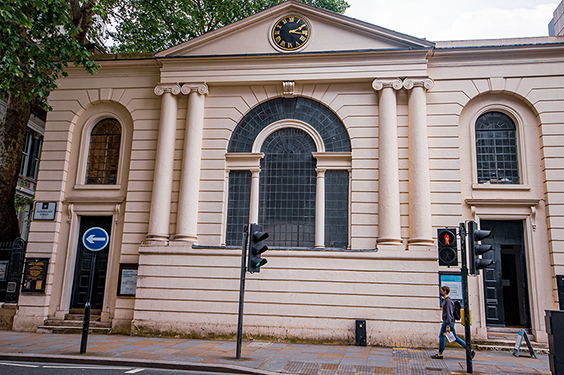
The image depicts a neoclassical building with architectural features such as columns, an arched window, and a clock on the pediment. The building is situated at a street corner with traffic lights and a pedestrian crossing. A person is seen walking past the building.
London City Presbyterian Church ‐ photo by ,
©www.mgaylard.co.uk.

The London City Presbyterian Church (LCPC) is a congregation of the Free Church of Scotland, founded in 1949, and has worshipped in several citys across London over the years. Since 2003, the church has been based at St Botolph’s without Aldersgate, near the Museum of London and St Paul’s Cathedral, where it holds Sunday services and live-streams its worship. The church is known for its international and interdenominational community, focusing on Reformed theology and evangelical witness in the heart of London

lcpc.org.uk
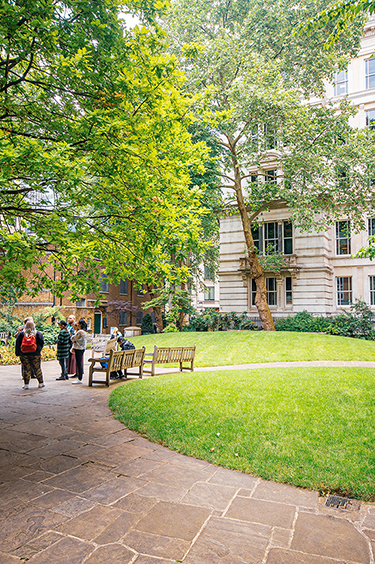
The image depicts a serene outdoor setting with a group of people gathered around a table under a large tree. The scene includes a well-maintained lawn, several benches, and a path made of stone tiles. The background features a large, elegant building with multiple windows, partially obscured by the tree and other greenery. The overall atmosphere is peaceful and inviting, suggesting a place where people can relax and socialize.
Postman's Park ‐ photo by ,
©www.mgaylard.co.uk.
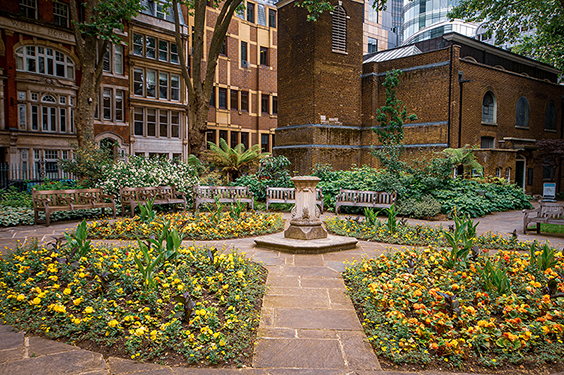
The image depicts a serene garden courtyard surrounded by multi-story buildings. The garden features a stone fountain at its center, surrounded by well-maintained flower beds and greenery. There are several benches placed around the garden, providing seating areas for visitors. The architecture of the surrounding buildings includes brick facades and large windows, contributing to a peaceful urban setting.
Postman's Park ‐ photo by ,
©www.mgaylard.co.uk.

Postman’s Park is a historic public garden in the City of London, opened in 1880 on the site of former churchyards—most notably that of St Botolph’s Aldersgate—and expanded to include adjacent burial grounds. The park is best known for the Memorial to Heroic Self-Sacrifice, created by artist and philanthropist George Frederic Watts in 1900, which commemorates ordinary individuals who lost their lives saving others. Its name comes from its popularity as a lunchtime retreat for workers from the nearby General Post Office, and today it remains a tranquil green space near St Paul’s Cathedral, featuring seasonal planting, benches, and the iconic wooden loggia housing the memorial plaques en.wikipedia.org
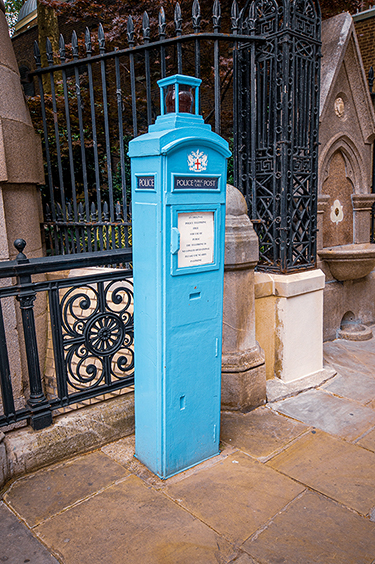
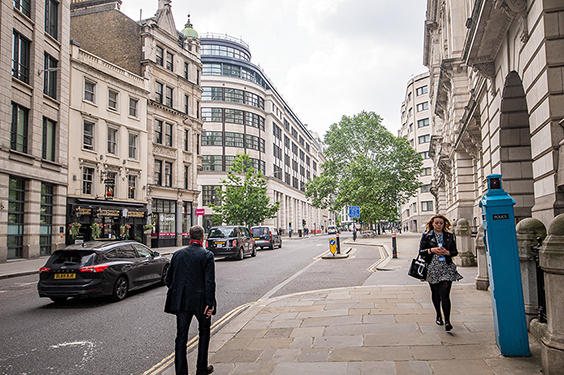
The image shows a blue police public call box situated outdoors, likely in a historical or urban setting. The box is positioned next to a black wrought iron fence and a stone wall with architectural details. There is a notice attached to the front of the box, indicating it is still in use for emergency purposes.
Police Telephone Box ‐ photo by ,
©www.mgaylard.co.uk.
The image depicts a street scene in an urban area with several buildings, cars, and pedestrians. The architecture is a mix of older, historic buildings and more modern structures. The street is relatively quiet with a few vehicles and people visible. There is a notable blue public telephone box on the right side of the image, a common sight in the UK. The overall atmosphere suggests a typical day in a bustling city.
St. Martin's Le Grand ‐ photo by ,
©www.mgaylard.co.uk.
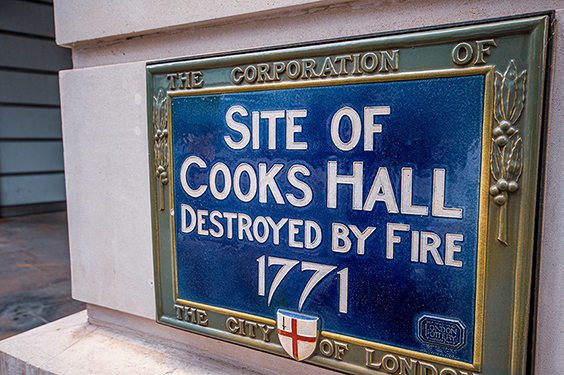
The image shows a plaque indicating the site of Cooks Hall, which was destroyed by fire in 1771. The plaque is affixed by the Corporation of the City of London.
St. Martin's Le Grand ‐ photo by ,
©www.mgaylard.co.uk.

Paternoster Square
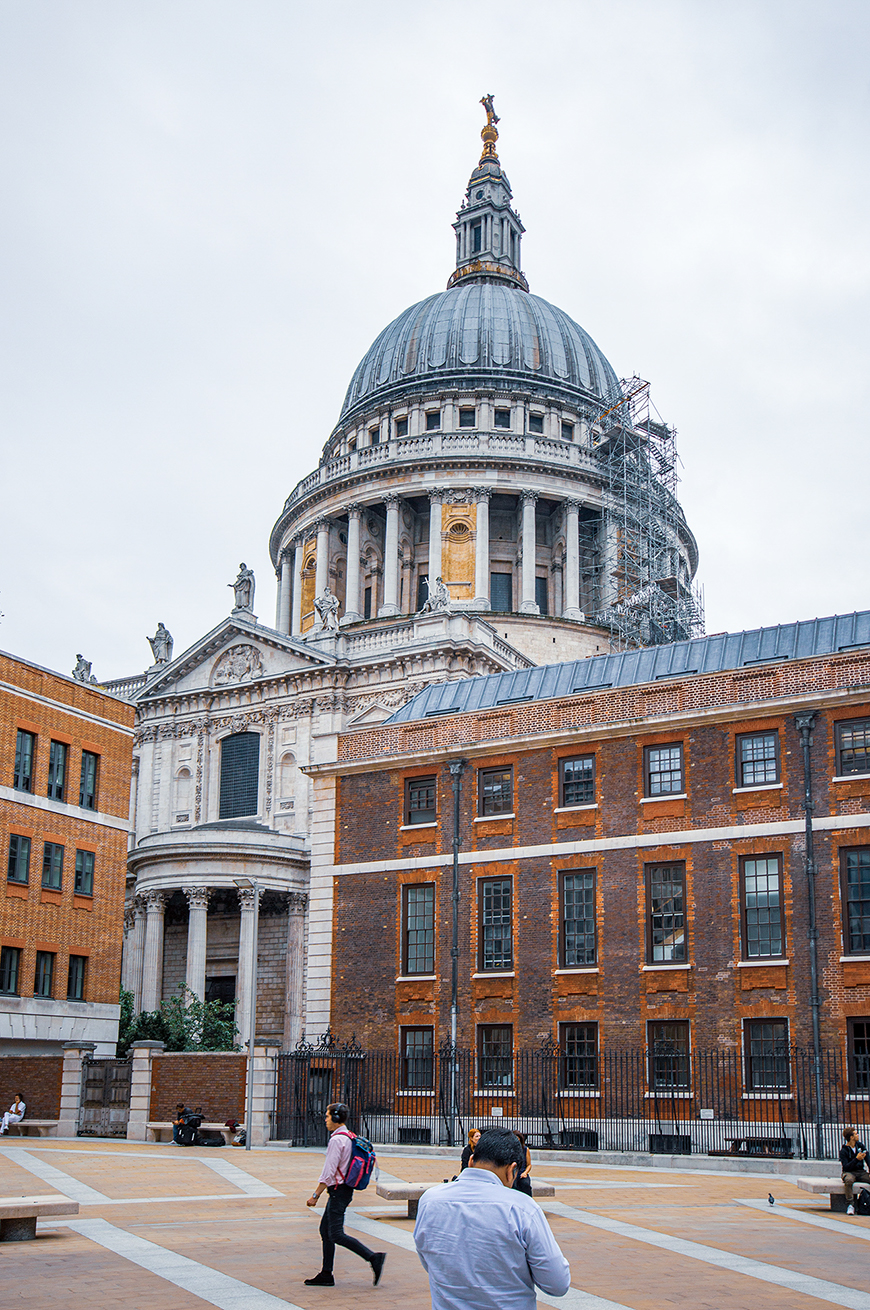
The image depicts St. Paul's Cathedral in London, showcasing its iconic dome and classical architecture. The scene includes people walking and sitting in the foreground, with scaffolding visible on the dome, indicating ongoing maintenance or restoration work.
Chapter House and St. Paul's Cathedral ‐ photo by ,
©www.mgaylard.co.uk.
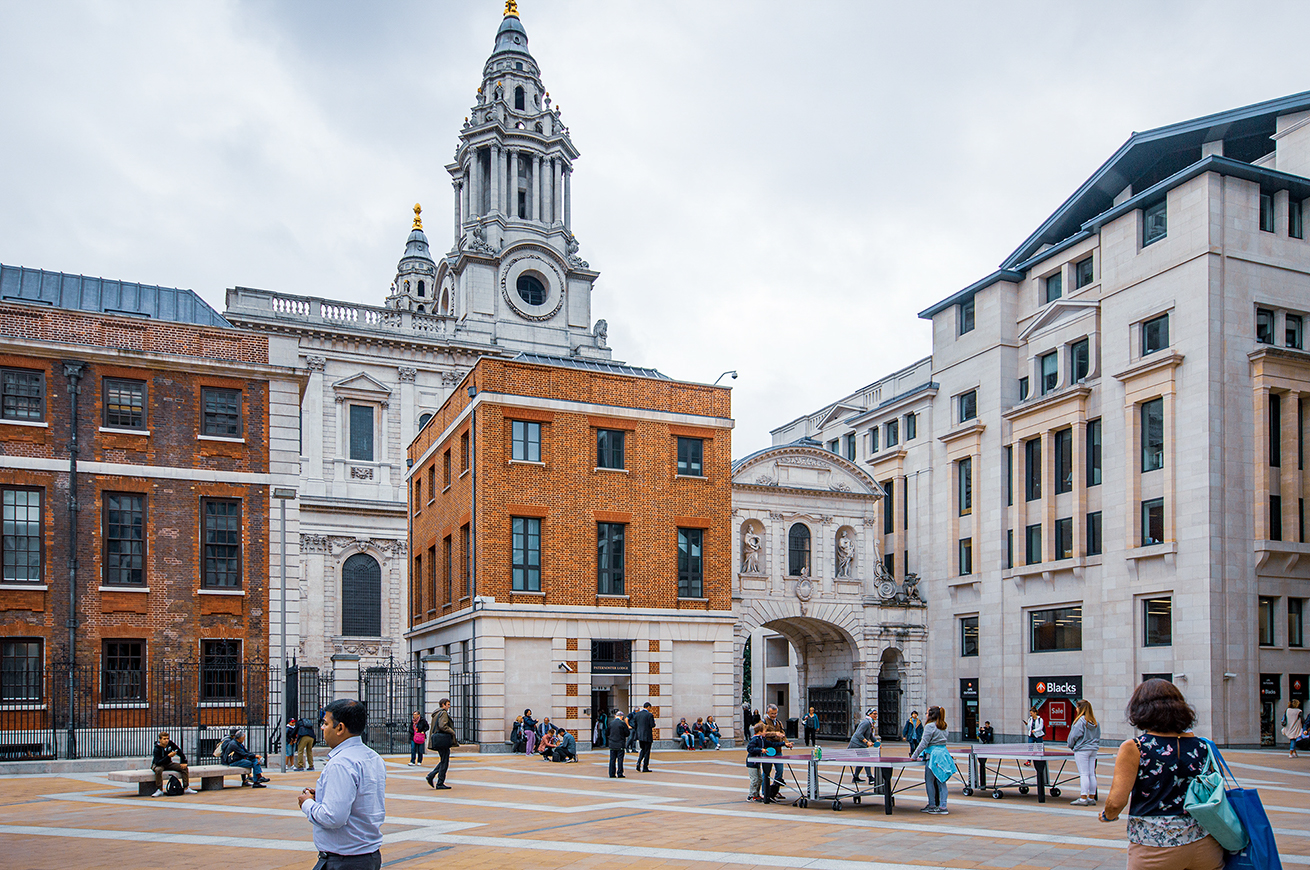
The image depicts a bustling urban square surrounded by historic and modern buildings. The central structure is a prominent church with a tall, ornate tower. People are seen walking, sitting, and engaging in various activities in the open square. The architecture features a mix of brick, stone, and modern materials, reflecting both traditional and contemporary design elements. The overall atmosphere is lively, with a blend of tourists and locals enjoying the space.
Paternoster Square ‐ photo by ,
©www.mgaylard.co.uk.
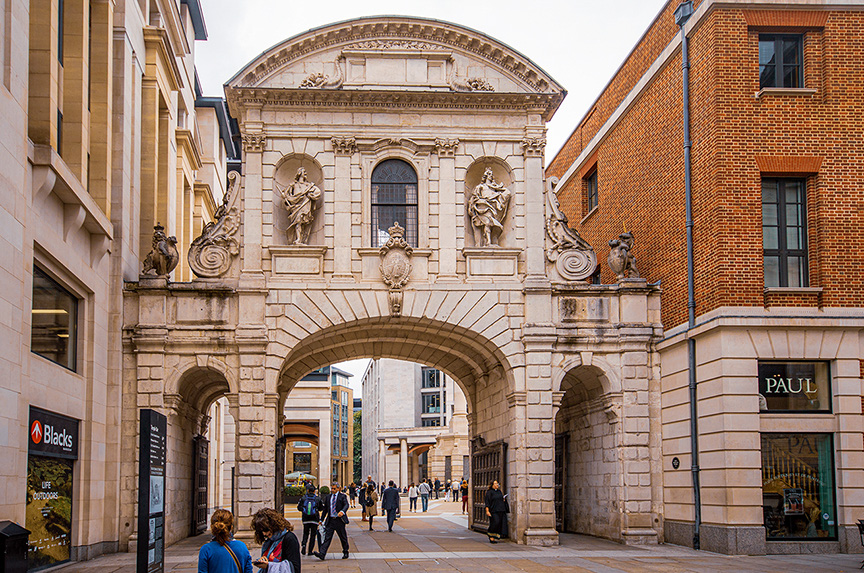
The image depicts an architectural archway in an urban setting, featuring ornate stonework and statues. The archway connects two buildings, with one side showing a store named 'PAUL' and the other side featuring a 'Blacks' store sign. People are walking through the archway, which leads to a pedestrian pathway lined with modern buildings.
Temple Bar London ‐ photo by ,
©www.mgaylard.co.uk.

Temple Bar is London’s last surviving historic gateway, originally marking the western boundary of the City of London where Fleet Street meets the Strand. Designed by Sir Christopher Wren and completed in 1672 after the Great Fire of London, the ornate Portland stone arch features statues of monarchs and served as a ceremonial entrance for royal processions and state events. The gateway was dismantled in 1878 to ease traffic congestion, later rebuilt at Theobalds Park in Hertfordshire, and finally returned to the City in 2004, where it now stands as a dramatic entrance to Paternoster Square near St Paul’s Cathedralen.wikipedia.org

Paternoster Square is a modern urban development located just north of St Paul’s Cathedral in the City of London, with a history tracing back to medieval Paternoster Row—a street named for the clergy who walked there reciting the Lord’s Prayer while holding rosary beads. The area was once the heart of London’s publishing trade and later became the site of Newgate Meat Market before being devastated by bombing during the Blitz in 1940. Today, the square is a pedestrianized plaza featuring shops, restaurants, and notable landmarks such as the restored Temple Bar gateway (relocated from Fleet Street in 2004), the Paternoster Square Column, and Elisabeth Frink’s bronze sculpture The Shepherd and Sheep, which nods to the site’s historical connection to both the meat market and St Paul’s Cathedral en.wikipedia.org.
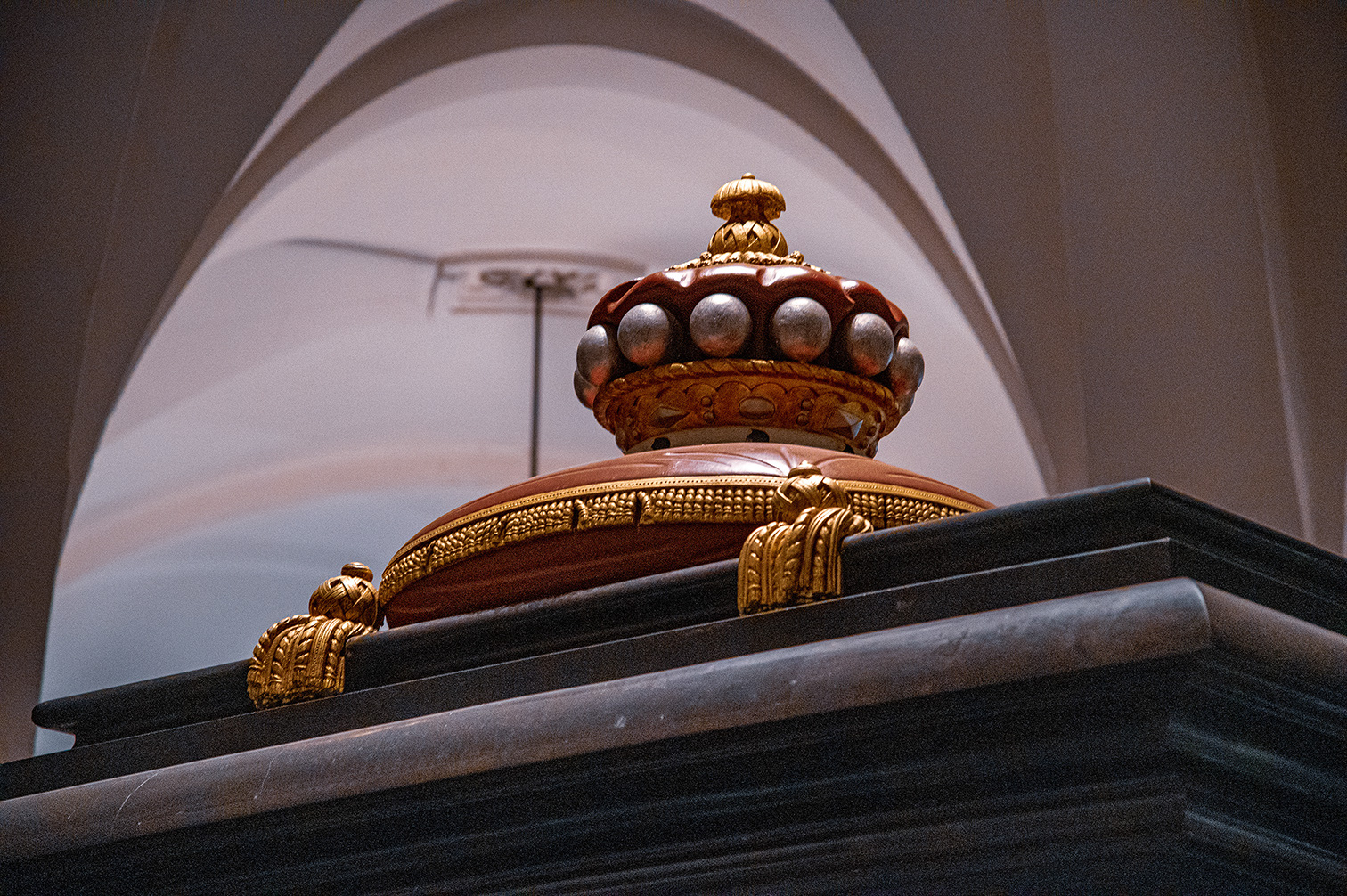
The image depicts an ornate crown, likely a royal or ceremonial one, placed on a pedestal. The crown is richly decorated with gold and possibly precious stones, featuring a prominent arch and intricate detailing. The background includes an arched structure, suggesting the crown is displayed in a museum or exhibition setting.
Tomb of Horatio Nelson in St Paul's Cathedral ‐ photo by ,
©www.mgaylard.co.uk.
>

Paternoster Square

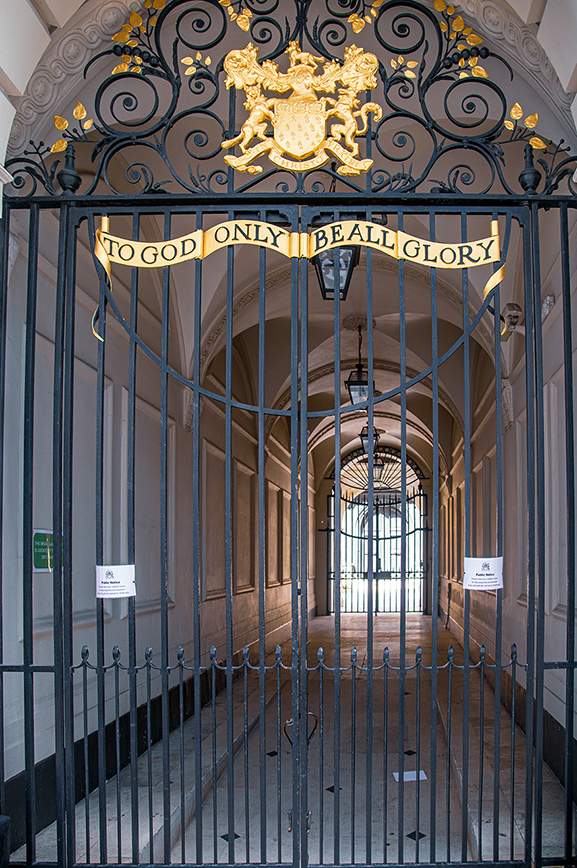
The image shows an ornate gate with a crest and the inscription 'TO GOD ONLY BE ALL GLORY'. The gate is part of an arched entrance leading to a corridor with additional gates at the far end. The architecture and design suggest a formal or historical setting.
Skinners Hall ‐ photo by ,
©www.mgaylard.co.uk.
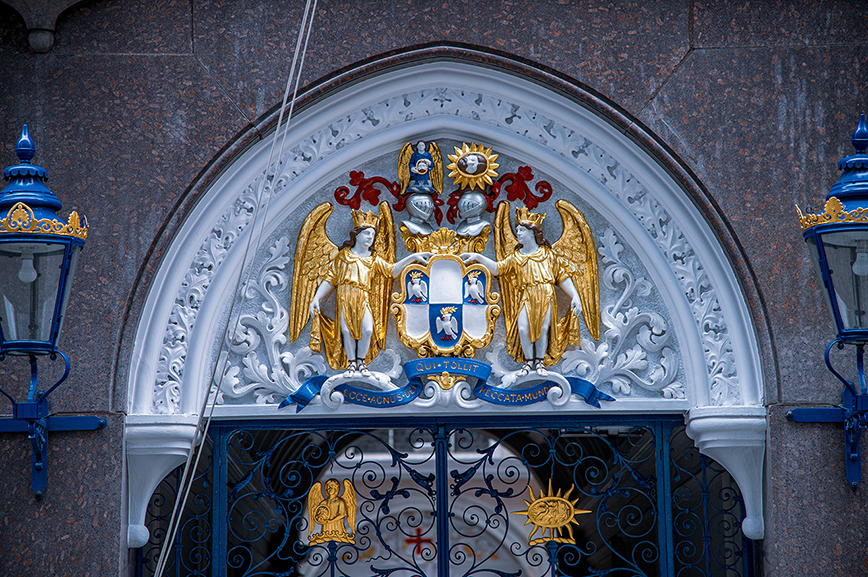
The image depicts an ornate coat of arms above a gate. The coat of arms features two golden winged figures flanking a central shield with various symbols, including a sun and a crown. The gate itself is decorated with intricate ironwork and topped with blue and gold accents. The surrounding architecture includes detailed stone carvings and decorative elements, suggesting a historical or significant building.
Skinners Hall ‐ photo by ,
©www.mgaylard.co.uk.
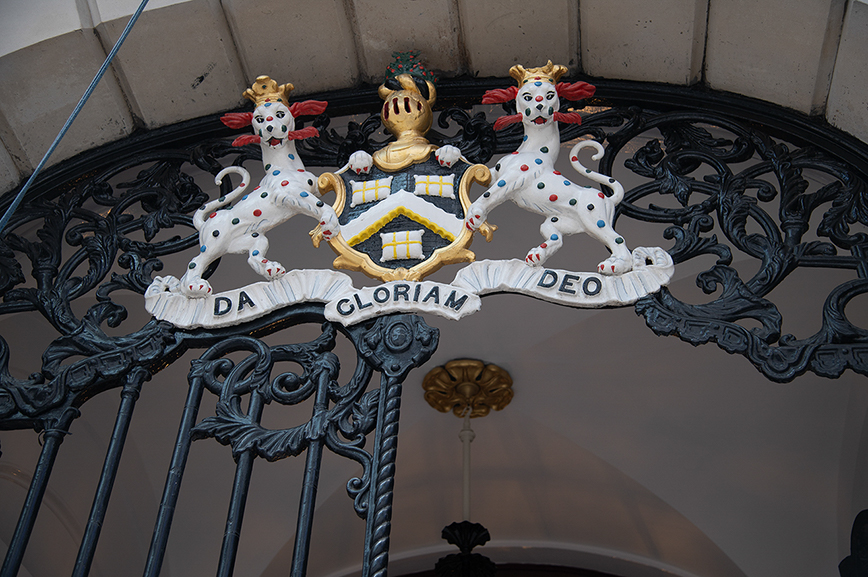
The image depicts a heraldic crest featuring two white dogs with colorful spots, adorned with red collars and gold crowns. The crest includes a shield with a gold background and blue crosses, flanked by the Latin motto 'DA GLORIAM DEO', which translates to 'Give Glory to God'. The crest is mounted on an ornate, black wrought-iron railing.
Skinners Hall ‐ photo by ,
©www.mgaylard.co.uk.

The Worshipful Company of Skinners (also known as the Skinners' Company) is one of the Great Twelve Livery Companies of the City of London. Originally formed as an association of those engaged in the trade of skins and furs, the Company was granted a Royal Charter in 1327. The Company's motto is To God Only Be All Glory. The Master Skinner for 2024/25 is the Earl of Woolton[2] and, since 2015, Major-General Andrew Kennett CB CBE serves as Clerk to the Skinners' Company.en.wikipedia.org

Skinners’ Hall is the historic home of the Worshipful Company of Skinners, one of the Great Twelve Livery Companies of the City of London, with roots dating back to 1327. The current Grade I listed building was rebuilt in 1670–1672 after the original medieval hall was destroyed in the Great Fire of London; it retains a Roman Walbrook Culvert in its basement, now a Scheduled Ancient Monument. Over the centuries, the hall has served as a center for trade regulation, charitable activities, and civic events, and it continues to host gatherings in its elegant, restored interiors, including the Great Hall and Court Rooms. skinners.org.uk

Open the full set flickr button this page

The City of London

The City of London—often called the Square Mile—is the historic, financial, and ceremonial heart of London.

Historical Overview

Roman Origins:
The City of London began as Londinium, a Roman settlement founded around 47 AD. It quickly became a major trading hub and the capital of Roman Britain .
Medieval Growth:
By the Middle Ages, the City was the center of English commerce, law, and governance. It was the birthplace of modern banking, insurance, and the stock market, with institutions like the Bank of England (founded 1694) and the Royal Exchange (founded 1565) .
Great Fire of London (1666):
The Great Fire destroyed much of the medieval City, leading to its rebuilding in brick and stone, including the masterpiece of St Paul’s Cathedral by Sir Christopher Wren .

Governance and Unique Status

City of London Corporation:
The City has its own unique local government, separate from the Greater London Authority. It is governed by the Lord Mayor of London (a ceremonial role distinct from the Mayor of London) and the Court of Common Council .
Ancient Privileges:
The City retains medieval privileges, including its own police force (City of London Police) and electoral system .
Ceremonial Traditions:
The Lord Mayor’s Show, a centuries-old procession, celebrates the election of the Lord Mayor and is one of the City’s most famous traditions .

Key Landmarks and Modern Features

St Paul’s Cathedral:
An iconic Baroque masterpiece and one of the world’s most famous cathedrals, completed in 1710 after the Great Fire .
Tower of London:
A UNESCO World Heritage Site and historic fortress, home to the Crown Jewels and the Beefeaters .
The Gherkin, Cheesegrater, and Walkie-Talkie:
Modern skyscrapers that define the City’s 21st-century skyline, symbolizing its role as a global financial hub .
Guildhall:
The ceremonial and administrative center of the City, with a history dating back to the 15th century .
Bank of England and London Stock Exchange:
The heart of the UK’s financial system, making the City one of the world’s most important financial districts .
Leadenhall Market:
A historic covered market dating back to the 14th century, now a popular spot for dining and shopping .

Cultural and Economic Significance

Global Financial Center:
The City is home to banks, insurance companies, and legal firms, making it a powerhouse of the global economy .
Cultural Hub:
The City hosts museums, galleries, and historic sites, including the Museum of London and Barbican Centre .
Green Spaces:
Despite its urban density, the City includes parks and gardens, such as Postman’s Park and the roof gardens of skyscrapers .
Text generated by Mistral AI
To the top
Powered by w3.css. The images are all stored on link to www.gaylard.co.uk Photostream on Flickr   This website is hosted by link to 123Reg Web Hosting