Windsor

Windsor Castle

WindsorBerkshire,   SL4 1NJUK

Windsor Castle is the oldest and largest occupied castle in the world, serving as an official residence of the British royal family for over 900 years. Located in Berkshire, England, the castle is renowned for its stunning architecture, rich history, and role as a symbol of the British monarchy. Visitors can explore the State Apartments, St George’s Chapel, and the castle grounds, which offer breathtaking views and a glimpse into royal life.
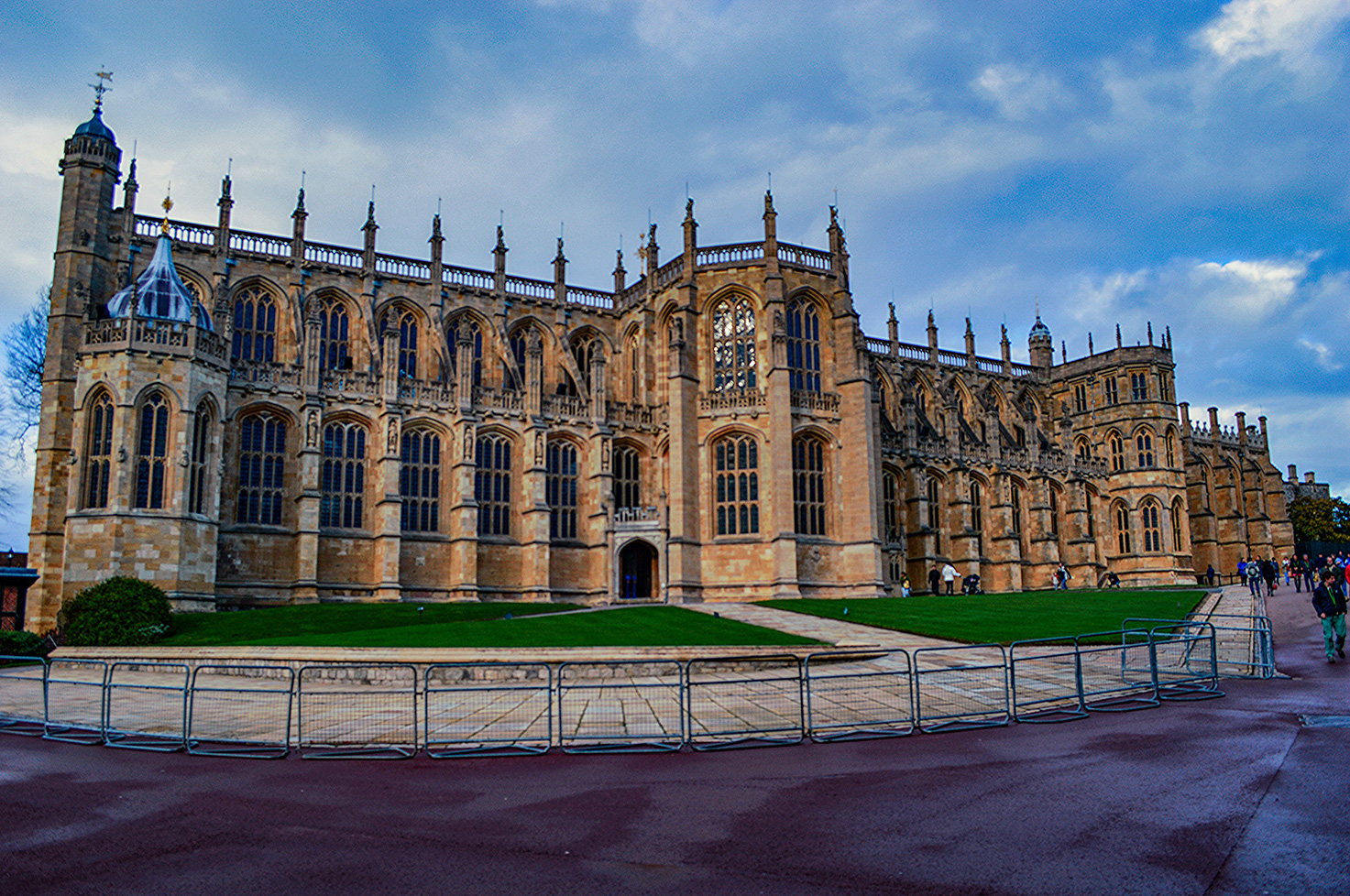
The image depicts a large, historic Gothic-style building with intricate architectural details, including pointed arches, ribbed vaults, and flying buttresses. The structure features numerous tall, narrow windows with elaborate tracery and large stained glass windows. The building is constructed from stone and has multiple towers and spires, adding to its grandeur. In front of the building, there is a well-maintained lawn and a pathway with metal barriers, suggesting it is a significant and possibly protected site. The sky above is partly cloudy, and there are a few people visible near the building, indicating it might be a tourist attraction or a place of historical importance.
View of Windsor ‐ photo by ,
©www.mgaylard.co.uk.
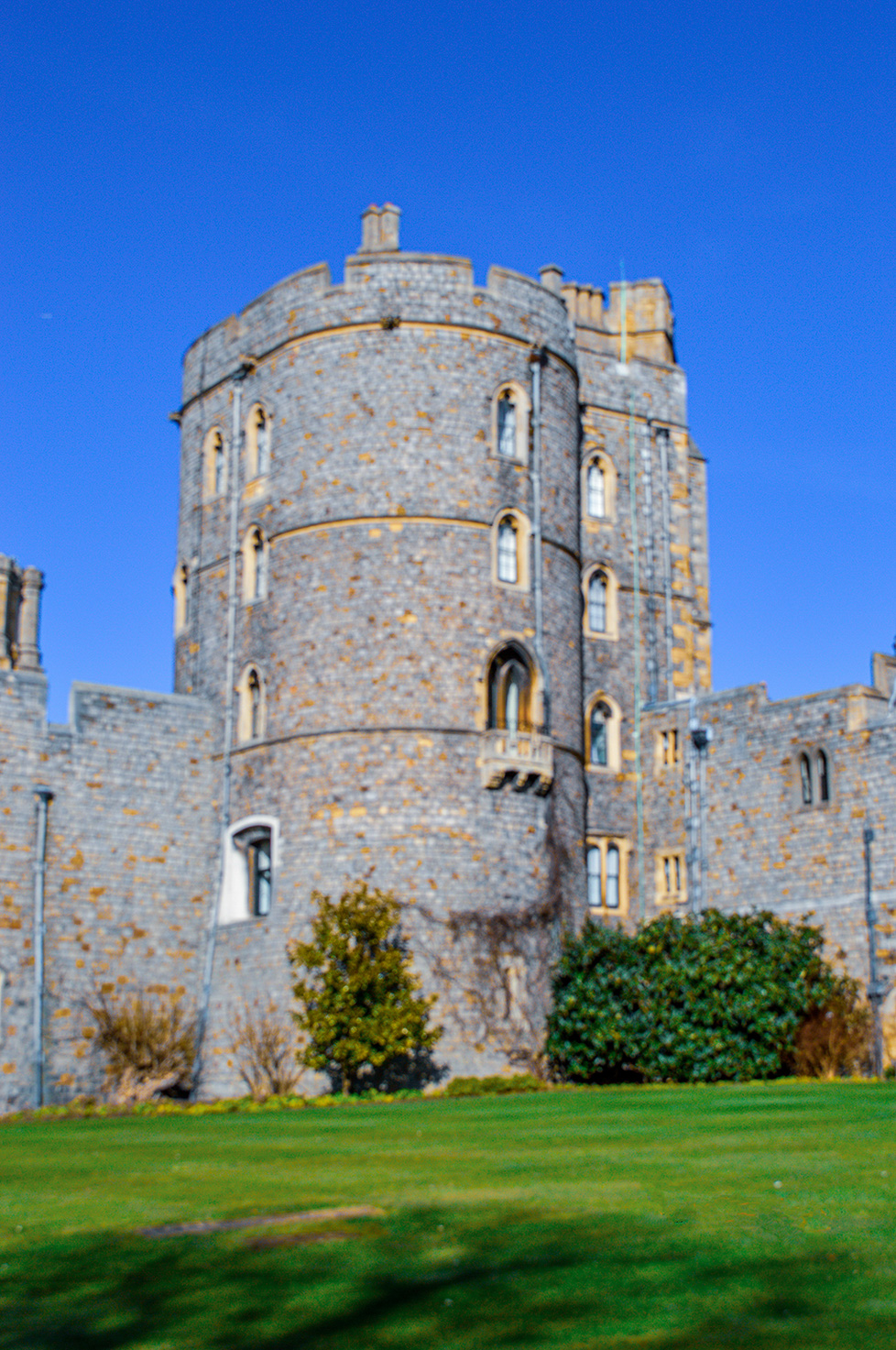
The image depicts a section of a historic castle with a prominent cylindrical tower. The tower is constructed from stone and features several narrow, arched windows. The structure is adorned with battlements at the top, indicative of medieval architecture. The tower is surrounded by well-maintained greenery, including bushes and a grassy lawn. The sky above is clear and blue, suggesting a bright, sunny day.
 ‐ photo by ,
©www.mgaylard.co.uk.
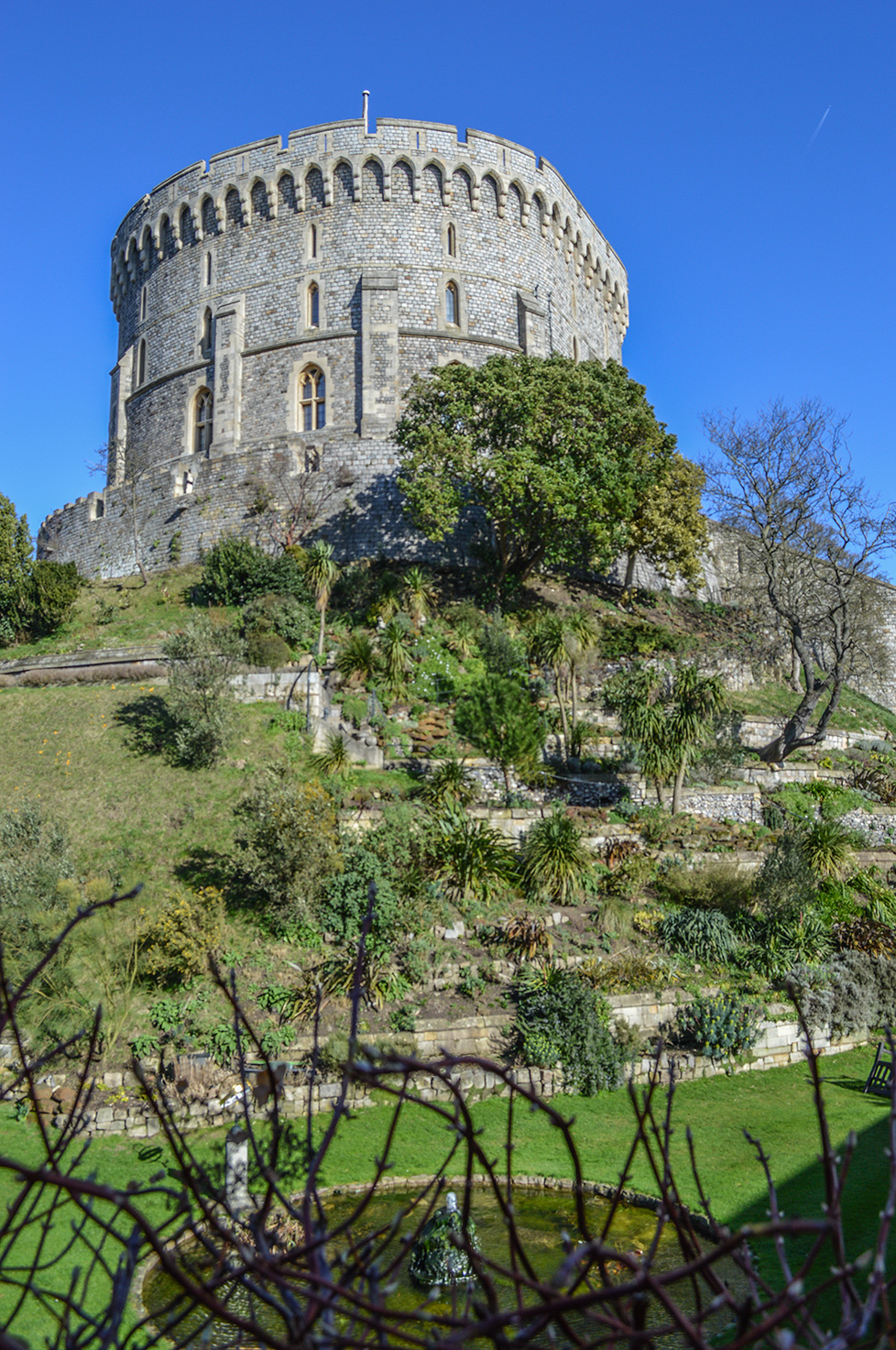
The image depicts a historic, round stone tower situated on a hill. The tower is surrounded by lush greenery, including various trees and plants. There is a well-maintained garden with a small pond in the foreground. The sky is clear and blue, suggesting a bright, sunny day. The overall scene conveys a sense of tranquility and historical significance.
Majestic Round Tower Overlooks Lush Gardens ‐ photo by ,
©www.mgaylard.co.uk.
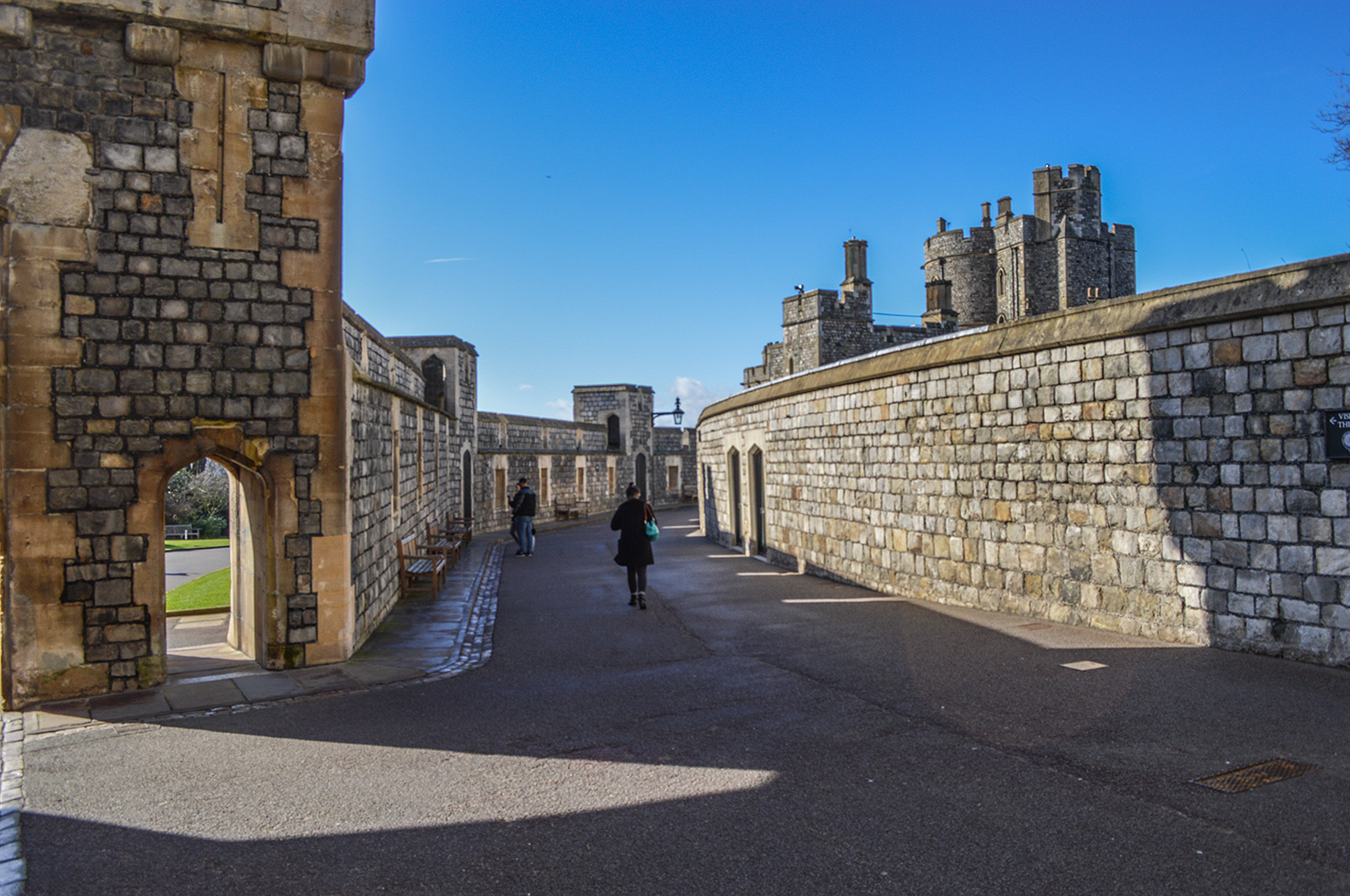
The image depicts a stone walkway within a castle or fortress. The walkway is lined with high stone walls and arches, leading towards a larger stone structure in the background. The sky is clear and blue, and there are a few people walking along the path. The architecture suggests a historical or medieval setting.
Majestic Round Tower Overlooks Lush Gardens ‐ photo by ,
©www.mgaylard.co.uk.
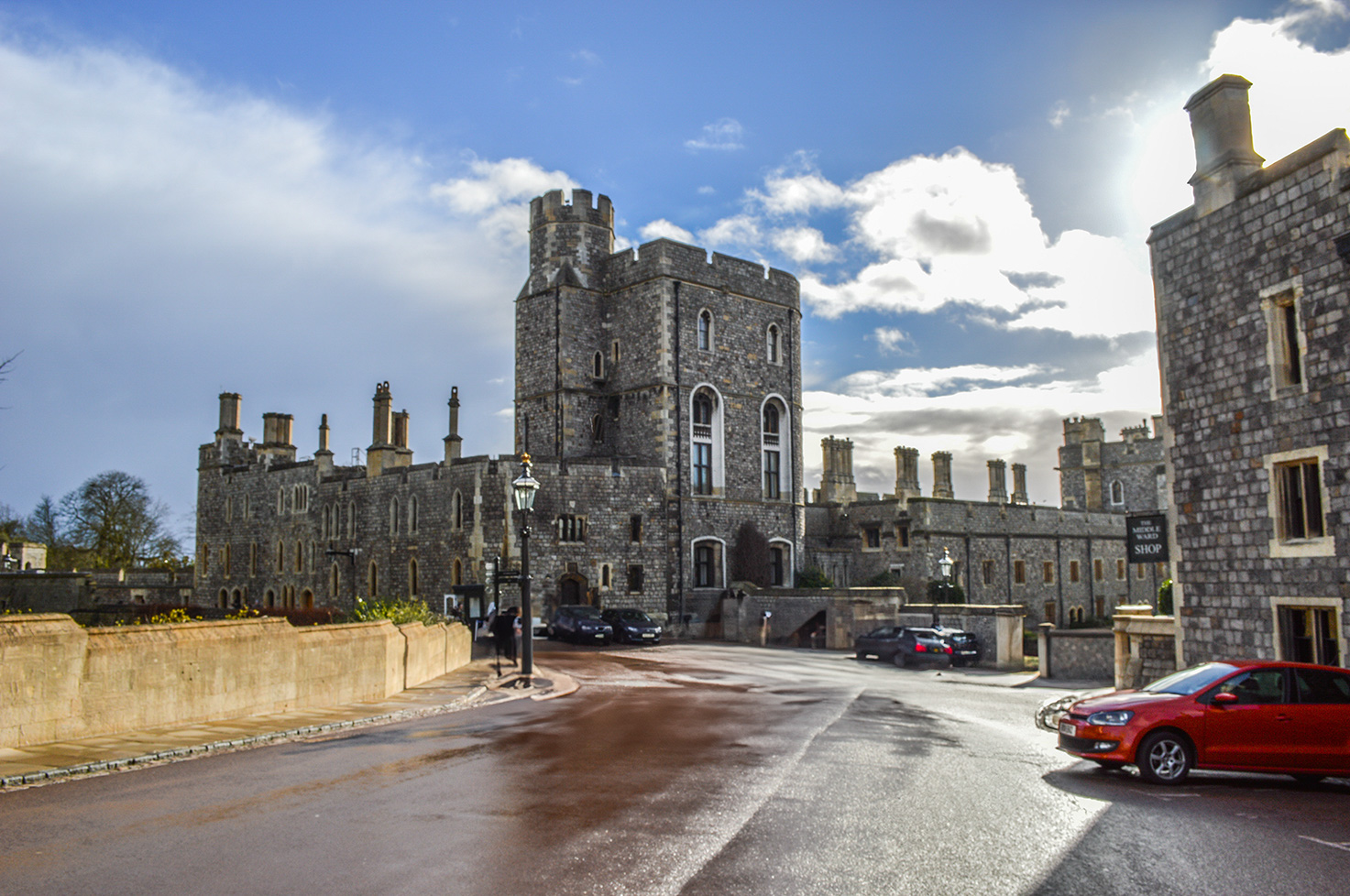
The image depicts a historic castle-like building with stone walls and multiple towers. The structure has a medieval architectural style, featuring arched windows and chimneys. The scene includes a street in front of the building with parked cars and a streetlamp. The sky is partly cloudy, and the overall atmosphere suggests a blend of historical and modern elements.
Windsor Castle Under a Dramatic Sky ‐ photo by ,
©www.mgaylard.co.uk.
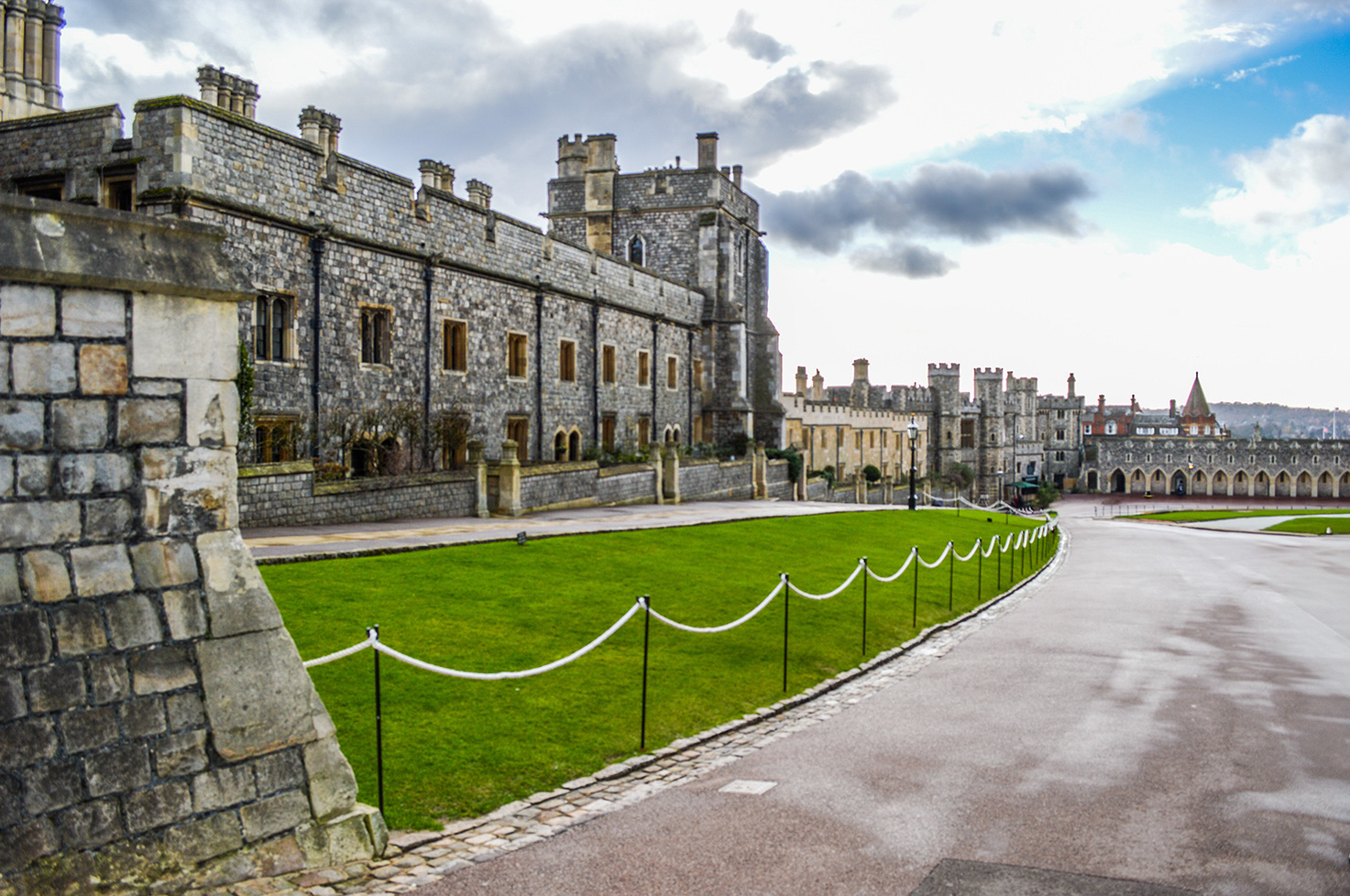
The image depicts a large, historic castle with stone walls and multiple towers. The castle is surrounded by a well-maintained green lawn and a paved pathway. The sky above is partly cloudy, and the overall scene suggests a serene and majestic atmosphere.
Majestic Stone Fortress Bathed in Moody Skies ‐ photo by ,
©www.mgaylard.co.uk.
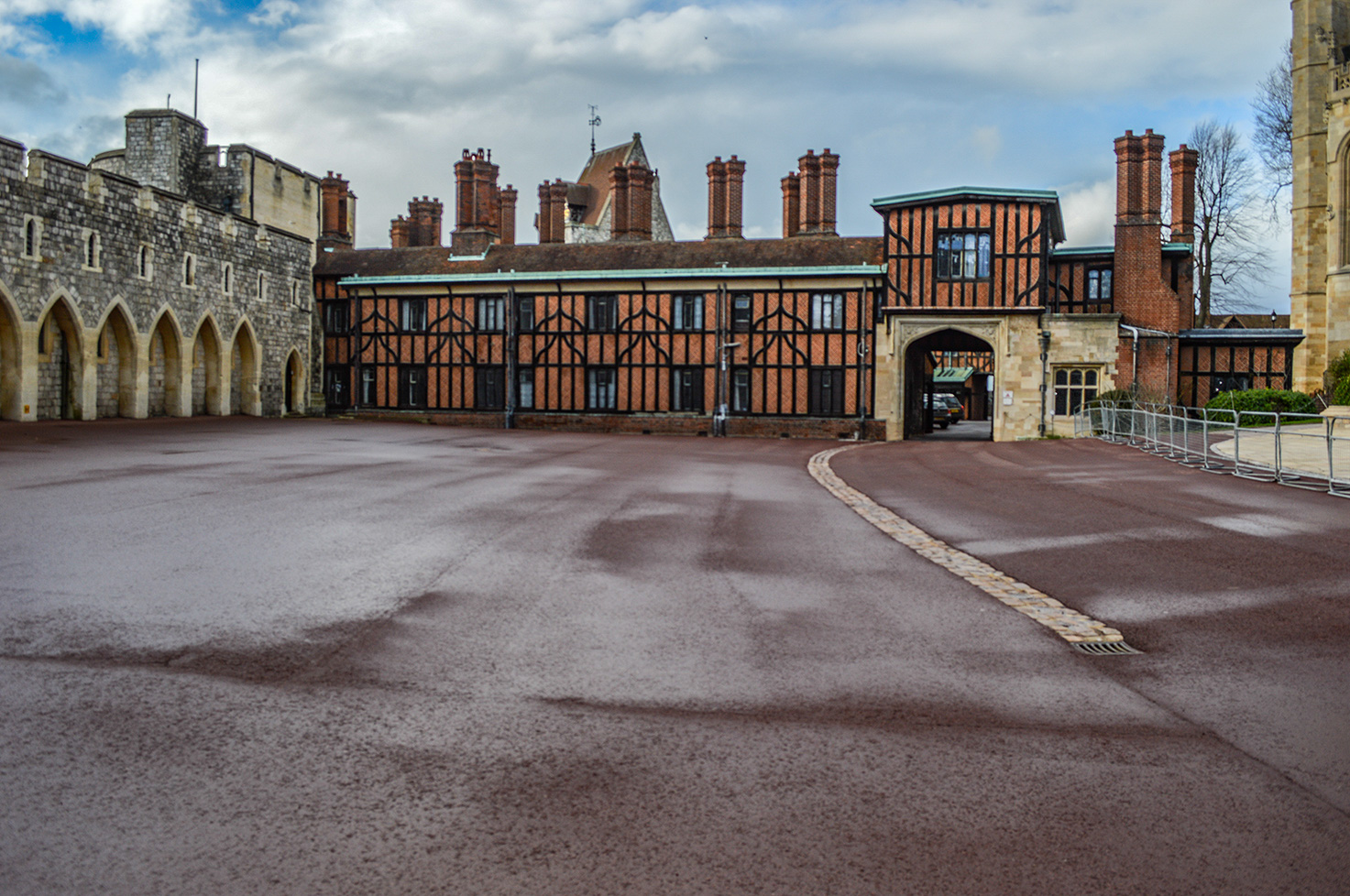
The image depicts a historic building with a large courtyard. The structure features a combination of stone and timber-framed architecture, with multiple chimneys and a distinctive arched entrance. The courtyard is paved and appears to be part of a larger complex, possibly a castle or a manor.
Historic Courtyard Under a Cloudy Sky ‐ photo by ,
©www.mgaylard.co.uk.
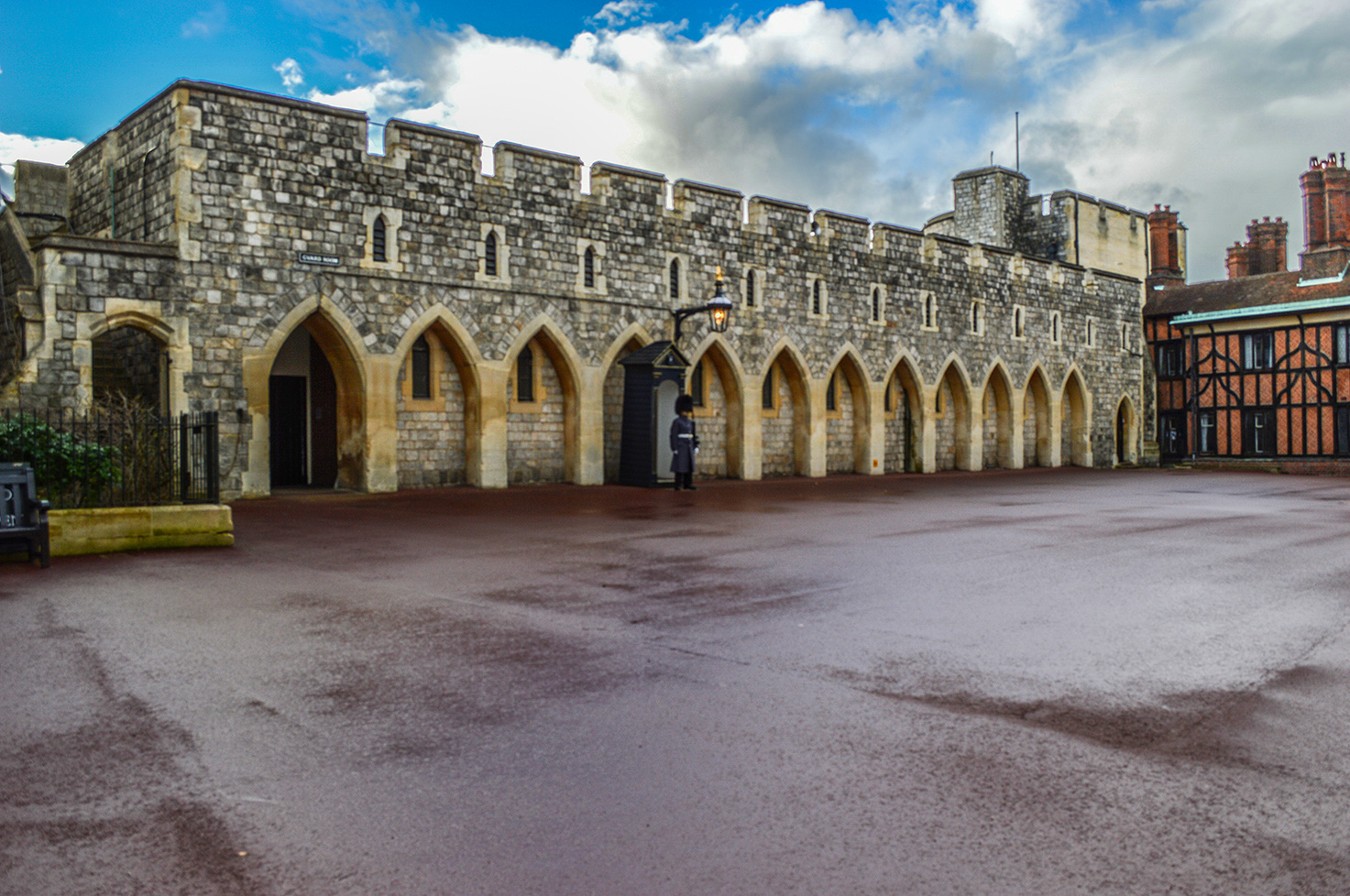
The image depicts a historic stone building with a series of pointed arches and a guard standing at attention in front of it. The structure appears to be part of a castle or fortress, characterized by its robust stone walls and battlements. The sky is partly cloudy, and the ground is wet, suggesting recent rain. The scene conveys a sense of history and formality.
Guarded Courtyard Under Dramatic Skies ‐ photo by ,
©www.mgaylard.co.uk.
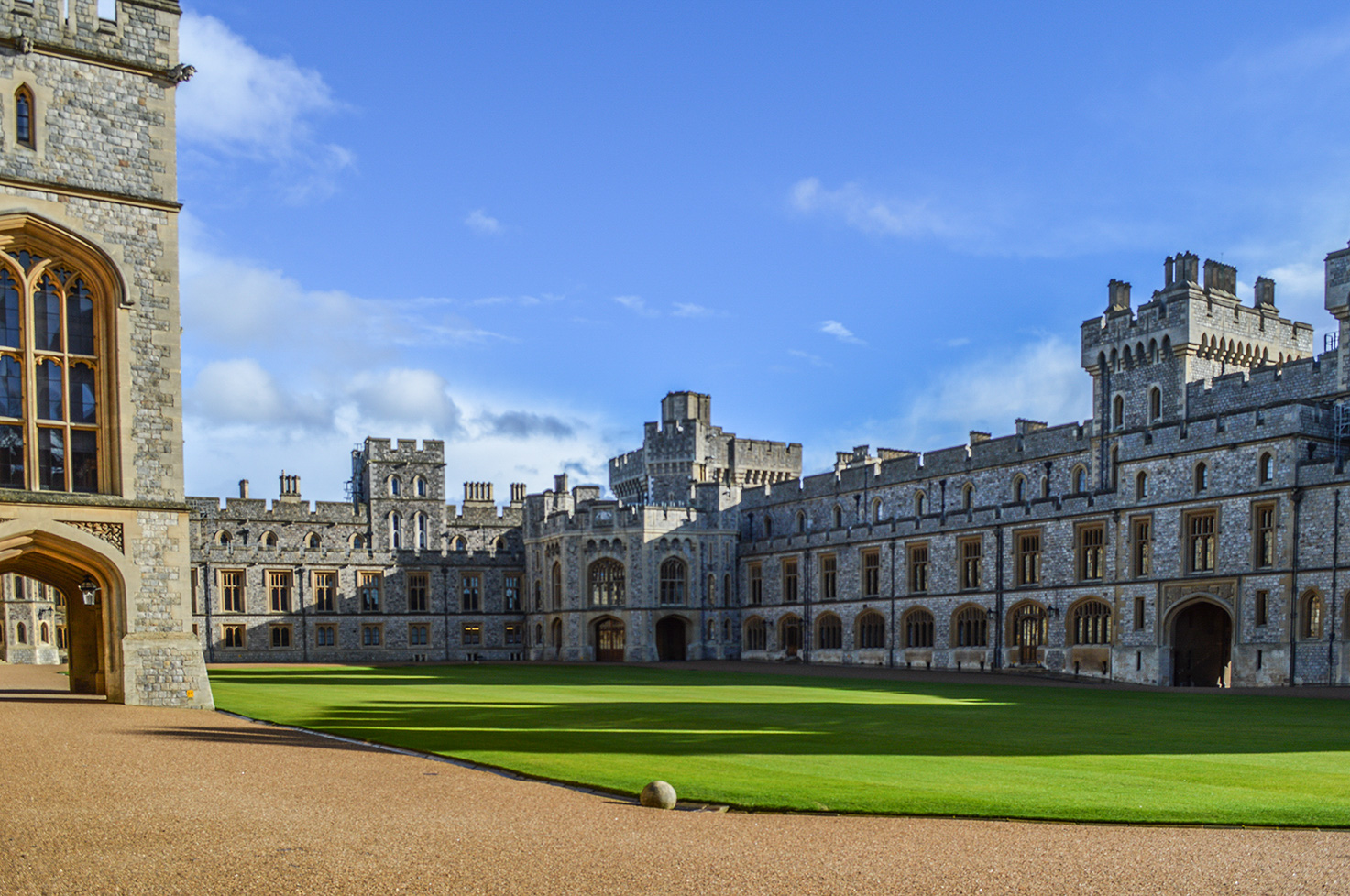
The image depicts a grand, historic castle with a large courtyard. The castle features tall, stone towers and walls with numerous windows and arched doorways. The architecture is Gothic in style, characterized by pointed arches and detailed stonework. The courtyard is paved with a mix of grass and gravel, and the sky above is clear with a few scattered clouds.
Windsor Castle Courtyard Bathed in Sunlight ‐ photo by ,
©www.mgaylard.co.uk.
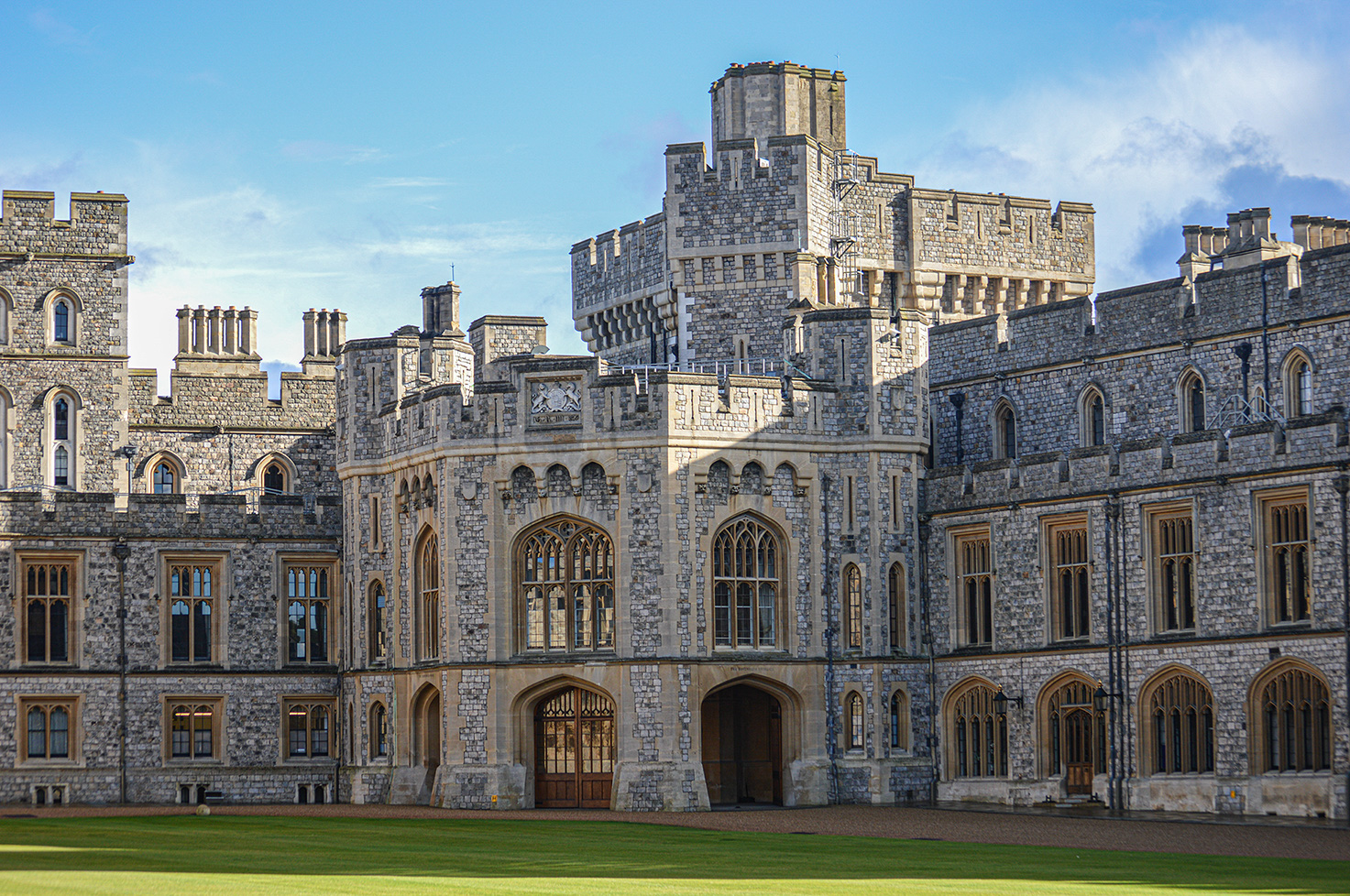
The image depicts Windsor Castle, a historic royal residence located in Windsor, England. The castle, constructed primarily of stone, features a mix of Gothic and Romanesque architectural styles. It has multiple towers, turrets, and large windows with intricate designs. The foreground shows a well-maintained lawn leading up to the castle's entrance. The sky above is clear with a few scattered clouds, adding to the picturesque scene.
Majestic Windsor Castle Bathed in Sunlight ‐ photo by ,
©www.mgaylard.co.uk.

Windsor Great Park

WindsorBerkshire,   UK

Windsor Great Park is a vast royal park covering over 4,800 acres near Windsor Castle in Berkshire, England. Established in the 13th century, the park is renowned for its stunning landscapes, ancient forests, and historic landmarks, including the Long Walk, Virginia Water Lake, and the Savill Garden. It is a popular destination for walking, cycling, and enjoying nature, offering visitors a blend of natural beauty and royal heritage.
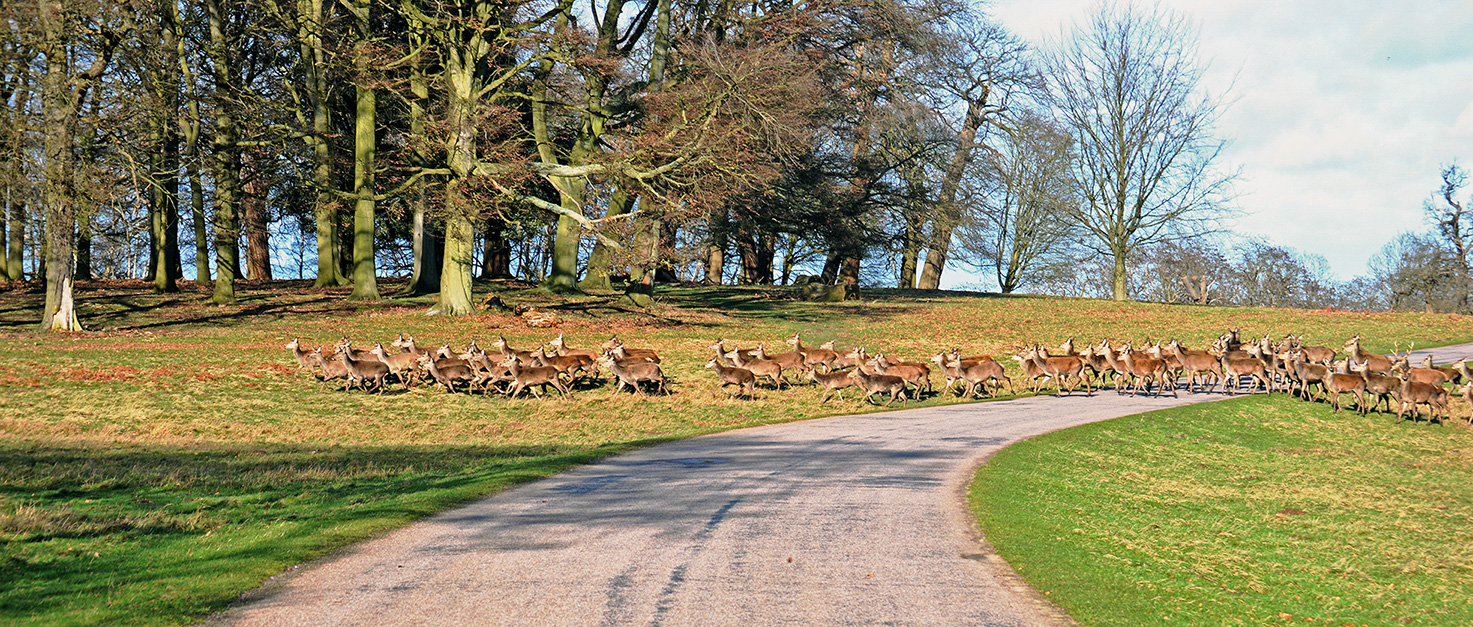
The image depicts a scenic view of a large herd of deer crossing a path in a wooded area. The deer are moving in a single file line, and the path they are crossing is surrounded by grass and trees. The sky is clear, and the overall atmosphere is serene and natural.
Herd of Deer Crosses Road Through Forested Landscape ‐ photo by ,
©www.mgaylard.co.uk.
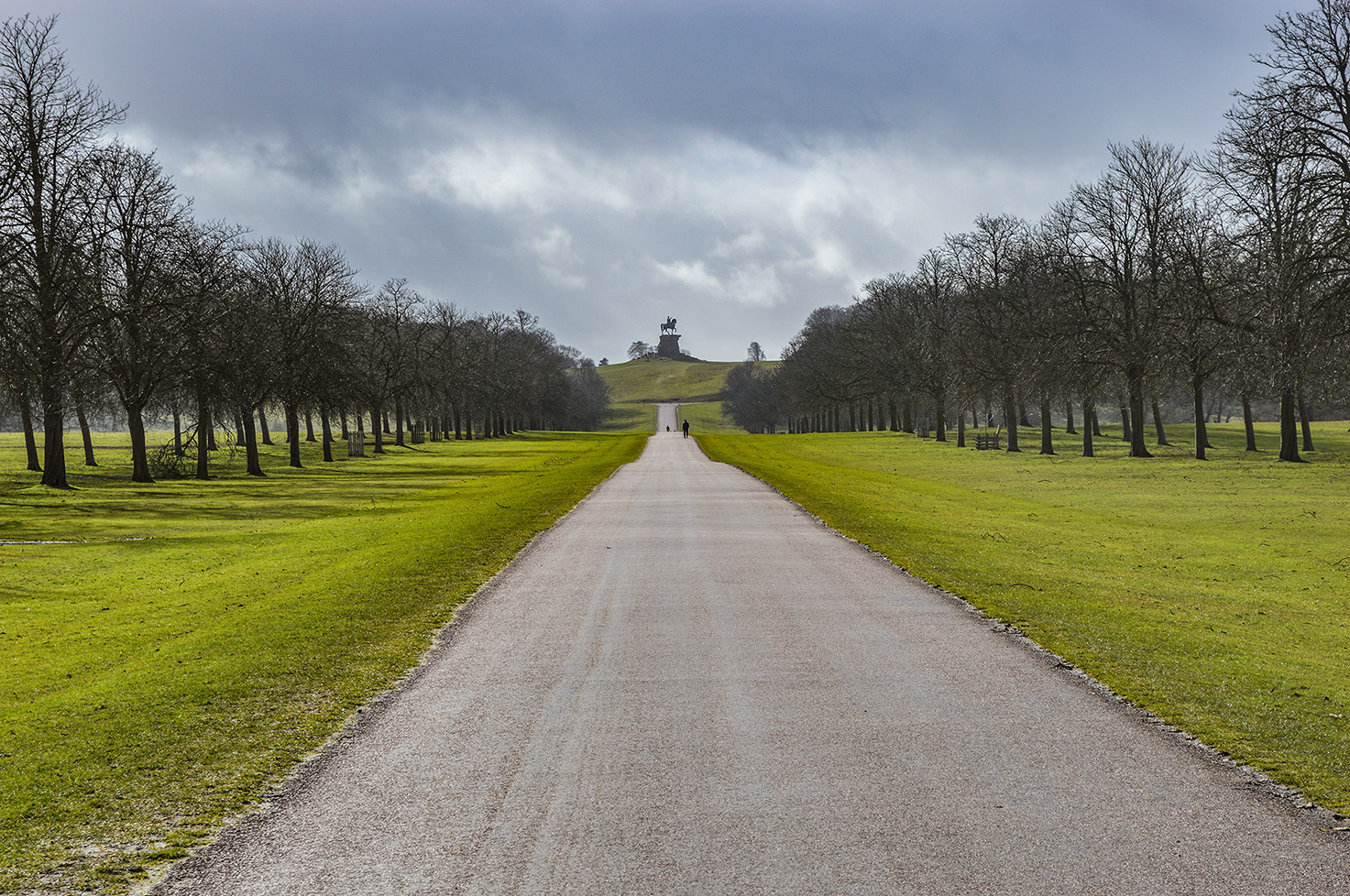
The image depicts a long, straight path leading to a hill topped with a statue. The path is flanked by rows of trees on both sides, creating a symmetrical and picturesque scene. The sky is overcast, adding a dramatic effect to the landscape. The path appears to be well-maintained, and there is a person walking towards the statue in the distance.
Majestic Avenue Leads to Monumental Statue Under Ominous Skies ‐ photo by ,
©www.mgaylard.co.uk.
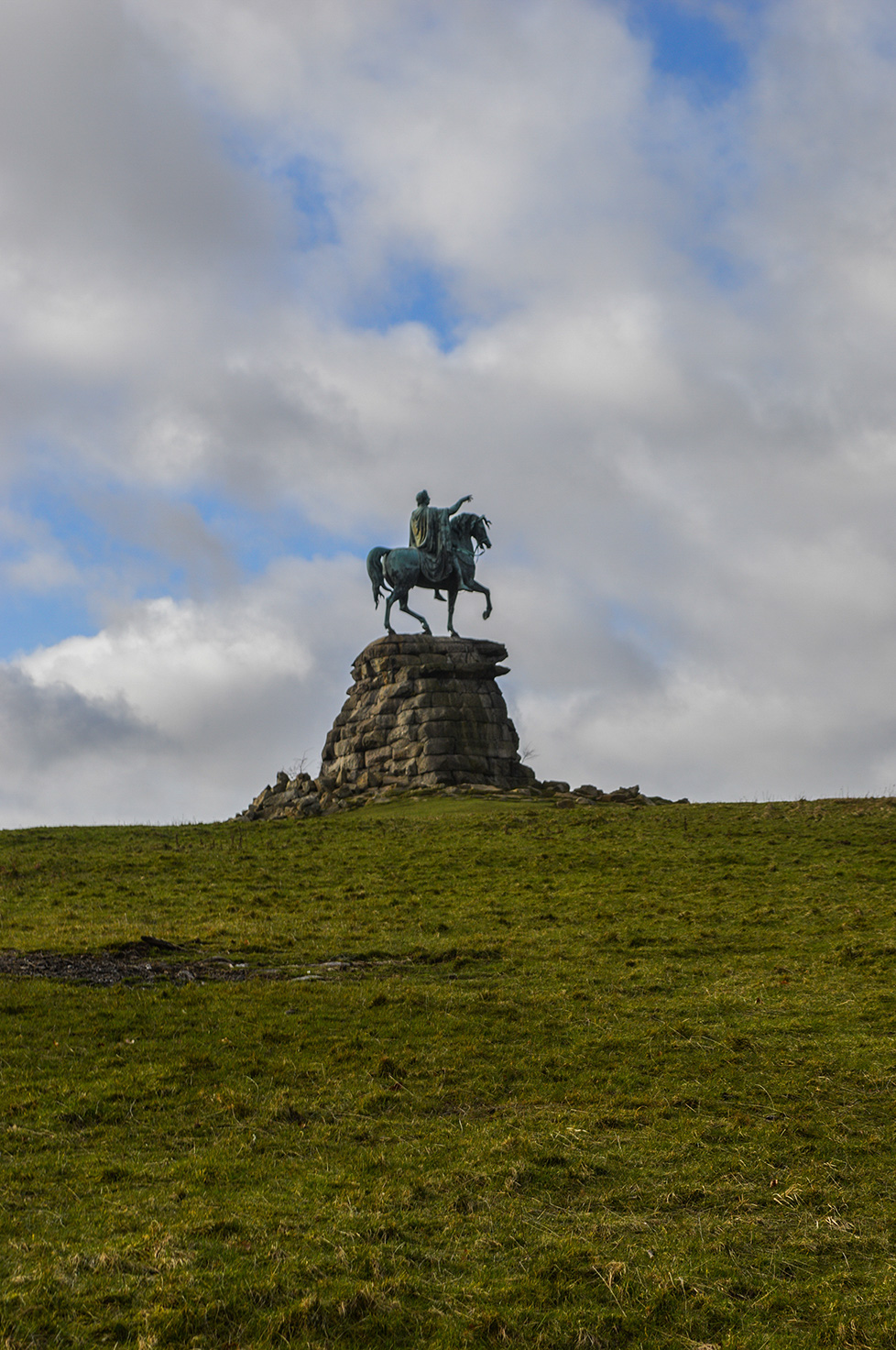
The image shows a statue of a man on horseback positioned on a large stone pedestal situated on a grassy hill under a partly cloudy sky.
Equine Statue Dominates Dramatic Sky ‐ photo by ,
©www.mgaylard.co.uk.
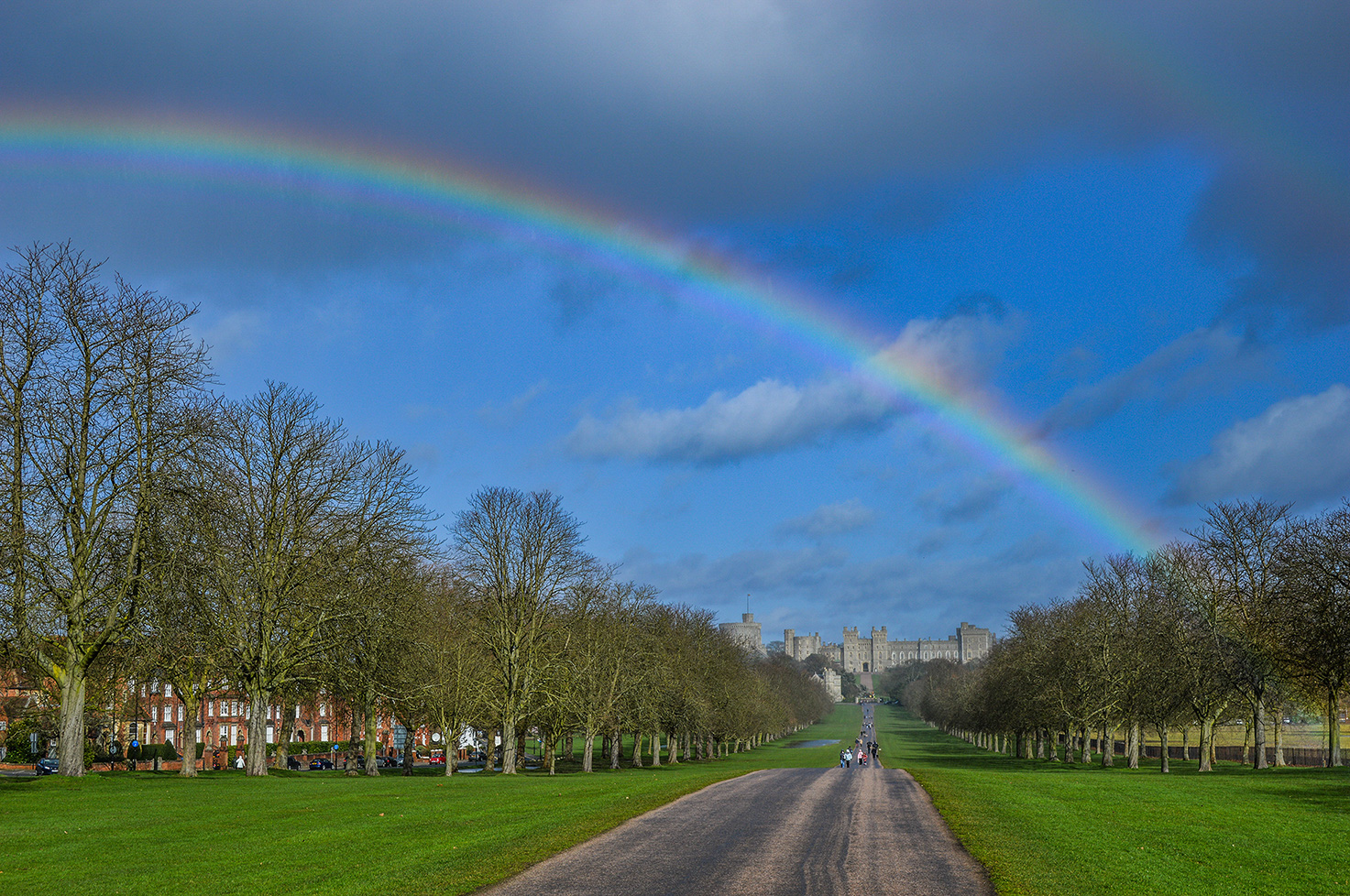
The image depicts a scenic view of Windsor Great Park with a prominent double rainbow arching across the sky. The park features a long, straight path flanked by leafless trees, leading towards Windsor Castle in the distance. The sky is partly cloudy with a mix of blue and grey tones. On the left side of the path, there are residential buildings, and the right side is bordered by expansive green lawns. A few people can be seen walking or biking along the path, enjoying the picturesque landscape.
Rainbow Arch Over Windsor Castle Path ‐ photo by ,
©www.mgaylard.co.uk.
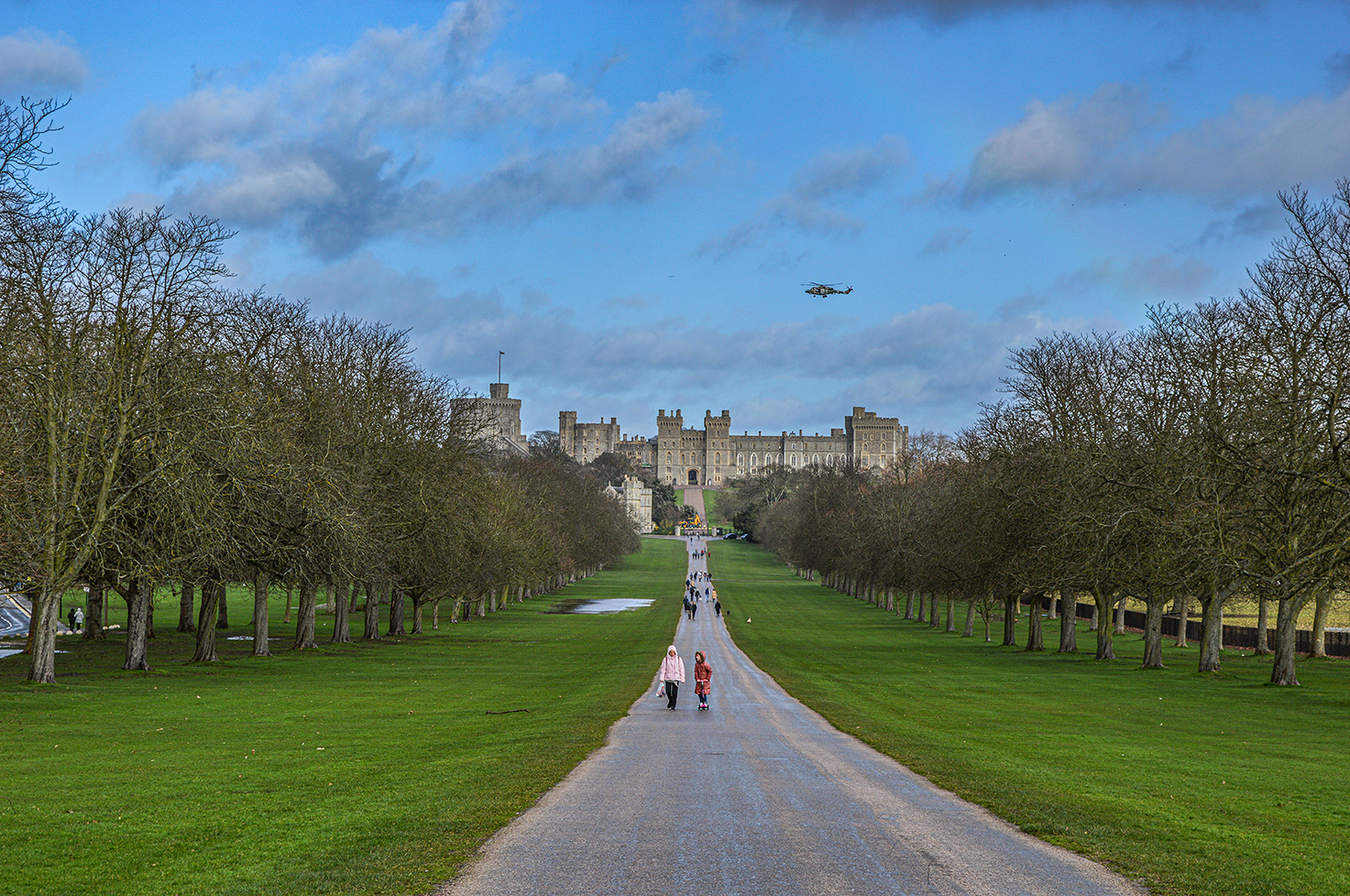
The image depicts a scenic view of Windsor Castle, a historic royal residence in England. The path leading to the castle is lined with trees and people walking towards the castle. The sky is partly cloudy, and a helicopter is seen flying above the castle.
Majestic Castle Approaches Under a Pensive Sky with a Helicopter Overhead ‐ photo by ,
©www.mgaylard.co.uk.

Windsor Great Park: A Realm of Royalty, Legend, and Nature

Windsor Great Park is a vast, historic royal park covering over 4,800 acres near Windsor Castle in Berkshire. It features ancient woodlands, open grasslands, the famous Long Walk, and attractions like Virginia Water Lake, the Savill Garden, and deer herds, offering scenic walks, cycling, and wildlife spotting for visitors.

A Thousand Years of Royal Hunting Grounds

Stretching across 4,800 acres of Berkshire and Surrey, Windsor Great Park is a living tapestry of history, where the whispers of the past mingle with the rustle of ancient oaks. Its story begins with William the Conqueror, who claimed this verdant expanse as his royal hunting ground in the 11th century. For centuries, the park’s dense forests and rolling meadows teemed with deer, boar, and wildfowl, providing sport and sustenance for monarchs from Henry VIII to George III. The park’s boundaries once encompassed the vast Windsor Forest, a medieval landscape of myth and majesty, where kings and queens rode forth with hounds and falcons, and where the legendary Herne the Hunter is said to still haunt the gnarled branches of its oldest trees.

The Long Walk and the Copper Horse

At the heart of the park lies the Long Walk, a three-mile avenue of chestnut and lime trees planted by Charles II in the 17th century. This grand promenade, flanked by stately oaks and elms, leads the eye—and the traveler—from the park’s southern reaches to the towering ramparts of Windsor Castle. At its summit stands the Copper Horse, a colossal equestrian statue of George III erected by his son, George IV, in 1831. From this vantage point, the castle’s turrets rise against the sky, a reminder of the park’s enduring connection to the Crown. The Long Walk has borne witness to royal processions, public mourning, and quiet reflection, its gravel paths trodden by generations of visitors and monarchs alike.

Virginia Water and the Savill Garden

The park’s landscapes are as diverse as they are breathtaking. Virginia Water, a vast artificial lake created in the 18th century, mirrors the sky and the surrounding woodlands, its shores dotted with cascades, grottoes, and the ruins of a Roman temple. Nearby, the Savill Garden—a jewel of horticultural artistry—bursts with color and fragrance, its meticulously designed beds and rare specimens a testament to the passion of King George VI and Queen Elizabeth the Queen Mother. The garden’s winding paths and hidden glades offer a sanctuary of tranquility, a place where nature and artistry entwine.

A Living Legacy

Today, Windsor Great Park remains a cornerstone of the Crown Estate, its ancient woodlands, historic lodges, and open meadows carefully stewarded for future generations. It is a place where history is not merely preserved but lived—where the echoes of royal hunts and Shakespearean legends linger in the dappled light of its forests, and where the Long Walk still draws pilgrims to its timeless vistas. Whether strolling beneath the Copper Horse, paddling on Virginia Water, or losing oneself in the Savill Garden’s blooms, visitors step into a landscape shaped by a thousand years of royal heritage and natural splendor.

References

en.wikipedia.orgwww.windsorgreatpark.co.ukhistoricengland.org.ukwindsorlocalhistorygroup.org , Text generated by Mistral AI
Open the full set flickr button this page

Windsor Castle

Windsor Castle, located in the town of Windsor in Berkshire, is the oldest and largest occupied castle in the world and has been a royal residence for over 900 years. It is an official residence of the British monarch, famous for its stunning architecture, State Apartments, St George’s Chapel, and the annual Royal Windsor Horse Show. The castle is also a popular tourist attraction, offering visitors a glimpse into British royal history and traditions.

A Fortress Born of Conquest

Perched high above the River Thames, Windsor Castle has stood as a sentinel of English power for nearly a thousand years. Its story begins in the wake of the Norman Conquest, when William the Conqueror, fresh from his victory at Hastings, ordered the construction of a motte-and-bailey fortress upon a chalk cliff. The castle’s strategic location—overlooking the Thames and just a day’s march from London—made it both a bastion of defense and a symbol of Norman dominance. The original wooden palisades soon gave way to stone, and by the reign of Henry II, Windsor had been transformed into a royal palace, its towers and halls echoing with the footsteps of kings and the intrigues of court.

The Heart of Monarchy and Chivalry

Through the centuries, Windsor Castle evolved from a military stronghold into the very heart of the British monarchy. Edward III, inspired by the legends of King Arthur, founded the Order of the Garter here in the 14th century, and St George’s Chapel—with its soaring Perpendicular Gothic arches—became the spiritual home of the order. The chapel’s stained glass and vaulted ceilings stand as a testament to the craftsmanship of the Middle Ages, while its tombs house the remains of monarchs from Henry VIII to Charles I, who was imprisoned within the castle’s walls during the English Civil War. The State Apartments, lavishly redecorated by George IV in the 19th century, dazzle with Rococo and Gothic splendor, their opulence a reflection of Britain’s imperial zenith.

Survival and Renewal

Windsor Castle’s resilience is legendary. It weathered the tumult of the Civil War, when Parliamentarian forces seized it and used it as a prison for the deposed Charles I. Centuries later, it endured the devastation of the 1992 fire, which ravaged St George’s Hall and the Private Chapel. The restoration that followed was a labor of love, blending modern craftsmanship with historical authenticity, ensuring that the castle’s legacy would endure for future generations. Today, Windsor remains the oldest and largest occupied castle in the world, a living monument to the continuity of the British Crown.

A Timeless Stage for History

More than a fortress or a palace, Windsor Castle is a stage upon which the drama of British history has unfolded. It has hosted royal weddings, including that of Prince Harry and Meghan Markle, and stood as a refuge for the royal family during the Blitz of World War II. Its walls have witnessed the pageantry of state visits, the quiet dignity of royal funerals, and the daily rhythms of a monarchy that has shaped a nation. To walk its ramparts is to tread in the footsteps of William the Conqueror, Henry VIII, and Queen Victoria—each leaving their mark on this enduring symbol of British heritage.

References

en.wikipedia.orgwww.britannica.comwww.worldhistory.orgwww.architecturaldigest.comwww.historyhit.com , Text generated by Mistral AI

Museum of Berkshire Aviation

Museum of Berkshire Aviation

Mohawk Way (off The Bader Way)WoodleyBerkshire,   RG5 4UE,   UK

The Museum of Berkshire Aviation is a small aviation museum located in Woodley, Berkshire, England. Situated on the edge of the former Woodley Aerodrome, the museum showcases Berkshire’s rich aviation history, particularly the contributions of Phillips & Powis (later Miles Aircraft) and Handley Page. Exhibits include restored aircraft, archival photographs, and priceless archives, offering visitors a glimpse into the area’s pivotal role in the development of civil and military aviation.
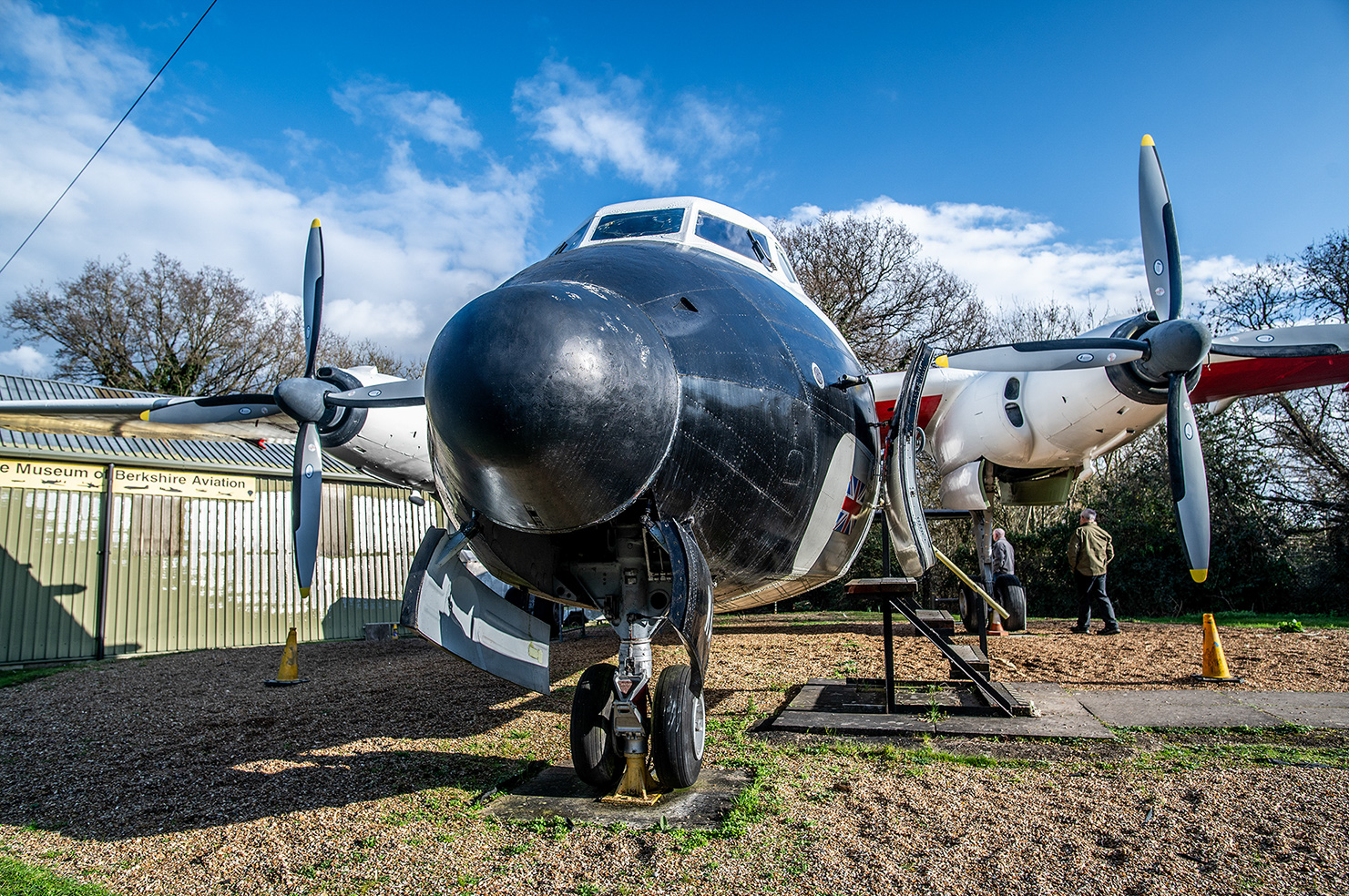
The image shows a vintage aircraft on display at the Museum of Berkshire Aviation. The aircraft is a twin-engine propeller plane with a distinctive black nose and silver body. It is positioned on a grassy area with its landing gear visible, and there are two people walking nearby. The museum building is in the background, and the sky is clear with some clouds.
Vintage Aircraft on Display at Berkshire Aviation Museum ‐ photo by ,
©www.mgaylard.co.uk.
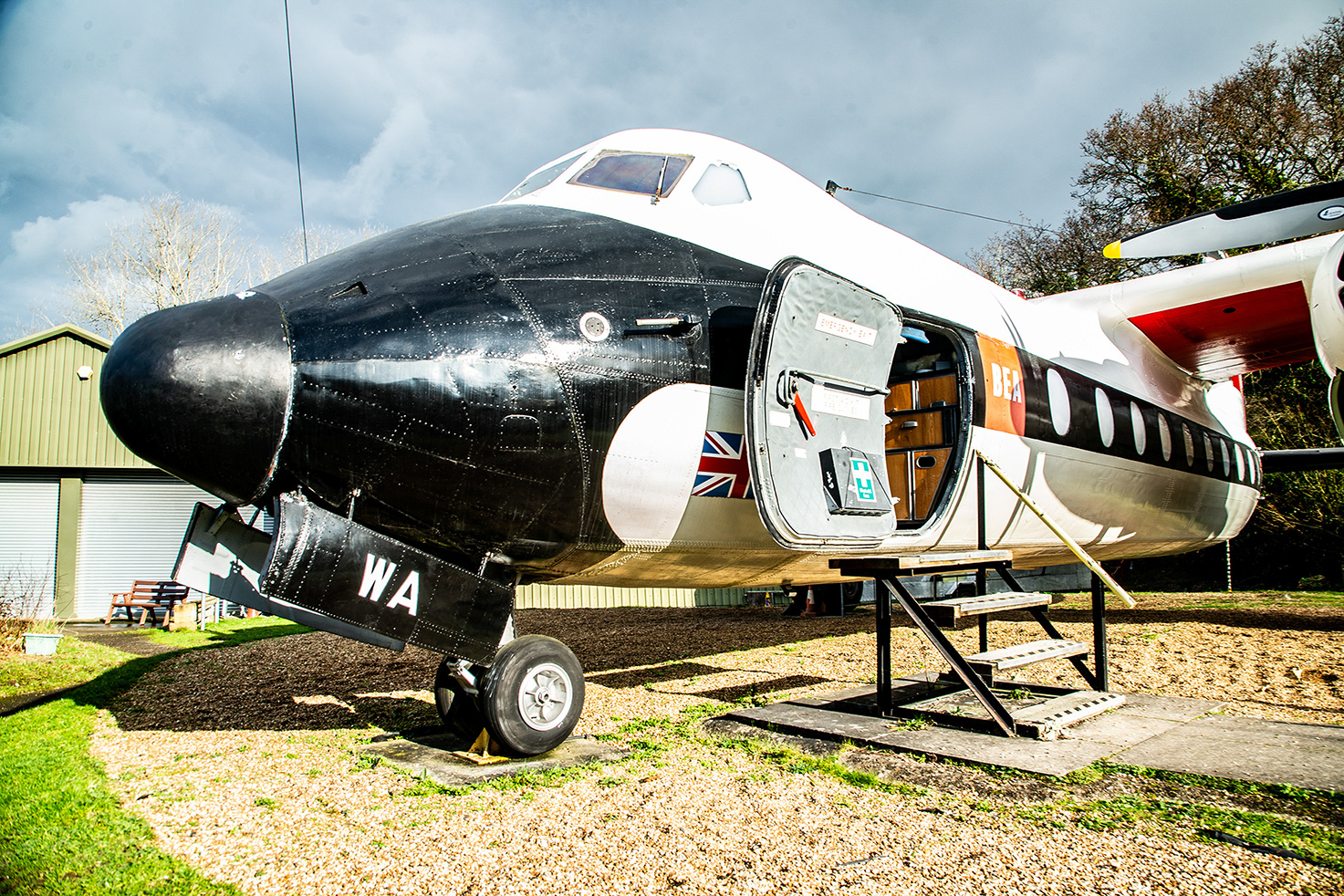
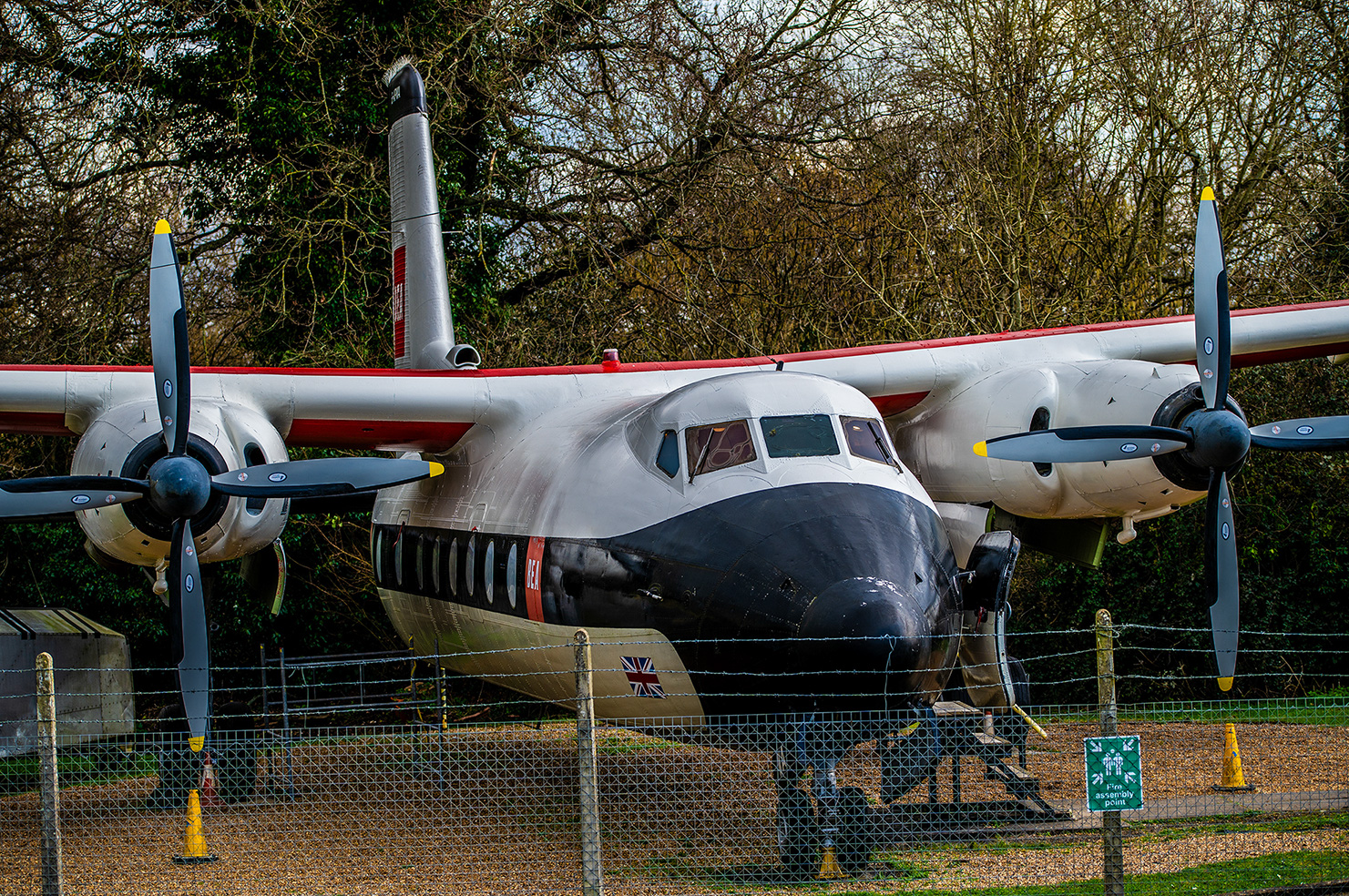
The Handley Page Herald was a 1950s British short-range airliner, initially piston-powered but later re-engined with Rolls-Royce Dart turboprops, designed to replace the Douglas DC-3 but struggled commercially due to competition and market shifts. Only about 50 were built, and it saw limited success before production ended in 1968, with the last aircraft retiring in 1998.
he image depicts a vintage aircraft with its door open, revealing a glimpse of the interior. The plane is parked on a grassy area with a small set of stairs leading up to the entrance. The aircraft has a distinctive black and white color scheme with some red and yellow accents. The tail of the plane has the letters 'WA' painted on it. The setting appears to be an outdoor display, possibly at a museum or an airfield.
Vintage BEA Aircraft on Display ‐ photo by ,
©www.mgaylard.co.uk.
The image shows a large, vintage aircraft with four propellers, each with four blades. The aircraft is painted in a camouflage pattern of black, green, and light brown. It has a distinctive red and white stripe running along its side. The plane is parked on a grassy area enclosed by a chain-link fence. The background features trees with bare branches, suggesting it might be autumn or winter.
Handley_Page_Herald_20240211_780_7274.jpg ‐ photo by ,
©www.mgaylard.co.uk.
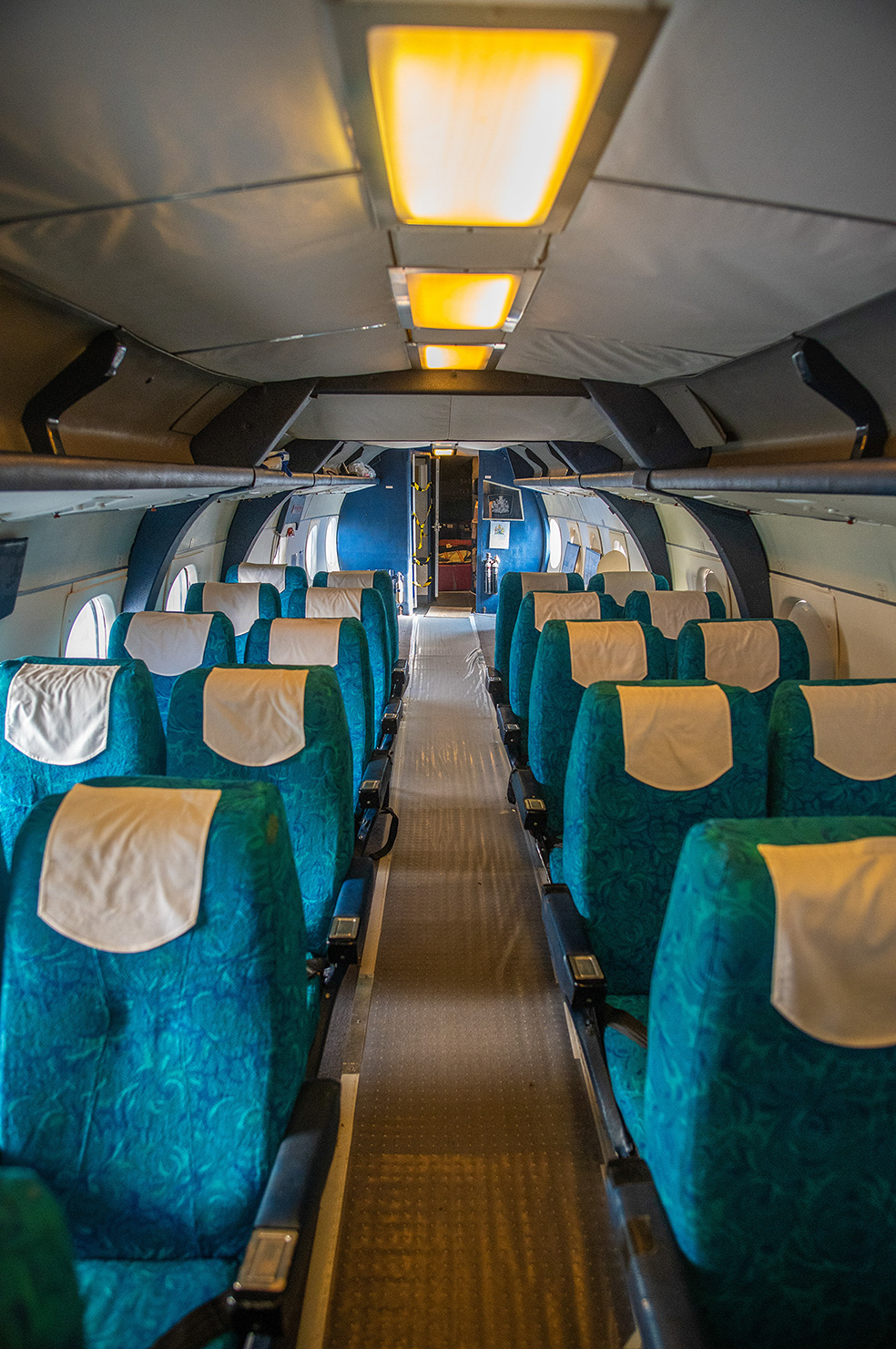
The image shows the interior of an airplane with rows of seats covered in blue and beige upholstery. The cabin is well-lit with overhead lights, and the aisle is clear, leading towards the front of the plane. The seats appear to be arranged in a 2-2 configuration, and the overall condition of the cabin looks clean and well-maintained.
Vintage Airplane Cabin with Teal Seating and Warm Interior Lighting ‐ photo by ,
©www.mgaylard.co.uk.
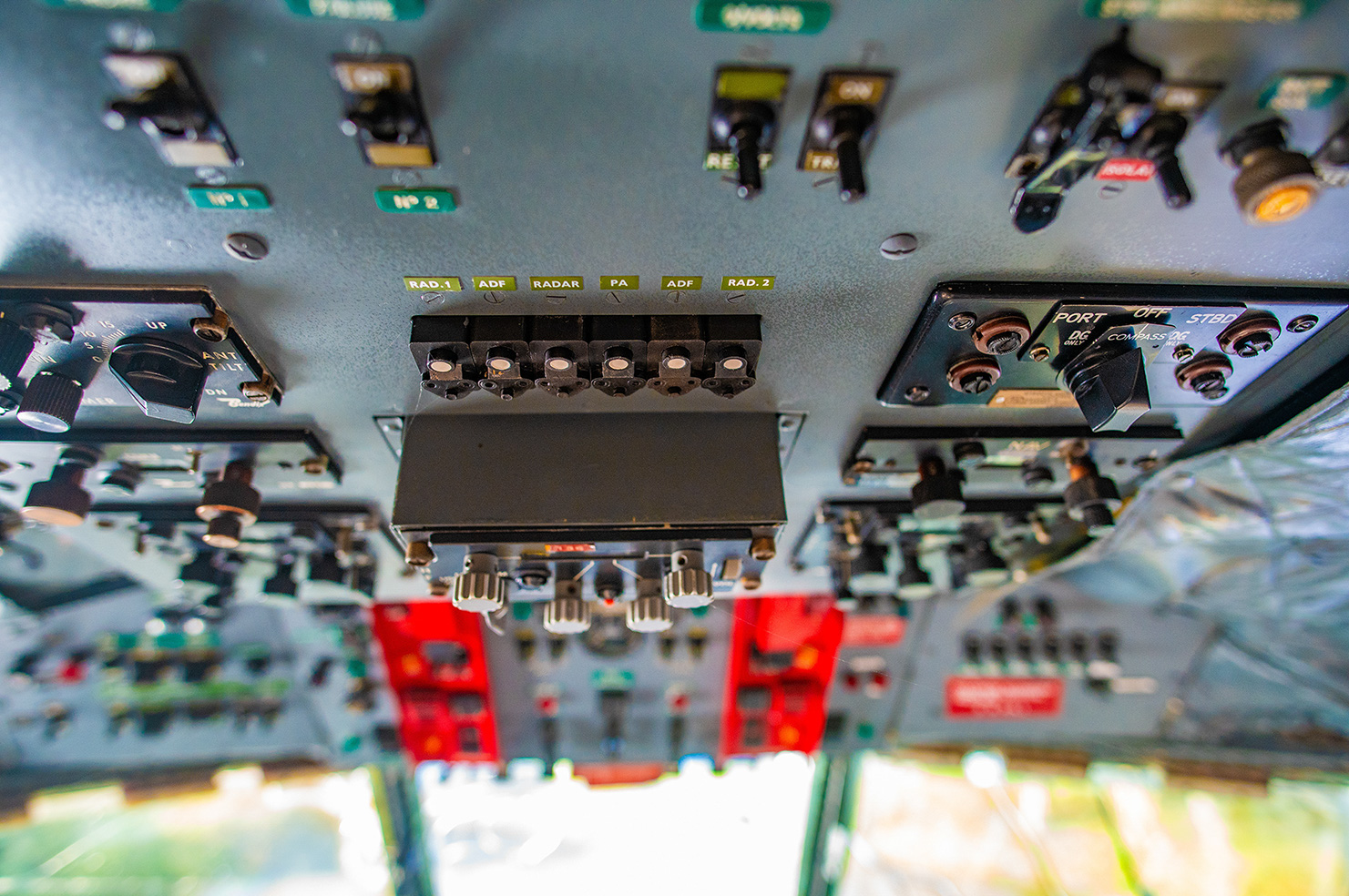
The image shows a close-up view of an aircraft's cockpit control panel, featuring various switches, buttons, and dials. The panel includes labels such as RAD.1, ADF, RADAR, PA, and RAD.2, indicating different aviation systems and controls. The switches are in different positions, suggesting they are used to operate various aircraft functions. The panel also includes circuit breakers and other components essential for the aircraft's operation. The overall layout is complex, reflecting the intricate nature of modern aviation technology.
Aviation Cockpit Controls Revealed ‐ photo by ,
©www.mgaylard.co.uk.
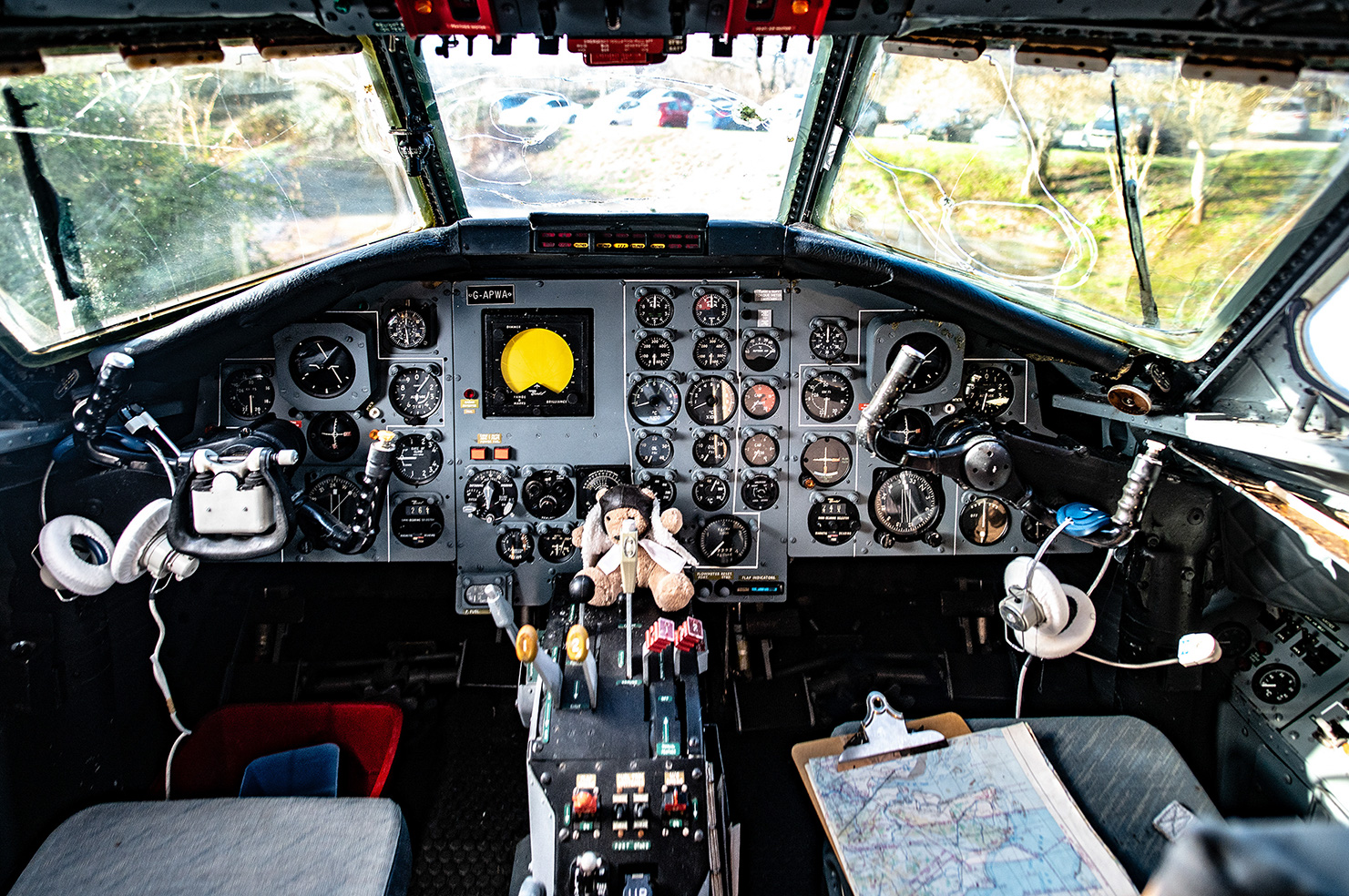
The image shows the cockpit of an aircraft, featuring a complex array of instruments and controls. The view through the windshield reveals a parking area with several cars and a natural landscape. Notably, there is a teddy bear placed in the center console, adding a touch of whimsy to the otherwise technical environment. The cockpit appears to be well-used, with various tools and a map visible, indicating it is an active or recently used aircraft. The overall scene suggests a blend of advanced aviation technology and personal touches.
Cockpit Comforts: A Teddy Bear's View from the Pilot's Seat ‐ photo by ,
©www.mgaylard.co.uk.
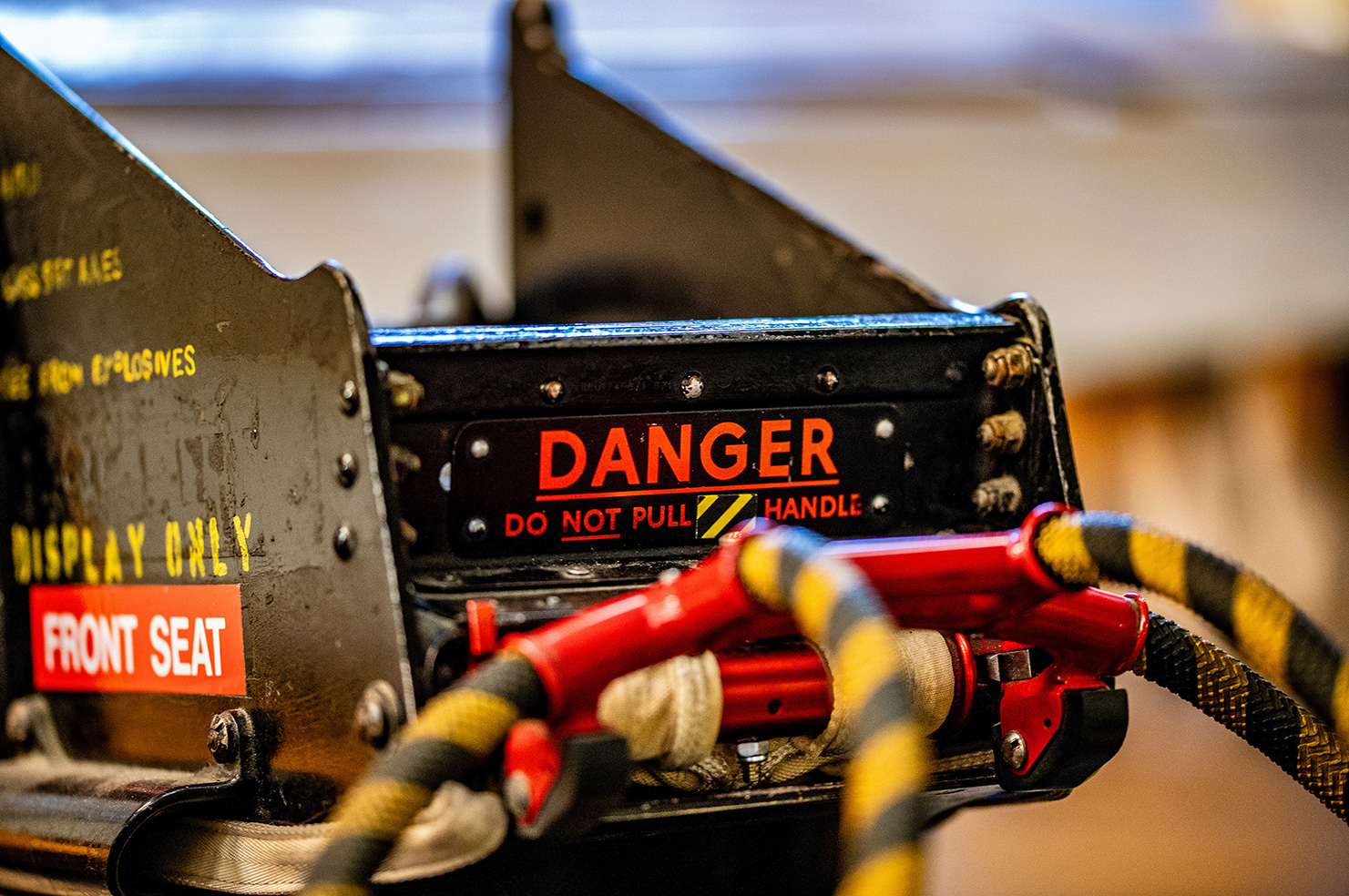
The image shows a close-up of a mechanical device, likely part of an aircraft, with several warning labels. The most prominent label reads 'DANGER DO NOT PULL HANDLE,' indicating a critical safety instruction. Other labels include 'DISPLAY ONLY' and 'FRONT SEAT,' suggesting that this component is not to be operated and is meant for display purposes only. The device appears to be secured with straps and has a red handle, emphasizing the importance of not tampering with it.
Danger! Do Not Pull Handle on Front Seat Ejection System ‐ photo by ,
©www.mgaylard.co.uk.
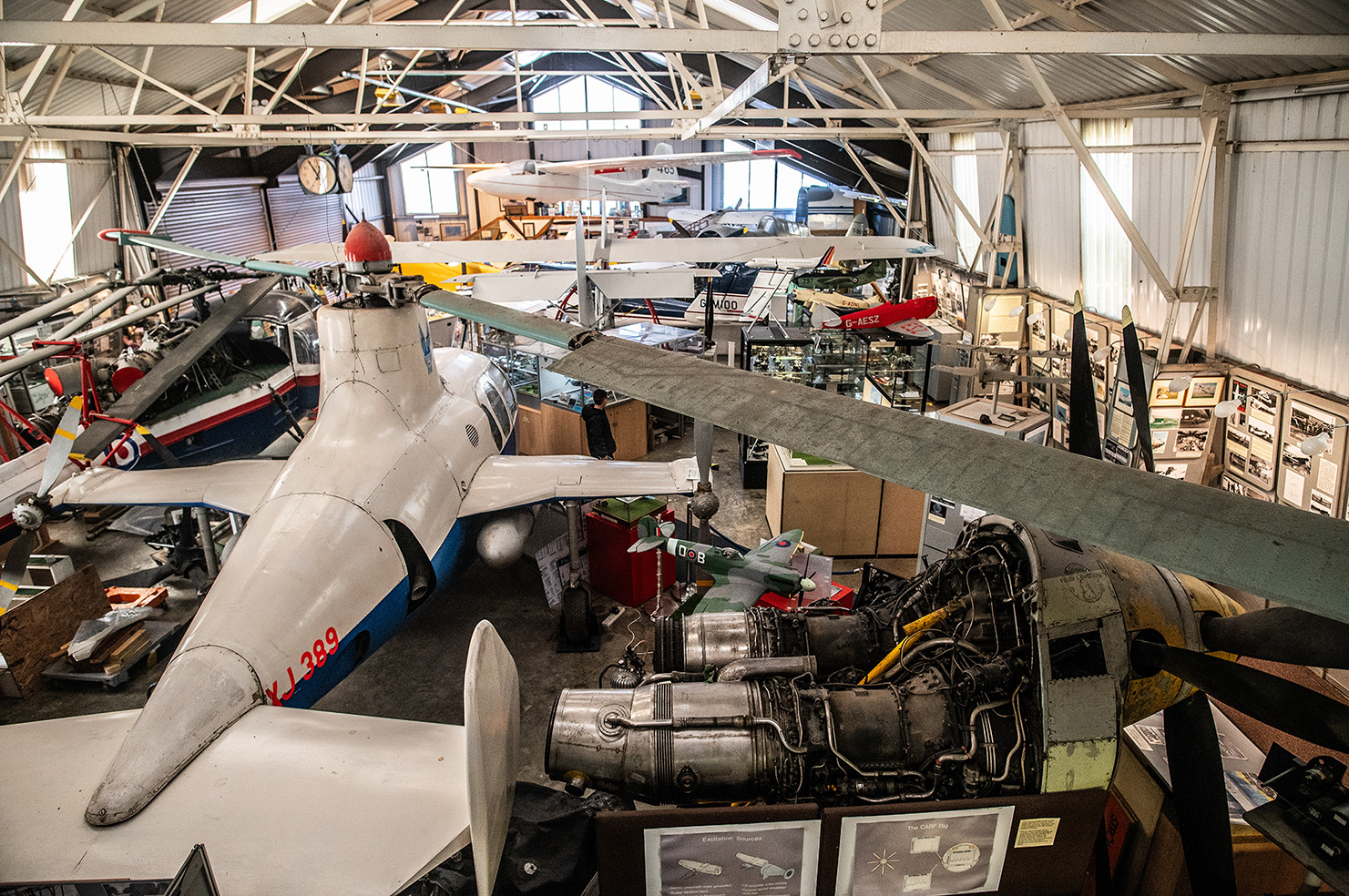
The image depicts the interior of an aviation museum, showcasing a variety of vintage aircraft and aircraft engines. The museum is housed in a large, well-lit hangar with a high ceiling. Several airplanes are on display, including a prominently featured aircraft in the foreground with a visible engine and propeller. The museum appears to have detailed informational displays about the exhibits, and there are various other aviation artifacts and memorabilia scattered throughout the space.
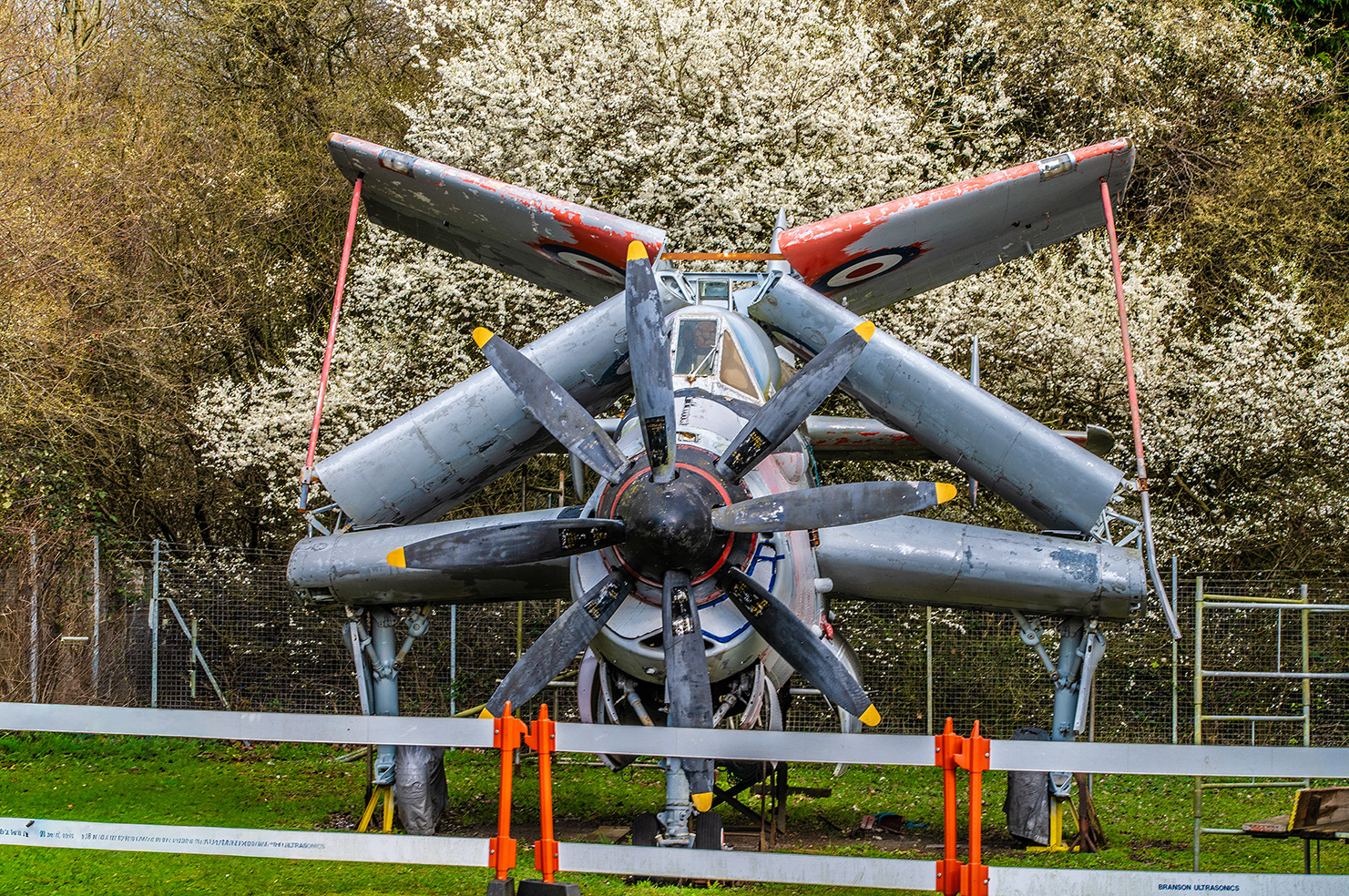
Fairey Jet Gyrodyne. ‐ photo by ,
©www.mgaylard.co.uk.
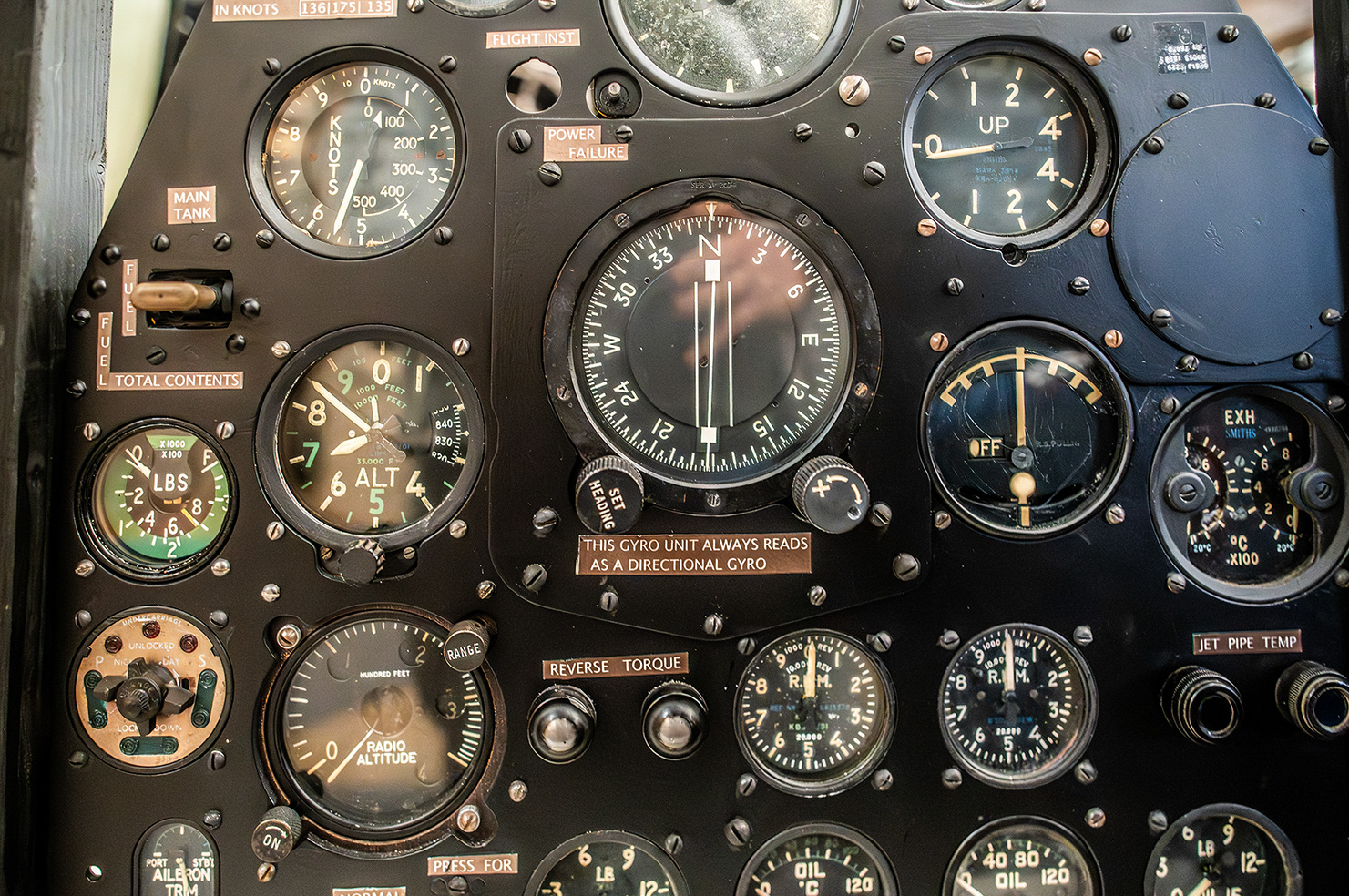
The image shows a detailed view of an aircraft's instrument panel, featuring various gauges and dials that provide critical flight information such as airspeed, altitude, fuel levels, and directional guidance. The instruments include a directional gyro, altimeter, airspeed indicator, fuel gauges, and engine temperature indicators. Labels and markings on the instruments offer specific data points and operational instructions necessary for pilot navigation and aircraft management. The panel appears to be from an older aircraft, given the style and design of the instruments. Overall, the image captures the complexity and importance of the instruments used in aviation for safe and effective flight operations.
Aircraft Cockpit Instruments ‐ photo by ,
©www.mgaylard.co.uk.
The image depicts an aircraft mounted on a stand for display. The aircraft is a vintage military plane, likely a fighter from the World War II era, as indicated by its design and markings. It is suspended in the air with its wings spread out, showcasing its propeller and cockpit. The plane is situated outdoors, surrounded by a fence and greenery, suggesting it is part of an outdoor museum or exhibition.
Vintage Aircraft Stands Sentinel Amidst Spring Bloom ‐ photo by ,
©www.mgaylard.co.uk.
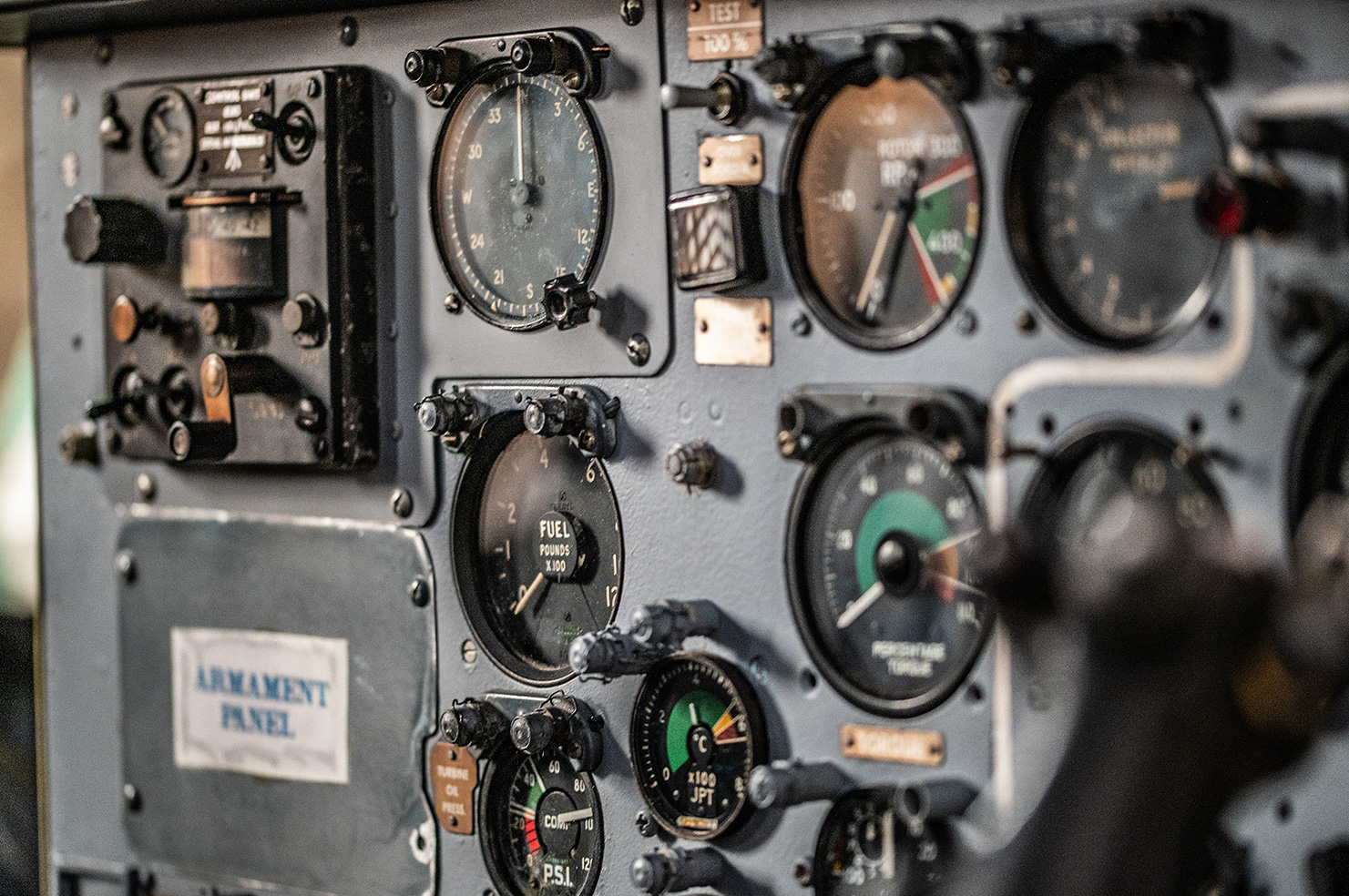
The image shows a close-up of an aircraft's armament panel, featuring various gauges and dials. These include instruments for measuring fuel levels, pressure, temperature, and other critical flight data. The panel appears to be from an older aircraft, given the analog nature of the gauges and the overall design. The labels and markings on the dials provide specific measurements and operational statuses. This panel is essential for monitoring and controlling the aircraft's armament and related systems during flight.
Cockpit Controls Reveal Vintage Aircraft Systems ‐ photo by ,
©www.mgaylard.co.uk.
The image shows a close-up of an aircraft's compass and various other instruments on the control panel. The compass is prominently displayed in the center, with markings for cardinal directions (N, E, S, W) and degrees. Surrounding the compass are other instruments and labels such as 'POWER FAILURE,' 'OFF,' 'REVERS,' 'RADIO TUDE,' and 'SET HEADING.' The instruments appear to be part of an older aircraft's control panel, indicating navigation and communication tools used by the pilot.
Vintage Aircraft Cockpit: Navigational Instruments and Controls ‐ photo by ,
©www.mgaylard.co.uk.
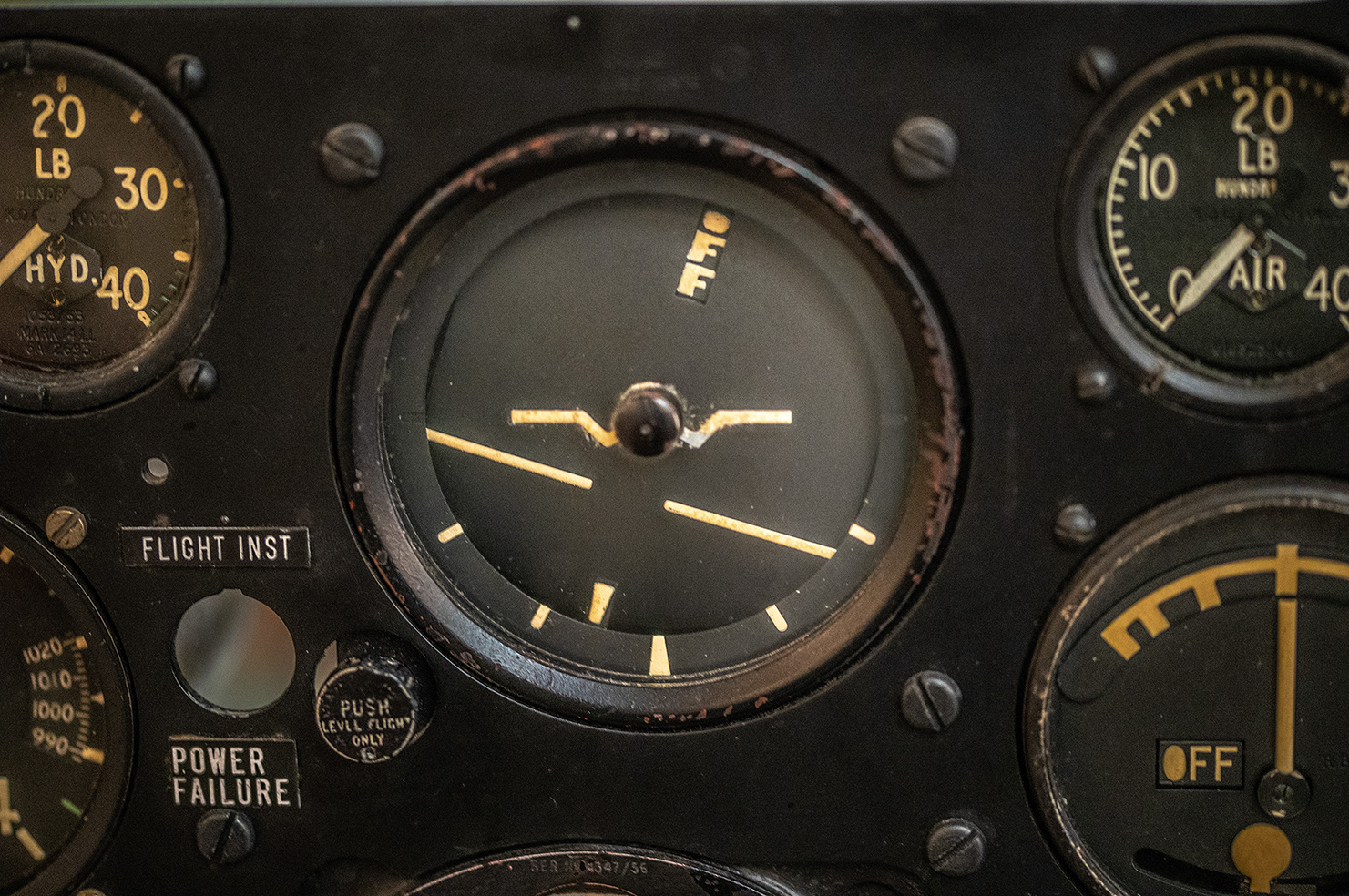
The image shows a close-up of an aircraft's instrument panel featuring several gauges and dials. The central gauge indicates the aircraft's attitude with a small airplane symbol and horizontal lines. Surrounding gauges measure hydraulic pressure, air pressure, and other critical flight parameters. Labels such as 'FLIGHT INST,' 'POWER FAILURE,' and 'PUSH TO TALK' are visible, indicating various functions and warnings. The overall appearance suggests a vintage or older aircraft cockpit design.
Vintage Aircraft Cockpit Gauges Show Signs of Age and Use ‐ photo by ,
©www.mgaylard.co.uk.
The image features the vibrant yellow cockpit and exposed engine of a vintage biplane, likely on display in a museum. Visible markings on the fuselage include
Aviation Showcase: A Hangar Filled with Historic Aircraft ‐ photo by ,
©www.mgaylard.co.uk.
The image shows a vintage yellow biplane with its engine exposed, likely on display in a museum or exhibition setting. The aircraft's registration number PP4317 T2S is visible on the side. The engine is detailed with various components visible, and there are informational placards placed around the plane, suggesting it is part of an exhibit. A person is seen in the background, possibly a visitor or staff member, and the setting appears to be indoors with a closed shutter in the background.
Glimpse into Aviation History: Yellow Biplane Cockpit and Engine on Display ‐ photo by ,
©www.mgaylard.co.uk.
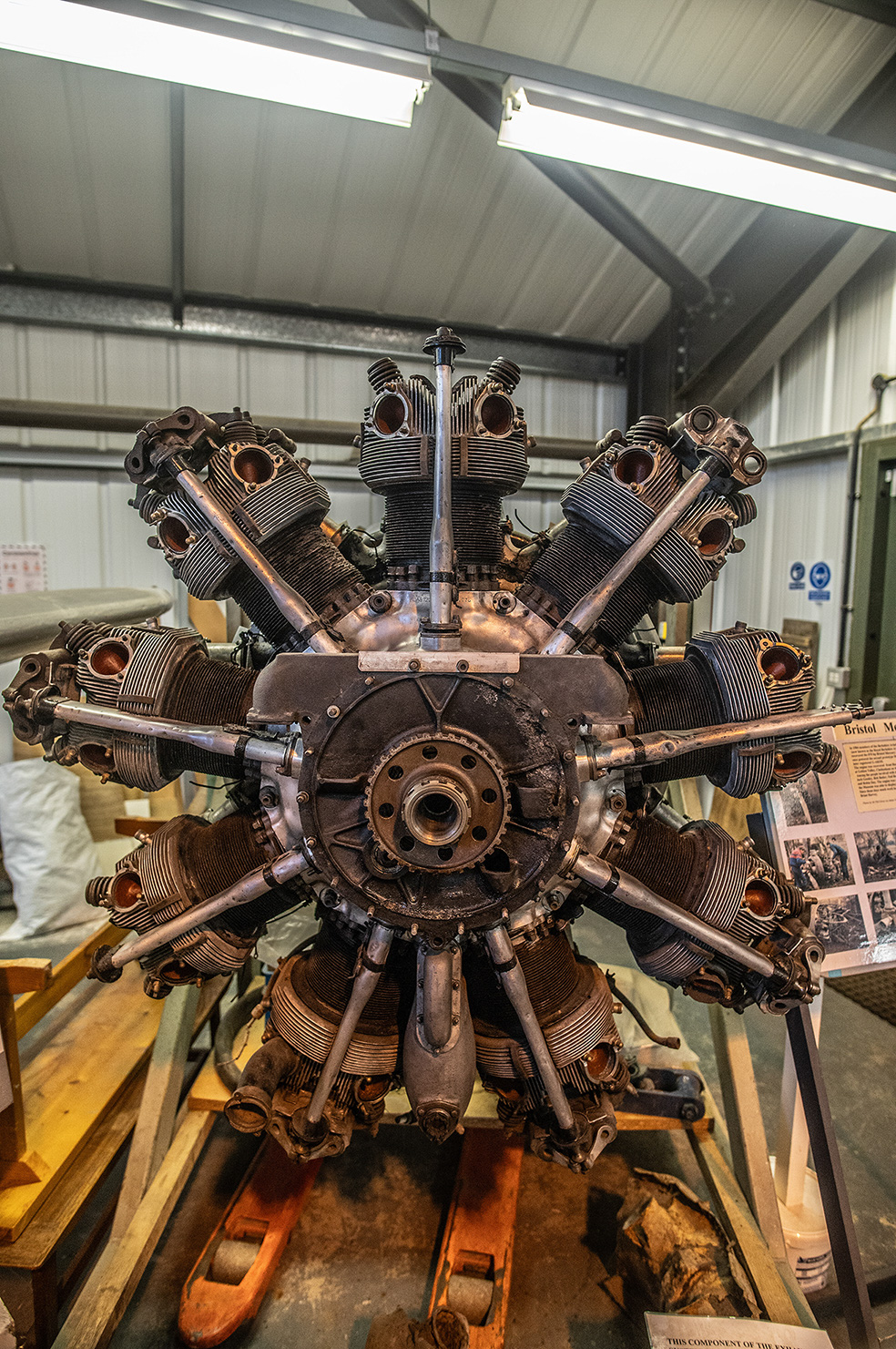
The image shows a radial engine, likely from an aircraft, displayed in a museum setting. The engine has multiple cylinders arranged radially around a central crankcase, with visible exhaust pipes and other components. The setting appears to be an indoor exhibit with informational placards nearby.
Radial Engine Marvel on Display ‐ photo by ,
©www.mgaylard.co.uk.
The image showcases a detailed view of a complex assembly, featuring numerous metal connectors and black cables. Several connectors have blue bands and some are labeled with numbers. The arrangement suggests a sophisticated electronic or mechanical system, possibly from an aircraft or industrial equipment, characterized by its robust and interconnected nature.
Chevaline A3 Polaris missile ‐ photo by ,
©www.mgaylard.co.uk.
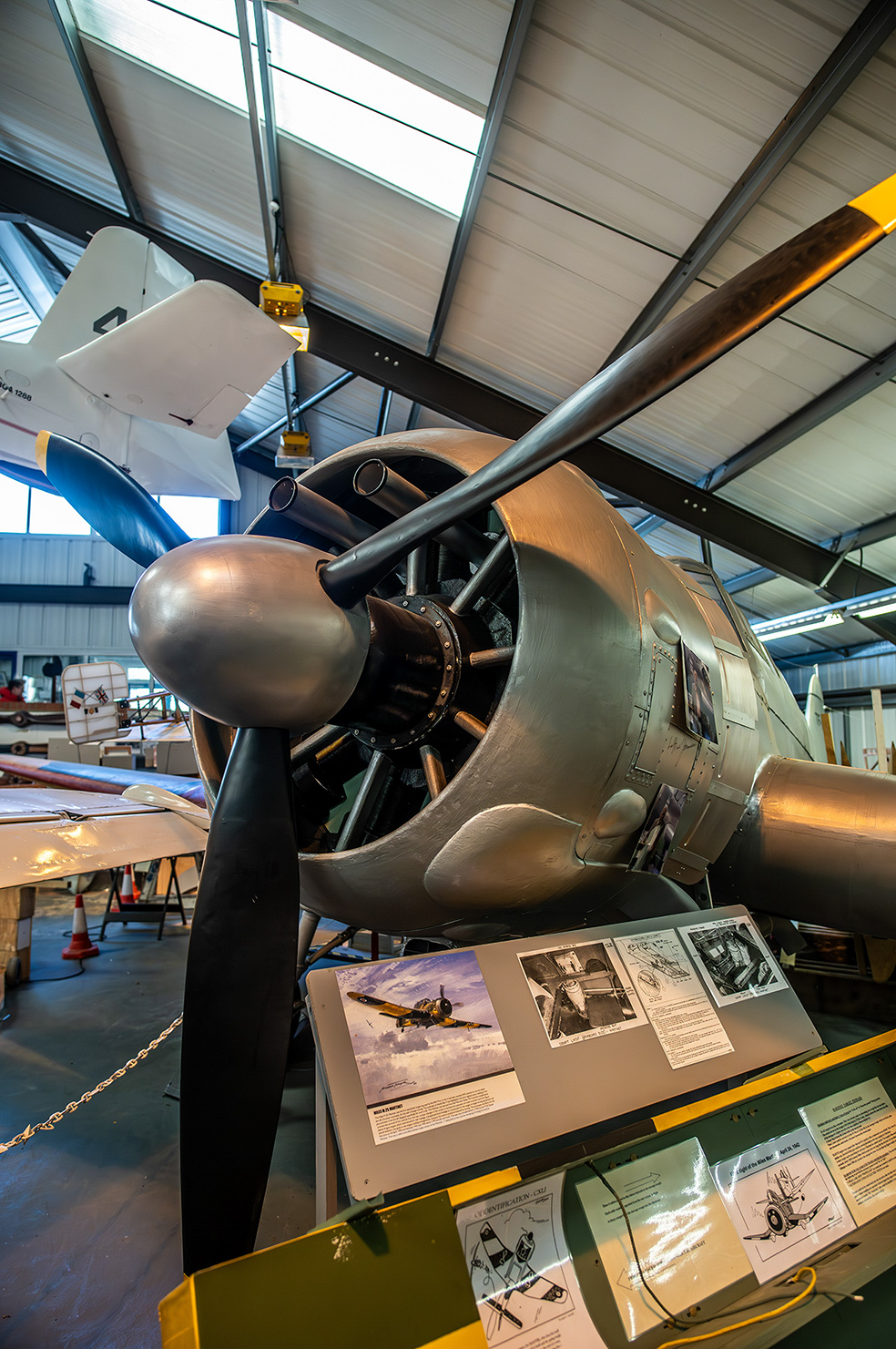
The image depicts an aircraft displayed in a museum setting. The aircraft is suspended from the ceiling, showcasing its propeller and front section. Below the aircraft, there are several informational panels with text and images, providing historical and technical details about the aircraft.
A Vintage Warplane Takes Center Stage in a Museum Hangar ‐ photo by ,
©www.mgaylard.co.uk.
Open the full set flickr button this page

Berkshire Aviation Museum: Where Local Skies Touched History

The Museum of Berkshire Aviation is located at Mohawk Way (off The Bader Way), Woodley, near Reading, Berkshire, RG5 4UE, UK. It is open to the public on Wednesdays, Saturdays, Sundays, and Bank Holidays from 10:30 AM to 5 PM during the summer. The museum is a charitable trust situated at the historic Woodley Airfield, which was once a hub for British aircraft manufacturing, including Miles and Handley Page aircraft. The museum offers exhibits, reconstructions, and educational programs, and welcomes group visits and school tours.

A Hangar of Dreams and Ingenuity

Nestled on the edge of the former Woodley Aerodrome, the Berkshire Aviation Museum is a tribute to the county’s unsung but vital role in the story of British flight. This unassuming hangar, once the heartbeat of a thriving aircraft industry, now cradles the legacy of Phillips & Powis—later Miles Aircraft—a company that, from the 1930s to the 1960s, turned Woodley into a crucible of aviation innovation. Here, among the hum of lathes and the scent of doped fabric, engineers and dreamers crafted aircraft that would carry pilots into the skies and into history.

From Wood and Canvas to War and Peace

The museum’s collection is a testament to Berkshire’s aeronautical golden age. Pride of place goes to the Miles aircraft—elegant, wooden-framed machines like the Hawk Trainer and the Marathon, their curves and rivets speaking of an era when aviation was as much art as science. These planes, along with Handley Page transports and other local marvels, once filled the skies over Berkshire, ferrying trainees, testing boundaries, and even playing secret roles in wartime deception. The exhibits are not just static relics; they are lovingly restored by volunteers, their engines and airframes brought back to life, offering a tangible link to the past.

Stories of People and Progress

Beyond the aircraft, the museum tells the human story of aviation in Berkshire. Archival photographs and personal artifacts reveal the faces behind the machines: the designers, the factory workers, the pilots, and the families who made Woodley a hub of ambition. The Air Transport Auxiliary (ATA), whose brave ferry pilots—many of them women—delivered aircraft from Woodley to the front lines, are honored here, their courage a reminder of the park’s role in the broader narrative of British resilience during World War II. The museum also celebrates lesser-known pioneers, like the Reverend John Bacon, whose early balloon experiments hint at Berkshire’s long-standing fascination with the skies.

A Living Legacy

Today, the Berkshire Aviation Museum is more than a repository of old planes; it is a vibrant community resource. Run by a charitable trust and staffed by passionate volunteers, it offers educational programs, hands-on exhibits, and a window into a past that shaped not just a county, but the course of aviation history. For visitors, it is a place to marvel at the ingenuity of the past, to hear the roar of engines long silenced, and to stand in the shadow of wings that once carried dreams aloft.

References

en.wikipedia.orgwww.britainexpress.commuseumofberkshireaviation.co.ukwww.visitsoutheastengland.com , Text generated by Mistral AI
To the top
Powered by w3.css. The images are all stored on link to www.gaylard.co.uk Photostream on Flickr   This website is hosted by link to 123Reg Web Hosting