The Needles and Battery

The Needles

Alum BayIsle of Wight,   United Kingdom

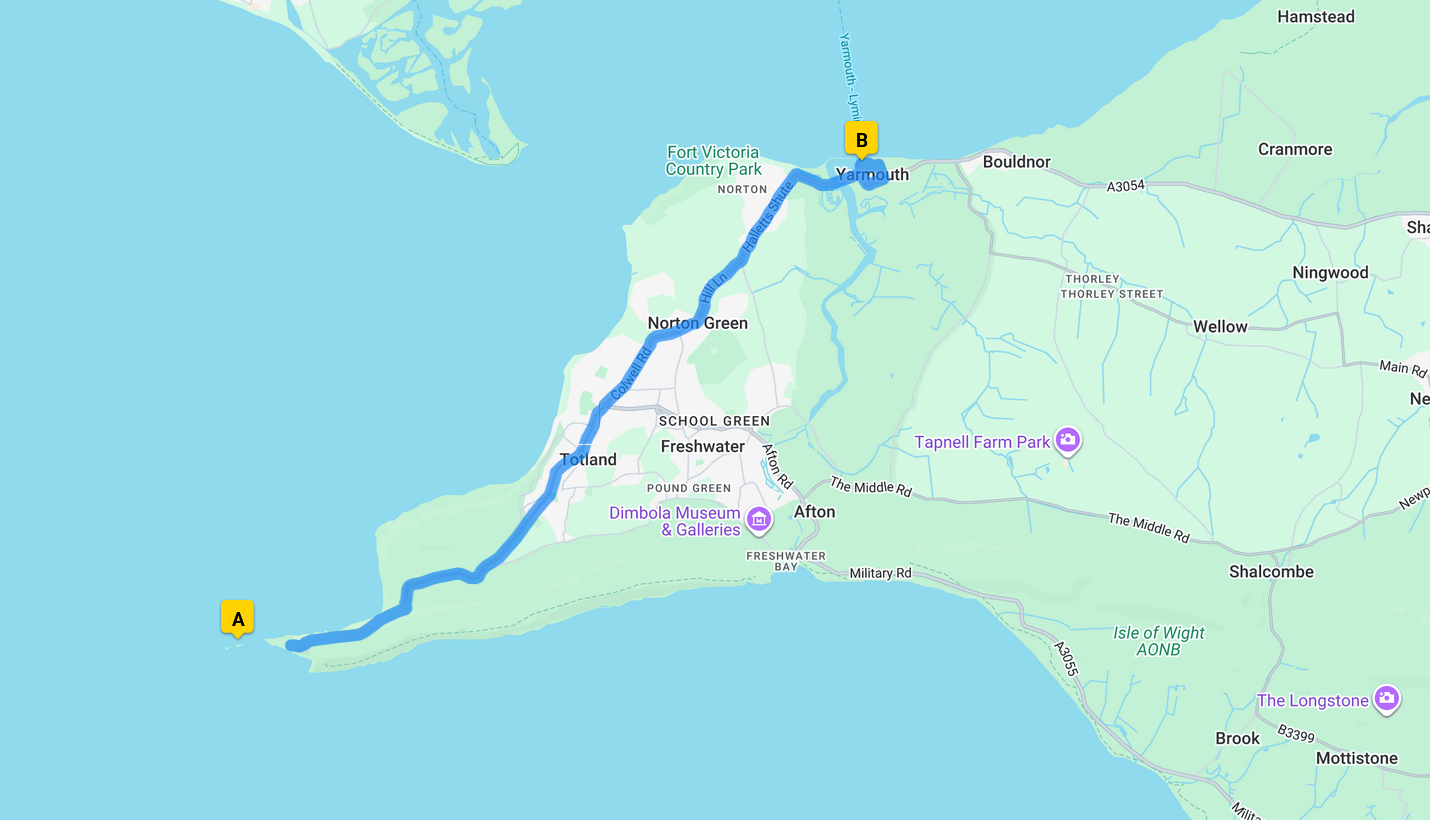
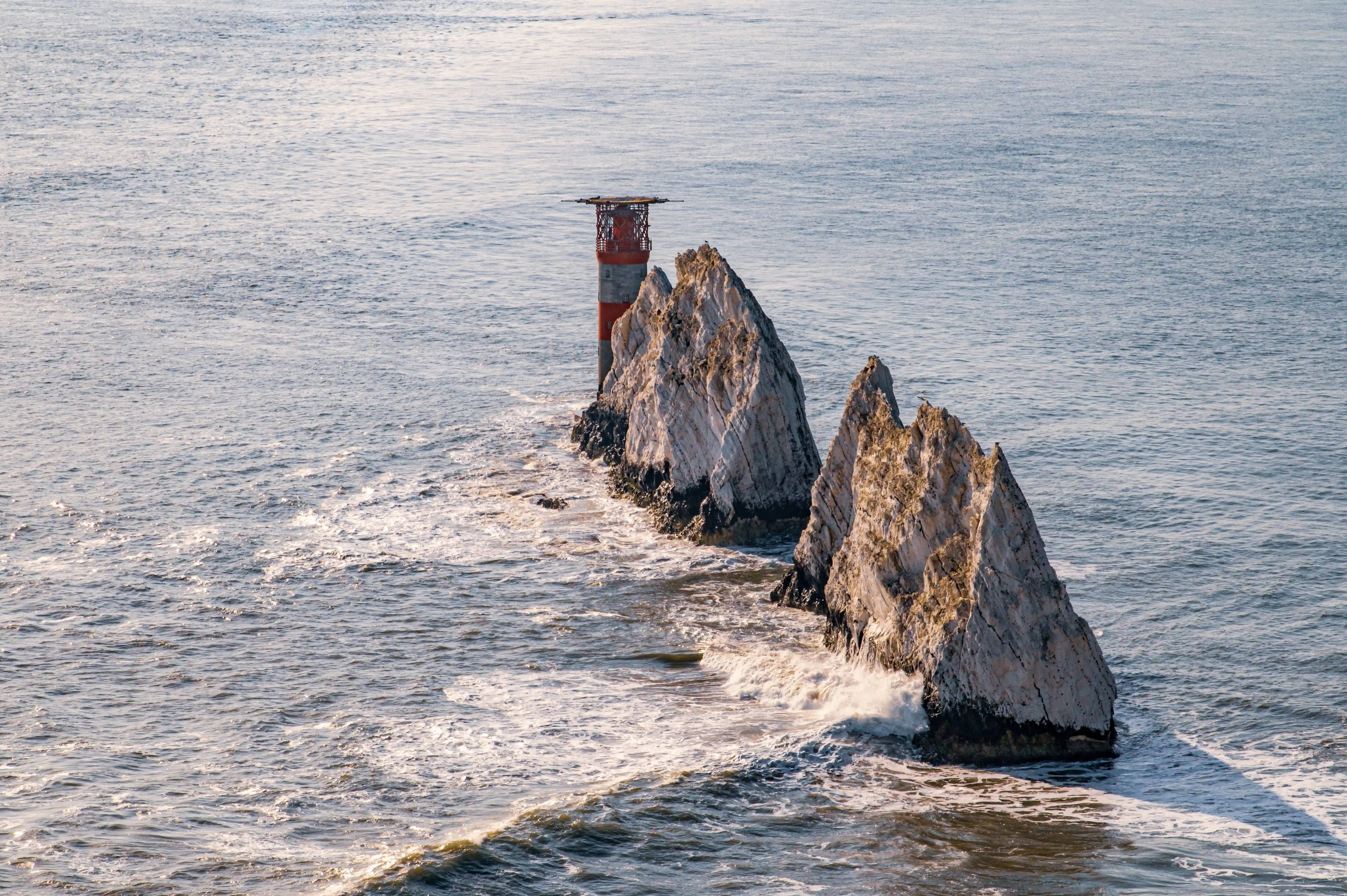
The Needles are a row of three distinctive chalk stacks off the western extremity of the Isle of Wight, England, in the English Channel. This iconic landmark is renowned for its dramatic scenery, colorful stratified rock formations, and the historic lighthouse at its tip. The Needles are a popular tourist destination, offering breathtaking views, boat tours, and the chance to explore the surrounding natural beauty. The area is also home to the Old Battery and New Battery, historic fortifications that add to the site’s historical significance.
The image depicts a lighthouse situated on a rocky outcrop in the middle of the ocean. The lighthouse is red and white, standing prominently against the blue sea. The rocky formation consists of jagged, steep rocks that rise sharply from the water. Waves can be seen crashing against the base of the rocks, indicating a potentially rough sea. The overall scene is one of isolation and natural beauty, with the lighthouse serving as a crucial navigational aid in a challenging maritime environment.
Rocky Outcrop with Lighthouse in the Sea ‐ 
photo by ,
©www.mgaylard.co.uk.
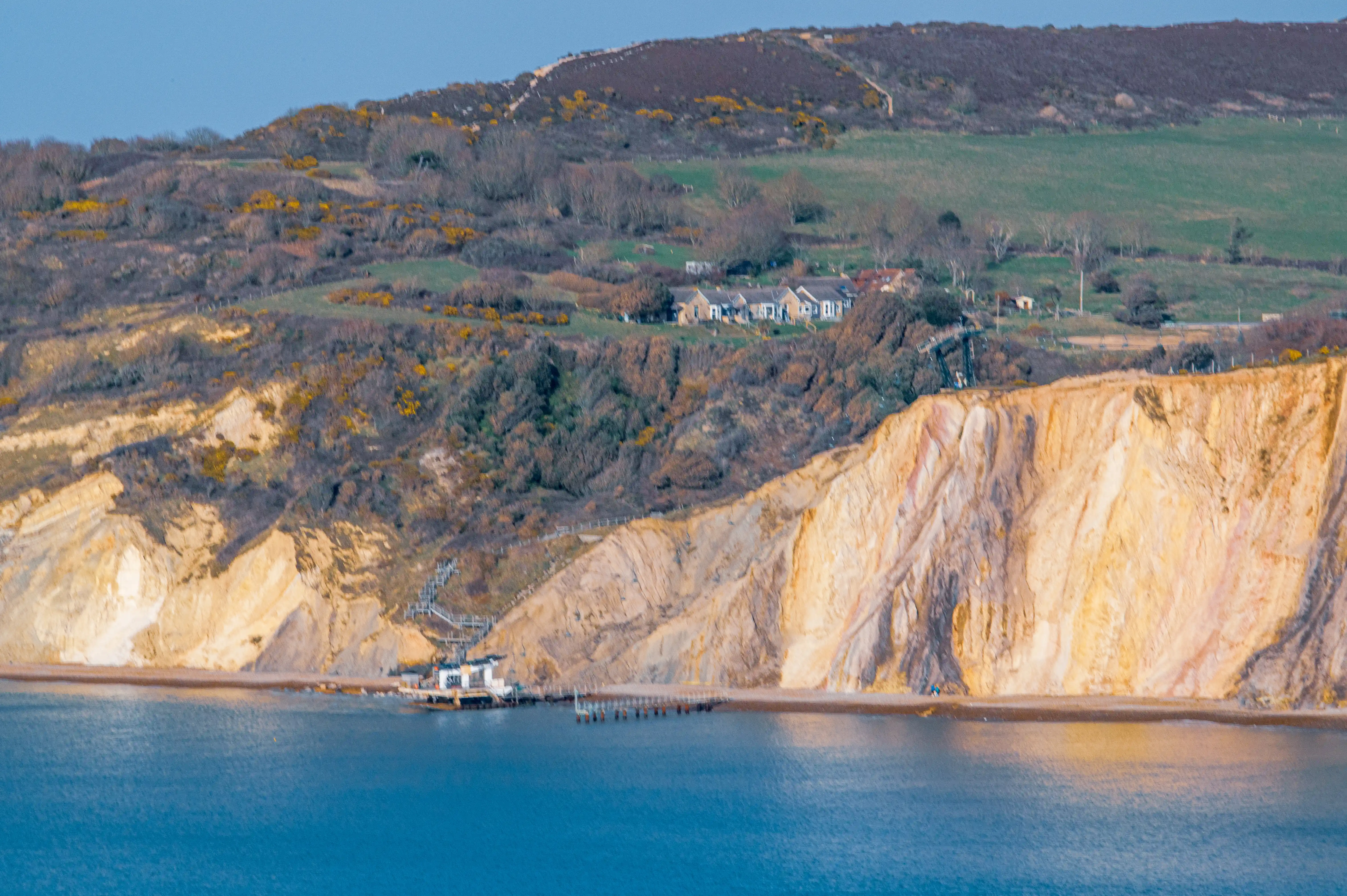
The image depicts a coastal landscape featuring prominent chalk cliffs, a beach, and a calm body of water. There are a few buildings situated on the hillside above the cliffs, surrounded by green fields and sparse vegetation. A pathway or staircase is visible descending the cliffs, leading to the beach area. The scene is tranquil, with gentle lighting suggesting either early morning or late afternoon.
Alum Bay and Totland Bay ‐ 
photo by ,
©www.mgaylard.co.uk.
The image depicts a coastal landscape featuring steep, white cliffs that meet a calm body of water. The cliffs are layered with sedimentary rock, showcasing various shades of white and light brown. Above the cliffs, there is a rolling landscape of green hills and fields, dotted with a few buildings and houses. The scene is likely captured during the daytime, given the clear sky and the sunlight illuminating the cliffs and the water. The overall setting suggests a serene and picturesque natural environment.
Alum Bay and Totland Bay ‐ 
photo by ,
©www.mgaylard.co.uk.
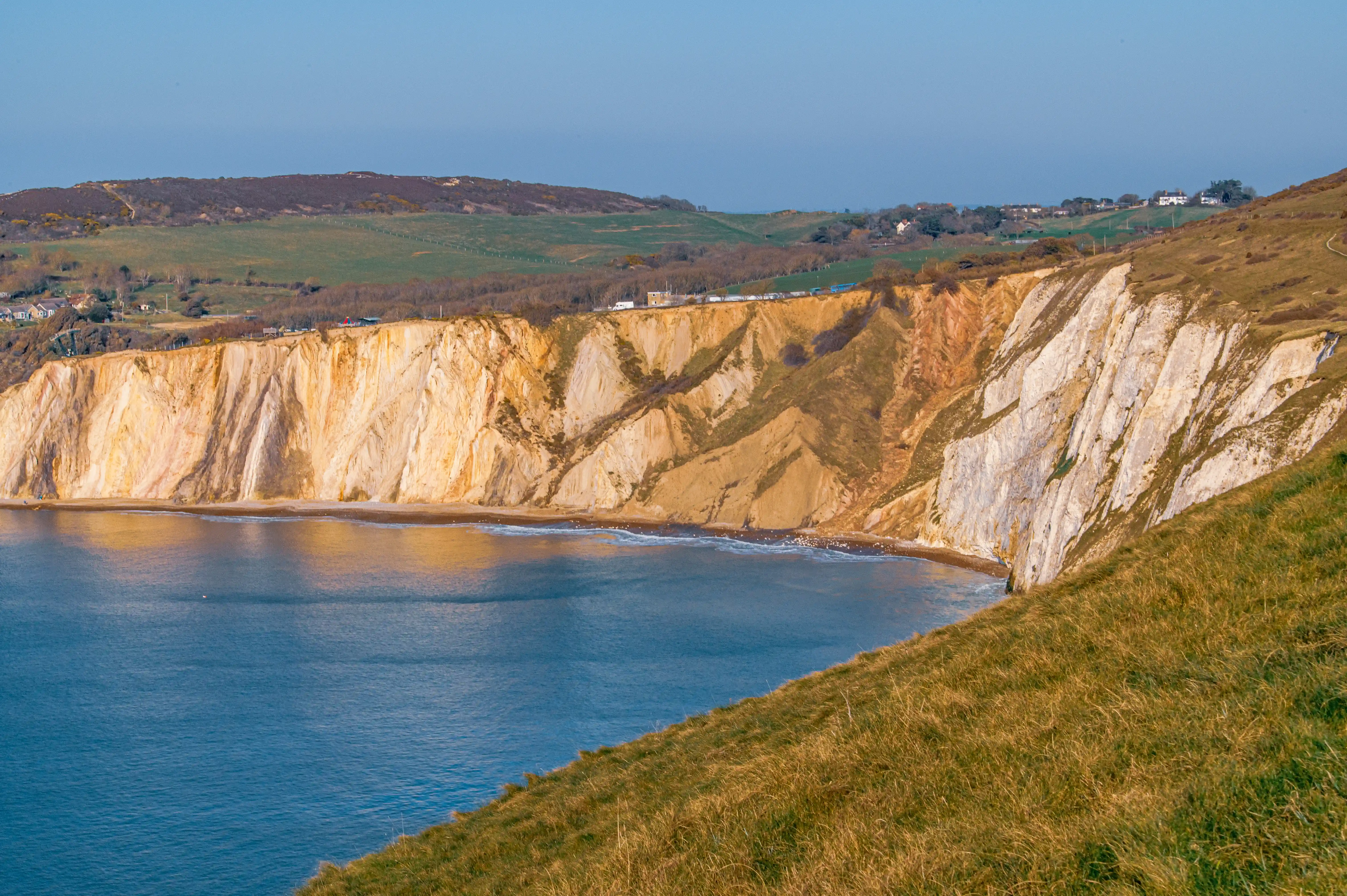
The image depicts a coastal scene with a prominent cliff extending into the sea. The cliff is composed of layered sedimentary rock, and there is a small beach at its base. The water is calm and reflects the warm light, suggesting it might be early morning or late afternoon. In the background, there are some buildings and greenery atop the cliff, and the horizon shows a distant landmass across the water.
Alum Bay and Totland Bay ‐ 
photo by ,
©www.mgaylard.co.uk.
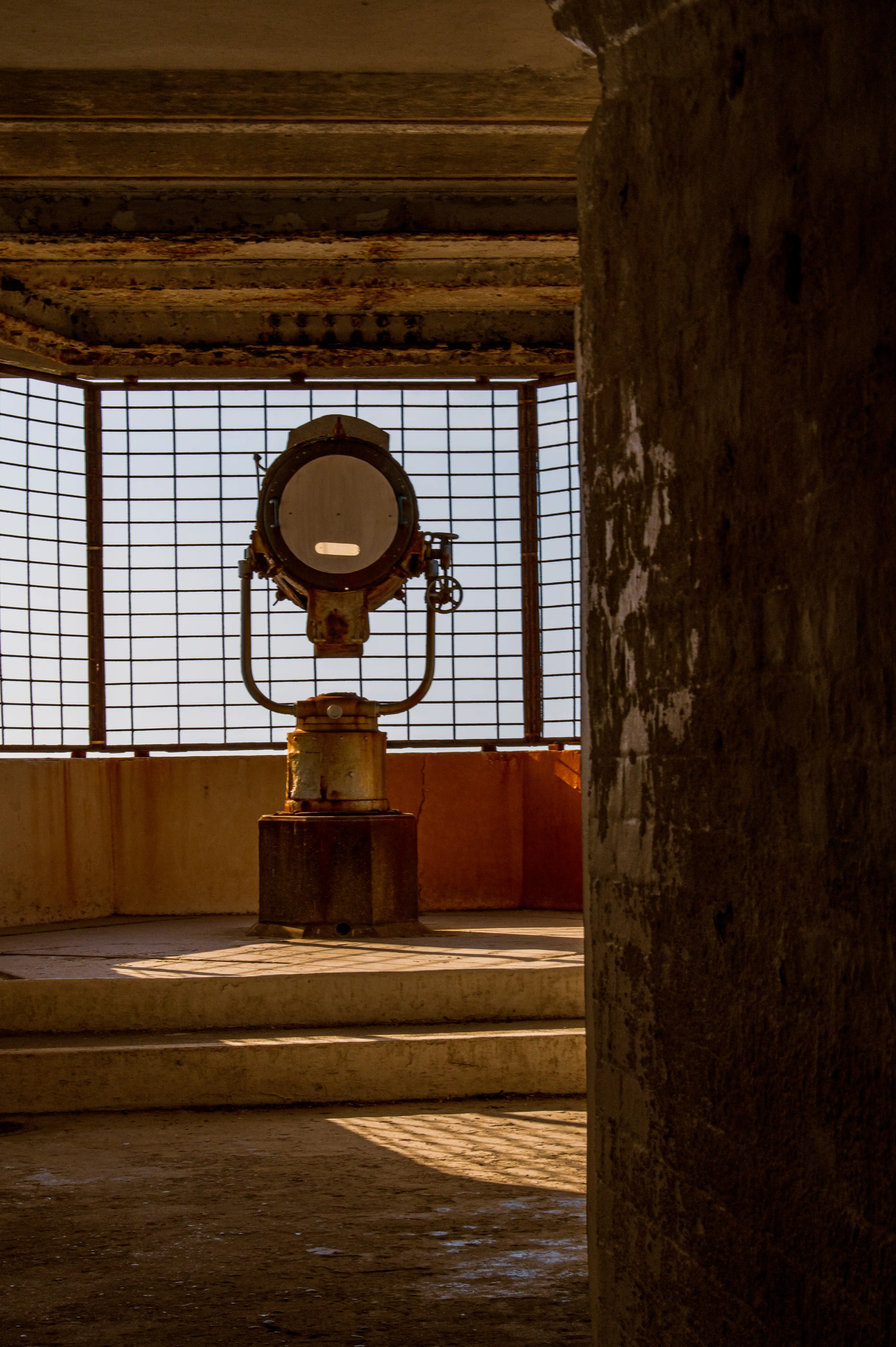
The image depicts an interior scene of what appears to be an old, possibly abandoned structure. A large searchlight or similar apparatus is centrally positioned, aimed towards a window with a grid pattern. The setting suggests an industrial or military context, with worn and weathered surfaces indicating age and disuse. Light streams in through the window, casting shadows and highlighting the textures of the walls and floor.
The Needles Old Battery ‐ 
photo by ,
©www.mgaylard.co.uk.
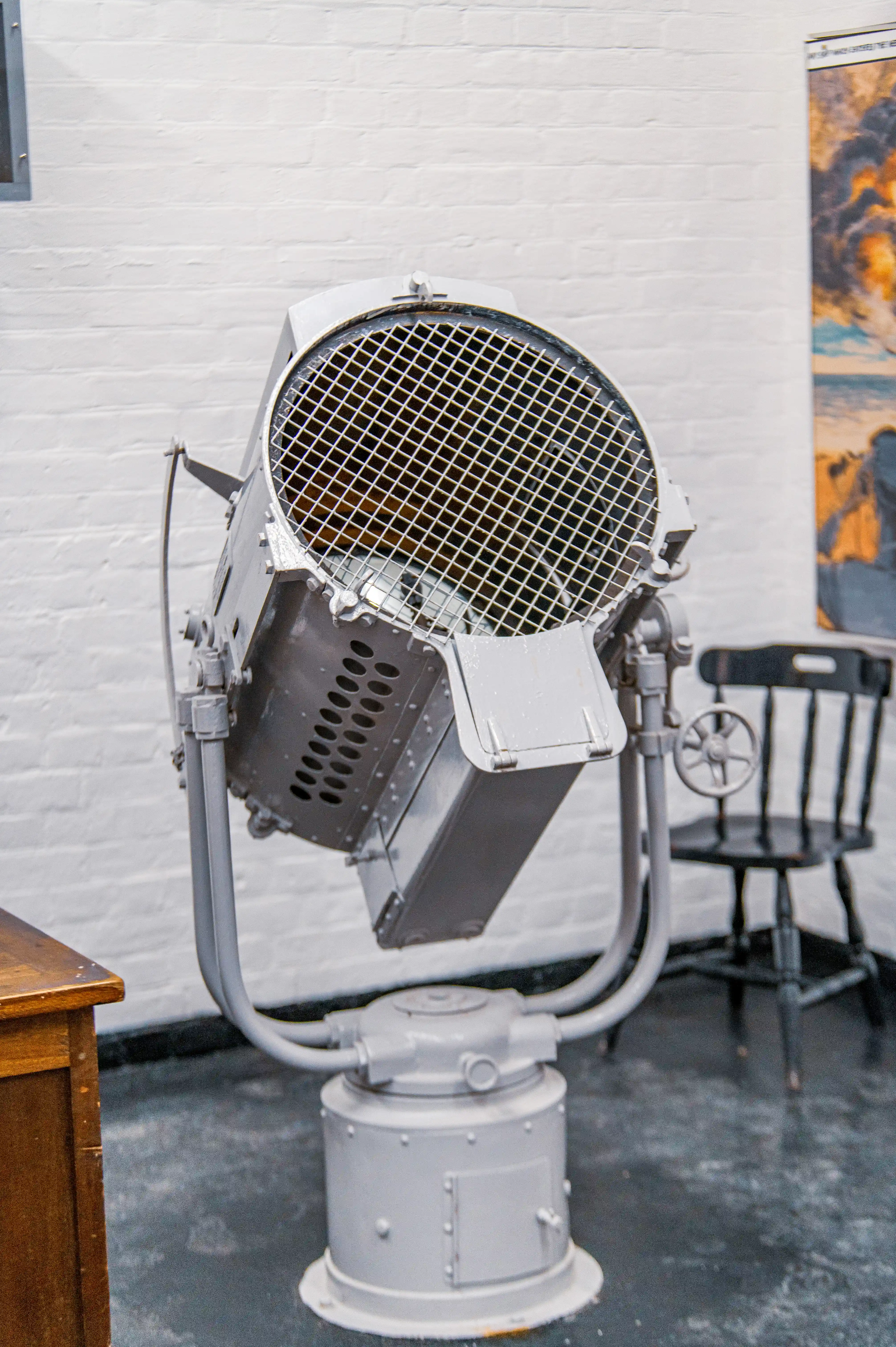
The image depicts a large, vintage searchlight mounted on a cylindrical base. The searchlight is positioned indoors, against a white brick wall. A wooden chair is visible to the right of the searchlight, and a wooden table is partially visible on the left. The setting appears to be a museum or historical display area.
AA Searchlight ‐ 
photo by ,
©www.mgaylard.co.uk.
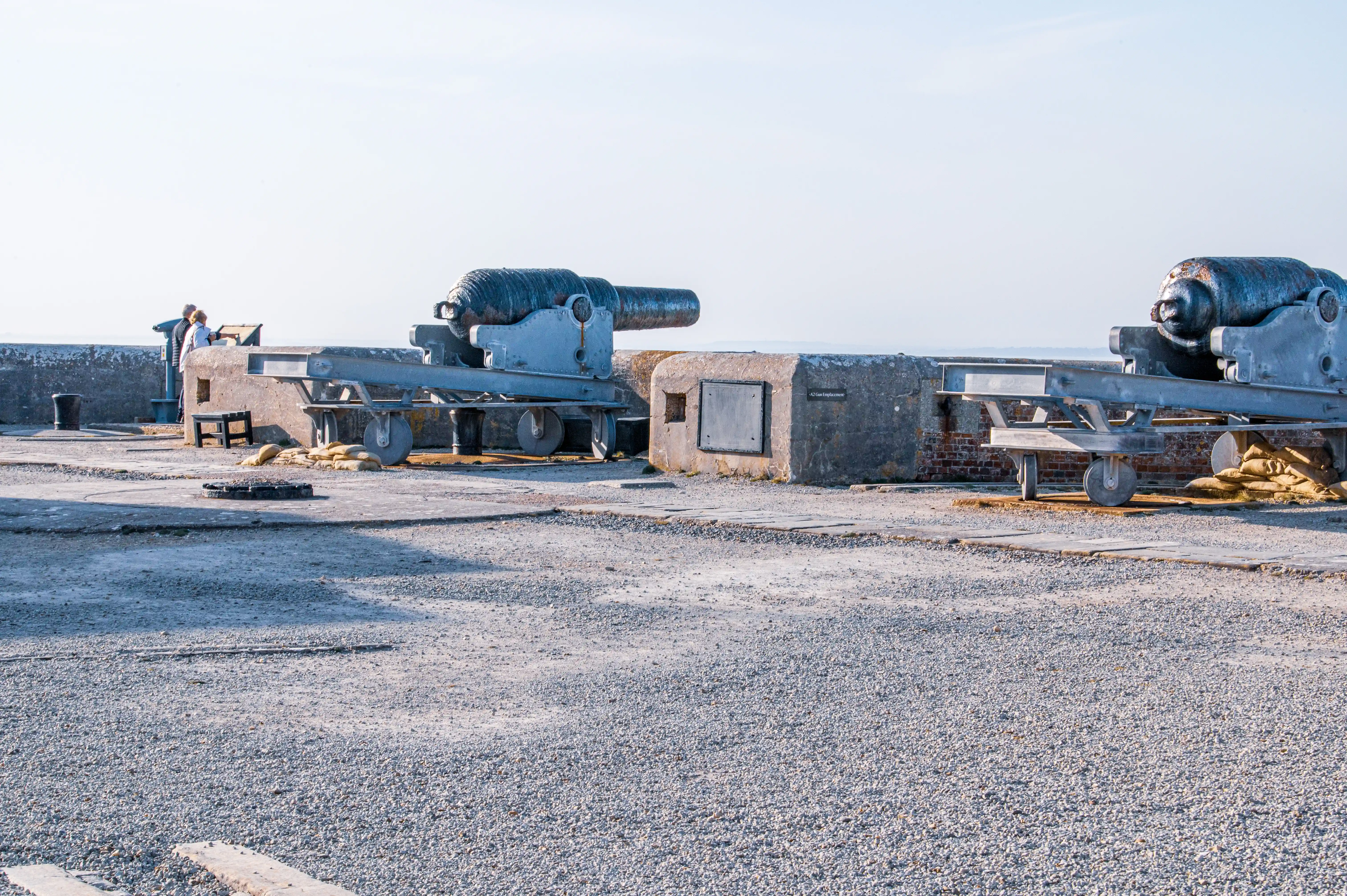
The image depicts a historical site featuring two large cannons mounted on metal carriages. The cannons are positioned on a gravel surface near a stone and brick structure, likely part of an old fort or battery. Two people are seen near the left cannon, possibly observing or taking photographs. The scene is set on a clear day with a bright sky, suggesting it is a well-preserved historical or tourist site.
Yarmouth Harbour ‐ 
photo by ,
©www.mgaylard.co.uk.
Open the full set flickr button this page

The Needles: Isle of Wight’s Iconic Chalk Sentinels

The Needles are the Isle of Wight’s most iconic natural landmark—three dramatic chalk stacks rising from the sea at the western tip of the island, crowned by the historic 1859 lighthouse. The area is famous for its stunning coastal scenery, coloured sands at Alum Bay, and family-friendly attractions like the chairlift, glassmaking demonstrations, sweet shops, and boat trips that offer close-up views of the rocks and lighthouse. Visitors can also explore the National Trust’s Needles Old Battery (with its military history and panoramic views) or walk the Tennyson Trail for breathtaking cliff-top vista

A Landscape Carved by Time and Tide

The Needles are Hampshire’s most dramatic natural landmark—a striking row of chalk sea stacks that rise like jagged teeth from the turquoise waters off the western tip of the Isle of Wight. These towering pillars, once part of a continuous chalk ridge that stretched all the way to Old Harry Rocks in Dorset, were shaped over millennia by the relentless forces of wind, waves, and erosion. Around 7,000 years ago, the Solent River breached the ridge, creating the Isle of Wight and leaving behind these three remaining stacks (though there were once four—until the 120-foot "Lot’s Wife" stack collapsed in a storm in 1764). The name "Needles" comes from the Old English n?dl, referring to the needle-like shape of the lost stack, and though the remaining rocks are far from slender, the name has endured

A Beacon for Mariners and a Fortress Against Invaders

The Needles have long been a navigational landmark and a symbol of the Isle of Wight’s maritime heritage. The lighthouse, perched on the westernmost stack, was first built in 1785 but was often shrouded in mist. The current lighthouse, constructed in 1859 by Trinity House, stands 33 meters tall and was automated in 1994, though it still guides ships through the treacherous waters of the Solent. Above the stacks, the clifftop batteries—Needles Old Battery and New Battery—were built in the 1860s to defend against French and later German threats. These Victorian forts, now cared for by the National Trust, offer breathtaking views of the stacks and the lighthouse, as well as a glimpse into the island’s military past, including their role in both World Wars

A Playground for Explorers and Dreamers

Today, the Needles are one of the Isle of Wight’s most beloved attractions. Visitors can take a scenic boat trip from Alum Bay, gliding past the stacks and the lighthouse for unforgettable photo opportunities, or ride the chairlift down to the colorful sands of Alum Bay, where the cliffs reveal layers of colored sandstone. The Needles Landmark Attraction includes interactive exhibits, a glassmaking demonstration (a nod to the island’s historic glass industry), and even the chance to fill a souvenir vial with the bay’s famous multi-colored sands. For walkers, the clifftop paths offer panoramic views of the stacks, the lighthouse, and the English Channel, while the Old Battery’s tunnels and gun emplacements provide a hands-on history lesson

A Symbol of the Isle of Wight

The Needles are more than just a geological wonder—they are the emblem of the Isle of Wight, featured on postcards, souvenirs, and even the island’s flag. Their dramatic beauty, rich history, and wealth of visitor experiences make them a must-see for anyone exploring the island. Whether you’re drawn by the geology, the lighthouse’s story, the military history, or simply the sheer spectacle of these chalk giants, the Needles offer an experience that is as unforgettable as it is iconic

References

www.nationaltrust.org.uken.wikipedia.orgwww.amusingplanet.comwww.theneedles.co.ukwww.bbc.co.uk , Text generated by Microsoft CoPilot

Yarmouth

Isle of Wight,   United Kingdom

Yarmouth is a picturesque coastal town located on the northwestern tip of the Isle of Wight. Known for its historic harbor, maritime heritage, and stunning views across the Solent, Yarmouth is a popular destination for visitors seeking a mix of history, natural beauty, and relaxation. The town features a well-preserved Tudor castle, a bustling pier, and a variety of independent shops, cafés, and restaurants. With its scenic walks, sailing opportunities, and proximity to the island’s famous landmarks, Yarmouth offers a delightful experience for all ages.
This image captures a lovely, sunlit scene featuring a ferry sailing on calm blue water, with a long wooden pier stretching into the distance. The pier, with its white railing and lampposts, offers a charming perspective, and the wooden planks are inscribed with names, suggesting a memorial or dedications. The
Sunny Day at the Pier with a Ferry ‐ 
photo by ,
©www.mgaylard.co.uk.
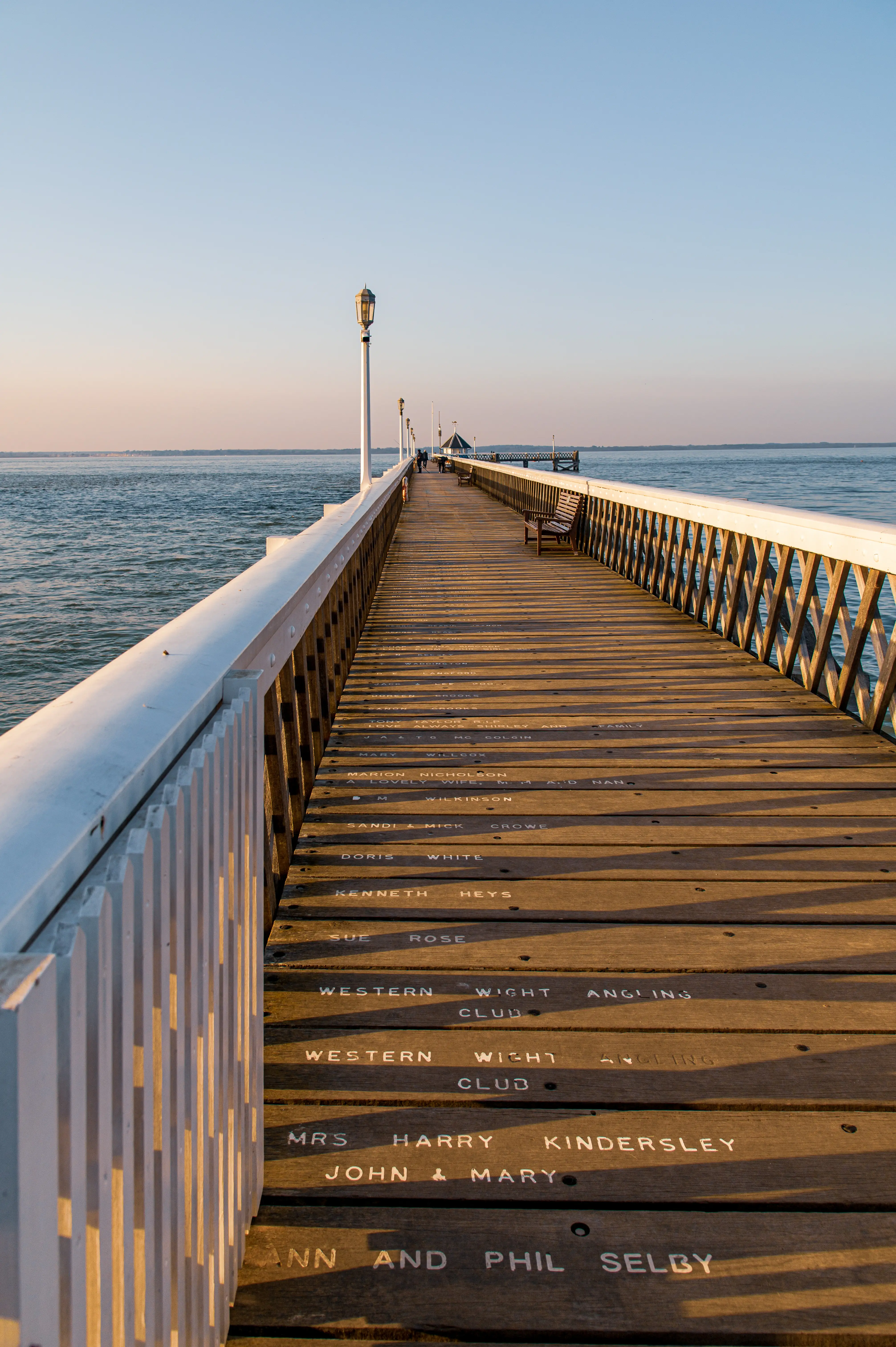
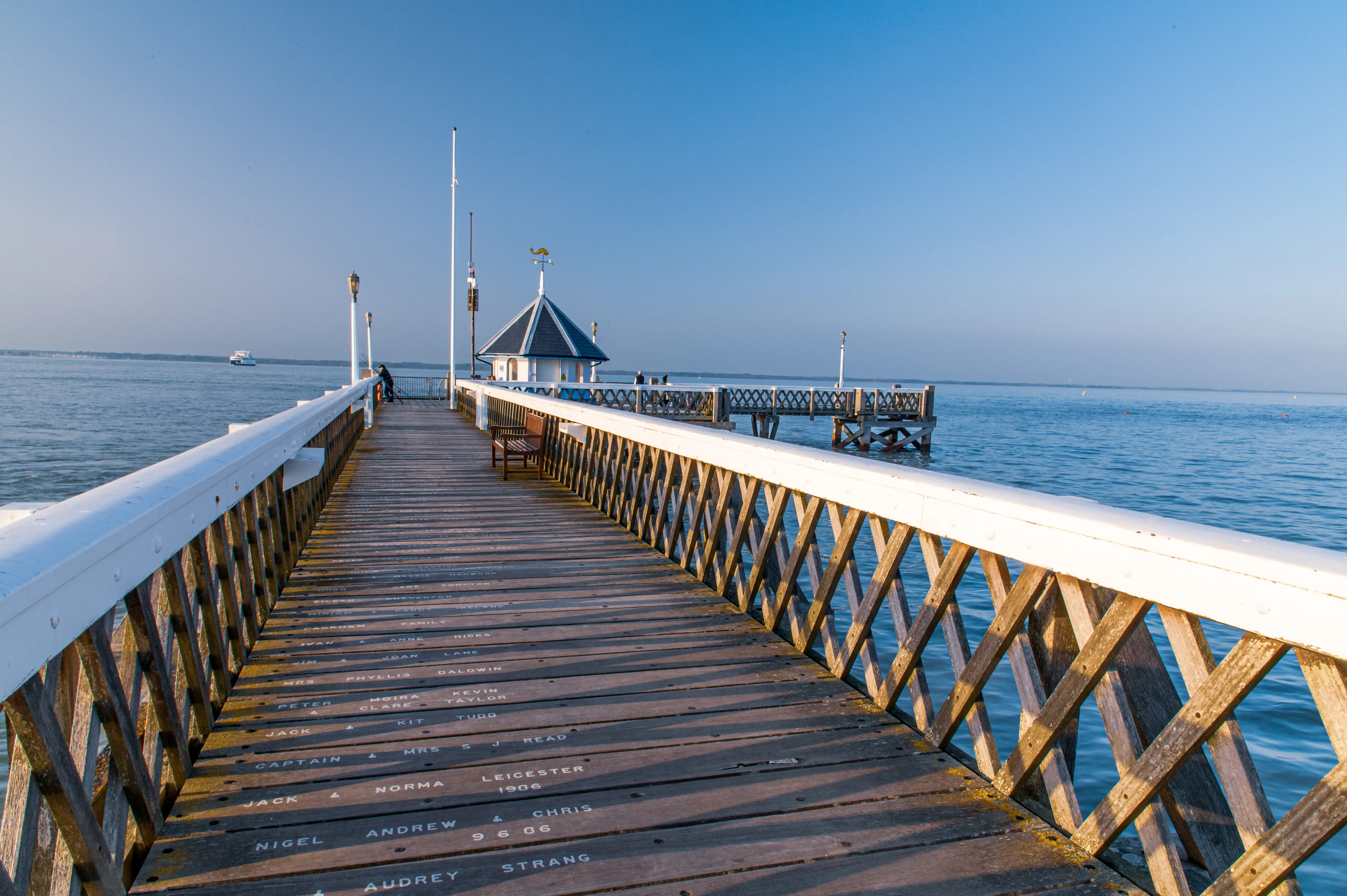
The image depicts a long wooden pier extending into a body of water, likely a sea or lake. The pier has a white railing on the left side and wooden benches along its length. Names and inscriptions are carved into the wooden planks of the pier. The scene is set during what appears to be either sunrise or sunset, with calm water and a clear sky in the background.
Yarmouth Pier ‐ 
photo by ,
©www.mgaylard.co.uk.
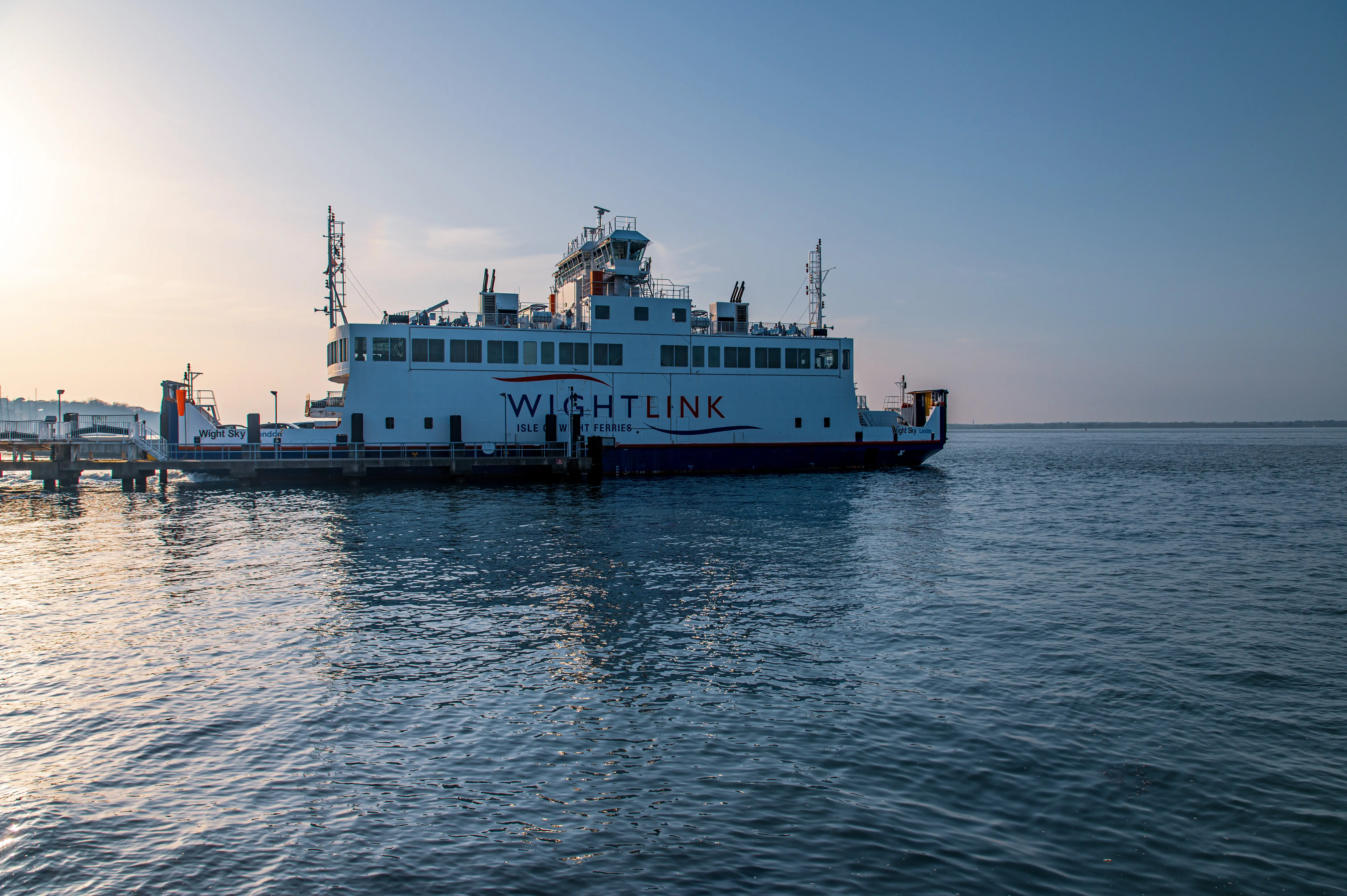
The image depicts a Wightlink ferry docked at a port during what appears to be either sunrise or sunset. The ferry is branded with the name 'Wightlink' and 'Isle of Wight Ferries.' The vessel is equipped with various antennas and equipment on its top deck, and it is connected to the dock via a boarding ramp. The water is calm, and the sky has a gradient of colors, indicating the time of day.
Isle of Wight Ferries ‐ 
photo by ,
©www.mgaylard.co.uk.
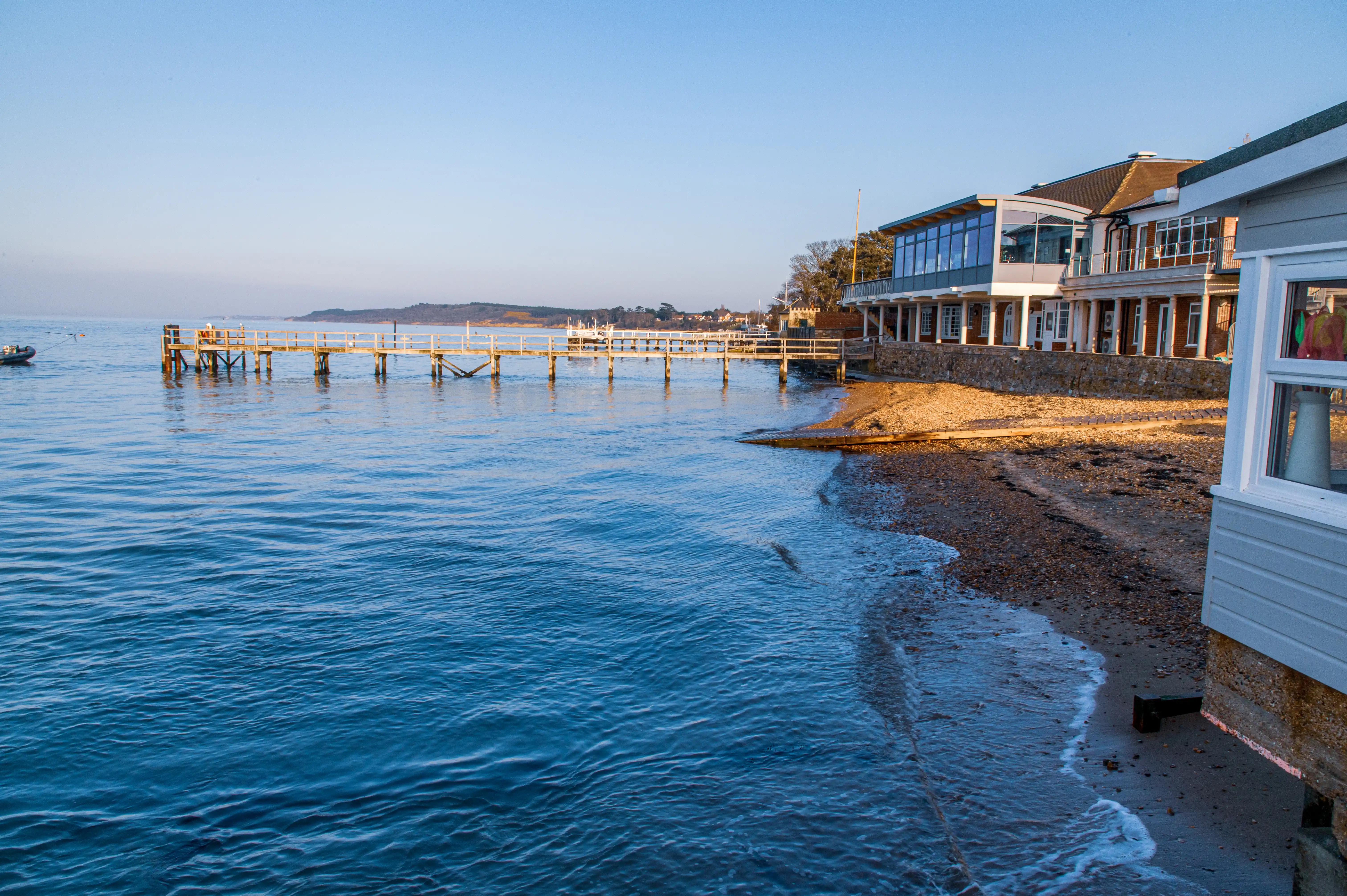
The image depicts a serene waterfront scene with a building complex situated along the shoreline. The complex includes modern architecture with large windows and a balcony, adjacent to a wooden pier extending into the calm water. The beach in the foreground has gentle waves lapping against the shore, and the overall atmosphere is tranquil with clear skies and distant landforms visible on the horizon.
Royal Solent Yacht Club ‐ 
photo by ,
©www.mgaylard.co.uk.
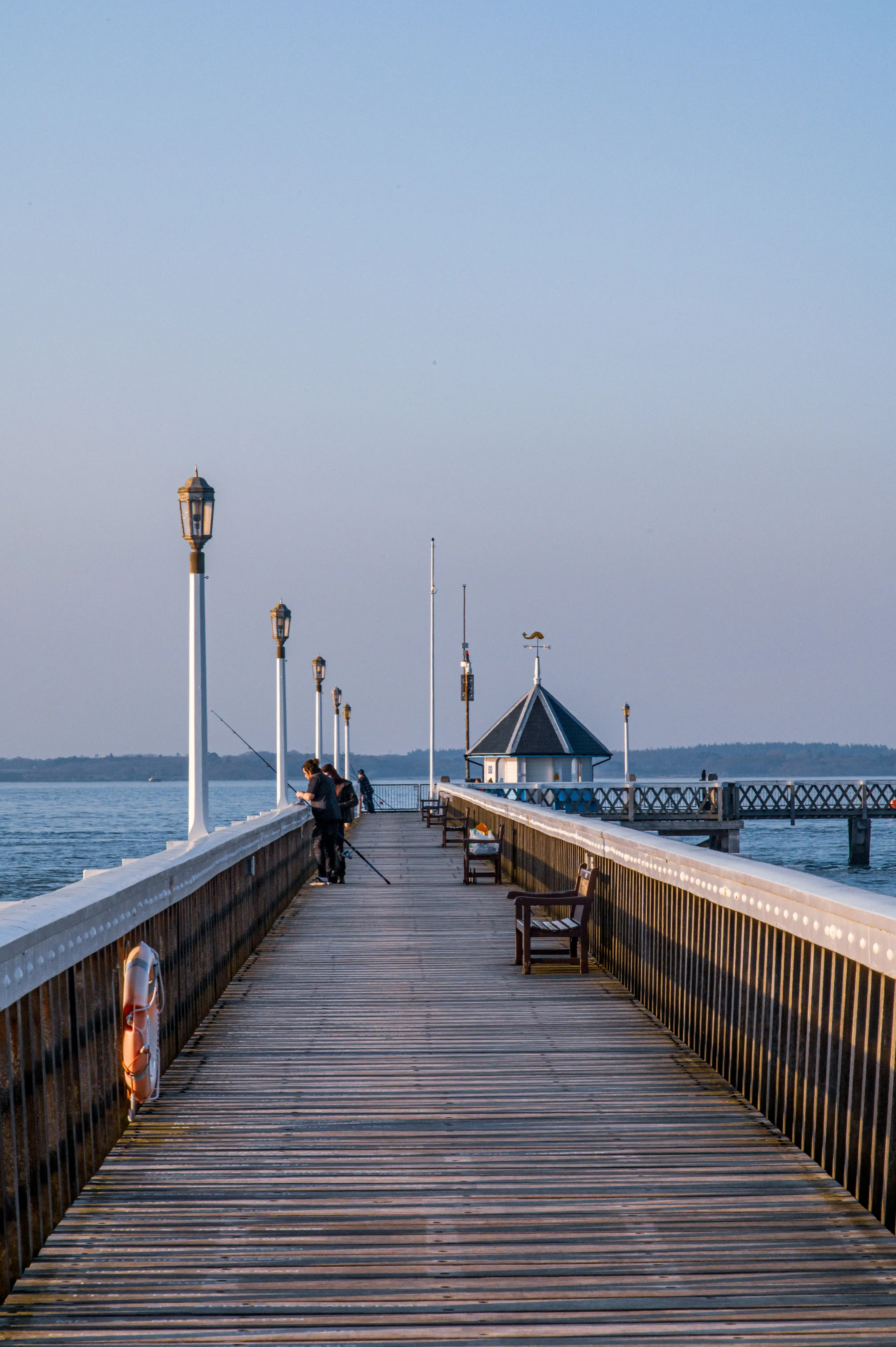
The image depicts a serene scene of a long wooden pier extending into a calm body of water. The pier is lined with vintage-style street lamps and has a few benches along its length. A small gazebo-like structure is visible at the end of the pier, and a few people are seen fishing. The sky is clear, and the overall atmosphere is tranquil and picturesque.
The End Of The Pier ‐ 
photo by ,
©www.mgaylard.co.uk.
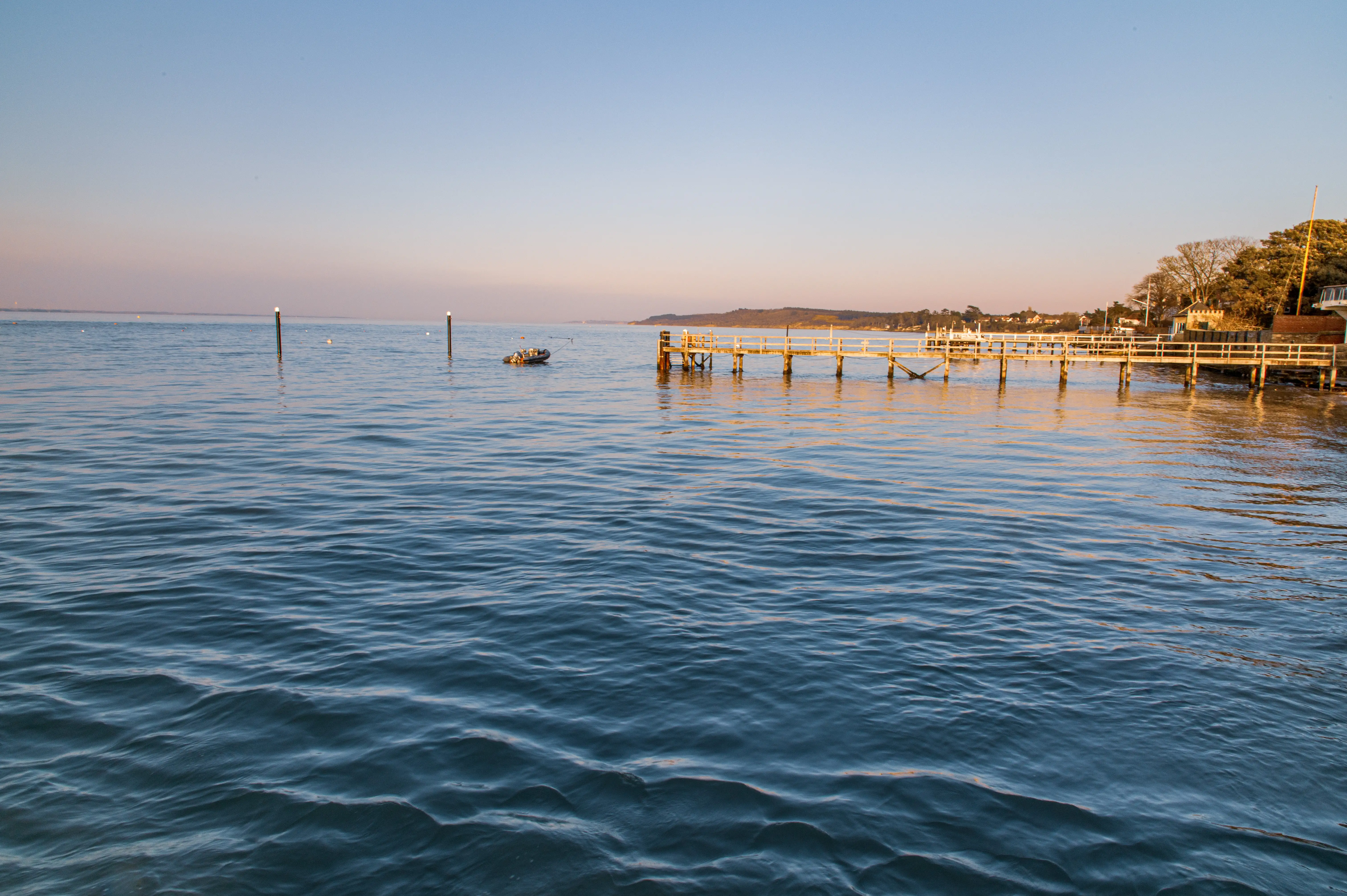
The image depicts a serene waterfront scene during what appears to be either sunrise or sunset. A wooden pier extends into calm waters, and a small boat is visible near the pier. The horizon shows a distant shoreline, and the sky is painted with soft hues of orange and blue. The overall atmosphere is tranquil and picturesque.
Royal Solent Yacht Club ‐ 
photo by ,
©www.mgaylard.co.uk.
The image depicts a serene seascape during what appears to be either dawn or dusk, characterized by a calm body of water. Several buoys of different colors, including yellow and red, are scattered across the water. The horizon is visible in the distance, with a faint outline of land or buildings. The sky exhibits a gradient of soft pastel colors, transitioning from light pink to a pale blue, suggesting a tranquil and peaceful atmosphere.
Royal Solent Yacht Club ‐ 
photo by ,
©www.mgaylard.co.uk.
The image depicts a serene scene of a wooden pier extending into calm waters during sunset. The pier is lined with benches and lampposts, leading towards a distant shore with buildings and trees. The sky is clear with a gradient of warm colors, suggesting the end of the day. The overall atmosphere is peaceful and inviting, characteristic of a tranquil waterfront area.
Yarmouth Harbour ‐ 
photo by ,
©www.mgaylard.co.uk.
The image depicts a long wooden pier extending into a body of water, likely the ocean or a large lake. The pier has a white railing and is adorned with names inscribed on the wooden planks. There is a small gazebo-like structure with a pointed roof situated on the pier. The sky is clear and blue, indicating a sunny day, and the water appears calm. A few people can be seen on the pier, enjoying the serene environment.
Yarmouth Pier ‐ 
photo by ,
©www.mgaylard.co.uk.
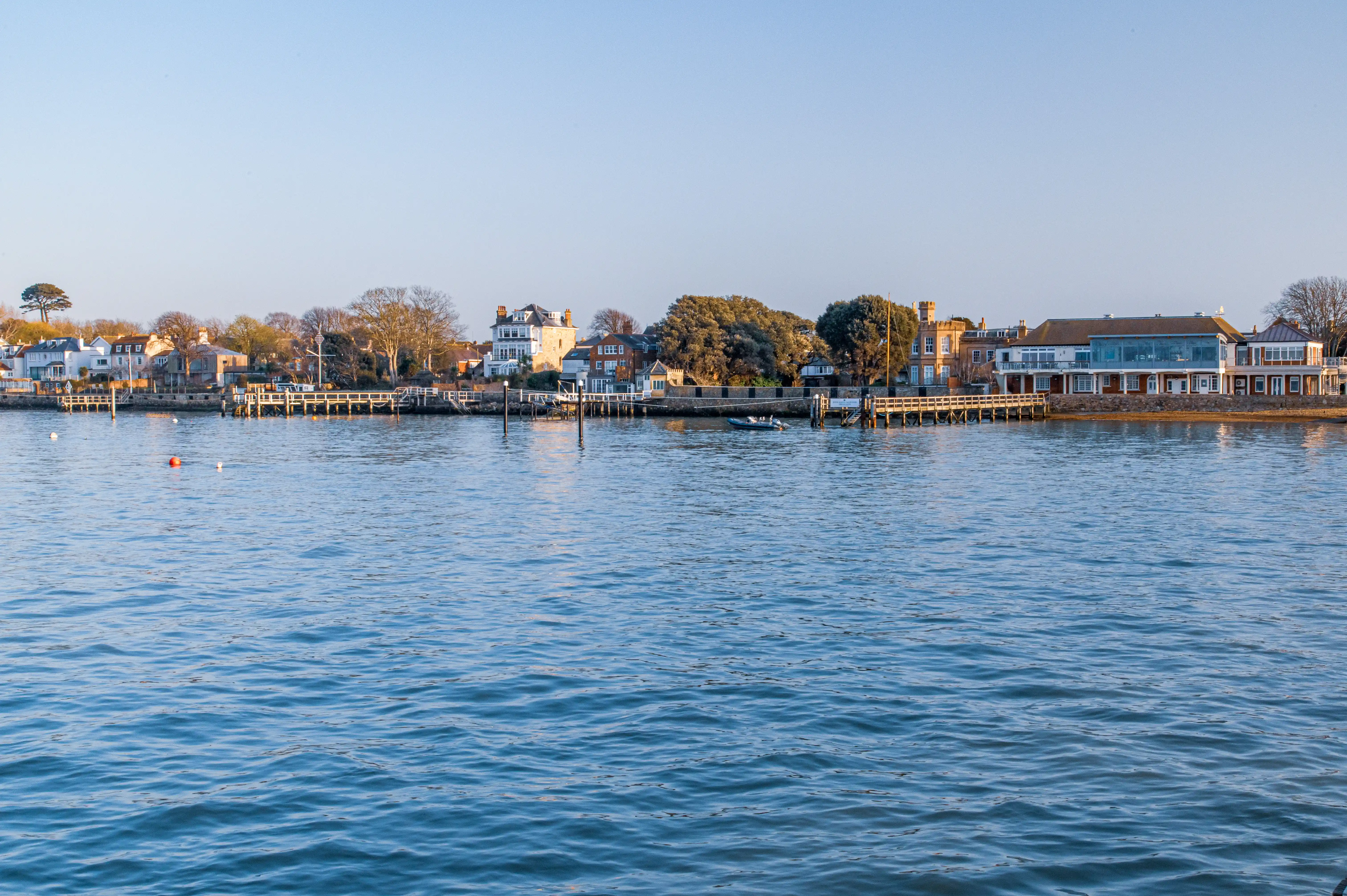
The image depicts a serene waterfront scene with a variety of residential buildings and houses lining the shore. There is a wooden pier extending into the water, and a small boat is visible near the pier. The water is calm, reflecting the clear sky above. The overall atmosphere is peaceful, suggesting a quiet, possibly coastal town.
Royal Solent Yacht Club ‐ 
photo by ,
©www.mgaylard.co.uk.
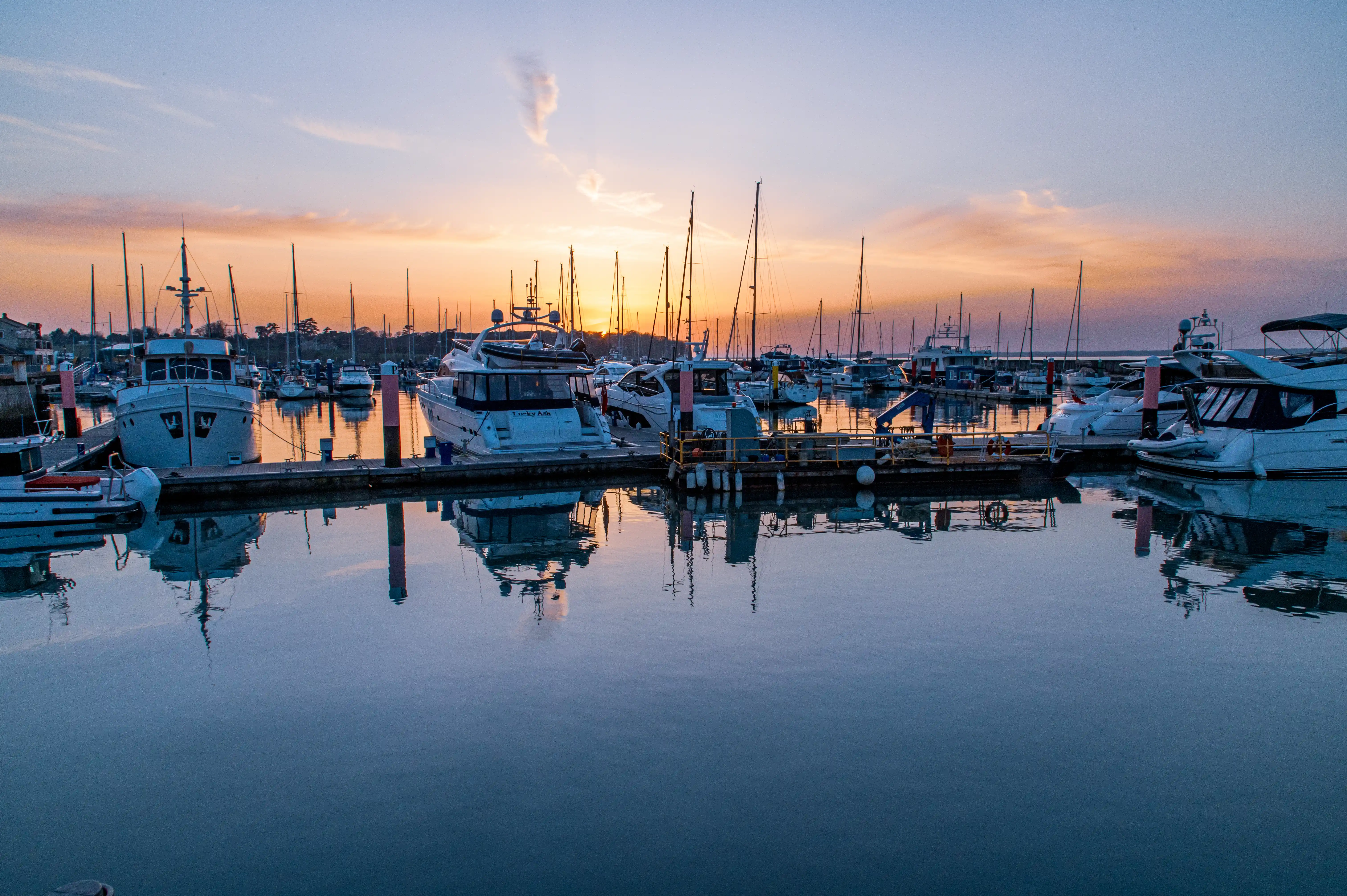
The image depicts a serene marina at sunset. Several boats and yachts are docked in calm water, creating a peaceful reflection. The sky is painted with hues of orange and pink, indicating the sun is setting. The masts of the boats are silhouetted against the colorful sky, adding to the tranquil ambiance of the scene.
Yarmouth Harbour ‐ 
photo by ,
©www.mgaylard.co.uk.
The image depicts a serene marina at sunset, with several boats docked in calm water. The sky is painted with hues of orange and purple, reflecting beautifully on the water's surface. The boats vary in size and type, and their reflections create a mirror-like effect. The overall scene conveys a peaceful and tranquil atmosphere, typical of a quiet evening at a harbor.
Yarmouth Harbour ‐ 
photo by ,
©www.mgaylard.co.uk.
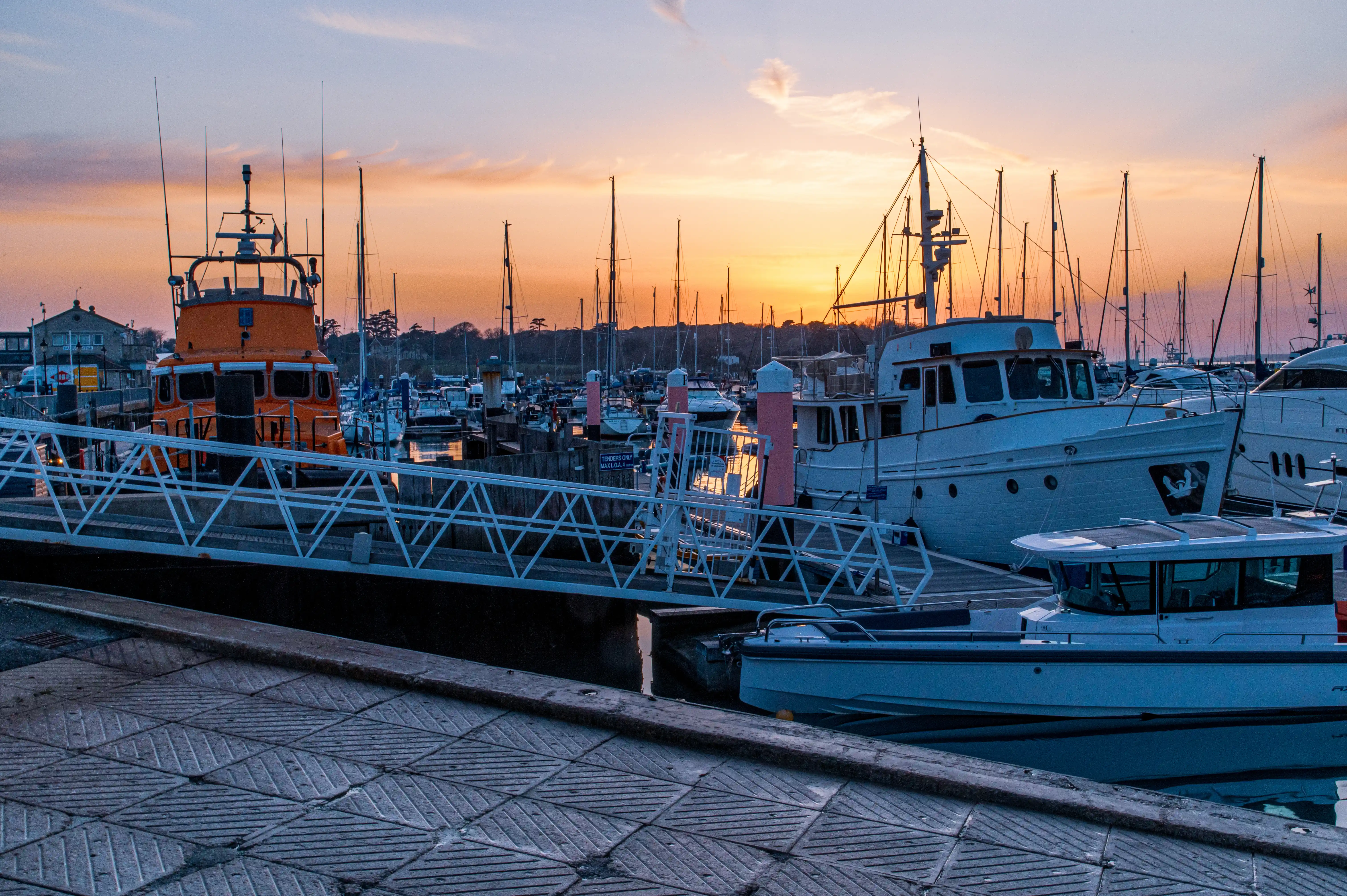
The image depicts a serene marina at sunset. Various boats and yachts are docked, with their masts silhouetted against the colorful sky. A prominent orange boat is visible on the left side of the image. The scene is calm and picturesque, with the setting sun casting a warm glow over the entire harbor.
Yarmouth Harbour ‐ 
photo by ,
©www.mgaylard.co.uk.
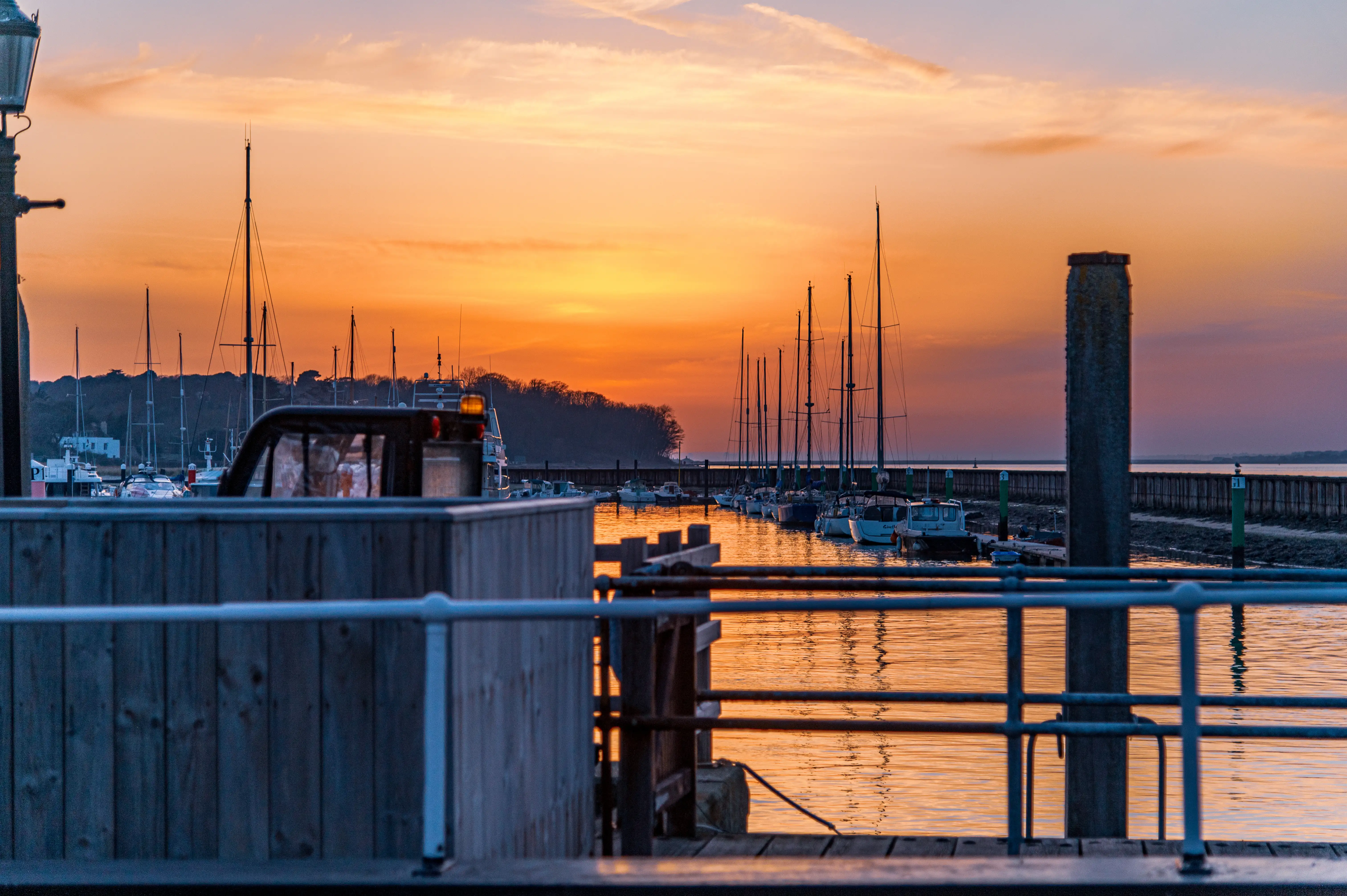
The image depicts a serene marina at sunset. The sky is painted with hues of orange and yellow, reflecting on the calm water. Several sailboats and yachts are docked in the harbor, their masts silhouetted against the vibrant sky. The foreground features a wooden railing and a partially visible vehicle, adding a touch of everyday life to the tranquil scene.
Yarmouth Harbour ‐ 
photo by ,
©www.mgaylard.co.uk.
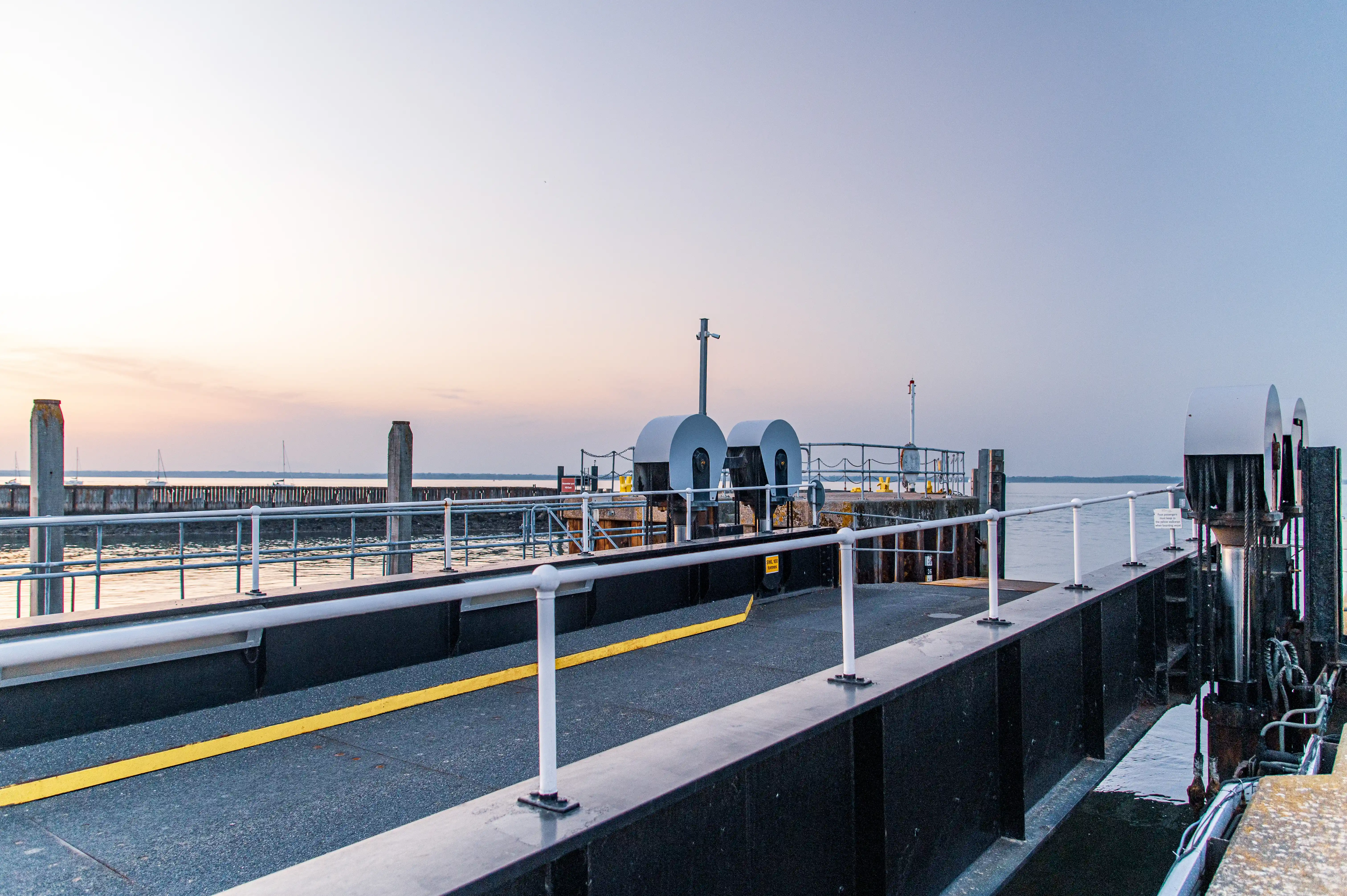
The image depicts a dock or pier extending into a body of water during what appears to be either dawn or dusk. The dock is equipped with railings and various mechanical structures, likely used for mooring boats. The sky is clear with a soft gradient from light to darker hues, suggesting calm weather conditions. The water is relatively calm, with a few distant sailboats visible on the horizon.
Yarmouth Harbour ‐ 
photo by ,
©www.mgaylard.co.uk.
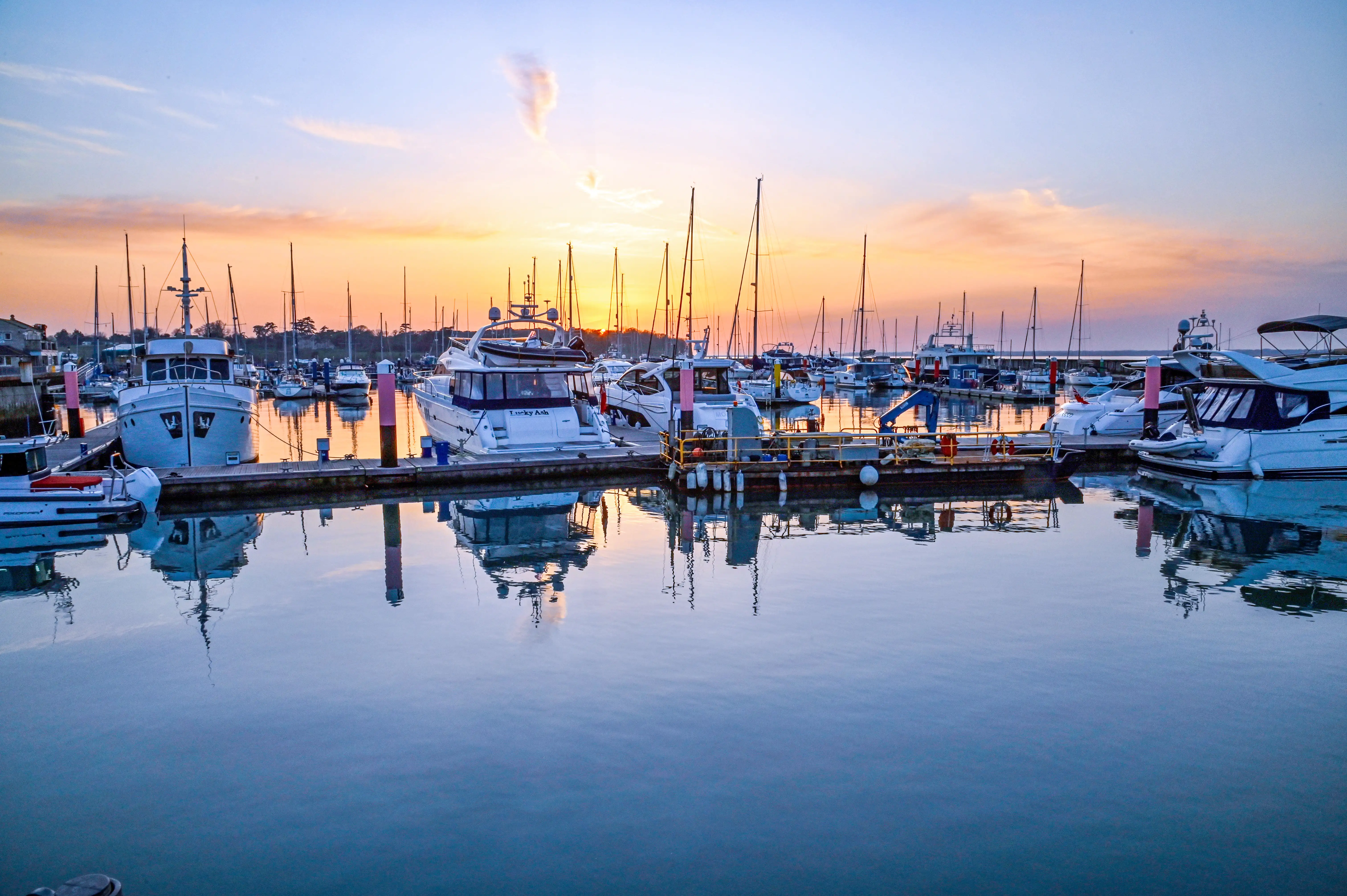
The image depicts a serene marina at sunset. Several boats and yachts are docked in calm waters, creating a picturesque reflection. The sky is painted with hues of orange and pink, indicating the sun is setting. The scene is tranquil and visually appealing, showcasing the beauty of the marina during the evening.
Yarmouth Harbour ‐ 
photo by ,
©www.mgaylard.co.uk.
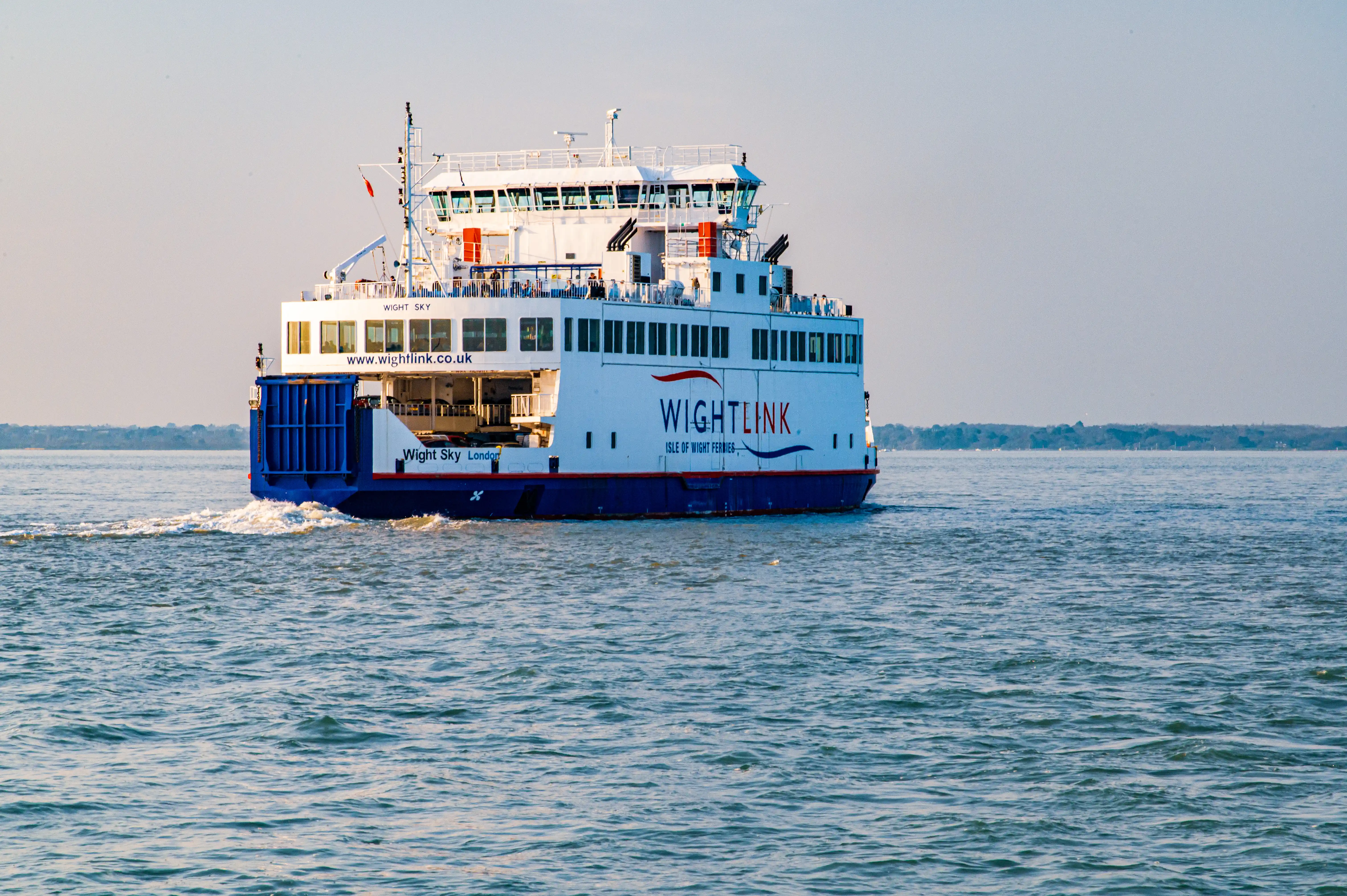
The image shows the Wightlink ferry, Wight Sky, sailing through calm blue waters. The ferry, predominantly white with a blue hull and red accents, displays WIGHTLINK ISLE OF WIGHT FERRIES on its side, along with the website www.wightlink.co.uk. The vessel is moving away from the viewer, creating a wake in its path. In the background, a tree-lined coastline is visible under a clear, pale sky.
Wightlink Ferry Underway ‐ 
photo by ,
©www.mgaylard.co.uk.
Open the full set flickr button this page

Yarmouth, Isle of Wight: A Historic Harbour Gem

Yarmouth is a charming historic harbour town on the northwest coast of the Isle of Wight, known for its picturesque pier, 16th-century Yarmouth Castle (built by Henry VIII), and quaint cobbled streets lined with independent shops, cafés, and pubs. The town serves as the gateway to West Wight’s Area of Outstanding Natural Beauty, offering easy access to The Needles, Tapnell Farm, Fort Victoria Country Park, and scenic coastal walks, as well as ferry links to Lymington

A Town Forged by Time and Tide

Yarmouth is the oldest town on the Isle of Wight, a charming harbour settlement where history and the sea are inseparable. Its story begins over a thousand years ago, with the first recorded mention in 991 AD, when King Æthelred the Unready documented it as Eremue—Old English for "muddy estuary." But it was the Normans who truly shaped Yarmouth, laying out its grid-like streets and granting it England’s first Isle of Wight town charter in 1135. This made Yarmouth a strategic port, a market hub, and later, a parliamentary borough until the 19th century. The town’s medieval walls, four gates, and bustling quayside made it a vital link between the island and the mainland, a role it still plays today as the gateway for ferries from Lymington

Castles, Kings, and Swashbuckling Tales

Yarmouth’s most striking landmark is its 16th-century castle, built by Henry VIII in 1547 as part of his coastal defenses against French and Spanish threats. This arrowhead-shaped fort, now cared for by English Heritage, was one of the first of its kind in Britain and stands as a testament to Tudor military engineering. The town’s maritime heritage runs deep: it was here that Charles I was held before his imprisonment in Hurst Castle, and where the swashbuckling Admiral Sir Robert Holmes—a 17th-century privateer and Governor of the Isle of Wight—entertained King Charles II three times. Holmes’ grand house, built beside the castle, is long gone, but his statue still watches over the harbour, a reminder of Yarmouth’s golden age of sail and smuggling

A Harbour of Character and Charm

Today, Yarmouth is a picturesque blend of history and modern life. Its harbour, lined with fishing boats, yachts, and the Wightlink ferry, is the beating heart of the town. The quayside is dotted with independent shops, pubs, and cafés, including the famous George inn, which has welcomed sailors and travelers since the 17th century. The Yarmouth Pier, with its tidal mill and lighthouse, is a perfect spot to watch the ferries come and go or to enjoy locally caught seafood. For those who love the outdoors, Yarmouth is the starting point for the Isle of Wight Coastal Path and the scenic "Needles Breezer" bus route, which winds along the cliffs to Alum Bay and the Needle

Why Yarmouth Captivates

Yarmouth may be the second smallest town in England, but its history, harbour, and hospitality make it unforgettable. Whether you’re exploring the castle, strolling the cobbled streets, or simply watching the sunset over the Solent, Yarmouth offers a slice of island life that’s as rich in stories as it is in scenic beauty. It’s a place where the past is alive in every brick and wave—a true jewel of the Isle of Wight
References

en.wikipedia.orgwww.visitisleofwight.co.ukwww.yarmouth-harbour.co.uk , Text generated by Mistral AI
To the top
Powered by w3.css. The images are all stored on link to www.gaylard.co.uk Photostream on Flickr   This website is hosted by link to 123Reg Web Hosting