HOME

Hangar 5 (the Bomber Hall), RAF Museum Hendon

Hangar 5 (the Bomber Hall)

Grahame Park Way1HendonLondon,   United Kingdom

Hangar 5 at the RAF Museum Hendon is dedicated to bombers and reconnaissance aircraft, highlighting the Royal Air Force’s strategic and operational history. This hangar features a collection of iconic aircraft that played pivotal roles in major conflicts, including World War II and the Cold War. Visitors can explore the technological advancements and historical significance of these aircraft, which were crucial to the RAF’s missions.
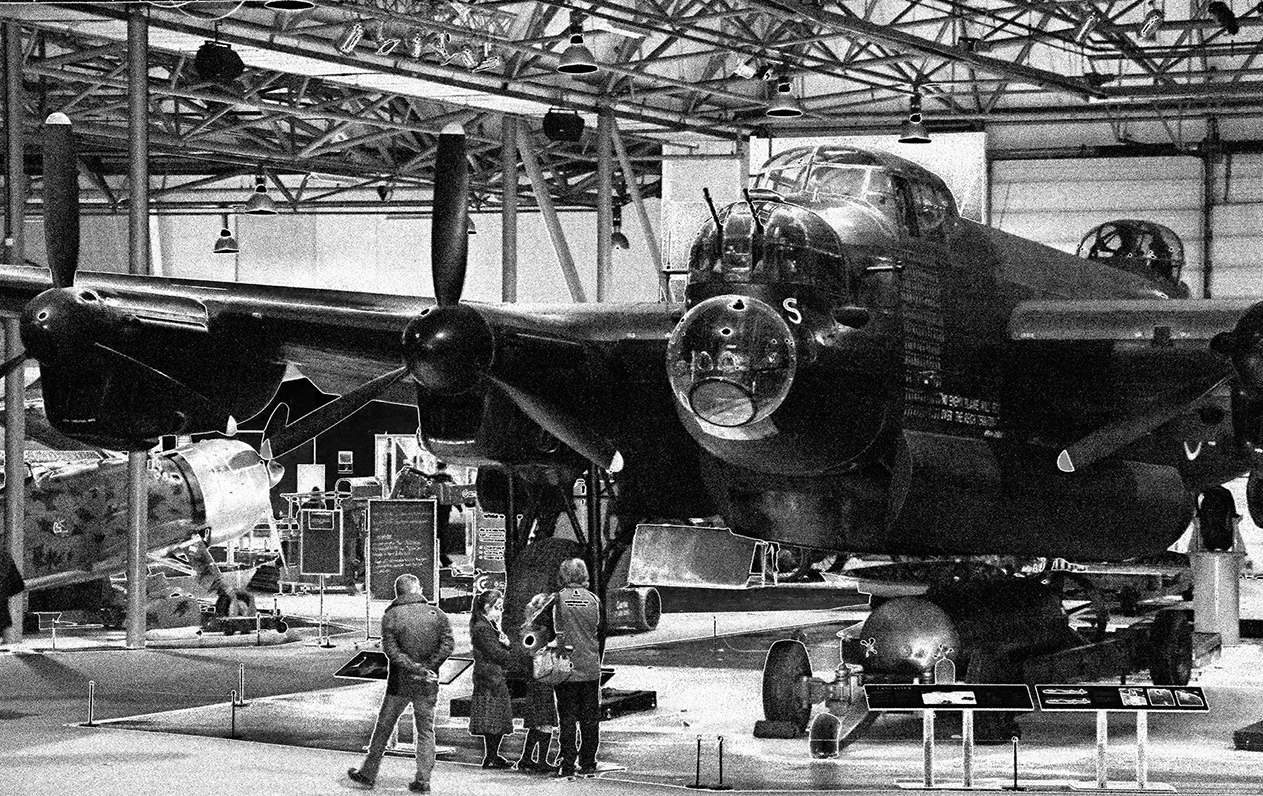
The image depicts an aviation museum exhibit featuring a large, historic bomber aircraft. The aircraft is displayed indoors, with several people observing and discussing it. The museum setting includes other aircraft and informational displays, suggesting an educational environment focused on aviation history.
Avro 683 Lancaster B ‐ photo by ,
©www.mgaylard.co.uk.
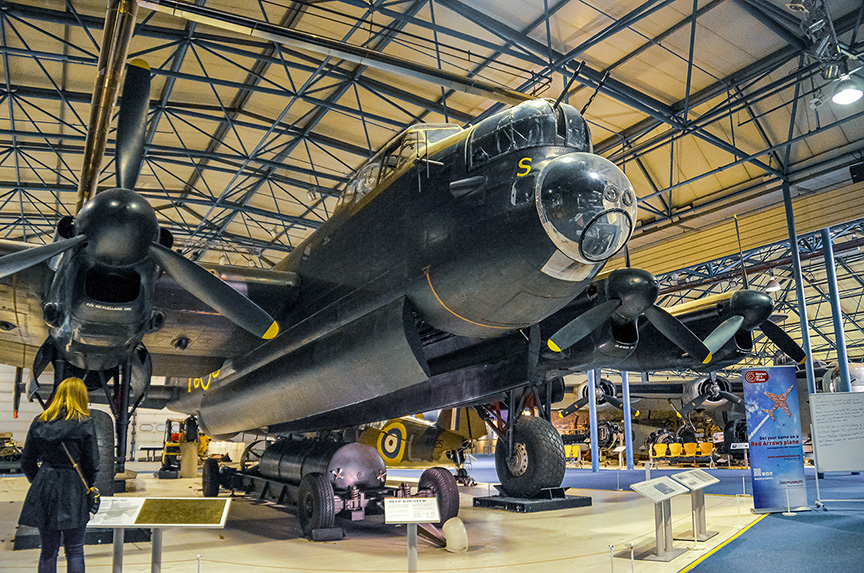
The Avro 683 Lancaster B.I is one of the most iconic aircraft at the RAF Museum Hendon, displayed in Hangar 1 (the Bomber Hall), which focuses on World War II bombers. The Lancaster was the RAF’s primary heavy bomber during the war, renowned for its role in the strategic bombing campaign over Germany, including the famous Dambusters raid. The Hendon example, "S-Sugar" (R5868), is particularly notable for completing 137 operational sorties—more than any other surviving Lancaster.
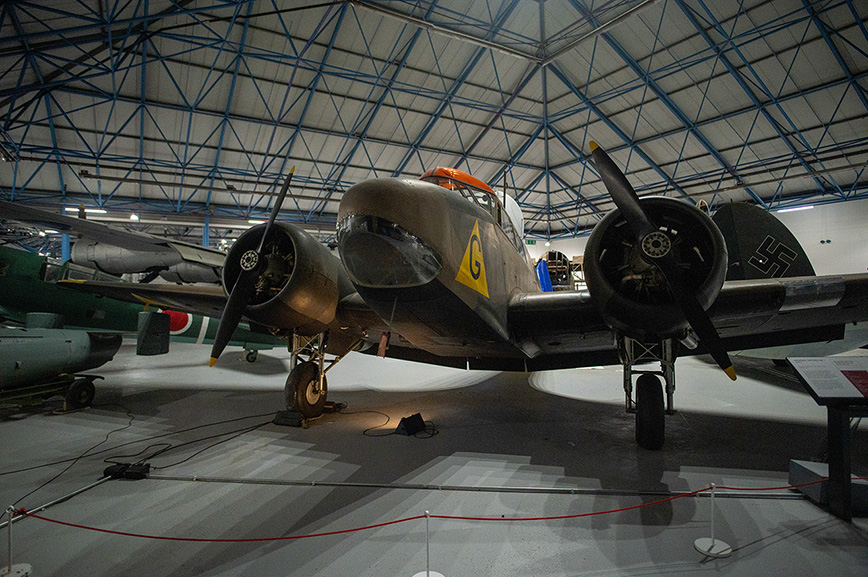
The image depicts a vintage military aircraft, specifically a twin-engine bomber, housed in a large hangar with a distinctive blue truss roof. The aircraft is painted in a dark color scheme with visible markings, including a yellow '6' on the nose and a swastika on the side, indicating it is likely a World War II-era German aircraft. The plane is displayed on a concrete floor with protective barriers around it, suggesting it is part of an aviation museum exhibit.
Airspeed Oxford ‐ photo by ,
©www.mgaylard.co.uk.
The Airspeed Oxford is displayed at the RAF Museum Hendon, typically in Hangar 2 (the Grahame-White Factory), which features World War II-era training and support aircraft. The Oxford was a twin-engine trainer used extensively by the RAF and Commonwealth air forces during World War II. It played a crucial role in training pilots, navigators, and radio operators, and was known for its reliability and versatility in preparing aircrews for multi-engine bombers and transports.
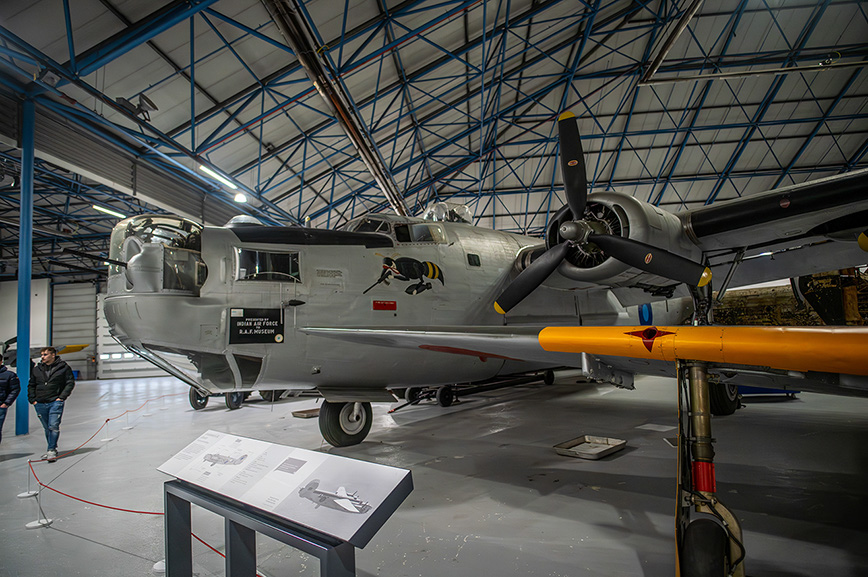
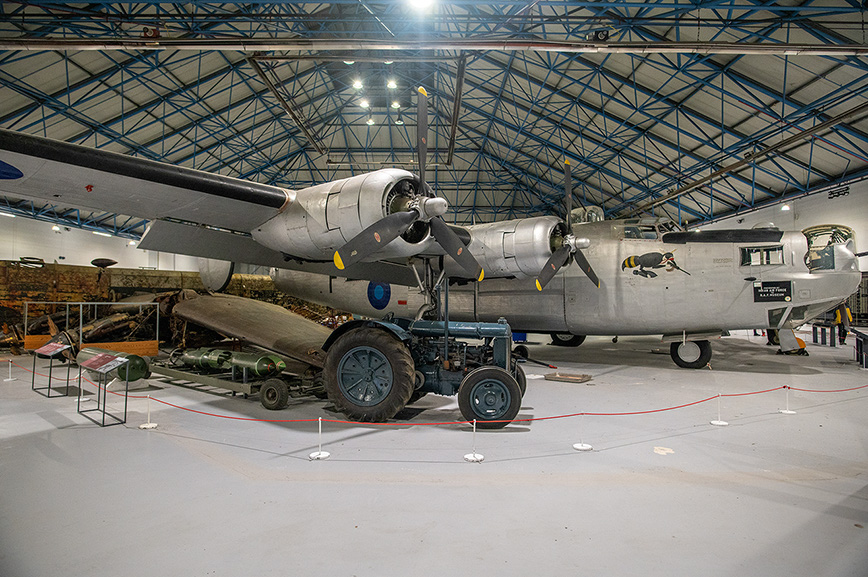
The Consolidated Liberator is indeed part of the collection at the RAF Museum Cosford. The museum houses a Consolidated B-24L Liberator, which played a significant role during World War II, especially with RAF bomber squadrons in the Middle East and as the principal RAF strategic bomber in the Far East from 1944. The Liberator was also used by RAF Coastal Command and even served as a transport aircraft, including a brief period as Winston Churchill’s personal aircraft
Consolidated Liberator GR.VIII ‐ photo by ,
©www.mgaylard.co.uk.
The Consolidated Liberator is indeed part of the collection at the RAF Museum Cosford. The museum houses a Consolidated B-24L Liberator, which played a significant role during World War II, especially with RAF bomber squadrons in the Middle East and as the principal RAF strategic bomber in the Far East from 1944. The Liberator was also used by RAF Coastal Command and even served as a transport aircraft, including a brief period as Winston Churchill’s personal aircraft
The image shows a large, vintage military aircraft on display in a museum. The aircraft has four large propellers and is painted in a dark color scheme with some yellow markings. The setting appears to be an indoor hangar with high ceilings and other aircraft visible in the background. There are informational placards around the aircraft, and a person is seen observing the display.
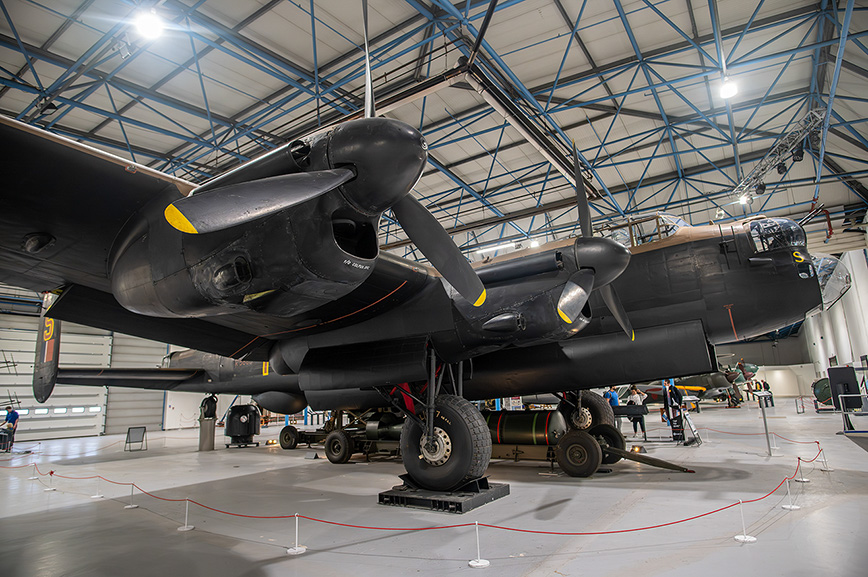
The Avro 683 Lancaster B.I ‐ photo by ,
©www.mgaylard.co.uk.
The image depicts a large, vintage military aircraft housed in a spacious hangar. The aircraft, painted in black, features distinctive yellow markings on its engines and nose. The hangar has a high ceiling with exposed blue metal beams and is well-lit with overhead lights. The aircraft is elevated on stands, and various maintenance equipment and tools are visible around it. The area is cordoned off with red ropes and stanchions, indicating it might be part of a museum or exhibition.
The Avro 683 Lancaster B.I ‐ photo by ,
©www.mgaylard.co.uk.
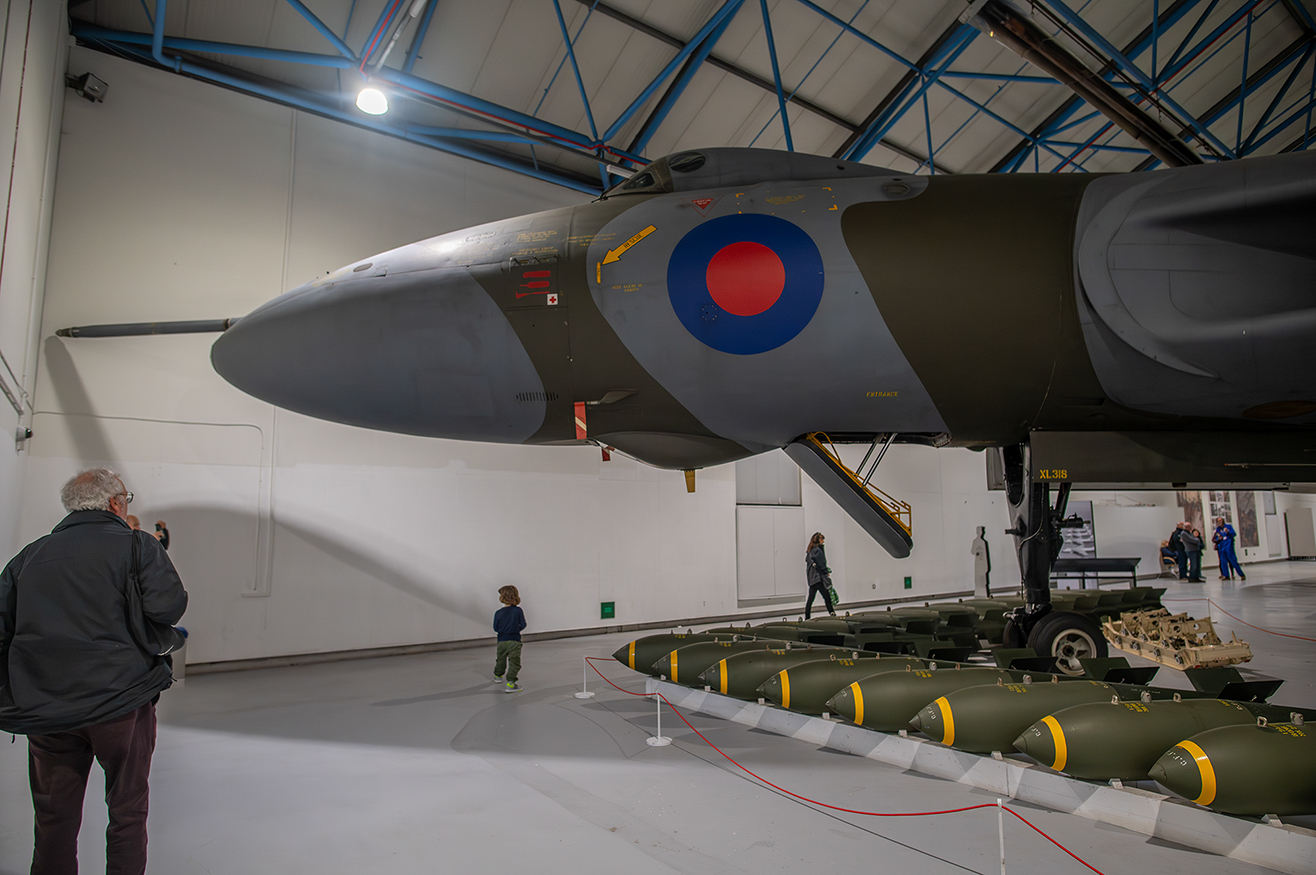
The image shows an aircraft on display in a museum setting, with a circular red, white, and blue roundel on its side. Several bombs are arranged on the ground in front of the aircraft. Visitors, including a child, are observing the exhibit. The aircraft is suspended, and its landing gear is down. The setting appears to be indoors with a high ceiling and industrial lighting.
View of location ‐ photo by ,
©www.mgaylard.co.uk.
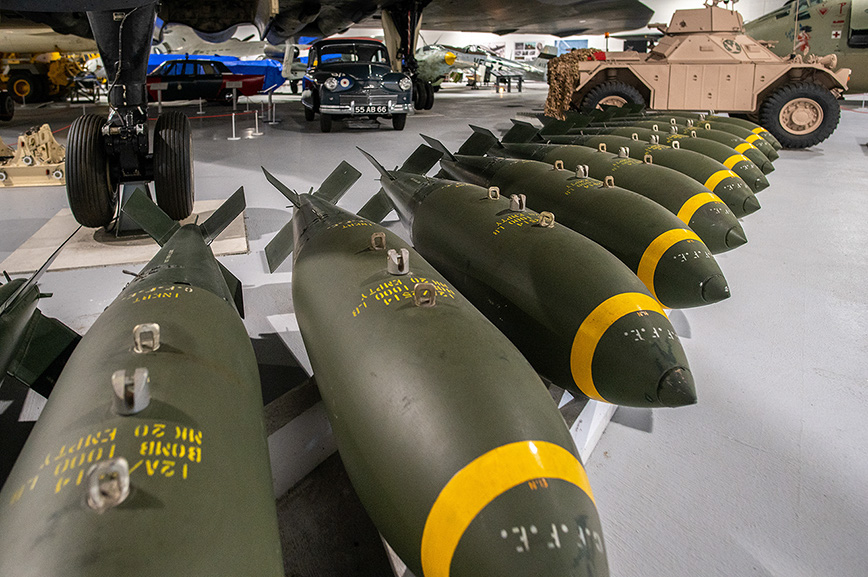
The image shows a collection of historical military bombs displayed in a museum setting. The bombs are lined up in a row, with various markings and labels on them. In the background, there are other military vehicles and artifacts, including an aircraft and a vintage car. The display appears to be part of a larger exhibition showcasing military history.
Part of the Avro Vulcan B2 Bomb Load ‐ photo by ,
©www.mgaylard.co.uk.

The Avro Vulcan B.2 is displayed at the RAF Museum Hendon, located in Hangar 5 (the Bomber Hall), which focuses on Cold War-era aircraft. The Vulcan was Britain’s iconic delta-wing strategic bomber, serving as the backbone of the RAF’s nuclear deterrent during the Cold War. It is best known for its role in the Black Buck missions during the Falklands War, where it conducted the longest-range bombing raids in history at the time.

The image depicts a vintage military aircraft displayed in a museum setting. The aircraft, marked with the number 12 and a cross insignia, is a twin-engine, multi-propeller plane. It is elevated on supports, allowing viewers to see underneath it. The interior of the cockpit is visible, and the plane is surrounded by informational displays and barriers, indicating it is part of an exhibit. The setting appears to be a large, well-lit hangar with other exhibits visible in the background.
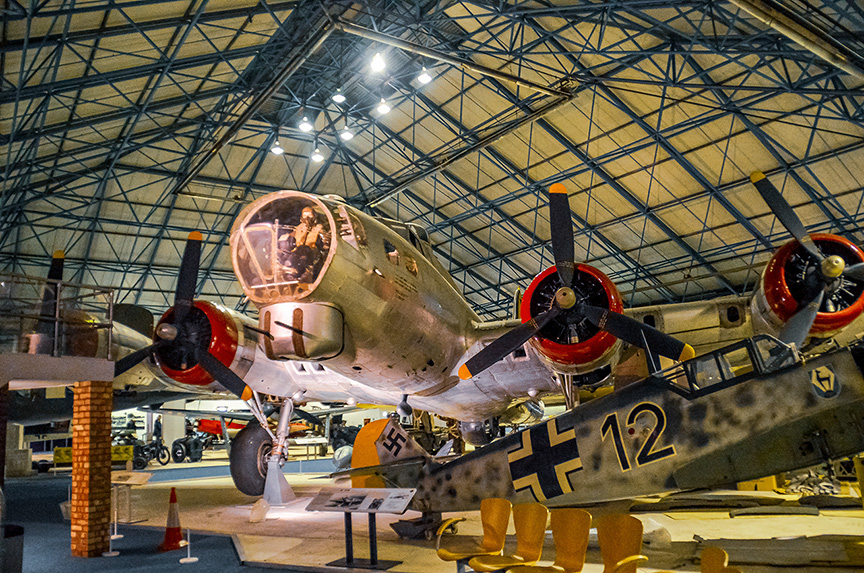
Boeing B-17G Flying Fortress  ‐ photo by ,
©www.mgaylard.co.uk.
he image shows a vintage military aircraft, likely a bomber, displayed in a museum setting. The aircraft has a distinctive nose section with multiple windows, suggesting it was designed for observation or bombing missions. The plane is housed in a large hangar with a high, arched roof supported by metal beams. The aircraft's exterior shows signs of wear and age, adding to its historical authenticity. The propeller at the front is painted with a red tip, and the overall condition of the plane indicates it is a well-preserved piece of aviation history.
Boeing B-17G Flying Fortress  ‐ photo by ,
©www.mgaylard.co.uk.
The image shows the interior of an aviation museum or hangar. Two vintage aircraft are prominently displayed: a silver and red multi-engine plane on the left and a green single-engine plane with a roundel marking on the right. The hangar has a high ceiling with blue structural elements and is well-lit. There are a few people visible in the background, one of whom appears to be a museum staff member in a yellow jacket. The overall scene suggests a well-maintained and organized exhibit space dedicated to preserving and showcasing historical aircraft.
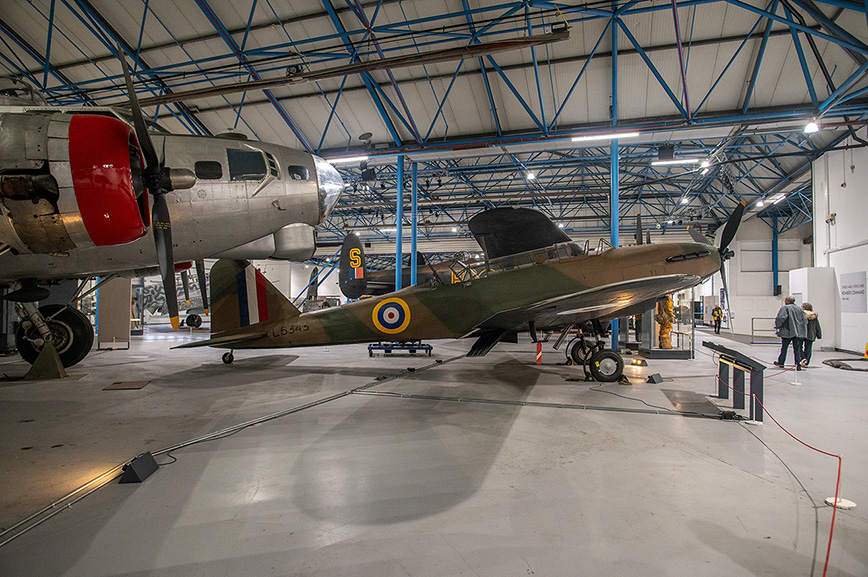
Fairey Battle ‐ photo by ,
©www.mgaylard.co.uk.
The image shows a vintage military aircraft displayed in a museum setting. The aircraft has a distinctive camouflage paint scheme with red, white, and green markings. It features a propeller at the front and is equipped with landing gear. The aircraft is positioned indoors, with other aircraft visible in the background. Various maintenance tools and equipment are scattered around the floor near the aircraft.
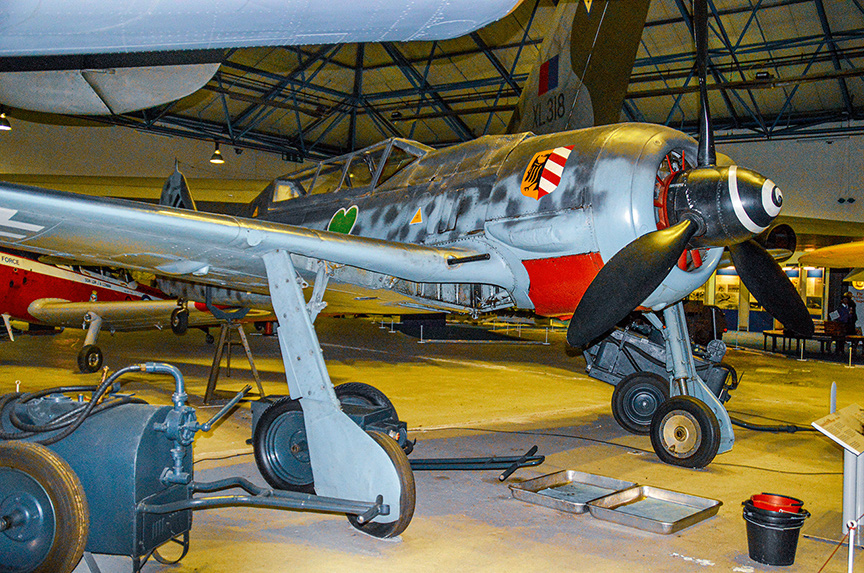
Focke Wulf Fw190A 8U-1 ‐ photo by ,
©www.mgaylard.co.uk.
The image shows a rusted and aged aircraft, likely a historical or vintage model, displayed in a large hangar with a blue metal framework roof. The aircraft's exterior is heavily corroded, indicating it has not been used or maintained for a long time. The cockpit is prominently visible with a transparent dome, and the overall structure appears to be in a state of disrepair. The setting suggests it might be part of a museum or a storage facility for old aircraft.
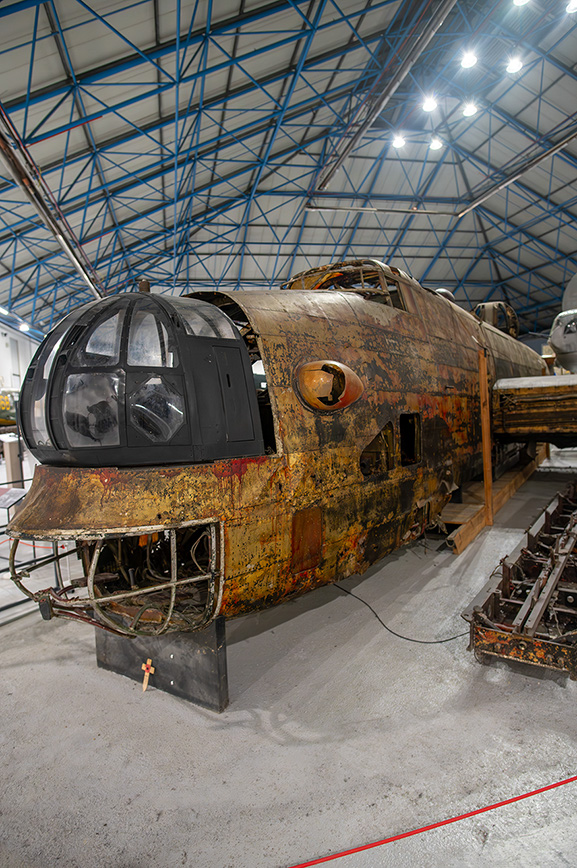
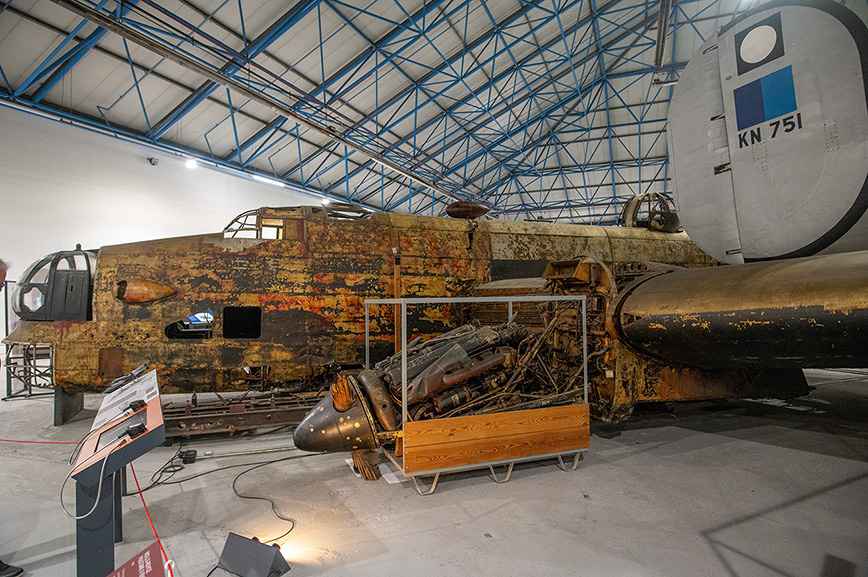
Handley Page Halifax II ‐ photo by ,
©www.mgaylard.co.uk.
The image shows a vintage, rusted aircraft displayed in a museum-like setting. The aircraft is partially disassembled, with its engine and other components visible. The setting appears to be an indoor hangar with a high, blue-trussed ceiling. There is an information stand in front of the aircraft, likely providing details about its history and specifications. The aircraft's tail section shows the identification number 'KN 751'.
Handley Page Halifax II ‐ photo by ,
©www.mgaylard.co.uk.
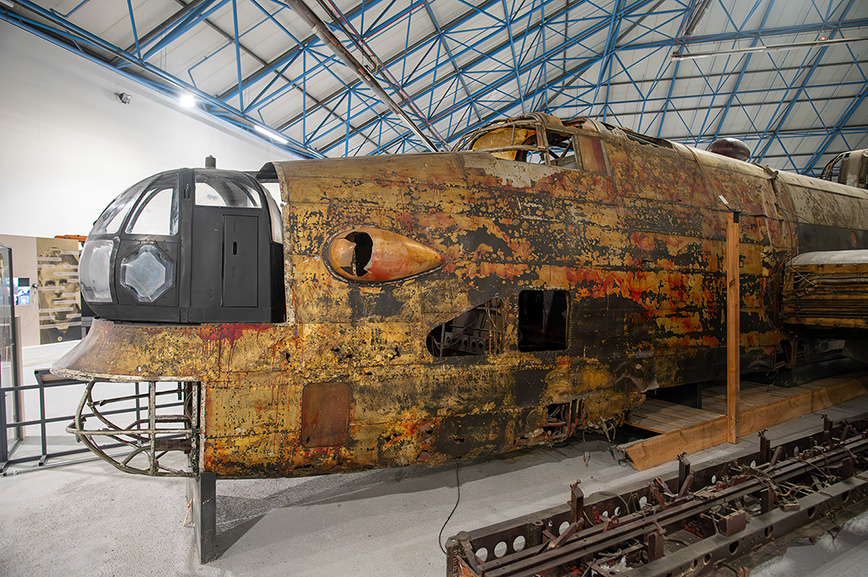
The image depicts an old, rusted locomotive inside a large, industrial building with a high, blue ceiling. The locomotive is heavily weathered, with visible rust and paint peeling off, and is supported by wooden beams. The front of the locomotive features a distinctive, rounded design with a large, clear windshield and a smaller, hexagonal window on the side. The setting suggests a museum or a restoration facility.
Handley Page Halifax II ‐ photo by ,
©www.mgaylard.co.uk.

The Handley Page Halifax II was a British four-engined heavy bomber used by the RAF during World War II, powered by Rolls-Royce Merlin engines and capable of carrying up to 13,000 lb of bombs. It played a crucial role in night bombing raids over Germany and was known for its improved performance and defensive armament compared to earlier variants.
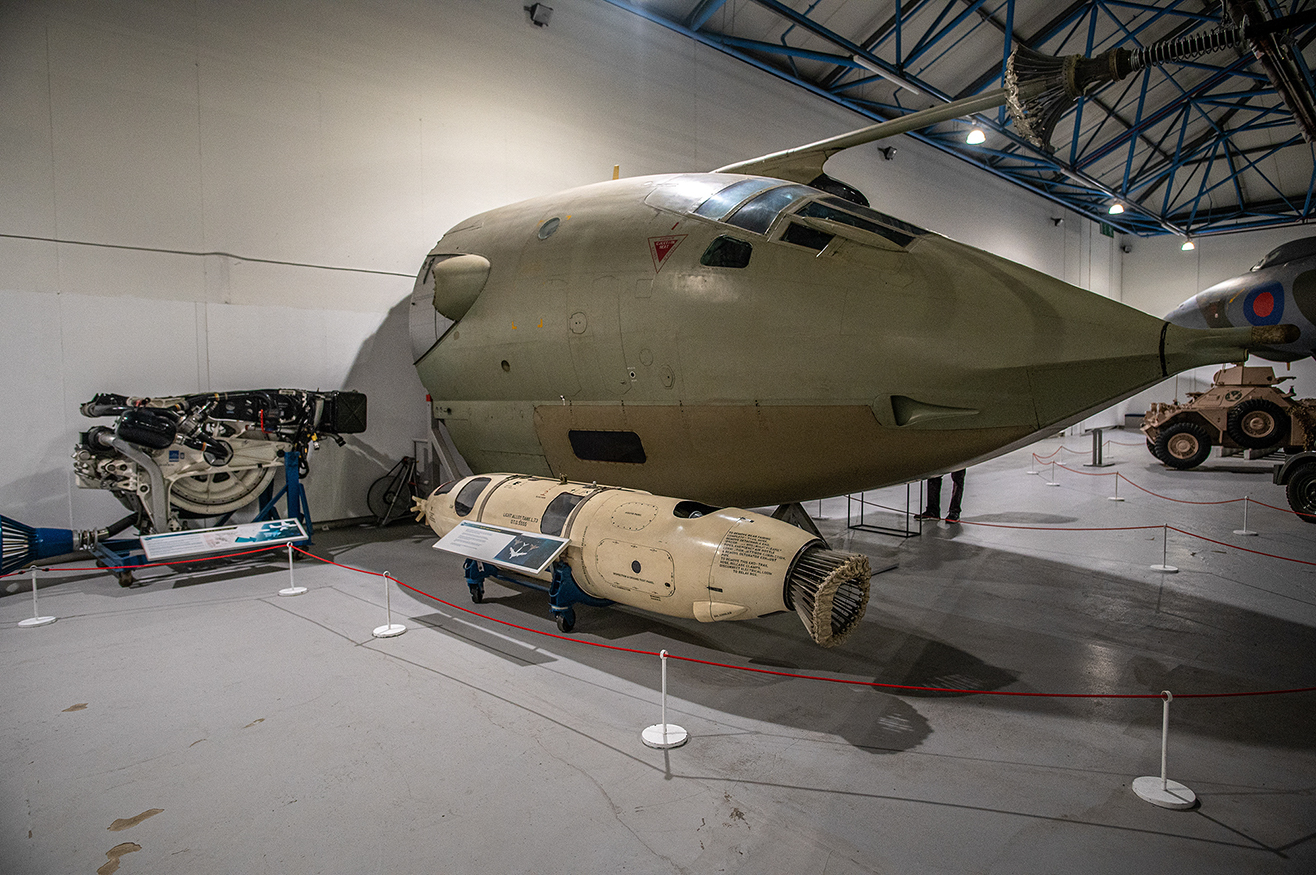
The image depicts a museum exhibit featuring a large military aircraft, likely a bomber, with a distinctive rounded nose. In front of the aircraft, there is a large bomb or missile on display. Additionally, an aircraft engine is exhibited nearby. The exhibit is cordoned off with red ropes and stanchions, and there are informational placards in front of each item, providing details about the artifacts.
Handley Page Victor K.2 ‐ photo by ,
©www.mgaylard.co.uk.
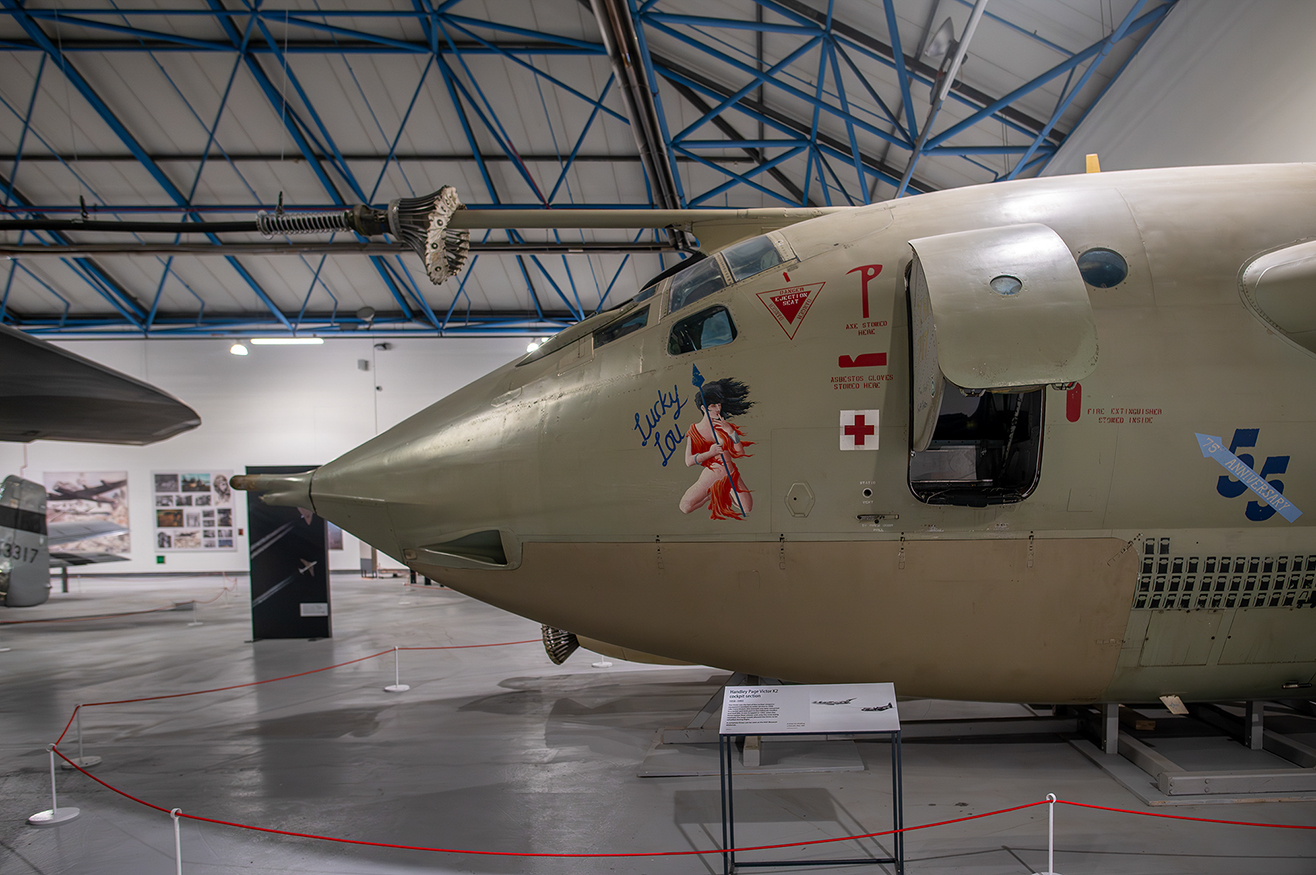
The image depicts the nose section of a military aircraft displayed in a museum. The aircraft is adorned with various markings, including a pin-up girl illustration labeled 'Lucky Lou', a red cross, and several warning labels. The aircraft is housed in a spacious, well-lit hangar with a high, arched ceiling supported by blue framework. There are informational displays and other aircraft parts visible in the background. The aircraft is cordoned off with red ropes and white stands, indicating it is part of an exhibit.
Handley Page Victor K.2 ‐ photo by ,
©www.mgaylard.co.uk.

The Handley Page Victor K.2 is displayed at the RAF Museum Hendon, located in Hangar 5 (the Bomber Hall), which focuses on Cold War-era aircraft. The Victor was originally designed as a strategic bomber but was later converted into a tanker/transport (K.2) variant, playing a crucial role in aerial refueling and supporting RAF operations worldwide. It was a key part of the UK’s nuclear deterrent and later served in the Falklands War and Gulf War.
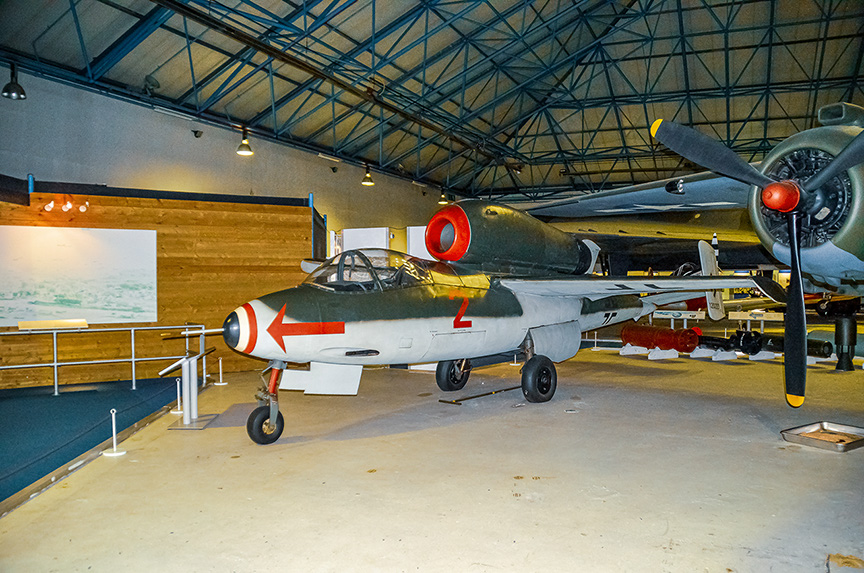
The image depicts a vintage military aircraft displayed in a museum setting. The aircraft is painted in a camouflage pattern with distinctive red and white markings, including a large red circle with a white cross on the fuselage and a red circle on the nose. The aircraft is positioned on a concrete floor with a small barrier around it, and there is a large propeller at the front. In the background, there is another aircraft with a similar design but different markings. The setting appears to be an indoor hangar with a high ceiling and wooden walls.
Heinkel He 162A-2 Salamander ‐ photo by ,
©www.mgaylard.co.uk.
The Heinkel He 162A-2 Salamander is displayed at the RAF Museum Hendon, located in Hangar 2 (the Grahame-White Factory), which features World War II-era aircraft. The He 162 was a German single-seat, jet-powered fighter aircraft, known as the "Volksjäger" (People's Fighter). It was designed and built rapidly in the final months of World War II, using cheap materials and simple construction to be produced quickly. The He 162 is notable for being one of the first operational jet fighters and represents the desperate measures taken by Germany to defend against Allied bombing raids.
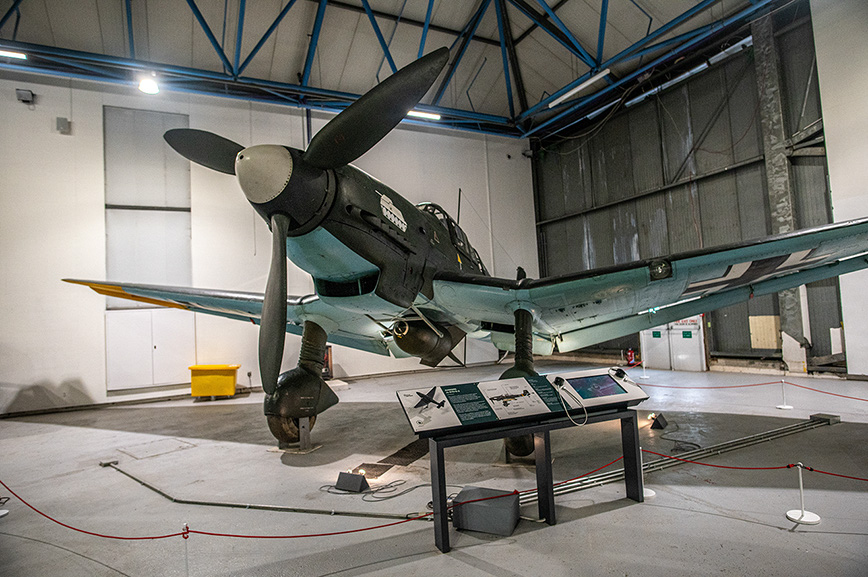
The image shows a vintage military aircraft displayed in a museum or hangar setting. The aircraft is mounted on a stand, with its propeller and other details clearly visible. There are informational displays in front of the aircraft, providing context and information about the exhibit. The setting appears to be indoors, with a high ceiling and industrial lighting. The overall atmosphere is one of historical preservation and education.
Junkers Ju 87G-2 Stuka ‐ photo by ,
©www.mgaylard.co.uk.
The Junkers Ju 87G-2 Stuka is displayed at the RAF Museum Hendon, located in Hangar 2 (the Grahame-White Factory), which features World War II-era aircraft. The Ju 87G-2 was a specialized anti-tank variant of the famous Stuka dive bomber, equipped with two 37mm cannons under the wings for tank busting on the Eastern Front. It is one of the few surviving examples of this iconic German aircraft, known for its distinctive inverted gull wings and terrifying siren, which was used to psychologically demoralize enemy troops during dive-bombing attacks.
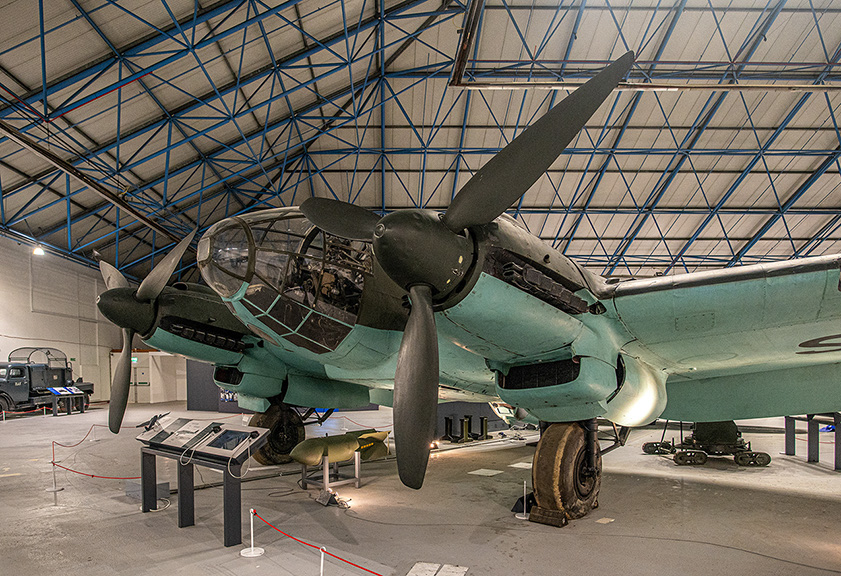
The image shows a vintage military aircraft displayed in a museum setting. The aircraft is a twin-engine, propeller-driven bomber with a distinctive green paint scheme. It is housed in a large hangar with a high, arched roof supported by blue trusses. Informational displays and a bomb are positioned nearby, providing context and details about the aircraft. The overall scene suggests a well-preserved historical exhibit.
Heinkel He 111 H-20  ‐ photo by ,
©www.mgaylard.co.uk.
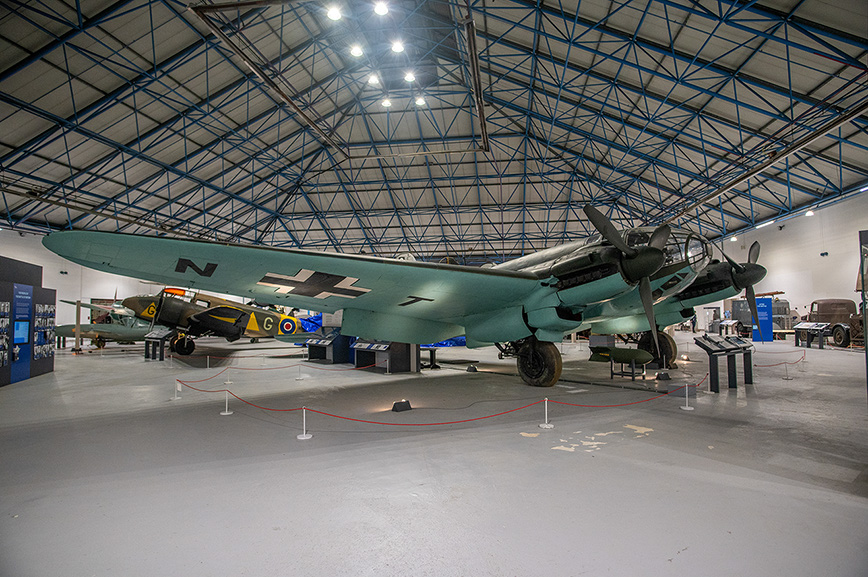
The image depicts an aircraft museum exhibit featuring a large, vintage military airplane prominently displayed in the center. The aircraft has a distinctive green color scheme with black markings. The museum's interior is spacious with a high, arched ceiling supported by a metal framework. Other aircraft and informational displays are visible in the background, indicating a collection of historical aviation artifacts.
Heinkel He 111 H-20  ‐ photo by ,
©www.mgaylard.co.uk.
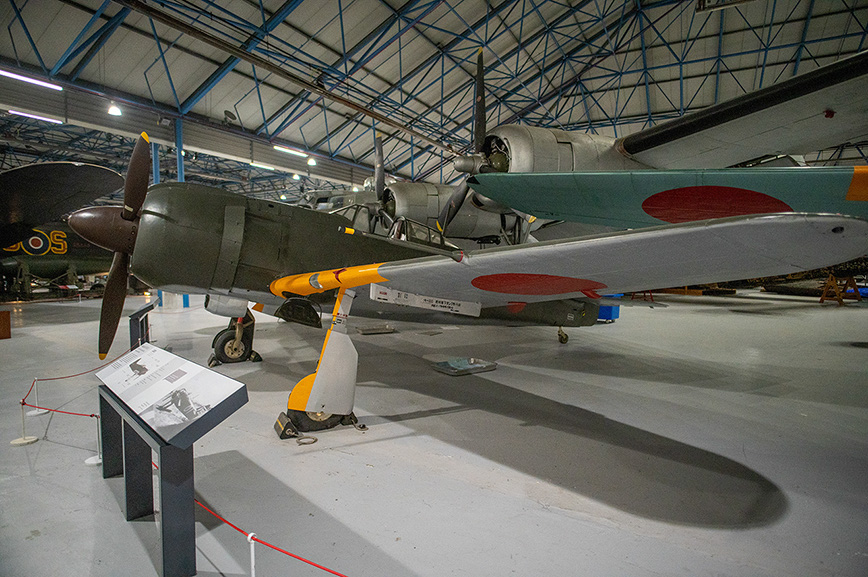
The image shows a museum exhibit featuring a vintage military aircraft with a distinctive red circle emblem on its wings, likely of Japanese origin. The aircraft is displayed indoors, with informational placards in front of it. The plane has a propeller at the front and is mounted on a stand, suggesting it is not operational. The setting appears to be a well-lit, spacious hangar with other aircraft visible in the background.
Kawasaki_Ki 100 ‐ photo by ,
©www.mgaylard.co.uk.
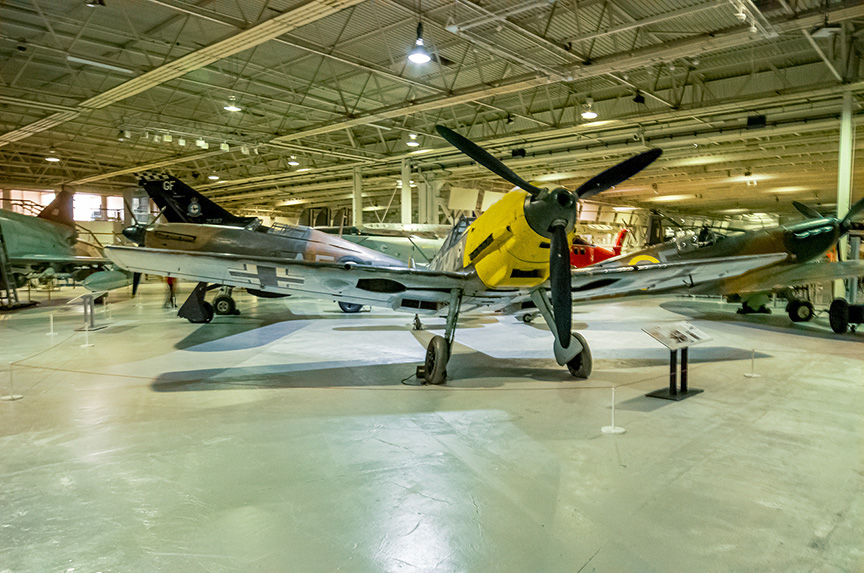
The image shows a vintage aircraft, specifically a Messerschmitt Bf 109, displayed in a museum setting. The aircraft is positioned in a large hangar with other aircraft visible in the background. The plane has a distinctive yellow nose and is mounted on a stand with an information plaque in front of it. The hangar has a high ceiling with exposed beams and industrial lighting.
Messerschmitt Bf 109E-3 ‐ photo by ,
©www.mgaylard.co.uk.
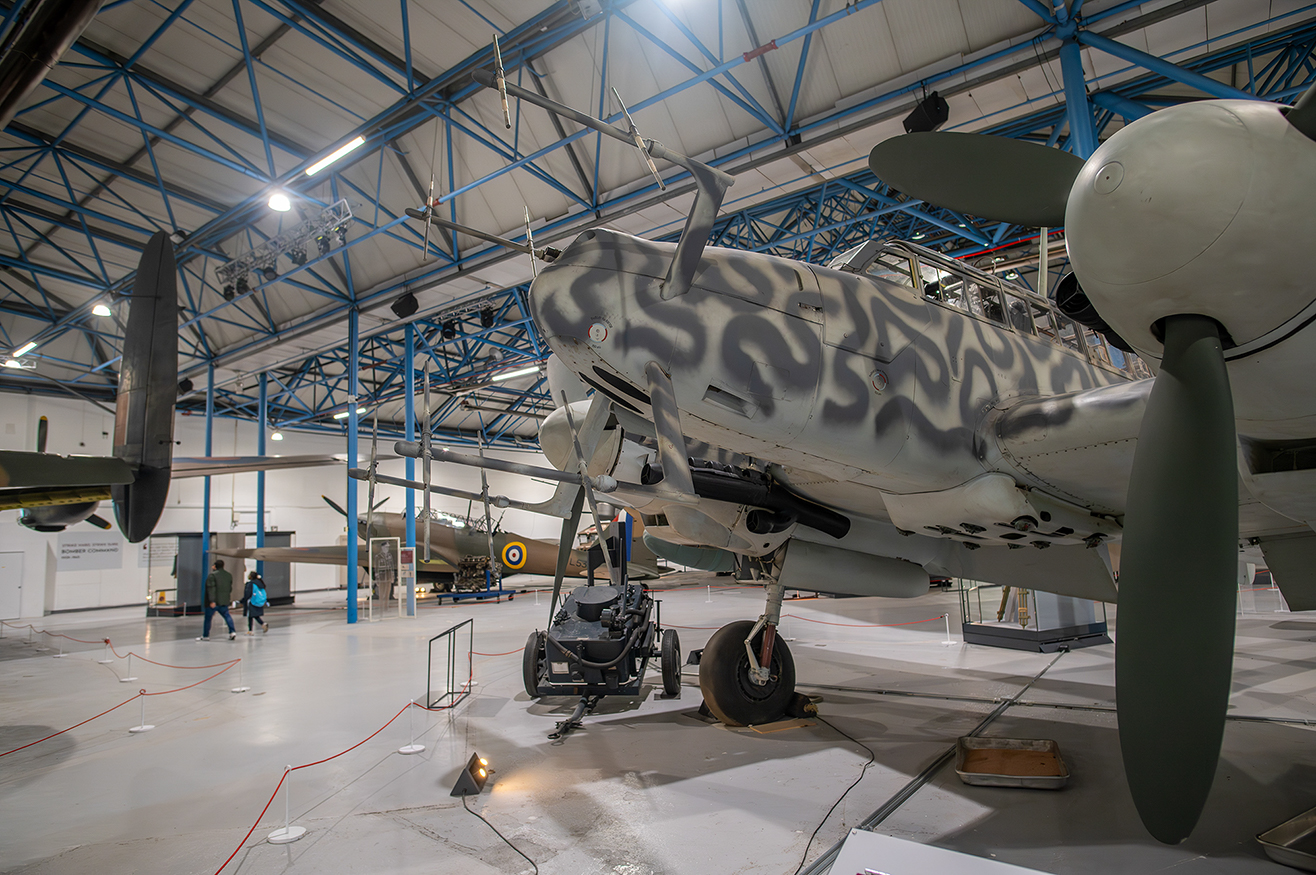
The image depicts an aircraft hangar with several vintage military planes on display. The hangar has a high ceiling with blue support beams and is well-lit. The aircraft in the foreground appears to be a World War II-era fighter plane with distinctive camouflage paint. There are a few people walking around, and the area is cordoned off with red ropes to guide visitors along a specific path.
Messerschmitt Bf 110G-4  ‐ photo by ,
©www.mgaylard.co.uk.
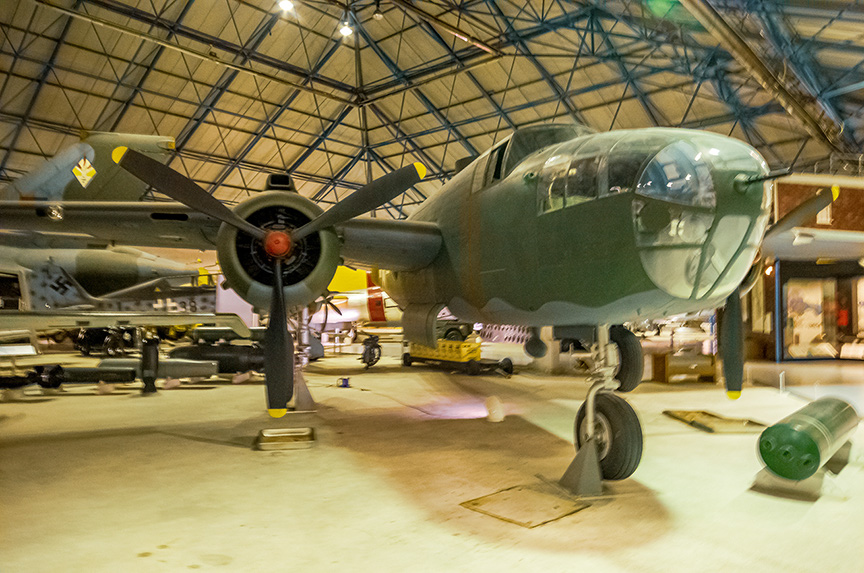
The image depicts a vintage military aircraft housed in a large hangar. The aircraft, painted in a matte green color, features a large propeller at the front and is equipped with landing gears. The hangar has a high, arched ceiling with exposed metal beams and houses other aircraft and various aviation artifacts in the background.
North American B-25 Mitchel ‐ photo by ,
©www.mgaylard.co.uk.
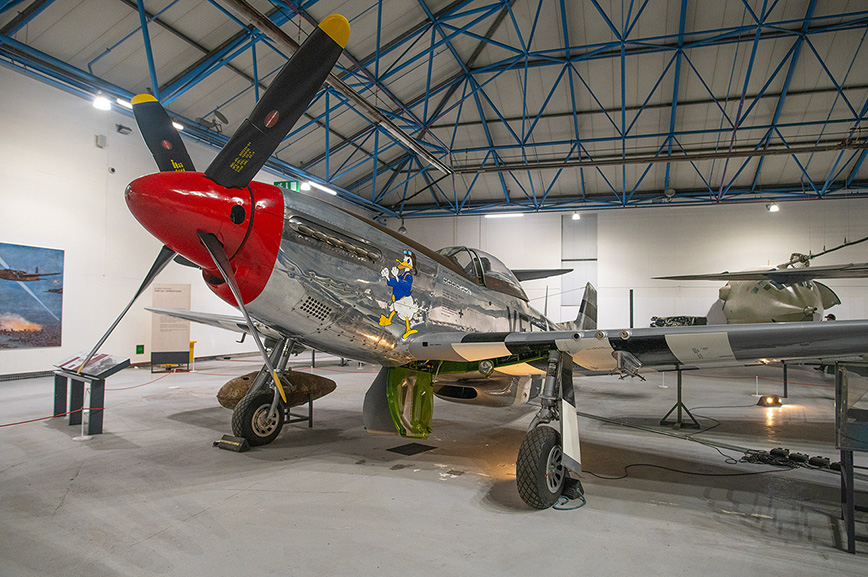
The image depicts a vintage aircraft displayed in a museum setting. The aircraft, with a distinctive red nose and silver body, is adorned with various markings and artwork. It is positioned on a concrete floor within a spacious hangar-like structure with a high, blue-trussed ceiling. Other aircraft parts and displays are visible in the background, indicating a collection of aviation artifacts.
North American P51D Mustang ‐ photo by ,
©www.mgaylard.co.uk.
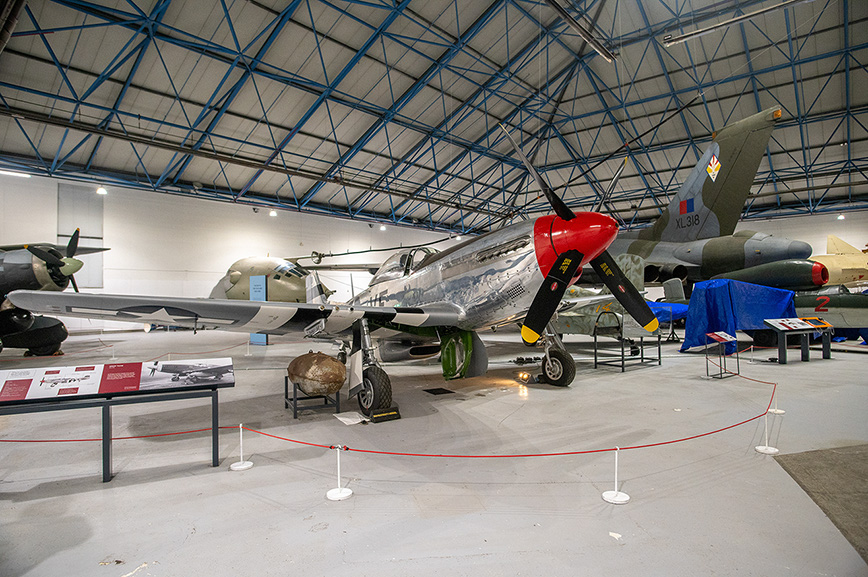
The image depicts an indoor aviation museum with several vintage military aircraft on display. The aircraft are positioned in a spacious, well-lit hangar with a high ceiling. Each plane is surrounded by informational displays and barriers to keep visitors at a safe distance. The aircraft vary in size and design, showcasing different models and eras of military aviation. The overall setting is clean and organized, providing an educational and historical overview of aviation history.
North American P51D Mustang ‐ photo by ,
©www.mgaylard.co.uk.
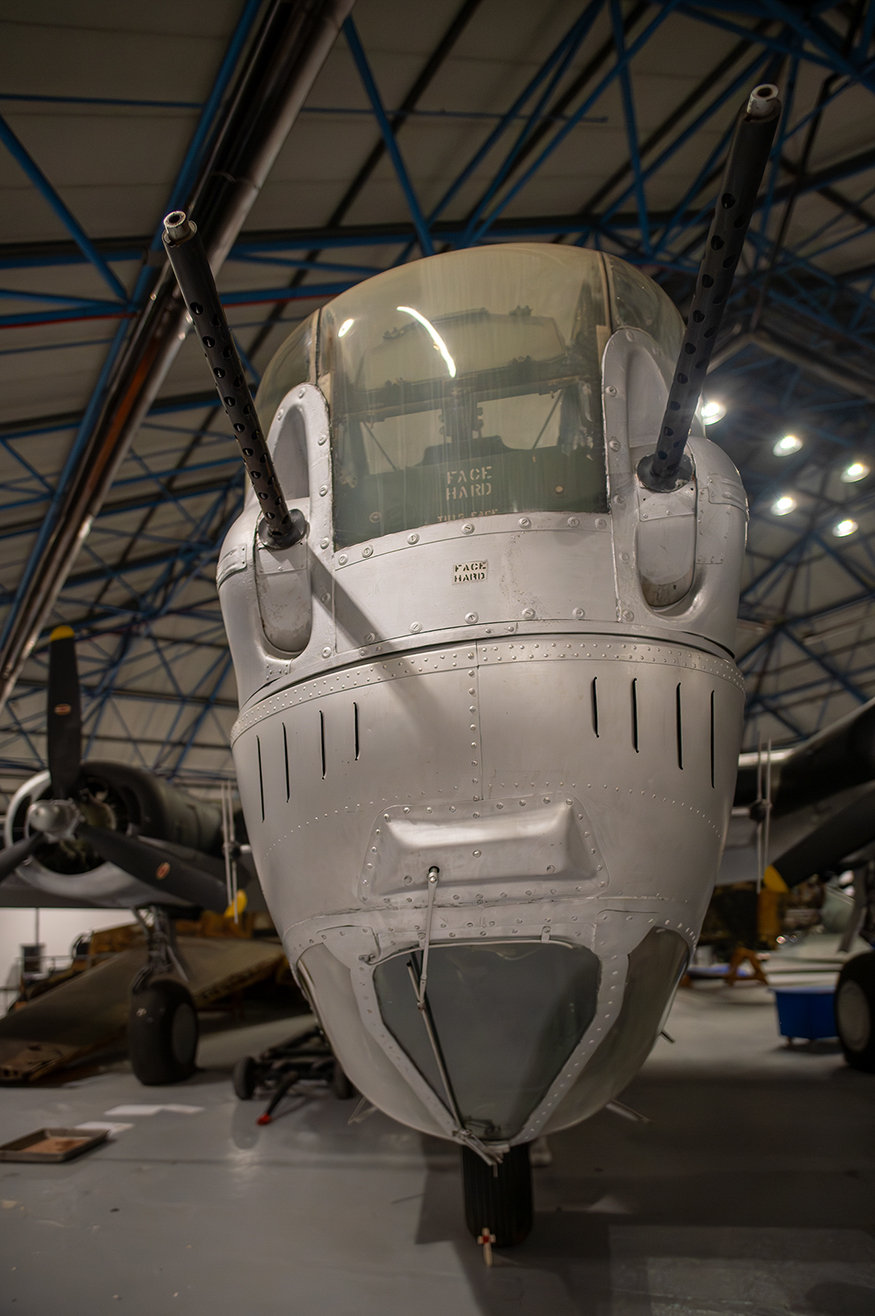
The image shows the front view of a vintage military aircraft, specifically a B-24 Liberator bomber. The aircraft's nose is prominently displayed, featuring a clear bombarder's window with the words 'FACE HARD' written on it. The aircraft is housed in a large hangar with a high ceiling and industrial lighting. Other aircraft and equipment are visible in the background, indicating that this is likely a museum or an aviation display area.
Consolidated B-24L Liberator ‐ photo by ,
©www.mgaylard.co.uk.
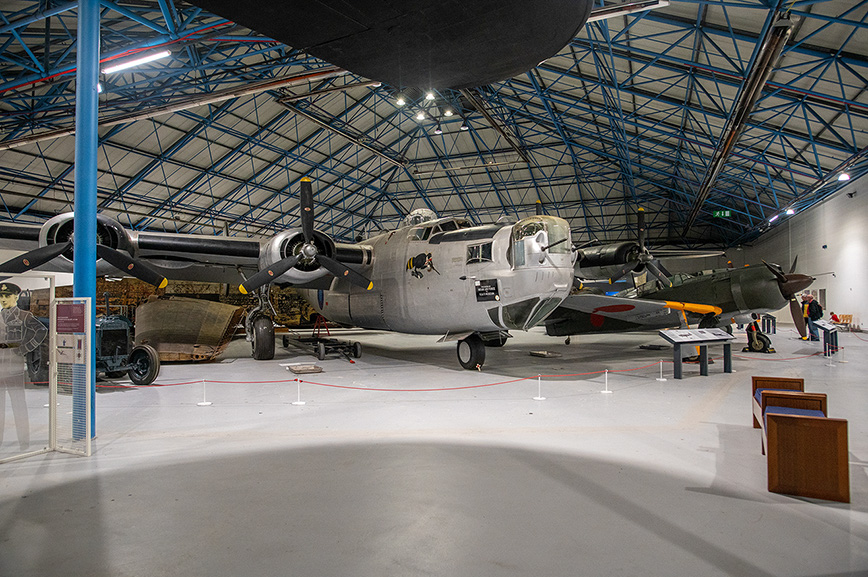
The document describes an image of an aircraft hangar housing several vintage military aircraft. The hangar has a large, open space with a high ceiling supported by a blue truss structure. The central focus is a large, gray, four-engine bomber with distinctive markings and a turret on top. Other aircraft, including a smaller plane with a red and white nose, are also visible. The area is cordoned off with red ropes and stanchions, and there are informational displays and a motorcycle on the left side of the image. The overall atmosphere suggests a museum or exhibition setting dedicated to aviation history.
Consolidated B-24L Liberator ‐ photo by ,
©www.mgaylard.co.uk.
The image depicts a vintage military aircraft displayed in a museum setting. The aircraft, a twin-engine bomber, is shown with its bomb bay doors open, revealing several bombs. The plane is housed in a large hangar with a high, arched ceiling supported by metal trusses. The floor is clean and marked with red ropes to guide visitors and protect the exhibits. Additional historical artifacts and informational displays are visible in the background.
Consolidated B-24L Liberator ‐ photo by ,
©www.mgaylard.co.uk.
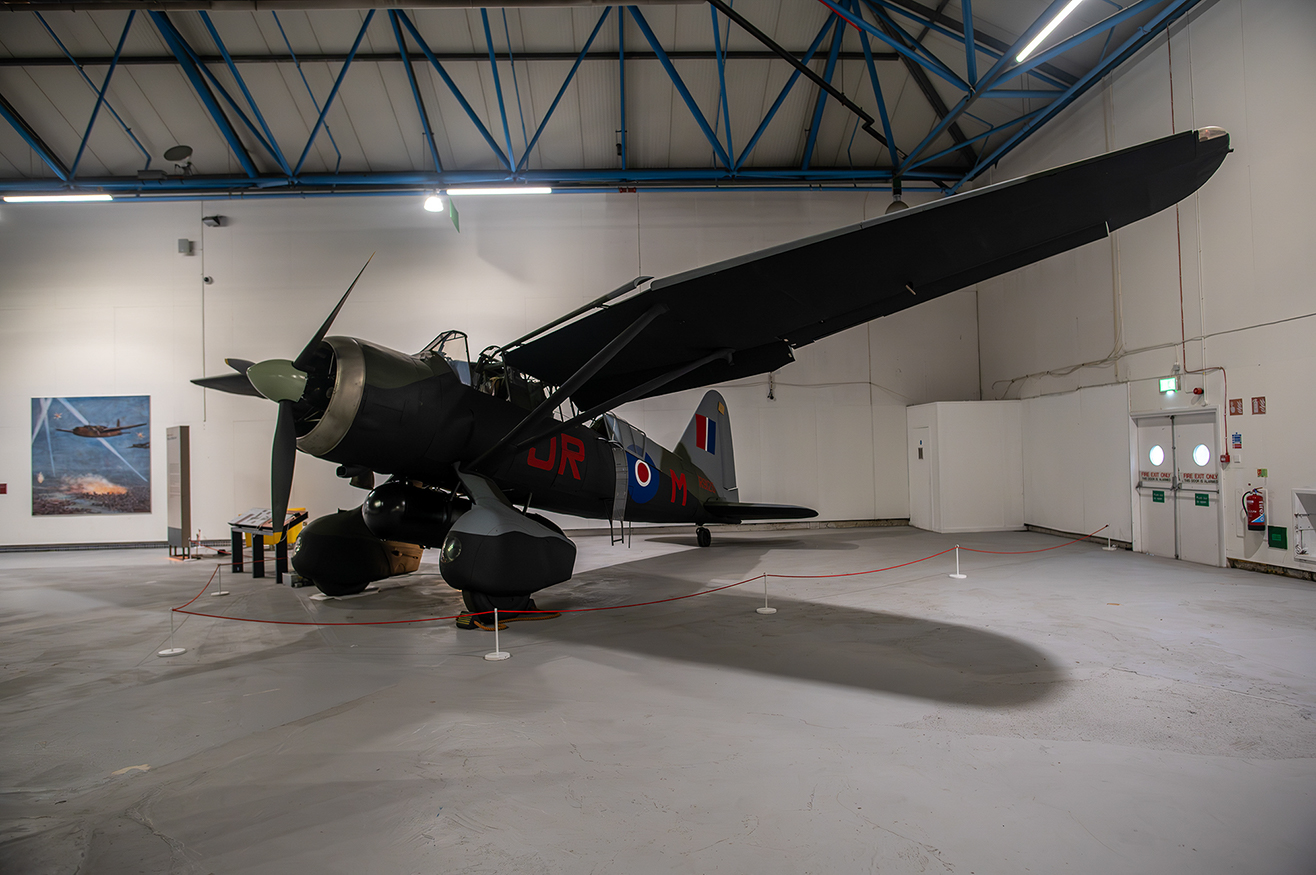
The image depicts a vintage military aircraft on display in a museum or exhibition hall. The aircraft is a single-engine, propeller-driven fighter plane, painted in a dark green color scheme with distinctive roundels and markings on its fuselage and wings. The plane is equipped with two large bombs beneath its wings. The setting appears to be an indoor hangar with a high ceiling, illuminated by overhead lights. The aircraft is cordoned off with red ropes and stanchions, indicating it is part of an exhibit.
Westland Lysander ‐ photo by ,
©www.mgaylard.co.uk.
Open the full set flickr button this page

Hangar 5, RAF Museum Hendon

The RAF Museum London’s Hangar 5 at Hendon showcases the evolution of British aviation, featuring iconic aircraft from the Battle of Britain, Cold War, and beyond, including fighters, bombers, and helicopters. It offers visitors immersive exhibits, interactive displays, and a glimpse into the RAF’s history through restored aircraft and personal stories.
Text generated by Mistral AI

Hangar 6, RAF Museum Hendon

Hangar 6, RAF Museum Hendon

HendonLondon,   United Kingdom

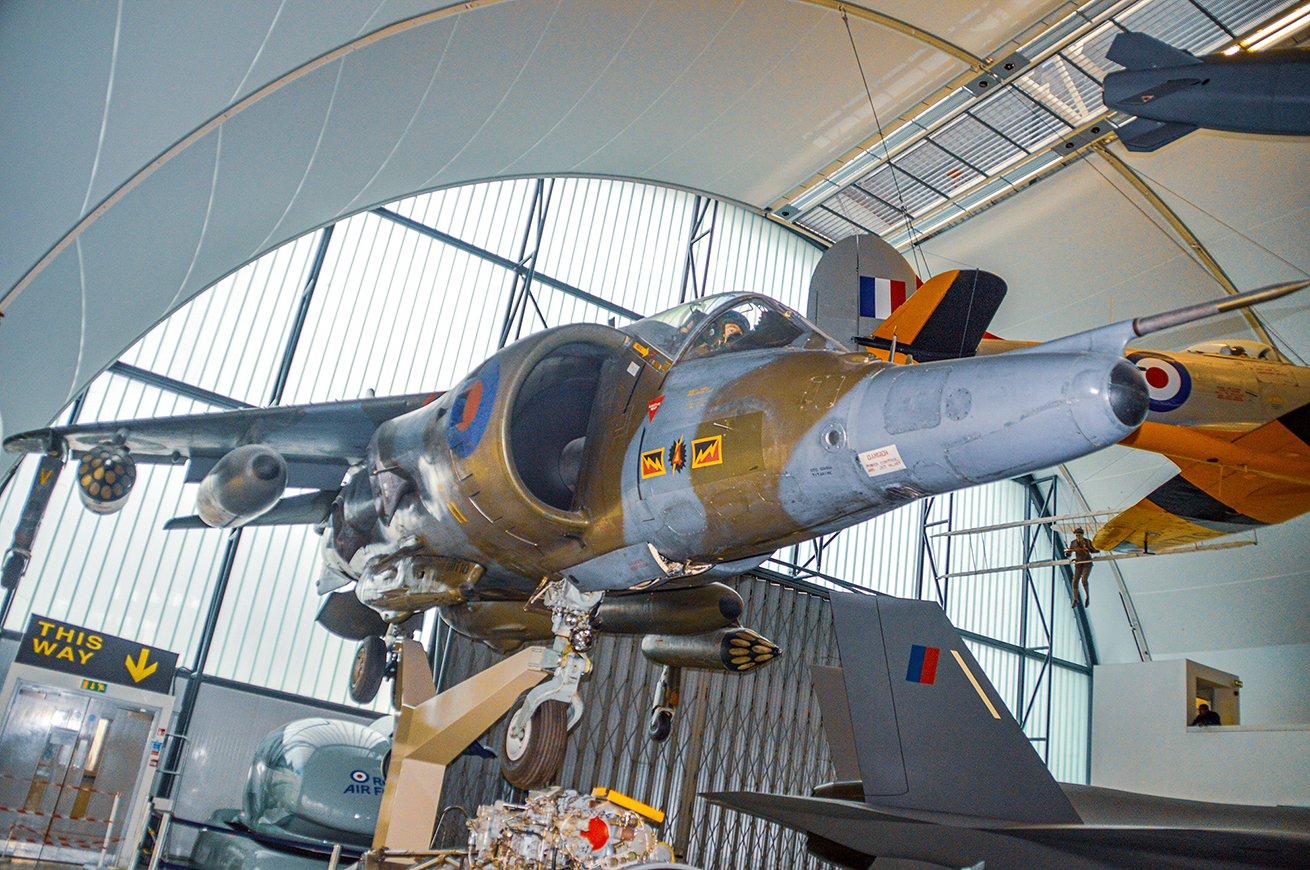
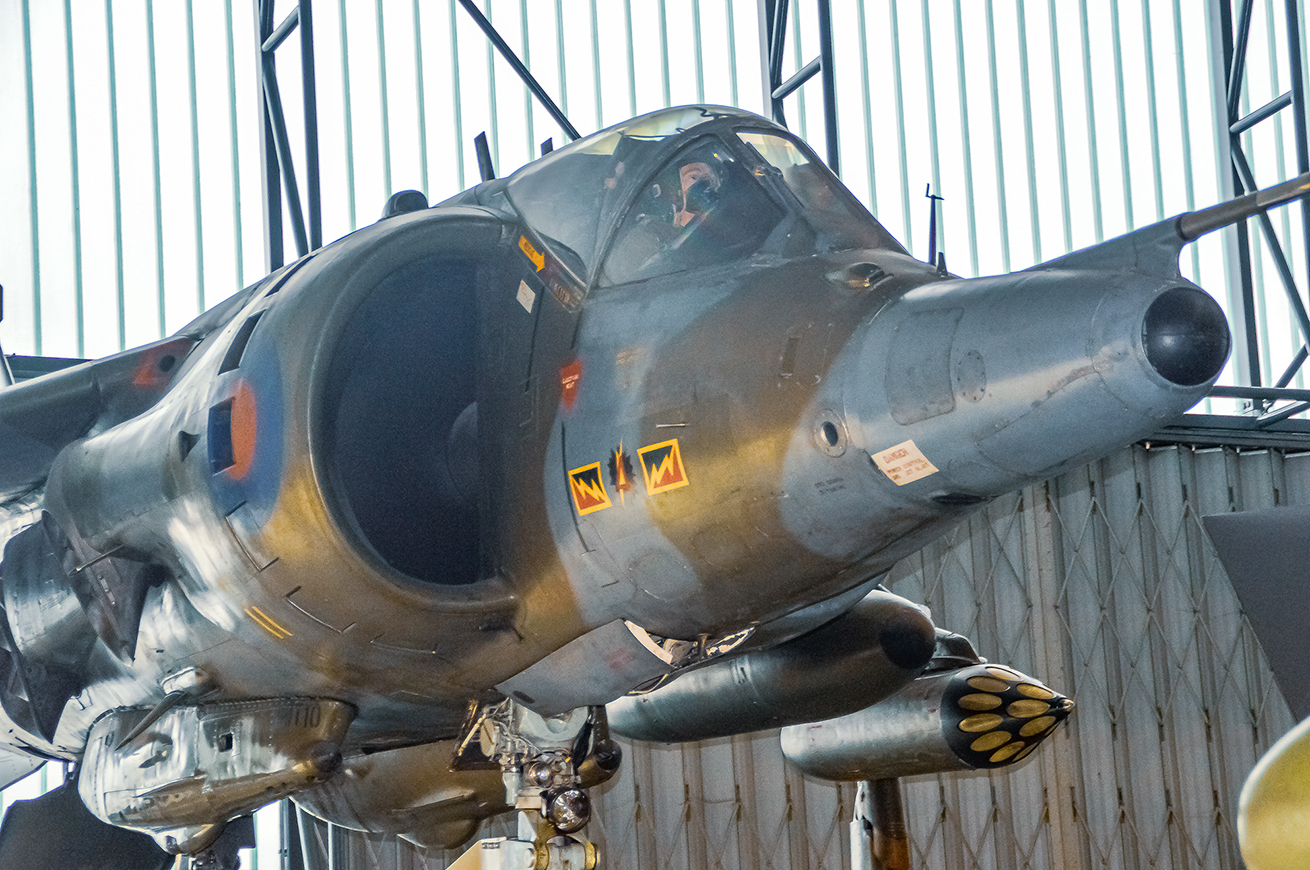
The image shows a close-up view of a military aircraft, specifically a SEPECAT Jaguar, which is a ground attack aircraft. The aircraft is displayed in a museum setting, evident from the indoor environment and the informational labels on the aircraft. The Jaguar has a distinctive nose and is equipped with various armaments and equipment. The aircraft's landing gear is down, and it is supported by a stand. The cockpit is visible, but the interior details are not clear.
BAe Harrier II GR9/GR9A ‐ photo by ,
©www.mgaylard.co.uk.
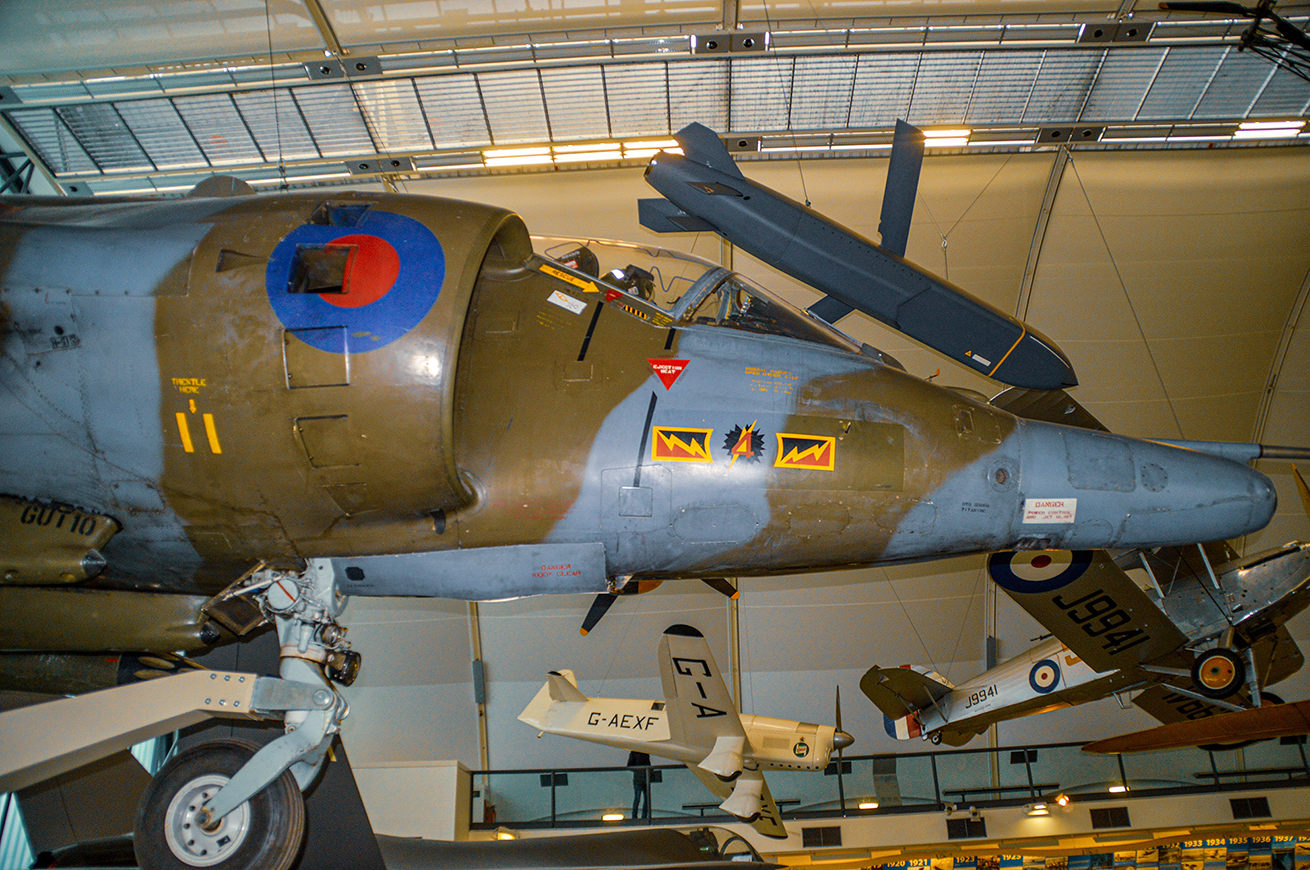
he image depicts a collection of vintage military aircraft displayed in a museum setting. The aircraft are suspended from the ceiling, showcasing their undersides and various markings. The prominent aircraft in the center features a roundel with red, white, and blue colors, along with other insignia and text. The setting appears to be a well-lit, spacious hangar with other aircraft visible in the background.
BAe Harrier II GR9/GR9A ‐ photo by ,
©www.mgaylard.co.uk.
The image shows a military aircraft displayed in a museum. The aircraft is suspended from the ceiling, showcasing its underside and various markings. The setting appears to be an aviation museum with large windows and other aircraft visible in the background. The aircraft has distinct insignia and appears to be from a historical period, likely used in combat. The display is part of an exhibit, as indicated by the directional signage.
BAe Harrier II GR9/GR9A ‐ photo by ,
©www.mgaylard.co.uk.
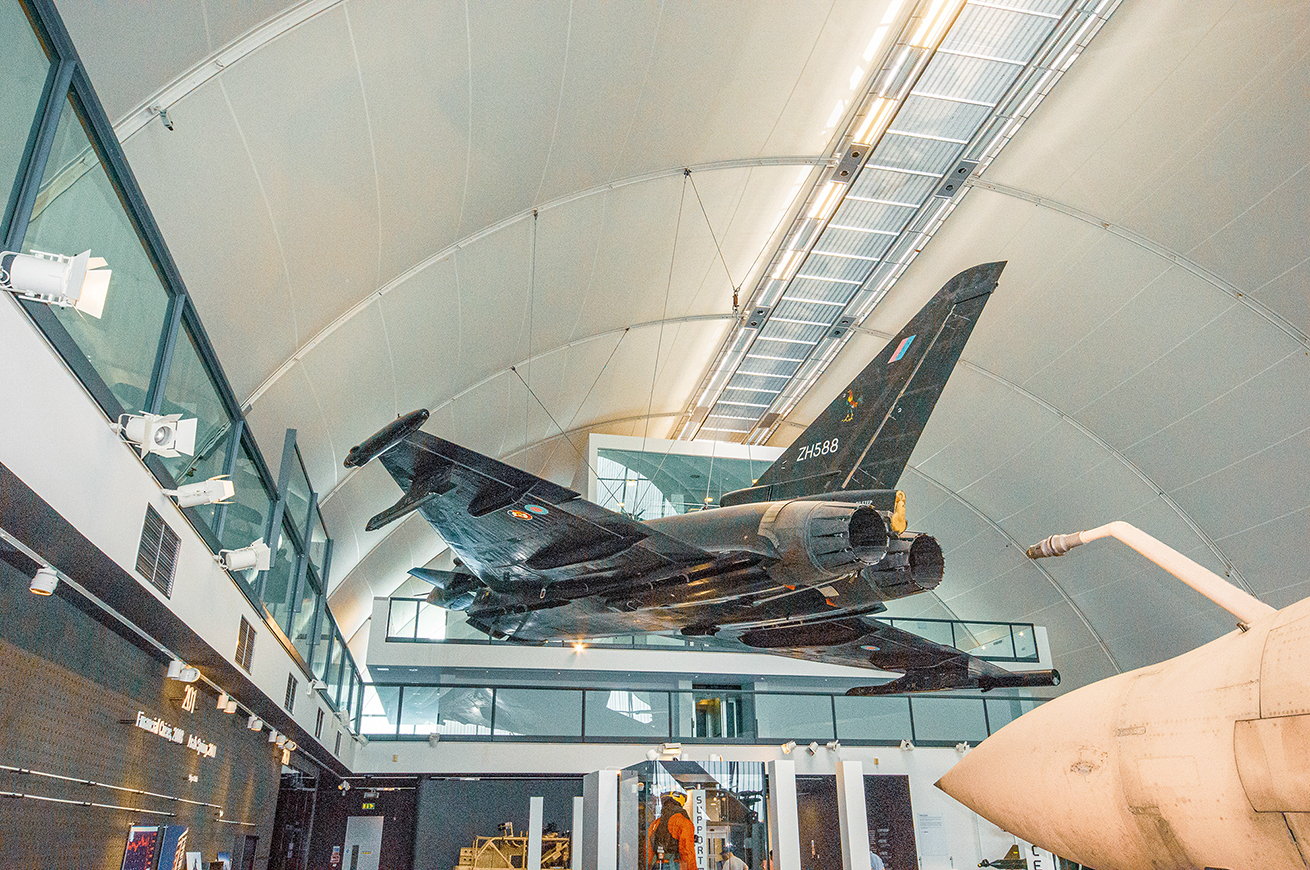
The image depicts an aircraft suspended from the ceiling in a museum-like setting. The aircraft has the tail number ZH588 and features various markings and insignia. The setting appears to be an aviation museum, with other aircraft parts and exhibits visible in the background. The environment is well-lit with natural light streaming in through large windows.
Eurofighter Typhoon ‐ photo by ,
©www.mgaylard.co.uk.
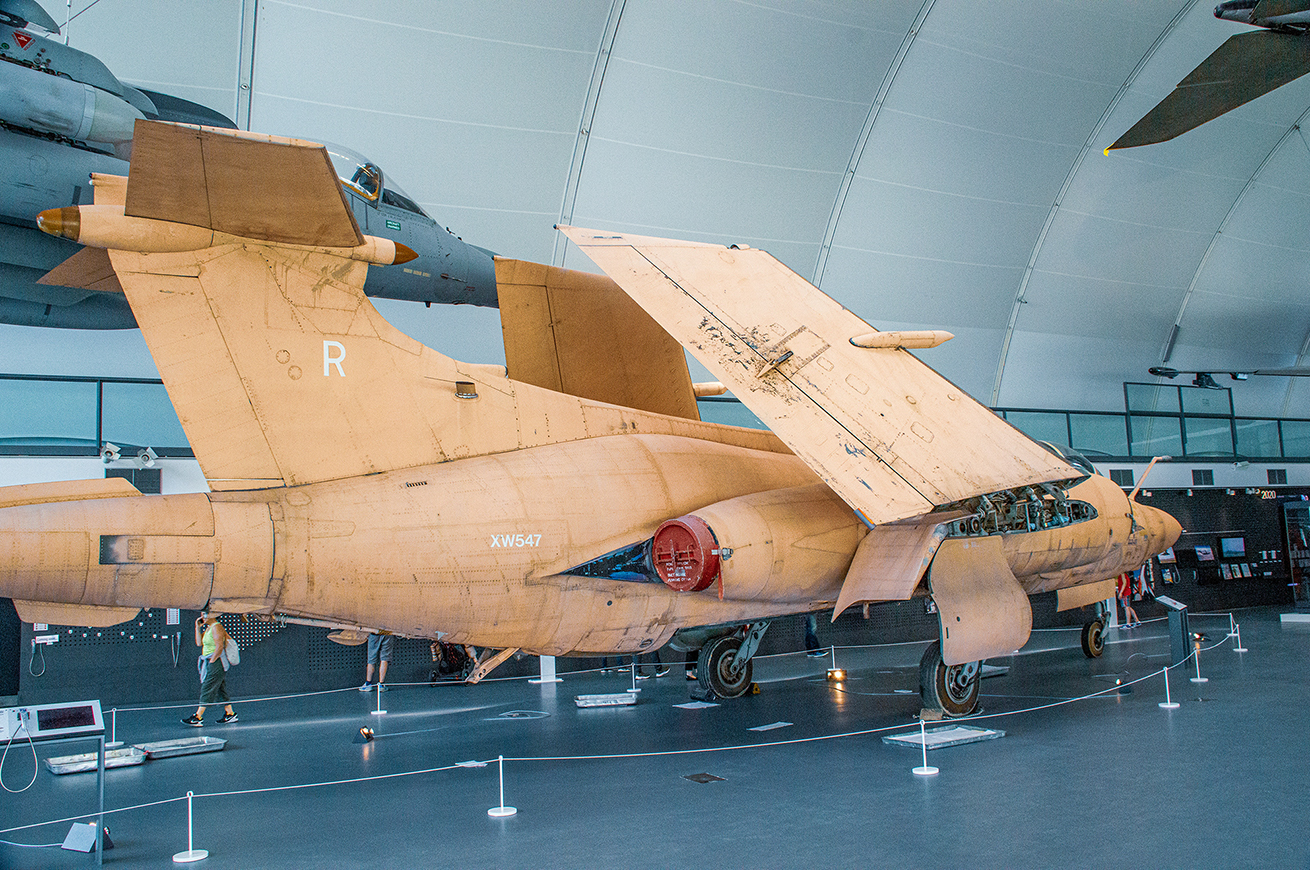
The image shows a military aircraft on display in a museum. The aircraft, marked with the tail number XW547 and the letter 'R', appears to be a fighter jet with a distinctive design, featuring twin tails and intakes. The jet is in a static display setting, with ropes and stanchions keeping visitors at a distance. The setting appears to be indoors, with other aircraft visible in the background, suggesting it is part of an aviation or military museum exhibit.
Hawker Siddeley Buccaneer S2B ‐ photo by ,
©www.mgaylard.co.uk.
The Hawker Siddeley Buccaneer S2B (XW547) is displayed at the RAF Museum Hendon, located in Hangar 5 (the Bomber Hall), which focuses on Cold War-era aircraft. This particular Buccaneer is notable for its service during the 1991 Gulf War (Operation Granby), where it was used for laser target designation missions in support of Tornado GR.1 strikes. It is painted in desert camouflage and bears mission markings from its Gulf War service, including the famous "Guinness Girl" nose art
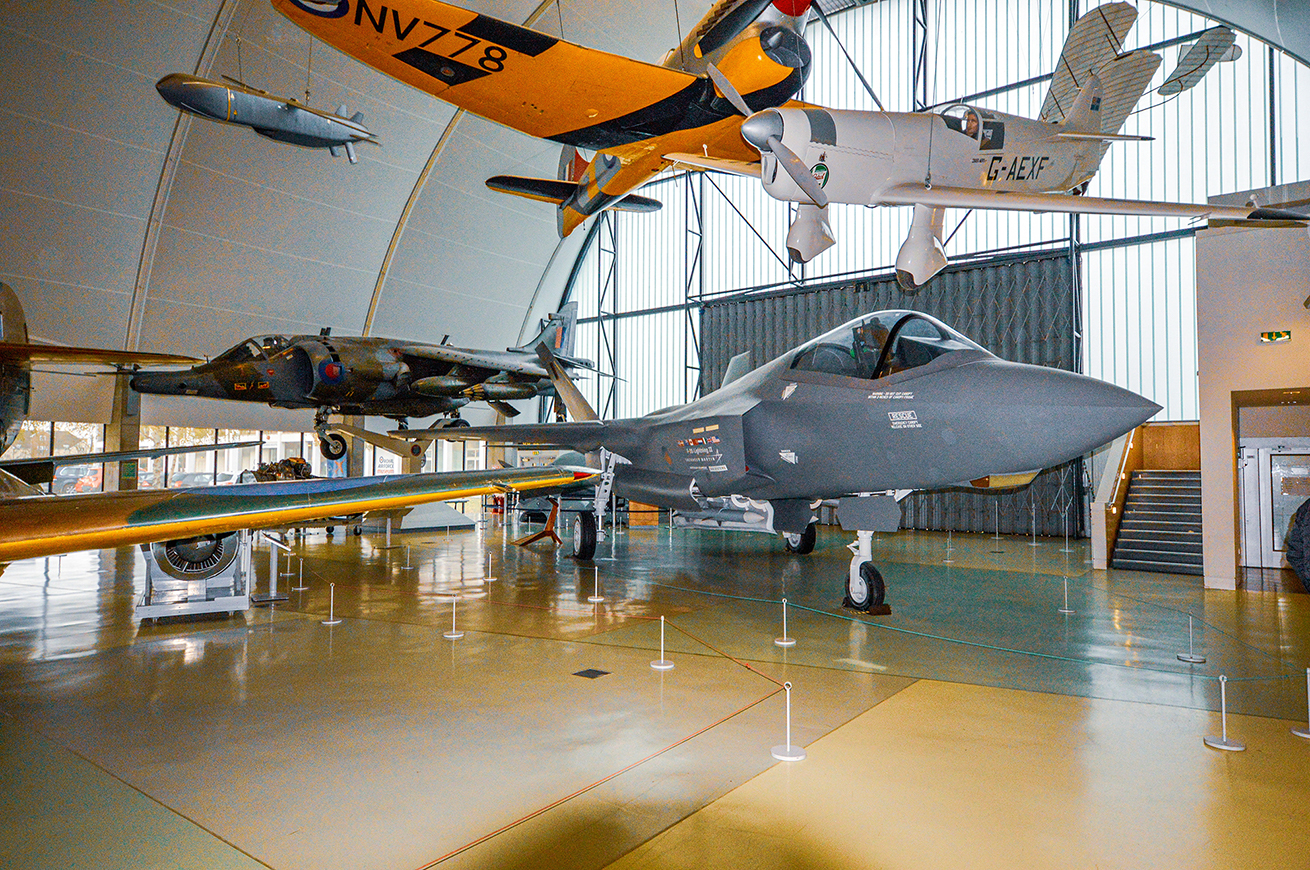
The image shows an aircraft museum with several planes on display. The planes are suspended from the ceiling and positioned on the floor, showcasing various models and designs. The setting appears to be well-lit with a polished floor, and there are small white posts on the floor, likely to guide visitors and protect the exhibits.
Lockheed Martin F35 Lightning Joint Strike Fighter ‐ photo by ,
©www.mgaylard.co.uk.
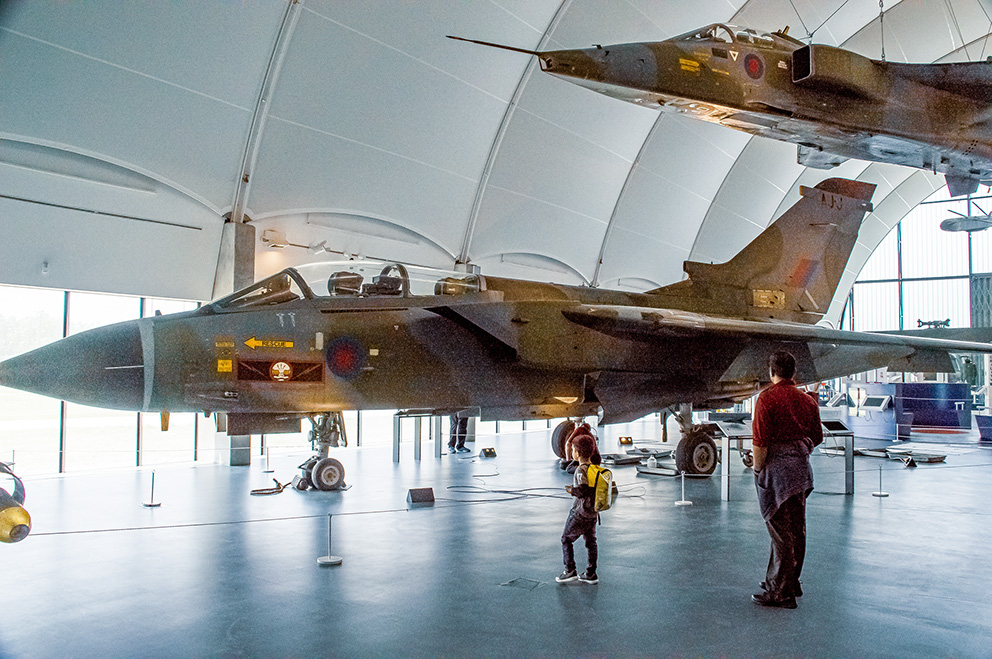
Panavia Tornado GR1B ‐ photo by ,
©www.mgaylard.co.uk.
Open the full set flickr button this page

Location

locale3

Grahame Park Way3location3London,   United Kingdom

Open the full set flickr button this page
To the top
Powered by w3.css. The images are all stored on link to www.gaylard.co.uk Photostream on Flickr   This website is hosted by link to 123Reg Web Hosting