HOME

Freemasons' Hall Museum

Freemasons' Hall Museum

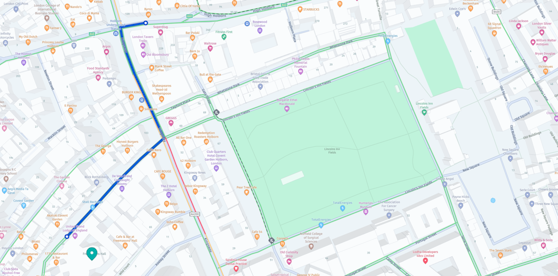
60 Great Queen Street>HolbornLondon,   United Kingdom

Freemasons' Hall Museum in Holborn, London, is the headquarters of the United Grand Lodge of England and home to a museum that explores the history and heritage of Freemasonry. The building is renowned for its grand Art Deco architecture and houses an extensive collection of Masonic artifacts, regalia, and documents. The museum offers visitors insight into the traditions, rituals, and global influence of Freemasonry over the centuries.
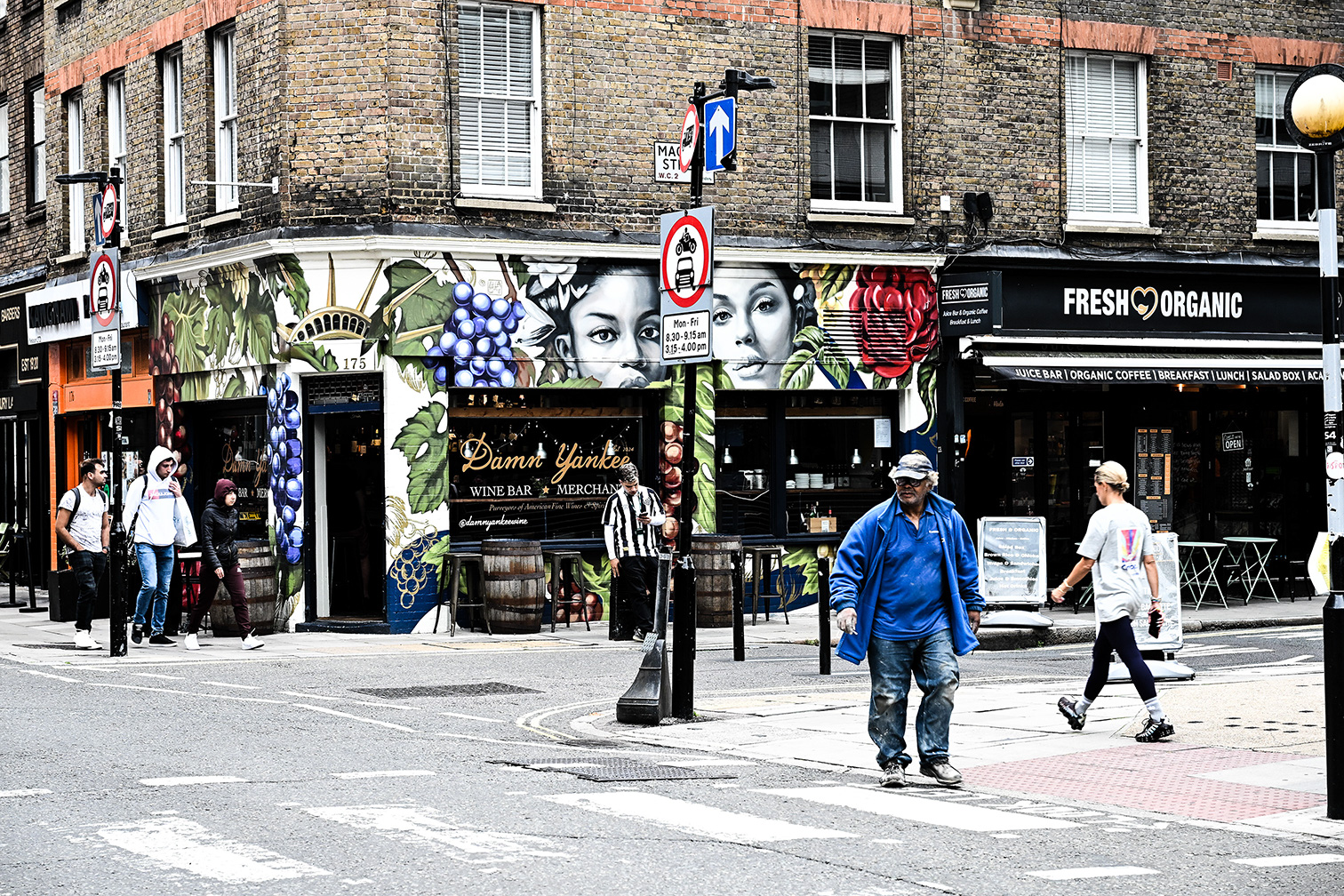
The image depicts a street scene with several pedestrians and storefronts. Prominent businesses include 'Damn Yankee,' a wine bar and merchant, and 'Fresh Organic,' offering organic food and beverages. The street is bustling with activity, and various signs and decorations adorn the buildings, contributing to a vibrant urban atmosphere.
Drury Lane ‐ photo by ,
©www.mgaylard.co.uk.
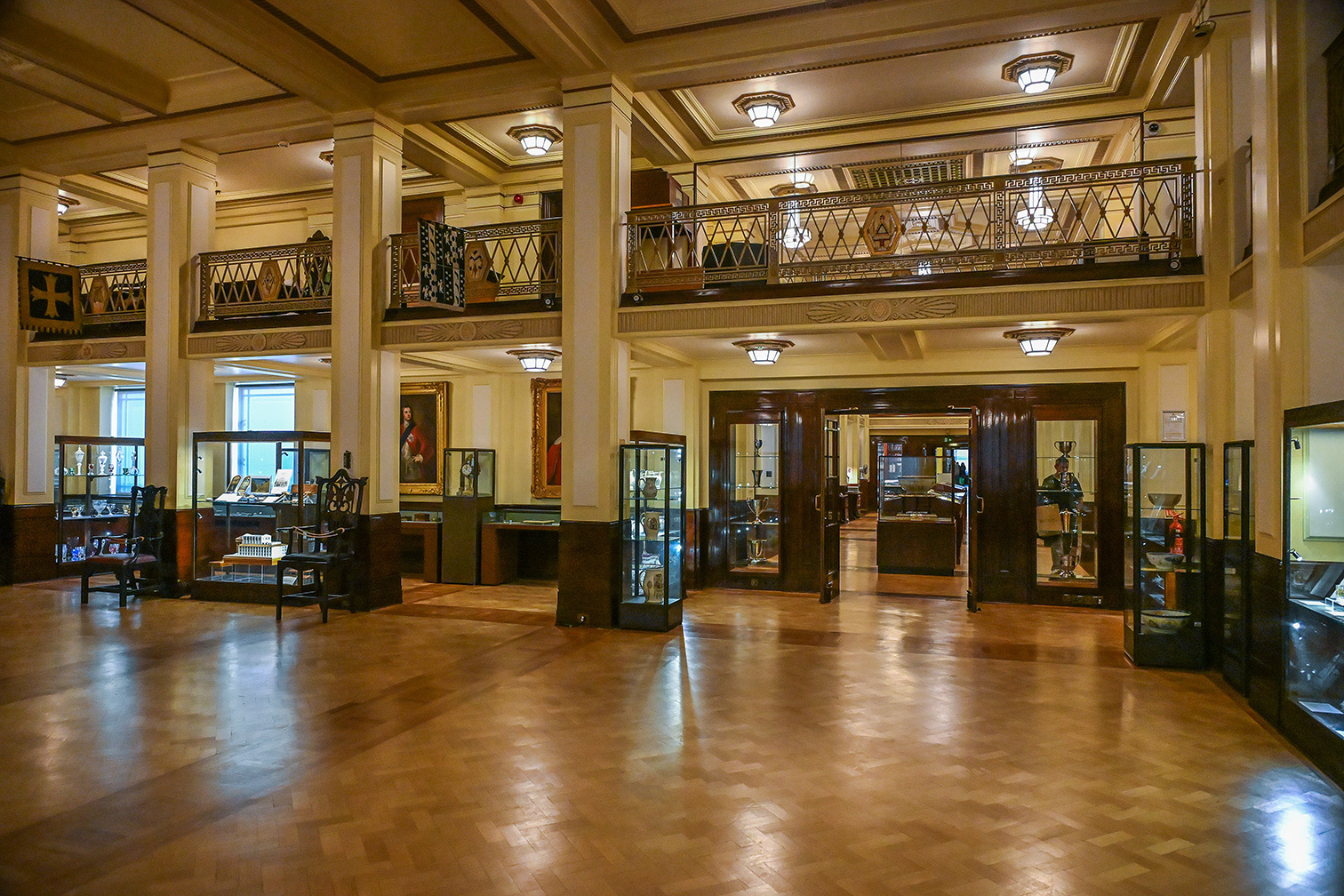
The image depicts an elegant, spacious interior of what appears to be a museum or gallery. The room features high ceilings with ornate designs, large columns, and intricate railings on the upper level. The floor is made of polished wood with a geometric pattern. Display cases filled with various artifacts and pieces of furniture are arranged around the room. The lighting is warm and inviting, with several hanging lanterns illuminating the space.
Inside Freemasons' Hall ‐ photo by ,
©www.mgaylard.co.uk.
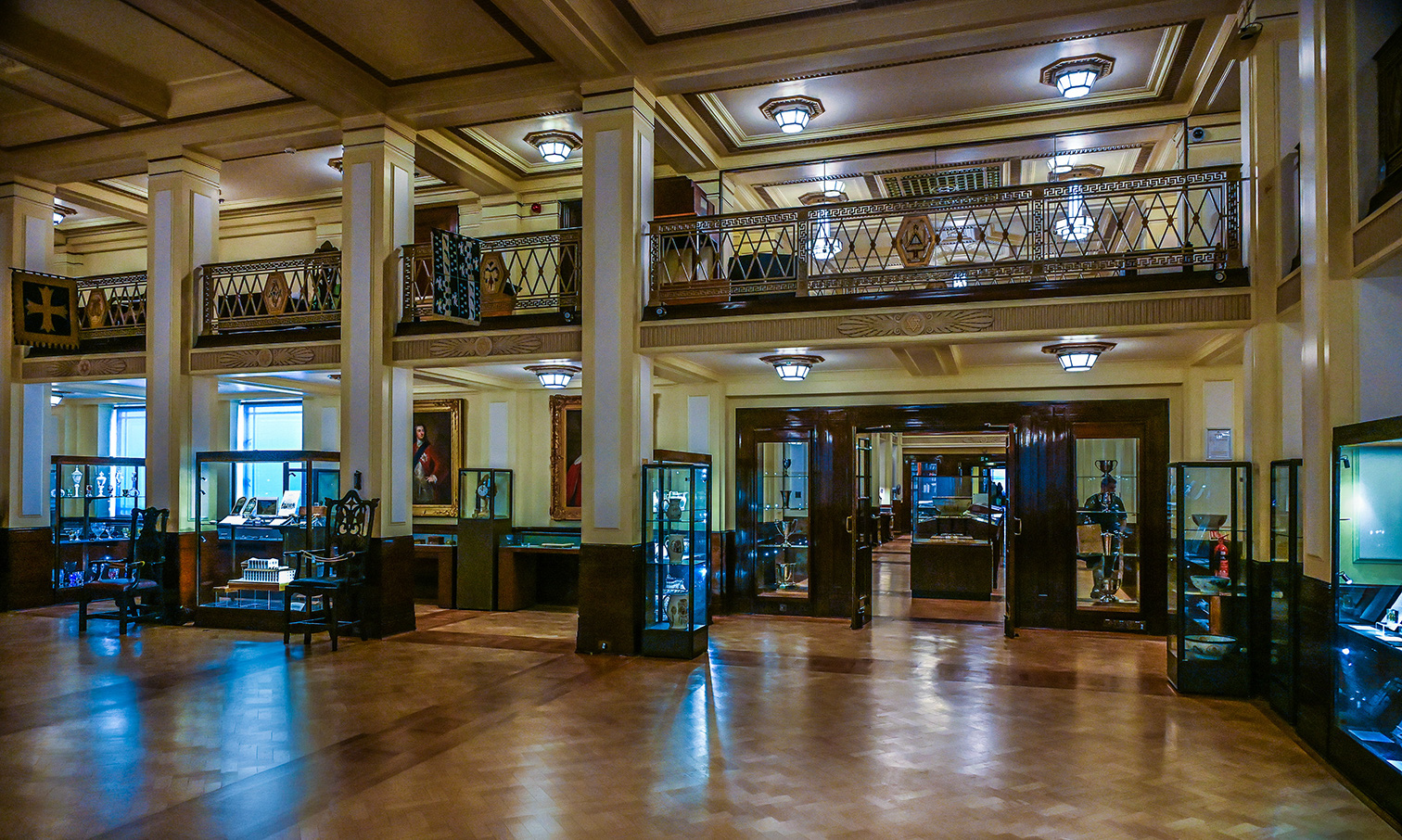
The image depicts an elegant, spacious interior with high ceilings and intricate architectural details. The room features large wooden columns, ornate railings on a balcony, and multiple display cases showcasing various artifacts and items. The floor is made of polished wood, reflecting the light from the lantern-style ceiling fixtures. There are several pieces of antique furniture and artwork on display, including paintings and decorative items. The overall ambiance suggests a museum or a historical building.
Inside Freemasons' Hall ‐ photo by ,
©www.mgaylard.co.uk.
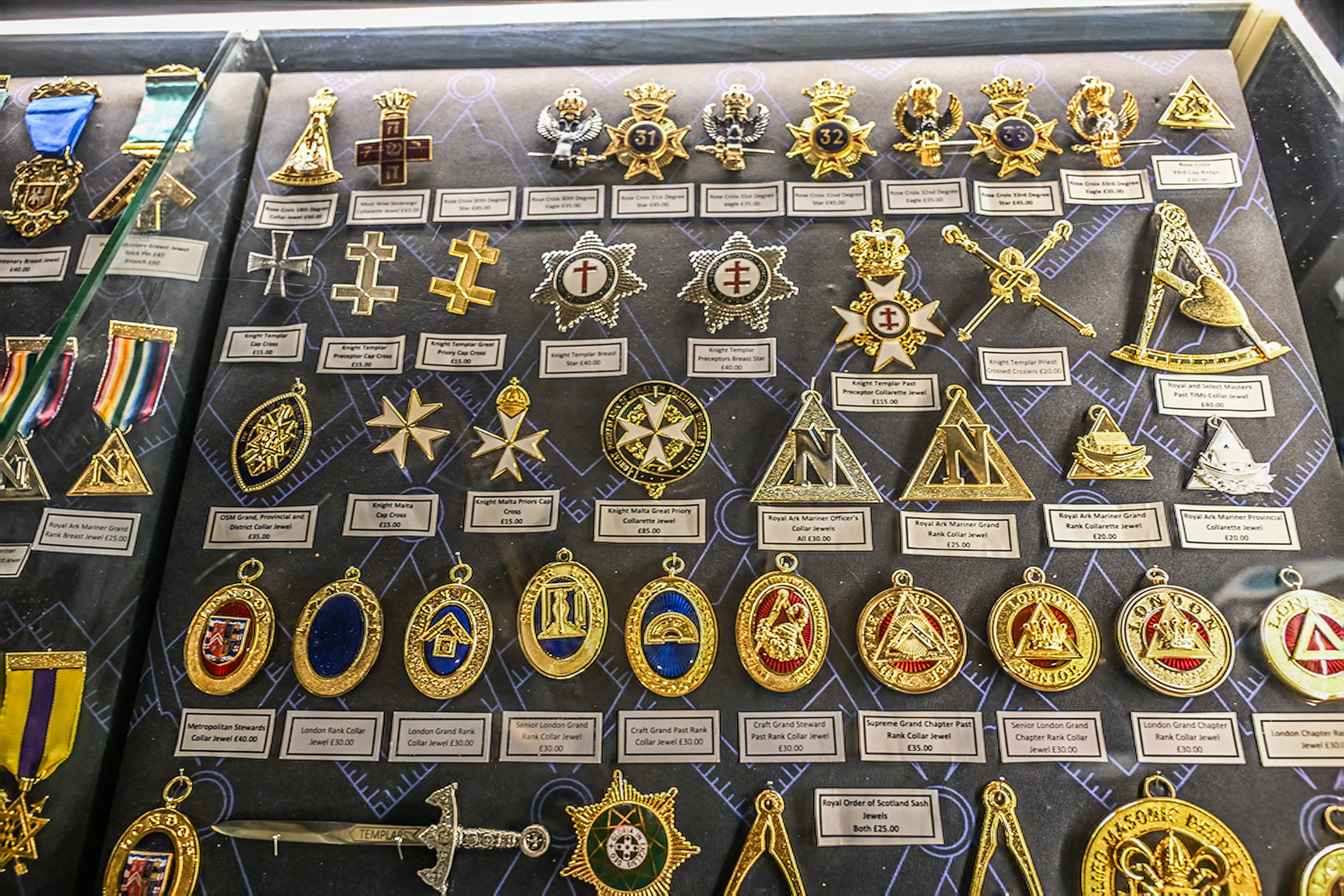
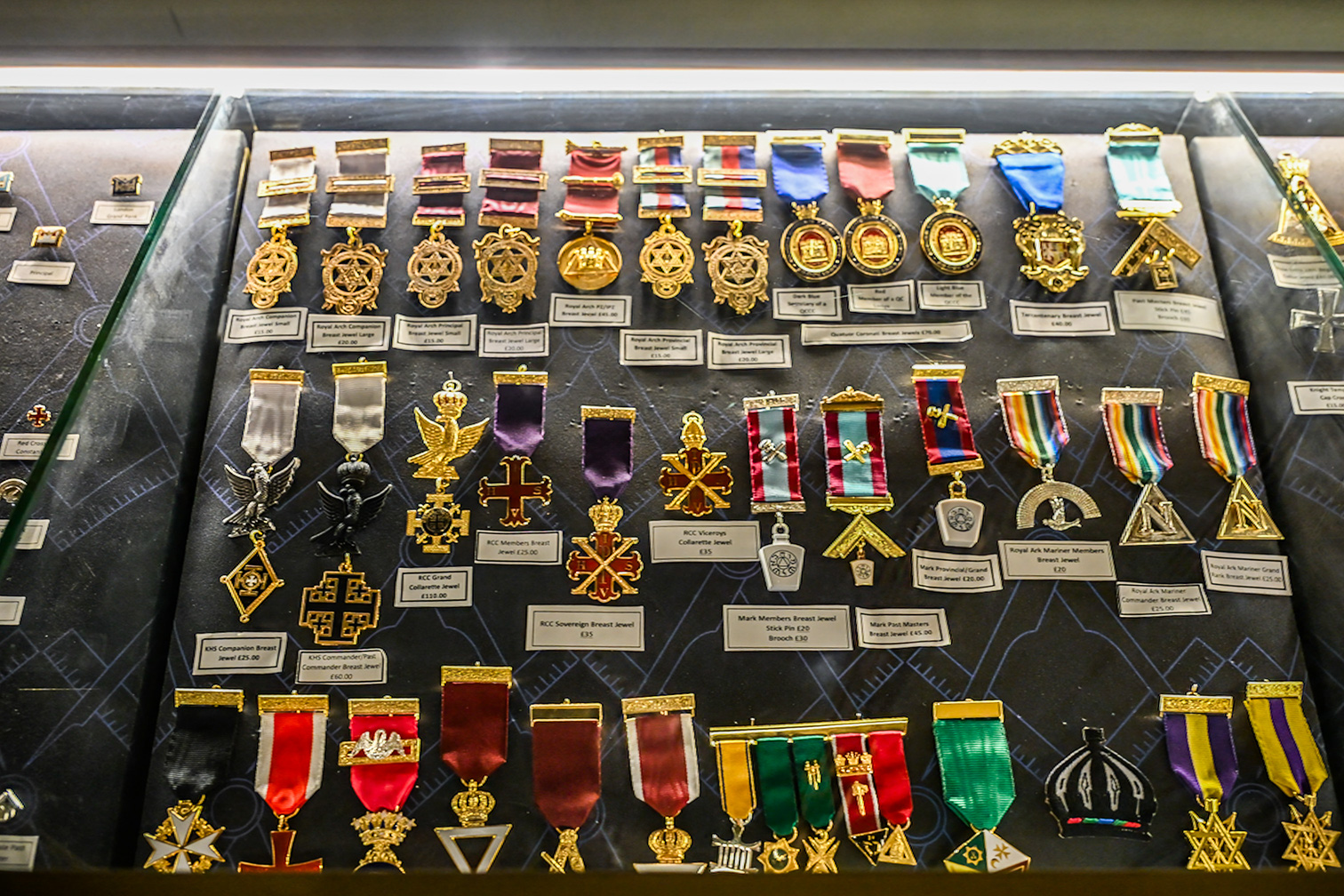
The image shows a display of various Masonic regalia and jewelry, including medals, collars, and other insignia. Each item is labeled with its name and price. The items are arranged neatly in rows and columns, showcasing a variety of designs and symbols associated with Freemasonry.
Inside Freemasons' Hall ‐ photo by ,
©www.mgaylard.co.uk.
The image displays a collection of various medals and insignia, each meticulously arranged and labeled with descriptions and prices. The medals vary in design, color, and size, showcasing intricate details and craftsmanship. They are organized in rows, with each medal having a small placard in front of it providing information about the item. The display appears to be part of a museum or exhibition, highlighting the historical and cultural significance of these medals.
Inside Freemasons' Hall ‐ photo by ,
©www.mgaylard.co.uk.
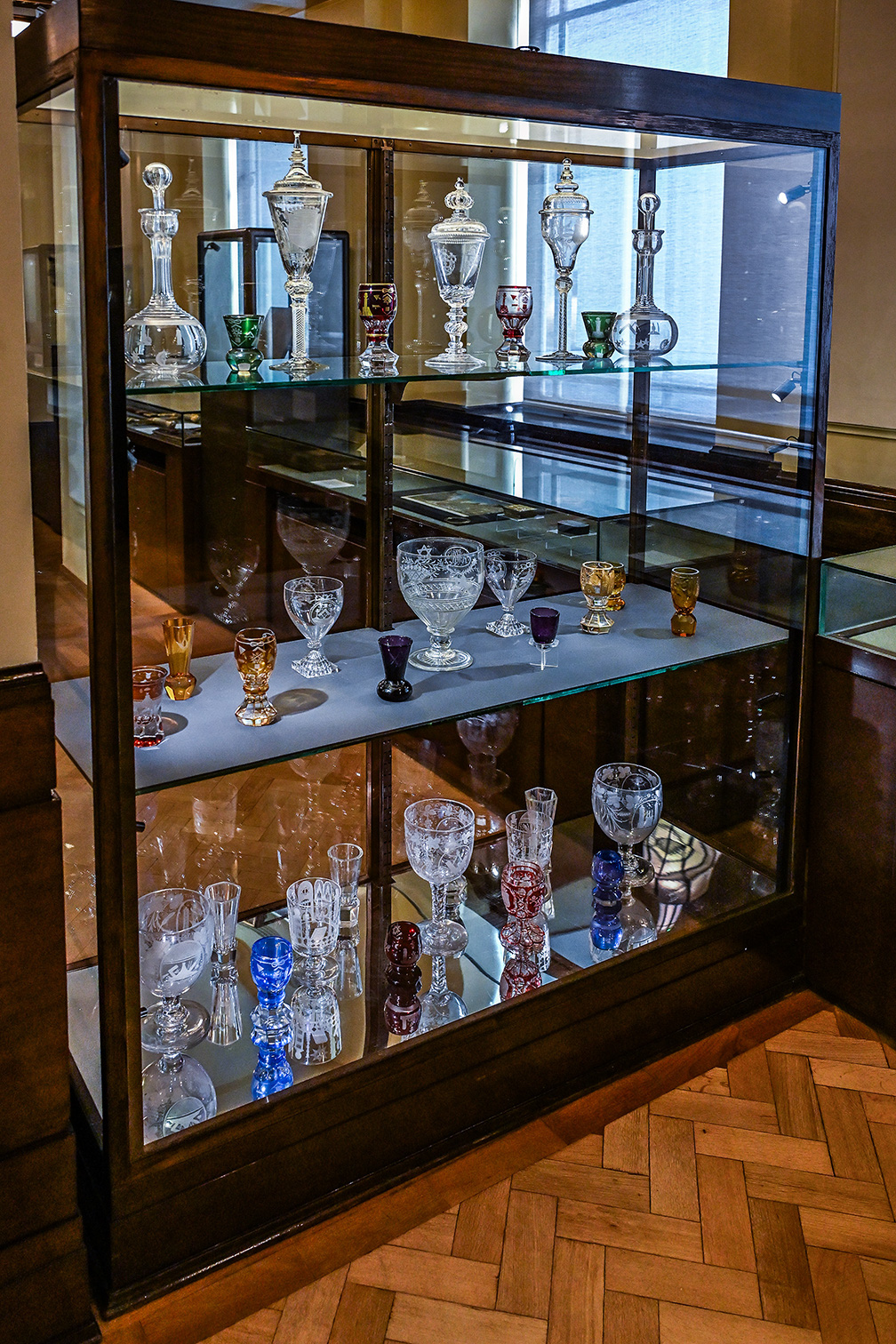
The image shows a glass display case containing a collection of various glassware items. The case has three shelves, each holding different types of glasses, goblets, and decorative pieces. The items vary in shape, size, and color, including clear, colored, and intricately designed pieces. The display is well-lit, highlighting the craftsmanship and details of each item. The floor beneath the display case is made of polished wood, adding to the elegant presentation of the collection.
Inside Freemasons' Hall ‐ photo by ,
©www.mgaylard.co.uk.
The image shows a display case in a museum featuring various pieces of porcelain, including teapots, jugs, and other ceramic items. The items are intricately decorated and placed on different shelves within the case. There are also some informational displays and photographs included in the case, likely providing context or historical information about the items on display.
Inside Freemasons' Hall ‐ photo by ,
©www.mgaylard.co.uk.
The image depicts a glass display case containing various historical artifacts and awards. The case has multiple shelves, each holding different items such as trophies, plaques, models, and other commemorative objects. The artifacts are arranged neatly and are accompanied by descriptive placards. The setting appears to be a museum or an exhibition hall, showcasing items of historical or institutional significance.
Inside Freemasons' Hall ‐ photo by ,
©www.mgaylard.co.uk.
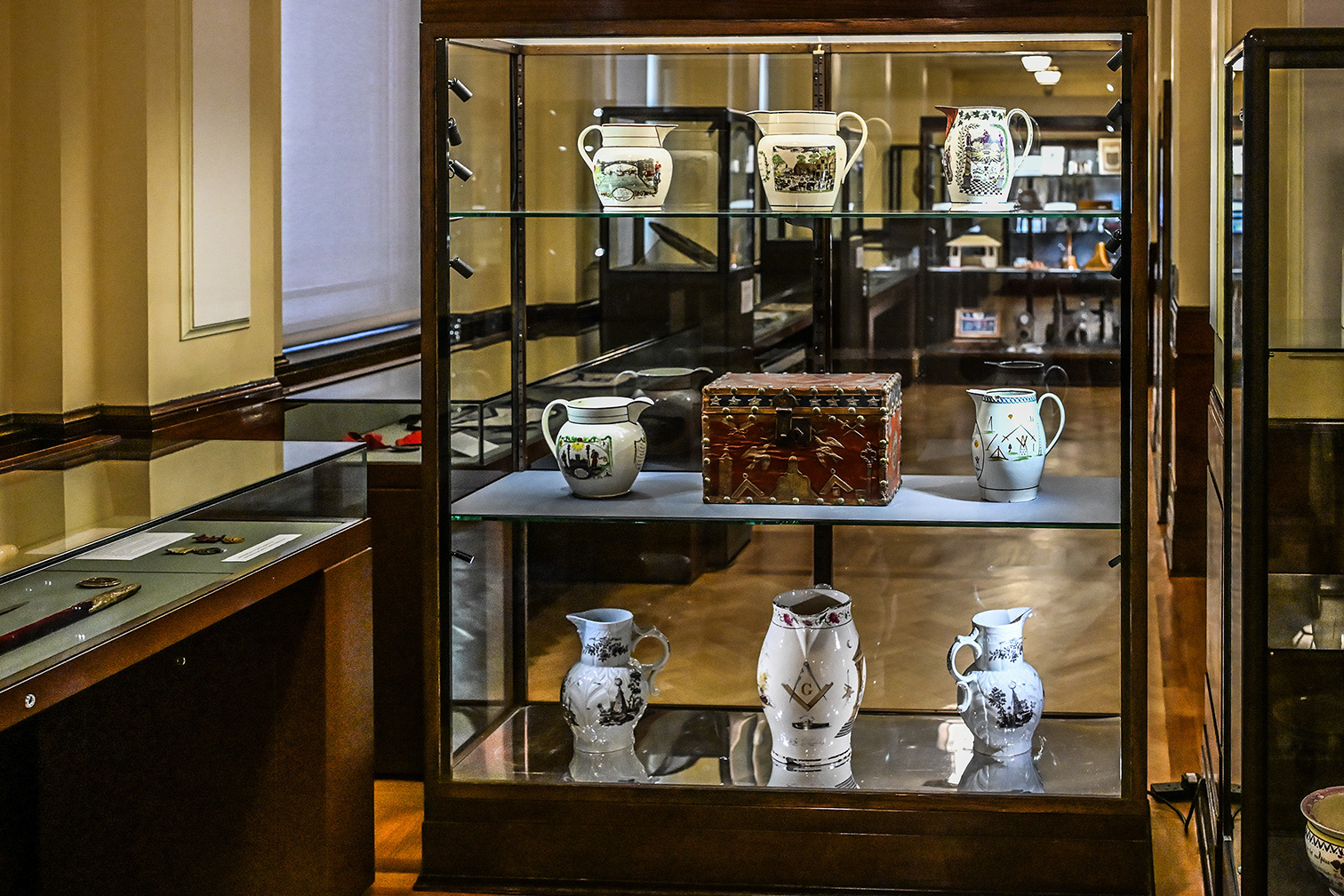
The image shows a display case in what appears to be a museum or an exhibit. The case contains various pieces of pottery, including jugs and a decorative box, all placed on glass shelves. The items are intricately designed and appear to be historical artifacts. The background suggests a well-lit, organized space with other display areas and visitors.
Inside Freemasons' Hall ‐ photo by ,
©www.mgaylard.co.uk.
The image depicts an elegant, historic interior space with high ceilings, large columns, and polished wooden floors. The area is adorned with various banners and flags hanging from the upper walls. There are antique wooden chairs arranged in a seating area, and a couple of display cases are visible. The space has a grand, formal atmosphere, likely part of a public or institutional building such as a museum, library, or government office.
Inside Freemasons' Hall ‐ photo by ,
©www.mgaylard.co.uk.
The image depicts a museum exhibit showcasing various memorabilia and artifacts. The display case contains items such as photographs, awards, models, and documents. The exhibit appears to be dedicated to a significant individual, likely a notable figure in space exploration or a related field. The setting is an indoor hallway with wooden floors and beige walls, illuminated by wall-mounted lamps.
Inside Freemasons' Hall ‐ photo by ,
©www.mgaylard.co.uk.
The image depicts a museum exhibit showcasing various memorabilia and artifacts. The display case contains items such as photographs, awards, models, and documents. The exhibit appears to be dedicated to a significant individual, likely a notable figure in space exploration or a related field. The setting is an indoor hallway with wooden floors and beige walls, illuminated by wall-mounted lamps.
Inside Freemasons' Hall ‐ photo by ,
©www.mgaylard.co.uk.
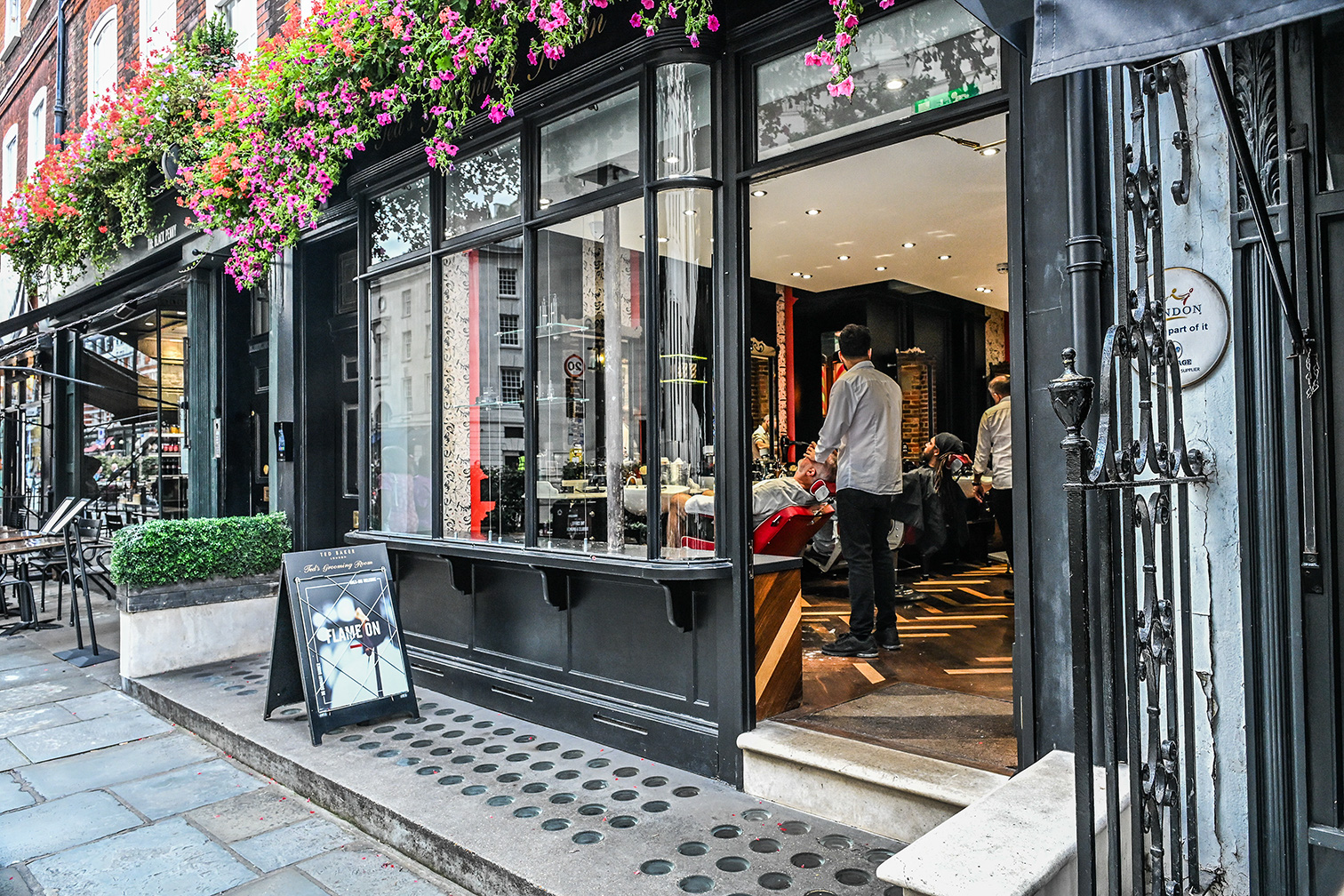
The image depicts the exterior of a restaurant named 'Flamsteed'. The facade features large glass windows with black frames, adorned with hanging flower baskets. The entrance is open, revealing a well-lit interior where people are seated and standing. A sandwich board outside advertises '1/2 Price Cocktails'. The setting appears to be urban, with a sidewalk and street visible in the foreground.
Barbershop ‐ photo by ,
©www.mgaylard.co.uk.
Open the full set flickr button this page
Freemasons' Hall Museum

Freemasons' Hall Museum, located within Freemasons' Hall in London, is dedicated to preserving and showcasing the history and culture of Freemasonry.

Historical Overview

Establishment:
The museum was established in 1838 and has been housed in Freemasons' Hall since 1933. It is part of the United Grand Lodge of England's headquarters.
camden/lincolnsinn:
Freemasons' Hall is a Grade II listed Art Deco building in the heart of London’s West End, designed by architects Ashley and Newman.

Collections and Exhibits

Artifacts and Exhibits:
The museum features a wide range of artifacts, including ceremonial objects, regalia, silverware, glassware, furniture, and artwork related to Freemasonry. It also houses archives and a library with over 30,000 books and manuscripts.
Famous Members:
The museum displays items belonging to notable Freemasons, such as Winston Churchill and Edward VII.

Visitor Information

Admission and Tours:
Entry to the museum is free from Tuesday to Saturday, 10:00 am to 5:00 pm. The museum offers guided tours of the building, including the Grand Temple, for a fee.
Accessibility:
The museum is accessible, and guided tours provide an in-depth look at the history and ceremonial aspects of Freemasonry.

References

www.ugle.org.uken.wikipedia.orgwww.museumslondon.org , Text generated by Mistral AI

Sir John Soane's Museum

Sir John Soane's Museum

13 Lincoln's Inn FieldsHolbornLondon,   United Kingdom

Sir John Soane's Museum is a unique and historic museum located in the former home of the celebrated architect Sir John Soane. Situated in Lincoln's Inn Fields, the museum houses Soane's extraordinary collection of art, antiquities, and architectural models, arranged in a series of atmospheric and intricately designed rooms. The museum offers visitors a glimpse into Soane's eclectic tastes and innovative architectural vision.
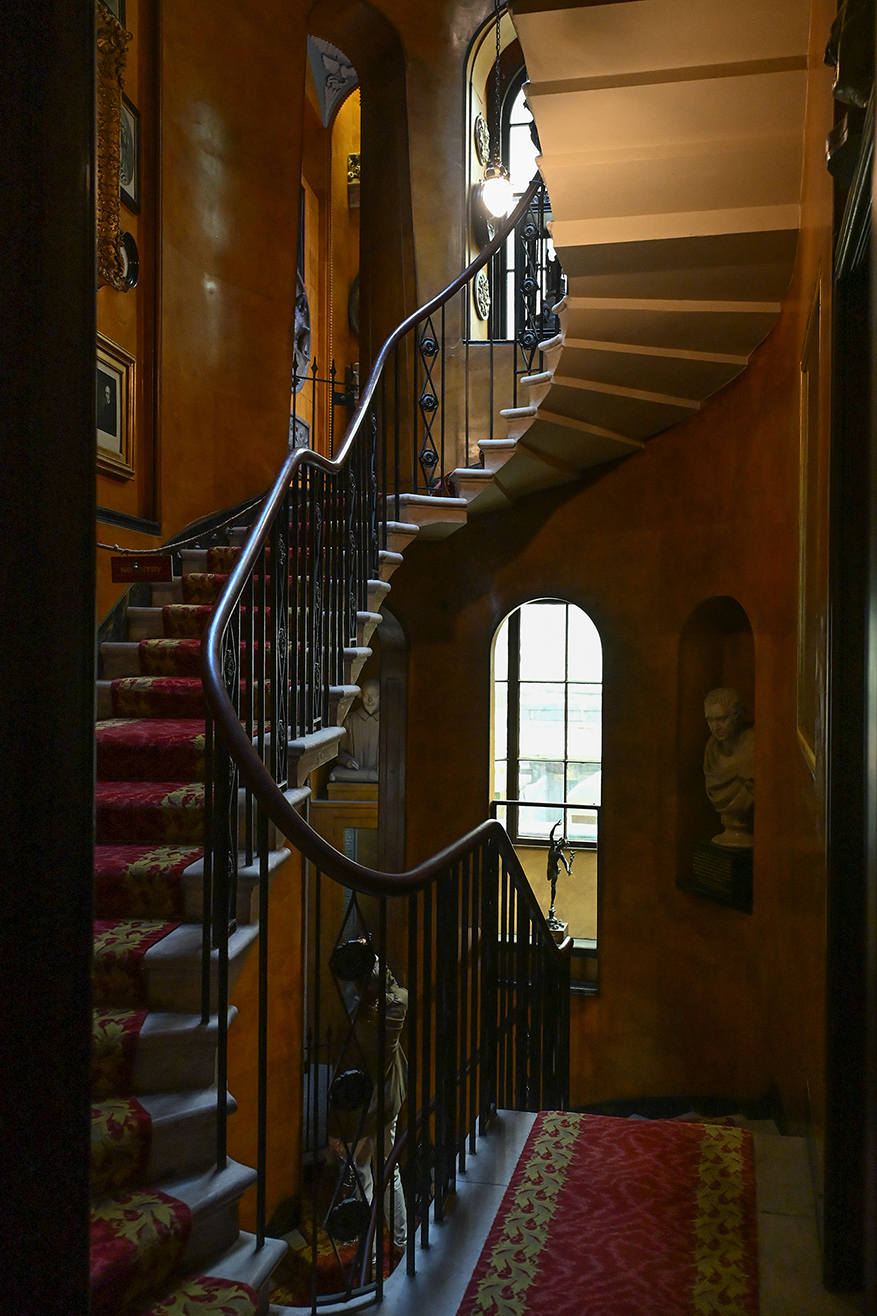
The image depicts an elegant, spiral staircase in a well-lit, ornately decorated interior. The staircase features a wrought iron railing and is adorned with a red and gold patterned carpet. The walls are decorated with framed artworks and a bust statue is placed in a niche by a window, allowing natural light to illuminate the space
staircase ‐ photo by ,
©www.mgaylard.co.uk.
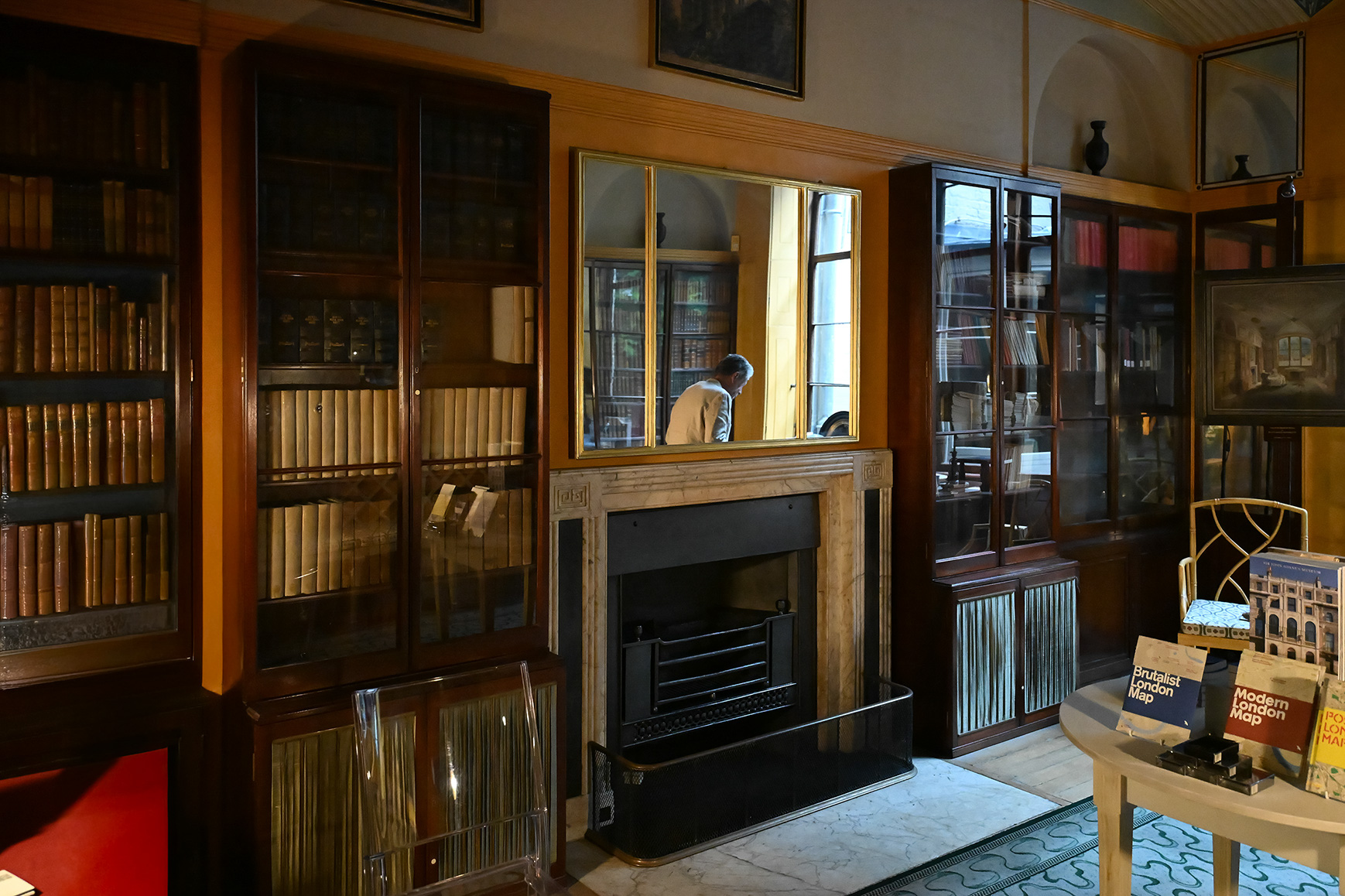
The image depicts a cozy, well-lit room with wooden bookshelves filled with books and glass-fronted cabinets. The room features a fireplace with a wooden mantel, and a person is seen through a window, leaning in to look at something. There are various items on display, including maps and other reading materials on a small table in the foreground. The overall ambiance suggests a quiet, scholarly environment, possibly a library or study.
library or study ‐ photo by ,
©www.mgaylard.co.uk.
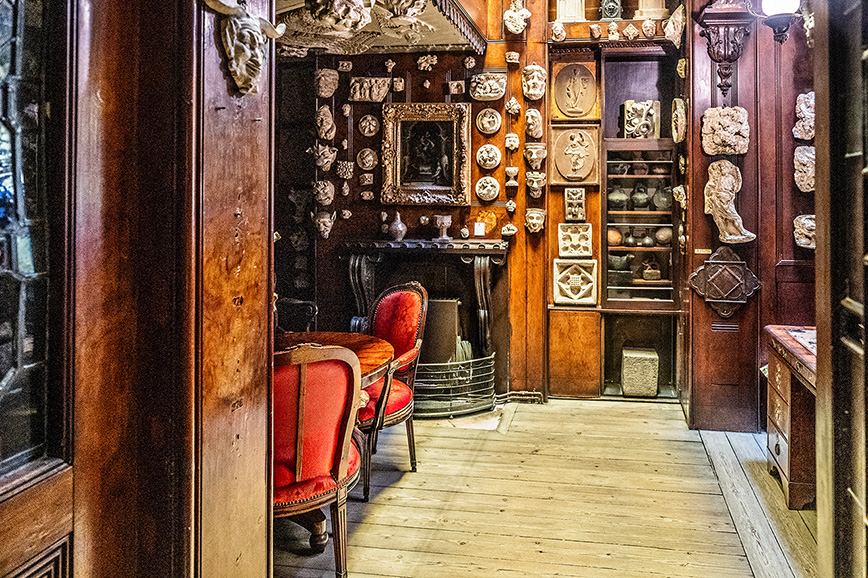
The image depicts a cozy, antique room filled with ornate wooden furniture and various decorative items. The walls are adorned with intricate carvings and framed artwork. There are two red upholstered chairs positioned near a fireplace, and the floor is made of polished wood. Shelves and cabinets display an array of decorative plates and sculptures. The overall ambiance is warm and inviting, reminiscent of a vintage interior design style.
The walls are adorned with intricate carvings and framed artwork ‐ photo by ,
©www.mgaylard.co.uk.
Inside Freemasons' Hall ‐ photo by ,
©www.mgaylard.co.uk.
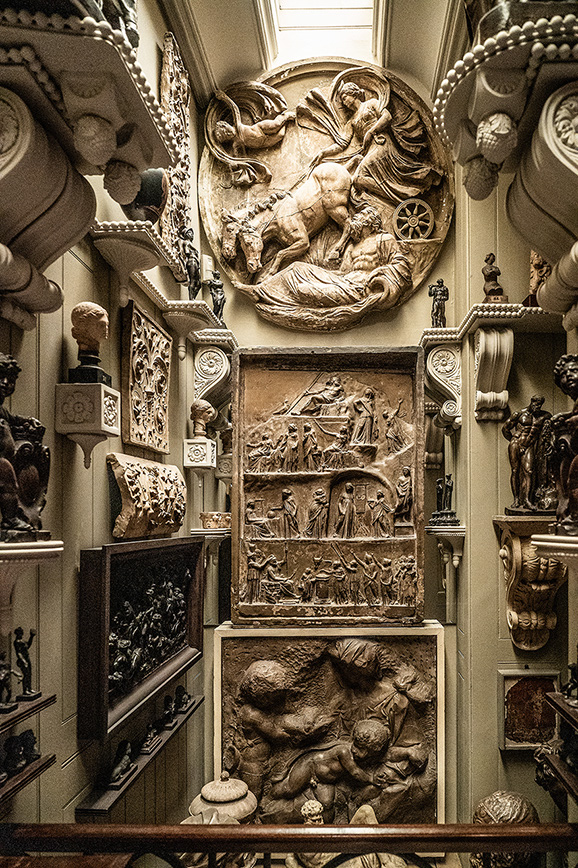
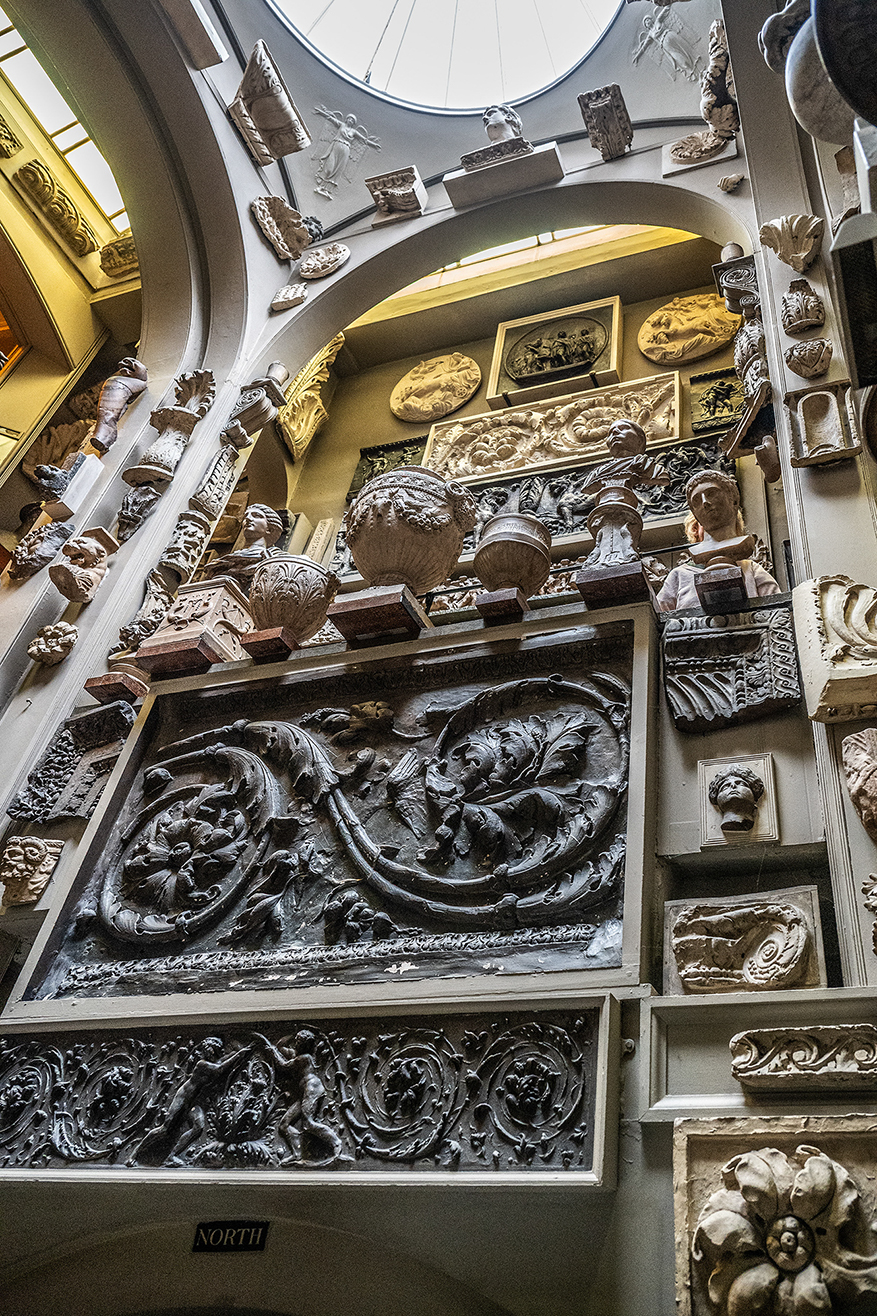
The image depicts an ornate room filled with intricate sculptures and carvings. The room features a variety of detailed reliefs and statues, including a prominent circular relief at the top center showing a dynamic scene, possibly from mythology. Below it, there are additional reliefs and sculptures, each showcasing different scenes and figures. The room is adorned with elaborate decorations, including ornate moldings and decorative elements on the walls and ceiling.
a variety of detailed reliefs and statues ‐ photo by ,
©www.mgaylard.co.uk.
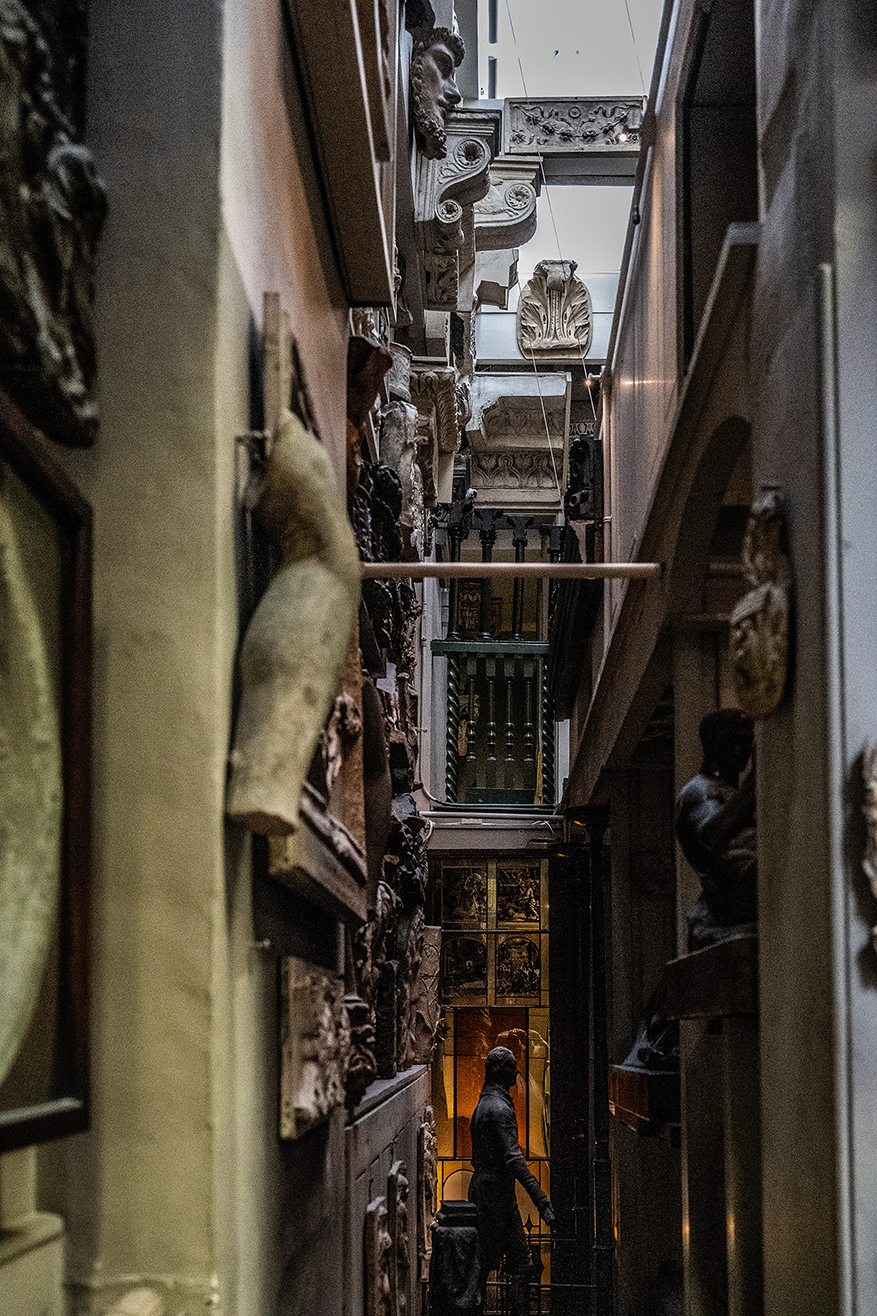
The image depicts a narrow, dimly lit alleyway with ornate architectural details and statues lining both sides. The alleyway extends into the distance, creating a sense of depth and leading to a brightly lit area at the end where a person is visible. The overall atmosphere is somewhat mysterious and intriguing.
passageway with ornate architectural details and statues lining both sides ‐ photo by ,
©www.mgaylard.co.uk.
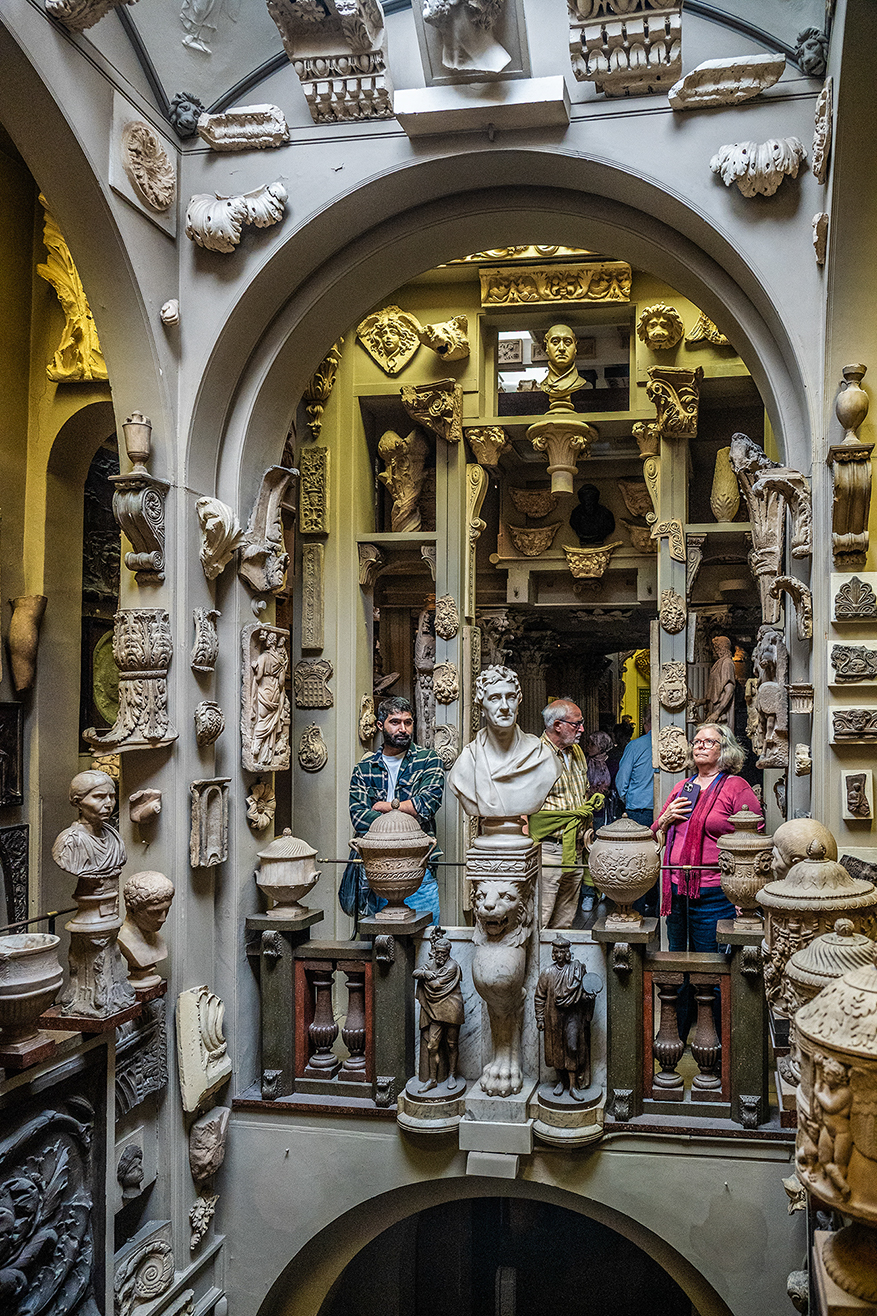
The document describes a detailed and ornate architectural scene featuring a large statue of a man holding a globe, surrounded by various decorative elements such as urns, sculptures, and intricate carvings. The setting appears to be a grand, classical interior with arches and detailed stonework.
ecorative elements such as urns, sculptures, and intricate carvings ‐ photo by ,
©www.mgaylard.co.uk.
The image depicts an interior space, likely a museum or gallery, showcasing a variety of intricate and elaborate stone carvings and reliefs. The carvings include detailed depictions of figures, animals, and ornate designs. The display is organized in a structured manner, with pieces arranged on shelves and walls. The overall ambiance suggests a historical or classical theme, emphasizing the artistry and craftsmanship of stone carving.
The display is organized in a structured manner, with pieces arranged on shelves and walls ‐ photo by ,
©www.mgaylard.co.uk.
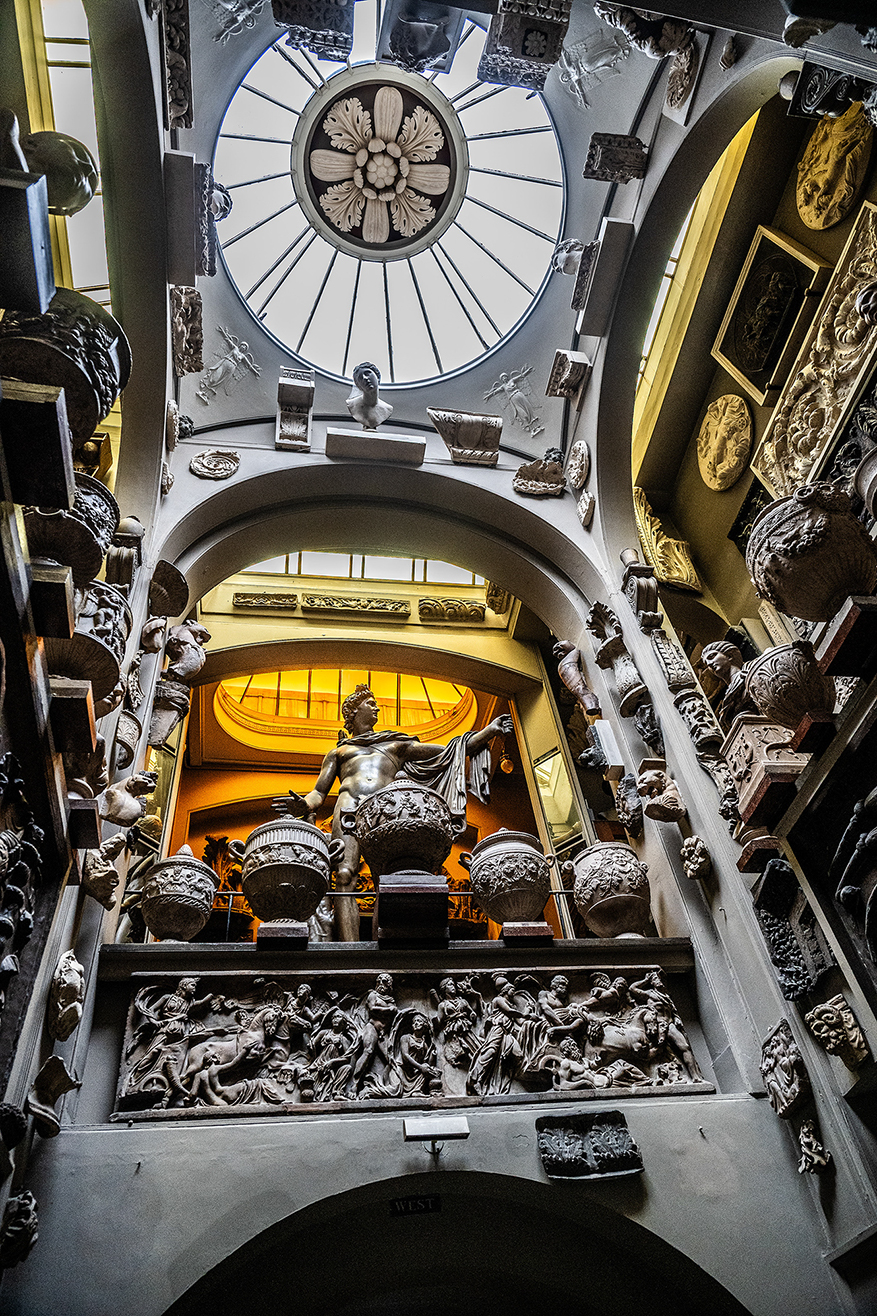
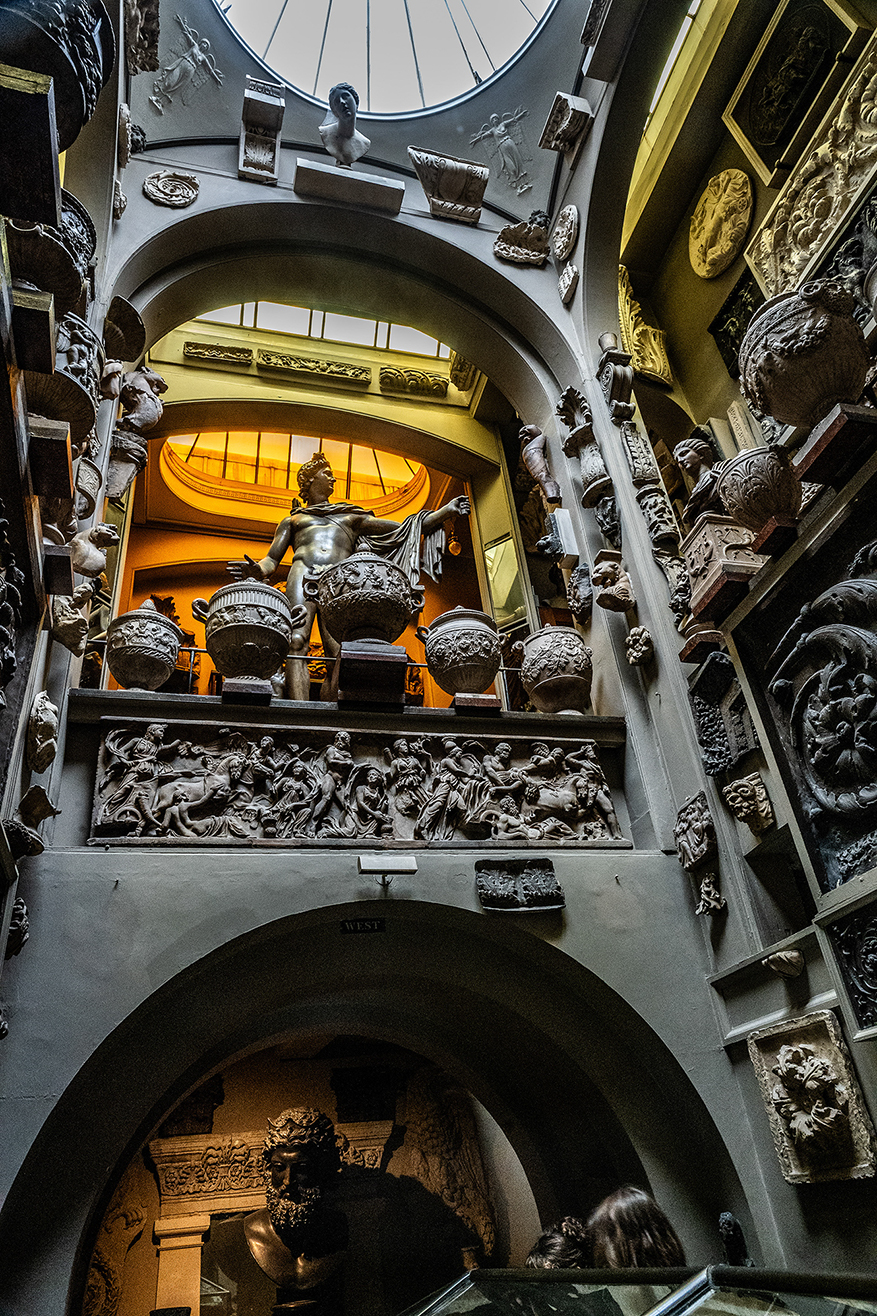
The image depicts an ornate interior space, likely a museum or gallery, featuring classical sculptures and intricate architectural details. The ceiling has a large, decorative skylight surrounded by sculpted reliefs and statues. The central statue appears to be of a classical figure, possibly a god or mythological character, standing on a pedestal adorned with elaborate carvings. The walls are lined with various sculptures and reliefs, showcasing detailed craftsmanship and artistic design.
an ornate interior space ‐ photo by ,
©www.mgaylard.co.uk.
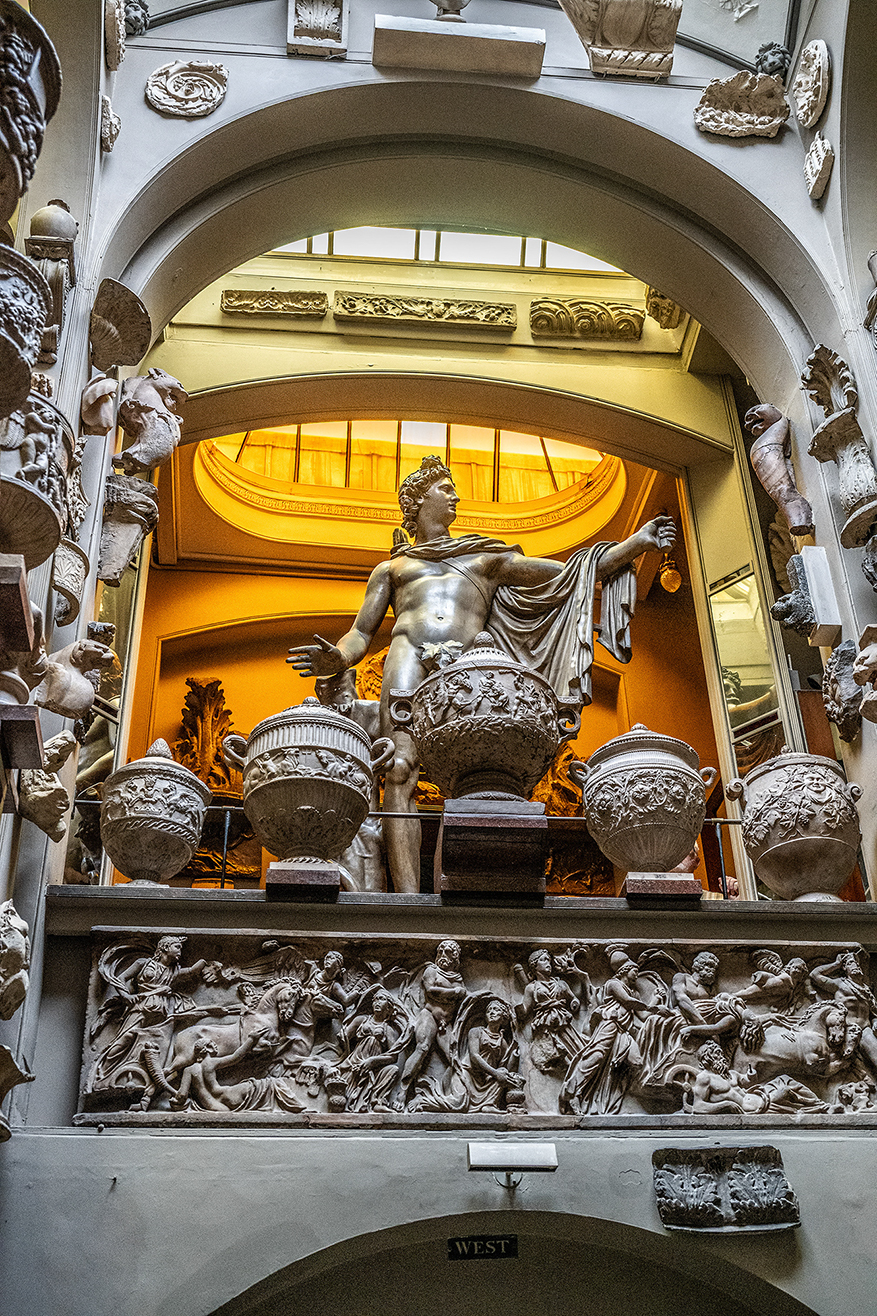
The image depicts an ornate interior space, likely a museum or gallery, featuring classical sculptures and architectural elements. The space is characterized by arched doorways, intricate carvings, and a variety of statues, including a prominent statue of a male figure holding a large urn. The ceiling is adorned with a skylight, allowing natural light to illuminate the area. The walls are decorated with detailed reliefs and various sculptural pieces, contributing to the classical and historical ambiance of the space.
a prominent statue of a male figure ‐ photo by ,
©www.mgaylard.co.uk.
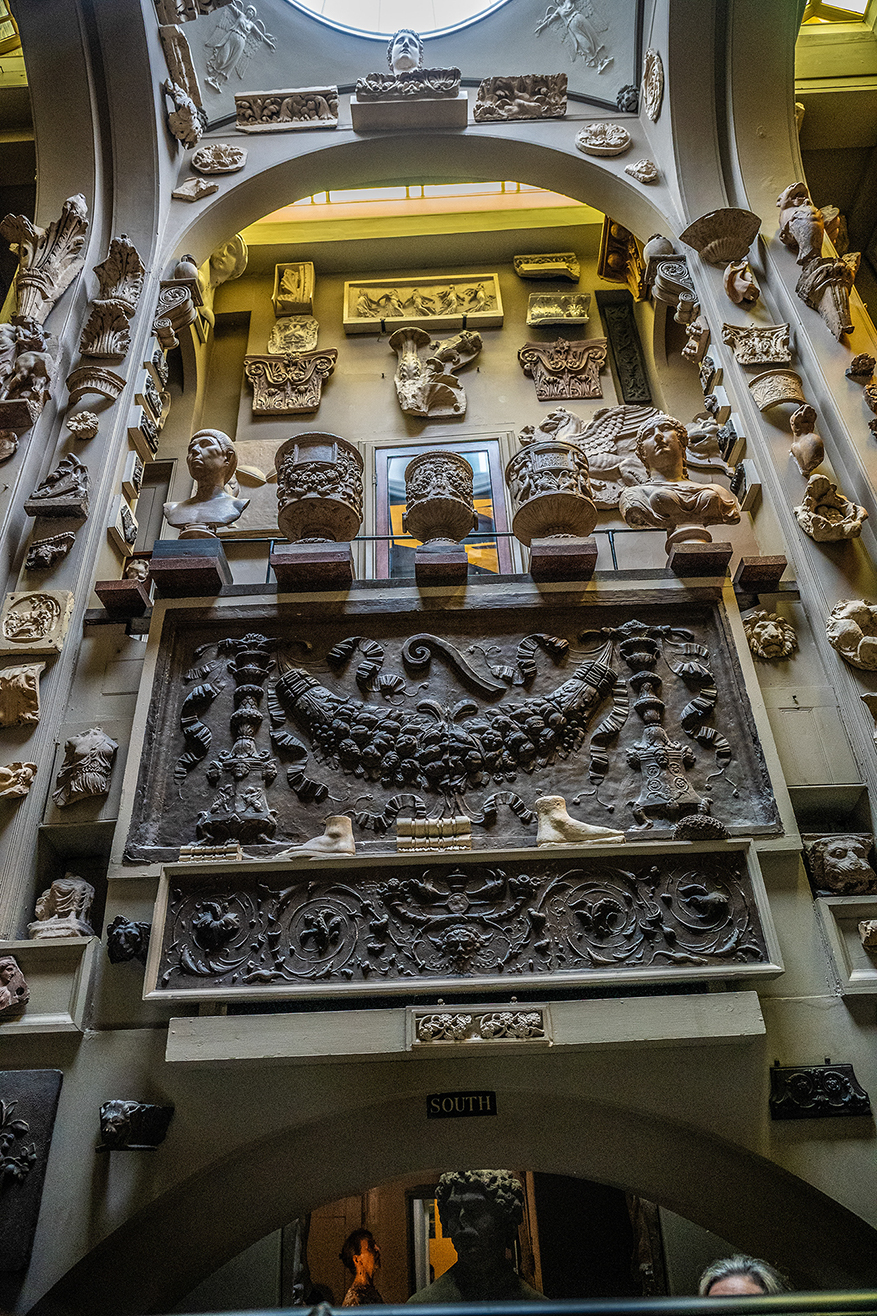
The image depicts an ornate interior space, likely a museum or gallery, showcasing a variety of classical stone carvings and sculptures. The display includes busts, decorative reliefs, and architectural elements such as columns and friezes. The central focus is a large, intricate relief panel with detailed figures and scenes, possibly from ancient mythology or history. The area is labeled 'SOUTH,' indicating a specific section or orientation within the space.
carvings and sculptures ‐ photo by ,
©www.mgaylard.co.uk.
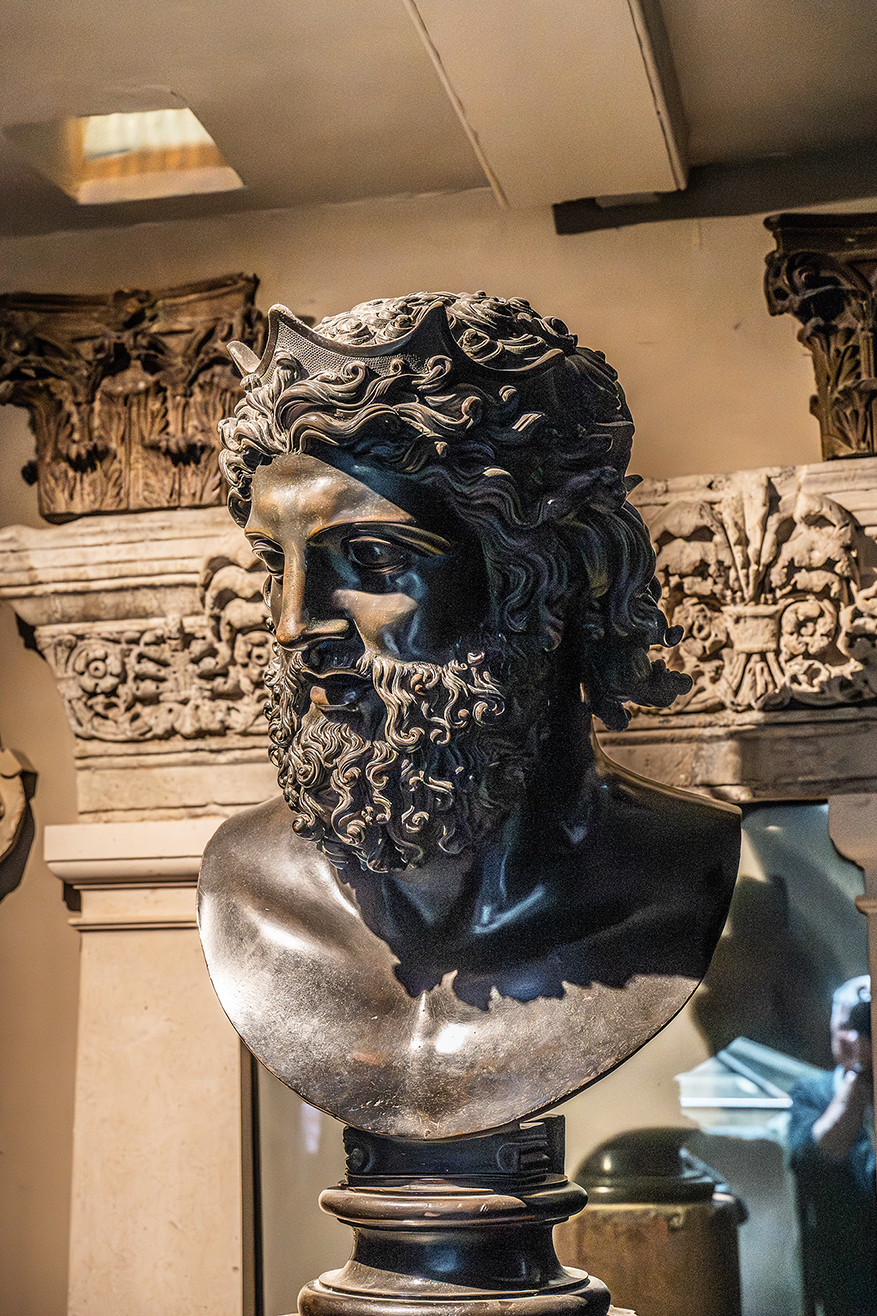
The image shows a detailed bronze bust of a bearded man with curly hair and a serious expression. The bust is mounted on a pedestal and is displayed in a museum-like setting with ornate architectural elements in the background.
a detailed bronze bust of a bearded man with curly hair and a serious expression ‐ photo by ,
©www.mgaylard.co.uk.
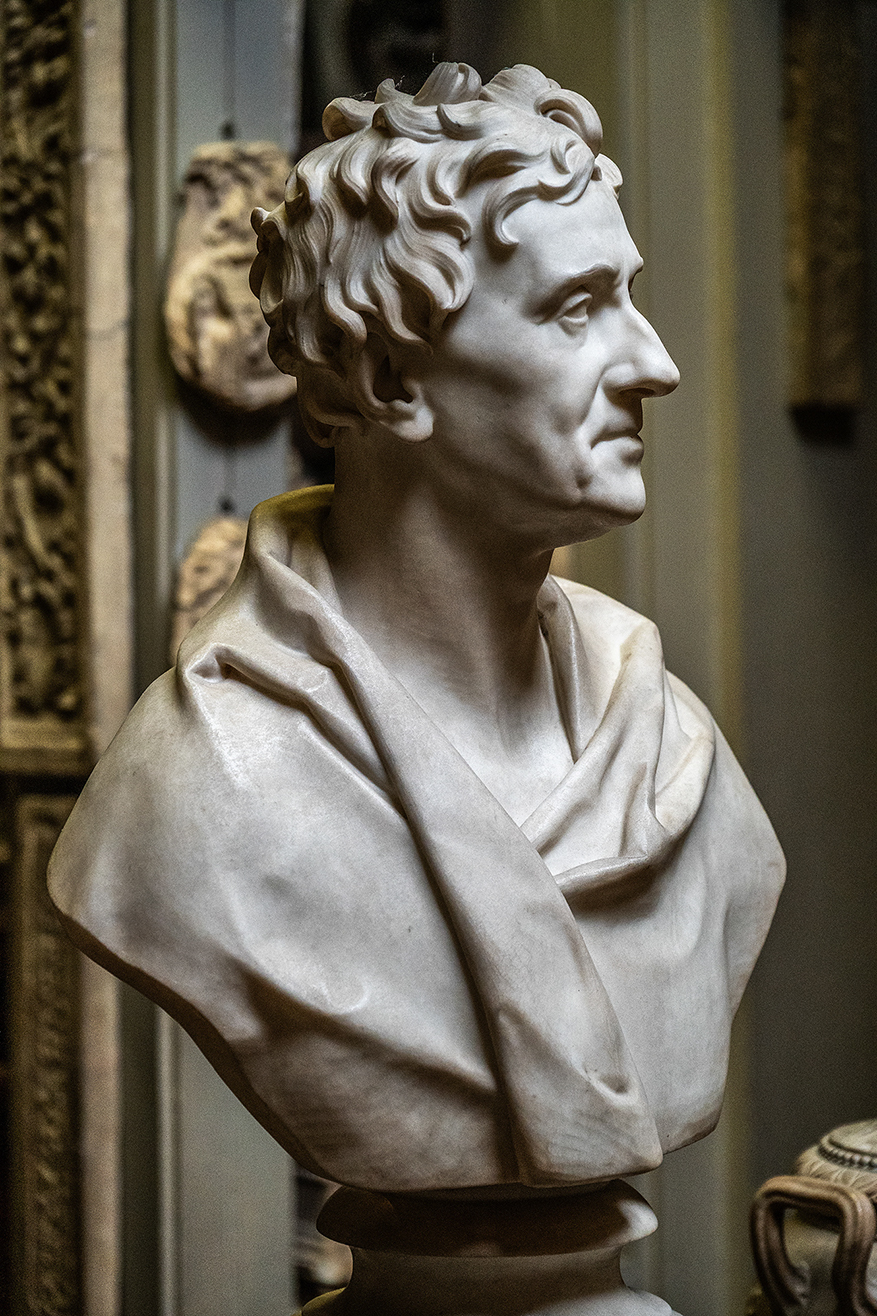
The image depicts a marble bust of a man with curly hair, wearing a draped garment. The bust is displayed in what appears to be a museum or gallery setting, with other classical art pieces visible in the background. The sculpture captures the man's likeness with detailed attention to his facial features and the texture of his hair and clothing.
marble bust of a man ‐ photo by ,
©www.mgaylard.co.uk.
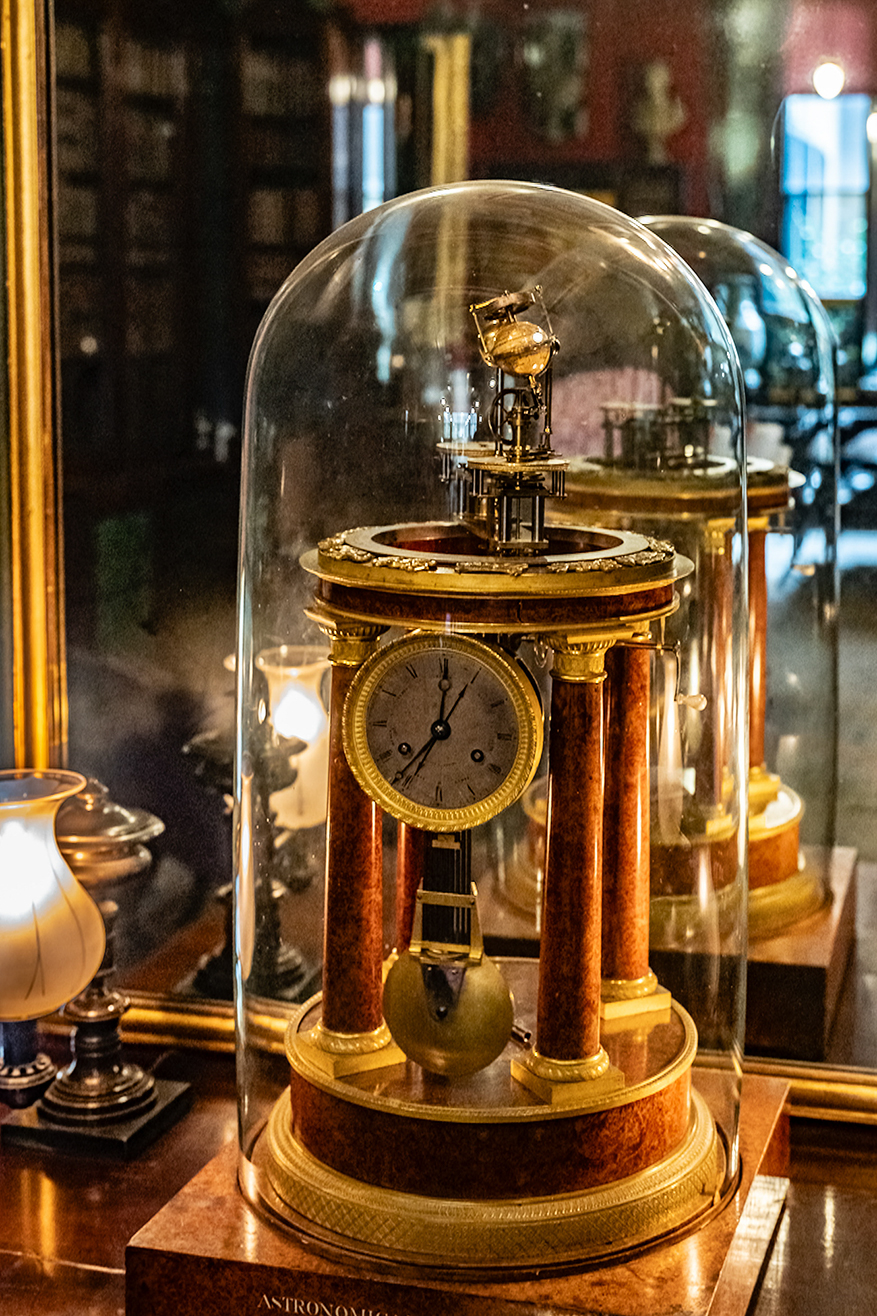
The image shows an antique clock encased in a glass dome. The clock has a wooden base with gold accents and a round face with Roman numerals. Above the clock face, there is a mechanism with a pendulum and a small golden figure that likely chimes on the hour. The clock is part of a collection, as other similar clocks are visible in the background
an antique clock encased in a glass dome ‐ photo by ,
©www.mgaylard.co.uk.
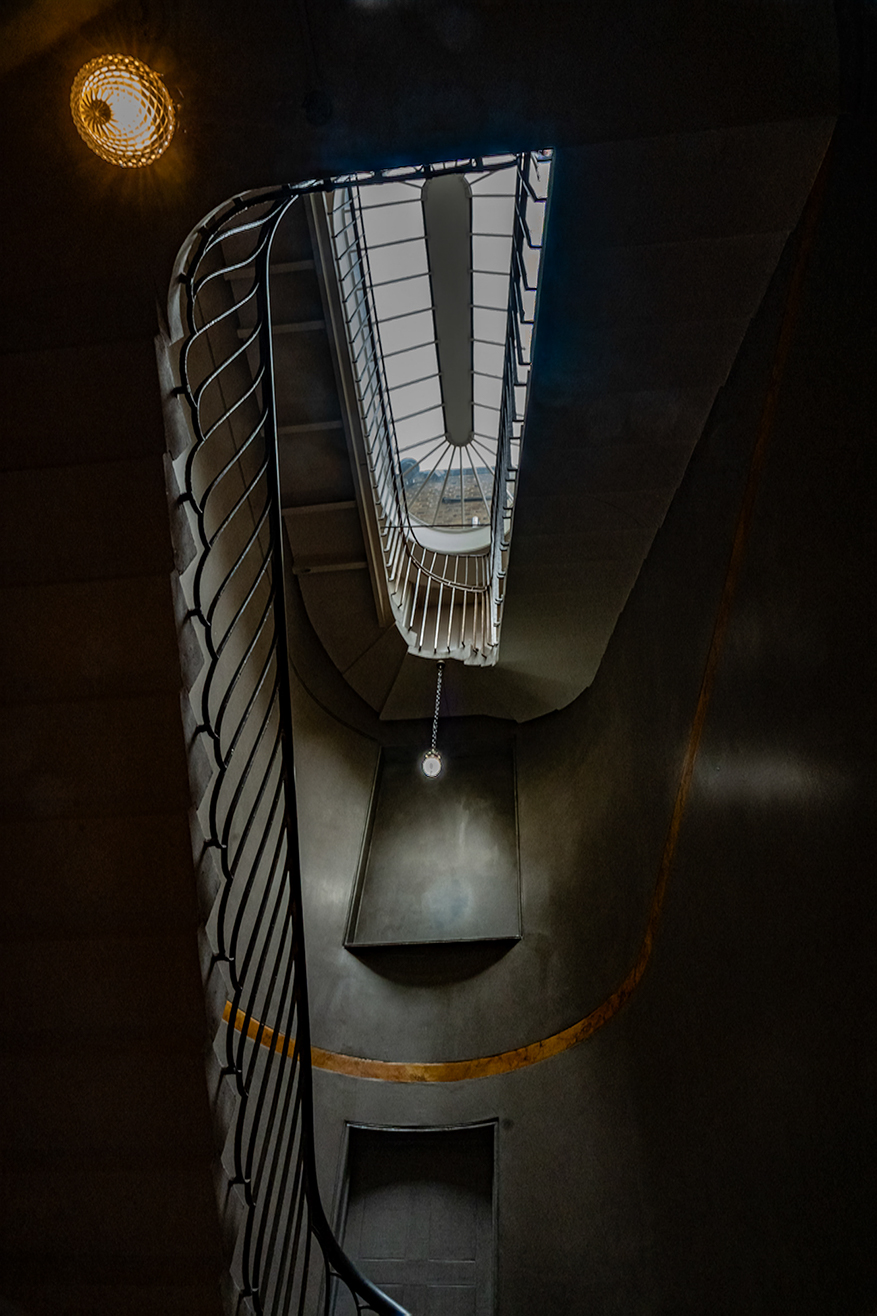
The image depicts a modern, spiral staircase with a glass railing and a light well that allows natural light to illuminate the space. The staircase is surrounded by dark walls, and there is a single light fixture hanging from the ceiling. The design is sleek and contemporary, with a focus on geometric shapes and clean lines.
staircase ‐ photo by ,
©www.mgaylard.co.uk.
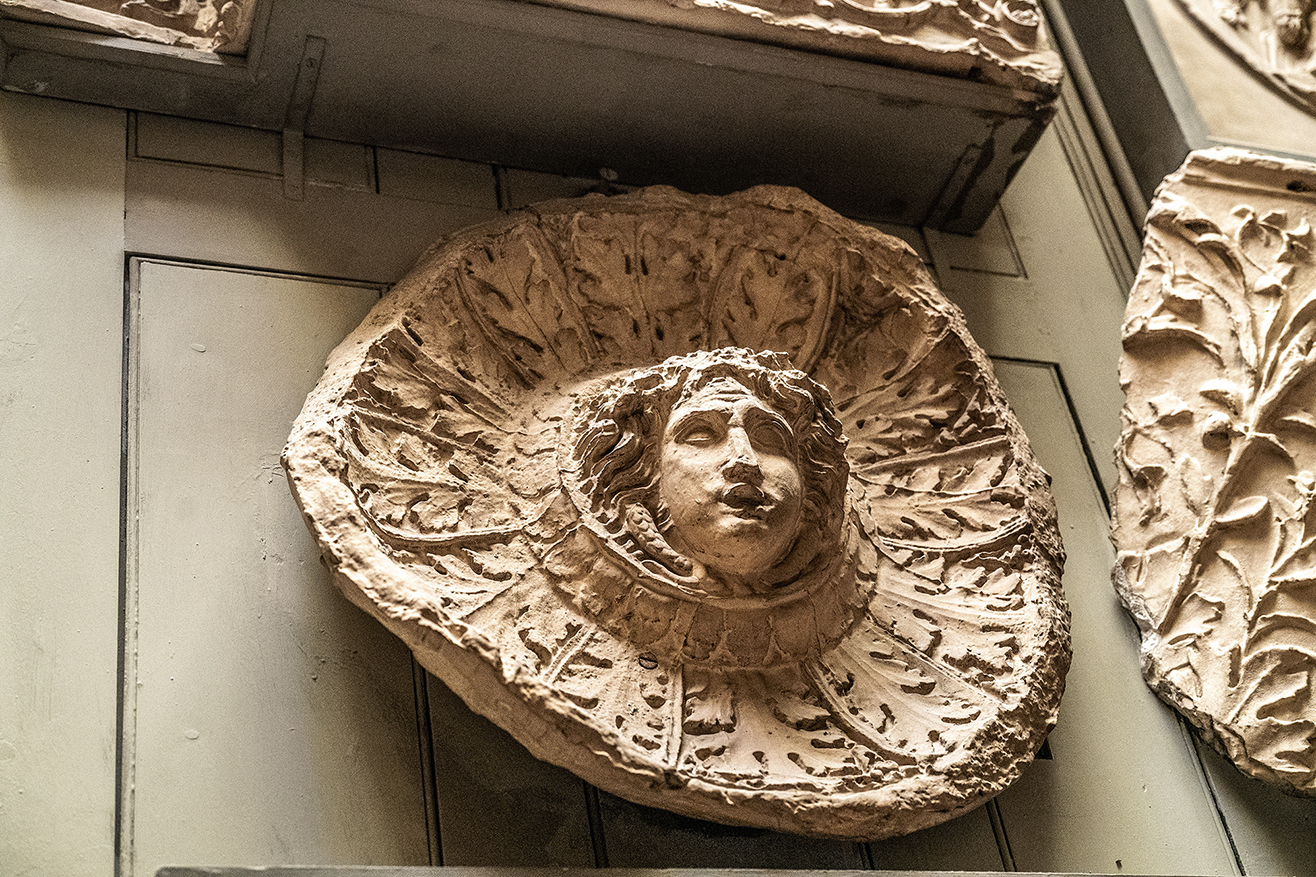
The image depicts a stone carving of a face surrounded by a sunburst pattern, likely part of an architectural element such as a keystone or decorative relief. The carving appears to be part of an older building, showcasing intricate details and weathered texture, indicative of historical or classical architecture.
a stone carving of a face surrounded by a sunburst pattern ‐ photo by ,
©www.mgaylard.co.uk.
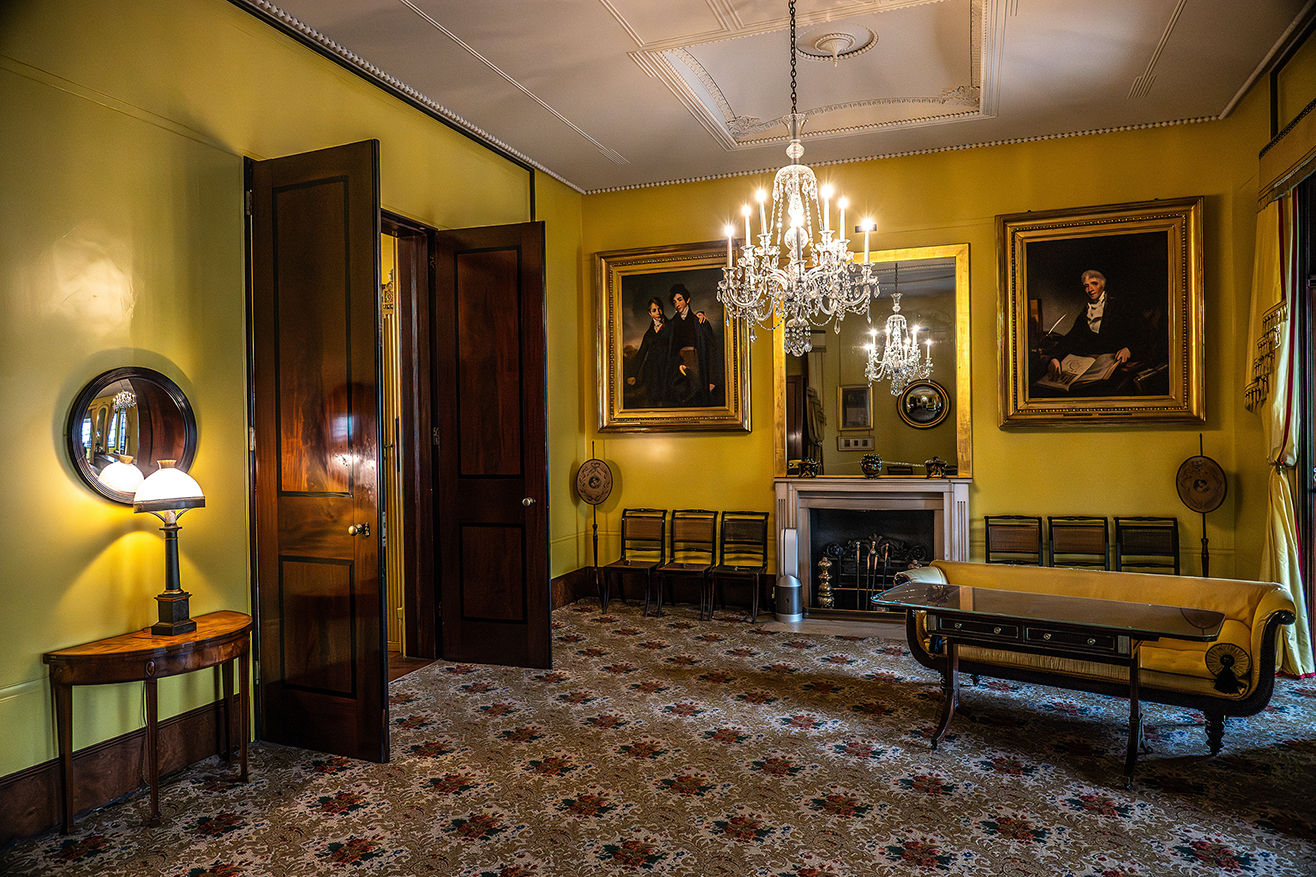
The image depicts a classic, elegantly furnished room with yellow walls, featuring a chandelier, a fireplace, and several pieces of antique furniture, including a bench and chairs. The room also has two large paintings, a round mirror, and a small table with a lamp. The overall ambiance is warm and inviting, with a touch of historical charm.
elegantly furnished room with yellow walls ‐ photo by ,
©www.mgaylard.co.uk.
Open the full set flickr button this page
Sir John Soane's Museum

Sir John Soane, a renowned English architect born on September 10, 1753, and knighted in 1831. Soane was a leading figure in the Neo-Classical style and is best known for designing the Bank of England, Dulwich Picture Gallery, and his own home, which is now Sir John Soane’s Museum in London. He was also a professor of architecture at the Royal Academy and played a significant role in shaping British architecture during the late 18th and early 19th centuries

The Sir John Soane’s Museum in London is the former home of the celebrated Neo-Classical architect Sir John Soane, transformed into a museum to showcase his vast collection of art, antiquities, and architectural models. Located at 13 Lincoln’s Inn Fields, the museum preserves Soane’s eclectic and meticulously arranged interiors just as they were at the time of his death in 1837, offering visitors a unique glimpse into his creative mind and personal world. It remains a treasure trove of architectural innovation and historical artifacts, including works by Hogarth, Turner, and ancient Roman and Greek sculptures, all displayed in a labyrinthine, atmospheric setting

References

www.pitzhanger.org.uk , Text generated by Mistral AI

Lincoln's Inn

Lincoln's Inn

Lincoln's Inn FieldsHolbornLondon,   United Kingdom

Lincoln's Inn is one of the four ancient Inns of Court in London, serving as a professional association for barristers in England and Wales. Founded in the 14th century, it is renowned for its historic buildings, beautiful gardens, and its role in the legal education and practice of barristers. The Inn features a mix of medieval, Tudor, and Victorian architecture, and is a significant part of London’s legal and cultural heritage.
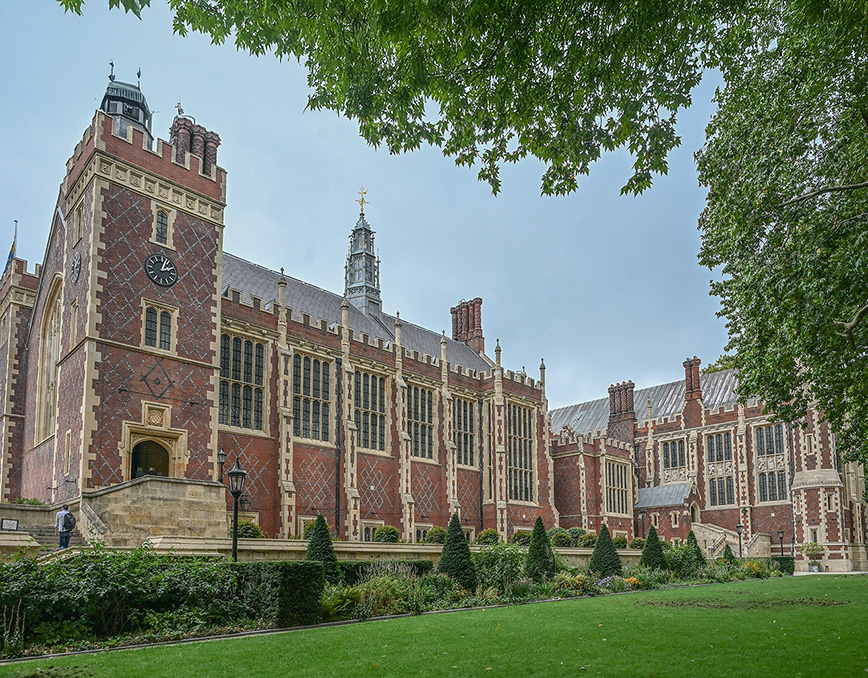
The image depicts a large, historic building with intricate architectural details, featuring tall towers, a clock, and numerous large windows. The structure is made of red and brown bricks with decorative stone accents. The building is surrounded by well-maintained gardens with green lawns, shrubs, and trees, suggesting it could be part of a university or a significant public institution.
The Honourable Society of Lincoln's Inn ‐ photo by ,
©www.mgaylard.co.uk.
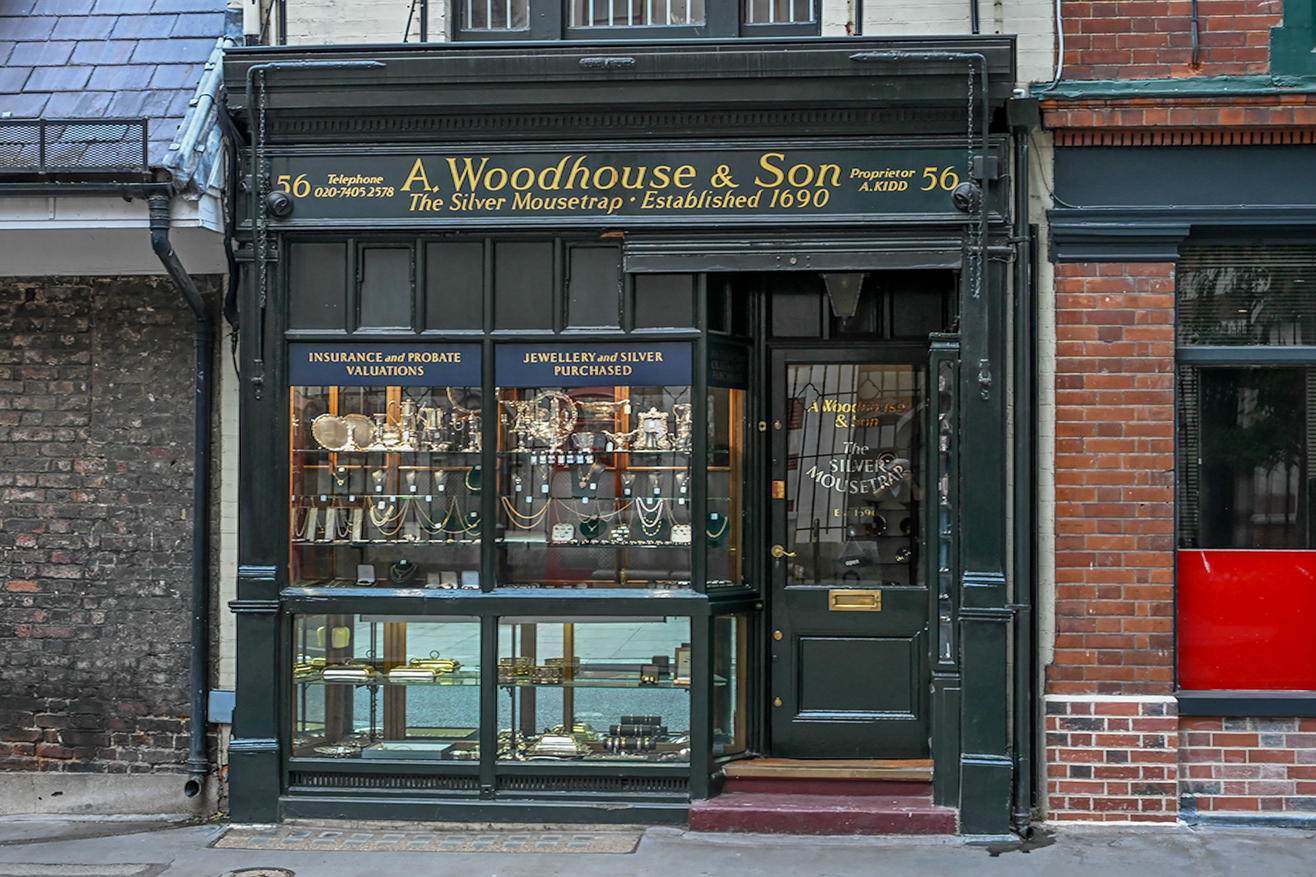
The image depicts the storefront of 'A. Woodhouse & Son,' a shop specializing in jewelry and silver, established in 1690. The shop offers services such as insurance and probate valuations. The facade features a traditional design with a glass display showcasing various silver items and jewelry. The address is 56, and the telephone number provided is 020-74052578. The proprietor is A. Kidd.
A. Woodhouse & Son - Carey Street ‐ photo by ,
©www.mgaylard.co.uk.
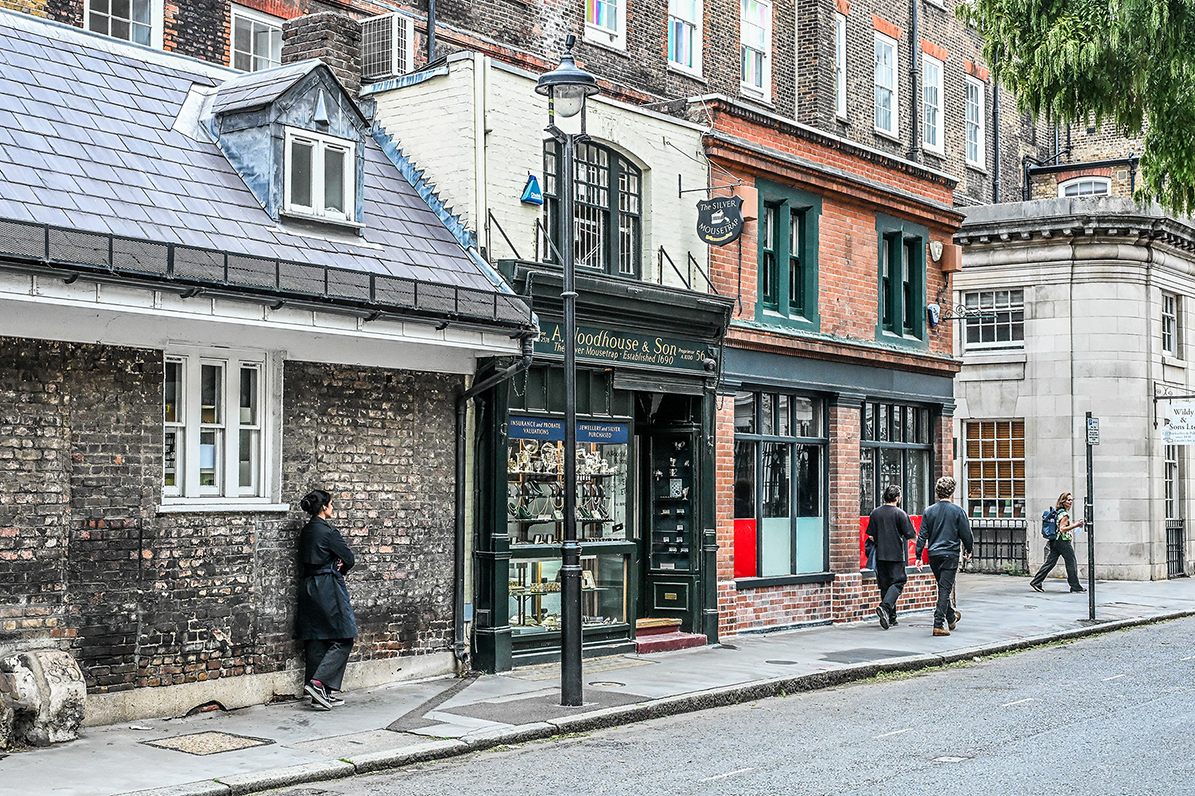
The image depicts a street scene in what appears to be a historic or older part of a city. There are several people walking along the sidewalk, and a woman is standing near a building. The buildings have a mix of brick and stone facades, with some featuring large windows and others smaller, more traditional windows. One of the buildings houses a shop named 'A. Goodhouse & Son,' which seems to sell jewelry and antiques. The street is relatively narrow and lined with traditional street lamps.
Carey Street ‐ photo by ,
©www.mgaylard.co.uk.
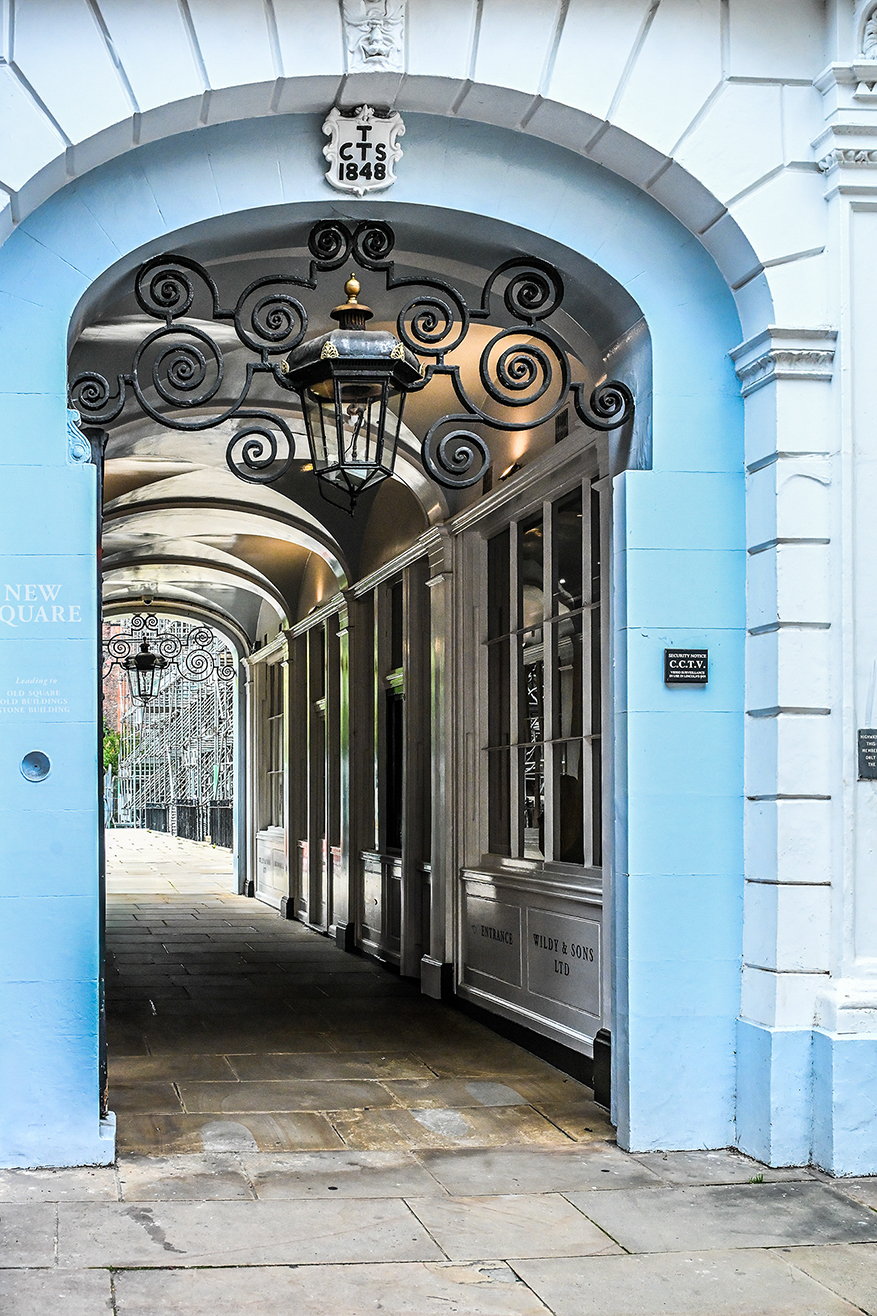
The image depicts an entrance to a building with the name 'Wild & Sons Ltd.' The entrance is adorned with ornate, vintage-style ironwork and a lantern. The archway above the entrance bears the inscription 'T CTS 1848' and a sign indicating CCTV surveillance. The building is part of 'New Square' and the entrance is flanked by light blue walls with white accents. The pathway leading into the entrance is paved with ston
Wildy & Sons Ltd ‐ photo by ,
©www.mgaylard.co.uk.
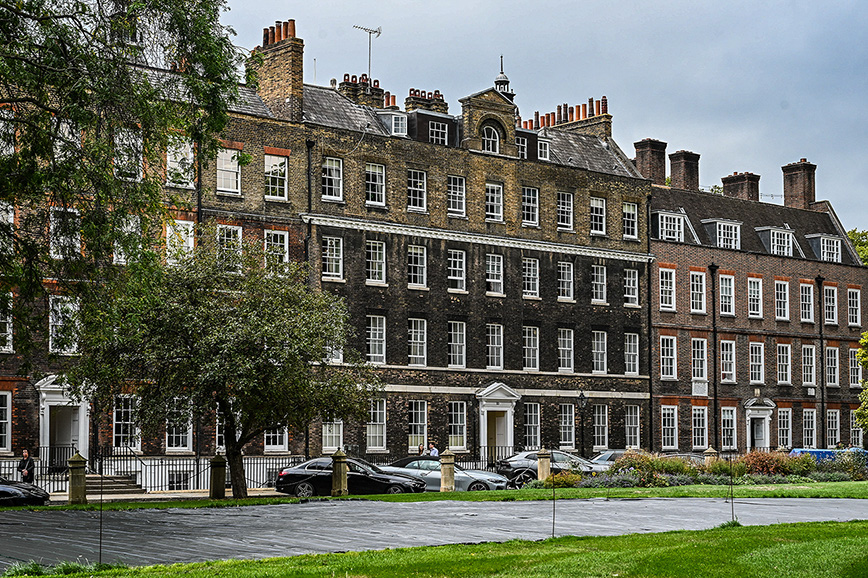
The image depicts a row of traditional, multi-story buildings with a classic architectural style, featuring brick facades and numerous windows. The buildings are set back from the street, with a small parking area and a grassy area in front. The scene is framed by trees on the left side, and the overall atmosphere is calm and orderly.
New Square ‐ photo by ,
©www.mgaylard.co.uk.
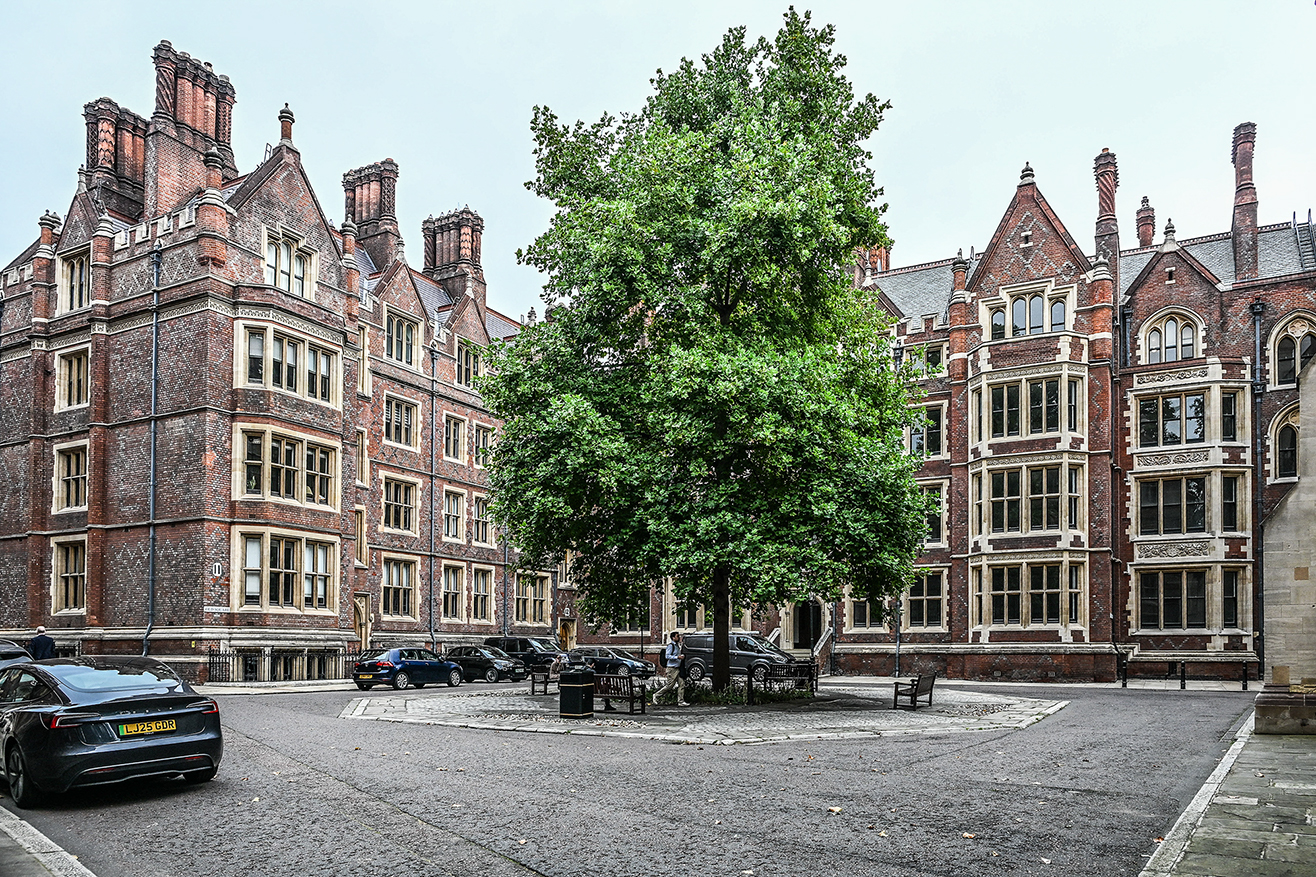
The image depicts a historic building with intricate architectural details, featuring tall, ornate windows and multiple chimneys. The building is constructed from red brick with stone accents. A large tree stands prominently in the center of the courtyard, surrounded by parked cars and a few benches. The scene is calm, with a person sitting on a bench near the tree. The overall atmosphere is serene and reminiscent of a traditional, scholarly institution.
Old Square ‐ photo by ,
©www.mgaylard.co.uk.
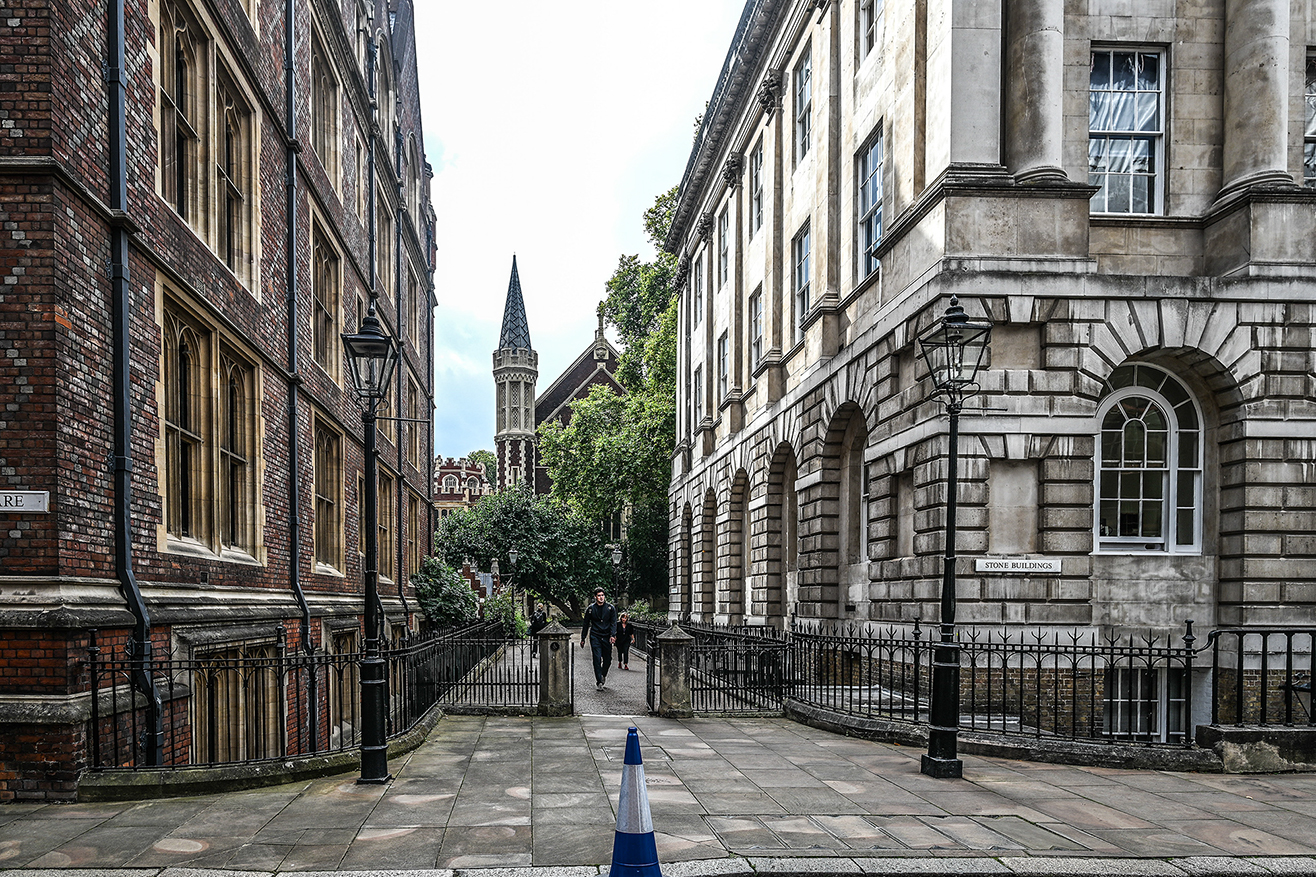
he image depicts a narrow, paved pathway flanked by historic buildings on both sides. The architecture features a mix of brick and stone, with large windows and decorative elements. Traditional street lamps line the pathway, and a few people are walking in the distance. The pathway leads to a building with a prominent spire in the background. The overall atmosphere is serene and reminiscent of a university or institutional setting.
Chancery Lane ‐ photo by ,
©www.mgaylard.co.uk.
Chancery Lane is a historic street in central London, best known as the heart of the city’s legal district. It is home to the Law Society, Lincoln’s Inn, and other prestigious legal institutions, and is rich in architectural and cultural heritage.
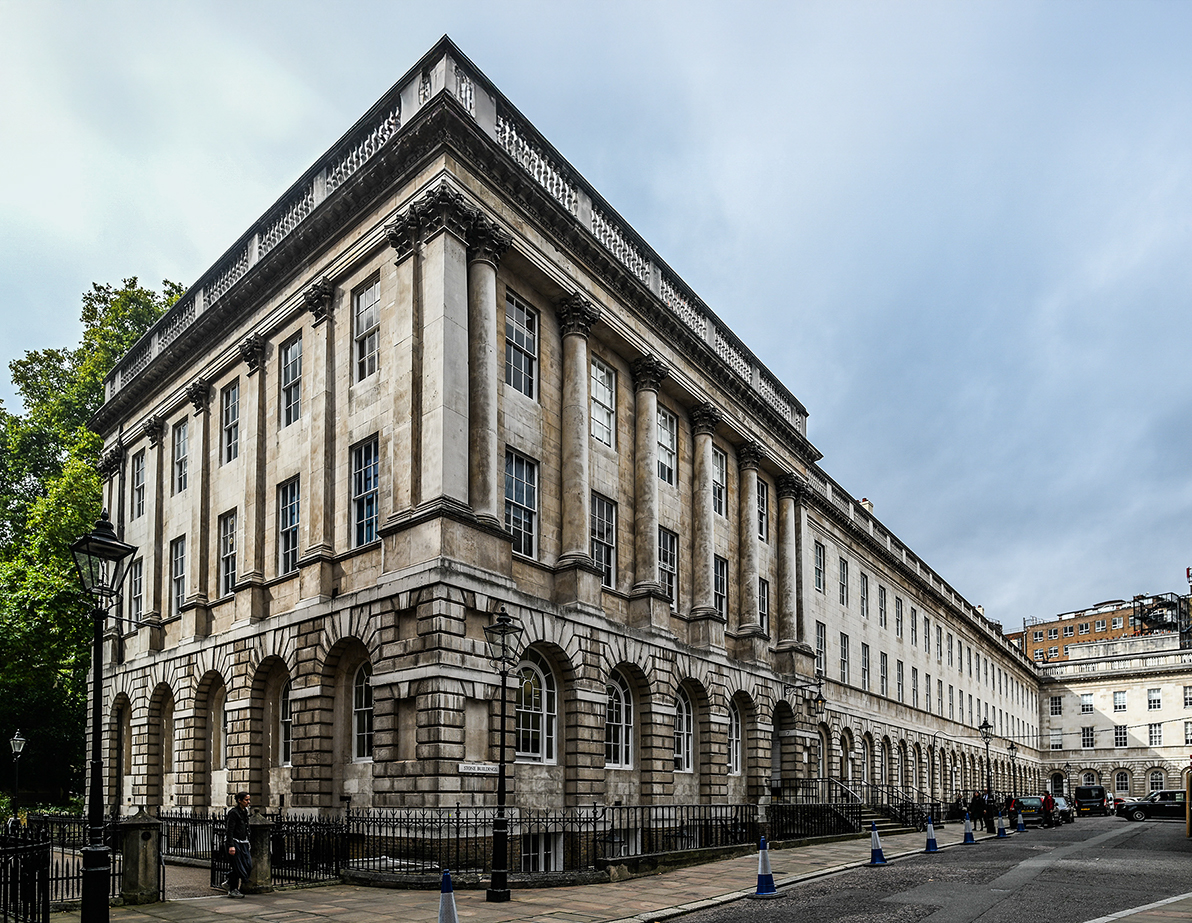
The image depicts a grand, historic building with classical architectural elements such as columns and arched windows. The building is part of a row of similar structures, likely in a city setting. The facade is made of stone, and the overall style suggests it could be a significant public or institutional building, possibly in a European city.
Chancery Lane ‐ photo by ,
©www.mgaylard.co.uk.
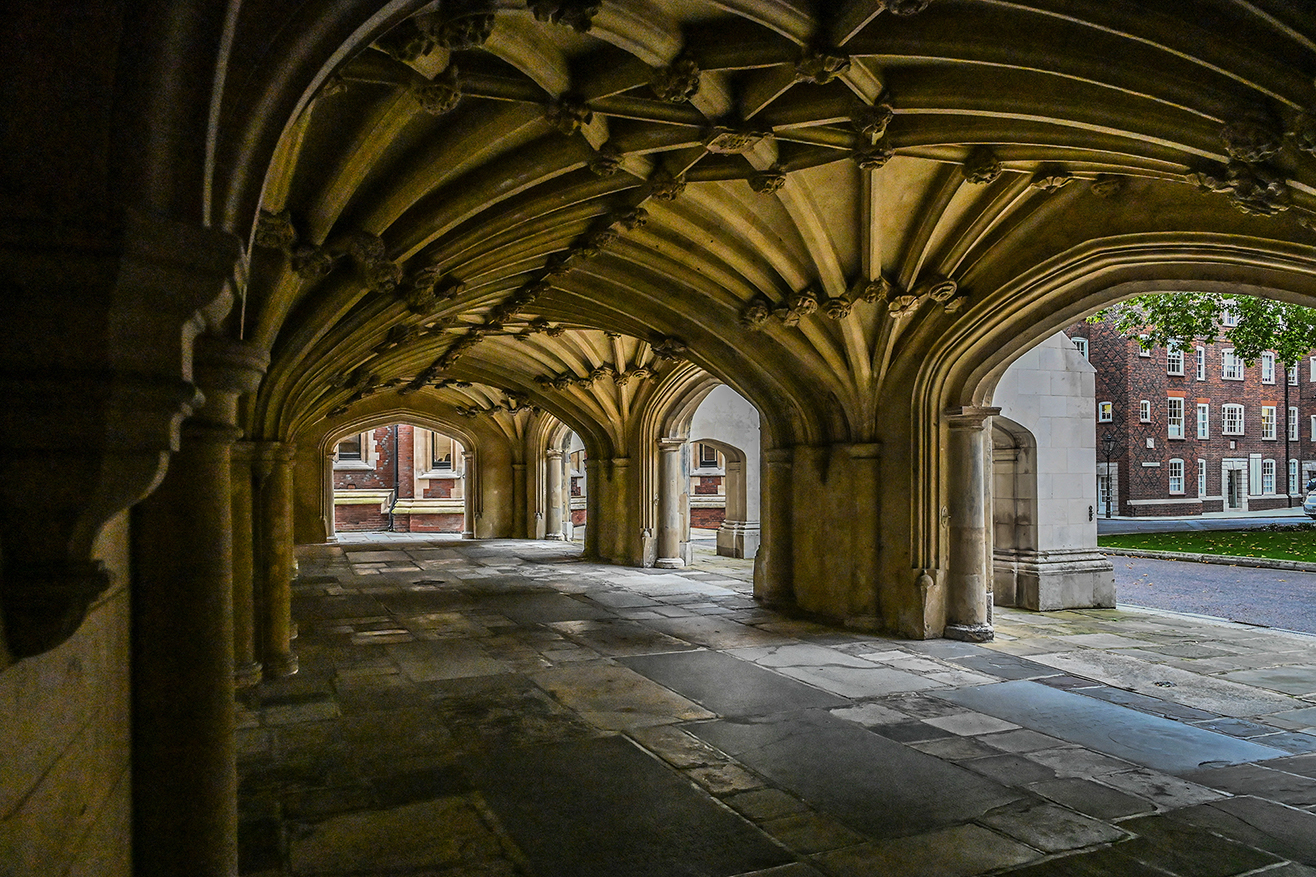
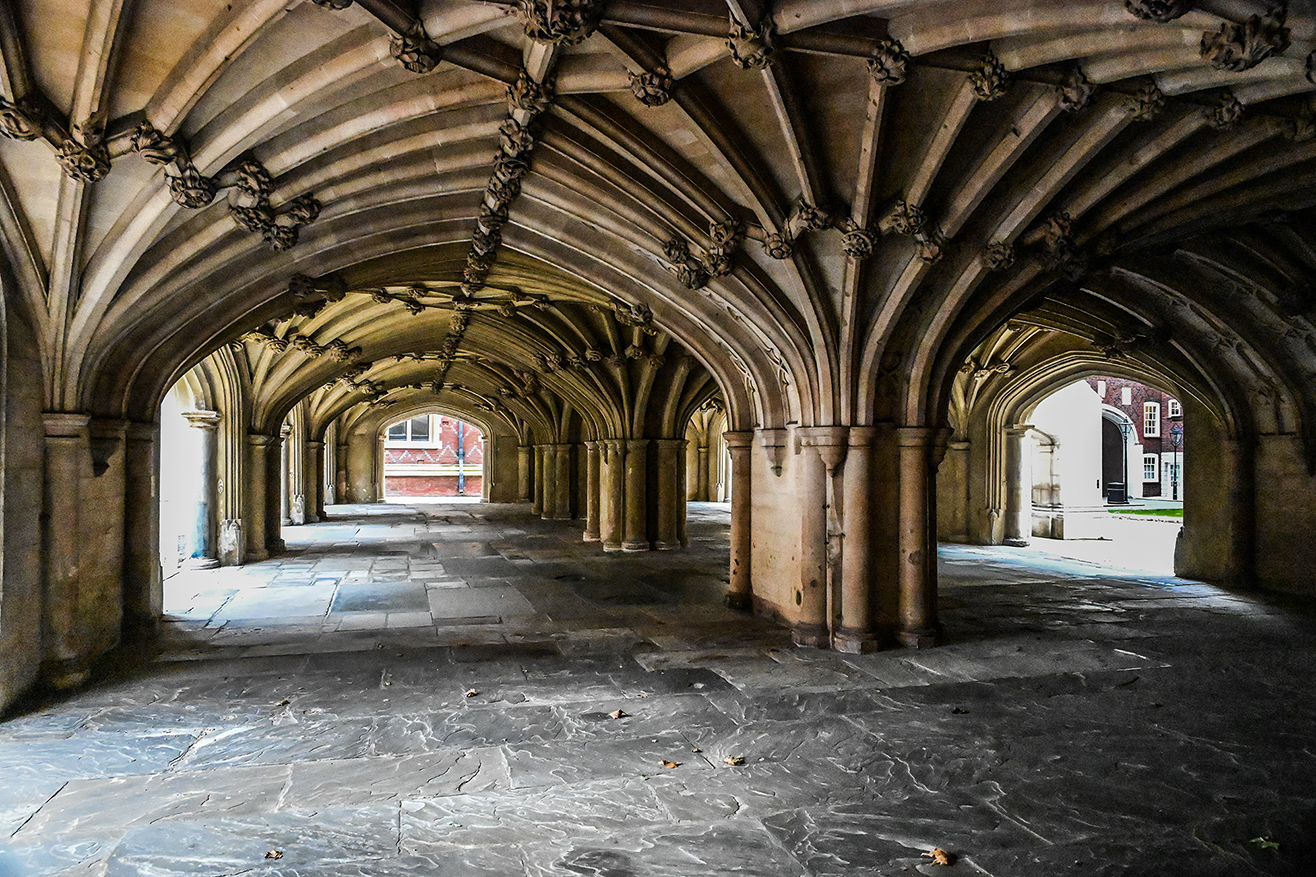
The image depicts a series of stone arches and columns forming a covered walkway, likely part of a historic or academic building. The architecture features ribbed vaults and detailed stonework, creating a sense of grandeur and antiquity. The walkway leads to an open courtyard with brick buildings and greenery visible in the background. The ground is made of large, uneven stone slabs, adding to the historic feel of the scene.
Old Hall and Chapel ‐ photo by ,
©www.mgaylard.co.uk.
The Old Hall at Lincoln’s Inn is one of the Inn’s most historic buildings, dating back to the 15th century, and is considered one of the finest examples of Tudor architecture in London.
The image depicts a series of stone arches and columns forming a covered walkway or cloister. The architecture is Gothic, characterized by pointed arches and intricate stone carvings. The floor is made of large, smooth stone slabs, and the area appears to be part of a historical or academic building, possibly a university or a cathedral.
Old Hall and Chapel ‐ photo by ,
©www.mgaylard.co.uk.
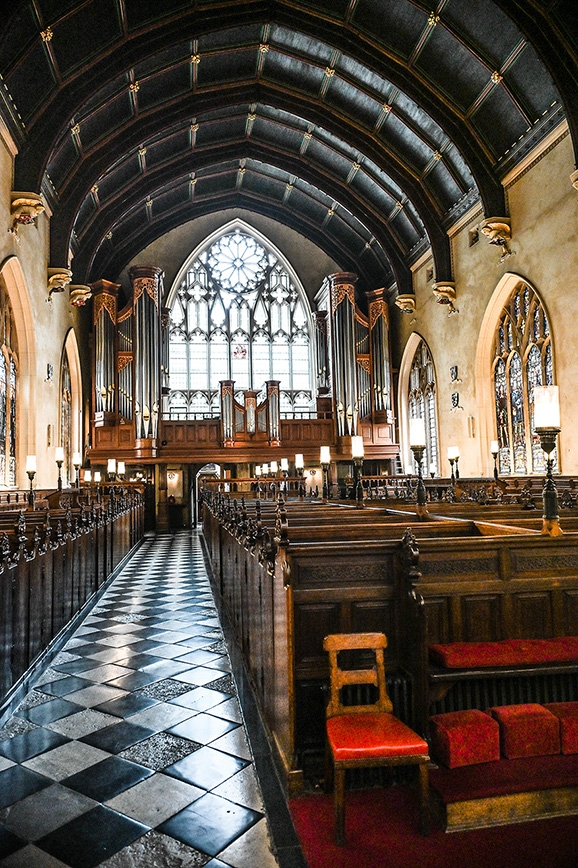
The image depicts the interior of a grand, Gothic-style church. The viewer's perspective is from the center aisle, looking towards the altar. The ceiling features intricate, ribbed vaulting, and the walls are adorned with tall, arched windows filled with stained glass. Wooden pews line both sides of the aisle, and a large, ornate pipe organ is visible at the front of the church. The overall atmosphere is one of solemnity and reverence.
Lincoln’s Inn Chapel ‐ photo by ,
©www.mgaylard.co.uk.
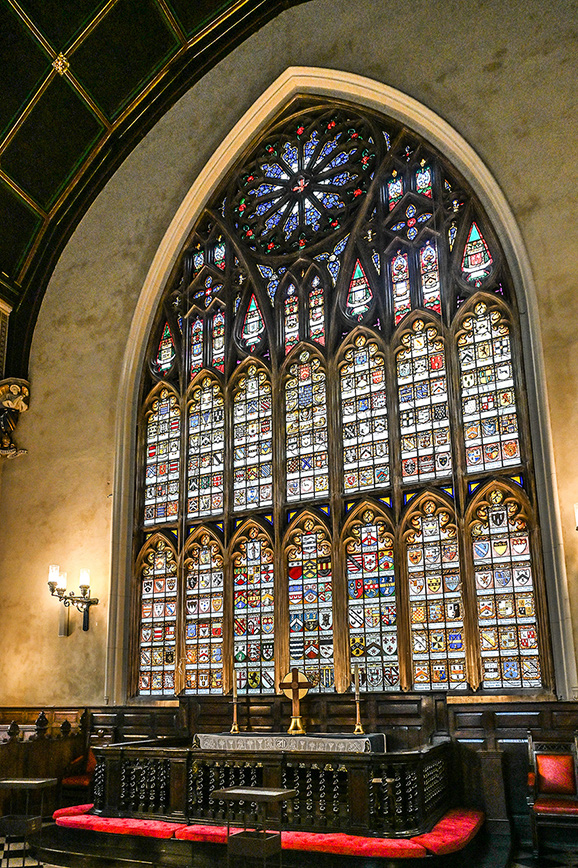
The image depicts an interior view of a church, showcasing a large, ornate stained-glass window behind the altar. The window features intricate designs and vibrant colors, with various religious symbols and figures. The altar area is adorned with wooden furniture, including pews with red cushions and a central altar table with a cross. The overall atmosphere is serene and reverent, typical of a place of worship.
Lincoln’s Inn Chapel ‐ photo by ,
©www.mgaylard.co.uk.
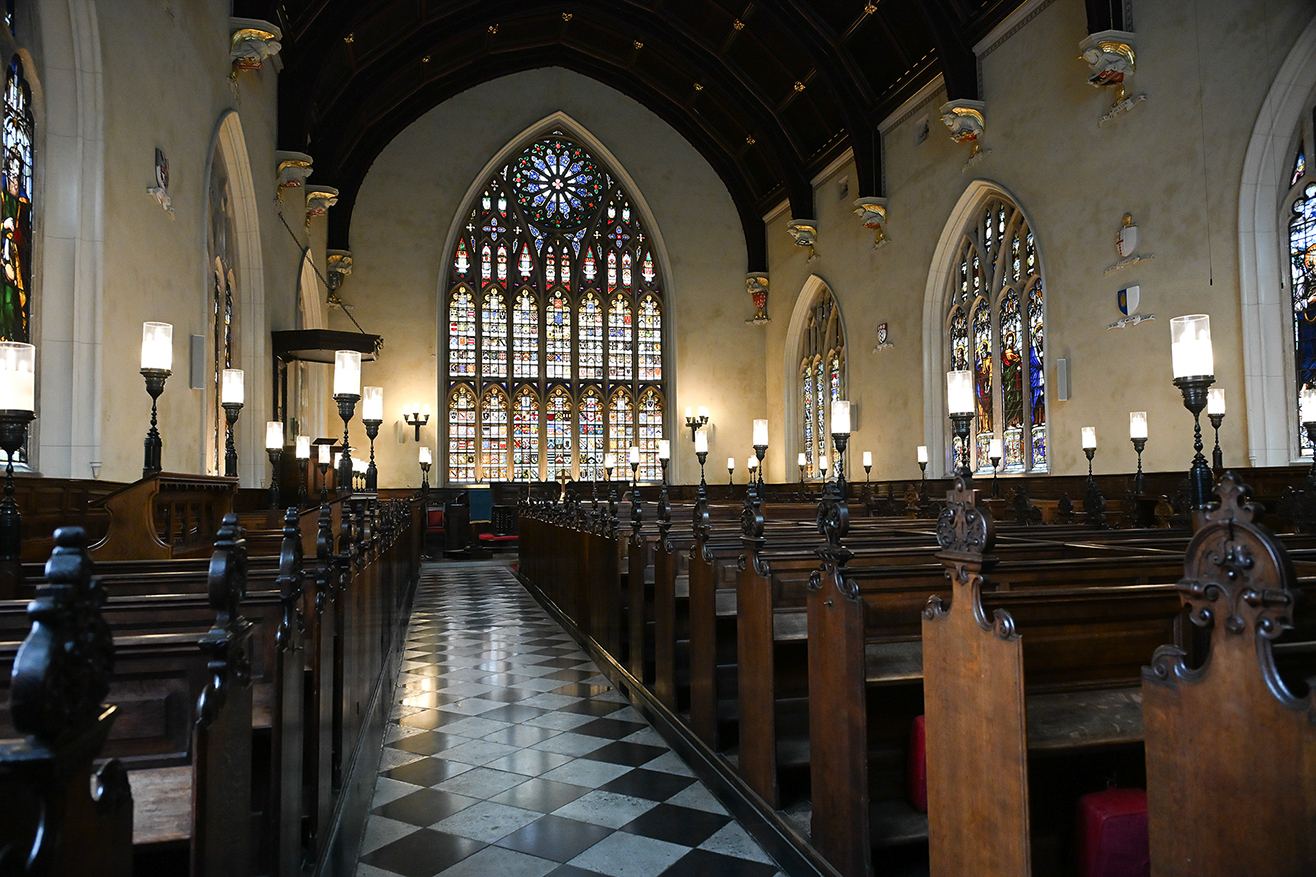
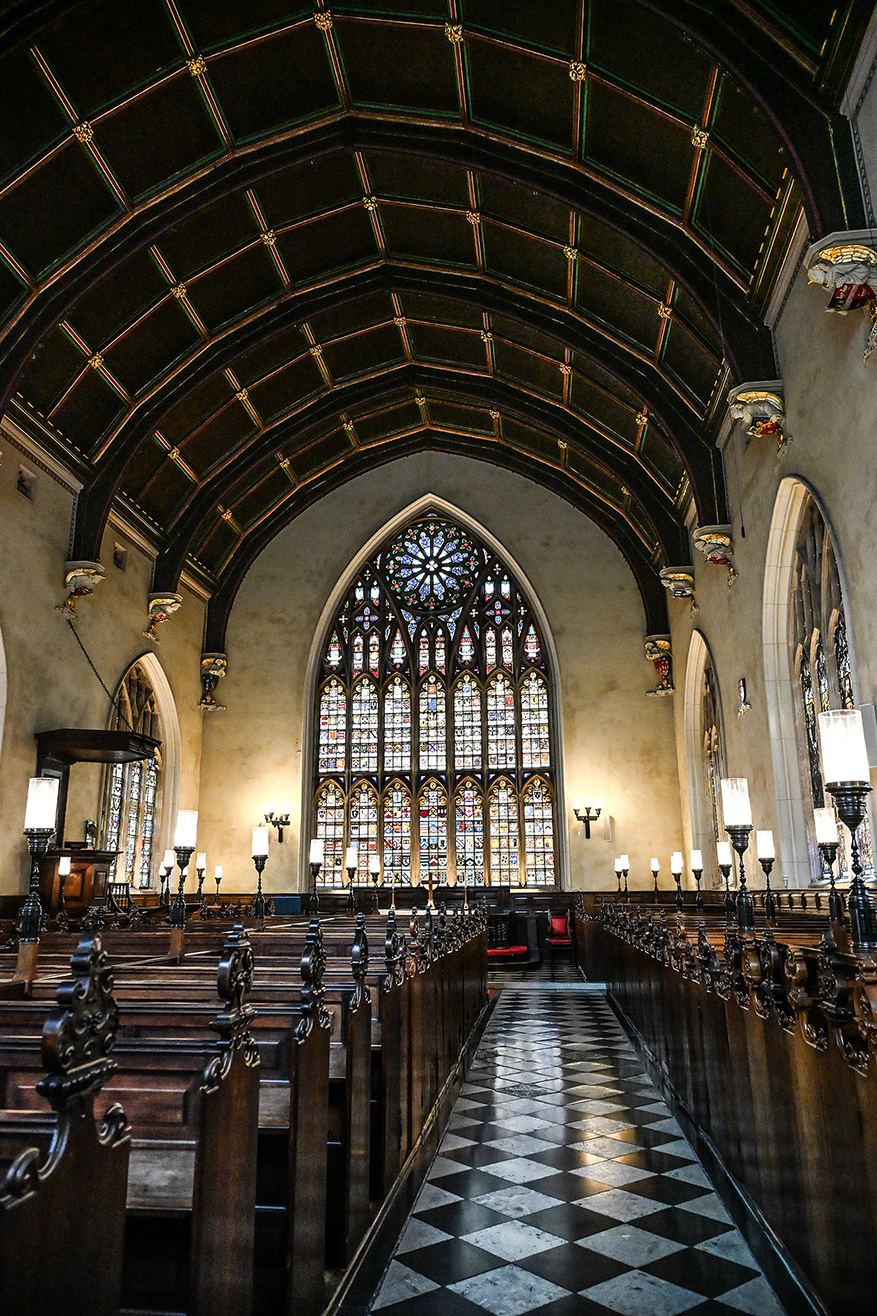
The image depicts the interior of a grand, traditional church. The view is down the central aisle, flanked by wooden pews with ornate ends. The ceiling features a ribbed vault with gold detailing, and the walls are adorned with large, colorful stained-glass windows that allow natural light to filter into the space. The floor is tiled in a black and white checkerboard pattern, and the overall atmosphere is one of solemnity and reverence.
Lincoln’s Inn Chapel ‐ photo by ,
©www.mgaylard.co.uk.
The image depicts the interior of a church, showcasing rows of wooden pews with black metal candleholders, leading up to an altar. The space is illuminated by wall-mounted lights and natural light streaming through large, intricate stained-glass windows. The architecture features high, arched ceilings and detailed decorations, creating a serene and reverent atmosphere.
Lincoln’s Inn Chapel ‐ photo by ,
©www.mgaylard.co.uk.
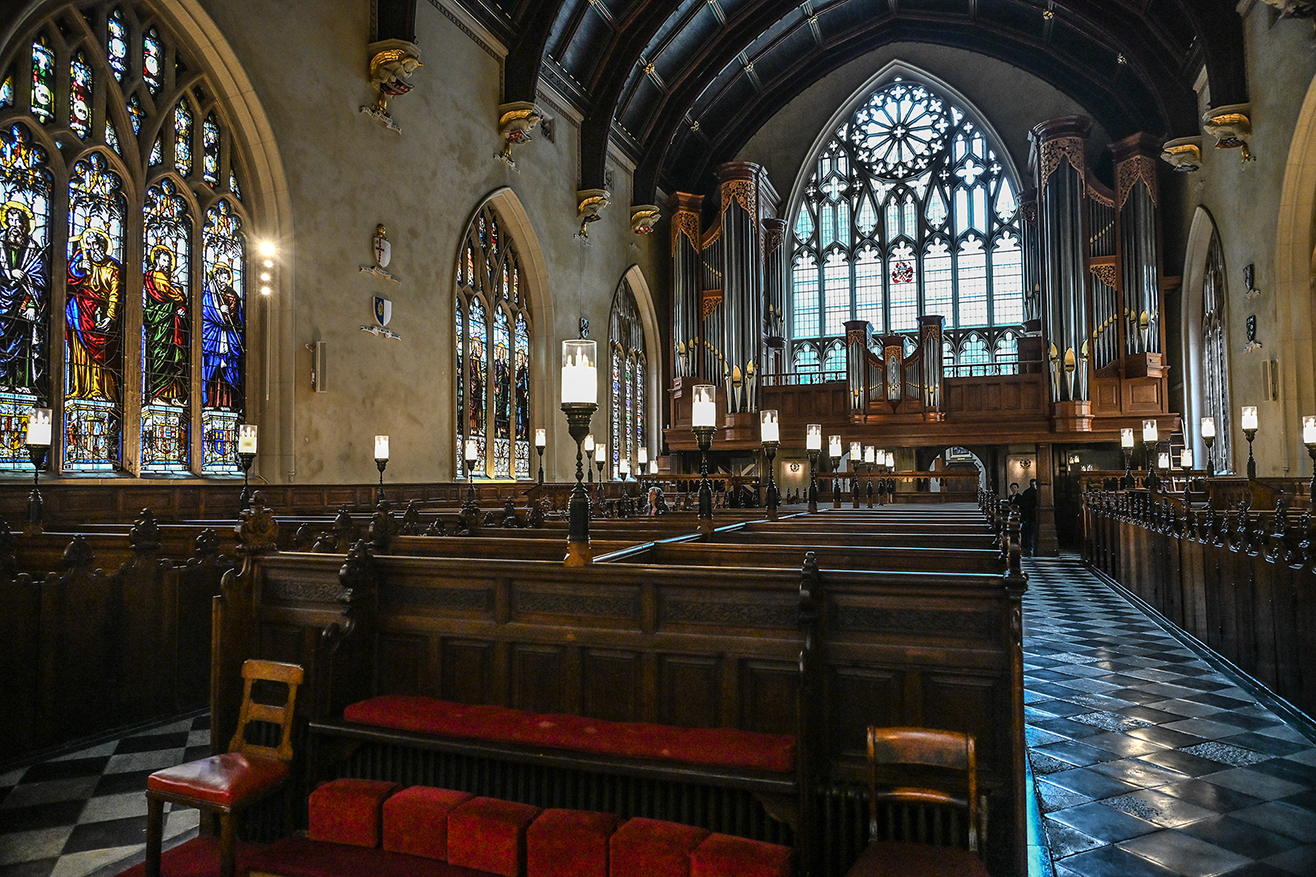
The image depicts the interior of a grand, Gothic-style church. The scene features intricate stained glass windows, wooden pews with red cushions, and a large pipe organ. The architecture includes pointed arches, ribbed vaults, and detailed stone carvings. The lighting is dim, with natural light streaming through the stained glass, creating a serene and reverent atmosphere. The overall setting is one of historical and architectural significance, likely used for worship and reflection.
Lincoln’s Inn Chapel ‐ photo by ,
©www.mgaylard.co.uk.

Lincoln’s Inn Chapel is generally open to visitors during daylight hours, Monday to Friday, and is the only building within Lincoln’s Inn that is regularly accessible to the public without prior arrangement. The Chapel, consecrated in 1623, is a place of worship and also hosts musical performances. Visitors are welcome to walk through the Inn and explore the Chapel, which features beautiful stained glass and historic architecture

Open the full set flickr button this page
Lincoln's Inn

Historical Overview

Origins and Early History:
Lincoln’s Inn is one of the oldest professional associations for barristers in England and Wales, with continuous records dating back to 1422. The exact origins of the Inn are not fully known, but it is believed to have been associated with Thomas de Lincoln, a serjeant at law in the 14th century, or Henry de Lacy, Earl of Lincoln, who owned property in the area lincolnsinn.org.uk+1.
Role in Legal Education:
Lincoln’s Inn, along with the other Inns of Court, served as a center for legal education and training for barristers. Historically, becoming a barrister required dining and studying at one of the Inns en.wikipedia.org.

Architectural and Cultural Significance

camden/lincolnsinn and Layout:
Lincoln’s Inn is situated in Holborn, in the London Borough of Camden, just north of the Royal Courts of Justice and close to Lincoln’s Inn Fields, the largest public square in London. The Inn is a Grade I listed building and features a mix of historic and modern architecture, including the Great Hall, Library, and Chapel en.wikipedia.org+1.
Notable Members:
Over the centuries, Lincoln’s Inn has been home to many eminent figures, including Thomas More, John Donne, Charles Dickens, Margaret Thatcher (who was called to the Bar here), and 16 British Prime Ministers chambersstudent.co.uk+1.

Modern Role and Visitor Information

Legal Institution:
Lincoln’s Inn remains a working institution, housing barristers' chambers, legal libraries, and administrative offices. It continues to play a key role in the English legal system, particularly in the training and regulation of barristers en.wikipedia.org.
Public Access and Tours:
The Great Hall, Chapel, and Library are open to the public during certain hours, and the Inn offers guided tours of its historic buildings and gardens. The Lincoln’s Inn Fields area is also open to the public and is a popular spot for relaxation and leisure tripadvisor.co.uk+1.

References

www.lincolnsinn.org.uken.wikipedia.orgwww.chambersstudent.co.ukwww.tripadvisor.co.uk , Text generated by Mistral AI
To the top
Powered by w3.css. The images are all stored on link to www.gaylard.co.uk Photostream on Flickr   This website is hosted by link to 123Reg Web Hosting