HOME England

Horse Guards Road

WestminsterLondon,   United Kingdom

Horse Guards Road is a historic and ceremonial road in Westminster, London, running between Birdcage Walk and the Mall. It is renowned for its connection to the Horse Guards Parade, the official entrance to St James's Park, and its role in state ceremonies and royal events. The road is lined with significant government buildings and is a key part of London's ceremonial landscape.
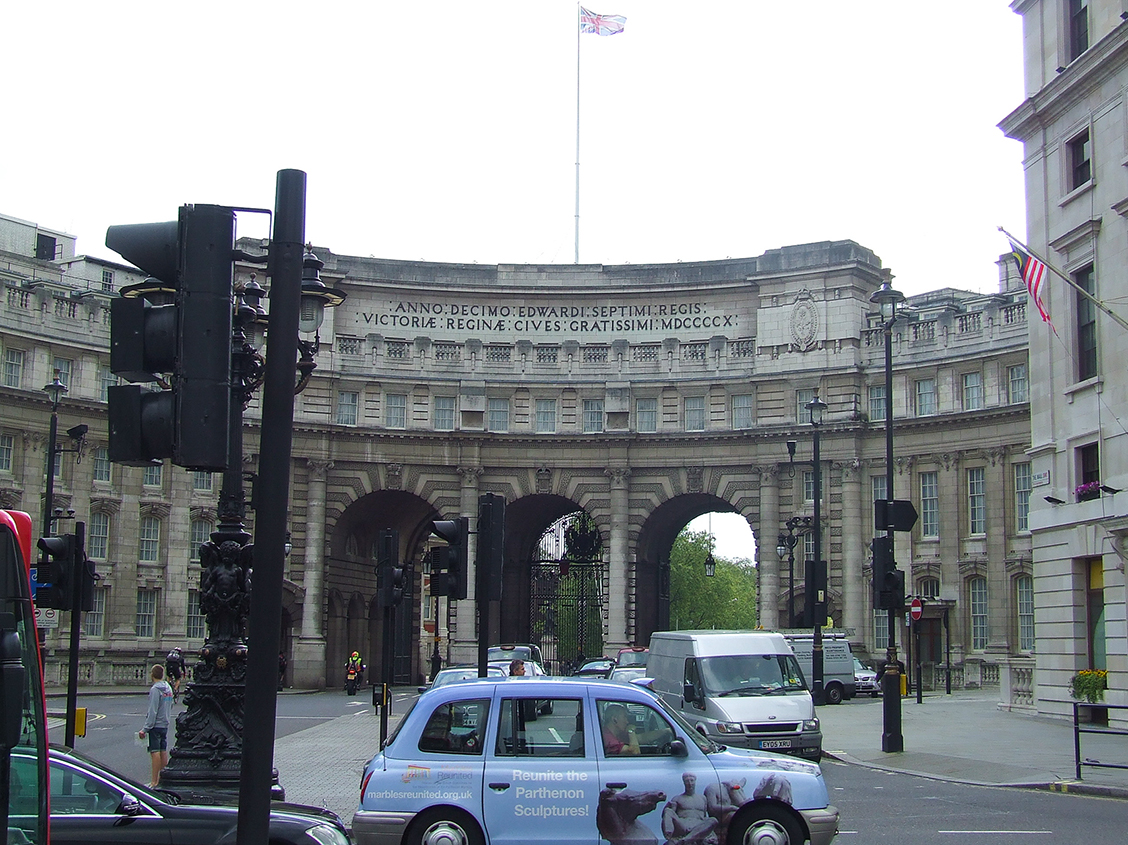
The image depicts the iconic Admiralty Arch in London, UK. The arch is a significant architectural landmark with a prominent inscription and serves as a gateway. The scene includes traffic, pedestrians, and buildings on either side. A notable detail is a taxi in the foreground with an advertisement for the reunification of the Parthenon Sculptures. The Union Jack and the American flag are visible, indicating the international context of the location.
Admiralty Arch ‐ photo by ,
©www.mgaylard.co.uk.
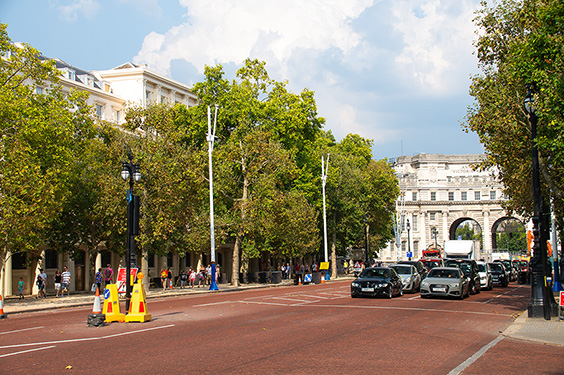
The image depicts a wide, tree-lined street with a mix of pedestrians and vehicles. The street is bordered by historic buildings, and there is a notable archway structure in the background. The scene suggests a well-maintained urban area with a blend of architectural styles.
Along The Mall Towards Admiralty Arch ‐ photo by ,
©www.mgaylard.co.uk.
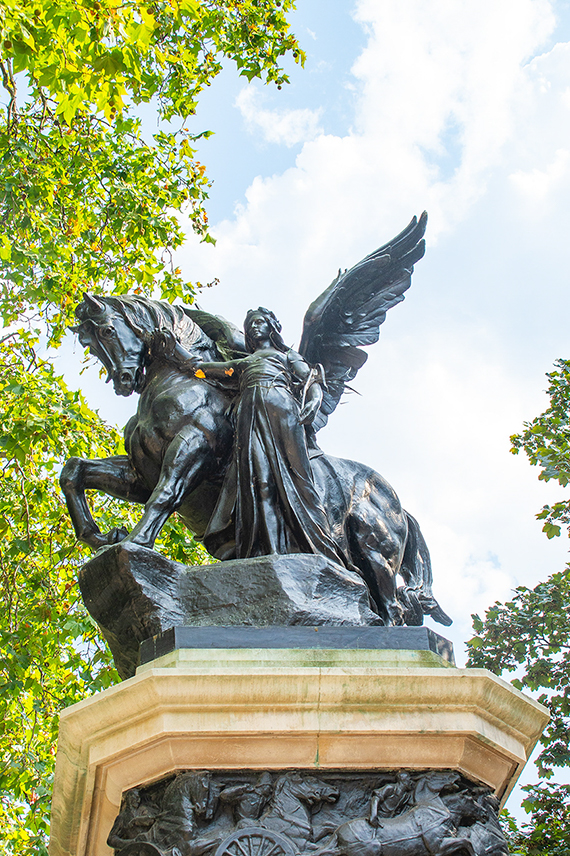
The image depicts a statue of a winged figure riding a horse. The statue is mounted on a stone pedestal, surrounded by trees with green leaves and a partly cloudy sky in the background.
South African Royal Artillery Memorial ‐ photo by ,
©www.mgaylard.co.uk.
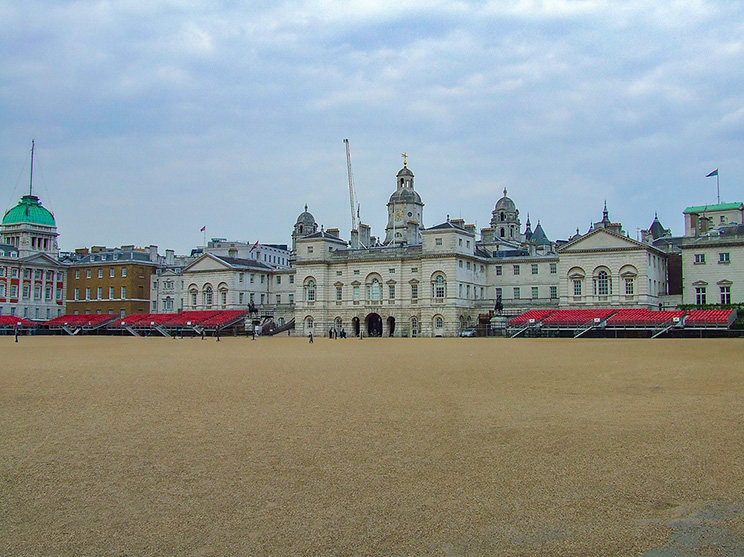
The image depicts Horse Guards in London, a historic building known for its architectural significance and role in British military history. The building features a central archway and is flanked by a large, open parade ground. The structure is characterized by its classical design, including domed roofs and symmetrical facades. Horse Guards serves as a significant landmark and tourist attraction in the city.
Horse Guards ‐ photo by ,
©www.mgaylard.co.uk.
The image depicts the Horse Guards building in London, a significant historical structure with a large central archway, multiple domed towers, and a clock tower. The building is part of the British government's headquarters and is situated in a spacious, open courtyard. Statues of mounted soldiers flank the central archway, and the Union Jack flags are visible, indicating its British heritage. The architecture is grand and classical, with a light stone facade and numerous windows. People are seen walking around the courtyard, adding a sense of scale and activity to the scene.
Horse Guardsn ‐ photo by ,
©www.mgaylard.co.uk.
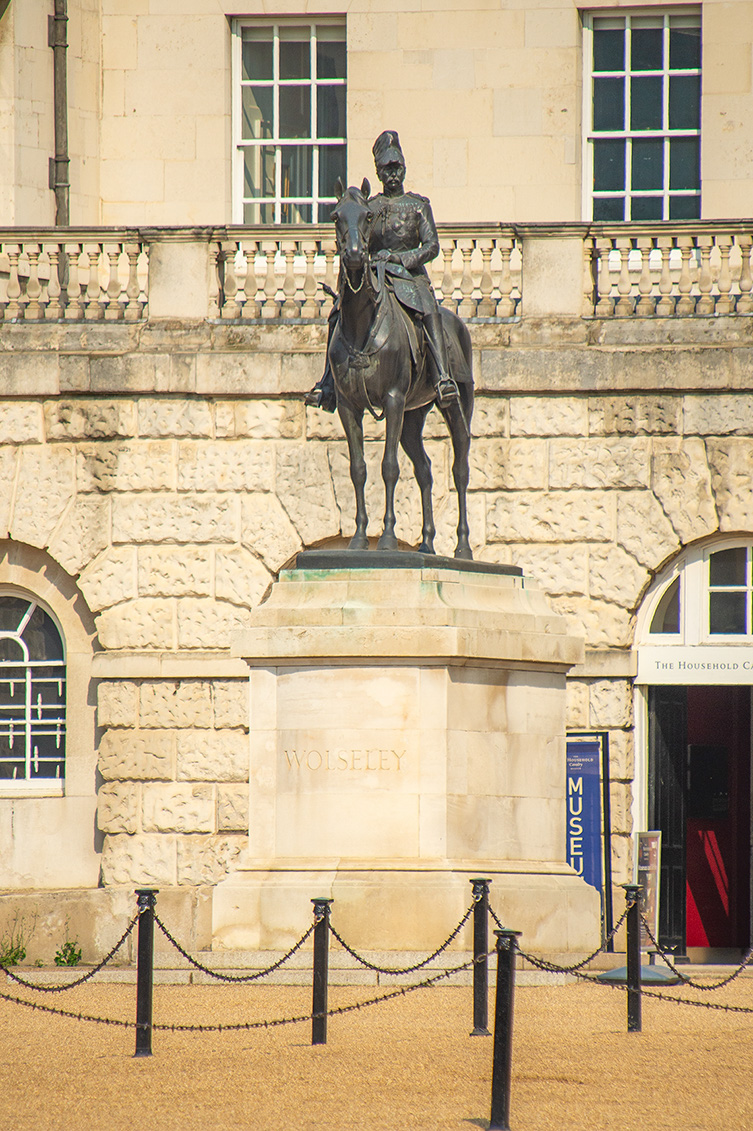
The image shows a statue of a man on horseback in front of a building. The statue is mounted on a stone pedestal with the name 'Wolseley' inscribed on it. The building behind the statue has a sign that reads 'The Household Cavalry Museum'. The statue and the building are surrounded by a cordoned-off area with chains supported by black posts.
Field Marshal Lord Wolseley equestrian statue ‐ photo by ,
©www.mgaylard.co.uk.
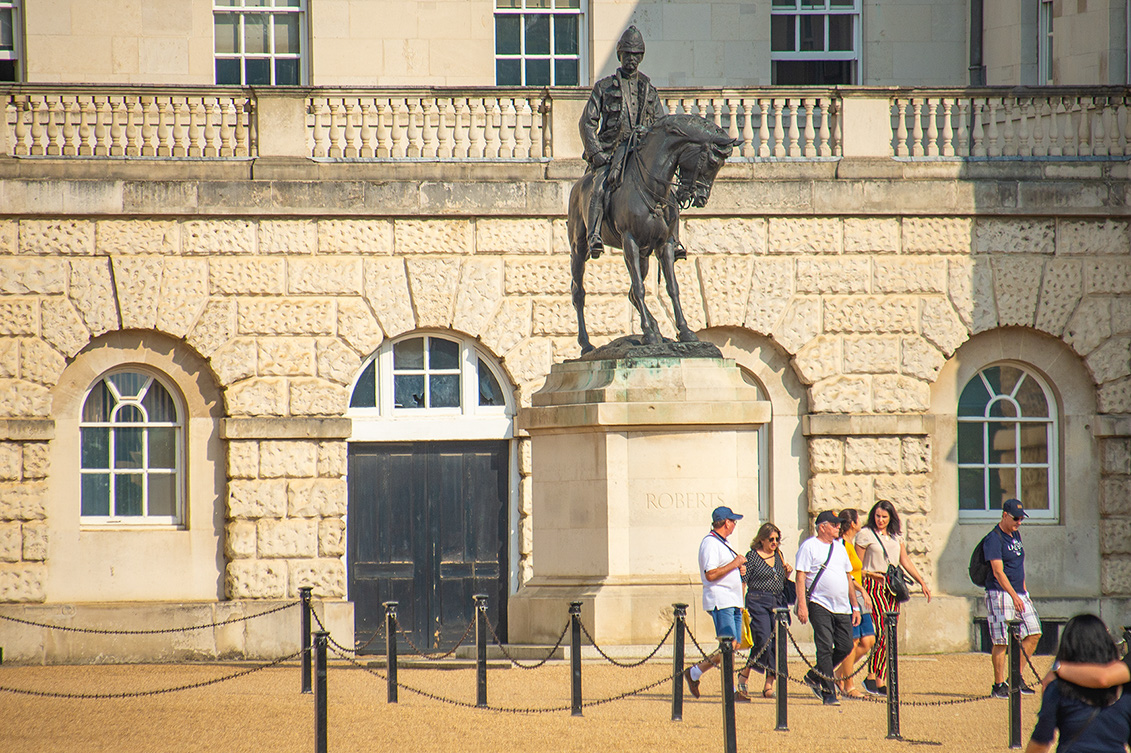
The image depicts a statue of a man on horseback in front of a historic building. The statue is mounted on a pedestal with the name 'ROBERT' inscribed on it. Several people are seen walking and standing around the statue, and the building features large arched windows and a prominent entrance door. The setting appears to be a public or tourist area, possibly a museum or a historic site.
Field Marshal Earl Roberts Statue ‐ photo by ,
©www.mgaylard.co.uk.
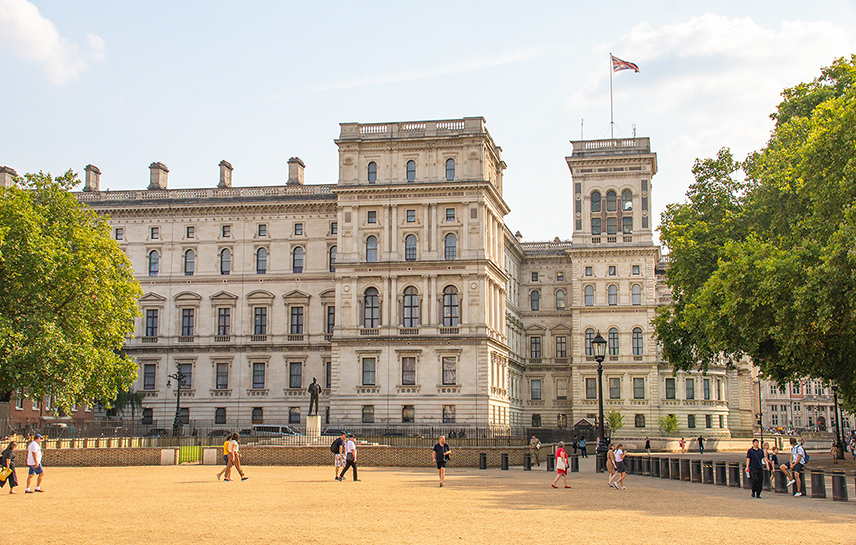
The image depicts a large, historic building with classical architecture, featuring multiple windows and ornate details. The building is surrounded by a spacious, open area where people are walking and engaging in various activities. The scene is set on a clear day with a blue sky and some clouds. Trees are visible on the sides, adding greenery to the urban setting. A flag is flying atop the building, indicating its significance.
Foreign, Commonwealth & Development Office ‐ photo by ,
©www.mgaylard.co.uk.
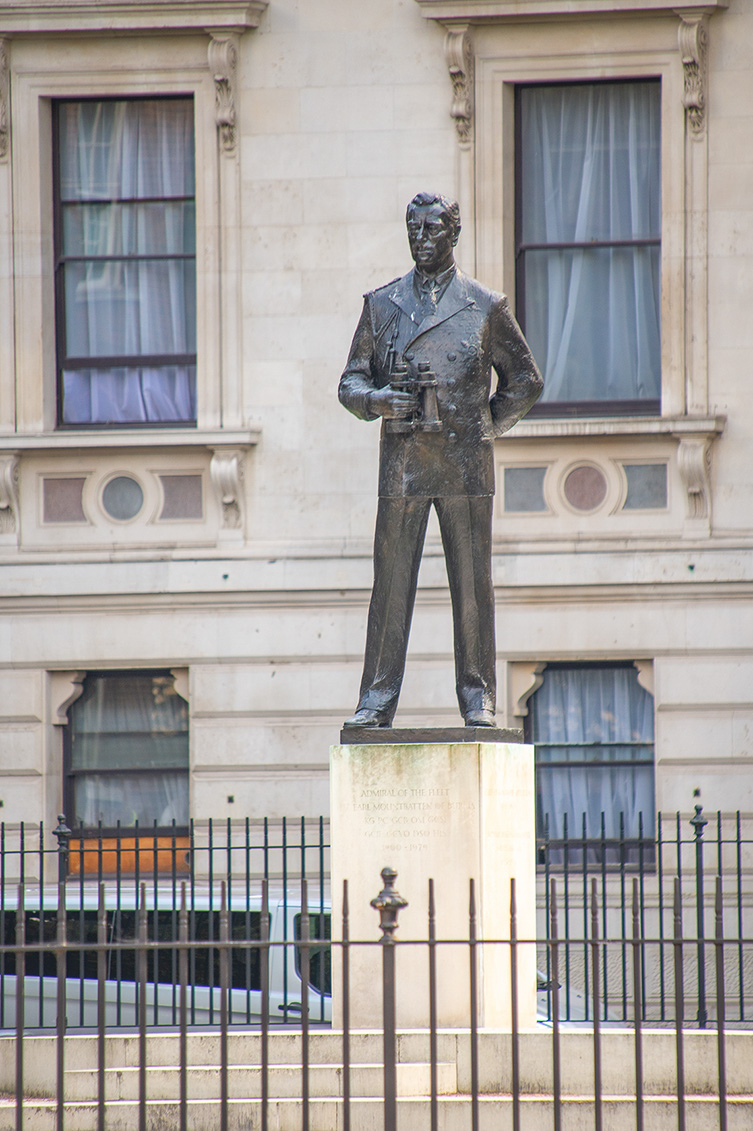
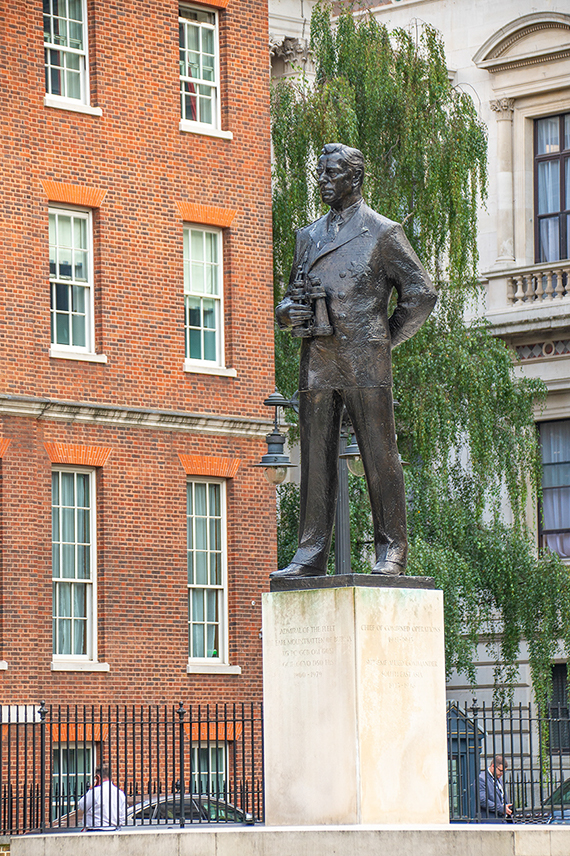
The image depicts a statue of a man standing in front of a building. The statue is mounted on a pedestal with an inscription. The man in the statue is holding an object, possibly binoculars or a small case, and is dressed in 19th-century attire. The building behind the statue has large windows with curtains and decorative elements around the windows. The statue is enclosed within a black metal fence.
Admiral of the Fleet, Earl Mountbatten of Burma statue ‐ photo by ,
©www.mgaylard.co.uk.
Statue_of_the_Earl_Mountbatten_DSC_8585.jpg
Admiral of the Fleet, Earl Mountbatten of Burma statue ‐ photo by ,
©www.mgaylard.co.uk.

Horse Guards Road

Horse Guards Road is a historic and significant street in Westminster, London, known for its association with the British Army and its ceremonial and military importance.

Historical Overview

Origins and Name:
Horse Guards Road runs parallel to the Horse Guards Parade, which has been the site of military parades and ceremonies for centuries. The street itself is named after the Horse Guards, the mounted troops of the Household Cavalry who have guarded the monarch since the 17th century .
Royal and Military Significance:
Horse Guards Road is located near St James’s Palace and The Mall, and it serves as a key route for royal and military processions. It is a symbol of the British monarchy’s ceremonial traditions and military heritage .

Key Landmarks and Institutions

Horse Guards Parade:
This iconic open space is the site of the Trooping the Colour ceremony, where the Household Division performs in front of the monarch. It is also used for the Changing of the Guard ceremony, where the Old Guard hands over duties to the New Guard .
Household Cavalry Museum:
Located adjacent to Horse Guards Parade, this museum offers visitors a glimpse into the history and traditions of the Household Cavalry, including the Life Guards and the Blues and Royals .

Cultural and Ceremonial Significance

Royal Events:
Horse Guards Road is a key route for royal processions, including the State Opening of Parliament and other state occasions. The area is often decorated with flags and banners during these events .
Military Traditions:
The street and parade ground are central to the British Army’s ceremonial traditions, including the Household Cavalry Mounted Regiment, which performs mounted duties and parades .

Visitor Information

Location:
Horse Guards Road is located in Westminster, London, near Trafalgar Square and St James’s Park. It is easily accessible via public transport, including Charing Cross and Westminster Underground stations .
Accessibility:
The Horse Guards Parade and surrounding area are open to the public, and visitors can watch the Changing of the Guard and other ceremonies. The Household Cavalry Museum is also open for tours and offers insights into the history of the mounted troops .
Text generated by Mistral AI

Westminster Cathedral

42 Francis StreetVictoriaLondon,   United Kingdom

Westminster Cathedral is the mother church of the Catholic Church in England and Wales and the seat of the Archbishop of Westminster. Located in Victoria, London, the cathedral is renowned for its stunning Byzantine Revival architecture, intricate mosaics, and towering campanile. It serves as a spiritual and cultural landmark, offering daily services, concerts, and guided tours.
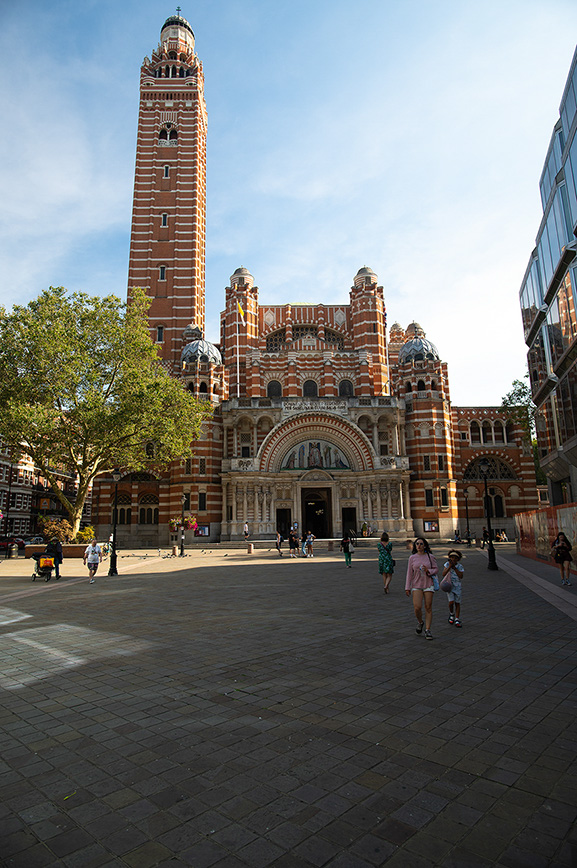
The image depicts a large, ornate building with a tall tower, likely a cathedral or church, characterized by its red brick and stone construction. The structure features intricate architectural details, including arches, domes, and decorative elements. The scene is set in a spacious plaza with a few people walking around, indicating it is a public and possibly tourist-friendly area. The sky is clear, suggesting a sunny day.
Westminster Cathedral ‐ photo by ,
©www.mgaylard.co.uk.
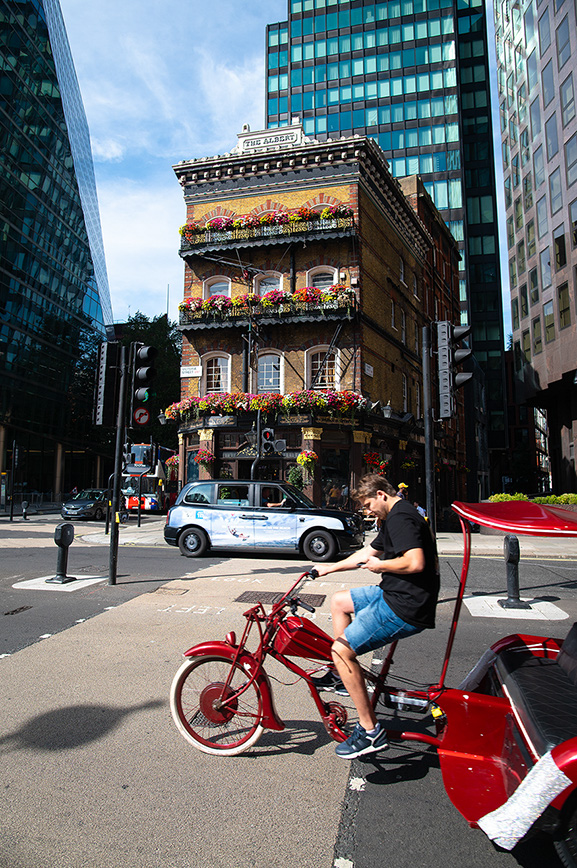
The image depicts an urban scene with a person riding a red tricycle on a city street. The street is lined with modern high-rise buildings, and there is an older, ornate building adorned with flower boxes in the background. The scene includes a taxi and several pedestrians, indicating a bustling city environment.
Victoria Street ‐ photo by ,
©www.mgaylard.co.uk.
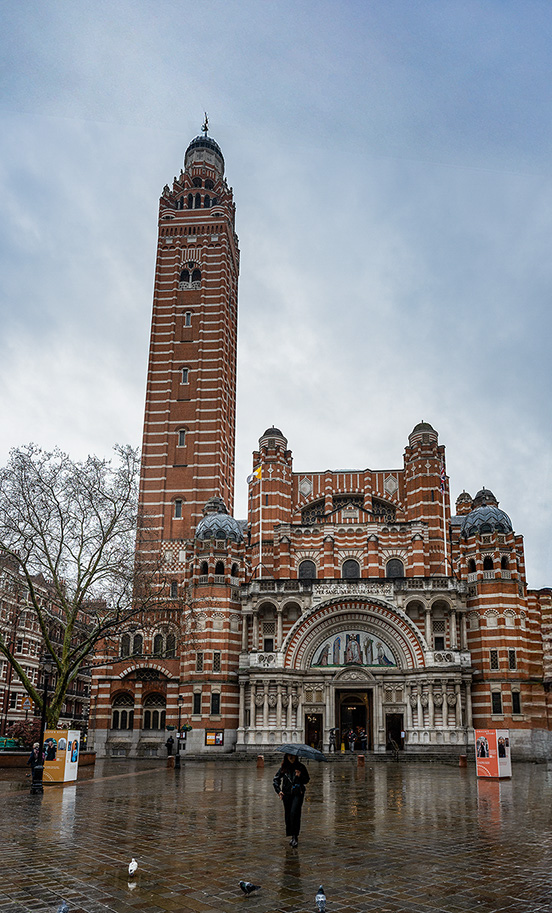
The image depicts a large, ornate building with a tall tower, likely a cathedral or church, characterized by its red brick and stone construction. The architecture features intricate details, arched windows, and decorative elements. The scene is set on a rainy day, with a person holding an umbrella in the foreground, and the ground appears wet and reflective. The sky is overcast, adding to the gloomy atmosphere. The building's design suggests it is of significant historical and architectural importance.
Westminster Cathedral ‐ photo by ,
©www.mgaylard.co.uk.
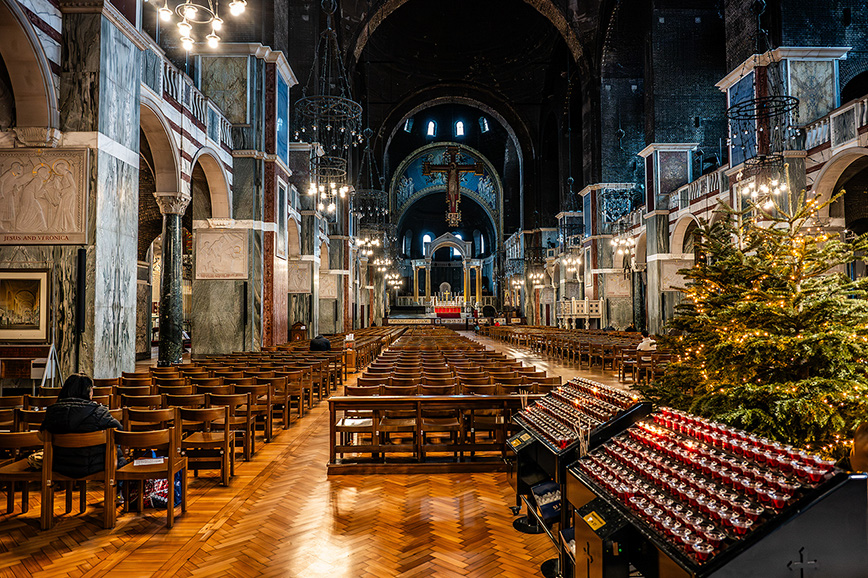
The image depicts the interior of a grand, ornate church or cathedral. The space is characterized by high ceilings, large arches, and intricate decorations. Rows of wooden pews are arranged in the main aisle, leading to an altar adorned with a large crucifix. The church is decorated with a Christmas tree and festive lights, indicating a holiday season setting. The overall atmosphere is solemn and reverent, with a few individuals present, suggesting a quiet, reflective moment.
Westminster Cathedral ‐ photo by ,
©www.mgaylard.co.uk.
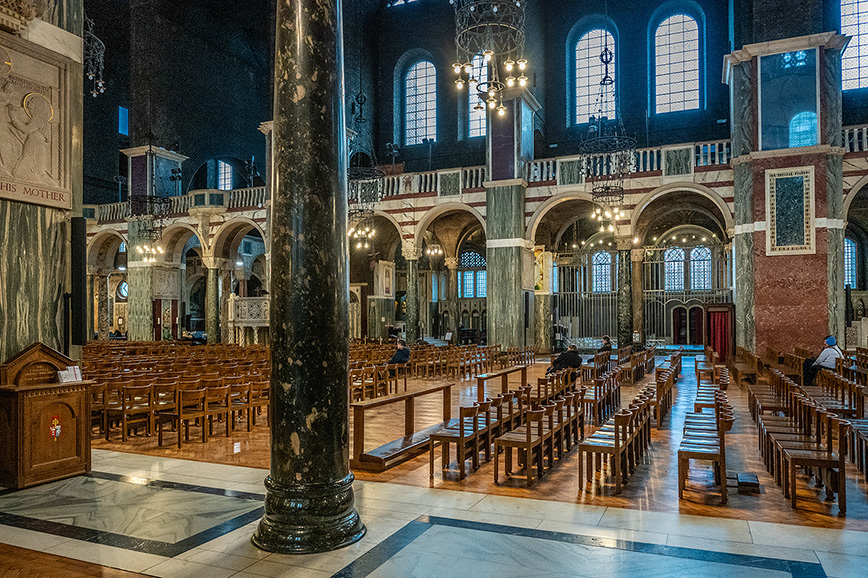
The image depicts the interior of a grand, ornate church or cathedral. The space is characterized by high ceilings, large stained-glass windows, and marble columns. Rows of wooden pews are arranged neatly, leading up to an altar area. The architecture features intricate details, including arches, chandeliers, and decorative elements. The overall atmosphere is serene and majestic.
Westminster Cathedral ‐ photo by ,
©www.mgaylard.co.uk.
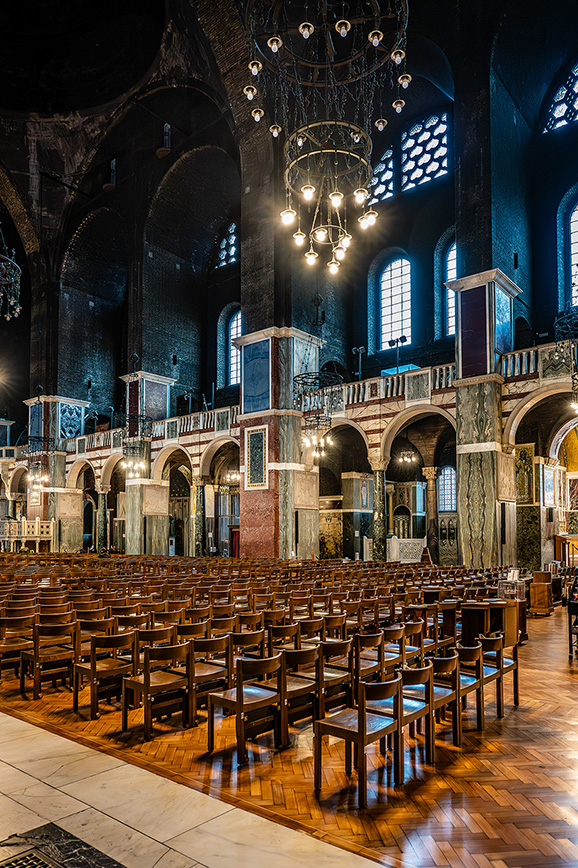
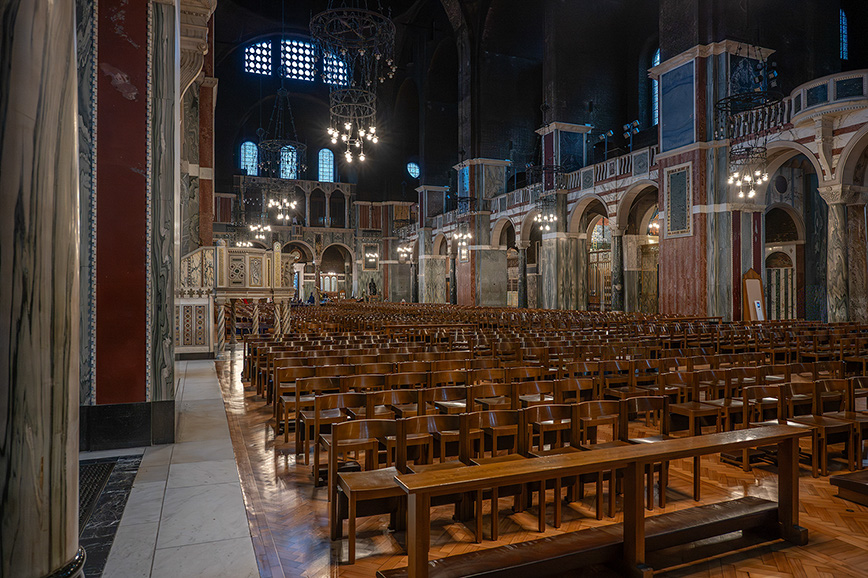
The image depicts the interior of a grand, empty church or cathedral. The space is characterized by high, arched ceilings, large chandeliers, and rows of wooden pews. The architecture features intricate stonework, arches, and large stained-glass windows that allow natural light to filter into the space. The overall atmosphere is serene and majestic, highlighting the historical and architectural significance of the building.
Westminster Cathedral ‐ photo by ,
©www.mgaylard.co.uk.
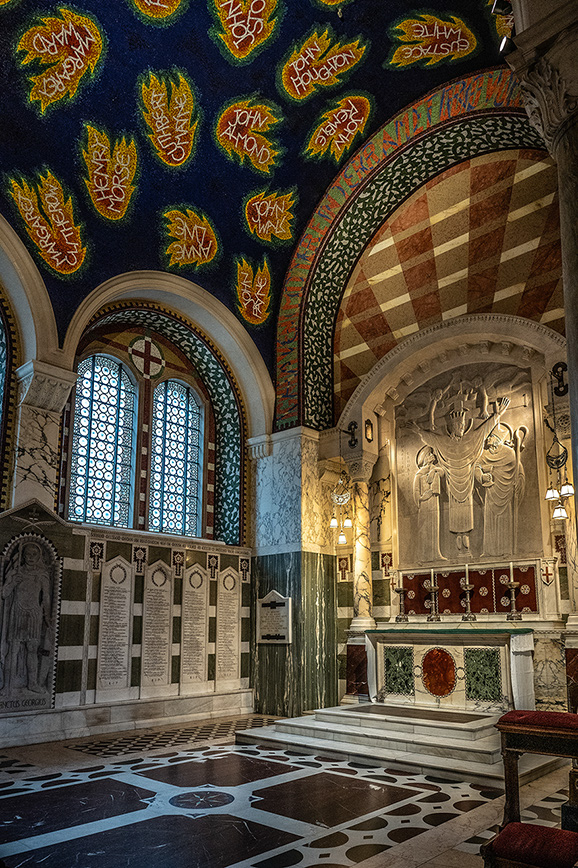
The image depicts an ornate interior of a church or cathedral. The ceiling features colorful decorations with names inscribed on flames, possibly commemorating individuals. The walls are adorned with intricate patterns and stained glass windows. At the center, there is an altar with detailed carvings and a memorial plaque, suggesting it is a place of worship and remembrance.
Westminster Cathedral ‐ photo by ,
©www.mgaylard.co.uk.
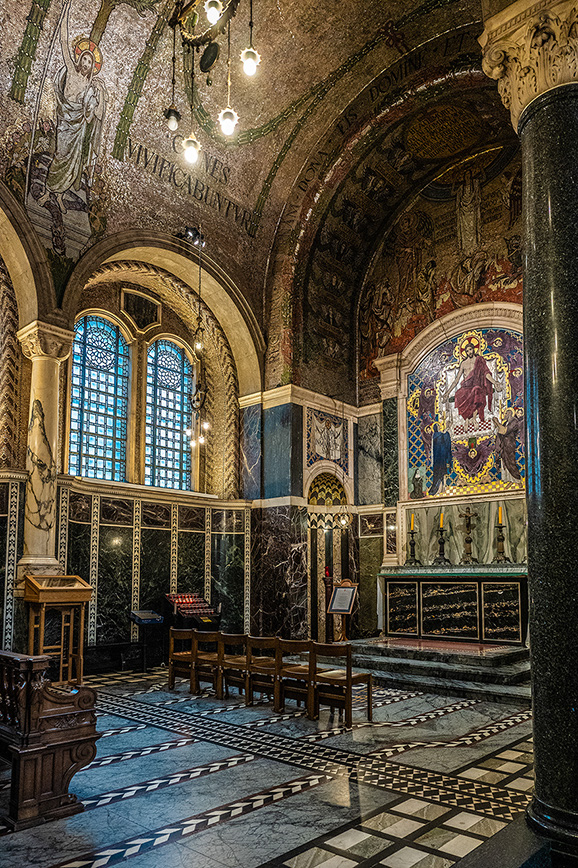
The image depicts an ornate interior of a historical building, likely a church or cathedral. The space features intricate mosaics, stained glass windows, and detailed marble work. The floor is adorned with a geometric tile pattern, and the room is furnished with wooden pews and a pulpit. The overall atmosphere is one of grandeur and reverence, highlighted by the elaborate decorations and architectural details.
Westminster Cathedral ‐ photo by ,
©www.mgaylard.co.uk.
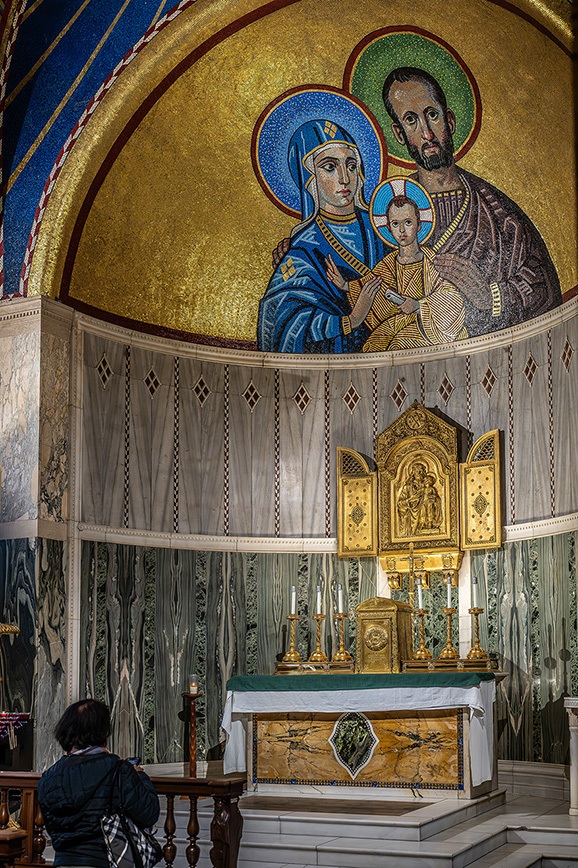
The image depicts an interior of a church or chapel, featuring a person kneeling in prayer. The focal point is a beautifully adorned altar with religious icons and artifacts. Above the altar, there is a large mosaic artwork depicting religious figures, likely the Holy Family, with intricate details and vibrant colors. The setting is richly decorated with gold and other ornate elements, creating a serene and reverent atmosphere.
Westminster Cathedral ‐ photo by ,
©www.mgaylard.co.uk.
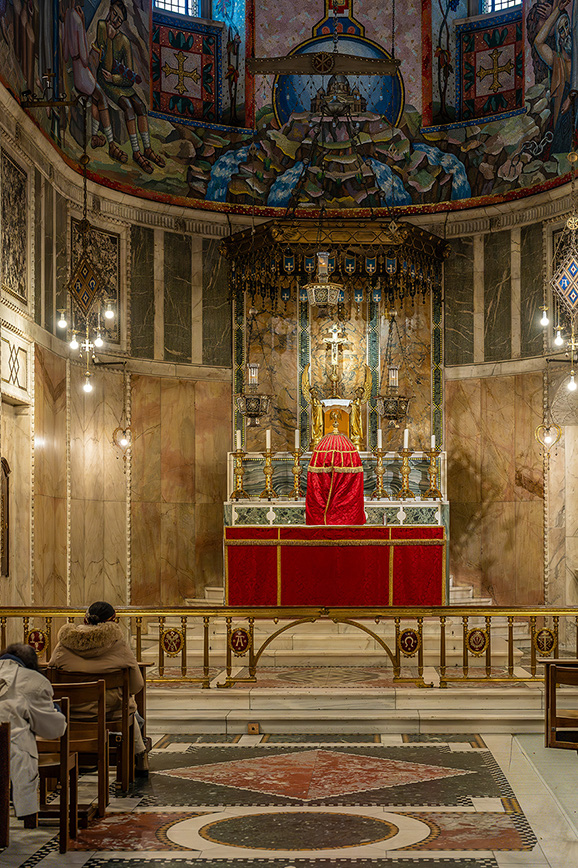
The image depicts an ornate, circular church interior with intricate mosaics and frescoes adorning the ceiling and walls. The focal point is an elevated altar draped in red, with a statue of a religious figure above it. Two individuals are seated in the foreground, facing the altar, suggesting a moment of prayer or reflection. The floor features a detailed, circular mosaic design, and the overall atmosphere is serene and reverent.
Westminster Cathedral ‐ photo by ,
©www.mgaylard.co.uk.
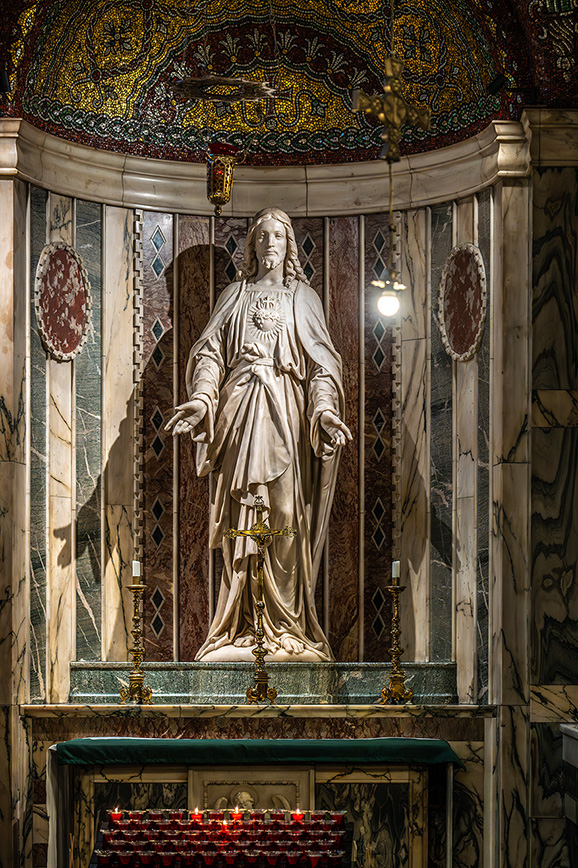
The image depicts a statue of Jesus Christ inside a church, adorned with intricate decorations and surrounded by candles.
Westminster Cathedral ‐ photo by ,
©www.mgaylard.co.uk.
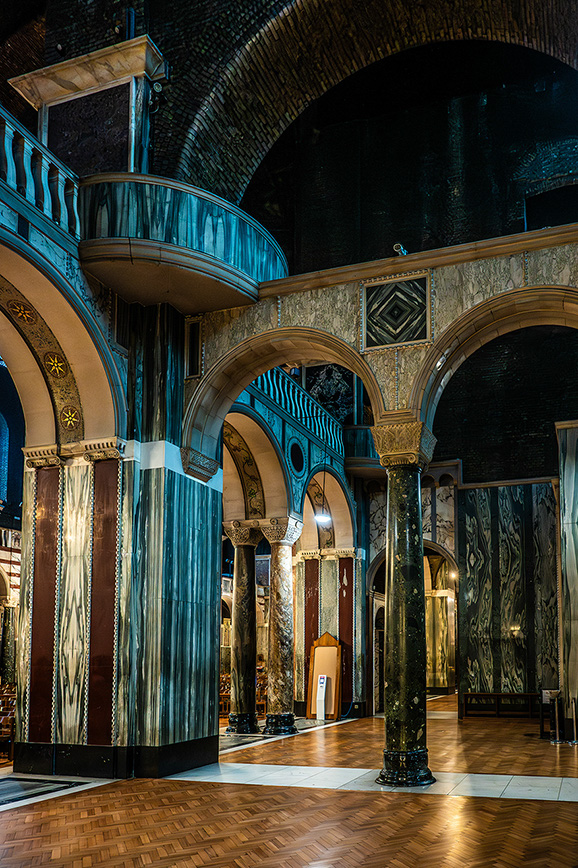
The image depicts an ornate interior space with intricate architectural details, including arched doorways, detailed columns, and a balcony with a curved railing. The walls and ceiling are adorned with rich, decorative patterns and textures, creating a luxurious and historical ambiance.
Westminster Cathedral ‐ photo by ,
©www.mgaylard.co.uk.
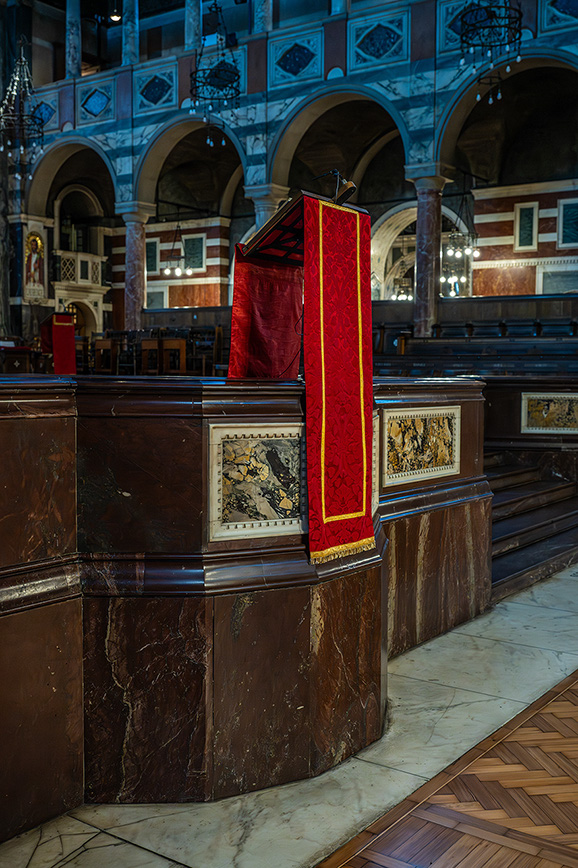
The image depicts an interior view of a church or cathedral. The focal point is a wooden pulpit adorned with a red cloth and gold trim. The pulpit is decorated with intricate artwork and is situated in a large, ornately designed space featuring arches, marble floors, and detailed architectural elements. The setting suggests a place of worship with historical and artistic significance.
Westminster Cathedral ‐ photo by ,
©www.mgaylard.co.uk.
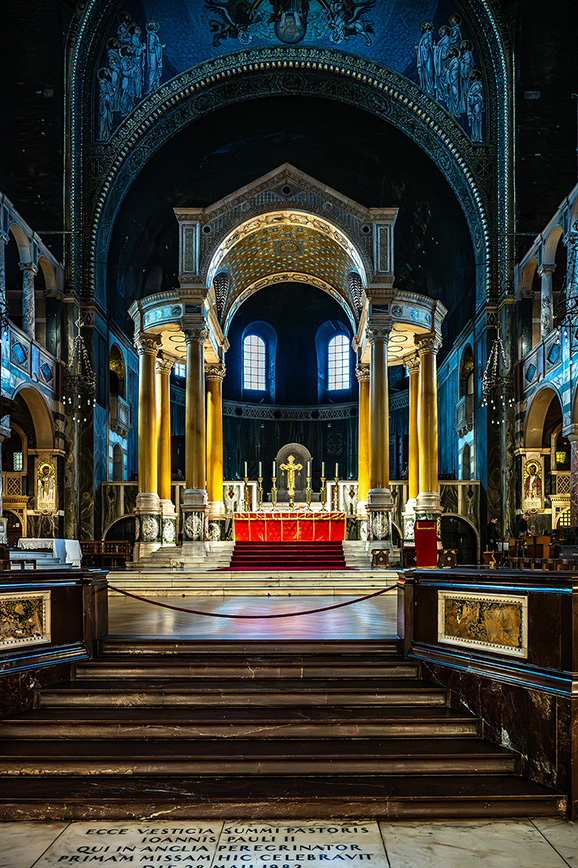
The image depicts the interior of a richly decorated church, focusing on the altar area. The altar is adorned with a red cloth and surrounded by golden columns and intricate mosaics. The architecture features arches and detailed artwork on the walls and ceiling. The overall atmosphere is solemn and reverent, typical of a place of worship.
Westminster Cathedral ‐ photo by ,
©www.mgaylard.co.uk.
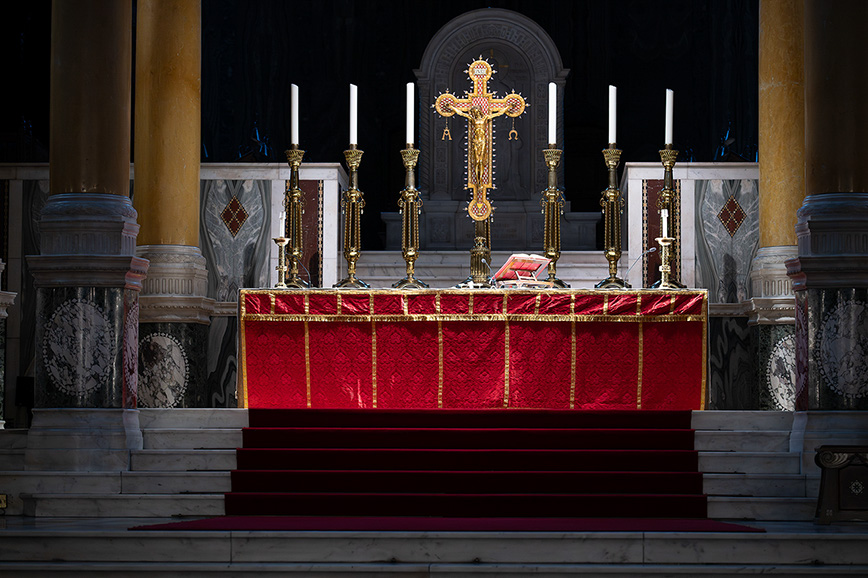
The image depicts an altar inside a church, adorned with a red and gold cloth, several lit candles, and a prominent crucifix at the center. The altar is elevated with steps and flanked by ornate columns.
Westminster Cathedral ‐ photo by ,
©www.mgaylard.co.uk.
The image depicts the interior of a grand, ornate church or cathedral. The space is characterized by high ceilings, intricate architectural details, and rows of wooden pews. The lighting is dim, with chandeliers providing a warm glow. The walls and columns are adorned with detailed patterns and designs, and there are large, stained-glass windows that allow natural light to filter into the space. The overall atmosphere is serene and reverent.
Westminster Cathedral ‐ photo by ,
©www.mgaylard.co.uk.
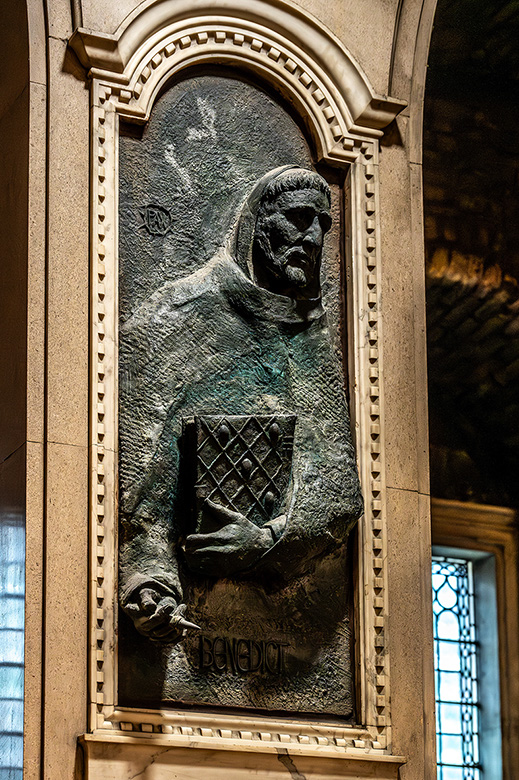
The image depicts a bronze relief sculpture of a robed figure, likely a historical or religious figure, set within an ornate stone frame. The figure is holding an object that appears to be a book or a shield with a cross, suggesting a connection to Christianity. The name 'Benedict' is inscribed at the bottom, indicating that the figure is St. Benedict. The sculpture is located in an interior space with stained glass windows, possibly a church or a monastery.
Westminster Cathedral ‐ photo by ,
©www.mgaylard.co.uk.
The image depicts an ornate altar within a richly decorated church interior. The altar features intricate designs, including mosaic patterns, marble columns, and religious symbols. It is adorned with candles and a crucifix, and is enclosed by a wooden railing. The surrounding walls are adorned with detailed artwork and religious iconography.
Westminster Cathedral ‐ photo by ,
©www.mgaylard.co.uk.
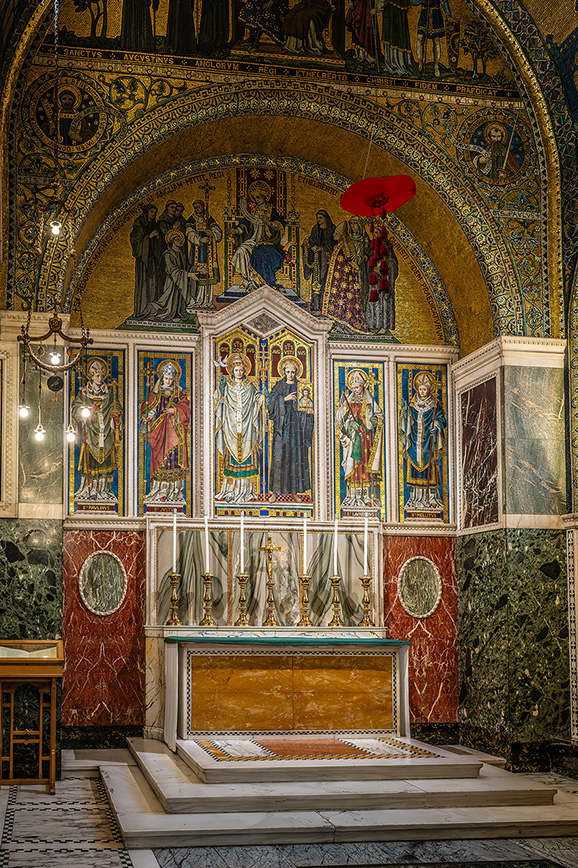
The image depicts an ornate altar within a church, featuring intricate mosaics and detailed artwork. The altar is adorned with religious figures and surrounded by elaborate decorations, including a prominent red umbrella-like structure above the central figure. The setting is rich in historical and artistic elements, reflecting a significant religious and cultural heritage.
Westminster Cathedral ‐ photo by ,
©www.mgaylard.co.uk.

Westminster Cathedral

Westminster Cathedral is the Roman Catholic cathedral of London and the seat of the Archbishop of Westminster.

Historical Overview

Construction and Origins:
Westminster Cathedral was designed by John Francis Bentley and built between 1895 and 1903. It is the largest Catholic church in England and Wales and serves as the mother church of the Latin Rite Roman Catholic Church in the country .
Architectural Style:
The cathedral is a prime example of Byzantine Revival architecture, characterized by its use of red brick and white Portland stone, and its distinctive domed roofs and arches. It was inspired by early Christian basilicas and Byzantine churches .

Architectural Significance

Exterior and Interior:
The cathedral’s exterior features a towering campanile (bell tower) and a grand facade with a large central archway. The interior is equally impressive, with a nave, side aisles, and a series of chapels dedicated to various saints and martyrs .
Notable Features:
The high altar and apse mosaic are particularly notable, with the mosaic depicting the Trinity and the Last Judgment. The cathedral also houses a pipe organ by Henry Willis & Sons, one of the largest in the UK .

Cultural and Religious Significance

Role in the Catholic Community:
Westminster Cathedral serves as the spiritual center for the Catholic community in London and is a place of worship, pilgrimage, and cultural events. It is also a popular venue for concerts and classical music performances due to its exceptional acoustics .
Historical Events:
The cathedral has hosted numerous significant events, including visits by Pope John Paul II and other dignitaries .

Visitor Information

Location:
Westminster Cathedral is located on Francis Street, Westminster, London, near Victoria Station and the Royal Courts of Justice. It is easily accessible via public transport, including Victoria, St James’s Park, and Westminster Underground stations .
Admission and Tours:
Entry to the cathedral is free, and it is open daily for visitors and worshippers. Guided tours and audio guides are available to help visitors learn about the cathedral’s history, art, and architecture .
Text generated by Mistral AI
To the top
Powered by w3.css. The images are all stored on link to www.gaylard.co.uk Photostream on Flickr   This website is hosted by link to 123Reg Web Hosting